




































































Company Secondary Label Printing With VAT – Compliant
Oct
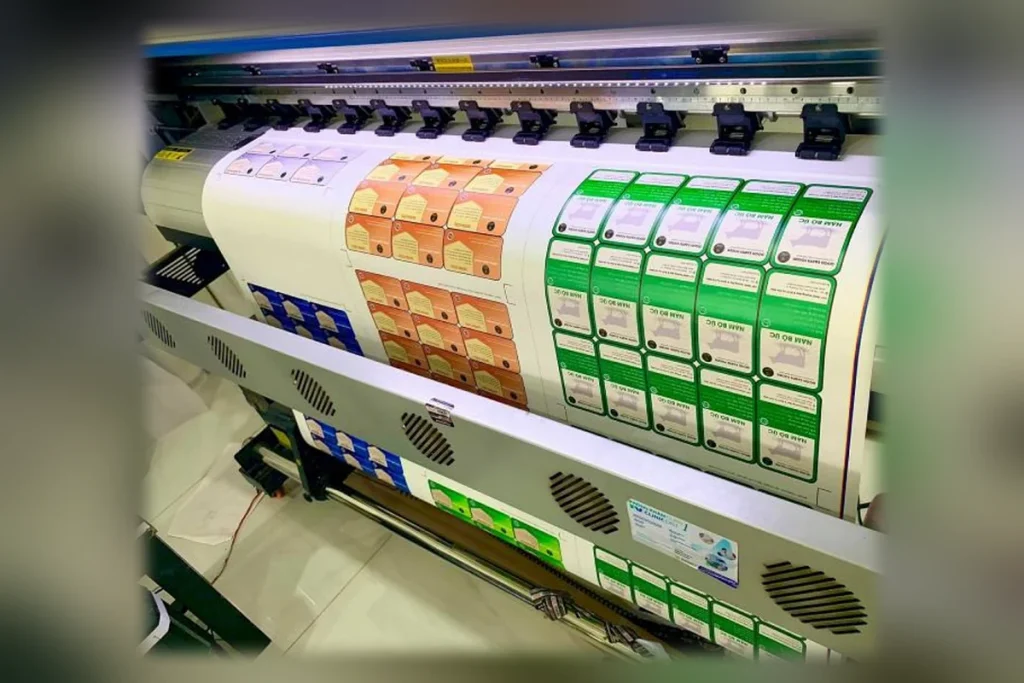
Need supplementary labels printed for your company's products with a VAT invoice? Below is a guide to choosing materials, die-cut specifications, lead times and starting prices at the In Quảng Cáo Q7 workshop.
Supplementary label printing for companies – compliant, with full paperwork
Imported goods sold in Vietnam must carry a Vietnamese supplementary label: product name, ingredients, origin, importer, expiry date… For importers, supplementary label printing is a recurring task with each shipment – and this expense also needs a VAT invoice like any other cost.
In Quảng Cáo Q7 serves this group of customers with its own process: label content is checked for all mandatory items, printed clearly and legibly in line with the regulations, quantities are flexible by shipment, and every order comes with an electronic VAT invoice issued the same day.
What a supplementary label needs to contain
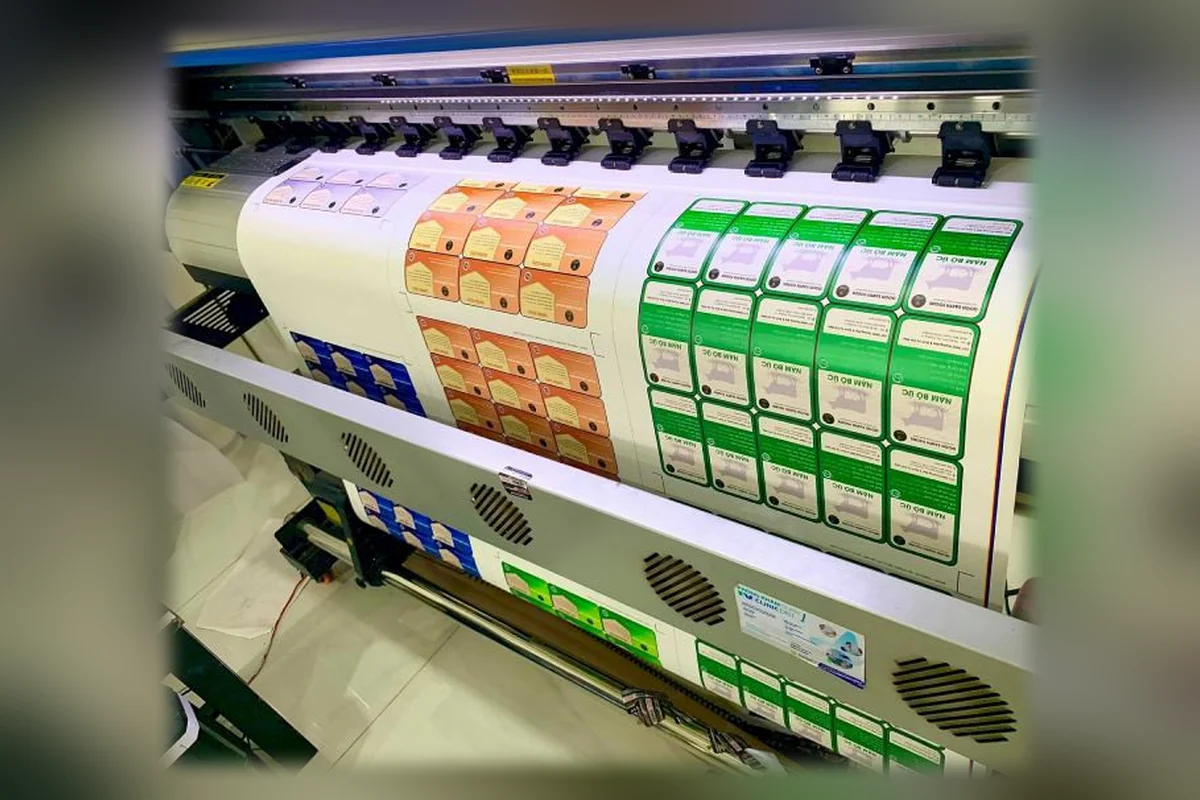
Under goods labelling regulations, a Vietnamese supplementary label usually includes: product name; name and address of the importer – distributor; origin; quantity; ingredients; directions for use – storage; manufacturing date and expiry date depending on the product group. The workshop checks against this checklist when receiving the content to avoid missing items.
Note: the workshop helps with layout and printing; the declared content is the company's responsibility according to the import documents.
Materials and print specifications
Paper decal for dry cartons; waterproof plastic decal for bottles, cosmetics and frozen foods; clear decal for packaging where appearance matters. Labels are printed in rolls or sheets, sized to the actual product – the workshop advises on a sensible label size for quick application and good adhesion.
For each new shipment you only need to send the changed content (batch number, expiry date) – the label template is kept on file and reprinted within a few hours.
VAT invoices for every label order
Even if an order is only a few hundred thousand dong, the electronic invoice is issued in full with the company details – label expenses for the warehouse and purchasing departments are always valid at settlement. Invoicing details are saved once and applied automatically to later shipments.
Frequently asked questions about company supplementary label printing with VAT invoices
What is the minimum order for company supplementary labels with a VAT invoice?
There is no minimum – digital printing can run from a single decal sheet, a few dozen labels. Small orders are usually the fastest, ready while you wait during working hours; when you need a large reprint, the unit price per label drops sharply by quantity tier.
Are decal labels waterproof?
It depends on the material: plastic (PVC) decal and clear decal are highly waterproof, suitable for bottles, drink cups and refrigerated goods; paper decal suits dry paper boxes and is the cheapest. Adding gloss or matte lamination makes labels far more colourfast and scratch-resistant.
How do delivery and invoicing work?
Customers can collect from the workshop or the workshop books Grab/Ahamove delivery as soon as the labels come off the press – within Ho Chi Minh City they usually arrive in 1–2 hours. Company orders get an electronic VAT invoice issued the same day.
Order printing at In Quảng Cáo Q7
Imported goods about to arrive at the warehouse? Send the supplementary label content and the company's tax code via Zalo – the workshop builds the template, prints in step with your import schedule and sends the VAT invoice to your accountant's email the same day.
In Quảng Cáo Q7 direct printing workshop – 49 Mai Van Vinh, Tan Hung Ward, Ho Chi Minh City. Production and delivery hours: Monday – Saturday, 8:00–12:00 and 13:00–18:00 · Consultation & orders via Zalo/hotline: Monday – Saturday 8:00–12:00 and 13:00–20:00, Sunday 14:00–19:00.
See more printing services on the In Quảng Cáo Q7 home page or contact us quickly via the contact page; you can also get directions to the workshop on Google Maps.
Which product groups use supplementary labels
Supplementary labels are applied to imported goods when the manufacturer's original label has no Vietnamese. Importers and distributors are the two groups that use supplementary labels most, because goods must carry Vietnamese information before going on the shelf.
| Goods group | Features when applying supplementary labels |
|---|---|
| Food and drinks | Small packaging, lots of information required |
| Cosmetics | Small boxes, narrow labelling area, glossy surfaces |
| Electrical and electronic equipment | Plastic or metal casings, need strong adhesive |
| Household goods | Cardboard boxes, rough surfaces |
| Accessories, toys | Plastic blisters or bags, small labelling area |
| Industrial goods | Large cartons, large labels on the outside of the carton |
The text on supplementary labels is written by the importer and is the importer's responsibility, because each product group has its own labelling requirements. Layout, material selection and printing are handled at the workshop.
Usual content and how to fit it in
The hardest part of supplementary labels is not printing but fitting so much information into a small area. The four methods below are widely used so the text stays readable without the label being larger than the labelling spot.
- Use two columns for short information such as weight, origin and expiry date.
- Use different text sizes: large for the product name, smaller for ingredients but not below 6pt.
- Shorten the directions and move the details to a QR code linking to a web page.
- Make two-layer peel-open supplementary labels when there is too much text.
Two-layer labels cost more than ordinary labels but solve the problem of packaging that is too small. For small cosmetic boxes, this is a common way to fit all the mandatory content.
Size and application position
The size of supplementary labels should be settled after measuring the labelling spot on the actual packaging, not from the design on screen. The application position also needs planning, because covering the original information is a mistake that often leads to goods being rejected.
| Type of packaging | Common label size | Placement |
|---|---|---|
| Small cosmetic box | 30x50mm | Back or bottom of the box |
| Bottles, jars | 40x60mm | On the bottle body, avoiding the original label |
| Food box | 50x70mm | On the back, next to the original label |
| Electrical equipment | 60x90mm | Back of the unit |
| Cardboard carton | 100x150mm | One side of the carton |
| Blisters, small bags | 25x40mm | Back of the blister |
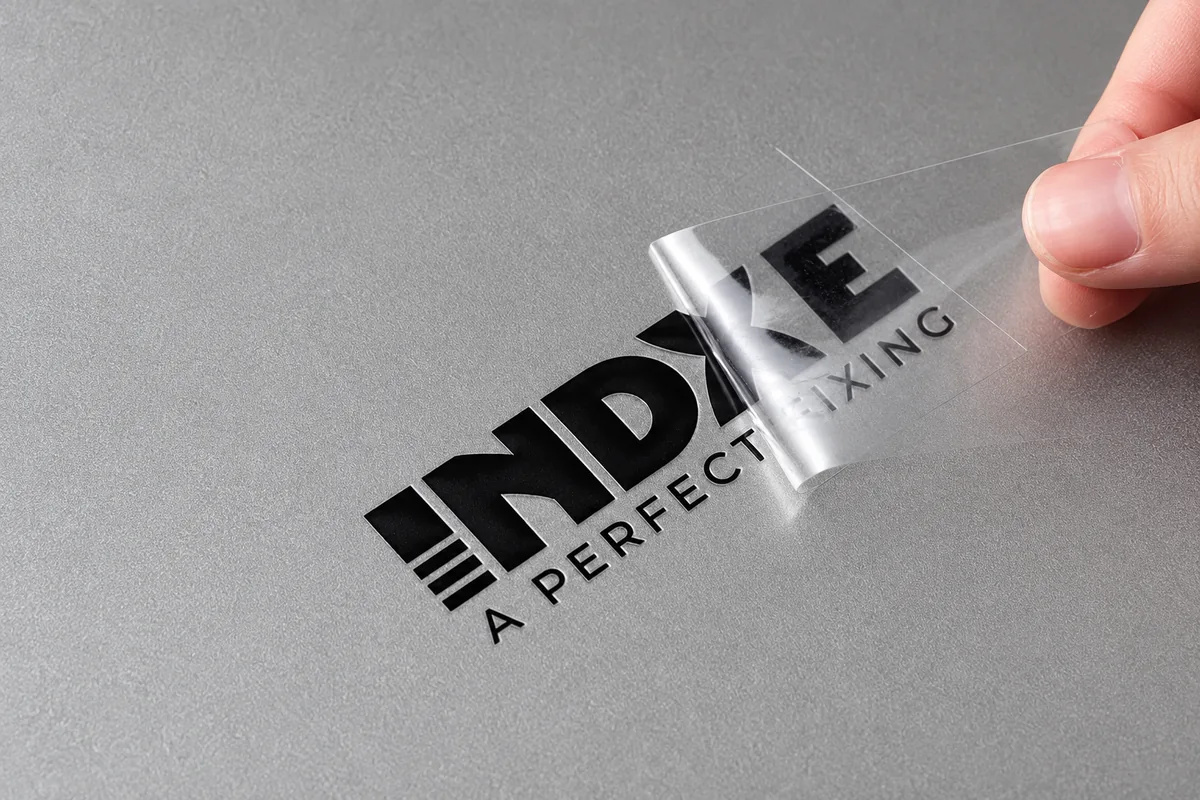
For shipments with many different product codes, keeping one supplementary label size for all of them is tidier. One cutting die is used and the labelling team does not have to sort labels by code.
Related products

Labels & stickers

Decal application


Decal

Sticker
Materials and adhesive for supplementary labels
The material is chosen by the labelling surface and the storage conditions of the shipment. A supplementary label peeling off once the goods are on the shelf means relabelling everything, so the adhesive must be right from the start.
| Mounting surface | Material | Adhesive layer |
|---|---|---|
| Dry paper boxes | Paper decal | Standard adhesive |
| Plastic bottles, glass jars | PP plastic decal | Standard or strong adhesive |
| Chilled goods | PP plastic decal | Cold-resistant adhesive |
| Metal casings, equipment | Silver decal | Strong, oil-resistant adhesive |
| Rough recycled cardboard | Heavyweight paper decal | Strong adhesive |
| Must peel off without residue | Plastic decal | Clean-peel adhesive |
A simple test before running the batch: ask for a few sample supplementary labels, stick them on the actual packaging and leave them for three days in the real storage conditions. If the label edges are still flat, the adhesive is suitable.
Rolls and sheets for the labelling team
Supplementary labels come in two formats, and which one to choose depends on how the labelling team works, not on the quantity. Choosing the wrong format does not spoil the labels but slows down labelling when shipments arrive all at once.
- Rolls: peeled continuously, suited to applying more than 500 a day or applying by machine.
- Sheets: many labels on one A4 sheet, easy to share among several people labelling at once.
- Rolls require the core diameter and label unwind direction if a labelling machine is used.
- Sheets are handy when a shipment has many codes, one sheet per code.
For shipments with many product codes, many companies choose sheets and print one sheet per code, with the code name in the sheet margin. The labelling team takes the right sheet for the right carton, reducing the chance of mixing up supplementary labels between codes.
Print quantity by imported batch
The number of supplementary labels is calculated from the number of products in the shipment, plus a reserve for misapplied labels. The misapplication rate for hand labelling is usually a few percent, so printing exactly the number of goods will run short within the first labelling session.
| Products in the shipment | Number of supplementary labels to print | Notes |
|---|---|---|
| Under 500 | Number of goods plus 10 percent | Cost per label still high |
| 500 to 2,000 | Number of goods plus 7 percent | The most common order level |
| 2,000 to 10,000 | Number of goods plus 5 percent | Price per label drops noticeably |
| Over 10,000 | Number of goods plus 3 percent | Better split into two deliveries |
For product codes imported regularly, printing once for two or three consecutive shipments is cheaper than printing per shipment. The condition is that the content on the supplementary label does not change and the labels are stored somewhere dry.
Applying labels at the warehouse and organising staff
Labelling is usually the most labour-intensive step, not printing. Arranging the three things below in advance lets a shipment of a few thousand products be labelled in one session instead of over several days.
- Sort supplementary labels by product code before starting; do not mix them.
- Each person labels one code, avoiding swapping mid-session.
- Open cartons stack by stack; finish one stack before opening the next.
- Spot-check a few products in each stack to catch misaligned labels early.
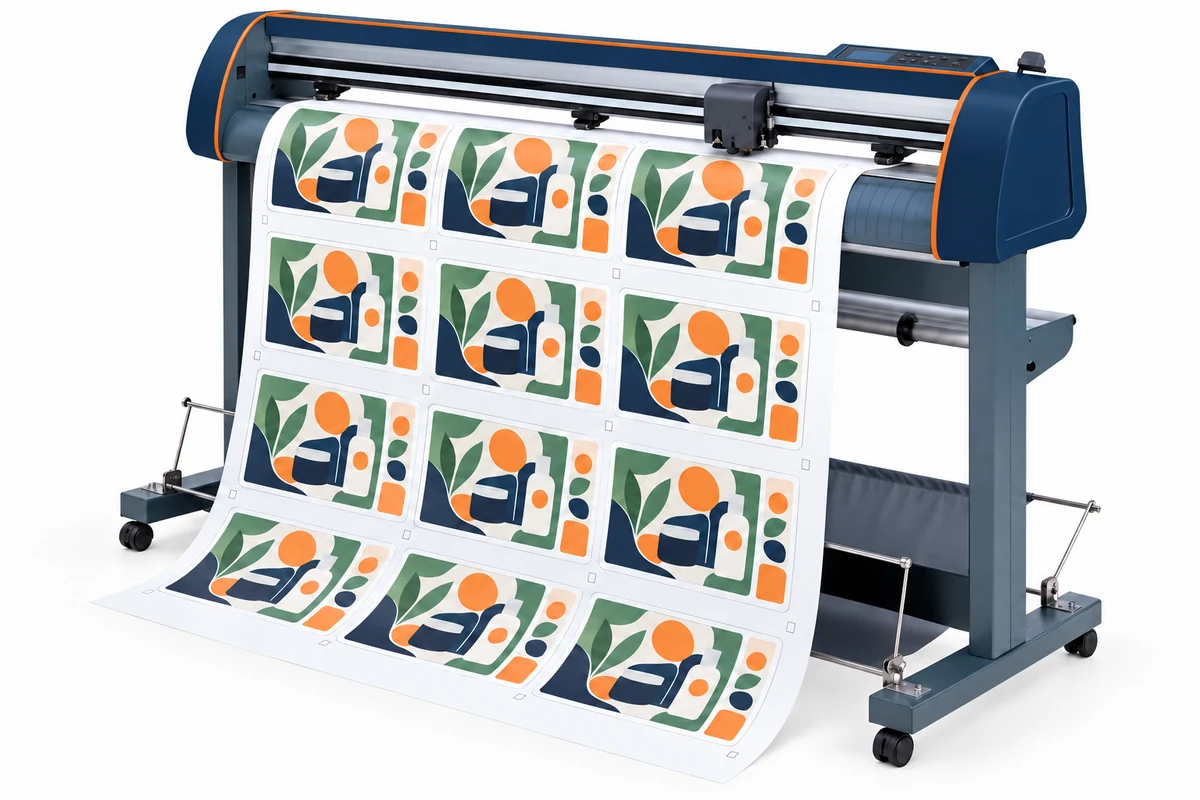
The workshop packs supplementary labels by code, with the code name and quantity written on the outside of each pack. The warehouse labelling team does not need to recount; they take the right pack for the right code and start applying right away.
Common mistakes in supplementary label orders
The five mistakes below account for most reprints. All five can be spotted on a test sample, so the sample approval step should not be skipped even when the shipment is urgent.
| Mistake | Sign | How to avoid it |
|---|---|---|
| Text too small | Has to be read very close up | Keep text no smaller than 6pt |
| Label larger than the labelling spot | Edges fold over or the original label is covered | Measure the labelling spot on the actual packaging |
| Unsuitable adhesive | Edges peel after a few days | Test-apply and leave for three days |
| Wrong information | Discovered once goods are on the shelf | Proofread the layout before printing |
| Mixing up between codes | Wrong label on the wrong product | Sort labels by code, write the name on the outside of the pack |
For shipments with many codes, the layout of all supplementary labels is sent at once as a single multi-page file. The company proofreads all codes in one pass, instead of approving each code separately and missing some.
Paperwork for supplementary label print orders
Supplementary label orders from importers usually need to be recorded as expenses, so the accompanying paperwork is prepared as soon as the goods are delivered. The five items below are a complete set for the accountant to file with the month's expenses.
- An invoice clearly stating the goods by print product group and quantity.
- A quote confirmed before printing.
- A delivery note signed on receipt at the warehouse.
- A payment order or statement when paying by bank transfer.
- A breakdown by product code if one order includes many codes.
Invoicing details are provided once with the first order and saved to the company's file. Later supplementary label orders only need the code and quantity, and the paperwork automatically uses the saved details.
Lead times and how to shorten them when goods arrive urgently
Making supplementary labels only after the shipment reaches the port is very common, because the label content can only be settled once the import documents are available. The table below shows realistic milestones counted from layout approval.
| Label type | Quantity | Lead time |
|---|---|---|
| Paper decal sheets | Under 2,000 labels | 1 day |
| Paper decal rolls | Under 5,000 labels | 2 days |
| Plastic decal sheets | Under 2,000 labels | 2 days |
| Plastic decal rolls | Under 5,000 labels | 2 to 3 days |
| Two-layer peel-open labels | Any quantity | 3 to 4 days |
- Send the text as a document, not photos of the paperwork for the workshop to read.
- Settle the size and label format before sending the content, because these two decide the layout.
- Approve the layout on the day you receive it; this is the step most often dragged out.
- Urgent orders are split into two deliveries: the first enough for the first labelling session, the rest delivered later.
These four steps can save one to two days on an urgent supplementary label order. The parts that cannot be shortened further are die-cutting and lamination, so the warehouse labelling schedule should count from the milestones in the table, not from the order date.
Ordering supplementary label printing for companies
Workshop at 49 Mai Van Vinh, Tan Hung Ward, Ho Chi Minh City, receives files online and delivers to your warehouse or office. Send your request via Zalo with four pieces of information to get a quote within working hours.
- Information 1: the text for each product code, as a document for layout.
- Information 2: the labelling surface and storage conditions of the shipment.
- Information 3: quantity per code and the date needed.
- Information 4: rolls or sheets, according to how the labelling team works.
Test samples are delivered first for test application on the actual packaging, and the full batch runs only once confirmed. The price per label falls with quantity, and one run combining many supplementary label codes is usually better value than several separate runs.
Need printing or signage in Ho Chi Minh City?
In Quảng Cáo Q7 runs its own print workshop in Tân Hưng Ward (former District 7), Ho Chi Minh City, producing and installing signage, banners, window graphics, exhibition booths and event displays. Send us the size, material, quantity and a photo on WhatsApp and we will get back to you.

Phone: +84 866 511 099 · Also on WeChat
Workshop: 49 Mai Văn Vĩnh, Tân Hưng Ward, Ho Chi Minh City