



































































Our commitments
Printed directly in our workshop, no middlemen
Digital and offset presses right in our workshop. You deal directly with the people who make your order, so every request is understood and handled immediately.
Fast production, many orders ready the same day
Business cards, documents, decals, standees… printed and delivered the same day. See production times for each product group.
One point of contact, all-in-one from file to finished product
Quotes, orders, Zalo messages, delivery booking and invoicing run automatically on one system. Design – printing – finishing – installation all happen in-house, so you don't have to go anywhere else.
Full VAT invoices, issued fast
E-invoices issued right after delivery, with urgent support for businesses that need documents early for payment.
Labels & Stickers
From 50.000 ₫
Plastic or paper decal labels, die-cutting included. From 100 labels, with prices dropping sharply by quantity.
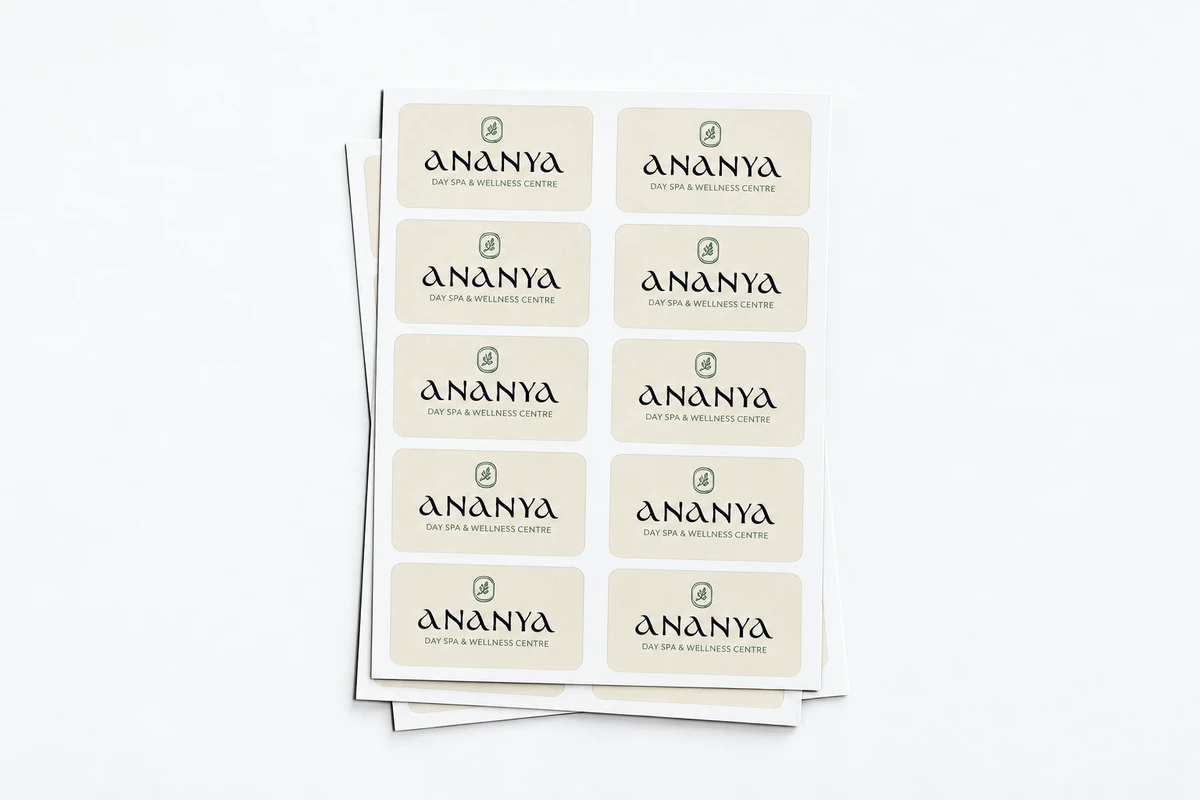
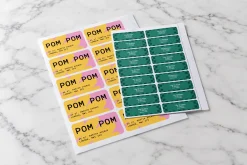
Print sheet 320 × 430 mm · 10 mm margin · 4 mm between labels · die-cutting included
| Item | Per sheet | Total |
|---|
View the label layout
Prices exclude design and delivery. Round, oval or free-shape labels are priced by their bounding rectangle.
Paper and Plastic Decal Label Printing — Die-Cut to Shape, Ready to Peel and Stick
Labels are the smallest part of packaging but the part customers read first: product name, ingredients, expiry date, barcode and brand logo are all there. In Quảng Cáo Q7 prints paper and plastic decal labels from 100 pieces, and the price shown on this page already includes die-cutting — you receive them ready to peel and stick, with no extra cutting needed.
What labels are and what they're used for
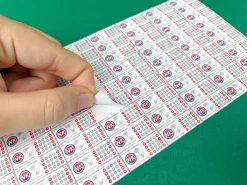
A label (also called a decal, sticker or adhesive label) is a sheet of material with adhesive already on the back, printed with content and then die-cut along the exact finished outline. The adhesive sits on a backing liner; to use it, peel the label off the liner and stick it on the surface. Because it's pre-cut, no scissors or craft knife are needed, and applying is much faster than printing loose labels and cutting them yourself.
In business, labels do three jobs at once. First, mandatory information: product name, weight, ingredients, manufacturing date, expiry date, producer details. Second, brand identity: logo, colors, fonts, slogan. Third, operational functions: barcodes, QR codes, batch numbers, tamper-evident seals, price stickers, promotional stickers. A well-designed label does all three in a small area.
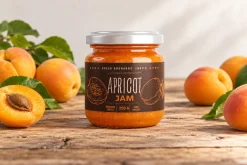
The customers who order labels most at our workshop are small and medium producers: bakeries, jam and dried-food workshops, juice and milk tea shops, handmade cosmetics makers, scented candle studios, online shops. What they have in common is modest quantities but a need for professional-looking labels, fast — so labels are usually printed in batches of a few hundred to a few thousand per product code.
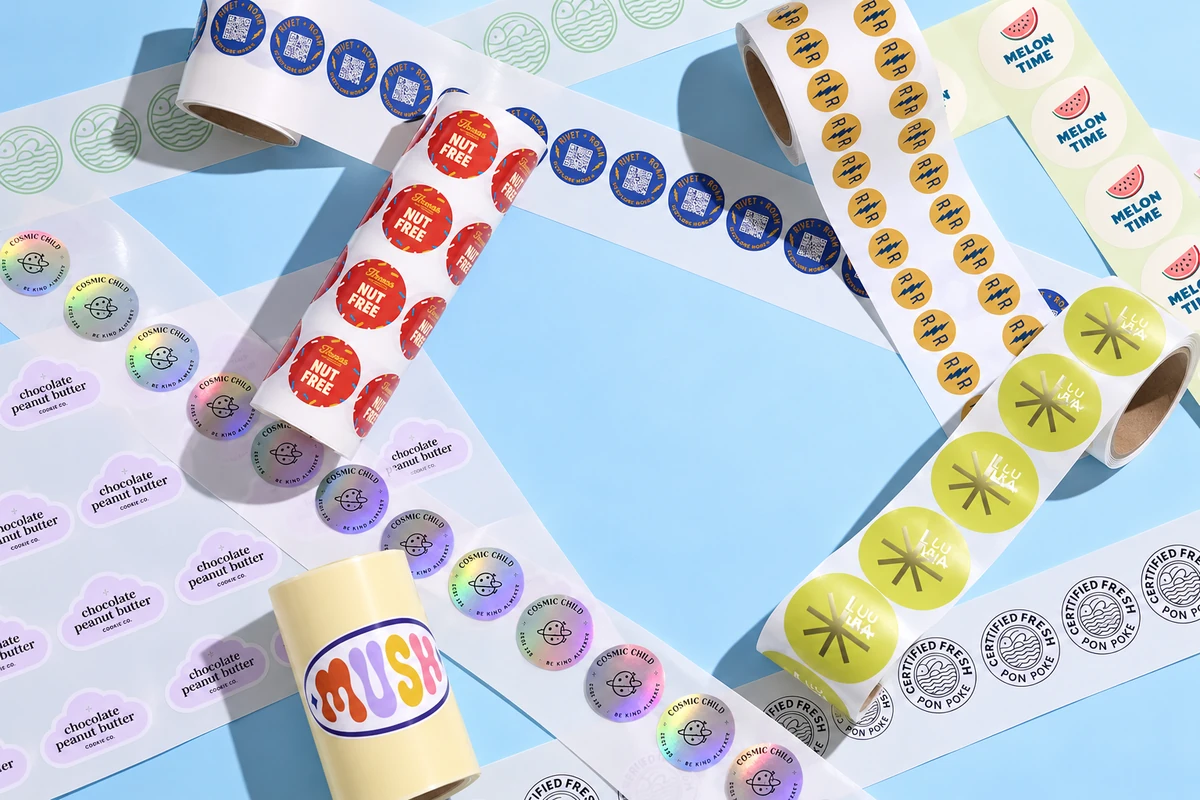
Labels are also the most frequently changed item in a packaging set. Boxes and bags are printed once and used all year, while labels change with each batch, season or sale. That's why many businesses print neutral boxes and apply separate labels for each product code — flexible and saving storage space.
Two main materials: paper decal labels and plastic decal labels
This product page offers two materials, enough for almost all common needs. Paper decal labels is the cheapest option; the paper surface can be written on with a ballpoint or oil-based marker, suitable for dry box labels, price stickers, batch code labels and carton labels. The downside is that it softens and peels at the edges when wet, so it's not used for bottles holding liquids or goods kept in the fridge.
Plastic decal labels uses PP or PVC film, waterproof, tear-resistant, tolerant of grease and cold. This is the material for water bottles, sauce jars, cream jars, cosmetic tubes, hot food containers and anything that might be wiped with a damp cloth. It costs more than paper decal, but not by much, and across a batch of a few thousand labels the difference per piece is very small.
Both types have three layers: the print material on top, adhesive in the middle, and the backing liner underneath. We use standard adhesive for single-application goods. If you need labels that peel off without leaving residue, or labels that stick to powder-coated paint, frosted glass or soft HDPE plastic, please tell us first, as these cases need a different adhesive.
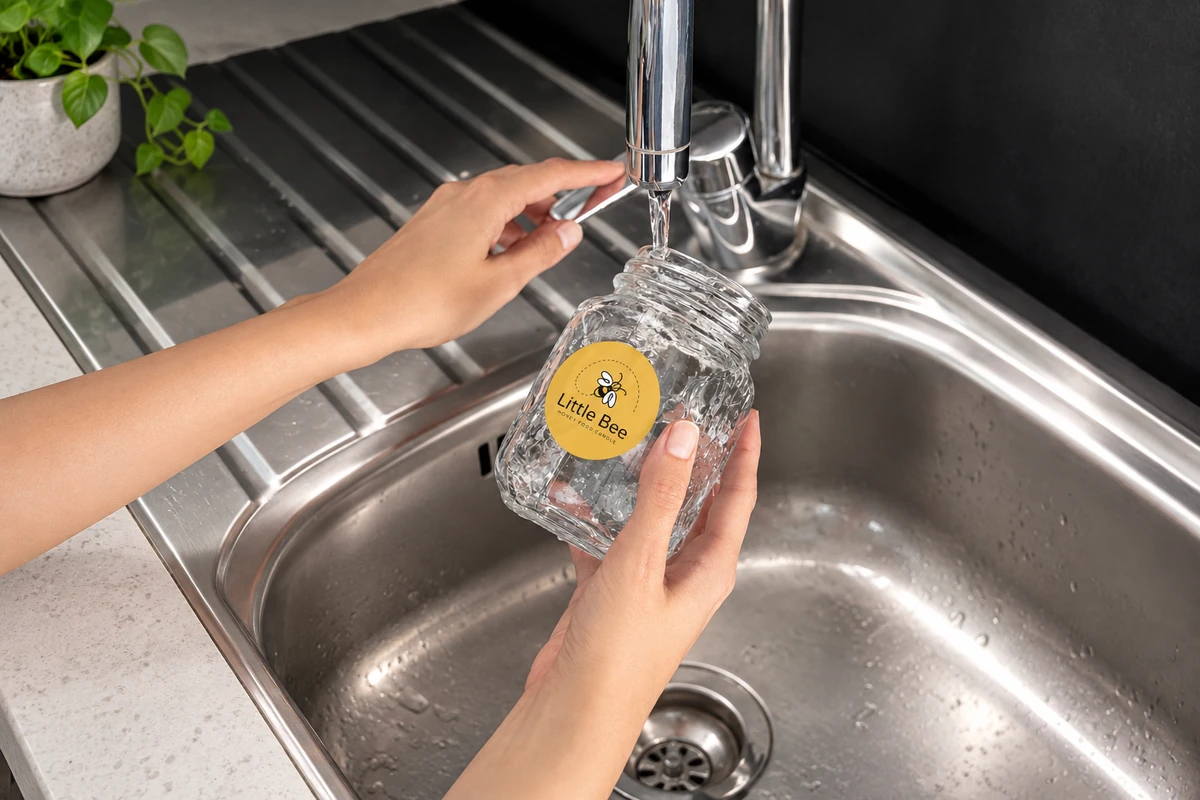
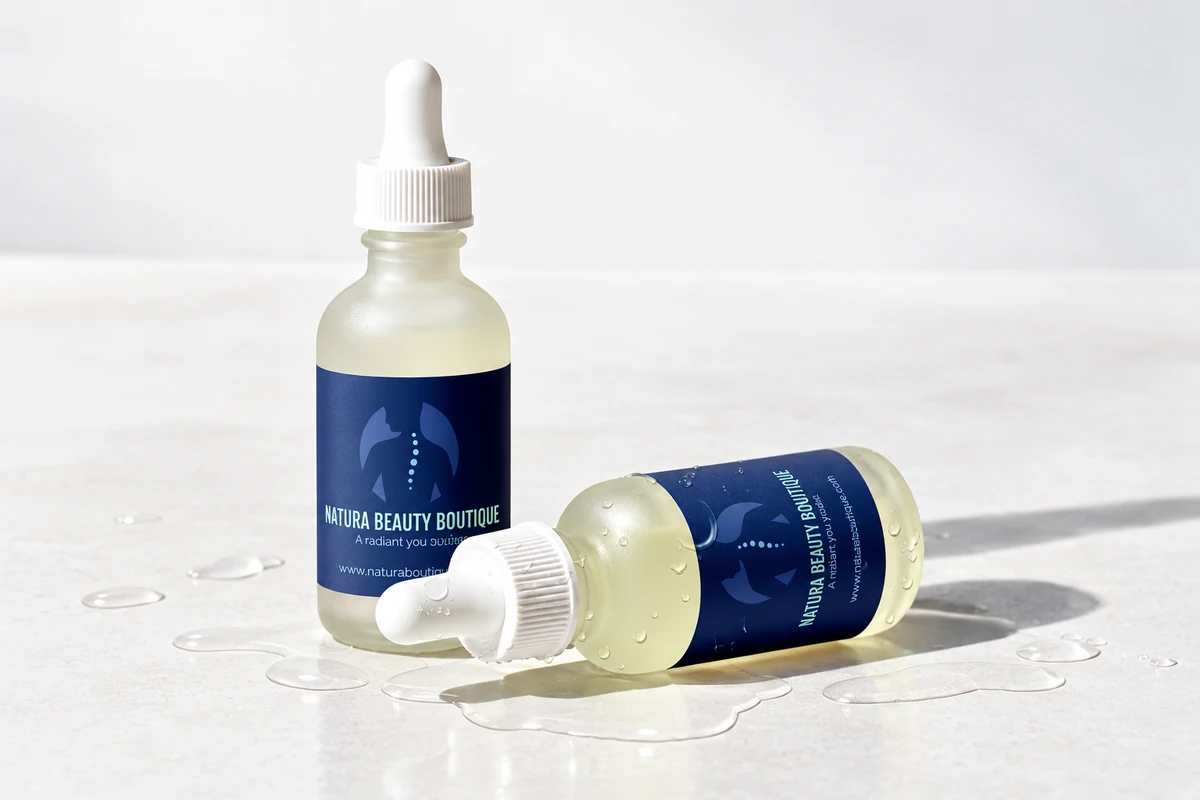
A quick way to choose: if the surface may get wet, be handled with greasy hands or kept in the fridge — choose plastic decal. If it's only applied to paper, cartons or dry boxes and you need the lowest price — choose paper decal. If still unsure, we recommend plastic decal for flagship products and paper decal for internal, storage and price labels.
Special surfaces: metallic, hologram, fine art paper
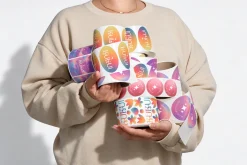
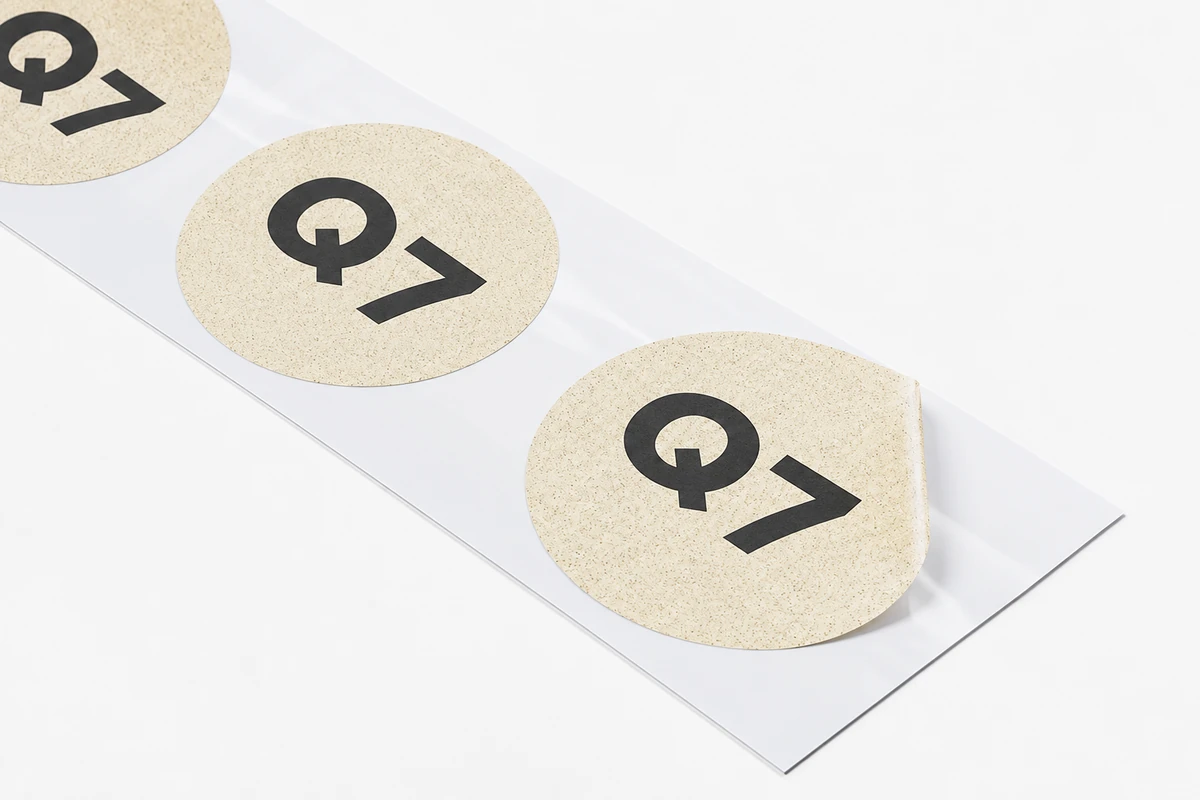
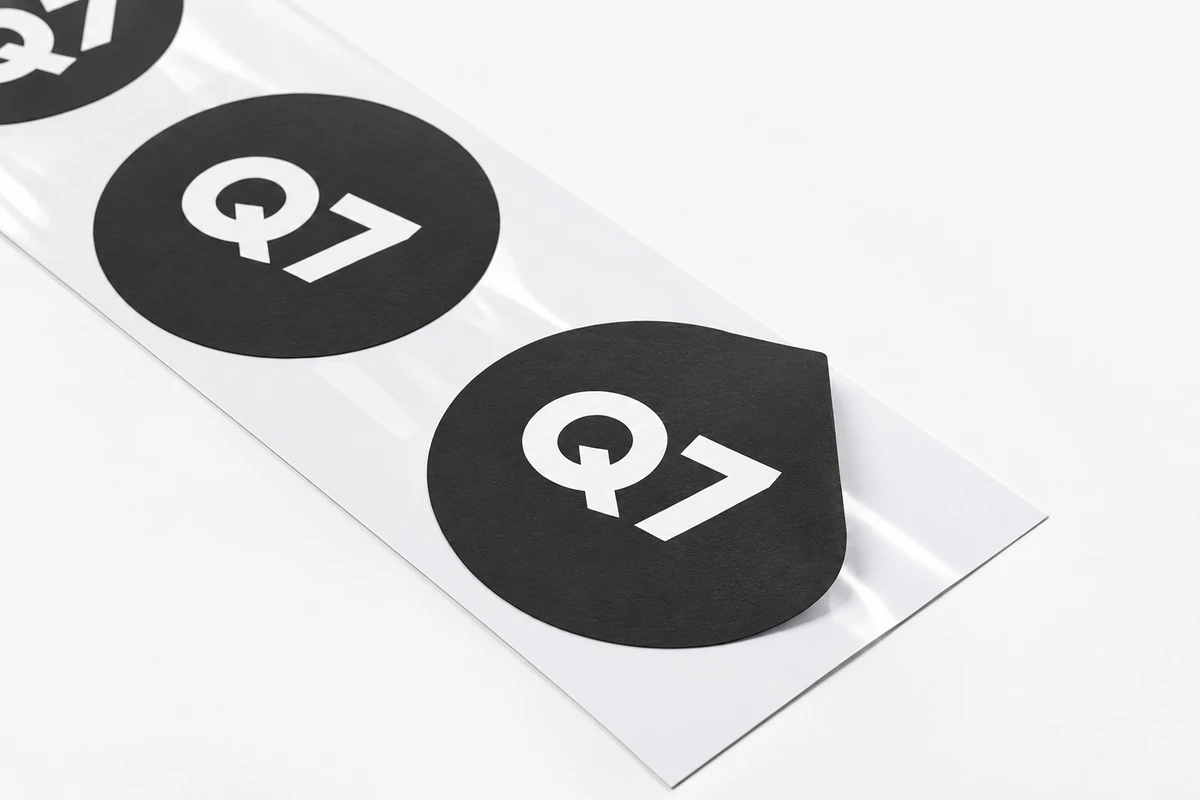
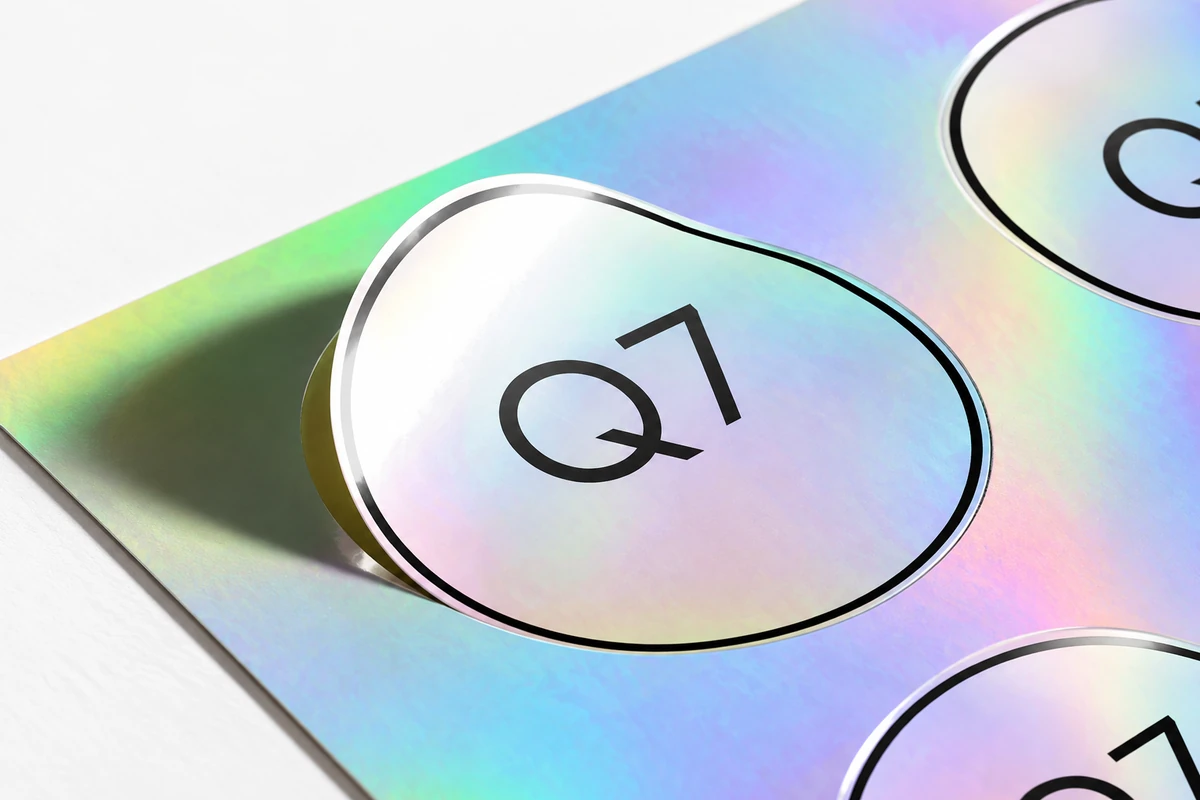
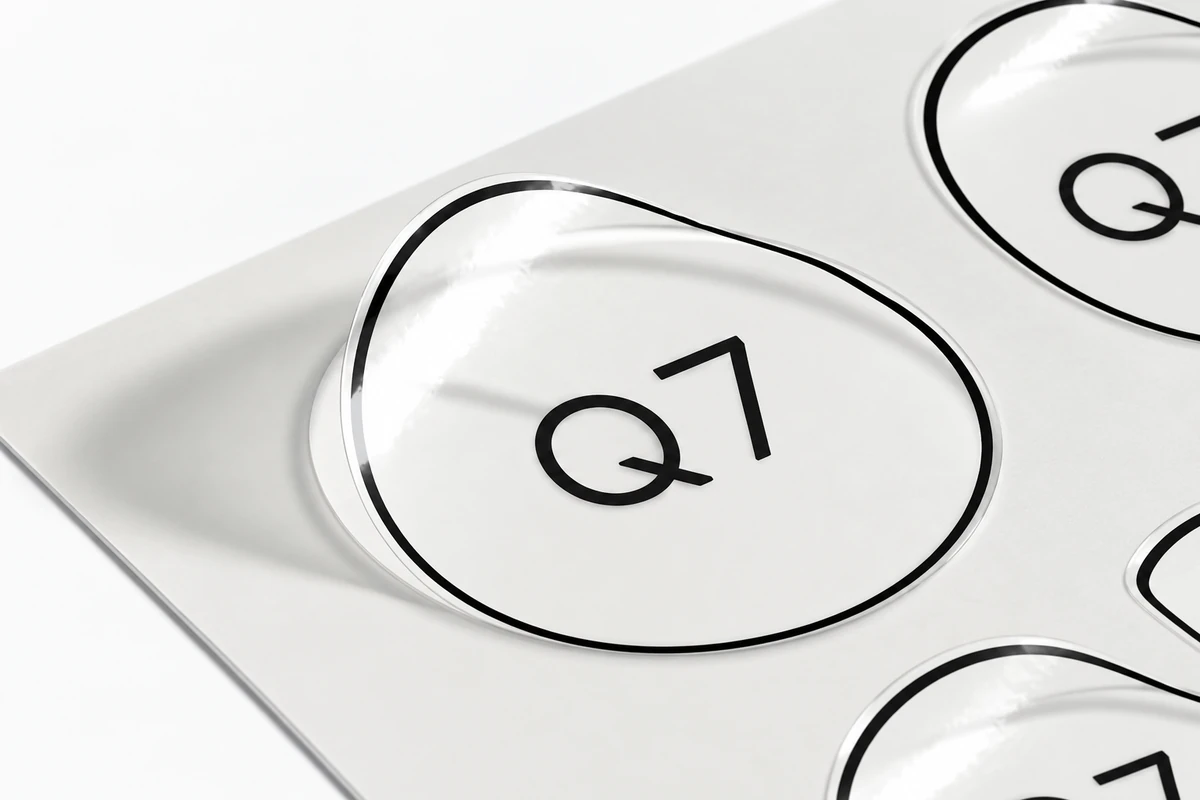
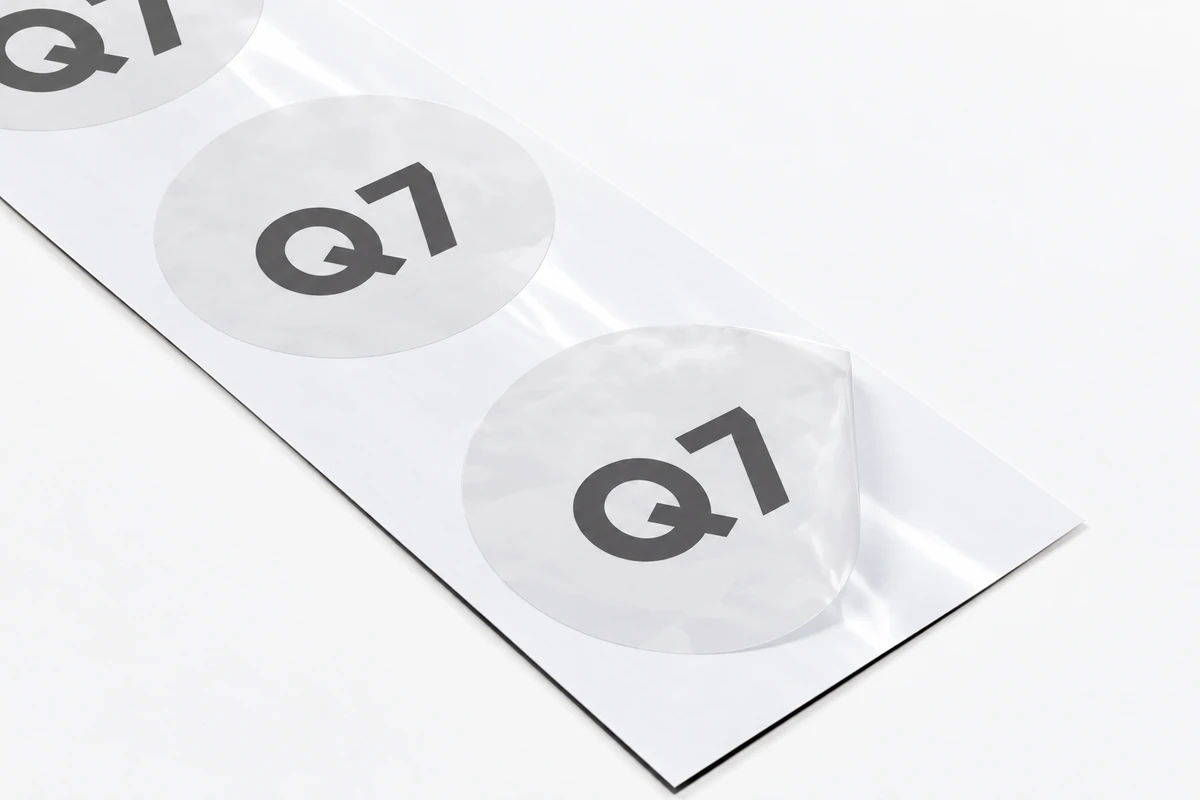
Beyond the two standard materials, there are many other label surfaces for gifts and premium goods. The samples below are reference images of surface effects — these are not the default materials of this page, so please message us on Zalo to confirm availability, price and minimum quantity before ordering.
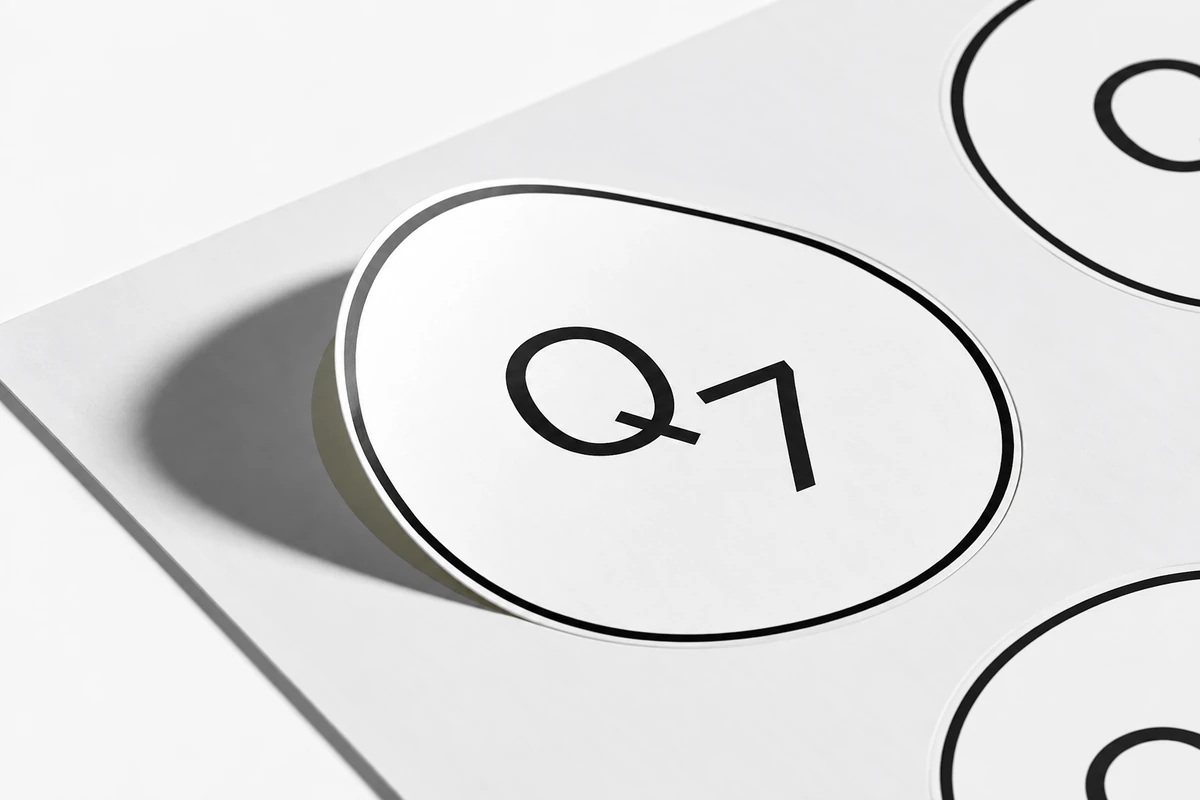
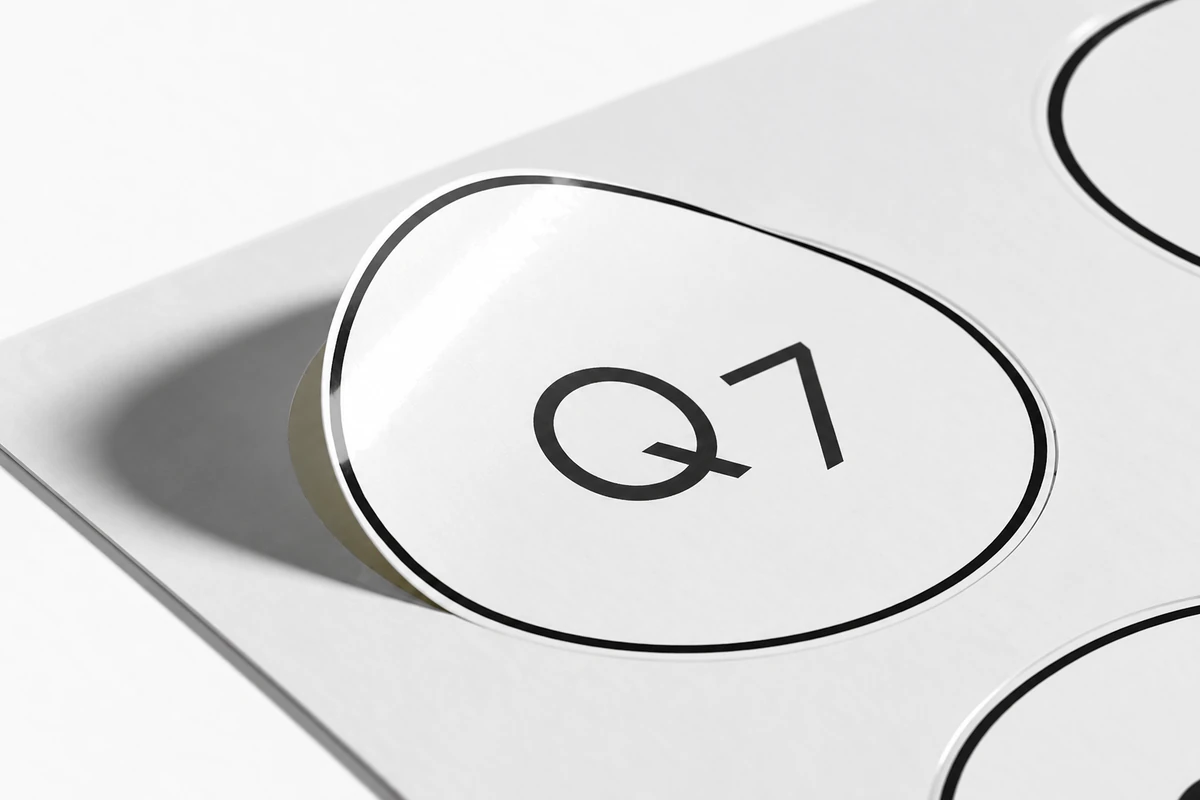
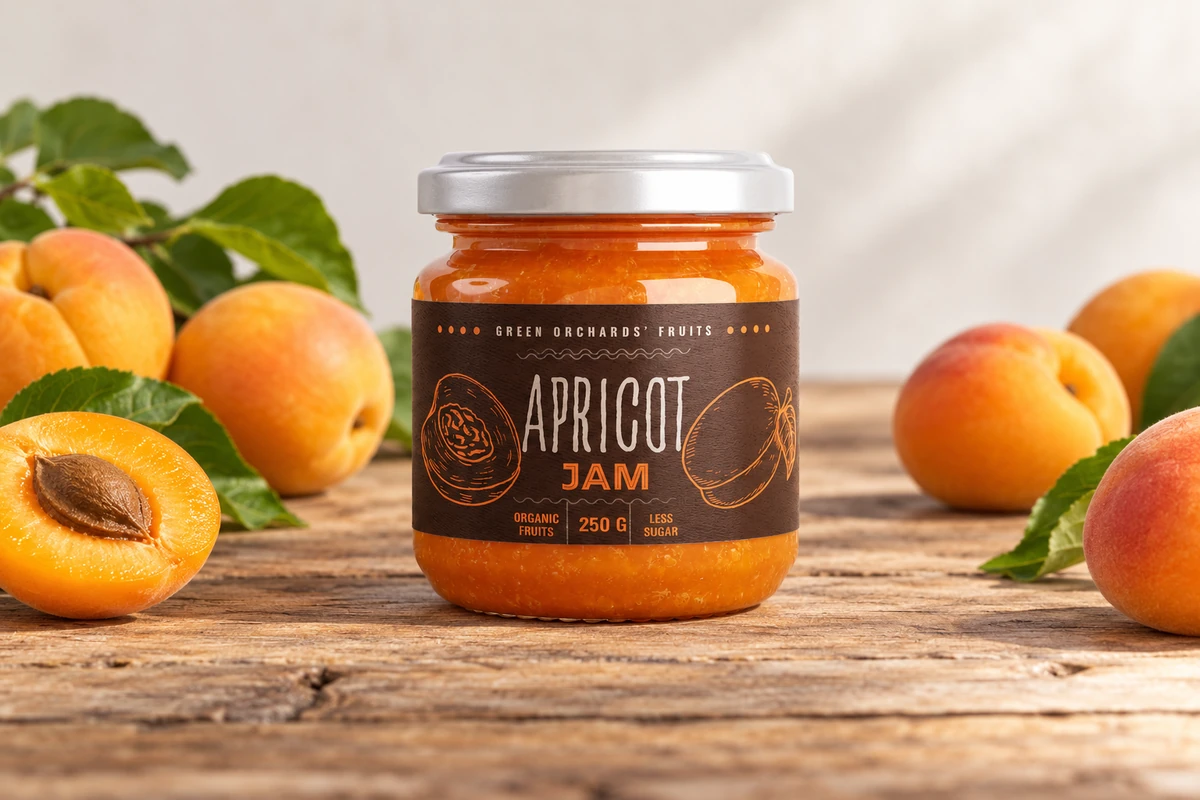
Fine art paper gives a handmade feel, often used for jam, honey, tea, scented candles and homemade liquor. Textured or fibrous surfaces make printed colors slightly deeper, and text under 6pt can blur, so designs should use larger text than usual and avoid detailed photo backgrounds.
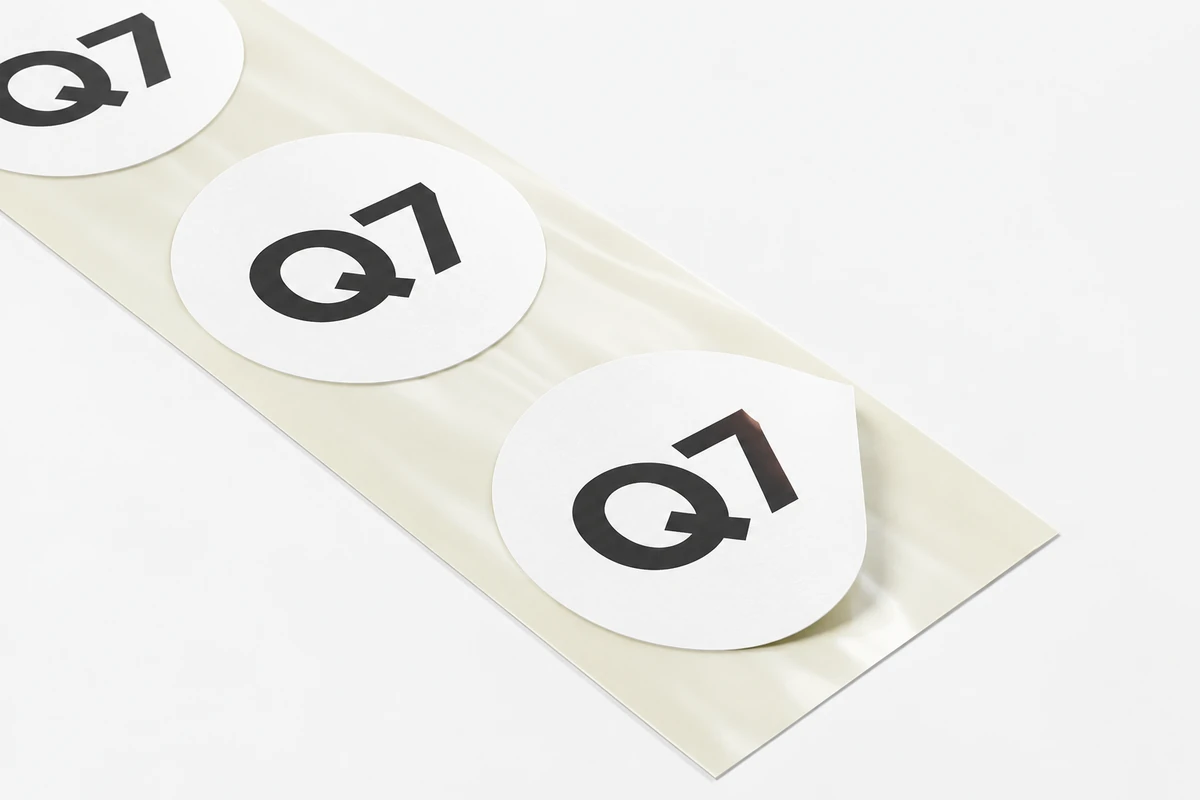
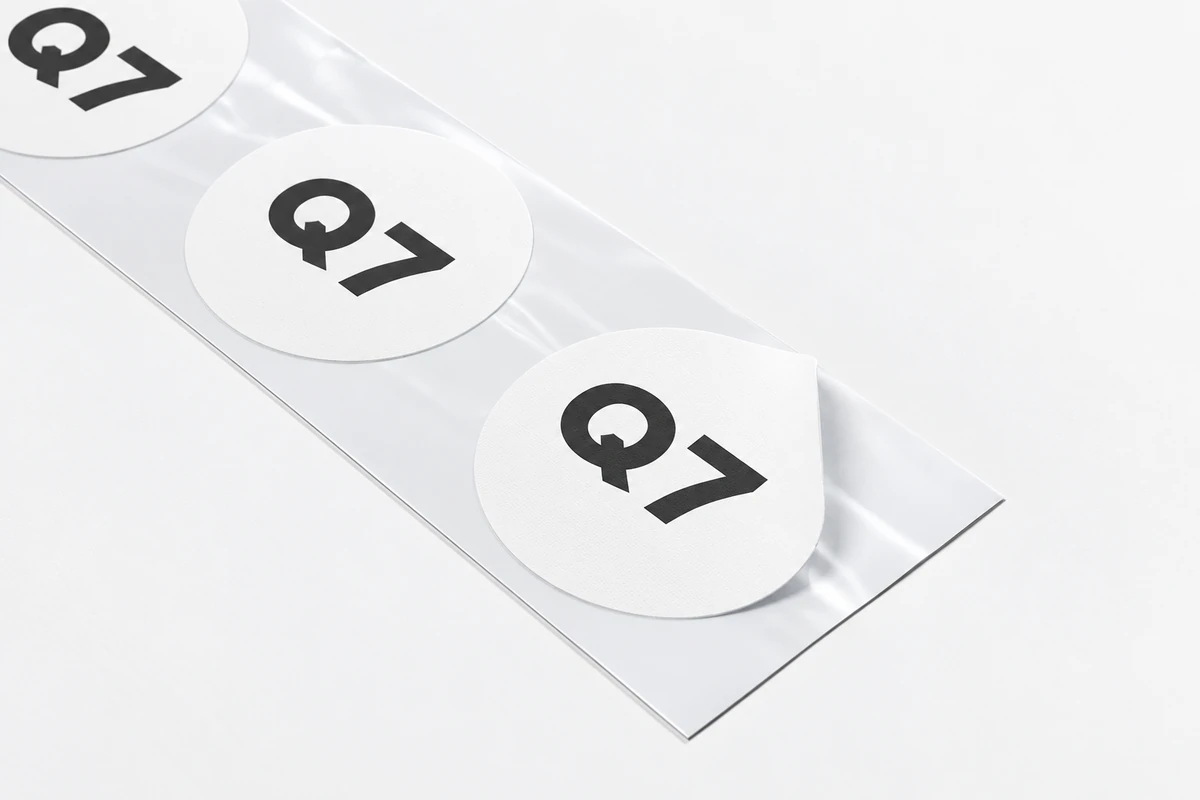
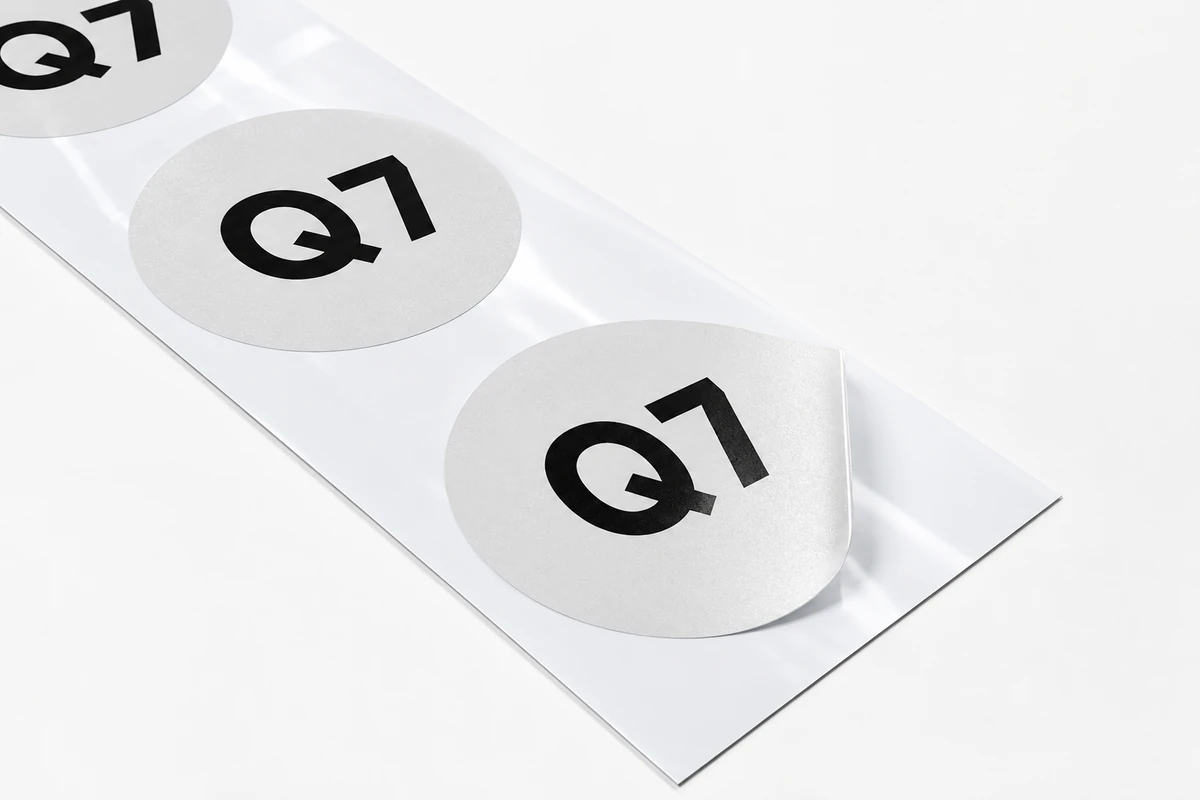
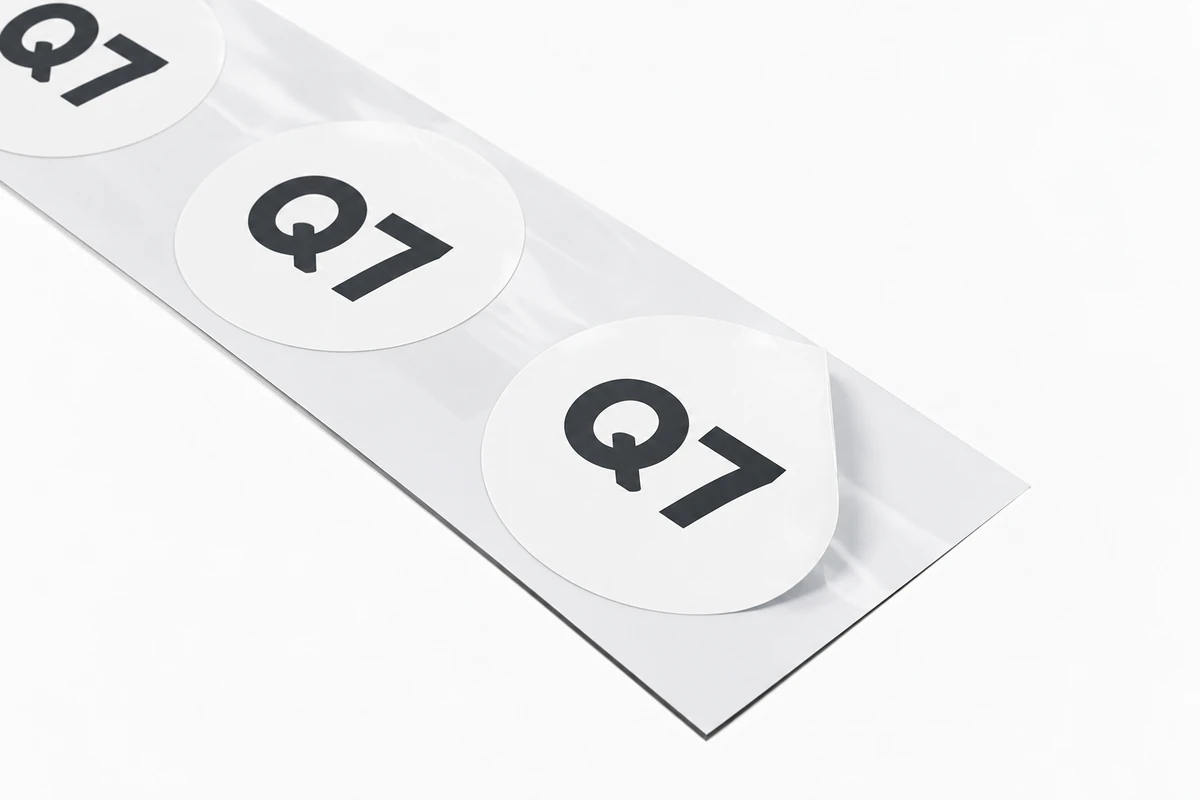
Dark and metallic bases go the other way: the reflective surface makes printed colors look more vivid, but white ink and light areas are very hard to render. If the design has white text on black or metallic backgrounds, approve a real printed sample before running the whole batch.
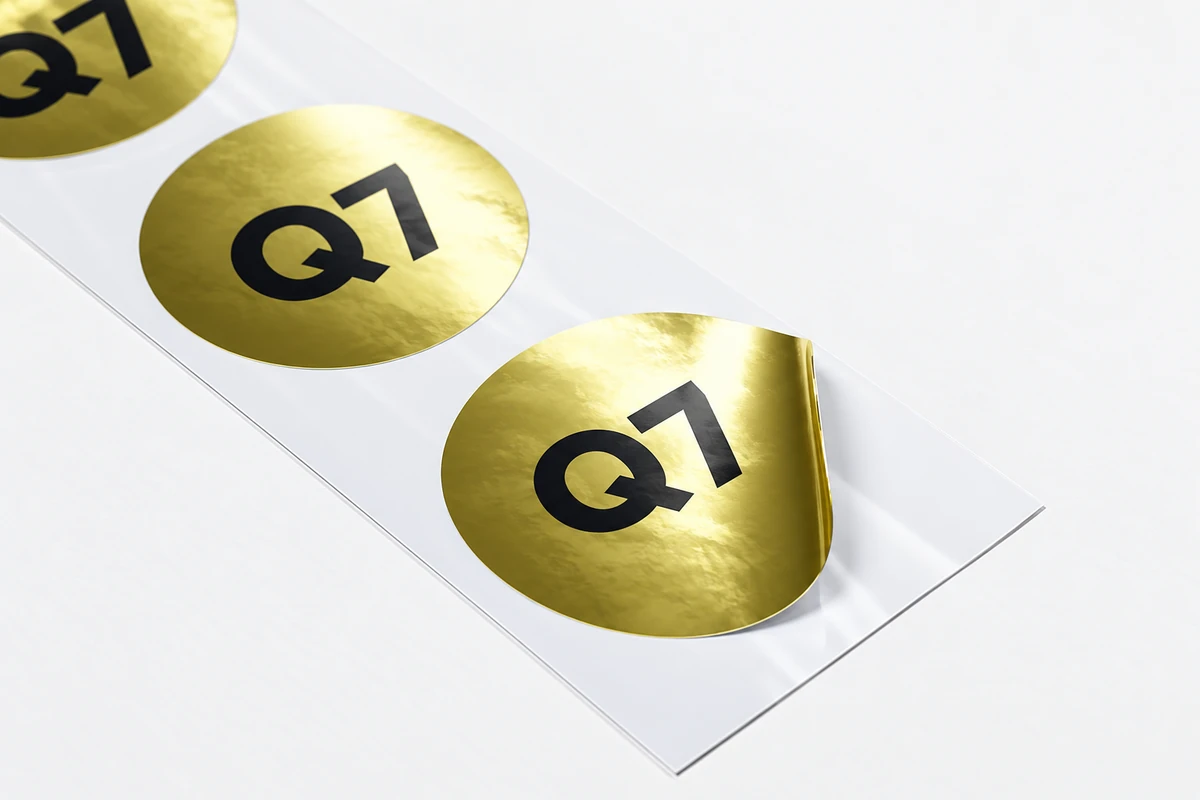
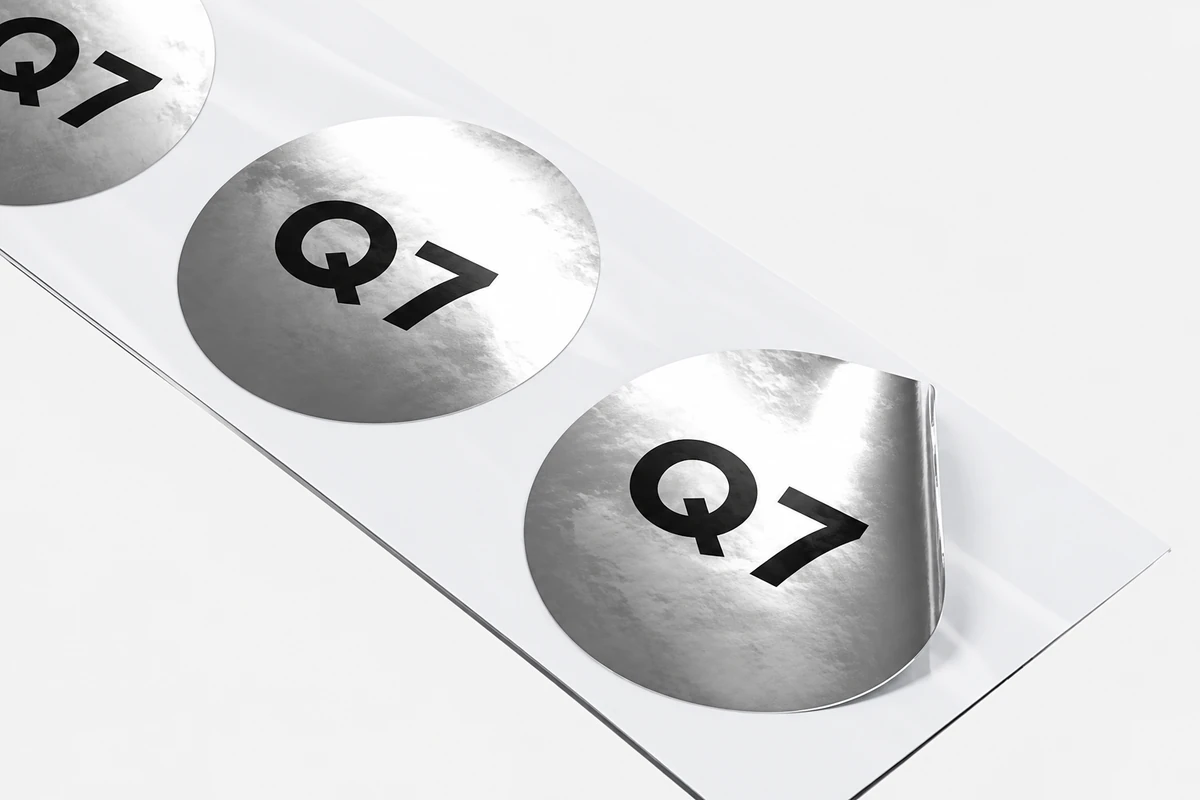
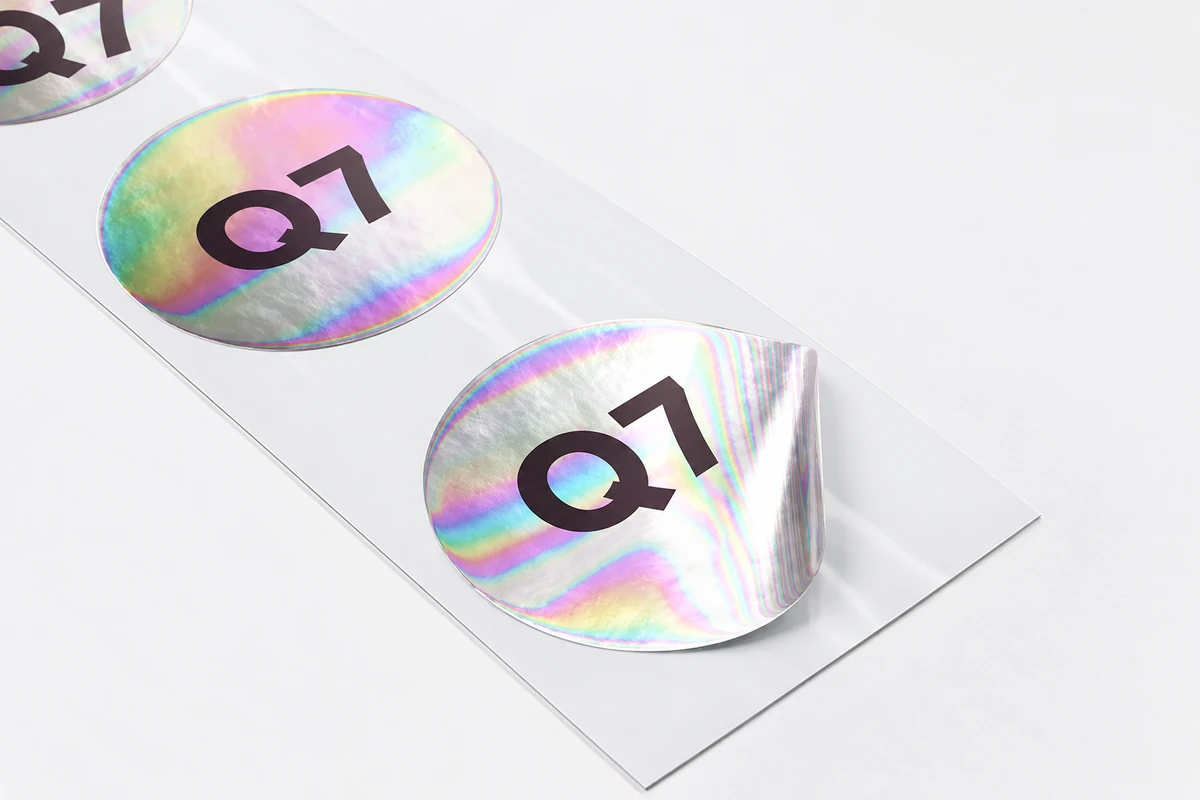
Hologram and clear labels are often used for anti-counterfeiting and for a "no-label look" on glass bottles. Clear labels require a design file with a white ink underlayer, otherwise the colors are swallowed by the product behind.
Matte lamination, glossy lamination or none
Lamination is a thin coating pressed onto the print after printing. This product page offers three levels, and each affects both the look and the durability of the label:
Nine label sizes available to order
Small sizes for cup lids and box lids: 3x3cm label printing, 4x4cm label printing and 5x5cm label printing. These are the three most ordered sizes because they fit lids exactly.
Medium sizes for bottle bodies, jars and paper boxes: 6x6cm label printing, 7x7cm label printing, 8x8cm label printing.
Large sizes when more information is needed: 9x9cm label printing, 10x10cm label printing and 20x10cm label printing. The 20x10cm rectangle is often used for box front labels or ingredient labels wrapped around bottles.
Paper or plastic decal, matte or glossy lamination
Matte-laminated paper decal labels are the common choice: lowest cost, with a natural matte finish that suits a handmade style. The downside is they soften and tear when wet, so only apply them in dry places.
Glossy-laminated plastic decal labels withstand moisture and wet hands, with vivid color. This is the type to choose for drink cups, bottles and hot food containers.
Both materials also have an unlaminated option, slightly cheaper but easily scratched by rubbing during transport.
Quantity tiers
Six tiers selectable on the page: 100 labels, 200 labels, 500 labels, 1000 labels, 2000 labels and 5000 labels.
The 100-label minimum lets small shops and home kitchens test a design before ordering a big batch. From 1,000 labels up, the unit price per label drops noticeably.
Orders for Fast label printing delivered in 1 to 2 working days for common sizes with approved files.
Labels for drink shops and bakeries
Milk tea cup stickers and coffee cup stickers are the most regular orders — the lid sticker is both the shop logo and keeps the lid from popping open during delivery. Choose plastic decal for these, since cups often collect condensation.
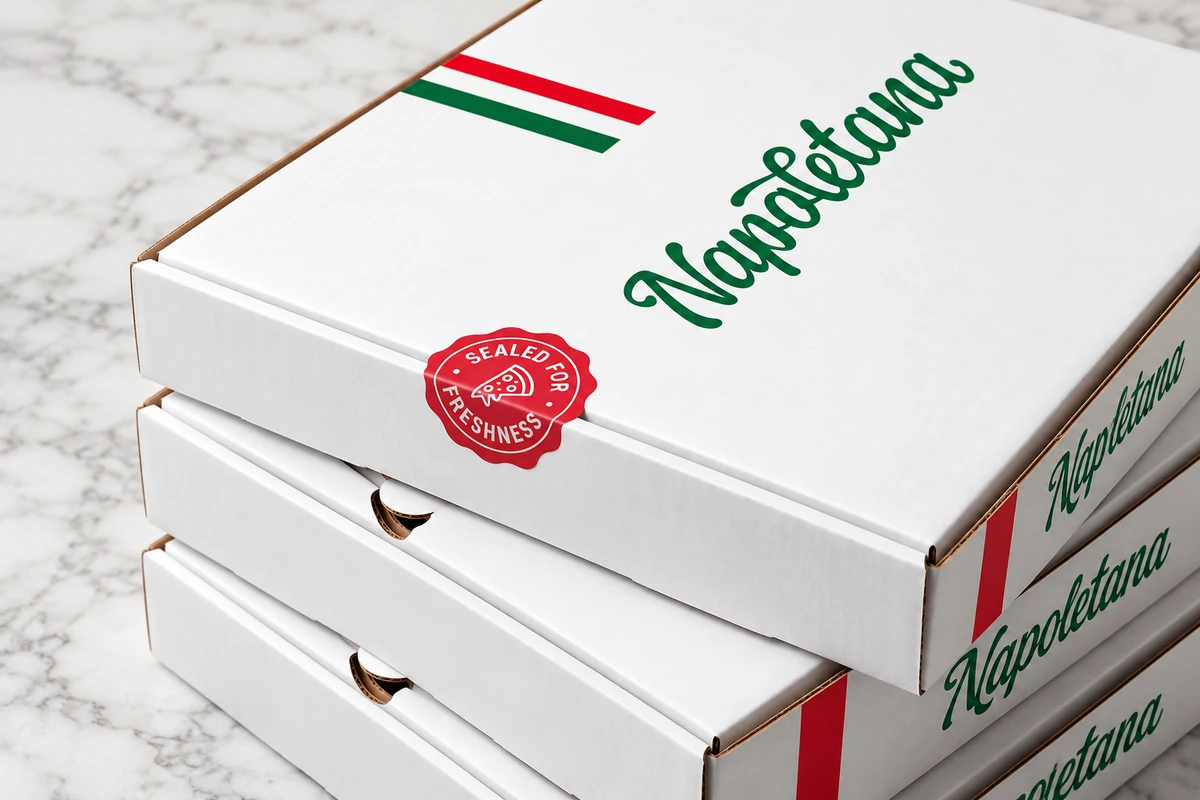
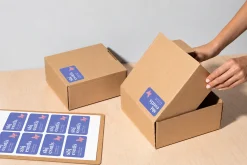
Cake box stickers and food box seal labels go across the lid edge: when the customer receives the order and sees the label intact, they know nobody has opened it.
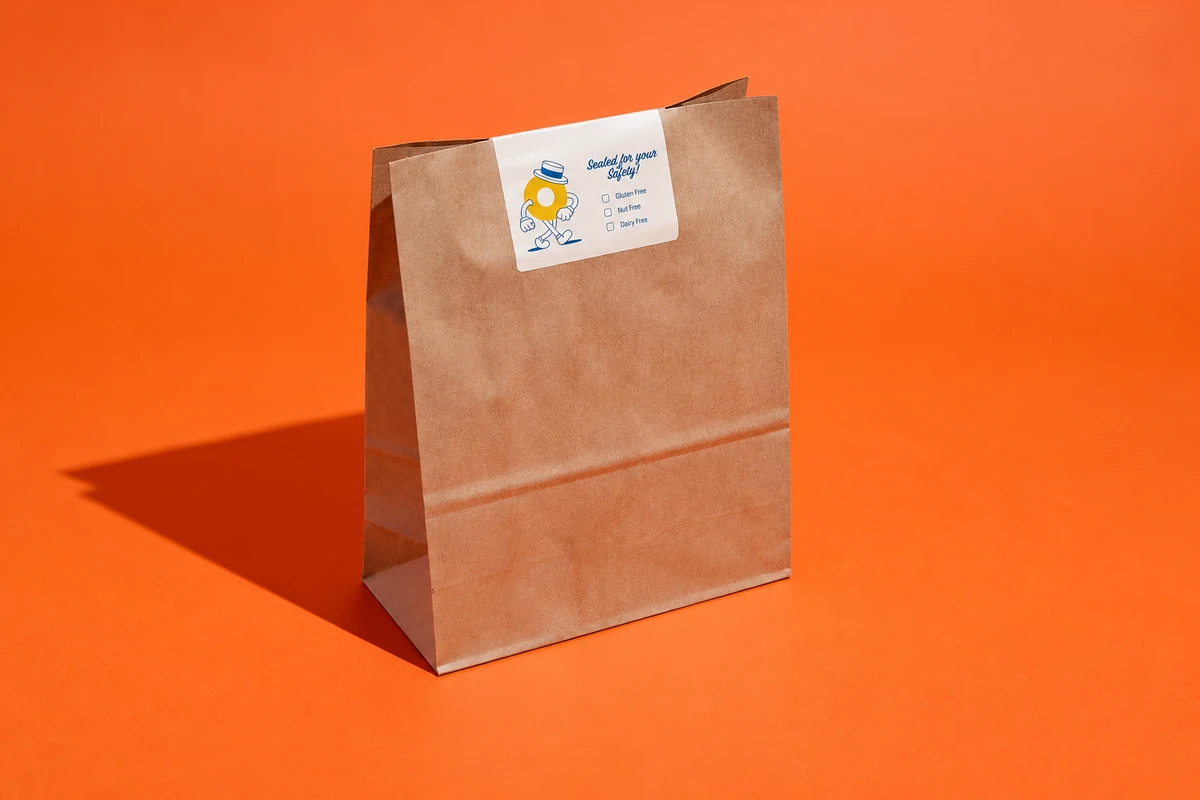
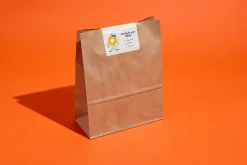
Takeaway food bag stickers are used to fold and seal the bag opening, doubling as a place to write the table number or dish name. Water bottle labels serve as bottle body labels for shops bottling their own drinks.
Typical milk tea label sets include a cup lid sticker, a bag seal and a topping label — printed in the same run for matching colors.
Labels for shops and packaged products
Handmade cosmetics labels need full ingredients, expiry date and place of manufacture, so 6x6cm and larger or a rectangle wrapped around the jar are usually chosen.
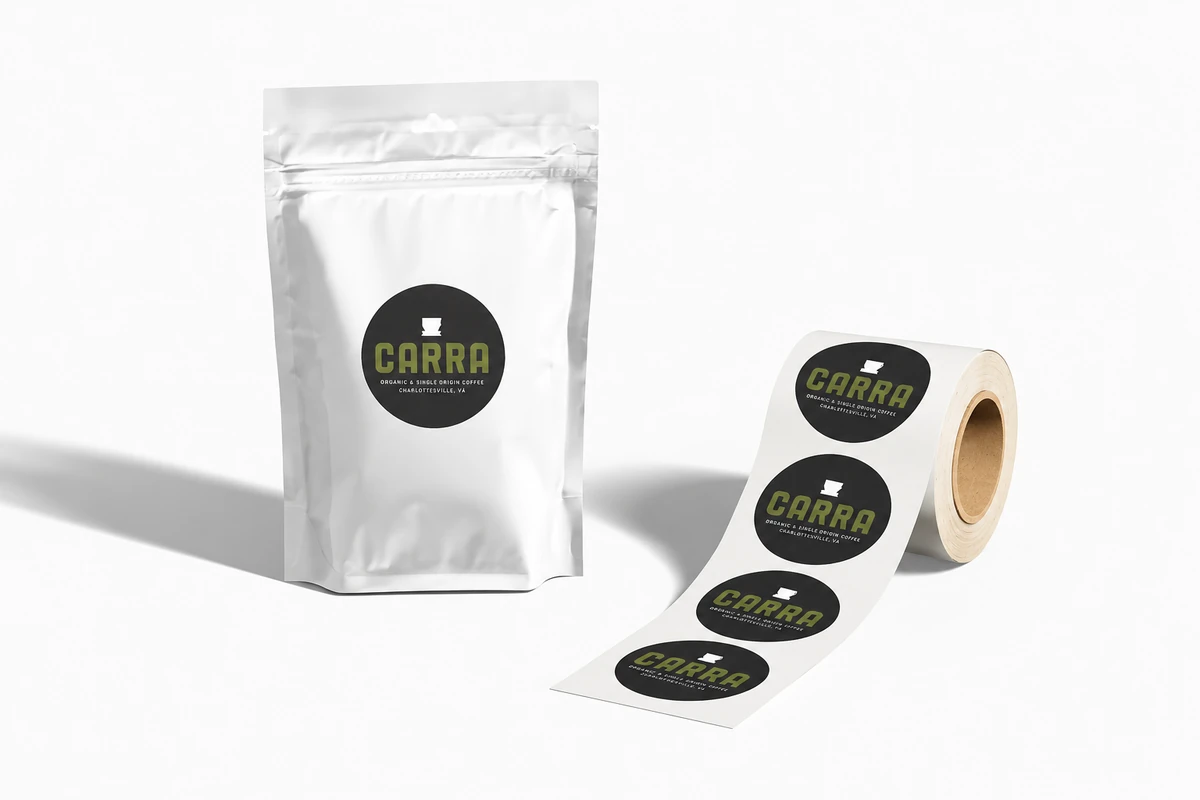
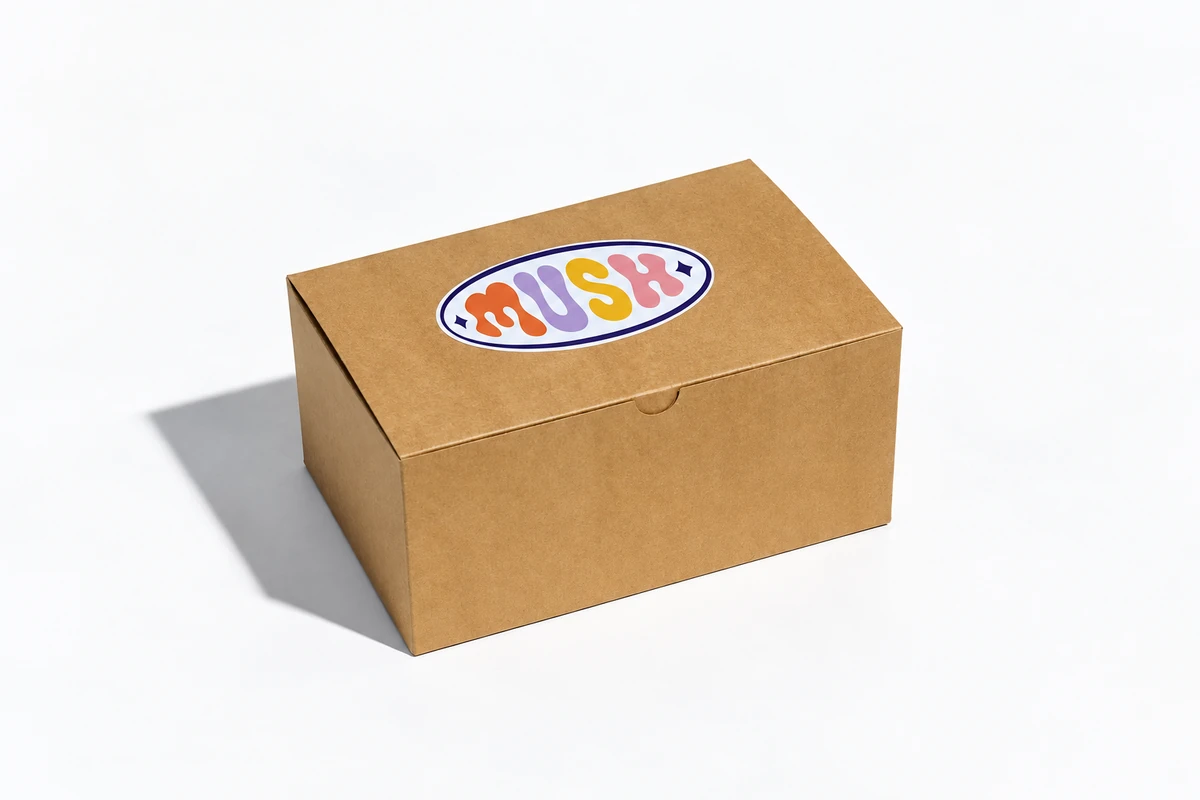
Logo stickers for packaging are the cheapest way for a small shop to have its own packaging: buy plain bags and boxes and add logo stickers, without ordering large batches of printed packaging.
Thank-you stickers for online shops go on parcels or inside orders, usually printed in one color at a small size; a few hundred last for months.
Barcode labels need white margins on both sides of the code so scanners can read it; tell us before ordering if each label has a different code. Spa labels are often used for oil bottles, small cream jars and tool boxes.
Material combinations customers often ask about
By size and placement: 3x3cm paper decal labels for cake boxes for boxes kept dry, 5x5cm plastic decal labels for water bottles for bottles and jars with condensation.
By lamination type: matte-laminated plastic decal labels for cosmetics suit a natural, minimalist style, glossy-laminated plastic decal labels for food for vivid color and better rub resistance in transport.
The most used items for takeaway goods are takeaway food box seal labels and waterproof milk tea cup stickers — both should be plastic decal, since boxes and cups always collect condensation.
Other common orders: ground coffee bag labels showing roast date and grind level, jam jar and packaged food labels with ingredients and expiry dates, and 20x10cm labels for product boxes when a long rectangle is needed.
Finally, multiple label designs in the same size: different designs sharing one size are printed together in one run, saving setup costs compared with printing each design separately.
- No lamination: cheapest, natural print surface, can be written on. Used for price stickers, batch code labels, dry box labels, carton labels.
- Matte lamination: non-glossy, non-reflective, smooth to the touch, with deep, elegant colors. Used for cosmetics, premium food and gifts.
- Glossy lamination: reflective surface, vivid high-contrast colors, best scratch resistance. Used for soft drinks, confectionery and children's products.
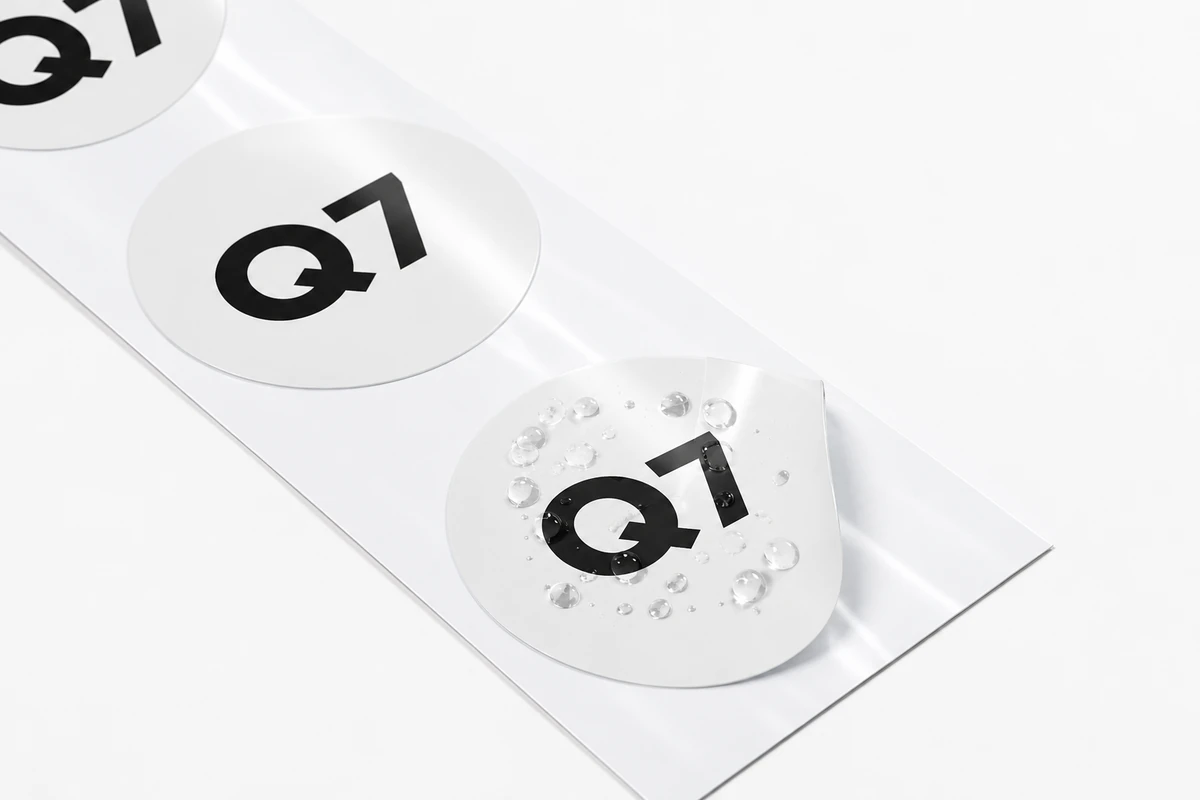
For plastic decal labels, lamination also protects the ink. Labels on iced bottles, cream jars and sauce jars get wiped again and again — without lamination, the ink gradually fades with the cloth. That's why we recommend laminating labels for bottles and jars; matte or glossy depends on your brand positioning.
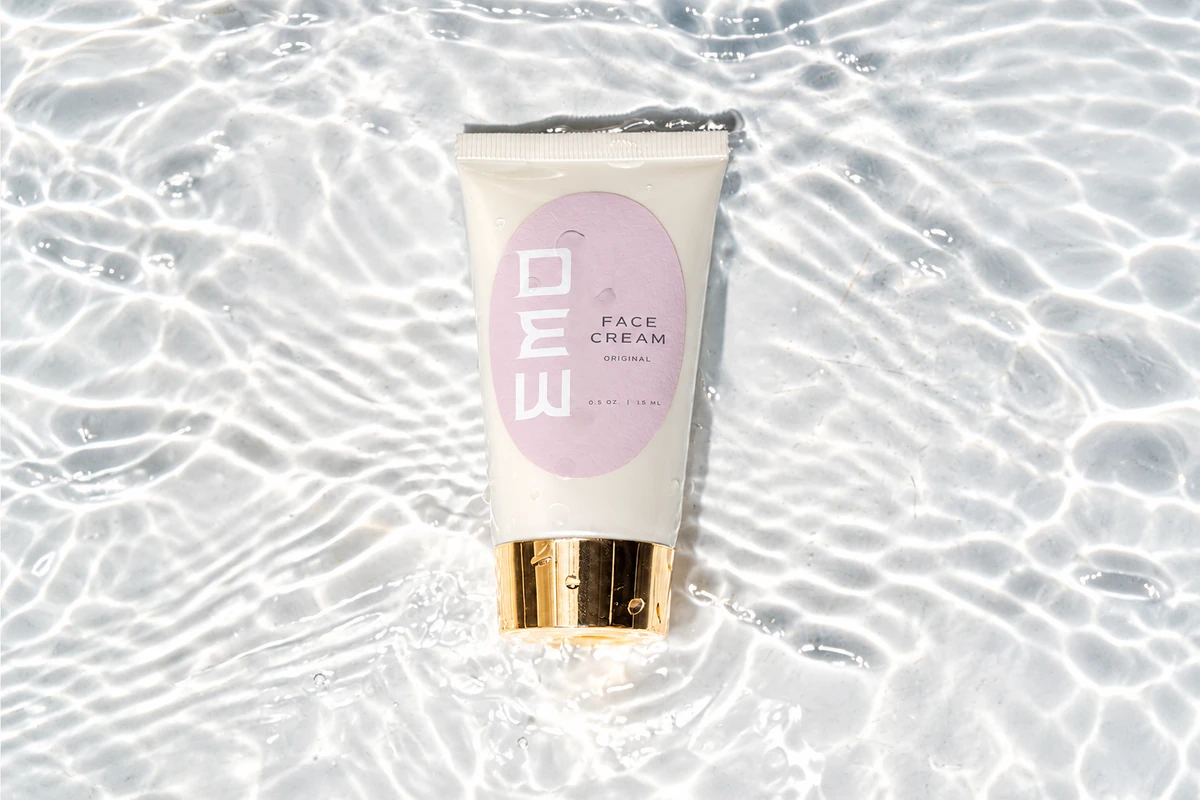
A small note: laminated labels can no longer be written on with a pen. If your process requires handwriting the production or expiry date on the label, choose no lamination, or leave an unlaminated blank box — this must be ordered separately and requested in advance.
Label sizes and die-cut shapes
This product page offers nine standard sizes: 3×3, 4×4, 5×5, 6×6, 7×7, 8×8, 9×9, 10×10 and 20×10 cm. These nine cover almost all real needs — small 3×3 labels for jar lids and seals, 5×5 to 7×7 for jars and small bottles, 10×10 for cake and cosmetics boxes, 20×10 for cartons and large bottles.
The size shown on the page is the bounding box of the label. A round label 5 cm in diameter fits in a 5×5 cm box, and a 9×5 cm oval fits in a 10×10 cm box. So choose the nearest box that contains your label shape; the shape doesn't need to be square.
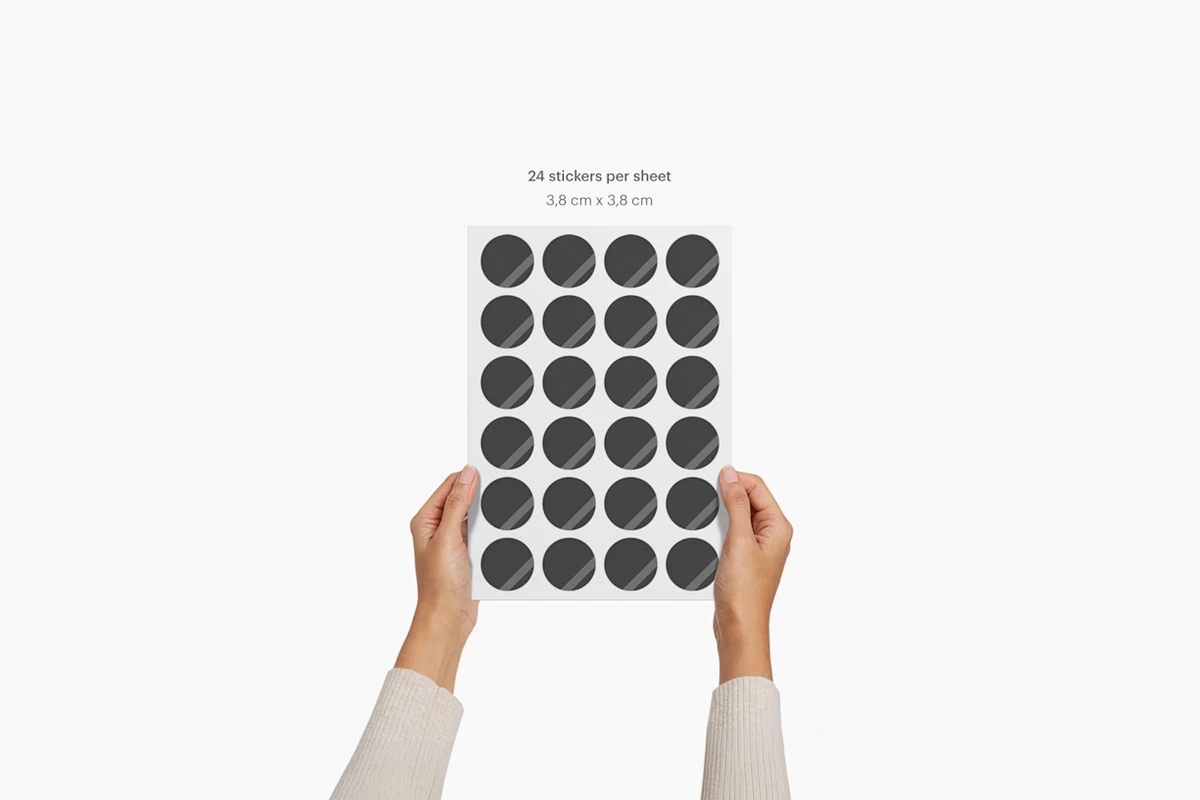
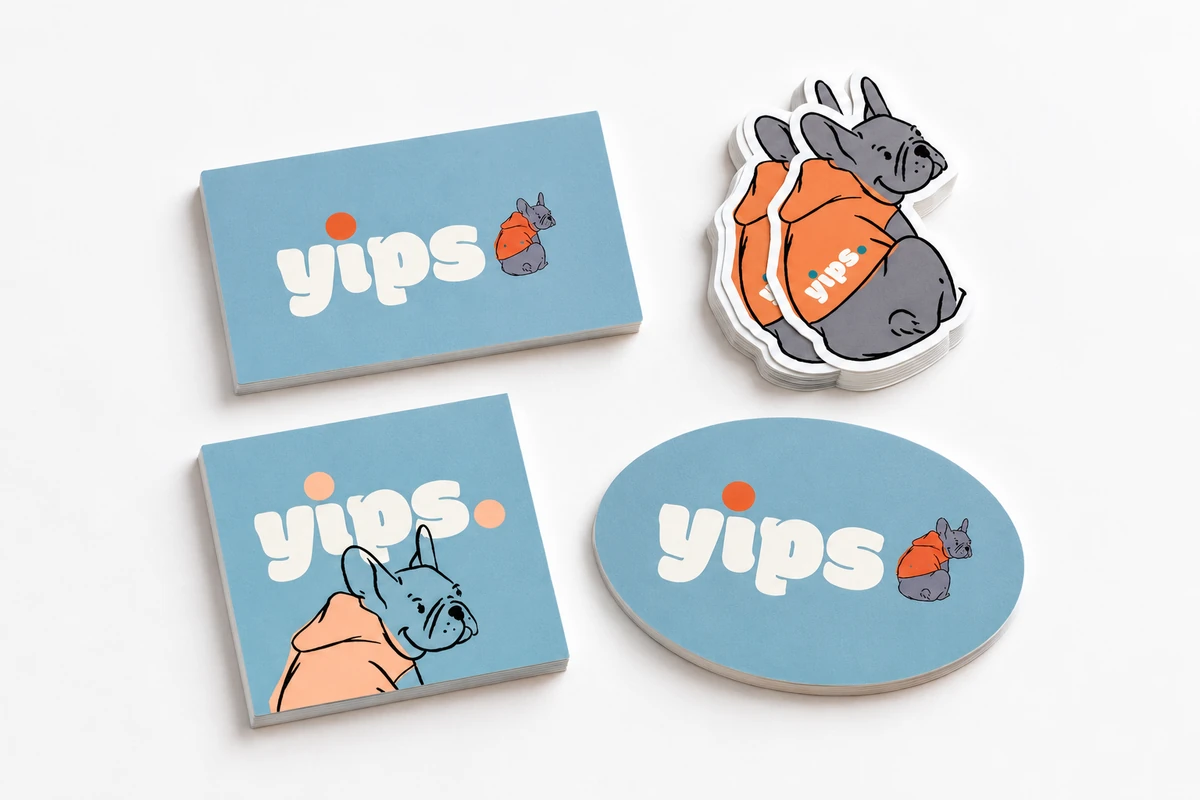
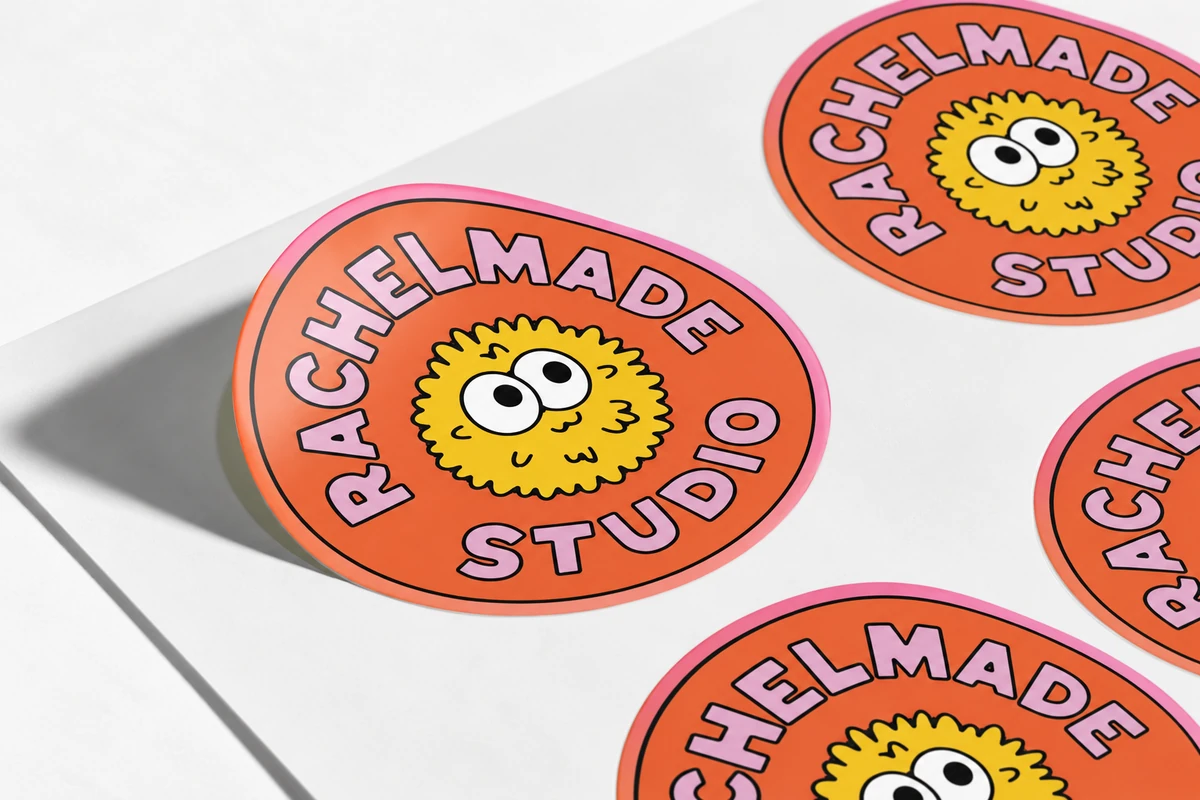
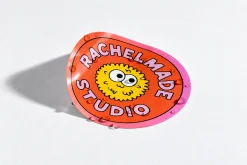
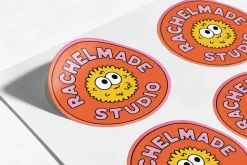
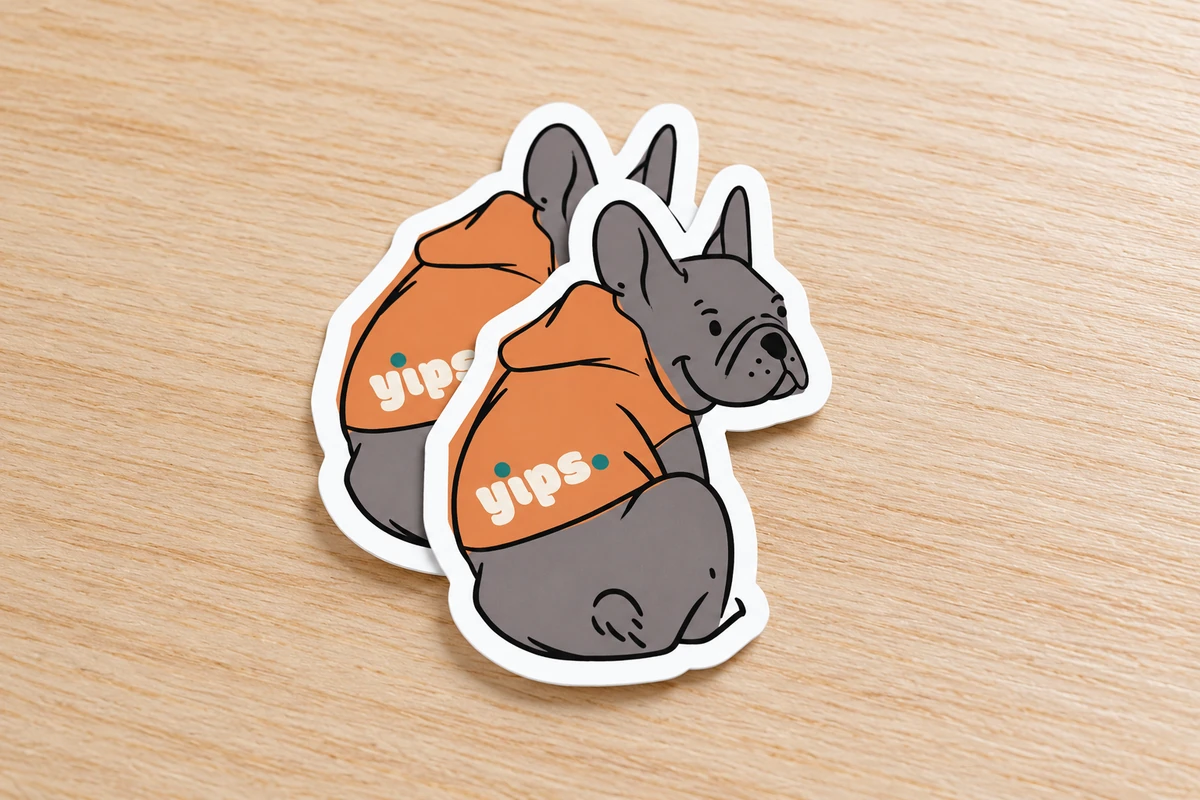
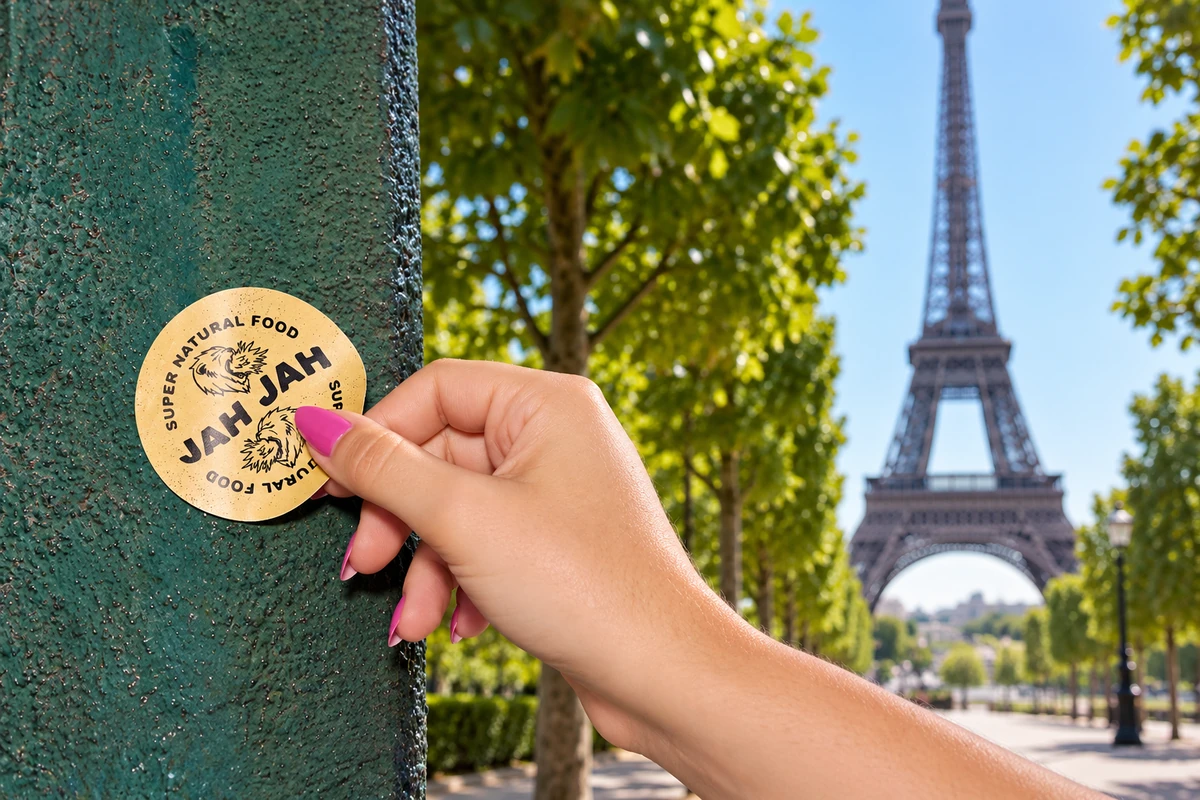
For shapes, we can die-cut round, square, rounded rectangle, oval, and along the design outline (custom die-cut). Complex custom shapes require a separate cutting die, so they're usually only economical from a thousand labels up; below that, round or rounded-rectangle shapes are cheaper.
When designing custom-shaped labels, keep the smallest detail no thinner than 2 mm. The die line isn't perfectly accurate to a tenth of a millimeter, so sharp points, whiskers and small ears easily get cut off or scuffed. Slightly rounding sharp points gives a much cleaner result.
Labels on sheets and labels on rolls
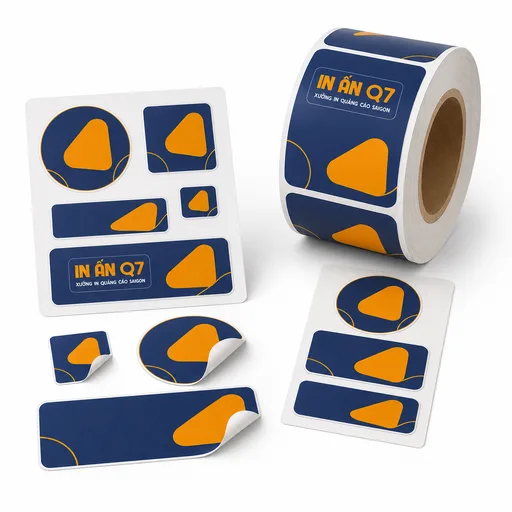
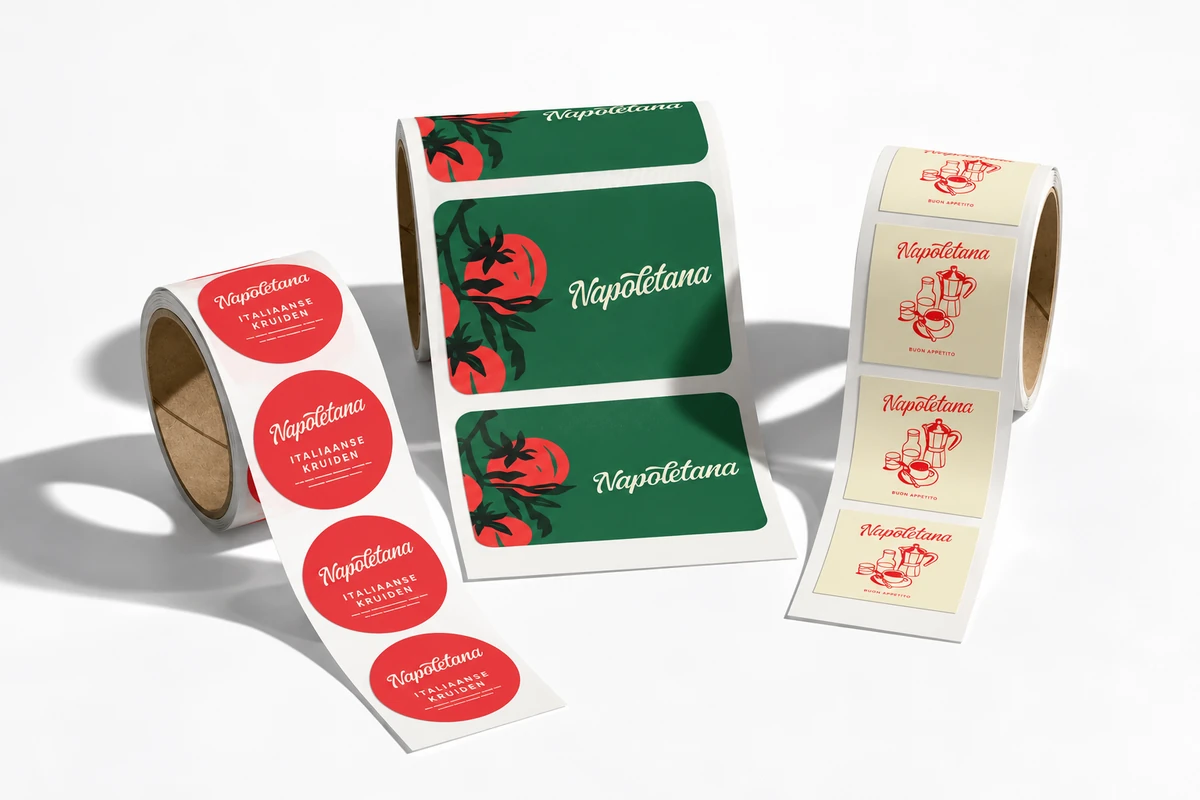
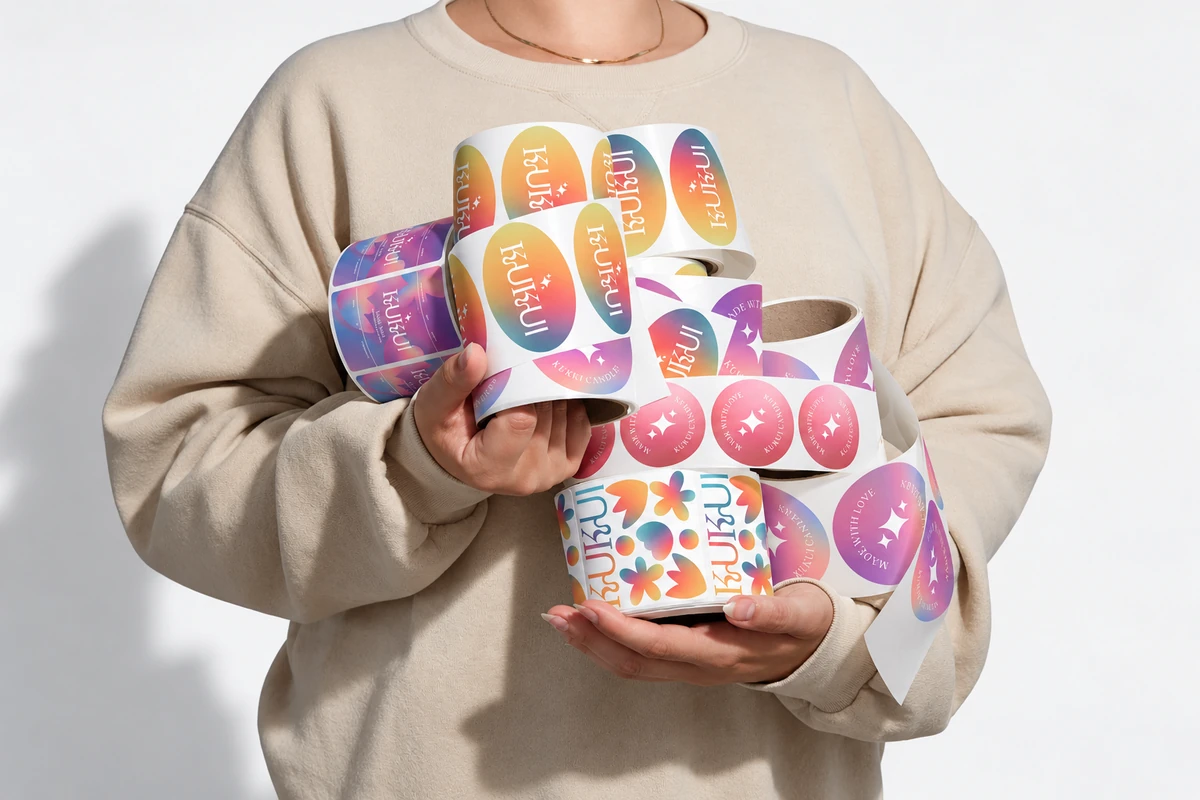
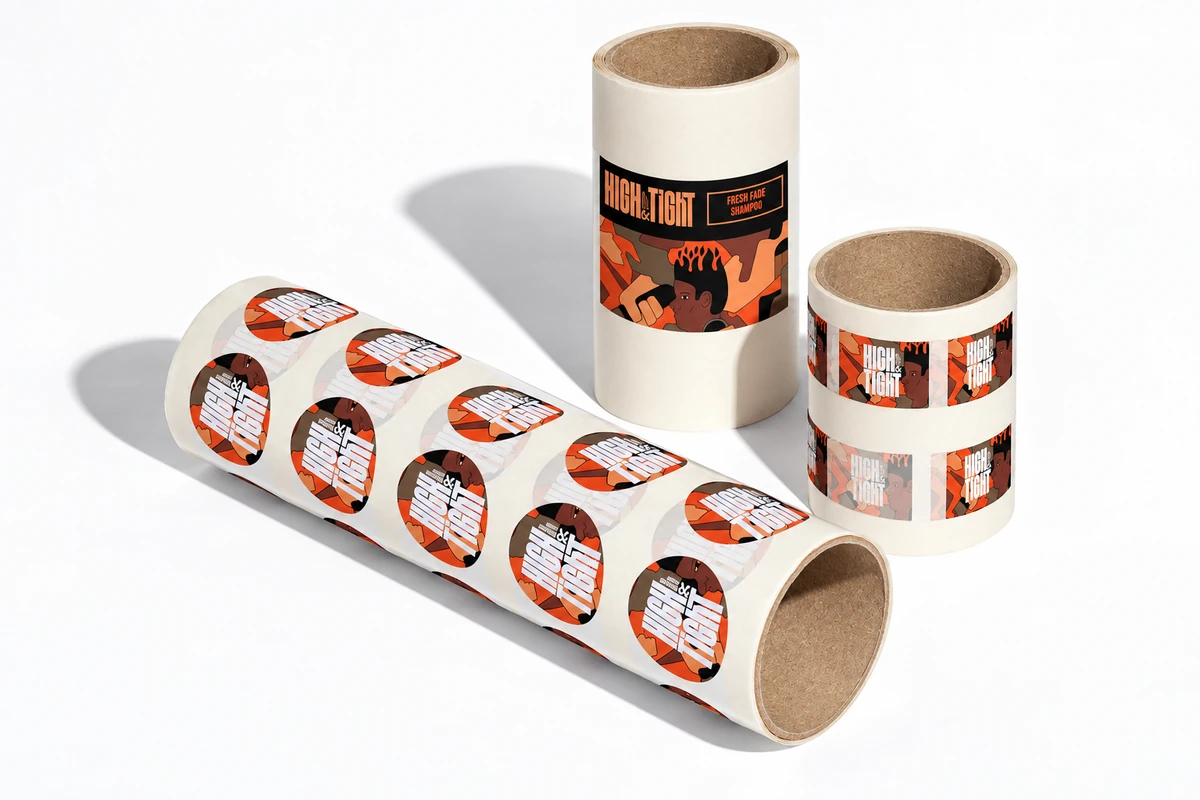
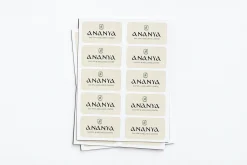
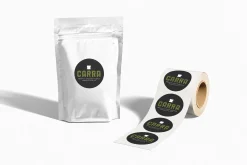
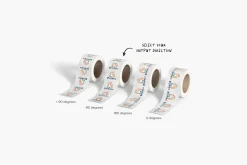
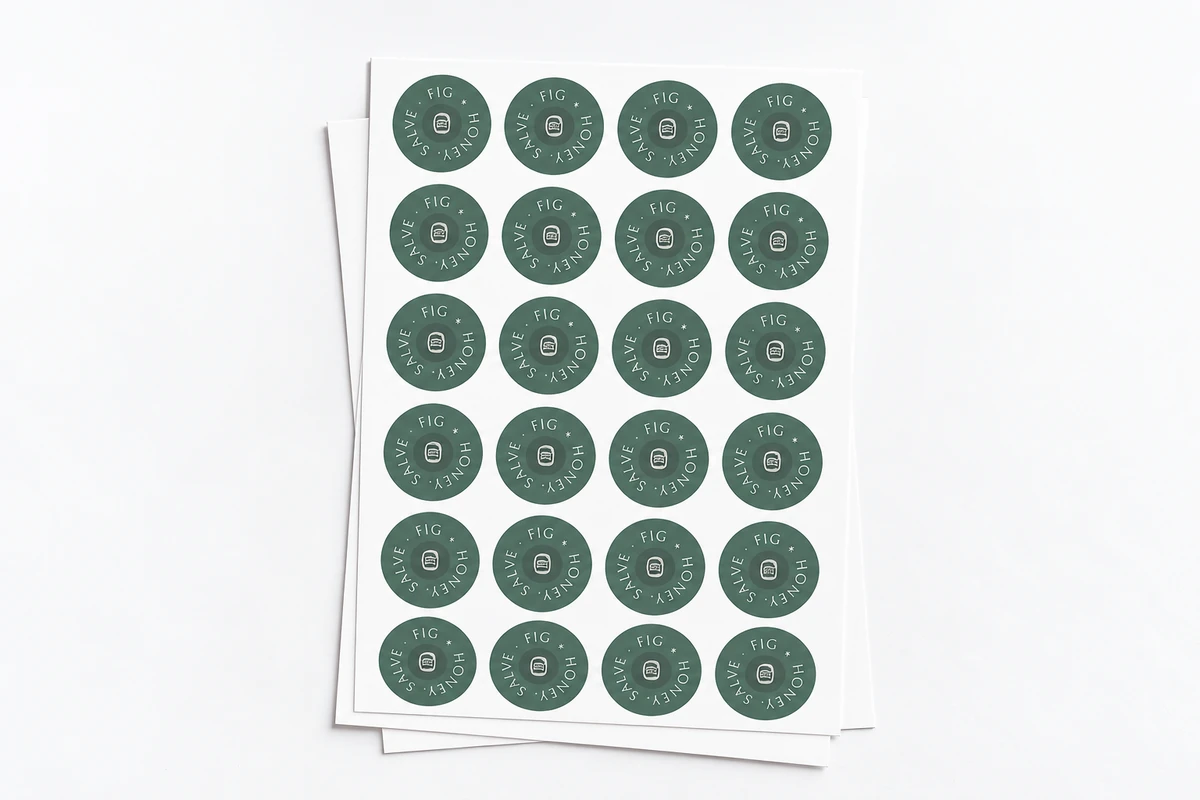
The same design can be delivered in two forms. Sheets have many labels on a pre-cut A4 or A3 sheet, peeled one at a time as needed. This form suits moderate quantities, hand application, and orders with many different designs — one design per sheet, easy to sort.
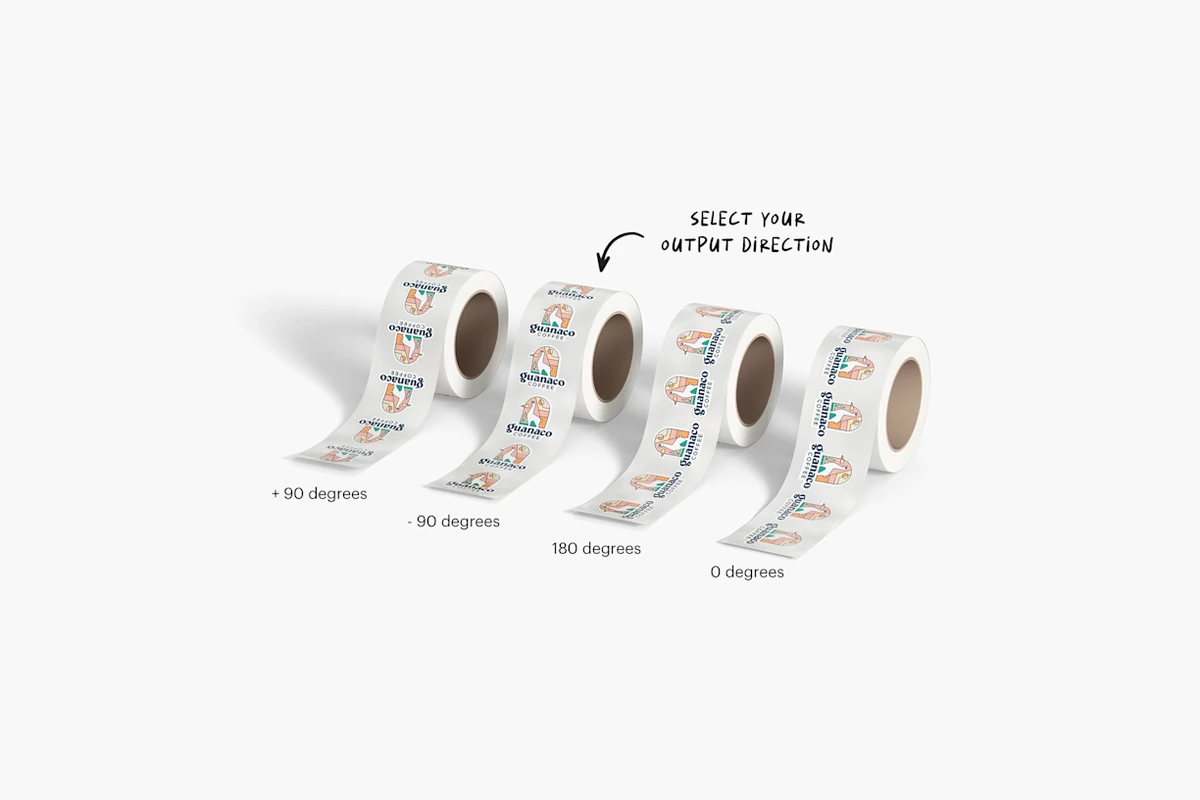
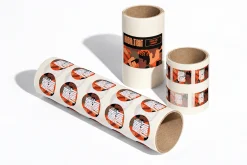
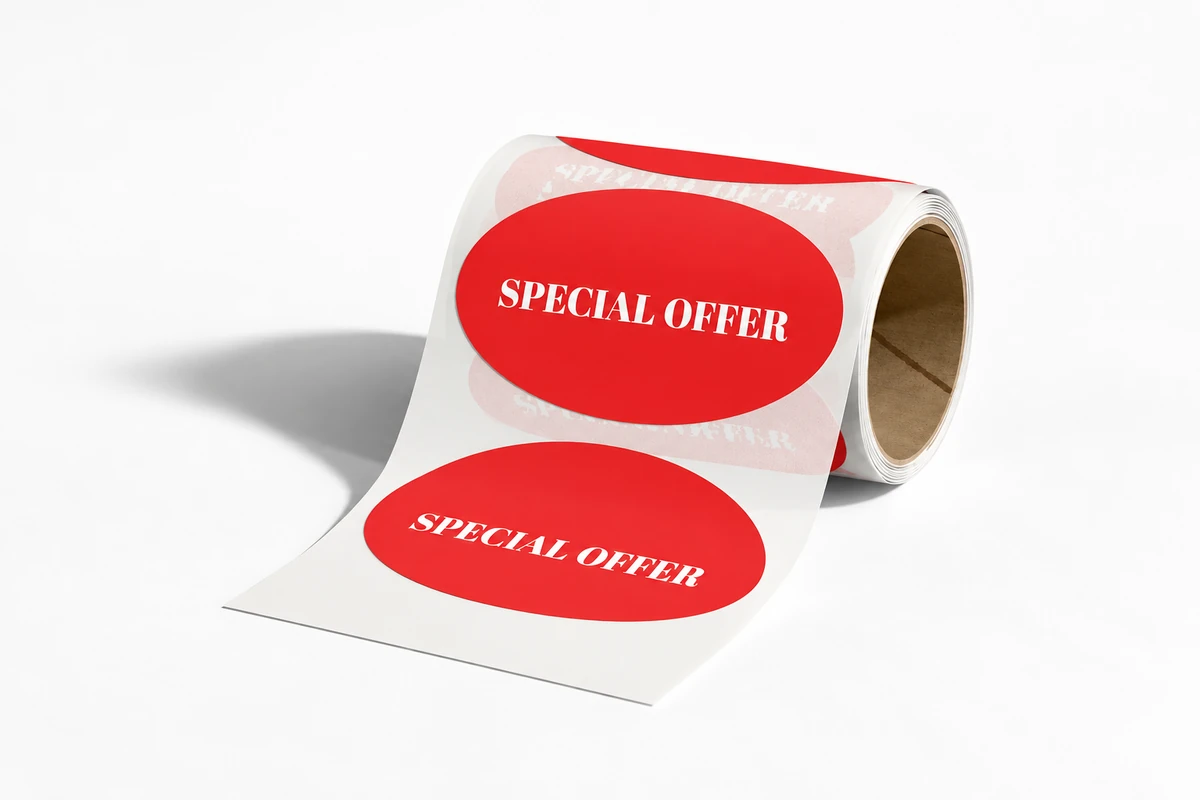
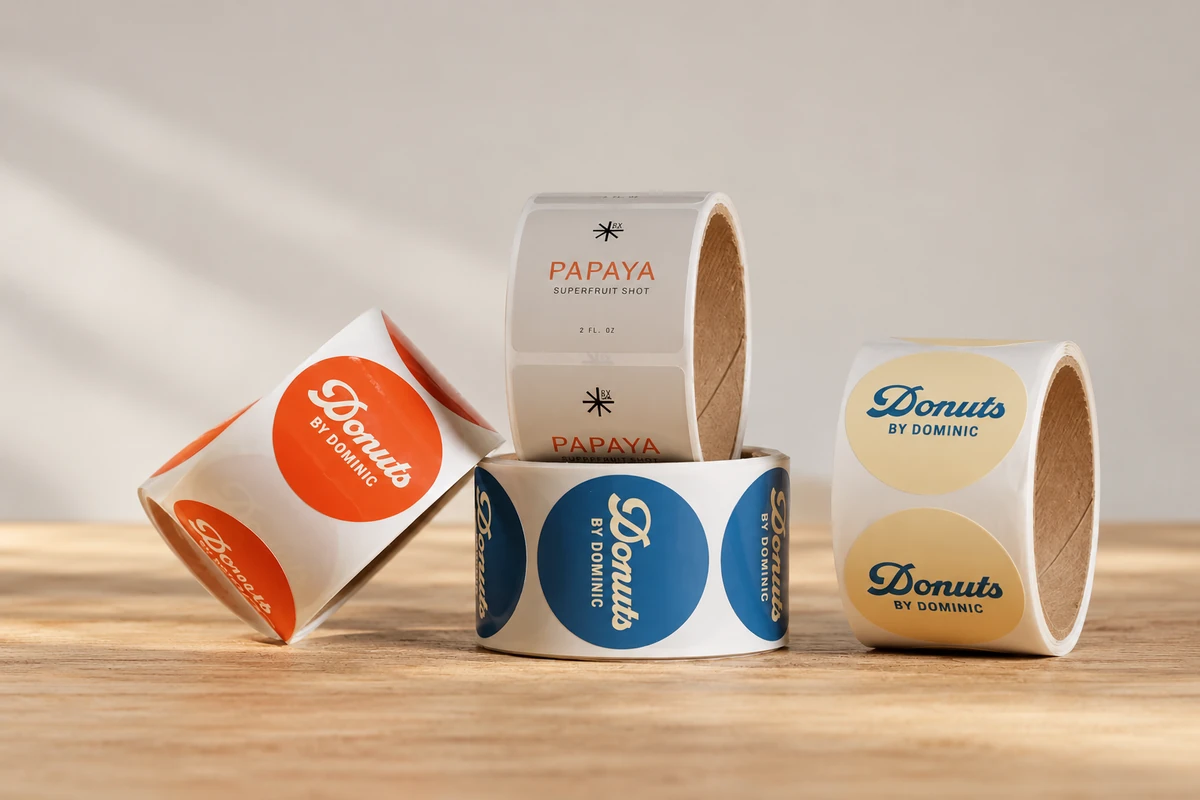
Rolls have labels running continuously on a liner strip wound around a core. This form is for those applying many labels a day or using a labeling machine: pull one off, apply, pull the next, no searching on a sheet. Roll labels also take less storage space and stay cleaner because the printed side is inside the roll.
If applying by machine, tell us three parameters: the core diameter, the maximum outer diameter of the roll, and the unwind direction. The unwind direction is the most often forgotten detail — the same roll unwinding the wrong way makes the machine apply labels upside down or fail to pull them.
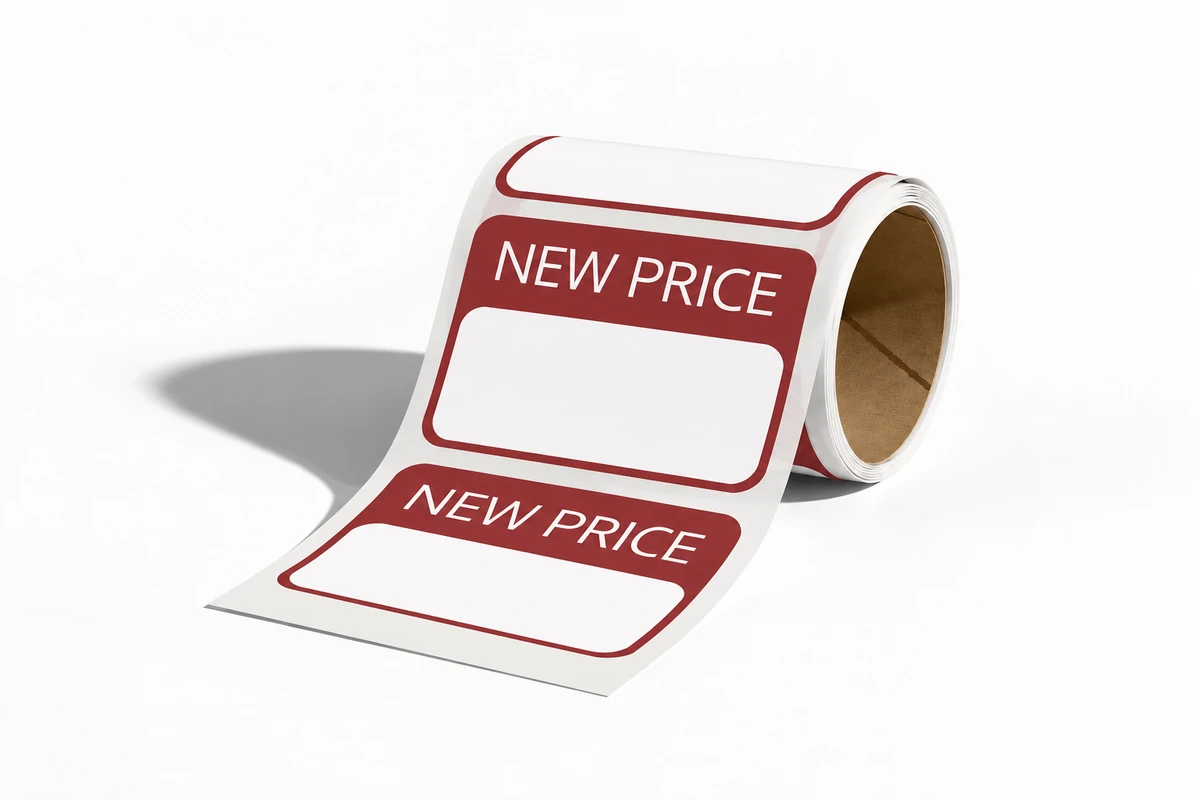
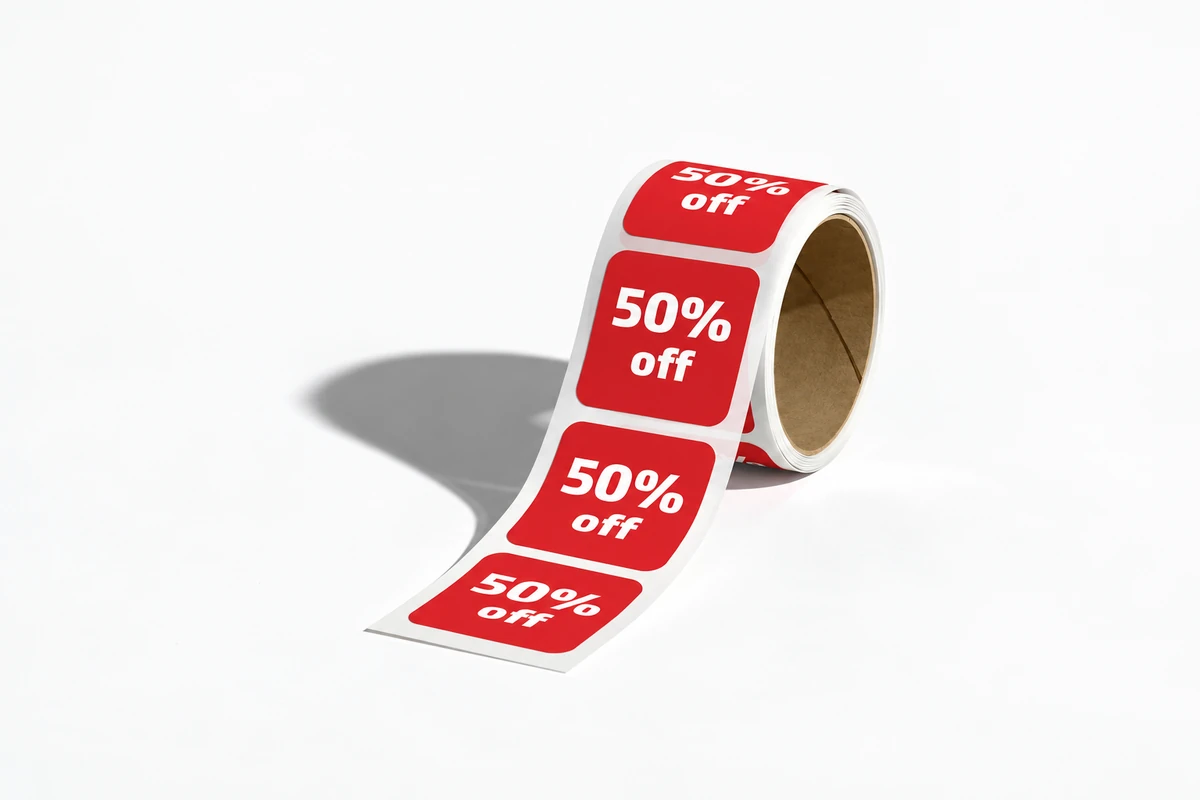
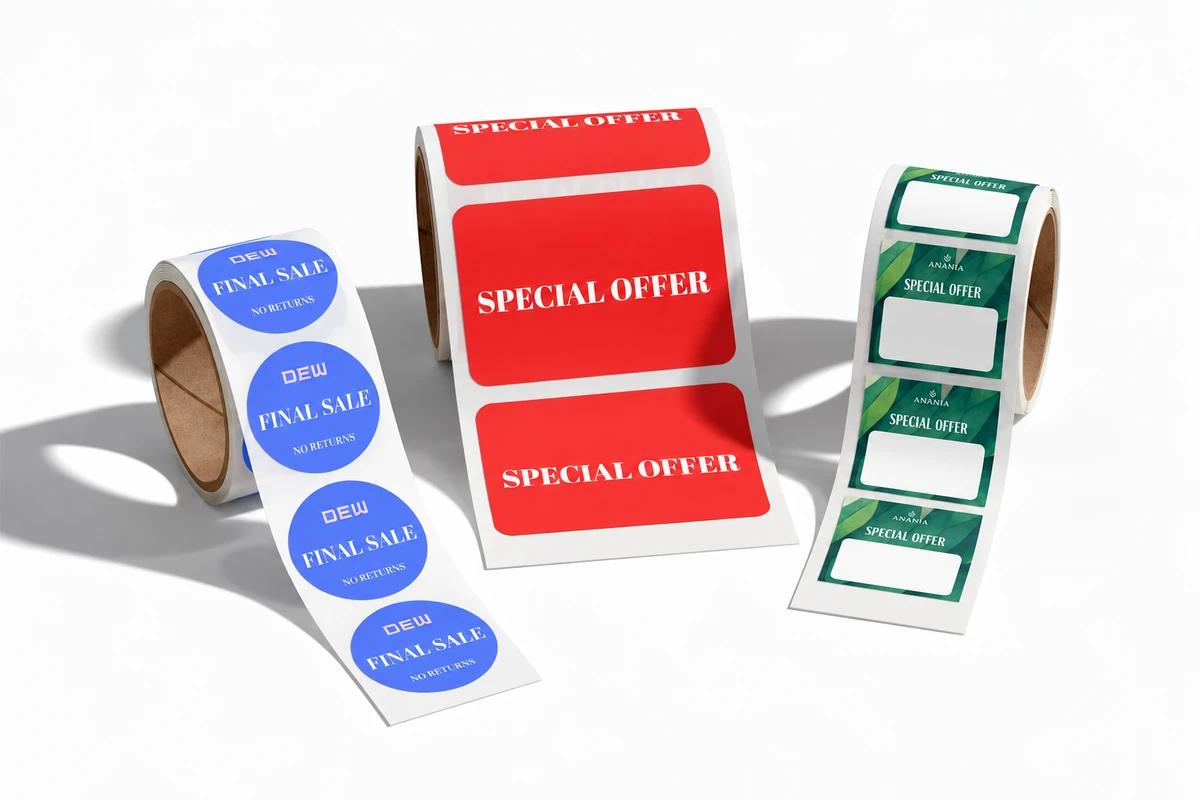
Price stickers and promotional stickers are almost always made as rolls, because they're applied in bulk over a short time and removed after the campaign. For these, we recommend unlaminated paper decal to keep costs down, and tell us in advance if you need an adhesive that peels off without residue.
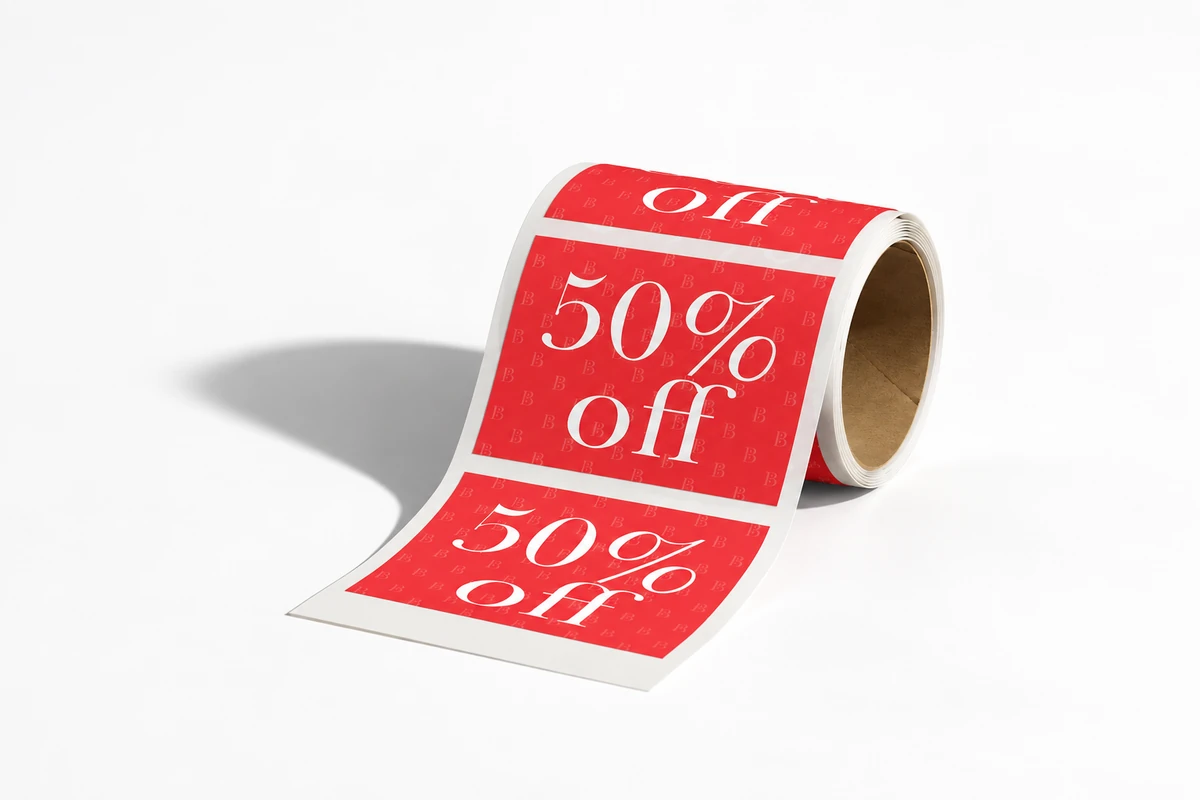
Labels for food, drinks and cosmetics
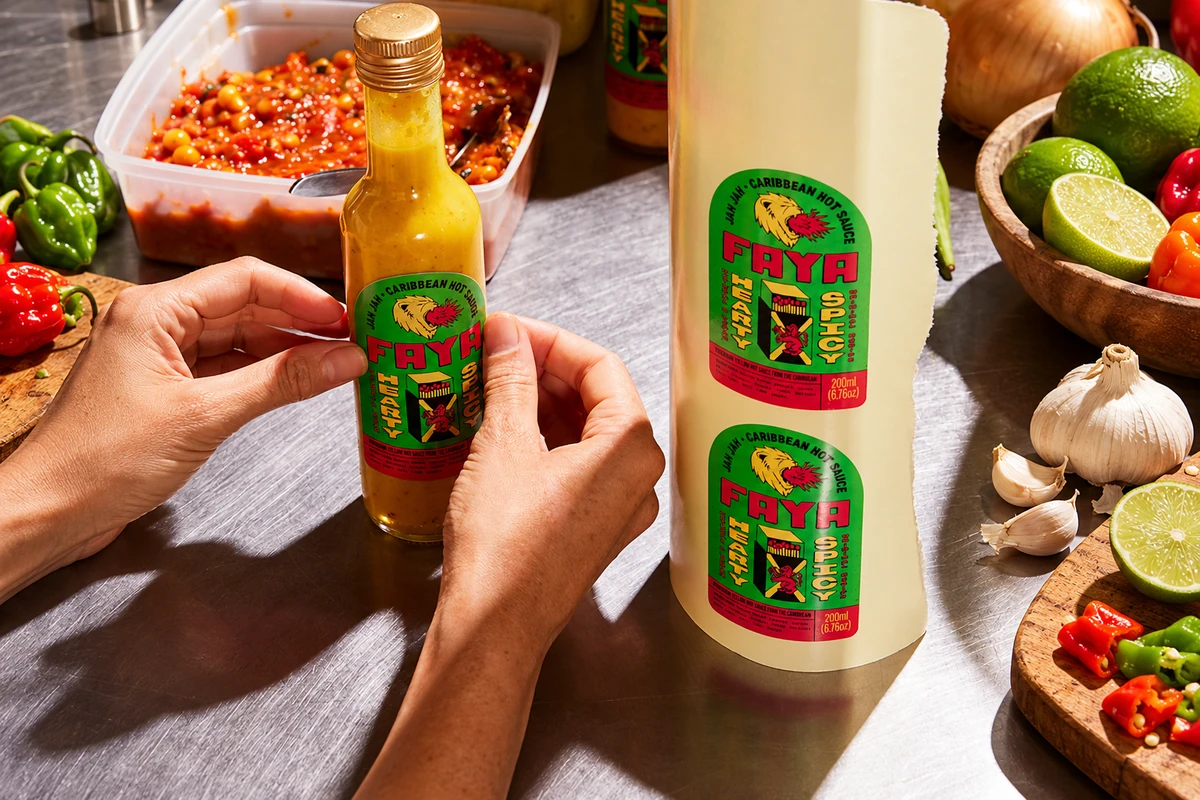
This is the biggest label ordering group. The common requirement is that labels withstand humidity, handling with wet or greasy hands, and stay readable after weeks in the fridge. So almost all of them use plastic decal labels with matte or glossy lamination.
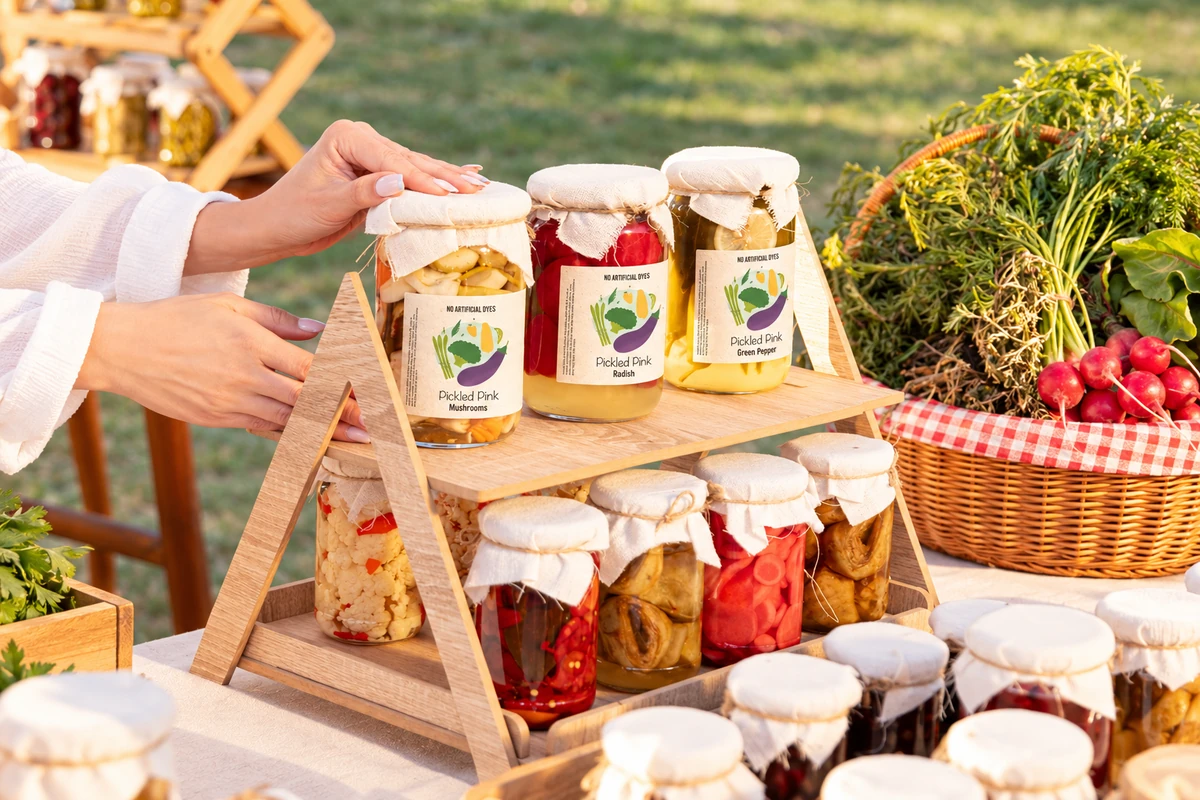
For glass jars, labels should sit on the body rather than climbing onto the curved shoulder — applying over curves causes wrinkles and peeling corners. Wide-mouth jars usually use one rectangular body label plus a round label on the lid; this gives enough room for information and keeps the brand visible when jars are lined up on a shelf.
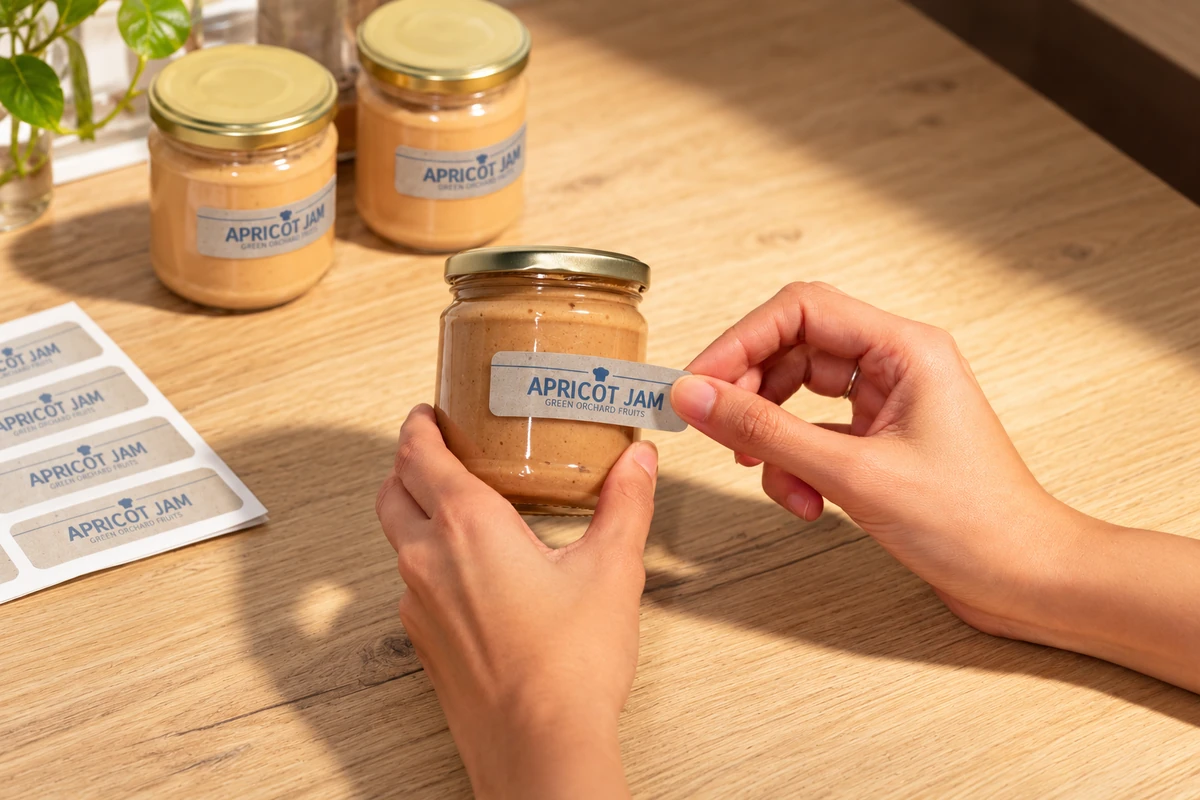
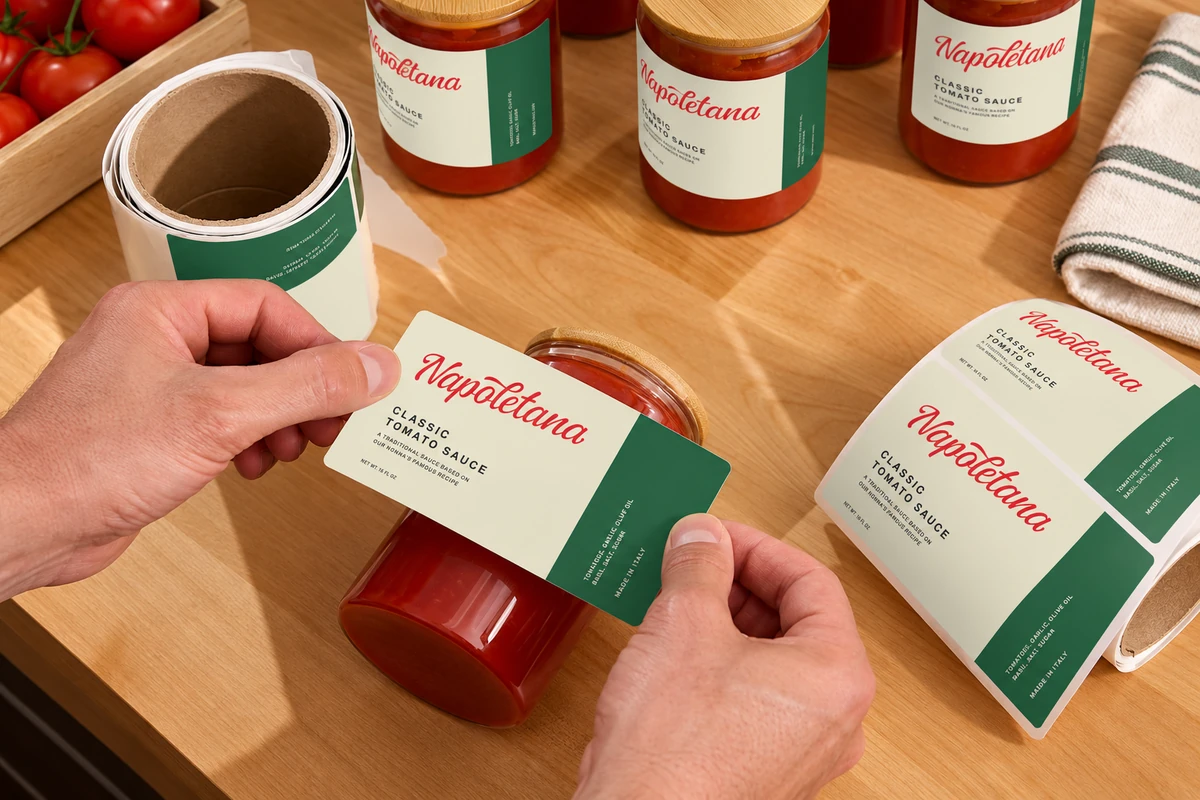
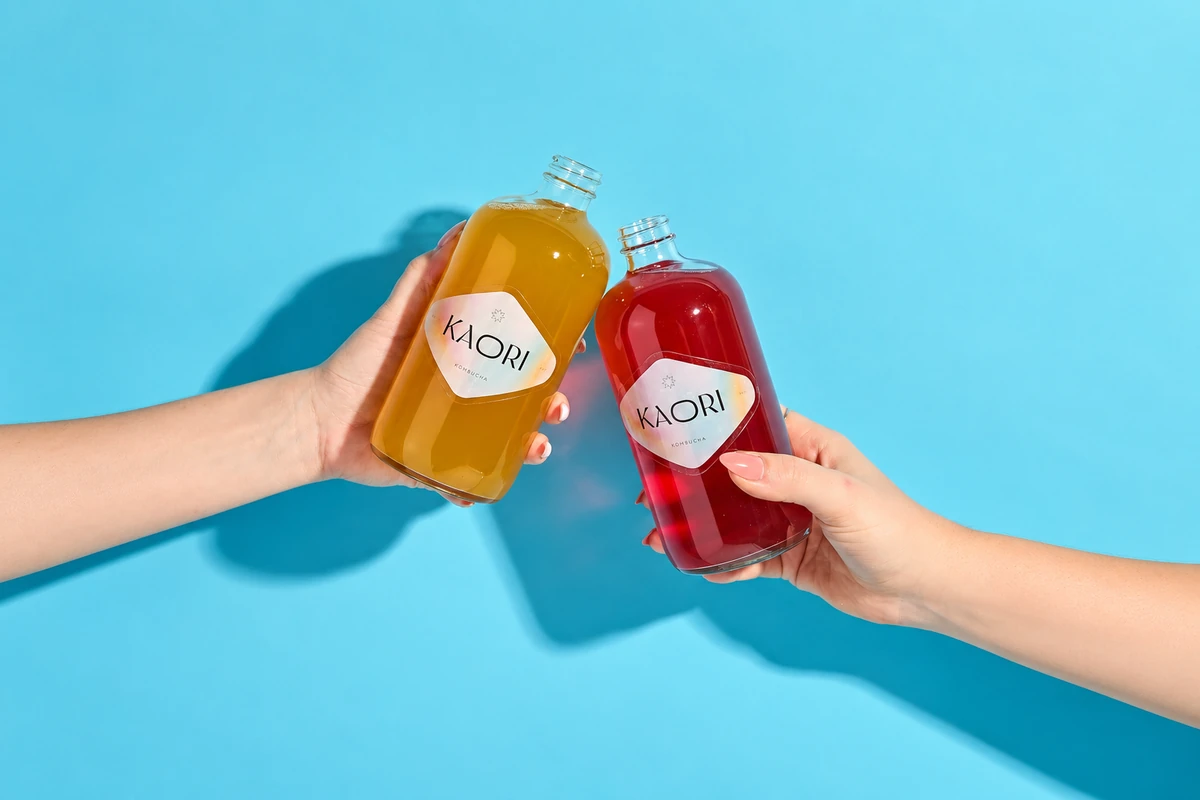
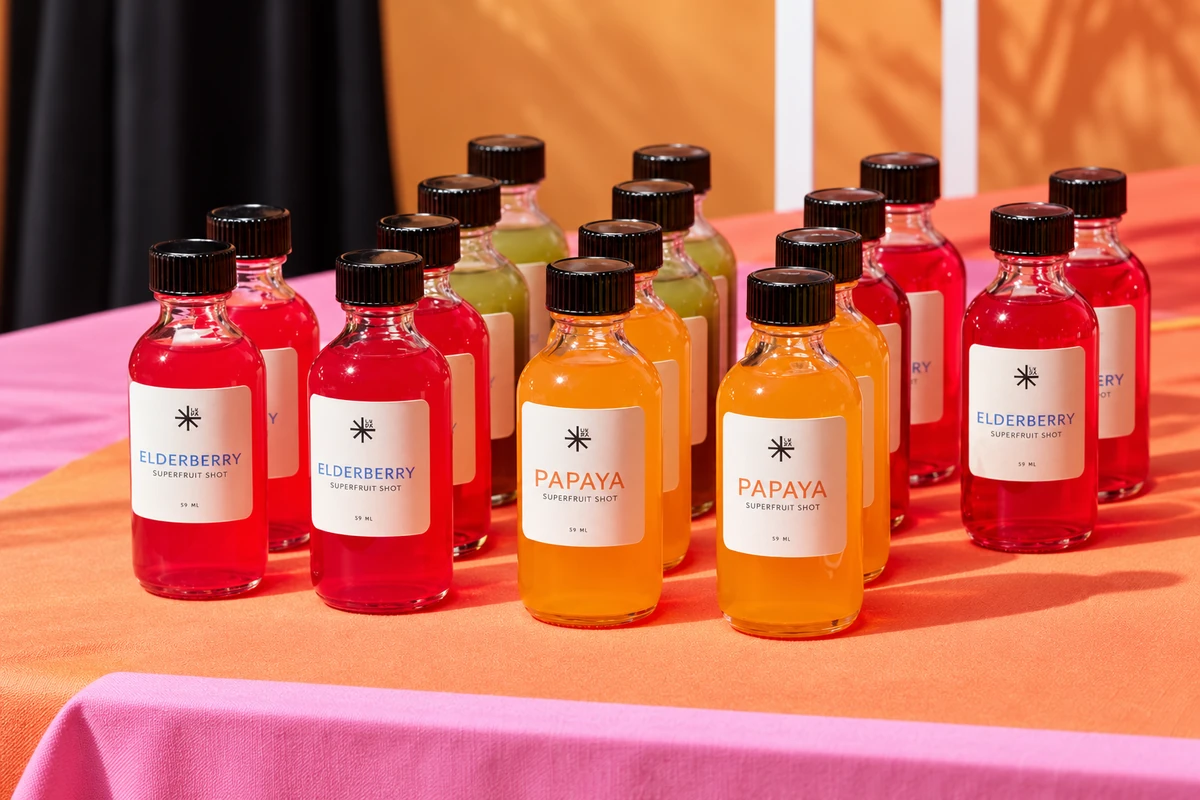
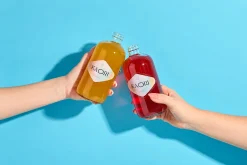
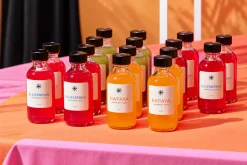
Water, juice and bottled tea need longer labels wrapping almost all the way around. When designing, leave a 3–5 mm gap where the two ends of the label meet to avoid misaligned overlaps. If there are several flavors, only change the identity band color and flavor name and keep the layout — printing in the same batch is cheaper and the shelf looks neater.
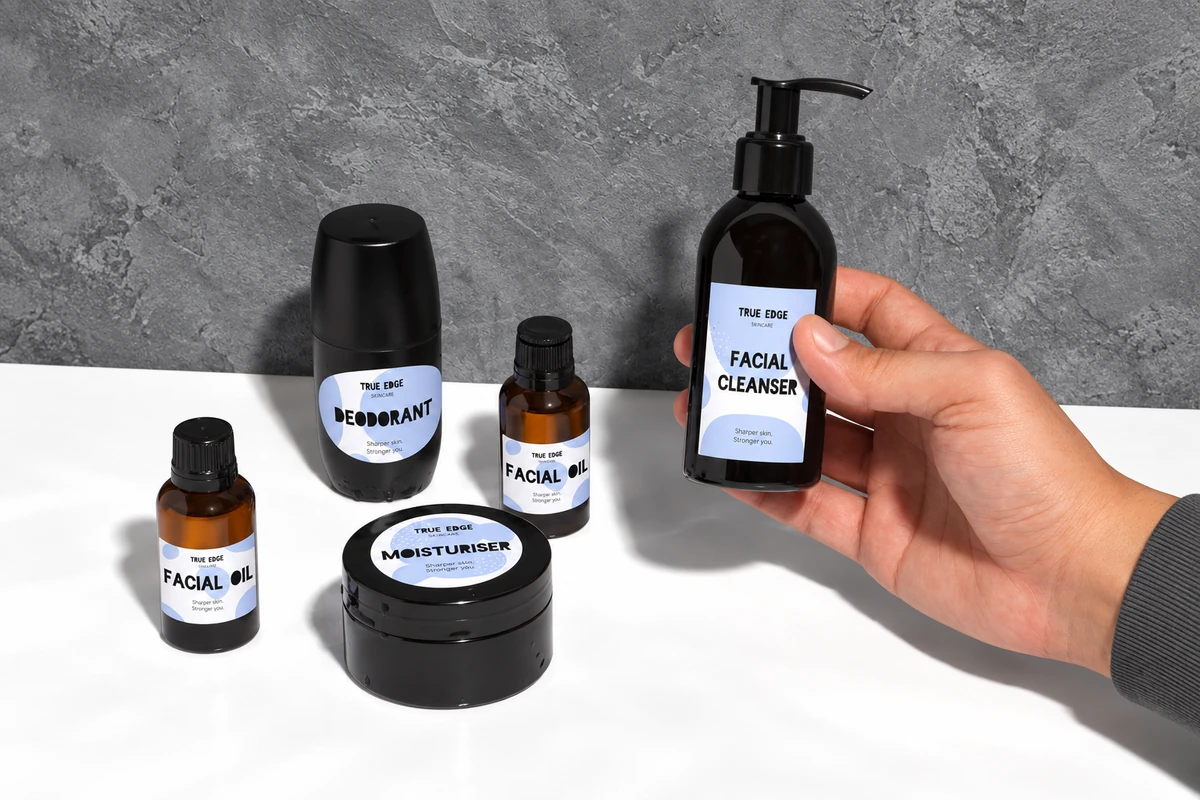
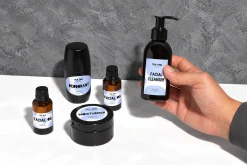
Cosmetics and serums are the most demanding group in terms of surfaces. Labels on soft tubes are squeezed constantly, so the material must be flexible, while labels on pump bottles must withstand spilled alcohol and essential oils. This group should use matte-laminated plastic decal, and test a sample on your exact bottle type before running a large batch.
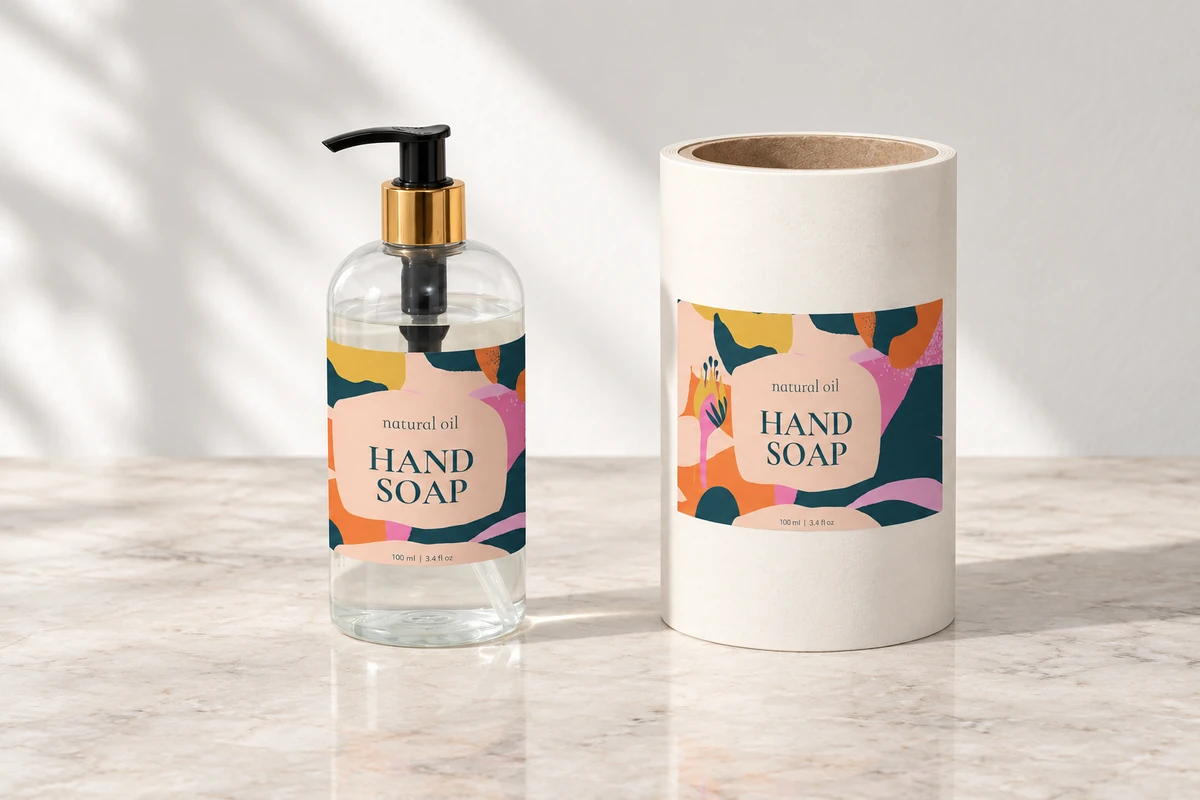
Seal labels for boxes, bags and jar lids
A seal label is applied across the opening of packaging: box lids, bag openings, the joint between a jar lid and body. Its job is to prove the goods haven't been opened — customers who see the seal intact feel reassured, and if it has been cut or peeled they know right away.
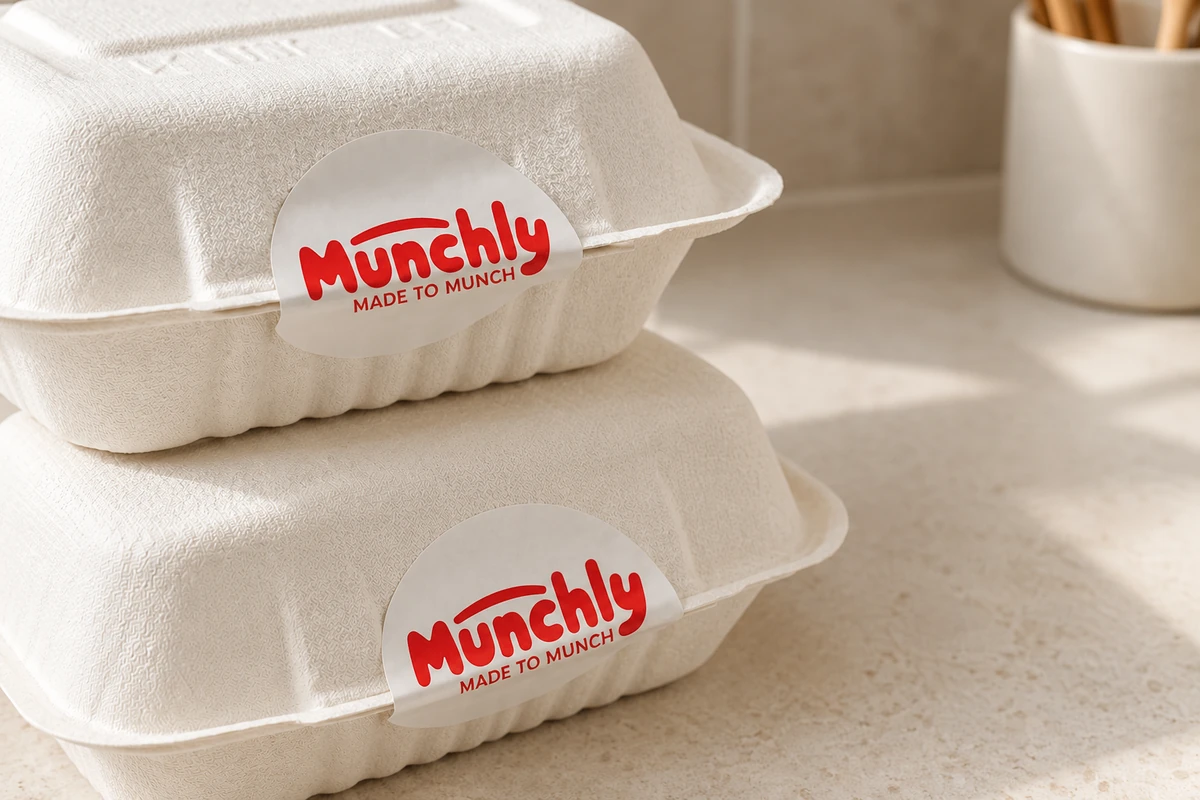
For paper food boxes, seal labels also keep the lid from popping open in transport. Food delivery shops usually use 7–15 cm labels across the lid, printed with the logo and order phone number — one label doing two jobs, sealing and advertising.
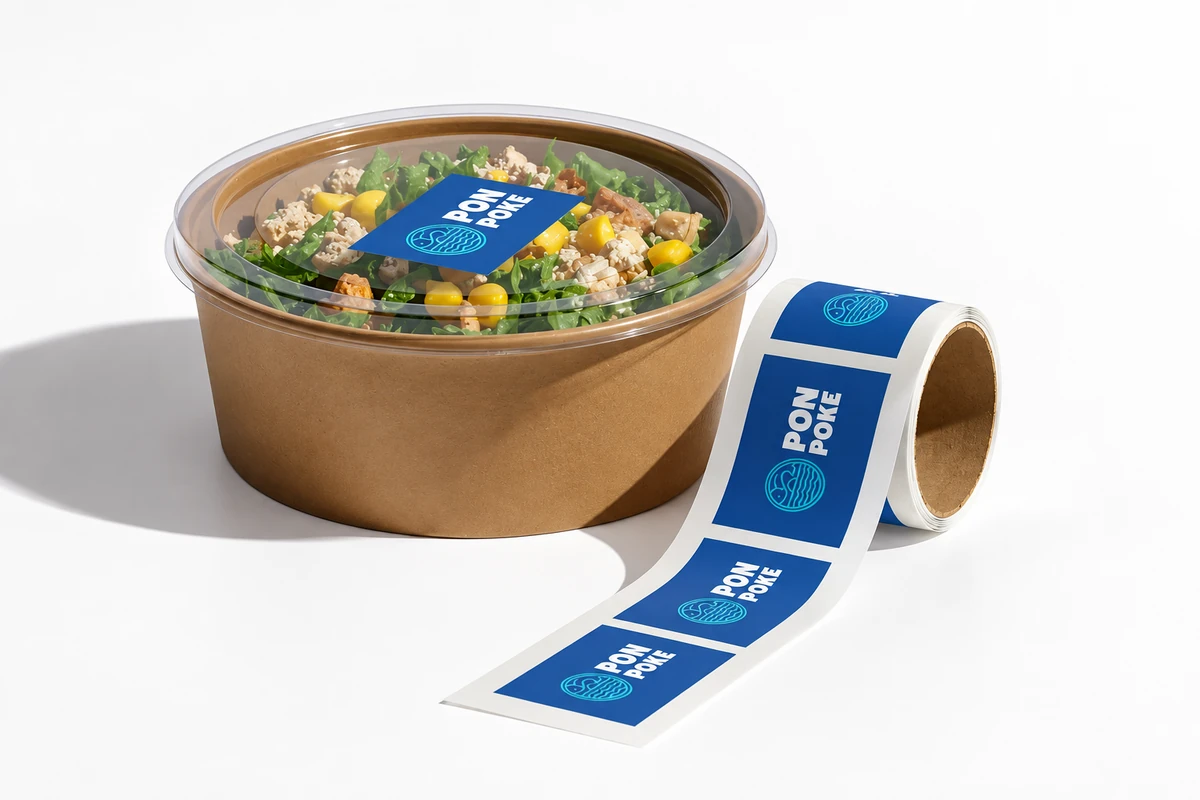
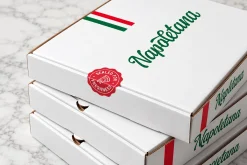
Gift boxes and paper bags use seal labels more decoratively: round or round-ended labels printed with a logo, placed at the center of the lid or on the folded bag opening. These should be matte-laminated paper decal or fine art paper for a refined feel, with removable adhesive so gift recipients don't tear the packaging when opening.
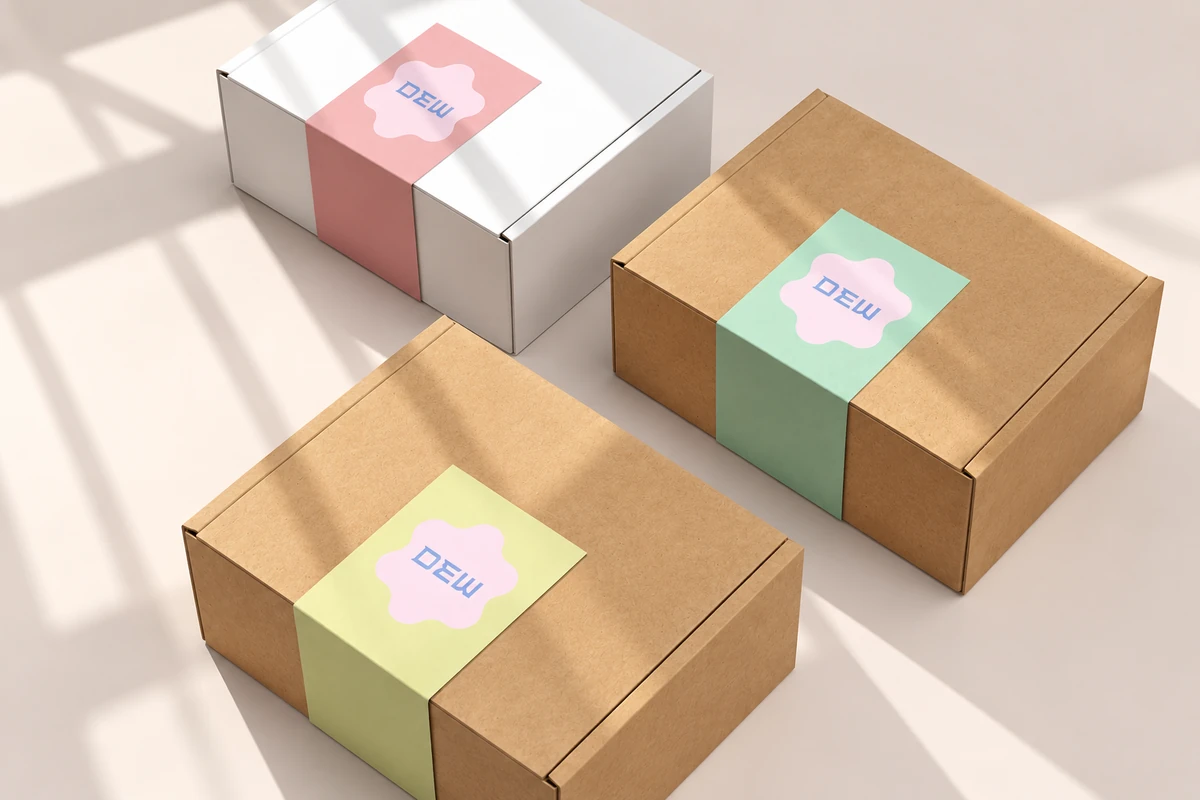
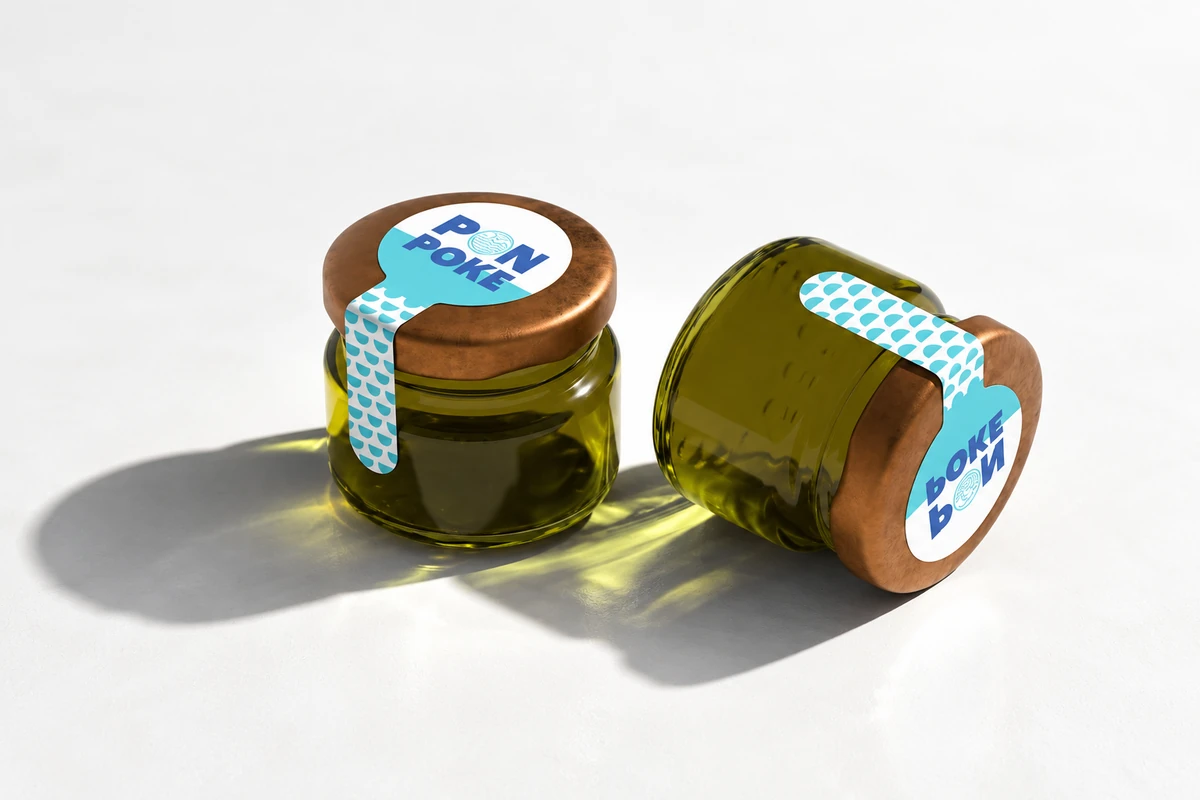
Glass food jars use labels across the lid — the spot most likely to peel, since the lid and jar body aren't on the same plane. For a firm hold, choose narrow labels (1.5–2.5 cm wide), just long enough, and apply when the jar is completely dry.
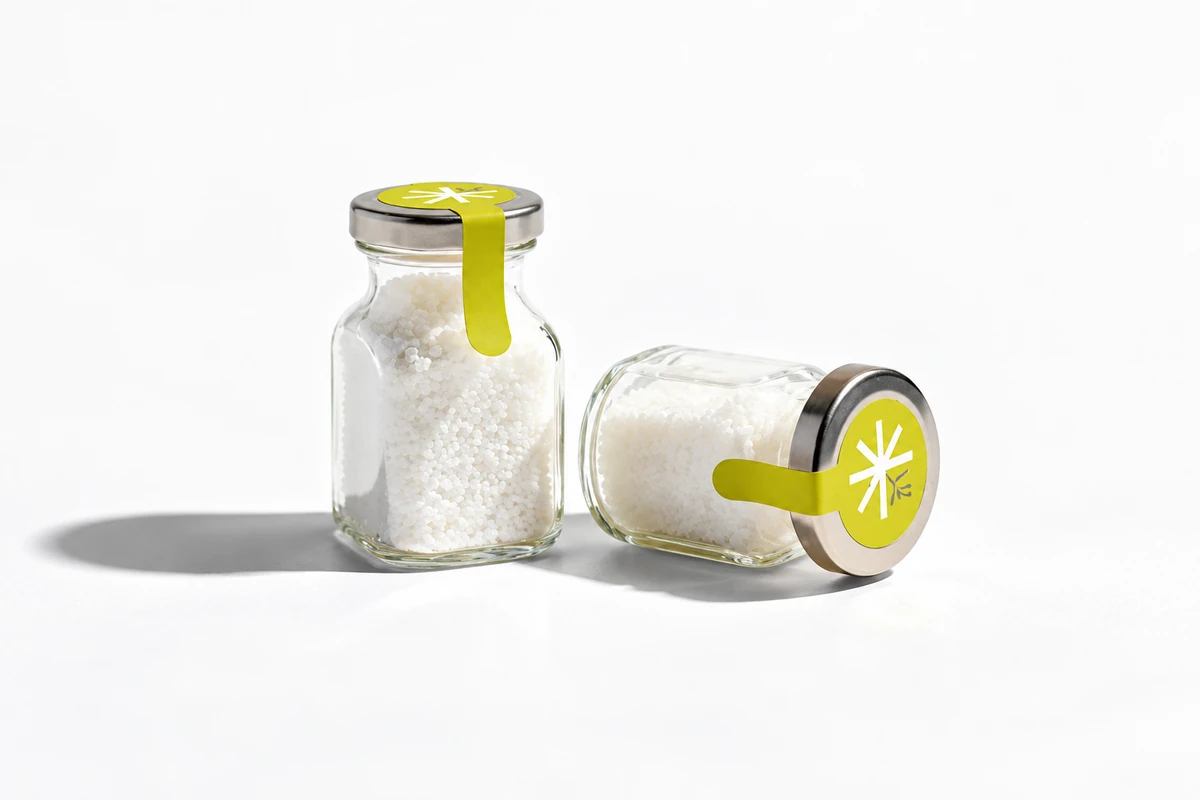
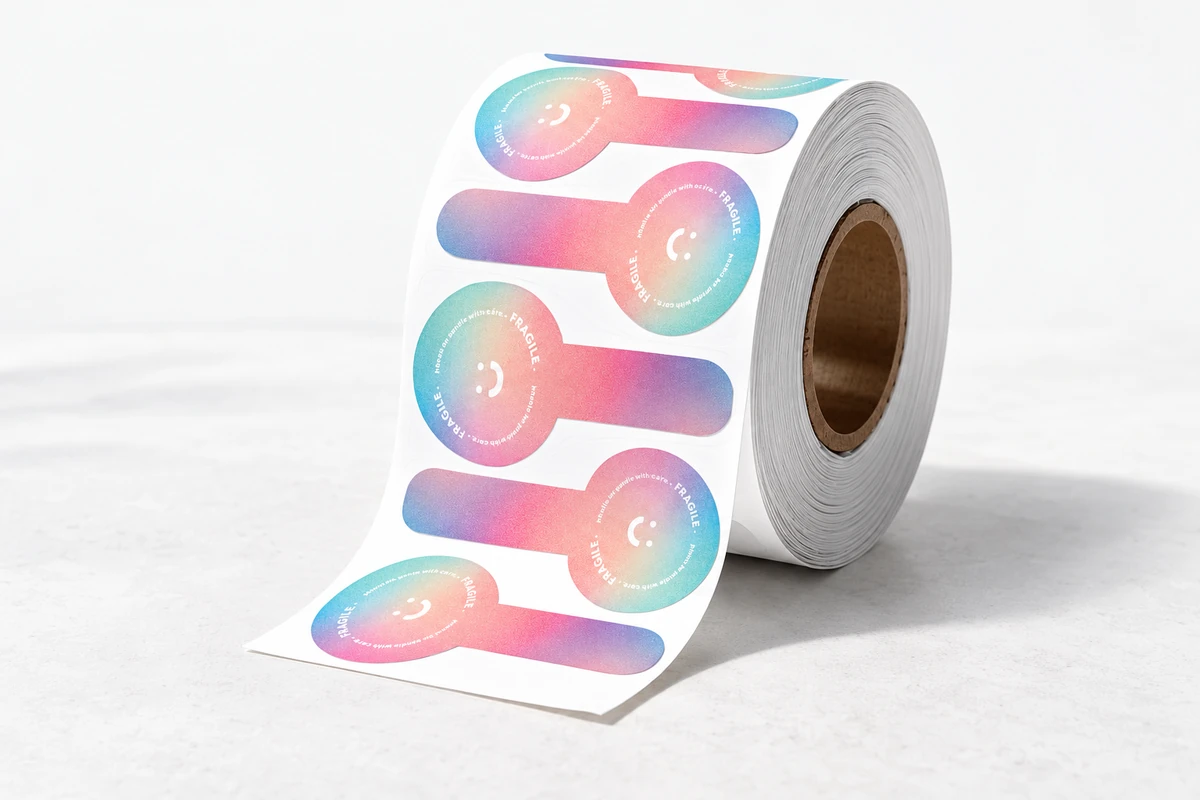
If you need "break when peeled" seals (void labels, fragile warranty stickers), they must be ordered separately, as that material isn't among the two standard materials on this page. Message us on Zalo for a quote and minimum quantity.
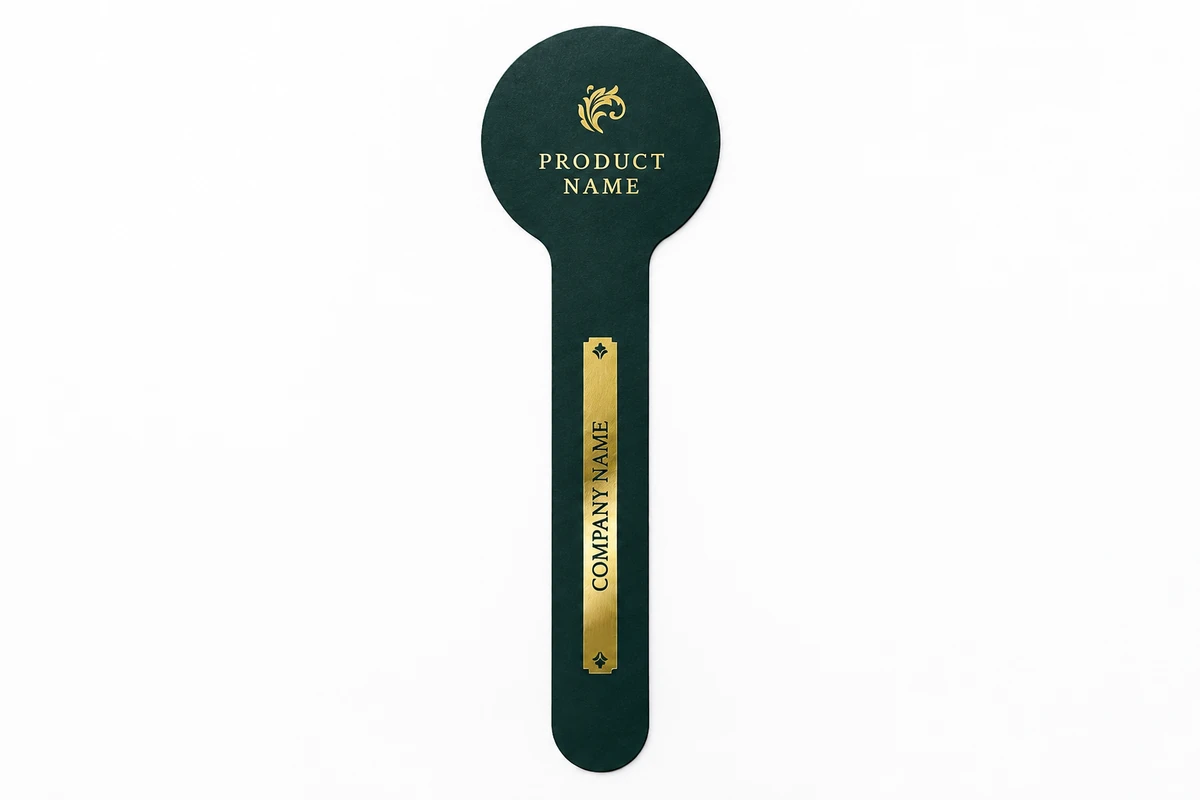
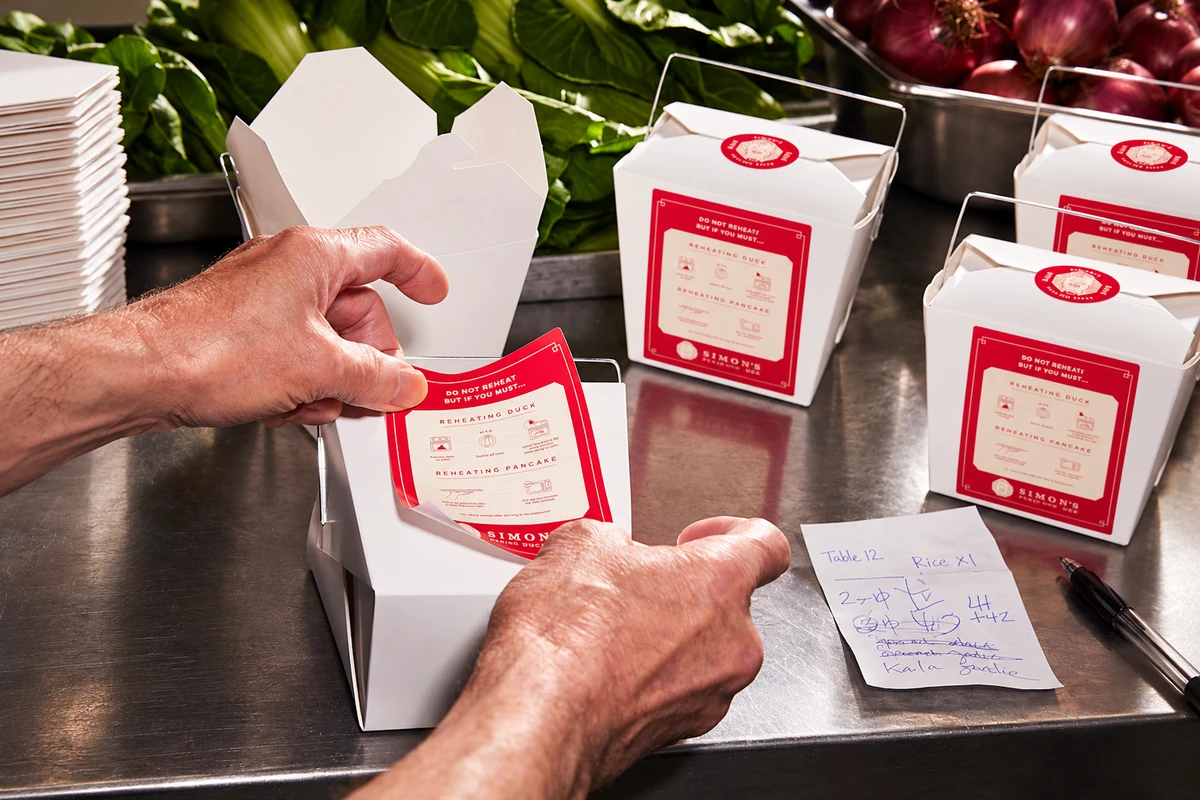
Labels for restaurants, cafés and takeaway
Restaurants and cafés use labels quite differently from producers: large quantities, one design for many items, and most importantly they must withstand hot food, cold drinks and steam. Labels on plastic cups of iced drinks or freshly closed lunch boxes are all in a humid environment, so plastic decal is the default.
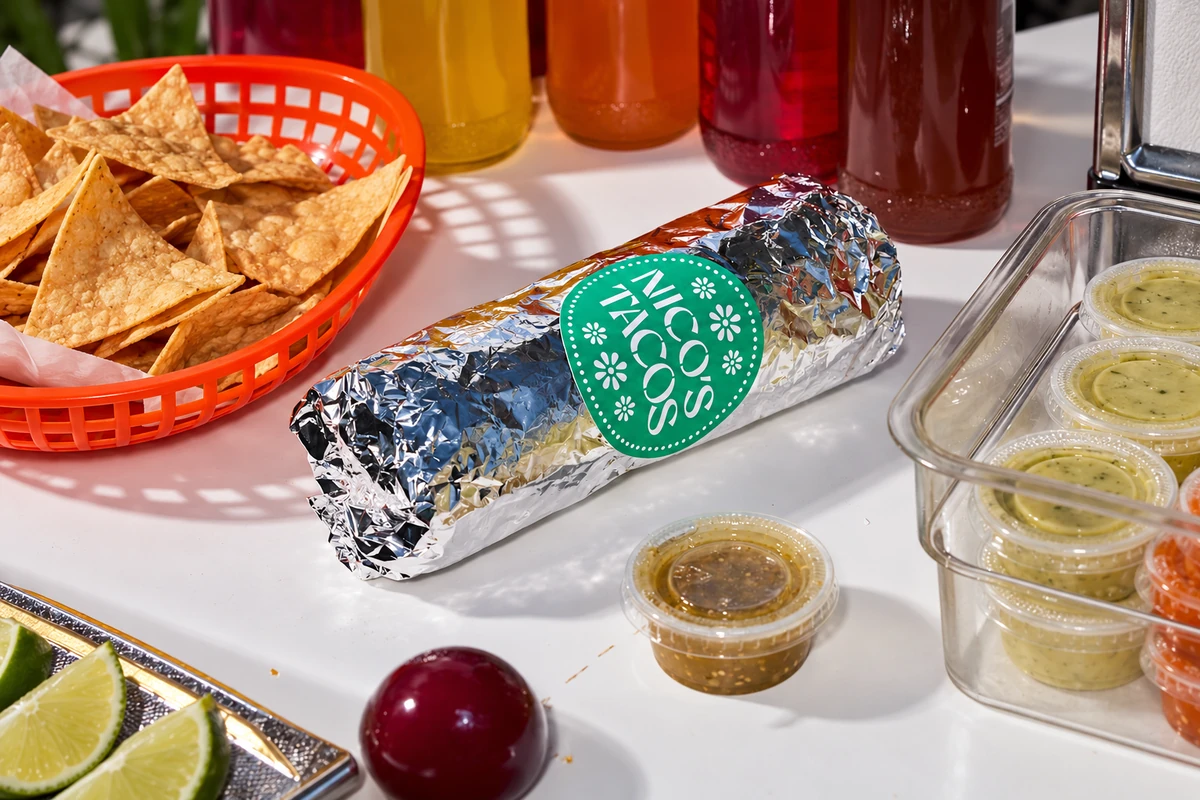
The most common shop label is a 4–6 cm round label printed with the logo, sealing cup lids and box lids. One single design for the whole menu means staff don't have to choose labels, and large quantities keep the price per piece very low. When dish names or sugar and ice levels need noting, shops usually add a white unlaminated rectangular label to write on.
Shops selling cakes and dry goods to take away are the opposite: labels must show full ingredients and expiry dates, so 5×7 cm or 7×10 cm rectangles suit them better. If sold in other stores or online, print a QR code linking to the order page — the space on the label is then worth more than a flyer.
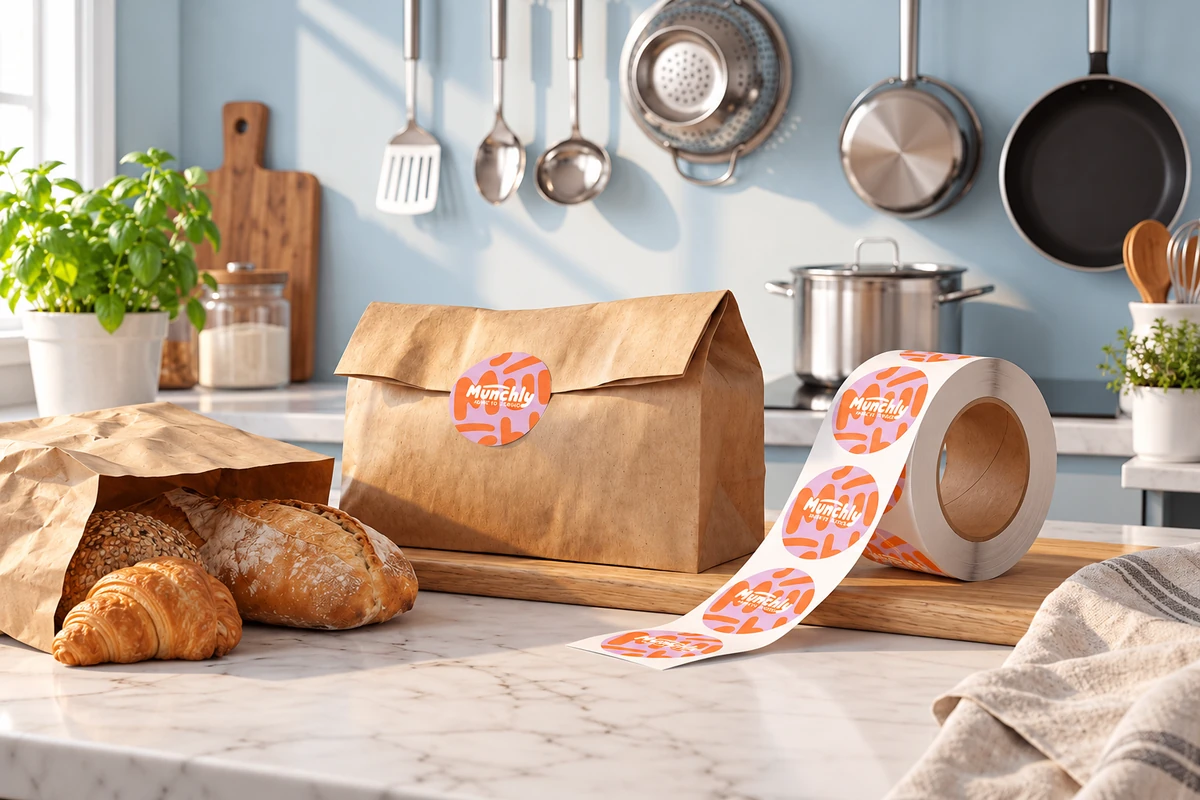
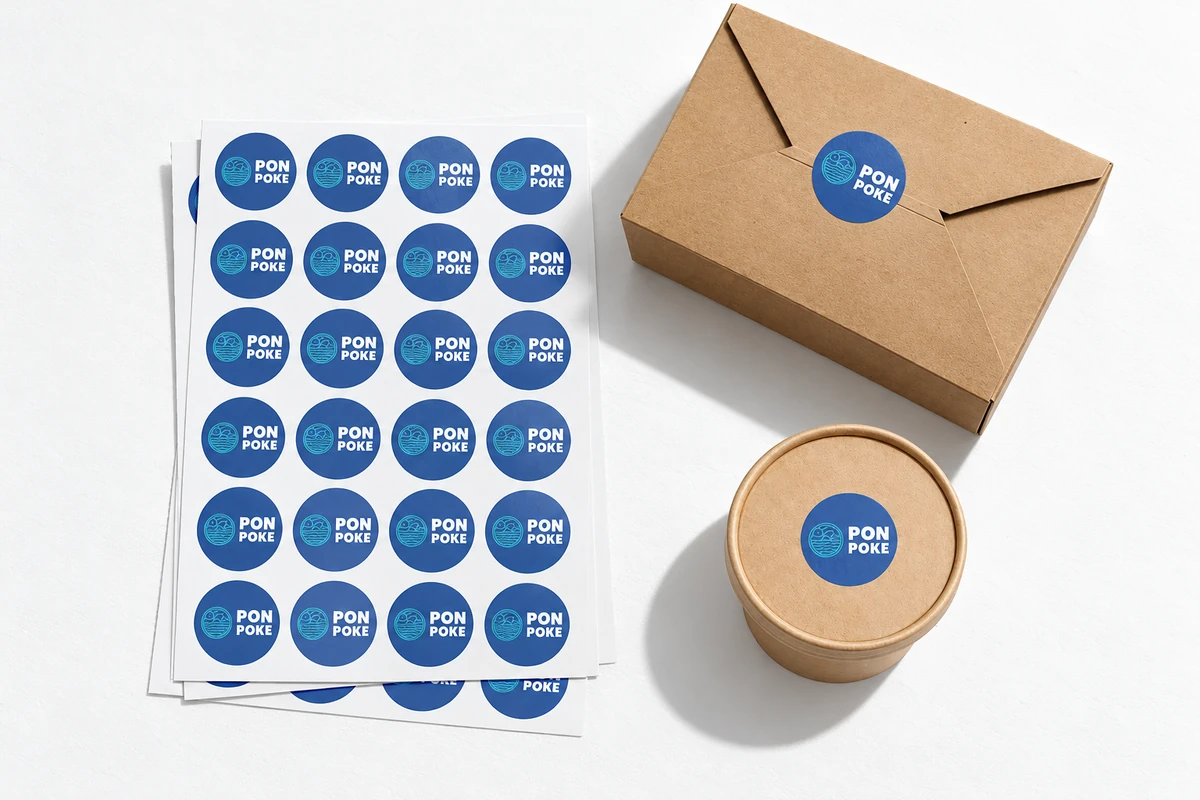
For chains with many outlets, we recommend splitting labels into two layers: a brand label pre-printed in large quantities for the whole chain, and a small label with information specific to each outlet or batch. This keeps printing costs low while still allowing frequently changing information to be updated.
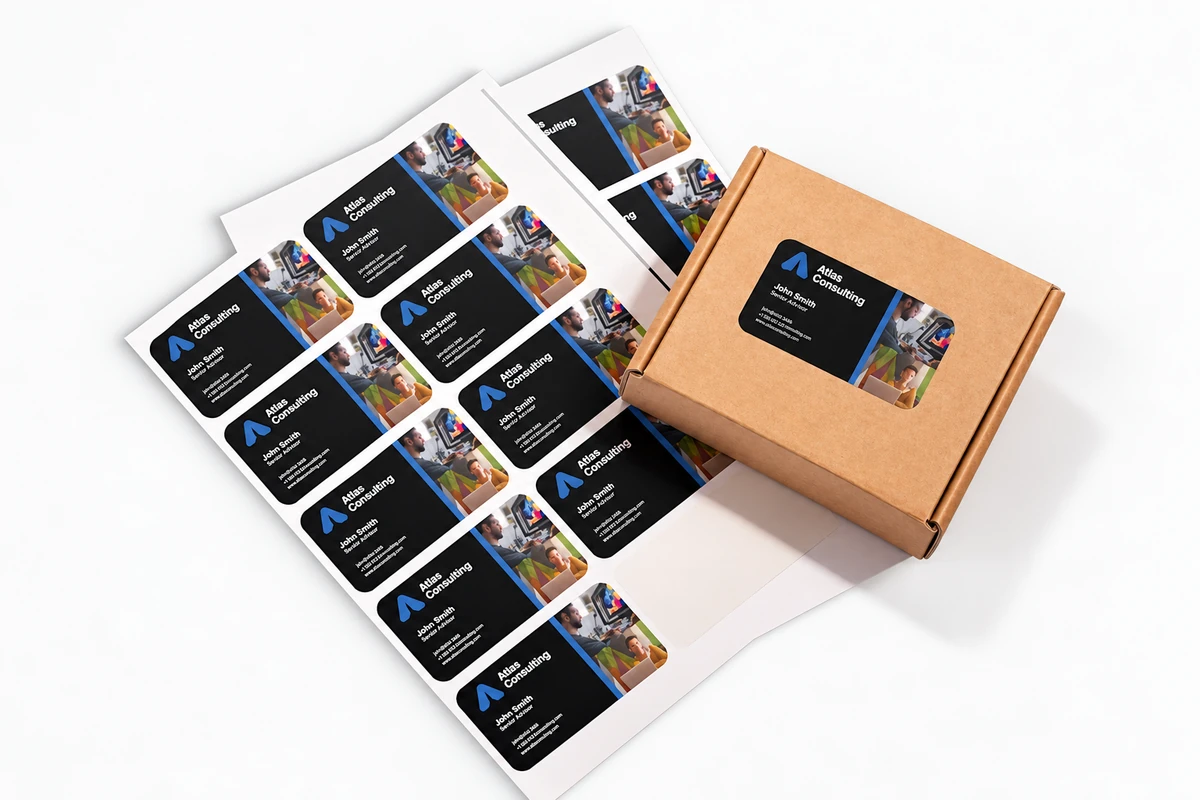
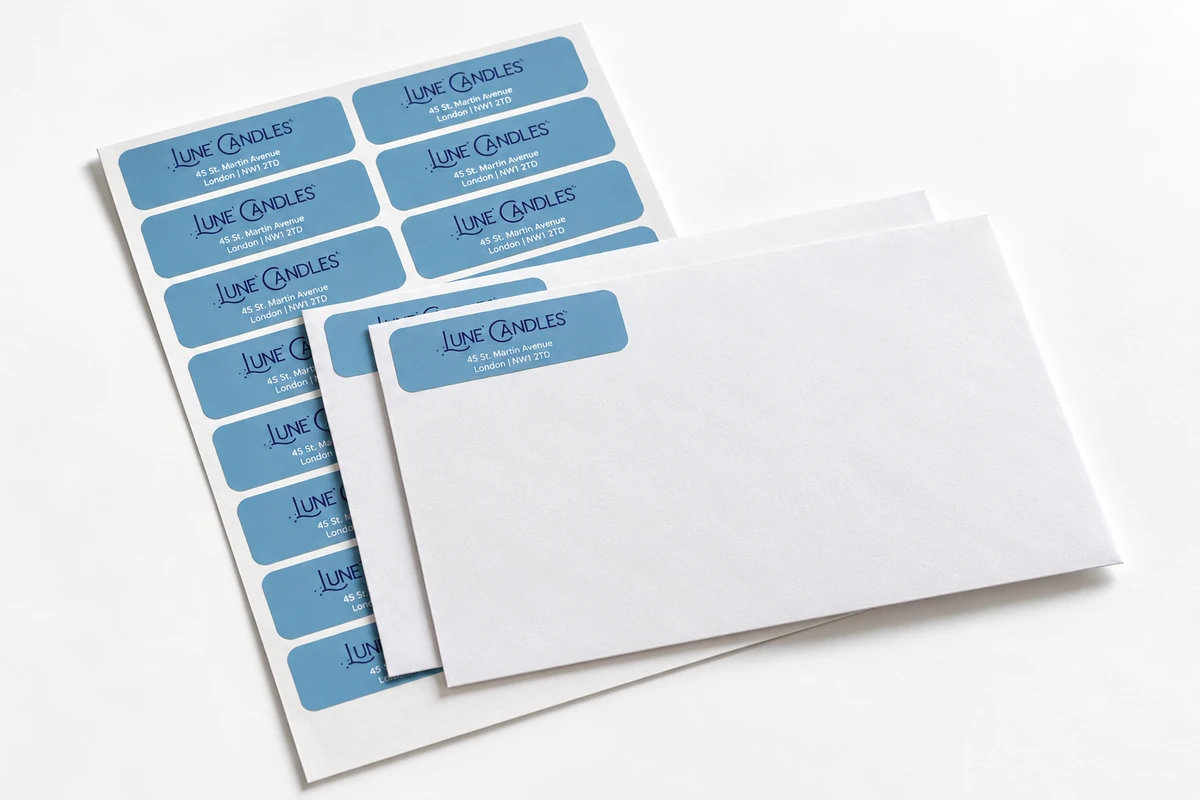
Address labels, envelope seals and gift labels
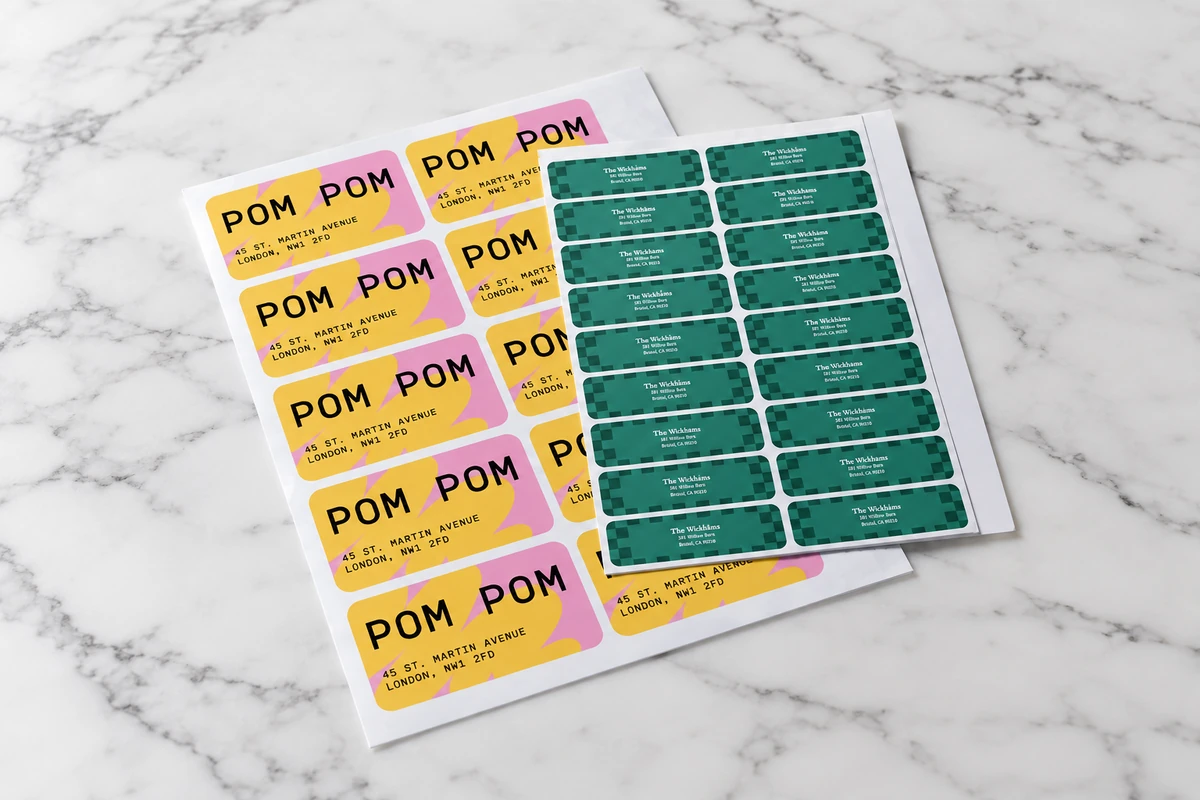
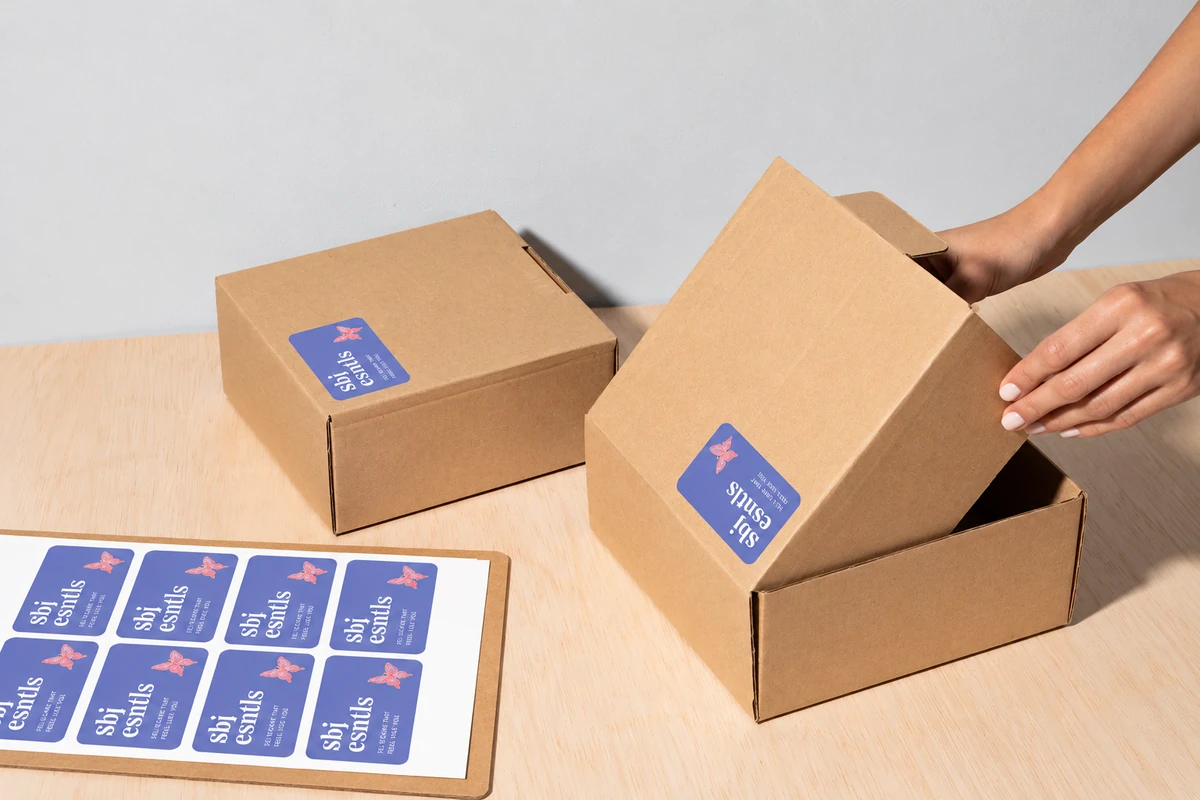
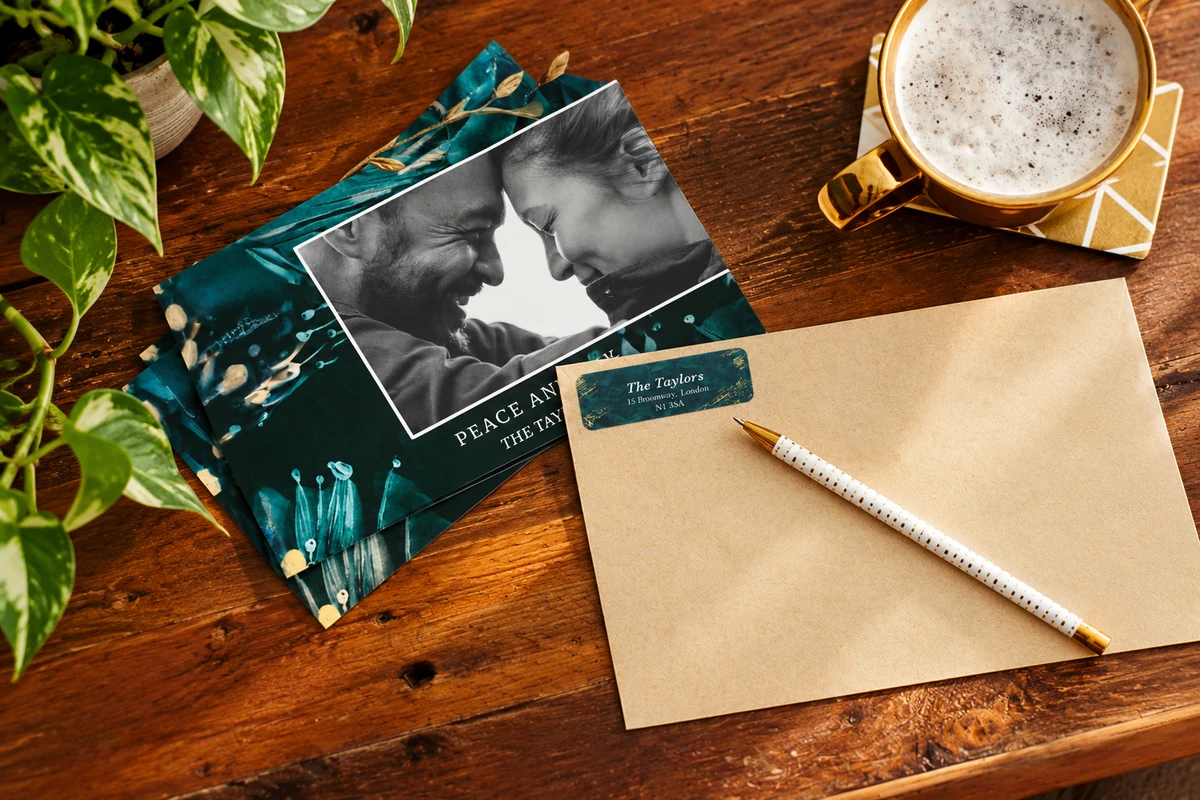
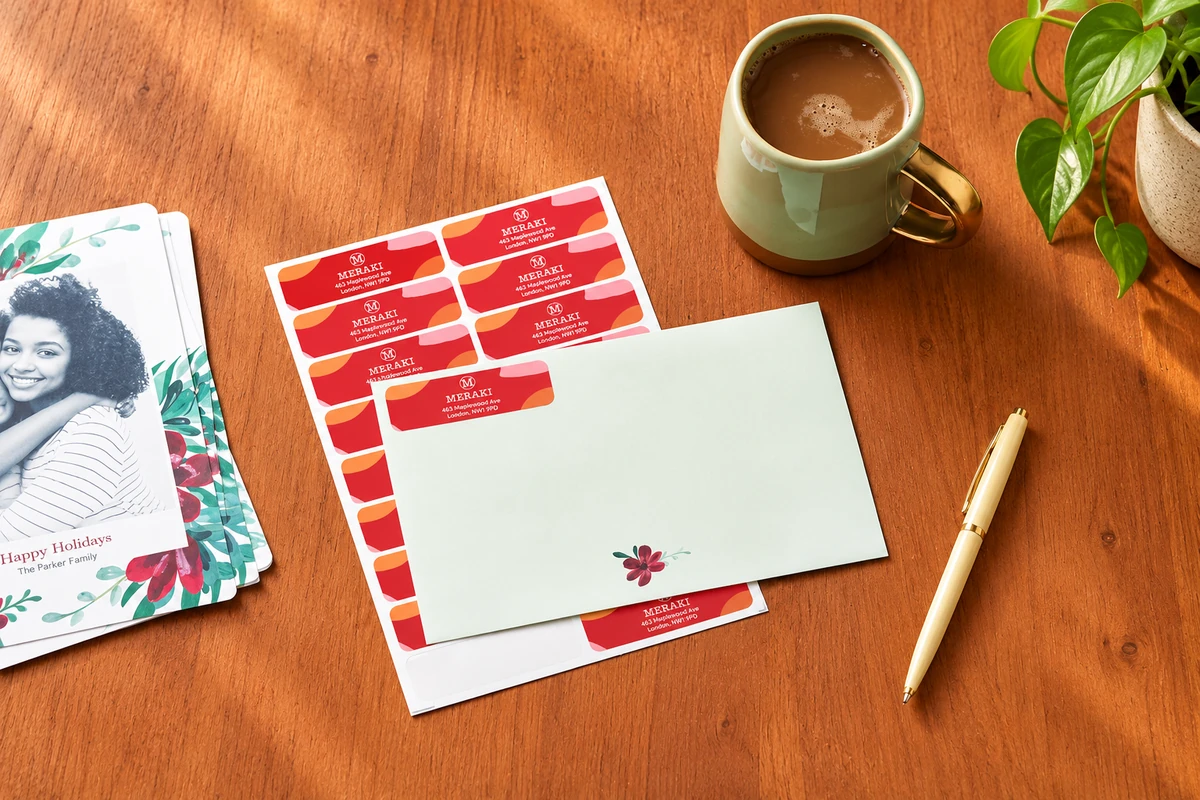
Beyond goods, labels are widely used in admin work and shipping. Address labels pre-printed with the sender's name and address go on packaging much faster than handwriting, and the clear text reduces misdeliveries. Online shops sending a few dozen orders a day usually print address labels on A4 sheets, a few dozen per sheet.
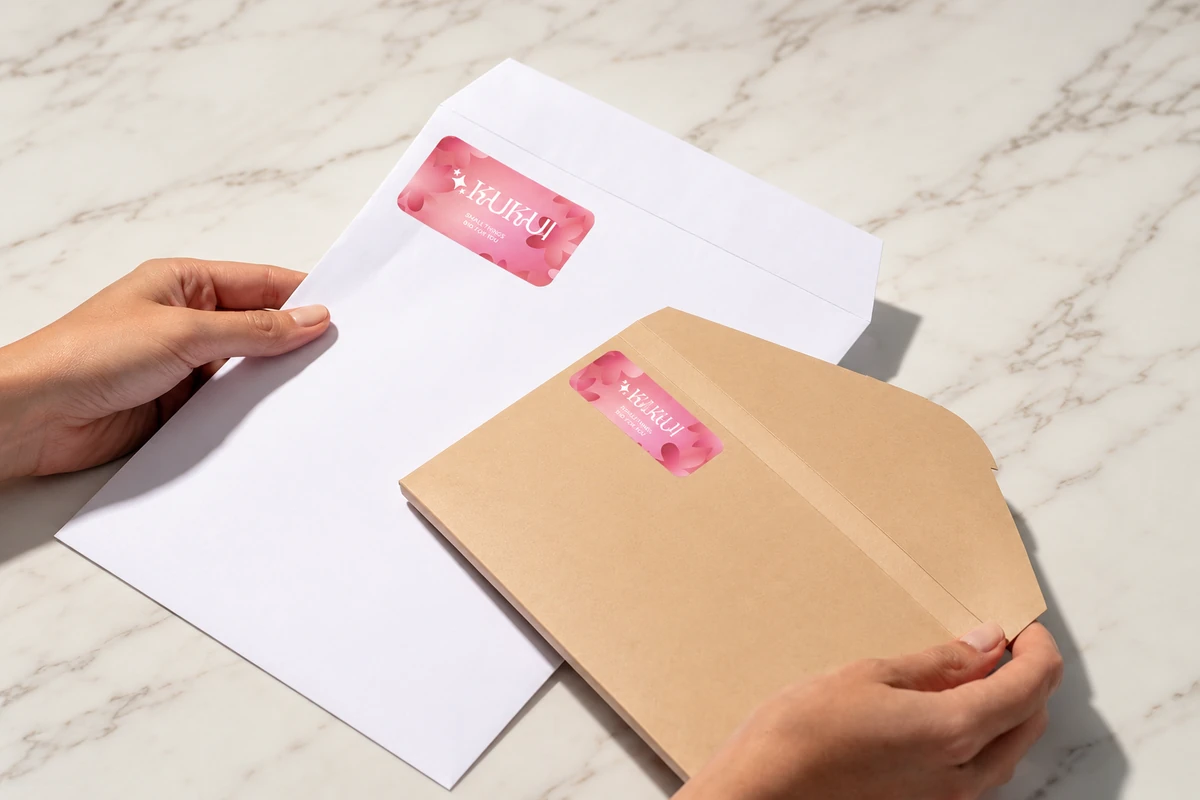
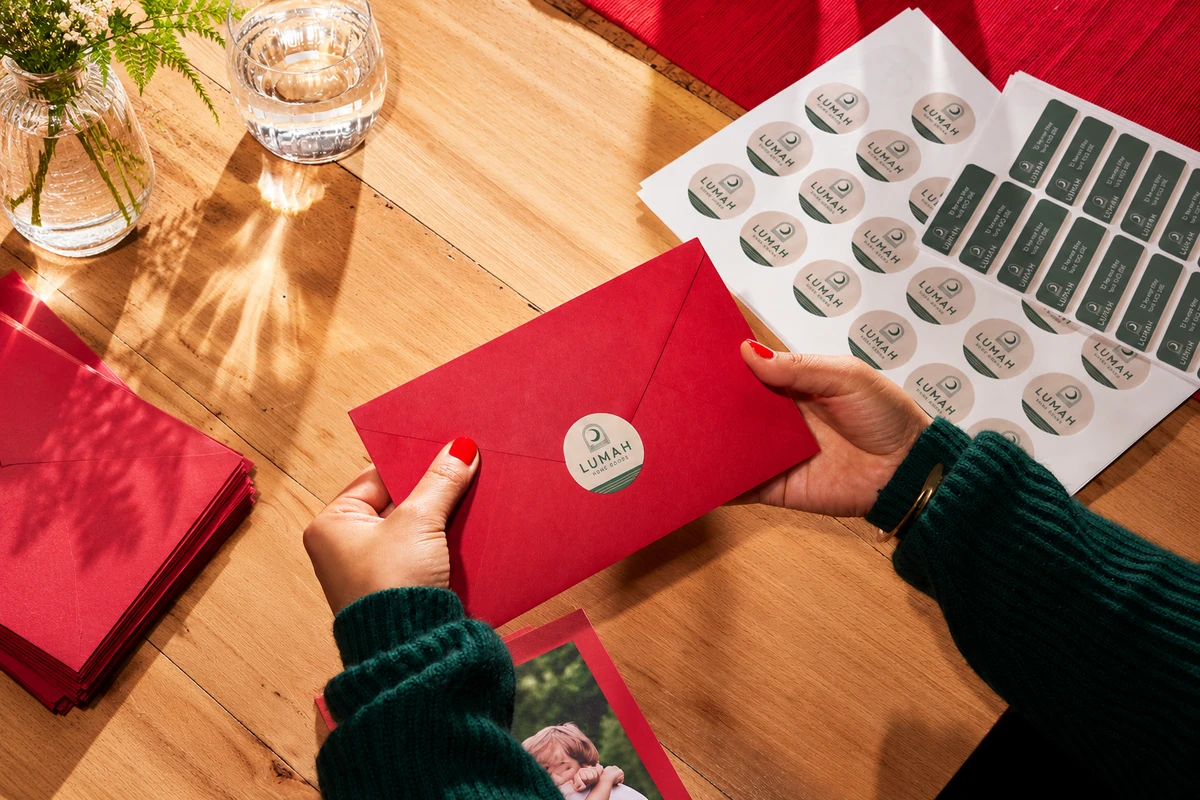
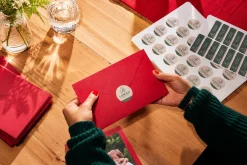
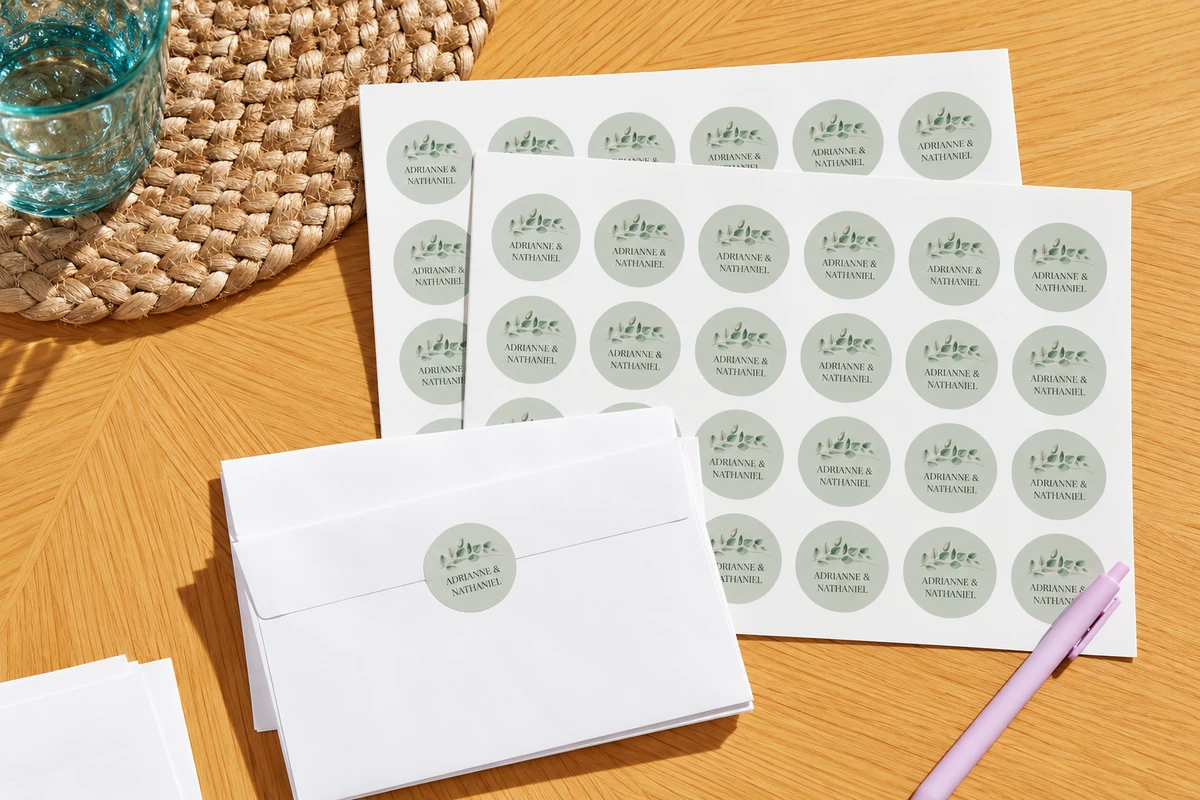
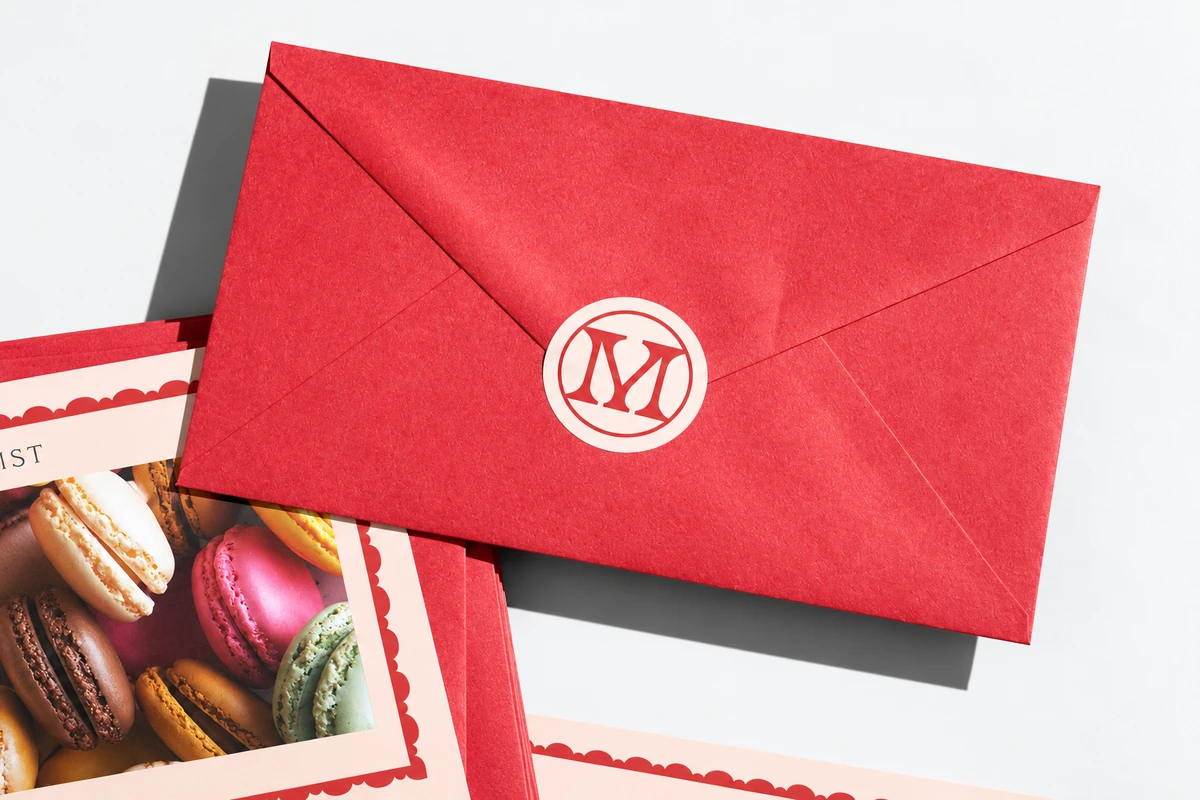
Envelope seals and stamp-style stickers are used for invitations, thank-you letters and documents sent to partners — usually printed in the same run as the company's business cards and envelopes. They're small (3×3 to 5×5 cm), usually printed in one or two colors, and applied on the back flap of the envelope. Since they're applied to paper, paper decal is enough; for a more premium look, add matte lamination or choose fine art paper.
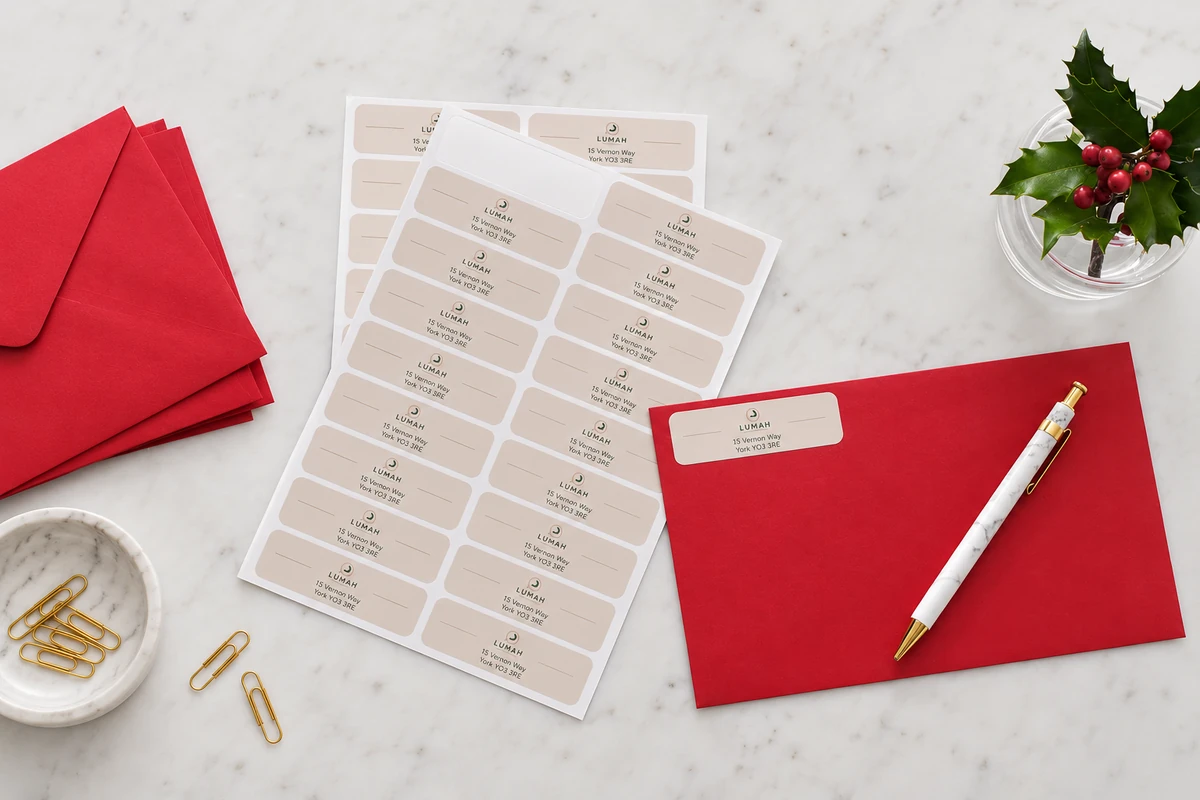
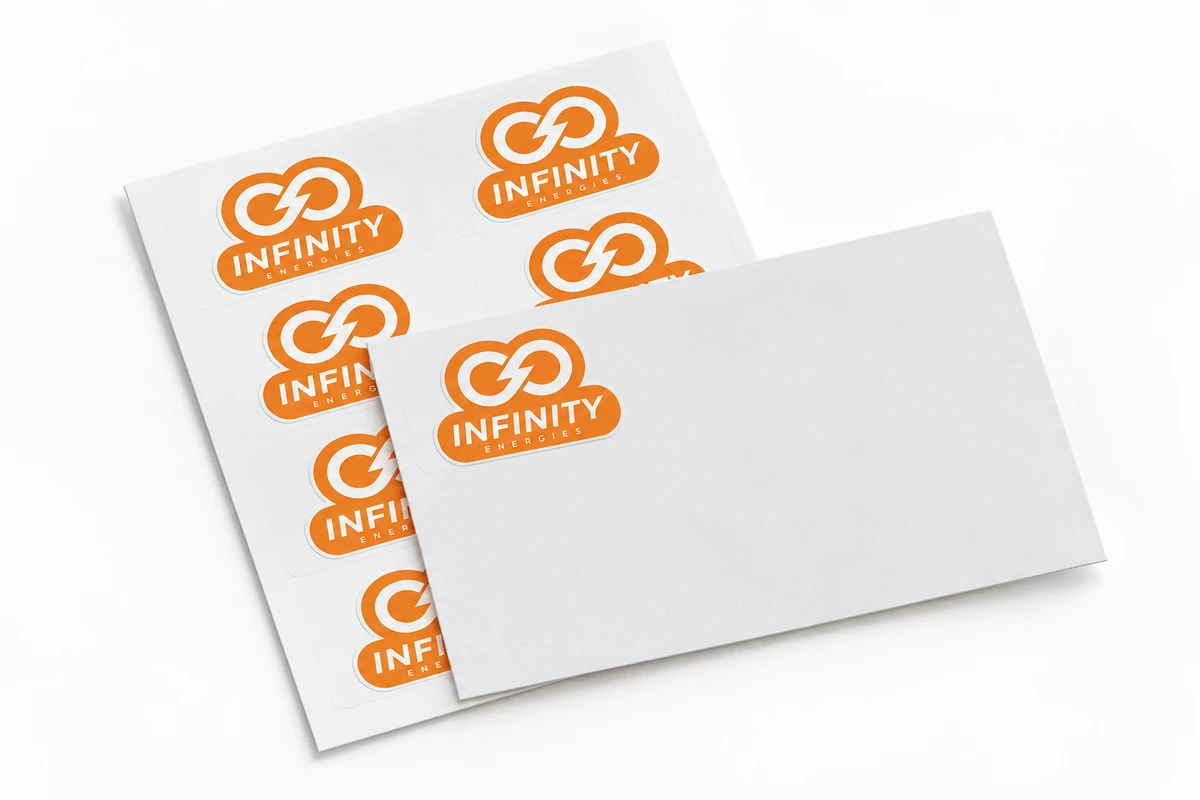
Round envelope seals have one small, easily missed rule: the label diameter should be smaller than the flap width so it doesn't spill over the envelope edge. 3.5–4 cm labels suit A5 and wedding card envelopes; 5 cm labels are for A4 envelopes.
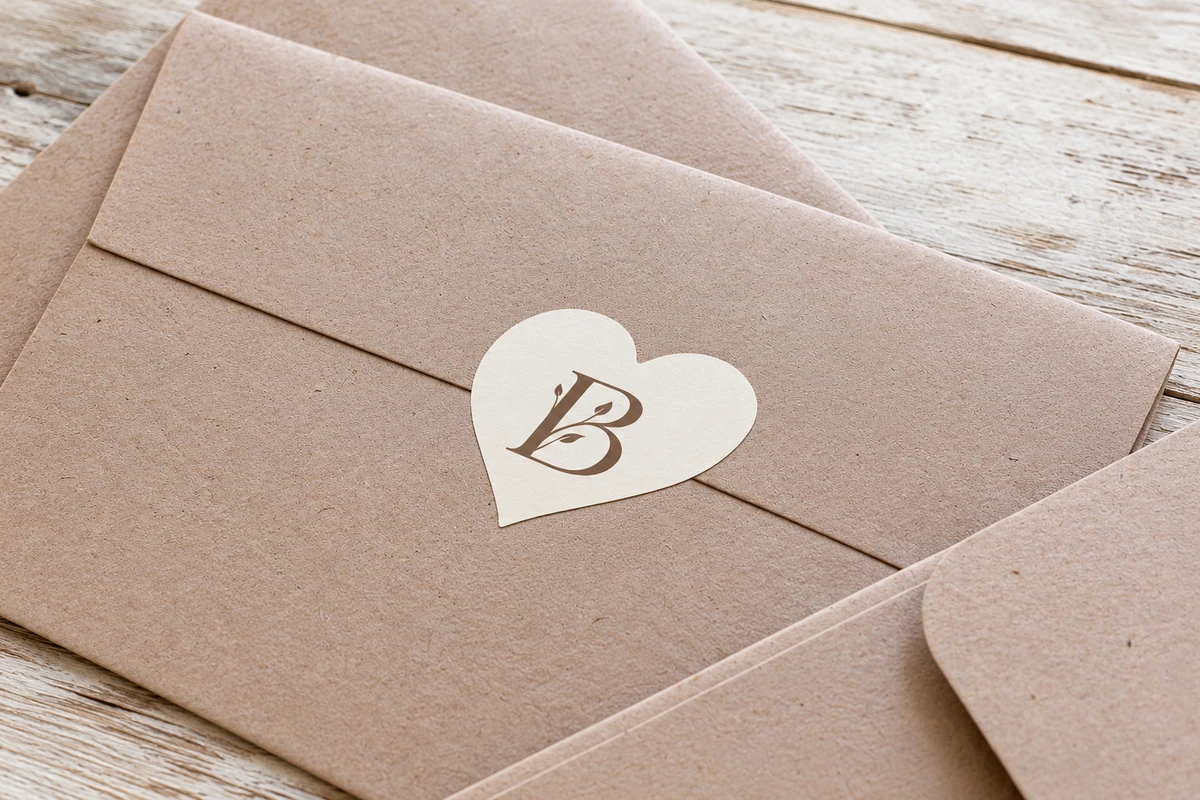
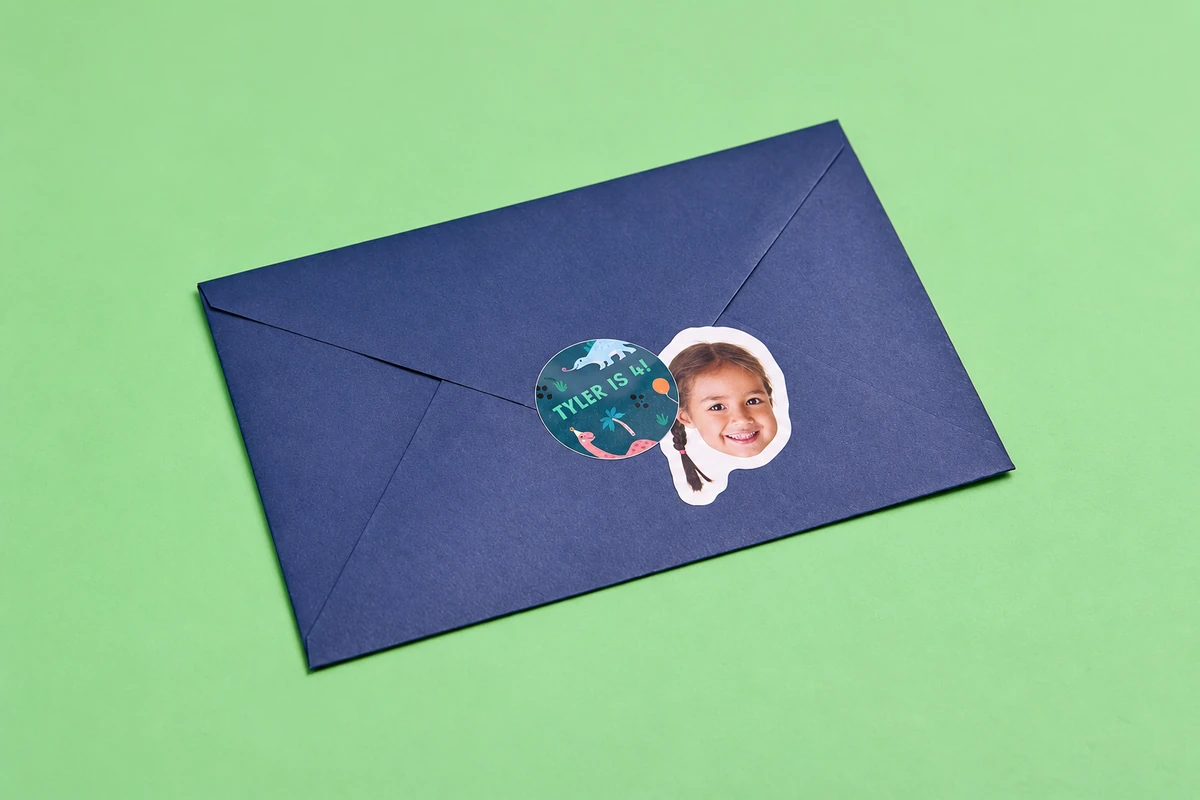
Gift decoration labels, complimentary vouchers and holiday labels are seasonal orders: Tet, Mid-Autumn, Christmas, Mother's Day. Quantities are usually moderate and timelines tight, so this group often chooses round or rounded-rectangle shapes to avoid a custom die, printed on matte-laminated paper decal for a low price and nice look.
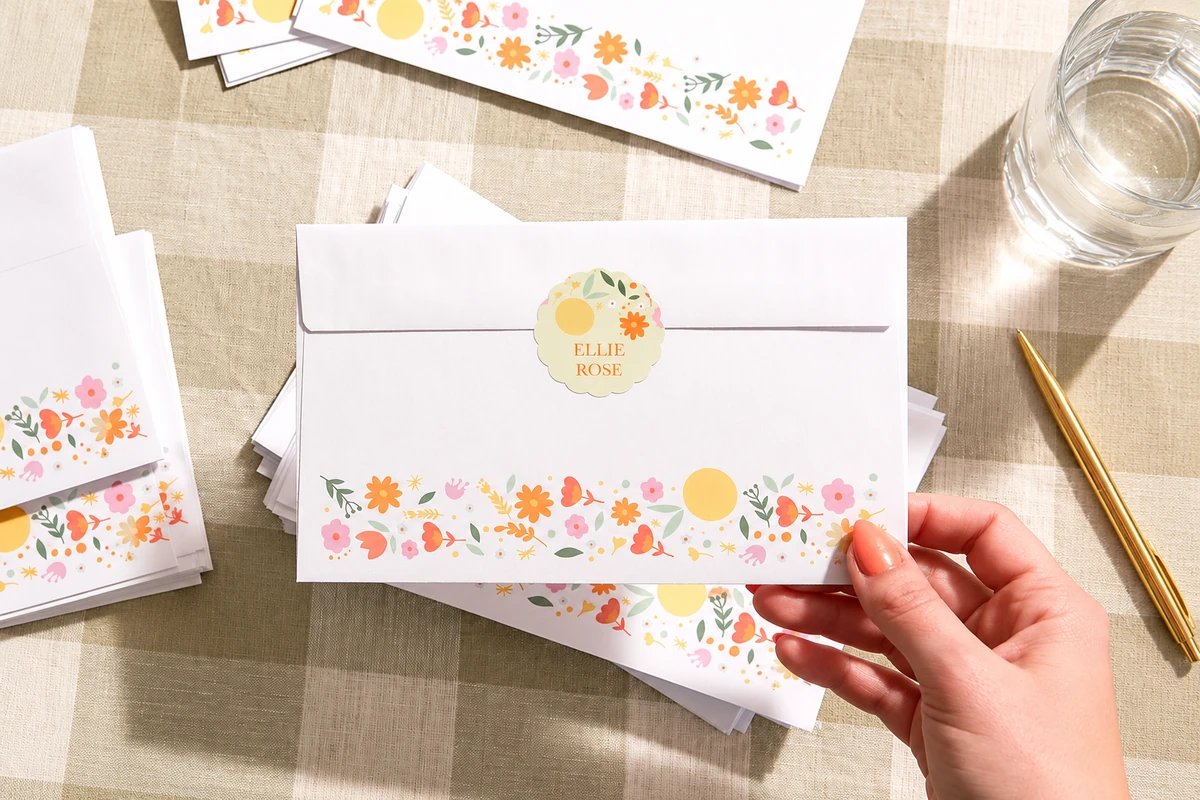
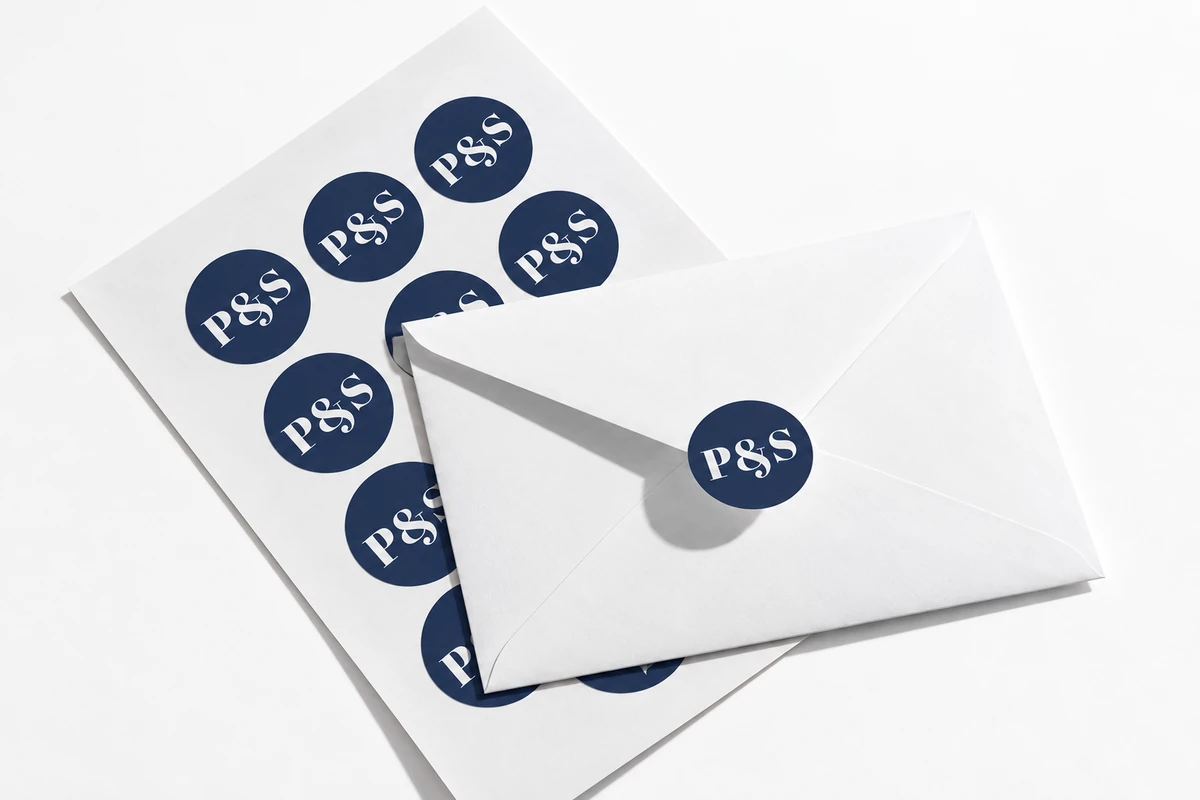
For corporate gifts, a matching label set in three sizes is usually enough: a large label for the outer box, a medium one for the paper bag, and a small one to seal the wrapping paper. Printing all three sizes in the same batch is cheaper and ensures matching colors — different batches on different days can vary slightly in color.
Label price table by size and quantity
The price shown on this page is the price for the whole batch, including printing and die-cutting. Choose the material, size, lamination and number of labels; the price shown is for that entire batch. Choosing 1,000 labels with a quantity of 1 means ordering 1,000 labels, not 1 piece.
We accept orders from 100 labels with eight quantity tiers: 100, 200, 300, 400, 500, 1,000, 2,000 and 5,000 labels. The unit price per label drops sharply with batch size, because most of the cost is machine setup and the cutting die — those costs barely change whether you print many or few.
- 3×3 cm paper decal labels, unlaminated: 100 labels from 50.000đ (500đ/label) · 1,000 labels 160.000đ (160đ/label) · 5,000 labels 560.000đ (112đ/label).
- 5×5 cm plastic decal labels, matte laminated: 100 labels 100.000đ (1.000đ/label) · 500 labels 250.000đ · 1,000 labels 400.000đ · 5,000 labels 1.500.000đ (300đ/label).
- 20×10 cm plastic decal labels, glossy laminated: a batch of 5,000 labels 5.440.000đ — the highest tier in the price table.
Looking at the three lines above, a pattern emerges: from 100 to 1,000 labels, the unit price drops about threefold; from 1,000 to 5,000 it drops by roughly another third. If your product sells steadily, ordering 1,000 or 2,000 labels at once almost always pays off. When the design is still changing or the printed expiry date is short, order a small tier first to be safe.
Sizes outside the nine tiers above, special die-cut shapes, metallic or hologram materials, roll labels on custom core diameters — all are possible but quoted separately. Message us on Zalo 0866.511.099 with the size, quantity and sample photos, and we'll reply during working hours.

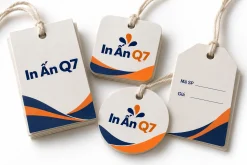
Price tags

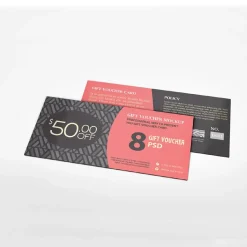
Vouchers & Gift Cards

Business cards

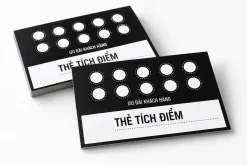
Vouchers & Gift Cards
Preparing label design files
Labels are small-format prints, so design files must be far more precise than for posters or standees: a half-millimeter error on a 3×3 cm label is clearly visible. Here's what we need to print straight away without back-and-forth corrections:
- File PDF or AI, color mode CMYK, images at least 300dpi at actual size.
- Leave 3 mm bleed on each edge; the safe area for text and logos is 3 mm inside the die line.
- Draw the die line as a separate path, on its own layer, not mixed with the artwork.
- Text must be converted to outlines, or send the fonts along. The smallest text should be 6pt or larger.
- For several designs in one order, name files by product code and state the quantity for each design.
- Export barcodes and QR codes as vectors, not enlarged from JPG images. Barcodes should be at least 2.5 cm wide.
If you don't have a file yet, we design labels from your content and existing logo. Usually you only need to send the list of information to print, a real product photo and a photo of the bottle or jar the label goes on; we build the design and send it back for approval before printing.
A note on color: screen colors and printed colors are never exactly the same, especially deep blue, bright orange and neon green. If your brand has standard Pantone colors, note the codes in the file — we'll mix the closest CMYK match and tell you in advance if a color can't be achieved.
Label printing and delivery time
Standard-size paper and plastic decal labels with correctly prepared files: we produce in 1–2 working days for batches up to 2,000 labels. Batches of 5,000 labels or orders with many designs at once need one more day. Same-day urgent orders are still possible depending on the machine schedule — message us on Zalo to confirm before sending the file.
New custom-shaped labels (without an existing die) need extra time to make the cutting die, usually one day. Laminated labels also add a step, so the fastest is the next day. For special materials that must be sourced, timing depends on supply; we'll give a specific date when we receive the order.
Delivery within Ho Chi Minh City by our workshop vehicle or express delivery; other provinces via bus courier and delivery services. Labels are light so provincial shipping costs are negligible, but they must be packed flat so label rolls don't get dented cores — we pack every provincial order in a carton box.
Label printing FAQs
Does the price on the page include die-cutting? Yes. The price shown is printing plus die-cutting into round, square or rounded-rectangle shapes. Cutting along a custom design outline is quoted with an additional cutting die charge.
Do you accept orders under 100 labels? The price table starts at 100 labels. Smaller orders are possible, but the unit price is very high because the machine still has to be set up once, so we usually recommend taking 100 labels.
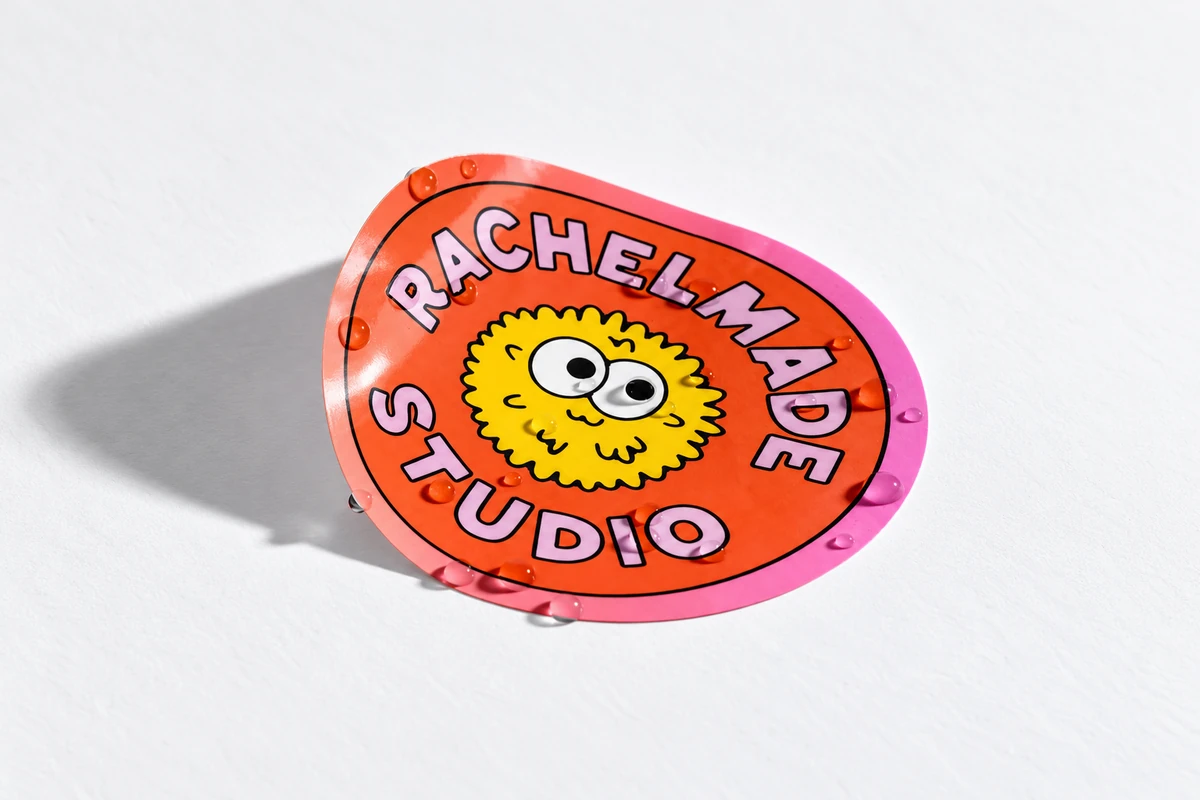
Are the labels waterproof? Plastic decal labels are waterproof; paper decal labels are not. If labels will be soaked for a long time or scrubbed hard, choose laminated plastic decal, which lasts far longer than unlaminated.
Can one order include several different designs? Yes. Each design is priced by its own quantity tier. If the designs share the same material and size, combining them into one batch is cheaper; send the files and we'll recalculate for you.
Do labels leave adhesive residue when peeled? Standard adhesive will leave marks if applied for a long time. If you need clean removal (price stickers, promotional stickers, labels on display goods), tell us in advance so we use a removable adhesive.
Do you print roll labels for labeling machines? Yes. Tell us the core diameter, maximum outer diameter and unwind direction; we wind the rolls to your machine's exact specifications.
Order label printing at In Quảng Cáo Q7
Choose the material, size, lamination and quantity right on this page to see the price, or send your file via Zalo 0866.511.099 so we can check the file and confirm the delivery time.
Workshop address: 49 Mai Van Vinh, Tan Hung Ward, Ho Chi Minh City.
Consultation and orders: 8:00–12:00 and 13:00–20:00 Monday – Saturday, Sunday 14:00–19:00. Production and delivery: 8:00–12:00 and 13:00–18:00 Monday – Saturday, closed Sunday.
For label orders together with bulk packaging — paper boxes, paper bags, batch labels — see the page bulk packaging and label printing.
Some images on this page are illustrations.
| Material | Paper decal labels, Plastic decal labels |
|---|---|
| Size | 3x3cm | 9cm2, 4x4cm | 16cm2, 5x5cm | 25cm2, 6x6cm | 36cm2, 7x7cm | 49cm2, 8x8cm | 64cm2, 9x9cm | 81cm2, 10x10cm | 100cm2, 20x10cm | 200cm2 |
| Lamination | No lamination, Matte lamination, Glossy lamination |
| Quantity | 100 labels, 200 labels, 300 labels, 400 labels, 500 labels, 1,000 labels, 2,000 labels, 5,000 labels |
| Made at | In Quảng Cáo Q7 workshop – 49 Mai Van Vinh, Tan Hung Ward, Ho Chi Minh City |
| Origin | Vietnam |
| Status | Made to order |
| Warranty | 24 hours from receipt: if you find a printing error or a difference from the approved file, let us know and we will reprint free of charge. |
| Price excl. VAT | 50.000 ₫ – 5.440.000 ₫ |
| Price incl. 8% VAT | 54.000 ₫ – 5.875.200 ₫ |
Ordering
Three ways to order: choose the specifications and quantity on the website and click Place order; message us on Zalo or call 0866.511.099; or visit the workshop to see material samples at 49 Mai Van Vinh, Tan Hung Ward, Ho Chi Minh City. During working hours, In Quảng Cáo Q7 replies within about 30 minutes. Most products have listed prices by size, material and quantity – prices exclude 8% VAT.
→ Online ordering guide · Quick quote
Sending design files
PDF or AI preferred, CMYK color mode, 300dpi for small formats, 3mm bleed. Send via Zalo, email inquangcaoq7@gmail.com, the form on our website, or a Google Drive link for large files. We check your file for free before printing; if you have no file yet, In Quảng Cáo Q7 can help with the design.
→ Design file submission guide
Payment
Bank transfer, QR code or cash at the workshop. Orders are confirmed and scheduled for production after payment; after transferring, send a photo of the receipt with your phone number via Zalo. Transfer note: Your name – Phone number – Product.
→ Payment guide
Timing & delivery
Completion time is shown on each product, counted from receipt of a print-ready file and payment confirmation. Pick up at the workshop Monday – Saturday, 8:00–12:00 and 13:00–18:00; urgent orders within Ho Chi Minh City delivered within 2 hours; other provinces via bus courier or express delivery. On receipt, please check quantity, size, material and condition of the products.
Order tracking
Enter the phone number used when ordering to see your orders from the last 90 days and their status: Unpaid → Printing → Printed → Delivering → Invoiced → Completed. For orders placed via Zalo, send your name and phone number to get progress updates.
→ Order tracking
E-invoice (VAT)
In Quảng Cáo Q7 issues 8% VAT e-invoices. Provide the company name, tax code, address and email within 24 hours of ordering; the invoice is issued within 24 working hours and sent by email, and cannot be changed once issued.
→ E-invoice (VAT) details
Misprints – reprints
Products that differ from the order or the approved proof are reprinted free of charge – report within 24 hours with photos. Spelling mistakes in a file you approved are not covered by free reprints.
→ Frequently asked questions (FAQs)
Be the first to review “Labels & stickers”
Related products

Labels & stickers
Reviews
There are no reviews yet.