




































































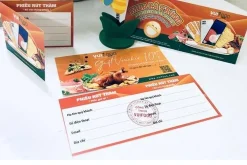
Our commitments
Printed directly in our workshop, no middlemen
Digital and offset presses right in our workshop. You deal directly with the people who make your order, so every request is understood and handled immediately.
Fast production, many orders ready the same day
Business cards, documents, decals, standees… printed and delivered the same day. See production times for each product group.
One point of contact, all-in-one from file to finished product
Quotes, orders, Zalo messages, delivery booking and invoicing run automatically on one system. Design – printing – finishing – installation all happen in-house, so you don't have to go anywhere else.
Full VAT invoices, issued fast
E-invoices issued right after delivery, with urgent support for businesses that need documents early for payment.
Raffle Tickets
Contact us for a quote
Raffle ticket printing with stubs, perforated tear lines and consecutive numbering. Send the quantity and ticket size for a quote within 30 minutes.
Quote-on-request product
This item is quoted based on actual size, materials and quantity. Send a request and In Quảng Cáo Q7 will reply within 30 minutes during office hours.
When messaging, please include size · quantity · date needed and your design file if you have one.
Raffle Ticket Printing With Stubs and Consecutive Numbering
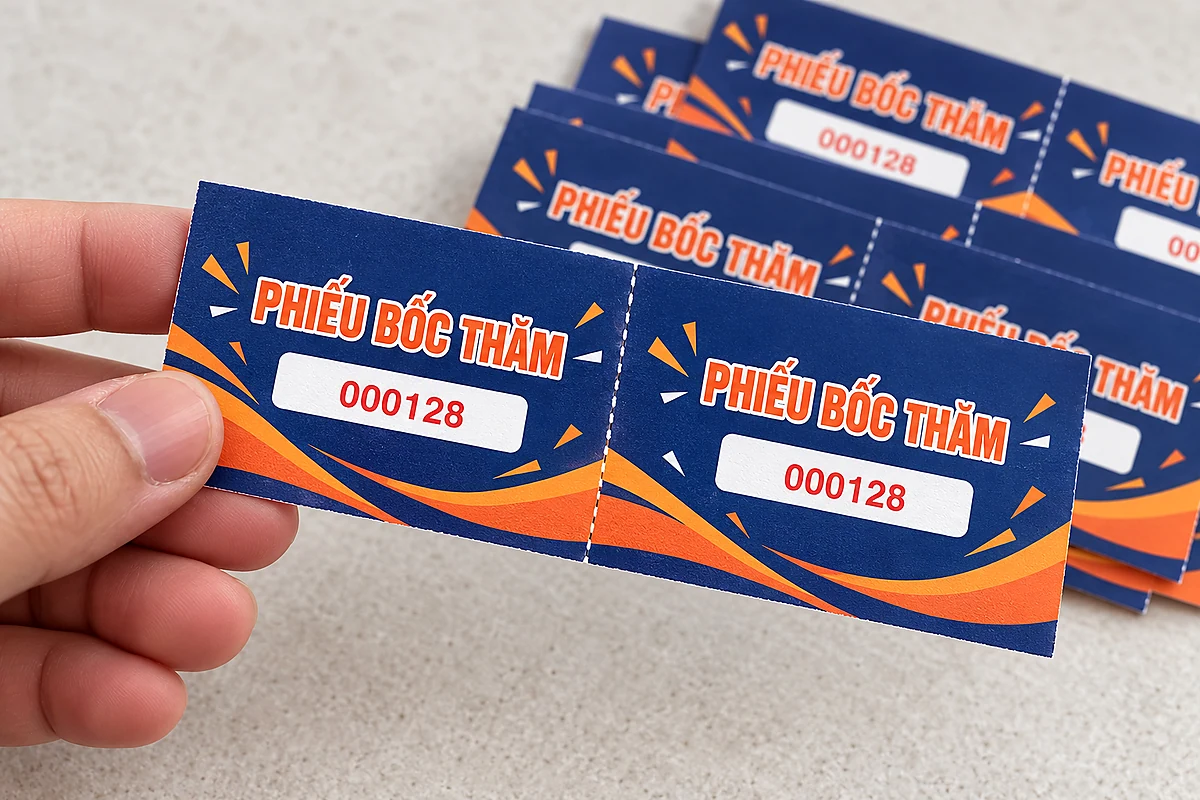
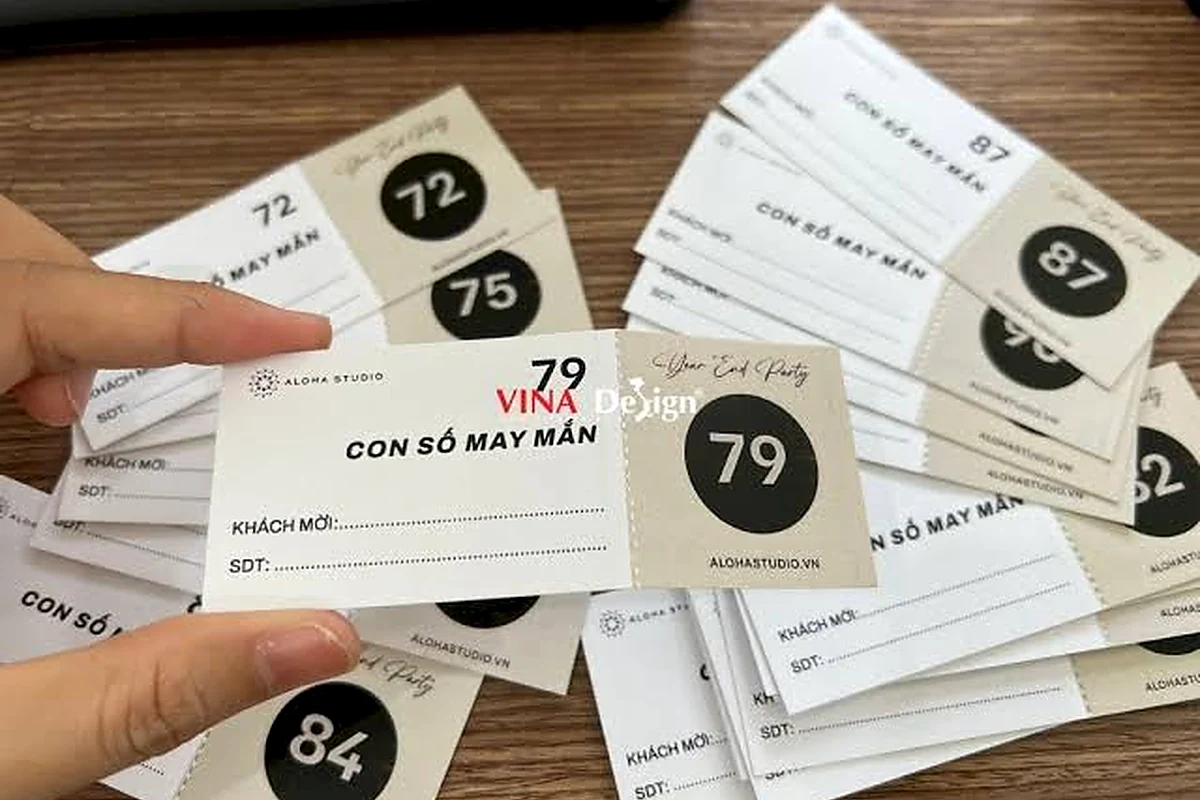
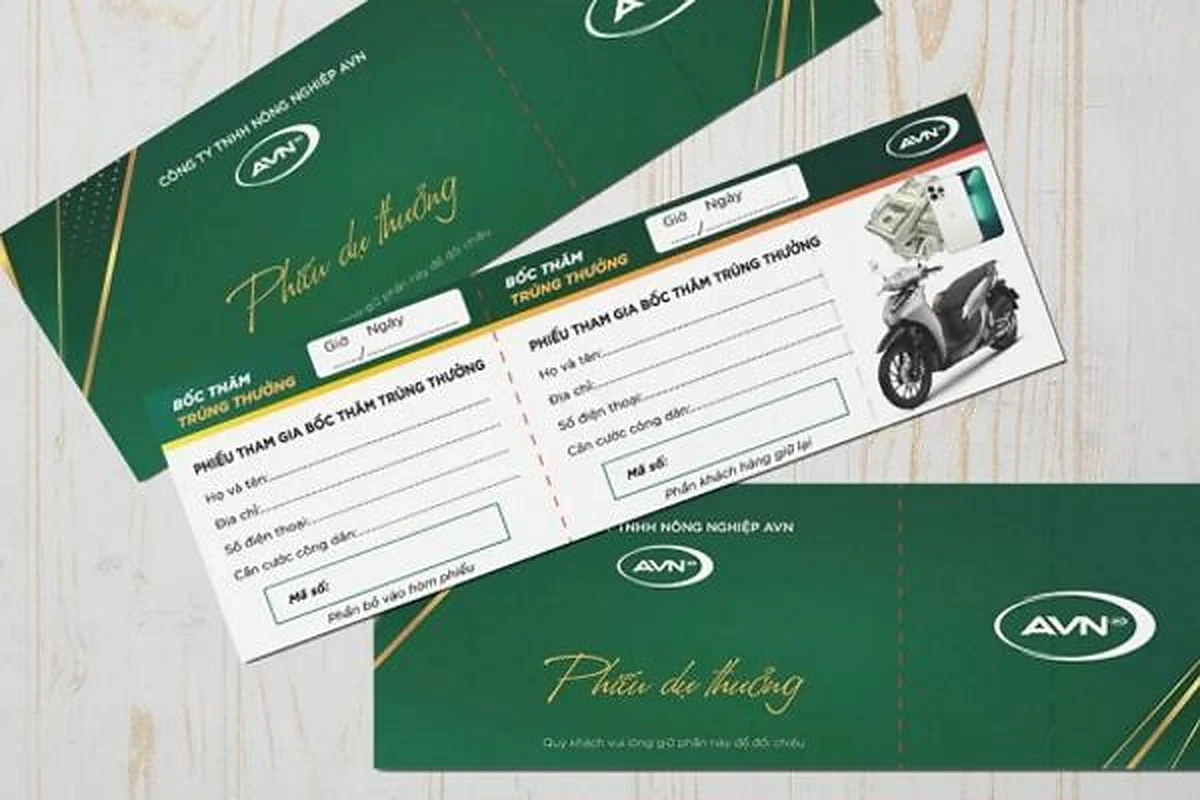
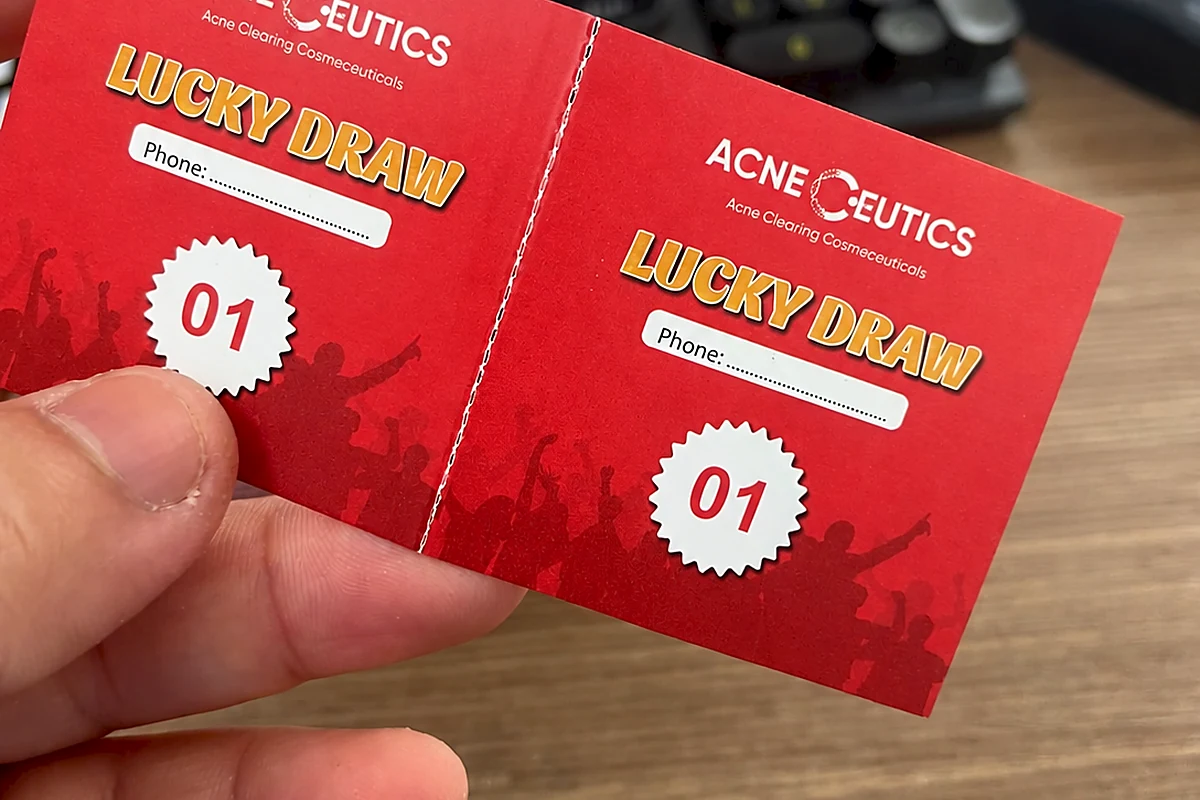
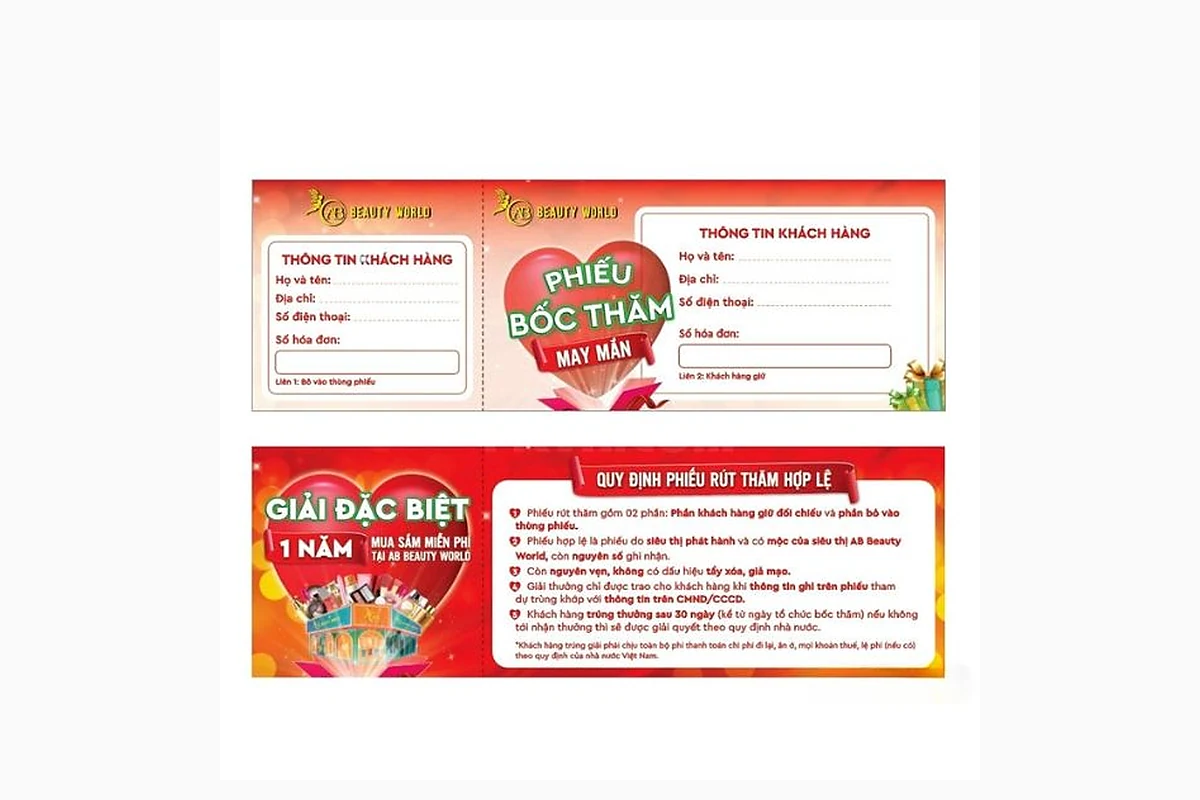
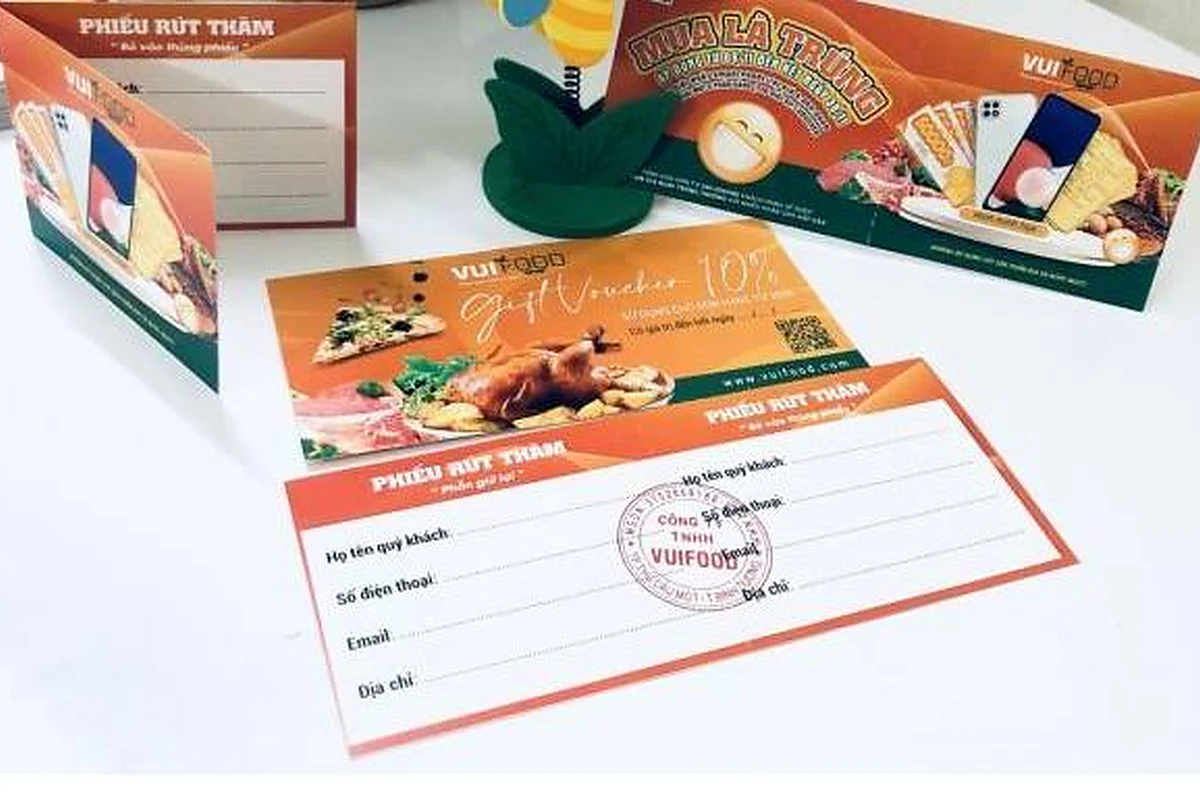
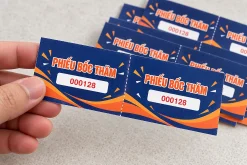
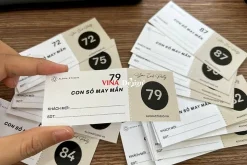
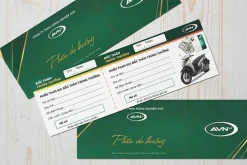
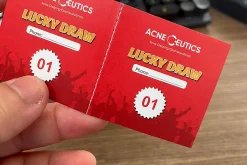
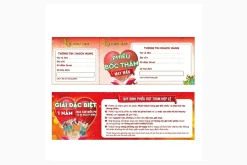
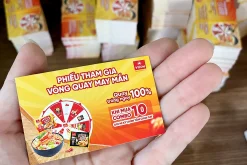
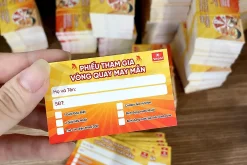
A raffle ticket is a two-part ticket: one half is kept by the customer, the other goes into the draw box, and both halves carry the same number for matching when awarding prizes. In Quảng Cáo Q7 prints raffle tickets with stubs, perforated tear lines and consecutive numbering, quoted by ticket size and actual quantity.
What a raffle ticket is
A raffle ticket (also called a draw ticket, lucky draw ticket or prize ticket) lets a program award prizes publicly in a way no one can dispute. The whole mechanism lies in the number: each ticket has a unique number, printed on both the customer's part and the part dropped in the box, so whoever holds the drawn number is the winner.
The programs that use them most are in-store promotions, company year-end parties and reviews, fairs, events such as grand openings with a welcome gate, client appreciation programs, and fundraisers. What they share is more participants than prizes, and the need for a way of choosing winners that everyone can see is transparent.
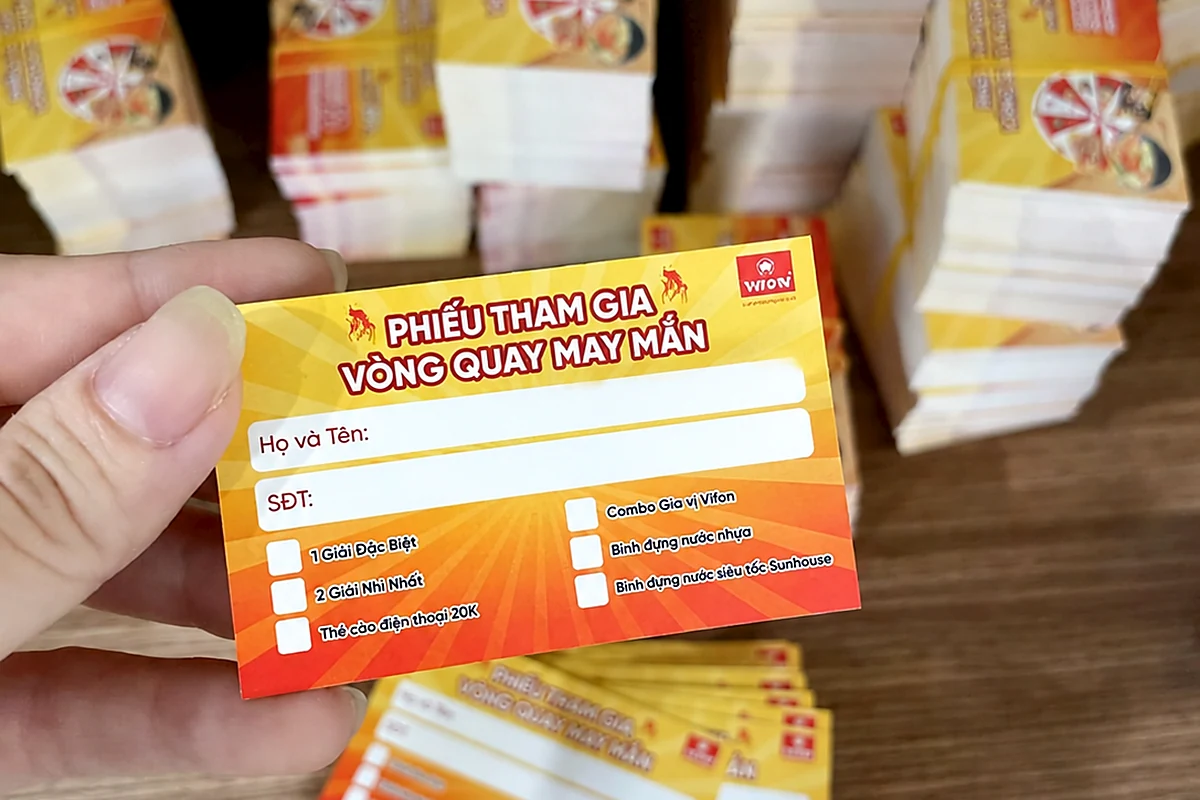
Besides the draw itself, raffle tickets quietly do another job: collecting information. The name and phone number customers fill in on the stub they drop in the box becomes the customer list after the program — many stores run draws mainly for this part.
Stubs, tear lines and consecutive numbering
The three details below are what distinguish a properly made raffle ticket from an ordinary sheet printed with numbers:
- Stub — the smaller part of the ticket, where customers fill in their details and drop it in the box. The larger part is kept by the customer as proof.
- Perforated tear line — a line of perforations between the two parts that tears cleanly by hand along the line, without scissors and without ragged tears.
- Sequential numbering — each ticket has a different number, running consecutively. The number is printed twice, once on the customer's part and once on the stub, identical.
Consecutive numbering is the part most likely to go wrong if done by hand, so it must always be printed with a numbering machine rather than written by hand. When ordering, tell us the starting number and how many digits the number has — for example starting from 000001 with six digits. If the program is split by point of sale or by day, numbers can be assigned in separate ranges for each group so you know where each ticket came from.
A small tip: don't start from number 1. Starting from a milestone like 1001 or 000101 makes the program look bigger, and also avoids the holder of number 1 thinking the first ticket has an advantage.
Content on both sides of the ticket
Raffle tickets are usually printed on two sides, with each side doing a separate job. The front is the promotional side: the program name, organizer logo, prize structure, draw time, and the number. Back side is the fill-in side: boxes for full name, phone number, and whatever the program needs to collect.
When designing the fill-in boxes, remember to leave enough room for handwriting — each box at least 8 mm tall, not just enough for printed type. Boxes too close together are why many tickets end up smudged, and when a ticket wins, the phone number can't be read to call the winner.
The prize structure and participation conditions should be printed in full on the raffle ticket, even if the rules are posted at the counter. The ticket is what customers take home, so it's also where they reread the draw time or how to claim prizes.
Ticket size and paper type
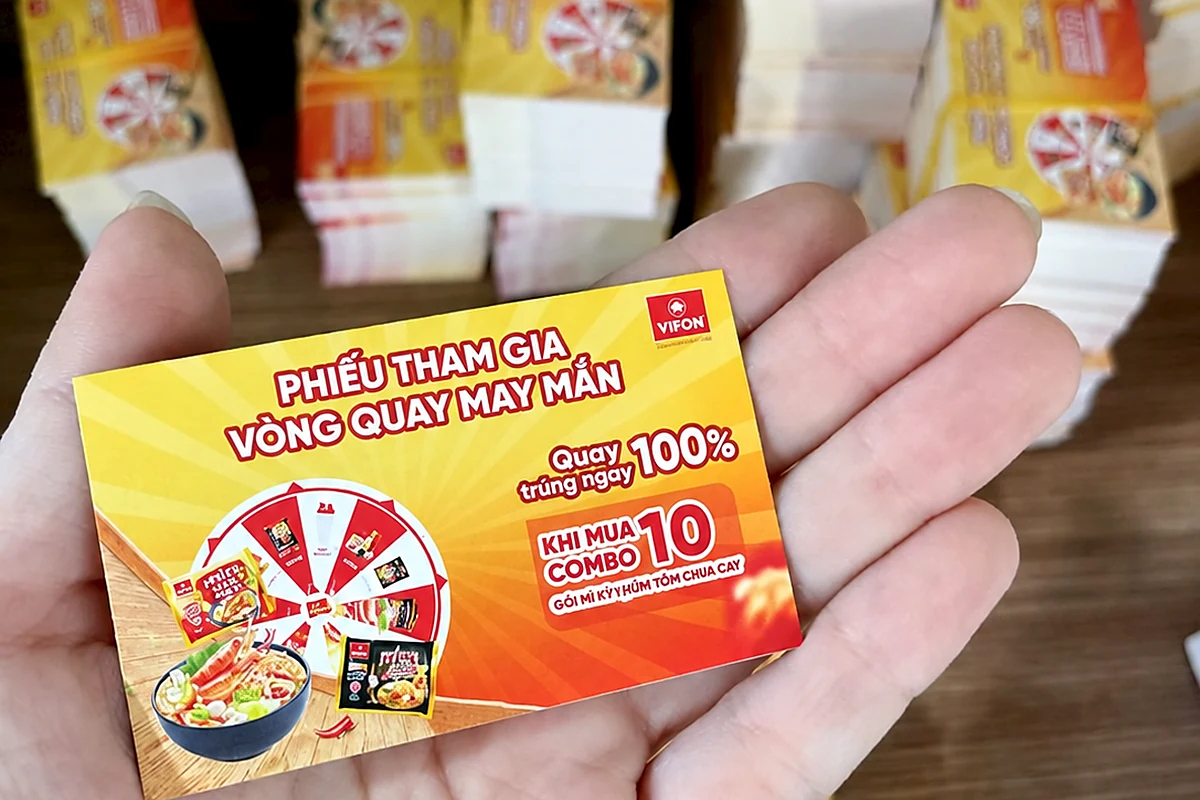
Raffle tickets have no fixed size. Common sizes range from business card size up to A6, enough to hold in one hand with room left for the fill-in boxes. The larger the size, the easier to write on, but the faster the draw box fills — for programs with a few thousand tickets, a compact size is the more practical choice.
On paper, the considerations come down to two points: writable with a pen and tears without ripping off line. Paper that's too thin smudges and crumples easily in the box; paper that's too thick or laminated won't take ballpoint ink and makes the tickets take up more space. Tell us whether the program needs customers to write by hand or just hand in tickets, and we'll suggest a suitable paper when quoting.
Other optional extras: binding into pads with covers to distribute to each point of sale, hanging holes, or a third part printed for the organizer's records. Each affects the price, so mention them in advance rather than adding them midway.
Running a smooth prize draw
A few lessons from real programs. First, print extra. Torn tickets, mistakes and customers asking for another ticket happen constantly; 10% more than the expected number is almost always just enough.
Second, check the box before the draw: the box must be sealed, with an opening wide enough to drop tickets in but not to pull them out, and the tickets must be mixed well before drawing. This looks minor but is where customers raise the most questions.
The draw stage area should have a backdrop for award photos, and if the program has a prize tracking board, also make a award boards placed next to the ticket box.
Third, keep the drawn stubs after awarding prizes. If there's a dispute, the stub is the evidence to match against the customer's part. Many programs also photograph the winning stub on the spot to post with the results announcement.
What a quote request needs
Raffle tickets are quoted on request since ticket size, paper type, printed sides and numbering differ for every program. For an accurate quote the first time, please send:
- Number of raffle tickets expected for the whole program.
- Ticket size you want, or a reference sample for us to work from.
- Printed one or two sides, color or black and white.
- Whether there's a stub and tear line.
- Numbering method: starting number, number of digits, and whether ranges are split by point of sale.
- Date needed — tickets are always tied to a program with a fixed schedule.
- Design file if you have one; if not, send the logo, prize structure and rules.
If the program needs accompanying print items, we make them in the same order: promotional vouchers, loyalty cards or handheld hashtag for the photo area.
With all the above, we'll quote the whole batch with a delivery date. If anything is missing we can still give a price range, but it will need finalizing once all the information is in.

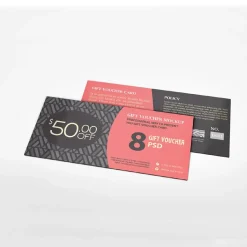
Vouchers & Gift Cards

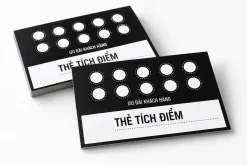
Vouchers & Gift Cards


Backdrop


Award boards
Preparing design files
Raffle tickets are small-format prints, so files must be precise, with one extra requirement: leaving room for the number positions.
- File PDF or AI, color mode CMYK, images at least 300dpi at actual size.
- Leave 3 mm bleed on each edge; text at least 3 mm from the cut line.
- Clearly mark the tear line between the stub and the customer's part.
- Leave two blank boxes for the numbers — one on the stub, one on the customer's part, placed where hands won't cover them.
- Fill-in boxes at least 8 mm tall, on a white or very light background so ballpoint writing is readable.
- Text must be converted to outlines, or send the fonts along.
No file yet? We design it from your existing content: logo, program name, prize structure, rules and the information customers need to fill in. We build a two-sided mockup with number positions and send it for approval before printing.
How many raffle tickets to print
The number of tickets depends on the number of participants and how tickets are handed out. The table below shows reference levels, including spares for damaged or miswritten tickets.
| Number of participants | Tickets to print | Spare allowance |
|---|---|---|
| Under 50 people | 60 tickets | About 20 percent |
| 50 – 100 people | 120 tickets | About 20 percent |
| 100 – 300 people | 350 tickets | About 15 percent |
| 300 – 500 people | 550 tickets | About 10 percent |
| Over 500 people | Actual number plus 10 percent | About 10 percent |
- If each customer receives one ticket, the number of tickets equals the number of customers plus spares.
- If tickets are given per purchase receipt, count by the expected number of receipts.
- If customers get several tickets based on purchase value, print noticeably more than the number of customers.
- Extra tickets can't be reused since they're already numbered, so don't print too many.
The point to note is that tickets are numbered, so each ticket has a different number and can't be reused for a later round. So finalize the quantity close to reality, with spares only enough to cover damaged tickets.
Controlling raffle tickets before and after the draw
The consecutive numbers and stubs exist so the organizers can match tickets. Here's how to use those two parts smoothly.
| Timing | Task | Ticket part used |
|---|---|---|
| Before handing out tickets | Record the number range from start to end | Numbers on both parts |
| When handing out to customers | Tear along the tear line, keeping the stub | Stub |
| When customers drop tickets in the box | Check the customer's part has the same number as the stub | Both parts with the same number |
| Before the draw | Count the collected stubs to know the number of participants | Stub |
| When announcing the winning number | Read the number on the drawn ticket | The part in the box |
| When awarding prizes | Match the number on the customer's ticket with the stub | Both parts with the same number |
| After the program | Keep all stubs in number order | Stub |
This way, if there's a complaint about the results, the organizers have enough evidence to check. It's also why tickets should be printed with consecutive numbers rather than blank tickets numbered by hand, since handwritten numbers are easily duplicated or misread.
Raffle tickets for multi-round programs
Programs running several rounds a year need to distinguish each round's tickets, so tickets from an earlier round don't end up in a later round's box. The table below shows ways to distinguish them.
| Method | Advantages | Note |
|---|---|---|
| A separate number range for each round | Easy to match, no duplicate numbers | Record each round's number range |
| Print the round name on the ticket | Recognizable at a glance | A separate file for each round |
| Change the ticket background color by round | Quick to tell apart when checking | Color printing costs more |
| Change the ticket size by round | Hardest to mix up | Changes how tickets go into the box as well |
| Print the round's dates | Both distinguishes and serves as evidence | Dates must be finalized before printing |
- The most used method is keeping one shared design and changing the number range for each round.
- If two rounds are close together, also print the round name directly on the ticket.
- Save each round's file along with the number range used, so the next round doesn't duplicate.
For recurring programs, keep the same layout and only update the number range and dates. That way each reprint just means resending the file with the quantity and desired number range.
Raffle ticket printing and delivery areas
Raffle tickets are printed at our workshop at 49 Mai Van Vinh, Tan Hung Ward, Ho Chi Minh City, and delivered to your door within the city.
- Around the workshop — District 7, Phu My Hung, District 4, District 8, Nha Be, Binh Chanh. Medium-sized orders can be picked up the same day.
- Central area — District 1, District 3, Binh Thanh, Phu Nhuan, Tan Binh. Delivered to your office so the organizing team can check numbers before taking them to the event venue.
- Rest of the city — Thu Duc, Go Vap, Tan Phu, District 10, District 11, District 12, Binh Tan, Hoc Mon, Cu Chi.
- Other provinces — sent by bus courier or delivery service; we bundle them in stacks of one hundred and write the number range on the outside of each bundle for quick checking.
With raffle tickets, you should receive the goods at least half a day before the event to check the number ranges. We print consecutive numbers without duplicates, but checking in advance is still safer than discovering a shortfall while handing tickets to customers.
Frequently asked questions
Why is there no listed price? Because ticket size, paper type, printed sides and numbering differ for every program. Send the expected quantity and size, and we'll quote right away.
Are the numbers printed by machine or written by hand? Printed with a numbering machine, running consecutively and printed identically on both parts of the ticket.
Can the numbering start from any number? Yes. You choose the starting point and number of digits; separate ranges for each point of sale are possible too.
Do raffle tickets have to be two-sided? No. One-sided printing works if there's little content, but two sides are more convenient since the promotional part and the fill-in part can be separated.
How many extra should I print? About 10% over the expected number, to cover torn tickets, spoiled entries and customers asking for replacements.
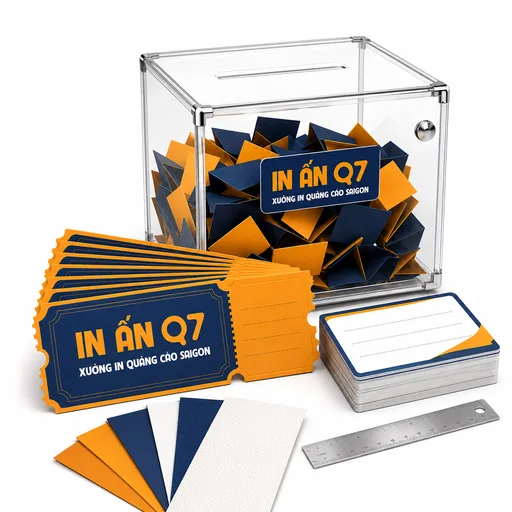
Do you make draw boxes? The box is a separate item; message us on Zalo with the desired size for a quote.
How far in advance should I order? Raffle tickets are numbered and perforated, so they need more finishing time than flat printing. Contact us a few days before the program so we can schedule it.
Get a Raffle Ticket Quote at In Quảng Cáo Q7
Message Zalo 0866.511.099 with the quantity, ticket size, printed sides and numbering method — we reply within 30 minutes during business hours.
Workshop address: 49 Mai Van Vinh, Tan Hung Ward, Ho Chi Minh City.
Consultation and orders: 8:00–12:00 and 13:00–20:00 Monday – Saturday, Sunday 14:00–19:00. Production and delivery: 8:00–12:00 and 13:00–18:00 Monday – Saturday, closed Sunday.
Some images on this page are illustrations.
| Made at | In Quảng Cáo Q7 workshop – 49 Mai Van Vinh, Tan Hung Ward, Ho Chi Minh City |
|---|---|
| Origin | Vietnam |
| Status | Made to order |
| Warranty | 24 hours from receipt: if you find a printing error or a difference from the approved file, let us know and we will reprint free of charge. |
Quote-on-request product. Prices quoted exclude 8% VAT; the invoice adds the tax as required by law.
Ordering
Three ways to order: choose the specifications and quantity on the website and click Place order; message us on Zalo or call 0866.511.099; or visit the workshop to see material samples at 49 Mai Van Vinh, Tan Hung Ward, Ho Chi Minh City. During working hours, In Quảng Cáo Q7 replies within about 30 minutes. Most products have listed prices by size, material and quantity – prices exclude 8% VAT.
→ Online ordering guide · Quick quote
Sending design files
PDF or AI preferred, CMYK color mode, 300dpi for small formats, 3mm bleed. Send via Zalo, email inquangcaoq7@gmail.com, the form on our website, or a Google Drive link for large files. We check your file for free before printing; if you have no file yet, In Quảng Cáo Q7 can help with the design.
→ Design file submission guide
Payment
Bank transfer, QR code or cash at the workshop. Orders are confirmed and scheduled for production after payment; after transferring, send a photo of the receipt with your phone number via Zalo. Transfer note: Your name – Phone number – Product.
→ Payment guide
Timing & delivery
Completion time is shown on each product, counted from receipt of a print-ready file and payment confirmation. Pick up at the workshop Monday – Saturday, 8:00–12:00 and 13:00–18:00; urgent orders within Ho Chi Minh City delivered within 2 hours; other provinces via bus courier or express delivery. On receipt, please check quantity, size, material and condition of the products.
Order tracking
Enter the phone number used when ordering to see your orders from the last 90 days and their status: Unpaid → Printing → Printed → Delivering → Invoiced → Completed. For orders placed via Zalo, send your name and phone number to get progress updates.
→ Order tracking
E-invoice (VAT)
In Quảng Cáo Q7 issues 8% VAT e-invoices. Provide the company name, tax code, address and email within 24 hours of ordering; the invoice is issued within 24 working hours and sent by email, and cannot be changed once issued.
→ E-invoice (VAT) details
Misprints – reprints
Products that differ from the order or the approved proof are reprinted free of charge – report within 24 hours with photos. Spelling mistakes in a file you approved are not covered by free reprints.
→ Frequently asked questions (FAQs)
Reviews
There are no reviews yet.