







































































Our commitments
Printed directly in our workshop, no middlemen
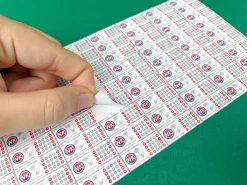
Digital and offset presses right in our workshop. You deal directly with the people who make your order, so every request is understood and handled immediately.
Fast production, many orders ready the same day
Business cards, documents, decals, standees… printed and delivered the same day. See production times for each product group.
One point of contact, all-in-one from file to finished product
Quotes, orders, Zalo messages, delivery booking and invoicing run automatically on one system. Design – printing – finishing – installation all happen in-house, so you don't have to go anywhere else.
Full VAT invoices, issued fast
E-invoices issued right after delivery, with urgent support for businesses that need documents early for payment.
Eggshell Security Stickers
From 110.000 ₫
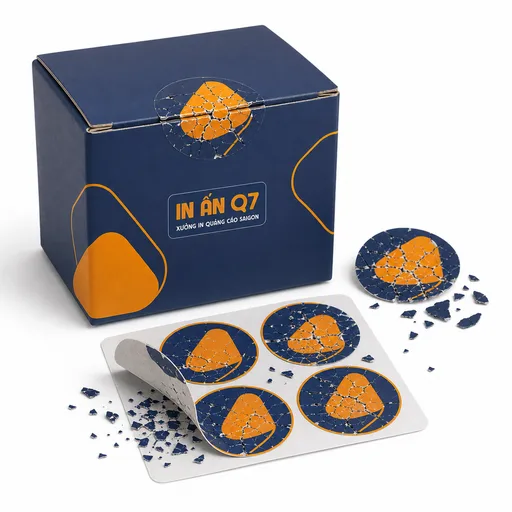
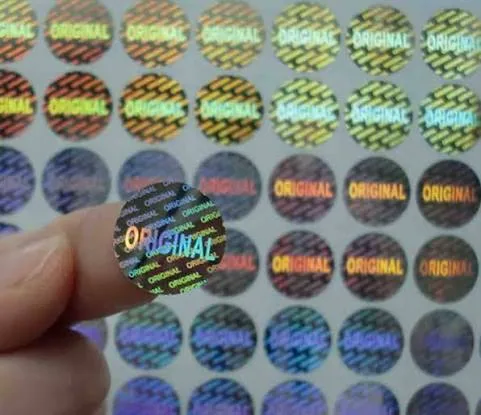
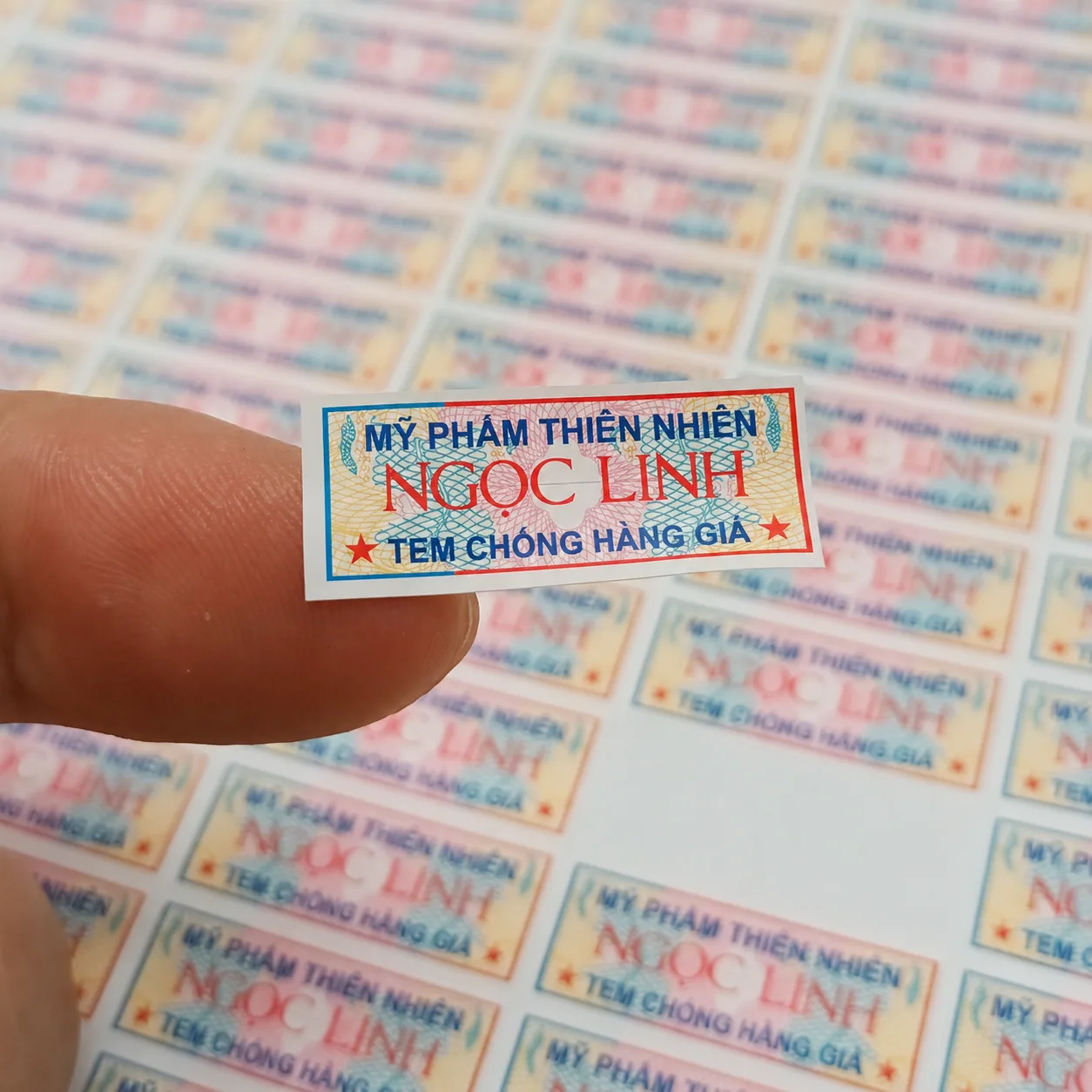
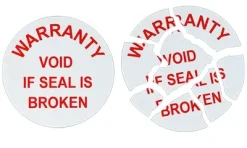
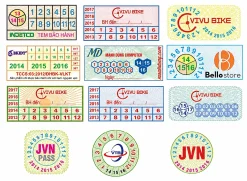
Multicolor eggshell stickers that crumble when peeled and can't be reapplied. Used for warranty seals.
Eggshell Sticker Printing – Tamper-Evident Seals and Warranty Stickers in HCMC
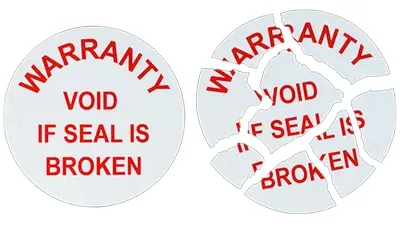
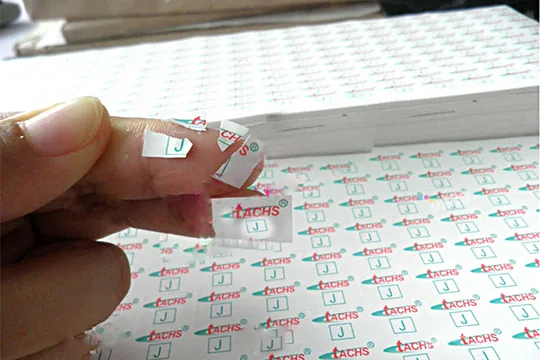
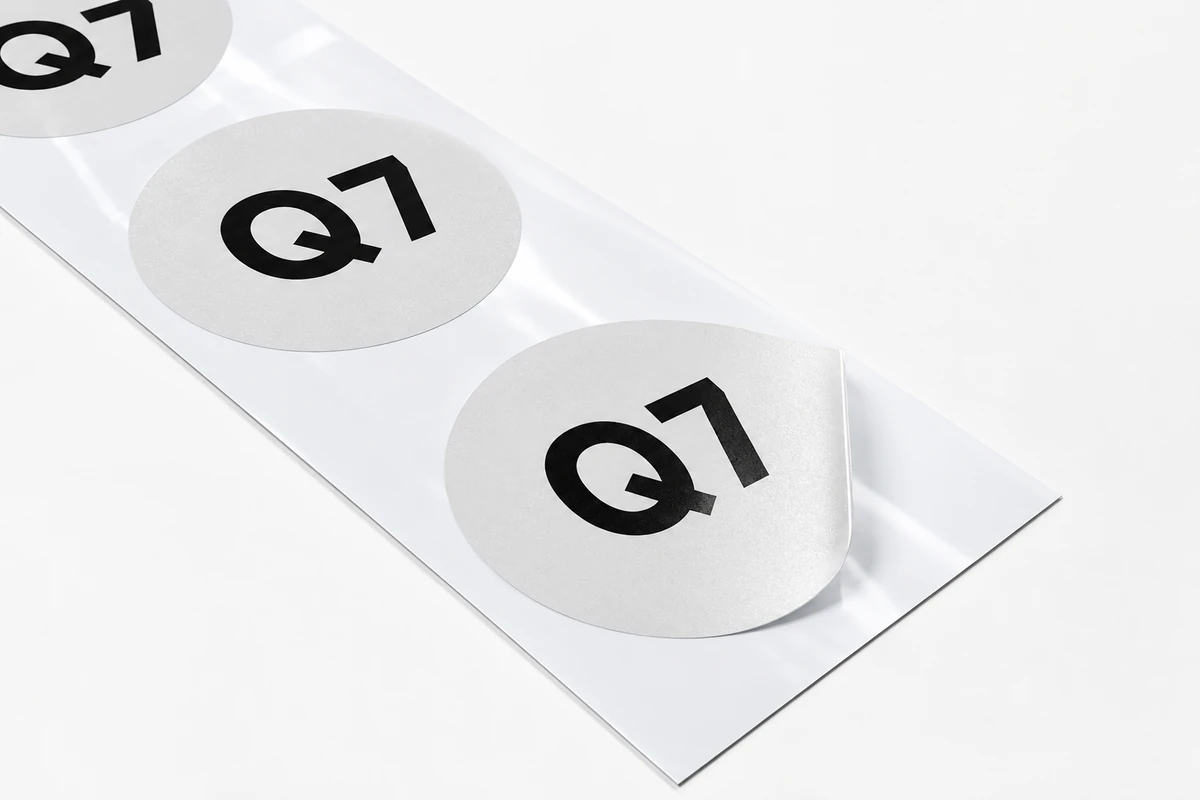
Eggshell stickers – also called destructible stickers – is a single-use sticker. The material is brittle and crumbles into many pieces when peeled, so it can't be removed whole and stuck elsewhere. Anyone can see at a glance whether the item has been opened.
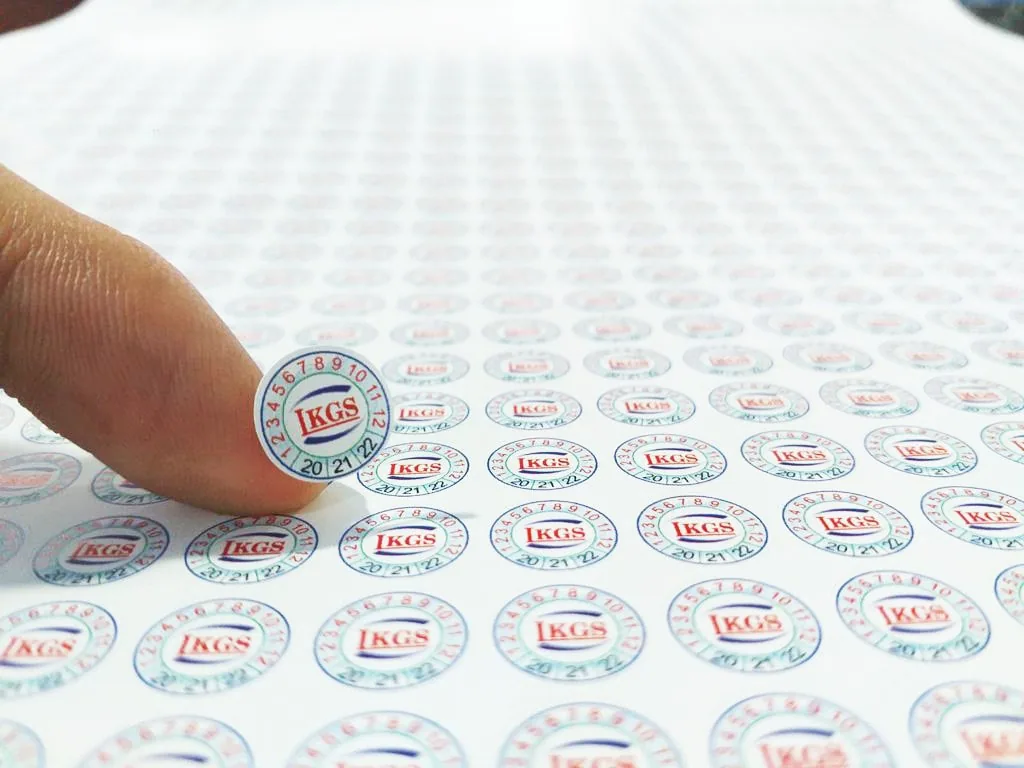
In Quảng Cáo Q7 prints eggshell sticker printing from 500 stickers per design, from 110.000đ for a batch of 500 small stickers. Two straight-cut eggshell sticker sizes are available in the price list; other sizes or custom shapes are quoted per request.
What eggshell stickers are
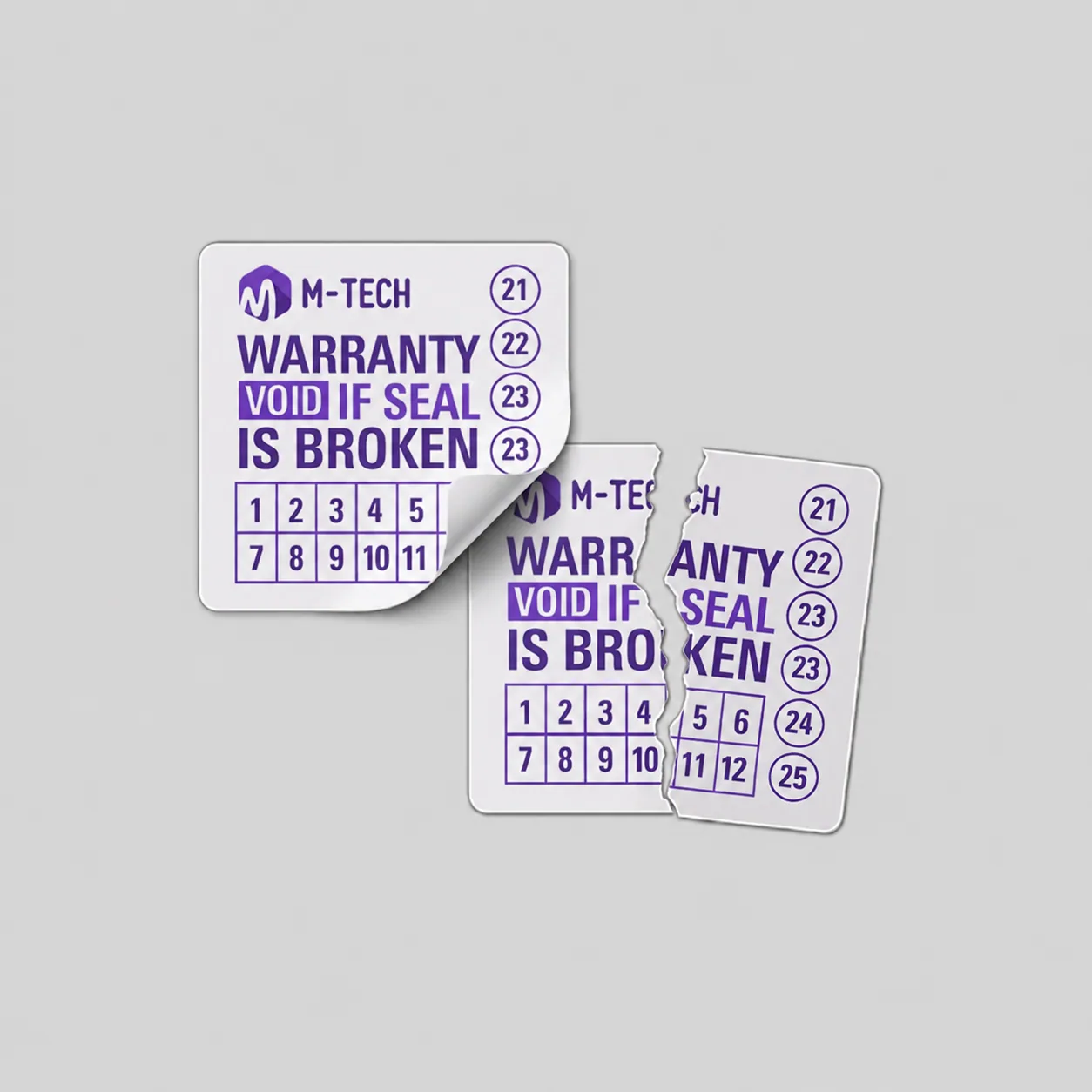
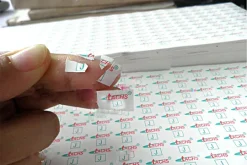
Eggshell stickers are made of brittle vinyl film with stronger adhesion than ordinary decals. When applied to a clean surface, the adhesive bonds tightly to the material. When someone tries to peel it, the film tears into small pieces instead of coming off in one sheet. Adhesive and fragments remain on the surface, showing at a glance that someone has tampered with it.
That's the only difference, but an important one, from ordinary paper or plastic decals: regular stickers peel off intact and can be reapplied, so they aren't used for sealing. Destructible stickers can only be used once.
Two sizes available
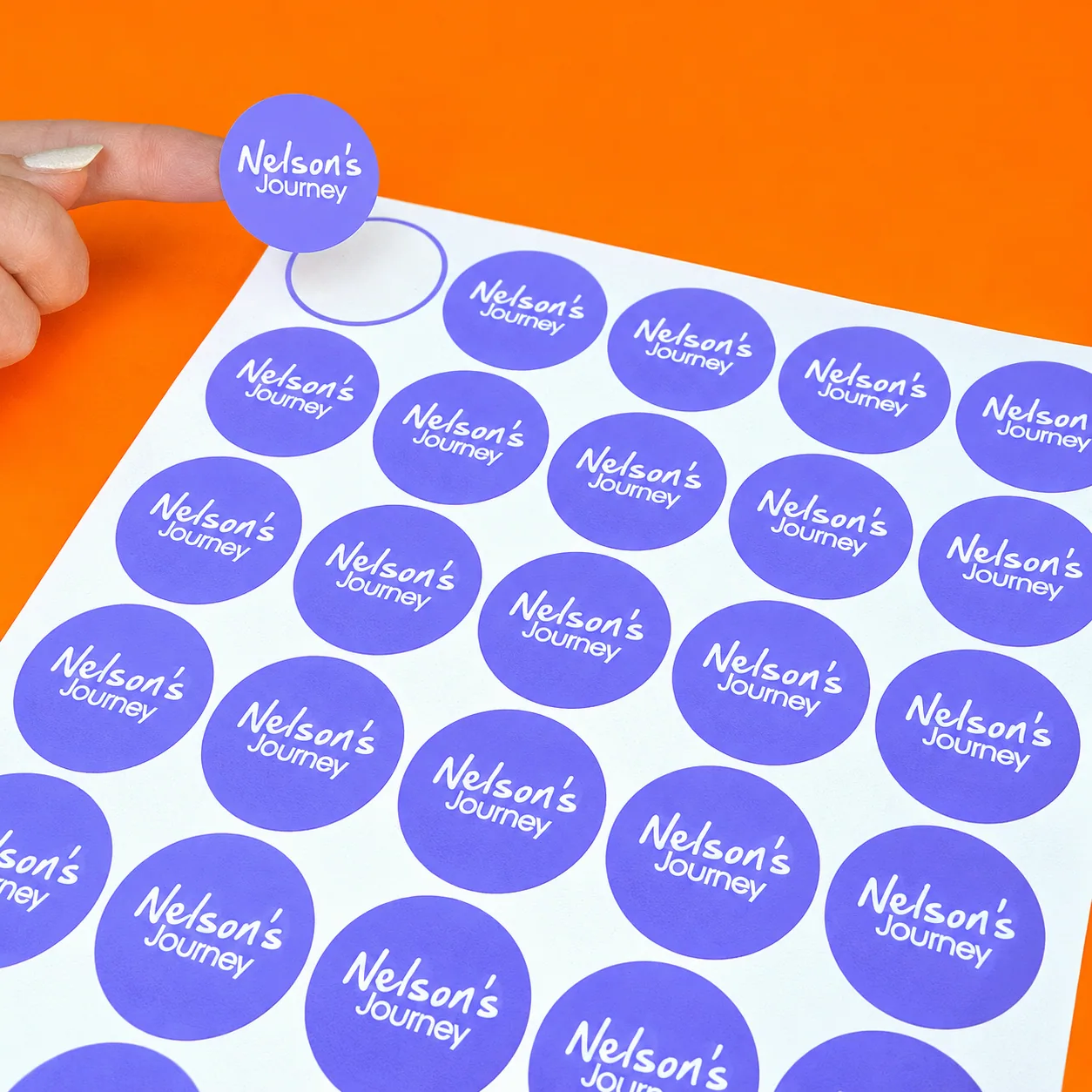
On this page we offer two straight-cut specifications: 1cm² eggshell stickers (1 × 1 cm) and 2cm² eggshell stickers (a square of about 1.4 cm per side). Straight-cut means the stickers are cut into squares on a backing paper and peeled one by one, with no custom die needed, so costs are low and delivery is fast.
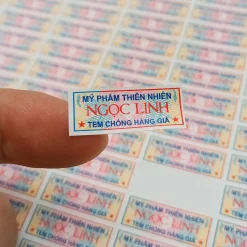
The 1cm² size suits screws, device seams and small box edges – places where you only need to cover the exact opening point. The 2cm² size makes it easier to print extra text, a logo or a serial number, often used for warranty stickers on the back of devices. Sizes larger than 2cm², round stickers or custom shapes need a new cutting die; message us on Zalo for a quote.
Where to apply them
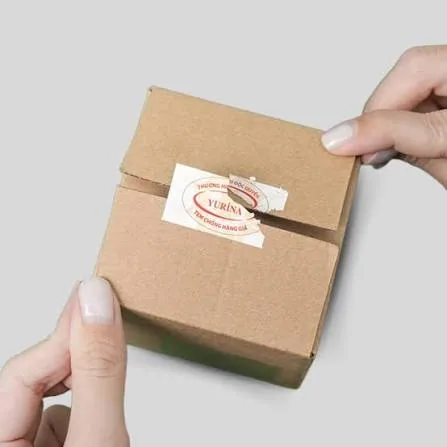
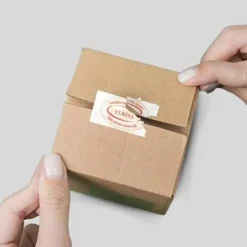
Eggshell stickers for sealing product boxes: applied across the edge of the box lid. When the customer opens the box, the sticker breaks, giving both store and customer clear grounds for returns and exchanges.
Eggshell stickers for machinery and equipment: applied over case screws and body seams. Service centers check whether the sticker is intact or broken to know if the device has been opened.
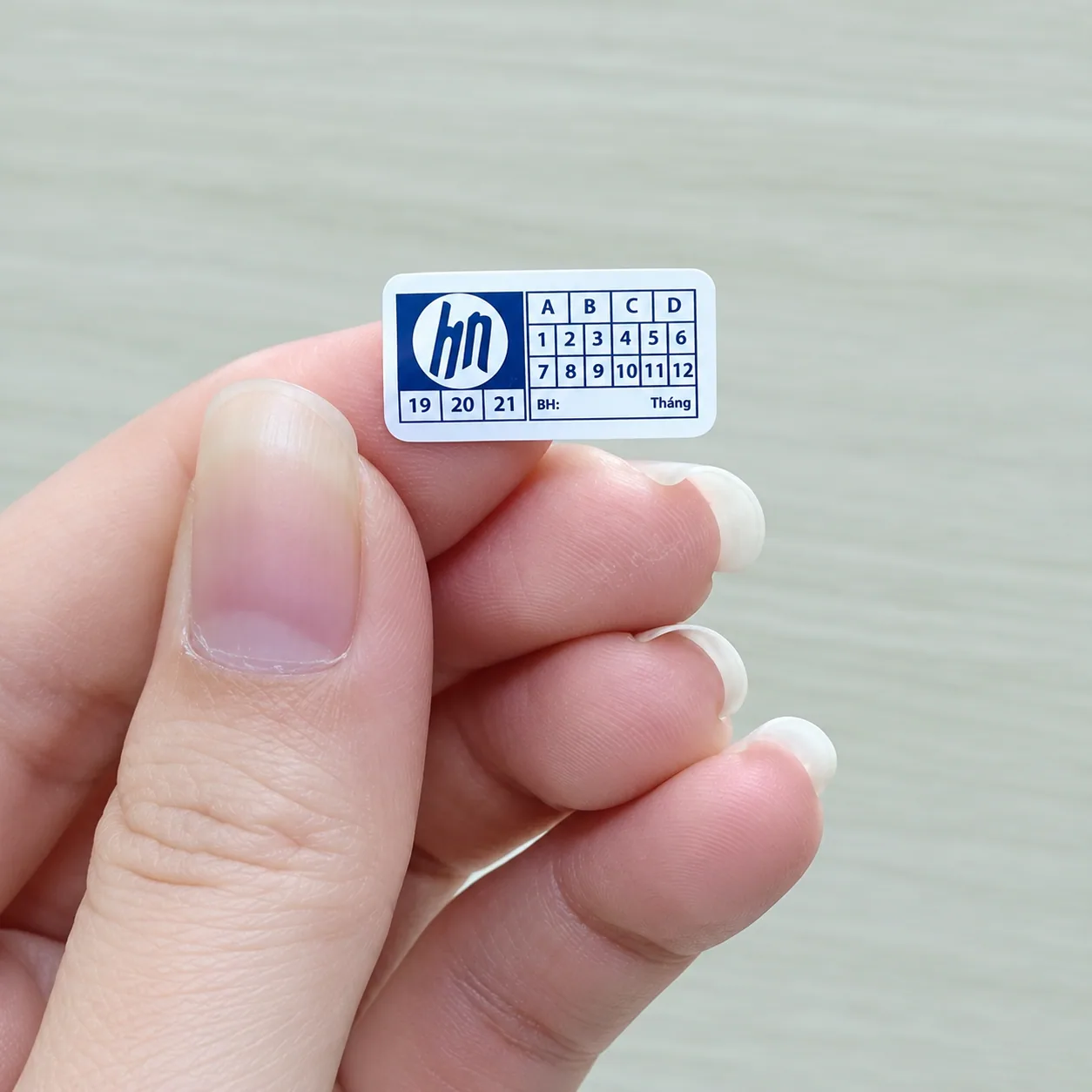
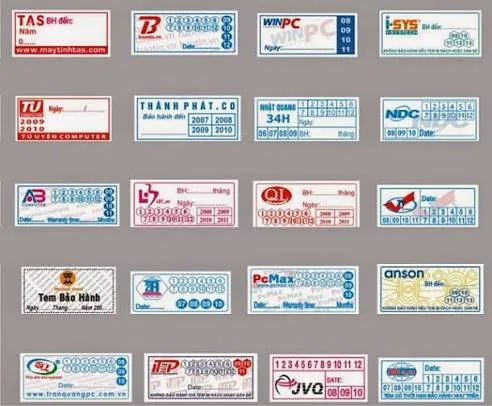
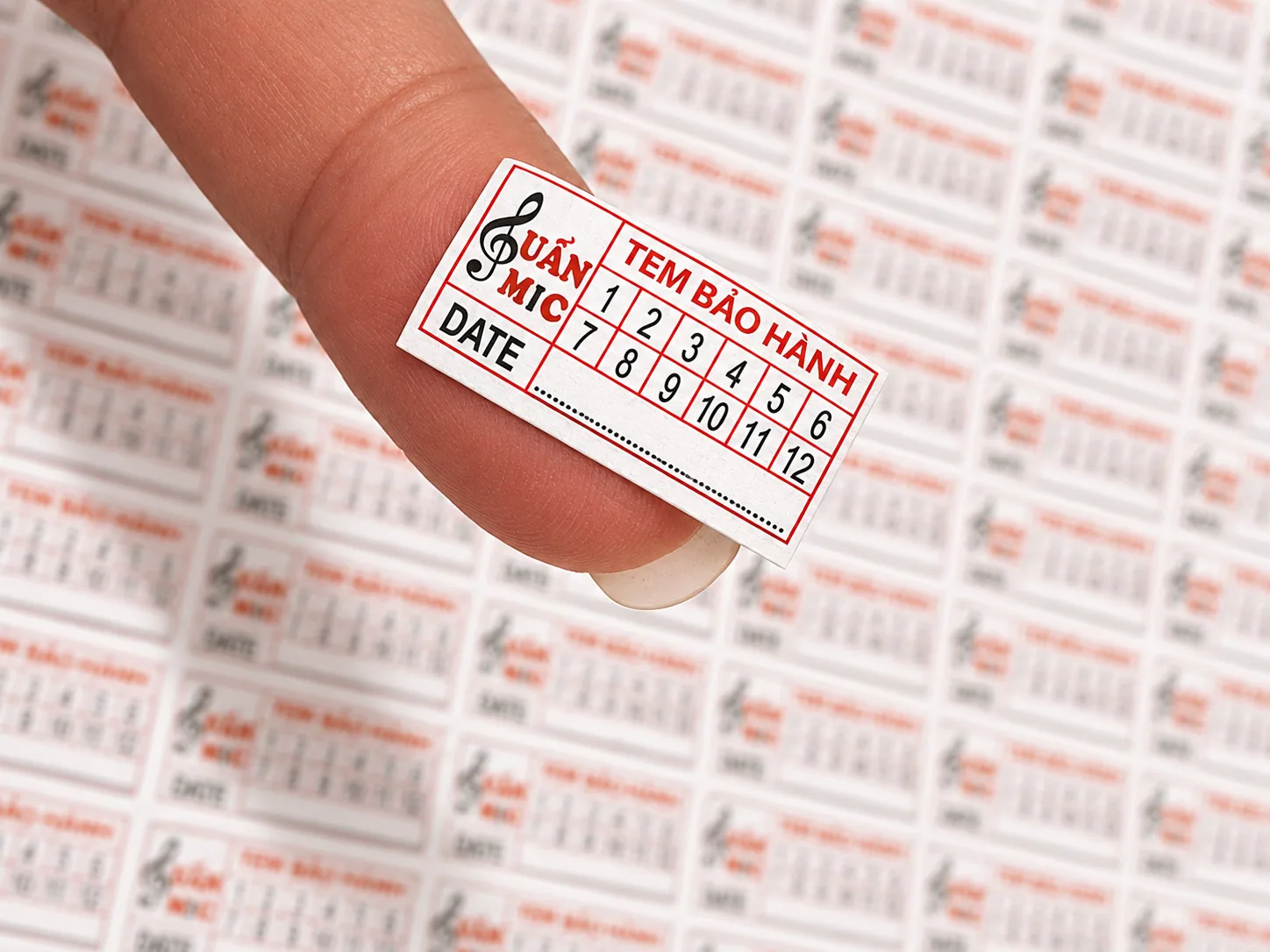
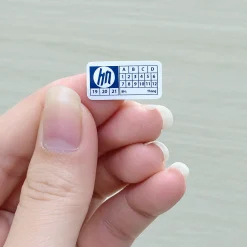
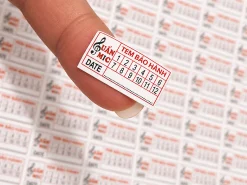
Eggshell stickers for phones: the 1cm² size is applied right on the screw next to the charging port or the back cover seam. Eggshell sticker designs for repair shops often include a box for the device intake date, helping define responsibility with the customer after the repair.
They're also used to seal cartons shipped to provinces, cash cabinets and document seals. The surface must be dry, clean and oil-free; they adhere well to plastic, powder-coated metal, glass and cartons.
Using them as warranty stickers
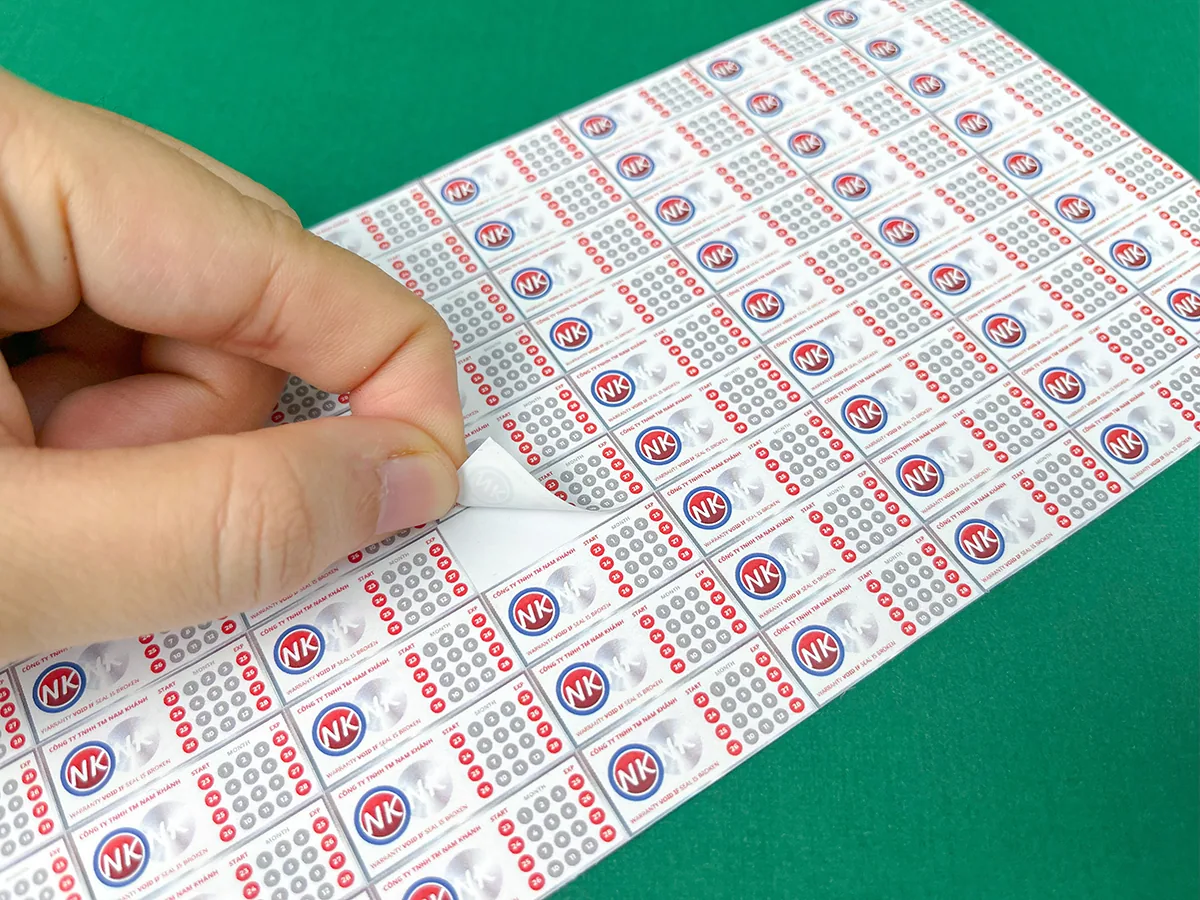
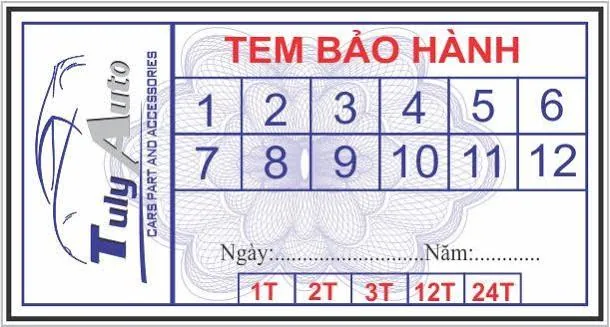
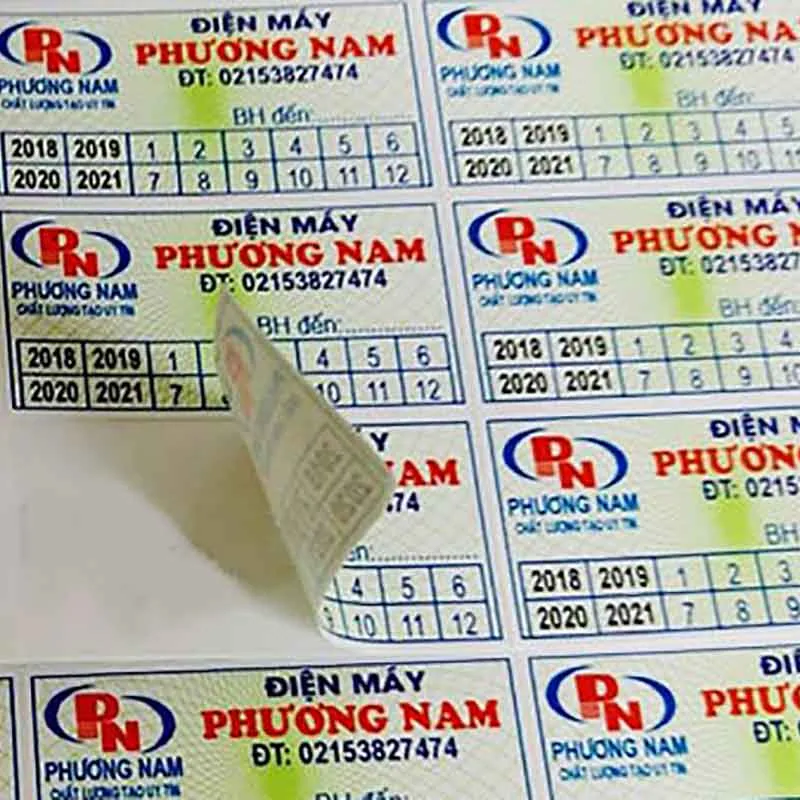
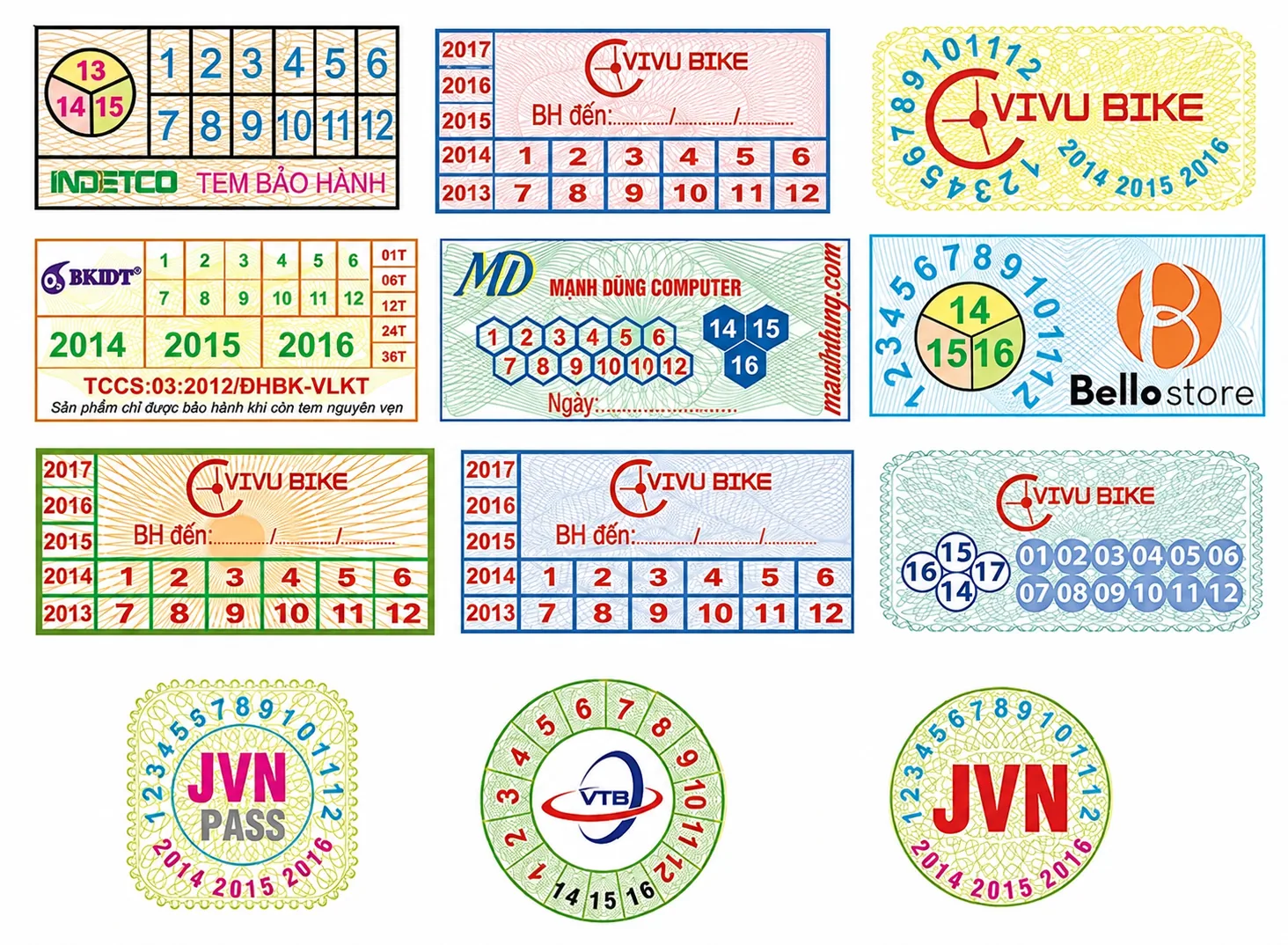
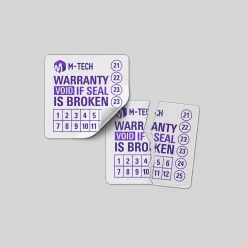
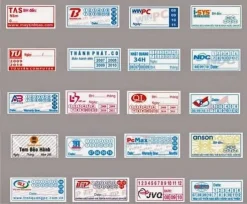
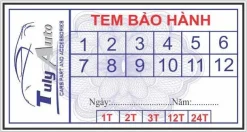
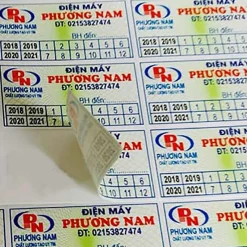
Most warranty sticker printing orders at our workshop are printed on eggshell sticker material, which many stores simply call destructible warranty stickers. The reason is simple: an eggshell warranty sticker is only valid if no one can peel it off and reapply it. Printed content usually includes the store name, phone number, a date box and a line saying the warranty is void if the sticker is torn.
Warranty sticker orders for phone, computer and electronics shops often use the 2cm² size in one color, leaving a blank box to handwrite the intake date. If you need each sticker serial-numbered, mention it before ordering, since numbering is handled separately and isn't included in the listed price.
Eggshell sticker price list
The prices below are per batch by quantity, excluding 8% VAT. The more you order, the lower the unit price per sticker – which is why most stores order in one go for the whole year.
| Quantity | Straight-cut 1cm² | Straight-cut 2cm² |
|---|---|---|
| 500 labels | 110.000đ | 200.000đ |
| 1,000 labels | 200.000đ | 360.000đ |
| 2,000 labels | 360.000đ | 580.000đ |
| 5,000 labels | 900.000đ | 1.280.000đ |
| 10,000 stickers | 1.400.000đ | 2.200.000đ |
Five tiers are available: 500, 1,000, 2,000, 5,000 and 10,000 eggshell stickers. The minimum for small-quantity eggshell sticker printing is 500 stickers per design. Below that, machine setup costs spread over each sticker are too high to be economical. If you need cheap destructible sticker printing for a small store, the most economical way is to combine several designs in one print run or choose the 1cm² size.
Preparing print files
- PDF or AI, CMYK color mode, at least 300dpi
- 3mm bleed on each edge, 3mm safe zone inside the cut line
- Text converted to outlines; multi-page files exported in the correct order
- The smallest text should be 5pt or larger since the sticker size is very small
- Send files via Zalo 0866.511.099 or inquangcaoq7@gmail.com
No design file? No problem – send your logo and the content to print, and we'll build a mockup and send it for approval before printing.
Naming specifications when ordering
The two specifications on the page are often named by purpose: 1cm² straight-cut eggshell warranty stickers for screws and device seams, 2cm² straight-cut destructible seal stickers for box lid edges and spots needing extra text.
As for color, the stickers print in full CMYK, so 500 multicolor eggshell stickers can still be made normally at the minimum. Just note the sticker size is very small, so one- or two-color designs with clear text read more easily than detailed designs.
Frequently asked questions
Are eggshell stickers and destructible stickers different? No, they're just two names for the same material, used in different regions of Vietnam.
Can they be peeled off and reapplied? No. The sticker tears into many pieces as soon as it's peeled; that's exactly its purpose.
What's the minimum order? 500 stickers per design.
How many colors can be printed? Full CMYK color. However, since the stickers are small, one- or two-color designs with clear text look better and read more easily than detailed designs.
How long does it take? 2 to 3 working days for straight-cut specifications. Custom sizes needing a cutting die add 1 to 2 days.
Can they be applied to any surface? Flat, dry and clean surfaces give good adhesion. Rough, oily or dusty surfaces prevent the adhesive from bonding.
Order Eggshell Sticker Printing at In Quảng Cáo Q7
Choose the specification and quantity right on this page to see the price, or message Zalo 0866.511.099 if you need a custom size, round stickers or serial-numbered stickers. We reply within 30 minutes during business hours.
Address to see samples in person: 49 Mai Van Vinh, Tan Hung Ward, Ho Chi Minh City.
Consultation and orders: 8:00–12:00 and 13:00–20:00 Monday – Saturday, Sunday 14:00–19:00. Production and delivery: 8:00–12:00 and 13:00–18:00 Monday – Saturday, closed Sunday.
Some images on this page are illustrations.
Designing content on a tiny sticker
The sticker is only 1–2 cm², so everything must be condensed. An easy rule: one main line readable from half a meter away, the rest secondary details. Cramming more than three pieces of information onto one sticker makes it almost unreadable when printed.
- Text size: at least 5pt for the main line, 4pt for secondary lines; below this, strokes merge after cutting.
- Safe margin: leave 1.5 mm from the cut edge; text and logos must not touch the edge.
- Base color: a solid dark background with white text gives the highest contrast; gradient backgrounds make small text disappear.
- Handwriting box: leave a fully white strip with no background printed underneath, since ballpoint pens don't write over ink layers.
- QR code: at least 8 mm per side to scan with an ordinary phone.
- Serial numbers: if you need consecutive numbering, state the start and end of the number range when sending the file.
Detailed logos should be simplified into a separate bold-stroke version for this sticker size. Many stores keep the original logo and shrink it, and the thin strokes disappear when printed. Sending a bold-stroke logo version gives a much sharper sticker.
Files sent to the workshop should be vector (AI, PDF, CDR) or 300 dpi images at actual size. Fonts should be converted to outlines before sending to avoid text shifting when opened on another computer. If using barcodes, keep them as vectors rather than pasting in a screenshot.
For designs needing fixed dates printed by batch, send the batch list in one spreadsheet file. We combine them by batch and print once, saving you from splitting into many small orders.
Applying correctly and storing unused stickers
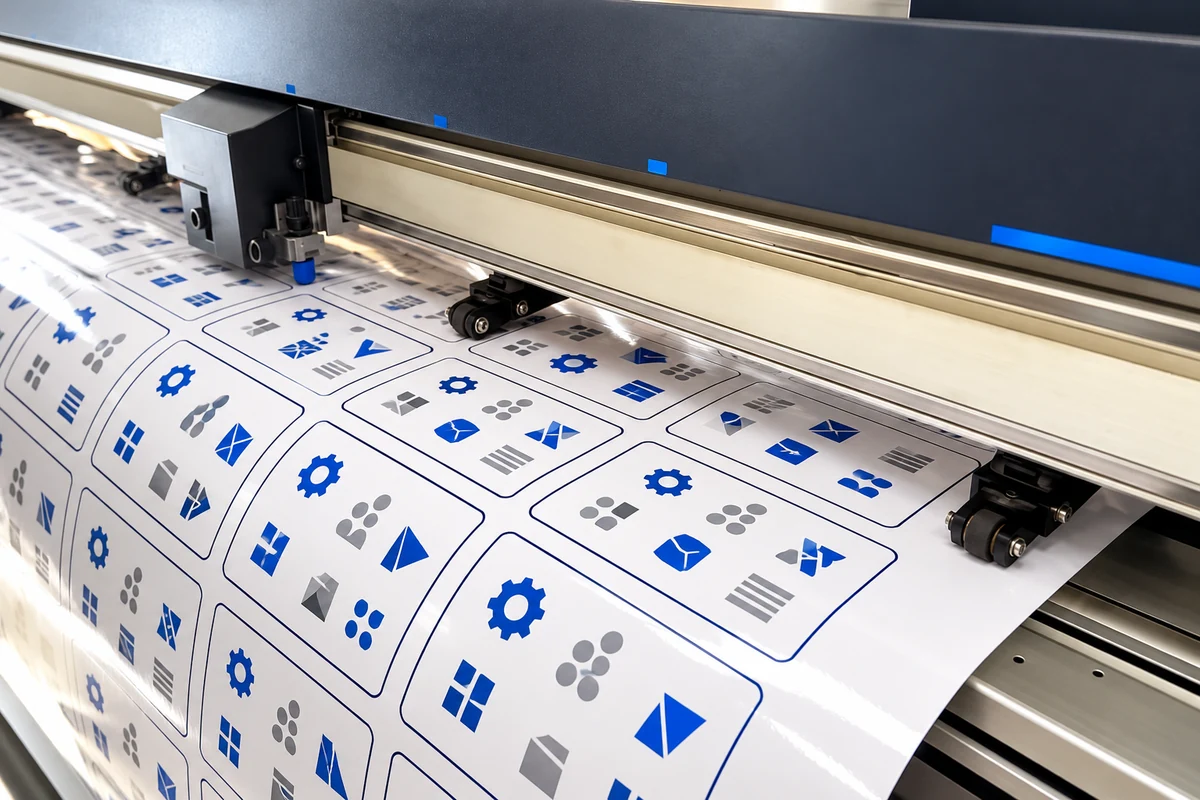
The adhesive on these stickers bonds very quickly, so a sticker in the wrong spot is almost impossible to fix. A simple process: wipe the surface clean with a dry cloth, test the position, peel the sticker and place it down once decisively, then press from the middle out to both edges.
- The surface must be dry and free of oil; if just wiped with alcohol, wait until it has fully evaporated before applying.
- Don't apply to rough, dusty or peeling painted surfaces — the adhesive only sticks to the dust and comes off with it.
- Room temperature is best for applying; applying to items just out of the fridge causes condensation that weakens adhesion.
- The adhesive reaches maximum bond after about 24 hours, so avoid hard impacts on the sticker during the first day.
- Store unused stickers in a cool, dry place away from direct sunlight; keep them in a sealed bag so the edges stay dust-free.
- Don't bend the sticker stack, since the brittle material will crack before you get to apply it.
For goods shipped to provinces, apply the sticker across the carton lid edge rather than in the middle of a flat face. Only a sticker spanning the opening gap is effective; applied elsewhere it's just a decorative label.
Repair shops often apply two stickers per device: one on the case screw, one on the cover seam. This avoids disputes when customers take the device elsewhere to open it and then come back to complain. Photographing the sticker positions when receiving the device is also a good habit.
If you need to remove a sticker properly — for example when the warranty has expired and the customer wants to open the device themselves — blow warm air from a hair dryer around the edge for about ten seconds to soften the adhesive, then gently pry with a plastic card. The sticker is still destroyed, but the surface underneath won't lose its paint.
Industries that order most
Eggshell stickers are ordered most by the six groups below. Each group has its own usual size and application method; use this as a quick reference when ordering for the first time.
| Industry | Common size | Where to apply them | Printed content |
|---|---|---|---|
| Phones, computers, electronics | 1cm² | Case screws, back cover seams | Store name, date box |
| Logistics, goods shipped to provinces | 2cm² | Carton lid edges | Logo, phone number |
| Eateries, takeaway | 2cm² | Box lids, bag openings | Logo, thank-you text |
| Cosmetics, dietary supplements | 1cm² | Jar lid edges | Logo, anti-counterfeit text |
| Retail stores, warehouses | 2cm² | Display cabinets, cash safes | Department name, date box |
| Offices, internal documents | 1cm² | Document cover edges, archive boxes | Department name, sealing date |
Many stores order these stickers in the same run as other adhesive prints to save on machine setup. If your shop also needs regular product labels, see Labels & Stickers; for takeaway, there's Paper Bags printed with your logo; fashion shops often add Price Tags to the same order.
All adhesive and display print items for stores are in the Restaurants & Shopscategory. Combining several designs in one order is usually cheaper than splitting into many small orders, since most of the cost is in machine preparation rather than the number of stickers.
Quantity, timing and how to order
The 500-sticker minimum per design applies to both straight-cut sizes. The reason is that machine setup and cutting work are almost the same whether printing 100 or 500, so splitting smaller would push the price per sticker up unreasonably.
Several different designs can still be combined into one order, as long as each design reaches 500. This suits stores with many branches needing each location's phone number printed separately, or chains needing to distinguish stickers by region.
- Straight-cut in available sizes: 2–3 working days.
- Custom sizes needing a cutting die: add 1–2 days.
- With consecutive numbering or barcodes on each sticker: add 1 day.
- Door-to-door delivery within former District 7, Nha Be, District 4 and District 8; other districts of Ho Chi Minh City are delivered on the same-day vehicle schedule.
- Provinces via bus courier or delivery services, with fees according to the courier's rates.
No design yet? Send your logo and the content to print via Zalo, and we'll build the layout and send back a preview. Printing only starts after approval, so you never discover mistakes after printing.
To reprint an old design, just give the order code or send a photo of the previous sticker; we'll pull the saved file and print again, without charging the mockup work again.
In-store usage conventions
A seal sticker is only meaningful when used consistently. If it's applied today and forgotten tomorrow, customers no longer see it as a trustworthy sign. A few small conventions below help a store keep the habit without extra staff.
- Set a fixed position for each product type and note it in an instruction sheet hung at the counter, so whoever packs applies it in the right place.
- Write the date at the moment of applying, not at the end of the shift; an unfilled box counts as unsealed.
- Count stock weekly: the number used must match the number of orders packed; a big discrepancy means someone skipped the step.
- Keep photos of sticker positions for high-value orders, saved by order code on the counter's phone.
- Standardize one design across the whole system instead of a different style for each branch, unless deliberately distinguishing by region.
For newly opened stores, print a minimum test batch and use it up before finalizing a long-term design. After a month of real use, you'll see which size fits, which content is unnecessary and which spots are hard to apply. Editing the file and printing a large batch then is still not too late.
In case of customer complaints, the simplest approach is comparing the photo taken at delivery with the sticker's condition when the item comes back. Since the material can't be restored after peeling, a look at the sticker edge is enough to conclude, without long arguments.
Common mistakes when ordering and applying
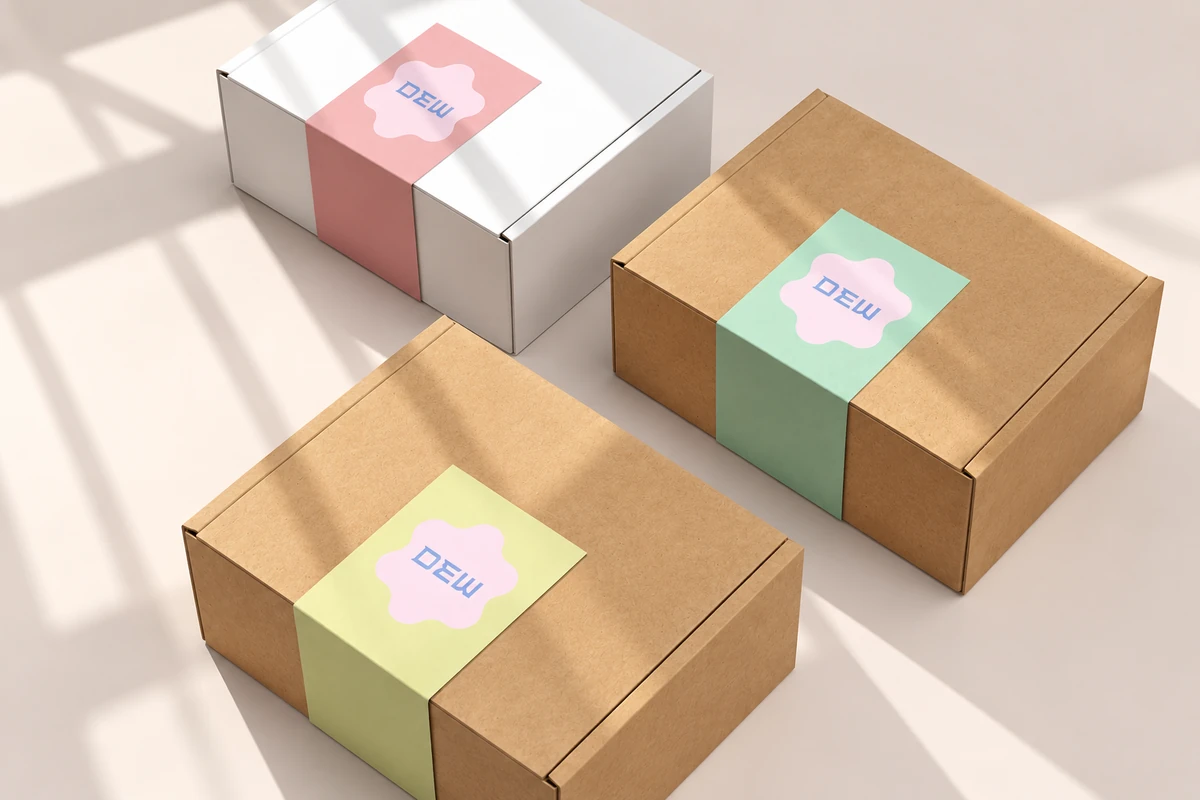
Below are the mistakes we see most when receiving files and from customer feedback after the first application. Knowing them in advance avoids almost all of them.
| Common error | Consequence | How to avoid it |
|---|---|---|
| Text placed close to the cut edge | Text lost after cutting, especially at corners | Leave a 1.5 mm safe margin around the border |
| Using low-resolution JPG images | Jagged text, blurry logo | Send vector files or 300 dpi images at actual size |
| Gradient backgrounds with small text | Text sinks in, unreadable at 1cm² | Solid dark background, white text |
| Printing background over the handwriting box | Ballpoint pens don't take, writing smears | Leave a fully white strip with no ink |
| Applying to oily surfaces | Stickers peel off after a few days | Wipe clean and dry before applying |
| Bending the sticker stack when storing | Material cracks in advance and is already split when applied | Store flat in a sealed bag, in a cool dry place |
| Ordering too few for actual needs | Running out mid-run with no time to reprint | Calculate by average orders plus 15% wastage |
As for consecutive numbering, a common mistake is sending a number range that overlaps the previous batch. Lookups then return two different orders with the same number, defeating the purpose of numbering. Before each batch, record the last number used so the next batch continues from it.
If unsure which size fits, the safe approach is to measure the intended spot with a ruler and compare with the two sizes in the price list. Measuring first is always faster than discovering after printing that the sticker covers the opening gap or hides the screw.
Choosing by usage situation
Many stores ask whether to choose eggshell stickers or add another sealing layer to be safe. The answer depends on the item's value and who will open it. The table below is how we usually advise when customers describe their specific situation.
| Situation | Recommended | Reason |
|---|---|---|
| Orders under one million dong, delivered within the city | One eggshell sticker on the lid edge | Enough to deter covert opening, at almost negligible cost |
| High-value orders, shipped between provinces | Eggshell sticker plus logo-printed tape | Two layers of evidence, hard to fake both at once |
| Machines received for repair | Two eggshell stickers on the screw and cover seam | Clearly defines the boundary of responsibility |
| Cosmetics, food products | Eggshell sticker on the jar lid edge | Customers seeing an intact sticker feel assured about the origin |
| Display cabinets, internal cash safes | Eggshell sticker with a date box | Easy to trace back to the shift when incidents occur |
| Archived documents | Eggshell sticker on the cover edge | Shows if a document was opened outside procedure |
What all these situations share is that the sticker must span the opening. Applied in the middle of a flat face, no matter how good the material is, it has no effect, since whoever opens it just avoids the sticker.
For express shipments, apply it on the top of the carton where it's easy to see. Couriers and customers both check the top first, so a sticker placed there works right at handover.
For goods passing through several transit stages, some stores add an eggshell sticker on the bottom of the carton. This helps detect cases where it was opened from below and carefully closed again.
Costs and reordering
This section gathers cost questions customers often ask before finalizing an order, so you can estimate your budget before sending files.
- Pricing is per batch rather than per sticker, so printing 500 and 600 costs almost the same; to optimize, order round amounts matching the tiers in the price list.
- The number of colors doesn't change the price, since the digital printer prints full CMYK in one pass.
- A custom-size cutting die is a one-time cost; later reprints share the die at no extra charge.
- Consecutive numbering is charged extra per batch; mention it before ordering so we add it to the quote.
- Several different designs can still be combined into one order, as long as each design meets the minimum.
- Delivery within the city is charged by area; provincial shipping follows the courier's rates.
Compared with the cost of a swapped order or a device opened to steal components, the money spent on seal stickers is very small. That's why electronics stores almost always keep a stock in the warehouse.
If unsure how many to order, start at the minimum for the first batch. Using up one batch gives enough time to know your real consumption rate, so later batches can be calculated more accurately.
Comparison with other sealing methods
There are several sealing methods on the market with the same purpose of “showing at a glance whether it's been opened”, but their tamper resistance and cost differ clearly. The table below is ordered by how common they are in stores and small warehouses, so you can compare before choosing a material.
| Sealing method | When peeled | Reapplicable | Suitable for |
|---|---|---|---|
| Eggshell (void) stickers | Crumbles into many small pieces | No | Product boxes, device screws, carton lids |
| Ordinary paper decal | Tears in large pieces, the rest can still be removed | Possibly | Information labels, price labels |
| PVC plastic decal | Comes off whole, leaving almost no trace | Yes | Bottle labels, moisture-resistant labels |
| VOID stickers | Leaves the word VOID printed on the surface | No | High-value equipment, fixed assets |
| Logo-printed sealing tape | Tears along the tape | No | Large cartons |
| Lead seals, sealing cords | Must be cut to open | No | Containers, tanker trucks, file cabinets |
The biggest difference is the cost per seal. VOID stickers, lead seals and logo tape cost many times more for the same sealing point, so they're usually only used for high-value goods or large cartons. For retail stores and repair shops, brittle stickers remain the most sensible option: cheap, quick to apply and strong enough to prevent peeling and reapplying.
A common misconception: laminated plastic decals look sturdier, so many people think they seal better. In fact it's the opposite — the tougher the material, the easier it is to remove whole. What's needed here is brittleness, not durability.
Also because they're brittle, these stickers shouldn't be chosen for spots with frequent friction, such as box bottoms constantly placed on tables or the outside of fabric bags. In those positions the sticker gradually cracks and peels before anyone gets to open the goods.
| Specification | Straight-cut 1cm², Straight-cut 2cm² |
|---|---|
| Quantity | 500 stickers, 1,000 stickers, 2,000 stickers, 5,000 stickers, 10,000 stickers |
| Made at | In Quảng Cáo Q7 workshop – 49 Mai Van Vinh, Tan Hung Ward, Ho Chi Minh City |
| Origin | Vietnam |
| Status | Made to order |
| Warranty | 24 hours from receipt: if you find a printing error or a difference from the approved file, let us know and we will reprint free of charge. |
| Price excl. VAT | 110.000 ₫ – 2.200.000 ₫ |
| Price incl. 8% VAT | 118.800 ₫ – 2.376.000 ₫ |
Ordering
Three ways to order: choose the specifications and quantity on the website and click Place order; message us on Zalo or call 0866.511.099; or visit the workshop to see material samples at 49 Mai Van Vinh, Tan Hung Ward, Ho Chi Minh City. During working hours, In Quảng Cáo Q7 replies within about 30 minutes. Most products have listed prices by size, material and quantity – prices exclude 8% VAT.
→ Online ordering guide · Quick quote
Sending design files
PDF or AI preferred, CMYK color mode, 300dpi for small formats, 3mm bleed. Send via Zalo, email inquangcaoq7@gmail.com, the form on our website, or a Google Drive link for large files. We check your file for free before printing; if you have no file yet, In Quảng Cáo Q7 can help with the design.
→ Design file submission guide
Payment
Bank transfer, QR code or cash at the workshop. Orders are confirmed and scheduled for production after payment; after transferring, send a photo of the receipt with your phone number via Zalo. Transfer note: Your name – Phone number – Product.
→ Payment guide
Timing & delivery
Completion time is shown on each product, counted from receipt of a print-ready file and payment confirmation. Pick up at the workshop Monday – Saturday, 8:00–12:00 and 13:00–18:00; urgent orders within Ho Chi Minh City delivered within 2 hours; other provinces via bus courier or express delivery. On receipt, please check quantity, size, material and condition of the products.
Order tracking
Enter the phone number used when ordering to see your orders from the last 90 days and their status: Unpaid → Printing → Printed → Delivering → Invoiced → Completed. For orders placed via Zalo, send your name and phone number to get progress updates.
→ Order tracking
E-invoice (VAT)
In Quảng Cáo Q7 issues 8% VAT e-invoices. Provide the company name, tax code, address and email within 24 hours of ordering; the invoice is issued within 24 working hours and sent by email, and cannot be changed once issued.
→ E-invoice (VAT) details
Misprints – reprints
Products that differ from the order or the approved proof are reprinted free of charge – report within 24 hours with photos. Spelling mistakes in a file you approved are not covered by free reprints.
→ Frequently asked questions (FAQs)
Be the first to review “eggshell stickers”
Related products

Labels & stickers
Reviews
There are no reviews yet.