


































































Our commitments
Printed directly in our workshop, no middlemen
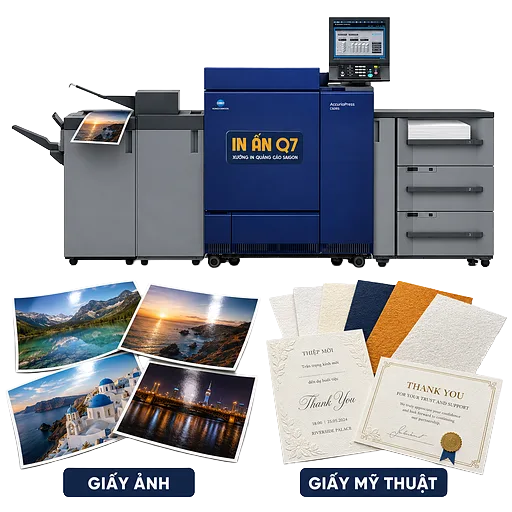
Digital and offset presses right in our workshop. You deal directly with the people who make your order, so every request is understood and handled immediately.
Fast production, many orders ready the same day
Business cards, documents, decals, standees… printed and delivered the same day. See production times for each product group.
One point of contact, all-in-one from file to finished product
Quotes, orders, Zalo messages, delivery booking and invoicing run automatically on one system. Design – printing – finishing – installation all happen in-house, so you don't have to go anywhere else.
Full VAT invoices, issued fast
E-invoices issued right after delivery, with urgent support for businesses that need documents early for payment.
Photo Paper | Fine Art Paper
From 9.600 ₫ / sheetPrice incl. 8% VAT: from 10.368 ₫ / sheet
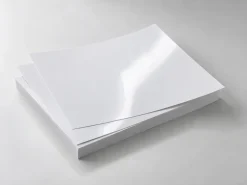
High-quality color printing on glossy photo paper or textured fine art paper. For photos, cards, certificates and invitations.
Frequently bought together
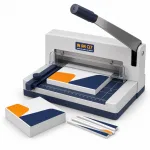 TrimmingFee from 10.000 ₫ — free from 20 sheetsAdd +
Photo Paper and Fine Art Paper Printing in A4, A3 – The Workshop's Two Most Premium Materials
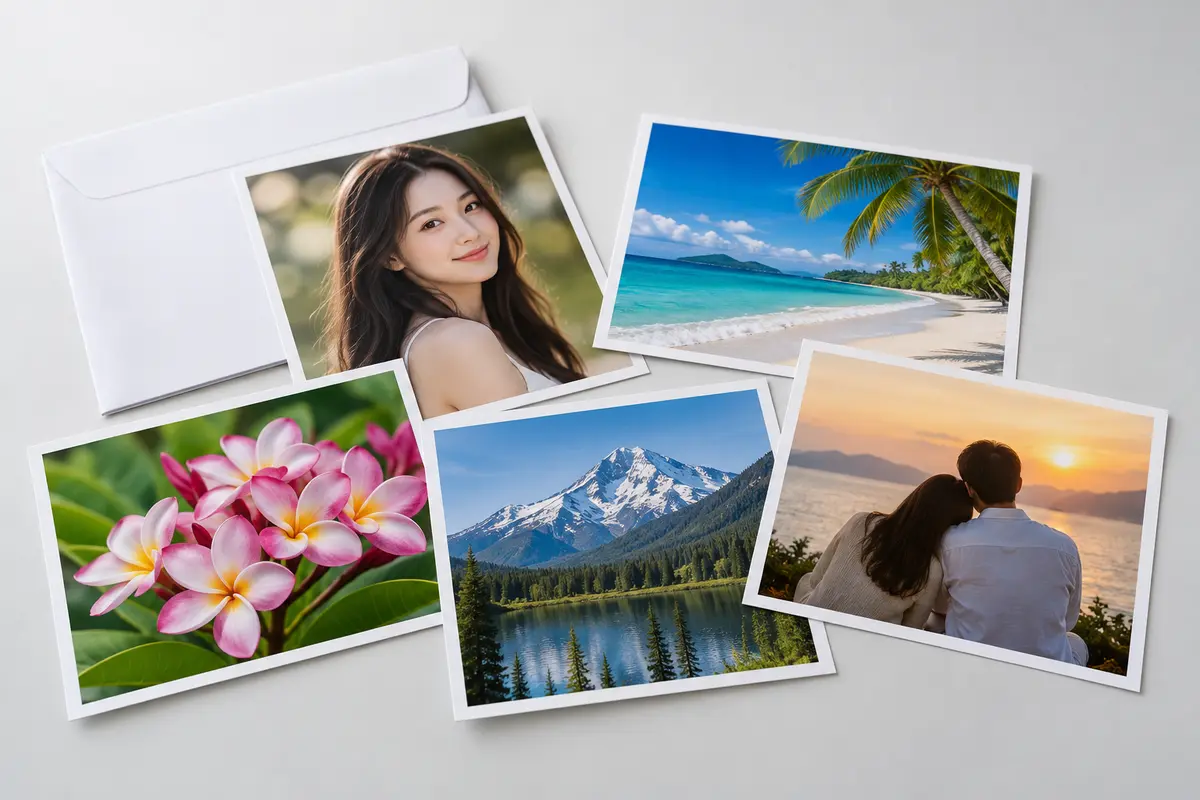
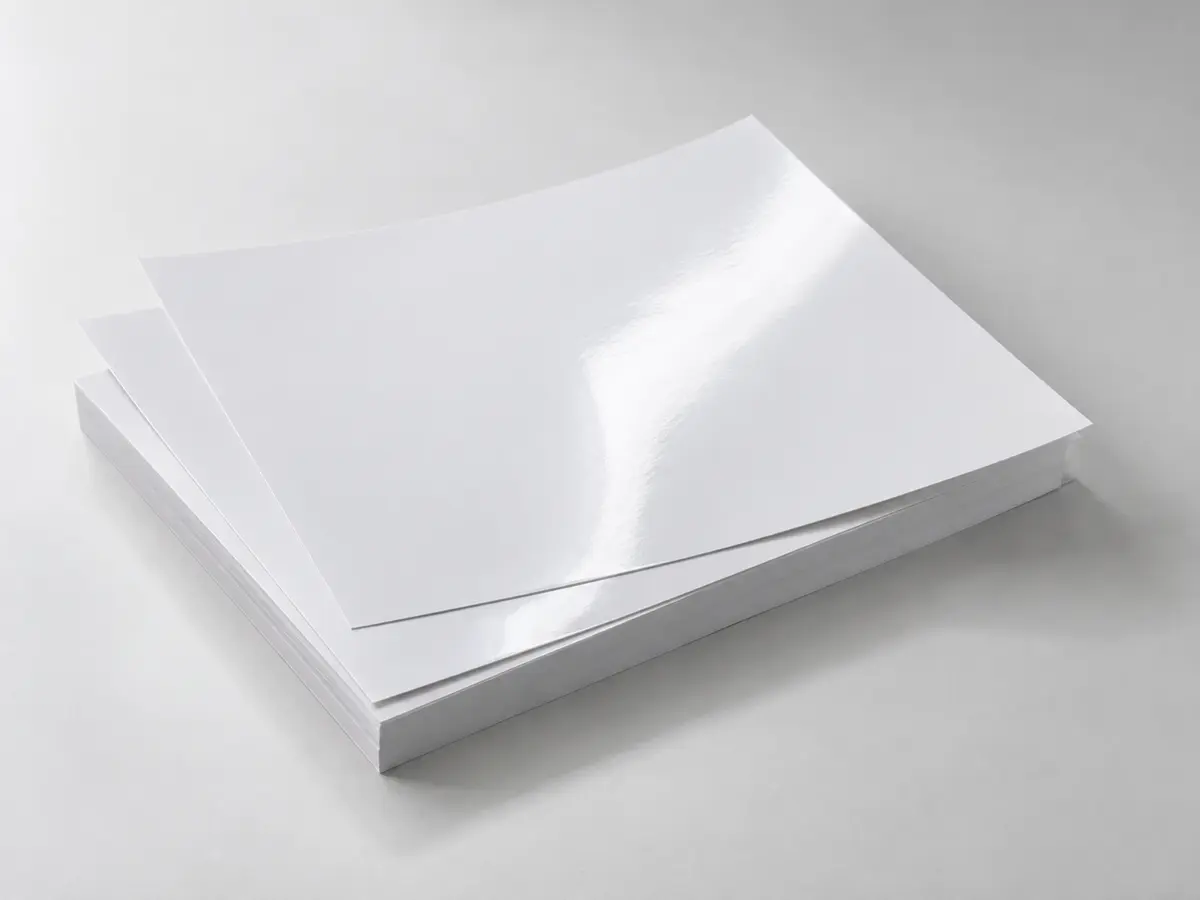
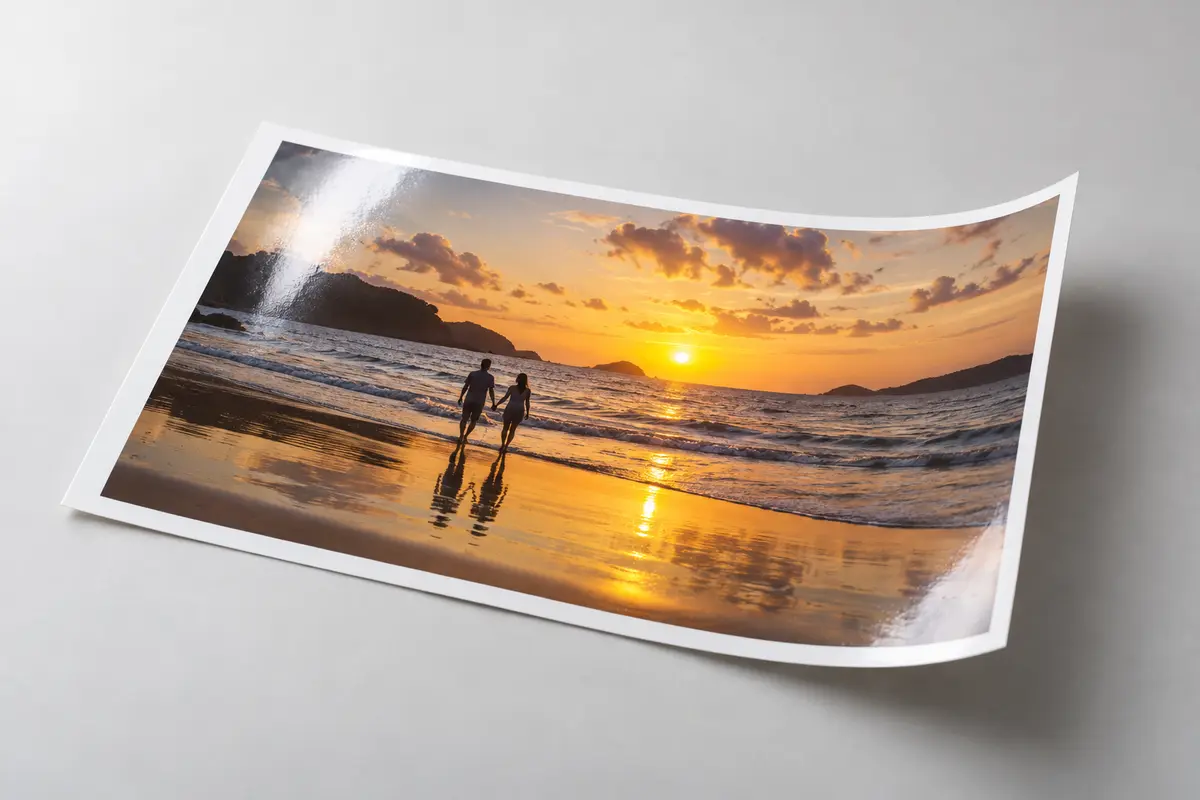
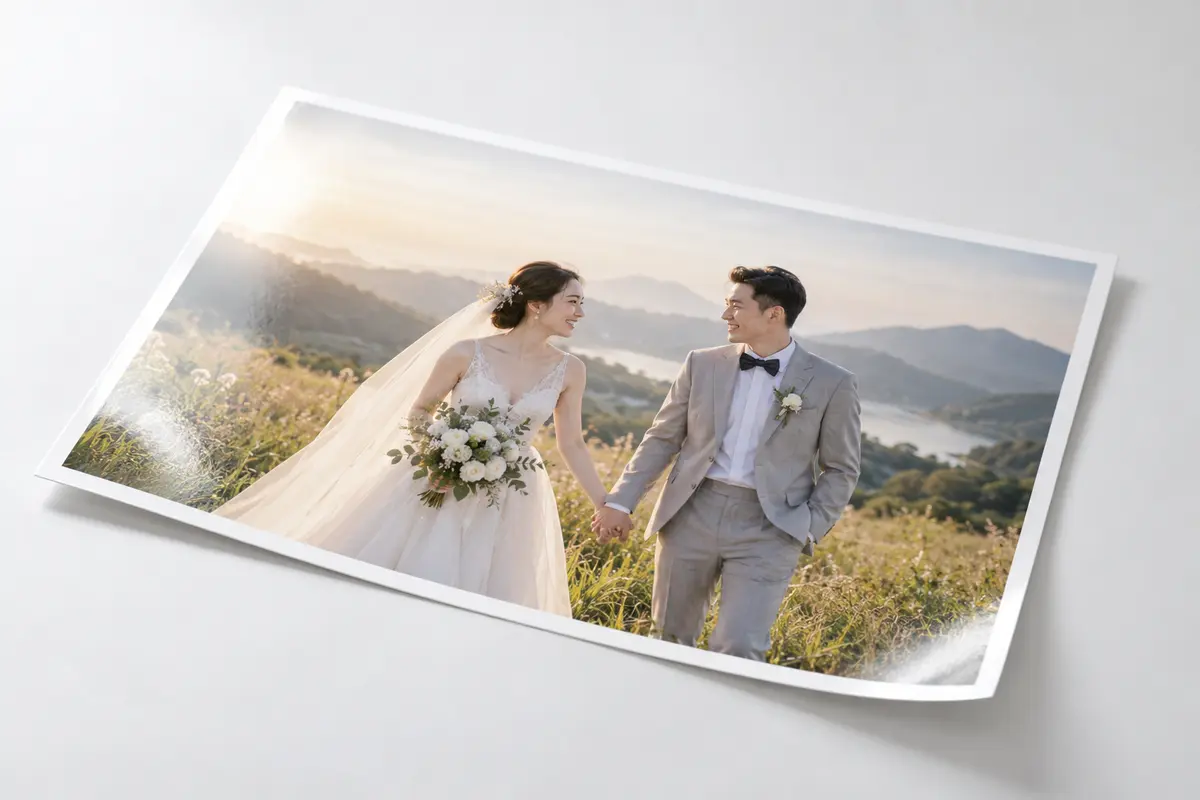
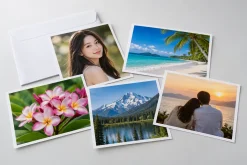
This page brings together the two most special materials in the quick-print group. Photo paper printing gives deep colors, fine detail and a glossy surface like photos developed at a lab. Fine art paper has a textured surface and many base colors, used for invitations, wedding cards, certificates and business cards that need a premium feel.
The two serve different purposes: one makes images look as good as possible, the other makes the paper itself part of the design. Some images on this page are illustrations.
Photo paper printing: when the image is the star
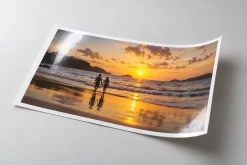
Photo paper has a special coating that keeps the ink in a very thin layer on the surface, so colors are deep, gradients smooth and small details clear. Compared with Couche paper of the same size, photo paper prints have much higher contrast and dark areas don't go flat.
Choose photo paper printing for:
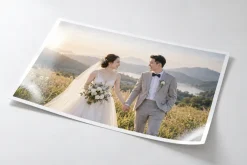
- Portraits, wedding and family photos that need skin and hair detail.
- Product and food photos for premium menus or company profiles.
- Landscape and art prints for framing.
- Color proofs for clients to approve before large runs.
Note: the glossy surface of photo paper picks up fingerprints easily and can't be written on. For prints that need notes or signatures, use Fort paper for that part.
Fine art paper: when the paper is part of the design
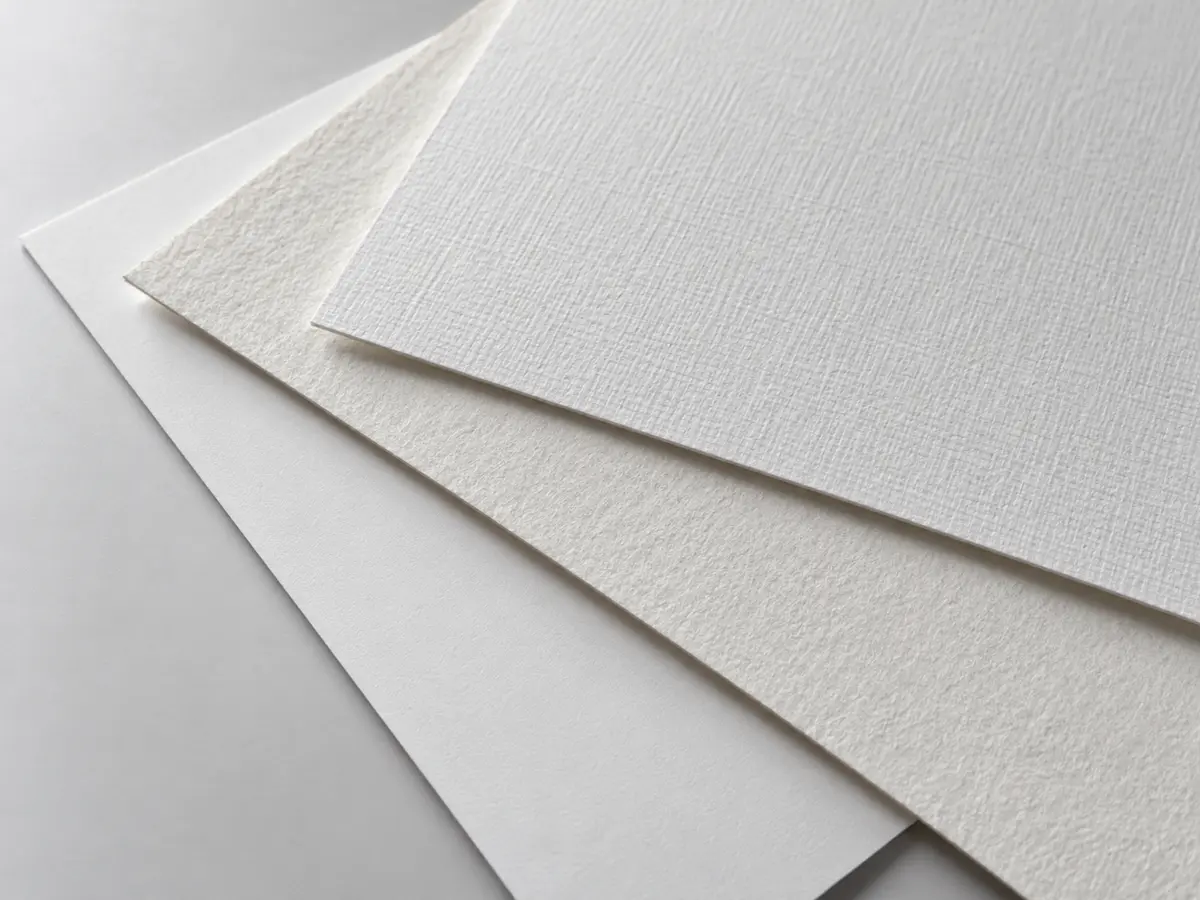
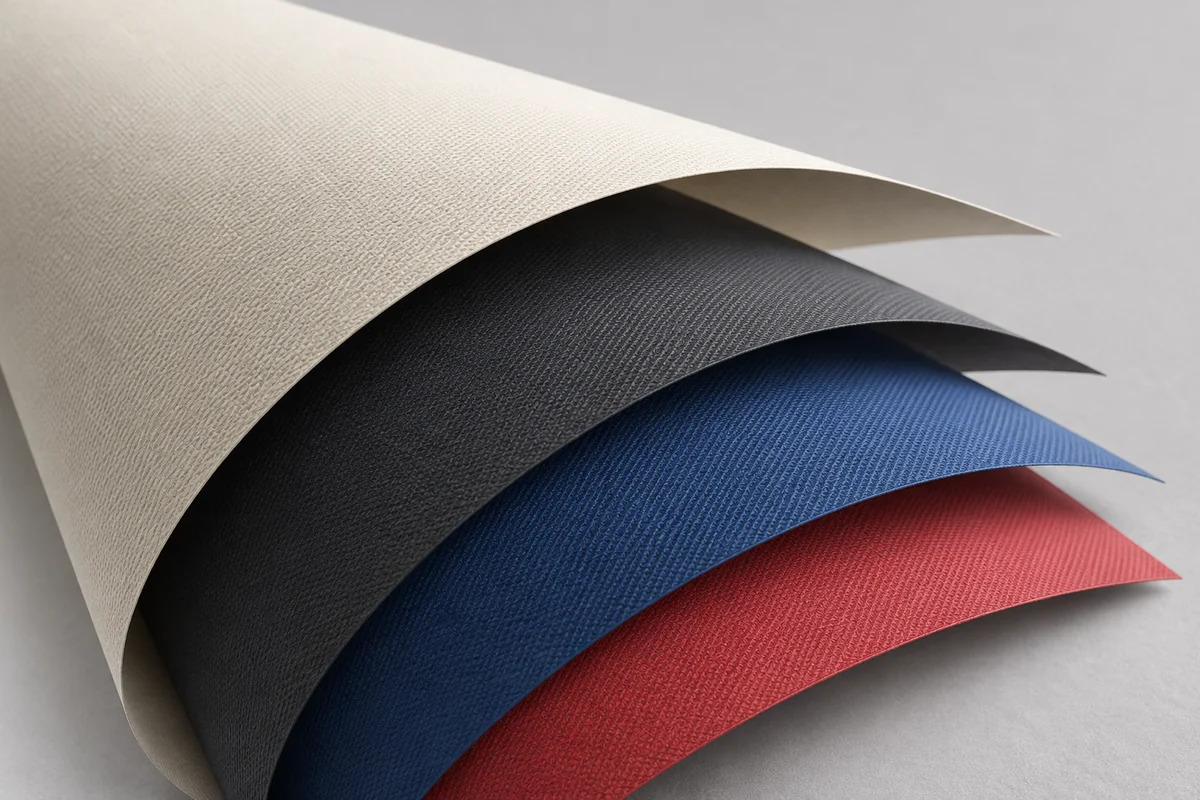
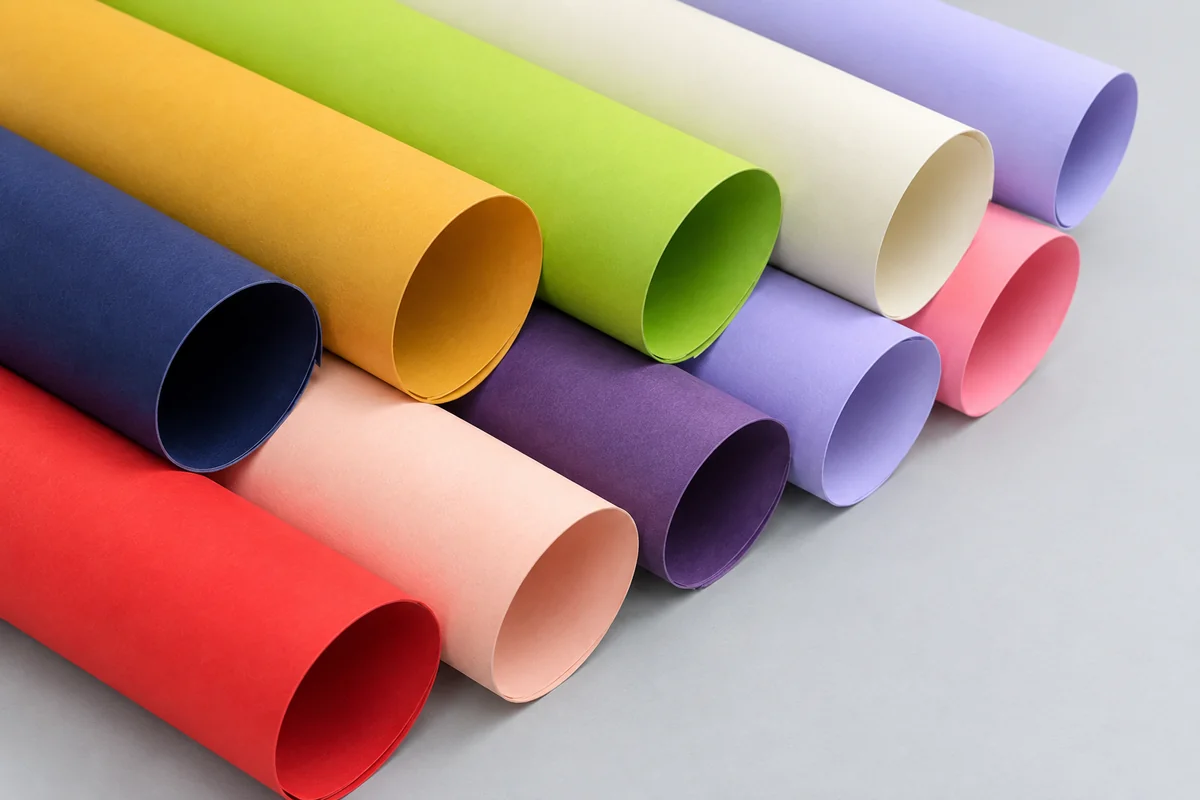
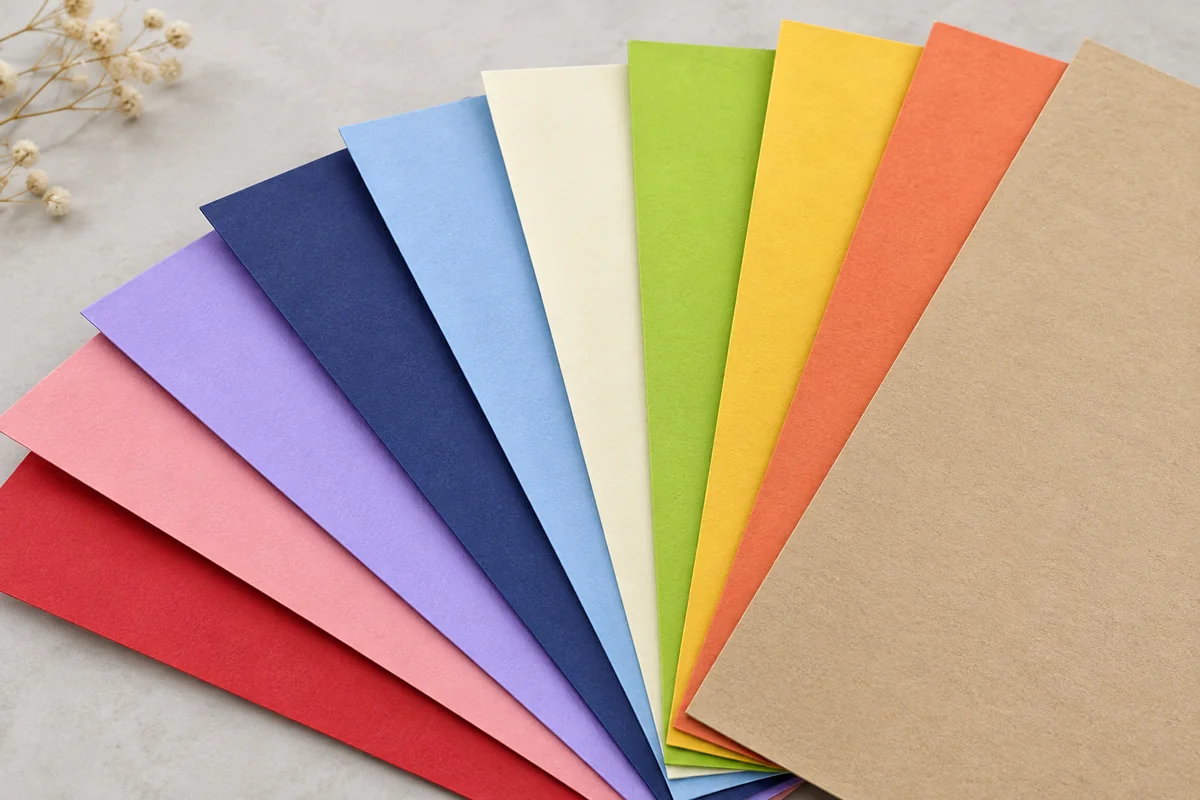
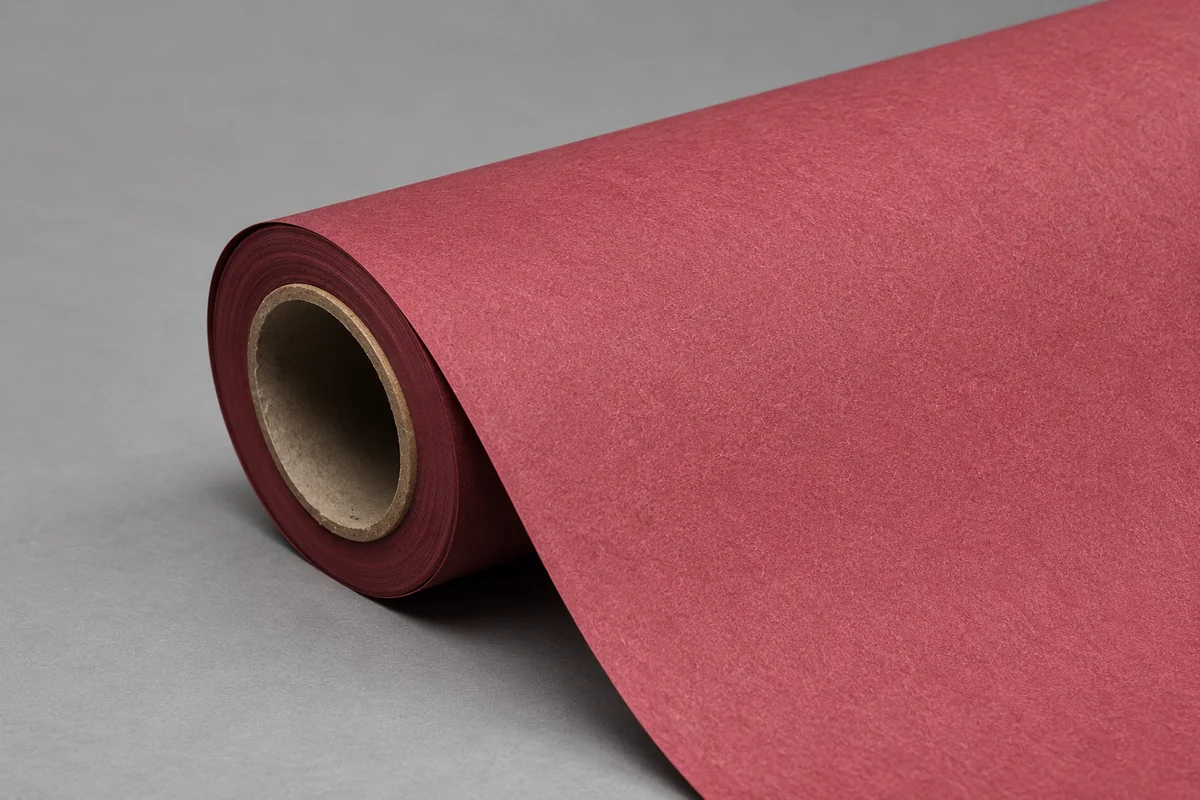
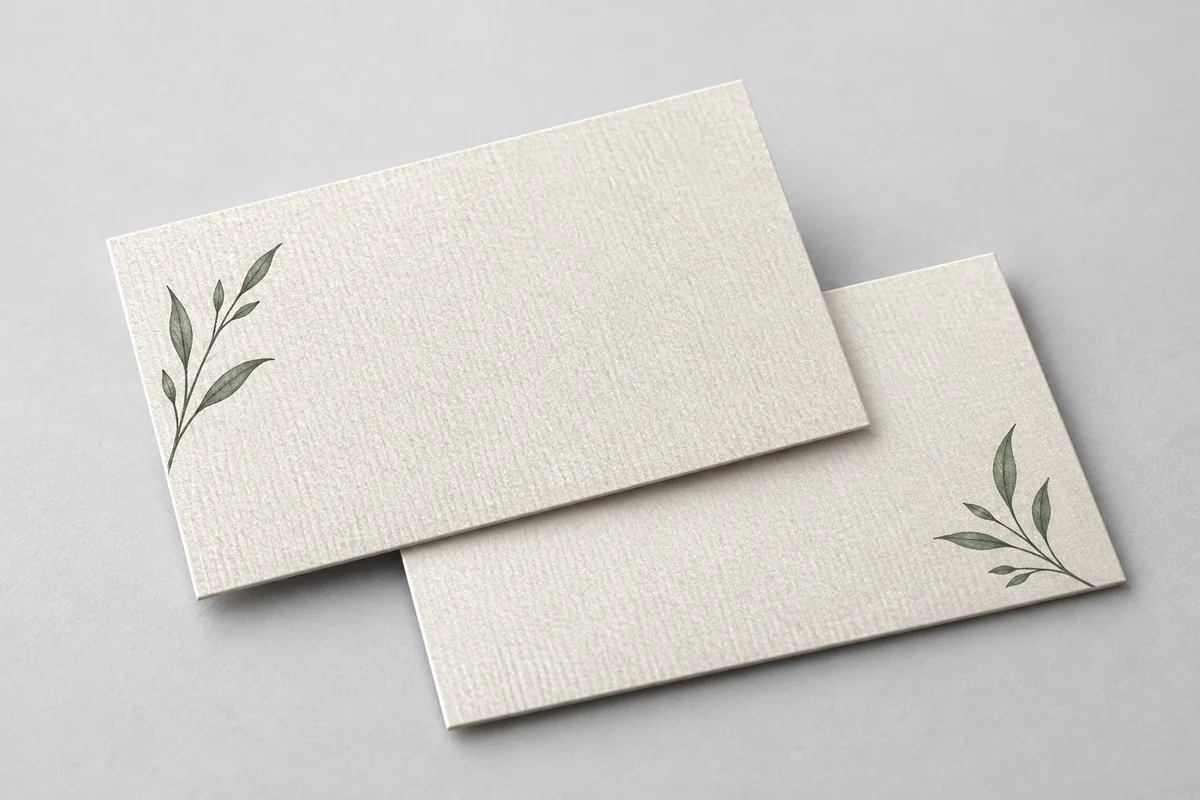
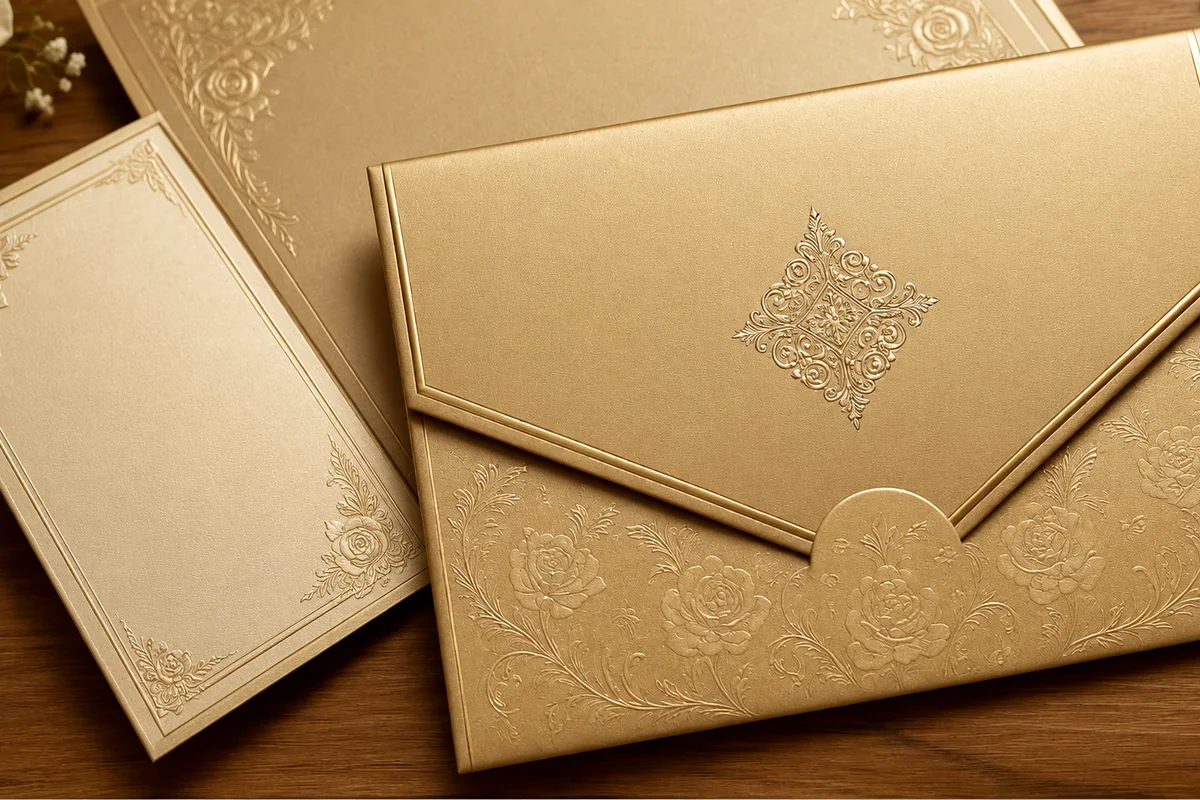
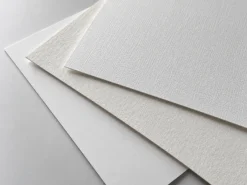
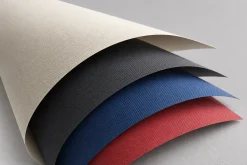
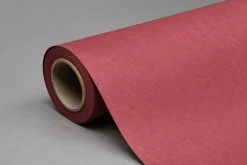
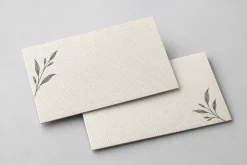
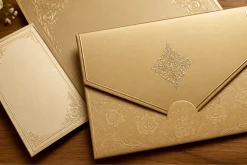
Fine art paper is a group of papers with textured surfaces and many ready-made base colors — cream, ivory, grey, dark blue, burgundy, metallic. You can clearly feel the texture and see it catch the light at an angle. We usually stock three types:
- N05 — fine texture, ivory white, ideal for invitations and certificates.
- Snow 350 — bright white, heavy 350gsm, stiff and holds its shape.
- Econo 350 — also 350gsm, more affordable for larger orders.
Because the paper already has a base color and texture, designs on fine art paper are usually minimal: one ink color, few background areas, letting the paper speak for the rest.
How the two materials differ
| Photo paper | Fine art paper | |
|---|---|---|
| Surface | Glossy, smooth and flat | Textured, natural |
| Base color | White | Many colors and metallics |
| Printed colors | Deep, high contrast | More muted, soaking into the texture |
| Writing with a pen | No | Yes |
| Suitable for | Photos, detailed images | Cards, certificates, business cards |
In short: for the best images, print on photo paper; for paper that feels premium in the hand, choose fine art paper.
A quick test: picture the item after printing — if the first thing the recipient notices is the image, choose photo paper; if it's the feel of the paper, choose fine art paper. If an item needs both, split it into two parts, each on its own paper.
In terms of cost, 350gsm fine art paper and photo paper are both in a higher group than Couche and Fort paper, so large orders usually use these two only for the most important parts such as covers, main cards or photo pages, with regular paper for the rest.
Common uses for photo paper and fine art paper printing
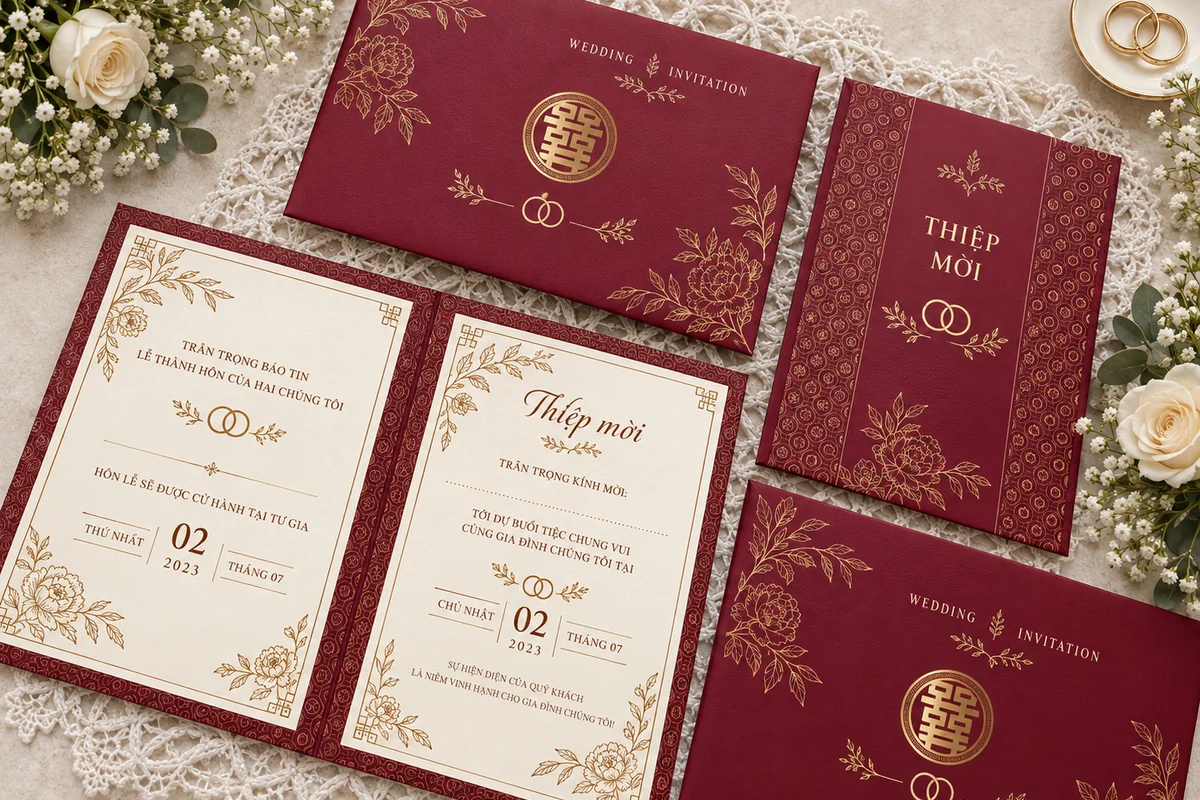
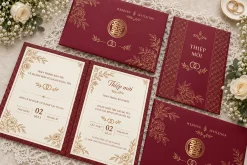
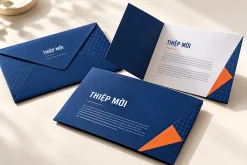
- Invitations, wedding cards — fine art paper in a base color or metallic, printed in one or two colors.
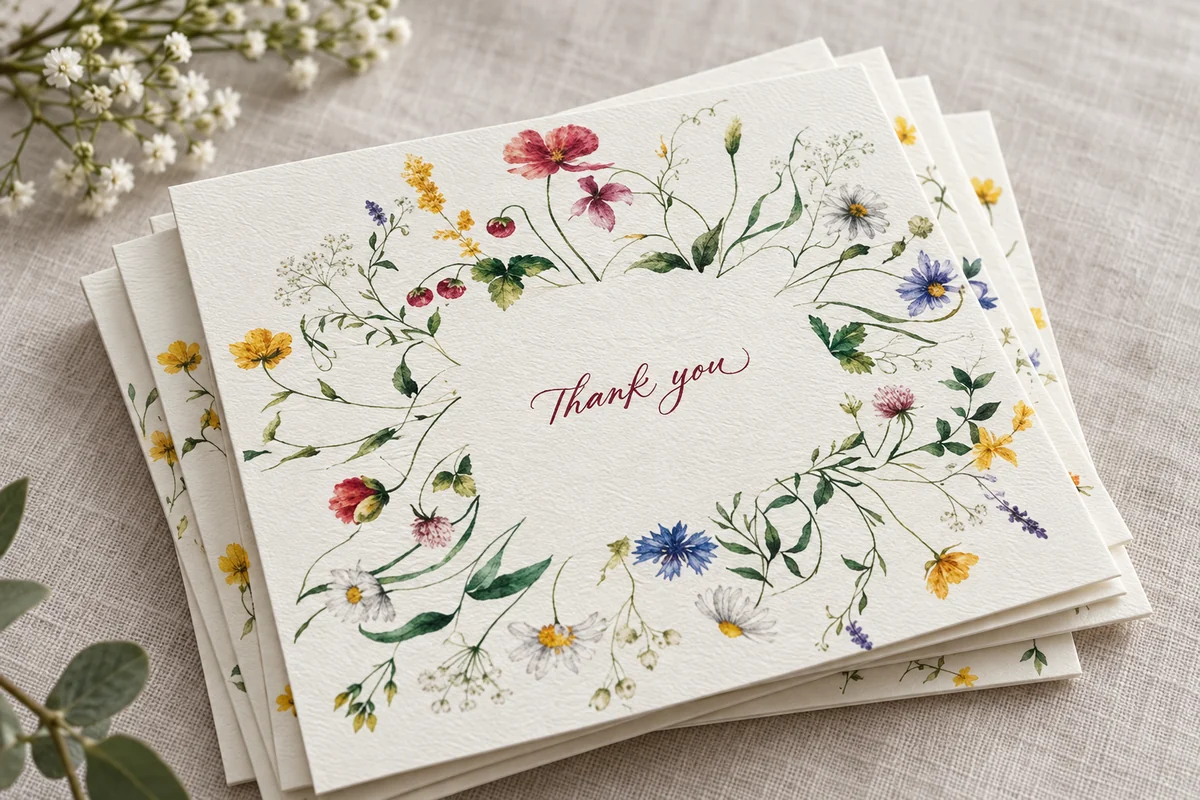
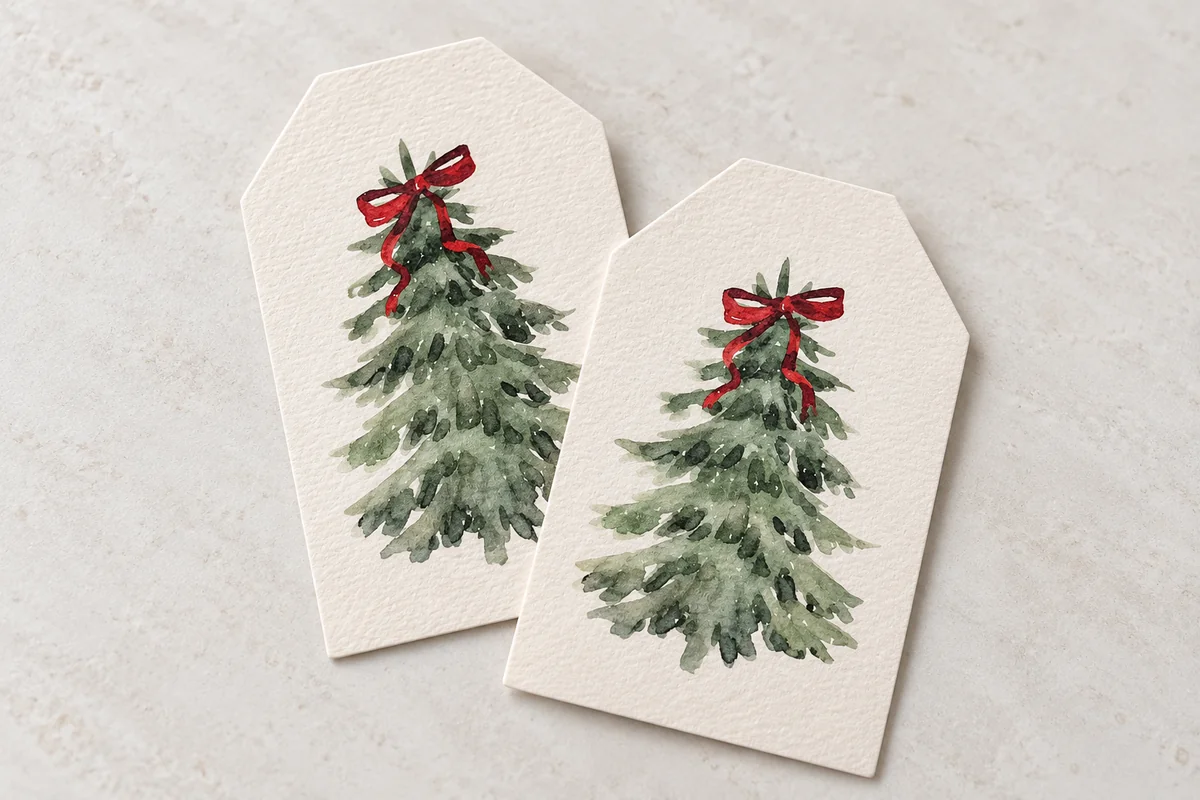
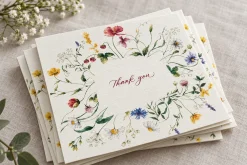
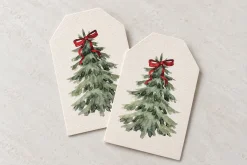
- Thank-you cards, gift tags — included with orders, printed seasonally.
- Certificates, awards, commendations — 350gsm fine art paper for stiffness and formality.
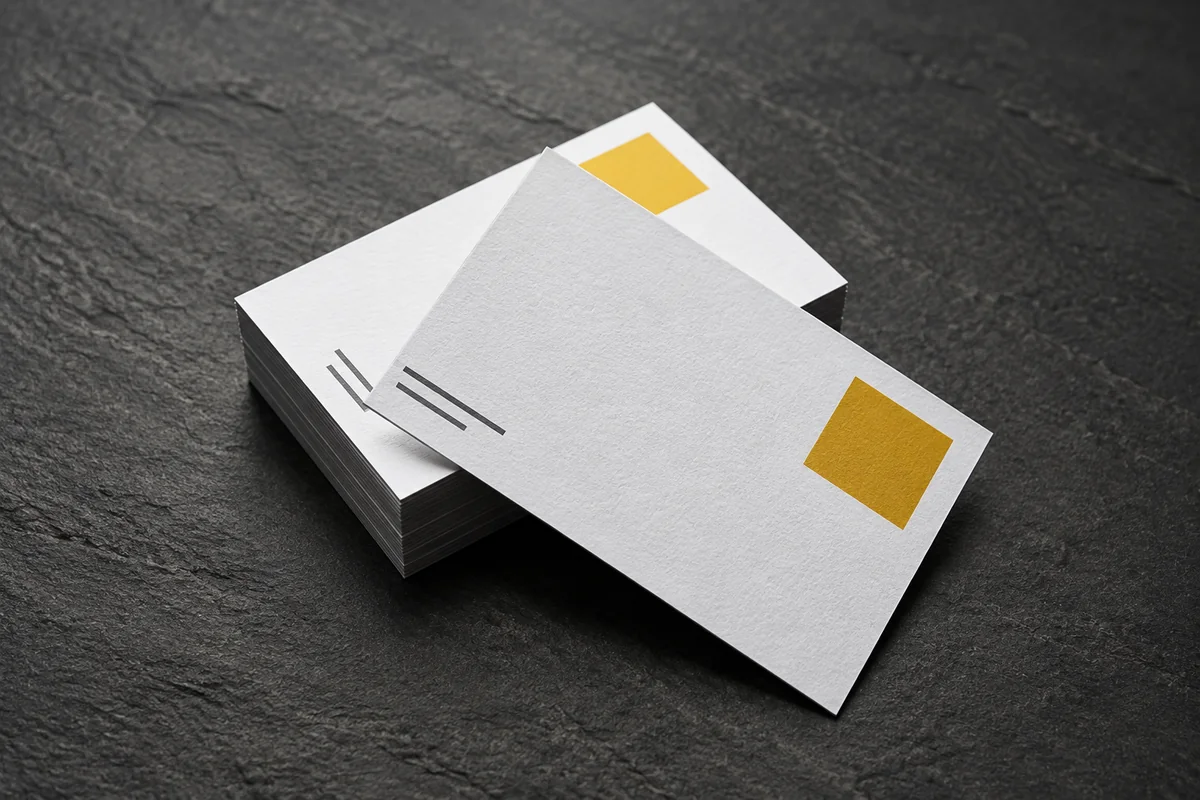
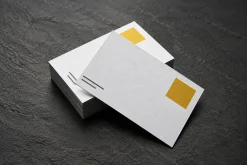
- Premium business cards — textured base, one-color print or foil stamping.
- Photo prints and wall art — photo paper printing in A4, A3, then framed.
- Premium menus and profiles — fine art paper cover, photo paper for the image pages.
Combining both materials in one set
Many orders use both types in the same set, each handling one part:
- Wedding card set — the main card on fine art paper, small wedding photos printed on photo paper tucked inside.
- Company profile — textured fine art paper cover, product photo pages on photo paper, text pages on Fort paper.
- Premium restaurant menu — fine art paper cover, dish pages on photo paper for great images.
- Corporate gift set — name cards and greeting cards on fine art paper, keepsake photos on photo paper.
When ordering a set, note which paper each item uses in the notes box; we print each part and deliver them all together.
Suggestions by occasion
- Weddings — burgundy or cream fine art wedding cards with ivory inserts; A4 wedding photos on photo paper for albums or framing.
- Grand openings, company events — metallic invitations, table name cards, certificates for guests.
- Year-end, holidays — greeting cards, gift tags, red envelopes on fine art paper.
- Online shops — thank-you cards included with orders, product care cards.
- Schools, centers — commendations and course completion certificates on 350gsm fine art paper.
Paper sizes and finished sizes
The two print sizes on this page are A4 and A3. From them, we cut the commonly ordered finished sizes:
| Finished item | Common size | Notes |
|---|---|---|
| Folded invitations | 10 × 15 cm folded | Send the open size, not the folded size |
| Wedding invitations | 13 × 18 cm or 12 × 17 cm | With matching envelopes |
| Thank-you cards, gift tags | 5 × 9 cm to 9 × 12 cm | Several cut from one sheet |
| Business cards | 5.5 × 9 cm | Double-sided, trimmed |
| Certificates, commendations | A4 landscape | 350gsm paper for stiffness |
| Framed photos | A4, A3 | Leave a white border if framing |
Unusual sizes are still possible; just send the real measurements and we'll work out the most economical imposition and confirm the number of sheets.
Printed sides and finishing
- Single-sided — framed photos, certificates, one-sided cards.
- Double-sided — business cards, folded cards, gift tags with content on both sides.
- Trimming — trimmed to the exact finished size, with rounded corners if needed.
- Creasing — required for folded cards on 350gsm paper; folding by hand without creasing cracks the spine.
- Lamination — usually not used on fine art paper because it hides the texture; photo paper prints are already glossy so rarely need it.
For finished items smaller than A4 such as business cards, hang tags and small cards, we print on larger sheets and cut; just send the size you want.
Caring for the prints
- Keep photo paper prints loose for a few hours after receiving them before stacking, so the glossy surfaces don't stick together.
- Hold photo paper prints by the edges, because the glossy surface shows fingerprints clearly and they're hard to wipe off.
- Framed photos should have a matte mount or anti-glare glass, and avoid direct sunlight on the frame.
- Fine art paper cards should be wrapped in sets with their envelopes, to avoid rubbing that frays the textured edges.
- Both types should be stored somewhere dry; paper absorbing moisture for a long time curls at the edges and the texture flattens.
For occasion items such as wedding or greeting cards, print a few spares to cover handwriting mistakes or damage while inserting into envelopes.
How to order on this page
- Choose the paper type: Photo Paper or Fine Art Paper.
- Choose the printed sides.
- Enter the number of sheets in the quantity box.
- Write the finished size, desired paper color and finishing requirements in the notes.
- Send the design file with the order.
For fine art paper, base colors depend on the paper type, so state the tone you want; we'll tell you which types are in stock and which need ordering.
Preparing design files
- Format — PDF or AI.
- Color mode — CMYK.
- Resolution — 300dpi at actual size; for photo paper printing use original photos, not compressed images from social media.
- Bleed — 3mm on each edge.
- Safe zone — text at least 5mm from the edge.
- Text — convert to outlines before sending.
For fine art paper specifically: avoid solid dark backgrounds covering the sheet. Ink over the texture hides the very texture you're paying for, and tends to bleed in deep grooves. Designs should leave plenty of space for the paper color to show.
If you have no file, add the design service; we lay it out and send it for approval before printing.
For photo paper orders with many prints, name files in order and send them in one zipped folder; note which prints have white borders and which are full-bleed. Phone photos should be sent as originals rather than through messaging apps, which compress images heavily.
For important orders, print one test sheet first and check the real color under the light where the item will be used before running the batch — especially with colored fine art paper, since the same ink on cream and grey bases looks very different.
Common mistakes when ordering photo paper and fine art paper printing
- Using low-resolution images for photo paper printing — good paper can't save a bad file; the print shows its flaws even more.
- Filling fine art paper with solid dark backgrounds — loses the texture, uses more ink, and the color is uneven.
- Forgetting to state the paper color — the same file printed on cream and white bases gives very different results.
- Fine details on deeply textured paper — small strokes get broken by the texture; thicken the strokes.
- No space for handwriting on invitations — guest names are usually handwritten after printing.
Frequently asked questions
Is photo paper printing like photos developed at a lab?
Very close. Both give a glossy surface and deep colors; the difference is that digital prints allow any size, with text and design layout, while lab prints come in fixed sizes.
What colors does fine art paper come in?
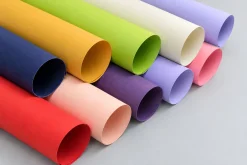
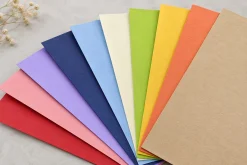
White, ivory, cream, grey, dark blue, burgundy and metallic tones are the common ones. Note your desired tone in the notes and we'll tell you what's in stock.
What is the minimum number of sheets?
From one sheet. Digital printing needs no plates, so printing a few test sheets before running the batch is perfectly normal.
Can fine art paper be foil stamped?
Yes, but foil stamping is a separate step requiring a die. Message us on Zalo describing the details to be stamped for a quote and timing.
Which should I choose for wedding cards?
350gsm fine art paper for the main card because it's stiff and premium; wedding photos, if any, are better printed separately on photo paper and tucked in, rather than printed directly on textured paper.
How soon can I pick it up?
Standard orders are ready the same day if the file is ready and sent before noon. Orders with creasing, large trimming runs or paper colors that need ordering get a specific date when quoted.
How do A4 and A3 photo paper prints differ?
Same Photo Paper, just a different finished size. A4 photo prints suit portraits, menus and premium flyers; A3 photo prints suit small posters, wall photos and display boards. Both sizes can be printed on one or two sides.
What is A4 fine art paper printing used for?
A4 fine art paper is often used for invitations, certificates, diplomas, file covers and report covers. The textured surface makes text and borders look more dimensional than on regular paper.
Order photo paper and fine art paper printing at In Quảng Cáo Q7
Send your design file with the finished size, paper type and desired color tone, and we'll quote and confirm the pickup time. Contact 0866.511.099 or drop by the workshop at 49 Mai Van Vinh, Tan Hung Ward, Ho Chi Minh City. Production & delivery: 8:00–12:00 & 13:00–18:00 Mon–Sat (closed Sun) · Consultation & orders: 8:00–12:00 & 13:00–20:00 Mon–Sat; 14:00–19:00 Sun.
Choosing between Photo Paper and Fine Art Paper
These two papers serve different purposes, so choose based on whether the print will be looked at or held.
| Criterion | Photo Paper | Fine Art Paper |
|---|---|---|
| Surface | Smooth, coated specifically for photos | Textured or ribbed, you can feel it |
| Photo sharpness | Highest, clear detail | Lower, as the texture breaks up fine detail |
| Color | Vivid, strong contrast | Muted, soft, classic |
| Feel in the hand | Smooth, like a developed photo | Substantial, premium, quality |
| Suitable for | Portraits, product photos, wall photos | Cards, certificates, covers, premium menus |
In short: for sharp images and vivid color, choose Photo Paper; for a material feel when clients pick it up, choose Fine Art Paper. Both can be printed single- or double-sided, from 12.000đ.
Caring for prints on Photo Paper and Fine Art Paper
- Let prints dry completely before stacking, because coated surfaces take longer to dry than regular paper.
- Hold by the edges and don't touch the middle of the print, as coated surfaces easily show fingerprints.
- Store flat in a hard cover or folder; don't roll them, to avoid cracking the coating.
- Avoid direct sunlight, as prints fade faster in the sun.
- Wall photos should be framed behind glass, or Laminated if not framed.
For cards and certificates printed on Fine Art Paper, you can Trimming to the exact size and round the corners so they don't bend when passed around.
Fine art paper and printing papers — detailed articles
| Paper type and weight | Photo Paper, Fine Art Paper |
|---|---|
| Size | A4, A5 |
| Printed sides | Single-sided, Double-sided |
| Made at | In Quảng Cáo Q7 workshop – 49 Mai Van Vinh, Tan Hung Ward, Ho Chi Minh City |
| Origin | Vietnam |
| Status | Made to order |
| Warranty | 24 hours from receipt: if you find a printing error or a difference from the approved file, let us know and we will reprint free of charge. |
| Price excl. VAT | 9.600 ₫ – 15.000 ₫ |
| Price incl. 8% VAT | 10.368 ₫ – 16.200 ₫ |
Ordering
Three ways to order: choose the specifications and quantity on the website and click Place order; message us on Zalo or call 0866.511.099; or visit the workshop to see material samples at 49 Mai Van Vinh, Tan Hung Ward, Ho Chi Minh City. During working hours, In Quảng Cáo Q7 replies within about 30 minutes. Most products have listed prices by size, material and quantity – prices exclude 8% VAT.
→ Online ordering guide · Quick quote
Sending design files
PDF or AI preferred, CMYK color mode, 300dpi for small formats, 3mm bleed. Send via Zalo, email inquangcaoq7@gmail.com, the form on our website, or a Google Drive link for large files. We check your file for free before printing; if you have no file yet, In Quảng Cáo Q7 can help with the design.
→ Design file submission guide
Payment
Bank transfer, QR code or cash at the workshop. Orders are confirmed and scheduled for production after payment; after transferring, send a photo of the receipt with your phone number via Zalo. Transfer note: Your name – Phone number – Product.
→ Payment guide
Timing & delivery
Completion time is shown on each product, counted from receipt of a print-ready file and payment confirmation. Pick up at the workshop Monday – Saturday, 8:00–12:00 and 13:00–18:00; urgent orders within Ho Chi Minh City delivered within 2 hours; other provinces via bus courier or express delivery. On receipt, please check quantity, size, material and condition of the products.
Order tracking
Enter the phone number used when ordering to see your orders from the last 90 days and their status: Unpaid → Printing → Printed → Delivering → Invoiced → Completed. For orders placed via Zalo, send your name and phone number to get progress updates.
→ Order tracking
E-invoice (VAT)
In Quảng Cáo Q7 issues 8% VAT e-invoices. Provide the company name, tax code, address and email within 24 hours of ordering; the invoice is issued within 24 working hours and sent by email, and cannot be changed once issued.
→ E-invoice (VAT) details
Misprints – reprints
Products that differ from the order or the approved proof are reprinted free of charge – report within 24 hours with photos. Spelling mistakes in a file you approved are not covered by free reprints.
→ Frequently asked questions (FAQs)
Be the first to review “Photo Paper | Fine Art Paper”
Related products

Fast Printing

Fast Printing

Fast Printing

Fast Printing

Invitations

Fast Printing
Reviews
There are no reviews yet.