




































































Company Catalogue Printing District 1 – A4, A5, Matte Cover, Perfect Bound
Oct
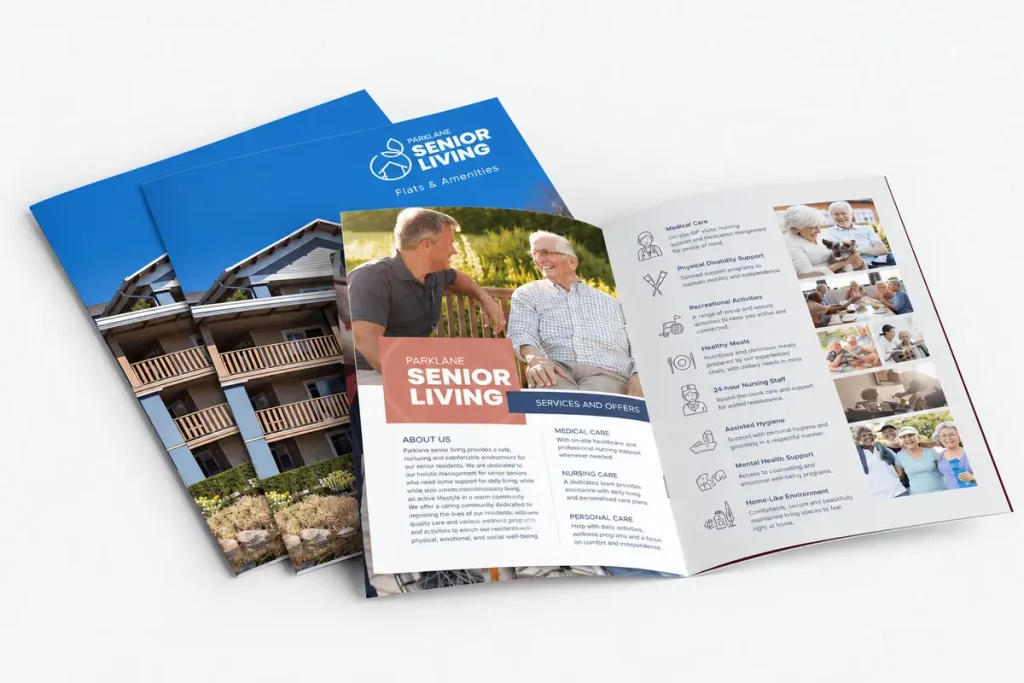
Does your company need District 1 company catalogue printing? This article sets out the size, number of pages, cover and inner paper types, four binding styles and how prices are calculated at the In Quảng Cáo Q7 workshop.
Catalogue printing for District 1 offices
From the In Quảng Cáo Q7 workshop at 49 Mai Van Vinh, Tan Hung Ward to central District 1, go along Nguyen Huu Tho then through Khanh Hoi. Bound catalogues are heavier than loose printed items, so the workshop arranges a specific delivery time within the building's permitted receiving hours.
Customers for District 1 company catalogue printing are mainly service, consulting and travel companies and showrooms – the group needing a beautiful introduction to hand to clients at the office. Quantities are usually small but requirements on appearance are higher than average.
Size and presentation style
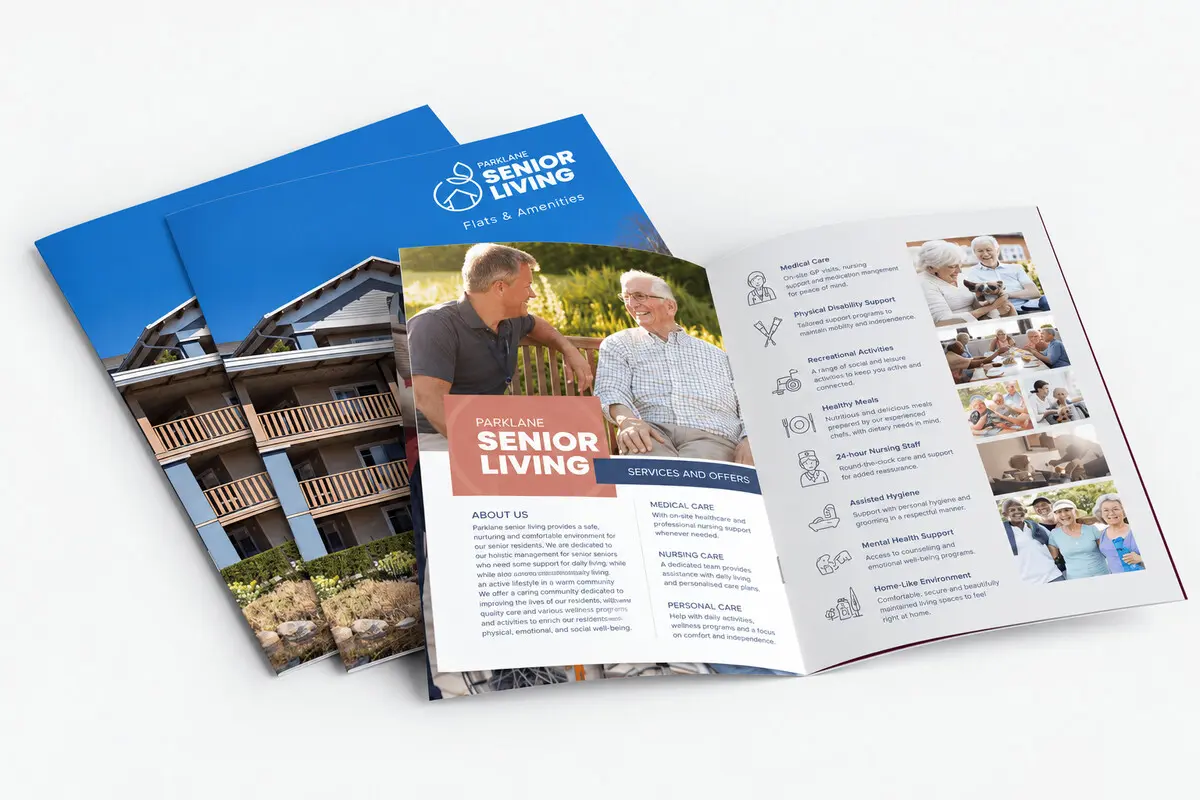
A4 portrait suits introductions with lots of text and service tables; A4 landscape suits versions with many photos, especially space and project photos. A5 portrait and A5 landscape are used for pocket versions kept at the reception desk or handed out at events.
Many companies in the central area make an A4 landscape version because it looks more modern on the reception table, then add a condensed A5 version for clients to take home. The content is shared; only the layout differs.
Paper and lamination decide how it feels in hand
A Couche paper 300gsm cover is the standard stiffness; matte lamination gives a smooth surface, deep, elegant colours and does not pick up fingerprints – the popular choice among central offices. Gloss lamination gives deep colours and a mirror shine, suited to versions with many product photos.
Inner pages are chosen from Couche paper 150gsm to 300gsm. Thin versions with few pages can raise the inner pages to 200gsm for a more substantial book; versions with many pages should keep 150gsm so the book is not too heavy for clients to take home.
Binding style and quantity
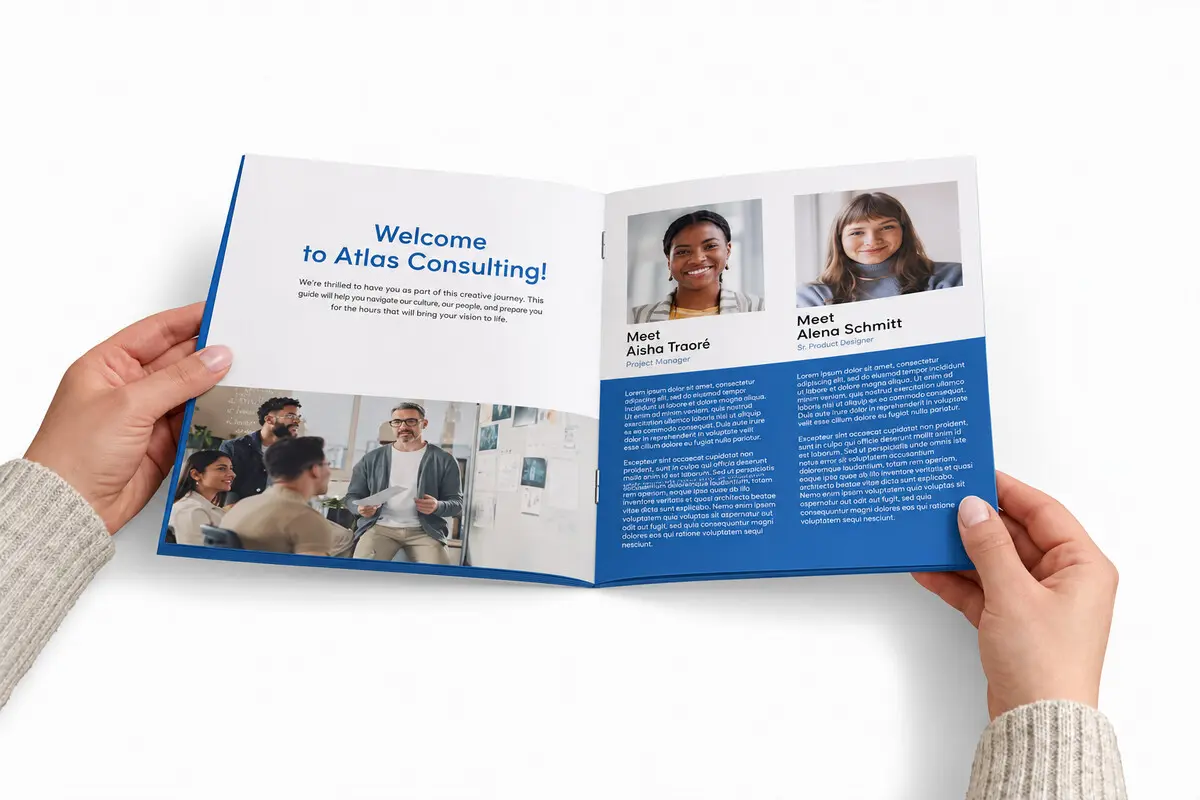
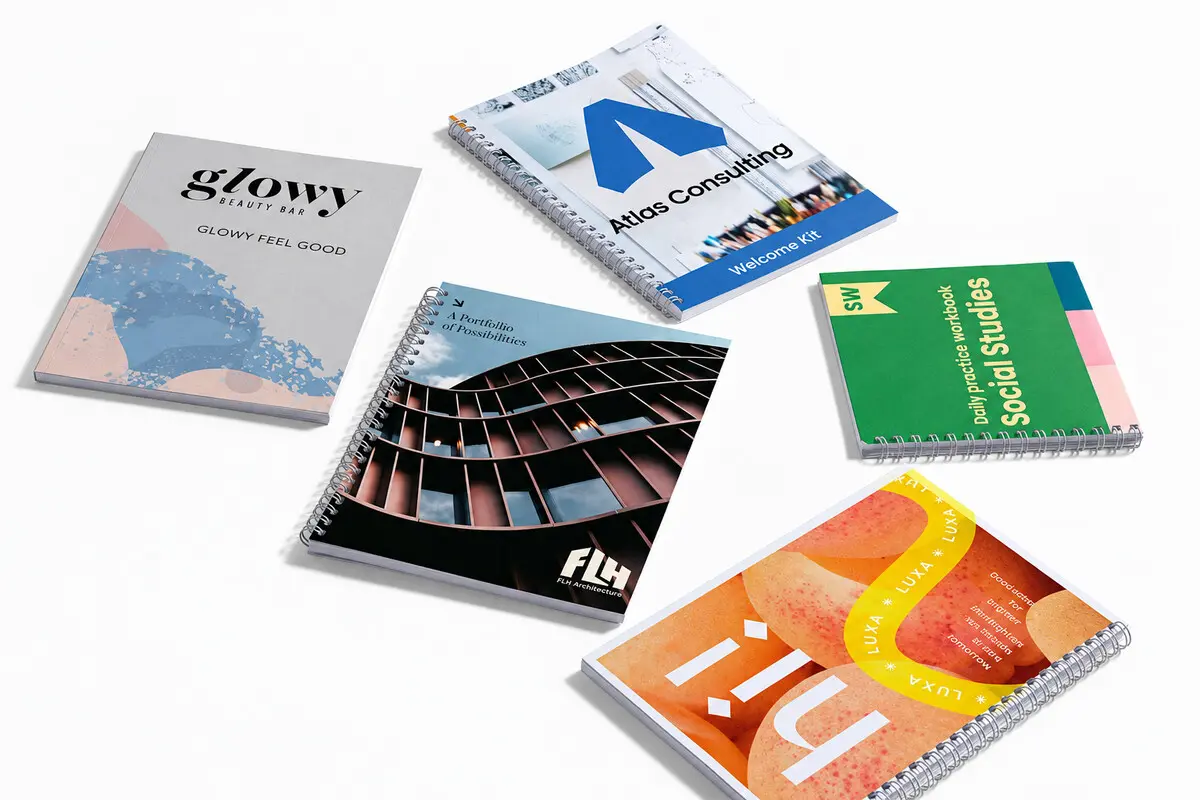
Saddle stitching for thin versions that open flat; perfect binding for thick versions, with a square spine that can be printed with the company name so it is readable standing on a shelf; spiral binding with a clear cover when it needs to open completely flat; carton-mounted covers for versions handed to important clients.
The page lists prices for orders up to 200 books and runs from just a few books, so just order exactly the number of client meetings already scheduled. Above 200 books, the workshop runs offset printing and quotes separately.
Frequently asked questions about District 1 company catalogue printing
How is delivery made into District 1 high-rises?
Give us the recipient's name, phone number and the building's permitted receiving hours; the workshop arranges the delivery time within that window. Catalogue cartons are heavy so arranging the time in advance is necessary.
What if I need an English version alongside?
The workshop can print both versions in the same round, sharing images and layout, differing only in the text. Ordered in the same round, the colours of both versions match.
Do you take orders for 20 books?
Yes. The page accepts small orders and the price list runs from just a few books, so printing exactly the number of copies you need is normal.
Order printing at In Quảng Cáo Q7
If your office in District 1 needs catalogues printed, send the file or content and photos via Zalo so the workshop can advise on size, paper and binding style, then quote per book and arrange a delivery time to your building.
In Quảng Cáo Q7 direct print workshop – 49 Mai Van Vinh, Tan Hung Ward, Ho Chi Minh City. Production and delivery hours: Monday – Saturday, 8:00–12:00 and 13:00–18:00 · Orders via Zalo/hotline: Monday – Saturday 8:00–12:00 and 13:00–20:00, Sunday 14:00–19:00. Quick message via Zalo or call 0866.511.099.
See more printing services on the In Quảng Cáo Q7 home page, see all corporate print products or contact us quickly via the contact page; you can also get directions to the workshop on Google Maps.
Brand catalogues for businesses in the central area
Businesses in District 1 use catalogues differently from distributors: the book is not just for looking up item codes but for handing to partners in meetings. So the first part of the book is usually for the company introduction, then the products or services.
The commonly used catalogue structure has four blocks: a cover letter or introduction, capabilities and projects completed, the product or service catalogue, and contact information. The four blocks of a catalogue are also four groups with different printing requirements, so separating them clearly from the start helps choose the right paper and layout the first time.
The capabilities and projects part of the catalogue is what decides the impression, so it usually uses large photos covering a whole page or spreading across two pages. The catalogue part is the opposite: it needs quick look-up, so many items per page with specification tables.
| Content block | Features | Print requirements |
|---|---|---|
| Introduction, cover letter | Little text, lots of white space | Paper with high whiteness |
| Capabilities, projects | Large photos, colour backgrounds | Full colour throughout, photos at 300dpi |
| Product categories | Many items, with tables | Low-glare paper, small text must be clear |
| Contact information | One final page | Can be printed in one colour |
Many businesses make two versions from the same file: a full version to hand to partners and a slim version with only the introduction and main catalogue, handed out at conferences. The slim version is much cheaper so it can be printed in large quantities.
Related products

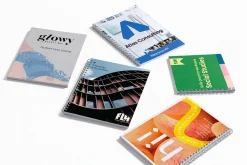
Catalogue – Company Profile

Folder

Letterhead

Envelopes
Keeping to brand colour standards
Businesses with a brand identity usually specify colours by exact codes, and catalogues are the item most prone to drifting because they have many pages and many photos. A brand background colour appearing on twenty pages with tone differences between signatures is a mistake visible as soon as you flip through.
The solution is to settle one test print and use it as the machine reference for the whole batch. With offset-printed books, the signatures are aligned to the same sample so the background shade stays even from the first page to the last.
Colour codes should be sent in CMYK rather than sending a logo image. Special Pantone spot colours are only approximated when printed with four process colours, so if the brand colour must be exact, an extra spot colour needs to be printed, and this part is quoted separately.
- Send the CMYK colour codes of the brand colours, not just a logo image.
- Test-print on the exact paper type to be used, because the same file gives different colours on gloss and matte paper.
- Approve the proof under white light, not under yellow light.
- State clearly which colours must be exact and which can vary.
- Keep the approved sample at the workshop for aligning later rounds.
With photos of people or products in skin tones, colour matching needs more attention because the human eye is very sensitive to these shades. The test print should include at least one page with that type of photo.
Premium versions for partner meetings
Besides the standard version, many businesses make a small quantity of premium versions to hand over in important meetings. The content is the same; the difference is in the cover material and finishing steps.
A hard cover wrapped in fine art paper is the highest level, giving the book the feel of a hardcover book. The middle level is a matte-laminated Couche 300gsm cover with the company name foil stamped. The lighter level is a matte-laminated cover with a debossed logo, creating a recess when touched without the cost of foil stamping.
Sewing and then gluing the spine is the most durable binding and also opens flatter than perfect binding, so premium versions often choose this method. In return it needs one to two extra days for sewing and waiting for the spine to dry.
| Version level | Cover | Finishing | Extra time |
|---|---|---|---|
| Standard version | Couche 300gsm | Lamination | No |
| Better version | Couche 300gsm | Matte lamination, debossed logo | 1 to 2 days |
| Premium version | Couche 300gsm | Matte lamination, foil stamping | 2 days |
| Display version | Hard cover wrapped in fine art paper | Thread sewing | 3 to 4 days |
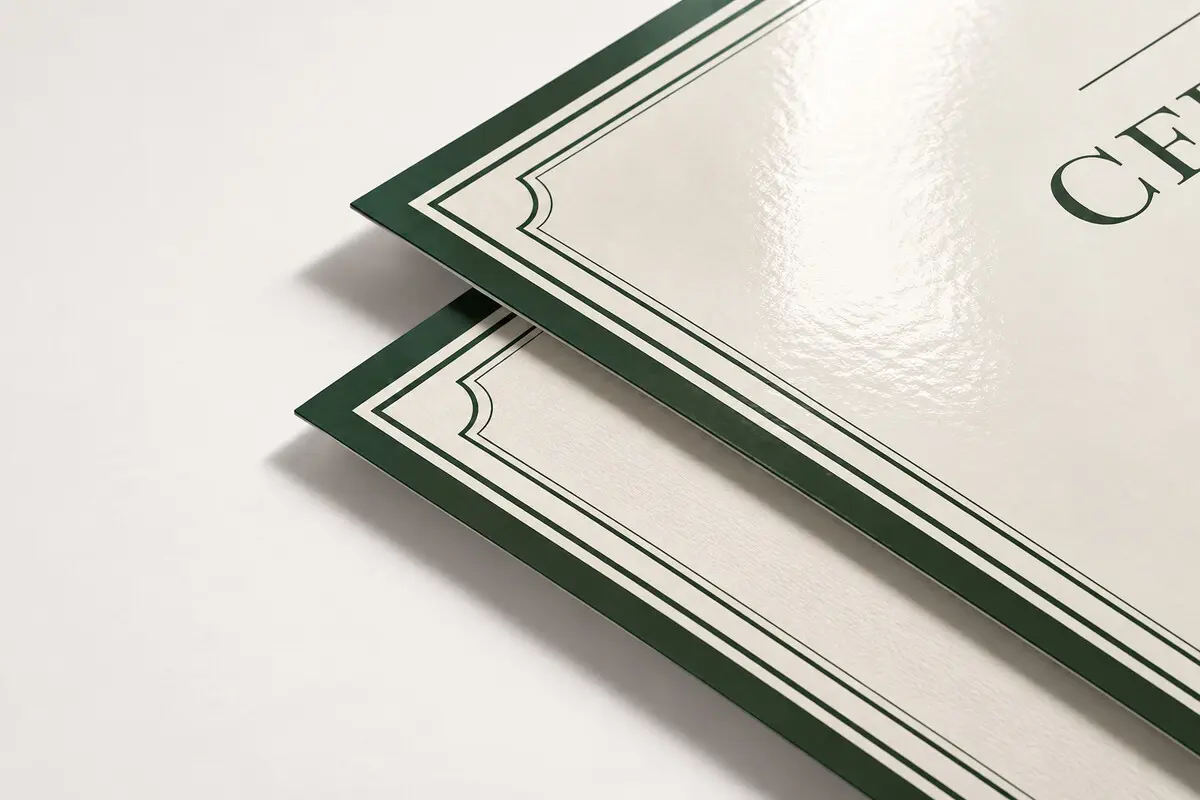
Foil stamping and debossing need separate dies so the first round has an extra die cost. The die is kept so later rounds of catalogues with the same design are not charged for this part again, and the two version levels only differ clearly the first time.
Coordinating the printed and electronic versions
Businesses in District 1 usually need both a printed version to hand over and a PDF version to send by email. The two versions should be exported from the same file but are not entirely identical, because viewing conditions differ.
The printed version uses CMYK, has bleed and no clickable links. The electronic version should be converted to RGB for brighter colours on screen, with bleed removed, and links to the website plus a clickable table of contents added.
File size also needs handling. Print files weigh several hundred megabytes because images are at 300dpi, too large to email. The electronic version with images compressed to 150dpi is usually only a few megabytes yet still sharp on screen.
- Printed version: CMYK, 300dpi, with 3mm bleed.
- Electronic version: RGB, 150dpi, no bleed, with links.
- Add a clickable table of contents to the electronic version if the book is over 20 pages.
- Keep both versions in the same folder, clearly named so they are not sent by mistake.
The electronic version is exported at the same time as the printed version if the business requests it. Doing them together avoids the two versions diverging in content after a few rounds of edits.
Quantity and redo cycle
Brand catalogues have high layout costs so they are usually used for one to two years. The print quantity is therefore calculated by the rhythm of partner meetings and conference attendance, not by the number of customers.
Businesses meeting a few partners a week usually print two to three hundred standard copies for a year, with thirty or forty premium copies. Businesses attending trade fairs need a few hundred more slim versions to hand out.
| Purpose of use | Annual quantity | Version level |
|---|---|---|
| Handed to partners in meetings | 200 to 300 books | Standard version |
| Important meetings | 30 to 50 books | Premium version |
| Handed out at conferences, trade fairs | 300 to 1,000 books | Slim version |
| Internal archive and display | 10 to 20 books | Display version |
When the catalogue changes mid-year, the edits are usually only on a few pages. In this case, printing a small round of updated copies and using them alongside the old version is what many businesses choose, instead of scrapping the whole remaining stock of catalogues.
Size and layout style for a brand book
A4 portrait is the most common size for a catalogue because paper runs through the machine at this size so there is little waste and the price is lowest. Businesses wanting their catalogue to stand out more usually choose a square size or A4 landscape, in return using more paper and being harder to fit into standard file folders.
In a catalogue, two facing pages are always viewed together, so they should be laid out in pairs rather than page by page. Large photos on the right page and text on the left page is the common arrangement, because the reader's eye falls on the right page before turning.
The inside cover and last page are often left blank in self-laid-out books. These two pages work well for a table of contents, a brand positioning line or contact information, making use of paper already paid for.
For books over twenty pages, a table of contents is worth having. Below that, a colour strip in the page margin to group sections is enough for readers to flip to the right part without taking up an extra page.
| Size | Features | Used for |
|---|---|---|
| A4 portrait | Common, lowest price | Full catalogue |
| A4 landscape | Wide photos, airy look | Books with many project photos |
| Square 21x21cm | Striking, uses more paper | Brand book |
| A5 portrait | Compact, portable | Slim version handed out at conferences |
| A5 landscape | On the desk, opens landscape | Short introduction book |
Slim catalogue versions handed out at conferences are usually made in A5 to reduce cost and be easy to carry. Two versions of different sizes can still be laid out from the same file if the layout is planned ahead, so it does not need laying out twice.
Common mistakes and how to approve samples
With a catalogue, mistakes detected late are very costly because quantities are large and once the book is bound a page cannot be replaced. The five mistakes below account for most cases of reprinting.
The first mistake is text or images too close to the spine, hidden once the book is bound. Leaving an inner margin about five millimetres wider than the outer margin is the solution, and this needs increasing for catalogues over a hundred pages thick.
The second mistake is page numbers not matching the table of contents, usually because pages were added or removed after the contents were made. The third is low-resolution images, only visible when printed on paper. The fourth is the brand background shifting in tone between pages because images came from many sources.
The fifth mistake is choosing an unlaminated cover to save money. Unlaminated covers peel at the corners very quickly, and a catalogue handed to partners with worn white cover corners loses all its intended effect.
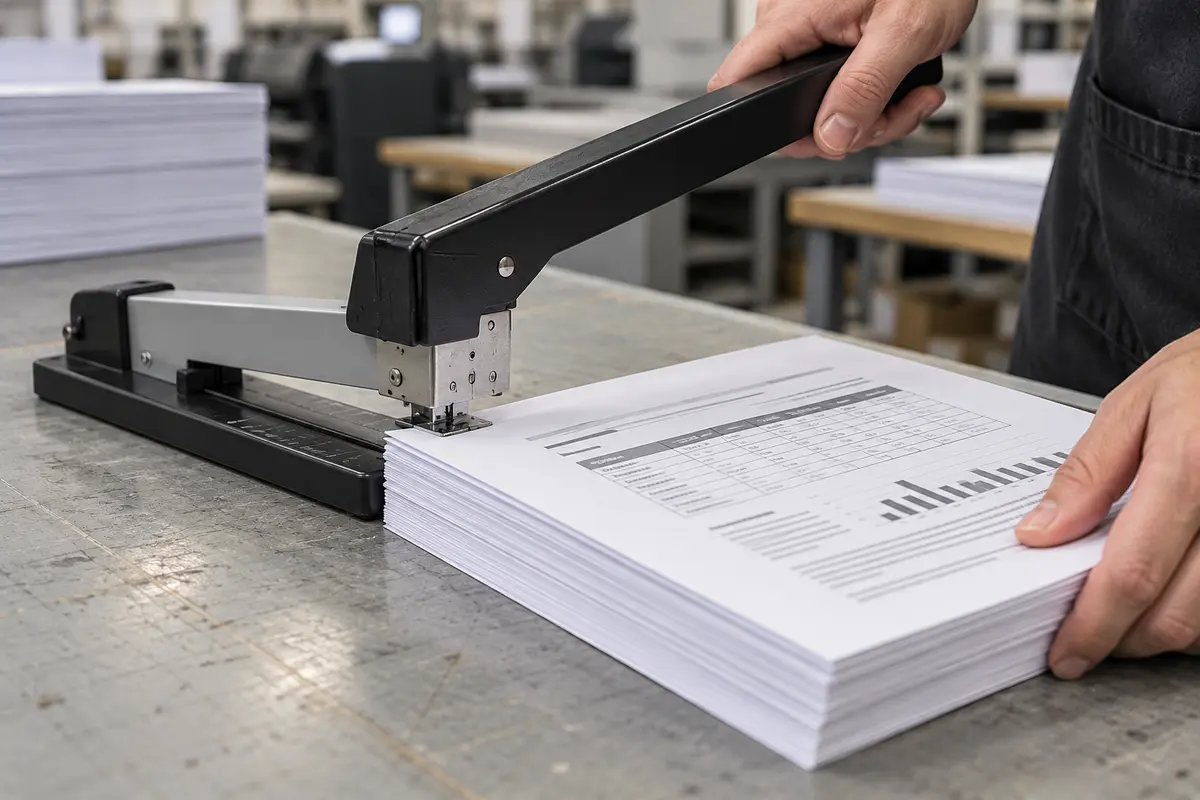
A test print of one complete book is the only way to see the real thickness, whether the spine opens flat and the colour of adjacent pages. This step takes an extra day but with catalogues printed in a few hundred copies it is almost always worth it.
Delivery and ordering catalogue printing in District 1
Workshop at 49 Mai Van Vinh, Tan Hung Ward, Ho Chi Minh City, and from here into District 1 via Kenh Te Bridge. Catalogues are packed in cartons by quantity, delivered by small truck for many cartons, and need a scheduled time to use the goods lift when delivering into high-rises.
- Information 1: expected number of pages and the structure of the content blocks.
- Information 2: quantity of each version level, standard and premium.
- Information 3: size, binding method and cover finishing level.
- Information 4: the date you need it, building name, floor and recipient.
Even without the final file, a quote can be given by the expected number of pages and adjusted when settled. Send your request via Zalo to receive a quote split into printing, finishing and layout.
Need printing or signage in Ho Chi Minh City?
In Quảng Cáo Q7 runs its own print workshop in Tân Hưng Ward (former District 7), Ho Chi Minh City, producing and installing signage, banners, window graphics, exhibition booths and event displays. Send us the size, material, quantity and a photo on WhatsApp and we will get back to you.

Phone: +84 866 511 099 · Also on WeChat
Workshop: 49 Mai Văn Vĩnh, Tân Hưng Ward, Ho Chi Minh City