




































































Letterhead Printing District 8 – A4 Fort, Offset 1,000 Sheets at Good Prices
Oct
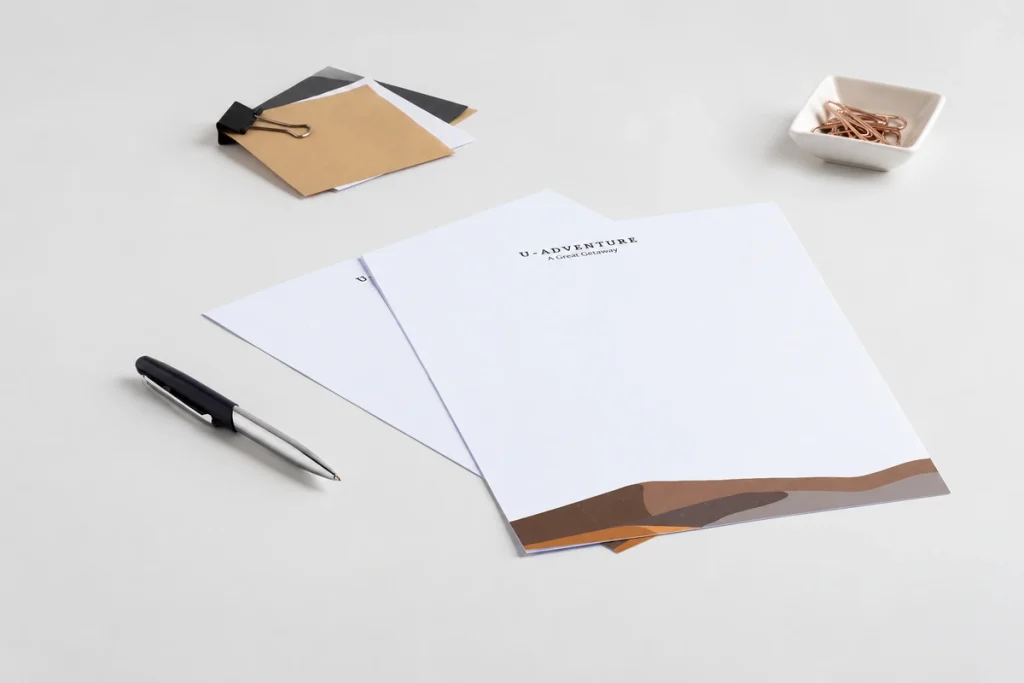
Does your company need District 8 letterhead printing? This article sets out the A4 size, two Fort paper weights, single- or double-sided options, and the two 24-hour – 72-hour time tracks at the In Quảng Cáo Q7 workshop.
Letterhead printing for District 8 companies
From Pham The Hien, Ta Quang Buu or Binh Dong, cross Nguyen Van Cu Bridge or Pham Hung Bridge and you reach the In Quảng Cáo Q7 workshop at 49 Mai Van Vinh, Tan Hung Ward. A 1,000-sheet ream is quite heavy, but the distance is short so it is delivered within the day once ready.
Customers for District 8 letterhead printing include production facilities, trading companies and small offices – the group that regularly sends official letters, quotations and contracts on paper. This group often chooses the offset track because they use it steadily all year.
Choose the track by annual usage
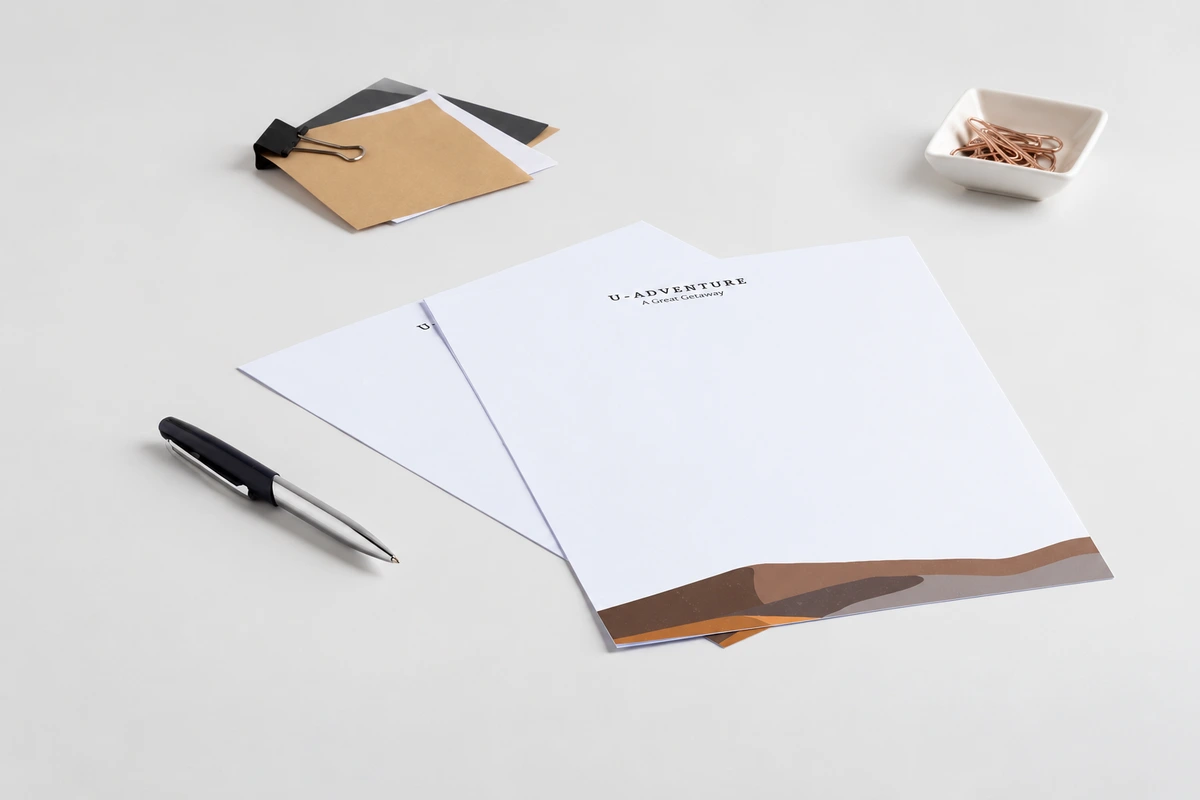
If the company uses a few hundred sheets a year, the 24-hour Express track suits better: it runs on digital machines, takes orders from a few sheets, needs no zinc plates so you get exactly what you print, and the unit price per sheet drops in tiers up to the 100-sheet level.
If you use 1,000 sheets or more, the 72-hour Economy track is much cheaper because it runs on offset printing: the unit price per sheet at the 1,000-sheet level is only a small fraction of the digital track, and drops further at the 2,000, 3,000, 5,000 and 10,000 sheet levels.
Two Fort paper weights and number of printed sides
Fort paper 100gsm is the standard office weight: light, economical, running well through laser printers when the company prints content on later. Fort paper 120gsm is one step thicker, firm in hand and with less show-through from the back – suited to official letters and contracts sent outside.
The single-sided version only has the header and footer on the front, and is the most common. The double-sided version also prints the back for general terms, a route map or the English version. All four combinations of paper and number of sides are available on both time tracks.
File layout and ordering with envelopes
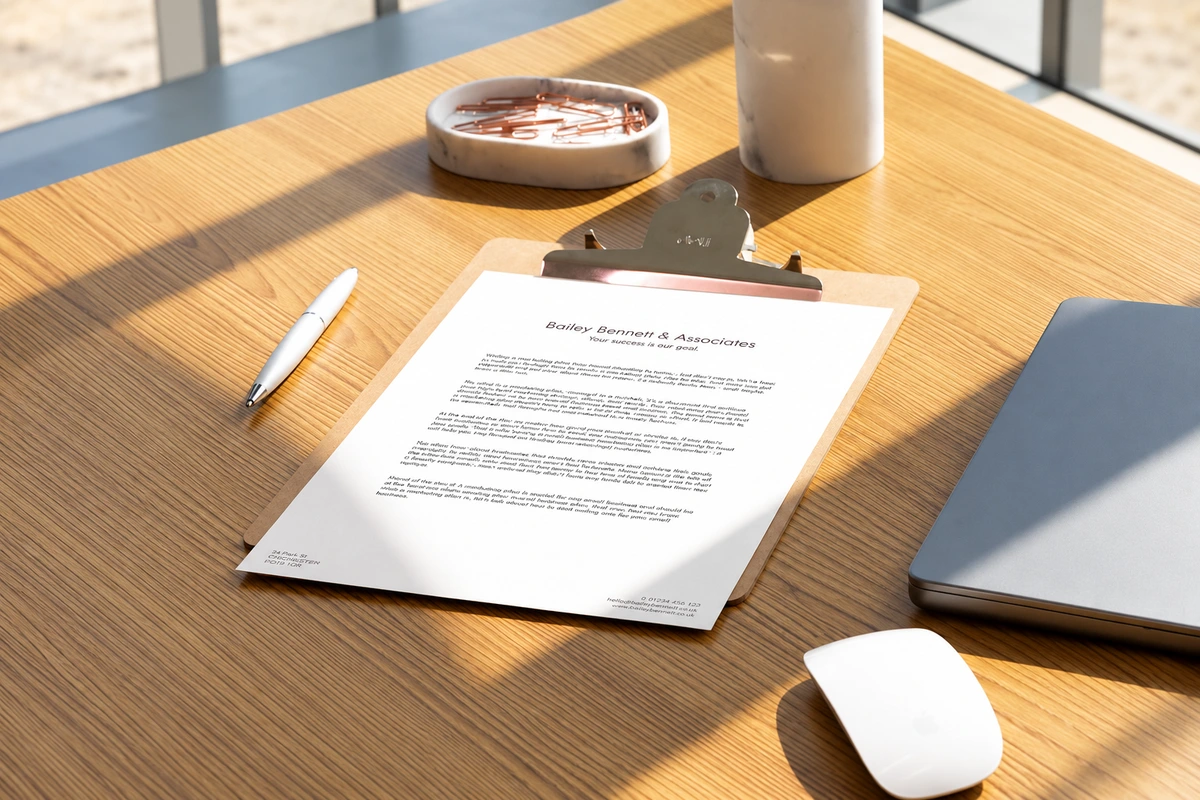
The header includes the logo and legal entity name; the footer includes the address, phone, website and tax code. The middle must leave enough white space for content – usually a top margin of about 4cm and a bottom margin of 3cm so it does not overlap the pre-printed part.
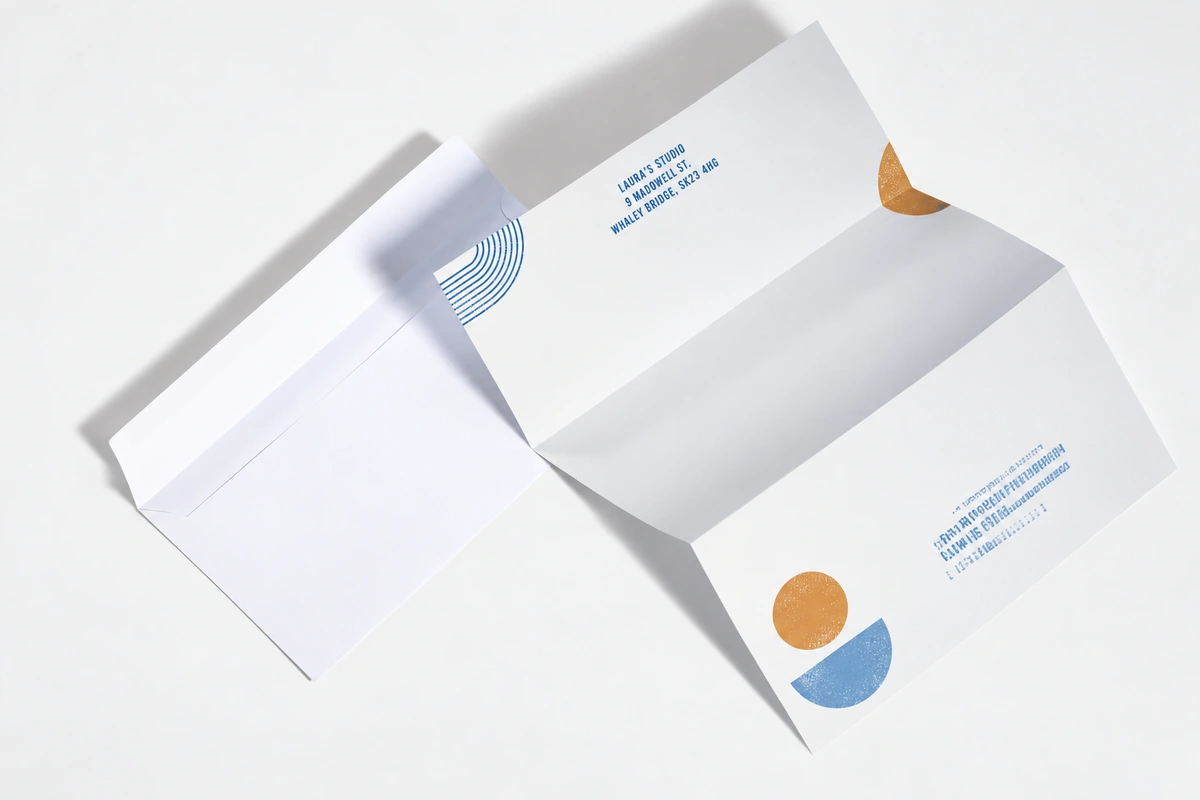
Letterhead and envelopes are often ordered in the same round so the logo on both items runs under the same colour command. Order additionally on the Envelope page and tell the workshop the two orders share one design.
Frequently asked questions about District 8 letterhead printing
How long does delivery to District 8 take?
Usually within the day once ready. Reams of 1,000 sheets or more are heavy, so tell us the floor and entrance beforehand so the workshop arranges the vehicle.
How long does the 1,000-sheet level last?
It depends on the number of documents sent outside each month. Many trading companies use up 1,000 sheets in about a year, so ordering at this level is just right while still getting the offset price.
What if the address or phone number changes?
Send the new content; the workshop edits the saved old version and sends it back for approval. So do not order too many sheets if the company information is about to change.
Order printing at In Quảng Cáo Q7
If your company in District 8 needs letterhead printed, send the file or logo via Zalo so the workshop can quote both time tracks for you to choose – delivered over the bridge within the day once ready.
In Quảng Cáo Q7 direct print workshop – 49 Mai Van Vinh, Tan Hung Ward, Ho Chi Minh City. Production and delivery hours: Monday – Saturday, 8:00–12:00 and 13:00–18:00 · Orders via Zalo/hotline: Monday – Saturday 8:00–12:00 and 13:00–20:00, Sunday 14:00–19:00. Quick message via Zalo or call 0866.511.099.
See more printing services on the In Quảng Cáo Q7 home page, see all corporate print products or contact us quickly via the contact page; you can also get directions to the workshop on Google Maps.
How production facilities and warehouses use letterhead
District 8 has many small production facilities, warehouses and distributors. This group uses letterhead not only for official letters but also as the background for documents sent outside: quotations, order confirmation letters, new price notices and delivery receipts.
Because most documents are printed from the office laser printer and then sent to customers or agents, letterhead here plays a brand identity role. A quotation printed on paper with a logo is very different from one printed on plain white paper, even with the same content.
The second feature is higher usage than service offices, because each order usually comes with one or two documents. A facility delivering fifty orders a month can use up to one thousand sheets a year.
| Document type | Frequency | Sent to whom |
|---|---|---|
| Quote | Daily | Customers, agents |
| Order confirmation letters | Daily | Customers |
| New price notices | By round | All agents |
| Delivery receipts | For large orders | Customers |
| Official letters, cover letters | Occasionally | Partners, authorities |
New price notices are sent in bulk, so the letterhead quantity for one round of notices can equal a whole month of normal use. Working out this quantity in advance when ordering avoids having to order urgently mid-round.
One-colour printing to reduce costs
For letterhead used in large quantities, one-colour printing saves clearly compared with multi-colour printing, with no change in usefulness. Many facilities in District 8 choose this for everyday use and keep the multi-colour version for documents sent to partners.
One-colour printing means using the logo's main colour itself, not switching to black. A multi-colour logo is converted to a one-colour version, keeping its shape but with only one shade.
The one-colour logo version should be prepared in advance in the brand identity folder. Without it, the conversion is done at the workshop and the result may differ from the facility's intention, especially with logos with many small details.
| Number of print colours | Price level | Used for |
|---|---|---|
| 1 colour | Lowest | Everyday documents |
| 2 colours | Low | Simple two-colour logo |
| 4 colours | Medium | Documents sent to partners |
| 4 colours with a light background | Higher | Cover letters, thank-you letters |
For facilities using both versions, the order is usually split in an eighty-twenty ratio: eight parts one-colour for everyday use, two parts four-colour for important documents. Both versions are ordered in the same round so the design is approved only once.
Related products

Letterhead

Envelopes

Business cards

Folder
Letterhead doubling as forms
Many facilities in District 8 pre-print part of a form frame on the letterhead, turning the sheet into a ready-to-use quotation or receipt template. This is more economical than printing two separate templates.
The pre-printed frame is usually a ruled table in the middle of the page, for filling in item names, quantities and unit prices. Users just write by hand or print content into those rows.
The drawback is that letterhead with a pre-printed frame cannot be used for official letters or cover letters. So facilities usually order two templates: one completely blank and one with a form frame.
- Blank template: used for official letters, cover letters and notices.
- Template with a table frame: used for quotations and delivery receipts.
- Template with a frame and signature boxes: used for records that both parties need to sign.
- The two templates are ordered in the same round, differing only in the frame in the middle of the page.
When ordering two templates in the same round, the cost only increases for prepress rather than doubling. So most facilities choose to order both instead of trying to use one template for everything.
Paper and office printer requirements
Letterhead used with laser printers must be uncoated paper. Gloss-coated paper fed into a laser printer will jam, and if it gets through, the toner adheres poorly and flakes off when the sheet is folded.
Fort paper 80gsm is the thinnest that still works well, the cheapest, enough for internal documents. 100gsm is the common level; it already feels different from photocopy paper in hand and shows no text through when printed double-sided.
With inkjet printers, ink takes longer to dry so the paper needs to be uncoated all the more. Facilities using inkjet printers should say so clearly when ordering to choose paper with suitable ink absorbency.
| Equipment | Paper type | Weight |
|---|---|---|
| Laser printer | Uncoated Fort paper | 80 to 120gsm |
| Inkjet printer | Ink-absorbent Fort paper | 100gsm |
| Photocopier | Fort Paper | 80gsm |
| Handwriting | Fort Paper | 100gsm |
| Pre-printed at the workshop | Fort or Couche paper | Depending on requirements |
If the facility wants the letterhead to look more upscale, use Fort paper 120gsm instead of switching to coated paper. This weight gives a substantial feel while still running on every office printer.
Large quantities and offset printing
Facilities in District 8 use letterhead in large quantities, so offset printing is almost always advantageous. The switch threshold is around one thousand sheets, and from three thousand sheets the price per sheet reaches the lowest range.
For print runs over two thousand sheets, facilities usually receive part and leave the rest at the workshop. Paper keeps for a long time if stored dry and flat, but offices usually have no room for four or five reams.
One thing to note is that pre-printed contact information goes out of date easily. Facilities about to change phone numbers or move warehouses should order just enough for the transition period, then order the full amount once the new information is settled.
| Quantity | Technology | Time | Price level |
|---|---|---|---|
| 200 to 500 sheets | Digital printing | 1 day | Highest |
| 500 to 1,000 sheets | Calculate both ways | 1 to 2 days | Medium |
| 1,000 to 3,000 sheets | Offset printing | 2 to 3 days | Clear reduction |
| Over 3,000 sheets | Offset printing | 3 to 4 days | Lowest |
When the quantity is around the one-thousand-sheet threshold, quotes are calculated in parallel both ways so the facility can compare. The difference at this threshold is usually large enough to decide whether to combine rounds or split them.
The accompanying set for facilities with warehouses
Letterhead is rarely used alone. For facilities with warehouses, it goes with envelopes for sending, delivery notes clipped to orders, and carton labels with the facility name. The whole group should be printed in the same round so the colours match.
When printed separately at different times, small differences in logo shade are still visible when customers receive the quotation and the labelled carton at the same time. This is a common mistake with printed sets made piecemeal.
One thing to know is that the same colour code gives different shades on uncoated paper and on paper decal. So the logo on letterhead will look slightly different from the logo on carton labels, and this is a property of the material.
- Letterhead: Fort paper 100gsm, uncoated.
- Envelopes: Fort paper 100gsm, size by document folding method.
- Delivery notes: Fort paper, printed in 2 or 3 copies.
- Carton labels: paper decal, printed on A4 sheets.
- Order in the same round so the colours match and there is only one delivery.
For facilities with many deliveries, delivery notes are used as much as letterhead. Ordering them together in one round is the way of combining quantities to lower prices that many facilities in District 8 are using.
Common mistakes when ordering for the first time
The five mistakes below account for most cases where a round of letterhead has to be reprinted. All five show up right away when test-printing a real document on a sample sheet with the office's own printer.
The first mistake is choosing gloss-coated paper, causing laser printer jams. The second is a header block that is too tall, pushing a one-page quotation onto a second page.
The third mistake is an overly dark background pattern, making printed text hard to read and showing grey streaks on photocopies. The fourth is one wrong character in the contact information, requiring the whole round to be scrapped because of the large print run.
The fifth mistake is not leaving enough side margins, so content printed from the office printer overlaps the pre-printed part.
| Mistake | Consequence | How to avoid it |
|---|---|---|
| Choosing gloss-coated paper | Laser printer jams | Use uncoated Fort paper |
| Header block too tall | Document spills onto page two | Limit of 40mm |
| Dark background pattern | Text hard to read | Keep it under 10 percent |
| Wrong contact information | Scrap the whole round | Proofread the preview |
| Missing side margins | Overlaps the pre-printed part | Leave at least 15mm |
For large print runs, the cost of one mistake is very high because whole reams have to be scrapped. So a few sample sheets are delivered first and should be test-printed by the person who drafts the documents, not the person who placed the order.
Storage and how to take it out for use
Letterhead stored long in a humid environment curls slightly at the edges, and curled sheets fed into a laser printer jam easily. So the storage method directly affects how many sheets in the ream are usable.
The correct way to store it is to keep it in the original paper wrapping, flat in a cabinet or on a shelf, in a dry place. Do not stand it upright because reams stood for long curve along their height.
Each time, only take out the amount used in one or two weeks and put it in the printer's paper tray. The rest stays in the wrapping so it does not absorb moisture or gather dust.
- Keep it in the original paper wrapping, flat.
- Do not stand reams upright; they curve easily along their height.
- Take out one or two weeks' worth and keep it in the printer tray.
- Avoid placing it near windows, warehouse doors or sources of moisture.
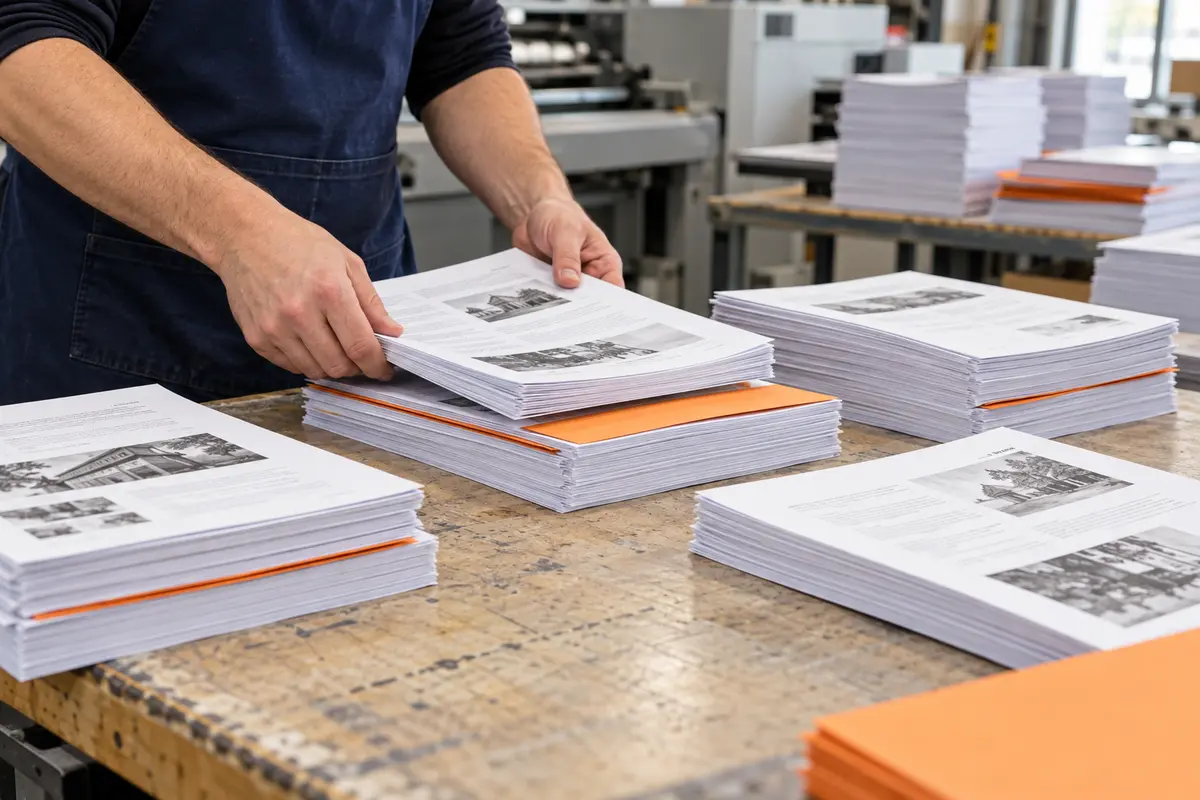
For facilities ordering two years' worth, the unused part should be stored at the workshop and received in batches. The part stored at the workshop is kept in a dry environment so the paper stays flat and does not absorb moisture.
Delivery and ordering letterhead printing in District 8
Workshop at 49 Mai Van Vinh, Tan Hung Ward, Ho Chi Minh City, to District 8 via Nguyen Van Cu Bridge or Chanh Hung Bridge. Letterhead is packed by ream; orders over two thousand sheets are delivered by small truck and need a gate-opening time arranged if delivering into a warehouse.
- Information 1: quantity of each template, the blank template and the template with a form frame.
- Information 2: paper weight and number of print colours.
- Information 3: logo file with colour codes, or the content of the header and footer blocks.
- Information 4: the date you need it, delivery address and gate opening hours.
A few sample sheets are delivered before running a large round for test printing on the office's printer. Send your request via Zalo to receive a quote by quantity and number of print colours.
Need printing or signage in Ho Chi Minh City?
In Quảng Cáo Q7 runs its own print workshop in Tân Hưng Ward (former District 7), Ho Chi Minh City, producing and installing signage, banners, window graphics, exhibition booths and event displays. Send us the size, material, quantity and a photo on WhatsApp and we will get back to you.

Phone: +84 866 511 099 · Also on WeChat
Workshop: 49 Mai Văn Vĩnh, Tân Hưng Ward, Ho Chi Minh City