




































































Company Letterhead Printing District 1 – A4 Fort, Delivered to Your Building
Oct
Does your company need District 1 company letterhead printing? This article sets out the A4 size, two Fort paper weights, single- or double-sided options, and the two 24-hour – 72-hour time tracks at the In Quảng Cáo Q7 workshop.
Letterhead printing for District 1 offices
From the In Quảng Cáo Q7 workshop at 49 Mai Van Vinh, Tan Hung Ward to central District 1, go along Nguyen Huu Tho then through Khanh Hoi. Reams of paper are heavy, so the workshop arranges the delivery time within the building's permitted receiving hours.
Customers for District 1 company letterhead printing are mainly law firms, consulting, audit and trade representative offices – the group that issues the most paper documents. For this group, letterhead is not only brand identity but also a mark of an official document.
Fort paper 120gsm for documents sent outside
Fort paper 120gsm is one step thicker than 100gsm: firm in hand, less show-through from the back when held up to light, sharp folds and does not crease through many rounds of handling. This is the weight law firms and audit firms often choose for contracts, advisory letters and reports.
Fort paper 100gsm is lighter and more economical, runs well through laser printers, suited to internal memos and documents printed in large quantities. Many offices order both weights: 120gsm for external documents, 100gsm for internal use.
Single-sided, double-sided and time tracks
The single-sided version only has the header and footer on the front. The double-sided version also prints the back – law firms often print general terms or the English version on the back to keep the document set compact.
The 24-hour Express track runs on digital printing, from a few sheets, used when urgently needed for a set of contracts about to be signed. The 72-hour Economy track runs on offset, minimum 1,000 sheets, with a much lower unit price per sheet that drops further at the 2,000, 3,000, 5,000 and 10,000 sheet levels.
Layout and ordering with envelopes
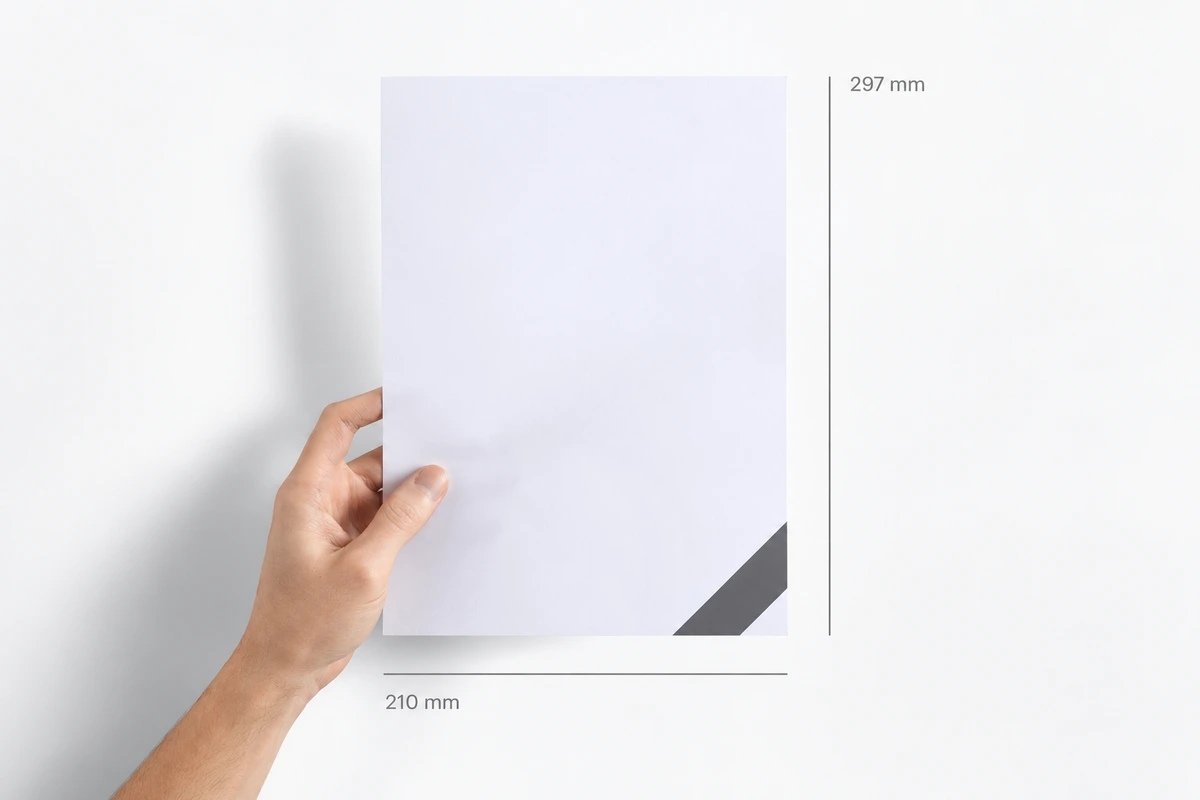
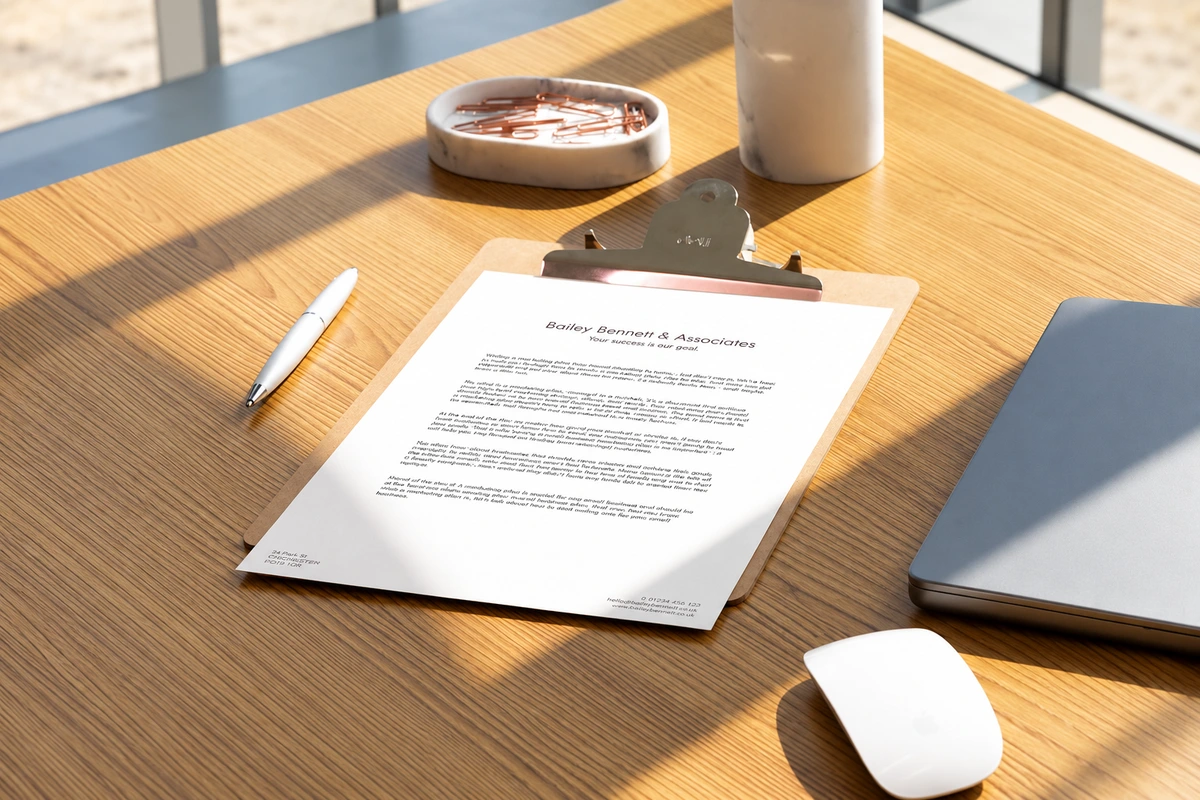
The header includes the logo and legal entity name; the footer includes the address, phone, website and tax code. The middle leaves a top margin of about 4cm and a bottom margin of 3cm for the document content. Send files as PDF or AI at the exact A4 size, with 3mm bleed if there is a colour background running to the edge.
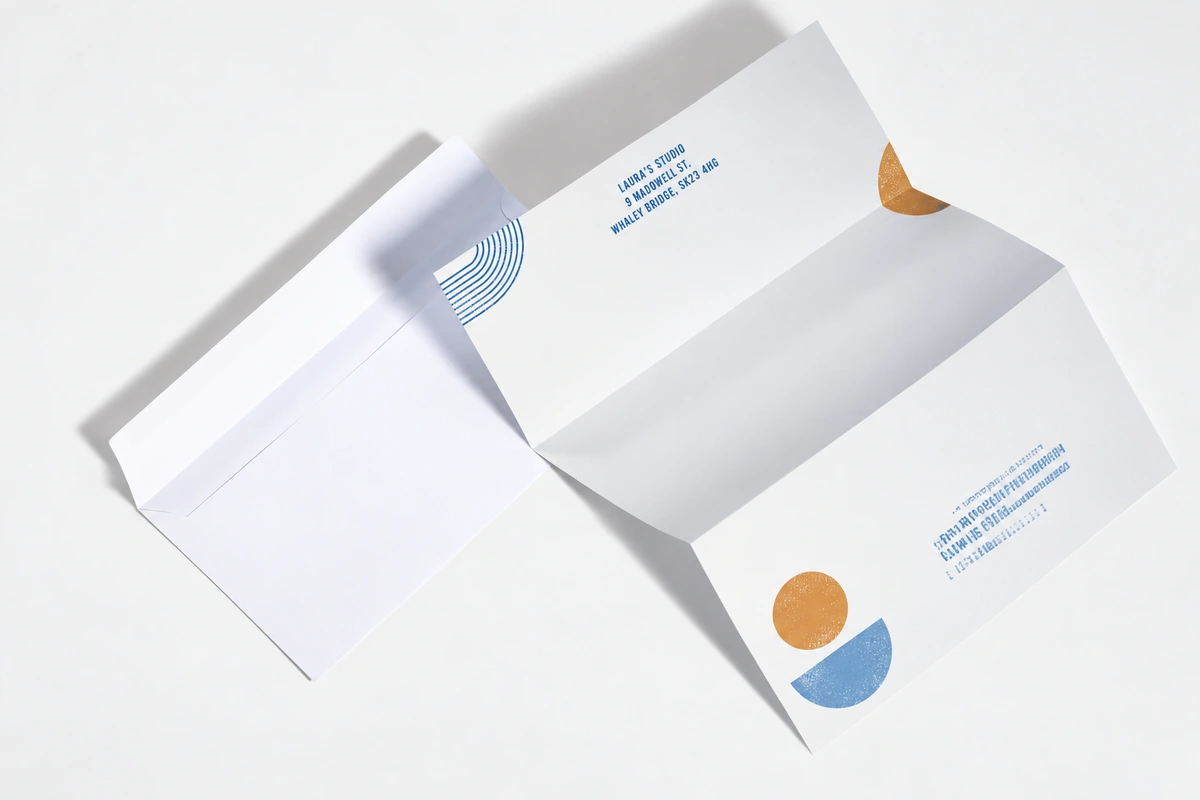
Letterhead and envelopes are usually printed in the same round so the logo runs under the same colour command. Order additionally on the Envelope page and tell the workshop the two orders share one design – for offices sending contracts regularly, this is the pair reordered most often.
Frequently asked questions about District 1 company letterhead printing
How is delivery made into District 1 high-rises?
Give us the recipient's name, phone number and the building's permitted receiving hours; the workshop arranges the delivery time within that window. Reams of paper are heavy, so it needs to be arranged in advance.
Can I urgently print 100 sheets for a set of contracts?
Yes. Choose the 24-hour Express track, from a few sheets; the 100-sheet level is already at the cheapest price tier of this track.
Do you issue VAT invoices?
Yes, the electronic VAT invoice is issued within the day. Send your invoicing details once and the workshop applies them to later orders automatically.
Order printing at In Quảng Cáo Q7
If your office in District 1 needs letterhead printed, send the file or logo via Zalo so the workshop can quote by time track, paper weight and number of sheets, then arrange a delivery time to your building.
In Quảng Cáo Q7 direct print workshop – 49 Mai Van Vinh, Tan Hung Ward, Ho Chi Minh City. Production and delivery hours: Monday – Saturday, 8:00–12:00 and 13:00–18:00 · Orders via Zalo/hotline: Monday – Saturday 8:00–12:00 and 13:00–20:00, Sunday 14:00–19:00. Quick message via Zalo or call 0866.511.099.
See more printing services on the In Quảng Cáo Q7 home page, see all corporate print products or contact us quickly via the contact page; you can also get directions to the workshop on Google Maps.
Letterhead in the brand identity set of large businesses
Most businesses in District 1 already have a brand identity standard specifying the logo position, clear space around the logo, colour codes and fonts. Letterhead is an item in that set, and also the item sent outside most often.
Because every document sent out carries this sheet, it is the most frequent point of contact between the business and the outside. One wrong detail on the letterhead is repeated on hundreds of documents.
The three common mistakes are stretching the logo out of proportion, shrinking the safe zone around the logo to add a line of text, and using a font different from the specified one. All three are visible when placing the sheet next to a folder or business card of the same company.
| Item | Rules to follow | Where it often goes wrong |
|---|---|---|
| Letterhead | Logo position, colour codes, fonts | Logo stretched |
| Envelopes | Logo position, stamp area | Colour background encroaching on the stamp area |
| Folder | Logo position, clear space | Clear space shrunk |
| Business cards | Colour codes, fonts | Using a substitute font |
| Internal forms | One-colour logo | Using the multi-colour version |
The solution is to load the brand identity standard into the customer record the first time. From then on, every round of letterhead is laid out by the same set of rules, regardless of who orders or who does the layout.
Related products

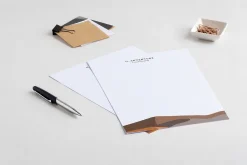
Letterhead

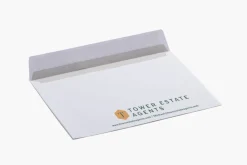
Envelopes

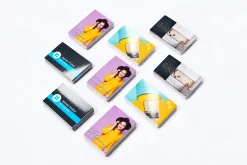
Business cards

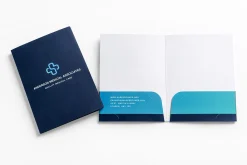
Folder
First page, continuation page and internal templates
Large businesses usually need three different templates. The first page template has the full header and footer blocks; the continuation page template has only a small logo and page number; the internal template is printed in one colour to save money.
The continuation page template is necessary because business documents are often longer than one page. Using the first page template for every page makes the document look repetitive and wastes space, especially with multi-page contracts.
The internal template is used for meeting minutes, notices and forms circulated only within the company. Printed in one colour, it costs less, and no one outside sees it so it does not affect brand identity.
| Template | Pre-printed content | Number of colours | Quantity ratio |
|---|---|---|---|
| First page | Full header and footer | 4 colours | 40 percent |
| Continuation page | Small logo and page number | 4 colours | 30 percent |
| Internal use | One-colour logo, compact footer | 1 colour | 30 percent |
| Cover letter | Header, fine art paper | 4 colours | Small quantity |
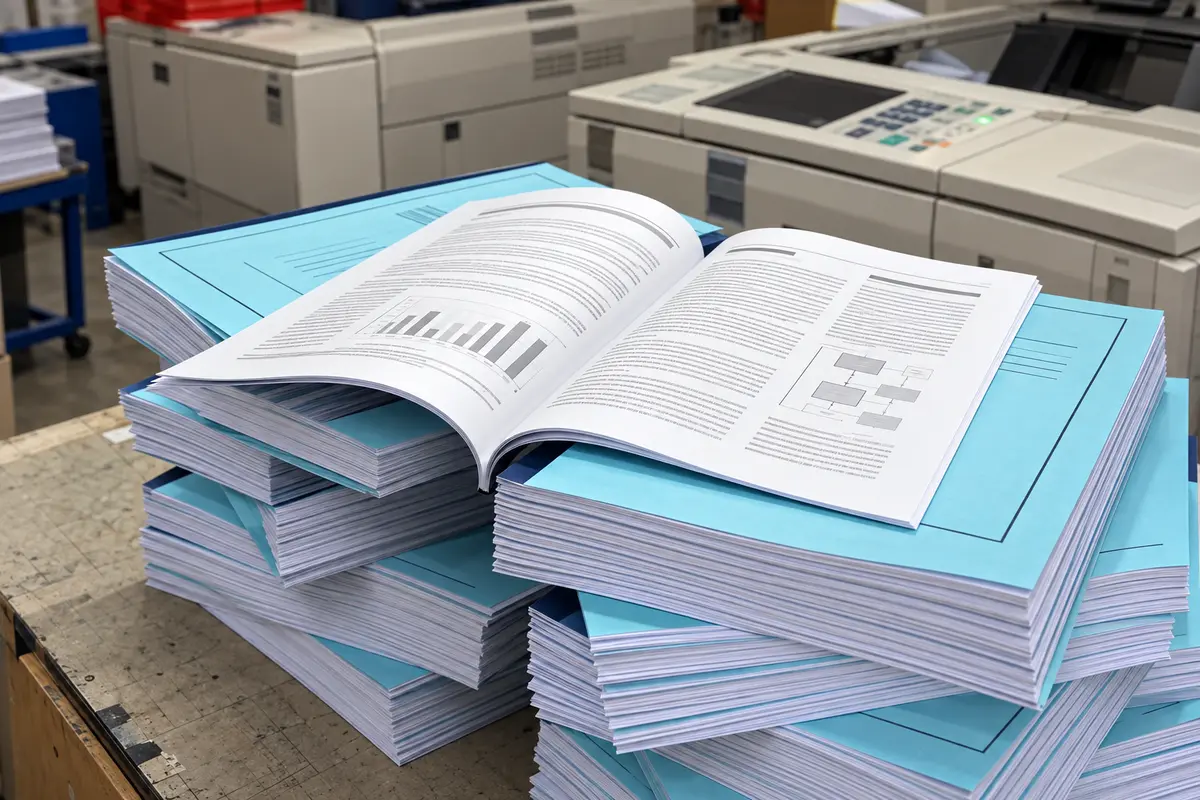
The ratios in the table are for reference. After a few months, the actual ratio becomes clear from the number of sheets left of each template, and the next round is adjusted to that figure.
Office printer requirements
Businesses in District 1 usually use laser printers or multifunction printers shared by the whole floor. Letterhead therefore must be uncoated paper and must withstand the machine's heat.
Gloss-coated paper fed into a laser printer will jam, and if it gets through, the toner adheres poorly and flakes off when folded. This is the most costly mistake because it is usually only discovered after a whole ream has been printed.
Automatic duplex printers are even stricter: paper that is too thick or too thin easily jams at the flipping stage. 100gsm is the safest weight for this group of printers.
- Use uncoated Fort paper for every template printed on office machines.
- 100gsm is the safest for automatic duplex printers.
- Test-print a real document before running the whole round.
- State the printer type clearly when ordering if the office uses inkjet printers.
- Avoid dark background patterns because photocopies show grey streaks.
If the business wants the sheet to look more upscale, raise the weight to 120gsm instead of switching to coated paper. This weight gives a substantial feel while still running on most office machines.
Cost allocation and ordering by quarter
Large businesses settle budgets by quarter, so letterhead is ordered at that rhythm too. Ordering by quarter reaches a good price level without holding stock too long.
When the quantity is large enough, many businesses order once for the whole year and receive goods by quarter. The part not yet received is stored at the workshop in a dry environment so the paper stays flat and does not absorb moisture.
Costs split by department are handled with a statement sent with the documents, without splitting into many separate orders. Accounting reconciles once for the whole round.
| How to order | Price level | Storage space needed |
|---|---|---|
| Ordering in small rounds | Highest | Very little |
| Ordering by quarter | Medium | One box |
| Order for the year, receive by quarter | Lowest | Very little |
| Order for the year, receive at once | Lowest | Many reams of paper |
For offices renting in high-rises, receiving by quarter is almost always the more sensible choice. The schedule of each trip is stated clearly in the order confirmation, and later trips carry no extra delivery fee.
The accompanying set and keeping colours consistent
Letterhead goes together with envelopes, folders and business cards in the same set. When printed separately at different times, small differences in logo shade are still visible when the recipient opens the envelope.
The solution is to print the whole set in one round, or keep the approved sample as the reference standard for later rounds. Colour codes should be sent in CMYK rather than sending a logo image.
One thing to know is that the same colour code gives different shades on uncoated and coated paper. So the logo on letterhead will look slightly different from the logo on a laminated folder, and this is a property of the material, not a printing fault.
- Letterhead: Fort paper 100gsm, uncoated.
- Envelopes: Fort paper 100gsm, leaving the stamp area.
- Folders: Couche paper 300gsm, matte laminated.
- Business cards: Couche paper 300gsm, laminated.
- Keep the approved sample of each item as the standard.
The envelope size should be chosen by how the document is folded. An A4 sheet folded in three fits DL size; unfolded needs A4 size. Settling it together with the letterhead avoids reordering.
Common mistakes and how to approve samples
The five mistakes below account for most cases where a business has to reprint a round of letterhead. Because print runs are large, the cost of one mistake is very high, so the sample approval step should not be skipped.
The first mistake is choosing gloss-coated paper, causing laser printer jams. The second is a header block that is too tall, pushing the document onto a second page.
The third mistake is a stretched logo or shrunk clear space around the logo, violating the brand standard. The fourth is one wrong character in the footer information. The fifth is missing side margins.
| Mistake | Consequence | How to avoid it |
|---|---|---|
| Gloss-coated paper | Laser printer jams | Use uncoated Fort paper |
| Header block too tall | Document spills onto page two | Limit of 40mm |
| Logo out of proportion | Violates the brand standard | Load the brand standard into the record |
| Wrong footer information | Scrap the whole round | Proofread the preview |
| Missing side margins | Overlaps the pre-printed part | Leave at least 15mm |
A few sample sheets are delivered before running a large round, and they should be test-printed by the person who drafts the documents. They know how long real documents are and how the company's Word template margins are set.
Quantity and the technology switch threshold
Letterhead quantities for businesses in District 1 are usually larger than for small offices, because many departments use it. The calculation is the number of documents sent outside each month by the whole company, times twelve, plus internal documents.
A company sending fifty documents a month, two pages each, needs about one thousand two hundred sheets of first page and continuation page templates for a year. Adding internal use, the total is about two thousand sheets.
At this level offset printing is clearly advantageous because the plate cost is spread over many sheets. The switch threshold is around one thousand sheets per template, and from three thousand sheets the price per sheet reaches the lowest range.
| Quantity per template | Technology | Time | Price level |
|---|---|---|---|
| 200 to 500 sheets | Digital printing | 1 day | Highest |
| 500 to 1,000 sheets | Calculate both ways | 1 to 2 days | Medium |
| 1,000 to 3,000 sheets | Offset printing | 2 to 3 days | Clear reduction |
| Over 3,000 sheets | Offset printing | 3 to 4 days | Lowest |
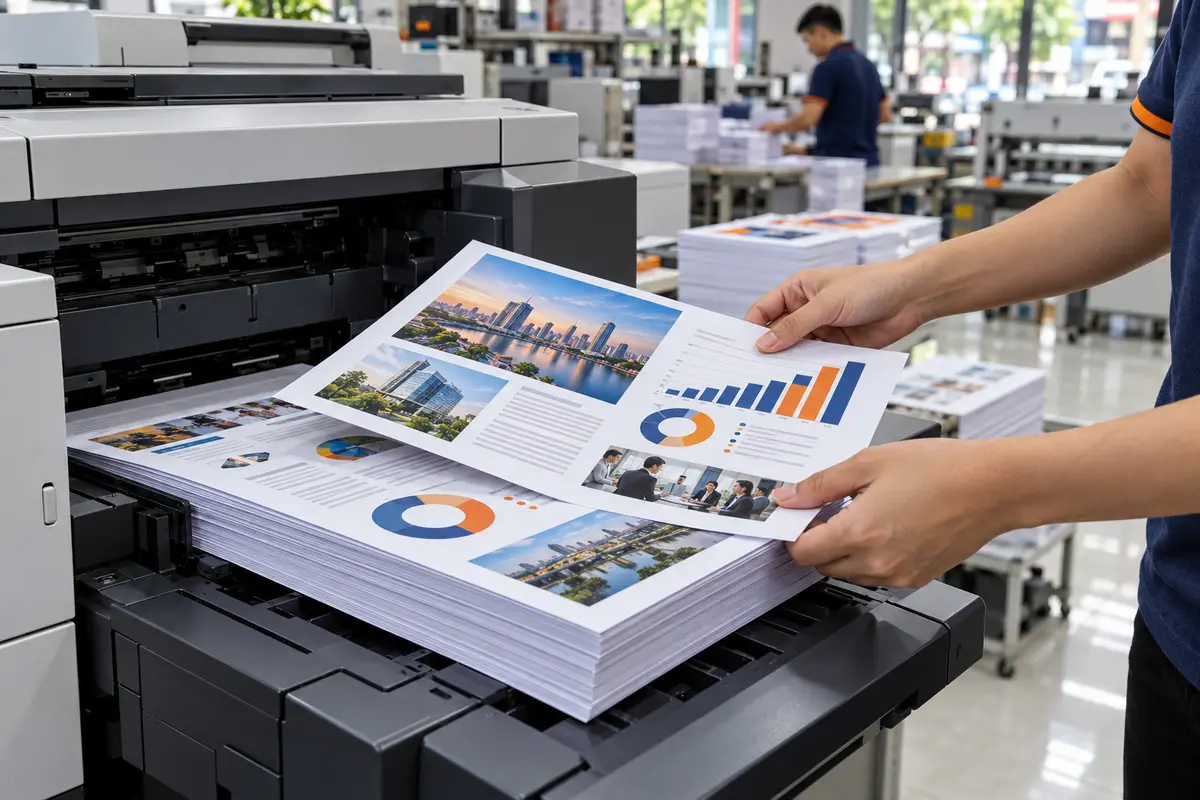
When the three templates are ordered in the same round, the combined total usually exceeds the offset threshold. So ordering all three at once is almost always cheaper than ordering each template one by one as needs arise.
Storage and distribution in the office
Letterhead stored long in a humid environment curls slightly at the edges, and curled sheets fed into a laser printer jam easily. Offices in high-rises usually have air conditioning so humidity is low, but storerooms or basements are different.
The correct way to store it is to keep it in the original paper wrapping, flat in a cabinet in a dry place. Do not stand reams upright because over time they curve along their height, and curved sheets easily jam at the flipping stage of duplex printers.
For distribution, many businesses have the administration department keep all the letterhead and issue it on request. This avoids one department using it all up while another still has stock.
- Keep it in the original paper wrapping, flat in a cabinet.
- Do not stand reams upright; they curve easily along their height.
- Administration keeps and issues it on each department's request.
- Record the amount issued each month to know the actual usage rhythm.
- Keep internal and external templates separate to avoid mixing them.
Recording the amount issued each month is a small but useful task. After a quarter, the business knows the actual ratio between the three letterhead templates and orders the next round by that figure instead of by guesswork.
Delivery and ordering letterhead printing in District 1
Workshop at 49 Mai Van Vinh, Tan Hung Ward, Ho Chi Minh City, and from here into District 1 via Kenh Te Bridge. Letterhead is packed by ream; orders of many reams need a scheduled time to use the goods lift when delivering into high-rises.
- Information 1: quantity of each template, first page, continuation page and internal template.
- Information 2: paper weight and number of print colours for each template.
- Information 3: the brand identity standard or logo file with colour codes.
- Information 4: receiving rhythm, building name, floor and recipient.
Even if the ratio between templates is not settled, a quote can be given by range and adjusted when settled. Send your request via Zalo to receive a quote split by template, convenient for submitting for approval.
Need printing or signage in Ho Chi Minh City?
In Quảng Cáo Q7 runs its own print workshop in Tân Hưng Ward (former District 7), Ho Chi Minh City, producing and installing signage, banners, window graphics, exhibition booths and event displays. Send us the size, material, quantity and a photo on WhatsApp and we will get back to you.

Phone: +84 866 511 099 · Also on WeChat
Workshop: 49 Mai Văn Vĩnh, Tân Hưng Ward, Ho Chi Minh City