




































































Alu: aluminum composite panels for signboards and facade cladding
Sep
What Alu Is and Why Every Shopfront Is Clad With It
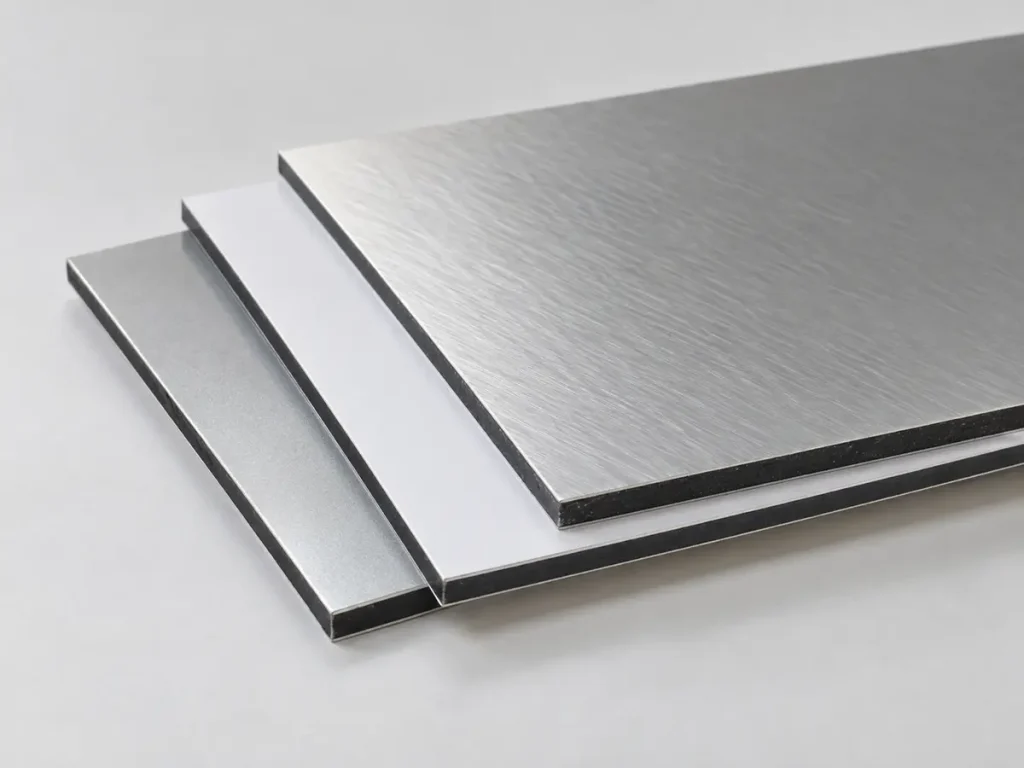
Alu — full name aluminium composite panel, abbreviated ACP — consists of two thin aluminium layers bonded on either side of a plastic core. This construction gives a panel that is both light and flat, does not rust and does not warp outdoors, making it the most familiar material for signboard faces and shop facade cladding.
This article covers the construction, surface types, two ways of applying graphics, facade installation and tips to keep the sign from rippling after a few sunny seasons. Some illustrative photos are used in this article.
Alu panel construction
Looking at the edge of the panel you can clearly see each layer:
- Protective film — a film pre-applied to the face, peeled off after installation.
- Colour coating — factory coating that determines the colour and gloss of the panel.
- Two thin aluminium layers — on both sides, providing stiffness and weather resistance.
- Plastic core in the middle — makes the panel much lighter than solid aluminium, and allows the edges to be folded into boxes.
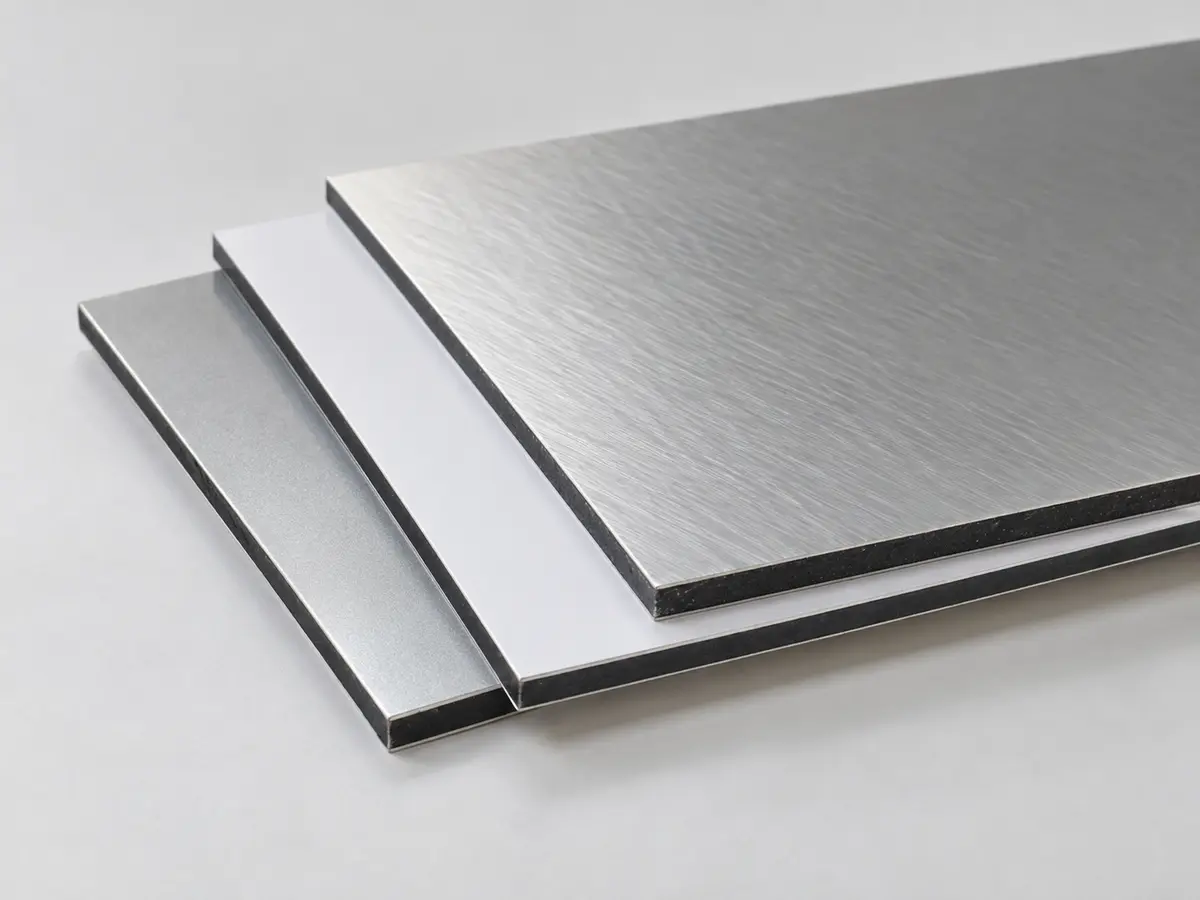
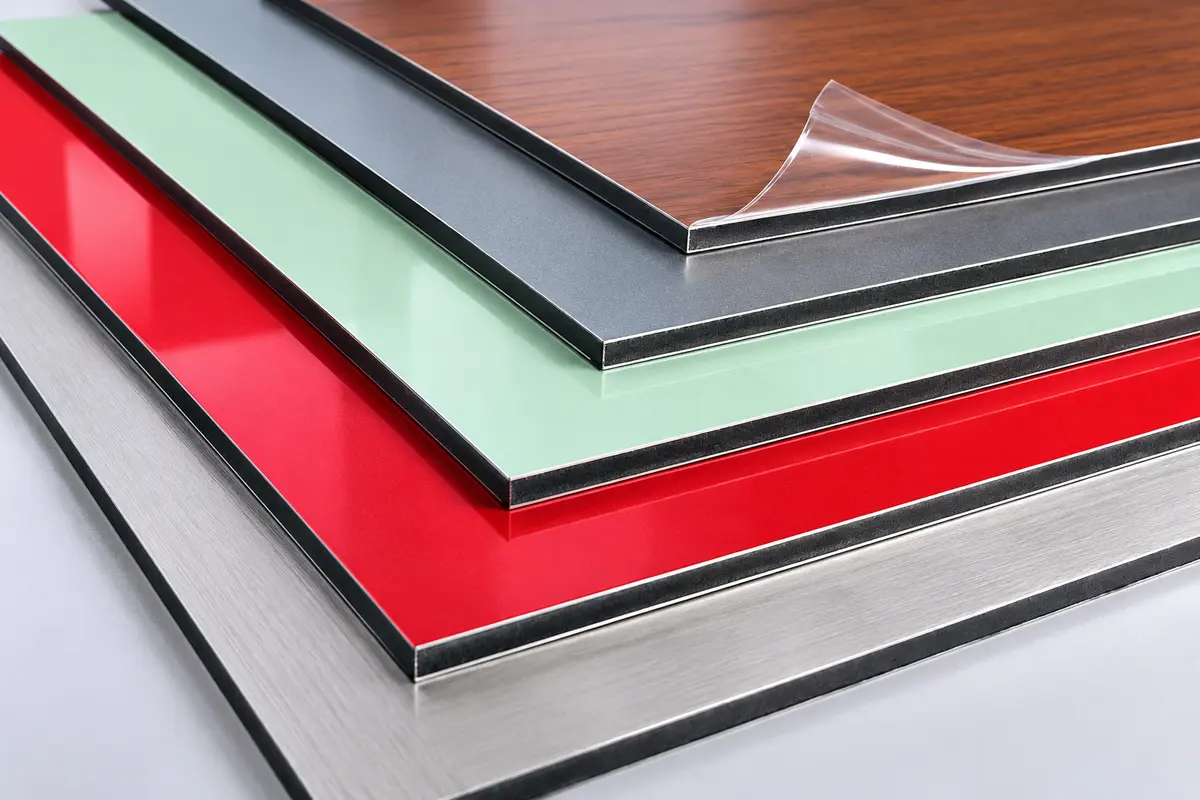
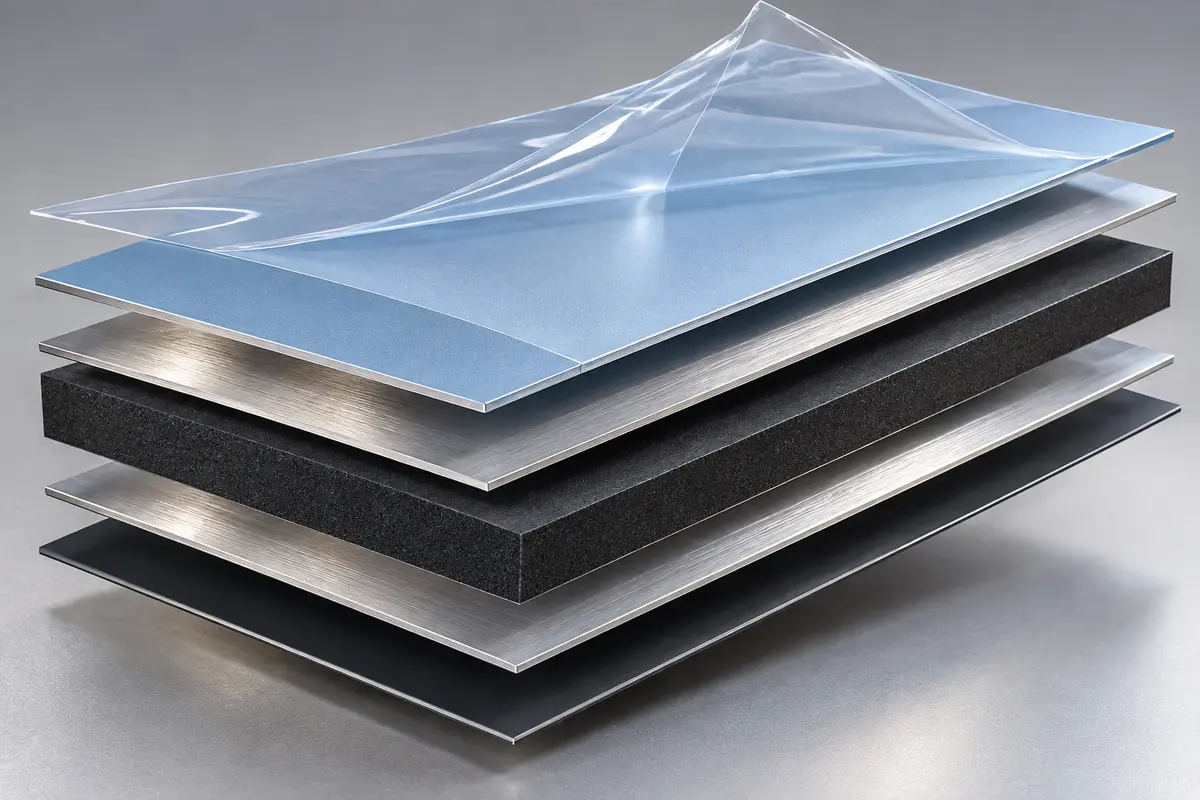
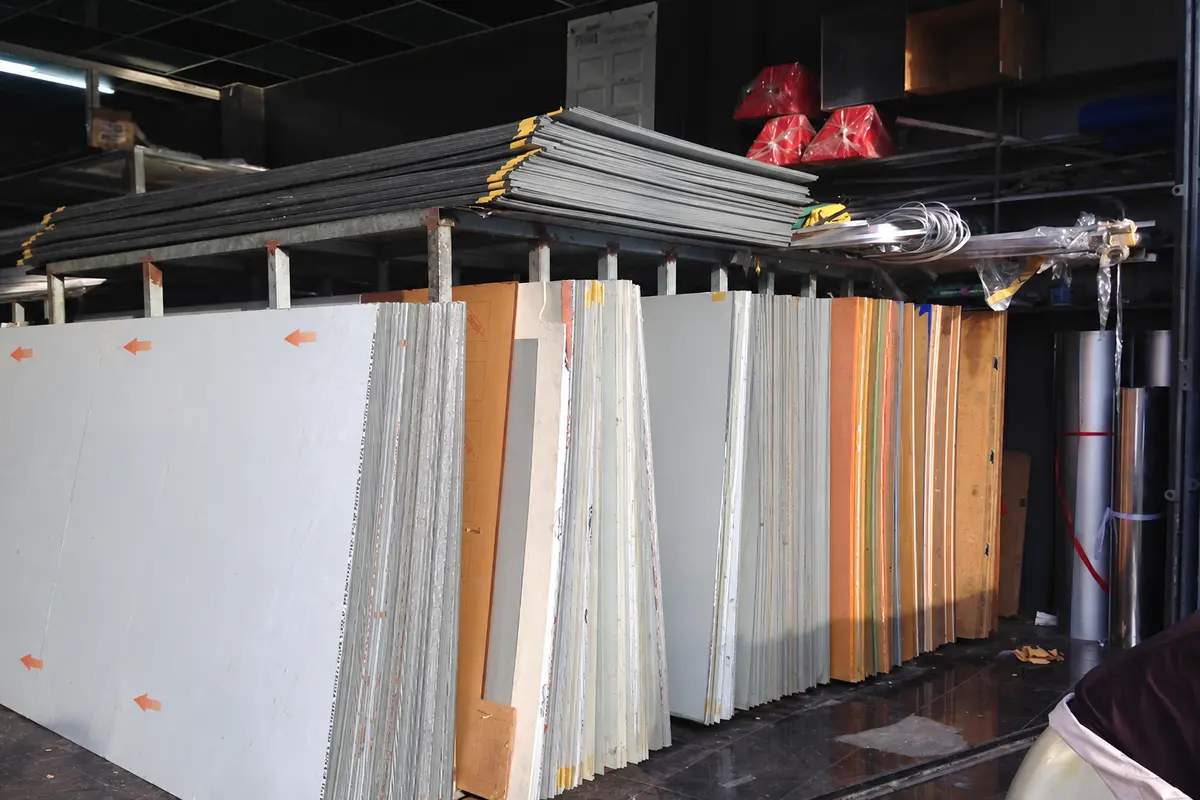
It is the plastic core that lets Alu do what solid aluminium sheet struggles with: groove the back and fold it at right angles to form boxes and rounded edges — so the facade looks like one solid block with no rough joints.
Thickness and surface types
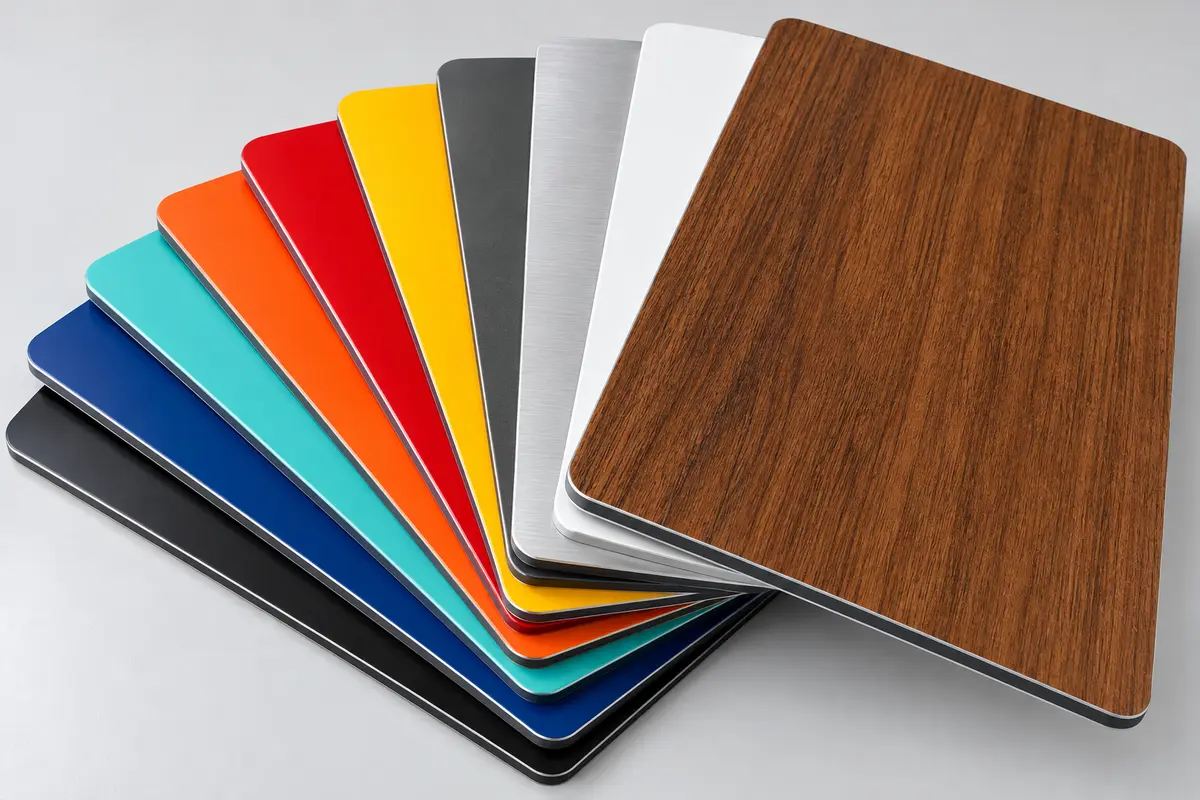
3mm thickness is the common type for signboards, facade cladding and light boxes. For surfaces, there are three commonly used groups:
| Surface group | Includes | Commonly used for |
|---|---|---|
| Solid colours | Milky white, black, grey, red, blue and other pre-coated colours | Signboard faces, facade cladding, backgrounds for 3D letters |
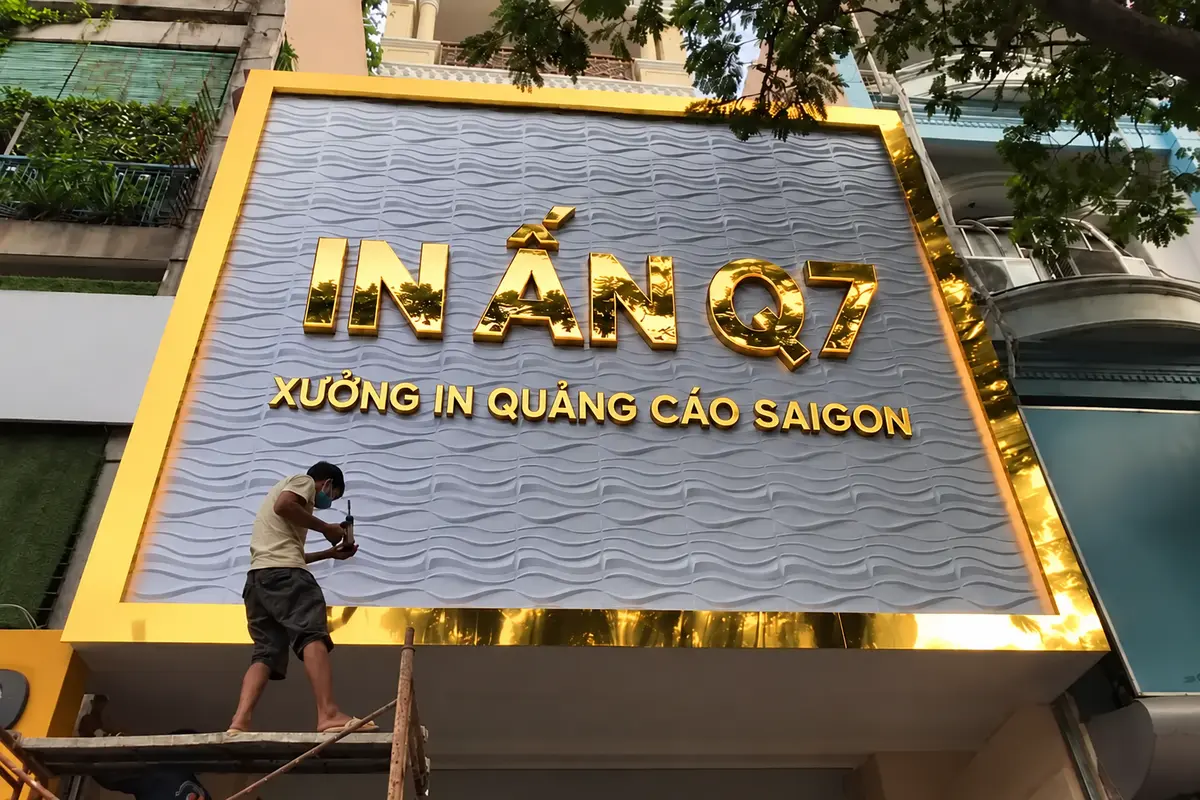
| Metallic | Brushed silver, brushed gold, mirror | Company name plates, logos, decorative trims |
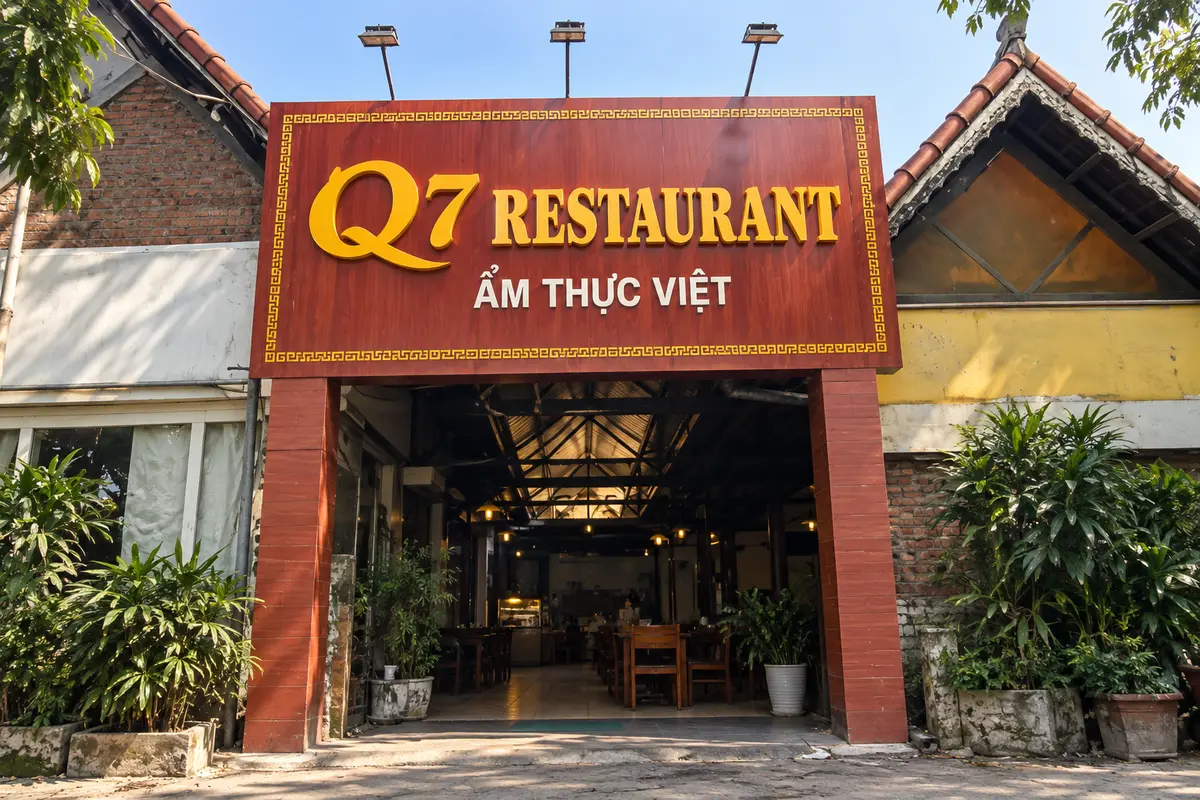
| Textured | Wood grain, embossed texture | Restaurant and café signboards, warm spaces |
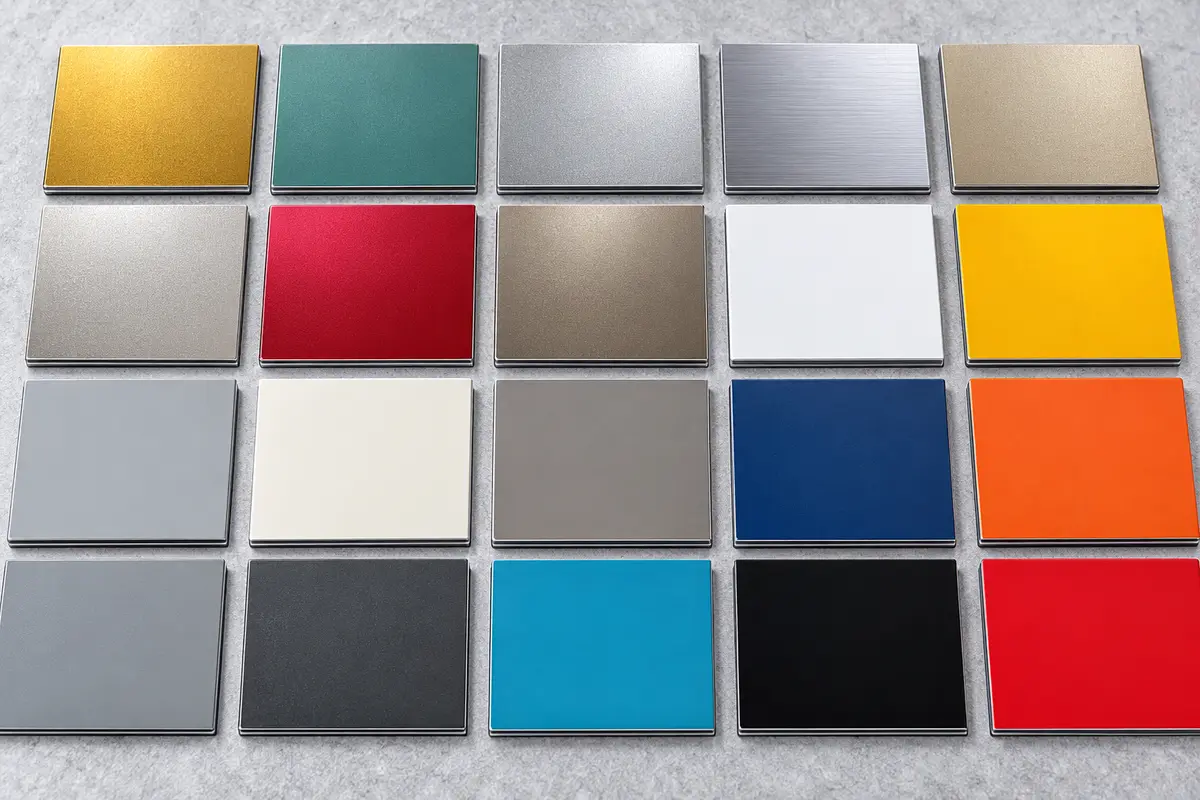
The colours are coated at the factory, so they are consistent between panels — this is why a large facade made of many panels still looks uniform in colour. When ordering, choose the colour code on the sample chart rather than describing it in words, because the same word “blue” covers several different codes.
Two ways of applying graphics to the panel face
- Applying decal to the Alu face — flexible, easy to change content, low cost. After a few years outdoors the edges may peel, especially at the sides and corners.
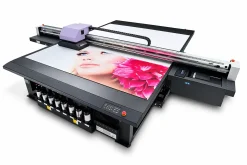
- Direct UV printing — the ink bonds straight onto the surface with no intermediate layer, so it is more durable and smoother.
Quick choice: if the content changes by campaign or the budget is limited, use decal; for a signboard made once to last many years, especially a shopfront in direct sun, UV printing is better value.
Besides Alu, our UV printer also prints directly on metal roofing sheets, glass, acrylic mirror, wood, tiles and stone, stainless steel, copper and brushed aluminium. For dark or transparent materials, an extra white ink base layer is needed for the colours to come out right.
CNC cutting, edge folding and 3D letters
- CNC contour cutting — cut the panel into any shape, make block letters and separate logos.
- Grooving and edge folding — form boxes and rounded edges so the facade looks solid.
- Screwing onto a steel frame — fixes the panels onto the supporting frame behind.
- Joining panels — large facades join many panels, with the joints planned to become design lines instead of flaws.
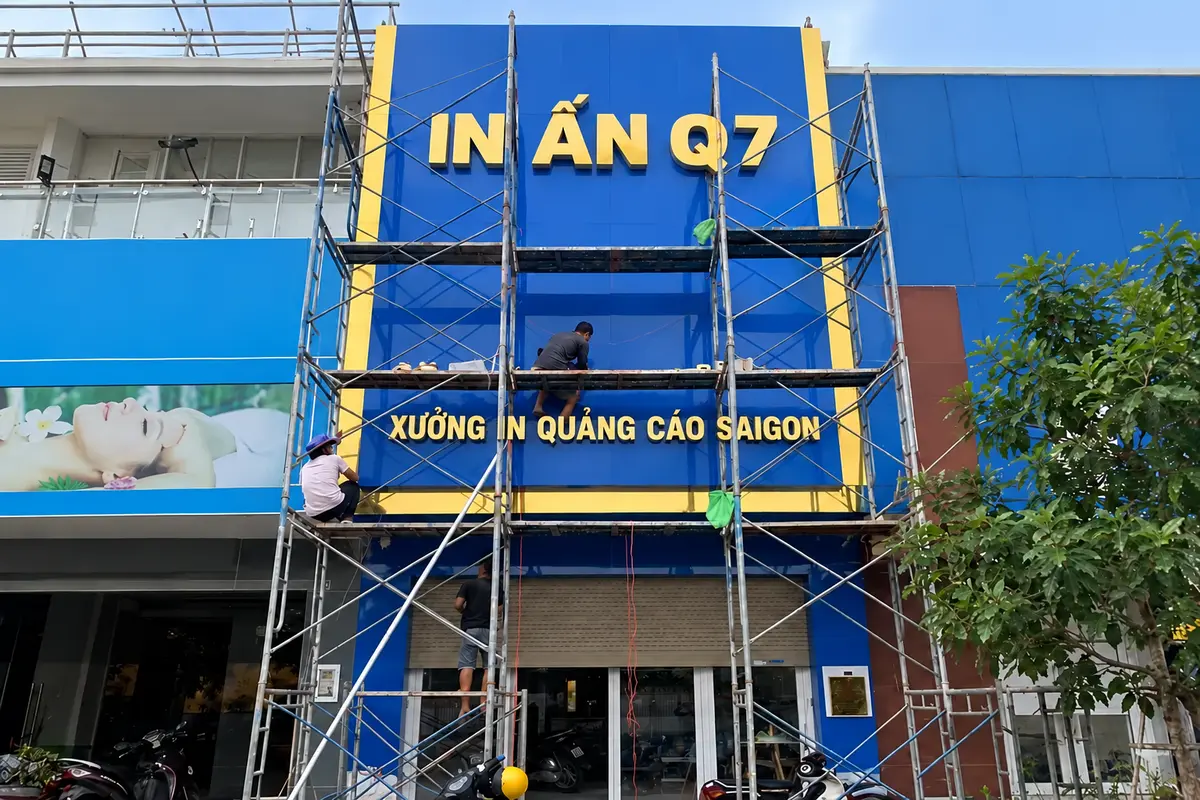
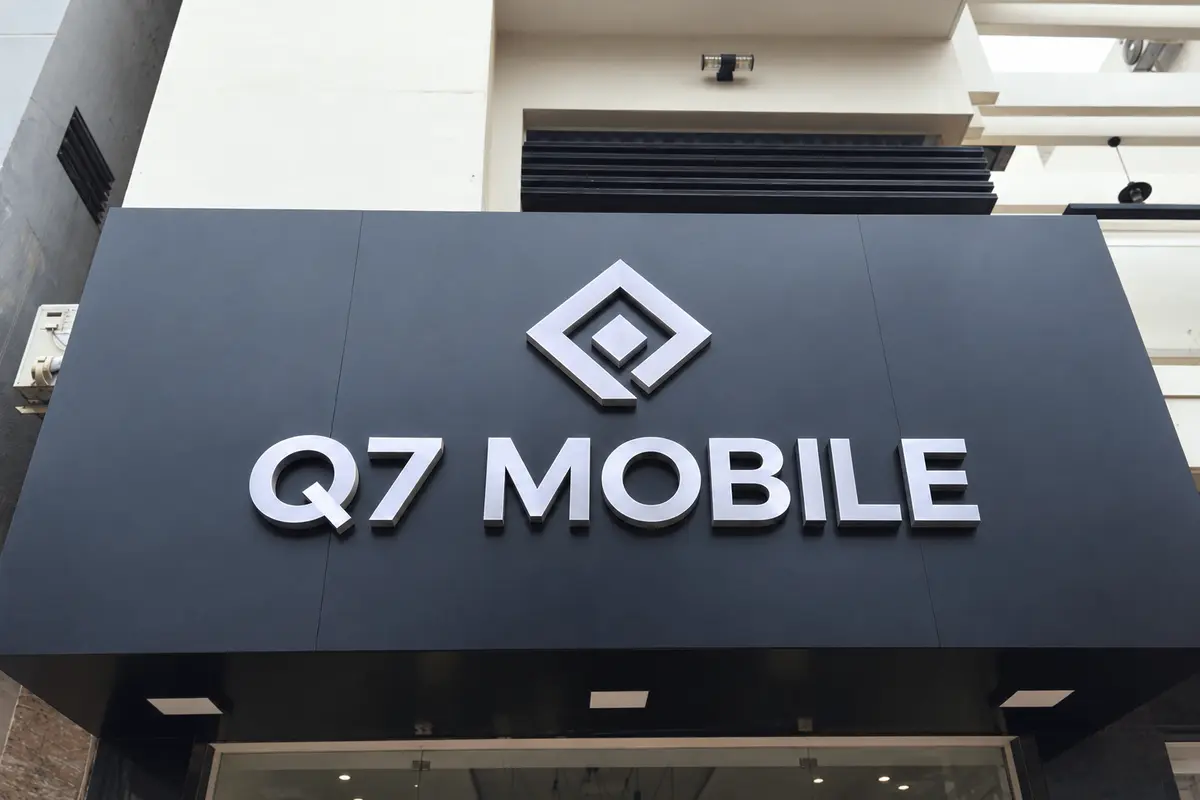
3D letters mounted on an Alu background is the most common construction: the panel forms the signboard face, and the letters are cut separately from acrylic or from the Alu panel itself and mounted on top, creating relief and shadows under spotlights.
Common applications
- Flat signboards — panel stretched over a frame, with full-face UV printing or decal.
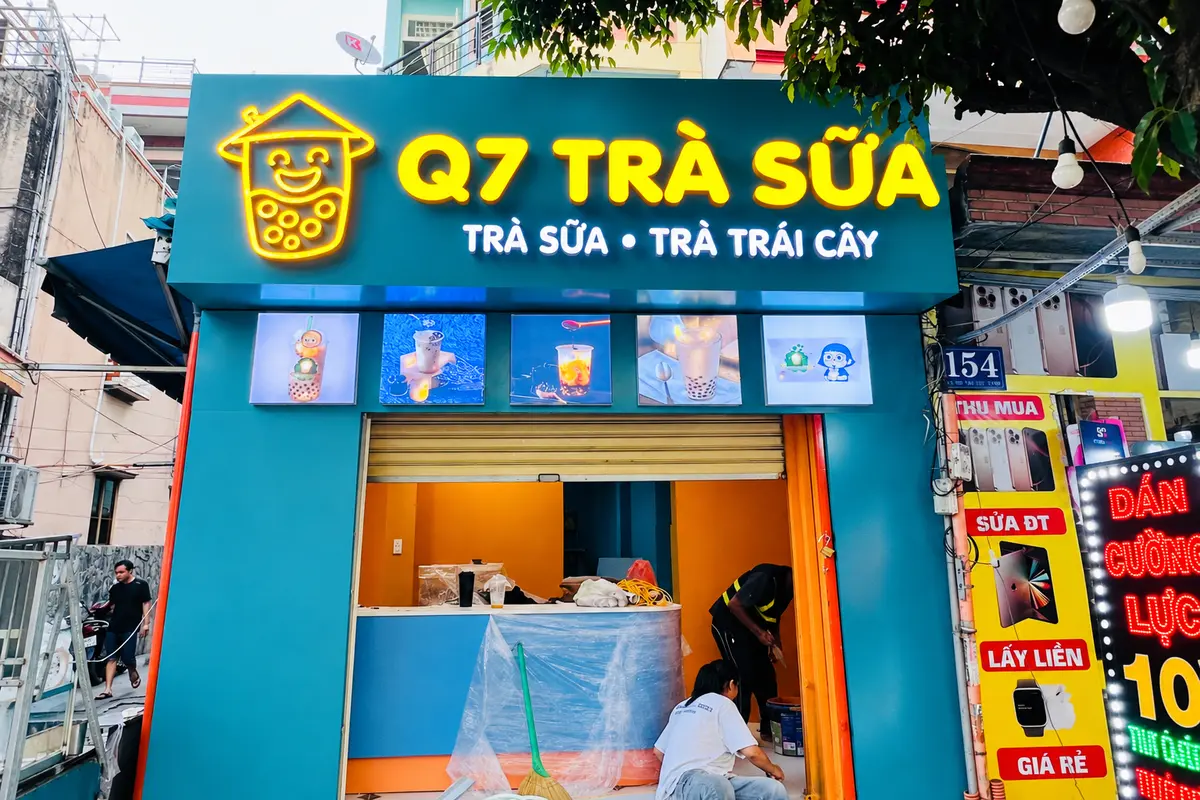
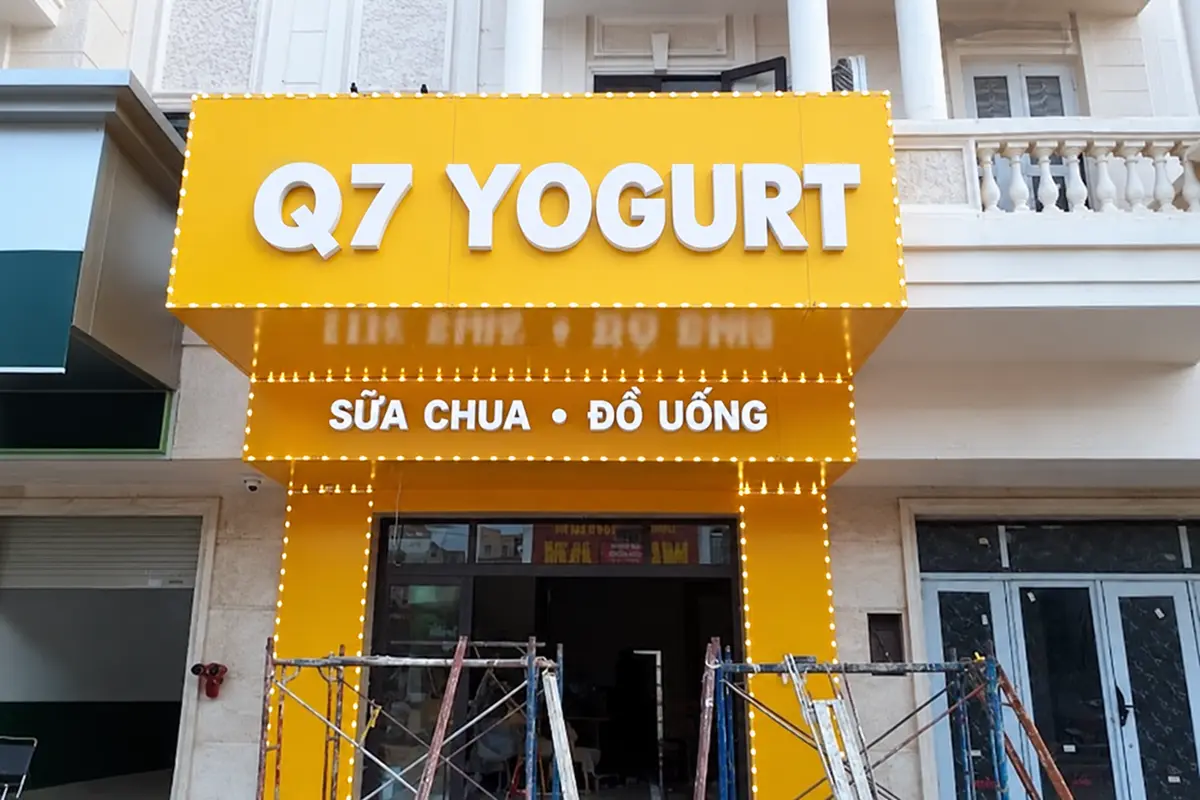
- Signboards with 3D letters on an Alu background — the most ordered style for street-front shops.
- Facade, column and reception counter cladding — covering the entire shopfront or a large wall area.
- Company nameplates — using brushed or mirror panels for a metallic feel.
- Light boxes — Alu forms the frame and sides, with the front face made of backlit banner.
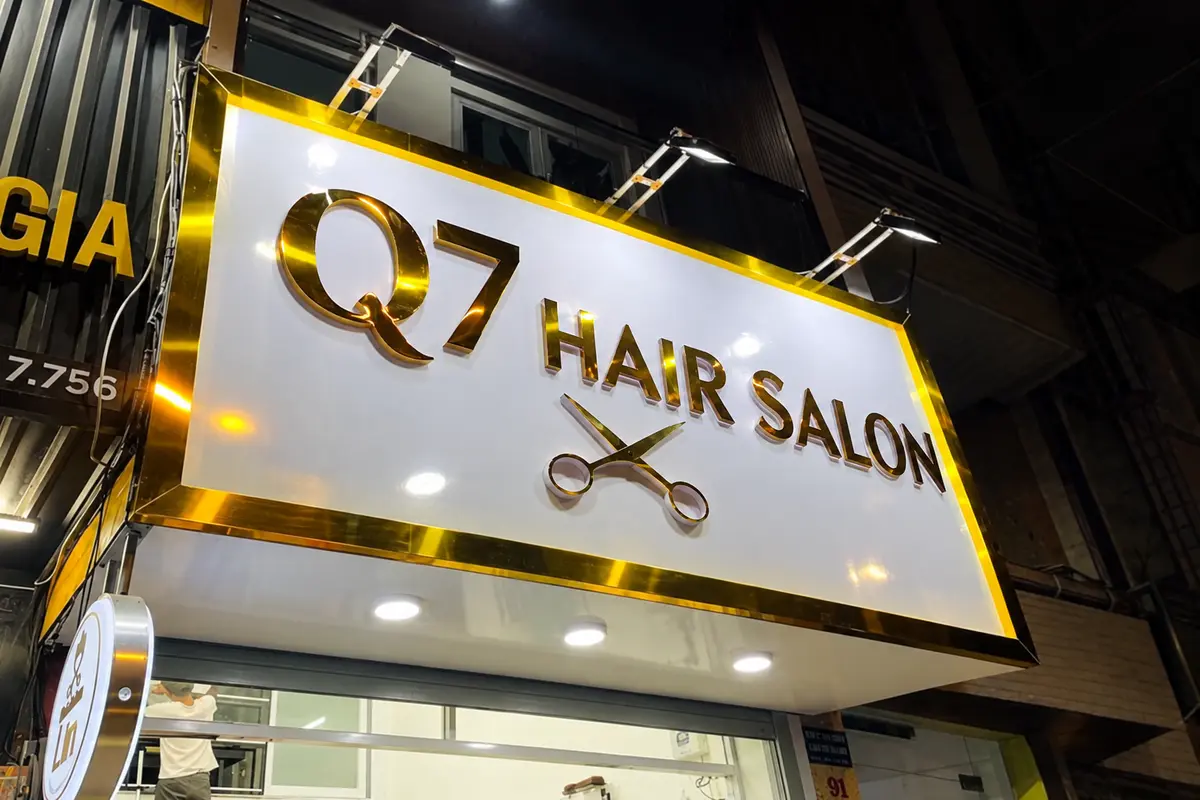
- Facade combined with stainless steel trim — gold or silver trim running around the panel area, creating an accent.
Related products

Advertising signs

Flatbed UV

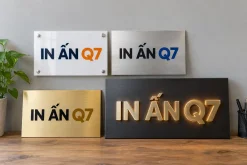
Company nameplates

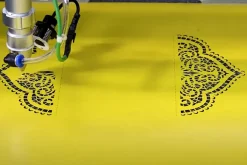
CNC cutting
Suggestions by industry
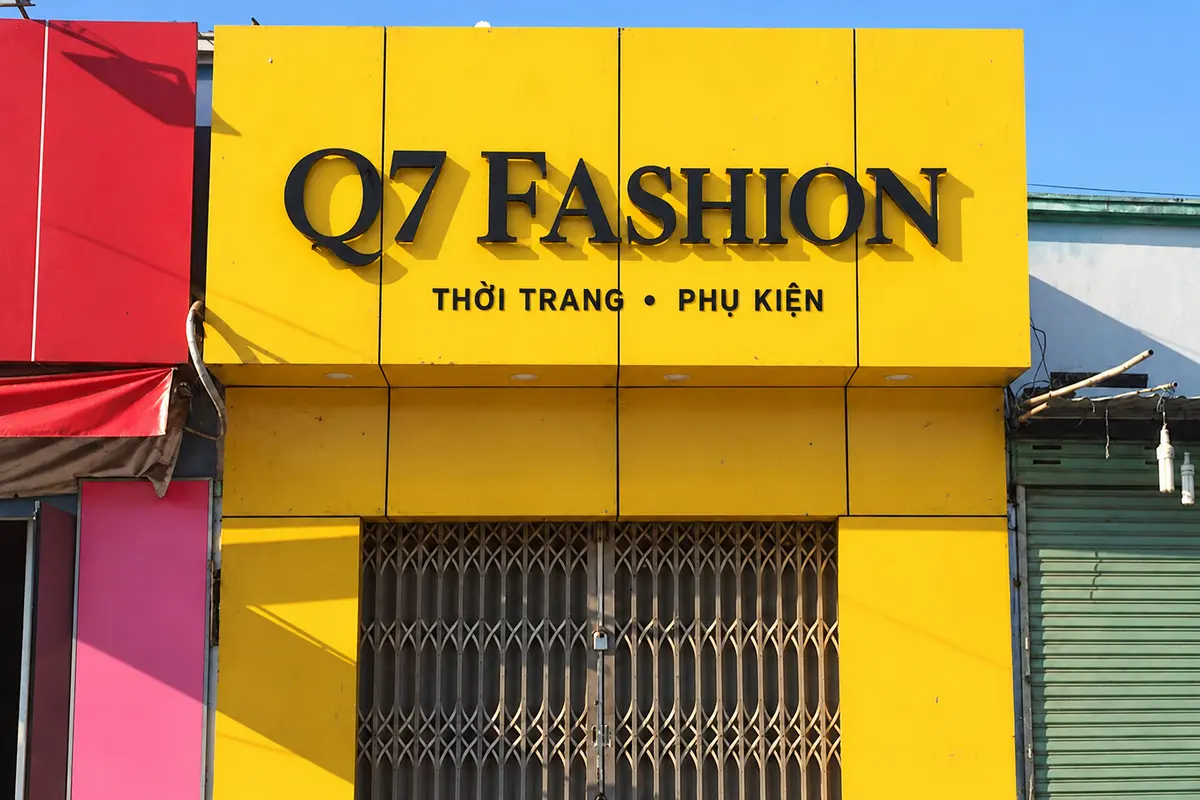
- Street-front shops — clad the whole shopfront in one colour and add contrasting 3D letters; this is the safest formula and the easiest to recognise from a distance.
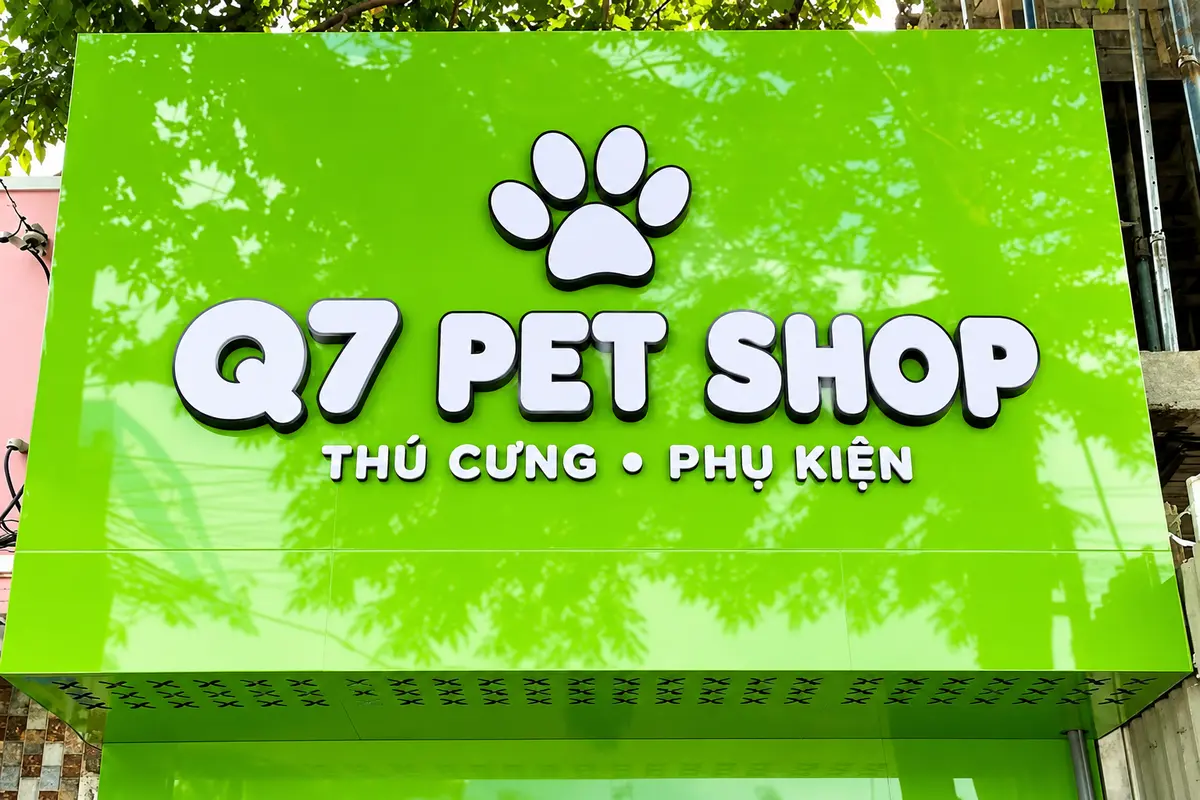
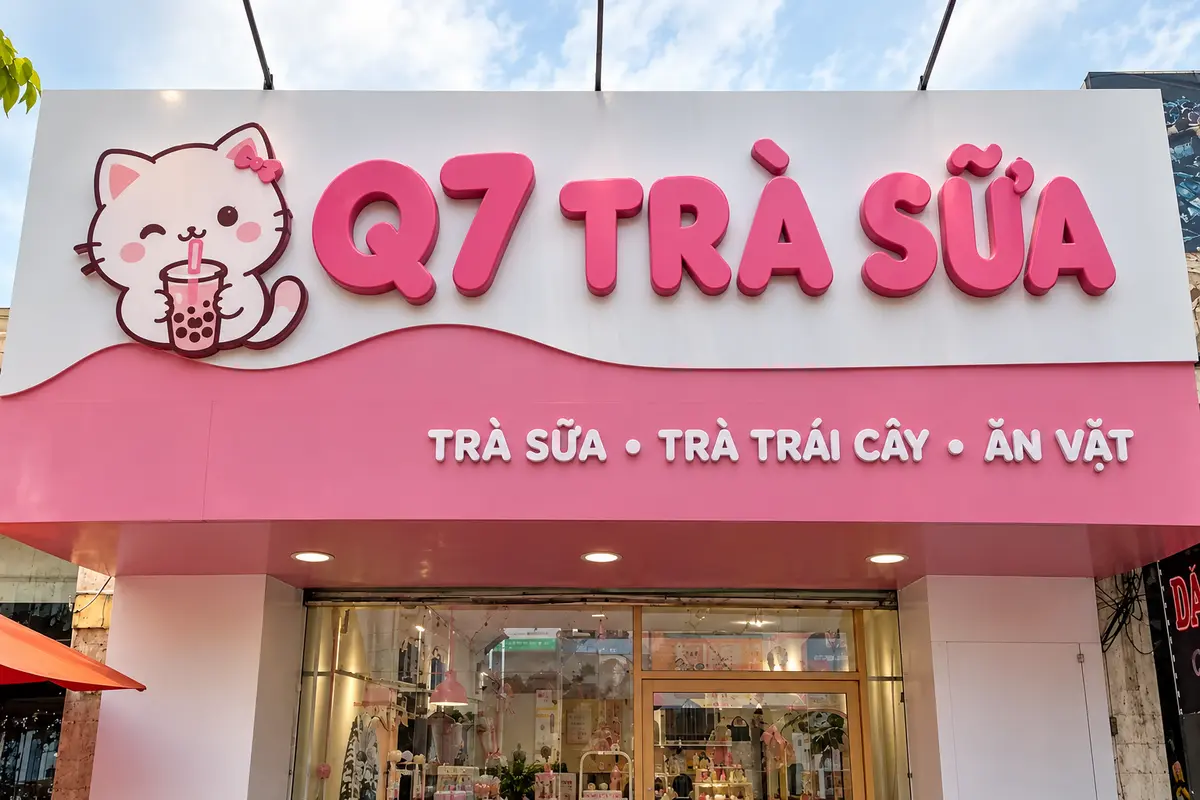
- Milk tea shops, fast food restaurants — bright colours such as pink, orange or green combined with white 3D letters; plan the position of the wash lights at the design stage.
- Restaurants, cafés — wood grain panels give a warm feel, combined with bronze gold 3D letters.
- Hair salons, spas, beauty clinics — a light background with metallic trim, metal 3D letters and spotlights; evening is when the sign looks its best.
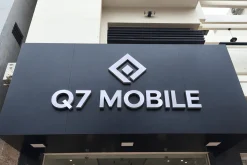
- Phone and electronics shops — black or dark grey background with silver 3D letters, looking neat and professional.
- Offices and showrooms — brushed or mirror name boards in the lobby, with matching column and reception counter cladding.
Facade installation
- Survey and measurement — measure the actual site, check the wall, the canopy and the electrical points.
- Finalise the drawing — panel layout, joint positions, 3D letter and light positions.
- Build the steel frame — the frame behind keeps the panels flat and withstands wind.
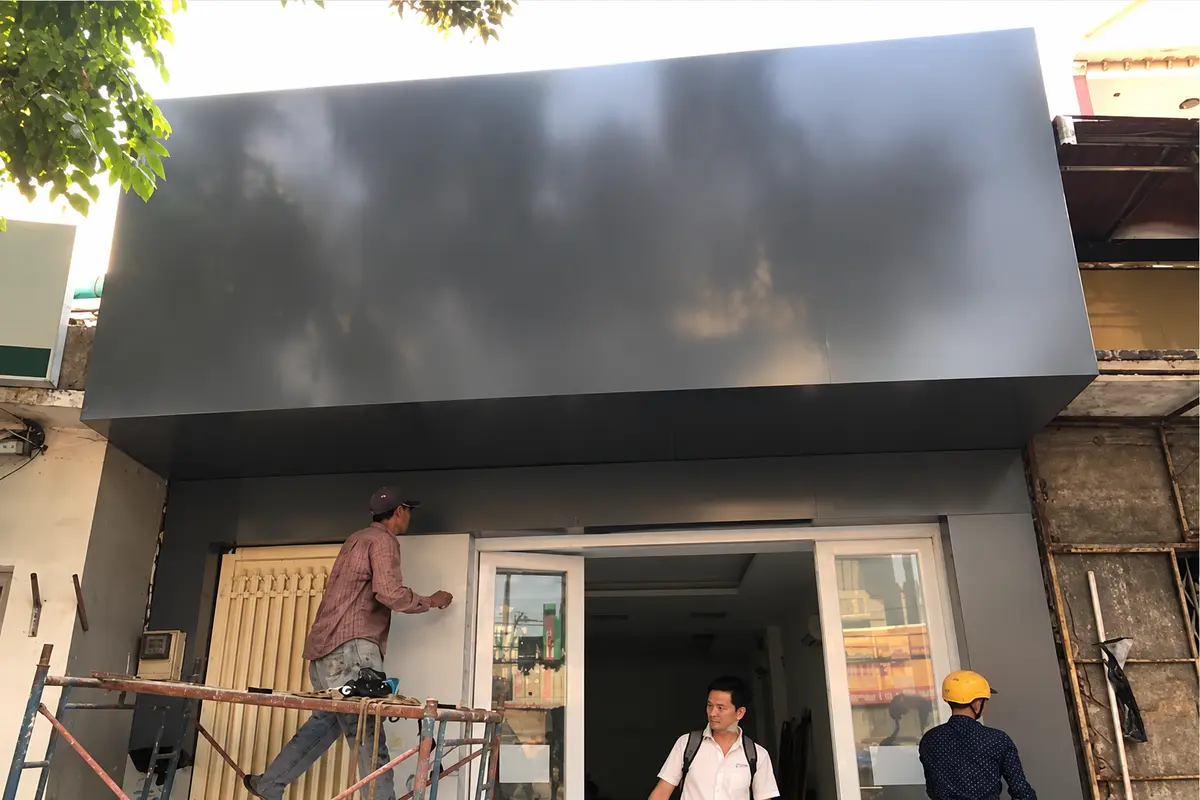
- Clad the panels and fold the edges — screwed or glued according to the agreed plan.
- Install the 3D letters and lights — align the letter spacing, run the wiring, test the lights in the evening.
- Peel off the protective film and clean — the final step, done after everything else is finished.
We take on-site measurement, production and installation as a full package. Send us photos of the site or book a survey visit; call 0866.511.099.
Most of the time for a facade order goes into the frame and installation, not into cutting the panels. So when planning an opening, work backwards: survey and finalise the drawing first; production and installation usually take a few days depending on the area and height of the shopfront.
Tips for a durable, flat sign
- Large signs must have a steel frame behind them — without a frame the panel will ripple in strong sun, which is very noticeable.
- Screw points at least 15mm from the edge and marked in advance on the drawing.
- Cutting files in vector format, with the cut lines separated from the print.
- Leave expansion gaps between panels — metal expands when hot; panels joined too tightly will be pushed into a bulge.
- Peel off the protective film after installation — but do not leave it too long in the sun; film left too long is hard to peel and leaves adhesive behind.
What the cost depends on
A quote for an Alu facade is not just the cost of the panels. The parts that make up the cost:
- Facade area — calculated per square metre, including the folded edges, so the installed area is usually larger than the visible area.
- Steel frame — the part you cannot see but which decides whether the sign stays flat over time; do not cut back on this.
- Surface type — solid colours are the cheapest; metallic and wood grain cost more.
- 3D letters — priced by the number of letters, letter height, letter material and whether they are lit.
- Lights and electrics — wash lights, edge lights, lights inside the letters; plus wiring, power supply and wiring labour.
- Installation conditions — tall shopfronts need scaffolding or a lift, and work outside hours according to building regulations.
So instead of asking the price per square metre of Alu, send us photos of the site and describe what you want so we can break down each item — the final figure will be much closer to reality.
Compared with other signboard materials
| Material | Strengths | Best when |
|---|---|---|
| Alu | Stiff, flat, weather-resistant, large sizes | Facades, shopfront signboards, column cladding |
| Mica (Acrylic) | Clear, glossy, edges can be polished | Lobby name boards, logos, indoor signs |
| Formex | Light, cheap, easy to CNC cut | Display boards, menus, indoor backdrops |
| Hiflex Banner | Very large sizes, low cost | Banners, awnings, large light box faces |
Rule of thumb: large flat outdoor surfaces that must last many years use Alu; small details that need clarity and a premium look use acrylic (Mica); indoor signs that need to be light and cheap use Formex.
Common mistakes when making Alu signs
- Skipping the steel frame to save money — the sign is flat when first installed, but after one sunny season it ripples and cannot be neatly fixed.
- Choosing colours from photos on a phone — screen colours are quite far off; always choose from the real sample chart.
- 3D letters too small for the viewing distance — on a high sign, small letters cannot be read in time by passers-by.
- Not planning light positions from the start — adding lights later usually means drilling the sign face again, leaving marks.
- Joining panels tightly without gaps — metal expands when hot and pushes the panels into a bulge.
- Forgetting to get permission to hang the sign — many streets and buildings have their own rules on signboard size, so ask before production.
Storage
- Wipe with a soft damp cloth; avoid hard brushes and abrasive powders because they scratch the colour coating.
- Outdoor shopfronts should be washed regularly every few months; dust left for a long time dulls the colour.
- Check the screws and folded edges again after the first rainy and stormy season.
- For decal signs, watch the edges and corners — this is where peeling starts first; caught early, it can be re-applied.
Frequently asked questions
Is Alu different from aluminium sheet?
Yes. Alu is a composite panel of two thin aluminium layers sandwiching a plastic core; it is lighter and the edges can be folded. Solid aluminium sheet is much heavier and cannot be formed into boxes by grooving and folding like that.
How long does an Alu sign last outdoors?
The panel itself withstands sun and rain very well and does not rust. What deteriorates first is usually the decal applied on the outside or the screws, so a UV-printed sign with a good steel frame lasts much longer.
What should 3D letters on an Alu background be made of?
Acrylic (Mica) letters give sharp edges and many colours; letters cut from the Alu panel itself give a metallic look that matches the background; stainless steel letters suit premium signs. We advise based on the sign style and your budget.
Can you make curved facades?
Yes, for slight curves, by grooving the back and bending it to the frame. Sharp curves need a dedicated frame design, so a site survey comes first.
Can a rippled sign be fixed?
It is usually caused by a missing steel frame or panels joined too tightly. It can be fixed by adding framing and widening the expansion gaps, but it takes more work than doing it right from the start.
Do you measure and install on site?
Yes, we handle the full package from survey and measurement to production and installation. Send us photos of the site so we can picture it before the survey visit.
Installation time and how to order
A facade job is not finished in a day. Most of the time goes into measurement and fabrication at the workshop, while installation on site is usually much faster than customers imagine.
| Step | Typical time | Who does it |
|---|---|---|
| Survey, site measurement | Half a day | Workshop technicians come to the site |
| Draw up the design and finalise the panel colour | 1 to 2 days | Design team, customer approves |
| CNC cutting and edge folding at the workshop | 2 to 4 days depending on the area | Workshop |
| Build the frame | Done in parallel with the step above | Workshop |
| Installation on site | 1 to 2 days | Installation team |
| Peel off the protective film, handover inspection | End of the installation session | Installation team and customer |
The step that most often drags on is finalising the colour. Each panel code gives a different shade under sunlight and under lights, so look at real samples outdoors before deciding, rather than choosing from photos.
If the premises are under renovation, leave the panel cladding until last. Cement dust and wall paint stuck on the panel face are very hard to clean, and the protective film cannot cover the whole construction process.
When ordering, send photos of the shopfront, the width and height, and the logo in vector format if available. We survey the site, then send a drawing and quote; production starts only after approval.
What to agree on before starting
Before finalising the plan, the few questions below help the customer and the workshop understand each other from the start and avoid surprises halfway.
- Are the premises rented or owned, and how long is left on the lease — this decides a reasonable level of investment.
- Is drilling into the wall allowed, or must it be fixed to a separately built steel frame?
- Are there windows or ventilation openings behind the facade that need to be left open?
- Does the sign need lighting at night, since the wiring has to be run before cladding it closed?
- How many metres high is the installation, and is a lift or scaffolding needed?
- Does the area have its own rules on signboard size?
Answering these questions early helps the drawing match reality the first time. Most cases of rework come from discovering a problem after the panels have already been cut to the old dimensions.
Order Alu signboard installation at In Quảng Cáo Q7
Send photos of the site with the planned dimensions and the colours you want, and we will come for a survey, draw up the design and give a full-package quote including the frame, panels, 3D letters and lights. Contact 0866.511.099 or drop by the workshop at 49 Mai Van Vinh, Tan Hung Ward, Ho Chi Minh City. Production & delivery: 8:00–12:00 & 13:00–18:00 Mon–Sat (closed Sun) · Consultation & orders: 8:00–12:00 & 13:00–20:00 Mon–Sat; 14:00–19:00 Sun.
View directions to the workshop on Google Maps
Need printing or signage in Ho Chi Minh City?
In Quảng Cáo Q7 runs its own print workshop in Tân Hưng Ward (former District 7), Ho Chi Minh City, producing and installing signage, banners, window graphics, exhibition booths and event displays. Send us the size, material, quantity and a photo on WhatsApp and we will get back to you.

Phone: +84 866 511 099 · Also on WeChat
Workshop: 49 Mai Văn Vĩnh, Tân Hưng Ward, Ho Chi Minh City
See also: close-up of mirror-gold alu letters used for a signboard — real footage at our workshop.