




































































Hiflex Banner Types, Edge Finishing and Hanging Methods
Sep
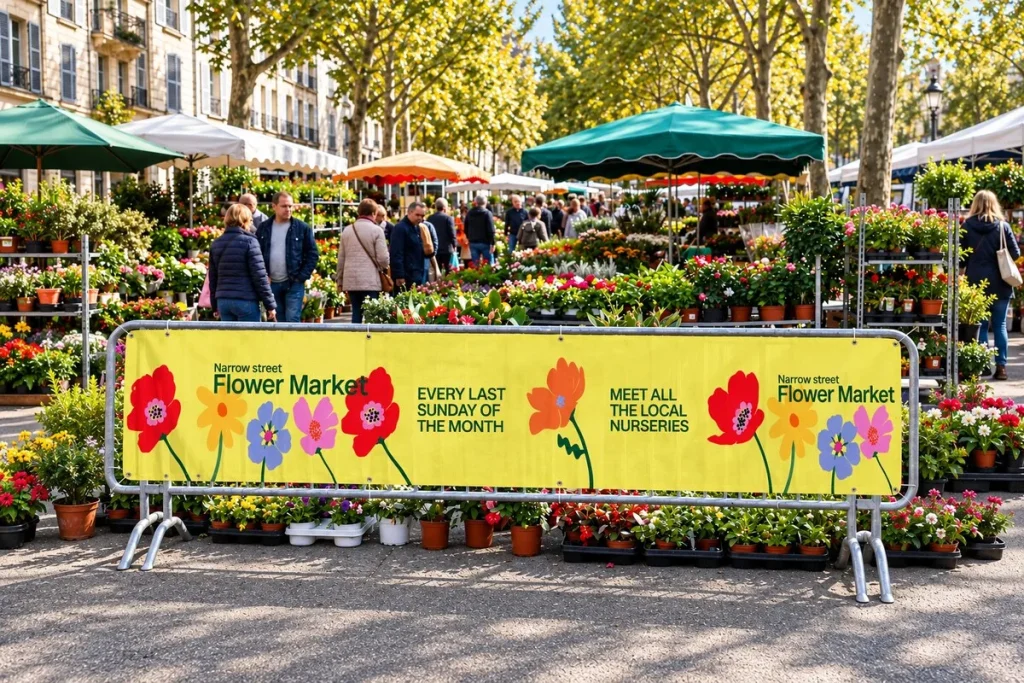
Hiflex banner is the most widely used outdoor advertising material in Vietnam. But Hiflex banner types are not all the same: standard white banner, backlit banner, double-layer blockout banner and ribless banner are all Hiflex, and using the wrong type means the hung banner will not deliver the desired effect.
In this article In Quảng Cáo Q7 clearly explains each banner type, the difference between solvent ink and UV printing, edge finishes and hanging methods — with real photos so you can choose correctly from the start.
What is a Hiflex banner made of?
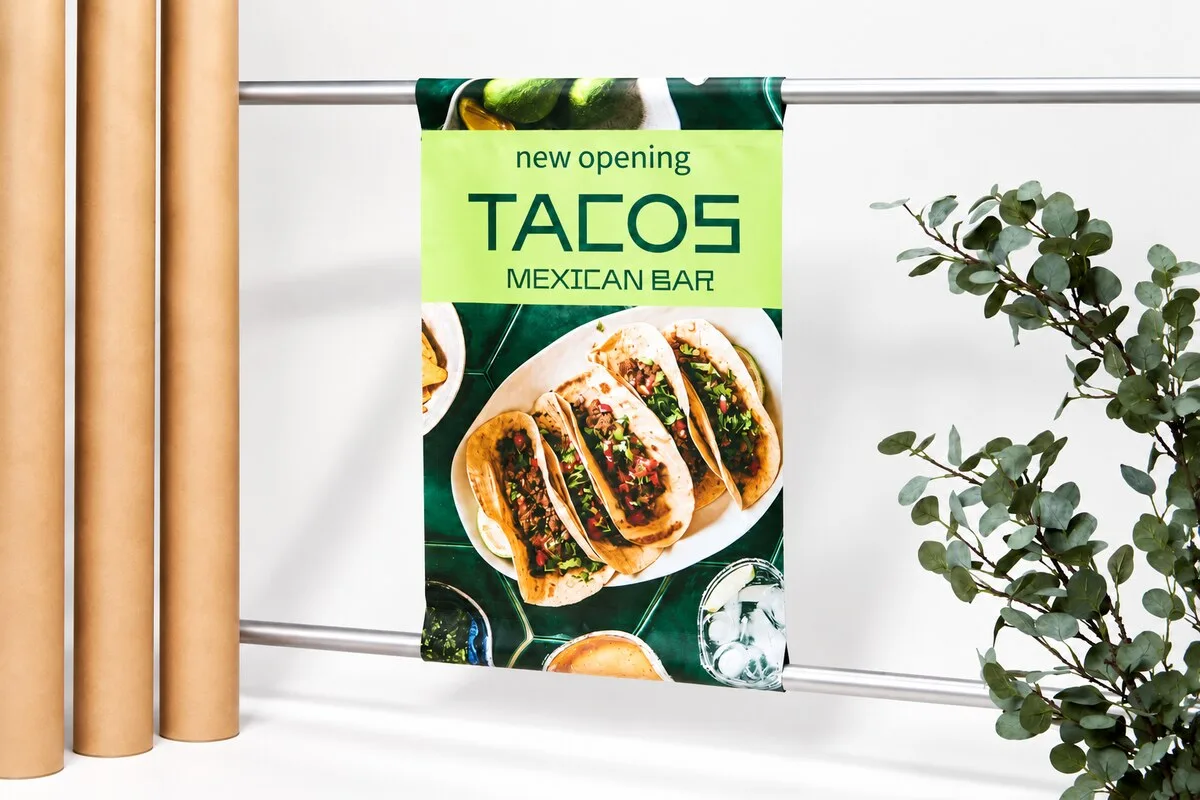
A Hiflex banner has a core of woven fiber mesh, coated with PVC on both sides. The mesh keeps the banner from tearing when stretched, while the PVC coating holds the ink and keeps water out. Banners come in rolls 1.5m – 3.2m wide, so a continuous piece tens of meters long can be printed with only one seam when it exceeds the roll width.
Two numbers you will often hear when asking for a price:
- Roll width (1.5m / 2.5m / 3.2m) – the maximum width of the roll. A 3.2 banner means a 3.2m roll.
- Weight (280g, 300g, 340g/m²) – the heavier the banner, the thicker and more durable it is and the better it handles wind, but the higher the price.
Hiflex banner types – which one to choose?
White 3.2z 300g banner – the standard type
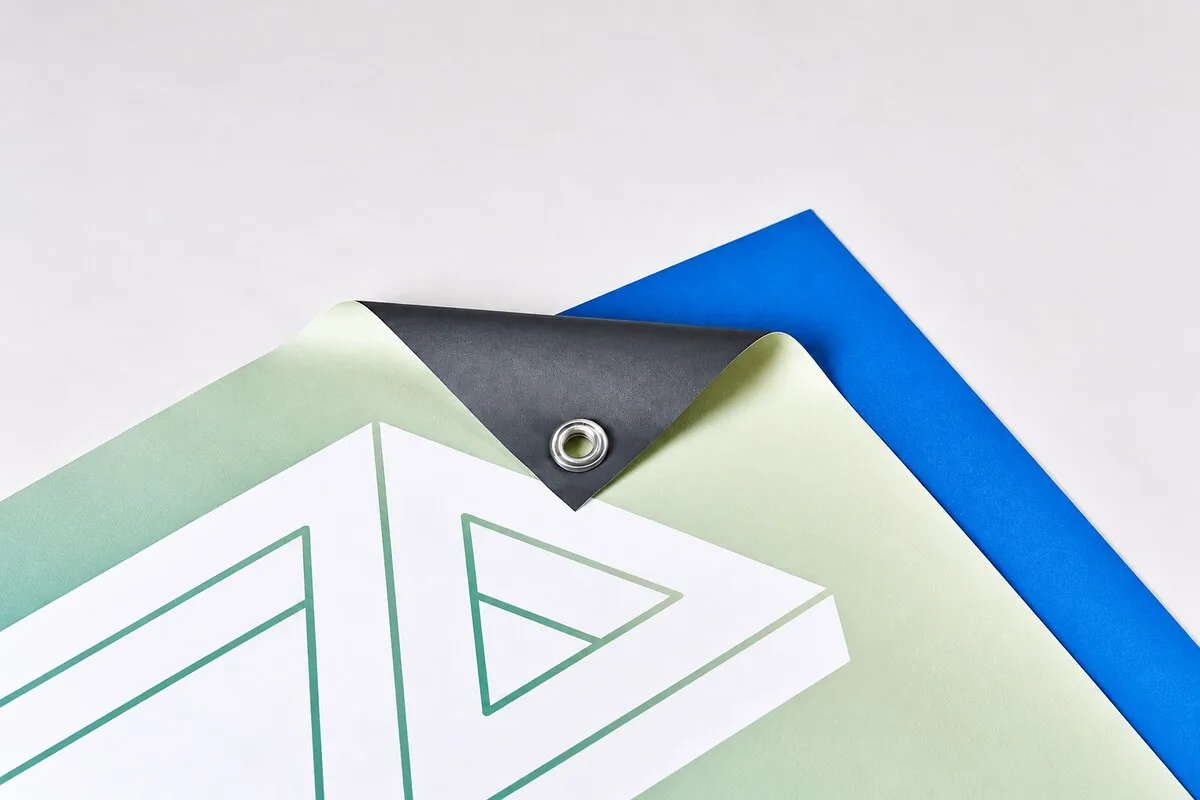
This type makes up most orders: one white side for printing, a light grey back. Used for banners, shopfront signs, construction covers and outdoor event backdrops. Lasts about 1–2 years under Ho Chi Minh City sun and rain.
Backlit banner
A milky white banner that lets light through evenly without blotches. Only use it when lit from behind – i.e. for light box faces and signs with lights inside. Hung outdoors without lighting, a backlit banner looks pale and shows shadows of objects behind it.
Grey double-sided banner (blockout banner)
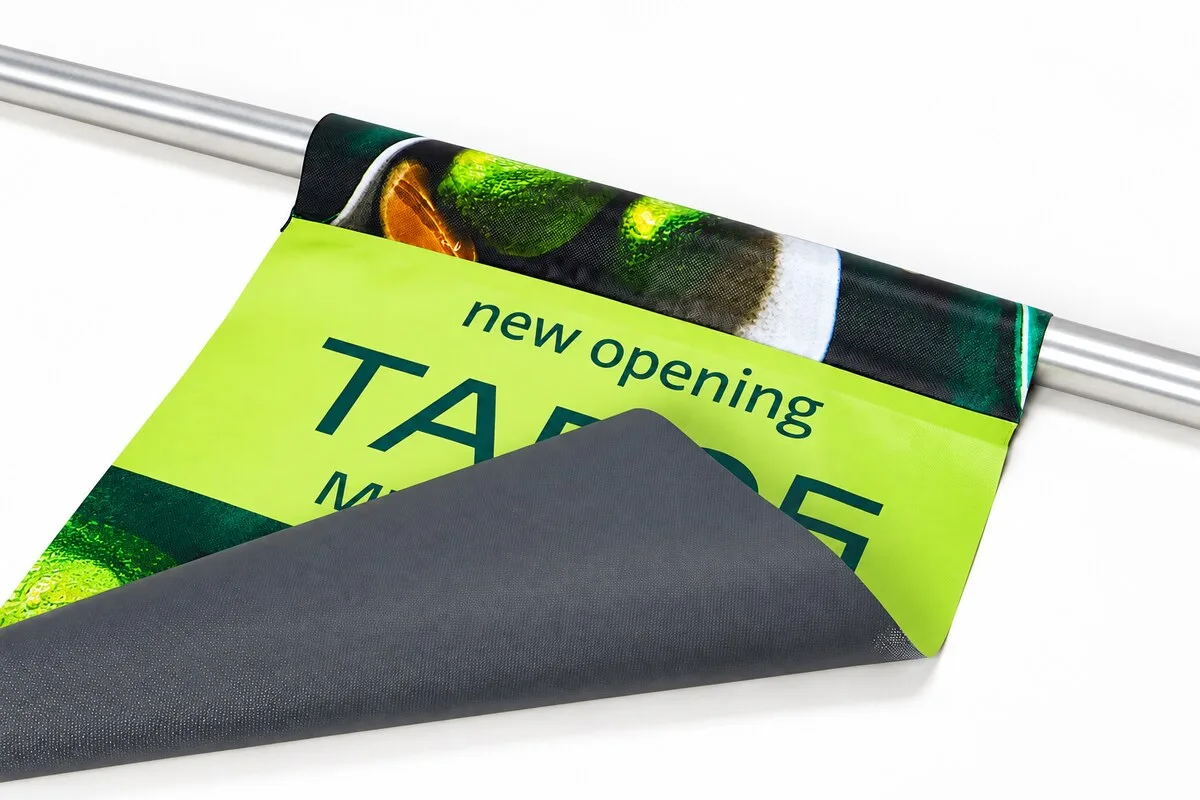
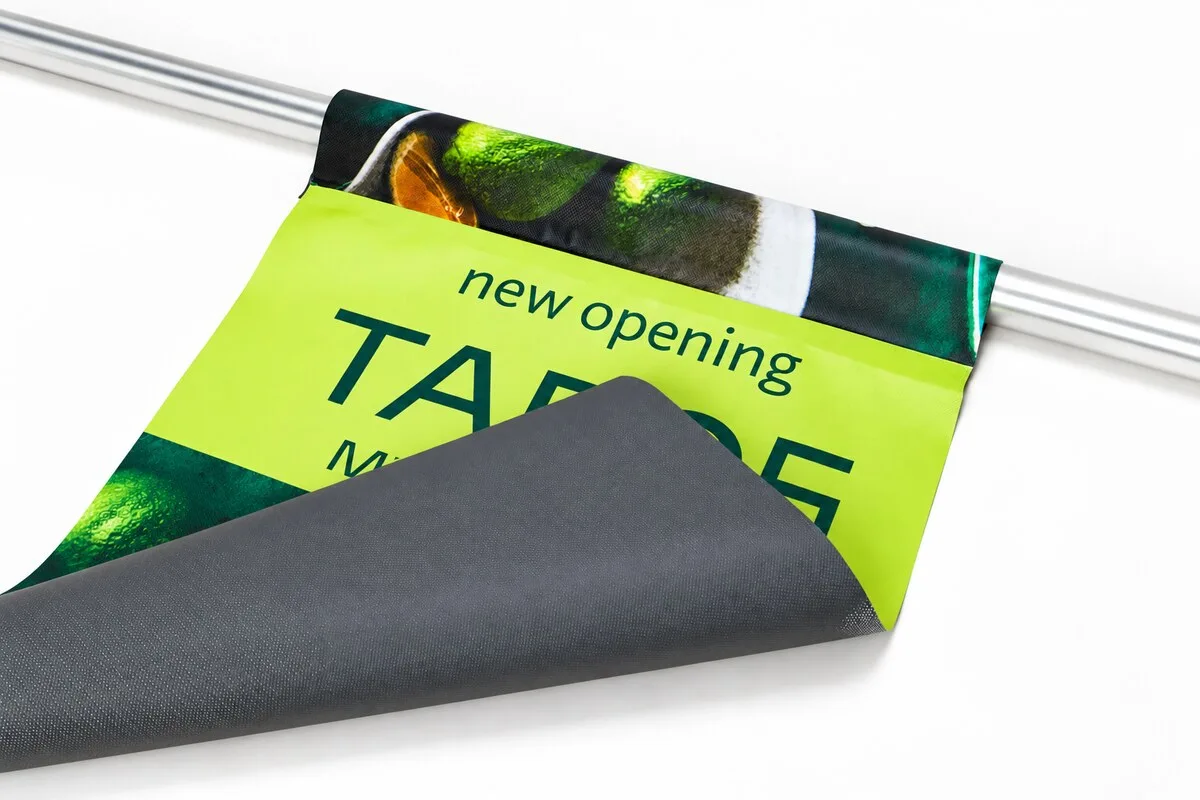
An extra grey blockout layer sits between the two faces. Standing in front, you cannot see shadows of people or objects behind it, and backlight from the sun does not make the image look “transparent”. This is the type to choose for photo backdrops, stage backdrops and banners hung in open spaces – places where both sides are lit.
Smooth banner
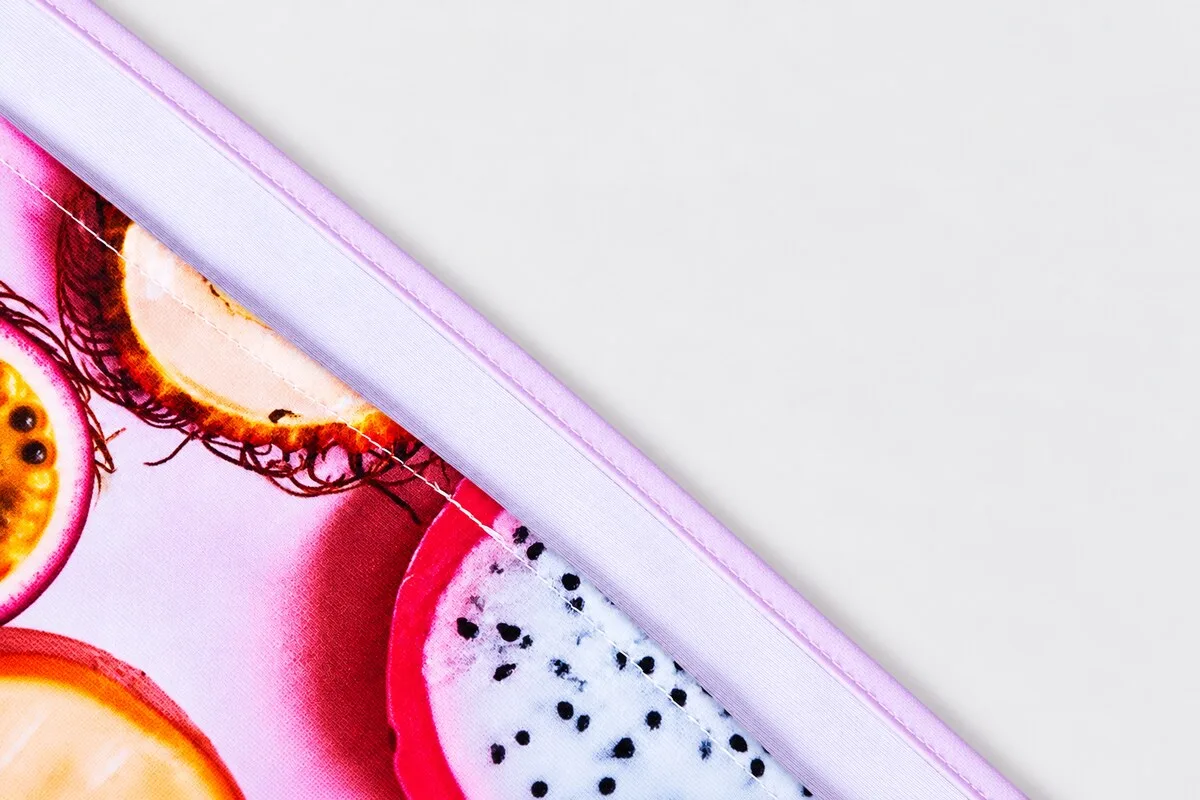
A smooth surface: up close you cannot see the woven mesh like on a regular banner. Prints look sharper and much smoother, ideal for portraits, food photos and product images viewed at close range. Often used for indoor backdrops, large showroom posters and reception counters.
Quick choice by situation
| What you need | Suitable banner type |
|---|---|
| Banners, shopfront signs, construction covers | White 3.2z 300g banner |
| Light box faces, signs with lights inside | Backlit banner |
| Photo backdrops, stage backdrops, hung in open spaces with light on both sides | Grey double-sided banner |
| Photo images, viewed up close | Smooth banner |
Solvent or UV printing?
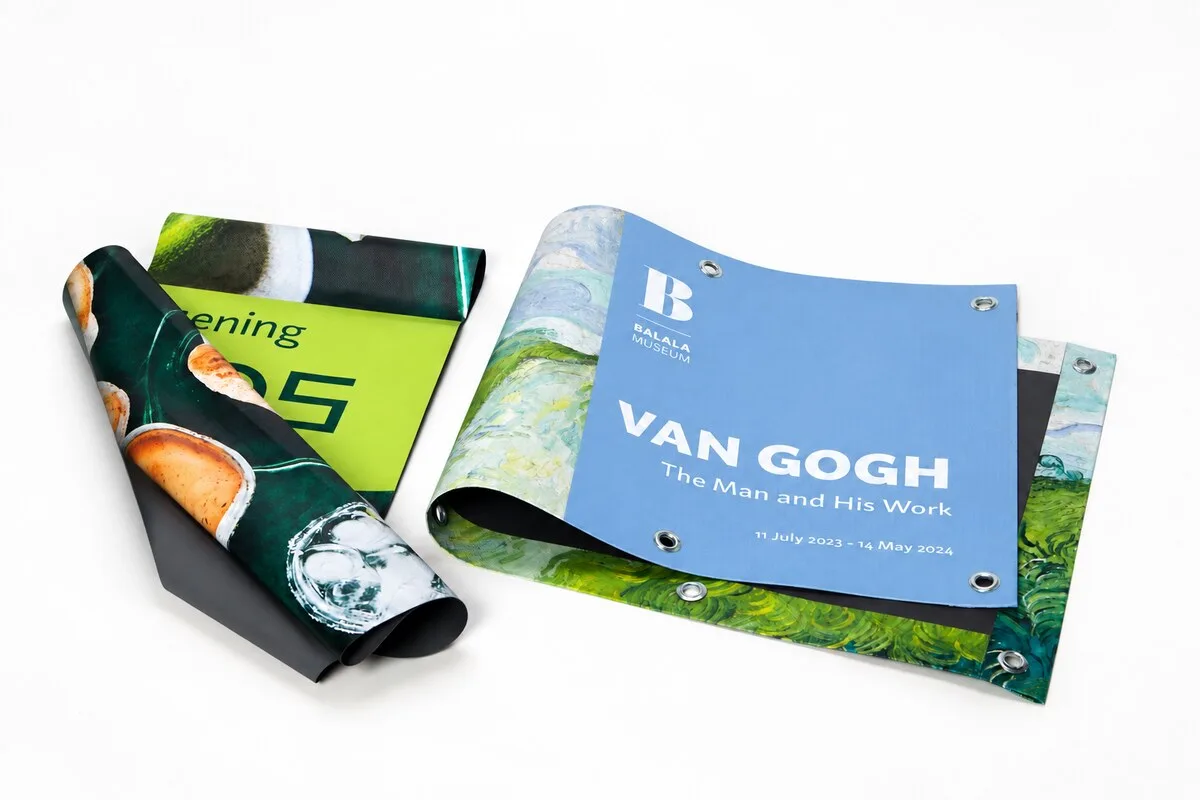
Solvent ink printing is the standard technology for outdoor banners: the ink soaks into the PVC layer, stands up well to sun and rain, and keeps its color for 1–2 years. Best price, suitable for most orders.
UV printing uses ink cured instantly by UV lamps during printing. The ink sits on the surface, colors are brighter and sharper, it dries immediately so delivery is faster, and color durability is higher. Choose it for long-term banners, images with fine details, or banners viewed up close.
Not sure which to choose? For outdoor banners hung for less than a year, solvent ink is enough; for long-term signs or important images, choose UV printing.
Banner edge finishing – three options we prepare
After printing, the banner needs its edges finished before hanging, otherwise the edges fray and gradually tear in the wind. On the Hiflex Banner product page, choose one of the three types in the section Finishing:
1. Plain margin
We print and cut straight, leaving a white margin around the image for you to finish yourself – glue, fix wooden battens, or hand over to an installer. Cheapest, ideal if you have your own installation team.
2. Hemmed edges
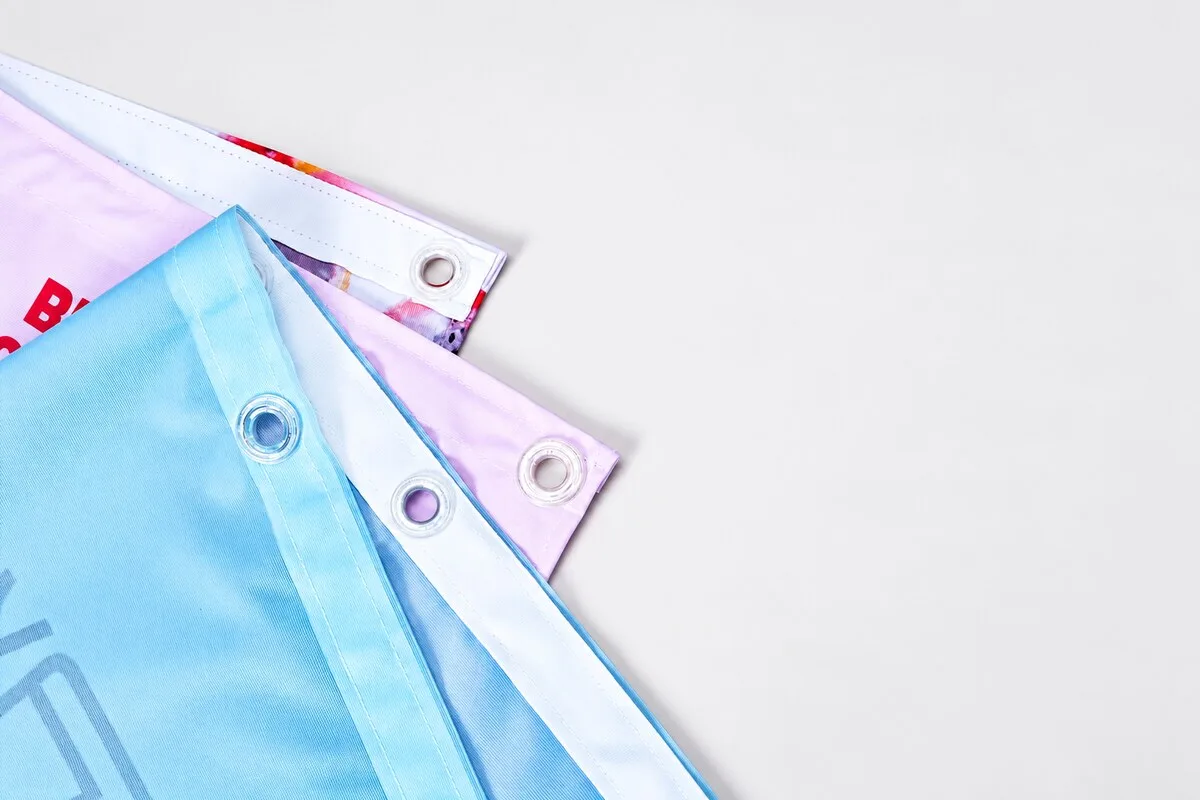
The banner edge is folded back and heat-welded into a double-thickness border. This border stops fraying and keeps the edges stiff and straight when stretched.
3. Hemmed edges with eyelets
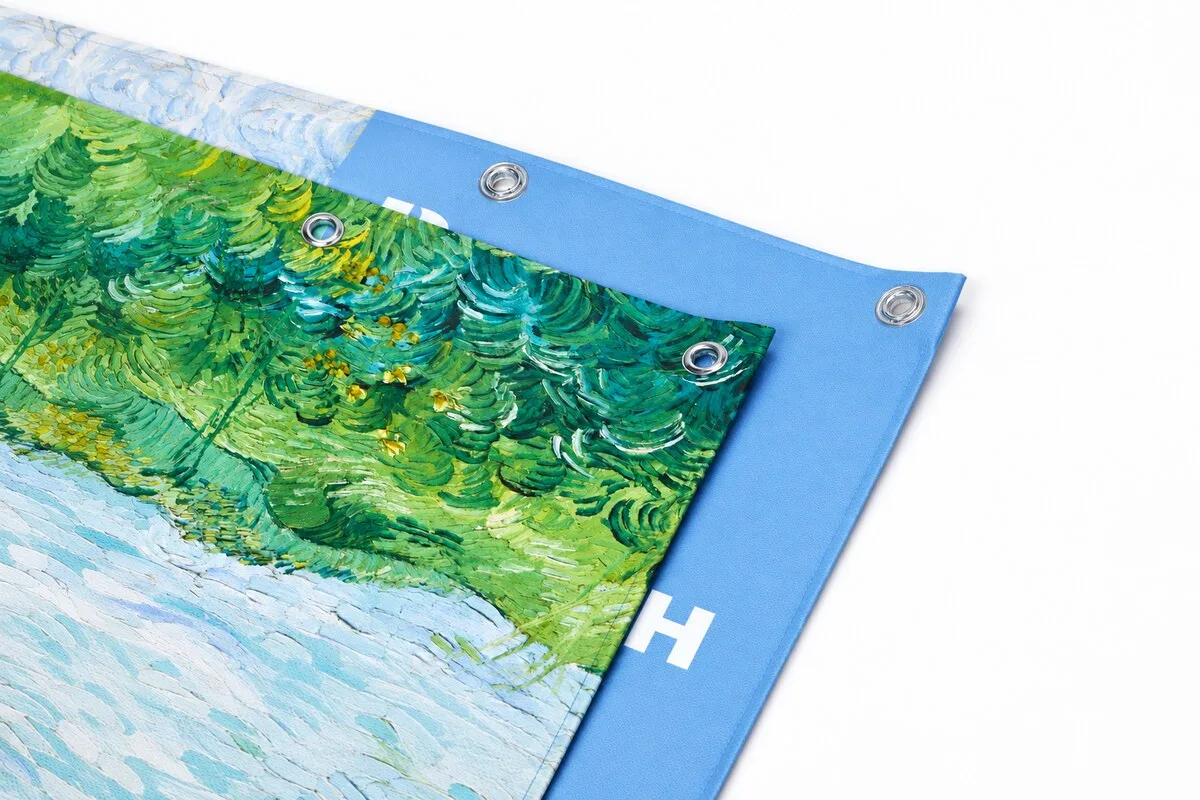
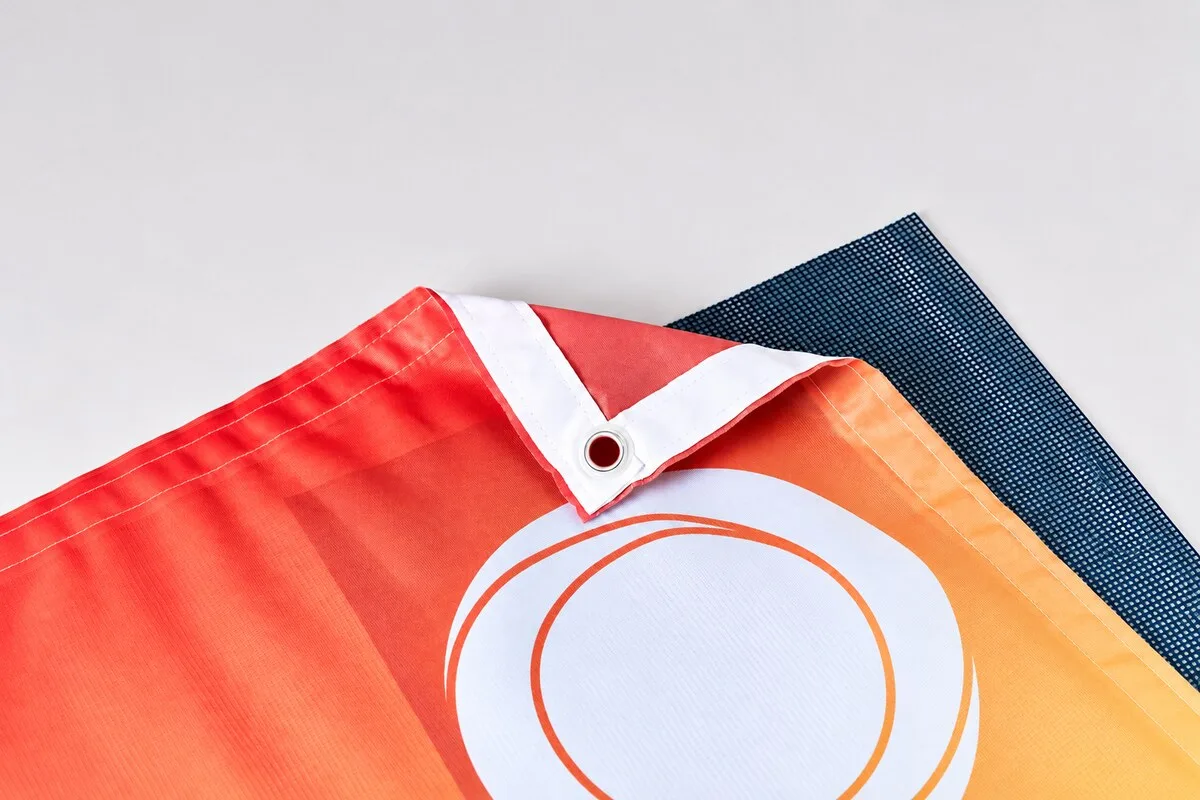
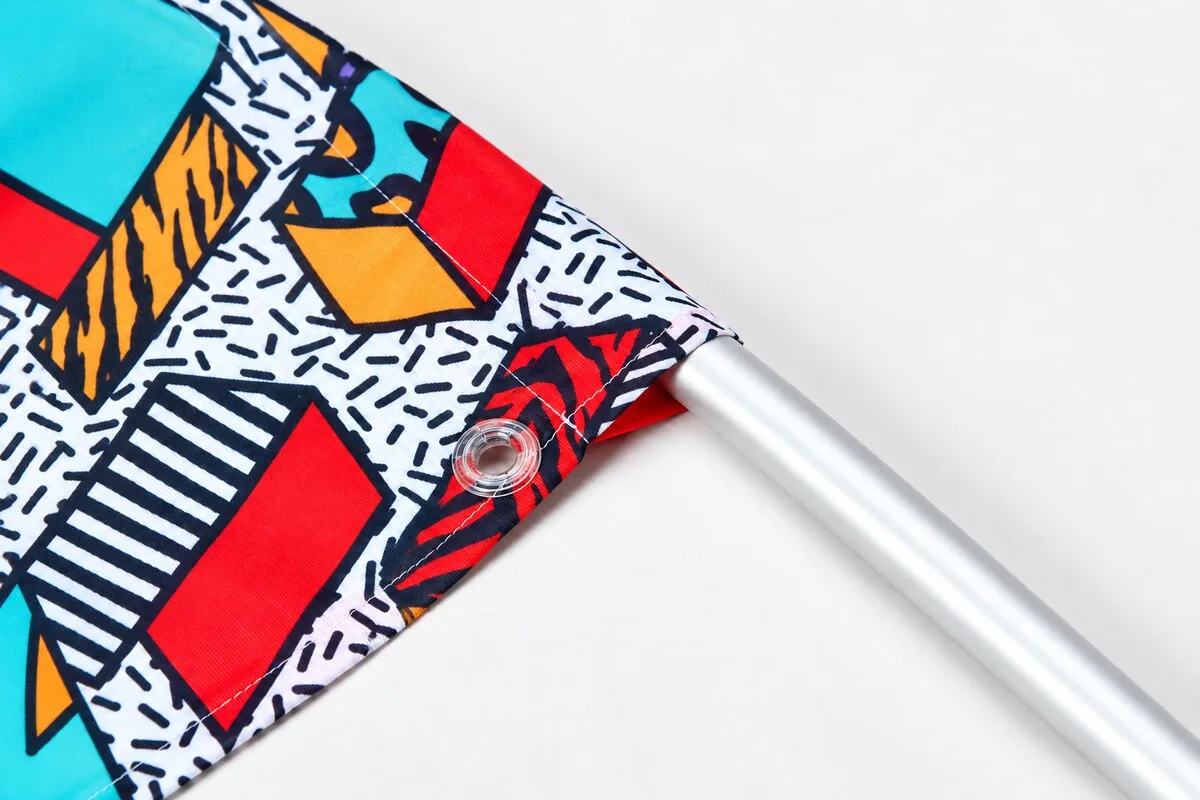
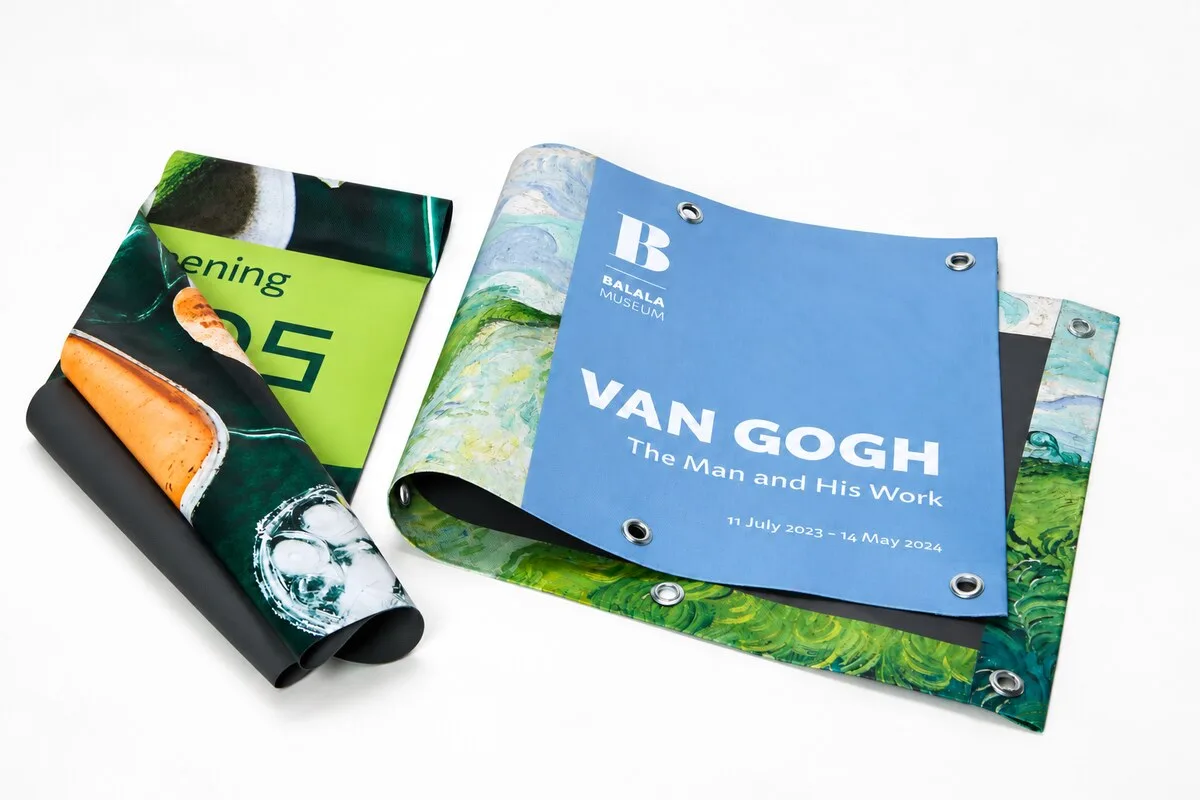
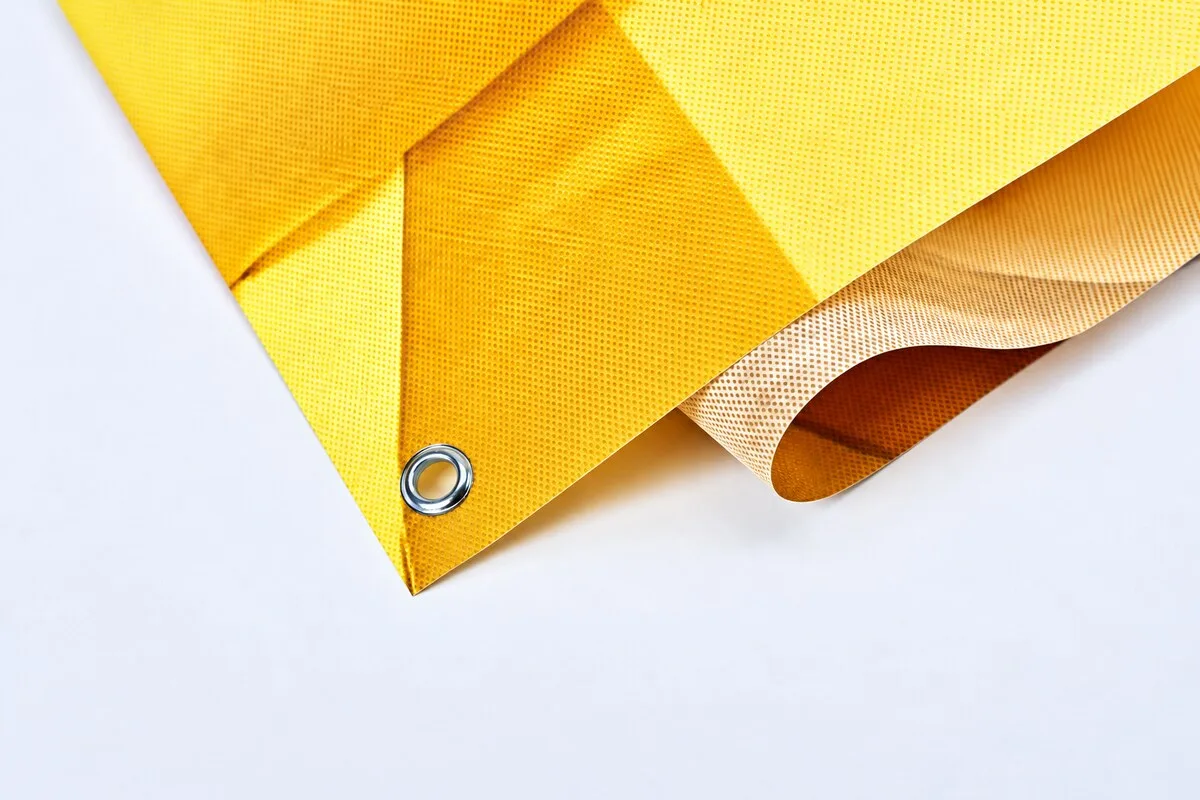
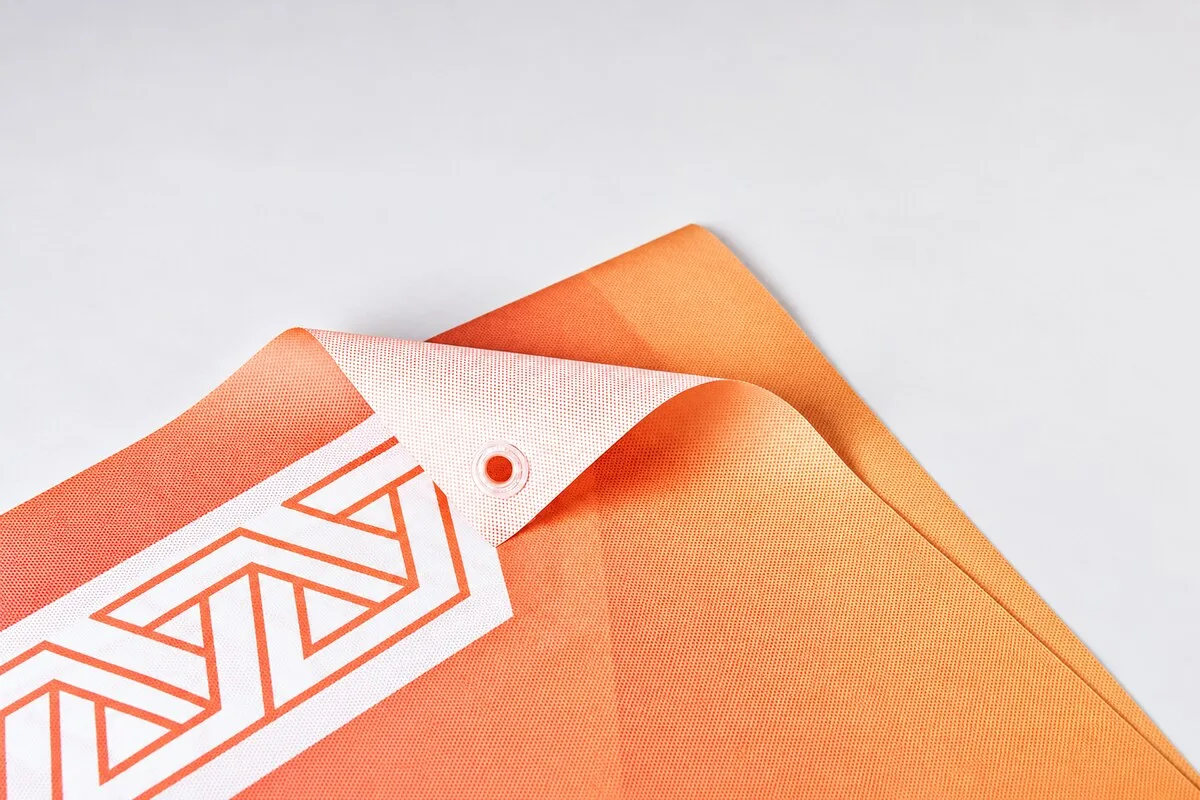
After hemming, we add metal eyelets (round holes with metal rings) along the edges at even intervals. Eyelets are for threading cable ties, rope or hooks. This is the most ordered option because the banner is ready to hang with no extra work.
The corners – where the pulling force is strongest – are reinforced with an extra layer before the eyelets go in, so they don't pull out in strong wind.
Common ways to hang a banner
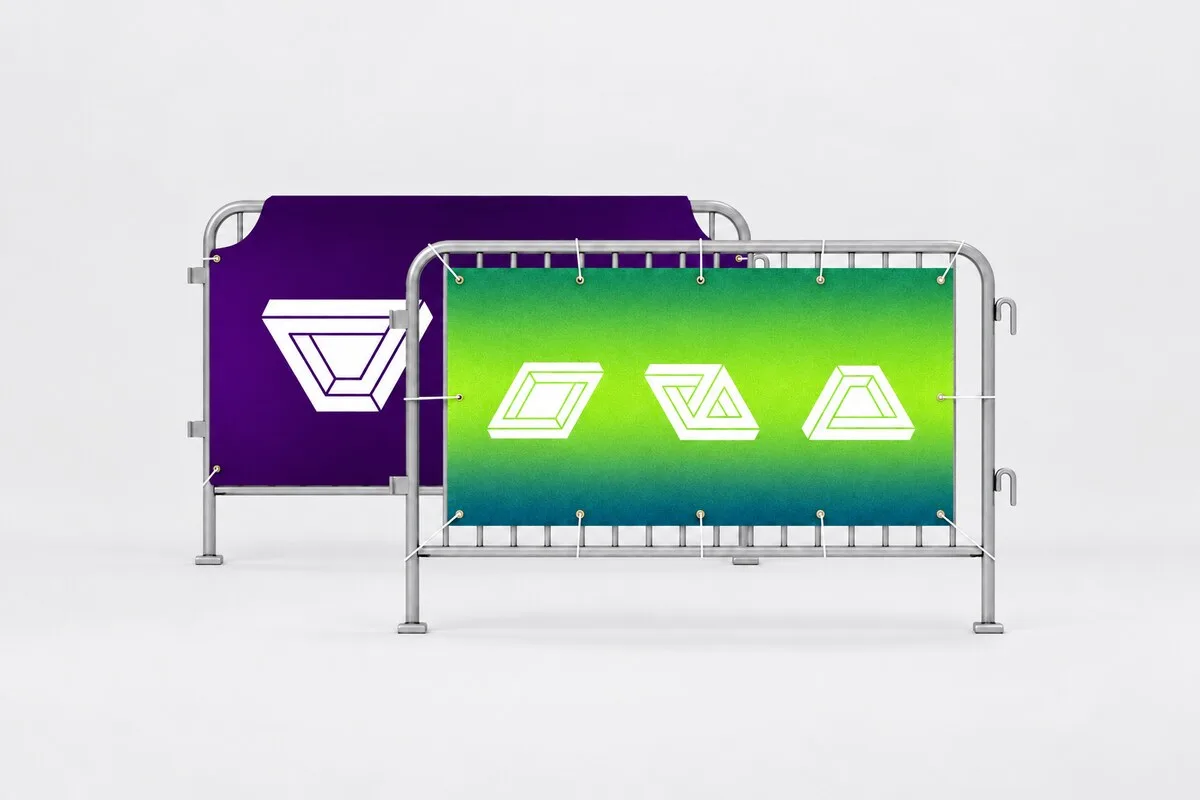
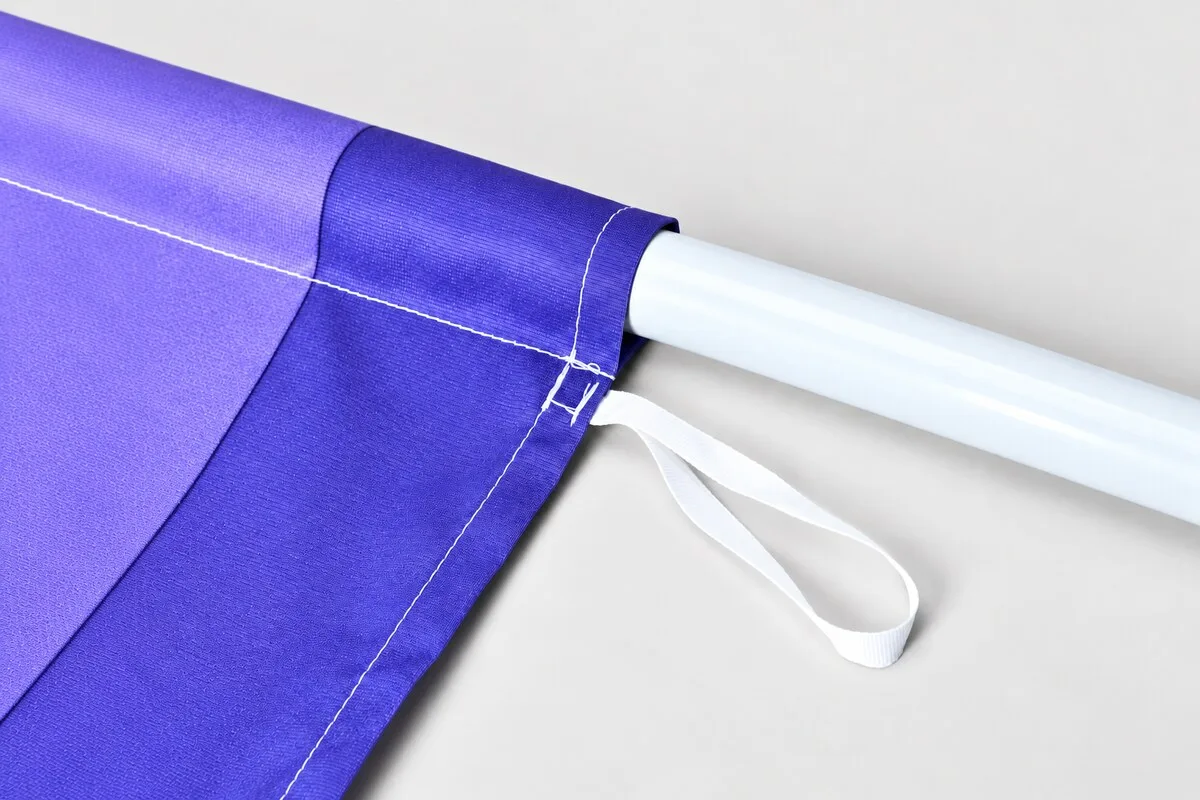
Knowing how the banner will be hung helps you choose the right finishing when you order:
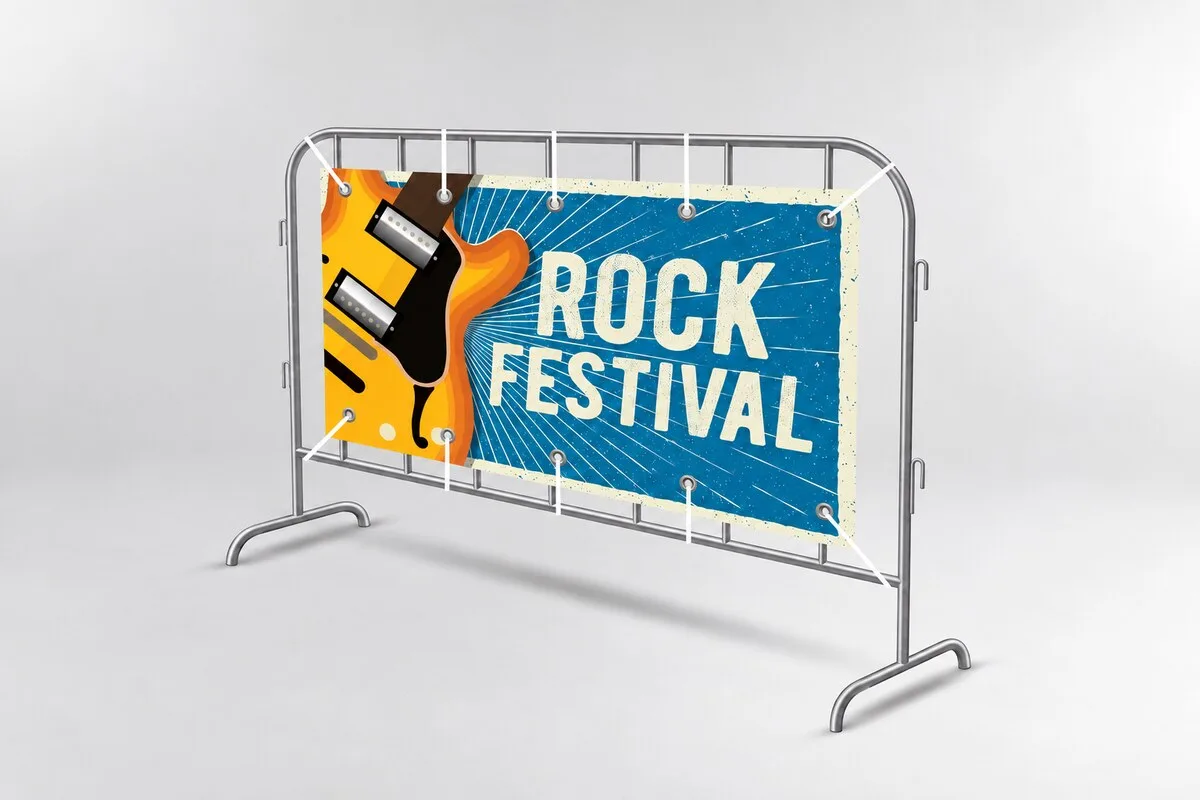
- Ties through eyelets – the most common way: stretch the banner onto fences, railings, posts or steel frames with plastic cable ties or rope through the eyelets.
- Rod pockets – the top and bottom edges are sewn or welded into a sleeve for an aluminium rod or pipe, keeping the banner straight and stopping the edges curling in the wind. Often used for vertical banners in front of shops.
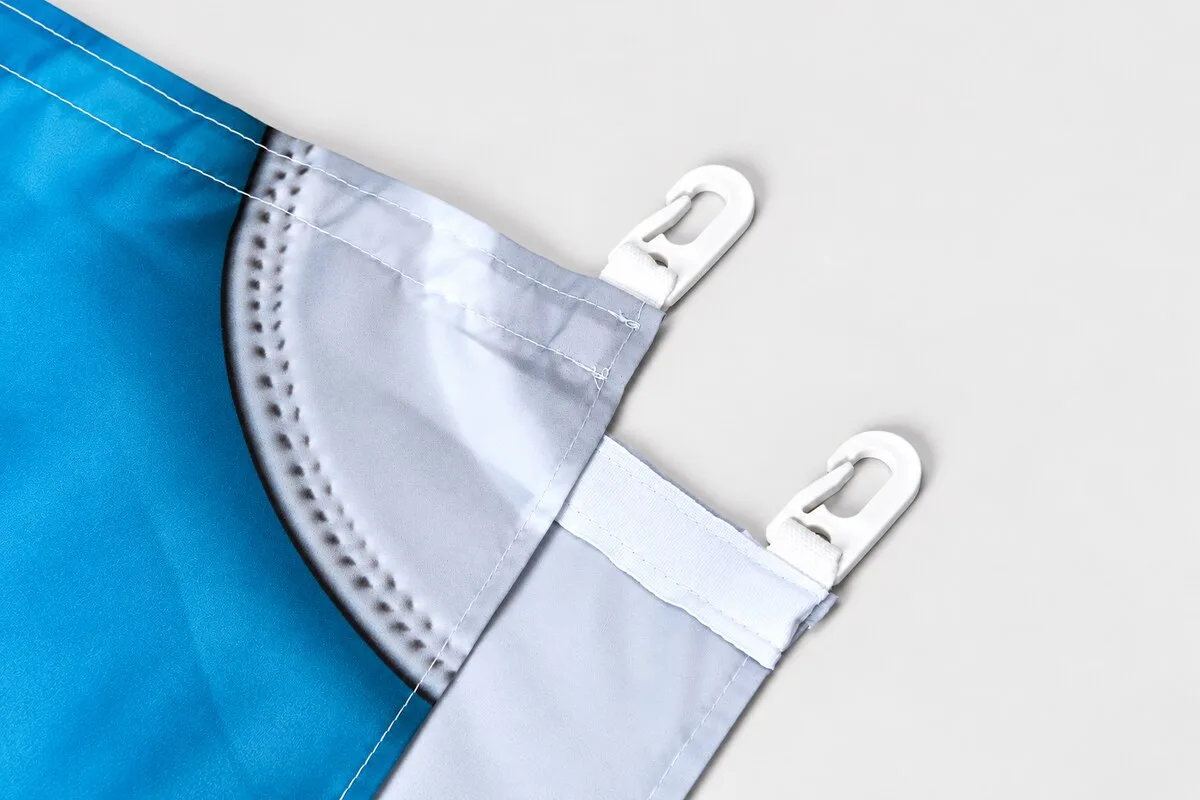
- Hooks – hooks fitted along the top edge to hang quickly on a crossbar, handy when the banner is taken down often.
- Framing / edge trims – the banner is stretched onto a steel frame or clamped between aluminium trims, used for shopfront signs and light boxes.
We prepare the three finishing options above as standard. If you need rod pockets, hooks or a complete steel frame, message us on Zalo for a project-based quote.
What are Hiflex banners used for?
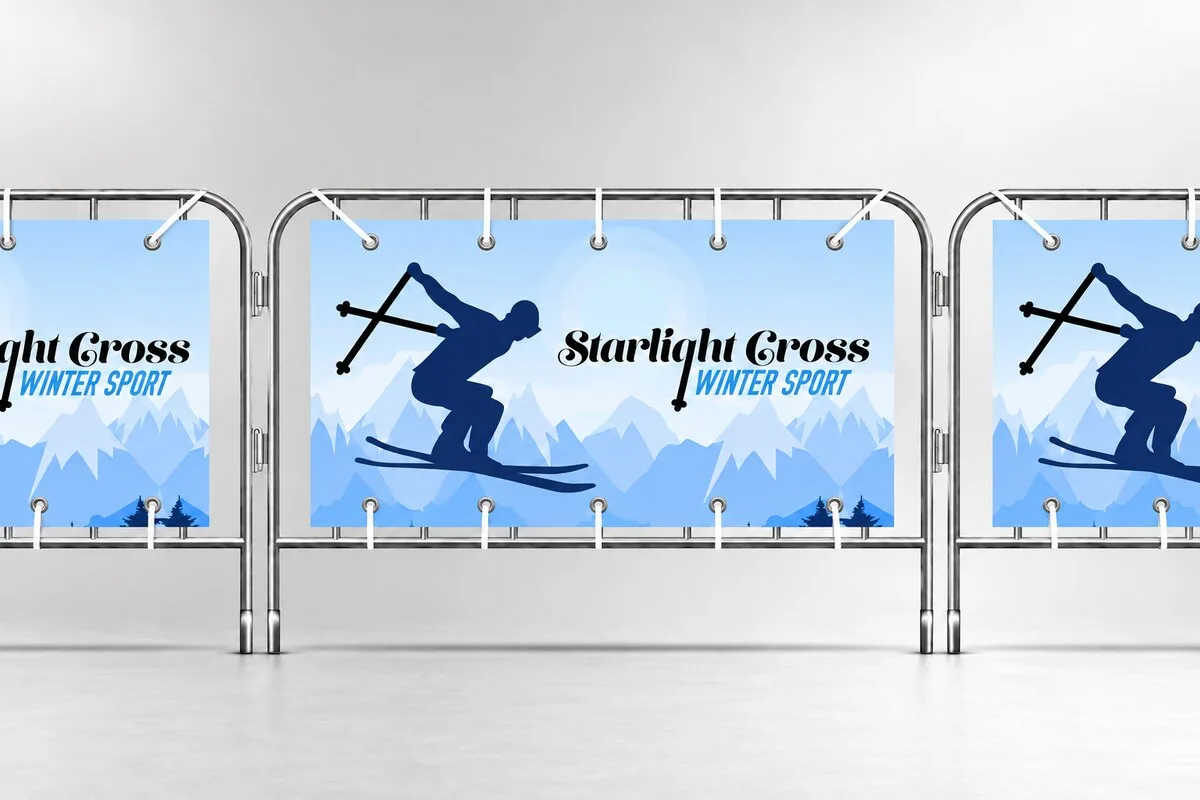
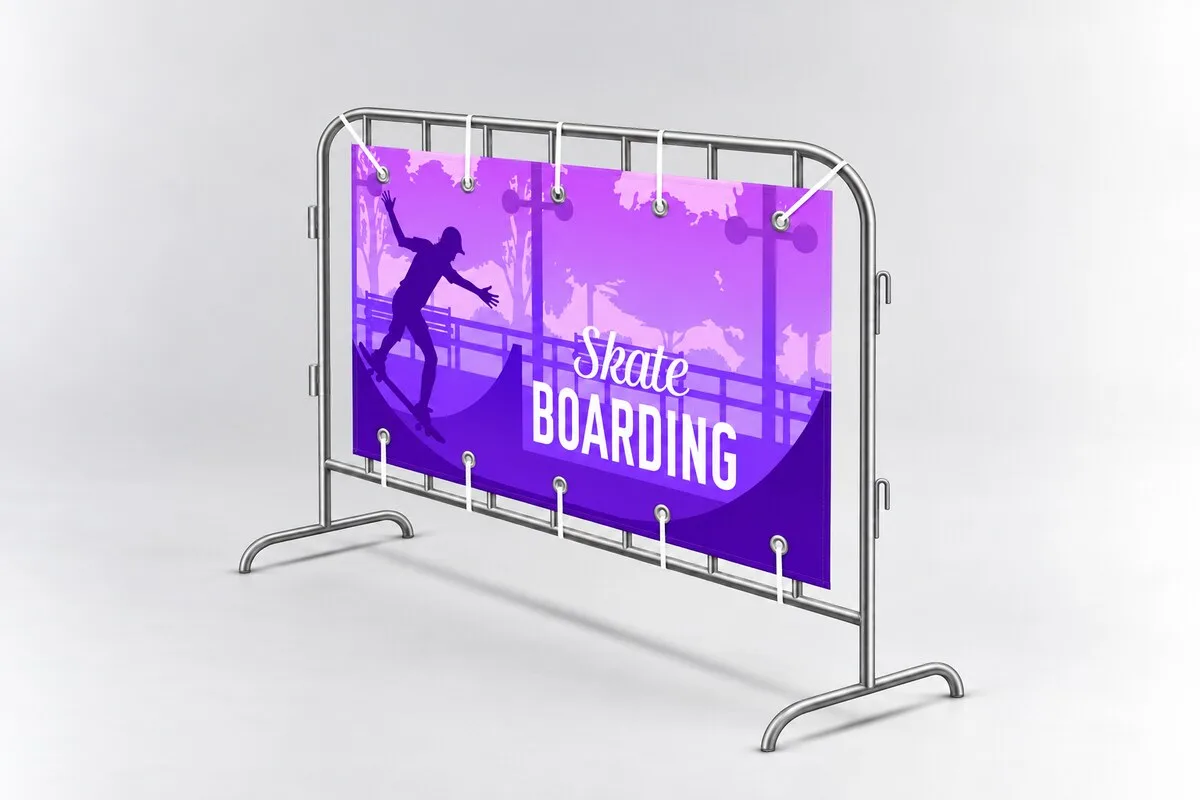
- Banners: grand openings, promotions, recruitment, congratulations.
- Shopfront signs: banners stretched on steel frames for restaurants, shops and offices.
- Event backdrops: stage backdrops, photo areas, opening ceremonies.
- Construction fence covers: screening the site while advertising the project, printed in long continuous lengths.
- Light box faces: using backlit banner to replace old, faded faces.
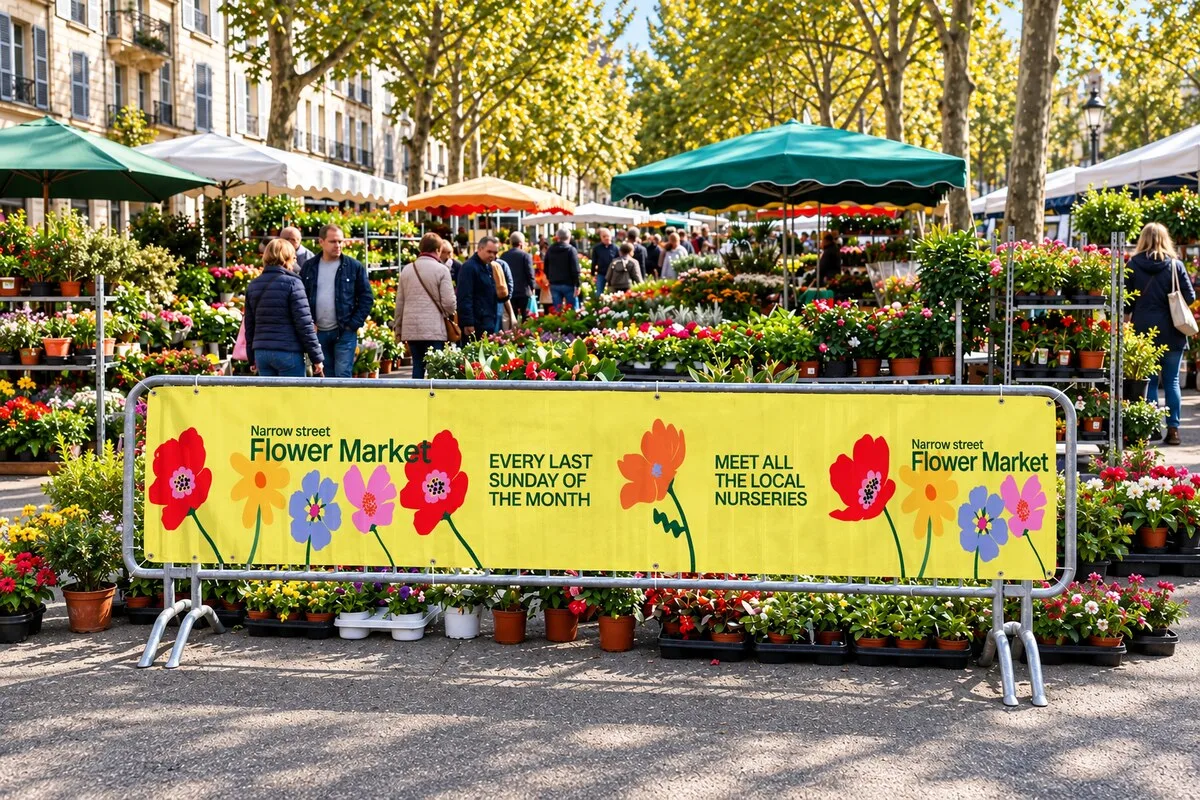
- Trade fair booths, sports events: banners stretched along fences beside walkways and fields.
Related products

Hiflex

Banner

Advertising signs

Backdrop
How the area is calculated when ordering
Hiflex banners are priced by the square meter, not per piece. How it is calculated and how to order on the website:
- Calculate the area: Width (cm) × Height (cm) ÷ 10,000 = m². Example: a 300 × 80 cm banner → 300 × 80 ÷ 10,000 = 2.4 m².
- Choose the banner type, printing technology and finishing in the options above.
- Enter the m² in the quantity box — decimals are accepted such as 1.2 or 2.4.
- Write the width × height in the order notes so we cut to the right size.
Minimum chargeable area is 0.5 m² per piece. Listed prices exclude 8% VAT. For large quantities or long continuous banners, message us on Zalo for a custom quote.
Preparing files for large-format banners
- Format PDF or AI; high-quality JPG files can also be printed.
- Color mode CMYK. For large formats (from 1m) the resolution only needs to be 100–150dpi — not 300dpi as for paper, because banners are viewed from a distance.
- If designed at actual size, keep 100% scale; if the file is too large, design at 1:10 scale and note it clearly.
- Keep text and logos at least 5cm from the cut edge on banners of 1m or more, so eyelets or trims don't cover them.
- Extend the background beyond the cut line so no white border shows.
Details at Design file submission guide. We check your file for free before printing; if you have no file yet, In Quảng Cáo Q7 can help with the design.
Hiflex Banner Printing FAQs
How long does a Hiflex banner last outdoors?
Solvent prints keep their color for about 1–2 years in sun and rain; UV prints last longer. Actual lifespan depends on sun exposure and how tightly the banner is stretched.
What is the minimum order?
Minimum 0.5 m² per piece, no limit on the number of pieces.
Will a 10m banner have joins?
No, as long as the width fits the roll width (up to 3.2m). The length is printed continuously from the roll.
Will the printed color match the screen?
Screen colors match only about 80% of the finished print, because screens emit light while banners reflect ink. If exact color matters, you can ask for a small test print first.
What if the banner is misprinted?
If it differs from the order or the approved proof, In Quảng Cáo Q7 reprints it free of charge – report within 24 hours with photos. Spelling mistakes in a file you approved are not covered by free reprints.
Do you issue VAT invoices?
Yes, 8% VAT e-invoices. Provide the company name, tax code, address and email when ordering.
Need a quote or want to order printing?
See the specifications and price list for each option, and order directly at Hiflex Banner product page. Or message on Zalo / call 0866.511.099 — we will quote within 30 minutes during working hours. In Quảng Cáo Q7, 49 Mai Van Vinh, Tan Hung Ward, Ho Chi Minh City.
View directions to the workshop on Google Maps
Need printing or signage in Ho Chi Minh City?
In Quảng Cáo Q7 runs its own print workshop in Tân Hưng Ward (former District 7), Ho Chi Minh City, producing and installing signage, banners, window graphics, exhibition booths and event displays. Send us the size, material, quantity and a photo on WhatsApp and we will get back to you.

Phone: +84 866 511 099 · Also on WeChat
Workshop: 49 Mai Văn Vĩnh, Tân Hưng Ward, Ho Chi Minh City
Quick reference table of Hiflex banner types by purpose
The sections above described each type. The table below gathers them into a reference table: look at the purpose column to see straight away which Hiflex banner type to choose, without rereading the whole article.
| Purpose | Hiflex banner type to choose | Reason |
|---|---|---|
| Banners hung across the street, used for a few weeks | Low-weight Hiflex banner | Light, cheap, good enough for one campaign |
| Shopfront signboards lasting many years | High-weight single-sided Hiflex banner | Thick, weather-resistant, little stretching |
| Indoor stage backdrops | Non-translucent Hiflex banner | Blocks light from behind, true colours |
| Light boxes that need to glow evenly | Do not use regular Hiflex banner; use the backlit type | Regular Hiflex banner has a light-blocking layer |
| Double-sided outdoor signs | Double-sided Hiflex banner | Content on both sides, no see-through shadows |
| Photo backdrops, event backdrops | Matte-surface Hiflex banner | Does not reflect when photographed with flash |
The most common confusion is choosing regular Hiflex banner for a light box. The light-blocking layer on the back stops light passing through, so even with the lights on the banner face stays dark.
Conversely, using the backlit type for outdoor banners is also wrong: without a light-blocking layer, sunlight passes through, making the printed image pale and showing the back.
Quick comparison of Hiflex banner types with other materials
Once you know how far each Hiflex banner type is suitable, the next step is to compare it with other materials also used for large-format advertising.
| Material | Outdoors | Durability | When to choose it instead of Hiflex banner |
|---|---|---|---|
| Hiflex banner | Very good | Many years | Default for all outdoor items |
| PP paper | No | A few months indoors | Posters, indoor backdrops, cheaper |
| Decal | Yes, when stuck on a flat surface | 1 to 3 years | Needs to be stuck directly on glass, walls, vehicles |
| Formex | Yes, needs a frame | Many years | Needs a rigid board, cut to shape |
| Backlit film | Inside a light box | 2 to 3 years | Light boxes that need to glow evenly |
| Canvas fabric | No | Indoors, many years | Decorative pictures, soft backdrops |
The biggest advantage of Hiflex banner types is a low price per square metre while still withstanding sun and rain. That is why most outdoor banners and signboards in Ho Chi Minh City use this material.
The drawback is the soft surface, which needs a frame or tensioned cords to stay flat. Items that need a rigid free-standing board must switch to Formex or Alu; Hiflex banner cannot replace them.
Common mistakes when ordering Hiflex banner printing
The mistakes below are the ones we see most from first-time customers. Most lie in choosing the type and measuring, not in printing.
| Mistake | Consequence | How to avoid it |
|---|---|---|
| Choosing the wrong Hiflex banner type for a light box | The banner face stays dark when the lights are on | Use the backlit type for light boxes |
| Measuring by the frame instead of the inner opening | Banner lacks margin, cannot be stretched | Measure the inner opening and add the margin |
| No hemming for banners hung outdoors | Edges fray and then gradually tear from the eyelets | Hem and fit eyelets fully |
| Eyelets spaced too widely | The banner sags between hanging points | Eyelets 40–50 cm apart |
| Stretched too tight | Tears at the eyelets in gusts | Stretch moderately, leaving slight slack |
| No wind holes cut in large banners | Gusts blow the whole banner loose | Cut rows of wind holes |
| Using low-resolution images | Blurry images when enlarged to large format | 100–150 dpi at the actual size |
For measuring, measure at three positions and take the smallest number. Old frames are often not perfectly square; taking the largest number means the banner will not fit.
Lead time and how to order
The process takes four simple steps: send the file and measurements, we quote, you approve, then it goes to print. The lead time counts from approval, not from first contact.
- Printing and straight cutting, no edge finishing: same day if the file is received in the morning.
- With hemming and eyelets: 1 working day.
- With sewn edges: 1 to 2 days.
- With a steel frame: 2 to 4 days depending on size.
- With hanging installation: scheduled according to the installation team, usually within 1 to 2 days.
- Former District 7, Nha Be, District 4 and District 8 get door-to-door delivery; other districts are delivered according to the day's vehicle schedule.
If you do not have a file yet, send the content and logo via Zalo; the design team will lay it out at the exact size and send a preview. Printing starts only after approval, so there are no surprises after it is printed.
See also the material introduction article at Hiflex Banner, or alternative materials such as PP Polypropylene for indoors and Formex when you need a rigid board.