




































































PP: the most common material for posters, backdrops and standees
Sep
What PP Polypropylene Is and Why Indoor Printed Materials All Use It
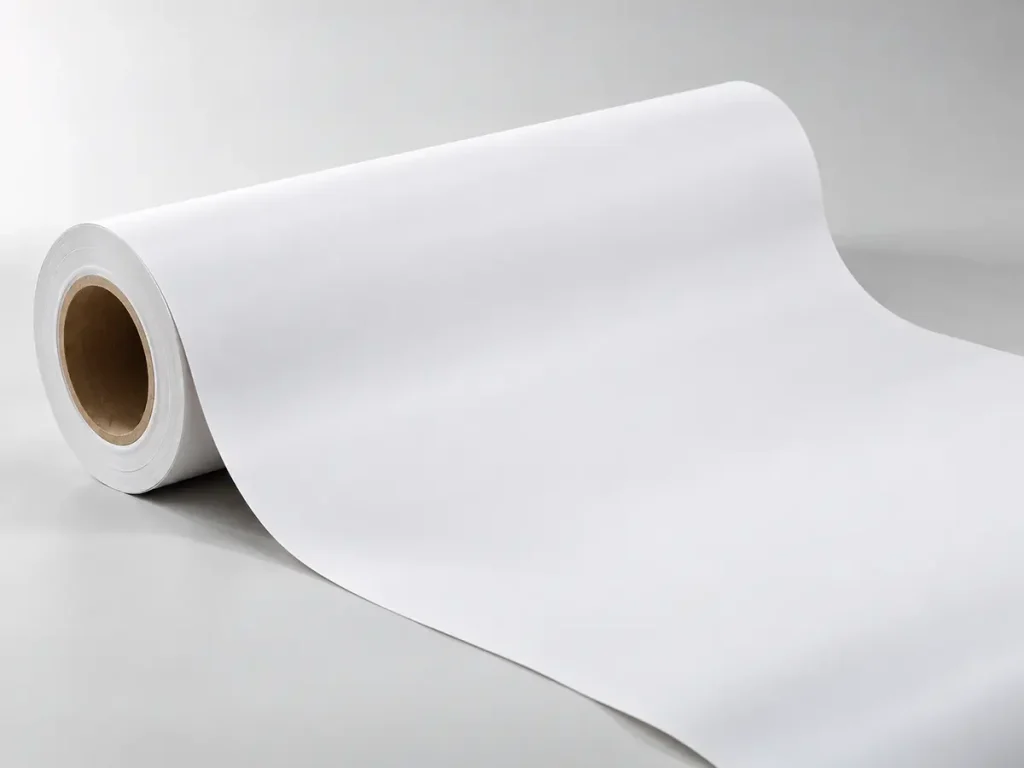
PP Polypropylene is a thin plastic film coated with an ink-receptive layer on the surface — thicker than paper, thinner than banner. The surface is flat and smooth, so colours come out evenly and small text is still clear at close range. It is the most widely used material for indoor posters, standees and backdrops.
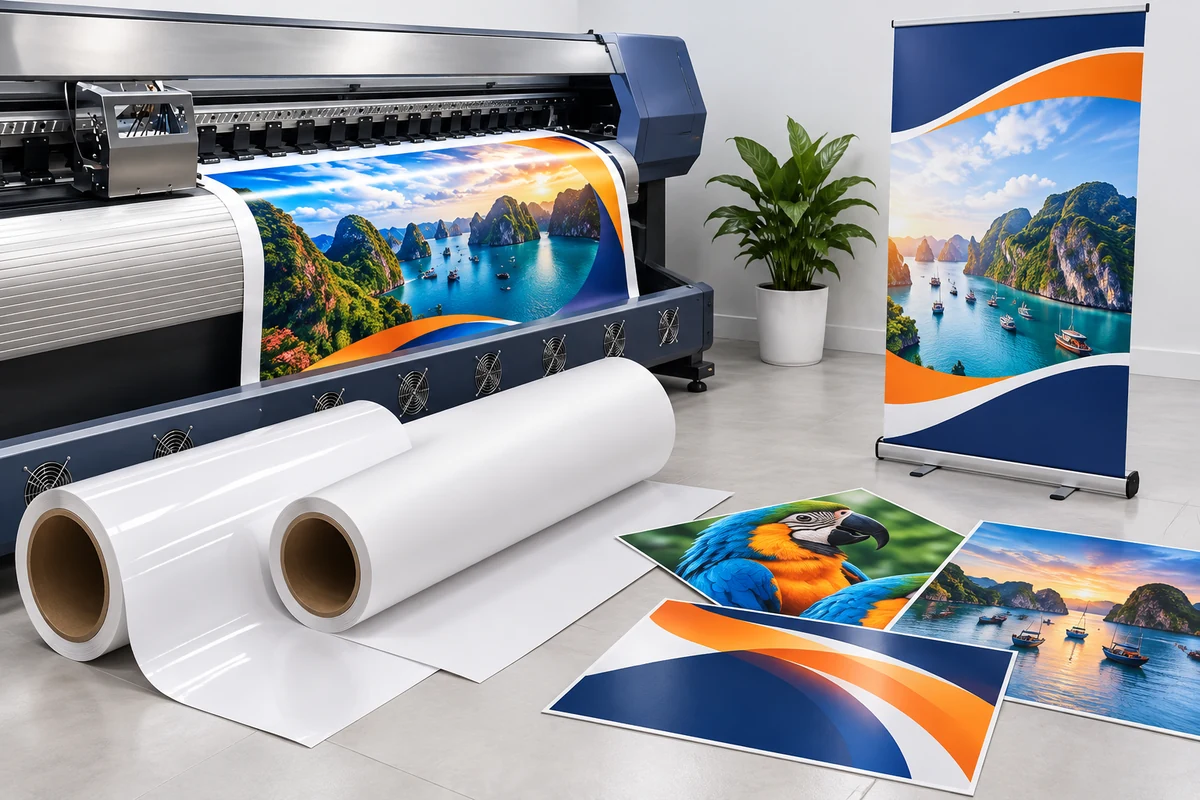
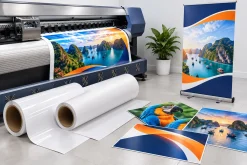
This article covers what you need to know before ordering: construction, the PP types we stock, choosing lamination, choosing the printing technology, real applications and how to prepare files. Some illustrative photos are used in this article.
PP Polypropylene film construction
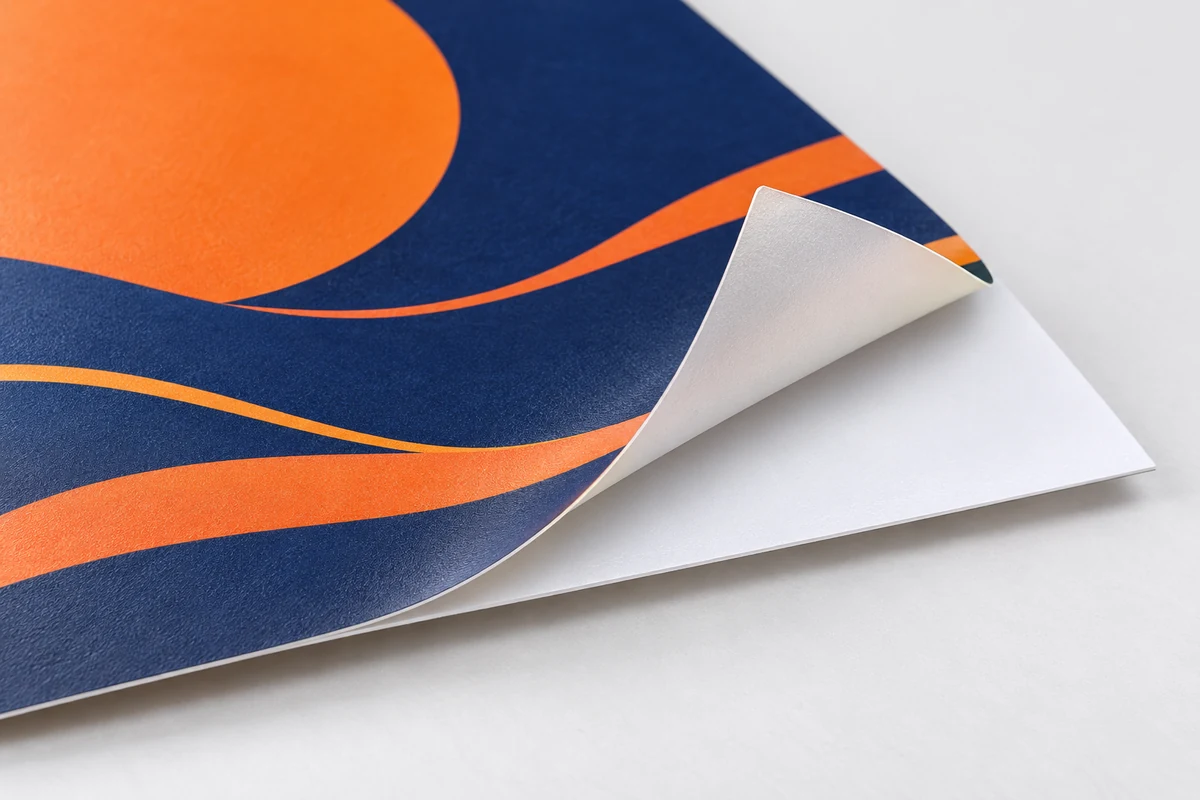
Looking at the edge of the roll you can clearly see that a PP sheet has two parts:
- Polypropylene plastic base — thin, flexible, waterproof, rolls up without creasing.
- Ink-receptive coating — coated on the printing face, holding the ink droplets in place so the image is sharp and the colours do not bleed as they would on bare plastic.
Because the base is plastic, not paper, the print does not warp when humidity changes — hung in a café or an air-conditioned lobby for months, it stays flat. But since it is only as thin as thick paper, a PP Polypropylene sheet needs a frame, a mounting board or a standee base to stand; it cannot hold its shape on its own.
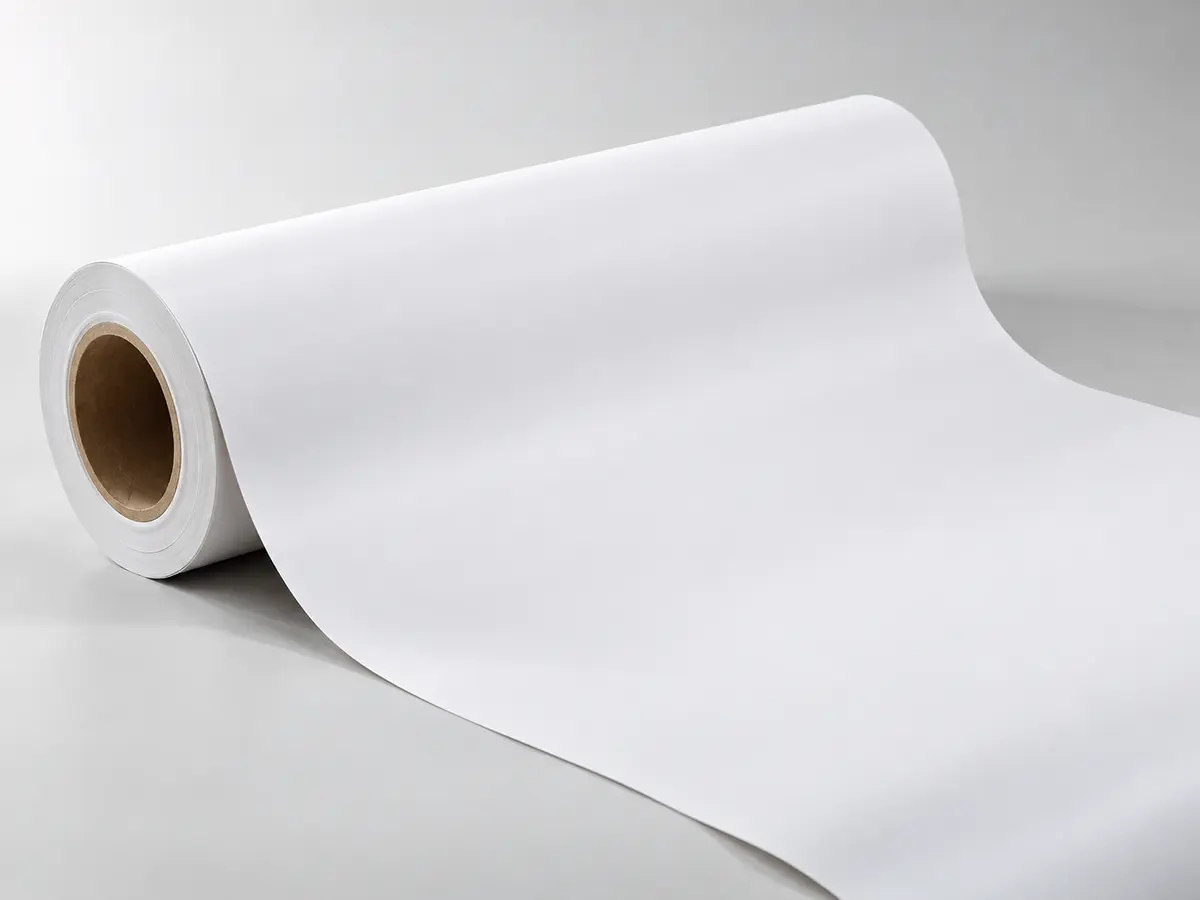
A common confusion: PP is not paper, so do not compare thickness by gsm weight like Couche or Bristol paper. In the hand, a PP sheet feels tough and slightly elastic, and does not tear in a straight line like paper — that is a property of polypropylene film.
PP types we stock
Non-adhesive PP
A loose print with a plain back. Used for roll-up banners, X-banner stands and framed posters. This is the most common type.
Adhesive PP
The back has a ready-applied adhesive layer; peel off the liner and stick it straight onto Formex, acrylic (Mica) or flat walls. Handy when you need a permanently stuck print without ordering decal separately.
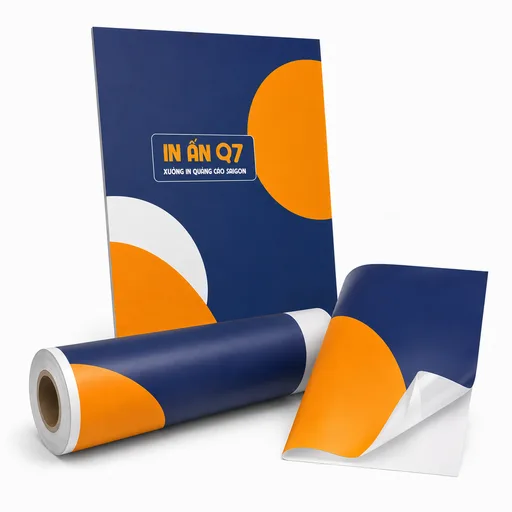
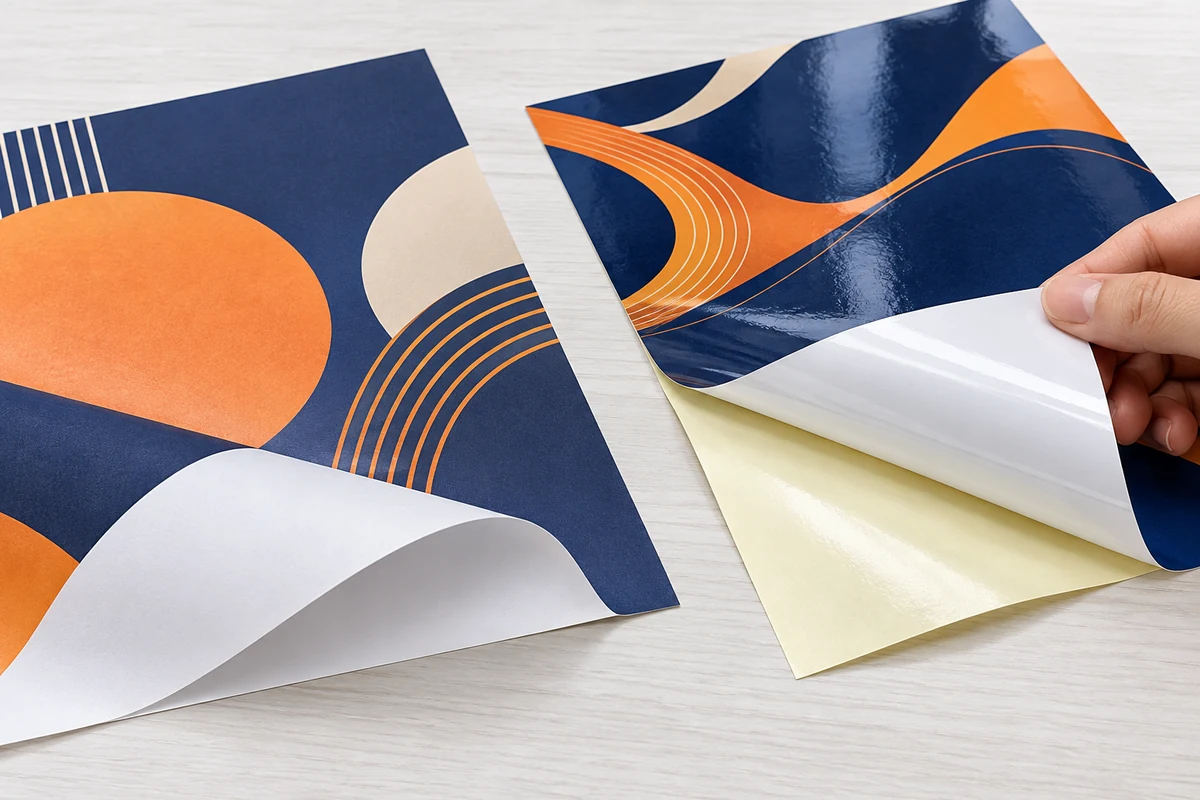
In essence, adhesive PP Polypropylene differs from decal in that its base is thicker and stiffer and its adhesive is lighter, so it suits flat indoor surfaces, not glass or vehicle wraps outdoors.
Gloss lamination or matte lamination
Lamination is a clear plastic layer pressed onto the printed face after printing. Three options:
- No lamination — the cheapest, colours still look good, but the printed face scratches easily when rolled in and out many times.
- Glossy lamination — much deeper and more vivid colours, a glossy surface, the best scratch resistance. Suits food and product photos that need to catch the eye.
- Matte lamination — no glare under lights, no reflections when standing under lights or taking photos. Suits photo backdrops and standees in lobbies with spotlights.
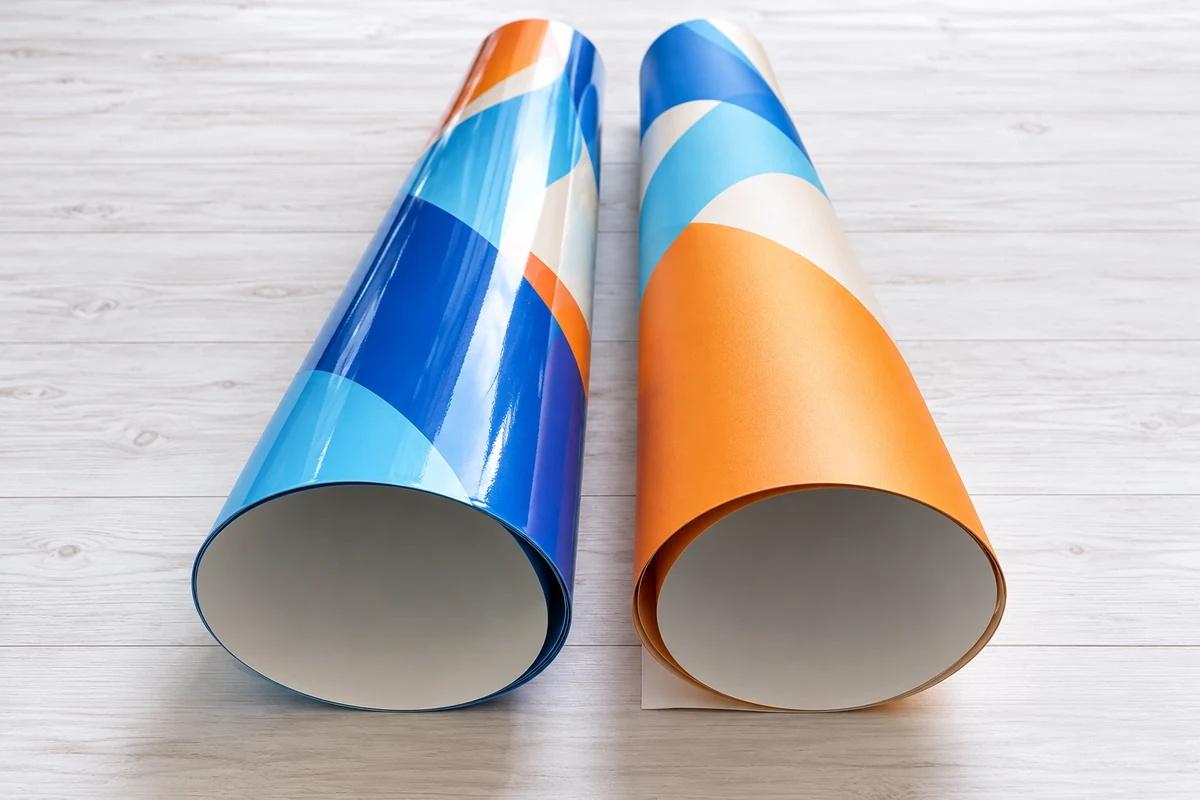
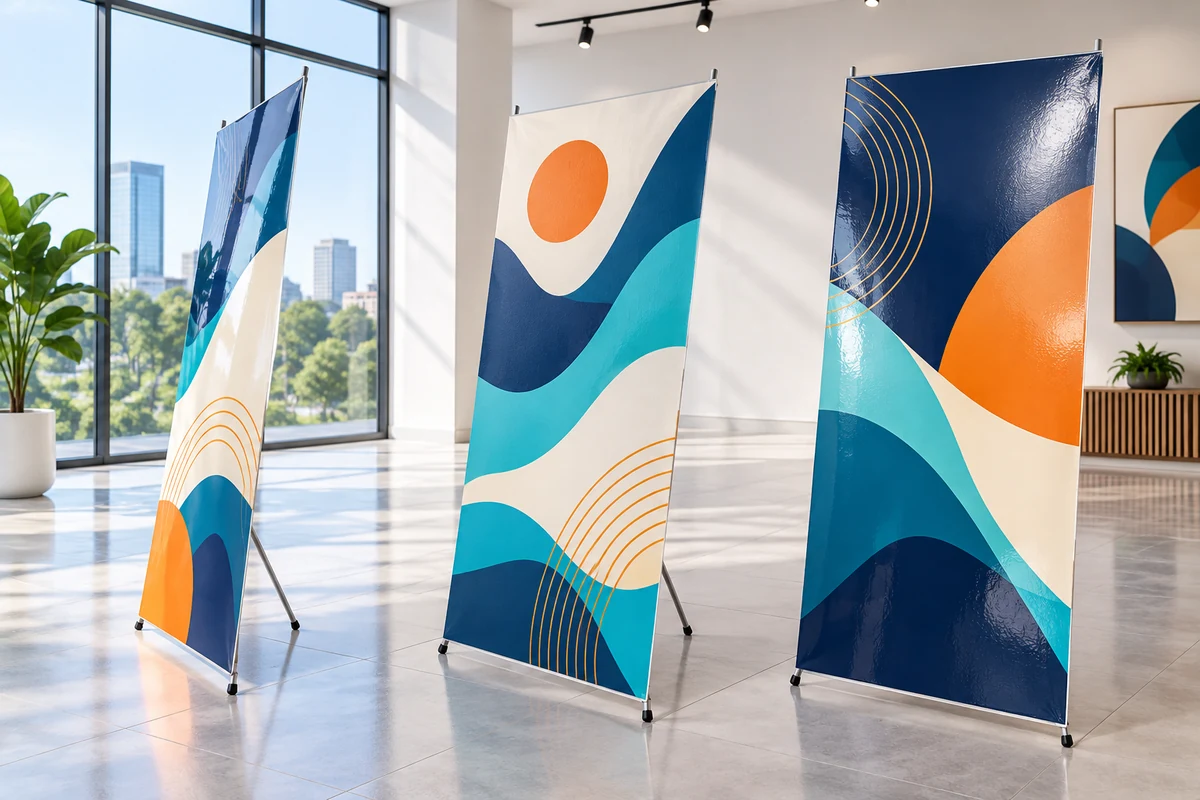
If the print has to be rolled up and down every day like a roll-up standee, laminate it whether gloss or matte — the lamination is what keeps the printed face from scratching after a few dozen operations. For X-banner standees placed permanently under lobby lights, matte lamination is easier on the eye when viewed at an angle.
Lamination also makes the PP Polypropylene sheet slightly thicker and stiffer, so the print stands straighter in the standee frame, with less rippling along both edges.
Solvent ink or UV printing on PP Polypropylene
We run PP on a 1.8m roll printer, so widths up to 1.8m print seamlessly and the length is almost unlimited. Two technologies to choose from:
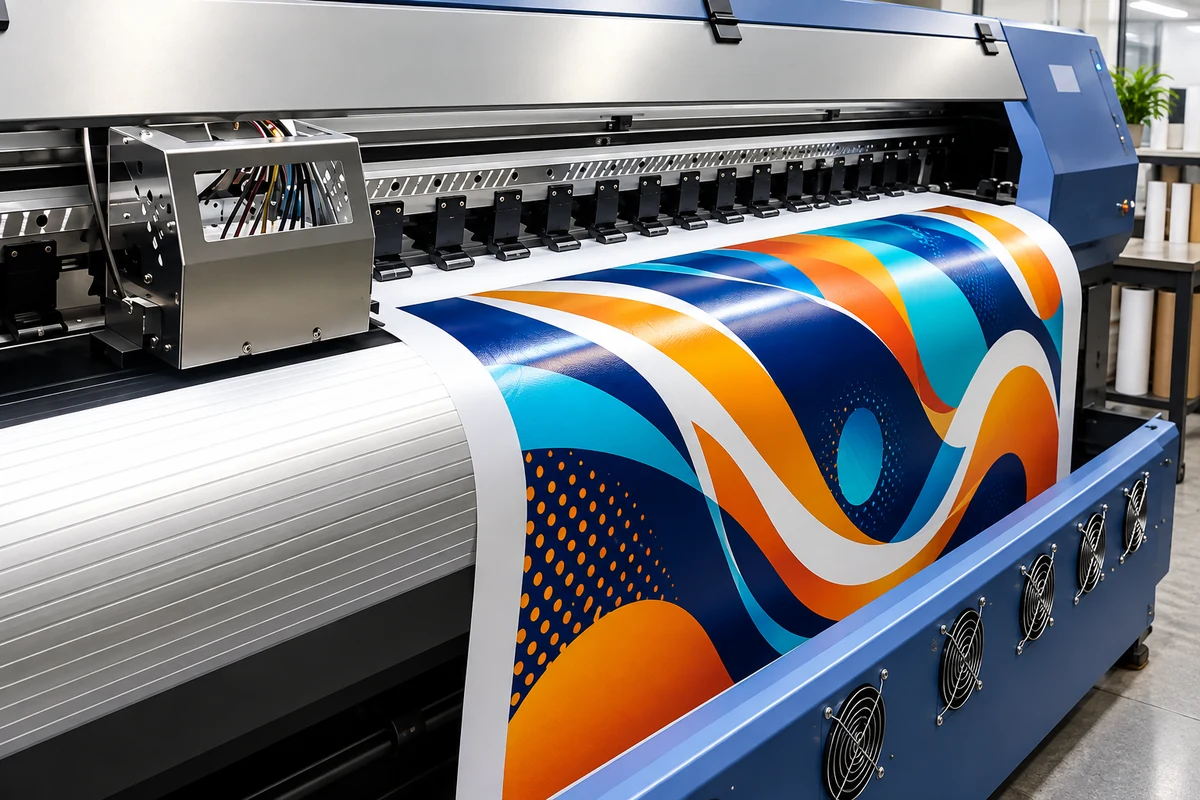
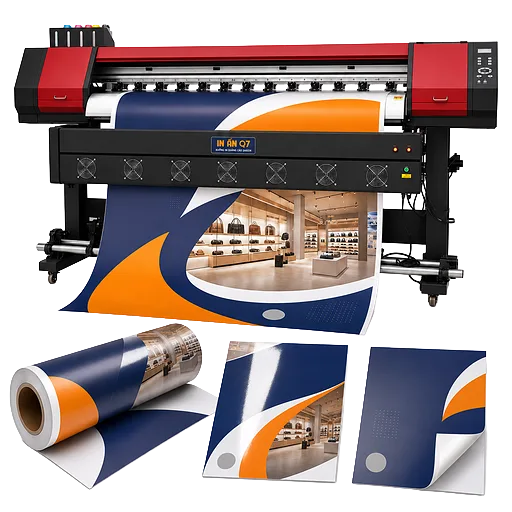
- Solvent ink — good price, good colours, suitable for most poster and standee needs.
- UV printing — ink dries instantly under UV light, keeps color longer and doesn't smudge with moisture. Choose it when the print will hang for a long time or sit somewhere humid.
Both technologies print directly onto the coated face, with no pressing or heat transfer step, so processing time is short. Regular poster and standee orders just need the extra lamination and trimming steps to be done.
Print widths and how the area is calculated
PP prints are priced by the square metre, not by the piece, so odd sizes can be ordered as normal:
- Area calculation: width (cm) × height (cm) ÷ 10,000. A 60 × 90 cm poster is 0.54 m².
- The minimum chargeable area is 0.5 m² per piece, even if the print is smaller.
- State the width × height clearly in the order notes so we cut it in the right orientation.
- Also mention where it will be displayed — indoors, under spotlights or on a counter — so we can advise on the right lamination.
For widths larger than the machine width, we will join pieces or suggest switching to Hiflex banner. Joined PP leaves a seam visible at close range, so prints that viewers stand right next to should stay within one width.
Applications of PP Polypropylene in advertising
- Large posters — product introductions and promotions at points of sale.
- Roll-up banners and X-banner stands — quick to set up, roll up compactly, taken to conferences and exhibitions.
- Backdrop indoors — photo backdrops, stage backdrops in covered halls.
- Menu boards, price boards — hung on walls in shops, content changed seasonally.
- Mounted prints formex — for direction signs, map boards and display boards with stands.
- Table-top posters — small formats on cashier counters and display tables.
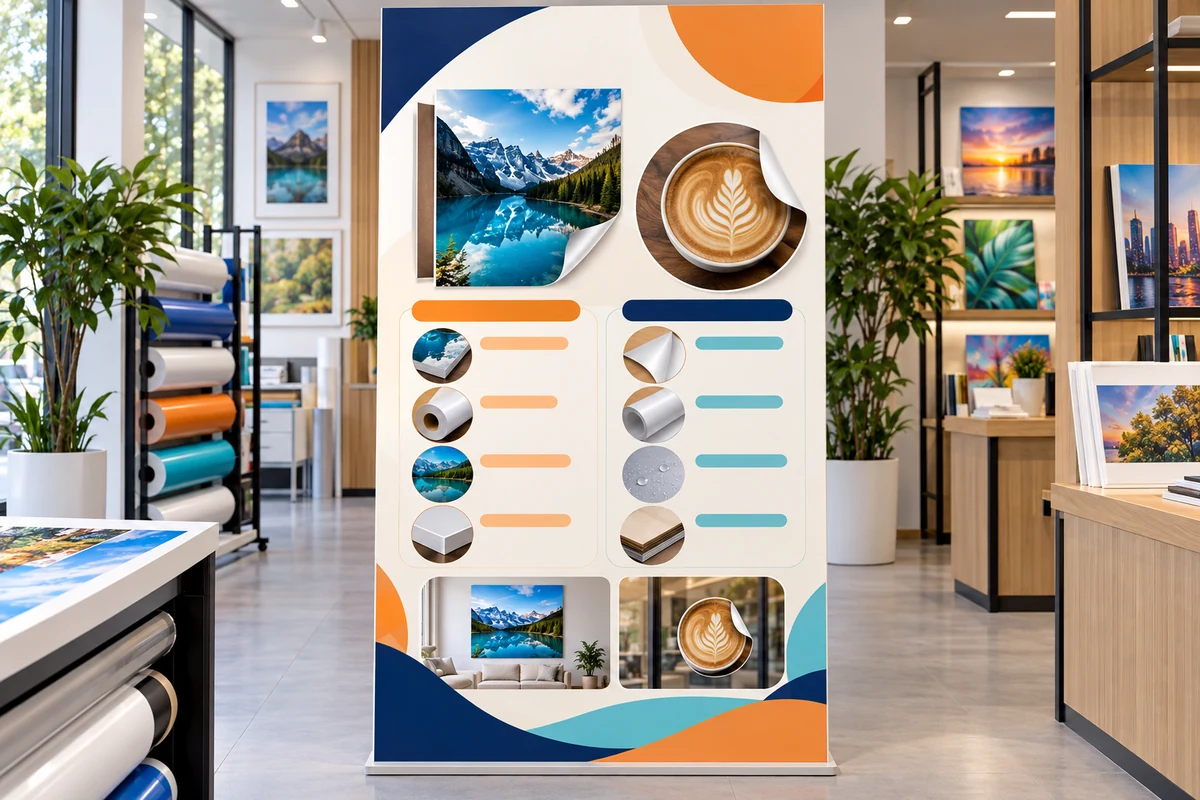
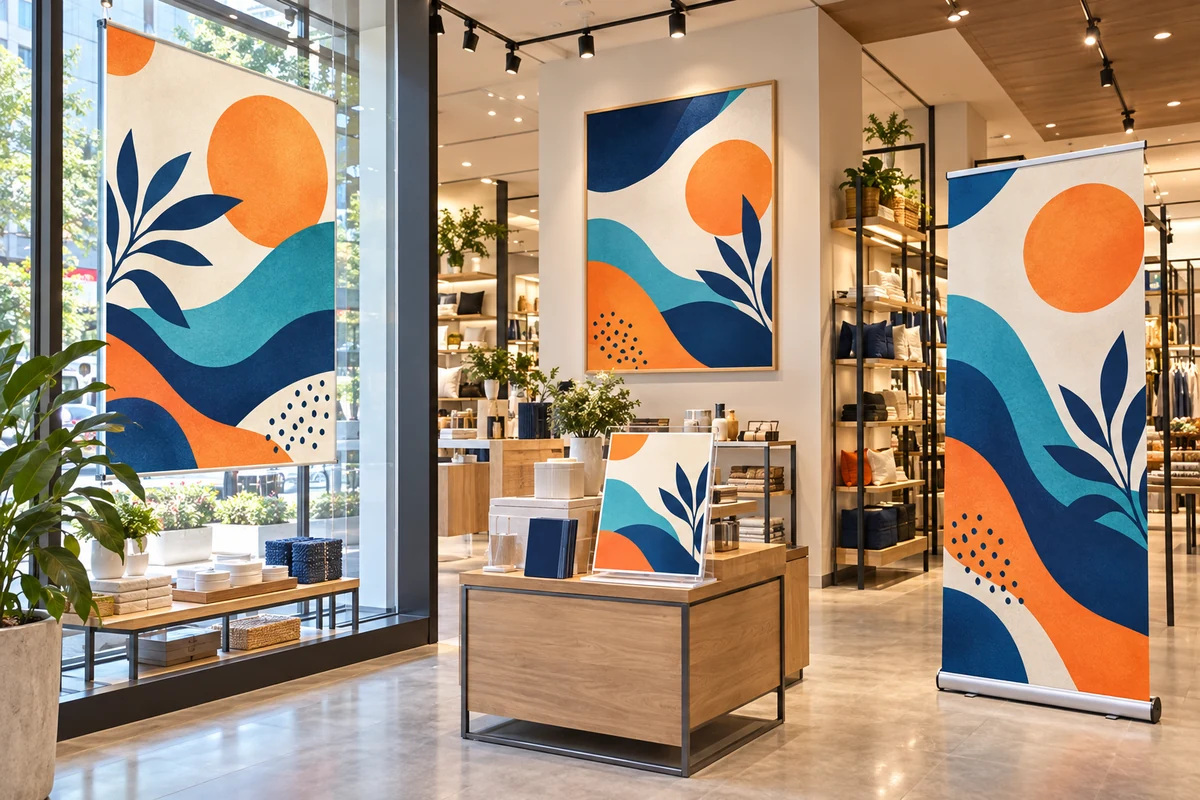
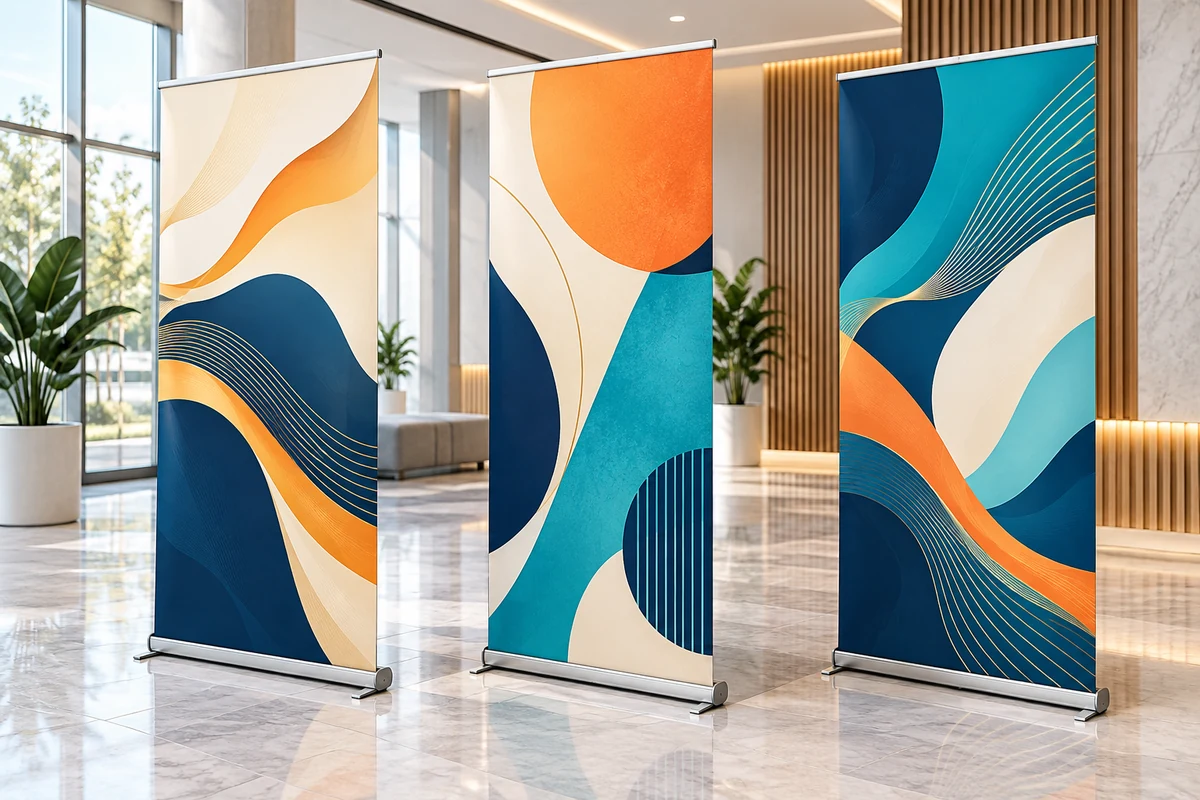
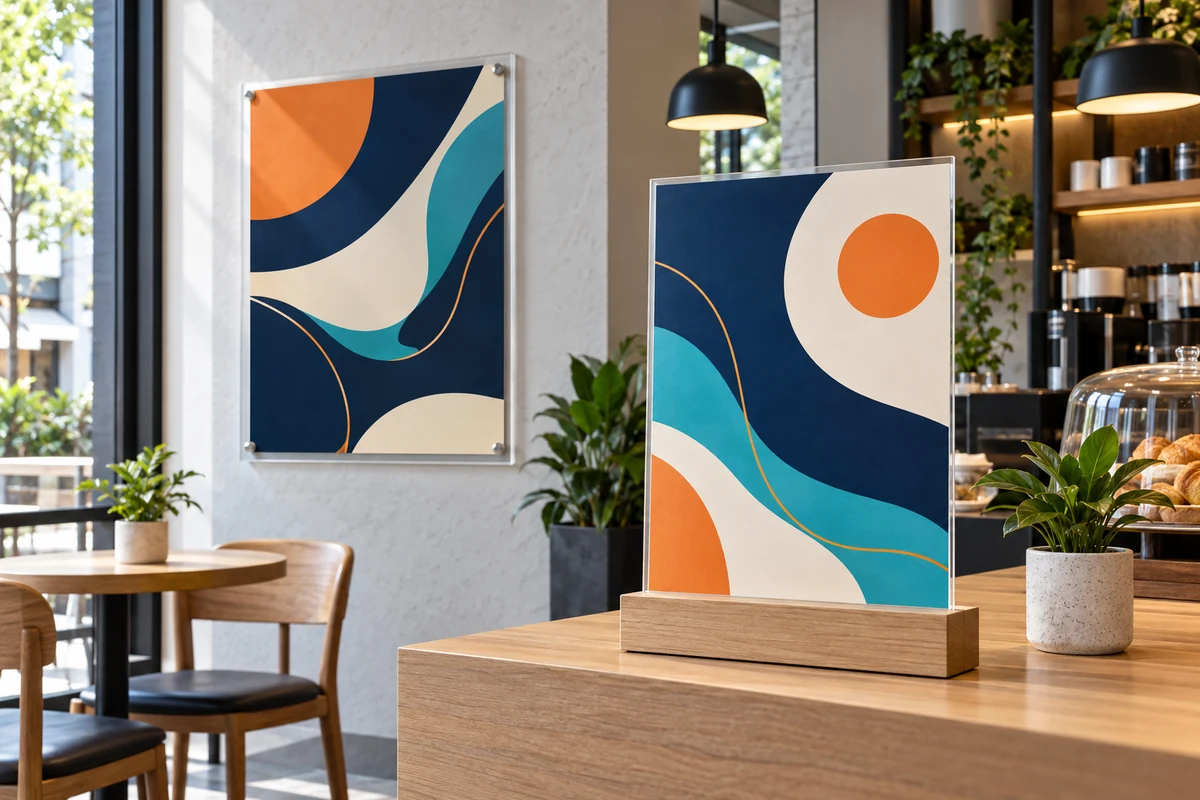
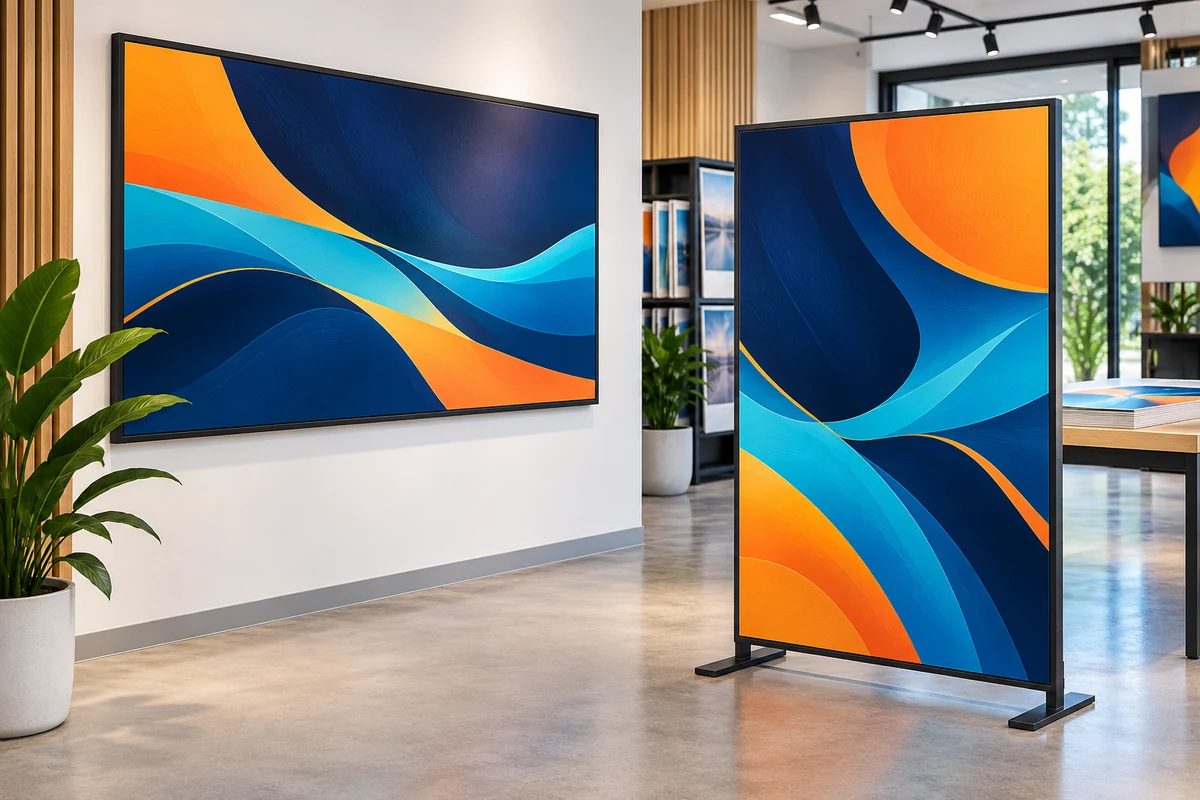
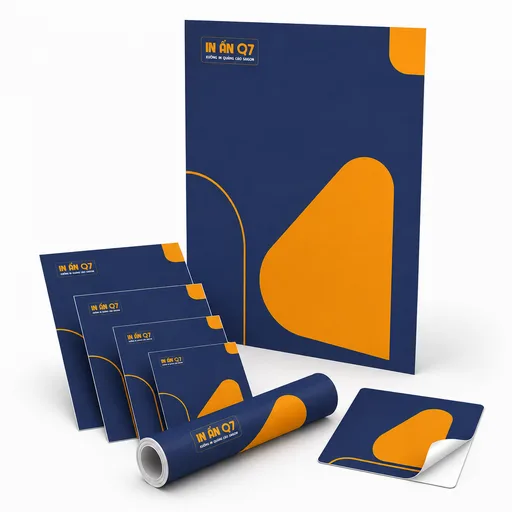
What all the above applications have in common: the print is placed indoors or under cover, and viewers stand close and look carefully. That is exactly where this material is strong — the smooth surface makes food photos, product photos and small-print price lists come out clearly.
Related products


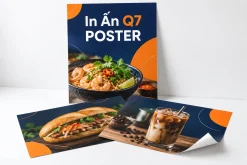
Poster

Standee

Standee
Mounting PP on rigid boards
Loose PP sheets are very soft; to stand them up or hang them flat on the wall, mount them on a rigid backing board. Two common methods:
- Mounting on formex — light, cheap, can be cut to shape. Used for direction signs, map boards and display boards with stands.
- Mounting on acrylic — thicker and more premium, perfectly flat, suited to boards in company lobbies and showrooms.
If you know in advance that it will be mounted, order adhesive PP Polypropylene to stick it on directly, which is both flat and fast. If you order the non-adhesive type and mount it afterwards, spray adhesive must be used, which easily traps air bubbles if you are not used to it.
Mounted boards should have rounded corners or edge battens if placed where many people pass — straight-cut Formex edges are quite sharp.
How PP Polypropylene differs from Hiflex banner and Formex
These three materials are often weighed against each other for large-format printed items. The difference lies in where they are displayed:
| Material | Strengths | Best when |
|---|---|---|
| PP Polypropylene | Smooth surface, sharp colours, light, rollable | Indoor posters, standees, backdrops |
| Hiflex Banner | Withstands sun and rain, very large sizes, low price | Outdoor banners, signboards, hoardings |
| Formex | Rigid board, can stand on its own | Direction signs, map boards, CNC-cut letters |
Besides these three materials, PP Polypropylene is also often compared with decal when a print needs to be stuck onto a surface. The difference: decal is made for sticking, with strong adhesive and a thin base; adhesive PP only sticks temporarily to smooth, flat indoor surfaces and peels off more easily.
A simple rule: indoors use PP, outdoors use banner. If PP Polypropylene must be hung outdoors, use it only for short events and under cover — sun and rain fade the print and peel the coating very quickly.
| What you need | Recommended |
|---|---|
| Point-of-sale posters, food photos, product photos | Glossy laminated PP |
| Photo backdrops, standees under spotlights | Matte laminated PP |
| Roll-up standees used again and again | Laminated PP (gloss or matte) |
| Signage and maps that need to be rigid | PP mounted on Formex |
| Stuck straight onto flat walls or acrylic (Mica) | Adhesive PP |
Common mistakes when ordering PP printing
- File in RGB color mode — screen colours are more vivid than printed colours. Convert to CMYK before sending to avoid surprises on delivery.
- Enlarging 72dpi images from the internet to large format — the print will look jagged. Images should be at least 150dpi at the actual size.
- Forgetting bleed — when the finished piece is trimmed, a white border will show on one side.
- Placing text right at the edge — with roll-up standees, the bottom part sits inside the roll-up housing, so text placed too low will be hidden.
- Choosing glossy lamination for brightly lit places — the glossy surface reflects lights, making the text unreadable from an angle.
- Hanging PP outdoors to save money — one rainstorm and the coating peels and the colours run, so in the end it has to be reprinted.
Preparing PP Polypropylene print files
- Format — PDF or AI.
- Color mode — CMYK, so the printed colours are close to the design colours on screen.
- Resolution — at least 150dpi at the actual size; for small sizes viewed up close, use 300dpi.
- Bleed — leave 3mm on each edge so trimming leaves no white border.
- Safe zone — for sizes of 100cm and up, leave 5cm around the edges so text is not hidden by the standee frame or battens.
- Text — convert to outlines before sending to avoid font errors.
Area is calculated in square metres: width (cm) × height (cm) ÷ 10,000, with a minimum of 0.5 m² per piece. If you do not have a file yet, add the design service; we will lay it out and send it for approval before printing.
How to order PP Polypropylene printing at the workshop
- Send request — width × height, quantity, display location and the date you need it. Send the design file if you have one; if not, add the design service.
- We quote — by the square metre, with options for printing technology and lamination. Listed prices exclude VAT.
- Approve the layout — we send a preview file so you can check the text, phone number and logo before it goes on the machine.
- Printing and finishing — roll printing, lamination, cutting to size; board mounting or standee assembly if ordered.
- Delivery or pickup at the workshop — prints rolled in paper tubes, mounted boards wrapped in protective film.
Regular poster and standee orders are ready the same day if the file is ready and sent before noon. Orders with board mounting or large quantities need extra processing time; we will give a specific date when quoting.
Caring for PP Polypropylene prints
- Roll lengthwise for storage, never fold — creases on PP leave permanent white marks.
- Roll laminated prints with the printed side out, and unlaminated prints with the printed side in, to limit scratches.
- Avoid placing it near windows with direct sunlight; the colours will gradually fade even indoors.
- Dust with a dry or slightly damp cloth, do not use solvents — alcohol and thinner dull the coating.
Frequently asked questions about PP Polypropylene
Can PP be hung outdoors?
Only for short events and under cover. For long-term hanging in sun and rain, choose Hiflex banner; the print will last much longer.
Glossy or matte lamination?
With spotlights or for photography, choose matte to avoid glare; for vivid color and the best scratch resistance, choose glossy.
What is the maximum print size?
The maximum width is 1.8m according to the roll printer width; the length is almost unlimited. Wider pieces are joined or switched to banner.
Can adhesive PP be stuck on painted walls?
Yes, on flat, smoothly painted and clean walls. For textured, chalky or damp walls, mount it on Formex and hang it instead of sticking it directly.
Are custom sizes possible?
Yes. Prints are priced by actual square metres, so we accept any size, including odd dimensions, with a minimum of 0.5 m² per piece.
Can PP Polypropylene be printed on both sides?
Because the ink-receptive coating is only on one side, PP can only be printed on one side. If you need two sides, print two sheets and stick them back to back, or switch to banner and board materials.
How long does a PP print last indoors?
Hung indoors away from direct sun, the colours hold up well for many months to a few years. Laminated prints are more colourfast than unlaminated ones.
Which surfaces to stick it on and how to remove it
Indoor prints are damaged mainly by how they are stuck on and removed, not by the material. The points below help keep the wall intact and the print usable for a long time.
| Mounting surface | Adhesion | When removed | What to do |
|---|---|---|---|
| Flat, freshly painted wall | Very good | May peel the paint | Wait at least 3 weeks for the paint to dry, remove with a warm hair dryer |
| Old, faded painted wall | Medium | Large patches peel off | Use a frame or clamp bars instead of sticking |
| Glass | Very good | Clean, easy to remove | Wipe with alcohol and let it dry before sticking |
| Gloss-painted wood | Good | Clean | Press evenly from the middle out to the edges |
| Rough, textured-paint walls | Poor | Peels early | Mount it on a rigid board and hang it instead |
| Damp surfaces | Very poor | Peels within a few days | Treat the damp first, or change the approach |
When removing it, warm the edge with a hair dryer for about ten seconds to soften the adhesive, then pull slowly at a narrow angle, almost parallel to the wall. Pulling at a right angle is a sure way to peel off the paint underneath.
For rented premises, the safest option is not to stick it directly. Mount it on a rigid board and hang it with removable hooks; when the lease ends, take it with you and the wall stays intact.
How far print colours differ from screen colours
Most colour complaints stem from expectations, not printing errors. Understanding a few technical limits in advance avoids disputes after delivery.
- Colours on screen are emitted light, colours on a print are reflected light — the two are never exactly the same.
- Vivid colours such as neon green, fluorescent orange and deep purple are beyond what printing inks can reproduce, and will come out duller.
- Large black areas should use four-colour black instead of single black, otherwise they look washed out and blotchy.
- Two print runs a few weeks apart may differ slightly due to different ink and material batches; if you need matching colours, print in one run.
- Gloss lamination makes colours about one tone darker than matte lamination, with the same file.
- To be sure, print a small test sheet before running the whole large batch.
We offer colour test prints for large orders. You approve the test print before the batch runs; it takes an extra day but saves reprinting the whole batch.
If the item is part of a brand identity with standard colour codes, send the colour codes when ordering. Matching by code is much closer than matching by eye from the file.
Order PP Polypropylene printing at In Quảng Cáo Q7
We print directly in District 7 and offer a full package from design and printing to lamination and board mounting. Send the file with the width × height and display location so we can advise on the PP type and finish. See the specifications and prices on the page Large-Format PP Printing, or contact 0866.511.099, or visit our workshop at 49 Mai Van Vinh, Tan Hung Ward, Ho Chi Minh City. Production & delivery: 8:00–12:00 & 13:00–18:00 Mon–Sat (closed Sun) · Consultation & orders: 8:00–12:00 & 13:00–20:00 Mon–Sat; 14:00–19:00 Sun.
View directions to the workshop on Google Maps
Need printing or signage in Ho Chi Minh City?
In Quảng Cáo Q7 runs its own print workshop in Tân Hưng Ward (former District 7), Ho Chi Minh City, producing and installing signage, banners, window graphics, exhibition booths and event displays. Send us the size, material, quantity and a photo on WhatsApp and we will get back to you.

Phone: +84 866 511 099 · Also on WeChat
Workshop: 49 Mai Văn Vĩnh, Tân Hưng Ward, Ho Chi Minh City