




































































Roll-up or X-banner: which to choose for your event
Sep
Roll-Up Standee or X-Banner: Which to Choose for Events
These two standee types are often asked about at the same time and the price difference is quite clear, so the question is usually “will the cheap one do?”. The answer depends on three things: how long the standee stands, whether it is taken out and back many times, and how far away viewers stand. This article compares the two by exactly those three criteria.
How a roll-up standee works
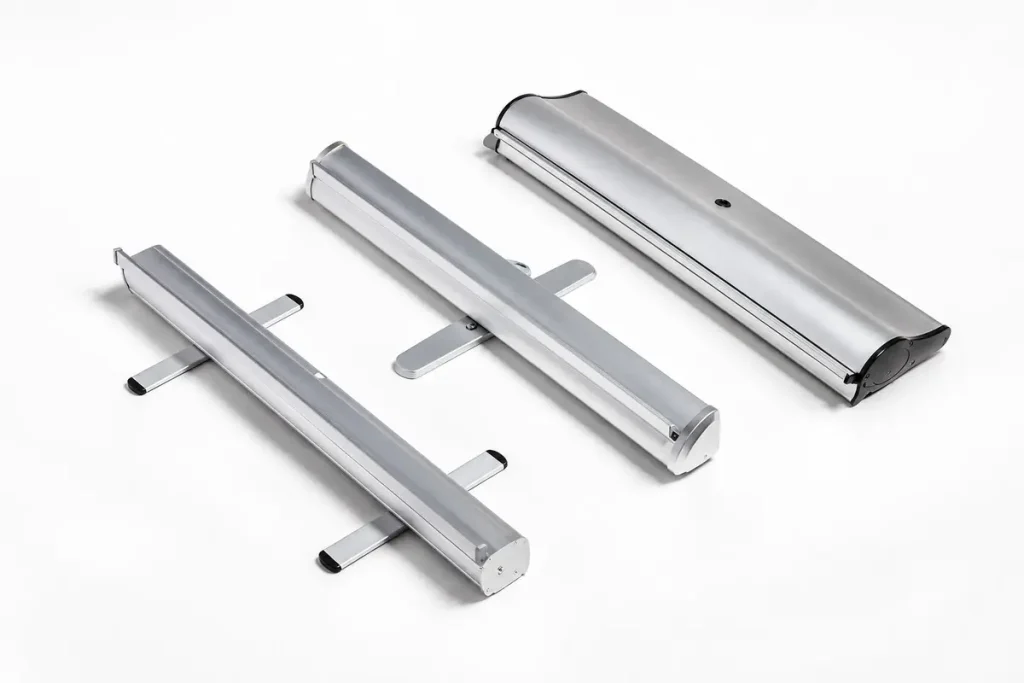
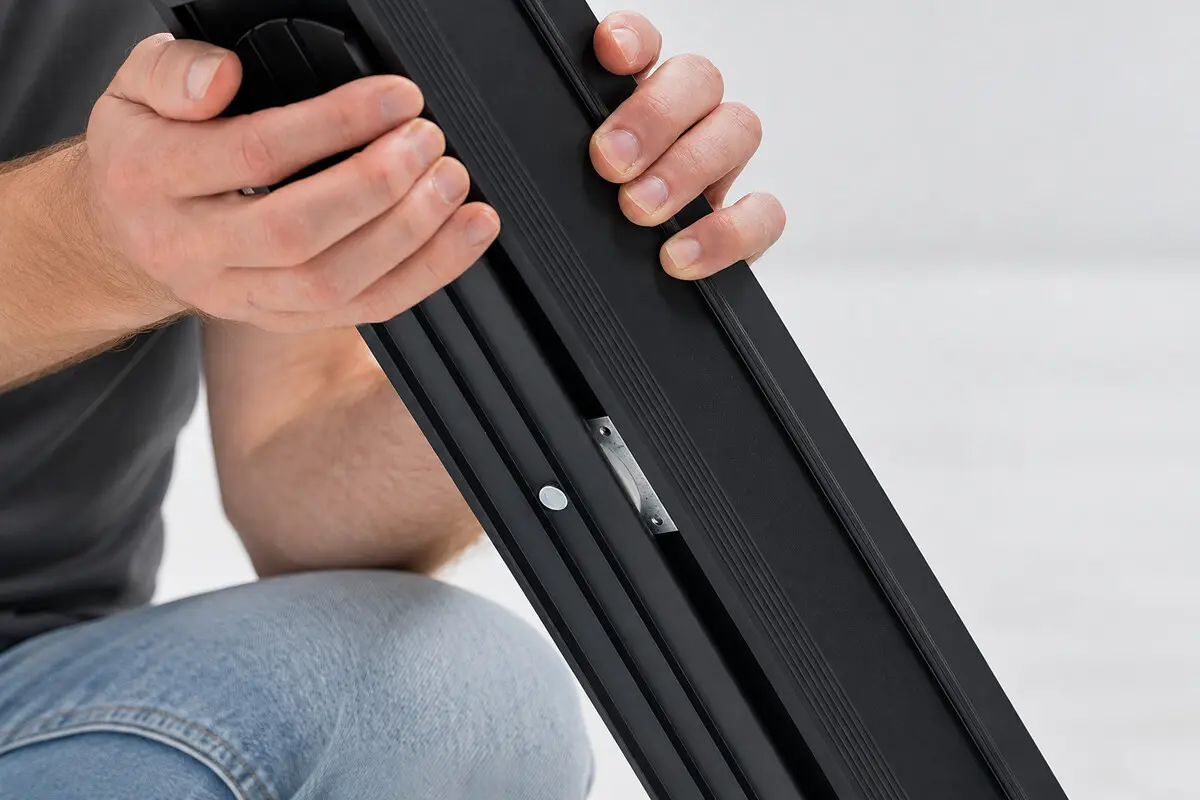
Inside the aluminium cassette is a spring-loaded roller, with the bottom edge of the print fixed to the roller. Pull the print up and the spring stores tension; let go and the spring pulls the print back into the cassette – the same principle as a roller blind. The biggest gain is not convenience, but that the print always stays inside a closed cassette: no folds, no dust, no scratches during transport.
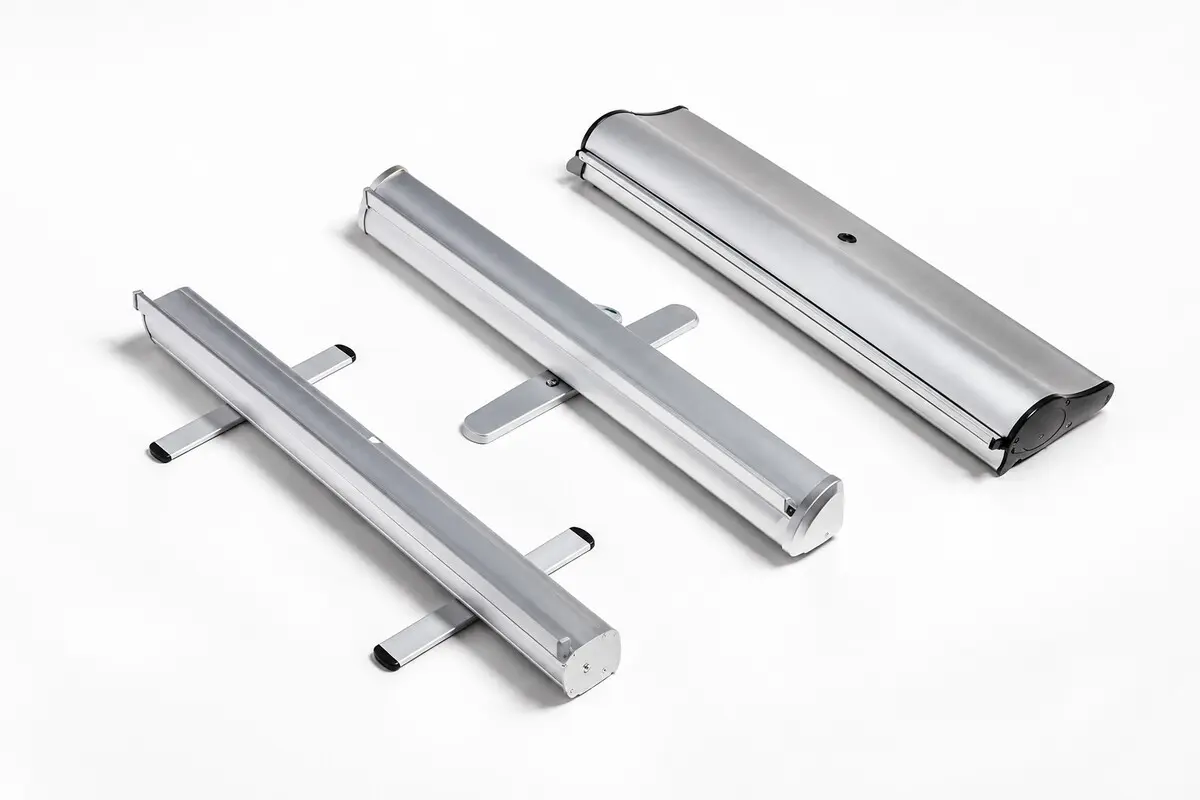
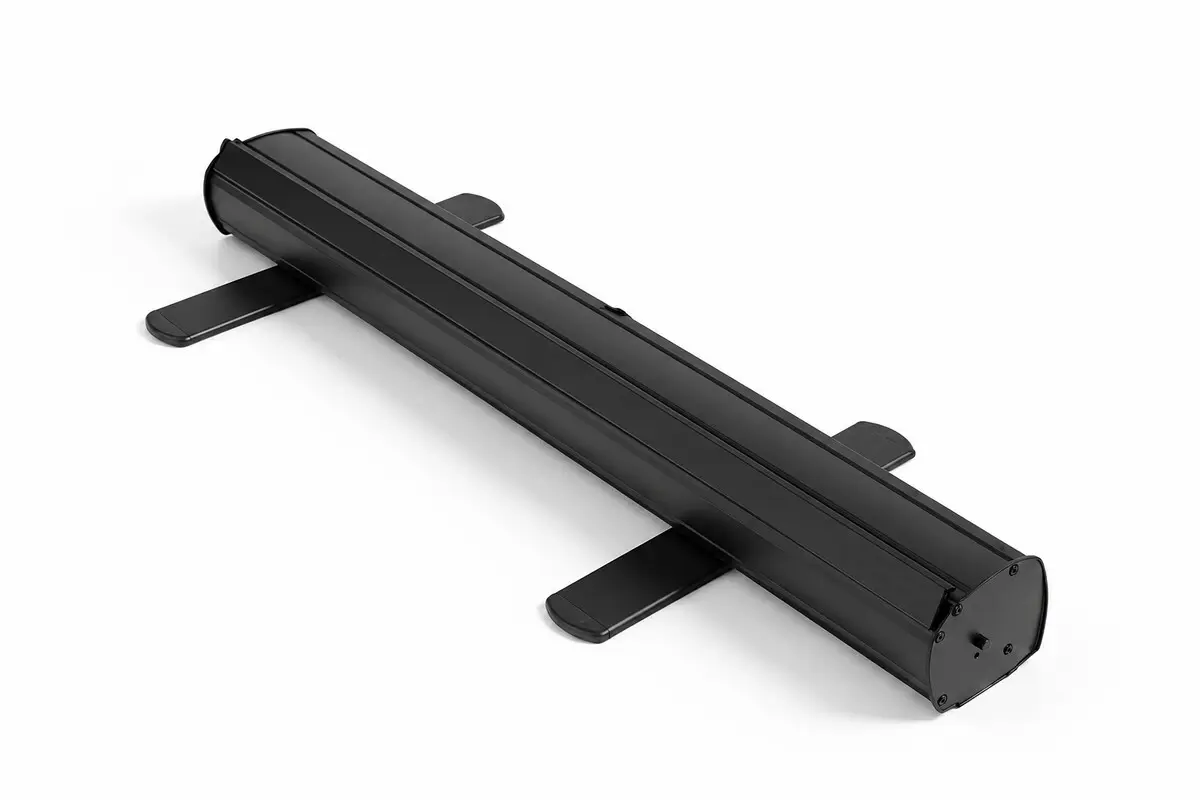
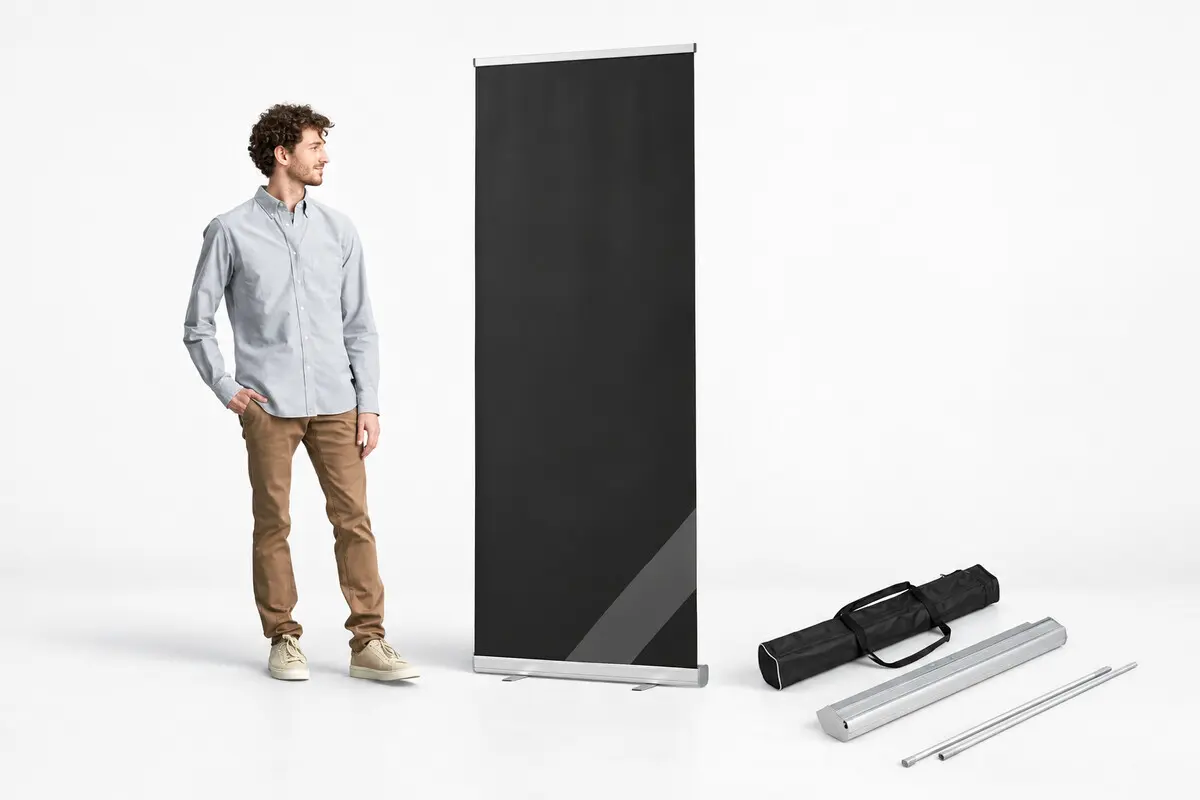
The aluminium cassette also acts as a counterweight keeping it balanced. Two small feet fold out on either side to widen the footprint, so a roll-up standee stands more firmly than an X-banner in busy places.
Comparison by three criteria
Standing time
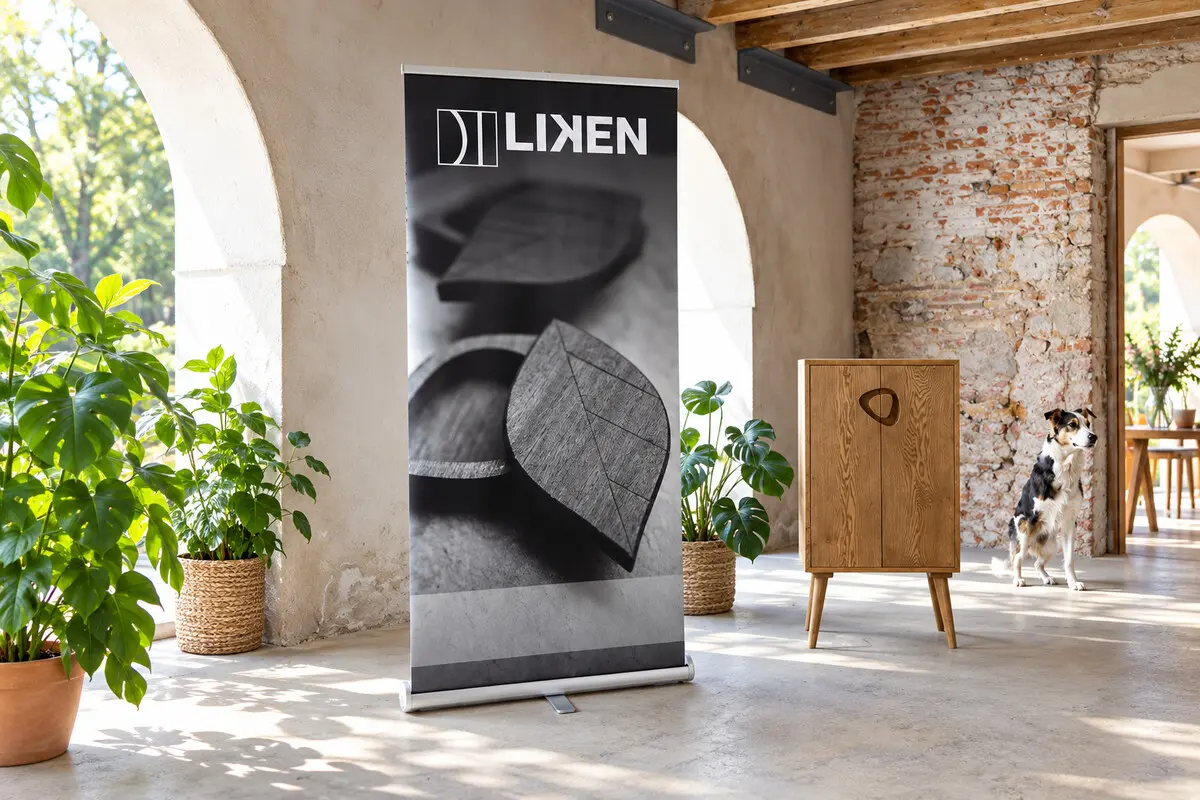
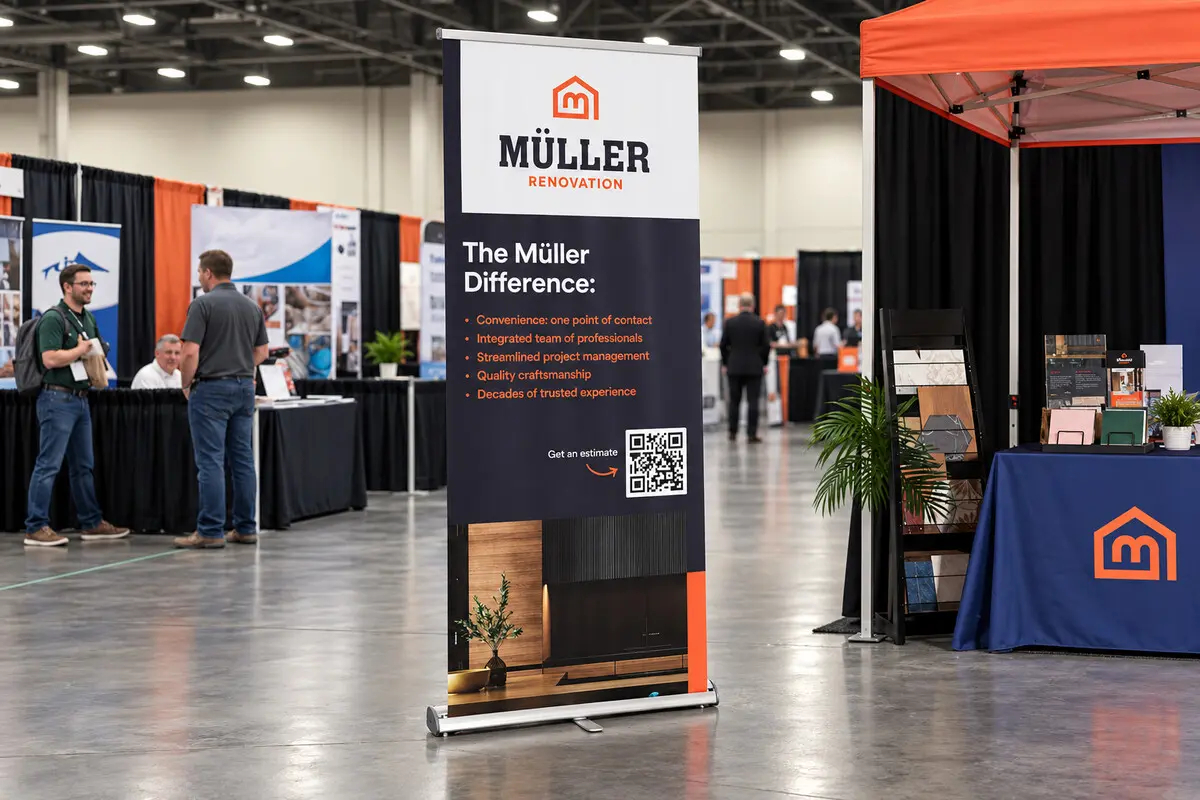
For a campaign of a day or two that is then discarded – an X-banner is enough. Standees standing permanently in company lobbies, showrooms or clinic waiting rooms should use a roll-up standee: the print stays taut and flat continuously, without sagging or curling at the edges like a print hung on an X-frame for a long time.
How often it is taken out and back
This is the criterion where the roll-up standee wins most clearly. Each time an X-banner is taken down, the print is rolled by hand and stuffed into a bag – after five to seven times, the print creases and the edges start to curl. With a roll-up standee the print goes back into the cassette by itself, and the quality hardly changes over many uses.
Viewer distance
Viewers standing close – at seminars, at consultation counters, next to partners – will see the whole frame. The one-piece aluminium frame of a roll-up standee looks neater than the steel rods and eyelets of an X-banner. If the standee only stands far away for passers-by to glance at, this difference is negligible.
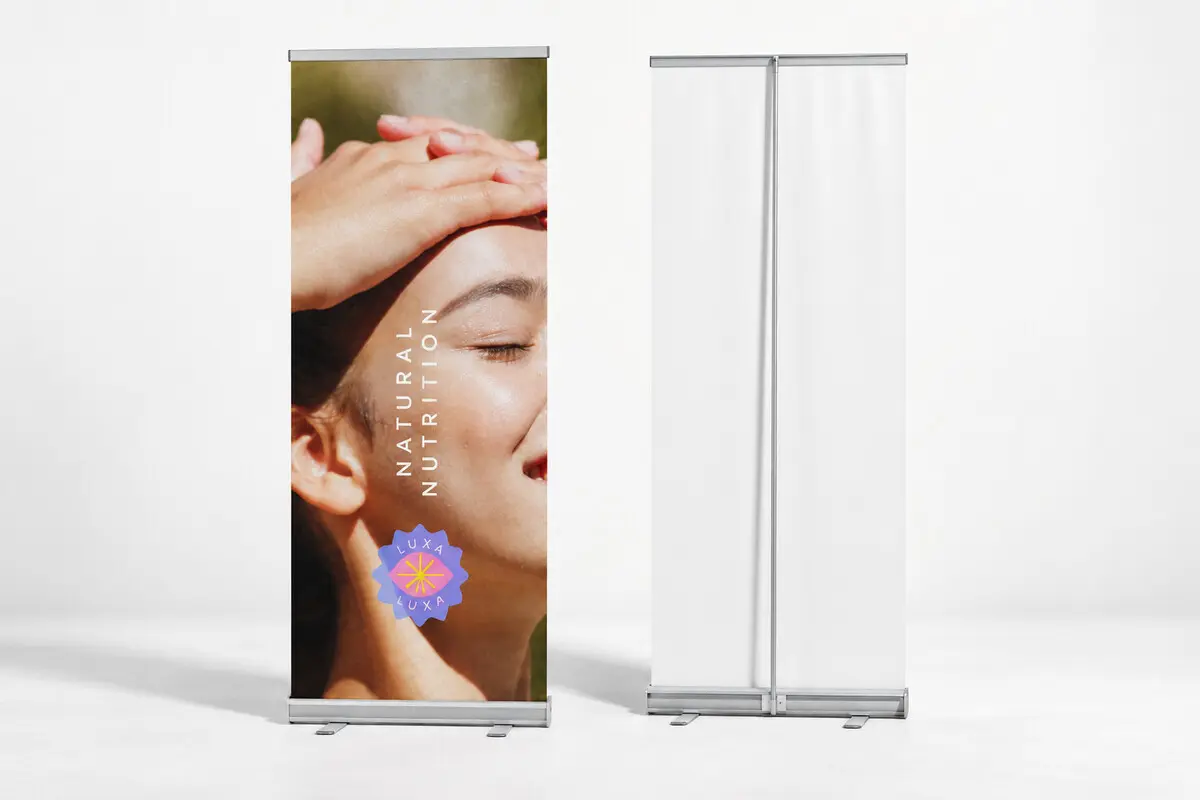
Taking down a roll-up standee properly
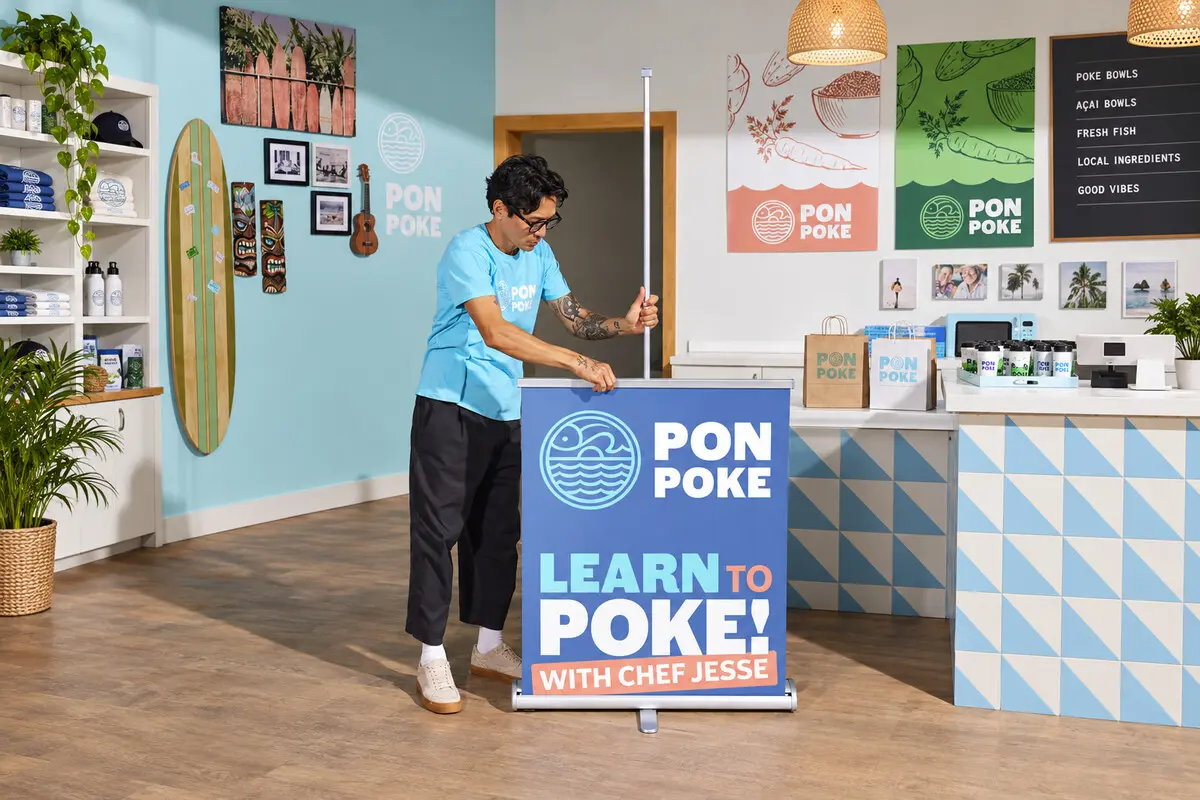
Remove the support pole, gently hold the top crossbar and then release slowly let the print roll into the cassette. Letting go suddenly makes the print roll in too fast, easily misaligning the edges or folding a corner inside the cassette – this is the most common mistake, and also why many new roll-up standees show creased prints after only a few uses even though they have never been folded by hand.
60 × 160cm and 80 × 200cm sizes
The small size is compact and light, suited to moderate spaces – next to the reception desk, a shop entrance, the corner of a small seminar room – and can be carried on a motorbike. The large size is taller than a person so it is visible from afar over the heads of a crowd, the standard size for fair and exhibition booths. In return the cassette is heavier and needs space behind for the support pole.
Matte or glossy lamination
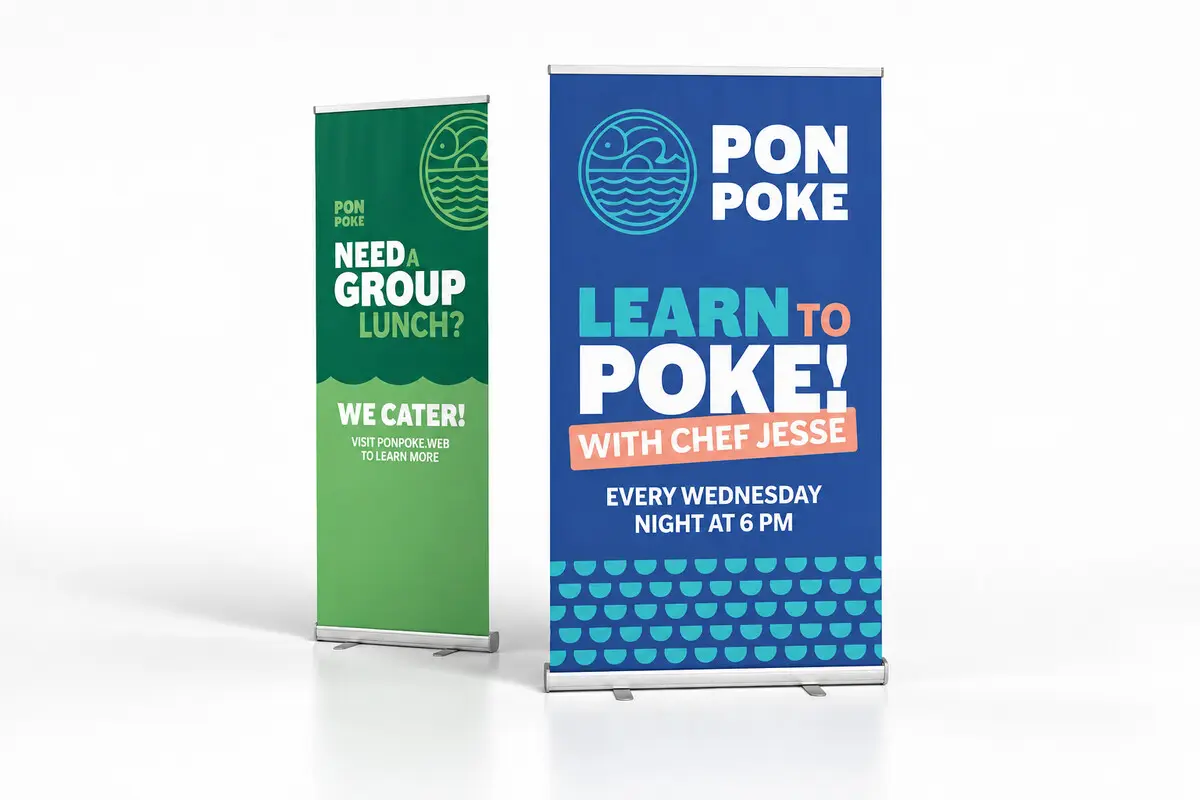
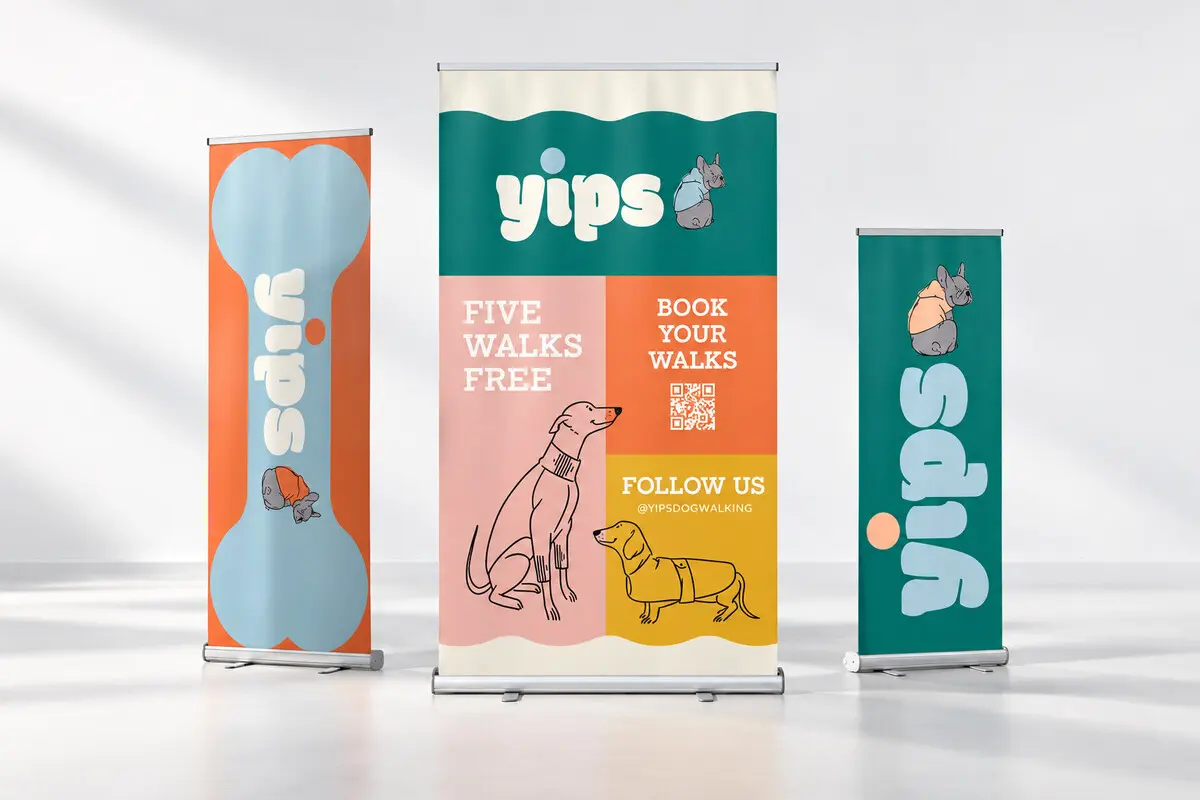
PP paper is a flexible synthetic paper, waterproof, and can be rolled many times without creasing. The lamination decides how the print reflects light: matte gives a non-reflective surface, with text readable from every angle even under direct lights; gloss gives more vivid colours and more three-dimensional images but glares easily under spotlights. Standees placed in halls or showrooms with many lights are safer with matte lamination.
Two areas to leave clear when designing
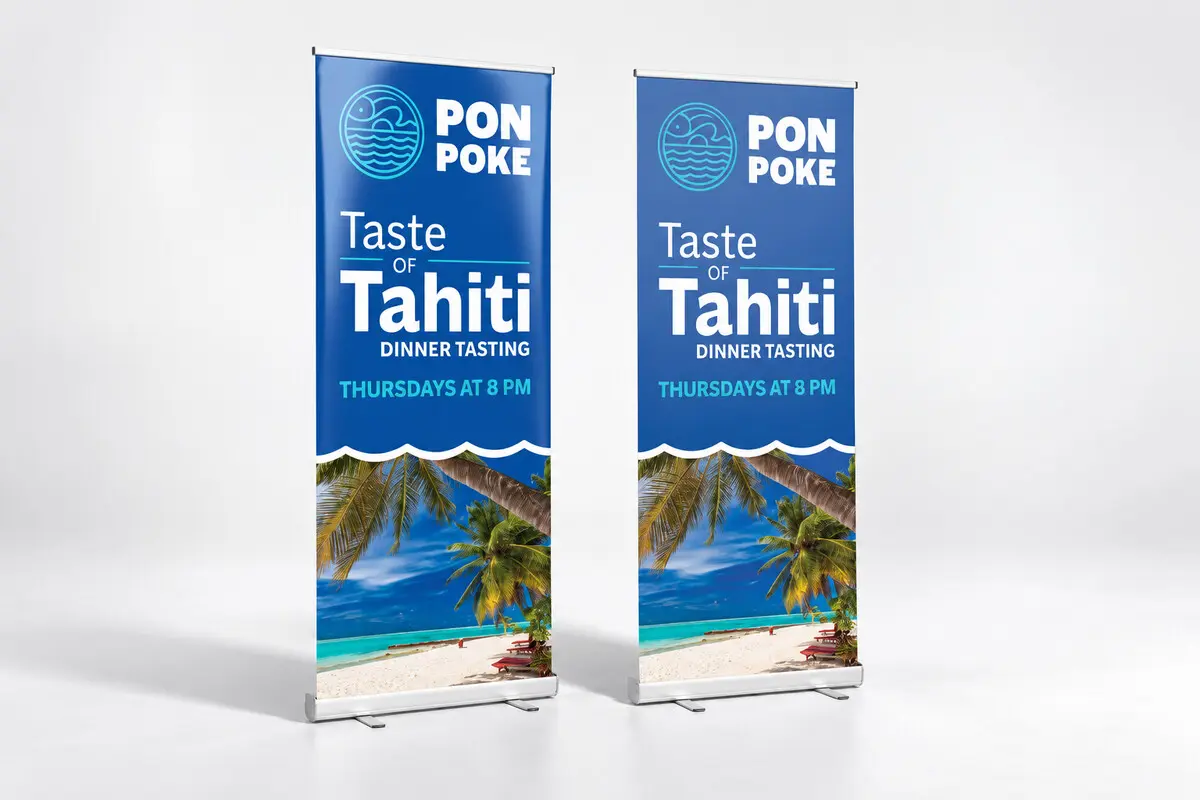
About 5cm at the top edge clamped by the top bar, and about 10–15cm at the bottom edge sit inside the aluminium cassette when fully extended. Do not place logos or important text in these two areas. Also, the very bottom is at knee height of viewers so it is rarely read – the main content should be concentrated in the upper half.
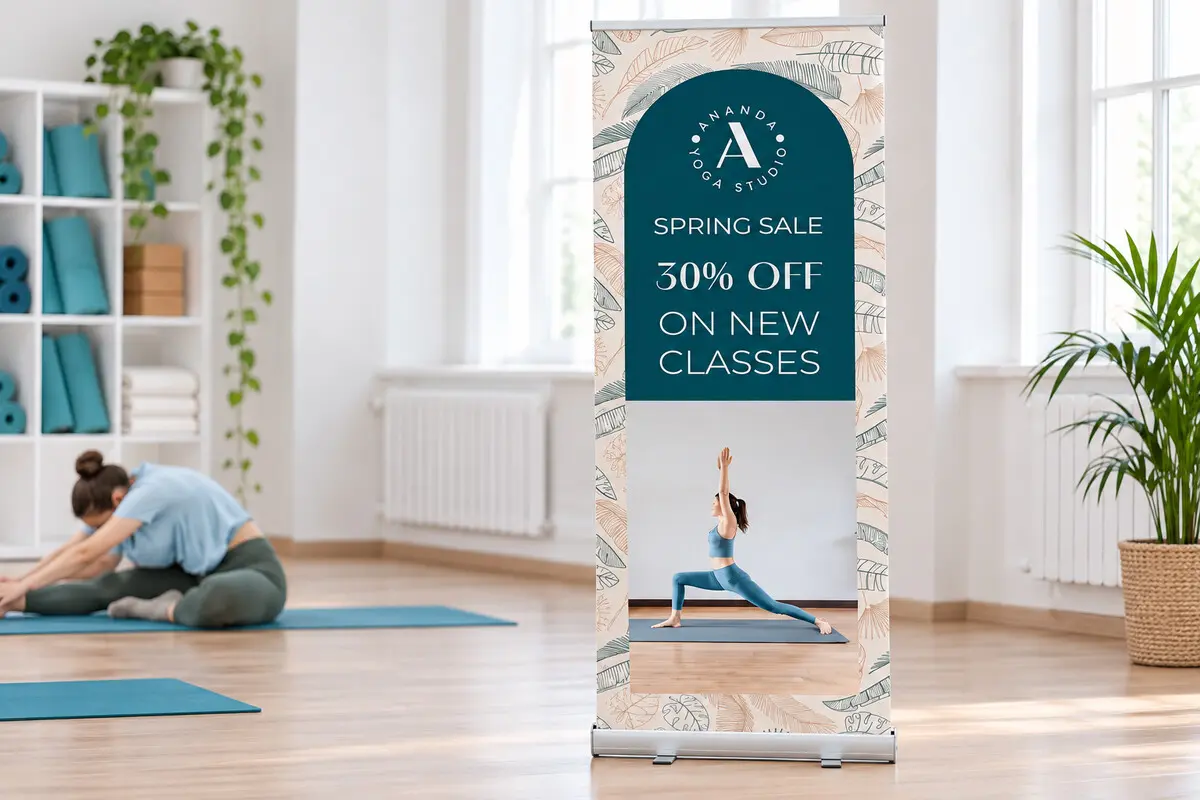
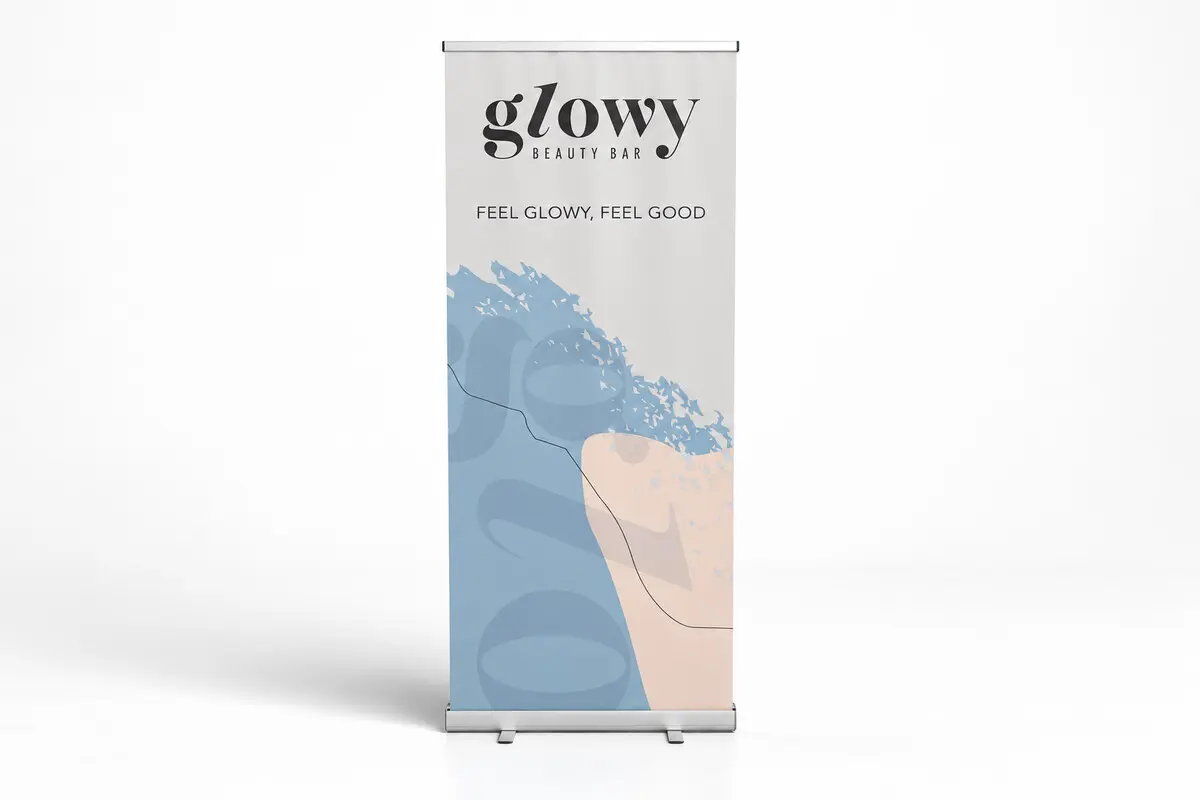
Need a quote or want to order a roll-up standee?
See the two sizes, two lamination types and three price levels (full set / print only / stand only) on the Roll-Up Standee product page. Or message on Zalo / call 0866.511.099 — we will quote within 30 minutes during working hours. In Quảng Cáo Q7, 49 Mai Van Vinh, Tan Hung Ward, Ho Chi Minh City.
Choosing by type of event
Whether to choose a roll-up standee or an X-banner is usually decided by the nature of the event rather than by price. The table below gathers common situations.
| Event type | Recommended | Reason |
|---|---|---|
| Seminars and conferences with invited guests | Roll-up standee | Flat print face, looks polished in photos |
| Multi-day fairs | Roll-up standee | Set up and taken down many times; the roll-up mechanism is more durable |
| Short promotions in shops | X-banner | Cheap, good enough, easy to replace the print |
| Events moving between several locations | Roll-up standee | Comes with a carry bag, protects the print during transport |
| One-session opening ceremonies | X-banner | Low cost, stored away after use |
| Permanent display in a lobby | Roll-up standee | Stands firmly long-term, wider feet |
The biggest difference in photos: a roll-up standee gives a completely flat print face, while the X-frame makes the sheet slightly curved. For events with press or that need images for media, choose the roll-up type.
Conversely, if you only need a sheet standing in a corner of the shop for a few weeks and then discarded, the X-frame is much cheaper and shoppers will not notice the flatness of the print.
Related products

Standee


Standee

Standee

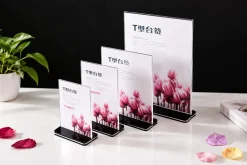
Tabletop standees
Cost over the period of use
The initial purchase price of a roll-up standee is higher, but if used many times the difference narrows considerably.
| Item | Roll-up standee | X-banner |
|---|---|---|
| Initial set price | Higher | Lowest |
| Stand lifespan | Many years if taken down properly | Many years, rarely breaks |
| Print lifespan | Long, protected by the cassette | Shorter, tears at the four hook corners |
| Replacing the print | The whole roller assembly in the cassette must be replaced | Only a new sheet with four holes is needed |
| Cost per content change | Higher | Lower |
| Transport | Has a carry bag, safe | Folds into a tube, most compact |
So the rule is quite clear: content that rarely changes but is used many times calls for a roll-up standee; content that changes constantly is much cheaper with an X-frame in the long run.
Many event organisers keep both: roll-up standees for fixed identity panels such as the company logo, X-frames for information panels that change with each session.
Setting up and taking down properly to protect the roll-up mechanism
Most breakdowns come from handling, not from quality. Done in the right order, one set lasts for many years.
- Place it on a flat floor before pulling the print up; a sloping floor misaligns the roller.
- Pull slowly, keep the top bar straight, then fit the support pole before letting go.
- Don't pull past the mark: pulling to the maximum strains the spring in the cassette, and over time it will not roll in fully.
- Remove the support pole before taking it down, otherwise the pole gets bent.
- Lower it slowly, holding the top bar; do not let the spring snap it back by itself.
- Store it lying flat in the bag provided; do not stand it upright in a corner where it can fall.
Do not leave the set in a car boot in the sun. High heat curls the print edges and weakens the spring, so after a few times it will not roll in its full length.
If the print curls at the edges after a while, lay it flat under a heavy weight overnight. This fixes most cases without reprinting.
Print layout for events
The sheet is 160 or 200 cm tall, but the area viewers actually read is only from 80 to 150 cm above the floor. Building the layout around that area is more effective than spreading it evenly across the sheet.
- Top area: logo and event name, visible from afar in a crowd.
- Middle area: main content, largest text.
- Bottom area: sponsor logos, QR code, often hidden by people standing in front.
- Leave 10 cm at the bottom because this part rolls inside the base, so nothing printed there is visible.
- 20 mm side margins so the clamp doesn't cut into the text.
- QR code placed at a height of 120 cm, at least 40 mm per side.
For a series of events over many sessions, separate the fixed and changing parts. The fixed part, including the logo and background colour, stays the same across sessions; the changing part is only the name and date.
Choose matte lamination for halls with direct lighting because a glossy face will glare in photos. Where the light is soft, gloss lamination makes the colours richer.
See the finished product at Roll-up Banner and X-Banner Stand. For print face materials, see PP Polypropylene.
Customer groups who order most
Below are the customer groups who order roll-up standees most and how they use them, so you can picture where the set will stand.
| Customer group | Typical printed content | Popular size |
|---|---|---|
| Companies organising seminars | Welcome, program, sponsors | 60x160cm |
| Trade fair booth | Flagship products, offers | 80x200cm |
| Training centres | Courses, course start dates | 60x160cm |
| Banks, insurance | Products, interest rates | 60x160cm |
| Showrooms, large stores | New collection | 80x200cm |
| Hospitals, clinics | Guidance, services | 60x160cm |
The 60x160cm size is the most used because it is at eye level and does not take up space. The 80x200cm size is for large spaces such as fairs, where viewers stand a few metres away.
If you order several sets for a series of events, print them in one batch so the colours between sheets are consistent. Prints made a few weeks apart may differ slightly due to different ink and material batches.
Quick Q&A when ordering
This section gathers the questions we receive most when customers are torn between the two types.
- Can roll-up standees be used outdoors? Not recommended; wind makes the print vibrate and knocks the whole set over.
- How do I change the content later? Replace the print assembly in the cassette, or order a new set if the cassette is old.
- How heavy is the set? One person can carry it in the bag provided.
- How long does it take to set up? Under a minute, no tools needed.
- Do you accept an order for one set? Yes, from one set, with no minimum quantity.
- How soon is it ready? Usually 1 working day.
- Are there sizes other than the two standard sizes? Yes, tell us the desired size and we will quote.
Former District 7, Nha Be, District 4 and District 8 get door-to-door delivery. Other districts of Ho Chi Minh City are delivered according to the day's vehicle schedule; other provinces via intercity bus.
If you do not have a file yet, send your logo and content via Zalo; the design team will lay it out at the exact size and send a preview. Printing starts only after approval.
Comparison of the whole group of standing boards
When comparing the whole group of standing boards rather than just two types, the table below shows where the roll-up standee sits in the range of options.
| Standing board type | Printed sides | Outdoors | Best suited to |
|---|---|---|---|
| Roll-up standee | Flexible banner rolled into a base | No | Events, seminars, carried around |
| X-banner stand | Soft banner stretched at four corners | Limited | Indoors, low budget |
| A-frame standee | Rigid Formex board | Yes | Pavement, set out and brought in |
| Iron-base standee | Rigid Formex board | Yes | Placed permanently outdoors |
| Backlit banner standee | Banner with lights behind | Yes, needs a roof | Venues open in the evening |
| Table boards | Paper with acrylic (Mica) stand | No | Tables, cashier counters |
The soft print face group, including roll-up standees and X-banners, is for indoor use only. The rigid print face group withstands the outdoors but is heavy and does not fold as compactly.
If you need one set usable both indoors and outdoors, no type does both well. In practice, many organisations buy two separate types rather than trying to use one type for every situation.
Summary of the points to remember
A summary of the points to remember when choosing between a roll-up standee and an X-banner, so you do not have to reread the whole article.
- Roll-up standees give a completely flat print face, suited to events that need photos for media.
- X-banners are cheaper, suited to content that changes constantly and short-term use.
- Both are for indoor use only and cannot withstand outdoor wind.
- Roll-up standees set up and take down faster, with a carry bag protecting the print.
- X-banners fold into one long tube, the most compact for transport.
- The two standard roll-up standee sizes are 60x160cm and 80x200cm.
- Taking it down properly is the deciding factor for the life of the roll-up mechanism.
If you are still unsure, message us on Zalo with a description of the event and the expected number of reuses. Those two pieces of information are enough for us to advise on the right type.
What the cost of a set includes
The cost of a roll-up standee set has three parts: the aluminium cassette with the roll-up mechanism, the print and the support pole. Understanding each part helps you compare quotes between suppliers properly.
- Aluminium cassette: makes up most of the set price; spring quality decides durability.
- Print: priced by size; it is the consumable part.
- Support pole: usually three connecting sections, included in the set.
- Carry bag: included, protects the set during transport.
- Lamination: priced by area, choose matte or gloss.
- Design: free if you already have a finished vector file.
The price difference between suppliers mainly lies in the quality of the aluminium cassette and spring. Cheap cassettes often stop rolling in fully after a few dozen uses, and then a whole new set has to be bought, so it is not cheaper.
For organisations that use them regularly, invest in a good cassette from the start and only replace the print for each campaign. This is much cheaper than buying a cheap set and replacing the whole set every year.
Need printing or signage in Ho Chi Minh City?
In Quảng Cáo Q7 runs its own print workshop in Tân Hưng Ward (former District 7), Ho Chi Minh City, producing and installing signage, banners, window graphics, exhibition booths and event displays. Send us the size, material, quantity and a photo on WhatsApp and we will get back to you.

Phone: +84 866 511 099 · Also on WeChat
Workshop: 49 Mai Văn Vĩnh, Tân Hưng Ward, Ho Chi Minh City