








































































Staples, Spiral or Glue – Choosing Catalogue Binding
Sep
A printed catalogue or company profile is meant to be kept on the desk, passed around the meeting room and flipped through many times before a decision is made. So choosing the wrong binding or the wrong paper size shows immediately: the book does not open flat, text is swallowed into the spine, or the book is so thin it does not live up to what you want to present.
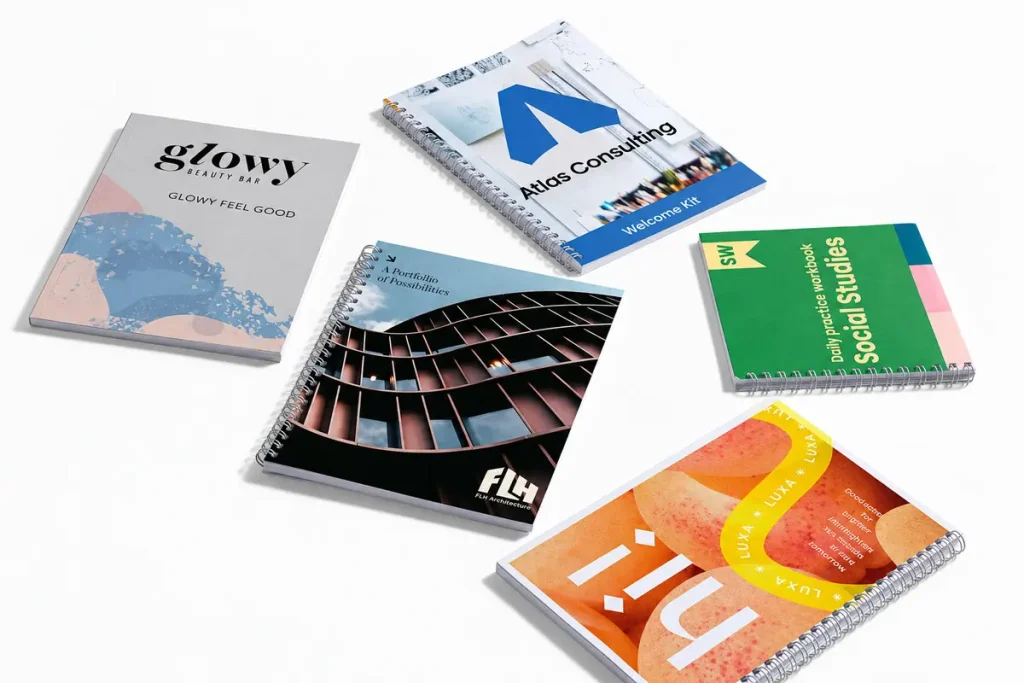
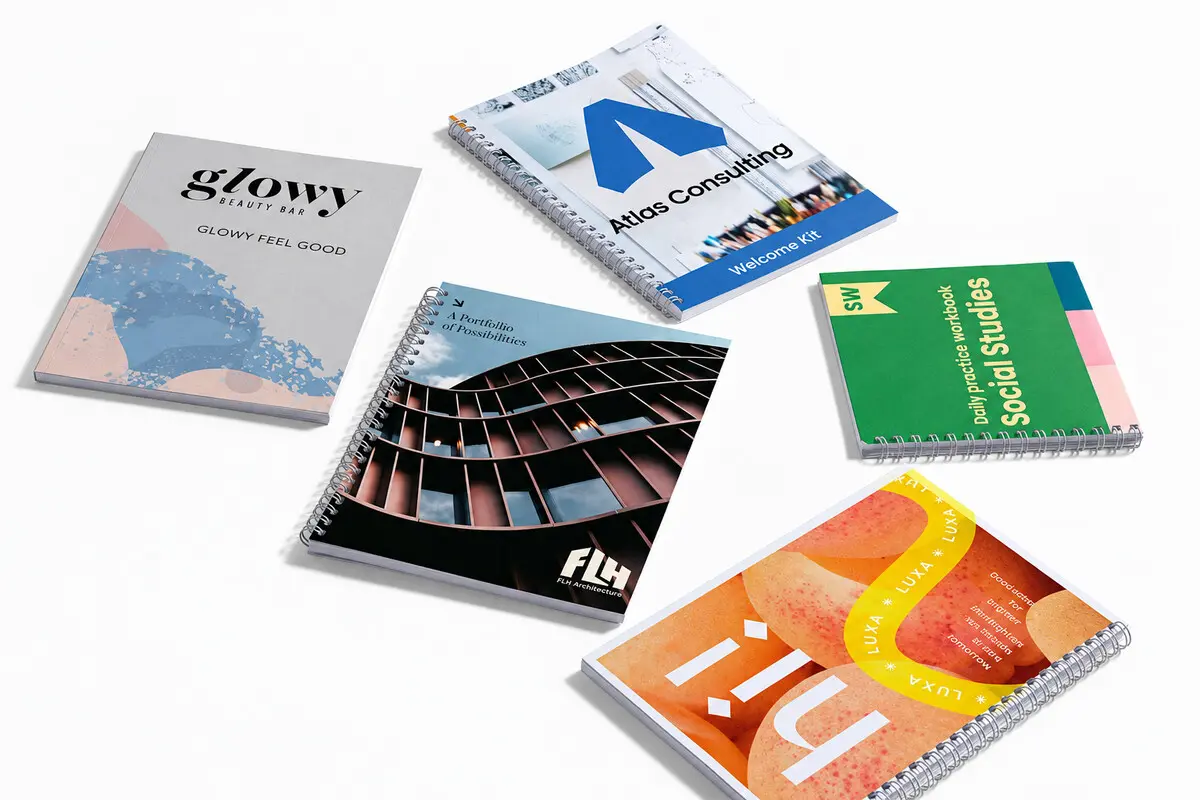
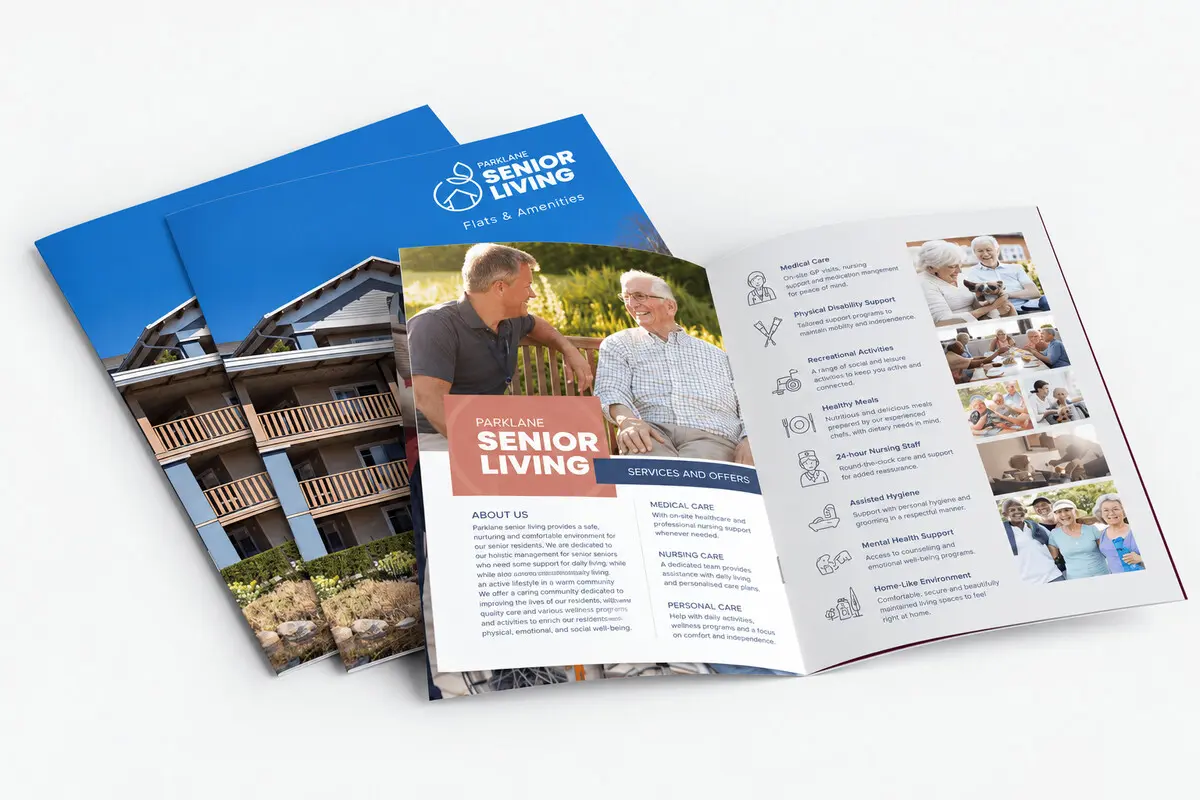
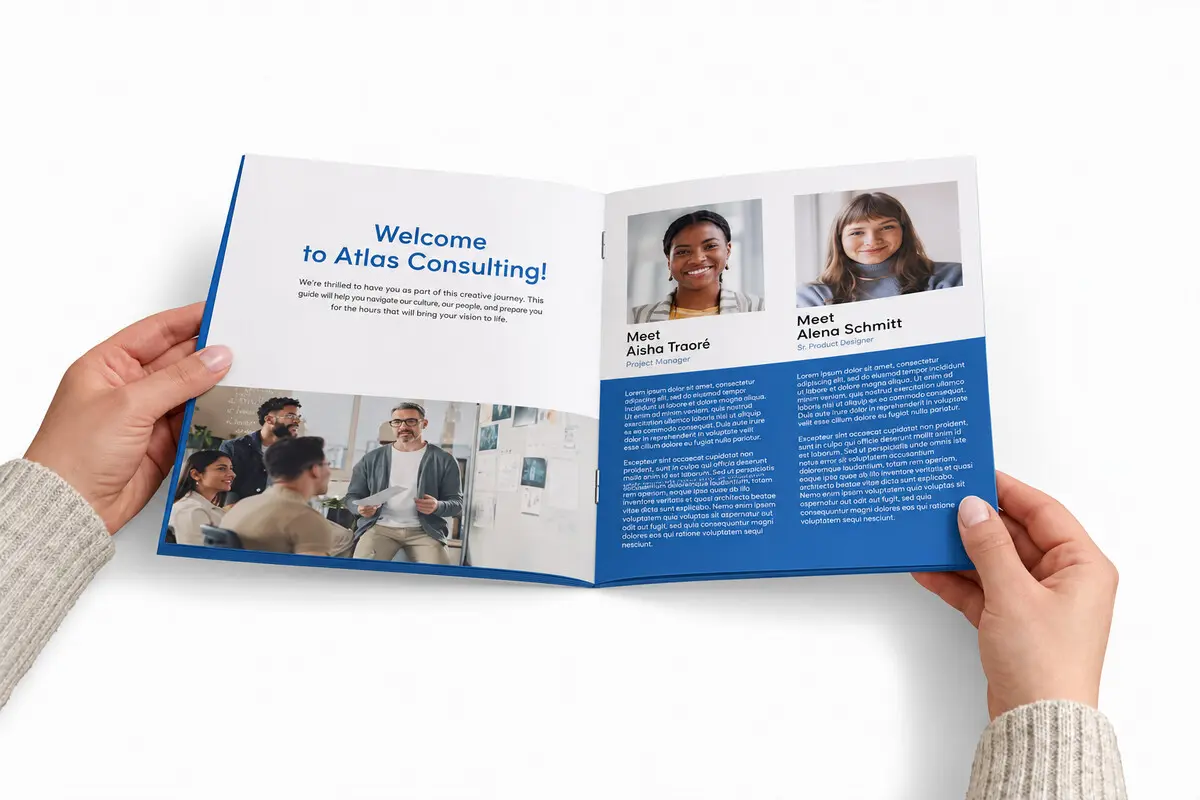
In this article In Quảng Cáo Q7 explains the three commonly used catalogue binding methods, how to choose the size and paper for the inner pages and cover, and notes when laying out the file — with real photos so you can picture it before ordering.
How do catalogues and profiles differ?
Technically they are printed the same way, but they serve two different purposes:
- Catalogue – presents products: images, item codes, specifications, sizes, sometimes prices. Clients use it to choose products. Page counts are usually high since each product takes part of a page.
- Profile (company profile) – presents the company: introduction, vision, team, process, completed projects, certifications, partners. Used for tenders, meeting major partners and seeking cooperation. Usually thinner but with more investment in design and paper.
Many businesses make both: a profile to open the conversation, a catalogue to go into detail.
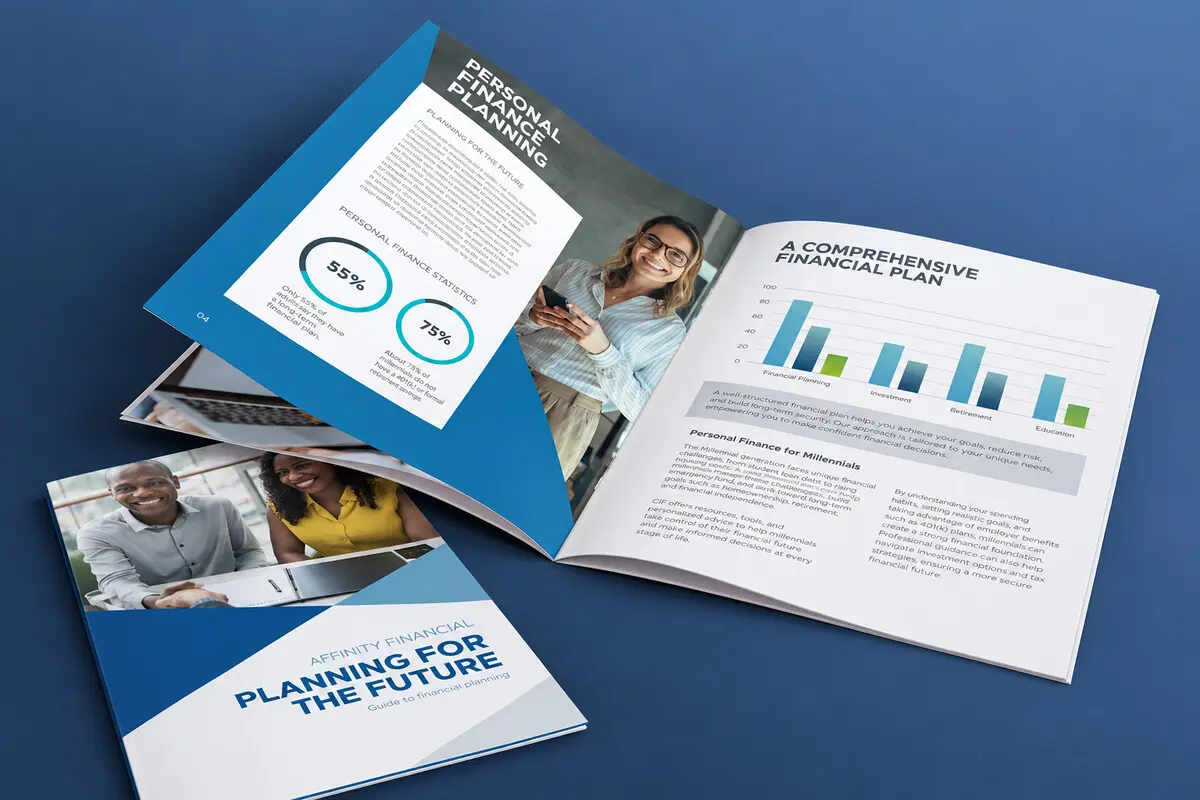
Three catalogue binding methods – which to choose?
This is the most important choice because it decides how the book looks, how it opens and what it costs.
1. Saddle stitch (stapled in the middle)
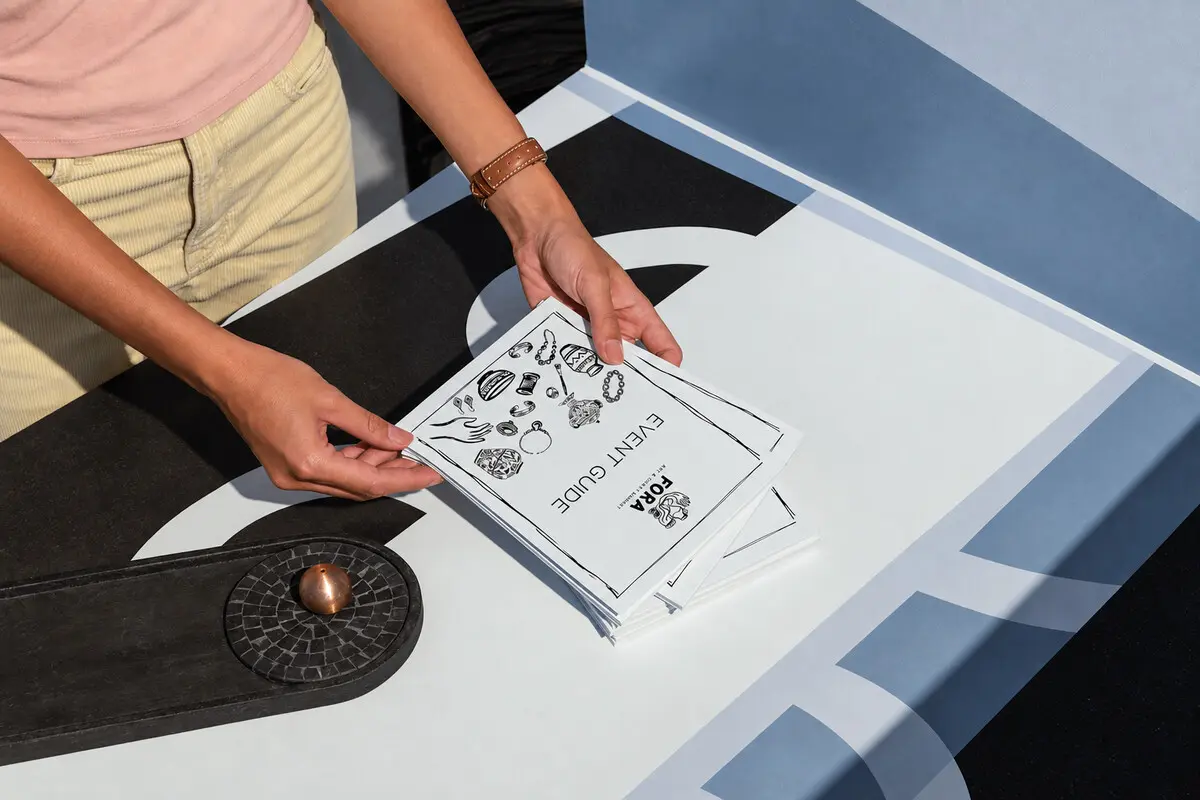
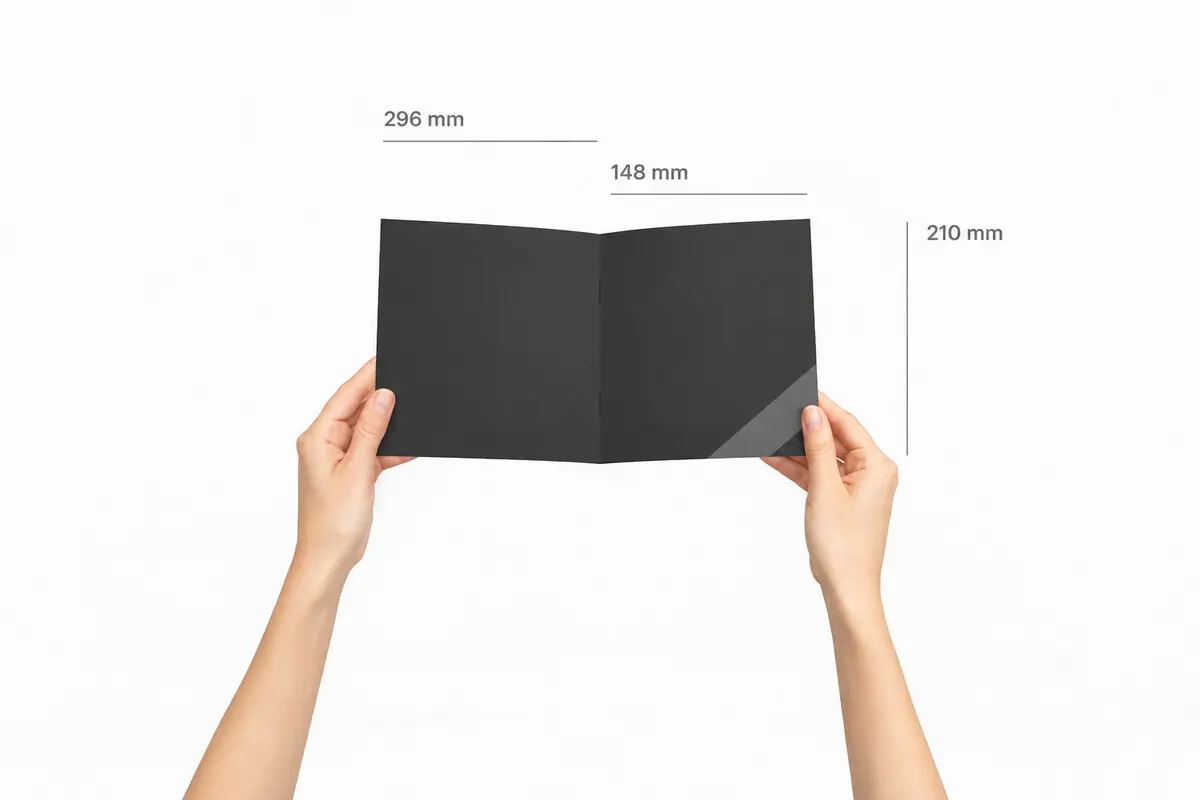
Sheets are nested and stapled twice along the center fold, like a thin magazine. This is the cheapest and fastest.
- Suits: thin catalogues of 8 – 32 pages, service introduction sheets, multi-page price lists.
- Note: the total page count must be divisible by 4 (8, 12, 16, 20…), because each sheet folded in half makes 4 pages. Books too thick for saddle stitching bulge at the spine and inner pages lose their edges when trimmed.
2. Spiral binding (metal coil)
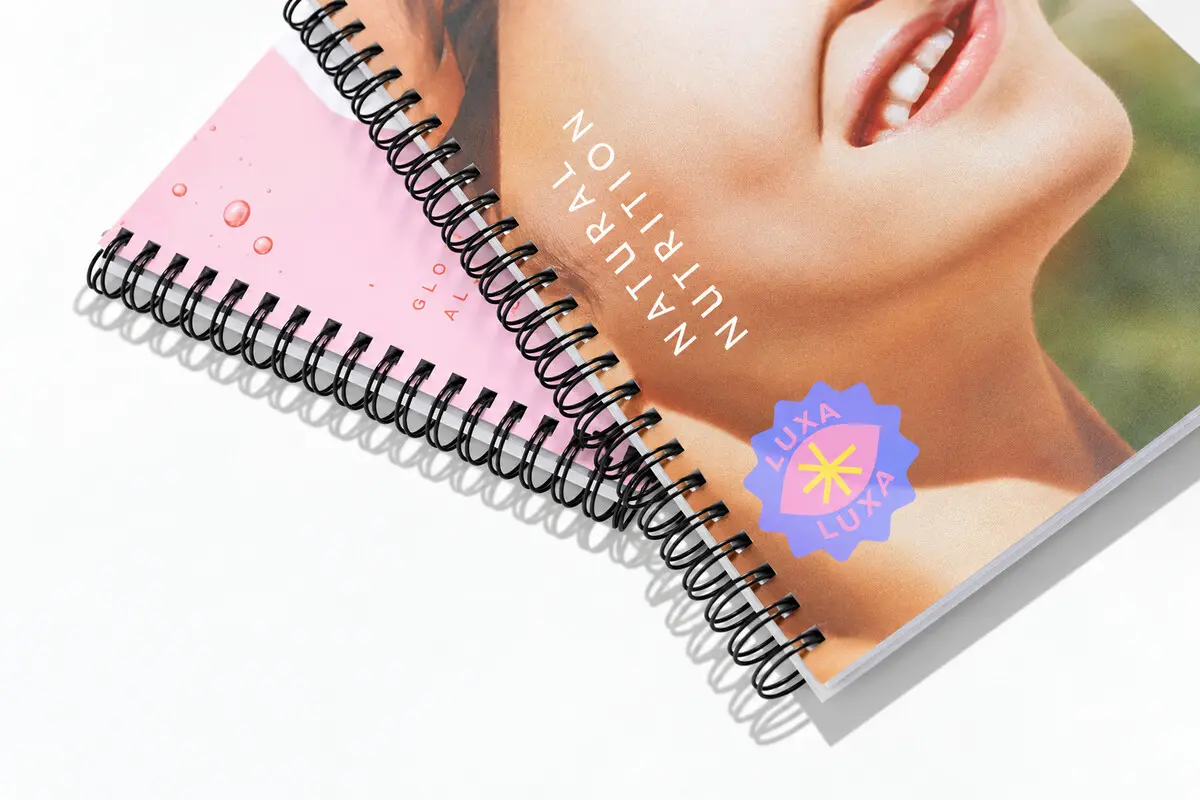
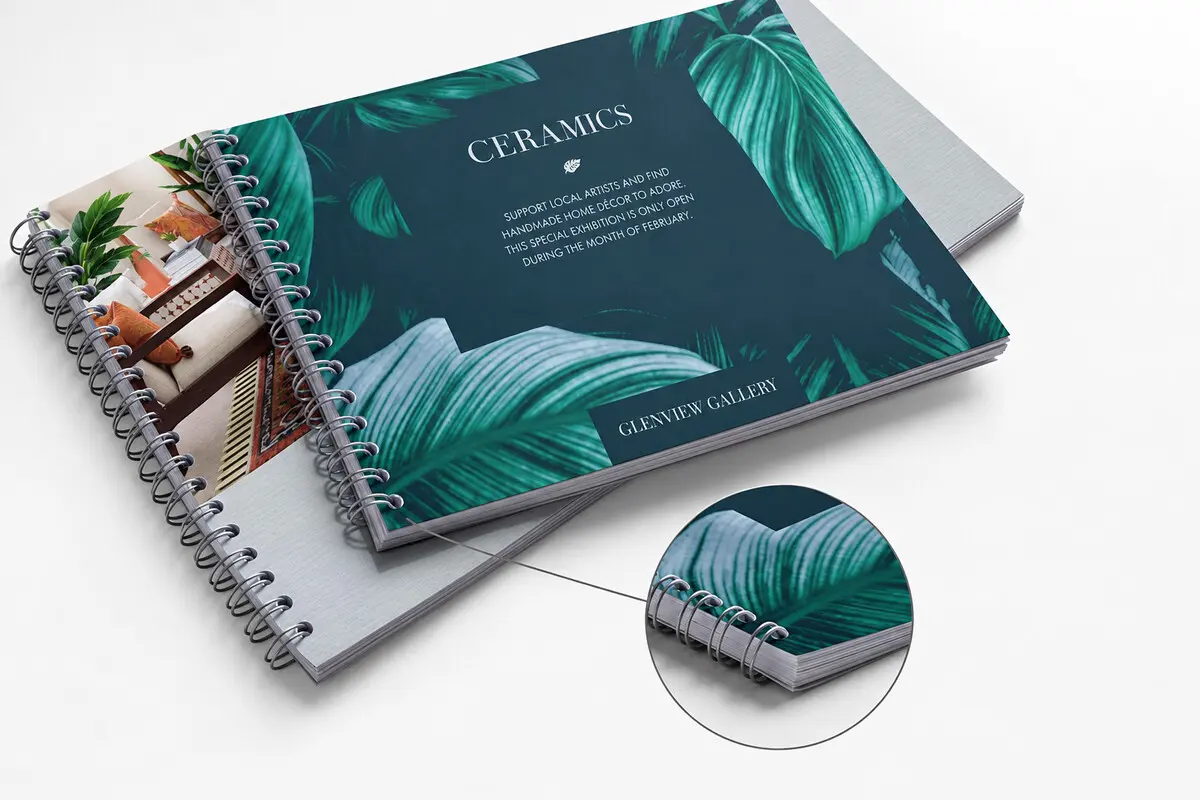
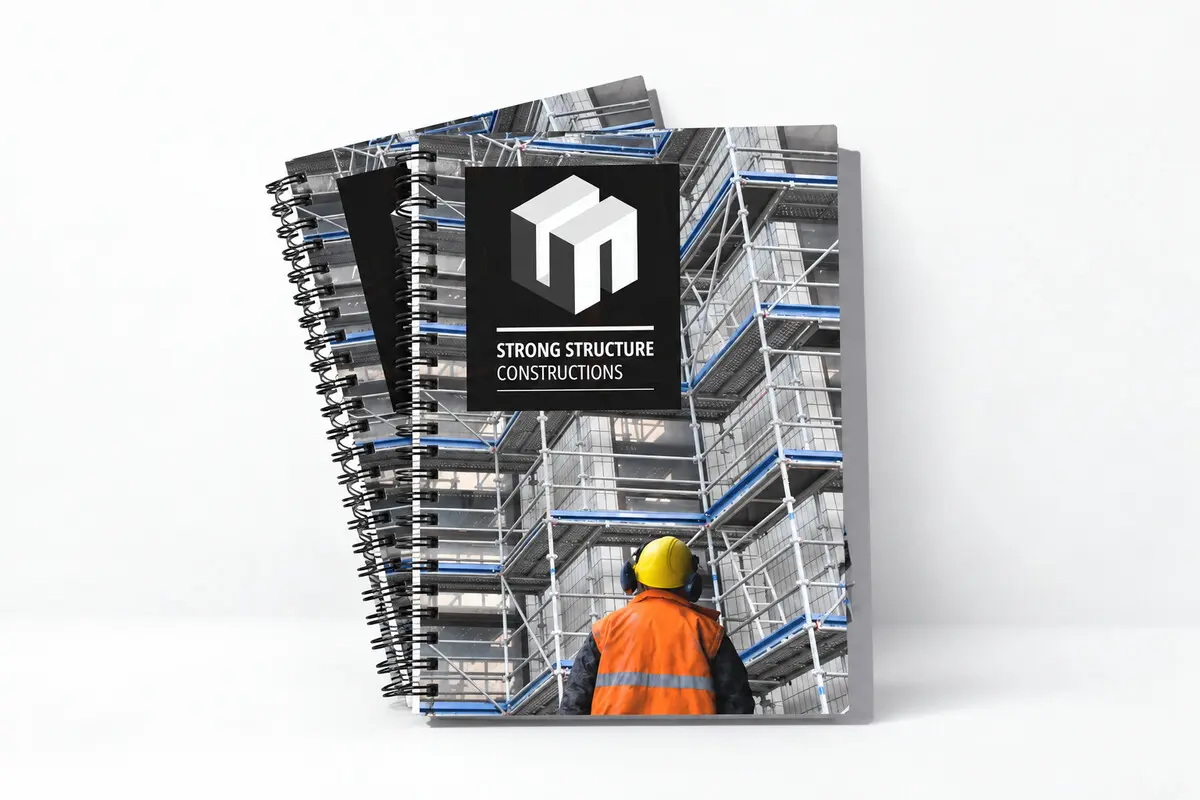
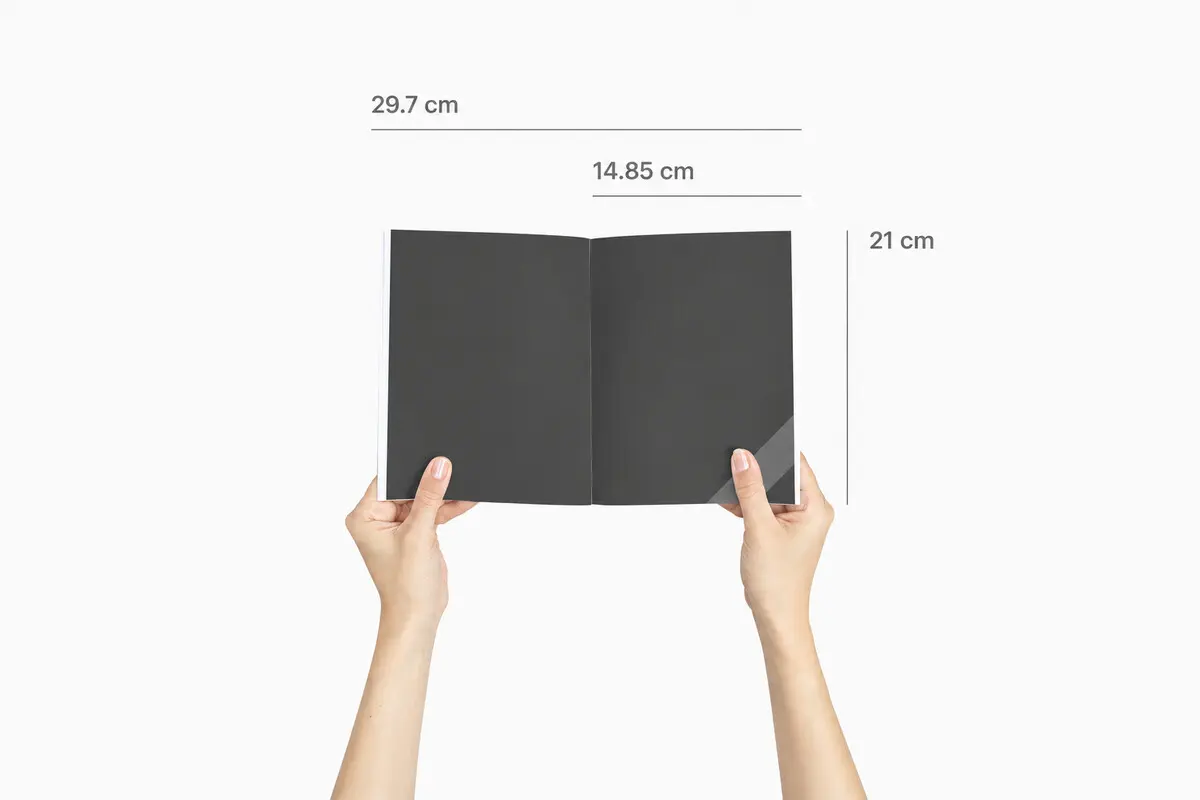
The spine is punched and a metal spiral is threaded through. The biggest advantage is that the book opens flat 180 degrees, or even folds back on itself — very handy when clients read and take notes, or when the book needs to stand on a table.
- Suits: material sample catalogues, price lists used daily, company profiles for technical industries, instruction handbooks.
- Special advantage: remove the spiral to replace a few pages without reprinting the whole book — ideal for price lists that change often.
- Note: spiral spines can't be printed with a title, so books are hard to identify on a shelf.
3. Perfect binding (glued square spine)
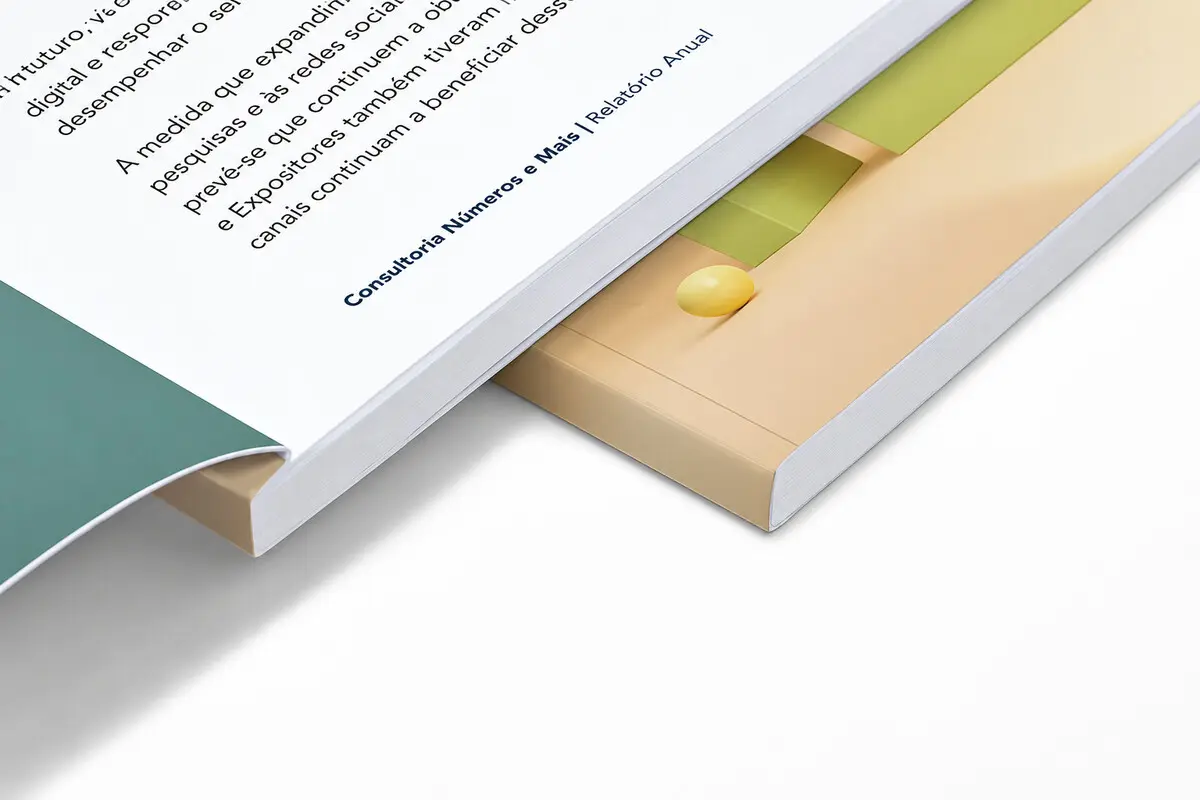
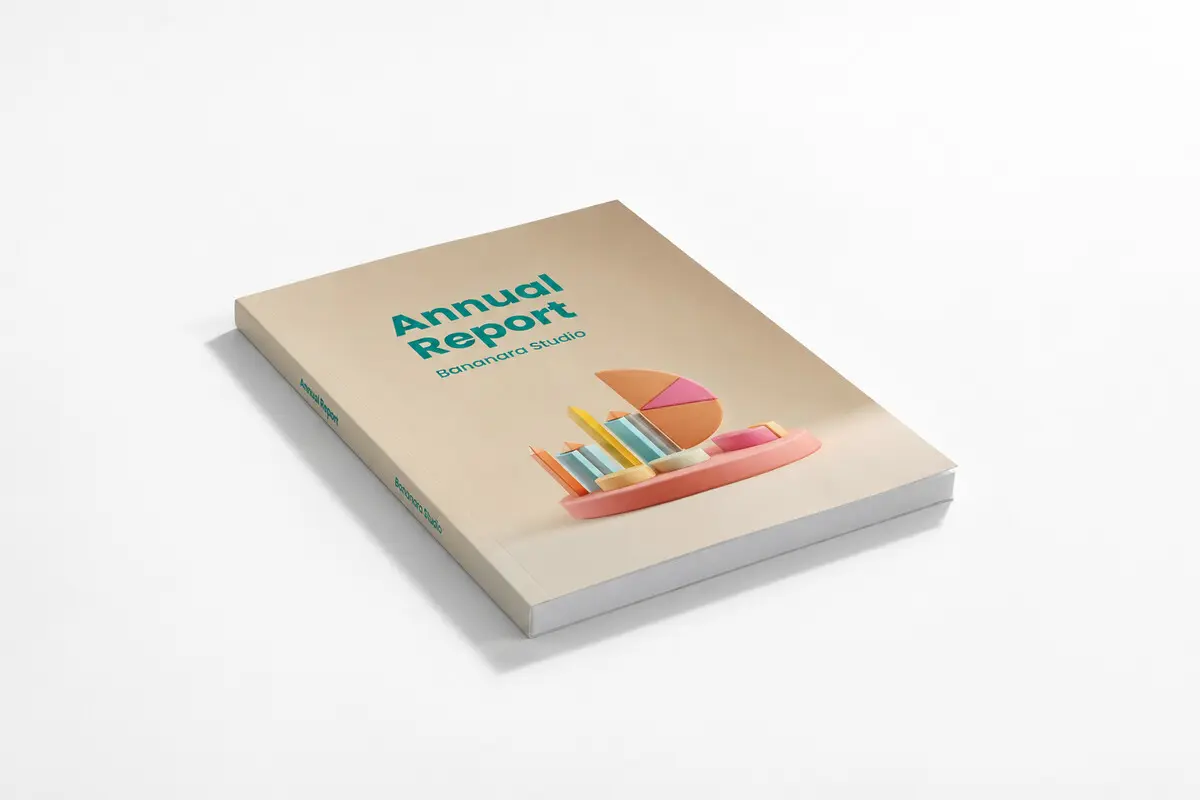
Pages are trimmed flat at the spine, coated with hot glue and wrapped in the cover, forming a square spine like a book. This is the most professional-looking style.
- Suits: catalogues of 40 pages or more, tender profiles, annual reports, brand books.
- Special advantage: the company name can be printed on the spine — so it's recognizable even on a shelf.
- Note: the book doesn't open completely flat, so leave a wider gutter when laying out so text isn't “swallowed” into the spine.
Quick selection table
| Number of pages | Recommended binding | Why |
|---|---|---|
| 8 – 32 pages | Saddle stitch | Cheap, fast, light |
| 20 – 80 pages, needs to open flat | Spiral binding | Opens 180 degrees, pages replaceable |
| 40 pages or more | Perfect binding | Square spine, printed title, premium look |
Choosing the catalogue size

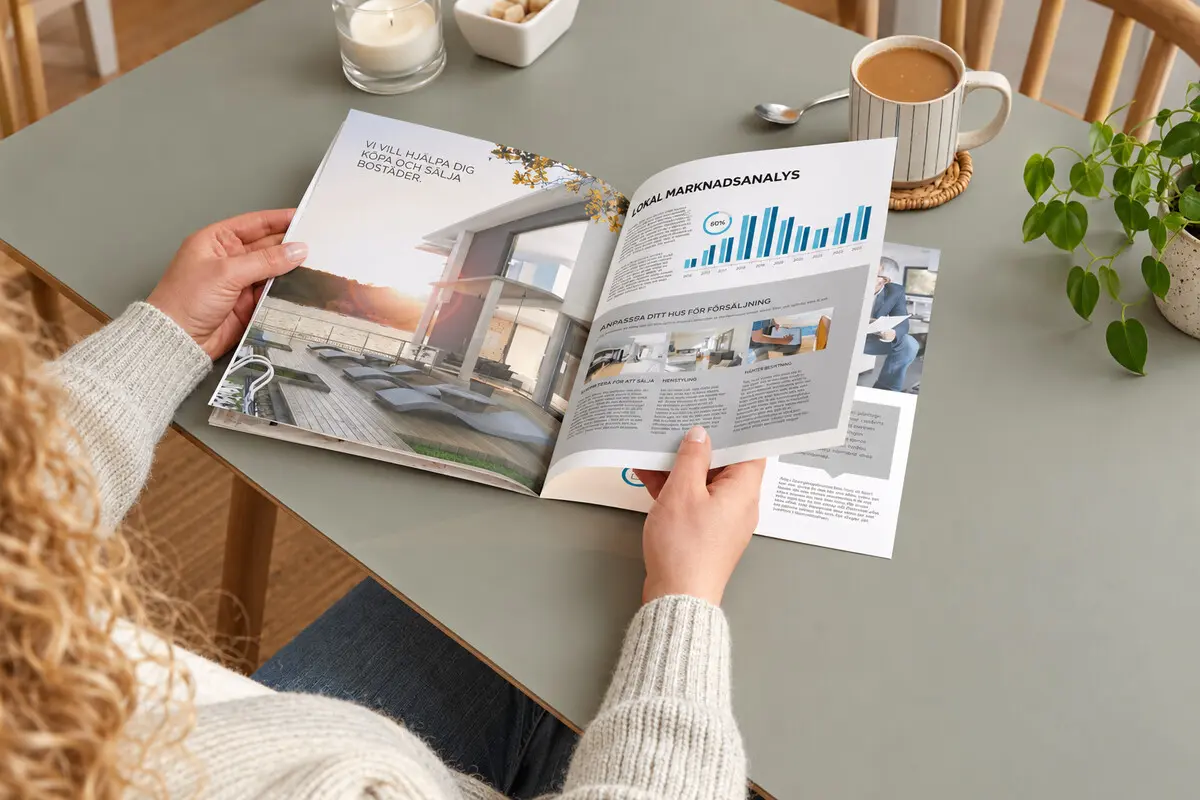
- A4 (210 × 297 mm) – the standard size for company profiles and product catalogues that need large images. Fits document folders and document bags.
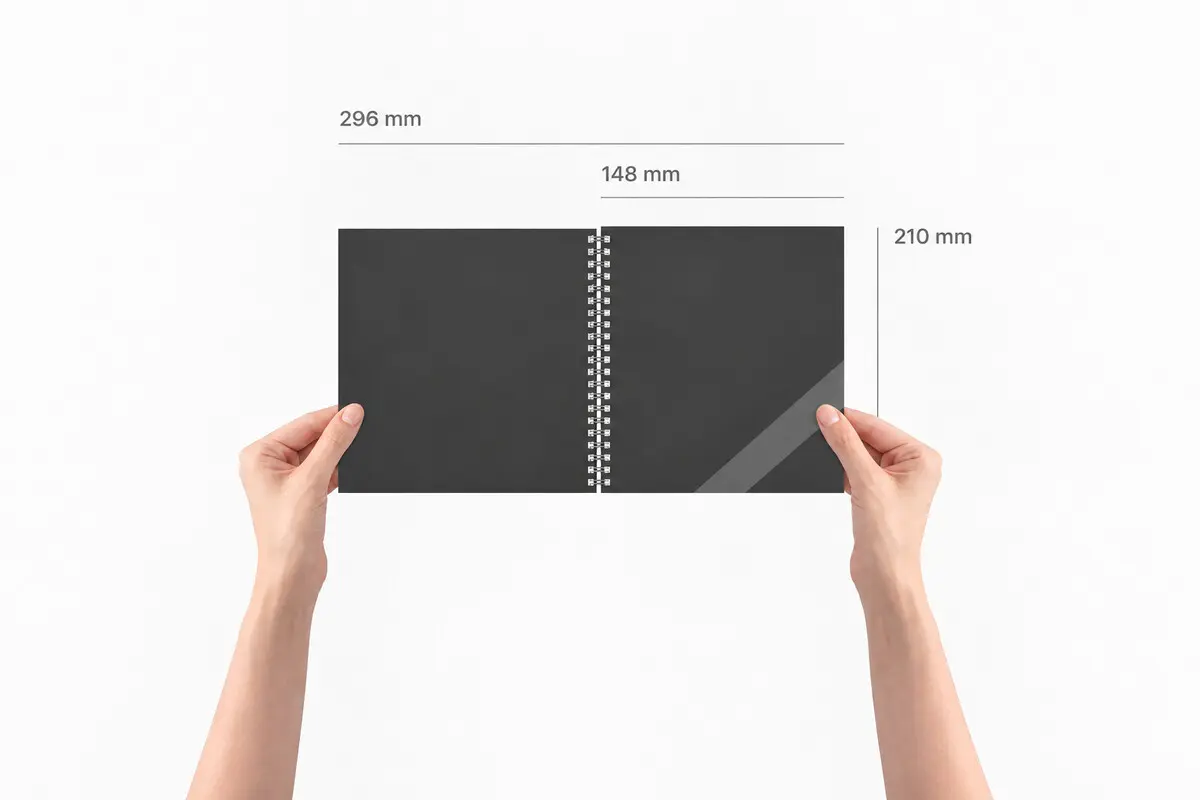
- A5 (148 × 210 mm) – compact, light, lower cost. Suits catalogues carried around, handed out at trade fairs or sent with orders.
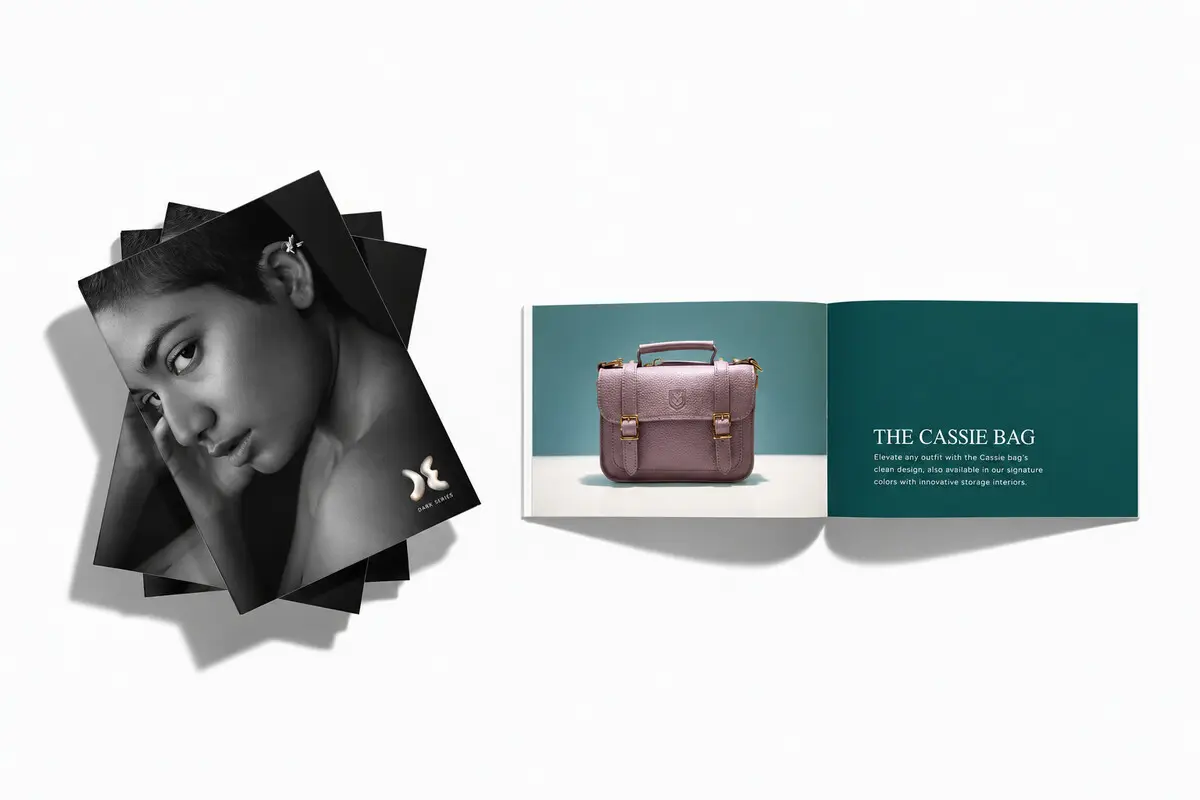
- Square or landscape – for image-led industries: furniture, fashion, food, architecture. Landscape pages allow beautiful photos spread across two pages.
We can make non-standard sizes too, but they waste more paper so cost more — ask before designing.
Choosing paper for inner pages and cover
A commonly used catalogue two different papers: the cover is thicker than the inner pages to keep its shape and withstand frequent handling.
- Inner pages: couche 100 – 150gsm is the common range. Thinner paper makes a lighter, cheaper book, but images show through from the back. Books with few pages should use thicker paper so they don't feel “flimsy”.
- Cover: couche 250 – 300gsm, usually laminated against scratches. Premium books can use fine art paper, foil stamping and spot UV on the logo.
Matte lamination gives the cover a soft, premium feel without glare under meeting room lights; glossy lamination makes images vivid and eye-catching. A matte-laminated cover with foil stamping or spot UV is a combination many businesses choose.
Which industries use catalogues and profiles?
- Construction, engineering, installation: tender company profiles, portfolios of completed projects.
- Furniture, architecture: product sample catalogues, large project photos.
- Fashion, cosmetics, gifts: seasonal collection catalogues.
- Manufacturing, distribution: product catalogues with item codes and technical specifications.
- Services, education, healthcare: profiles presenting capabilities, team and processes.
Preparing catalogue print files
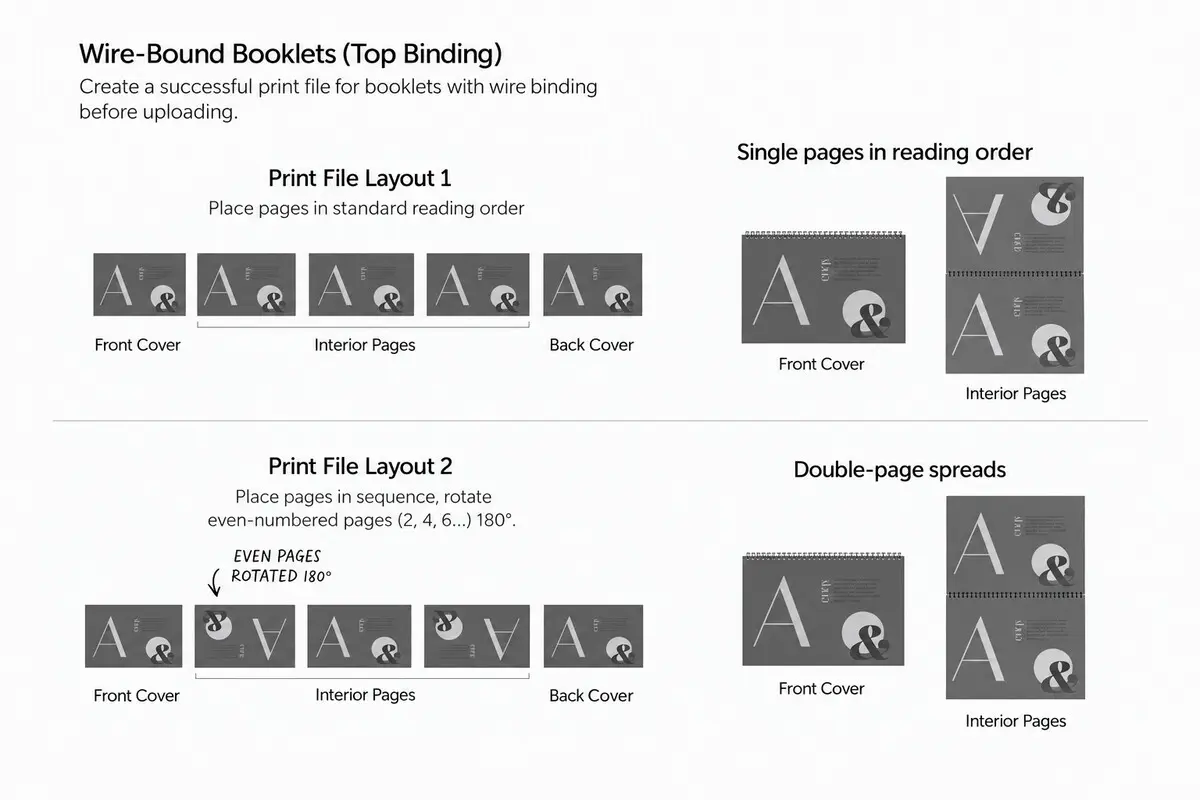
- Format PDF, color mode CMYK, resolution 300dpi.
- Export as single pages in reading order (page 1, 2, 3…), not as pre-combined spreads, unless we ask otherwise.
- Leave 3mm bleed on each edge; keep text and important details at least 5mm from the cut edge.
- Gutter: for perfect-bound books, leave an extra 5 – 7mm on the spine side so text isn't hidden when the book doesn't open fully.
- Saddle stitch: the total page count must be divisible by 4. Spiral binding: leave space along the spine edge for punching, and avoid placing text close to that edge.
- Export the cover and inner pages as two separate files; for perfect binding, the cover file includes the front cover, spine and back cover.
Details at Design file submission guide. We check files for free before printing; if you have no file, In Quảng Cáo Q7 can help with design and layout.
Frequently asked questions
What is the minimum number of copies?
Offset printing has fixed plate costs, so the more you print, the cheaper each copy. You can still order small quantities — we'll recommend digital printing to suit.
Can odd page counts be printed?
Spiral binding and perfect binding allow flexible page counts. Saddle stitching must be divisible by 4.
Can the company name be printed on the spine?
Yes, for perfect-bound books that are thick enough. Saddle-stitched and spiral-bound books have no flat spine to print on.
Will the printed color match the screen?
Screen colors reach only about 80% of the finished product because screens emit light while paper reflects ink. For important orders, ask for a test sheet before running the whole batch.
What if it's misprinted?
If it differs from the order or the approved proof, In Quảng Cáo Q7 reprints it free of charge – report within 24 hours with photos. Spelling mistakes in a file you approved are not covered by free reprints.
Do you issue VAT invoices?
Yes, 8% VAT e-invoices. Provide the company name, tax code, address and email when ordering.
Need a quote for a catalogue or company profile?
The price depends on the book size, page count, paper type, binding method and quantity, so we quote each request separately. Send the details on the Catalogue – Profile product page, or message on Zalo / call 0866.511.099 — we reply within 30 minutes during working hours. In Quảng Cáo Q7, 49 Mai Van Vinh, Tan Hung Ward, Ho Chi Minh City.
View directions to the workshop on Google Maps
Need printing or signage in Ho Chi Minh City?
In Quảng Cáo Q7 runs its own print workshop in Tân Hưng Ward (former District 7), Ho Chi Minh City, producing and installing signage, banners, window graphics, exhibition booths and event displays. Send us the size, material, quantity and a photo on WhatsApp and we will get back to you.

Phone: +84 866 511 099 · Also on WeChat
Workshop: 49 Mai Văn Vĩnh, Tân Hưng Ward, Ho Chi Minh City
Choosing the catalogue binding by page count
The page count is the first deciding factor, because each method has its own thickness limit. The table below helps you choose the catalogue binding by the actual page count of the set.
| Number of pages | Suitable method | Method to avoid |
|---|---|---|
| 8 – 16 pages | Saddle stitch | Perfect binding, because the spine is too thin |
| 16 – 40 pages | Saddle stitch, spiral | None |
| 40 – 80 pages | Perfect binding, spiral, staples with tape | Saddle stitch, because the spine bulges |
| 80 – 150 pages | Perfect binding, spiral | Saddle stitch |
| Over 150 pages | Perfect binding | Any kind of stapling |
The most notable limit is saddle stitching. This method folds the whole set and staples it in the middle, so the thicker the set, the more the outer edges shift and the more the spine bulges. So when choosing a catalogue binding for sets over 40 pages, switch to perfect binding or spiral.
Leaving spine margin for each catalogue binding
Each method takes up a different part of the spine, so the file must be laid out accordingly. Without spine margin, text close to the inside will be hidden after binding. The table below shows the spine margin for each catalogue binding.
| Format | Spine area taken | How to lay out the file |
|---|---|---|
| Saddle stitch | Very little | Keep a 3mm safety margin; note that the outer edge gets trimmed |
| Staples with tape | About 5 – 8mm | Leave extra inner margin on each page |
| Staples with tape and a clear cover | About 5 – 8mm | As above, with the clear cover outside the cover |
| Perfect binding | About 8 – 12mm depending on thickness | Leave a wider inner margin, avoid images running across the spine |
| Spiral | About 10 – 15mm for the row of holes | Leave an inner margin, do not put text in the punched area |
| Spiral with clear cover | As for spiral | As for spiral |
The most common mistake is a double-page spread image losing its middle. With perfect binding and spiral binding, the middle is always hidden to some extent, so avoid placing important details there. When the catalogue binding is settled before layout, the designer can handle this from the start.
Cost and time by catalogue binding
The starting binding price is from 2.000đ per copy, A4 portrait or landscape, and increases with thickness and method. The table below shows reference finishing times by catalogue binding.
| Format | Time per 10 copies | Notes |
|---|---|---|
| Saddle stitch | About 15 minutes | Fastest |
| Staples with tape | About 20 minutes | Neater spine than saddle stitching |
| Staples with tape and a clear cover | About 25 minutes | Extra step of fitting the clear cover |
| Perfect binding | About 30 minutes | Needs time for the glue to set |
| Spiral | About 25 minutes | Includes the punching step |
| Spiral with clear cover | About 30 minutes | Includes punching and fitting the clear cover |
- If the order is urgent, saddle stitching or corner stapling saves the most time.
- Perfect binding needs extra time for the glue to set before stacking.
- Orders over 50 copies usually get a separate timeline from us.
When comparing costs between catalogue bindings, include the cover paper. Perfect binding and spiral usually use a thick 250 – 300gsm cover, while saddle stitching can use a thinner cover, so the total cost per set differs more than the binding fee alone.
Which catalogue binding is the most durable?
Perfect binding gives a square, solid spine, suited to thick sets kept for a long time. Spiral is durable for page turning but the spiral can be crushed if stacked under heavy weight. Saddle stitching is neat but only suits sets under 40 pages.
Which catalogue binding is the cheapest?
Saddle stitching is the fastest and most economical method, with a starting binding price from 2.000đ per copy. Besides the binding fee, saddle stitching also allows a thinner cover, so the total cost per set is lower.
At how many pages should saddle stitching be avoided?
From about 40 pages up. The thicker the set, the more the outer edges shift and the more the spine bulges, so switch to perfect binding or spiral. Conversely, sets under 16 pages should not use perfect binding because the spine is too thin.
How much spine margin for each catalogue binding?
Saddle stitching needs almost no extra margin. Staples with tape need about 5 – 8mm. Perfect binding needs about 8 – 12mm depending on thickness. Spiral needs about 10 – 15mm for the row of holes.
Do double-page spread images lose their middle?
With perfect binding and spiral the middle is always hidden to some extent, so avoid placing important details there. Saddle stitching keeps the middle better because the set opens completely flat.
Choosing the catalogue binding by how readers will use it
Besides page count, how the set will be read also decides the suitable catalogue binding. The table below gives suggestions by usage situation.
| How readers will use it | Recommended catalogue binding | Reason |
|---|---|---|
| Opened flat to view each page at a desk | Spiral | Pages lie flat, do not spring back |
| Quick look and then put on a shelf | Perfect binding | Square spine, shelves neatly |
| Handed out at fairs | Saddle stitch | Light, compact, low cost |
| Presented to important partners | Perfect binding | Looks the most formal |
| Left at the counter for customers to browse | Spiral with clear cover | Cover scratches less when many people flip through |
| Sent with documents by courier | Staples with tape | Thin, adds little weight |
| Kept internally for many years | Perfect binding | The spine can carry the set's name |
- For sets handed out in large quantities, the catalogue binding should be saddle stitching.
- For sets presented to partners, the catalogue binding should be perfect binding.
- For sets used at a desk, the catalogue binding should be spiral.
- For sets that customers flip through many times, the catalogue binding should have a clear cover.
If one set has to serve several situations, you can split the quantity between two catalogue bindings in the same order. For example, print 50 saddle-stitched copies to hand out and 10 perfect-bound copies to present to partners, both from the same file.
This split does not increase the printing fee because it is the same batch; only the binding is charged separately by method. State the quantity for each method when sending the file, and remember that each catalogue binding needs a different spine margin, so the file may have to be laid out in two versions.
Seven things to remember about catalogue binding
- The page count decides the catalogue binding first.
- For sets under 40 pages, the neatest catalogue binding is saddle stitching.
- For sets over 80 pages, the suitable catalogue binding is perfect binding.
- If it needs to open flat, the catalogue binding should be spiral.
- Each catalogue binding needs its own spine margin in the file.
- Settle the catalogue binding before laying out, not after.
- One order can be split into two different catalogue bindings.
The seven points above are everything you need to consider. The rest, from printing to binding, is all done in one place, so you only need to state the page count, quantity and how the set will be used.