




































































Company Decal Label Printing With VAT – Good Prices for Large Runs
Oct
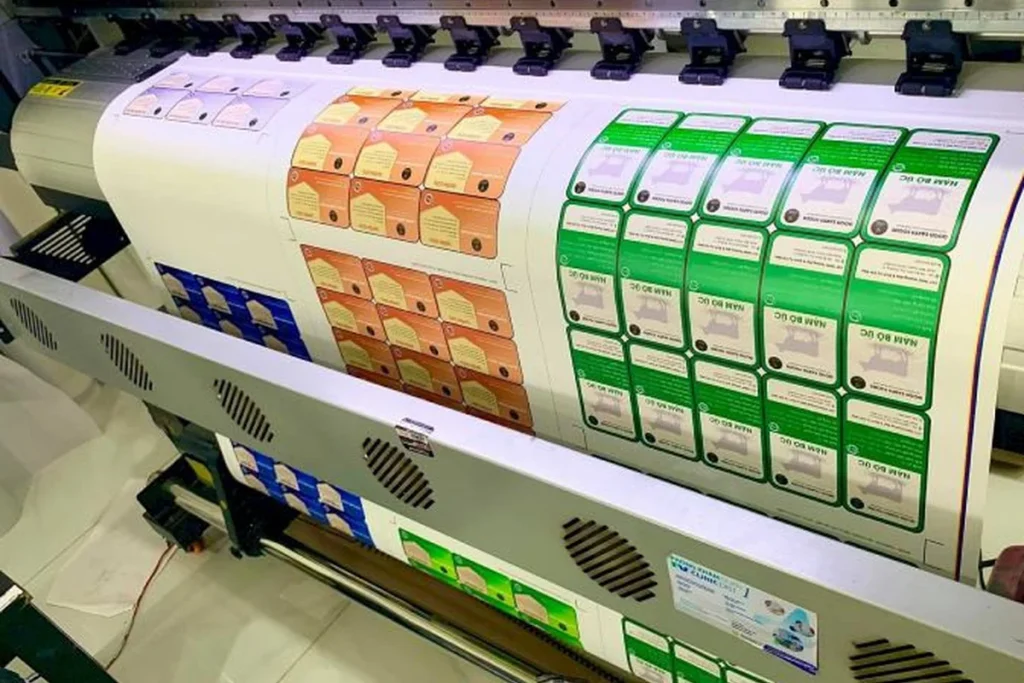
Need company decal labels printed with VAT for your products? Below is a guide to choosing materials, die-cut specifications, lead times and starting prices at the In Quảng Cáo Q7 workshop.
Company decal label printing with VAT – standard labels, standard paperwork
Businesses use labels more than any other print product: labels on finished products, asset tags on equipment, carton seal stickers, supplementary labels for imports. Buying in large quantities regularly like this, a company needs two things: sensible tiered prices and a VAT invoice for each purchase.
In Quảng Cáo Q7 serves exactly that need: large-quantity decal labels printed on digital machines with programmed cutting, prices falling sharply by quantity tier, and e-invoices issued per order or combined monthly according to the company's accounting process.
Types of labels companies often order
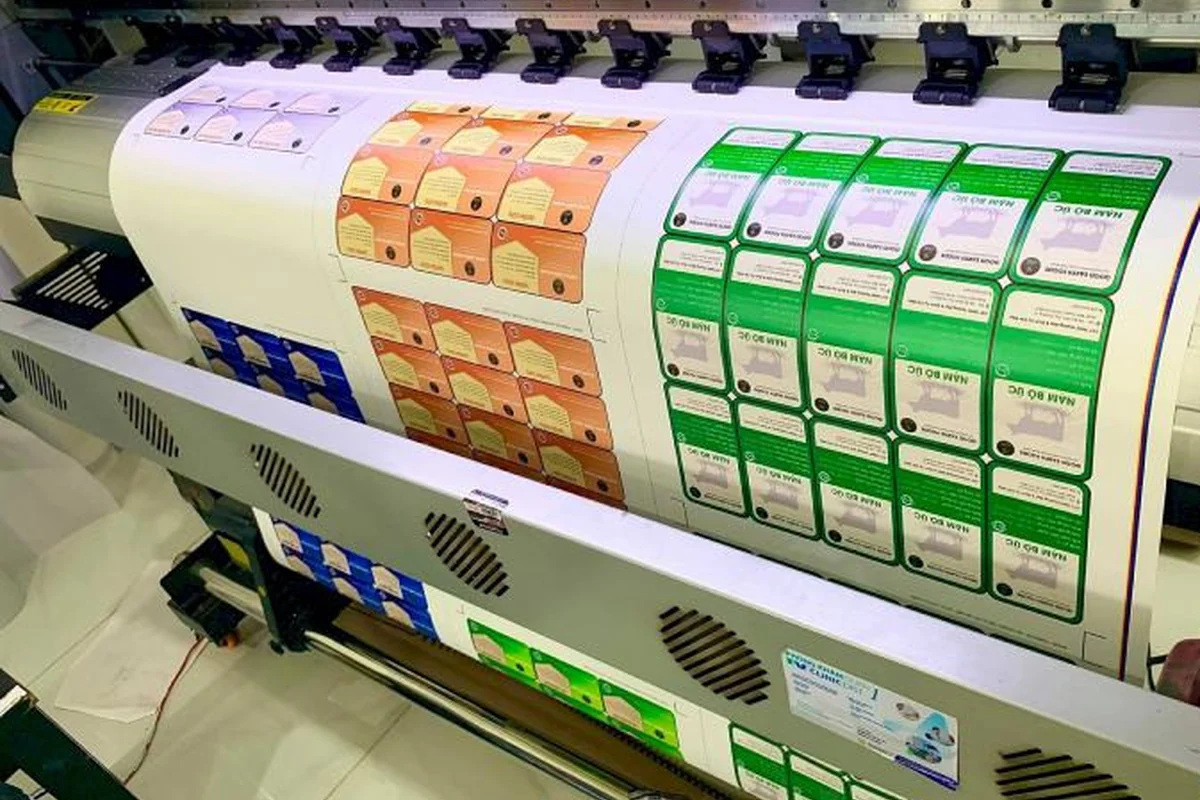
Product labels: moisture-resistant plastic decal or laminated paper decal, printed with logo, specifications and barcode. Asset tags: durable decal for equipment, numbered automatically from a list. Seal stickers: eggshell decal that tears when peeled, preventing tampering. Supplementary labels: printed to the standard of mandatory information.
For each type the workshop advises on materials according to the labelling surface and environment of use so labels do not peel or fade.
Related products

Labels & stickers

Decal application

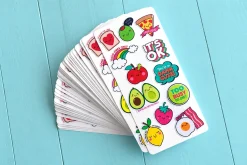
Sticker


Decal
Large-quantity orders – a stable process
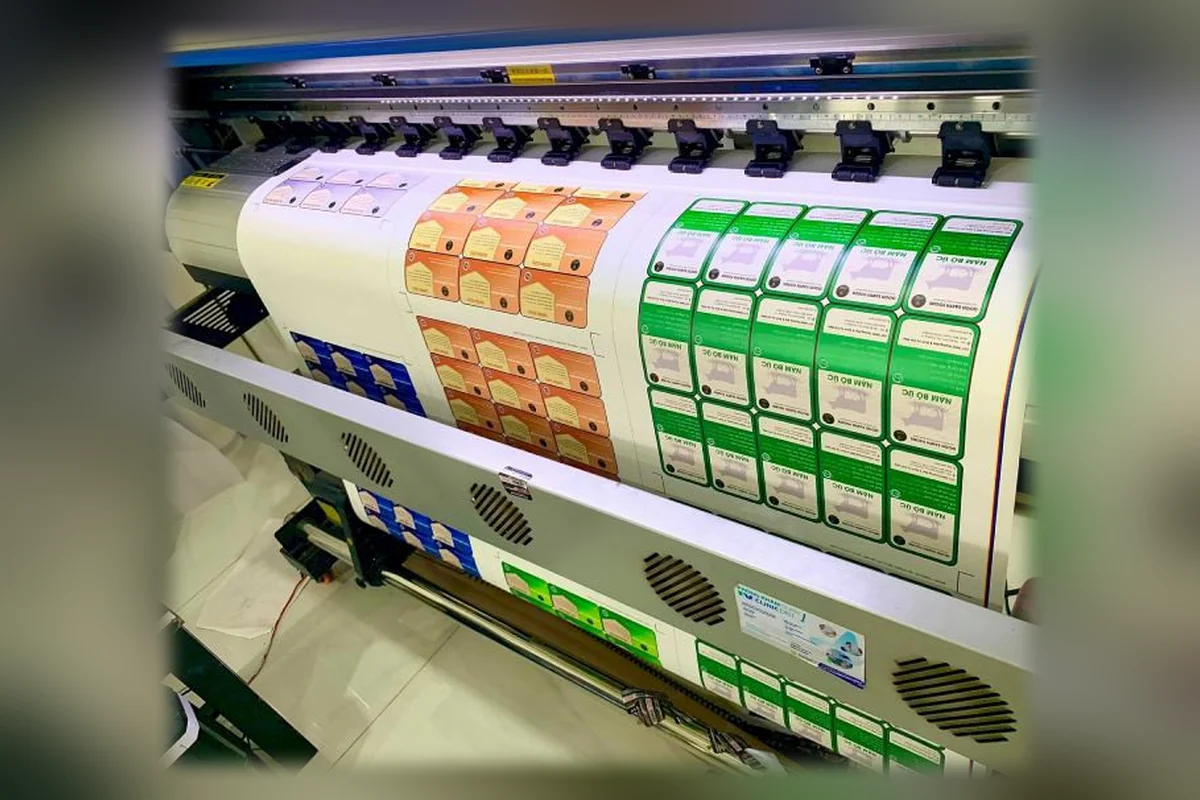
The first order approves a real print before running; from the second order on, the file and specifications are kept in the company's record, and reordering just means sending the quantity. Deliveries on a fixed schedule for companies that use labels steadily each week – the warehouse never runs out.
Tiered prices made public when quoting: 5,000 labels have a quite different unit price from 500, making spending approval easy for accounting.
Urgent but still the same day
A batch of goods waiting to ship but short of labels? Urgent label orders from business customers get machine priority, mostly delivered the same day, with an invoice like any other order.
Frequently asked questions about company decal label printing with VAT
What is the minimum order for company decal label printing with VAT?
There is no minimum – digital printing can run from a single decal sheet, a few dozen labels. Small orders are usually the fastest, ready while you wait during working hours; when you need a large reprint, the unit price per label drops sharply by quantity tier.
Are decal labels waterproof?
It depends on the material: plastic (PVC) decal and clear decal are highly waterproof, suitable for bottles, drink cups and refrigerated goods; paper decal suits dry paper boxes and is the cheapest. Adding gloss or matte lamination makes labels far more colourfast and scratch-resistant.
How do delivery and invoicing work?
Customers can collect from the workshop or the workshop books Grab/Ahamove delivery as soon as the labels come off the press – within Ho Chi Minh City they usually arrive in 1–2 hours. Company orders get an electronic VAT invoice issued the same day.
Order printing at In Quảng Cáo Q7
If your company buys labels every month, send your current label sample via Zalo – the workshop will quote tiered prices with VAT so you can compare directly with your current supplier.
In Quảng Cáo Q7 direct printing workshop – 49 Mai Van Vinh, Tan Hung Ward, Ho Chi Minh City. Production and delivery hours: Monday – Saturday, 8:00–12:00 and 13:00–18:00 · Consultation & orders via Zalo/hotline: Monday – Saturday 8:00–12:00 and 13:00–20:00, Sunday 14:00–19:00.
See more printing services on the In Quảng Cáo Q7 home page or contact us quickly via the contact page; you can also get directions to the workshop on Google Maps.
Types of labels companies often order
Labels used within a company differ from retail packaging labels: most are not for customers to see but for internal management. The table below shows the types of labels companies often order.
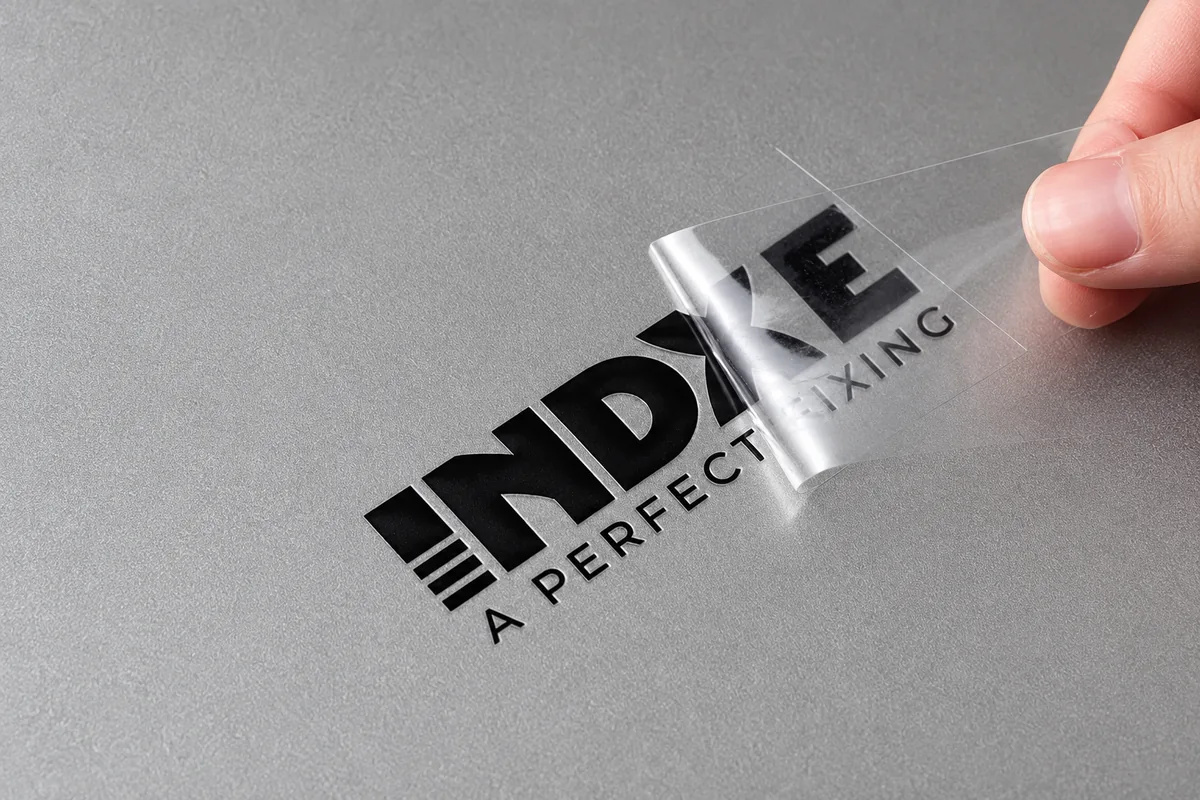
| Label type | Applied to | Material | Withstands |
|---|---|---|---|
| Asset tags | Computers, equipment, furniture | PVC plastic decal with strong adhesive | Wiping with alcohol, does not peel when moved |
| Machine and specification labels | Machine bodies in the factory | Plastic decal or UV-printed on stainless steel | Grease, mild heat |
| Warranty stickers | Product casings, screws | Eggshell decal | Breaks when peeled, cannot be stuck back |
| Carton seal stickers | Cardboard cartons, boxes | Eggshell decal or paper decal | Tampering shows immediately |
| Warehouse and shelf labels | Steel shelves, plastic bins | Plastic decal | Dust, regular wiping |
| File and lever-arch binder labels | Lever-arch binders, archive boxes | Paper decal | Dry, can be written on with a pen |
| Internal inspection labels | Measuring equipment, tools | Small plastic decal | Inspection date written, reapplied each period |
| Safety and warning labels | Machines, electrical cabinets, walkways | Reflective decal or plastic | Clearly visible in the dark |
Asset tags and seal stickers are the two groups companies order most regularly, because they are tied to stocktaking and goods handover procedures. These two groups are usually printed with sequential numbers so each one has its own code.
Sequential numbering and coding on labels
Sequential numbering is the biggest difference with labels for internal use. Only when each label has its own code can it be linked into the company's management system.
| Numbering style | Content that changes | Used for |
|---|---|---|
| Sequential numbers | Numbers increase within the declared range | Asset tags, seal stickers |
| Sequential barcodes | A different barcode on each label | Asset tags scanned by machine |
| Sequential QR codes | QR codes pointing to individual records | Equipment labels with their own records |
| Numbers with a prefix | For example, a prefix by department | Labels divided by department |
| From an existing list | Takes exactly the list the customer sends | Labels from the asset register |
| No numbering | Every label the same | Safety labels, warehouse labels |
When a company sends an existing list of codes, the workshop prints exactly from that list rather than generating numbers itself. This avoids codes on the labels not matching codes in the management file, a mistake that means reprinting the whole batch.
Labelling surfaces and matching adhesives
The labelling surface decides which adhesive to use. In company and factory environments, surfaces are much harder than paper packaging.
| Surface | Adhesive layer | Note |
|---|---|---|
| Plastic on computers and equipment | Standard adhesive | Wipe with alcohol before applying |
| Powder-coated metal | Standard adhesive | Wait for the paint to dry fully if newly painted |
| Metal with machining oil | Strong adhesive | Wipe the oil with alcohol, then dry |
| Soft plastic and rubber | Strong adhesive | The softer the surface, the harder to stick |
| Cardboard carton | Standard adhesive | Porous surface; press down again after applying |
| Old painted steel shelves | Strong adhesive | Scrub off dust and rust before applying |
| Glass and acrylic | Standard adhesive | Sticks very well |
| Rough, textured surfaces | Strong adhesive, small labels | Large labels on textured surfaces will peel at the corners |
The general rule is that the rougher or softer the surface, the stronger the adhesive needs to be and the smaller the label should be. A large label on a textured surface will peel from the corners, while the same adhesive on a small label holds for years.
Files and code lists to send
Files for numbered labels need one more thing than ordinary labels: the code list. That list decides what each label prints.
- Send the label design as AI or PDF, with fonts converted to outlines.
- Draw a frame for the code area and mark clearly that it is the numbering area.
- Send the code list in a spreadsheet file, one column per type of content.
- If there is a barcode, state clearly which barcode standard you want to use.
- If there is a QR code, state clearly what the code points to, a link or just a text string.
- Draw the cut line on a separate layer, as a thin stroke in a spot colour.
- Keep a 2 mm safe margin from the cut line for text and codes.
- Note the quantity of each design and the cutting style right in the message.
The workshop test prints one sheet with the first few labels so the company can scan and check them with the scanner it actually uses. This step matters because a well-printed barcode can still fail to scan if the code standard does not match the device.
Common mistakes with internal labels
The mistakes below recur in orders for internal-use labels, and most of them can only be fixed by reprinting the whole batch.
| Mistake | Consequence | How to avoid it |
|---|---|---|
| Codes on the labels do not match the management file | The whole batch must be reprinted | Send the existing code list; do not let the workshop generate numbers itself |
| Barcode standard does not match the scanner | Cannot be scanned | Test print one sheet and scan to check first |
| Large labels applied to textured surfaces | Peels from the corners | Reduce the label size or switch to strong adhesive |
| Using standard adhesive on oily surfaces | Peels after a few days | Wipe off the oil and use strong adhesive |
| Warranty stickers made with ordinary decal | Can be peeled off and stuck back, losing their purpose | Use eggshell decal |
| Warehouse labels not laminated | Dust and wiping blur the text | Matte lamination |
| Text too small on small labels | Cannot be read by eye | Keep a minimum font size of 6 pt |
| Placing codes right at the cut line | A slightly off die-cut cuts away part of the code | Leave a 2 mm safe margin |
Quick Q&A about company labels
Below are the questions company customers often send to the workshop, answered briefly according to what the workshop can actually do.
| Question | Answer |
|---|---|
| What is the minimum quantity | From 100 labels per design |
| Can you print sequential numbers from the company's list? | Yes, the company sends a spreadsheet file and the workshop prints exactly from the list |
| Can you print barcodes and QR codes? | Yes, and a test sheet is printed first for the company to scan and check |
| Can machine labels withstand grease? | Yes, with strong-adhesive PVC plastic, or UV printing directly on stainless steel sheets |
| Do you make warranty stickers that break when peeled? | Yes, using eggshell decal |
| Do you issue paperwork for companies? | Yes, issued according to the company details provided |
| How long does it take? | Same day for batches under 2,000 labels with shapes using existing dies |
| How is the price calculated | By the number of labels and label size, from the listed price, plus lamination and die-cutting |
Ordering label printing for companies
The workshop prints decal labels for companies and factories, issuing paperwork according to the company details provided, in the District 7 area and neighbouring districts.
- Tell us what surface the labels will be applied to, the label size and the quantity of each design.
- Send the design with the code list if numbering is needed, via Zalo.
- Receive a test sheet to scan and check the codes with the company's own equipment.
- Pick up at the workshop at 49 Mai Van Vinh, Tan Hung Ward, Ho Chi Minh City or delivery to the company.
Listed prices are on the labels; related items can be found at eggshell tamper-evident labels, decal application and the group businesses.
Times of year when companies order labels
Asset stocktaking is when companies order the most labels in a year. The table below shows the timing and quantities the workshop sees most often in a company's cycle.
| Occasion | Label type | Typical quantity | Note |
|---|---|---|---|
| Start-of-year stocktaking | Numbered asset tags | 300 to 2,000 labels | Send the code list from the stocktaking file |
| Buying a new batch of equipment | Asset tags and machine labels | By number of devices | Apply as soon as goods enter the warehouse |
| Office relocation | Carton labels and shelf labels | 200 to 500 labels | Print before moving day |
| New product launch | Warranty stickers and seal stickers | 1,000 labels or more | Numbered for warranty lookup |
| Periodic inspection | Internal inspection labels | 100 to 300 labels | Write the inspection period, reapply each cycle |
| Safety inspection | Warning and instruction labels | 50 to 200 labels | Use reflective material in dark places |
| Opening an additional warehouse | Warehouse labels and shelf labels | 300 to 800 labels | Print according to the warehouse shelf layout |
Start-of-year stocktaking follows a fixed schedule, so this is the round companies should settle early. The workshop keeps the code list from the previous round, so next time you only need to send the newly added codes instead of the whole list again.
Finishing for labels used in the factory
Post-print finishing decides how long labels last in factory and warehouse environments.
- Matte lamination: resists dust and wiping that blurs text, used for warehouse and shelf labels.
- Gloss lamination: better oil resistance, used for machine labels.
- 2 mm rounded corners: corners do not peel on impact, recommended for all equipment labels.
- Kiss cutting: peel each label quickly when applying a whole batch.
- Rolls: for batches over 5,000 labels, the fastest to apply.
- Chemical-resistant coating: for machine labels in areas that use solvents.
- UV printing directly on stainless steel or aluminium sheets: used instead of labels when they need to last more than five years.
Need printing or signage in Ho Chi Minh City?
In Quảng Cáo Q7 runs its own print workshop in Tân Hưng Ward (former District 7), Ho Chi Minh City, producing and installing signage, banners, window graphics, exhibition booths and event displays. Send us the size, material, quantity and a photo on WhatsApp and we will get back to you.

Phone: +84 866 511 099 · Also on WeChat
Workshop: 49 Mai Văn Vĩnh, Tân Hưng Ward, Ho Chi Minh City