




































































Company Envelope Printing District 1 – A4 25x35cm for Unfolded Documents
Oct
Does your company need District 1 company envelope printing? This article sets out the three sizes the workshop prints, three paper types, quantity levels and starting prices at the In Quảng Cáo Q7 workshop.
Envelope printing for District 1 offices
From the In Quảng Cáo Q7 workshop at 49 Mai Van Vinh, Tan Hung Ward to central District 1, go along Nguyen Huu Tho then through Khanh Hoi. Envelope cartons are heavier than business card boxes, so the workshop arranges a specific delivery time for you to have someone receive them at the building.
Customers for District 1 company envelope printing are mainly offices in high-rises: law firms, consulting firms, auditors, trade representative offices and investment funds. This group sends a fair amount of contracts, advisory letters and reports on paper, so the A4 size holding unfolded files is ordered most.
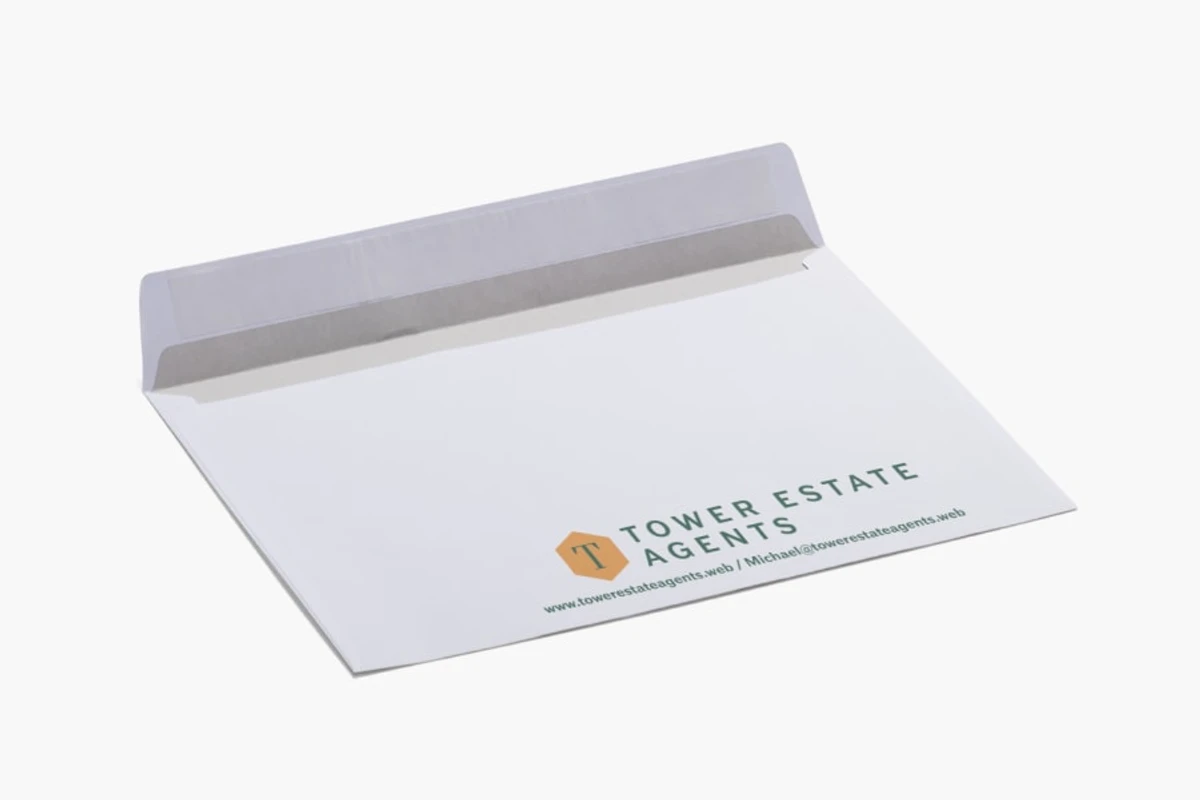
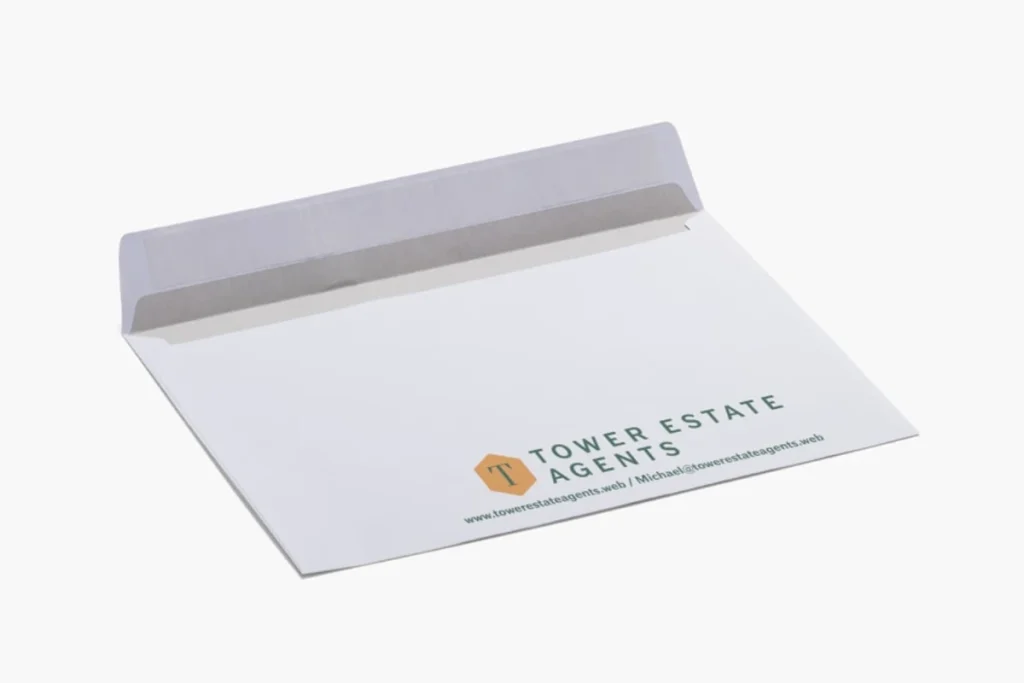
A4 25x35cm size for unfolded files
Contracts, advisory letters and audit reports should not be folded, because folds cut across data tables and seals across pages. The A4 25x35cm size holds A4 sets flat, even when documents are bound or in covers, keeping files flat all the way to the recipient.
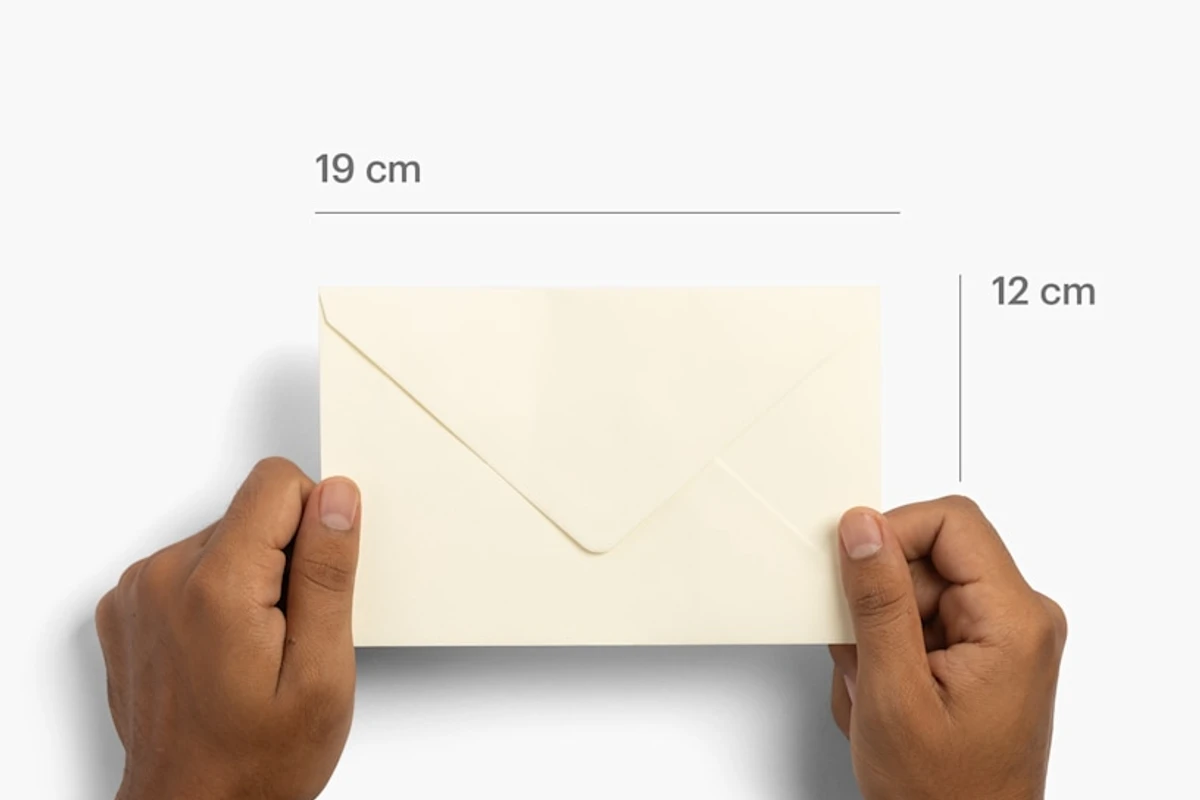
The other two sizes are still needed for daily work: A6 12x22cm for invitations and notices printed on A4 folded in three, A5 17x23cm for thin document sets folded in half. Many offices keep all three sizes in stock, each at a different quantity level.
Paper and how the logo is presented
Couche paper 150gsm is chosen a lot by central offices: glossy surface, logo colours come out deep and sharp, and the envelope feels firm so it does not crumple through many rounds of handling. Fort paper 120gsm is the balanced option, both thick and writable. Fort paper 100gsm is the cheapest, suited to large quantities of internal mail.
Front designs are usually tidy: logo and legal entity name in the top left corner, a strip with address, phone and website running along the bottom of the envelope. Send the logo as vector or high-resolution transparent-background PNG; the envelope file leaves 3mm bleed around all four edges.
Window envelopes and custom sizes
Window envelopes have a cut-out with a clear film that shows the address already printed on the document inside, removing the step of printing the recipient's name on the envelope – well suited to offices sending bulk mail. The window is positioned exactly to the address block on the document template you send.
Besides the three standard sizes, the workshop makes envelopes to custom dimensions: send the finished measurements or an old envelope sample to build the die-cutting form. The four quantity levels are 500, 1,000, 2,000 and 5,000 pieces.
Frequently asked questions about District 1 company envelope printing
How is delivery made into District 1 high-rises?
Give us the recipient's name, phone number and the time window when the building allows deliveries; the workshop schedules delivery within that window. Large-quantity cartons need a vehicle, so arranging the time in advance is necessary.
Can the A4 size hold bound documents?
Yes for thin sets. For thick perfect-bound sets, tell us the thickness so the workshop can advise a custom size or use a document pouch instead of an envelope.
Do you issue VAT invoices?
Yes, the electronic VAT invoice is issued within the day. Send your invoicing details once and the workshop applies them to later orders automatically.
Order printing at In Quảng Cáo Q7
If your office in District 1 needs envelopes printed, send the file via Zalo so the workshop can quote by size, paper type and quantity, then arrange a delivery time to your building.
In Quảng Cáo Q7 direct print workshop – 49 Mai Van Vinh, Tan Hung Ward, Ho Chi Minh City. Production and delivery hours: Monday – Saturday, 8:00–12:00 and 13:00–18:00 · Orders via Zalo/hotline: Monday – Saturday 8:00–12:00 and 13:00–20:00, Sunday 14:00–19:00. Quick message via Zalo or call 0866.511.099.
See more printing services on the In Quảng Cáo Q7 home page, see all corporate print products or contact us quickly via the contact page; you can also get directions to the workshop on Google Maps.
Sending bulk mail from District 1 offices
Businesses in District 1 often need to send letters from a list: notices to customers, event invitations, year-end thank-you letters. Once quantities reach a few hundred, sealing and addressing take more time than printing, so how the envelopes are prepared decides whether sending is fast or slow.
For mailings under fifty letters, handwriting on the envelope is fastest. From fifty to a few hundred, printing labels from a list and sticking them on is faster and looks neater. Above a few hundred, window envelopes save the most because no labels are needed – the address pre-printed on the document inside shows through the window.
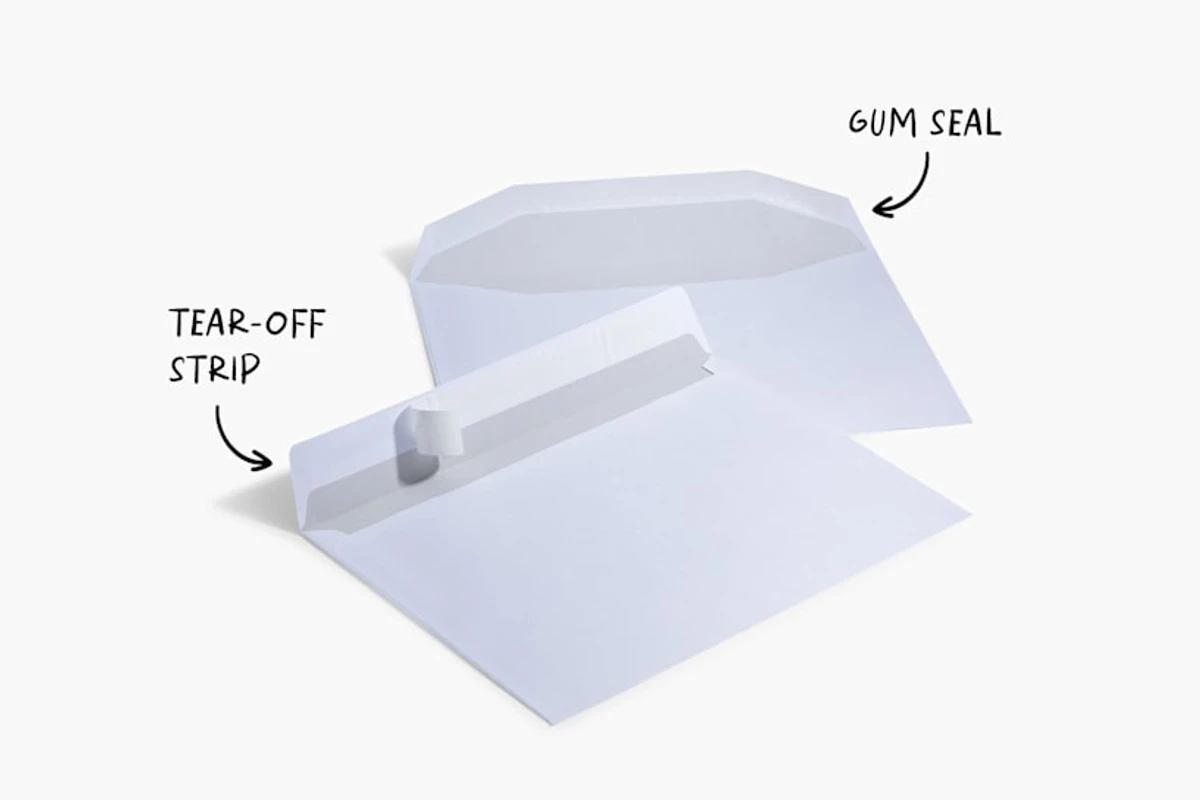
The type of adhesive also needs to be calculated by quantity. Lick-and-seal glue has to be moistened one by one, so sealing two hundred letters takes a whole session; peel-and-seal is slightly more expensive but seals many times faster. For bulk mailings, this price difference is almost always worth it.
| Letters per mailing | How addresses are written | Adhesive type |
|---|---|---|
| Under 50 | Handwritten | Lick-and-seal |
| 50 to 300 | Labels printed from a list | Lick-and-seal or peel-and-seal |
| 300 to 1,000 | Printed labels, divided by area | Peel-and-seal |
| Over 1,000 | Window envelopes | Peel-and-seal |
The table above is for reference, because it also depends on how many people take part in sealing. When two or three people work together, the point of switching to window envelopes can move higher.
Related products

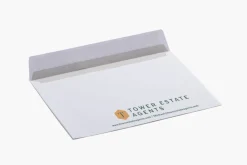
Envelopes

Letterhead

Business cards

Folder
Keeping to brand identity standards on the envelope
Large businesses already have brand identity guidelines that set the logo position, the clear space around the logo and the colour codes. Envelopes are the item most likely to break these rules, because the area is narrow and whoever orders often moves the logo around to make it fit.
Common mistakes are stretching the logo to fill the space, shrinking the safe area around the logo to squeeze in another address line, or using the white-background logo version on a coloured background. All three mistakes are visible when the envelope is placed next to another printed item from the same business.
The solution is to load the guidelines into the customer file the first time, along with each logo version. From then on every print round follows the same set of rules, regardless of who orders or who does the layout.
- Send colour codes in CMYK instead of sending a logo image for colour matching.
- Send all logo versions: white background, dark background, one-colour version.
- Keep the logo proportions; do not stretch it horizontally.
- Respect the clear space around the logo according to the guidelines.
- Keep one approved envelope sample to compare later rounds against.
Once there is a file, the next envelope round only needs the quantity sent. Paper, colour, logo position and adhesive type are taken from the approved standard round, so there is no drift between rounds during the year.
Window envelopes for automated mailing systems
Businesses that print letters from an existing system, such as an accounting system or customer management system, often use envelopes with a clear window. The address is printed only once on the document, so it never mismatches between the envelope and the contents.
The condition is that the address block on the system's print template must fall exactly in the window after folding. So these two parts need to be settled at the same time: send a printed sample document when ordering so the workshop can position the window according to the actual fold.
If the system's print template cannot be changed, the window is made to fit that template's position. Conversely, if the template can still be changed, you should move the address block to the standard position, because envelopes with the standard position are readily available and cheaper than envelopes with a custom die-cut window.
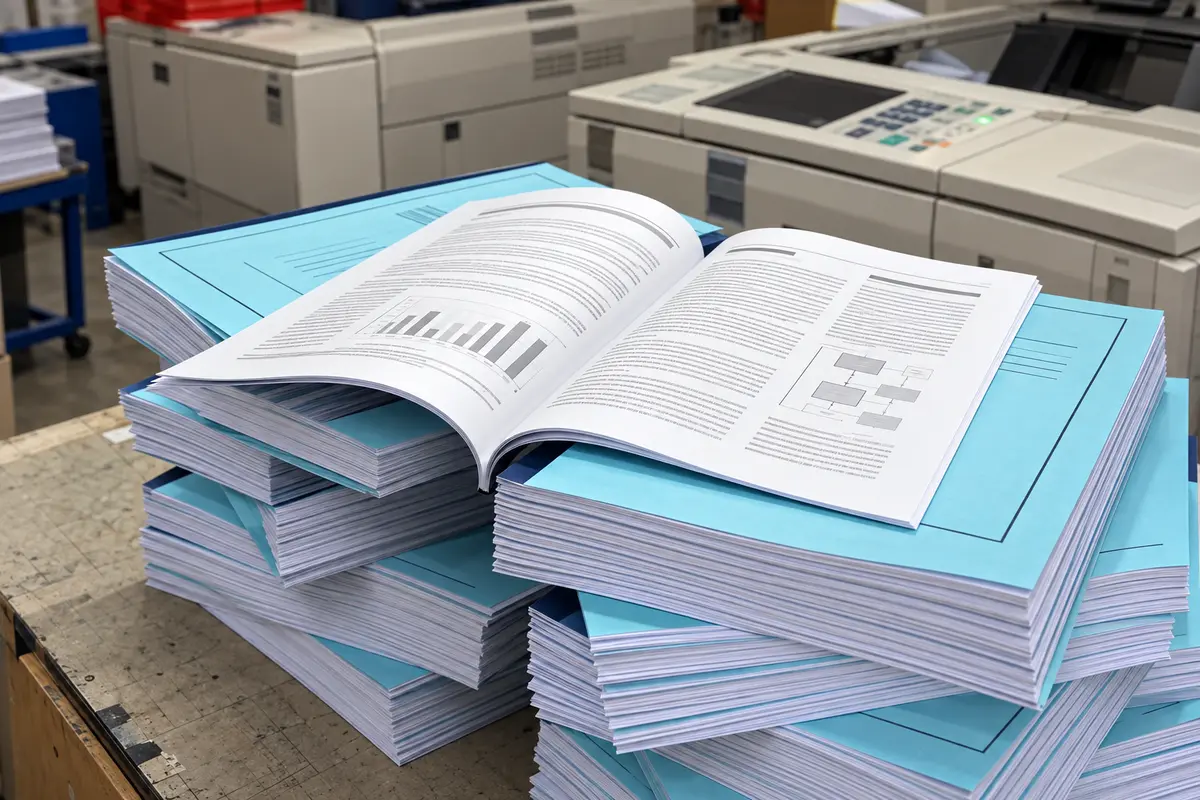
Where documents are prepared by several departments with different layouts, window envelopes easily cause misaligned windows. In that case, ordinary envelopes with stick-on labels are safer, even though it adds a step.
Quarterly printing schedule and forecast levels
Large businesses usually set budgets by quarter, so envelopes are also ordered on that rhythm. Ordering by quarter both reaches a good price level and avoids holding stock too long, because the adhesive layer weakens over storage time.
The forecast is calculated from the actual usage of the previous quarter, plus an allowance for campaign mailings. These mailings usually cluster at the end of the year, so the last quarter needs a higher quantity than the others.
When the order is large enough, many businesses choose to order once for the whole year and receive goods by quarter. The part not yet received is stored at the workshop in a dry environment, so the adhesive keeps its quality and the office does not have to make room for four cartons of envelopes.
| How to order | Price level | Storage space needed |
|---|---|---|
| Ordering monthly | Highest | Very little |
| Ordering by quarter | Medium | One box |
| Order for the year, receive by quarter | Lowest | Very little |
| Order for the year, receive at once | Lowest | Four cartons |
Ordering for the whole year and receiving by quarter is the option many offices in high-rises use, because storage space in the building is usually limited. The schedule of each delivery is stated clearly in the order confirmation.
Delivery into office high-rises
Most businesses in District 1 are in high-rises, where couriers cannot go straight up to the floor. Envelope goods are usually cartons of a few kilograms, so arrangements are needed in advance, especially when the order has many cartons.
- Write the building name, floor number and company name exactly as on the reception board.
- Write the name and phone number of the person receiving directly.
- State clearly if goods must be left at reception instead of delivered to the floor.
- Schedule outside the reception's lunch break.
- For multi-carton orders, arrange in advance to use the goods lift.
Workshop at 49 Mai Van Vinh, Tan Hung Ward, Ho Chi Minh City, and from here into District 1 via Kenh Te Bridge, so small orders are delivered within the day. Large-quantity offset orders need three to four days because of plate-making and folding-gluing.
Envelope sizes by type of file sent
Businesses in District 1 send many different kinds of documents, so they usually need two or three envelope sizes instead of one shared size. Using one size for everything leads to two situations: A4 documents have to be folded in three, or a one-page letter sits loose in an envelope that is too wide.
The DL size 110x220mm is the smallest commonly used size, holding one A4 sheet folded in three. This is the size for official letters, cover letters and short notices, and also the cheapest size among company envelopes.
The A5 size 120x220mm is slightly wider, holding a few sheets folded in three without straining the edges. Businesses sending multi-page contracts or accounting vouchers often choose this size.
The A4 size 220x310mm holds unfolded documents, used for documents that must stay flat such as project files, drawings or signed papers. For sets thicker than twenty sheets, the gusseted version keeps the edges from straining and the flap still seals properly.
| Envelope size | Holds | Used for |
|---|---|---|
| DL 110x220mm | 1 to 2 A4 sheets folded in three | Official letters, cover letters |
| A5 120x220mm | 3 to 6 sheets folded in three | Contracts, vouchers |
| A4 220x310mm | Up to 20 sheets unfolded | Project files, drawings |
| A4 with gusset | Over 20 sheets | Thick files, document sets |
| Size to fit the card | 1 card | Event invitation cards |
Ordering two sizes in parallel is the most common approach for businesses: a small size for ordinary letters and an A4 size for documents. Ordering these two sizes in the same round keeps the colours matched and takes only one delivery.
Common mistakes in office envelope orders
The five mistakes below account for most cases where a business has to reprint an envelope round. All five can be spotted on a folded and glued test sample, so the sample approval step is worth keeping even when the goods are urgently needed.
| Mistake | Consequence | How to avoid it |
|---|---|---|
| Full colour background on the front | No space left for a label or handwriting | Leave a white area in the middle |
| Printing over the stamp area | The post office sticks the stamp over the print | Leave the top right corner blank |
| Window misaligned with the print template | Address not visible | Send a sample document when ordering |
| Size too close to the document size | Edges get bent when inserted | Inner size 5mm wider than the document |
| Choosing lick-and-seal for a bulk mailing | Sealing takes a very long time | Use peel-and-seal adhesive |
Stamp-area mistakes are the hardest to fix after printing, because a white label has to be stuck on the corner for the post office to place the stamp. A standard envelope always has two blank areas: the top right corner for the stamp and the bottom strip for the sorting code.
Window mistakes can only be found when testing with real documents, not on the preview. So orders with windows always include a step of test-inserting a sample document, and this step should be done by the person who will actually send the letters.
Ordering envelope printing for companies in District 1
Send your request via Zalo with the four pieces of information and you will have a detailed quote within working hours, split by item for easy submission for approval.
- Information 1: size and type of document to go inside, and whether a window is needed.
- Information 2: quantity of each size and the preferred delivery rhythm.
- Information 3: logo file with colour codes, or the brand identity guidelines.
- Information 4: building name, floor, recipient and the date the goods are needed.
A folded and glued test sample is delivered before running a large round, together with a sample document to test the window. The business's file is kept, so later rounds only need the quantity and delivery rhythm sent.
Need printing or signage in Ho Chi Minh City?
In Quảng Cáo Q7 runs its own print workshop in Tân Hưng Ward (former District 7), Ho Chi Minh City, producing and installing signage, banners, window graphics, exhibition booths and event displays. Send us the size, material, quantity and a photo on WhatsApp and we will get back to you.

Phone: +84 866 511 099 · Also on WeChat
Workshop: 49 Mai Văn Vĩnh, Tân Hưng Ward, Ho Chi Minh City