




































































Company Nameplates District 8 – Acrylic, UV-Printed Brushed Alu, From 250.000đ
Oct
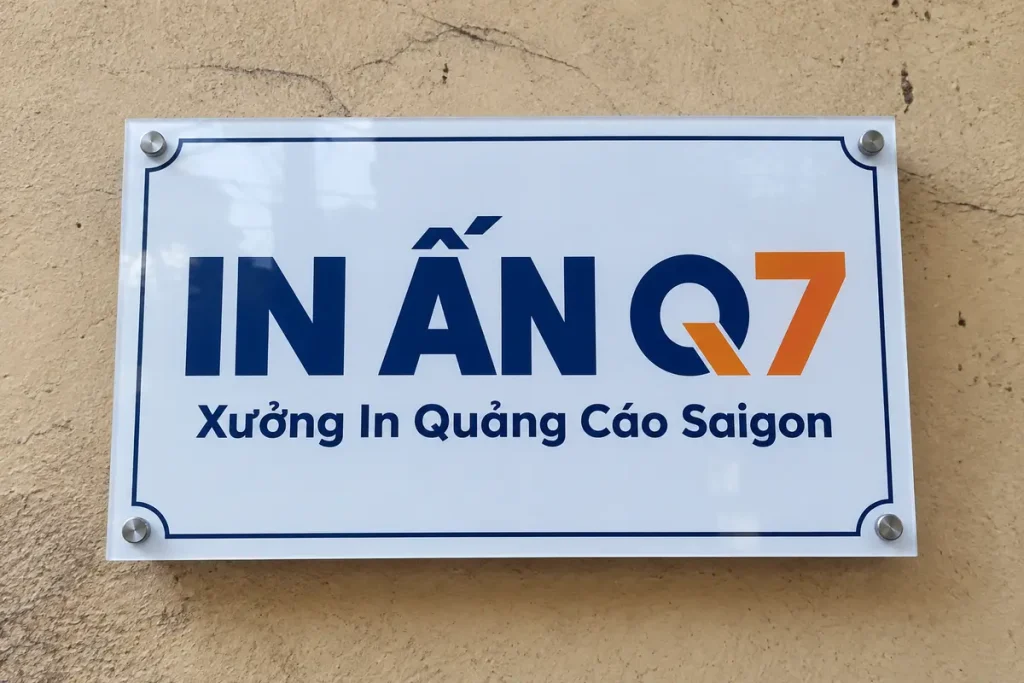
Does your company need District 8 company sign making? This article sets out the two standard sizes, UV-printed Mica and Alu materials, how to mount on walls or glass partitions, and starting prices at the In Quảng Cáo Q7 workshop.
Making company signs for businesses in District 8
From Pham The Hien, Ta Quang Buu or Binh Dong, cross Nguyen Van Cu Bridge or Pham Hung Bridge and you reach the In Quảng Cáo Q7 workshop at 49 Mai Van Vinh, Tan Hung Ward. Signs are rigid panels, so the workshop protects the corners when packing to prevent dents in transport.
Customers for District 8 company sign making include production facilities, trading companies and offices located in factories. This group usually needs signs that withstand dusty environments and reflected sunlight, so material and mounting method are the two points to consider.
How Mica and Alu differ
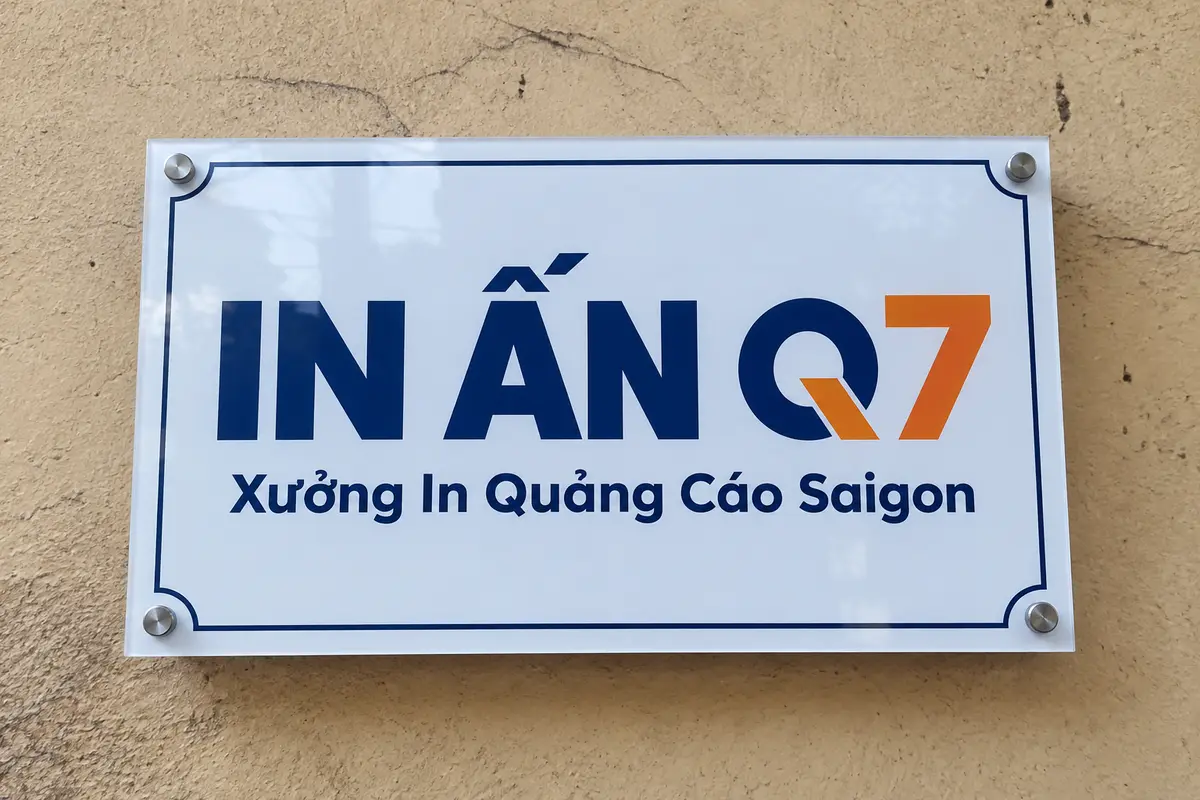
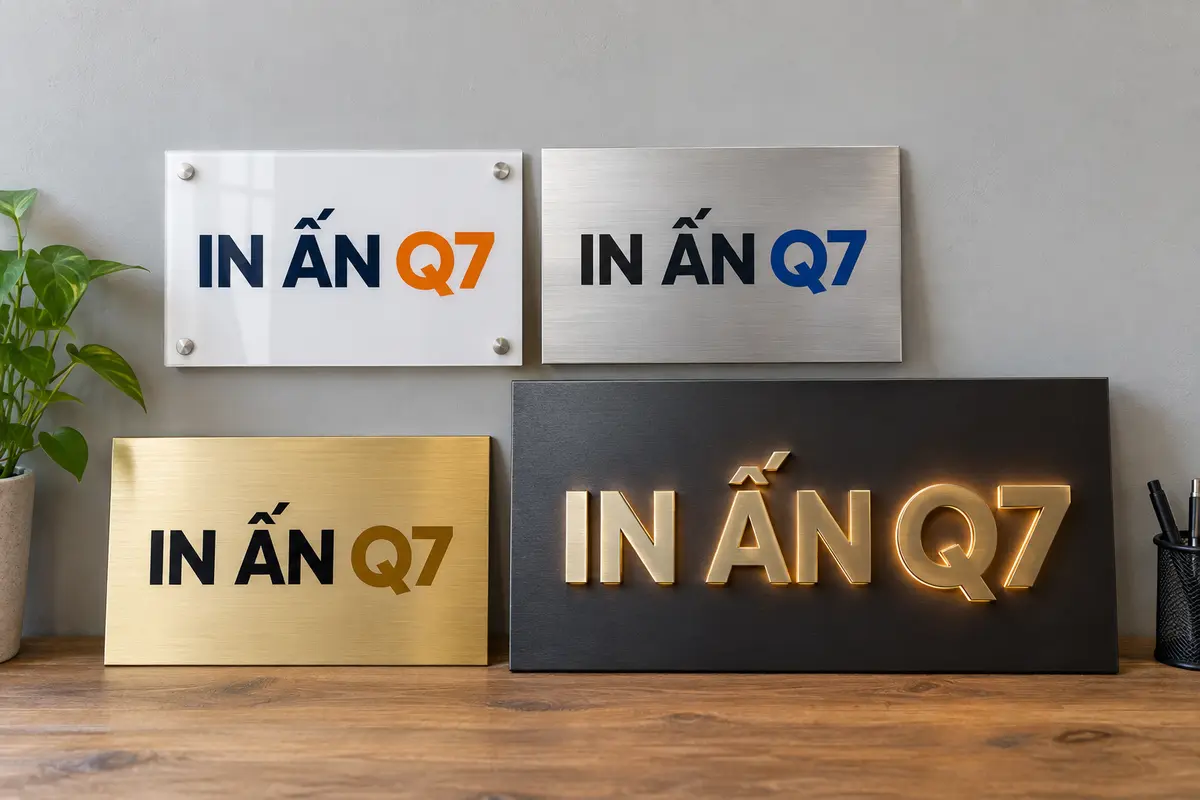
Mica is a flat glossy plastic sheet, UV-printed directly onto the surface, so colours are vivid and the background is clean. Mica signs are neat and light, suited to office doors and indoor reception counters.
Alu is aluminium composite panel made of two aluminium layers sandwiching a plastic core – more rigid and less prone to warping than Mica at large sizes. The brushed silver and brushed gold aluminium Alu versions have a brushed metal surface, look solid and suit factory frontages better than the glossy plastic version.
Two standard sizes and custom sizes
The two sizes with prices listed on the page are 30 × 20 cm and 40 × 30 cm, from 250.000đ. The 30 × 20 cm size suits room doors; the 40 × 30 cm size can be read from further away so it suits gates, lobbies or factory frontages.
If you need a larger size, choose the Other size option on the page and send the measurements; the workshop requotes by panel area and edge finishing method. For large frontage signs, Alu is usually chosen because it stays flat better.
Content, mounting and the premium group
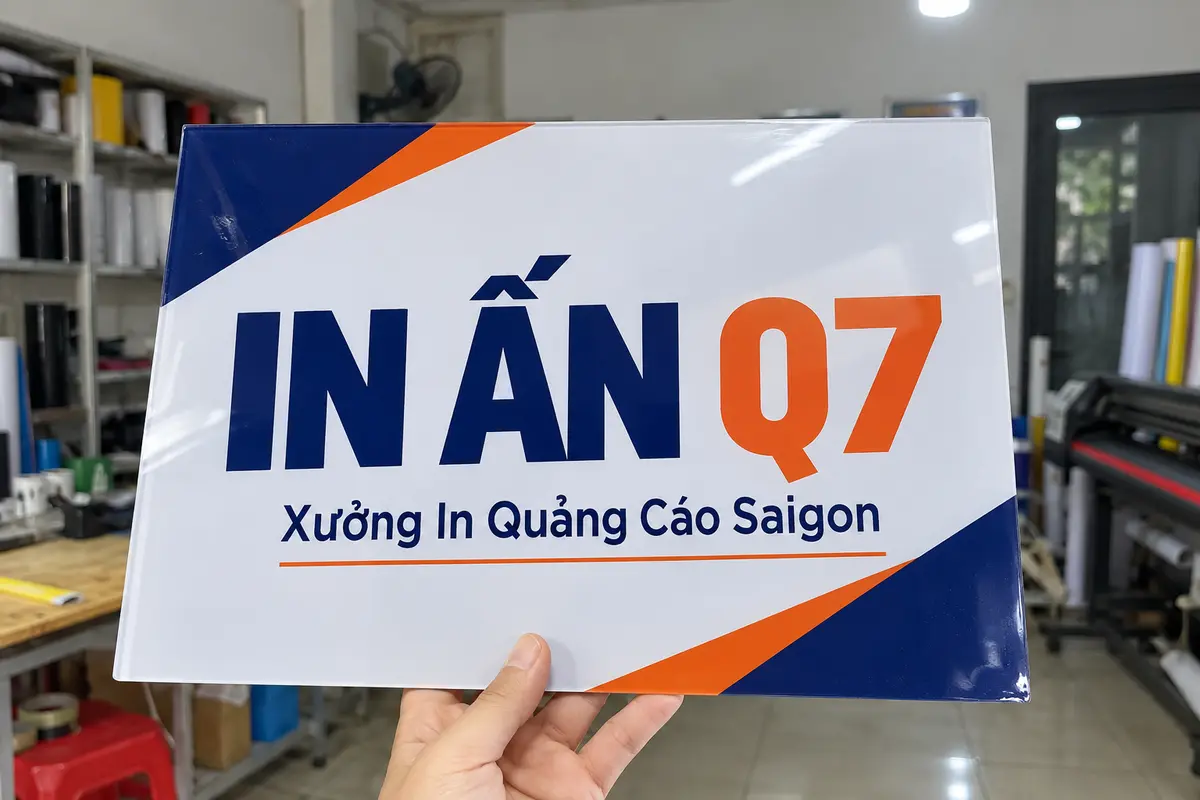
Content usually includes the logo, legal entity name, a line of business activity and the tax code. Send your brand identity files so the workshop uses the correct fonts and colour codes; if you do not have them, send the logo with the content for the workshop to build a preview.
Signs come pre-drilled for screws with a set of standoff screws; tell us beforehand the surface type – brick wall, gypsum partition or glass partition – so the workshop prepares the right accessories. The premium group made on glass, mirror stainless steel and powder-coated metal with raised fabricated letters fixed to the base is not in the UV printing price list, so it is quoted separately.
Frequently asked questions about District 8 company sign making
How long does delivery to District 8 take?
Usually within the day once finishing is done. Rigid panels are sandwiched between boards on both sides with corner protectors so they are not dented on the way.
Are signs hung outdoors durable?
Alu stays flat and withstands weather better than Mica at large sizes. Tell us the mounting position and sun direction so the workshop can advise suitable materials before settling.
Do you take orders for one piece?
Yes. Signs are made piece by piece, so one piece is accepted too, with no minimum quantity.
Order printing at In Quảng Cáo Q7
If your company in District 8 needs signs, send the logo, content and size via Zalo so the workshop can build a preview and quote – delivered over the bridge once finishing is done.
In Quảng Cáo Q7 direct print workshop – 49 Mai Van Vinh, Tan Hung Ward, Ho Chi Minh City. Production and delivery hours: Monday – Saturday, 8:00–12:00 and 13:00–18:00 · Orders via Zalo/hotline: Monday – Saturday 8:00–12:00 and 13:00–20:00, Sunday 14:00–19:00. Quick message via Zalo or call 0866.511.099.
See more printing services on the In Quảng Cáo Q7 home page, see all corporate print products or contact us quickly via the contact page; you can also get directions to the workshop on Google Maps.
Which sign types warehouses and factories need
District 8 has many warehouses and small production facilities, so the demand for signs here is broader than for an office. Besides name badges for staff, they also need area signs, shelf labels, machine labels and safety signs.
Warehouse signs differ from office signs in two points: they must be readable from afar and must withstand dusty, humid and sometimes oily environments. So both the material and font size are different.
A medium-sized warehouse usually needs about thirty to forty pieces for areas and shelves, plus name badges counted per head. Ordering together in one round combines the quantity and takes only one installation.
| Board type | Where mounted | Text height | Material |
|---|---|---|---|
| Name badges | On staff clothing | 5 to 8mm | Acrylic or thin Alu |
| Area signs | Hung high in the warehouse | 10 to 15cm | Alu or thick Formex |
| Shelf labels | Shelf edge | 3 to 5cm | Plastic decal or Mica |
| Machine labels | Machine body | 2 to 3cm | Silver decal or Alu |
| Safety signs | Doors and aisles | 5 to 10cm | Alu or Mica |
Area signs hung high need very large text because they are read from the far end of the warehouse. This is a detail often made small out of office-sign habit, and the result is that staff have to walk right up close to read it.
Materials that withstand the warehouse environment
Warehouses and factories have dust, humidity and in many places machine oil. Signs made of unsuitable materials will have faded text or peeling edges after just one season.
Alu is the most common choice for warehouse signs: aluminium composite panel, flat, light, withstanding humidity and washable. Text is printed directly or applied as decal on the face, and an extra protective layer is laminated if more durability is needed.
Mica is used for signs in dry areas that are rarely touched. Clear Mica looks nice but scratches and cracks easily if knocked, so it does not suit loading areas.
For signs mounted on machine bodies, silver decal is a sensible choice because it withstands oil and washing. Formex is only used for temporary signs or signs in dry areas, because the material is soft and dents easily.
| Material | Moisture resistance | Oil resistance | Used for |
|---|---|---|---|
| Alu | Good | Good | Area signs, safety signs |
| Mica (Acrylic) | Good | Medium | Signs in dry areas |
| Silver decal | Good | Good | Signs mounted on machine bodies |
| Plastic decal | Good | Medium | Shelf labels |
| Formex | Medium | Poor | Temporary signs, dry areas |
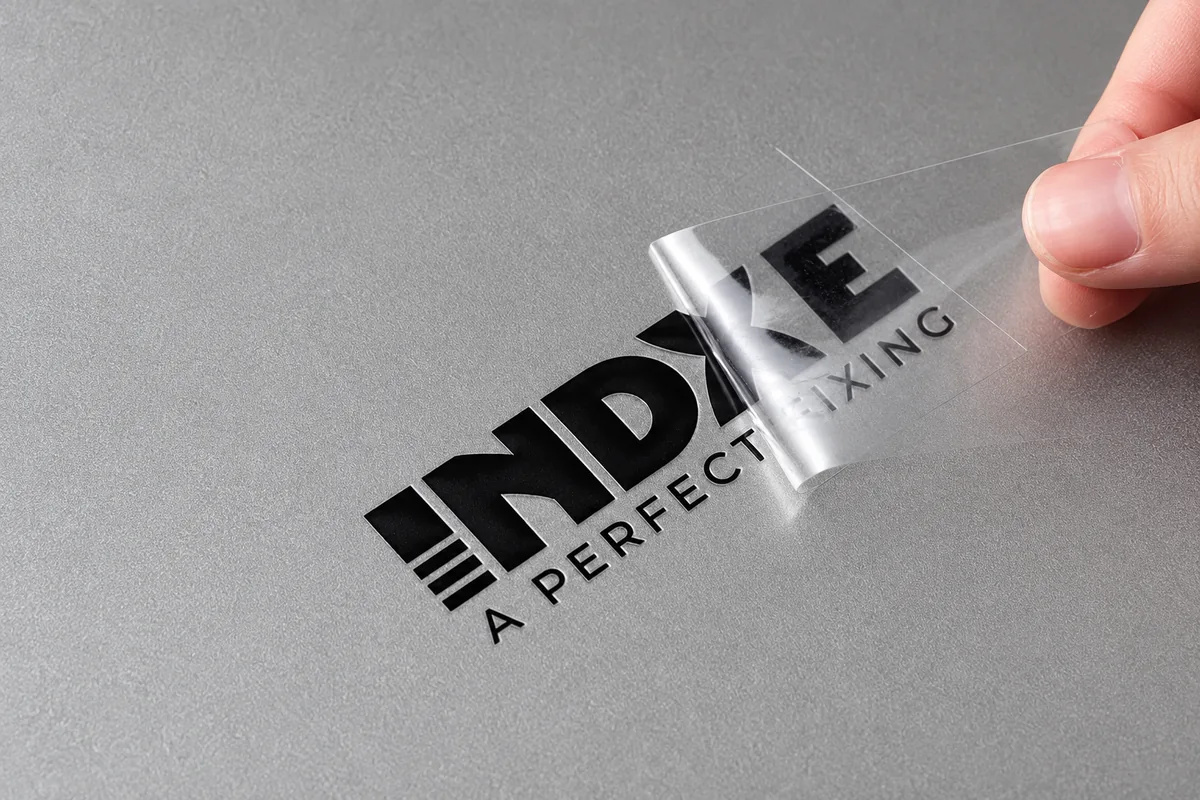
For signs mounted in areas with water or chemical fumes, the protective laminate is worth adding. The cost is small but it extends the sign's lifespan from one year to several years.
Related products

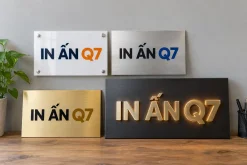
Company nameplates

Business cards

Folder

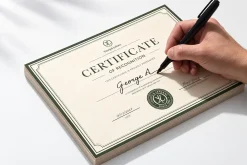
Certificate
Shelf labels and how to assign codes
Shelf labels are the most used item in the warehouse yet get little attention. A well-organised warehouse has clear shelf codes, and these codes are printed on signs mounted on the shelf edge.
The common coding method is a letter for the row and a number for the level, for example A1, A2, B1. Short codes allow large text and staff read them quickly; long codes make the text smaller and lose their purpose.
Many warehouses also print barcodes on shelf labels for scanning with readers. In this case the barcode needs to be at least four centimetres wide and placed within arm's reach.
- Short shelf codes: one letter for the row, one number for the level.
- Text 3 to 5cm high so it can be read when walking along the aisle.
- Add a barcode if the warehouse uses readers, at least 4cm wide.
- Use different colours for each row so they can be recognised from afar.
- Mount with double-sided tape or plastic clips so they can be replaced when the warehouse layout changes.
Plastic clips on the shelf edge are the most flexible method because signs can be replaced when the warehouse layout changes. Adhesive is firmer, but when the layout changes it has to be peeled off, and the old adhesive leaves marks on the shelf.
Safety signs and area signs
Safety signs in the warehouse include exit signs, restricted area signs, PPE requirement signs and fire equipment location signs. The content is decided by the facility according to the safety regulations that apply to it.
The printing follows general principles: strongly contrasting background colours, large text, and symbols together with text so they are understood at a glance. Red backgrounds for warnings, yellow for caution and green for directions is the convention many facilities use.
Area signs hung high need very large text and should be double-sided if the aisle is used from both directions. If hung single-sided, people walking the opposite way cannot read them and have to turn around.
| Board type | Conventional background colour | Text height | Hanging method |
|---|---|---|---|
| Danger warning | Red | 8 to 10cm | Mounted on partitions or doors |
| Caution, PPE required | Yellow | 6 to 8cm | Mounted at the entrance door |
| Exit directions | Green | 6 to 8cm | High up, double-sided |
| Area names | Per brand identity | 10 to 15cm | Hung high, double-sided |
| Fire equipment location | Red | 5cm | Mounted right next to the equipment |
Choosing the content and mounting positions of safety signs is the facility's responsibility, because each industry has its own requirements. The material, size and mounting method are handled at the workshop exactly according to the list the facility provides.
Name badges for warehouse staff
Warehouse and factory staff wear thicker clothing than office staff, so the way badges are attached differs. Pins struggle to pierce thick canvas, and magnets do not hold firmly either.
Two better options are crocodile clips on the pocket edge and lanyards. For manual work, lanyards can get in the way, so many warehouses choose crocodile clips on the pocket.
Badge material for this group should be Alu or 2mm-thick Mica, which withstands impact. Badges thinner than one millimetre crack easily when staff do manual work.
- Crocodile clip on the pocket edge: best suited to thick clothing.
- Lanyard: for staff who do little manual work.
- Alu or 2mm-thick Mica material, impact-resistant.
- Also print the employee code for checking against the timesheet.
- Colour coding by department: warehouse, production, delivery, office.
Colour coding by department is very useful in crowded warehouses with many outside contractors coming in to work. One look at the badge colour tells you which department someone belongs to and whether they may enter which areas.
Quantities and production time
A medium-sized warehouse usually orders about thirty to forty signs for areas and shelves, plus name badges per head. Combining everything into one round lowers the price per piece and takes only one installation.
Production time depends on material and size. Small Mica or Alu signs are machine-cut so they are fast; large signs hung high need extra steps for making the frame and installing.
| Item | Lead time | Minimum quantity |
|---|---|---|
| Mica, Alu name badges | 2 to 3 days | 10 pcs |
| Plastic decal shelf labels | 1 to 2 days | 20 pcs |
| Silver decal machine labels | 2 days | 10 pcs |
| Alu safety signs | 3 days | 1 piece |
| High-hung area signs | 3 to 5 days | 1 pc, with installation |
Signs hung high need an on-site survey before quoting, because it also depends on the roof structure and mounting height. The survey is not charged separately for warehouses within the area.
Common mistakes when ordering for the first time
The five mistakes below account for most cases where a batch of warehouse signs and directional signs has to be redone. All five show up right away on one sample, so the sample approval step is worth keeping.
The first mistake is text too small for the reading distance, the most common mistake with signs hung high. The second is choosing Formex for humid areas, so the sign dents and the text fades after a few months.
The third mistake is using adhesive for shelf labels while the warehouse layout still changes. The fourth is single-sided signs in two-way aisles. The fifth is shelf codes that are too long, so the text gets smaller.
| Mistake | Consequence | How to avoid it |
|---|---|---|
| Text too small | Have to walk close to read | Calculate font size by reading distance |
| Formex in humid areas | Dented and faded text | Use Alu or Mica |
| Adhesive while the layout still changes | Peeling leaves marks | Use plastic clips on the shelf edge |
| Single-sided signs | Cannot be read from the opposite direction | Double-sided in two-way aisles |
| Shelf code too long | Small text, slow reading | Use short codes, one letter and one number |
For staff badge batches covering many people, a preview of the first few pieces is sent back for checking names and codes. The whole list is only run after approval.
Installation at the warehouse and the order of work
A batch of warehouse signs includes many types mounted in many positions, so the installation order affects the time. Installing by location group is faster than installing by sign type group.
The usual order starts with signs hung high because they need a ladder and two people, done while the warehouse is still quiet. Then door and partition signs, and finally shelf labels because they are numerous and quick.
Before installation, there should be a map showing clearly which sign goes where. Without a map, the installer has to ask constantly, and with forty pieces that takes up most of the time.
- Prepare a map showing the position of each sign before the installation day.
- Install signs hung high first, while the warehouse is still quiet.
- Door and partition signs are done afterwards, without a ladder.
- Shelf labels are done last because they are numerous and quick.
- Check everything once against the map after installation.
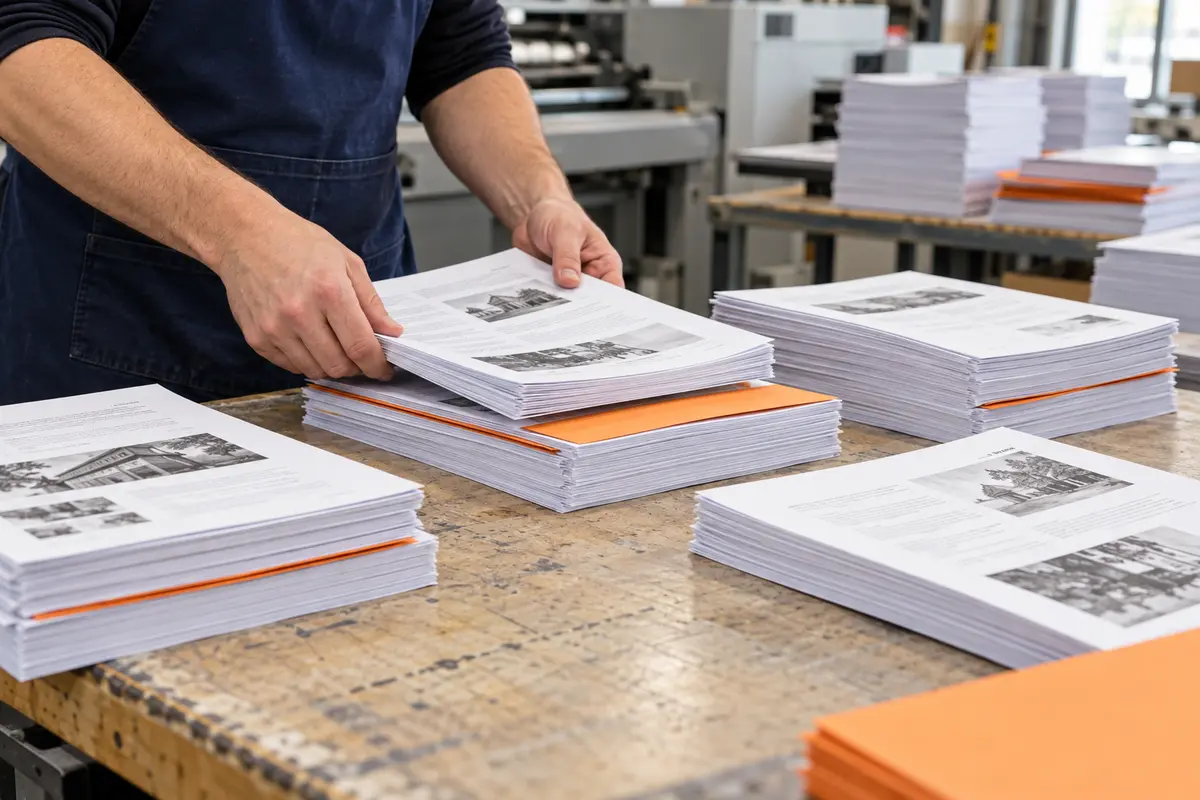
The workshop packs signs by location group and labels the outside of each package, stating clearly which package is for which area. The installer takes the right package for the right area, without opening every package to search.
Delivery and ordering signs in District 8
Workshop at 49 Mai Van Vinh, Tan Hung Ward, Ho Chi Minh City, to District 8 via Nguyen Van Cu Bridge or Chanh Hung Bridge. Small signs are boxed and delivered by motorbike; large signs are delivered by small truck with an installer and need a gate-opening time arranged.
- Information 1: the list of sign types and the quantity of each.
- Information 2: size and material, or a description of the mounting position.
- Information 3: the list of names and employee codes as a spreadsheet.
- Information 4: the date you need it, delivery address and gate opening hours.
Items hung high or needing installation are scheduled separately, with the quote split into materials and installation. Send your request via Zalo to receive a quote for each type of sign and directional sign.
Need printing or signage in Ho Chi Minh City?
In Quảng Cáo Q7 runs its own print workshop in Tân Hưng Ward (former District 7), Ho Chi Minh City, producing and installing signage, banners, window graphics, exhibition booths and event displays. Send us the size, material, quantity and a photo on WhatsApp and we will get back to you.

Phone: +84 866 511 099 · Also on WeChat
Workshop: 49 Mai Văn Vĩnh, Tân Hưng Ward, Ho Chi Minh City