








































































Fort or Couche Paper: Which to Choose for Each Print?
Oct
Fort paper or Couche paper is a question the workshop meets every day when customers order documents, flyers and menus. Choosing the right paper makes the print look right for its purpose without overpaying. This article sums up how to tell them apart and when to use each, based on real printing experience at the In Quảng Cáo Q7 workshop.
Fort paper or Couche paper: the basic differences
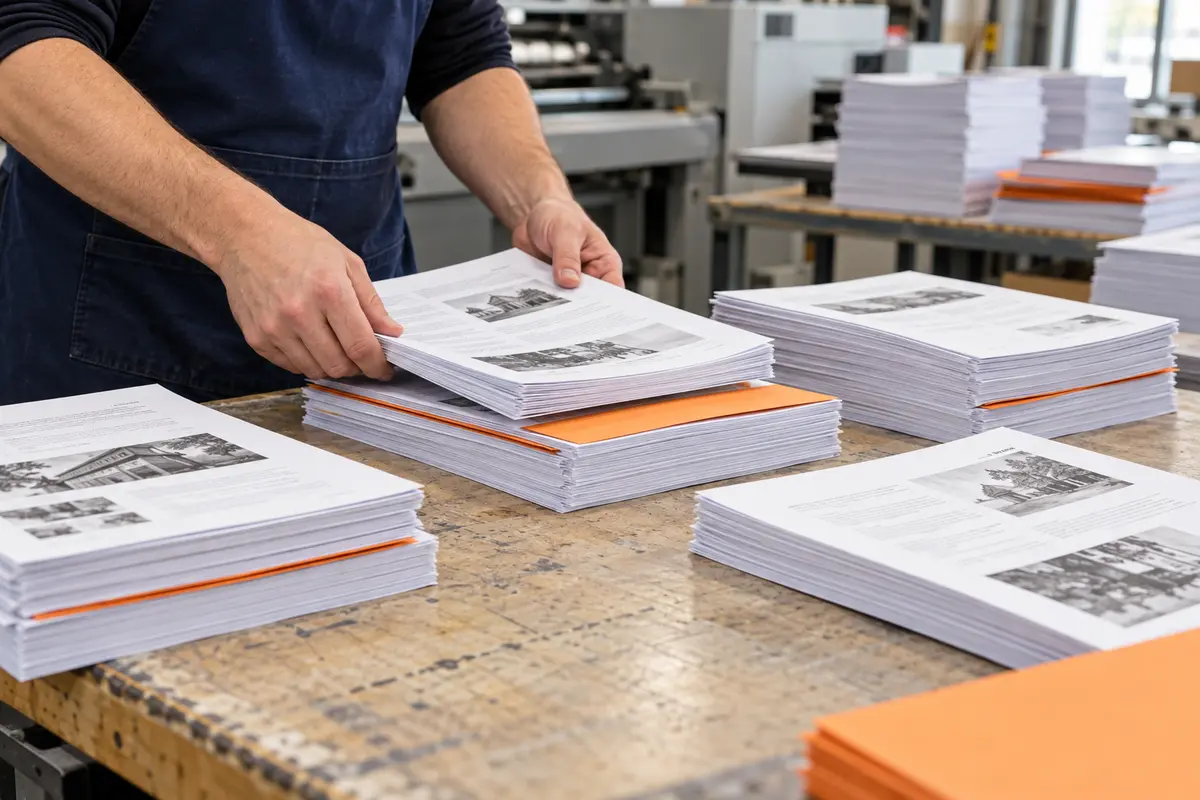
Fort paper (also called Ford paper) has a rough, uncoated surface, takes ink well and can be written on with a ballpoint — it is the paper of photocopies, contracts and office documents. Couche paper is gloss-coated on both sides, giving much more vivid and sharper print colour, but it is hard to write on — it is the paper of flyers, posters, catalogues and menus.
When to choose Fort paper
Choose Fort when documents have a lot of text to read or need notes written on them: contracts, tender files, course materials, receipt and payment slips. For large quantities of black and white documents, workshop prices fall by tier from 2.000đ down to 400đ/sheet — see the detailed price table at black and white document printing. Colour documents on thick Fort paper print from 1.600đ/sheet, suitable for reports with charts that need notes.
When to choose Couche paper
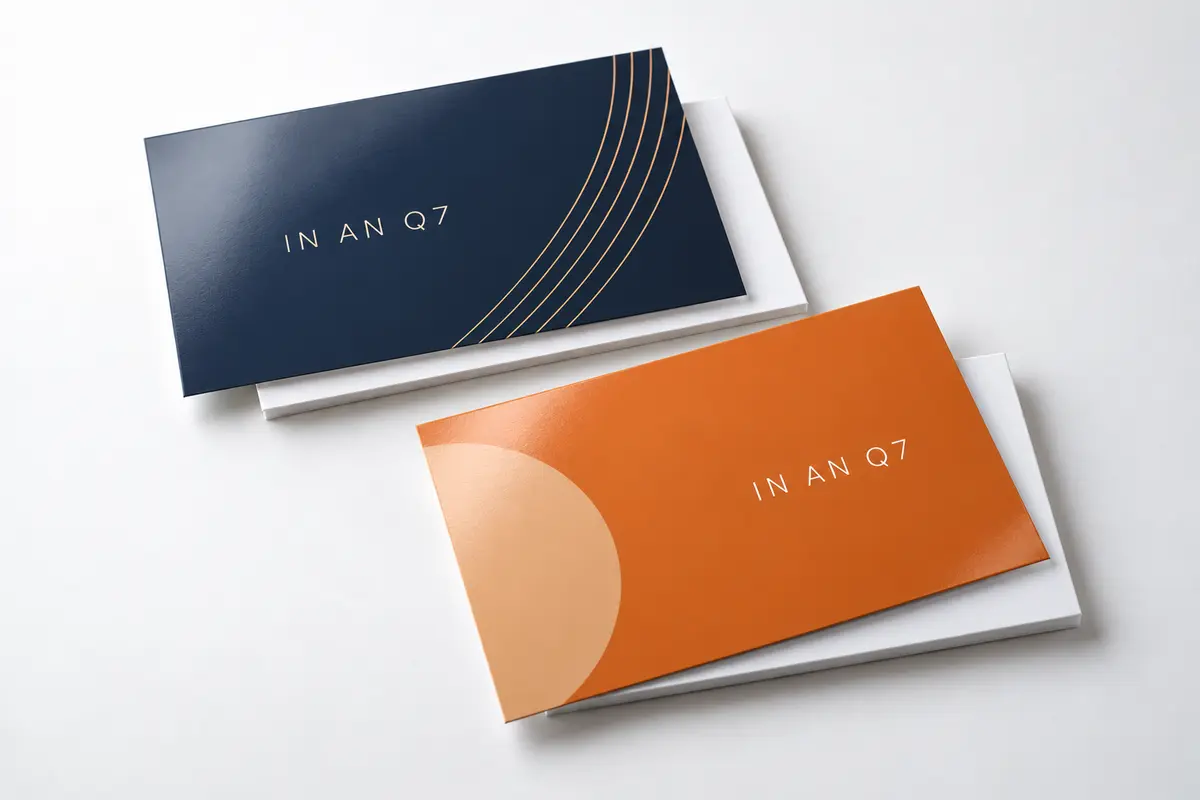
Choose Couche when print products need to look good for clients: flyers, menus, catalogues, company profiles, posters. Colour printing on thick Couche paper from 1.800đ/sheet. Business cards printed on laminated Couche from 120.000đ/box. Product photos and food photos printed on Couche have fresher colour and clearer contrast than Fort, visible to the naked eye.
Fort paper or Couche paper: quick comparison and printing prices
| Criterion | Fort Paper | Couche Paper |
|---|---|---|
| Surface | Rough, uncoated | Gloss-coated, smooth |
| Writing on it with a ballpoint | Easy | Difficult, ink dries slowly |
| Print colour | True, soft | Vivid, high contrast |
| Suitable for | Documents, contracts, course materials | Flyers, menus, catalogues, posters |
| Reference colour printing price | From 1.600đ/sheet | From 1.800đ/sheet |
Whether you choose Fort paper or Couche paper, both belong to the fast group: A4 and A3 documents ordered in the morning can usually be collected within the day. See also the service fast printing in District 7 if you need it urgently.
Money-saving tips for large print runs
- Black and white printing in quantities from a few hundred sheets: the unit price decreases with the number of sheets, and single- or double-sided cost the same.
- Internal documents only need Fort 70–80gsm; save Couche for the cover.
- Have spiral or glue binding done at the workshop at the same time so you do not need an extra trip.
- Send a PDF file at the correct size from the start to avoid file adjustment fees.
Contact 0866.511.099 (Phone/Zalo) or visit the workshop at 49 Mai Van Vinh, Tan Hung Ward, Ho Chi Minh City. Production and delivery: Monday – Saturday, 8:00–12:00 and 13:00–18:00. Consultation & orders via Zalo/hotline: Monday – Saturday 8:00–12:00 and 13:00–20:00, Sunday 14:00–19:00.
View directions to the workshop on Google Maps
Frequently asked questions
Are Fort paper and Ford paper the same?
Yes. These are two names for the same uncoated paper, the original name coming from “Bond paper”.
Can I print just 1 sheet or do I have to order a quantity?
The workshop prints from 1 sheet, both black and white and colour, with prices listed on the website.
Should colour documents use Fort paper or Couche paper?
If notes are needed, choose Fort; if it is for presenting to clients, choose Couche. Ordinary colour documents print from 1.000đ/sheet — details on the page color document printing.
Some images on this page are illustrations.
Quick comparison: Fort paper or Couche paper
When weighing up Fort paper or Couche paper, the root difference lies in the coating on the paper surface. One is uncoated, so it is slightly rough and absorbs ink; the other has a coating, so it is smooth and ink sits on the surface. The table below compares them by practical criteria.
| Criterion | Fort Paper | Couche Paper |
|---|---|---|
| Surface | Uncoated, slightly rough | Coated, smooth |
| Colour vividness | Soft | More vivid and intense |
| Detail sharpness | Less sharp in small details | Sharper |
| Light reflection | Little, easier on the eyes when reading | More, especially the gloss type |
| Writing with a pen | Absorbs ink well, does not spread | Ink dries slowly, spreads easily |
| Printed two sides | Very good, little show-through | Yes, but thin paper shows through easily |
| Weights in stock | 80, 120, 180, 250gsm | 150, 200, 250, 300gsm |
| Starting colour printing price | from 8.000đ | from 9.800đ |
| Black and white printing price | from 2.000đ | Not usually used for black and white printing |
From the table above you can draw a simple rule for deciding between Fort paper and Couche paper. Print products for reading and writing should use the uncoated type; print products for viewing and display should use the coated type.
Choosing Fort paper or Couche paper by print product
The table below applies the rule above to specific print products, so you do not have to weigh up Fort paper or Couche paper from scratch each time you order.
| Item | Recommended | Suggested weight |
|---|---|---|
| Multi-page documents for reading | Fort Paper | 80gsm |
| Forms to be filled in with a pen | Fort Paper | 80 – 120gsm |
| Contracts and signed copies | Fort Paper | 120gsm |
| Cover letters and divider pages | Fort Paper | 120 – 180gsm |
| Handout flyers | Couche Paper | 150gsm |
| Bi-fold or tri-fold brochure | Couche Paper | 150 – 200gsm |
| Catalogue inner pages | Couche Paper | 150 – 200gsm |
| Catalogue covers and file covers | Couche Paper | 250 – 300gsm |
| Counter price lists | Couche Paper | 250gsm |
| Restaurant menus | Couche Paper | 300gsm |
| Hang tags and information cards | Couche Paper | 300gsm |
| File covers that need thickness without gloss | Fort Paper | 250gsm |
The last row is the case many people overlook when weighing up Fort paper or Couche paper. The uncoated type also comes in 250gsm, so if you need a thick cover without a glossy surface, you do not necessarily need to switch to the coated type.
Costs when weighing up Fort paper or Couche paper
The price difference between the two types is small per sheet, but for multi-page sets the total difference is significant. The table below helps you picture it.
| Situation | Pricing | Notes |
|---|---|---|
| 40-page set printed entirely in colour | The difference multiplied by 40 sheets | Worth careful consideration |
| 40-page set, coated cover and uncoated inner pages | The difference is only on a few cover sheets | The most economical way |
| Single-page flyers in large quantities | The difference multiplied by the number of sheets | Choose by purpose, not by price |
| B&W documents | Only uncoated paper is used | from 2.000đ per sheet |
| Price lists and menus used for a long time | Choose the coated type even though it costs more | More durable when touched a lot |
- Colour printing on the uncoated type from 8.000đ per A4 – A3 sheet.
- Colour printing on the coated type 150 – 300gsm from 9.800đ per sheet.
- Colour advertising printing combining both types from 8.000đ per sheet.
- Prices decrease by quantity tier for both types.
So the question of Fort paper or Couche paper should not be answered by price alone. For multi-page sets, the most economical way is to combine both types rather than choose one for everything.
Combining both instead of choosing Fort paper or Couche paper
For multi-page sets, the most common approach is not choosing one of the two but combining both. The table below shows commonly used combinations, so you can skip the question of Fort paper or Couche paper.
| Print product set | Cover | Inner pages |
|---|---|---|
| Product catalogues | 300gsm Couche Paper | Couche paper 150gsm |
| Company profile | Couche paper 250 – 300gsm | Fort paper 80 – 120gsm for the text section, Couche paper 150gsm for the photo section |
| Annual reports | Couche paper 250gsm | Fort paper 80gsm |
| Seminar documents | Couche paper 250gsm | Fort paper 80gsm |
| Internal form sets | Fort paper 180gsm | Fort paper 80gsm |
| Training documents | Couche paper 250gsm | Fort paper 80gsm, double-sided |
This combination keeps both advantages at once. The coated cover looks solid with fresh colour, while the uncoated inner pages are easy to read, easy to annotate and can be printed double-sided. That way you do not have to compromise when weighing up Fort paper or Couche paper.
Three questions to help decide Fort paper or Couche paper
If you are still not sure, answer the three questions below and you have your choice.
| Question | If the answer is yes | If the answer is no |
|---|---|---|
| Do readers need to write notes on the print product with a pen? | Choose Fort paper | Go to the next question |
| Are photos or large colour areas the highlight of the print product? | Choose Couche paper | Go to the next question |
| Will the print product be touched a lot or used for a long time? | Choose Couche paper with lamination or plastic pouch lamination | Choose Fort paper to save money |
- If the set has both text and photo sections, you do not need to choose one type; combine the two.
- If you are unsure about the feel, drop by the workshop to see real paper samples before settling.
- If you printed before and were satisfied, note down the paper type and weight so you order correctly next time.
The three questions above cover most situations. When you are still hesitating over Fort paper or Couche paper, the surest way is to test print one sheet on each type and compare directly, because the same file printed on two papers gives two different impressions.
Which is cheaper, Fort paper or Couche paper?
Colour printing on Fort paper from 8.000đ per sheet, on Couche paper 150 – 300gsm from 9.800đ per sheet. Black and white printing uses only Fort paper, from 2.000đ per sheet. Prices decrease by quantity tier for both types.
Should forms filled in by hand use Fort paper or Couche paper?
Choose Fort paper 80 – 120gsm, because the uncoated surface absorbs pen ink quickly without spreading. Couche paper has a coated surface, so pen ink dries slowly, which is inconvenient for forms.
Should catalogues use Fort paper or Couche paper?
Choose Couche paper, with a 250 – 300gsm cover and 150 – 200gsm inner pages, because product photos come out fresher and sharper. If the catalogue has many text pages, that part can use Fort paper 80gsm to reduce thickness.
Can both types be used in one set?
Yes, and this is the most common approach for multi-page sets. The cover uses Couche paper 250 – 300gsm, and the inner pages use Fort paper 80gsm for the text and Couche paper 150gsm for the photos.
For a cover that needs to be thick but not glossy, should I choose Fort paper or Couche paper?
Choose Fort paper 250gsm. The uncoated type also comes in 250gsm, so if you need a thick cover without a glossy surface, you do not necessarily need to switch to the coated type.
Different finishing when choosing Fort paper or Couche paper
The two paper groups need different finishing, and this also affects the decision between Fort paper and Couche paper. The table below compares the finishing that usually goes with each.
| Finishing | With Fort paper | With Couche paper |
|---|---|---|
| Lamination | Rarely needed, only for 250gsm covers | Often used, especially for covers and cards |
| Plastic laminating | Used for counter forms | Used for price lists and menus |
| Binding | Very common with document sets | Common with catalogues |
| Trimming | Used for slips and cards | Used for flyers and hang tags |
| Folding | Possible at every weight | Should not exceed 200gsm because it cracks easily |
The last row is a notable difference. Paper with a thick coating cracks easily at the fold line, so folded brochures should not exceed 200gsm. When a print product needs many folds, this is a technical reason to lean towards Fort paper when weighing up Fort paper or Couche paper.
Finishing fees are the same for both groups, including lamination from 300đ per sheet, plastic pouch lamination from 3.000đ per sheet, binding from 2.000đ per book and trimming per pack from 15.000đ, free for orders of 20 sheets or more. So the difference when choosing Fort paper or Couche paper lies mainly in the printing and paper price.
Customer groups that often ask about Fort paper or Couche paper
The table below shows the groups that most often ask about Fort paper or Couche paper, with the choice that suits them in practice.
| Customer group | Job | Usual final choice |
|---|---|---|
| Administration department | Contracts, forms, meeting documents | Fort paper 80gsm, double-sided |
| Sales department | Quotations, catalogues, flyers | Couche paper cover, inner pages depending on content |
| Tender department | Company profiles, appendices | Couche paper 300gsm cover, Fort paper inner pages |
| Eateries and shops | Menus, price lists, hang tags | Couche paper 250 – 300gsm |
| Schools and centres | Study materials, tests | Fort paper 80gsm |
| Event companies | Seminar documents, name cards | Couche paper cover, Fort paper inner pages |
The table above makes one thing clear: most groups end up using both types rather than choosing one. So when you are still hesitating between Fort paper or Couche paper, the practical answer is usually to use both for two different parts of the same set.
Order printing at In Quảng Cáo Q7
The workshop is at 49 Mai Van Vinh, Tan Hung Ward, Ho Chi Minh City, with real paper samples of both groups in every weight for you to hold and compare. Printing and finishing are done in the same place.
- Send a CMYK PDF file with the quantity, print size, number of printed sides and preferred paper type.
- If you are not sure, say what the print product is used for so the workshop can suggest.
- Test print one sheet on each type if you need to compare directly.
- Pick up at the workshop or choose ride-hailing delivery within the inner city.
- Send the company name, tax code, address and email if you need invoices.
Once settled, note down the paper type and weight used together with the final PDF file. That way next time you do not have to weigh up Fort paper or Couche paper again for the same print product, and the new batch keeps the same feel as the previous one.
Need printing or signage in Ho Chi Minh City?
In Quảng Cáo Q7 runs its own print workshop in Tân Hưng Ward (former District 7), Ho Chi Minh City, producing and installing signage, banners, window graphics, exhibition booths and event displays. Send us the size, material, quantity and a photo on WhatsApp and we will get back to you.

Phone: +84 866 511 099 · Also on WeChat
Workshop: 49 Mai Văn Vĩnh, Tân Hưng Ward, Ho Chi Minh City