




































































Letterhead Printing Trung Son – A4 Fort 100/120gsm, From a Few Sheets
Oct
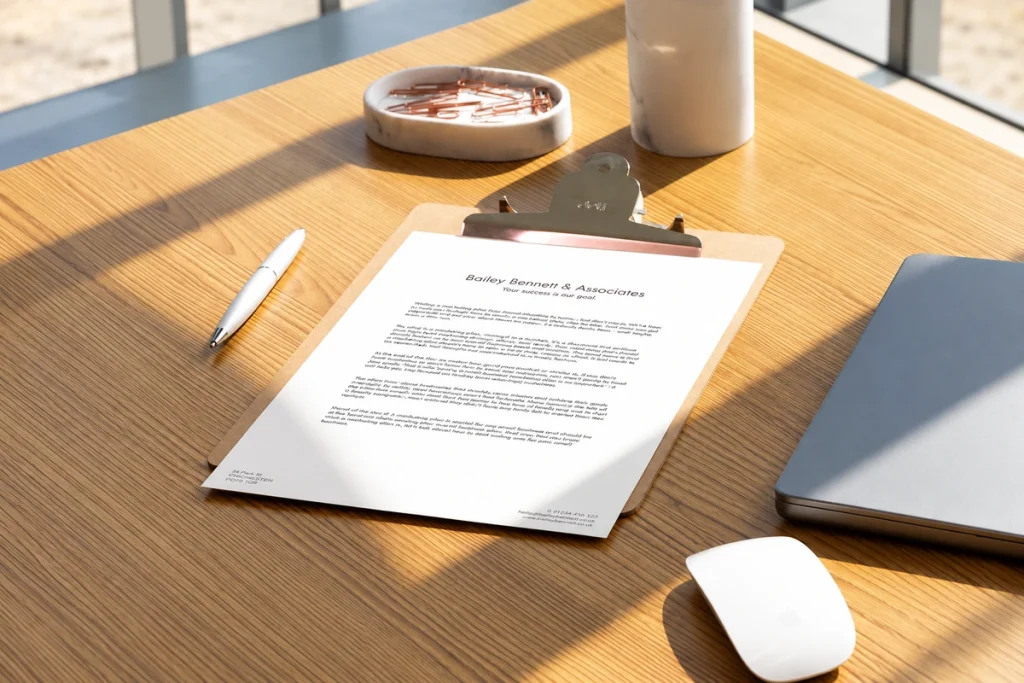
Does your company need Trung Son letterhead printing? This article sets out the A4 size, two Fort paper weights, single- or double-sided options, and the two 24-hour – 72-hour time tracks at the In Quảng Cáo Q7 workshop.
Letterhead printing for companies in the Trung Son area
The Trung Son residential area sits right on the border of the former District 7; from Road 9A or the Nguyen Van Cu extension, cross the bridge and you reach the In Quảng Cáo Q7 workshop at 49 Mai Van Vinh, Tan Hung Ward. Being close, customers in this area often order a few dozen sheets when urgent and drop by to collect.
Demand for Trung Son letterhead printing comes from clinics, consulting firms, training centres and representative offices. This group uses letterhead for results, introduction letters, service contracts and official letters to partners.
From a few sheets – the 24-hour Express track
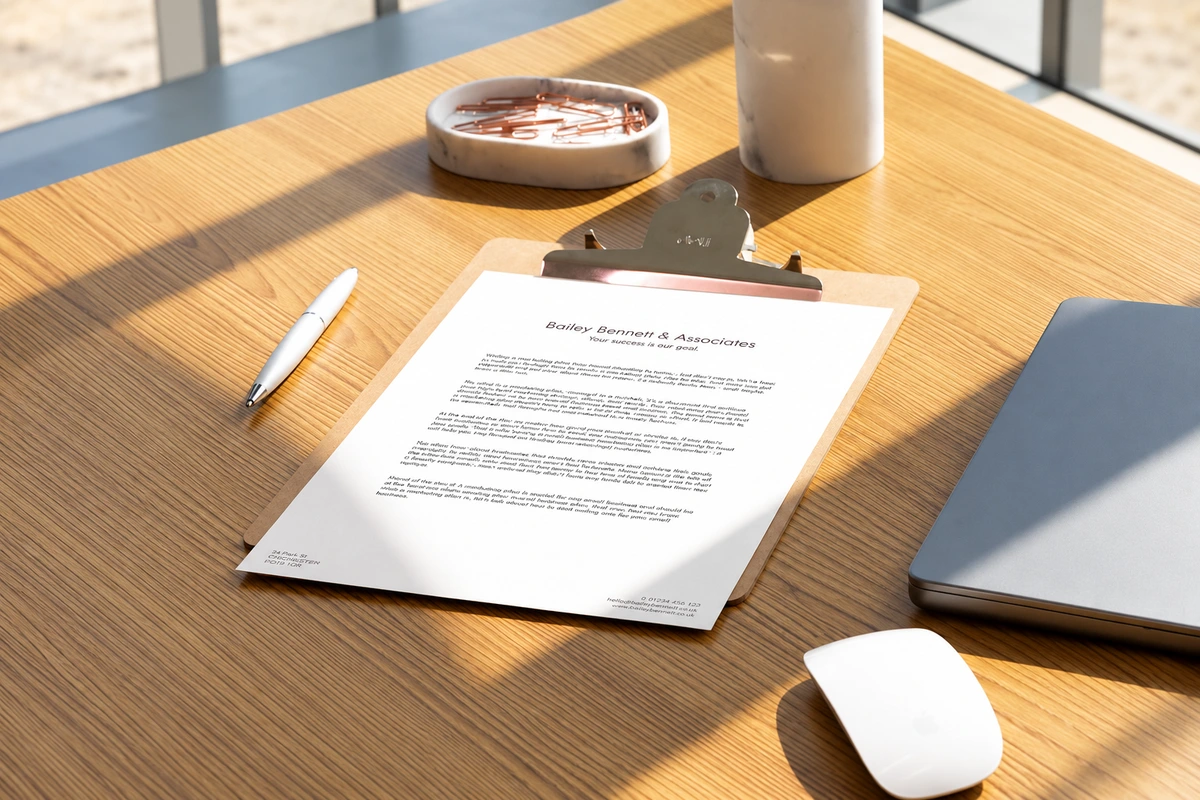
The 24-hour Express track runs on digital machines, with no zinc plates needed, so it takes orders from a few sheets. This suits small offices best: print as much as you need, without holding a ream of paper for the whole year.
The unit price per sheet drops in tiers: highest for 1–5 sheets and cheaper through the 6, 20, 50 and 100 sheet levels. The double-sided version has its own price tiers, slightly higher than single-sided because it runs twice.
When to switch to the offset track
The 72-hour Economy track runs on offset printing, with a minimum order of 1,000 sheets. From this level the unit price per sheet is much lower than the digital track, and keeps dropping through the 2,000, 3,000, 5,000 and 10,000 sheet levels.
The sensible switch point is when the company is sure to use up 1,000 sheets while the information on the paper stays unchanged. If the address or phone number is about to change, stay on the 24-hour track and print as needed.
Paper, number of sides and layout
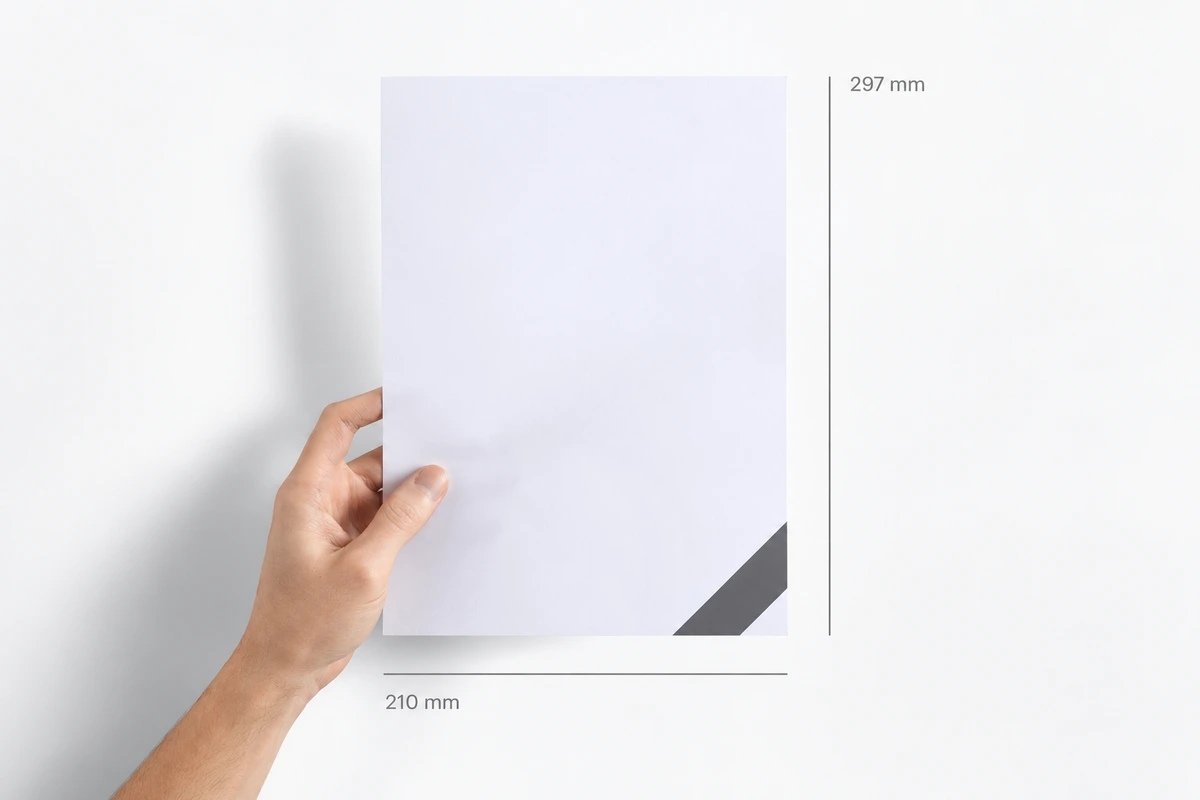
Fort paper 100gsm is light and economical, running well through laser printers. Fort paper 120gsm is thicker, firm in hand and with less show-through from the back – suited to results and contracts given to customers.
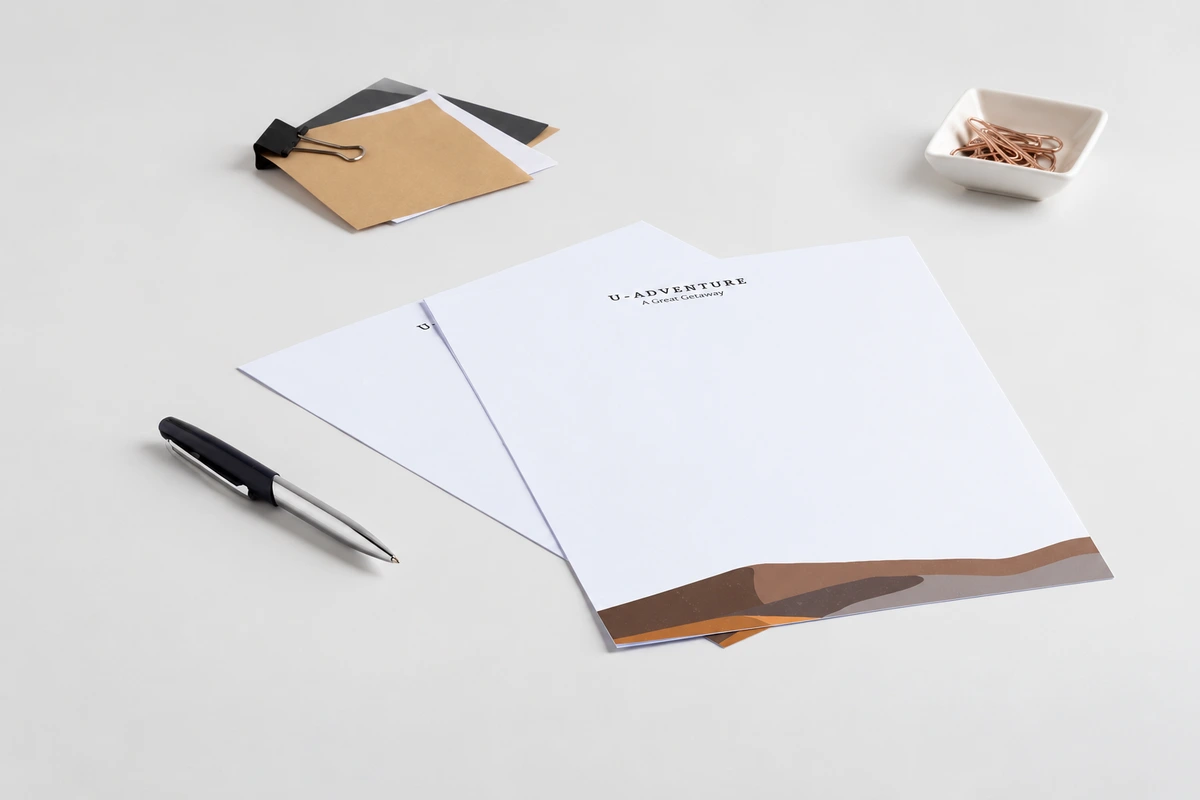
The middle of the page must leave enough white space for content, usually a top margin of about 4cm and a bottom margin of 3cm. Test-print a few sheets on the office printer to align the margins before printing the whole pad.
Frequently asked questions about Trung Son letterhead printing
Can I collect directly at the workshop?
Yes, and Trung Son customers often choose this because it is close. Send the file via Zalo first; the workshop messages you when printing is done so you can drop by to collect.
Do you take orders for 30 sheets?
Yes. The 24-hour Express track takes orders from a few sheets, so 30 sheets is a normal order.
What is the benefit of ordering envelopes together?
The logo on the letterhead and on the envelope runs under the same colour command so the tones do not differ, and you only approve the design once for both items.
Order printing at In Quảng Cáo Q7
If you are in the Trung Son area and need letterhead printed, send the file via Zalo and then drop by 49 Mai Van Vinh to collect when the workshop messages you that it is ready – or let the workshop deliver to your office.
In Quảng Cáo Q7 direct print workshop – 49 Mai Van Vinh, Tan Hung Ward, Ho Chi Minh City. Production and delivery hours: Monday – Saturday, 8:00–12:00 and 13:00–18:00 · Orders via Zalo/hotline: Monday – Saturday 8:00–12:00 and 13:00–20:00, Sunday 14:00–19:00. Quick message via Zalo or call 0866.511.099.
See more printing services on the In Quảng Cáo Q7 home page, see all corporate print products or contact us quickly via the contact page; you can also get directions to the workshop on Google Maps.
What service premises use letterhead for
The Trung Son area has many clinics, dental clinics, spas, consulting offices and training centres on the ground floors of townhouses. This group uses letterhead differently from businesses with warehouses: smaller quantities, but the sheet reaches the customer's hands directly.
A clinic prints results and post-treatment instructions on letterhead. A spa prints treatment plans. A consulting office prints quotations and contracts. A training centre prints course programmes and certificates.
In all four cases, customers take the sheet home and may keep it for many months. So letterhead here plays a long-term brand identity role, not just a background for documents.
| Premises | What is printed on the letterhead | How long customers keep it |
|---|---|---|
| Clinics, dentists | Results, post-treatment instructions | Many months |
| Spa, beauty | Treatment plans, appointment schedules | A few weeks |
| Consulting office | Quotations, contracts | Many years |
| Training centres | Programmes, certificates | Many years |
| Real estate | Property documents, price calculation sheets | Every few months |
For consulting offices and training centres, the sheet is kept for many years so the paper weight should be higher than usual. Fort paper 100 to 120gsm stays flat longer than 80gsm.
Related products

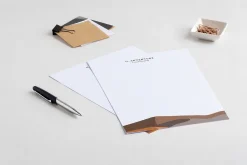
Letterhead

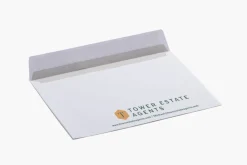
Envelopes

Business cards

Folder
Small quantities and how to calculate them
Service premises usually only need a few hundred sheets of letterhead for six months. The calculation is the number of customers receiving documents each week times the number of weeks, plus some for internal documents.
A clinic printing results for ten customers a week needs about two hundred and sixty sheets a year. Adding official letters and cover letters, about three hundred sheets is enough.
Two hundred sheets is accepted as normal because it runs on digital printing; the only difference is that the price per sheet is the highest. From five hundred sheets the price drops slightly, and from one thousand sheets it switches to offset.
| Quantity | Technology | Lasts | Price level |
|---|---|---|---|
| 100 to 200 sheets | Digital printing | 3 to 6 months | Highest |
| 300 to 500 sheets | Digital printing | 1 year | Slight reduction |
| 500 to 1,000 sheets | Calculate both ways | 1 to 2 years | Medium |
| Over 1,000 sheets | Offset printing | Many years | Lowest |
Because service premises often change opening hours or add new services, ordering more than a year's worth risks having to scrap it. Many facilities in Trung Son choose three hundred to five hundred sheets per round.
Layout and the space left for content
The header block contains the logo and facility name, the footer block contains the address, phone number and opening hours. The middle is left blank for content, and the size of the blank area should be calculated by the premises' printer.
Ordinary laser printers leave about five millimetres on each side unprintable, so content always sits within an area at least fifteen millimetres from the edge. The letterhead header block should be no taller than four centimetres.
For clinics printing results, the blank area needs to be wider because results often have data tables. In this case the footer block should be compact, with just one line of address and phone number.
- Header block at most 40mm tall, containing the logo and facility name.
- Footer block at most 25mm tall, compacted if content is long.
- The middle is left completely blank, with no bold patterns.
- Side margins of at least 15mm for office printers.
- Only print opening hours if sure they will not change within the year.
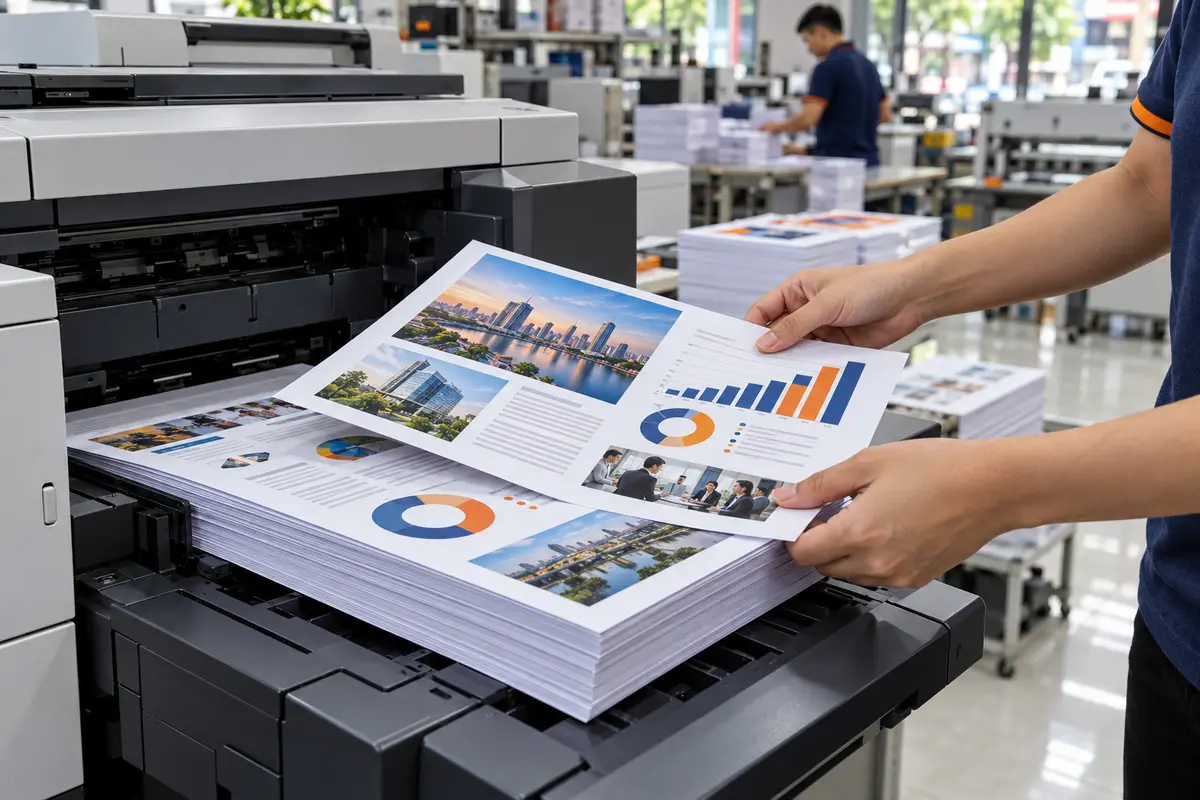
Opening hours are the only information worth weighing up, because changing hours means reprinting the whole round. If hours change by season, remove them from the letterhead entirely and keep them only on the shop sign and website.
Paper and printer requirements
Letterhead used with laser printers must be uncoated paper. Gloss-coated paper fed into a laser printer will jam, and if it gets through, the toner adheres poorly and flakes off when the sheet is folded.
100gsm is the most suitable weight for service premises: it already feels different from photocopy paper in hand, shows no text through when printed double-sided, and stays flat when customers keep it for long.
120gsm is more substantial, used by consulting offices printing contracts. 80gsm should only be used for internal documents, because customers holding a thin sheet will find it flimsy.
| Weight | Feel | Used for |
|---|---|---|
| 80gsm | Like photocopy paper | Internal documents |
| 100gsm | Firm in hand | The common level for customers |
| 120gsm | Substantial | Contracts, certificates |
| Fine art paper | Distinctive | Cover letters, thank-you letters |
If the facility wants the sheet to look more upscale, raise the weight instead of switching to coated paper. 120gsm gives a substantial feel while still running on every office printer.
The accompanying set for service premises
Letterhead is rarely used alone. For service premises, it goes with envelopes or folders handed to customers, and with appointment cards printed in pads. The whole group should be printed in the same round so the colours match.
When printed separately at different times, small differences in logo shade are still visible when customers receive the results sheet and appointment card together. This is a common mistake with printed sets made piecemeal.
One thing to know is that the same colour code gives different shades on uncoated and coated paper. So the logo on letterhead will look slightly different from the logo on a laminated folder.
- Letterhead: Fort paper 100gsm, uncoated.
- Envelopes: Fort paper 100gsm, size by folding method.
- Folders: Couche paper 300gsm, matte laminated.
- Appointment cards: bound in pads, Fort paper for handwriting.
- Business cards: Couche paper 300gsm, laminated.
For clinics and spas, appointment cards are used as much as letterhead. Ordering them together in one round is the way of combining quantities to lower prices that many premises in Trung Son are using.
Common mistakes and how to approve samples
The five mistakes below account for most cases where a round of letterhead has to be reprinted. All five show up right away when test-printing a real document on a sample sheet with the premises' own printer.
The first mistake is choosing gloss-coated paper, causing laser printer jams. The second is a header block that is too tall, pushing a one-page result or quotation onto a second page.
The third mistake is printing opening hours and then changing them. The fourth is an overly dark background pattern, making printed text hard to read. The fifth is not leaving enough side margins, so content overlaps the pre-printed part.
| Mistake | Consequence | How to avoid it |
|---|---|---|
| Choosing gloss-coated paper | Laser printer jams | Use uncoated Fort paper |
| Header block too tall | Document spills onto page two | Limit of 40mm |
| Printing opening hours | Changing hours means scrapping the whole round | Remove the hours from the sheet |
| Dark background pattern | Text hard to read | Keep it under 10 percent |
| Missing side margins | Overlaps the pre-printed part | Leave at least 15mm |
The surest way to check is to receive a few sample sheets and test-print a real document. Premises in the Trung Son area receive samples within the day because the workshop is right next door, so this step does not slow the order down.
When to switch to the offset printing track
Most service premises in Trung Son print letterhead on the digital track because of small quantities. But there are three cases where switching to offset is clearly advantageous, and they should be worked out in advance rather than waiting until the paper runs out.
The first case is a facility that has operated for a few years, with stable contact information and steady usage. At that point, ordering one to two thousand sheets for two years costs much less than ordering four small rounds.
The second case is a facility ordering several items that all use uncoated paper at the same time: letterhead, appointment cards and forms. Combining the total quantity makes it easier to reach the offset threshold.
The third case is a design with a colour background running to the edge. The digital track has more difficulty printing to the edge so the border has to be trimmed, while offset handles the full size.
| Case | Track to choose | Reason |
|---|---|---|
| Small quantity, newly opened | Digital | No plate making needed, small orders possible |
| Stable information, steady usage | Offset | Clearly lower price per sheet |
| Combining several items | Offset | Easier to reach the quantity threshold |
| Colour background to the edge | Offset | Full-size printing without trimming the border |
| Goods needed within the day | Digital | No time spent on plate making |
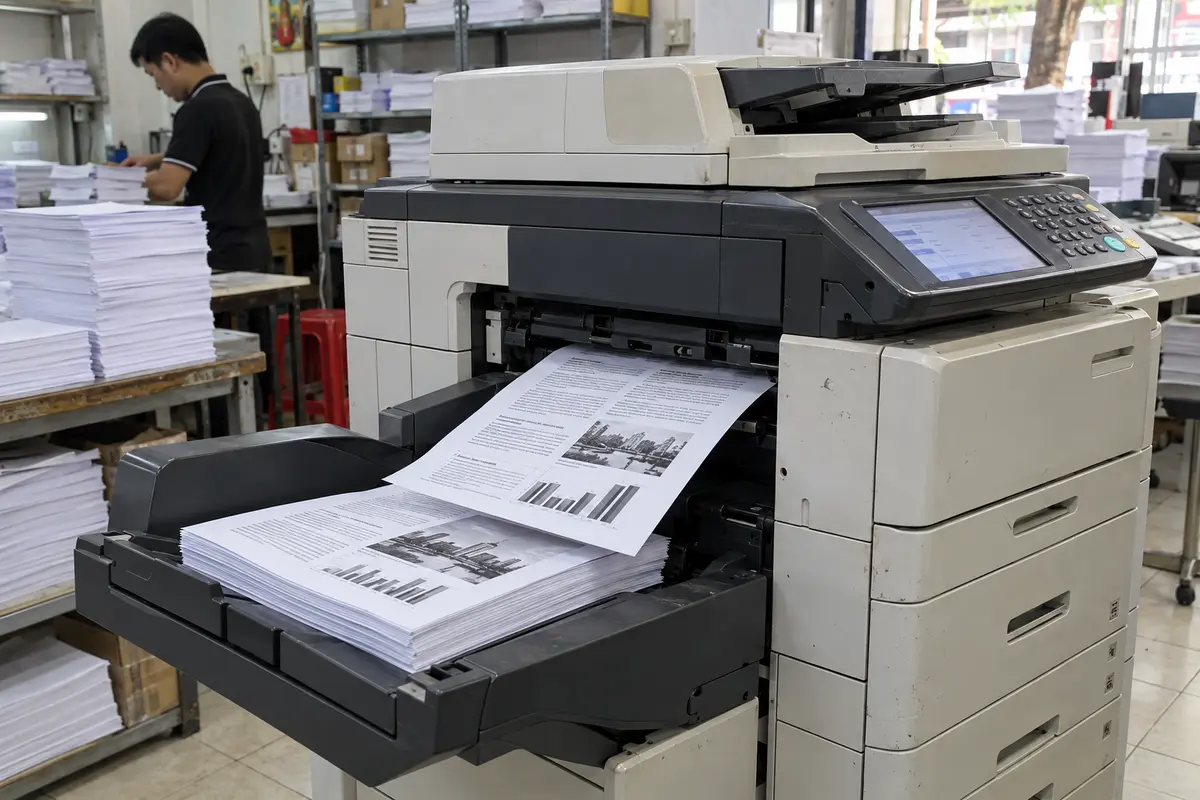
When the quantity is around the one-thousand-sheet threshold, quotes are calculated in parallel for both tracks so the premises can compare. The difference at this threshold is usually large enough to decide whether to combine rounds or keep ordering small.
Storage at the premises
Letterhead stored long in a humid environment curls slightly at the edges, and curled sheets fed into a laser printer jam easily. Ground-floor townhouse premises usually have high humidity in the morning, so this point is worth noting.
The correct way to store it is to keep it in the original paper wrapping, flat in a cabinet or drawer, in a dry place away from sunlight. Do not stand it upright because reams stood for long curve along their height.
Each time, only take out the amount used in one or two weeks and put it in the printer's paper tray. The rest stays in the wrapping so it does not absorb moisture or gather dust.
- Keep it in the original paper wrapping, flat.
- Do not stand reams upright; they curve easily along their height.
- Take out one or two weeks' worth and keep it in the printer tray.
- Avoid placing it near sunlit glass doors or near sources of moisture.
Because paper is easily affected, the letterhead quantity per round should be calculated for six to twelve months of use. Ordering for many years saves on price but carries a higher risk of curled paper.
Receiving goods and ordering letterhead printing in Trung Son
The workshop is located at 49 Mai Van Vinh, Tan Hung Ward, Ho Chi Minh City, and from here to the Trung Son area is only a few minutes, so samples and goods are both delivered fast. Premises can drop by to collect directly or receive delivery to their door.
- Information 1: quantity and paper weight.
- Information 2: one colour or multiple colours, single-sided or double-sided.
- Information 3: logo file with colour codes, or the content of the header and footer blocks.
- Information 4: the date you need it and the hours someone is at the premises.
Orders of one hundred sheets are accepted as normal; there is no high minimum quantity. Send your request via Zalo to receive a letterhead quote by quantity and number of print colours.
Need printing or signage in Ho Chi Minh City?
In Quảng Cáo Q7 runs its own print workshop in Tân Hưng Ward (former District 7), Ho Chi Minh City, producing and installing signage, banners, window graphics, exhibition booths and event displays. Send us the size, material, quantity and a photo on WhatsApp and we will get back to you.

Phone: +84 866 511 099 · Also on WeChat
Workshop: 49 Mai Văn Vĩnh, Tân Hưng Ward, Ho Chi Minh City