




































































B250 or F250 paper, how many boxes: designing loyalty cards
Sep
B250 or F250 Paper, How Many Boxes: Designing Loyalty Cards
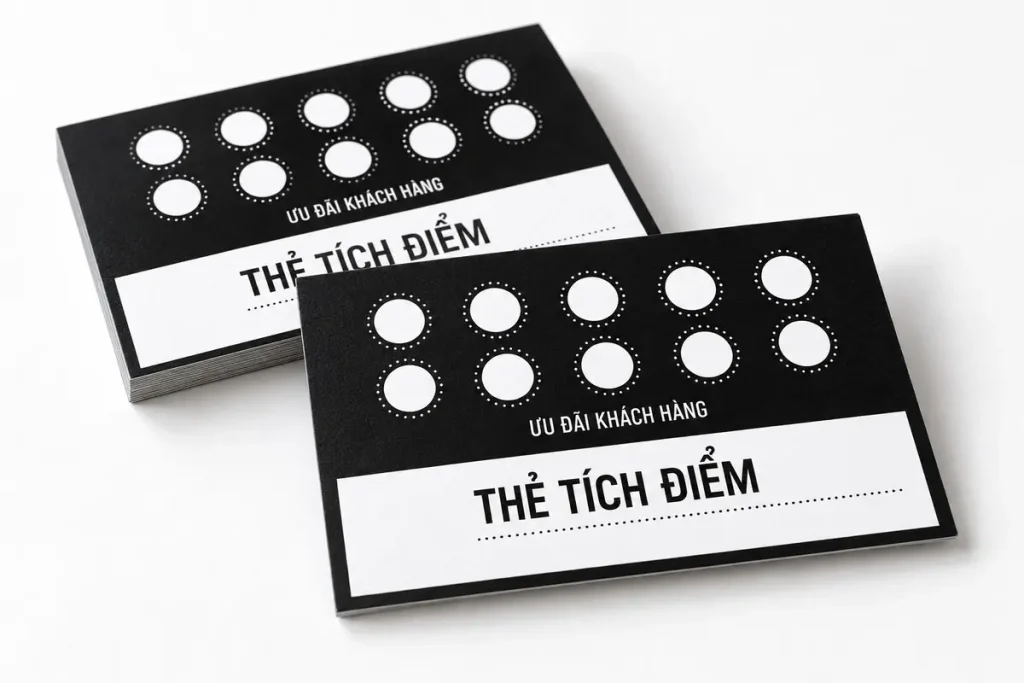
The loyalty card is the cheapest printed item in a small shop's identity set, but also the easiest to get wrong – boxes too small so the stamp spills out, glossy paper so the stamp ink wipes off, or too many boxes so customers give up halfway. This article covers the specifications to settle before sending the file for printing.
B250 and F250 paper
Both are 250 gsm stiff paper – thick enough for the card to survive a few months in a wallet. The difference is in the surface. Bristol (B250) is smooth, with vivid, sharp colours, suited to multi-colour designs and images. Ford (F250) is rough like exercise-book paper, with more subdued print colours, but ballpoint pens and stamps take ink much better.
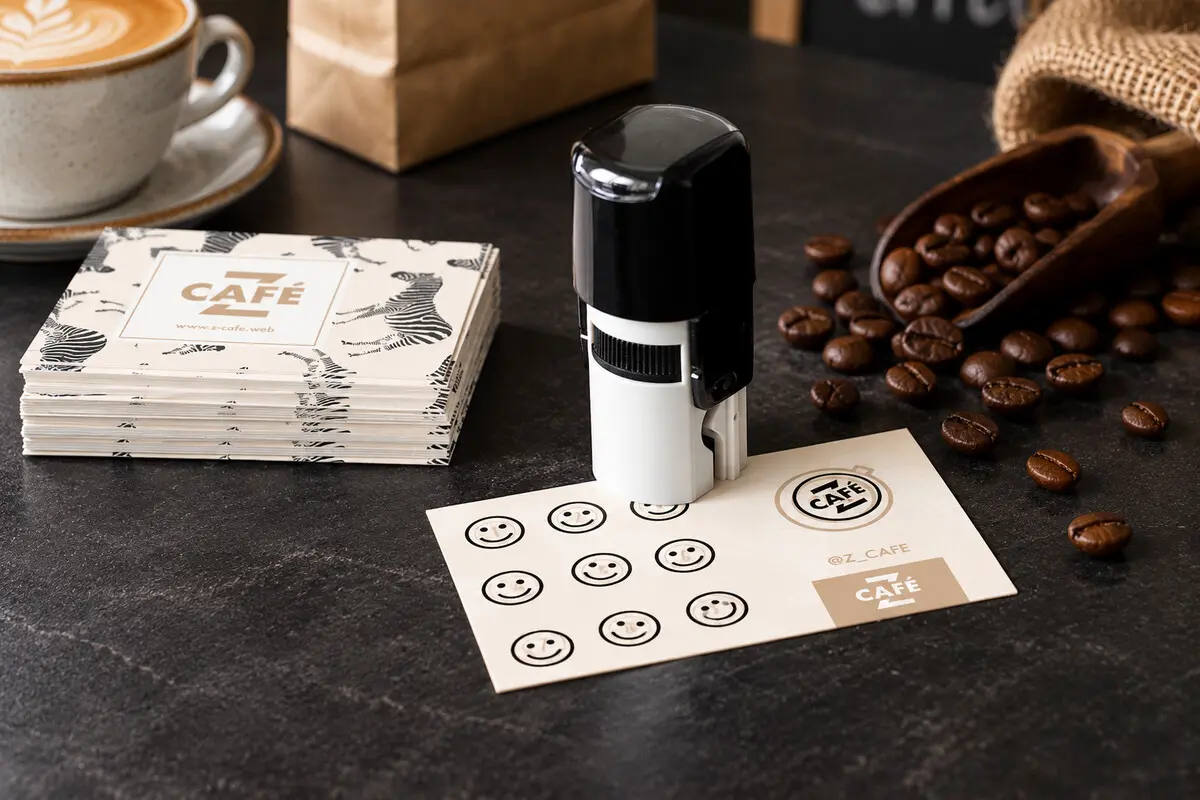
The rule: if the back needs handwritten customer names, phone numbers or dates, choose F250; if you only stamp it and want an eye-catching card, choose B250. And one point often overlooked: do not gloss laminate the side with stamp boxes – the film makes stamp ink dry slowly, and one swipe of the hand wipes the stamp away.
How many boxes is reasonable?
The number of boxes must match how often customers come back, otherwise the whole programme becomes meaningless. 4–6 boxes for high-priced, low-frequency services – spas, nails, massage, haircuts. Customers come once a month; with 10 boxes it would take almost a year to redeem a reward, and most will give up halfway. 8–10 boxes for drinks, cakes and fast food – customers drop by a few times a week and complete the round in about a month.
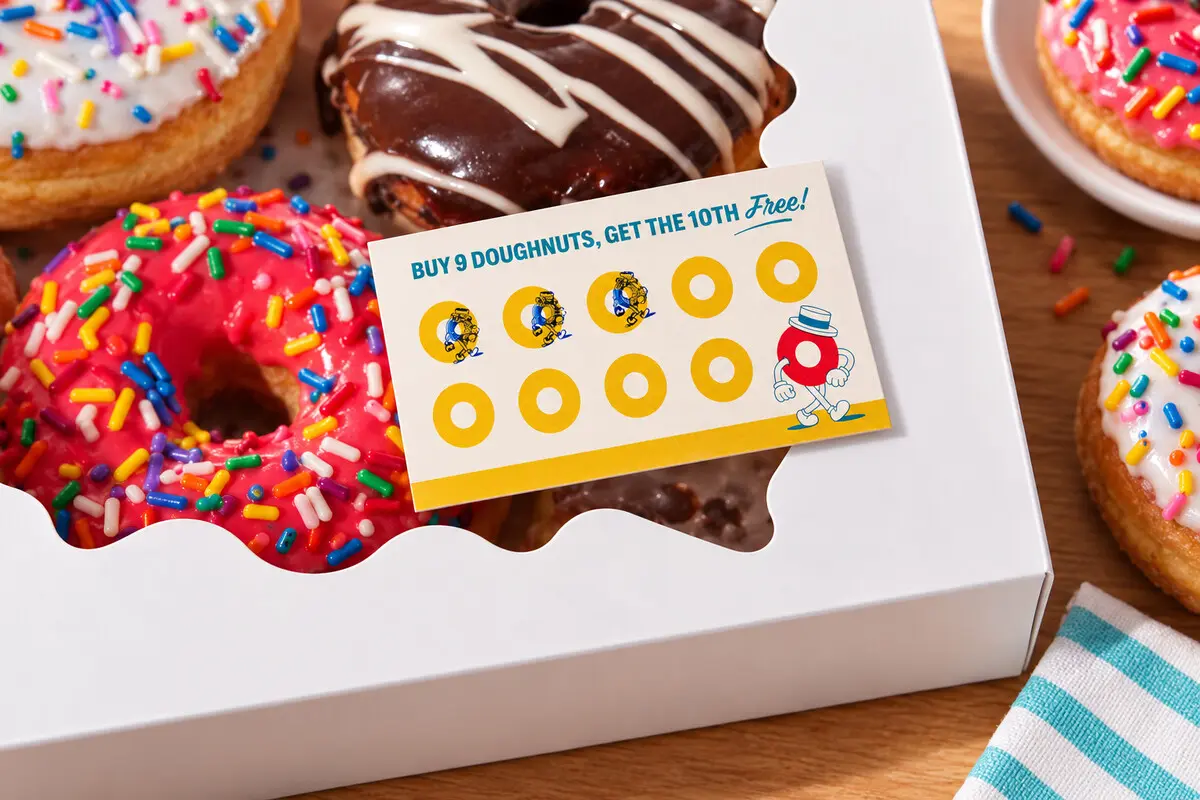
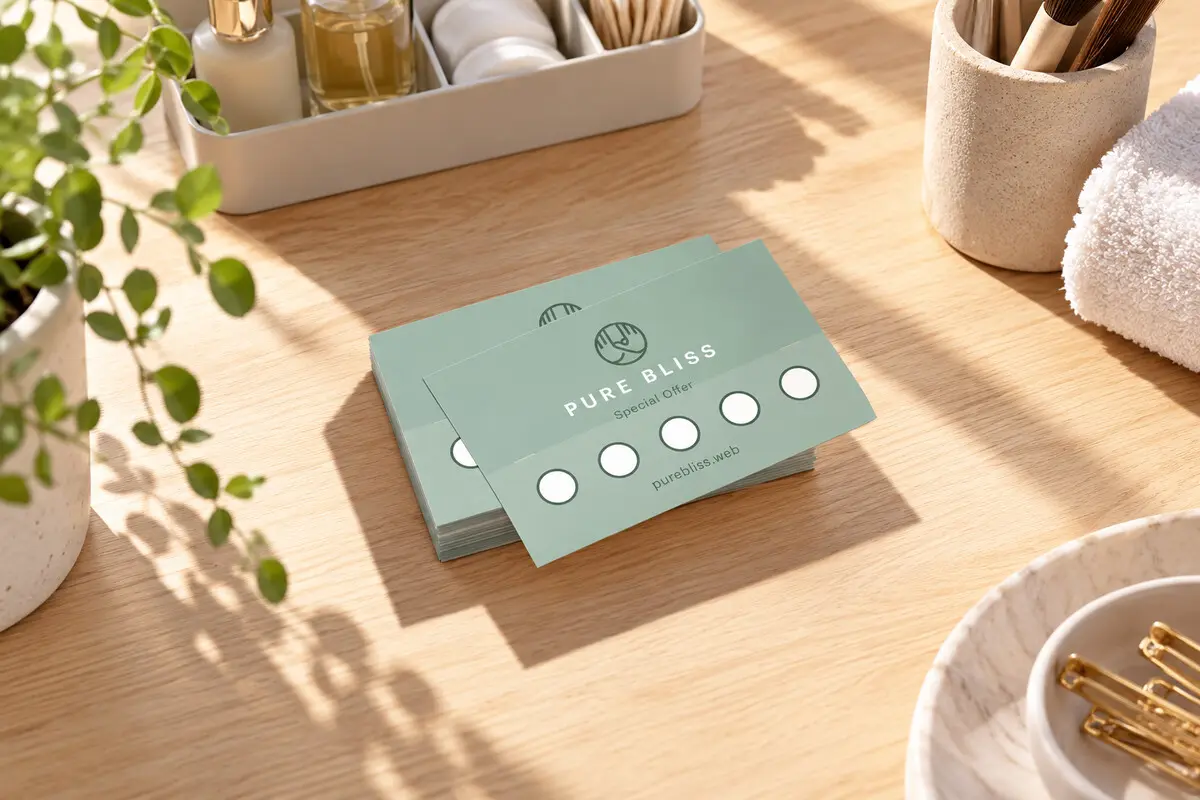
If you choose 10 boxes, try stamping one box right when handing out the card. Customers who see they have “already done 1/10” come back at a noticeably higher rate than with a completely blank card – an effect applied by many retail chains.
Stamp box size – the most frequently wrong detail
The face of a common handheld ink stamp is about 10mm in diameter. So the empty boxes on the card should be at least 10–12mm. Many designs look good on screen but when printed the stamp spills right out of the box, overlapping the text next to it and looking messy after a few stamps.
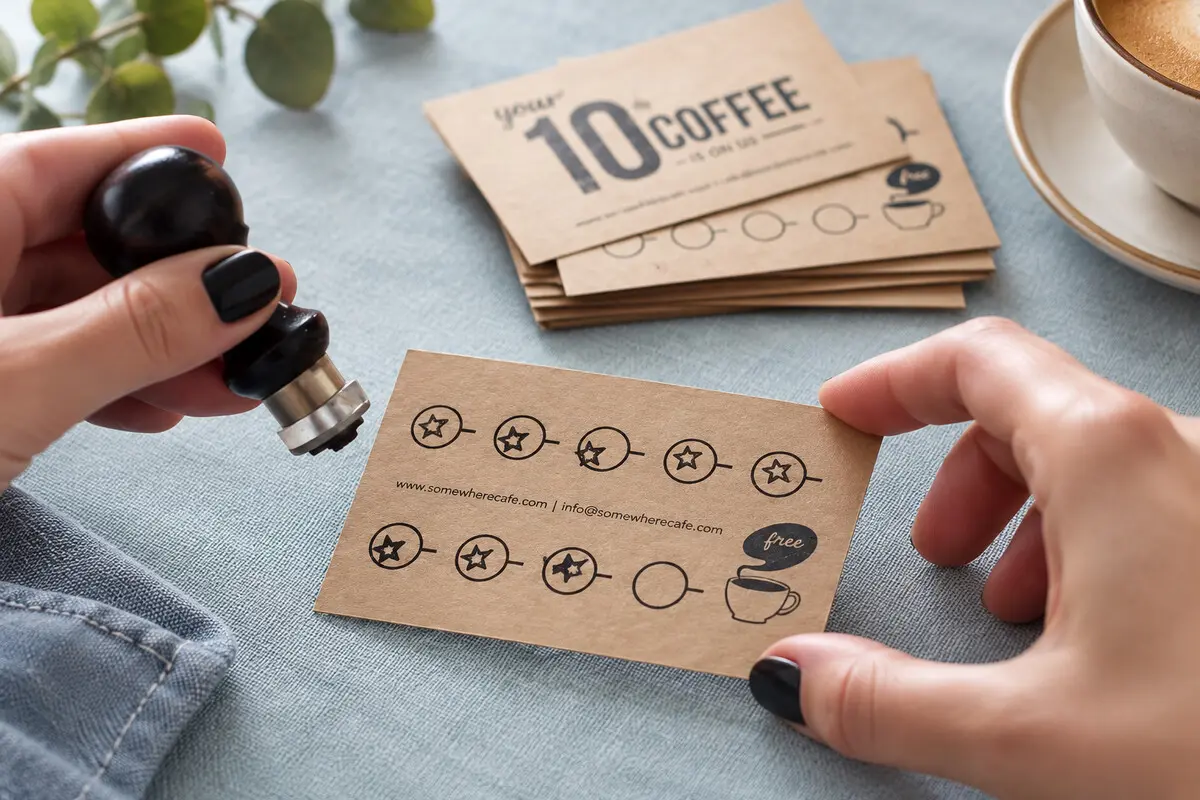
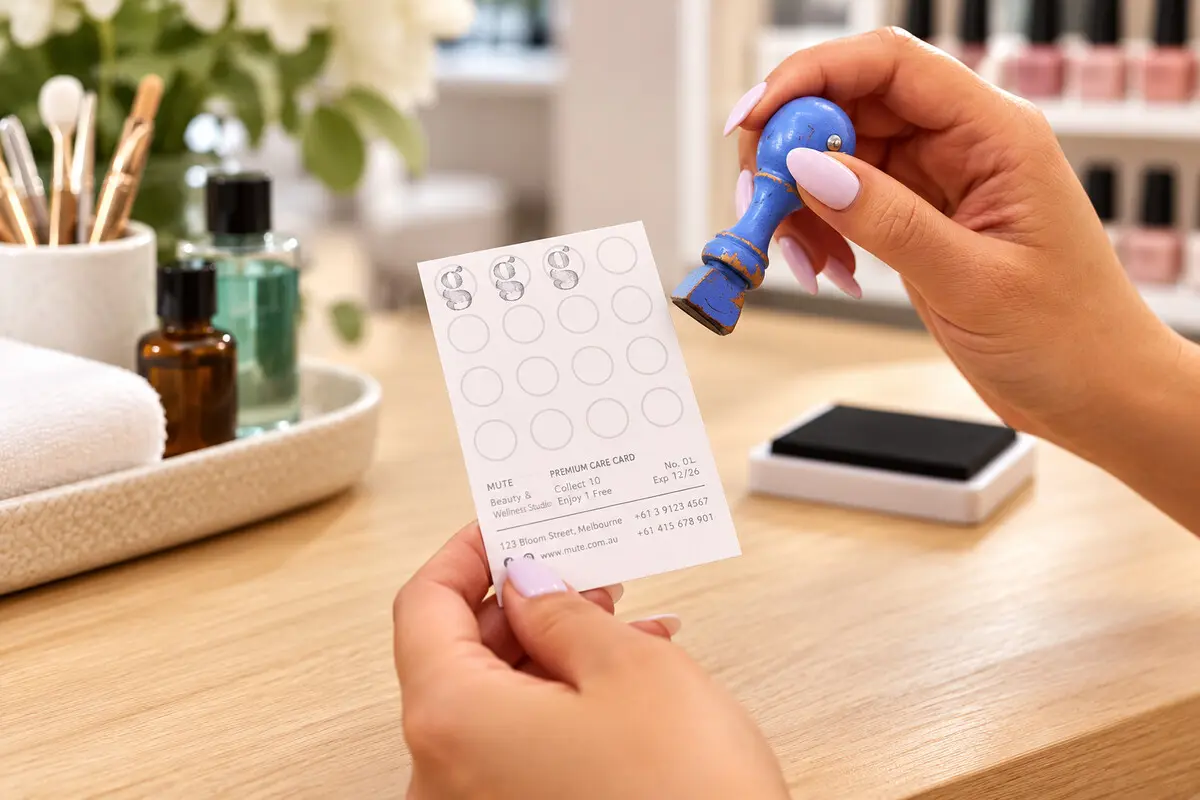
If the shop ticks with a pen instead of stamping, the boxes can be smaller, but anyone can tick them, so it only suits familiar shops with moderate customer numbers. Stickers are fun to look at and suit bakeries and young customers, but you need to print stickers as well and it takes time to peel and stick each time.
What to print on the two sides of the card
The front is the face of the shop: logo, shop name, address, phone number or Zalo, and possibly a QR code linking to the fanpage (make the code at least 1.5 × 1.5 cm with a white border around it so phones scan it well). The back is the functional part: a row of empty boxes with a line stating the reward condition, for example “Fill 10 boxes – get 1 free drink of your choice”.
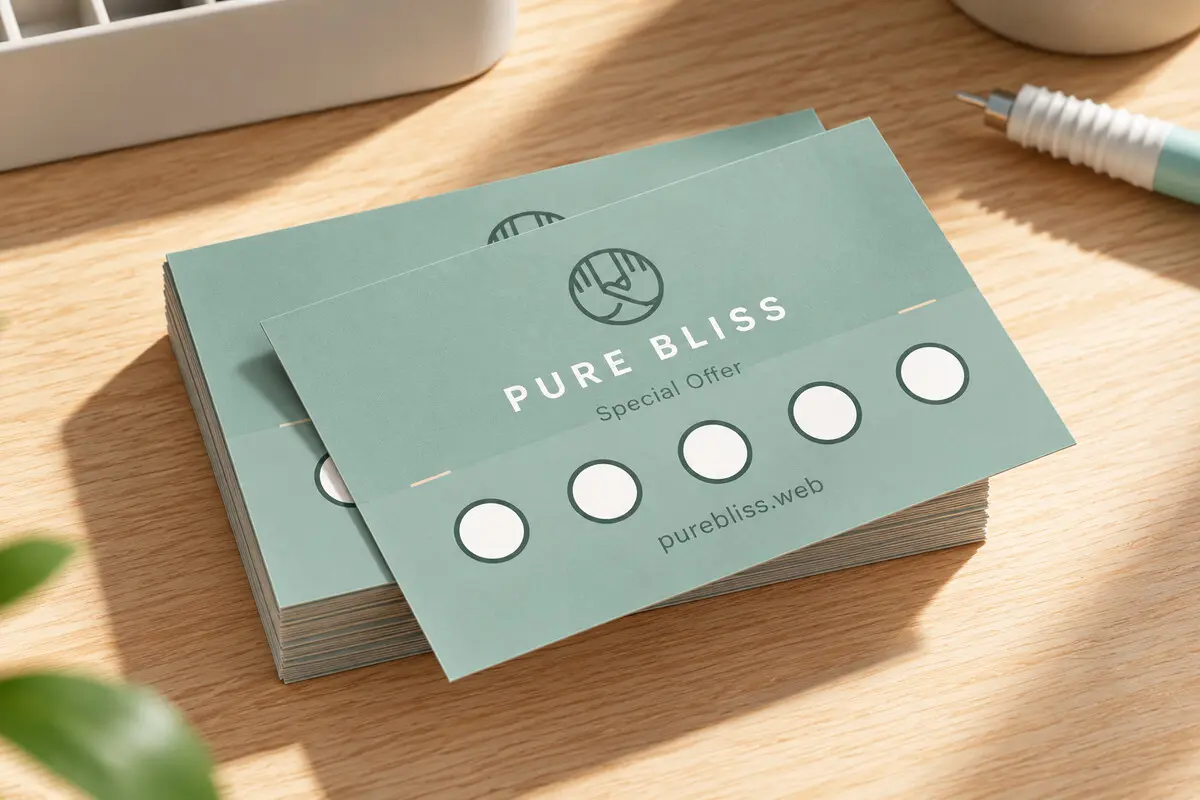
The condition line should be short, specific and right next to the row of boxes. Customers understand it at a glance, and staff do not have to explain it each time they hand out the card.
Card size and bleed when sending files
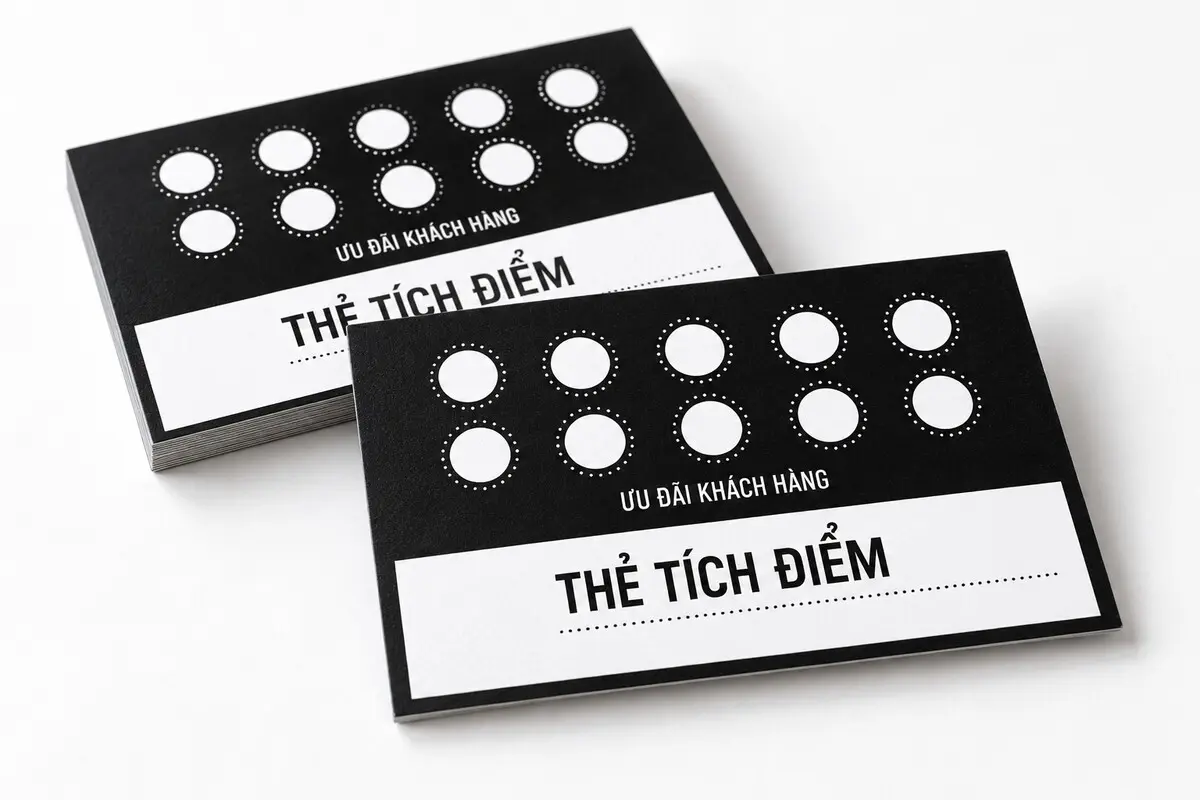
The standard size is business card size, about 9 × 5.5 cm – fits a shirt pocket and a wallet card slot, so customers rarely lose it. When sending the file, leave a 3mm bleed on each side and keep text at least 3mm from the edge. Trimming always has a small tolerance; text placed close to the edge is the thing most easily cut on such a small card.
Need a quote or want to order loyalty cards?
See specifications, quantity tiers and prices on the Loyalty Card product page. Or message on Zalo / call 0866.511.099 — we will quote within 30 minutes during working hours. In Quảng Cáo Q7, 49 Mai Van Vinh, Tan Hung Ward, Ho Chi Minh City.
Loyalty card materials other than B250 and F250 paper
B250 Paper and F250 Paper are the two most used types, but not the only options when designing loyalty cards. Paper thickness decides whether the card bends in a wallet, while the paper surface decides whether ballpoint and stamp ink bond or smudge. The table below lists the materials we print loyalty cards on, with the surface characteristics of each.
| Material | Common weight | Surface | Notes when using |
|---|---|---|---|
| B250 Paper | 250 gsm | Smooth white on both sides | Takes stamp ink well, ballpoint pens do not slip |
| F250 Paper | 250 gsm | Off-white, slightly rough | Coarser paper grain, stamp strokes spread slightly |
| Couche Paper | 250 – 300 gsm | Glossy, coated | Needs matte lamination if you must write on the card |
| Bristol Paper | 250 – 350 gsm | One side glossy, one side rough | The rough side is for the stamp boxes |
| Kraft Paper | 250 – 300 gsm | Natural brown, uncoated | Light-coloured ink sinks in; one dark colour prints more clearly |
| PVC plastic | 0.5 – 0.76 mm | Rigid, glossy plastic | Cannot be written on by hand, used for barcode-scanned cards |
For loyalty cards that are stamped many times over a few months, the surface in contact with the stamp is the first part to fail. The glossier the coated paper, the slower the stamp ink dries and the more easily it smudges onto the next box. If you still want a glossy front, the solution is to matte laminate only the back where the stamp boxes are, with different finishes on the two sides of the same card.
Surface finishing for loyalty cards
Finishing is what makes loyalty cards more durable and distinguishes them from a loose cut sheet of paper. Each finish changes both the finished thickness and how customers keep the card, so this part needs to be decided before laying out the file, to leave the right safety margin for the cut line and the rounded corners.
- Matte lamination on both sides: a thin water-resistant film, the surface can still be written on with an oil-based marker, and the card gets about 0.02 mm thicker on each side.
- Gloss lamination: deep, vivid colours, but water-based stamp ink beads up and wipes off, so it only suits loyalty programmes using signatures or stickers.
- Rounded corners with a 3 mm radius: card corners do not curl when taken in and out of a wallet; this is the finish most often paired with loyalty cards.
- Gold or silver foil stamping for the brand name: foil details need strokes at least 0.3 mm thick to bond evenly.
- Embossed card numbers or logo: creates a tactile effect, and the back will be correspondingly recessed, so do not place stamp boxes directly behind the embossed area.
- 3 mm diameter hanging hole: for loyalty cards hooked onto key rings or lanyards.
- Perforation or kiss-cutting along the box lines: for tear-off stamp-style cards, where the customer tears off one box with each purchase.
Rounded corners and matte lamination are two items almost always paired on loyalty cards given to customers to take home. Foil stamping and embossing add cost by the number of machine runs, not by area, so the cost per card drops sharply as the order quantity increases.
Related products

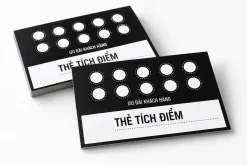
Vouchers & Gift Cards

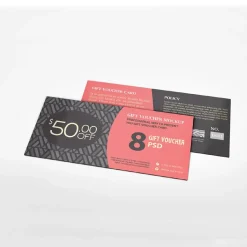
Vouchers & Gift Cards

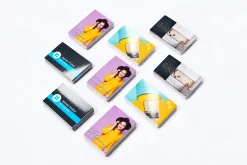
Business cards

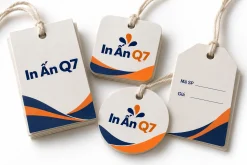
Price tags
Stamping and handwriting on loyalty cards
The stamp is what touches the loyalty card most over its whole life. Stamp ink smudging onto the next box leads staff and customers to argue over the count, so the stamp box area must be planned for both spacing and ink type.
- Water-based stamp ink dries in 3 – 5 seconds on uncoated paper, but takes up to 30 seconds on a gloss-laminated surface.
- Keep the centre-to-centre spacing between two adjacent boxes at least 2 mm larger than the stamp face diameter, so a slightly off-hand stamp still lands inside the box.
- 10 mm and 12 mm round stamps are the two common sizes; 15 mm and up halves the number of boxes on the card.
- Square boxes with a thin 0.25 pt border easily lose their lines in large offset runs; a 0.5 pt border is safer.
- Keep the box background white or a very light colour; a dark background makes black stamp strokes disappear.
- Reserve one last box with text instead of an image, where staff write the date the reward is redeemed.
If the shop writes by hand with a pen instead of using a stamp, the card surface must be uncoated paper or matte laminated, and the boxes need to be about 30 percent wider than stamp boxes so handwritten numbers do not spill out.
Order quantity and delivery time
The order quantity affects the printing method and therefore the delivery time. Below a certain threshold we print digitally and deliver the same day; above it we run offset, which requires waiting for plates and ink drying time before laminating and cutting.
| Quantity | Printing method | Typical lead time | Features |
|---|---|---|---|
| 50 – 300 cards | Digital | Same day to 1 day | No plates needed, quick file edits |
| 300 – 1,000 cards | Digital or offset | 1 – 2 days | The two printing methods are close in cost at this threshold |
| 1,000 – 5,000 cards | Offset | 2 – 3 days | Even colour between sheets, cost per card drops noticeably |
| Over 5,000 cards | Offset | 3 – 4 days | Combined paper allowance, laminated and cut in batches |
The price list for each material and each quantity tier is publicly listed right on the product page loyalty cards, along with how finishing items are calculated. Loyalty cards are often ordered together with vouchers and gift cards or business cards to share one machine run, with the price then calculated by total runs rather than by separate items.
What a loyalty card design file needs
The file sent to the workshop decides most of the finished quality. A file that meets the standard goes straight onto the machine without adjustment, so the printed colours match the colours in the design. The list below is what a loyalty card design file needs before sending.
- PDF or AI format, with fonts converted to curves so the machine does not substitute other fonts.
- CMYK colour mode; no RGB or Pantone spot colours if the order is regular four-colour printing.
- Image and logo resolution of 300 dpi or more at the actual size on the card.
- 2 mm bleed on each side for background colours and images running to the edge.
- A 3 mm safety margin from the cut line; text and stamp boxes stay within this margin.
- Rounded corner lines drawn on a separate, clearly named layer, not merged into the image layer.
- Front and back split into two separate pages in the same file, with the same orientation and size.
- Foil stamping or embossing areas drawn in a 100 percent spot colour, with a note on the last page of the file.
If you do not have a file yet, we will lay it out from the content and logo you send. Design is charged once per design, and the source file is handed back to the customer after printing so the next order can reuse it without extra layout costs.
Common mistakes when designing loyalty cards
The mistakes below appear repeatedly in files customers send, and most are only discovered once the cards have been printed. Reading through this list before sending the file saves a round of reprinting.
| Mistake | Consequence on the finished product | How to avoid it |
|---|---|---|
| Stamp boxes less than 3 mm from the edge | A slightly off cut loses part of a box | Move the boxes inward, leaving 3 mm on each side |
| Box numbers printed in a light colour | Once stamped over, the number can no longer be read | Print the numbers in a dark colour or place them outside the boxes |
| Dark background on both sides, unlaminated | The back shows finger marks and scratches after a week | Matte laminate or change the background to a light colour |
| Choosing glossy Couche paper but collecting stamps | Stamp ink wipes right off | Switch to matte lamination or matte-surface Bristol paper |
| No bleed on the background colour | A thin white line runs along one edge | Extend the background by another 2 mm on each side |
| Logo taken from a screenshot | Jagged logo edges when printed | Use a vector file or an image of 300 dpi or more |
Order loyalty card printing at our workshop
We print loyalty cards for cafés, bakeries, spas, salons and retail shops in District 7 and neighbouring districts. Customers send the file or content via Zalo, and we reply with the finished measurements and delivery time, then print one sample card for the customer to check before running the whole batch.
- Send a PDF or AI file, with a note on the number of boxes and the desired finish.
- Receive a preview with the finished measurements and delivery time.
- Confirm the sample, and we run the whole batch exactly according to the confirmed version.
- Pick up at the workshop at 49 Mai Van Vinh, Tan Hung Ward, Ho Chi Minh City or get inner-city delivery.
Other printed items for shops such as corporate products ordered together with loyalty cards will share a machine run and one delivery.
Quick Q&A about loyalty cards
Below are the questions customers often message our workshop about before ordering, answered briefly according to what we actually do.
| Question | Answer |
|---|---|
| What is the minimum order quantity? | From 50 cards per design, digitally printed, delivered the same day if the file meets the standard |
| Can two different designs be combined in one order? | Yes, the two designs run together in one setup if they use the same material and finish |
| Can you print sequential card numbers on each card? | Yes, sequential numbers are printed in black or red ink on the back; state the number range when sending the file |
| Can the card include a QR code? | Yes, the QR code box is at least 15 x 15 mm and the background must be white for scanners to read it |
| Is there a big price difference between B250 Paper and F250 Paper? | Both have the same weight, differing in paper grain and shade of white, priced at nearly the same level |
| Do you reprint an old design exactly? | Yes, we keep source files by customer name, so reordering does not incur layout fees |
| How are matte lamination and corner rounding charged? | Both are charged per batch rather than per card; the larger the batch, the lower the fee per card |
Need printing or signage in Ho Chi Minh City?
In Quảng Cáo Q7 runs its own print workshop in Tân Hưng Ward (former District 7), Ho Chi Minh City, producing and installing signage, banners, window graphics, exhibition booths and event displays. Send us the size, material, quantity and a photo on WhatsApp and we will get back to you.

Phone: +84 866 511 099 · Also on WeChat
Workshop: 49 Mai Văn Vĩnh, Tân Hưng Ward, Ho Chi Minh City