




































































On-Site Decal Application – Measure, Print, Apply, Bubble-Free
Oct
On-site decal application is the part print shops usually leave out: they print, hand over the roll of decal, and customers struggle with air bubbles and creases themselves. In Quảng Cáo Q7 does it all — measuring on site, printing to exact size at the workshop 49 Mai Van Vinh, Tan Hung Ward, Ho Chi Minh City then the installation team comes to apply it flat and clean, removing old decals before applying new ones.
What on-site decal application includes
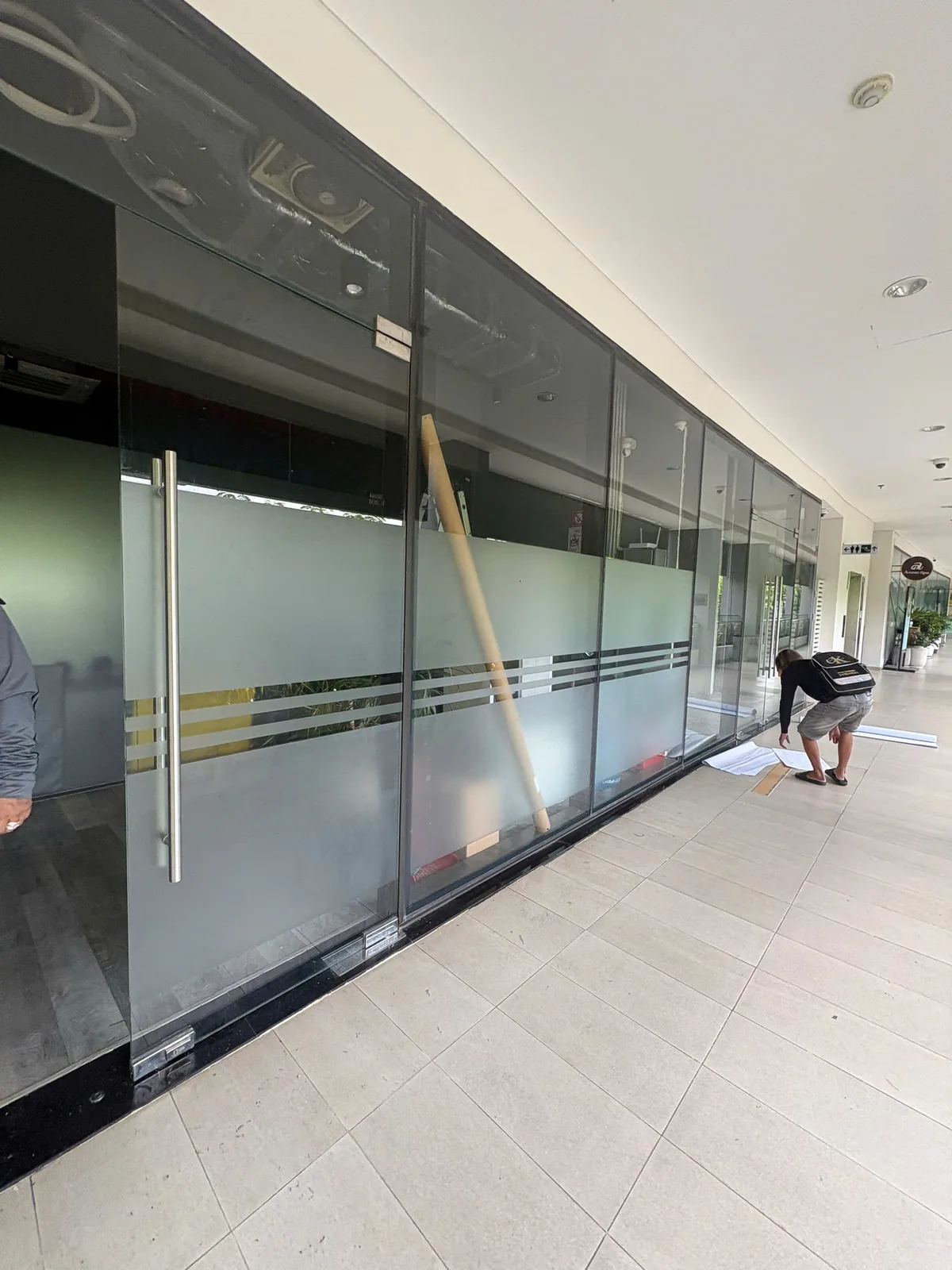
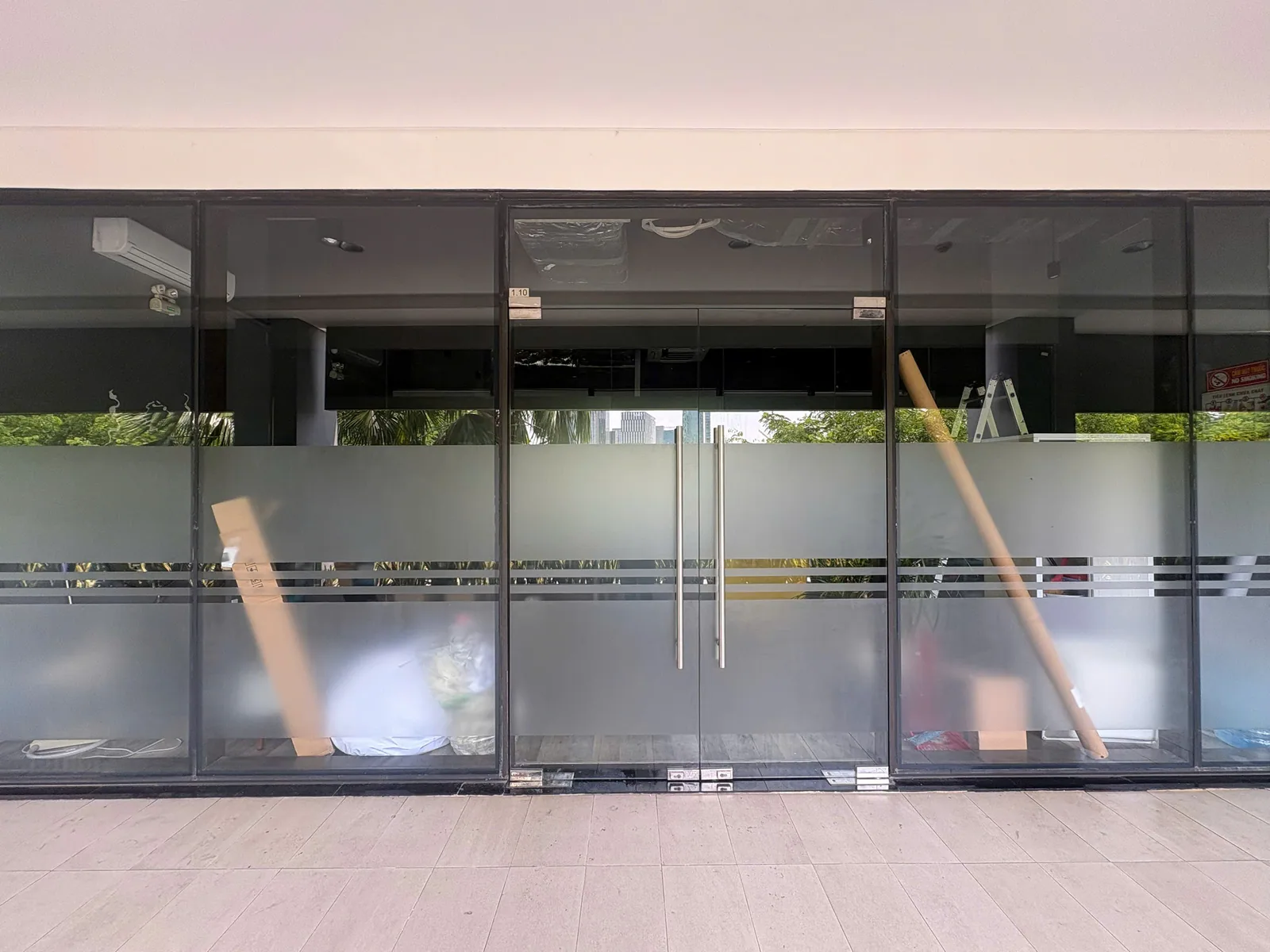
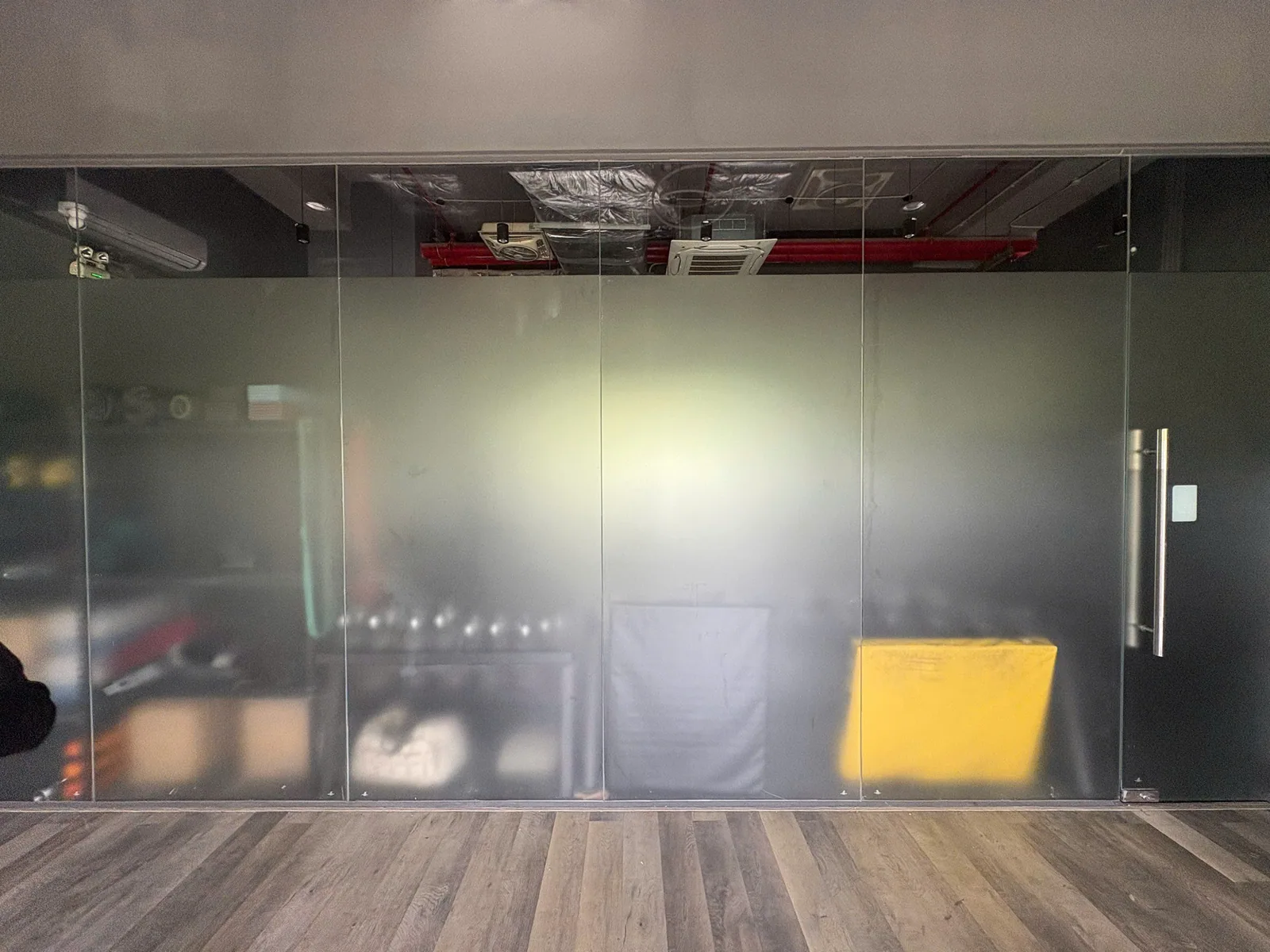
- Shopfront glass: milky white decal for sun shading, clear decal to keep the view, one-way mesh decal.
- Decorative wall decals for cafés and offices; counter and display shelf decals.
- Showrooms and chain stores needing consistency across many locations.
- Removing old decals and cleaning off adhesive before applying the new layer.
| Decal type | Features | Commonly used for |
|---|---|---|
| Milky decal | Opaque white, blocks the view | Meeting rooms, spas, glass sun shading |
| Clear decal | Keeps the view, the printed image still clear | Shopfront glass that should stay bright |
| One-way mesh decal | See out from inside, the image visible from outside | Large showroom glass panels |
| Cut lettering decal | Cut along the strokes of letters and logos | Opening hours, the venue's name on glass |
Offices and clinics around Phu My Hung often need milky white decal for meeting rooms; cafés prefer clear decal to keep things bright; chain stores need an installation team to apply consistently across many branches within a few days — all through one contact point that measures, prints, applies and signs off.
The measure – print – apply process
- Send photos of the location to be applied via Zalo 0866.511.099 (Phone/Zalo) — book a time for us to come and measure.
- Choose the decal type by purpose (blocking, clear, mesh) — see the differences in the article Types of decal.
- Large-format printing at the workshop, laminated if used outdoors.
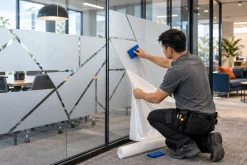
- The installation team applies on site and signs off with no air bubbles and no misaligned edges.
Related products


Decal

Decal application

Labels & stickers

Sticker


Reference prices for on-site decal application
Large-format decal printing from 50.000đ/m², decal cutting from 95.000đ/m²; application labour is quoted by area and difficulty of the location — quoted together with the printing price so you know the total cost before settling. Product details at Large-Format Decal and Decal Application; for nearby areas see decal printing in District 7.
A small money-saving tip: group the glass panels that need decals into the same appointment — installation labour is charged per trip, so applying everything at once is always better value than splitting it into several rounds. Outdoor glass facing the sun should be laminated so colours last; high positions or large glass panels should be mentioned in advance so the team brings enough equipment.
Contact 0866.511.099 (Phone/Zalo) or visit the workshop at 49 Mai Van Vinh, Tan Hung Ward, Ho Chi Minh City. Production and delivery: Monday – Saturday, 8:00–12:00 and 13:00–18:00. Consultation & orders via Zalo/hotline: Monday – Saturday 8:00–12:00 and 13:00–20:00, Sunday 14:00–19:00.
View directions to the workshop on Google Maps
Frequently asked questions
Which areas does on-site decal application cover?
District 7, District 4, District 8, Trung Son – Binh Chanh and nearby; further away, the travel fee is stated in advance.
Can glass with old decals be dealt with?
Yes — old decals are removed and the adhesive cleaned off before the new layer is applied, so the glass surface is flat and neat.
Does on-site decal application work outside office hours?
Yes — many venues choose early morning before opening or after closing so customers are not affected; settle the time window when booking the survey.
Some images on this page are illustrations.
Applicable surfaces and how to handle each
The surface decides which decal type is used and how it is prepared before application. Applied to the right surface, decals hold for many years; applied wrongly, corners peel within a few weeks.
| Surface | Preparation before applying | Adhesion | Note |
|---|---|---|---|
| Flat glass | Wipe with glass cleaner and wait until fully dry | Very good | Can be applied on both the inside and outside |
| Alu and stainless steel | Wipe with diluted alcohol, then dry | Very good | The surface must be free of oil from hands |
| Smooth painted walls | Dust off, wait at least 7 days for the paint to dry | Medium | On fresh paint, decals peel off along with the paint layer |
| Rough cement walls | Do not apply directly | Poor | Apply onto a Formex panel and then fix the panel to the wall |
| Laminate-coated wood | Wipe dry | Good | Bare uncoated wood absorbs the adhesive |
| PVC plastic and acrylic | Wipe with a damp cloth | Good | Avoid solvents, which dull the surface |
| Powder-coated metal | Wipe dry | Good | Wait for the paint to dry completely if newly painted |
| Glass already fitted with heat-insulating film | Apply on the other side | Medium | Applying onto the film may peel off with the film |
| Stone or tile floors | Clean thoroughly, use floor decal with an anti-slip layer | According to foot traffic | Floor decals are usually used for 1 to 3 months |
The most common case is newly painted walls. Paint that is not fully dry still releases solvent, pushing the decal off the surface from the corners. When premises have just been painted, the solution is to wait a full week or apply onto a Formex panel and then fix the panel to the wall.
Decal types for each surface
Each decal type has its own adhesive layer and thickness. Choosing the right type decides whether the applied panel is flat or bubbles, and whether it leaves adhesive when peeled later.
| Decal type | Features | Used for | Period of use |
|---|---|---|---|
| Milky decal | Opaque white base, does not let light through | Logos and text on glass, information boards | 2 to 3 years indoors |
| Clear decal | Transparent base | Glass lettering that keeps the view | 2 to 3 years |
| Frosted one-way decal | Can see out from inside, not in from outside | Shopfront glass needing privacy | 2 to 3 years |
| Mesh decal | Small holes, breathable | Large glass, doors opened and closed a lot | 1 to 2 years |
| Reflective decal | Catches vehicle headlights | Direction signs, vehicle decals | 3 years or more |
| Floor decal | Anti-slip coated surface | Applied on shop and supermarket floors | 1 to 3 months |
| Easy-peel decal | Weak adhesive, peels off without leaving adhesive | Short-term campaigns | Under 6 months |
| Gloss-laminated decal | Deep colour, scratch-resistant | Counters, shelves and display cabinets | 2 years |
When customers do not know which type to choose, the workshop asks two things: what surface it will be applied to and how long it is meant to stay. Those two pieces of information are enough to settle the material, without the customer needing to remember the trade name of each line.
Applying on the inside or outside of the glass
Applying on the inside or outside of the glass is a common question with on-site decal application for shopfronts. The two ways have different advantages.
- Inside: protected by the glass from sun and rain, so colours last longer, but text must be printed in reverse to read from outside.
- Outside: colours look fresher and sharper because they are not behind glass, but they fade faster in direct sun.
- Glass with heat-insulating film on the inside: apply on the outside, because applying onto the film means peeling it off with the film.
- Glass doors pushed by hand often: apply on the inside to avoid scratches.
- Logos with many colour layers should be applied on the outside; applying on the inside requires reverse printing and the colour layer order is reversed.
- Where there is an awning, applying on the outside still lasts, not very different from the inside.
In the area the workshop covers, most shopfronts are applied on the inside because it is both durable and nobody can peel it off from outside. Floor decals and wall decals only have one side to apply to.
Weather and conditions when applying
Weather directly affects adhesive bonding. Applying in the wrong conditions is a common cause of corners peeling even when the material and surface are both right.
- A surface temperature of 18 to 35 degrees is the range where adhesive bonds best.
- The surface must be completely dry; glass that has just had rain blown on it must be wiped and left to dry before applying.
- Avoid applying at midday on metal surfaces facing the sun; the hot surface makes the adhesive run and the panel shift.
- When it rains, stop applying on the outside; applying on the inside can still go ahead.
- Humidity above 85 percent makes moisture condense under the decal; wait until the rain is over before applying.
- After applying, wait at least 24 hours before wiping or spraying water on the surface.
- Press the corners and edges again with a roller after 30 minutes; this is where peeling starts first.
For outdoor glass, the time windows the workshop usually chooses are early morning or late afternoon. In these two windows the surface temperature is moderate and there is no direct sun making it hard for the applier to see air bubbles.
Removing old panels and dealing with leftover adhesive
Removing old panels takes no less time than applying new ones. Decals left long on a surface have adhesive that hardens and must be heated to peel.
- Heat the surface with an industrial heat gun at a distance of 15 cm and peel at a 30-degree angle.
- Peel slowly and evenly; pulling fast separates the face layer from the adhesive layer and leaves adhesive on the surface.
- Leftover adhesive is removed with specialist adhesive remover; do not use a craft knife on glass.
- On painted surfaces, use only diluted adhesive remover and test a small corner first.
- Wipe the whole surface again and wait until dry before applying the new panel.
- Decals left outdoors for over 3 years may peel off with the paint layer; this is stated to the customer in advance.
- Floor decals can be peeled cold because the adhesive is weaker, but the fine dust left behind must be wiped clean.
When an order includes both removing old panels and applying new ones, the workshop charges the two parts separately because removal time depends on the age of the old decal. Customers send a photo of the old panel so the workshop can estimate this work before coming.
Area, crew size and installation time
Installation time depends on the area, height and whether old panels must be removed. The table below shows the levels the workshop encounters most.
| Work | Area | Number of people | Time |
|---|---|---|---|
| Applying text and logos on glass | Under 3 square metres | 1 person | 30 to 60 minutes |
| Applying to shopfront glass panels | 3 to 10 square metres | 2 people | 2 to 3 hours |
| Applying to multi-storey glass panels | Over 10 square metres | 2 to 3 people | Half a day to 1 day |
| Applying floor decals | By number of panels | 1 to 2 people | 15 minutes per panel |
| Applying to cabinets, shelves and counters | By number of faces | 1 person | 1 to 2 hours |
| Removing old panels under 1 year old | Under 10 square metres | 1 person | 1 to 2 hours |
| Removing old panels over 2 years old | Under 10 square metres | 2 people | Half a day |
| Applying at height needing scaffolding | By panel | 2 people with scaffolding | Charged separately by site |
Applying at heights of 3 m or more needs scaffolding or a large A-frame ladder, so this item is surveyed first. Small areas within reach can be done as soon as the applier arrives, with no survey needed.
Common mistakes when applying
The mistakes below recur in on-site decal application orders, and most only show up after a few weeks.
| Mistake | Consequence | How to avoid it |
|---|---|---|
| Applying onto freshly painted walls | Corners peel within a few weeks | Wait 7 days for the paint to dry or apply onto a Formex panel |
| Not cleaning the surface thoroughly | Air bubbles and dust particles show under the decal | Wipe and wait until fully dry before applying |
| Applying at midday on metal surfaces | Adhesive runs, the panel shifts | Apply in the early morning or late afternoon |
| Using ordinary decal as floor decal | Slippery and peels after a few days of foot traffic | Use a type with an anti-slip coating |
| Applying onto glass that already has heat-insulating film | Peeling it pulls off the film | Apply on the other glass surface |
| Removing old panels with a craft knife | Scratches the glass | Heat and then peel, using adhesive remover |
| Not pressing the edges again after 30 minutes | Edges gradually peel and dust gets in | Press the edges and four corners again with a roller |
| Wiping with water right after applying | The adhesive has not fully bonded, the panel shifts | Wait at least 24 hours |
Quick Q&A about installation
Below are the questions customers often message our workshop about, answered briefly according to what we actually do.
| Question | Answer |
|---|---|
| Do you take small areas? | Yes, applying text and logos on a single small glass panel is still accepted |
| How is the installation fee calculated? | Printing is charged per square metre, application by area and height, with starting prices from the list price |
| Is there a survey beforehand? | Not needed for areas within reach; for high positions or when old panels must be removed, a survey is done first |
| How soon after ordering do you come to apply? | Usually within 1 to 2 working days of settling the file |
| Is there a warranty after applying? | Yes, the workshop reapplies free of charge if it peels within 30 days not due to external force |
| Can I apply it myself? | Yes for small areas; the workshop prints instructions and supplies a squeegee |
| Do you apply outside office hours? | Yes; for shops that are open, the workshop applies in the evening or early morning |
| Do you remove old panels made by others? | Yes; customers send a photo of the old panel so the workshop can estimate the removal time |
Ordering on-site decal application
The workshop prints and applies decals on site for shops, eateries, spas, clinics, showrooms and offices in the District 7 area and neighbouring districts.
- Send photos of the surface to be applied with measurements, or book the workshop to come and measure.
- Send the file or content via Zalo, and the workshop checks the size and replies.
- Settle the decal type by surface and intended period of use.
- Book the installation time; the workshop prints first and then comes to apply, or collect at the workshop at 49 Mai Van Vinh, Tan Hung Ward, Ho Chi Minh City if you are applying it yourself.
Other print-and-apply items are at decal application, large-format decals and the group advertising printing. Ordering them together means one installation visit.
Need printing or signage in Ho Chi Minh City?
In Quảng Cáo Q7 runs its own print workshop in Tân Hưng Ward (former District 7), Ho Chi Minh City, producing and installing signage, banners, window graphics, exhibition booths and event displays. Send us the size, material, quantity and a photo on WhatsApp and we will get back to you.

Phone: +84 866 511 099 · Also on WeChat
Workshop: 49 Mai Văn Vĩnh, Tân Hưng Ward, Ho Chi Minh City