








































































Our commitments
Printed directly in our workshop, no middlemen
Digital and offset presses right in our workshop. You deal directly with the people who make your order, so every request is understood and handled immediately.
Fast production, many orders ready the same day
Business cards, documents, decals, standees… printed and delivered the same day. See production times for each product group.
One point of contact, all-in-one from file to finished product
Quotes, orders, Zalo messages, delivery booking and invoicing run automatically on one system. Design – printing – finishing – installation all happen in-house, so you don't have to go anywhere else.
Full VAT invoices, issued fast
E-invoices issued right after delivery, with urgent support for businesses that need documents early for payment.
Backlit Film
From 50.000 ₫ / m²Price incl. 8% VAT: from 54.000 ₫ / m²
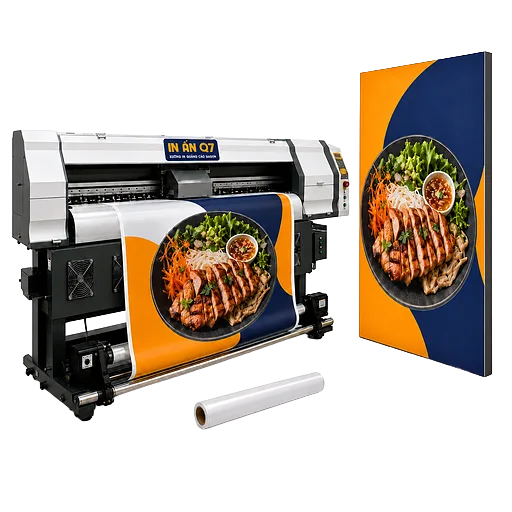
Backlit film printing for light boxes and illuminated signs. Solvent ink with lamination or UV printing.
Large-Format Backlit Film Printing for Light Boxes, Priced per Square Meter
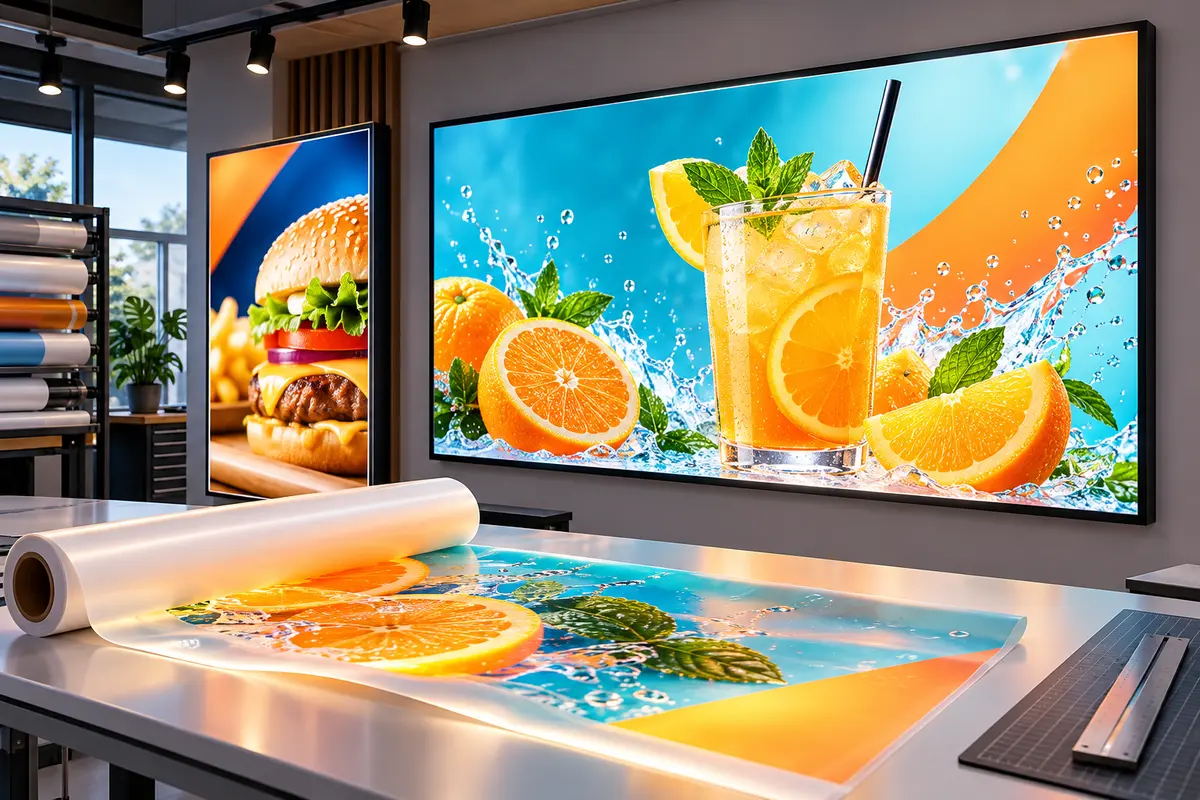
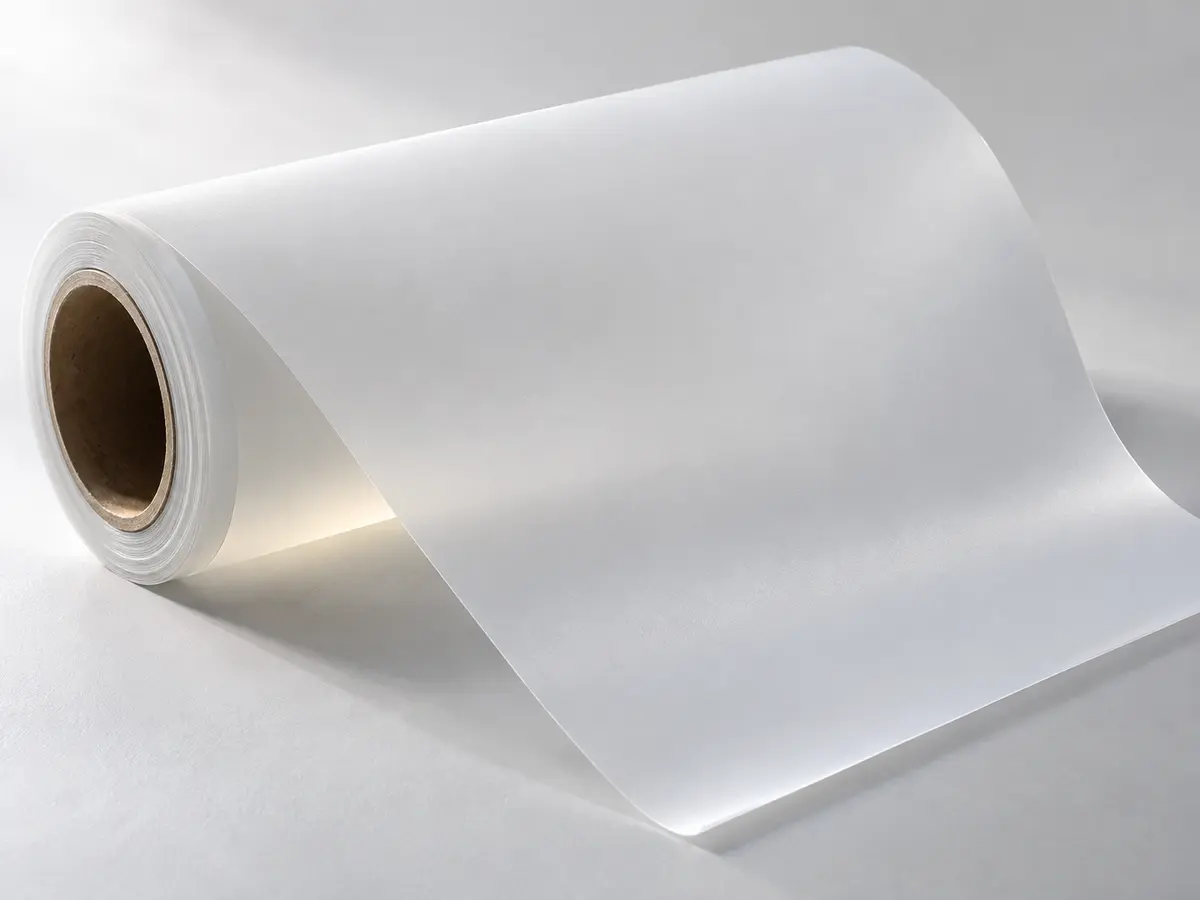
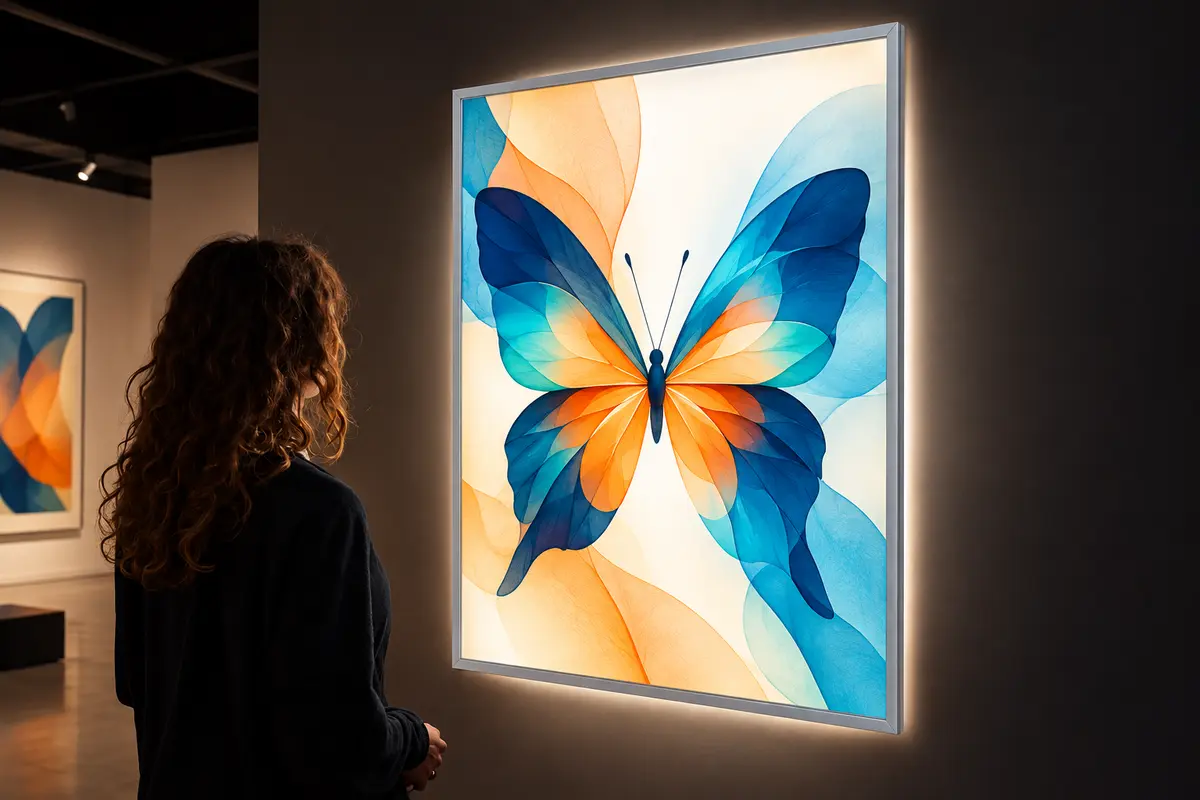
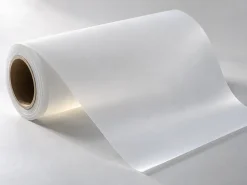
Backlit film is a translucent plastic film designed for prints lit from behind. Its base diffuses light evenly, so the light box face glows smoothly without revealing the individual lamps inside; the ink is laid down thicker than usual so colors stay deep when light passes through.
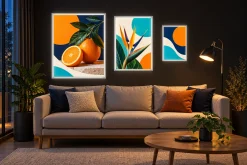
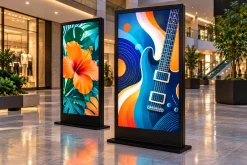
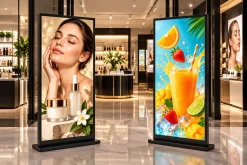
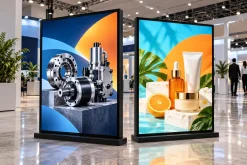
We print directly at our District 7 workshop, priced by the square meter, so any size is accepted, including odd sizes. This page has four material options — each type and how to measure correctly are explained below. Some images in this article are illustrations.
Why light boxes need a special film
A regular print placed in front of a light has two problems: light passes through unevenly so lamp streaks show clearly, and colors get washed out by the light. Backlit film solves both:
- Light-diffusing base — opaque white, spreading light evenly across the whole sheet.
- Thick ink-receptive coating — holds more ink, so colors stay deep enough when lit from behind.
In return, Backlit Film prints only look good when lit. Hung without a light source behind, the image looks dull and shows shadows of objects behind it — in that case, choose Large-format PP or milky decal instead.
The four material options on this page
| Material | Features | Choose it when |
|---|---|---|
| UV-printed Backlit | Ink adheres firmly, dries instantly, best heat resistance from the lights | Light boxes on continuously, long-term displays, premium light boxes |
| Solvent-ink Backlit Film, glossy laminated | Deep, vivid colors | Food, drink and product images that need to catch the eye |
| Solvent-ink Backlit, matte laminated | Easy on the eyes, less glare up close | In-store menus, light boxes viewed up close |
| Backlit Film, white material | Opaque white base, economical cost | Simple light boxes where even light is the main need |
If unsure, use this rule: for indoor light boxes on a few hours a day, laminated solvent ink is enough; for light boxes on almost all day or placed in hot spots, choose UV printing since the ink handles heat better.
How to measure correctly
This is where first orders most often go wrong. Tell us two numbers:
- Visible size — the part of the light box face visible after the frame trim is closed.
- Allowance for the clamp trim — the film edge hidden in the groove, usually a few centimeters per side depending on the frame type.
We add the allowance to the file so the trim doesn't cover image details. If you send only one measurement without saying whether it's the visible or overall size, the sheet can easily end up too small or too big.
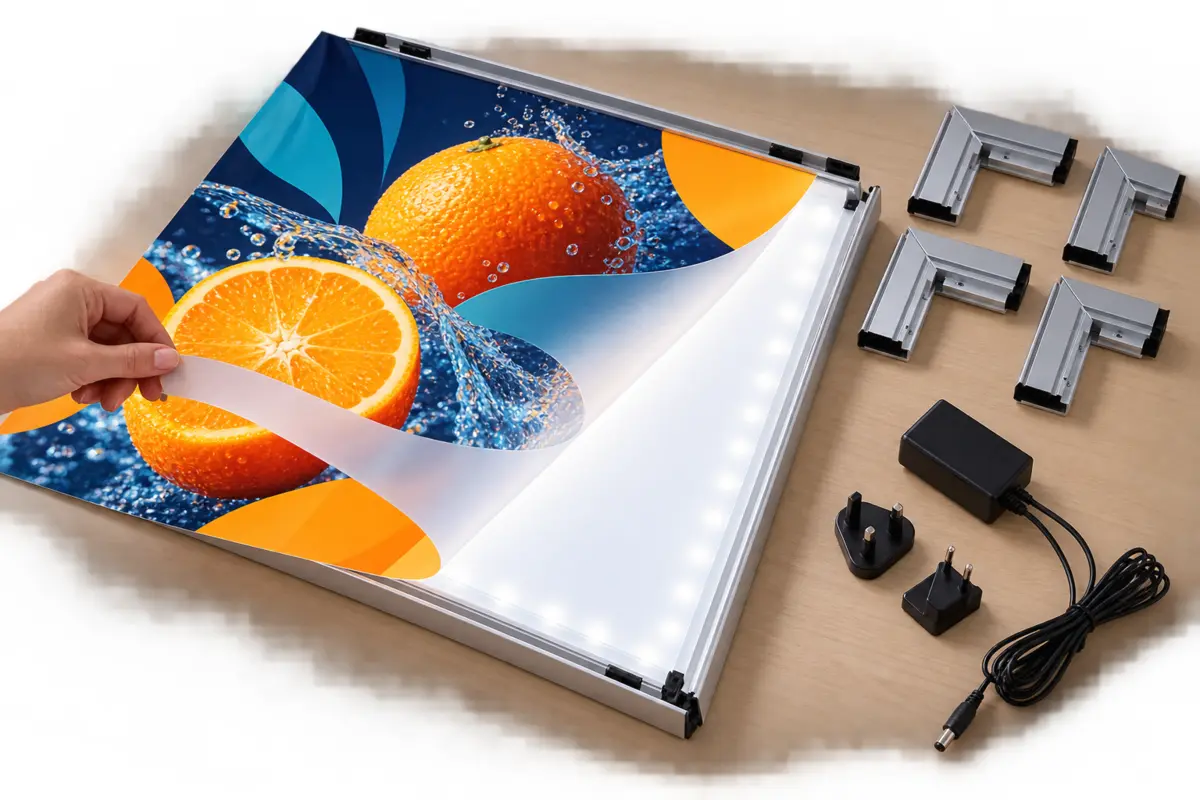
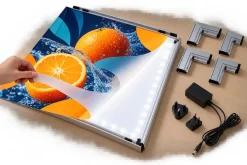
A quick way to measure an existing frame: open the trim on one side and measure from the bottom of the groove on one side to the bottom of the groove on the other — that's the overall size of the film sheet. Sending a photo of the frame corner also helps us identify the trim type and advise more accurately.
What Backlit is used for
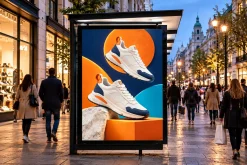
- Shopfront light boxes — clearly visible day and night, the most ordered item.
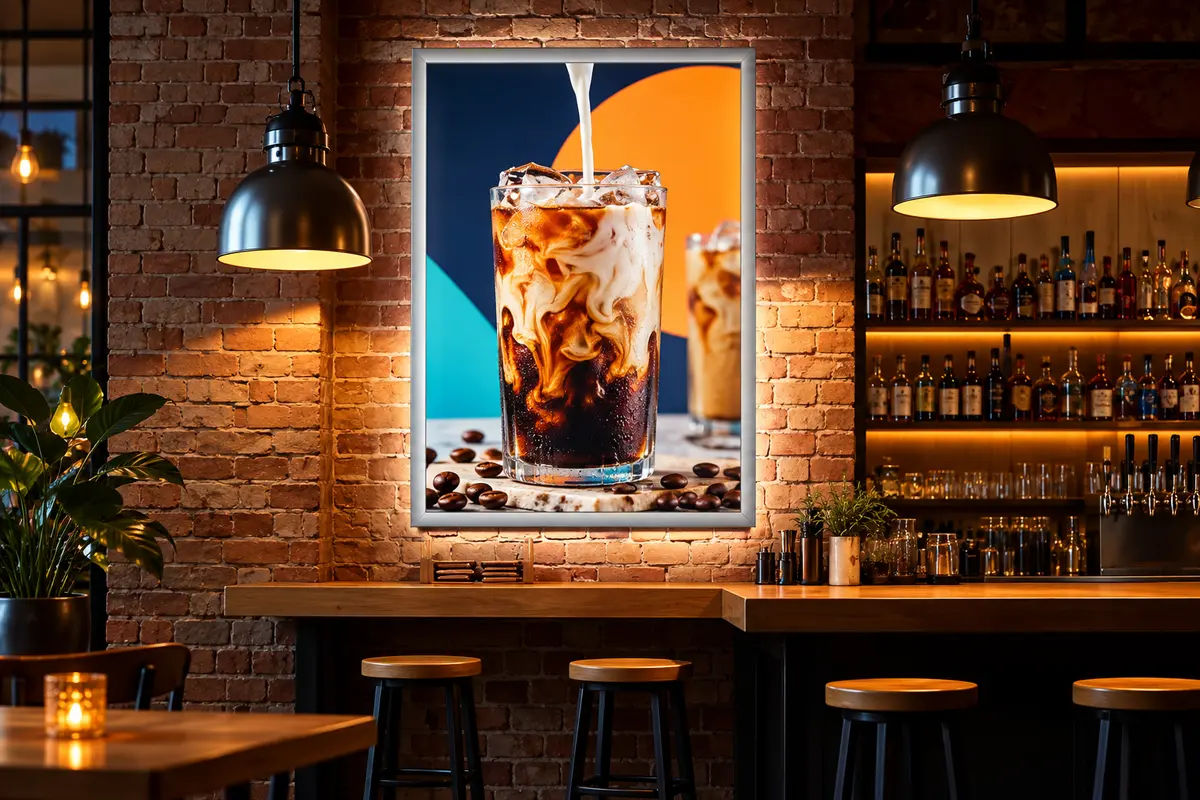
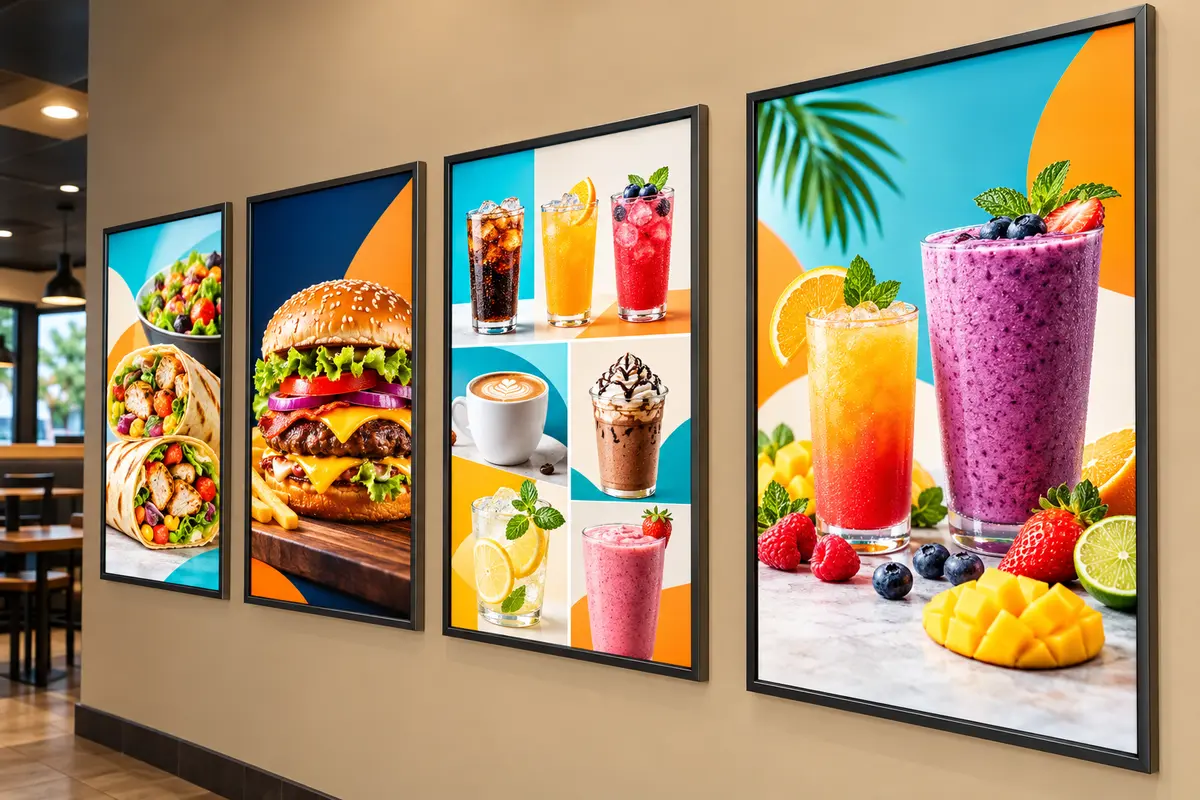
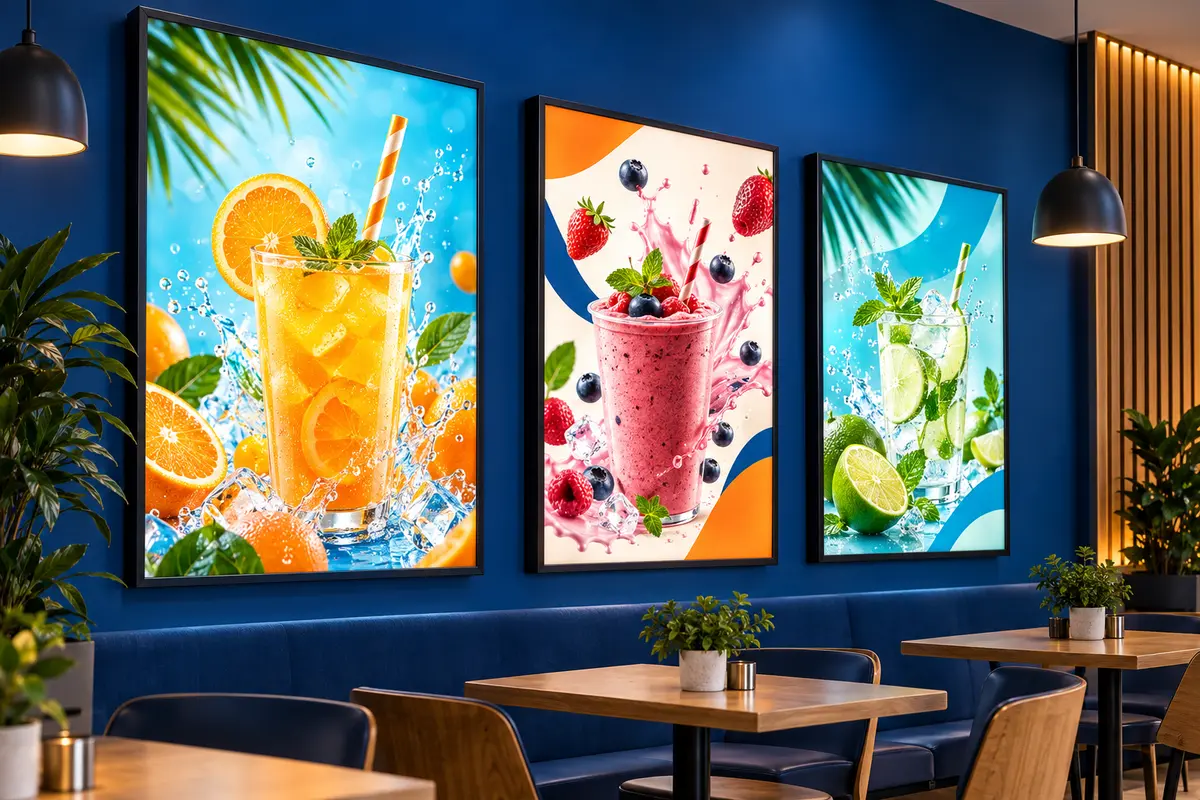
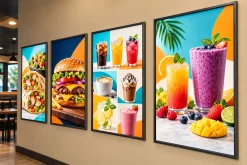
- Illuminated menu boards — eateries, cafés, ordering areas.
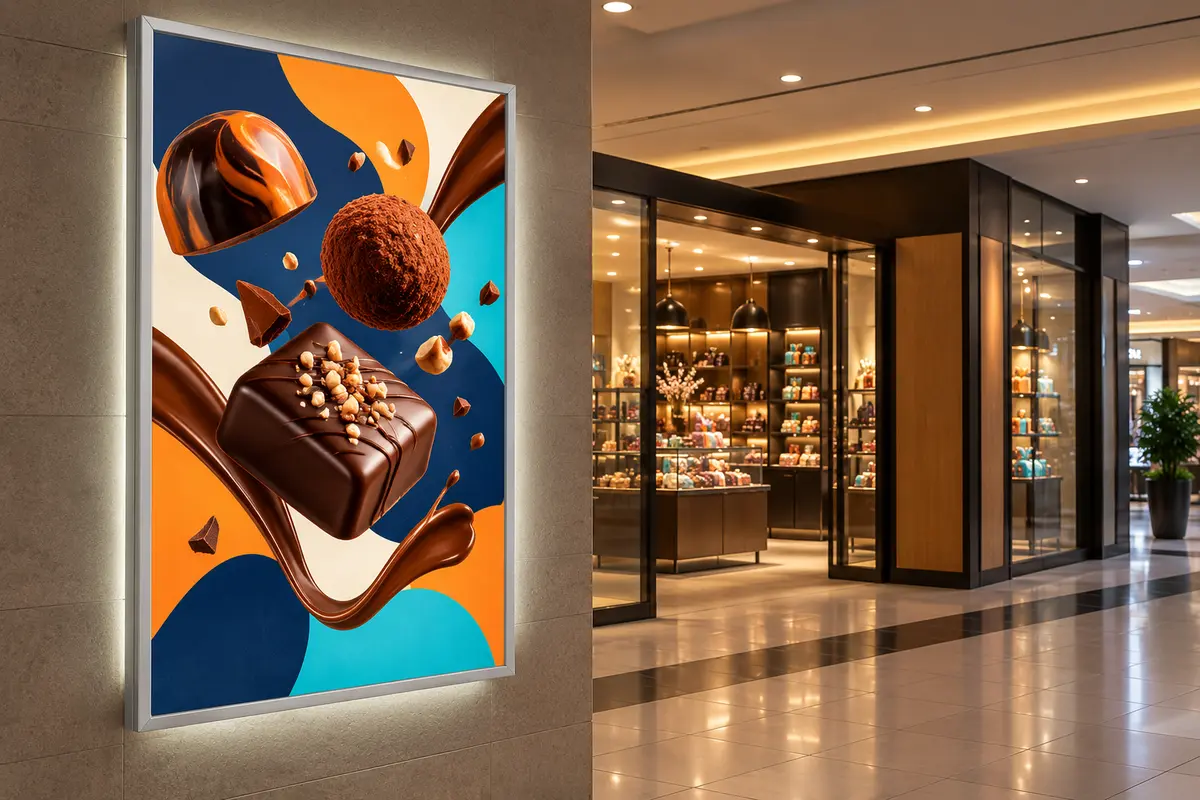
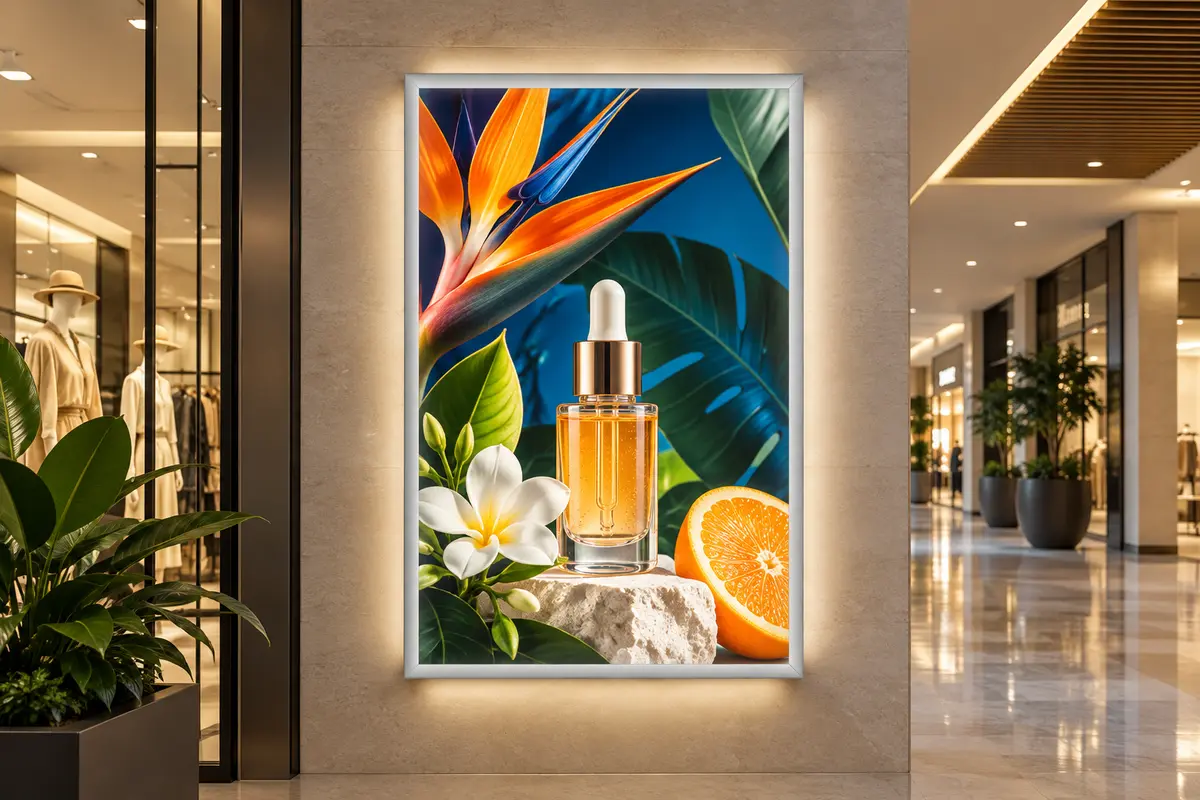
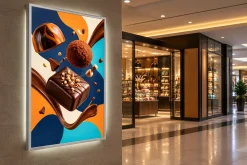
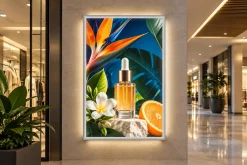
- Shopping mall light boxes — corridors, walkways, retail kiosks.
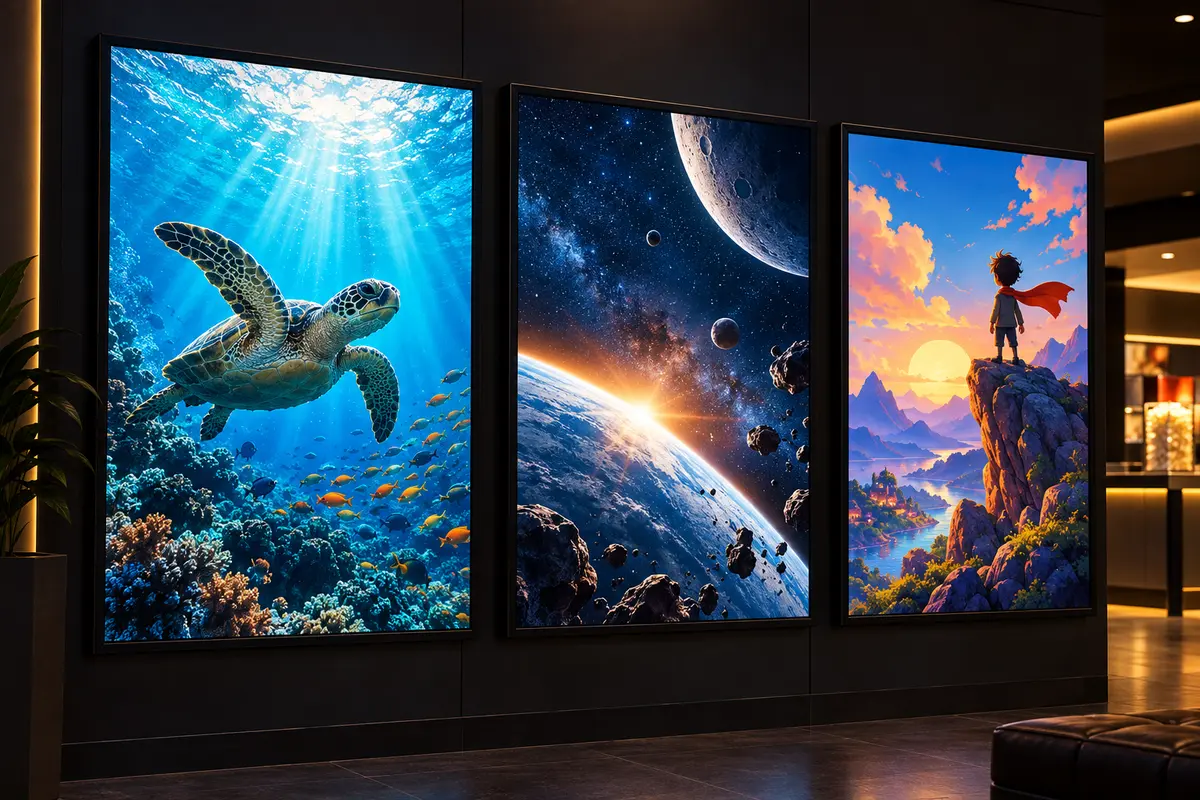
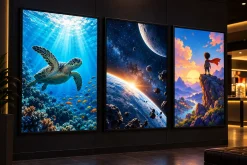
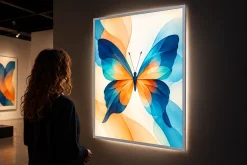
- Cinema and event lobby light posters — large formats on dark walls.
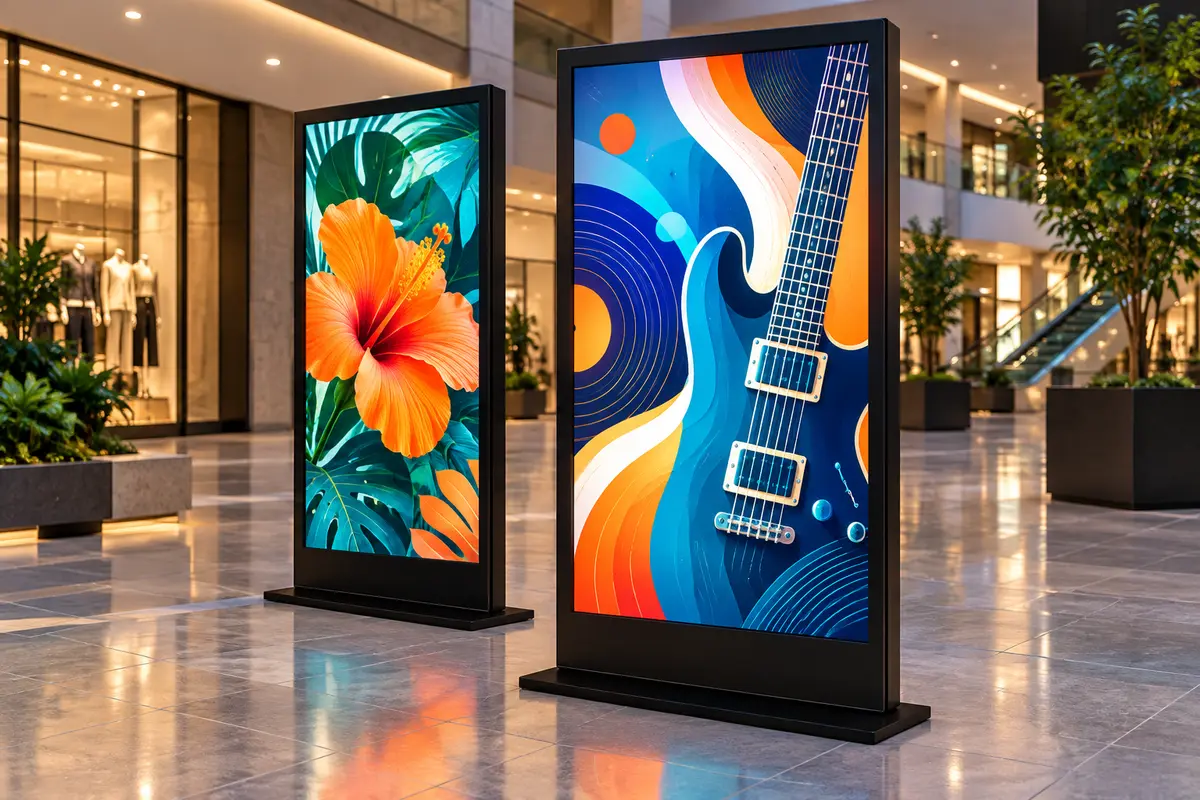
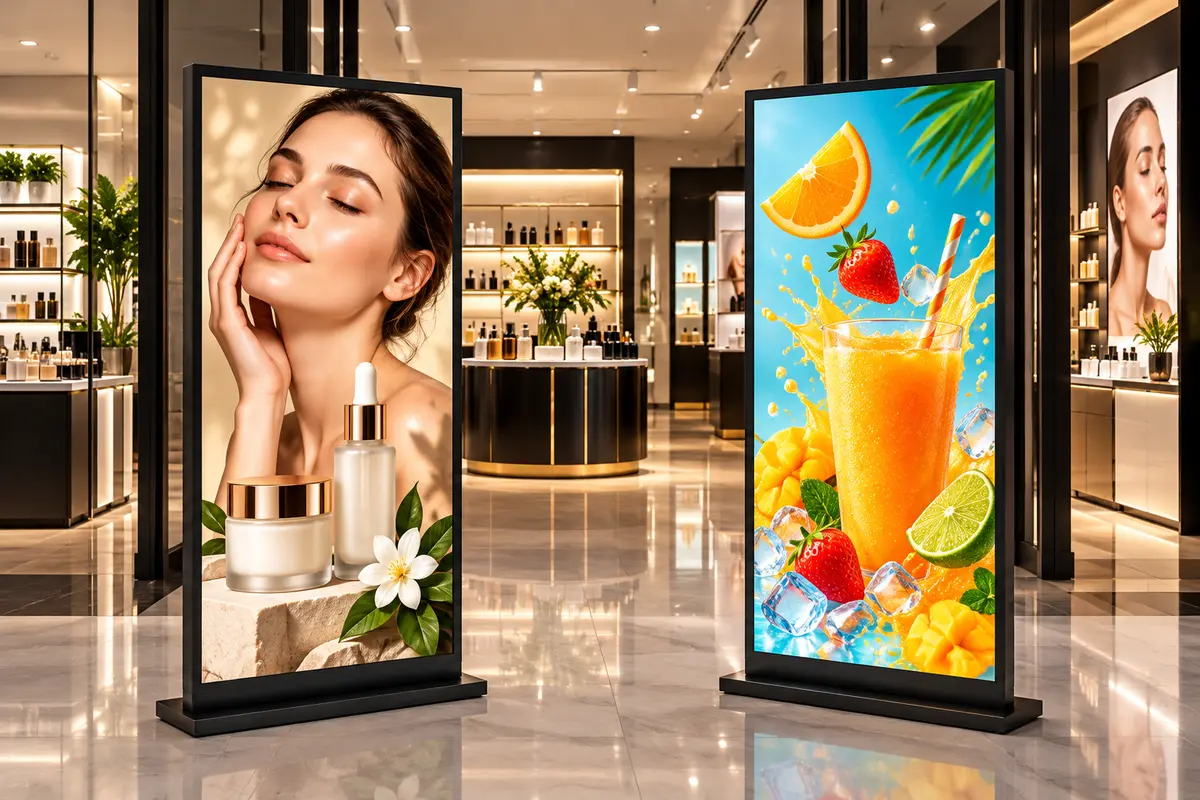
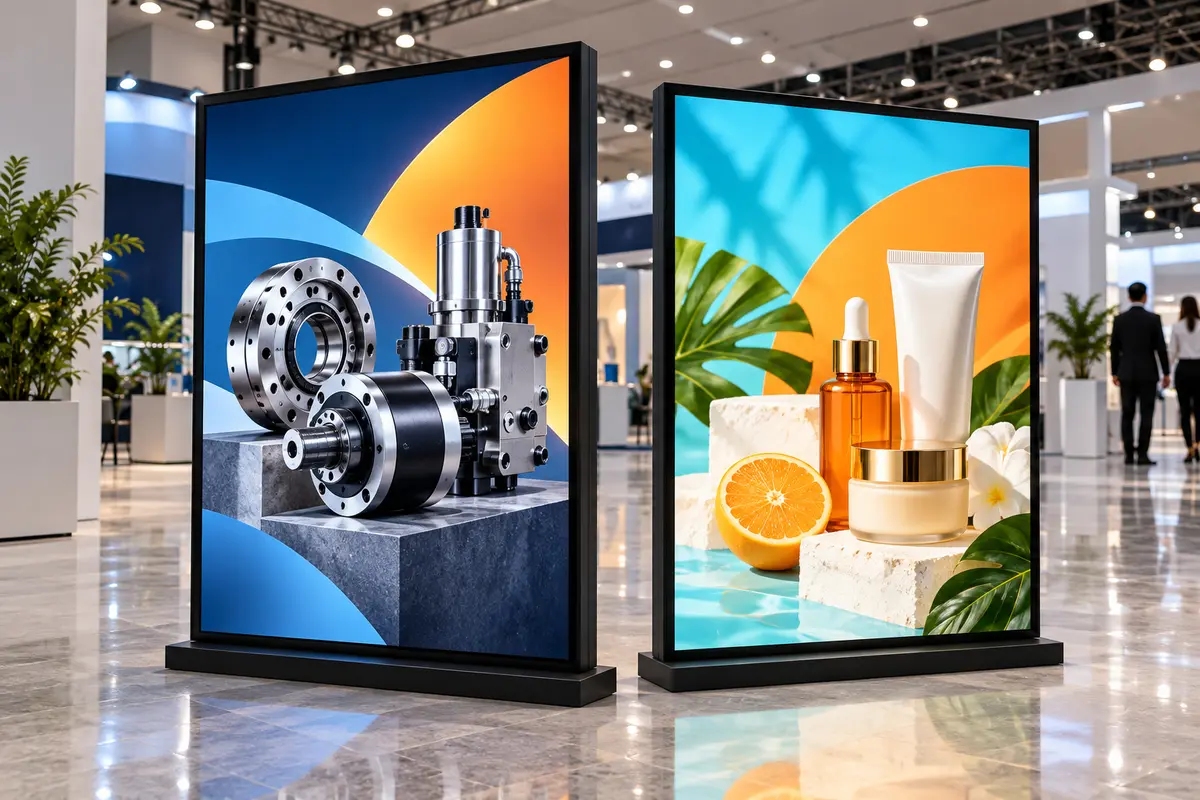
- Floor-standing light boxes — with a base, easy to move, used for exhibitions and events.
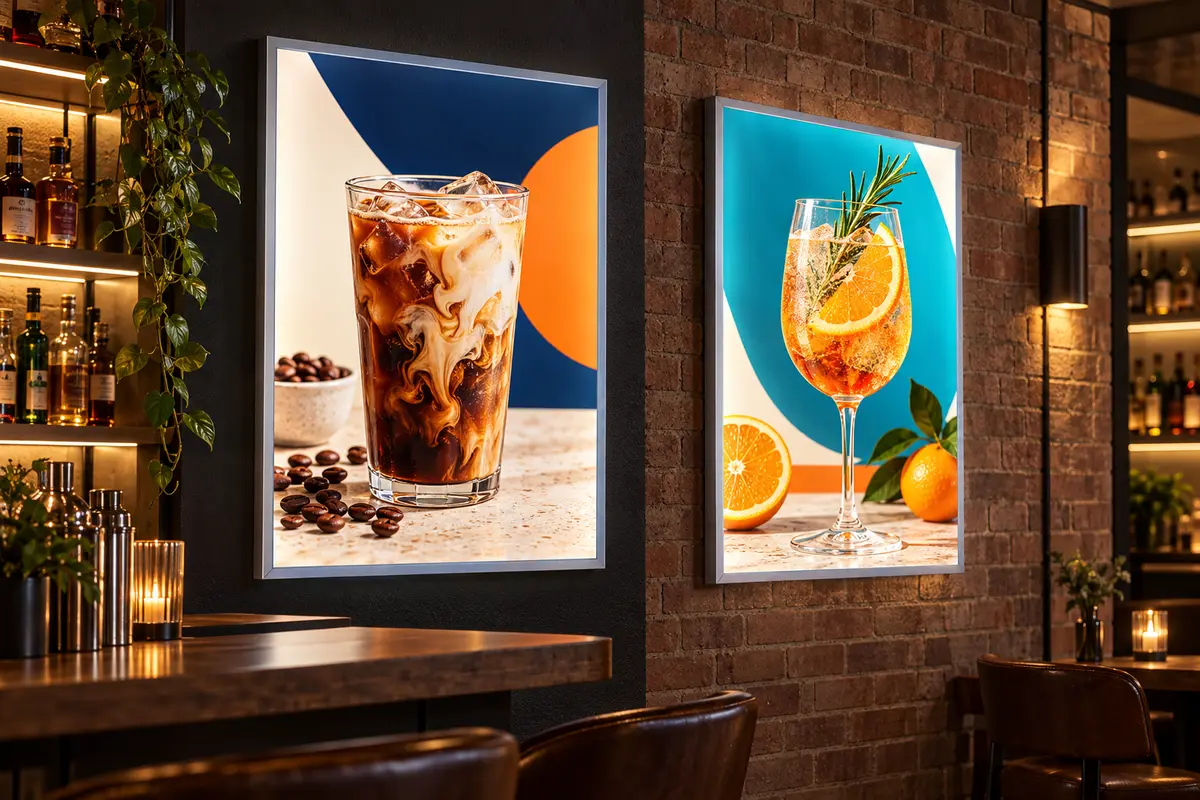
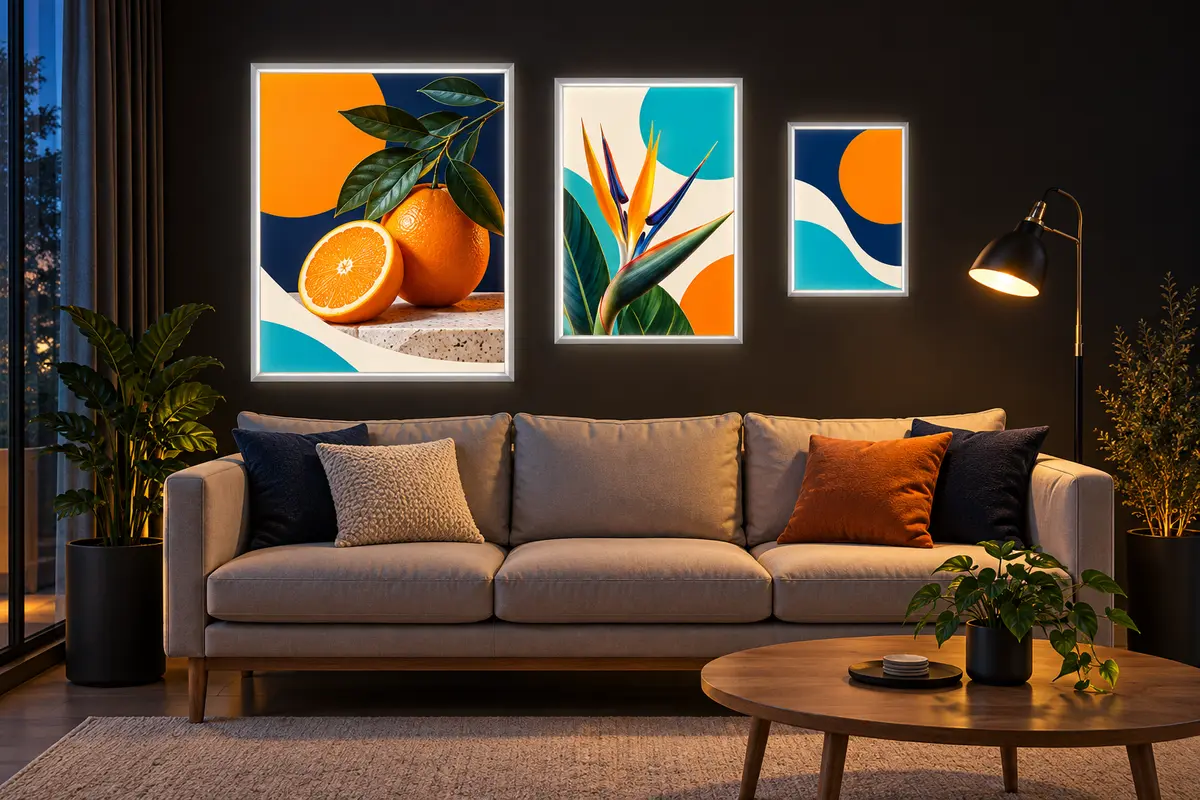
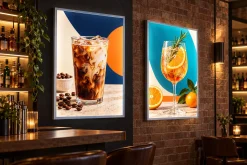
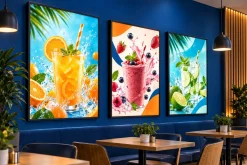
- Decorative interior light panels — multi-frame wall sets.
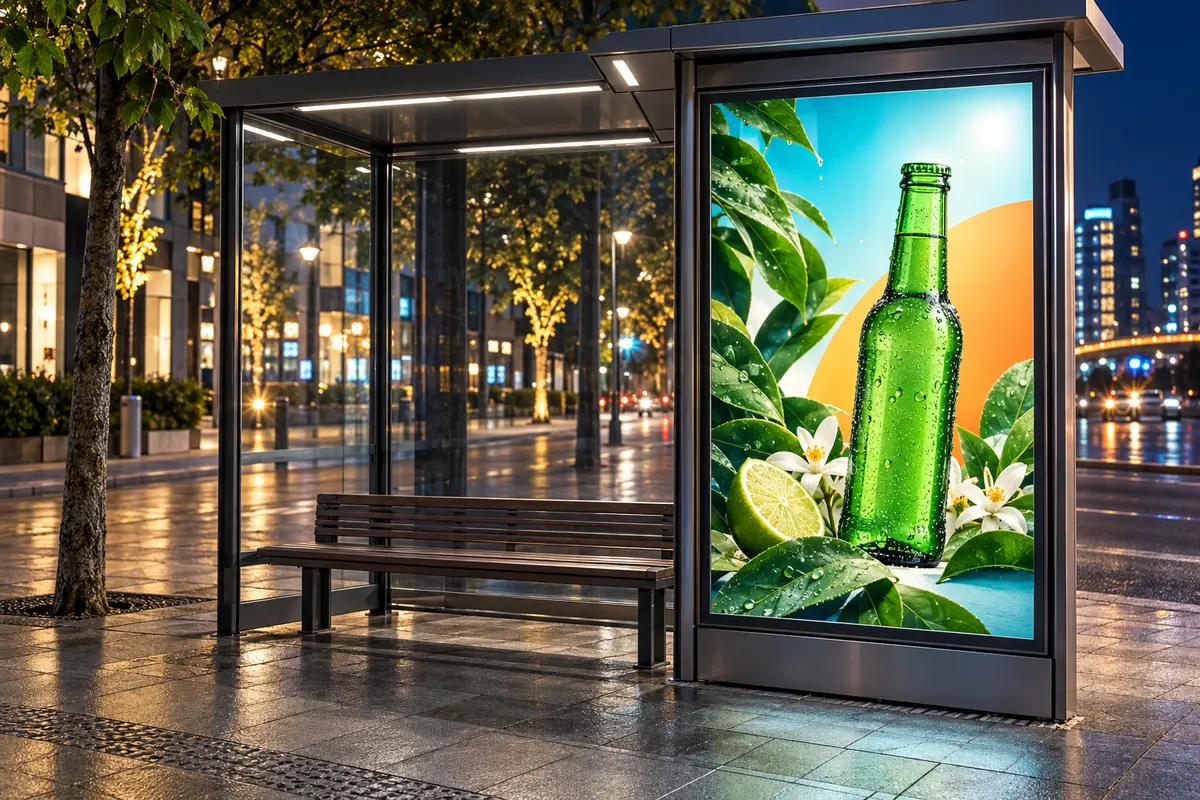
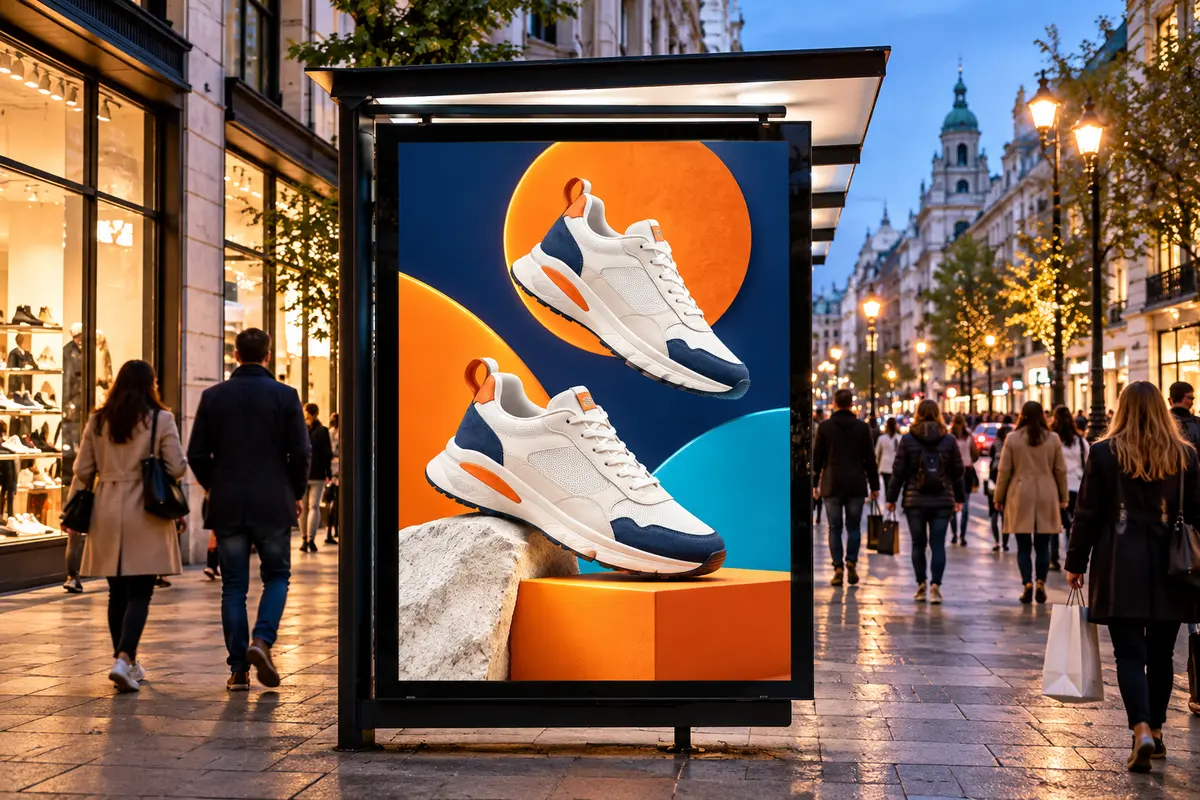
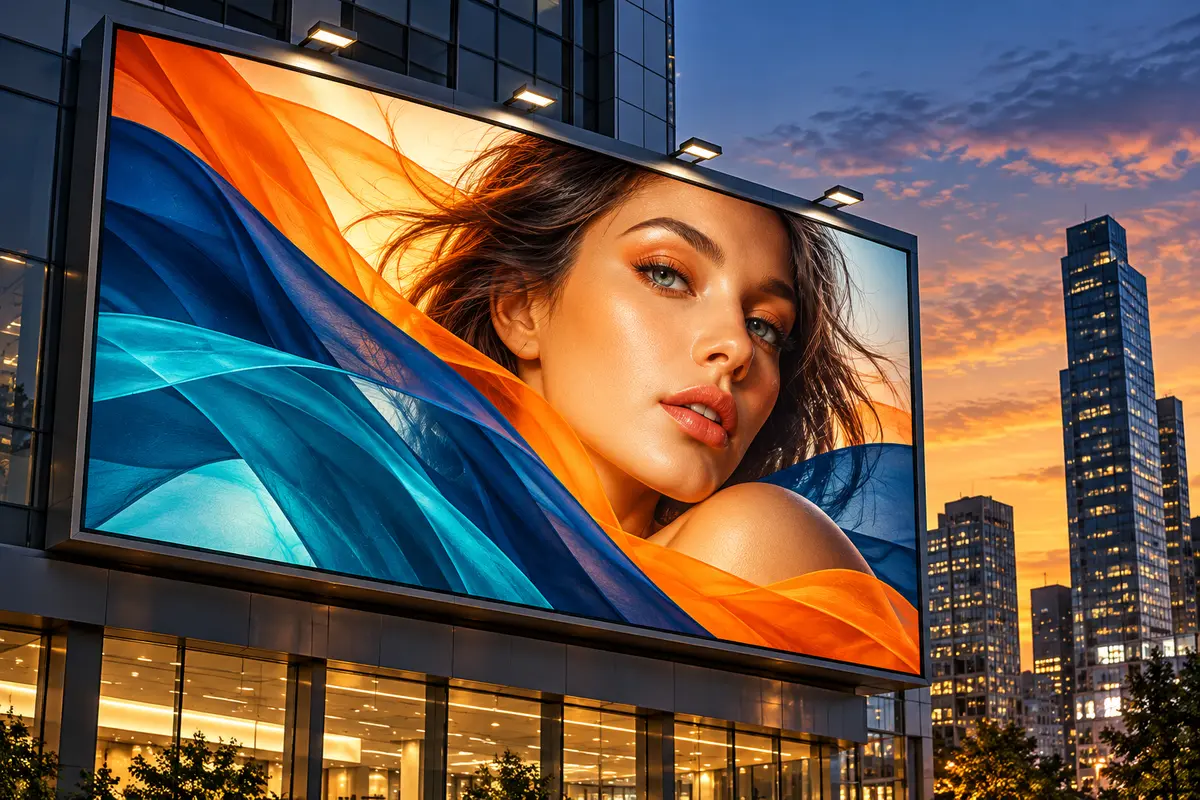
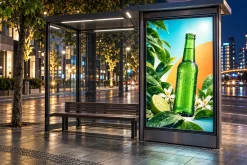
- Outdoor advertising — bus shelters, double-sided street light boxes, building facade boards.
On the same principle, we use this film as the face for Double-Sided LED Standee and LED A-Frame Standee — two products with ready frames and lights, needing only a new print when content changes.
Suggestions by industry
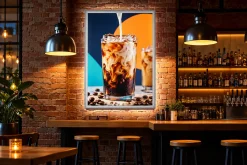
- Eateries, cafés — wall-mounted light box menu sets in the ordering area, drinks light boxes next to the bar. Food photos should use the glossy laminated version for vivid color.
- Retail and cosmetics stores — portrait light boxes at entrances, floor-standing light boxes for new products, prints changed with each campaign.
- Shopping malls — portrait corridor light boxes; management usually sets specific sizes, so measure the visible area of the existing frame before ordering.
- Cinemas and event lobbies — large-format posters, content changed constantly with the screening schedule.
- Exhibitions and showrooms — floor-standing light boxes that assemble quickly and travel between events.
- Outdoor advertising — bus shelters, double-sided street light boxes; choose UV printing and waterproof frames.
Single-sided, double-sided and ultra-slim light boxes
The same Backlit sheet gives different results in different box types:
- Single-sided light boxes — wall-mounted, viewed from the front only. The most common for indoor menus and boards.
- Double-sided light boxes — mounted perpendicular to the wall or hung across a walkway, seen by people passing both ways; needs two sheets fitted back to back.
- Ultra-slim aluminium-framed boxes — lit from the edges inward, only a few centimeters thick, compact and modern; in return, light is less even than thicker boxes at very large sizes.
- Floor-standing light boxes — with a base, movable, used for events and exhibitions.
The larger the size, the thicker the box should be, because the distance between the lights and the film face decides whether the light is even. Large thin boxes tend to have bright edges and a dark center, and no Backlit Film, however good, can make up for the box construction.
Designing for backlit faces
This part is completely different from regular printing, and it's where customers' own designs most often go wrong:
- Increase color density — artwork on a light box always looks brighter than on screen; colors that are too light almost turn white when the light is on.
- White text on a dark background is the safest — it stands out clearly when lit, and stays readable when the light is off.
- Avoid thin bold text on light backgrounds — the light eats away the strokes, making it unreadable from afar.
- Be careful with light gradients — light transition areas easily disappear entirely when lit from behind.
- Think about when the light is off — during the day or in a power cut, the film must still show the main content.
For important orders, print a small test sheet and check it on a light before running the whole set. The difference between screen colors and backlit colors is big enough to justify the extra step.
How to calculate area and order
- Calculate area: width (cm) × height (cm) ÷ 10,000. A 60 × 90 cm sheet is 0.54 m².
- Choose the material and matching area tier in the options above.
- Enter the m² in the quantity box — decimals such as 1.2 or 1.5 are accepted.
- Write the visible size, trim allowance and frame type in the order notes.
For orders with several light boxes of different sizes, list each box in the notes as “box 1: visible 60 × 90, box 2: visible 40 × 60” and enter the total area once. A larger total area usually falls into a lower unit price tier.
For same-day urgent orders, send the file in the morning and state the time you need it; we confirm whether it's possible before printing, since laminated prints need one more step than printing and delivering.
Preparing print files
- Format — PDF or AI.
- Color mode — CMYK.
- Resolution — 150dpi at actual size for large light boxes, 300dpi for small light boxes viewed up close.
- Bleed — leave 3mm on each edge, plus the trim allowance for the frame type.
- Safe zone — sizes from 100cm up need 5cm around the edges.
- Text — convert to outlines before sending.
State clearly in the notes that the print is for a light box, because Backlit files need different color handling from regular prints — we recheck the density before printing.
If you have no file, add the design service; we lay it out and send it for approval before printing.
For sets of several light boxes on the same theme, send all files in one zipped folder named by installation position — for example “box-1-entrance”, “box-2-counter”. This avoids mix-ups when sheets differ by only a few centimeters, and next time you only need to message the old file name for us to reprint right away.
Backlit Film or backlit banner?
| Backlit film | Backlit banner | |
|---|---|---|
| Sharpness | Very sharp, deep colors | Moderate, with fiber texture |
| Width | Limited by the film roll width | Up to 3.2m |
| Cost | Higher | More economical at large sizes |
| Suitable for | Indoor light boxes, menus, light posters, close viewing | Large outdoor light boxes, viewed from afar |
How to choose: for small and medium light boxes that customers view up close, use Backlit Film; for very large outdoor light boxes viewed from dozens of meters away, backlit banner is much more economical.
Common ordering mistakes
- Sending the overall size as the visible size — the print gets its edges eaten by the trim, or comes up short and can't be clamped.
- Light-colored designs — colors wash out when the light is on, especially pastels and gradients.
- Low-resolution images for small light boxes — customers stand close, so grainy images show far more than on regular prints.
- Choosing white material for premium light boxes — economical, but colors aren't as deep as UV prints; side by side, the difference is obvious.
- Not saying the print is for a light box — we'll treat colors as for regular printing and the result will look pale when lit.
Care and lifespan
- The film sits in a closed frame so it collects little dust; what deteriorates first is usually the printed color, not the material.
- Light boxes left on continuously generate heat; UV prints handle heat better than solvent ink.
- Outdoor light boxes should have waterproof gaskets on the frame; water getting in wrinkles the film and damages the lights.
- When changing content, roll the old sheet lengthwise if it will be reused, never fold it — creases show clearly as soon as the light is on.
- Wipe the light box face with a damp cloth; avoid strong solvents as they dull the coating.
Backlit Film printing for light boxes: choosing ink and lamination
Backlit film printing for light boxes is the group we run most, used for shopfront light boxes, mall light boxes and backlit display cabinets. There are two technologies: solvent-ink backlit film gives smooth color transitions at a reasonable cost, suited to indoor light boxes; UV backlit film dries instantly under UV light so the ink adheres more firmly and is less affected when the light box stays hot for long periods.
As for the surface, matte-laminated backlit film reduces glare when the light behind is strong, with no dazzle when viewed straight on — the familiar choice for light boxes at eye level. Glossy lamination gives deeper, richer colors, suited to light boxes hung high or in places with weak ambient light.
Backlit film prices per m² follow area tiers, and decimals are accepted, so you can order the exact light box size without rounding. Same-day backlit film orders apply to small and medium sizes; for large sizes or laminated prints, we give a specific pickup time when we receive the file.
Backlit Film fitted in light boxes: menus, shopfronts and indoor boards
Backlit Film is made to sit in front of a light source, so almost every order is tied to an existing light box. The two most common installation spots are order counters and shopfronts.
Backlit film for menu light boxes is the menu sheet in a light box hung above the counter of eateries, cafés and milk tea shops. The format is small with lots of text, so prices and dish names must be clearly readable when the light is on. Backlit film for shop light boxes is a larger sheet mounted on a shopfront or in a mall corridor, usually printed to the exact inner size of the light box so no gaps show at the edges.
The lamination is chosen by installation spot. Solvent-ink backlit film, matte laminated is used when the light box sits under ceiling lights or near glass doors; the matte surface eliminates reflections so customers standing at an angle can still read it. Solvent-ink backlit film, glossy laminated keeps colors brighter, suited to food and product images.
UV backlit film for light boxes is the choice when you need dense ink that dries instantly: UV ink sits on the film surface so small text doesn't blur, and same-day urgent orders can be taken. Besides these three specifications, the page also offers white-material Backlit for sheets not placed in front of a light.
Frequently asked questions
Can it be used without a light?
Not recommended. Without a light source behind, the image looks dull and shows shadows of objects behind it. In that case PP or milky decal is more suitable.
Can it be printed on both sides?
The film has only one ink-receptive side, so it's single-sided. Double-sided light boxes use two sheets fitted back to back in the same frame.
Matte or glossy lamination?
For close viewing such as in-store menus, choose matte to reduce glare; for food and product images that need to be vivid and seen from afar, choose glossy.
Can I order odd sizes?
Yes. Prints are priced by actual square meters, so any size is accepted, including decimals.
Can I replace the film in the frame myself?
Yes, with standard snap frames: open the trim, pull out the old sheet, place the new one in the groove and close the trim. For silicone-edge tension frames or large frames, leave it to installers.
How soon can I pick it up?
Regular Backlit Film orders are ready the same day if the file is ready and sent before noon. For large orders or UV printing, we give a specific date when quoting.
Order Backlit Film printing at In Quảng Cáo Q7
Send your file with the visible size of the light box and the trim allowance, and we'll advise on the material suited to your light type and installation spot. Contact 0866.511.099 or drop by the workshop at 49 Mai Van Vinh, Tan Hung Ward, Ho Chi Minh City. Production & delivery: 8:00–12:00 & 13:00–18:00 Mon–Sat (closed Sun) · Consultation & orders: 8:00–12:00 & 13:00–20:00 Mon–Sat; 14:00–19:00 Sun.
View directions to the workshop on Google Maps
Quick order specifications
You can order the exact specifications we produce: Solvent-Ink Backlit · UV-Printed Backlit Film · White-Material Backlit. Prices follow quantity tiers as in the price table above — choose a specification and click Get a quote, or message us on Zalo 0866.511.099 for quick advice.
| Material | Backlit, Solvent Ink, Matte Laminated, Backlit, Solvent Ink, Glossy Laminated, Backlit, UV Printed, Backlit, White Material |
|---|---|
| Made at | In Quảng Cáo Q7 workshop – 49 Mai Van Vinh, Tan Hung Ward, Ho Chi Minh City |
| Origin | Vietnam |
| Status | Made to order |
| Warranty | 24 hours from receipt: if you find a printing error or a difference from the approved file, let us know and we will reprint free of charge. |
| Price excl. VAT | 39.000 ₫ – 139.000 ₫ |
| Price incl. 8% VAT | 42.120 ₫ – 150.120 ₫ |
Ordering
Three ways to order: choose the specifications and quantity on the website and click Place order; message us on Zalo or call 0866.511.099; or visit the workshop to see material samples at 49 Mai Van Vinh, Tan Hung Ward, Ho Chi Minh City. During working hours, In Quảng Cáo Q7 replies within about 30 minutes. Most products have listed prices by size, material and quantity – prices exclude 8% VAT.
→ Online ordering guide · Quick quote
Sending design files
PDF or AI preferred, CMYK color mode, 300dpi for small formats, 3mm bleed. Send via Zalo, email inquangcaoq7@gmail.com, the form on our website, or a Google Drive link for large files. We check your file for free before printing; if you have no file yet, In Quảng Cáo Q7 can help with the design.
→ Design file submission guide
Payment
Bank transfer, QR code or cash at the workshop. Orders are confirmed and scheduled for production after payment; after transferring, send a photo of the receipt with your phone number via Zalo. Transfer note: Your name – Phone number – Product.
→ Payment guide
Timing & delivery
Completion time is shown on each product, counted from receipt of a print-ready file and payment confirmation. Pick up at the workshop Monday – Saturday, 8:00–12:00 and 13:00–18:00; urgent orders within Ho Chi Minh City delivered within 2 hours; other provinces via bus courier or express delivery. On receipt, please check quantity, size, material and condition of the products.
Order tracking
Enter the phone number used when ordering to see your orders from the last 90 days and their status: Unpaid → Printing → Printed → Delivering → Invoiced → Completed. For orders placed via Zalo, send your name and phone number to get progress updates.
→ Order tracking
E-invoice (VAT)
In Quảng Cáo Q7 issues 8% VAT e-invoices. Provide the company name, tax code, address and email within 24 hours of ordering; the invoice is issued within 24 working hours and sent by email, and cannot be changed once issued.
→ E-invoice (VAT) details
Misprints – reprints
Products that differ from the order or the approved proof are reprinted free of charge – report within 24 hours with photos. Spelling mistakes in a file you approved are not covered by free reprints.
→ Frequently asked questions (FAQs)
Reviews
There are no reviews yet.