




































































Our commitments
Printed directly in our workshop, no middlemen
Digital and offset presses right in our workshop. You deal directly with the people who make your order, so every request is understood and handled immediately.
Fast production, many orders ready the same day
Business cards, documents, decals, standees… printed and delivered the same day. See production times for each product group.
One point of contact, all-in-one from file to finished product
Quotes, orders, Zalo messages, delivery booking and invoicing run automatically on one system. Design – printing – finishing – installation all happen in-house, so you don't have to go anywhere else.
Full VAT invoices, issued fast
E-invoices issued right after delivery, with urgent support for businesses that need documents early for payment.
Personalised Blindbox
Contact us for a quote
Custom paper blind box printing for toy shops, gift shops and personalized gifts. Send a request for a quote within 30 minutes.
Quote-on-request product
This item is quoted based on actual size, materials and quantity. Send a request and In Quảng Cáo Q7 will reply within 30 minutes during office hours.
When messaging, please include size · quantity · date needed and your design file if you have one.
Custom Blind Box Printing for Shops and Gifts
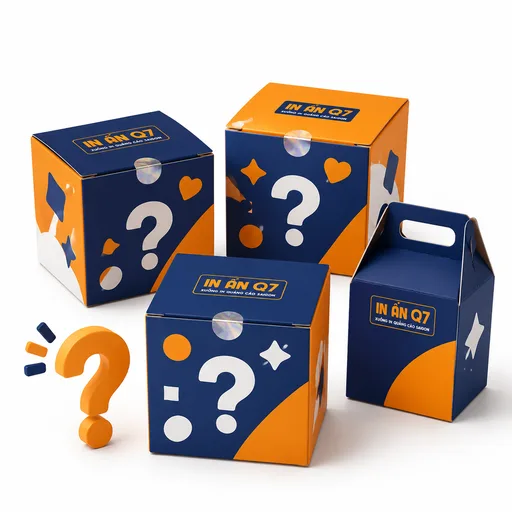
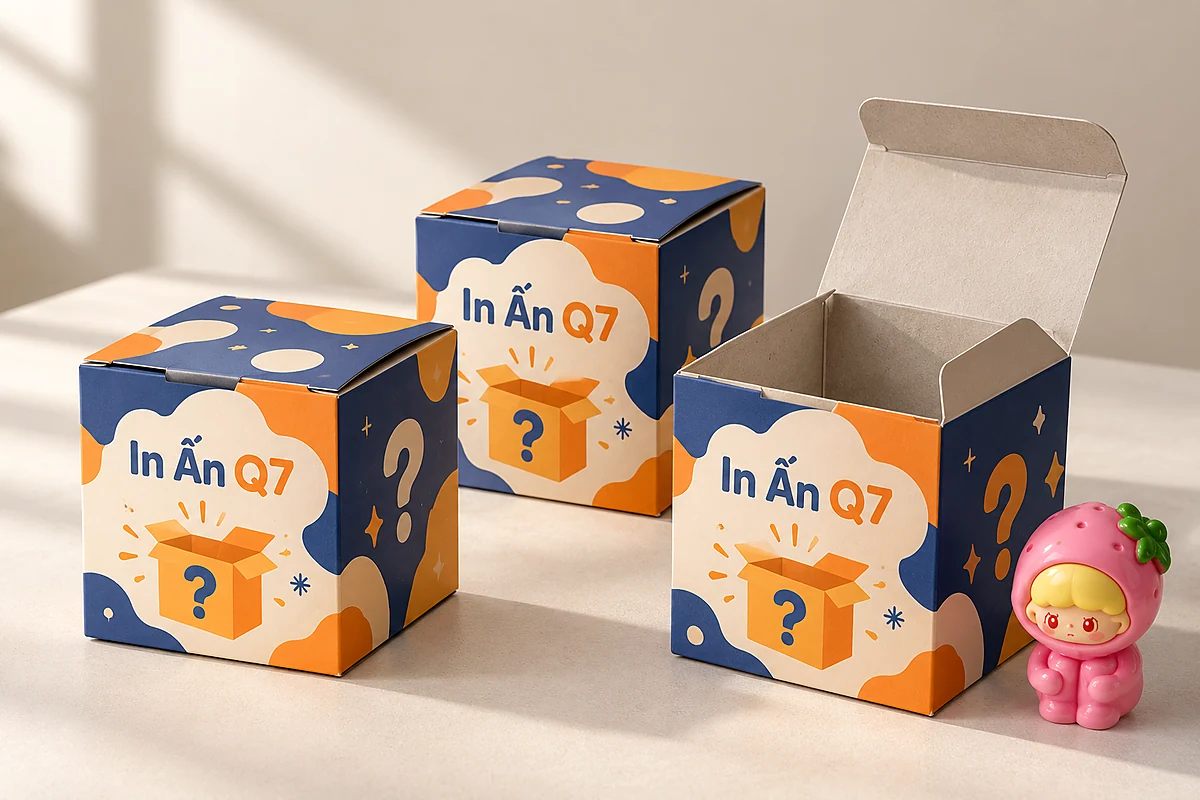
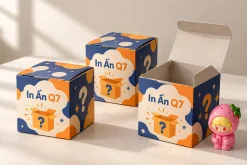
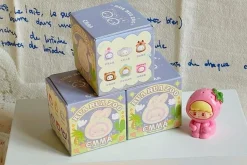
Blind boxes sell the feeling of unboxing: customers don't know what's inside until they open it. The whole experience rests on a paper box, so the box must be sealed, die-cut correctly and printed in the right colors. In Quảng Cáo Q7 prints custom blind boxes, quoted by actual size, paper type and quantity.
What is a blind box
A blind box is a fully printed paper box with no window and no clear indication of which item is inside, used to sell or give a product as a surprise. The outside carries the brand or collection identity, while what distinguishes each item is inside or on a separate sticker.
Unlike regular gift boxes, blind boxes have one extra requirement: no gaps. If customers at the counter can shake it or peek through the edge to guess what's inside, the item loses exactly the value it's selling. That's why the die-cut style, folding style and sealing need more careful planning than ordinary paper boxes.
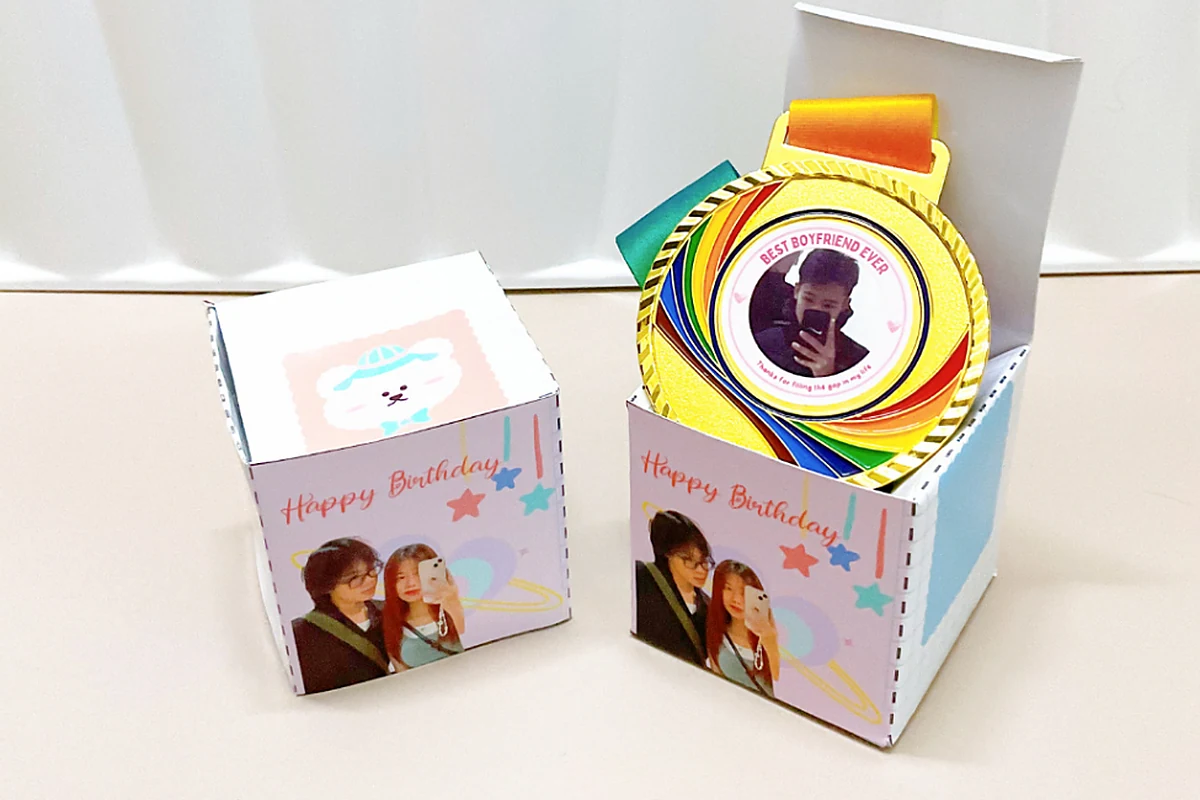
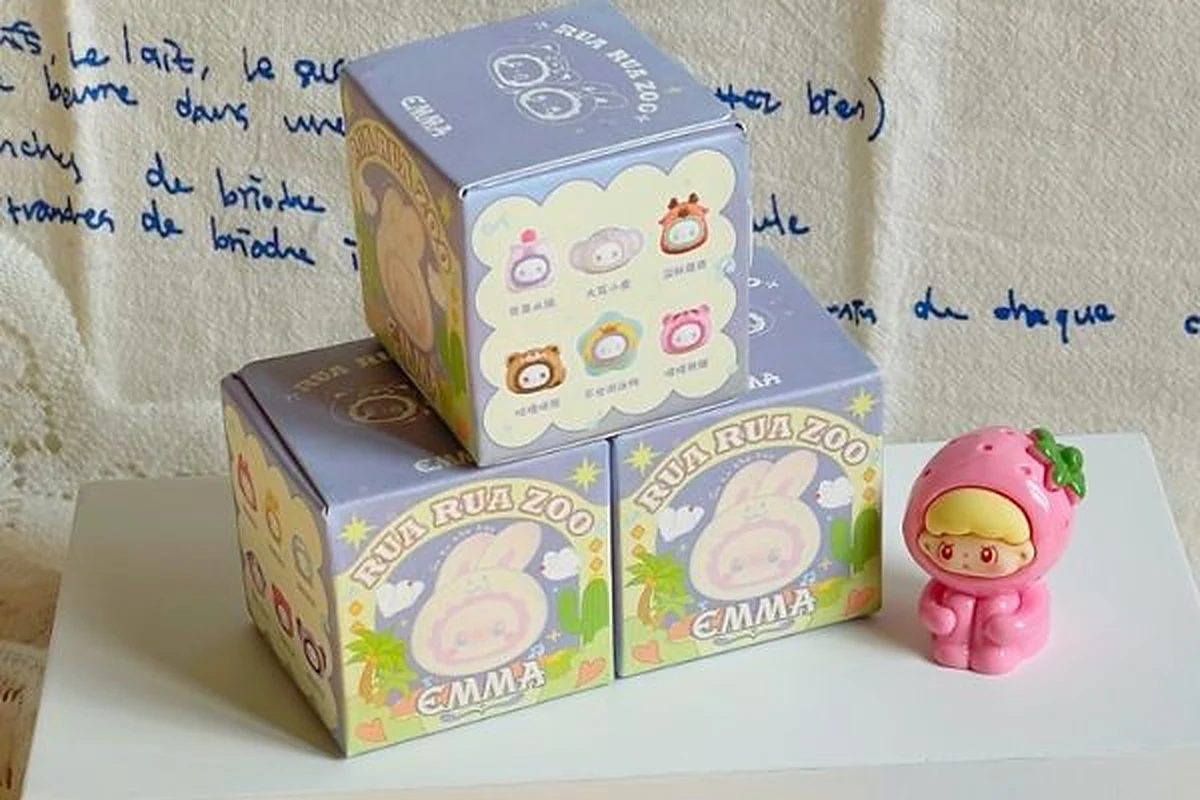
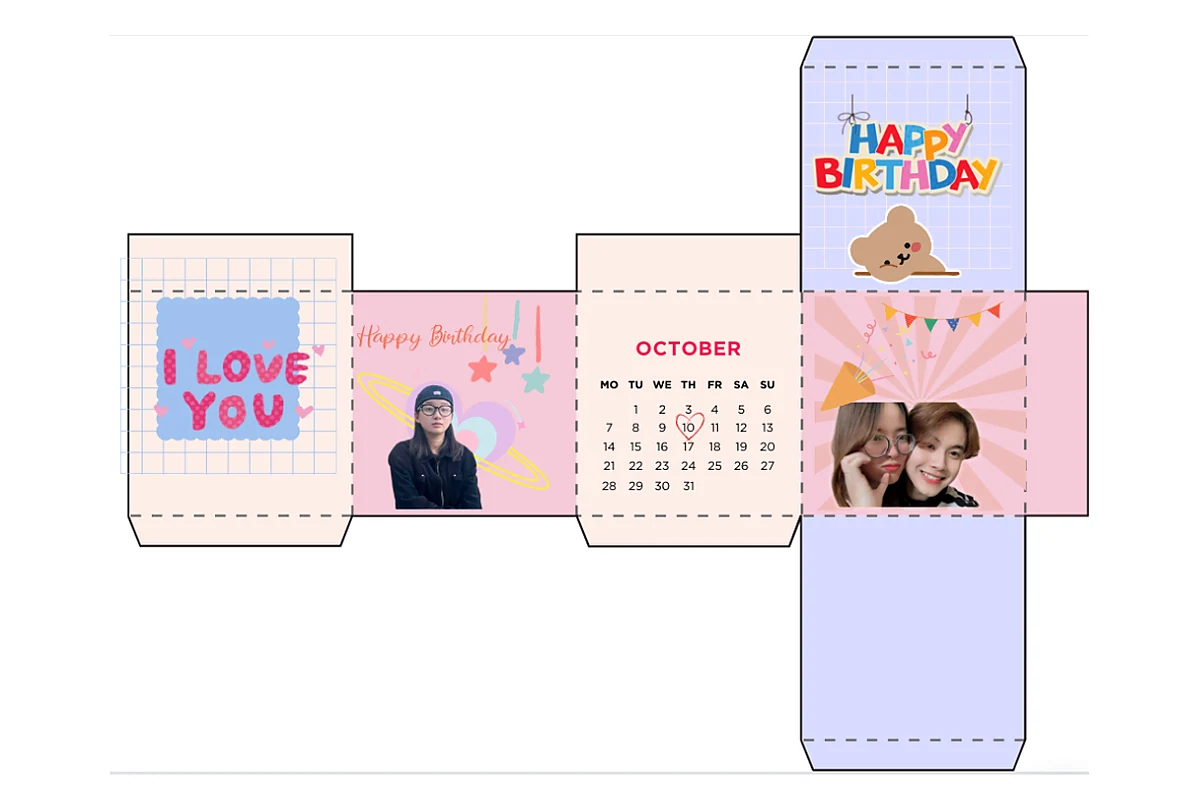
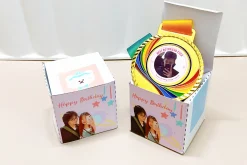
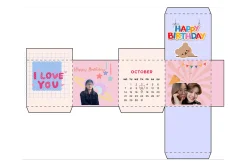
The two common uses are collectible toy boxes in multi-design series, and personalized blind boxes for birthdays or special occasions, with the recipient's photo and name printed right on the lid.
Who orders blind box printing
The customers who order most at our workshop:
- Toy and figure shops — made in series, each with many designs, in batch quantities.
- Gift shops — blind boxes used as mystery gift combos by theme or price level.
- Individual customers — small quantities of personalized blind boxes as birthday, graduation or anniversary gifts with printed photos.
- Brands running campaigns — thank-you gift boxes or gift boxes with promo codes inside.
Quantities vary widely between groups, from a few boxes to several thousand, and the price per box drops sharply with quantity since the cutting die cost is spread out. That's why, when asking for a price, the quantity matters as much as the size.
Blind box structure and cutting dies
Before becoming a blind box, each design is a flat sheet of paper printed and then die-cut along the die line. The sheet has three kinds of lines: cut lines on the outer edge, fold lines to form the edges, and tabs to glue or tuck into each other.
A cutting die is a metal die made specifically for each box style and size. It's also the biggest one-off cost in the order: whether you order 50 or 5,000 boxes, the die costs about the same, so small quantities show a much higher price per box.
If your size matches a die we already have, the order skips this cost. So when asking for a price, give your desired size along with an acceptable tolerance — a difference of a few millimeters that lets us reuse an existing die saves a lot.
Common box styles for blind boxes: two-piece lid-and-base boxes, one-piece tuck-lid boxes, and auto-lock bottom boxes. One-piece styles fold quickly and cost less; two-piece styles feel sturdier and more premium, suited to collectible series sold at higher prices.
Keeping the contents hidden
This part is specific to blind boxes and not needed for ordinary paper boxes. A few things we often do:
- Paper thick and opaque enough — thin paper under counter lights reveals the shadow of the item inside.
- Opaque bags or inner lining paper — an extra cover layer that also keeps items from rattling around.
- Seal stickers across the lid edge — customers see the box hasn't been opened, and a peeled sticker shows it has.
- Small printed identification codes on the bottom or inside, so the shop knows which box is which design while customers don't.
- Foam or paper filler so boxes in the same series weigh about the same, preventing weight differences that let customers guess.
For the identification code, tell us where you want it printed and in what form (number, letter, or a small symbol) so we place it where it doesn't show while the box is sealed.
Paper and finishing for blind boxes
Blind box paper is usually stiff enough to hold edges, prints colors well and doesn't let light through. Surface finishing decides how it feels in the hand:
- Matte lamination — smooth surface, no fingerprints, a muted premium look.
- Glossy lamination — brighter, deeper colors, suited to multi-colored character artwork.
- Foil stamping — gold, silver or rose-gold foil for the collection name and borders.
- Embossing or debossing — a logo you can feel, often used on lids.
- Spot UV — gloss on just part of the artwork over a matte-laminated base.
Each finish is a separate machine step, so it directly affects price and delivery time. If you don't know what to choose, the most practical way is to tell us your budget per box and let us suggest a paper and finishing combination that fits.
Plain boxes with separate logo stickers are another option: print a plain one-color box and apply UV DTF stickers or labels on the lid. This is flexible when one box style is used for several series.
What a quote request needs
Blind boxes are quoted on request since size, box style, paper and finishing differ for each order. For an accurate quote the first time, send along:
- Box size length × width × height, or the size of the item going inside.
- Quantity, and if made in series, how many designs and how many boxes per design.
- Box style: two-piece lid, one-piece tuck lid, or auto-lock bottom.
- Finishing needed: lamination, foil stamping, embossing, spot UV.
- Whether you need inner lining, foam filler or seal stickers .
- Date needed — boxes with cutting dies and finishing need more time than flat printing.
- Design files if you have them; if not, send your logo, images to print and preferred color tones.
With all the items above, we quote for the whole batch with a delivery date and tell you whether that size can reuse an existing die or needs a new one. If something is missing we can still give a price range, but it will need finalizing once all the information is in.

Paper bags

Labels & stickers


UV DTF Stickers

Price tags
Preparing files and cutting dies
Box files differ from flat print files in that they must include a cutting die layer:
- File PDF or AI, color mode CMYK, images at least 300dpi at actual size.
- Design built on the flat dieline matching the die, not on a photo of the folded box.
- Cut lines, fold lines and tabs on separate layers, each in a clearly defined color.
- Leave 3 mm bleed beyond the cut line; text and logos at least 3 mm from fold lines.
- The foil stamping or embossed areas on a separate layer, filled 100% black over exactly the area to be done.
- Text must be converted to outlines, or send the fonts along.
If you don't have a flat dieline yet, we build one to your measurements and send the flat layout back for you to place the design on. If you don't have a design, we make one from your existing logo and content, building a sample and sending it for approval before die-cutting. If the order includes outer packaging, it can be done in the same run as paper bags to match color tones.
How cutting die costs affect the price
The cost of a blind box order has two separate parts: the cutting die, made once for each box style and size, and printing plus finishing, charged per box. Understanding this shows immediately why small orders have a high price per box.
| Number of boxes | Die cost spread over each box | Comment |
|---|---|---|
| 10 boxes | Very high | Only worth it if the size matches an existing die |
| 50 boxes | Height | A reasonable starting point for shops testing their first design |
| 200 boxes | Moderate | The die cost starts to become insignificant in the price per box |
| 500 boxes or more | Low | The price per box is almost just paper, printing and finishing |
So if you're making blind boxes for the first time and aren't sure which designs will sell, ask whether we have an existing die that fits your product. Using an existing die skips the die cost, though the size must follow the die rather than your preference.
A second approach for trial orders is printing plain one-color boxes and applying stickers to the lids. This lets you change character designs without touching the die, suited to testing customer response.
Making blind boxes in multi-design series
Blind boxes in multi-design series are the most popular way to sell, since customers buy several boxes to complete the set. A few things to plan before ordering:
- Number of designs in the series — series of six to eight designs feel collectible to customers. Too many designs easily discourage customers, who give up halfway.
- Rare designs — many series make one design much scarcer to create a sense of luck. Tell us the number of boxes for each design from the start, since it decides how print batches are split.
- Identical or different outer boxes — identical outer boxes keep the secret best and are cheapest, since only one design is printed. Different colors per design look nice but let customers guess what's inside.
- Identification codes — if you need to tell designs apart when packing without customers seeing, print a small symbol on the bottom rather than on the lid.
For keeping contents hidden, the two biggest factors are paper thick enough not to see through and seal stickers across the lid edge. The seal stops people opening boxes to check at the counter and shows customers the box is intact.
Blind boxes for personal occasions and classes
Beyond toy shops, blind boxes are also ordered for personal occasions and classes, in small quantities but with equally high expectations for appearance:
- Birthday gifts — one box per guest, each with a different small gift inside. The outer box is printed to the party theme.
- Graduation gifts — boxes printed with the class name and graduation year, holding a small keepsake or handwritten note.
- Class lucky draw games — one prize per box, with students picking boxes without knowing what's inside. This group usually orders as many as there are students.
- Couple anniversary gifts — a set of a few boxes opened one by one at milestones, each with a keepsake.
- Gifts included with orders — gift shops use small blind boxes as free add-ons to heighten the unboxing experience.
For small orders like these, the die cost is the biggest barrier. The most practical approach is choosing a size that matches one of our existing dies, or using plain boxes with custom-printed stickers — both give a similar unboxing feel without paying for a new die.
Blind box printing and delivery areas
Blind boxes are printed, die-cut and glued at our workshop at 49 Mai Van Vinh, Tan Hung Ward, Ho Chi Minh City. Boxes are delivered as pre-cut flat blanks that you fold when packing.
- Around the workshop — District 7, Phu My Hung, District 4, District 8, Nha Be, Binh Chanh. Drop by to pick up a sample and test folding before running the whole batch.
- Central area — District 1, District 3, Binh Thanh, Phu Nhuan, Tan Binh. Delivered to your shop or packing warehouse at the arranged time.
- Rest of the city — Thu Duc, Go Vap, Tan Phu, District 10, District 11, District 12, Binh Tan, Hoc Mon, Cu Chi.
- Other provinces — sent by bus courier or delivery service. Flat blanks stack on top of each other, saving a lot of space compared with sending folded boxes.
Before running the whole batch, we always fold a test box from a real blank to check the lid fits snugly and the seal sticker fits the edge. If you're nearby, come and see this sample box, since holding it shows things you can't see in the file.
Frequently asked questions
Why is there no listed price? Because size, box style, paper and finishing differ for each order, and it also depends on whether a new cutting die is needed. Send the size and quantity and we'll quote right away.
Can I order small quantities? Yes, but the price per box will be high since the die cost is spread over few boxes. If the size matches an existing die, small quantities can still be reasonably priced.
How is a multi-design series priced? By the total number of boxes, but each design is a separate print, so too many designs with too few boxes each isn't economical.
Do you fold the boxes? Boxes are delivered die-cut and flat to save space; you fold them when packing. If you need folded boxes delivered, tell us in advance, since it adds labor and takes more space in transport.
Do you make seal stickers too? Yes, stickers are a separate item. Tell us the sticker diameter or size and quantity so we can quote them in the same order.
Can you print licensed characters? You are responsible for the usage rights of the printed content. We print according to the files customers send.
How soon is it ready? Boxes need printing, die-cutting and finishing, so they take longer than flat printing, and a new die adds die-making time. Message us on Zalo with the size and quantity for a specific delivery date.
Get a blind box quote at In Quảng Cáo Q7
Message Zalo 0866.511.099 with the box size, quantity, box style and desired finishing — we'll reply within 30 minutes during office hours.
Workshop address: 49 Mai Van Vinh, Tan Hung Ward, Ho Chi Minh City.
Consultation and orders: 8:00–12:00 and 13:00–20:00 Monday – Saturday, Sunday 14:00–19:00. Production and delivery: 8:00–12:00 and 13:00–18:00 Monday – Saturday, closed Sunday.
Some images on this page are illustrations.
| Made at | In Quảng Cáo Q7 workshop – 49 Mai Van Vinh, Tan Hung Ward, Ho Chi Minh City |
|---|---|
| Origin | Vietnam |
| Status | Made to order |
| Warranty | 24 hours from receipt: if you find a printing error or a difference from the approved file, let us know and we will reprint free of charge. |
Quote-on-request product. Prices quoted exclude 8% VAT; the invoice adds the tax as required by law.
Ordering
Three ways to order: choose the specifications and quantity on the website and click Place order; message us on Zalo or call 0866.511.099; or visit the workshop to see material samples at 49 Mai Van Vinh, Tan Hung Ward, Ho Chi Minh City. During working hours, In Quảng Cáo Q7 replies within about 30 minutes. Most products have listed prices by size, material and quantity – prices exclude 8% VAT.
→ Online ordering guide · Quick quote
Sending design files
PDF or AI preferred, CMYK color mode, 300dpi for small formats, 3mm bleed. Send via Zalo, email inquangcaoq7@gmail.com, the form on our website, or a Google Drive link for large files. We check your file for free before printing; if you have no file yet, In Quảng Cáo Q7 can help with the design.
→ Design file submission guide
Payment
Bank transfer, QR code or cash at the workshop. Orders are confirmed and scheduled for production after payment; after transferring, send a photo of the receipt with your phone number via Zalo. Transfer note: Your name – Phone number – Product.
→ Payment guide
Timing & delivery
Completion time is shown on each product, counted from receipt of a print-ready file and payment confirmation. Pick up at the workshop Monday – Saturday, 8:00–12:00 and 13:00–18:00; urgent orders within Ho Chi Minh City delivered within 2 hours; other provinces via bus courier or express delivery. On receipt, please check quantity, size, material and condition of the products.
Order tracking
Enter the phone number used when ordering to see your orders from the last 90 days and their status: Unpaid → Printing → Printed → Delivering → Invoiced → Completed. For orders placed via Zalo, send your name and phone number to get progress updates.
→ Order tracking
E-invoice (VAT)
In Quảng Cáo Q7 issues 8% VAT e-invoices. Provide the company name, tax code, address and email within 24 hours of ordering; the invoice is issued within 24 working hours and sent by email, and cannot be changed once issued.
→ E-invoice (VAT) details
Misprints – reprints
Products that differ from the order or the approved proof are reprinted free of charge – report within 24 hours with photos. Spelling mistakes in a file you approved are not covered by free reprints.
→ Frequently asked questions (FAQs)
Reviews
There are no reviews yet.