







































































Our commitments
Printed directly in our workshop, no middlemen
Digital and offset presses right in our workshop. You deal directly with the people who make your order, so every request is understood and handled immediately.
Fast production, many orders ready the same day
Business cards, documents, decals, standees… printed and delivered the same day. See production times for each product group.
One point of contact, all-in-one from file to finished product
Quotes, orders, Zalo messages, delivery booking and invoicing run automatically on one system. Design – printing – finishing – installation all happen in-house, so you don't have to go anywhere else.
Full VAT invoices, issued fast
E-invoices issued right after delivery, with urgent support for businesses that need documents early for payment.
Canvas
From 150.000 ₫ / m²Price incl. 8% VAT: from 162.000 ₫ / m²
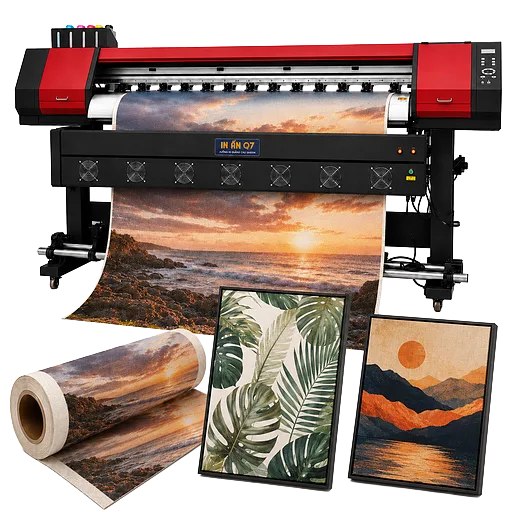
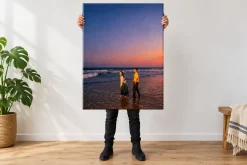
Canvas fabric printing by the square meter. Used for wall art and shop decoration.
Large-Format Canvas Printing by the Square Meter – Rolled Prints or Ready-Stretched
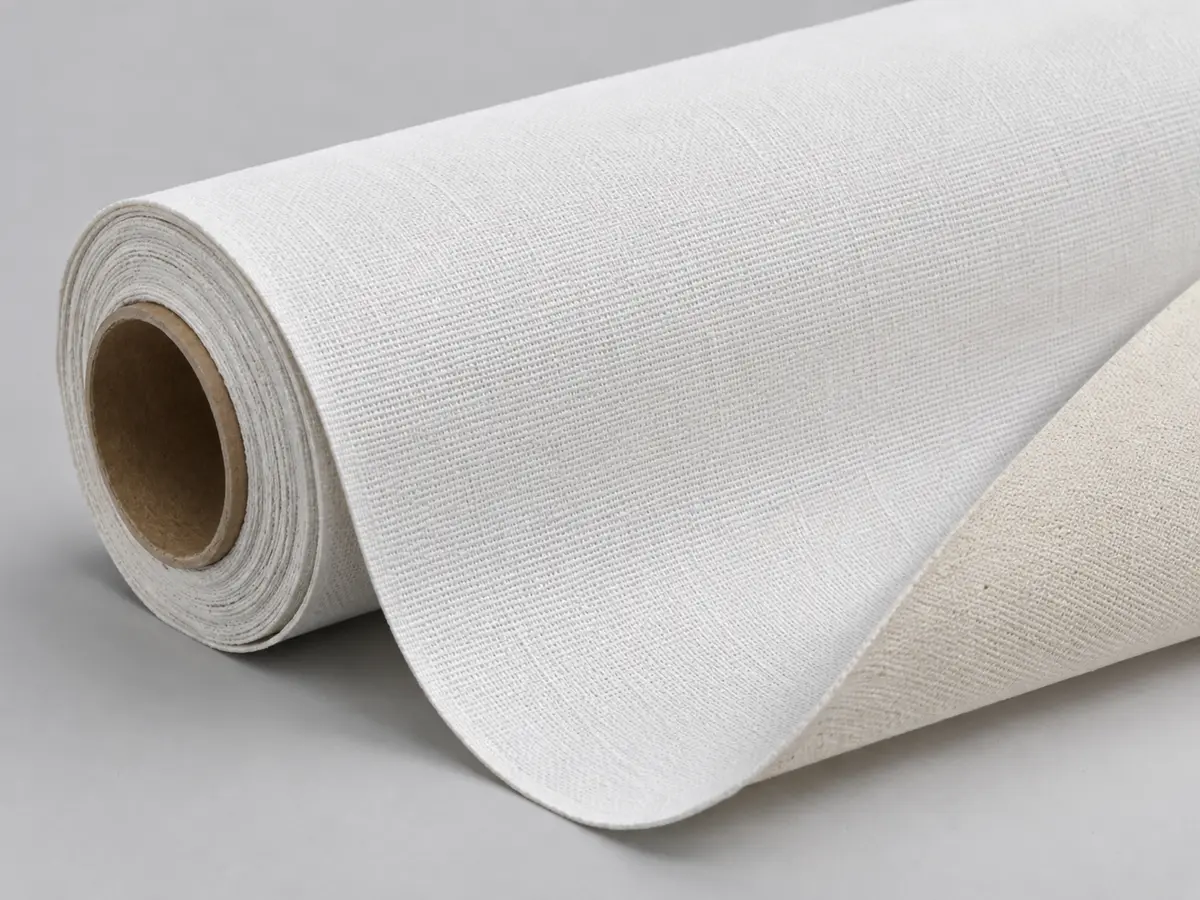
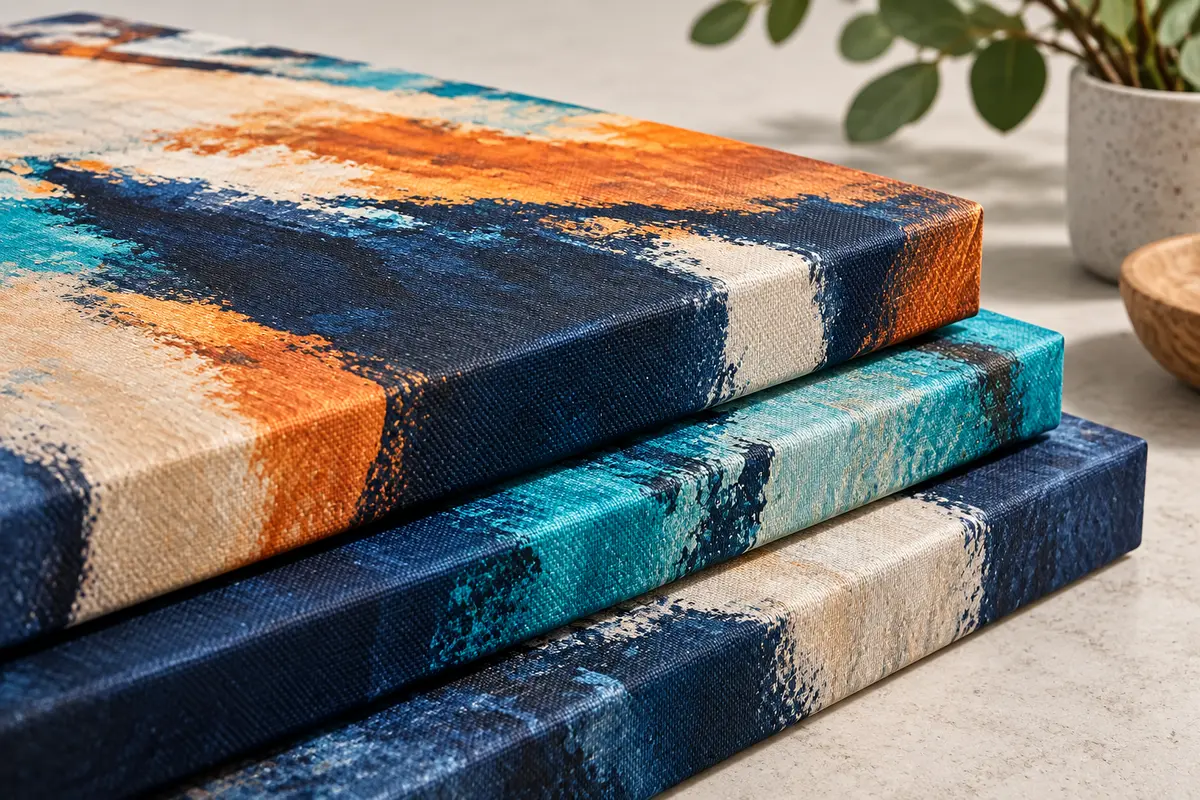
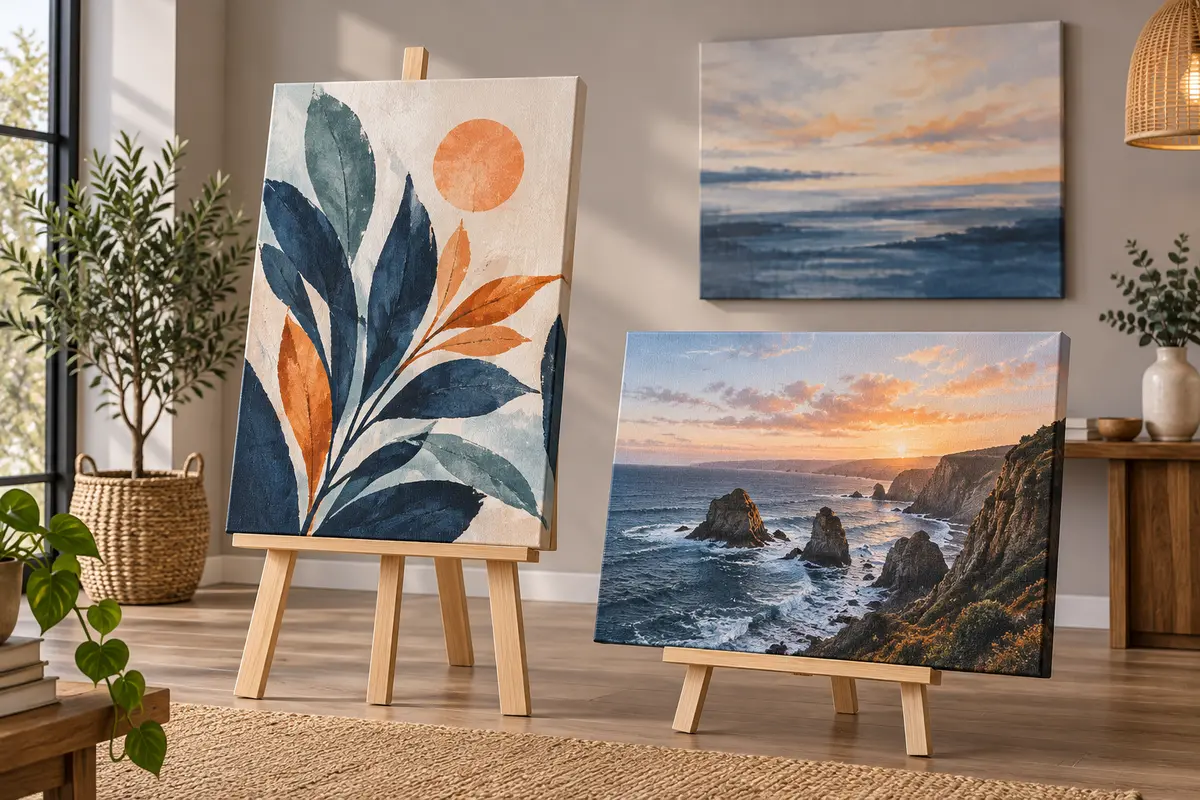
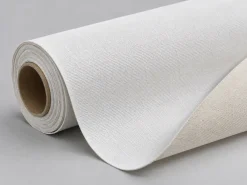
Canvas is canvas fabric coated with an ink-receptive layer, with a woven texture that looks very much like a painter's canvas. Prints on it lose the glossy look of photo prints and look closer to hand-painted art — which is why this material is widely used for wall art, café art and large family photos.
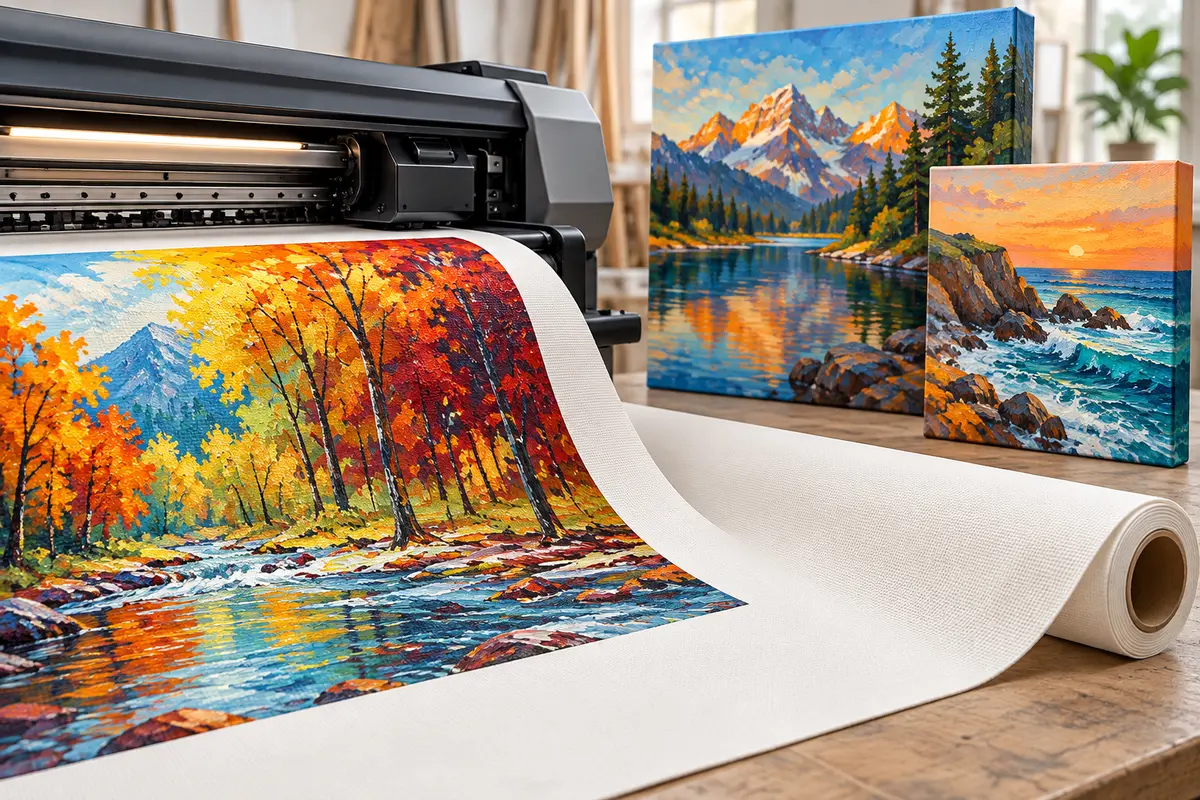
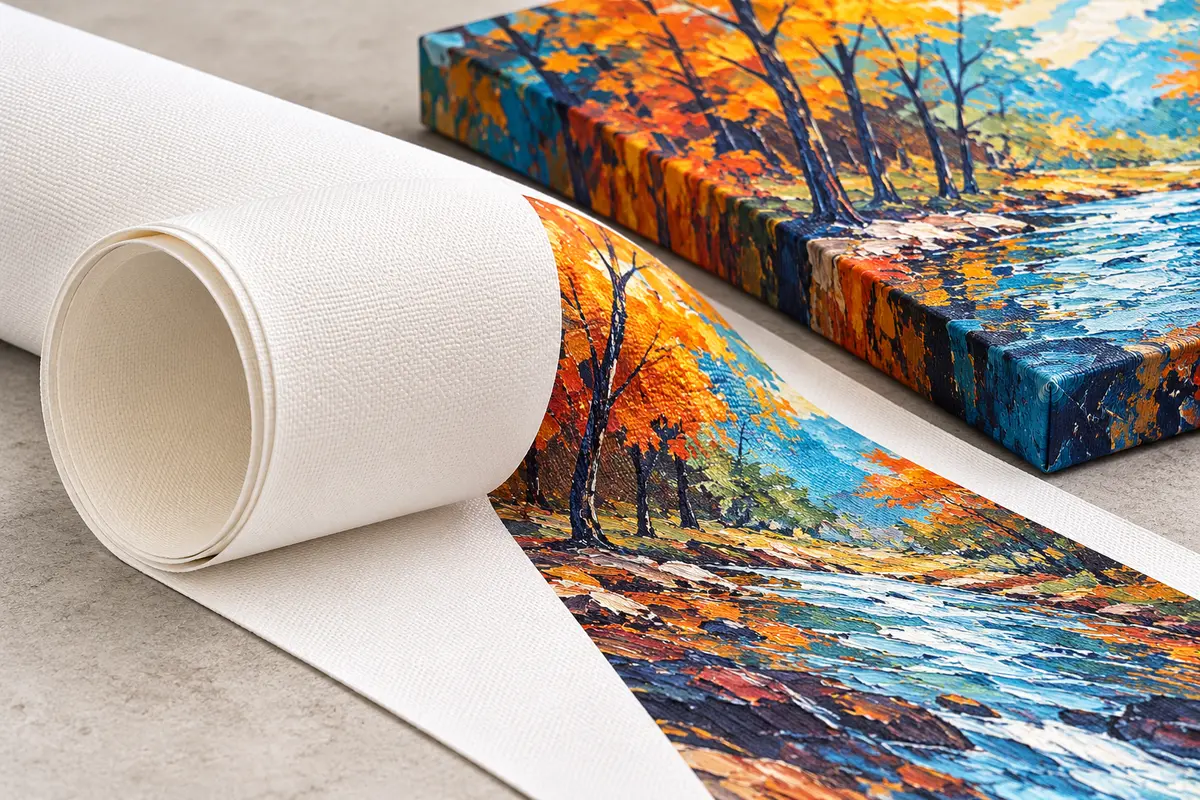
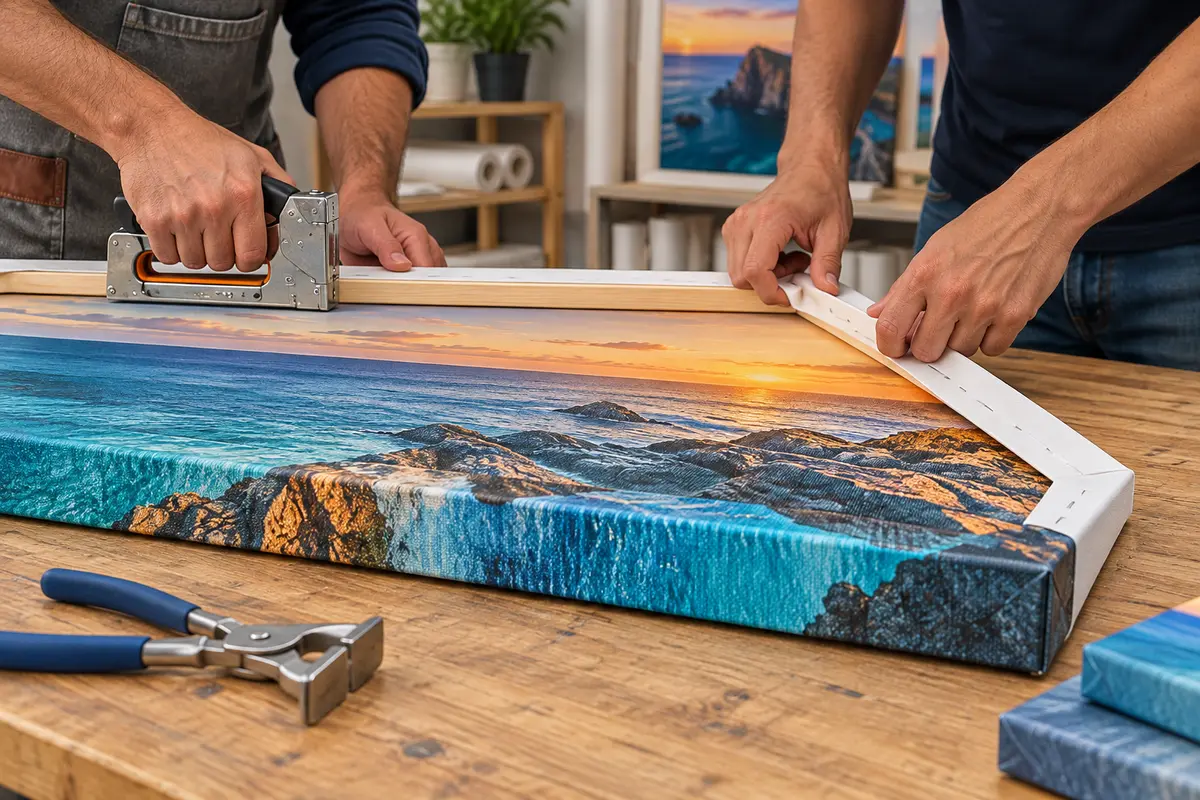
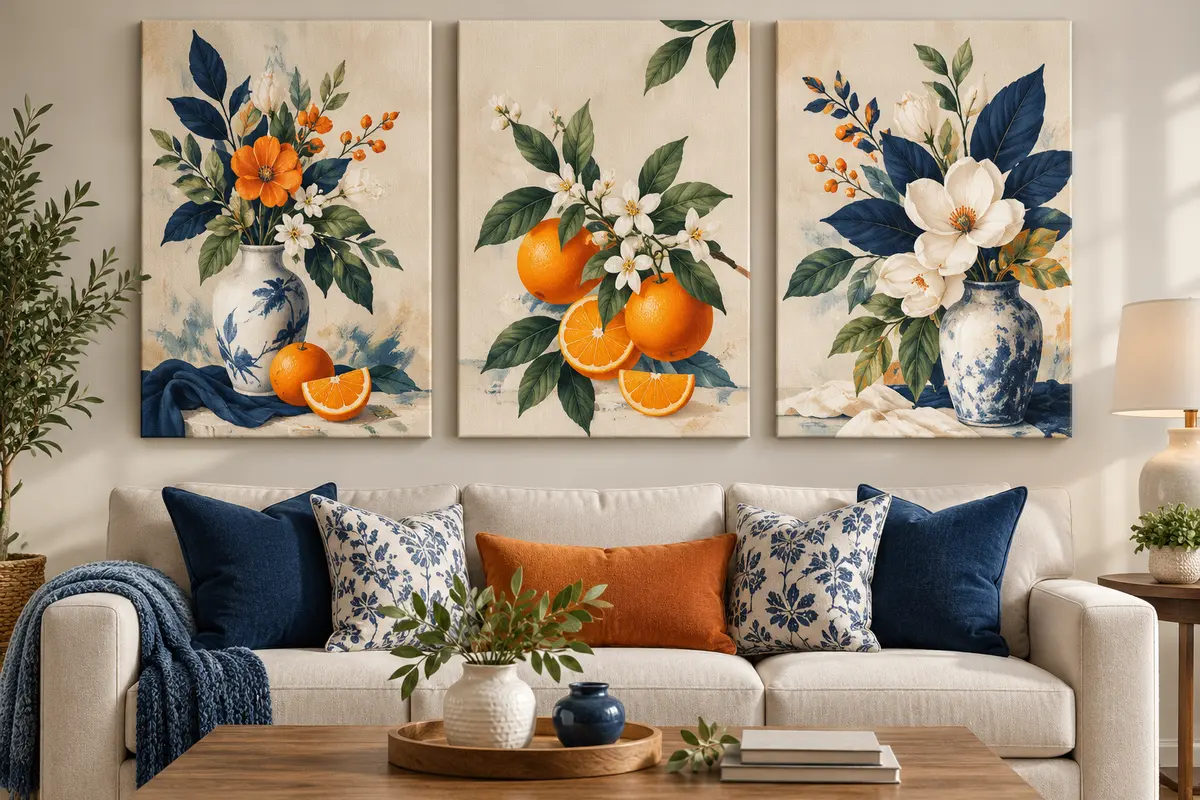
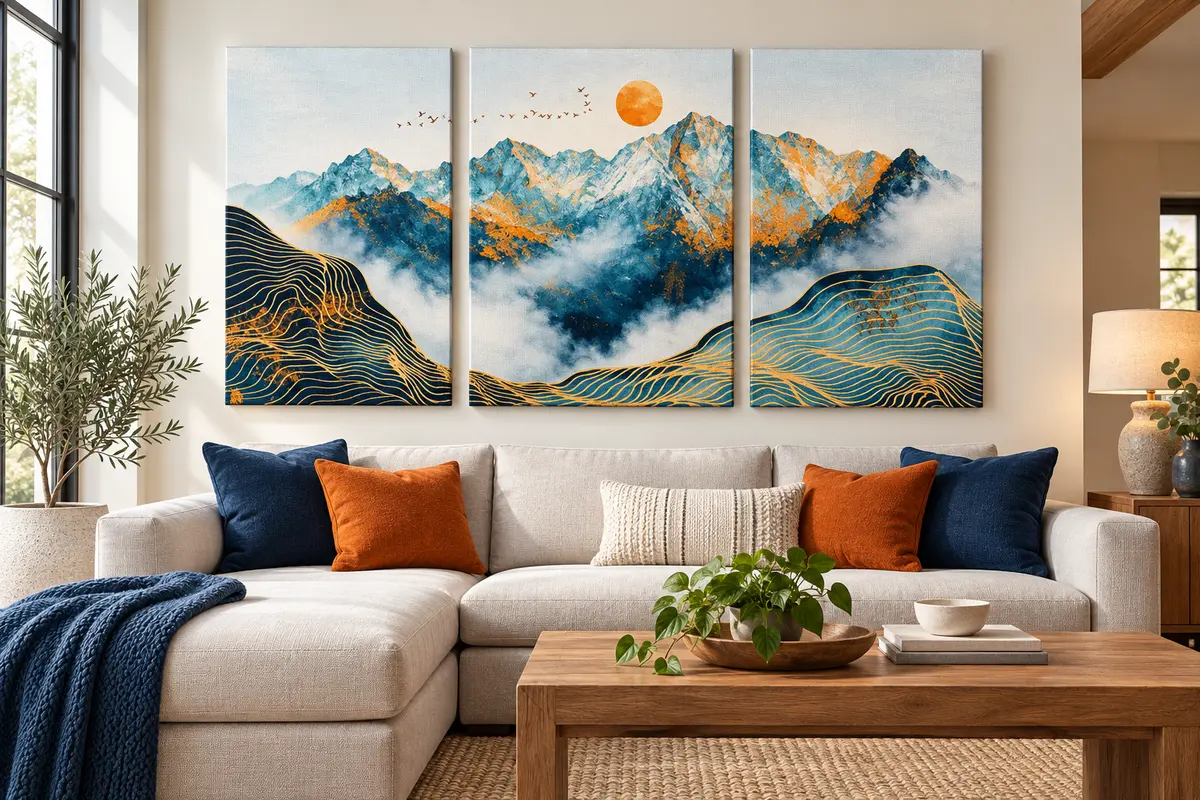
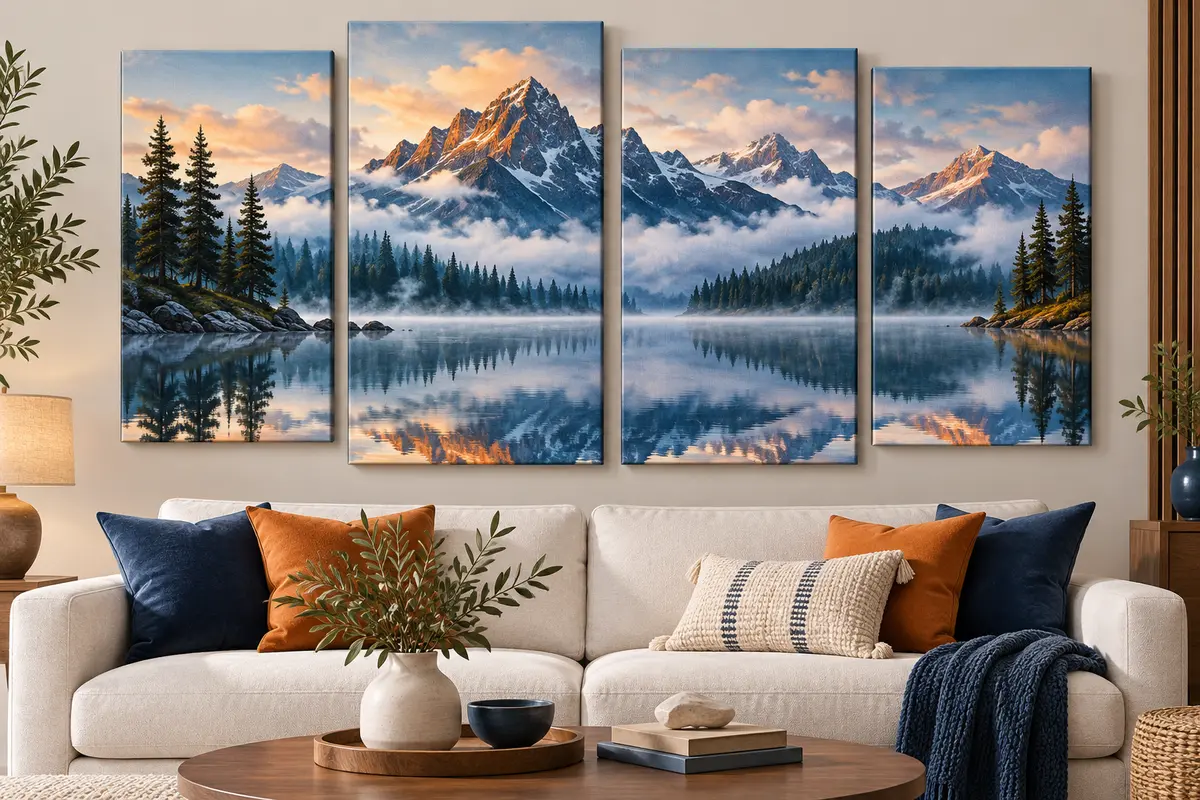
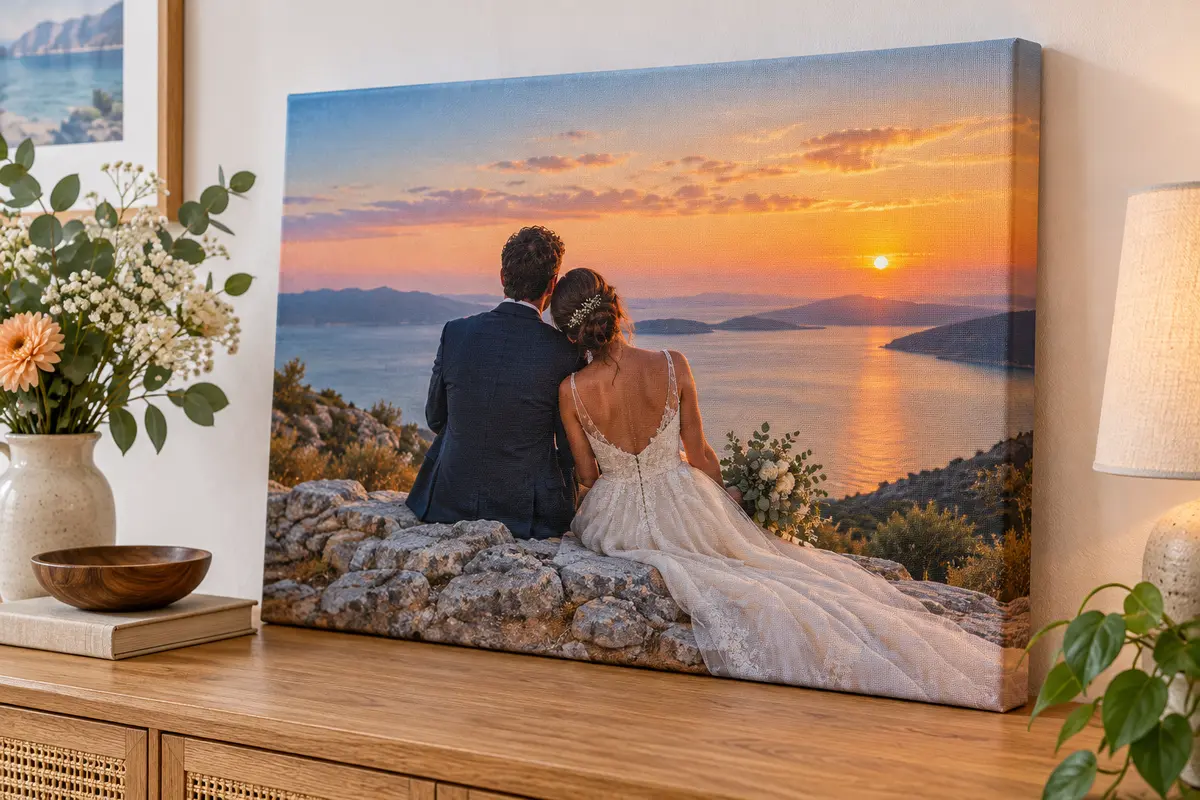
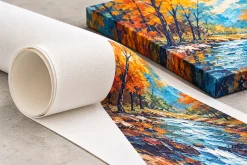
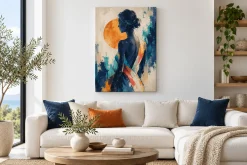
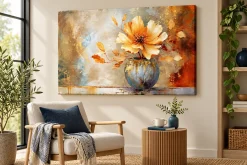
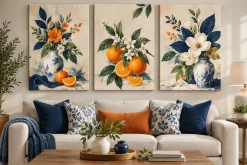
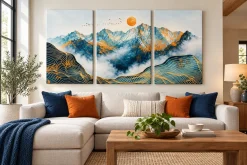
We print directly at our District 7 workshop, priced by the square meter, so any size is accepted, including odd sizes. Prints are delivered rolled for customers to frame themselves, or we stretch them on wooden frames ready to hang. Some images in this article are illustrations.
What Canvas material is made of
- Woven fabric base — threads woven horizontally and vertically create an even raised texture across the surface, giving prints their “painterly” character.
- Ink-receptive coating — applied to the fabric surface so ink doesn't spread along the threads, keeping images sharp despite the textured base.
It feels soft, can be folded and is much heavier than paper. The weave also helps hide small image flaws compared with printing on glossy photo paper .
Canvas widths and types we stock
| Type | Width | Commonly used for |
|---|---|---|
| Canvas 91cm | 91cm | Small and medium art, multi-panel sets |
| Canvas 126cm | 126cm | The most used width for living room art |
| Canvas 150cm | 150cm | Large art, wide landscape pieces |
| Silk fabric 126cm | 126cm | Smooth, soft-draping surface — photo backdrops, hanging flags |
The width here is the roll width; the other dimension is almost unlimited. Prints wider than the roll must be joined, so knowing the size in advance lets you pick the best-fitting width with the least waste.
Silk fabric is in the same group but serves a different purpose: no raised texture, soft draping and non-reflective, so it suits photo backdrops and hanging flags better than stretched art.
Printing Canvas with solvent ink or UV ink
- Solvent ink printing — smooth color transitions, suited to landscapes and portraits, where gradients make up most of the image.
- UV ink printing — ink adheres more firmly and the surface handles wiping better. Choose it when the print hangs where it's often touched or needs regular cleaning.
Tell us where the art will hang and we'll choose for you: indoors with little touching, solvent ink is enough; in shop corridors or busy areas, UV is more durable.
Stretched on a wooden frame or left rolled
This is the choice that most affects how the file is prepared:
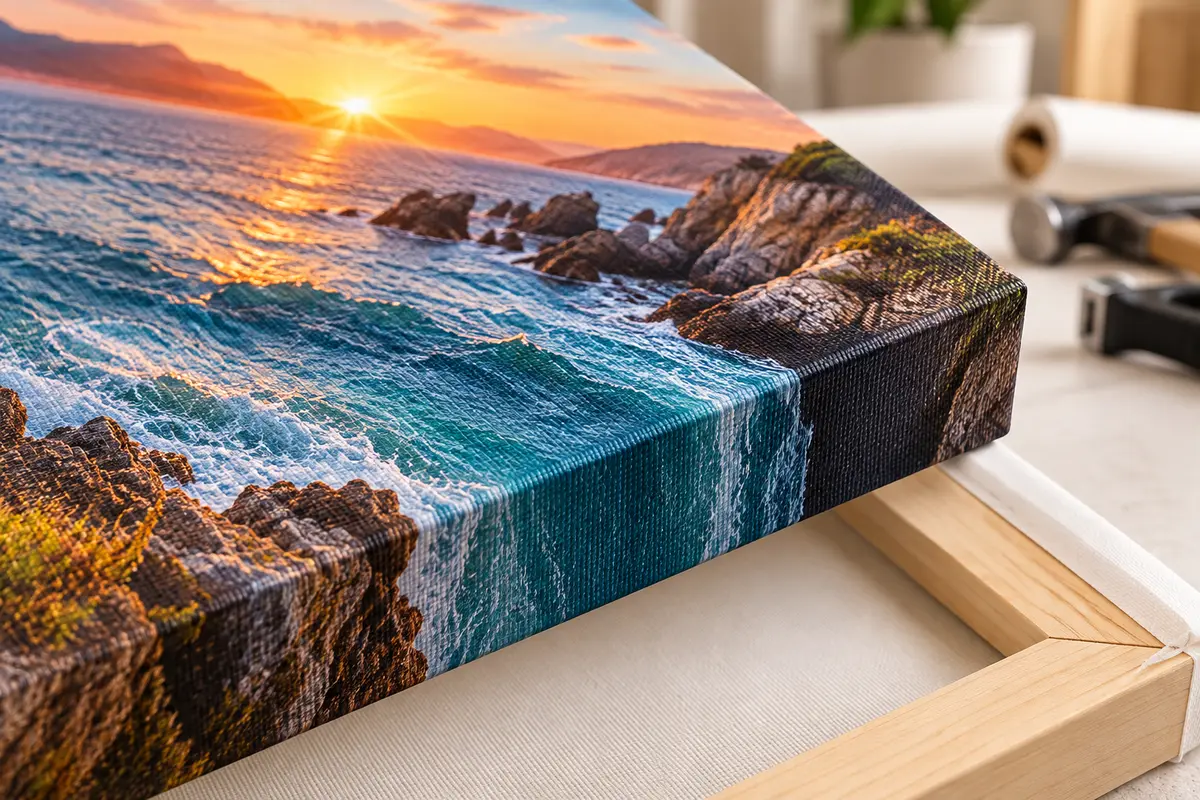
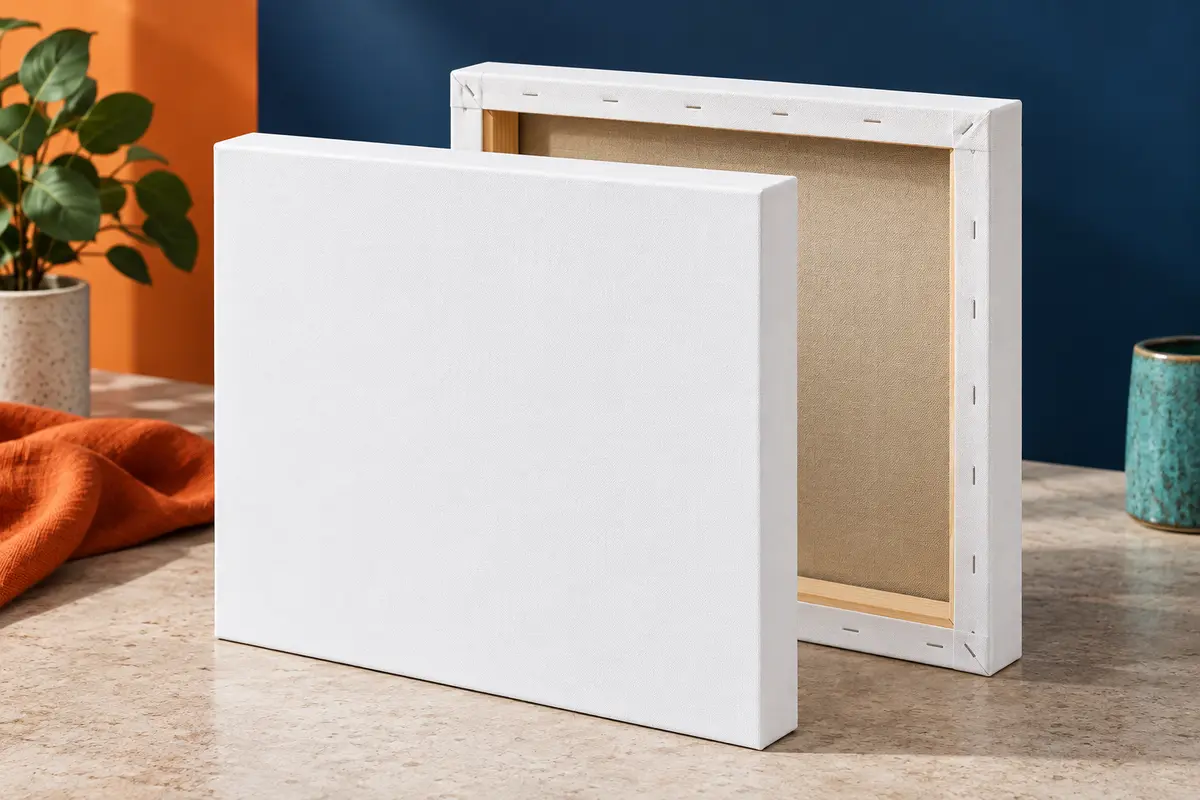
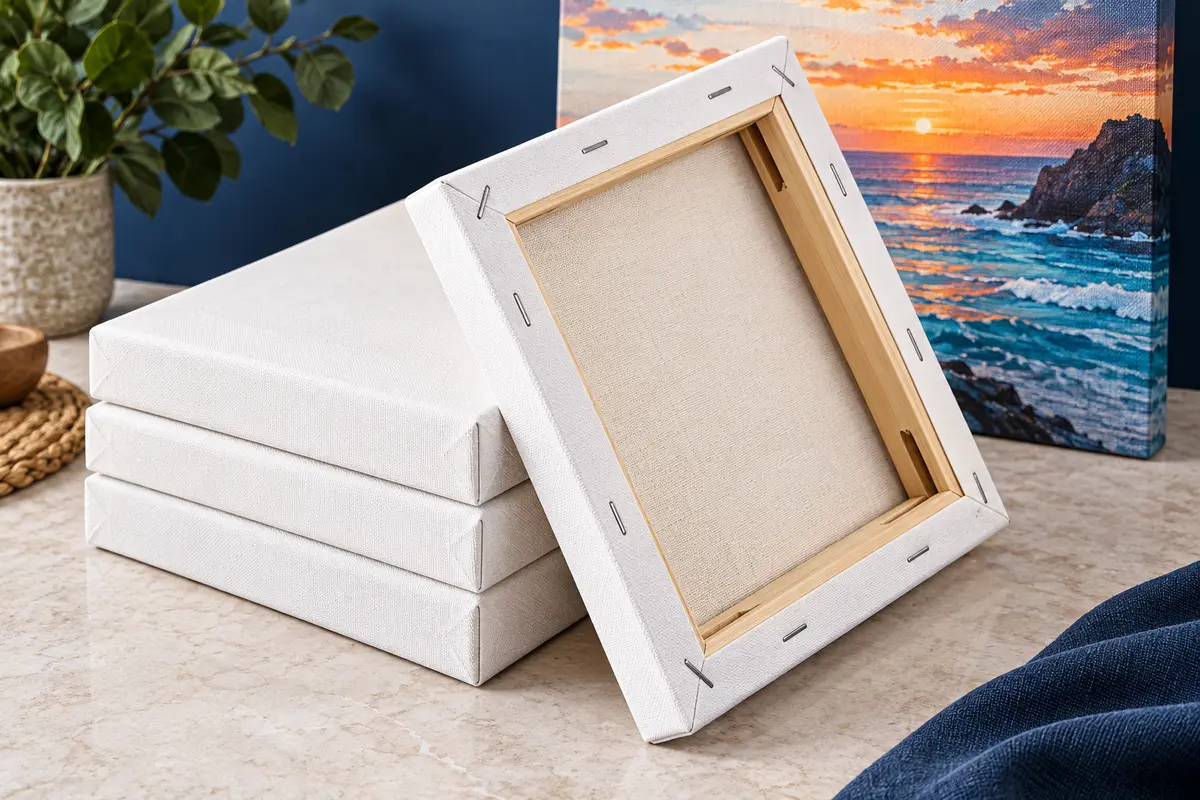
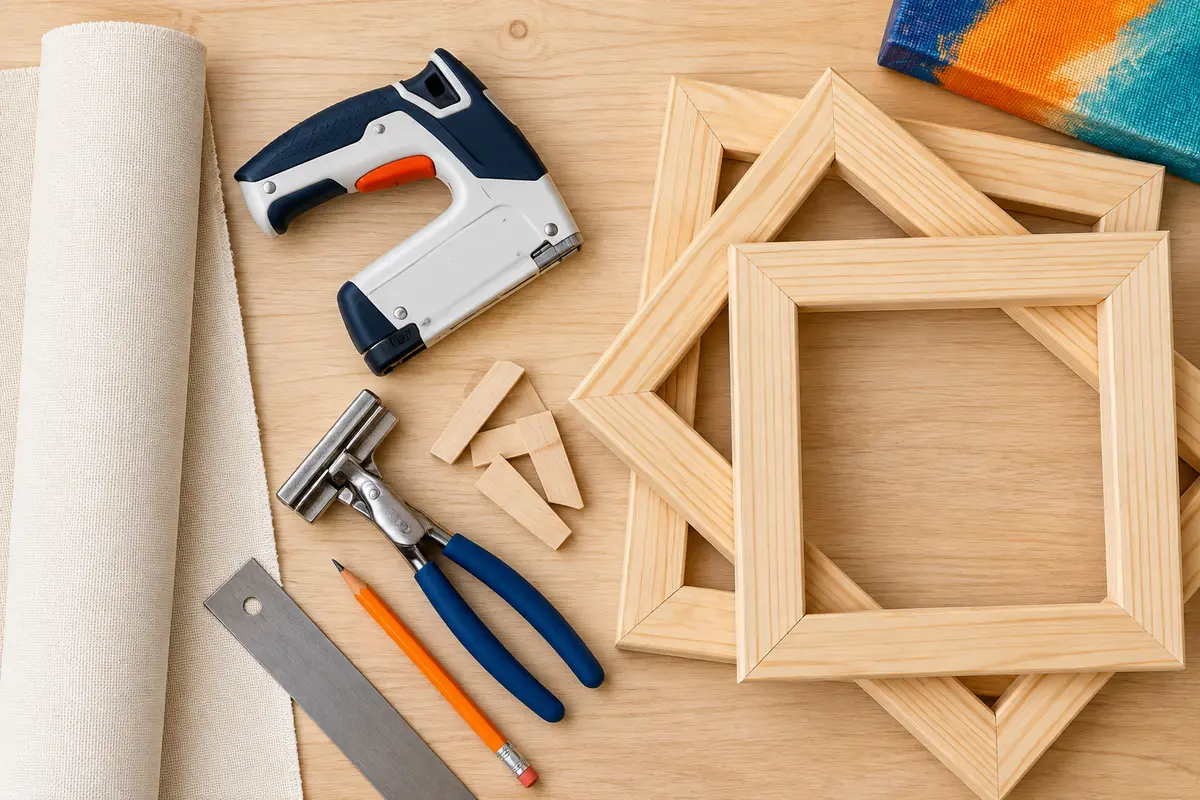
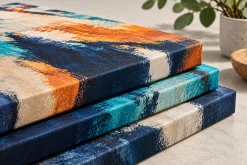
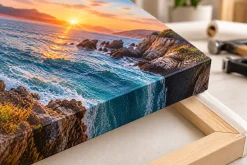
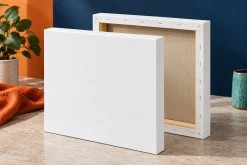
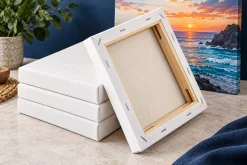
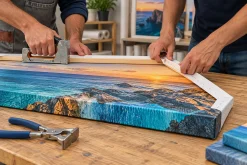
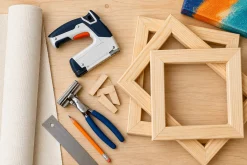
- Stretched on a wooden frame — the fabric is pulled taut and stapled to the frame, with the fabric wrapping around the sides becoming the art's border. Ready to hang, no glass needed, looks substantial.
- Rolled — delivered as a flat print for customers to frame as they like or mount on a board. Compact for long-distance shipping and lower cost.
The most important note: when stretched, the fabric wrapping around the sides loses about 3–4cm on each edge. Key details — faces, text, logos — must be at least 5cm from the edge, or the design should leave background area to wrap around the frame. If you want stretching, state it clearly when ordering.
What Canvas is used for
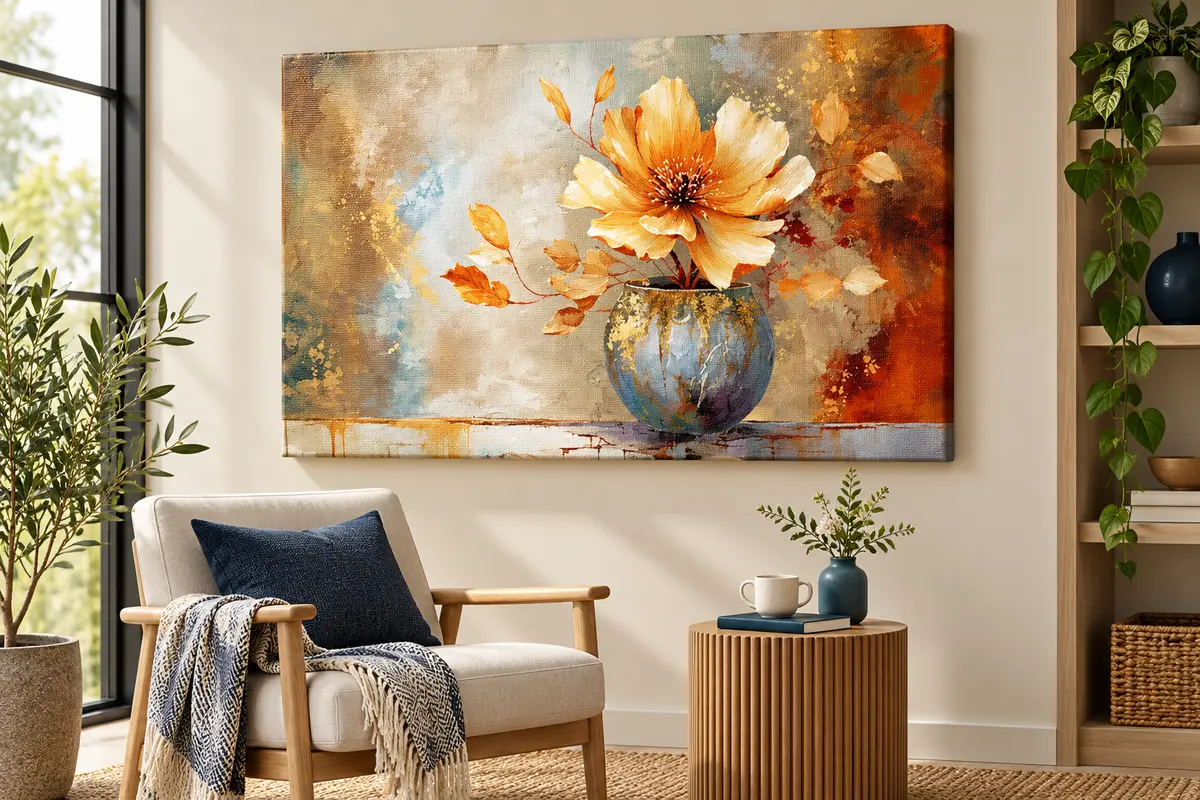
- Wall art for homes — living rooms, bedrooms, reading corners.
- Shop decoration art — eateries, cafés, hotels, spas.
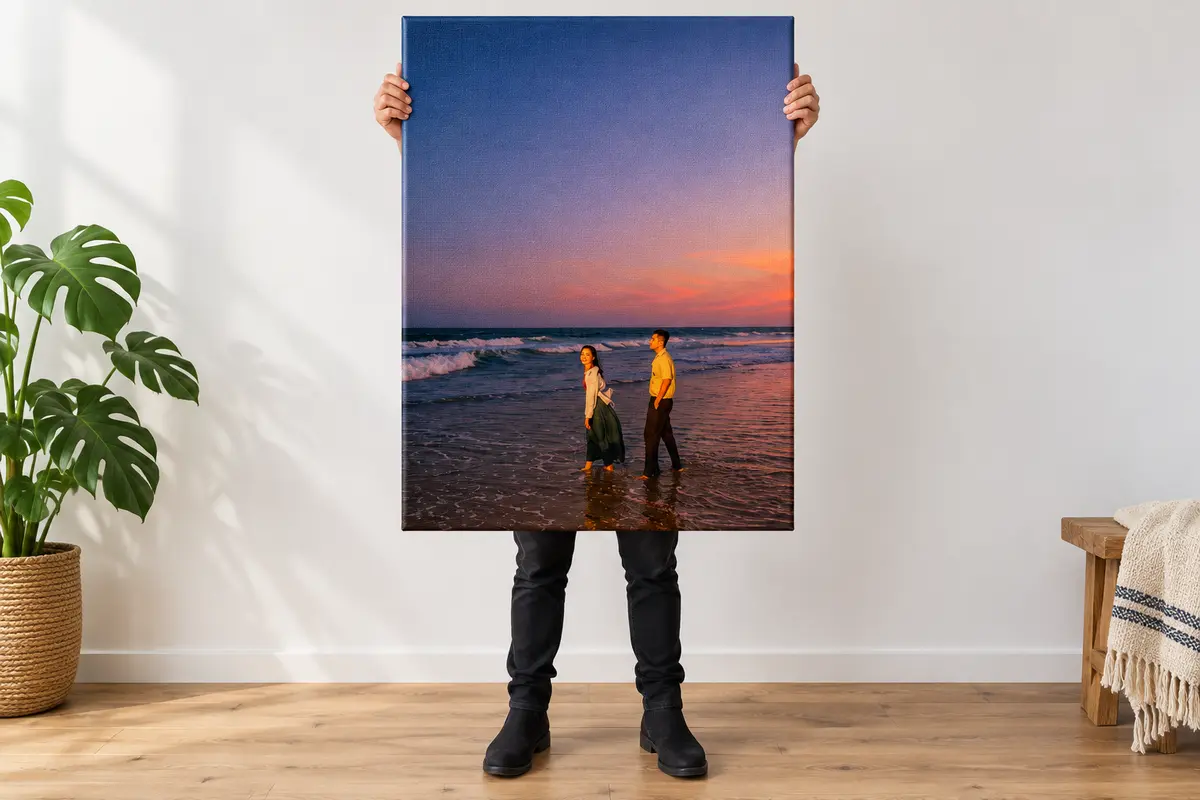
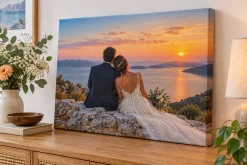
- Large family and wedding photos — instead of traditional glass-framed photos.
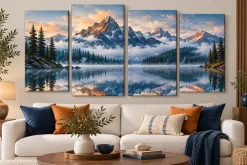
- Multi-panel sets — three or four panels forming one continuous image for wide walls.
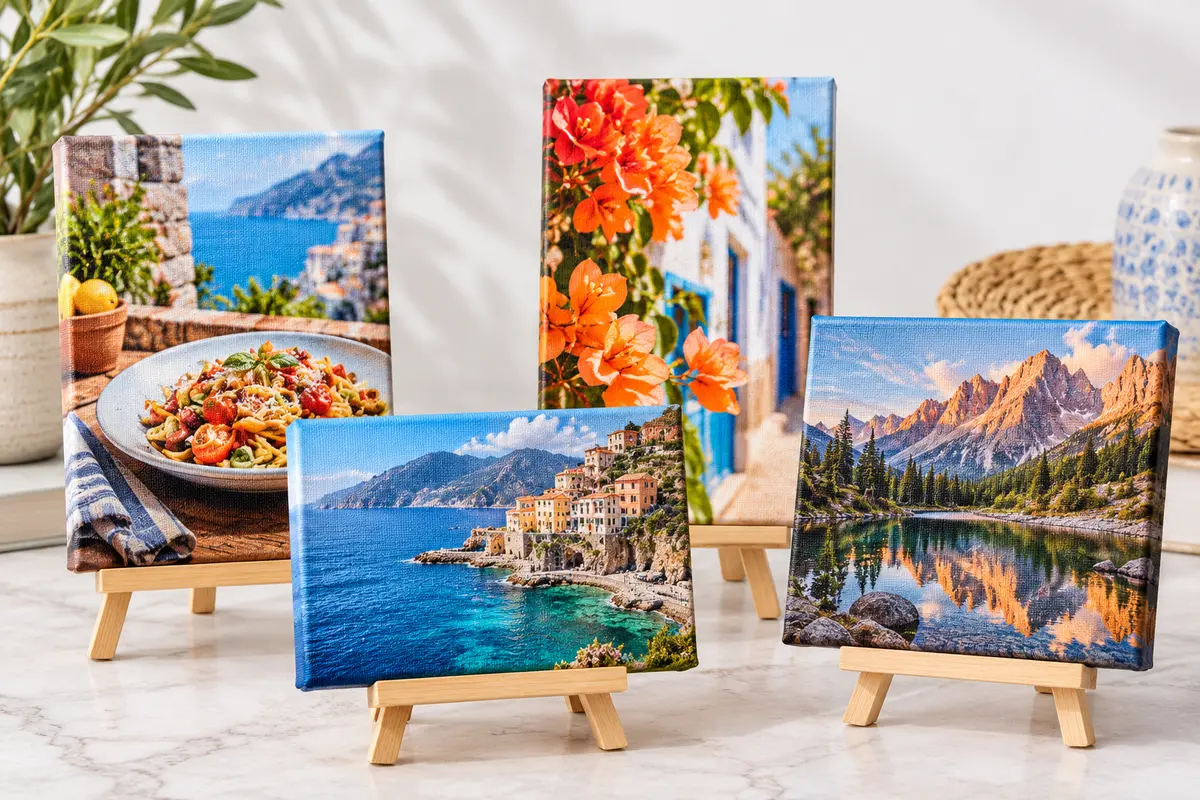
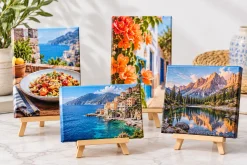
- Mini desk art — desks, reception counters, gifts.
- Photo backdrops and hanging flags — using Silk fabric instead of the textured type.
For a finished piece ready to hang, see the page Canvas Prints — the same material, but ordered per piece rather than per square meter.
Suggestions by space
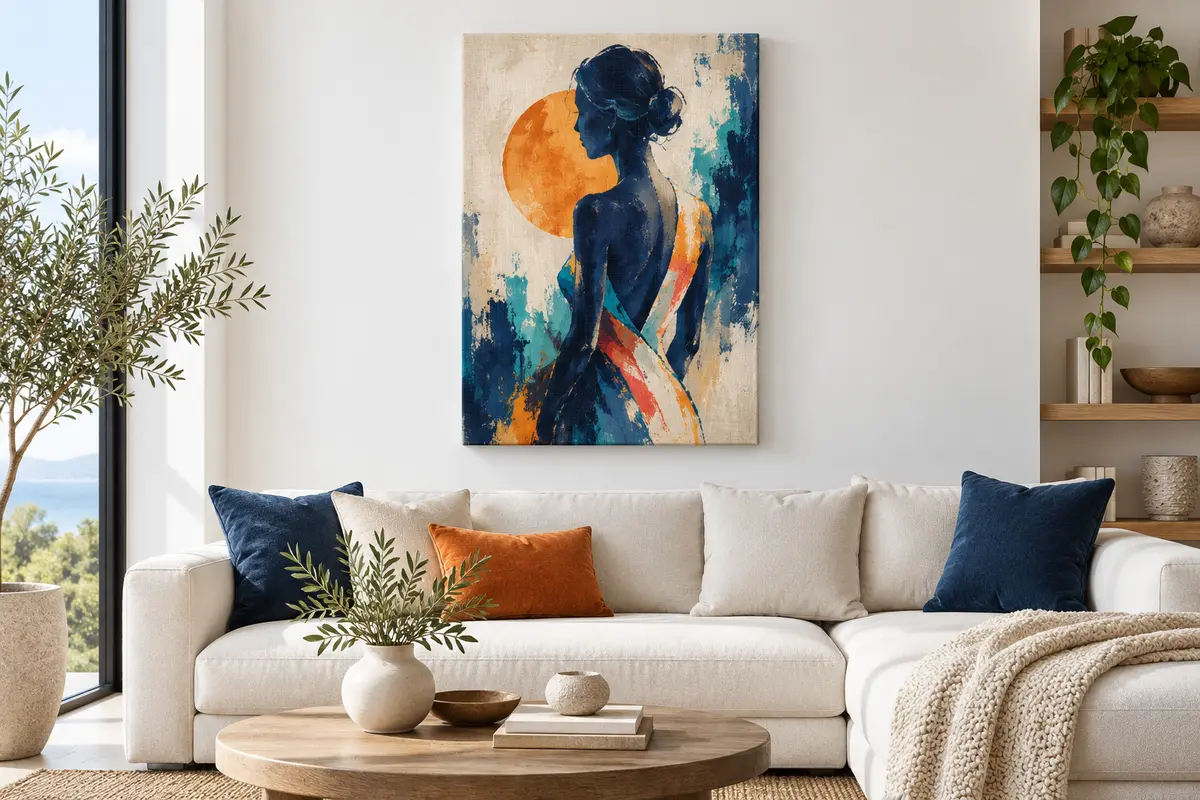
- Homes — one large piece above the sofa or a set of three above the bed. Family photos on Canvas feel warmer than glass-framed photos, with no risk of breakage around small children.
- Cafés and eateries — matching art sets along long walls, changed seasonally. Choose UV ink, since shop art often gets touched and wiped.
- Hotels and homestays — landscape art in rooms; order many at once so colors match between rooms.
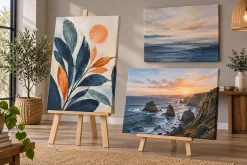
- Spas, clinics — botanical or light-toned abstract art; the Canvas surface doesn't reflect light, so there's no glare when lying down and looking up.
- Offices, studios — project photo sets or brand imagery, and mini desk art as gifts for clients.
Choosing a size for your wall
| Placement | Popular size | Notes |
|---|---|---|
| Above a living room sofa | 120–160cm wide | About two thirds the length of the sofa |
| Above the bed | 100–140cm wide | One large piece or a set of three |
| Narrow walls, corridors | Portrait 40 × 60 or 50 × 70cm | Portrait art makes ceilings feel higher |
| Cafés, long walls | Sets of 3–4 panels | Continuous image or same theme |
| Desks, counters | Mini 20 × 30cm | With a stand, no wall drilling needed |
The center of the art should be at eye level, about 150cm from the floor; multi-panel sets usually leave 3–5cm between panels. A way to test before deciding: cut newspaper to the exact size, tape it to the wall temporarily, and step back to look for a few days.
Preparing photos and files
Prints are viewed from one to two meters away, so the original photo must be large enough:
- A 60 × 90 cm piece needs a photo of at least about 3000 × 4500 pixels to print smoothly.
- Photos from modern phones still work if well exposed and without digital zoom.
- Images downloaded from the internet, screenshots or photos sent through messaging apps are usually compressed and will pixelate when enlarged.
- Design files: PDF or AI, CMYK color mode, at least 150dpi at actual size (300dpi for small sizes).
- Leave 3mm bleed on each edge; sizes from 100cm up need a 5cm safe area; convert text to outlines before sending.
Not sure your photo is sharp enough? Send it to us first and we'll tell you the maximum size it can be printed at. No design file yet? Add the design service.
How a Canvas order works
- Send photos and size — the larger the original photo the better, with the width × height and hanging location.
- We check the photo — checking resolution and telling you the maximum size it can be printed at while staying smooth.
- Approve the layout — we send a preview file, showing which parts will wrap around the frame if stretching is ordered.
- Printing and finishing — roll printing, drying, cutting to size; framing and stretching if ordered.
- Delivery or pickup at the workshop — rolled prints go in paper tubes, stretched pieces are wrapped in protective film with corner guards.
For orders of several pieces on the same theme, printing in one run gives matching colors across pieces; printing a few at a time makes slight tonal differences hard to avoid.
How to calculate area and order
- Calculate area: width (cm) × height (cm) ÷ 10,000. A 60 × 90 cm piece is 0.54 m².
- Choose the printing technology — solvent ink or UV ink — in the options above.
- Enter the m² in the quantity box; decimals such as 1.2 or 1.5 are accepted.
- Write the width × height and whether stretching is needed in the order notes.
- Send the original photo or design file with the order.
Minimum chargeable area is 0.5 m² per piece. For multi-panel sets, add up the total area and enter it once, listing each panel in the notes as “panel 1: 40 × 60, panel 2: 40 × 60”.
When ordering stretching, the measurements you send are taken as the front size of the art after stretching, and we add the fabric wrapping around the sides ourselves. If you mean it differently, state it clearly in the notes so we're on the same page.
For urgent orders, send photos in the morning and state the time you need them; rolled Canvas prints turn around faster, while stretched pieces need time for the glue and fabric to settle, so they can't be rushed too much.
Common mistakes when ordering Canvas prints
- Sending photos that went through messaging apps — heavily compressed, so large prints look grainy right away.
- Forgetting the fabric that wraps around the frame — faces or text near the edge get wrapped behind the frame.
- Cropping to the wrong ratio — a 3:2 photo forced into a square frame loses both sides; tell us the desired ratio so cropping is intentional.
- Ordering multi-panel sets without stating the hanging gap — for continuous-image sets, the gap between panels must be accounted for when cutting the file.
- Choosing a size by feel — measure the wall first and use about two thirds of its width as a guide.
Caring for Canvas prints
- Dust with a dry cloth or soft brush; don't use a soaking wet cloth as water seeps into the weave.
- Avoid hanging in direct sunlight all day; colors will gradually fade like any print.
- Don't hang in bathrooms or constantly humid places — both fabric and wooden frames absorb moisture.
- Unframed rolled prints should be rolled with the printed side out, kept in a paper tube, never folded.
- Wooden frames can slacken over time; check the tension of large pieces every few years.
How solvent-ink Canvas and UV Canvas printing differ
Solvent-ink Canvas prints give soft color transitions and keep the natural fabric feel, suited to landscapes, portraits and indoor art. The ink soaks into the fibers, so it doesn't crack at the folded corners when stretched.
Conversely, UV Canvas printing dries instantly under UV light, with the ink sitting on the surface, so colors are more vivid and more moisture-resistant — suited to art hung in sunny or humid places such as cafés, corridors and semi-outdoor spaces. With UV printing, avoid sharp folds since the ink layer is thicker.
Canvas printing prices per m² follow area tiers, and decimals are accepted. Send the size of the wall to be decorated, and we'll work out the art size and quote both ink options for comparison before you decide.
Frequently asked questions
Do Canvas prints need glass?
No. The fabric surface is coated, so it resists dust and gentle wiping; this keeps the art lighter and free of the glare of glass-framed pictures.
How much of the image does stretching take?
About 3–4cm on each side wrapping around the frame edge. Leave background area around the edges when designing, or ask us to extend the file.
Can you make multi-panel sets?
Yes. We cut one large image into several continuous panels, or print several images on the same theme. Tell us the number of panels and the intended hanging gap.
Can it hang outdoors?
Not recommended. Fabric and wooden frames both absorb moisture, and sun and rain slacken the fabric and make the frame moldy. For outdoors, use Hiflex banner or alu.
Can I order a single board?
Yes. Priced by actual square meters, with a minimum of 0.5 m² per piece.
How soon can I pick it up?
Rolled prints are usually ready the same day if the file is ready. Stretched pieces need extra time for framing and stretching; we give a specific date when quoting.
Hanging Canvas art on the wall
Wooden frames with stretched Canvas are lighter than glass-framed art of the same size, so hanging is much simpler. In most cases one or two anchor points are enough.
- Panels under 60cm: one nail or one 5kg adhesive wall hook.
- Panels from 60cm to 120cm: two anchor points spaced two thirds of the width apart.
- Panels over 120cm: use a horizontal hanging rail fixed to the frame to spread the load evenly.
- Plasterboard walls: screw into the studs or use butterfly anchors, don't nail directly.
- The center of the art should be about 145cm from the floor.
After hanging, push gently up under the frame edge; the Canvas face should be flat without ripples. If the print slackens a little after a few months due to humidity changes, tapping wooden wedges into the four frame corners tightens it again.
Combining multi-panel Canvas sets
One image split into several panels hung side by side can cover a wide wall without printing one oversized piece. It's also easier to transport and hang.
- Sets of three equal panels: 3cm to 5cm gaps between panels.
- Sets of three unequal panels: a taller middle panel with shorter, narrower side panels.
- Sets of five panels: the total width should be about two thirds of the wall width.
- When splitting the image, leave extra for wrapping each panel's frame rather than splitting exactly at the edges.
- Key details of the image should avoid falling on the cut line between two panels.
Send the original photo and wall measurements, and we'll split the panels and send a preview layout. Printing the whole set at once gives consistent colors across all Canvas panels, without tonal shifts.
Order large-format Canvas printing at In Quảng Cáo Q7
Send the original photo with the desired size and tell us whether you need it stretched or rolled; we'll check the photo's sharpness and then quote. Contact 0866.511.099 or drop by the workshop at 49 Mai Van Vinh, Tan Hung Ward, Ho Chi Minh City. Production & delivery: 8:00–12:00 & 13:00–18:00 Mon–Sat (closed Sun) · Consultation & orders: 8:00–12:00 & 13:00–20:00 Mon–Sat; 14:00–19:00 Sun.
| Material | Canvas fabric |
|---|---|
| Printing technology | Canvas, Solvent Ink, Canvas, UV Ink |
| Made at | In Quảng Cáo Q7 workshop – 49 Mai Van Vinh, Tan Hung Ward, Ho Chi Minh City |
| Origin | Vietnam |
| Status | Made to order |
| Warranty | 24 hours from receipt: if you find a printing error or a difference from the approved file, let us know and we will reprint free of charge. |
| Price excl. VAT | 89.000 ₫ – 139.000 ₫ |
| Price incl. 8% VAT | 96.120 ₫ – 150.120 ₫ |
Ordering
Three ways to order: choose the specifications and quantity on the website and click Place order; message us on Zalo or call 0866.511.099; or visit the workshop to see material samples at 49 Mai Van Vinh, Tan Hung Ward, Ho Chi Minh City. During working hours, In Quảng Cáo Q7 replies within about 30 minutes. Most products have listed prices by size, material and quantity – prices exclude 8% VAT.
→ Online ordering guide · Quick quote
Sending design files
PDF or AI preferred, CMYK color mode, 300dpi for small formats, 3mm bleed. Send via Zalo, email inquangcaoq7@gmail.com, the form on our website, or a Google Drive link for large files. We check your file for free before printing; if you have no file yet, In Quảng Cáo Q7 can help with the design.
→ Design file submission guide
Payment
Bank transfer, QR code or cash at the workshop. Orders are confirmed and scheduled for production after payment; after transferring, send a photo of the receipt with your phone number via Zalo. Transfer note: Your name – Phone number – Product.
→ Payment guide
Timing & delivery
Completion time is shown on each product, counted from receipt of a print-ready file and payment confirmation. Pick up at the workshop Monday – Saturday, 8:00–12:00 and 13:00–18:00; urgent orders within Ho Chi Minh City delivered within 2 hours; other provinces via bus courier or express delivery. On receipt, please check quantity, size, material and condition of the products.
Order tracking
Enter the phone number used when ordering to see your orders from the last 90 days and their status: Unpaid → Printing → Printed → Delivering → Invoiced → Completed. For orders placed via Zalo, send your name and phone number to get progress updates.
→ Order tracking
E-invoice (VAT)
In Quảng Cáo Q7 issues 8% VAT e-invoices. Provide the company name, tax code, address and email within 24 hours of ordering; the invoice is issued within 24 working hours and sent by email, and cannot be changed once issued.
→ E-invoice (VAT) details
Misprints – reprints
Products that differ from the order or the approved proof are reprinted free of charge – report within 24 hours with photos. Spelling mistakes in a file you approved are not covered by free reprints.
→ Frequently asked questions (FAQs)
Be the first to review “Canvas”
Related products

Wall art
Reviews
There are no reviews yet.