




































































Our commitments
Printed directly in our workshop, no middlemen
Digital and offset presses right in our workshop. You deal directly with the people who make your order, so every request is understood and handled immediately.
Fast production, many orders ready the same day
Business cards, documents, decals, standees… printed and delivered the same day. See production times for each product group.
One point of contact, all-in-one from file to finished product
Quotes, orders, Zalo messages, delivery booking and invoicing run automatically on one system. Design – printing – finishing – installation all happen in-house, so you don't have to go anywhere else.
Full VAT invoices, issued fast
E-invoices issued right after delivery, with urgent support for businesses that need documents early for payment.
Light Boxes
Contact us for a quote
Advertising light box fabrication: vacuum-formed, ultra-thin, and LED raised letters. Send a request for a quote within 30 minutes.
Quote-on-request product
This item is quoted based on actual size, materials and quantity. Send a request and In Quảng Cáo Q7 will reply within 30 minutes during office hours.
When messaging, please include size · quantity · date needed and your design file if you have one.
Advertising Light Boxes – Vacuum-Formed, Ultra-Thin, Acrylic Face With LED Lighting
Light boxes is an advertising sign with lights inside; the sign face transmits light, so it can be read from afar at night — something unlit signs can't do. In Quảng Cáo Q7 makes vacuum-formed light boxes, ultra-thin models, round and double-sided models for shops, eateries, spas, banks and showrooms, from mockup design to installation on site. Workshop at 49 Mai Van Vinh, Tan Hung Ward, Ho Chi Minh City. This article uses some illustrative images.
Tóm tắt nhanh: hộp đèn quảng cáo
- Dùng cho: mặt tiền cửa hàng, showroom, quầy thu ngân, hành lang, khu thực đơn và bảng dịch vụ. Gắn trên mặt tiền, treo vuông góc mặt tiền, gắn tường trong nhà hoặc đặt sàn có chân đế.
- Các loại xưởng làm: hộp đèn hút nổi (mặt Mica hút tạo khối), hộp đèn siêu mỏng gắn tường trong nhà, mẫu tròn và mẫu tạo hình theo dáng logo, hộp đèn hai mặt. Nhận cả bảo trì, thay LED và nguồn cho hộp đèn cũ khi khung còn tốt.
- Cần gửi để báo giá: ảnh chụp thẳng mặt tiền; chiều ngang và chiều cao chỗ định gắn (áng chừng cũng được, khi chốt xưởng đo lại); logo và tên muốn in (không có file gốc thì xưởng vẽ lại theo ảnh); dạng muốn làm; mốc thời gian cần xong. Gửi qua Zalo hoặc gọi 0866.511.099, xưởng báo giá trong 30 phút giờ hành chính.
- Giá phụ thuộc: kích thước mặt biển, kiểu biển, vật liệu mặt và khung, hệ đèn LED và nguồn, cách gắn và độ cao thi công, số lượng làm cùng đợt.
- Thời gian: báo trước mốc cần xong khi hỏi giá, nhất là khi có ngày khai trương cố định, để xưởng xếp lịch sản xuất và lắp đặt.
- Khu vực: thuận tiện nhất khu Quận 7 cũ (Tân Hưng, Tân Mỹ, Tân Thuận, Phú Thuận), Nhà Bè, Quận 4, Quận 8; các khu vực khác trong TP. Hồ Chí Minh vẫn nhận, chi phí đi lại tính theo quãng đường.
- Ảnh trên trang: có sử dụng một số ảnh minh họa; ảnh hộp đèn xưởng đã làm xem ở mục “Hộp đèn mica dạng khối — ảnh thực tế” và các bài công trình thực tế cuối trang.
- Liên hệ: In Quảng Cáo Q7 on Zalo or 0866.511.099. Tư vấn và nhận đơn 8:00–12:00, 13:00–20:00 thứ Hai – thứ Bảy, 14:00–19:00 Chủ nhật. Xưởng tại 49 Mai Văn Vĩnh, P. Tân Hưng, TP. Hồ Chí Minh.
Common light box types
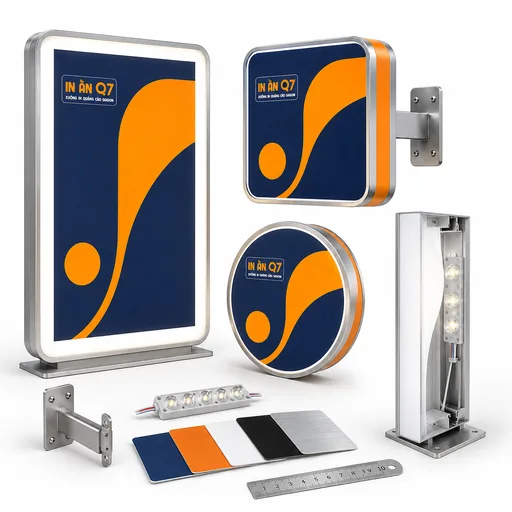
- Vacuum-formed light box — the acrylic face is vacuum-formed into shape, with letters and logos rising off the surface. It looks solid, suiting shop frontages and showrooms.
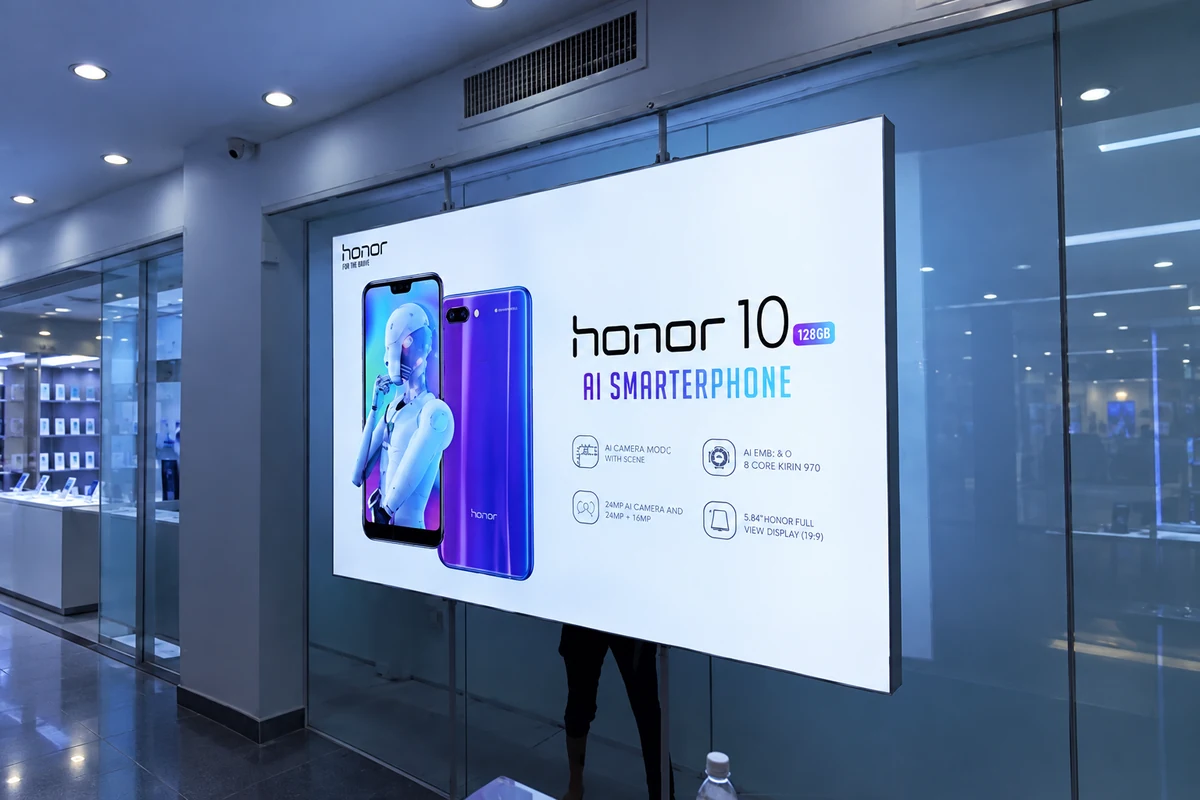
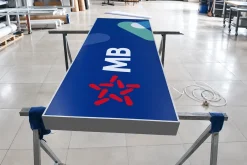
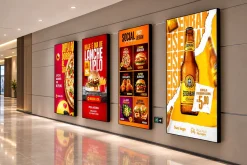
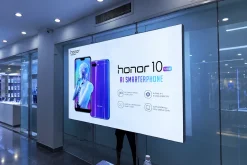
- Ultra-thin light boxes — a slim frame just a few centimeters thick, mounted on indoor walls. Suits cashier counters, corridors and menu areas.
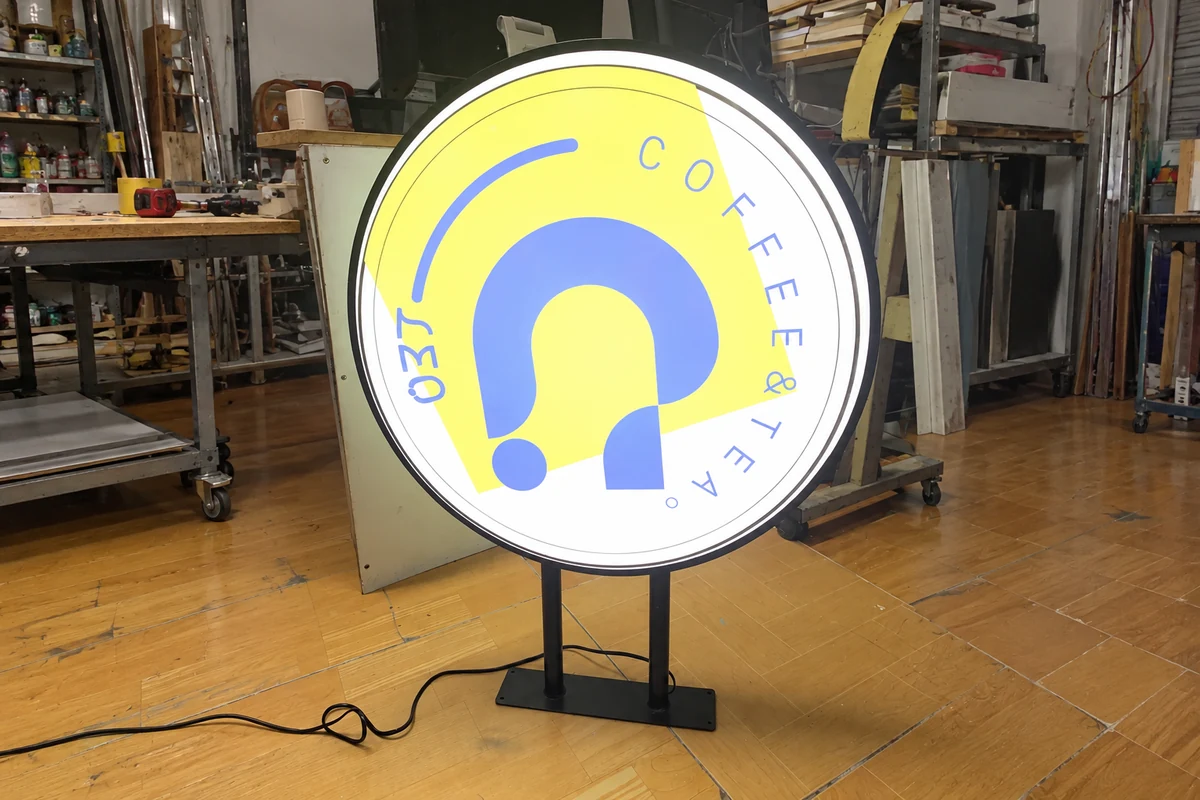
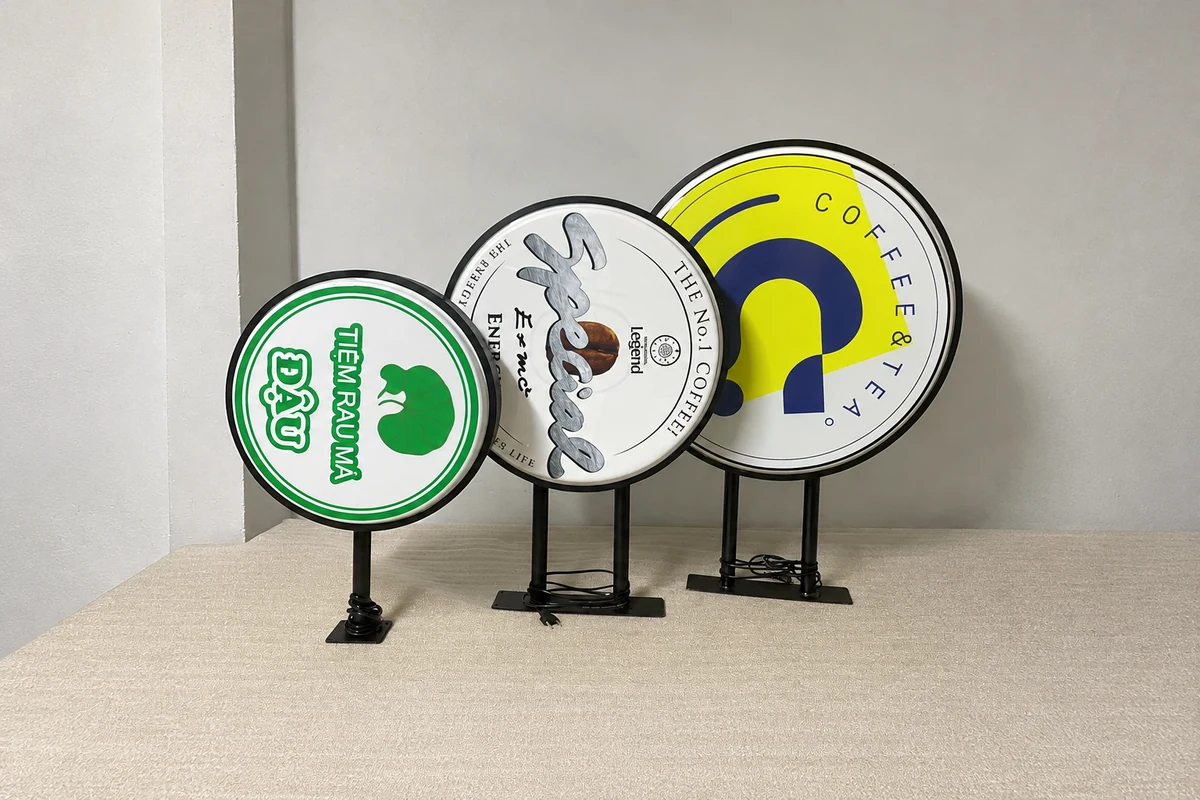
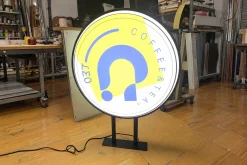
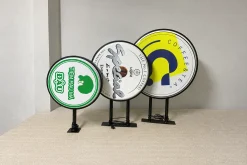
- Round and shaped models — the sign face is cut into a circle or the shape of a logo, used as an accent.
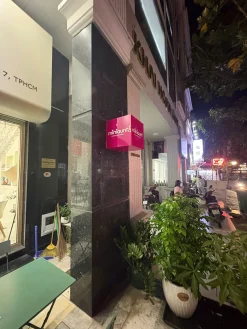
- Double-sided light boxes — mounted perpendicular to the frontage so passers-by can see it from afar in both directions.
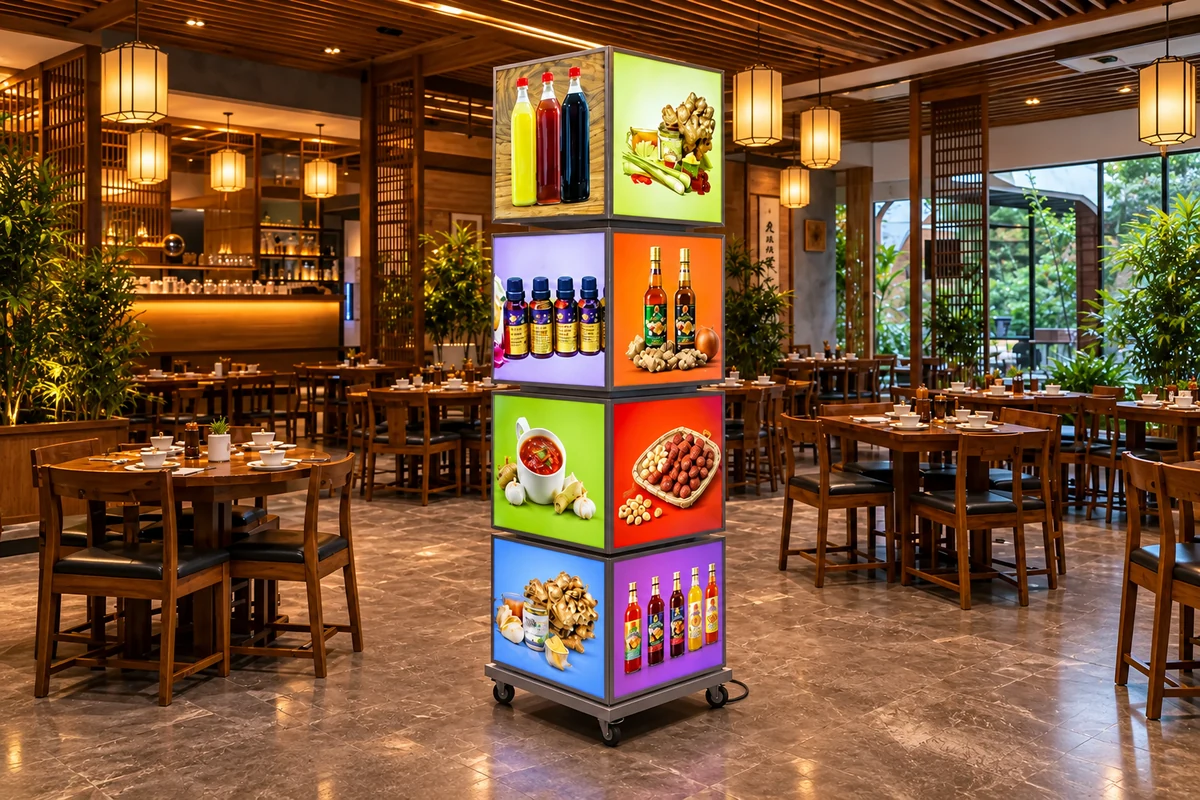
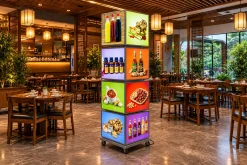
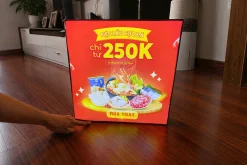
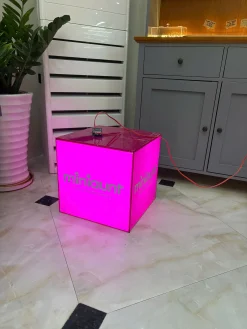
- Freestanding light box with base — placed on the floor and movable, suited to lobbies, entrances and trade fair booths.
Each style serves a different purpose, so when asking for a price, tell us where the sign will go and which direction viewers will see it from — we'll advise the suitable style rather than choosing on gut feeling.
Where to place a light box on your premises
Location decides the sign style more than budget:
- On the frontage — a horizontal sign running the full width, replacing an unlit signboard.
- Perpendicular to the frontage — double-sided projecting signs, readable from both ends of the street.
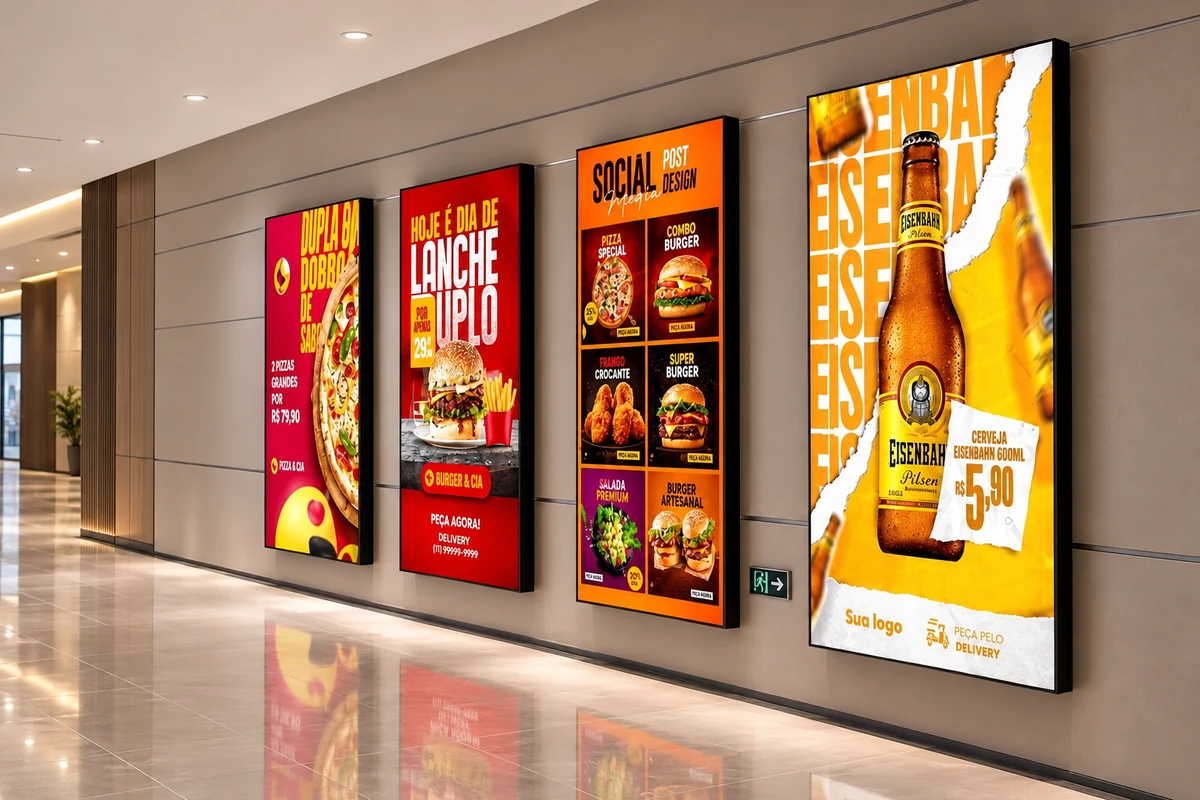
- Indoors, wall-mounted — rows of ultra-thin signs for menus, service boards and product image frames.
- On the floor — models with a base or wheels, movable with each layout change.
If your premises need both a signboard and a light box, see also Advertising Signs — made in the same run, colors and lettering match, with just one delivery date.

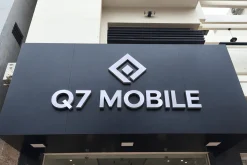
Advertising signs


Standee

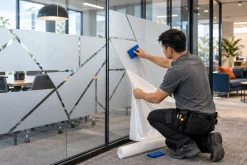
Decal application

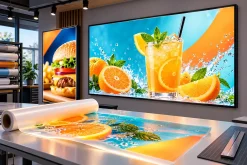
Backlit film
How a light box is built
Understanding the structure helps you read quotes more easily, since each part is a line item:
- Frame — box steel or aluminium profile, determining rigidity and lifespan.
- Sign face — light-transmitting acrylic, or Backlit Film printed and stretched onto the frame for ultra-thin models.
- Lighting system — LED modules arranged inside so the sign face lights evenly, without dark streaks.
- Power supply — power supply and wiring; this part decides whether the sign runs reliably or keeps breaking down.
- Mounting — mounted flat on the wall, hung perpendicular, or on a floor stand.
Designing the light box face
An illuminated sign face differs from regular signboards in that it emits light, so the layout must work both day and night. A few points worth noting:
- Dark backgrounds with light text give a clearer night effect than light backgrounds with dark text.
- Fewer words read faster; the sign face isn't the place to list every service.
- Very dark color areas block light and look like dark patches — keep dark colors at the edges rather than covering the whole face.
- Logos and text under 5cm tall are hard to read from the street; consider moving them to a secondary strip.
- Menu signs should leave room to change content, since dishes and prices change by season.
No design yet? We build a mockup from your brand name and premises, sending a simulated image on your actual frontage for approval before production.
How we quote
This category has no general price since every premises is different. Six factors determine the quote:
- Sign face size — length × height.
- Sign style — vacuum-formed, ultra-thin, round, double-sided.
- Sign face and frame materials.
- LED lighting system and power supply capacity.
- Mounting method and installation height — high positions need scaffolding or a lift truck.
- Quantity — making several boxes in one run lowers the unit price per box.
The quickest way to get a figure: send a photo of the shopfront with the width of the premises via Zalo or call 0866.511.099, and we'll quote within 30 minutes during office hours.
Maintaining and repairing old light boxes
Broken signs usually don't have a broken frame but a broken lighting part: one dead LED strip darkens a patch of the face, or a weak power supply makes the whole box glow dimly. If the frame is still good, there's no need to make a whole new one.
- Replace LED modules and power supplies when the face darkens in patches or lights unevenly.
- Replace the acrylic face or Backlit Film when changing content, rebranding, or when the old face has yellowed.
- Renew the sign face on the old frame — the most economical option when only the image needs changing.
Installation service areas
Our workshop is in Tan Hung Ward, so installation is most convenient within former District 7 — now Tan Hung, Tan My, Tan Thuan and Phu Thuan wards — and nearby areas such as Nha Be, District 4 and District 8. Other areas of Ho Chi Minh City are still served, with travel costs based on distance. Customers who want to see acrylic samples and light modules in person can drop by the workshop at 49 Mai Van Vinh, Tan Hung Ward, Ho Chi Minh City.
Choosing a light box style for your premises
The four light box types we run differ in thickness, mounting and where they're seen. The table below helps you choose quickly for your premises.
| Light box type | Features | Best suited premises |
|---|---|---|
| Vacuum-formed light box | Acrylic face vacuum-formed to the shape of letters or logos, with the raised parts catching the light clearly | Wide frontages wanting the brand visible from afar |
| Ultra-thin light boxes | Just a few centimeters thick, with a neat aluminium border and flat face | Indoors, mall corridors, reception counters |
| Round light box | Round face, usually hung perpendicular to the wall | Narrow frontages wanting pedestrians to notice |
| Double-sided light boxes | Lit on both sides, projecting out from the wall | Two-way streets, alley frontages, customers coming from both directions |
Double-sided projecting light boxes are the most asked-about type for shops in alleys, since signs mounted flat on the wall are only readable when already passing by. A perpendicular light box is visible from the alley entrance.
What makes a light box shine evenly
Whether a light box shines nicely depends more on how the lights are arranged inside than on the type of light. A few things that decide light quality:
- Distance from the lights to the face — lights too close to the acrylic face show each point of light. Thin light boxes need wide-angle lights; deeper boxes light evenly more easily.
- LED strip density — too sparse and the light box face shows alternating dark streaks; too dense wastes power without much extra brightness.
- Light color — cool white feels clean, suiting pharmacies and spas; warm white is easier on the eyes, suiting cafés and restaurants.
- Inside of the box — a reflective coating helps light bounce evenly; this is a detail often skipped in rushed light boxes.
- Power supply — housed in a sealed box with heat ventilation. A failed power supply is the number one reason light boxes go dark after a few months.
During installation, our technicians test the light box in the evening right on site before handover, since dark streaks can't be seen in daylight. If you see bright and dark spots on the face, tell us right then so we adjust the inside.
Light boxes for each industry
Light boxes installed for each industry have a few differences learned from real orders:
- Eateries and cafés — the light box face should show the shop name large, with fewer secondary words. Motorbike riders only have a few seconds to read.
- Pharmacies — often use cool white light and familiar green lettering, adding a cross light box if the premises allow.
- Spas and beauty salons — prefer ultra-thin light boxes with slim frames and warm white light for a soft feel.
- Showrooms — large light boxes running across the frontage, often combined with an Alu backing below.
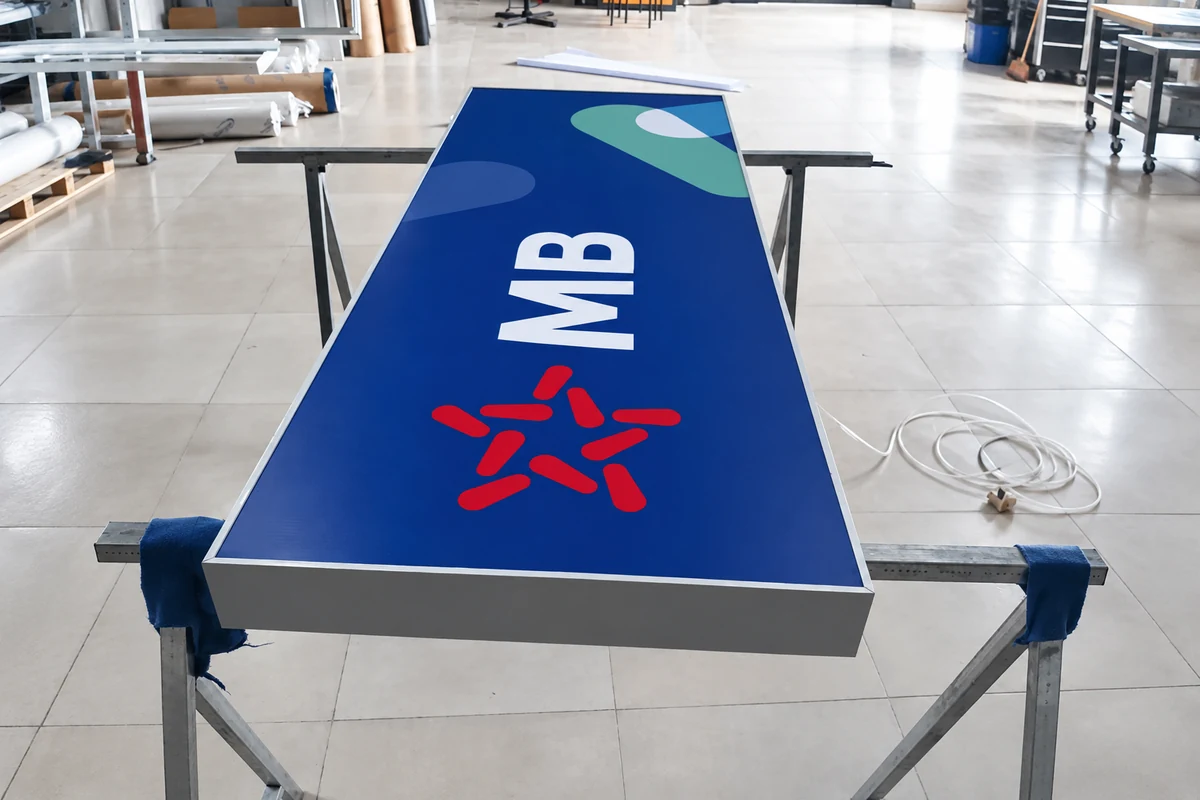
- Banks and transaction offices — require logo colors and proportions true to brand standards, so mockup approval is more thorough than in other industries.
Whatever the industry, the general rule for light box faces is few words and strong contrast. Dark backgrounds with light text or light backgrounds with dark text both read well; backgrounds and text in the same light tone look nice on screen but turn faint on a real light box.
Keeping light boxes durable and bright
A light box runs on electricity continuously, so some maintenance is worth doing, most of which you can check yourself:
- Clean the light box face regularly — dust noticeably reduces brightness, especially for outdoor light boxes near main roads. Wipe with a soft cloth and clean water; don't use solvents since they cloud the acrylic.
- Check it in the evening every month — catching one dead LED section early is much cheaper to fix than letting the whole strip fail.
- Check for gaps after rain — water inside the light box ruins the power supply. If you see condensation on the inside, tell us so we come and seal it.
- Retighten the mounting bolts every year — for double-sided projecting light boxes, the bracket bears wind load and can loosen over time.
Old light boxes with stained faces, dead lights or peeling letters can be repaired rather than replaced. Send a close-up photo of the damaged part and a photo of the whole light box; we'll review and tell you which parts should be replaced.
How on-site installation works
On-site installation is the step that decides whether the sign is straight, solid and safe. The process our technicians follow on site:
- Setting position and height — a level line is stretched so the sign doesn't tilt relative to the door edge, since the eye notices misalignment very quickly.
- Drilling and anchoring into the wall — anchors are chosen to suit the wall. Hollow brick walls need longer anchors than concrete walls.
- Building the support frame — for signs projecting from the wall, the bracket must bear both the weight and the wind load.
- Running the wiring — threaded through conduit, hidden along the wall edge, with connections in a sealed box away from water.
- Test run and handover — the lights are switched on to check the whole illuminated face, and the site is cleaned before handover.
On-site installation usually takes one session if the premises are convenient. If scaffolding, a local power cut or building management permission is needed, let us know in advance so we can schedule and prepare the right equipment.
What to prepare before asking for a price
Before sending a quote request, prepare the following so we can reply within the same session:
- A straight-on photo of the frontage — taken from across the street if possible, showing the full width of the premises.
- Width and height of the mounting area — rough figures are fine; we'll measure again when finalizing.
- Logo and name to print — original files are best; if not, we'll redraw from a photo.
- Desired style — vacuum-formed, ultra-thin, round or double-sided. If unsure, describe the premises and we'll suggest one.
- Deadline — especially when you have a fixed opening date.
We quote per square meter of sign face plus fabrication and installation, from 120.000đ per square meter. The final figure depends on sign style, light type and installation height, so a frontage photo is what helps estimate fastest.
One point worth considering from the start: illuminated signs use very little electricity compared with first impressions, since LED lights are low power and only switched on in the evening. The cost more worth planning for is the lifespan of the light strips and power supply, since those are what need replacing after a few years.
If your premises are in a mall or rented building, ask management first about sign size limits and permitted drilling hours. Many places only allow work outside business hours; knowing early lets us schedule technicians for exactly that window without rescheduling.
In terms of running costs, LED-lit signs consume very little electricity compared with many shop owners' first impression. The cost to plan for is the lifespan of the light strips and power supply, since those are what need replacing after a few years of use, not the monthly electricity bill.
One more thing to ask building or mall management before ordering: the permitted sign face size, drilling hours and electrical connection requirements. Many places only allow work outside business hours. Knowing early lets us schedule technicians for exactly that window from the start, without rescheduling and without a second round of travel costs.
Frequently asked questions
How do vacuum-formed and ultra-thin light boxes differ? Vacuum-formed boxes have a shaped acrylic face with raised letters, thick and solid, suited to outdoors. Ultra-thin boxes have a slim frame and flat face, mainly mounted indoors.
How long does a light box take? It depends on size and style. We confirm a specific date when sending the quote.
Do light boxes use a lot of electricity? LEDs keep consumption low; the exact figure depends on the sign face area and number of modules, which we tell you when finalizing the plan.
Can the content be changed later? Yes — replace the acrylic face or Backlit Film, keeping the frame and lighting system.
Do I need a permit to hang a light box? We advise on size and position according to current regulations; the permit application is handled by the premises owner with the ward.
See more of our workshop's real projects: signboard design and installation, LED advertising light boxes, standing light boxes., pediatric ward decoration, pediatric ward decoration
How to order a light box
- Message Zalo or call 0866.511.099, sending a photo of your frontage and estimated dimensions.
- Receive a preliminary quote and schedule a site survey.
- Approve the mockup, pay the deposit and wait for the installation date.
Some images on this page are illustrations.
See real photos of a backlit banner standee to picture the box body and base before choosing a size.
Block Acrylic Light Box — Real Photos
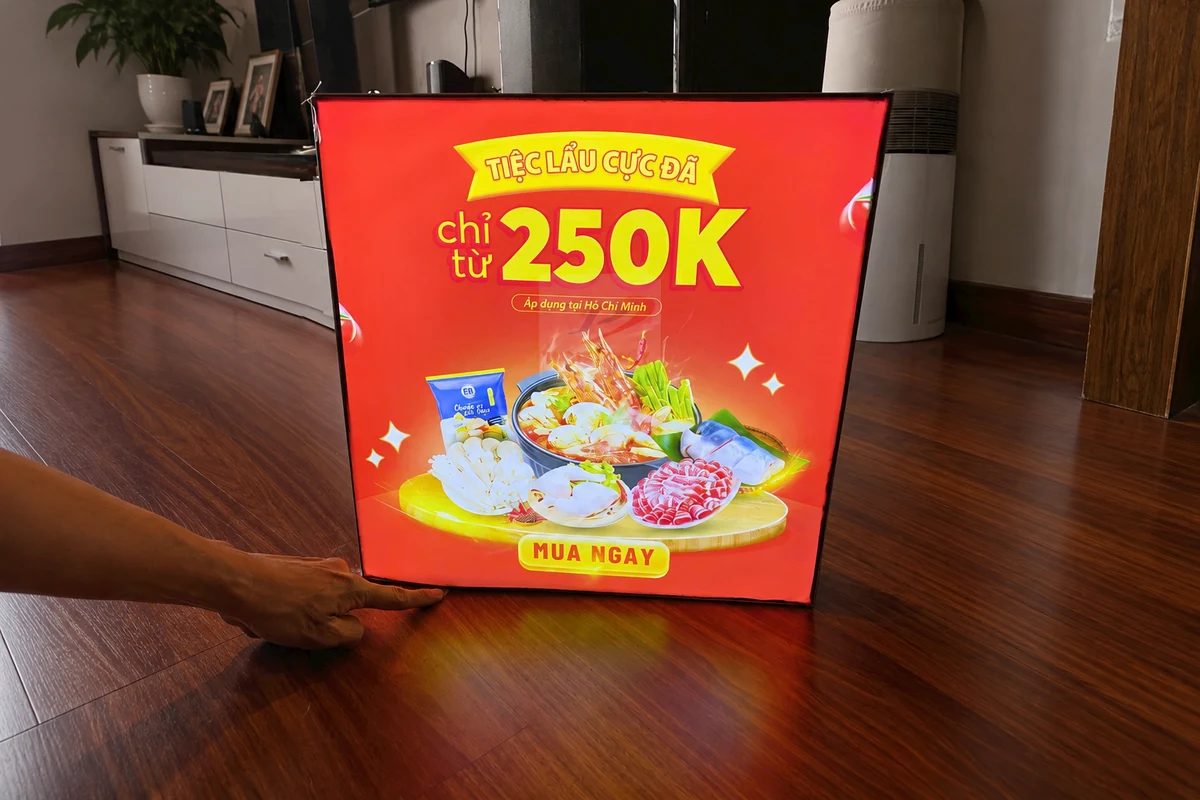
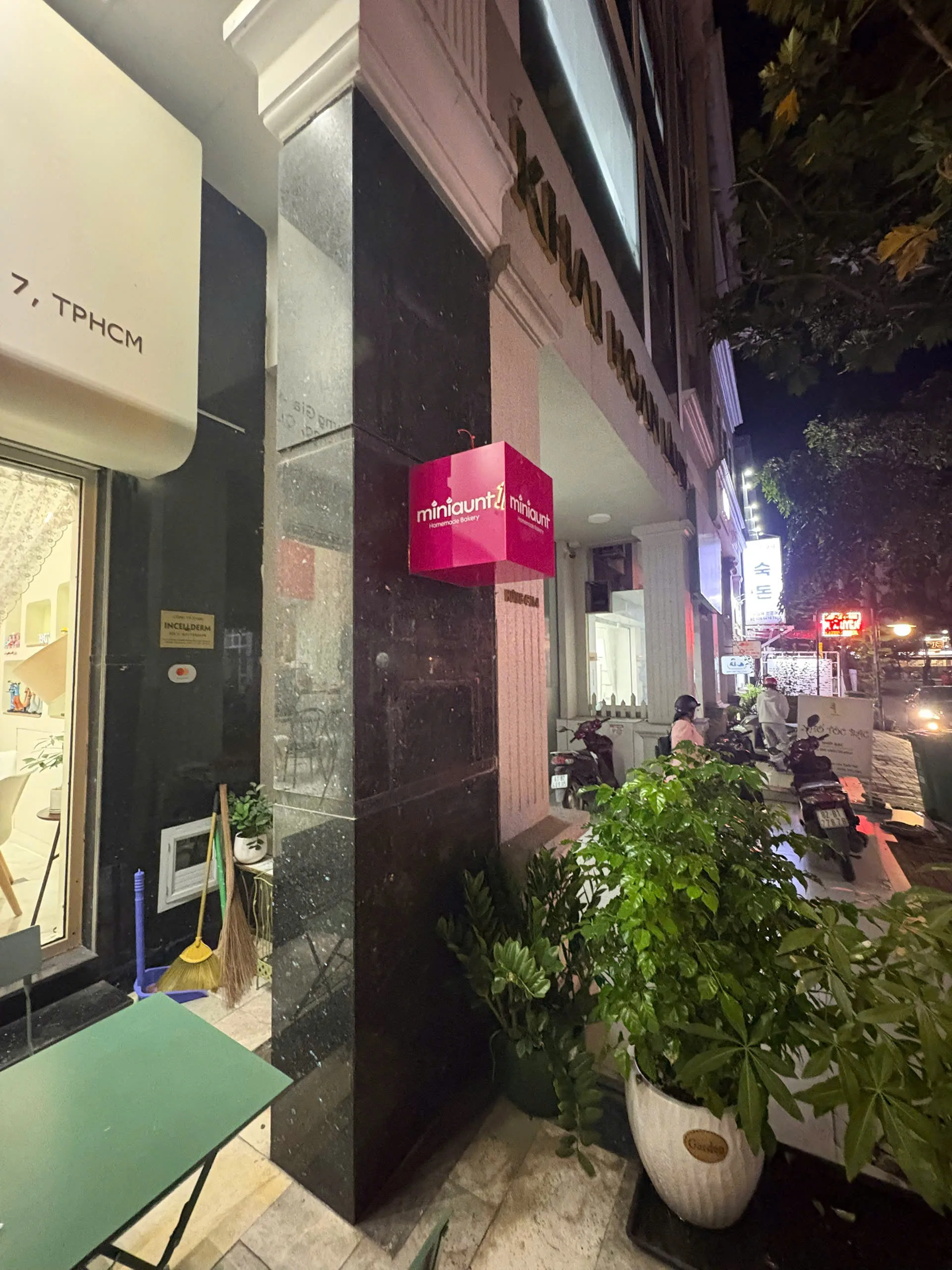
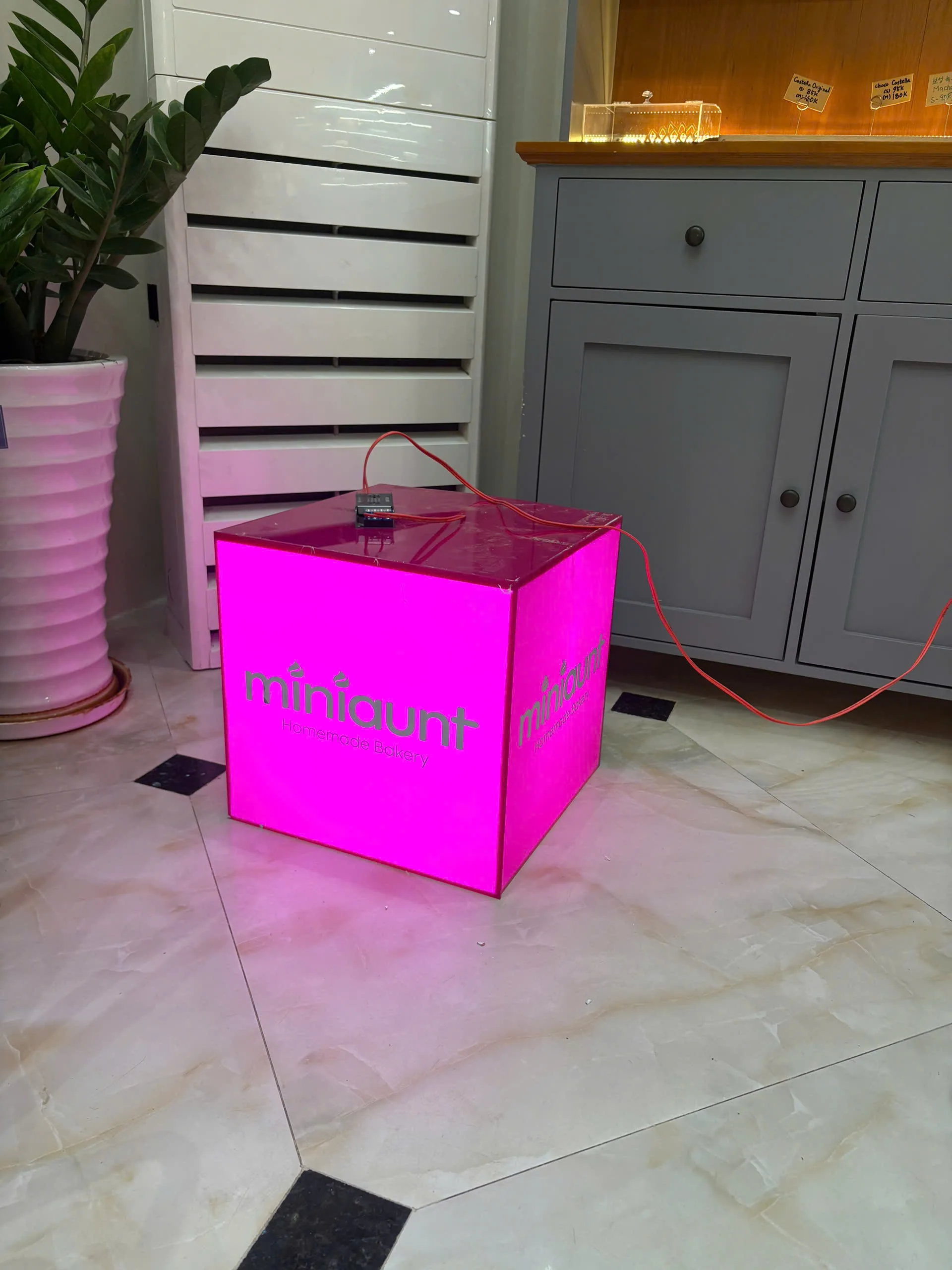
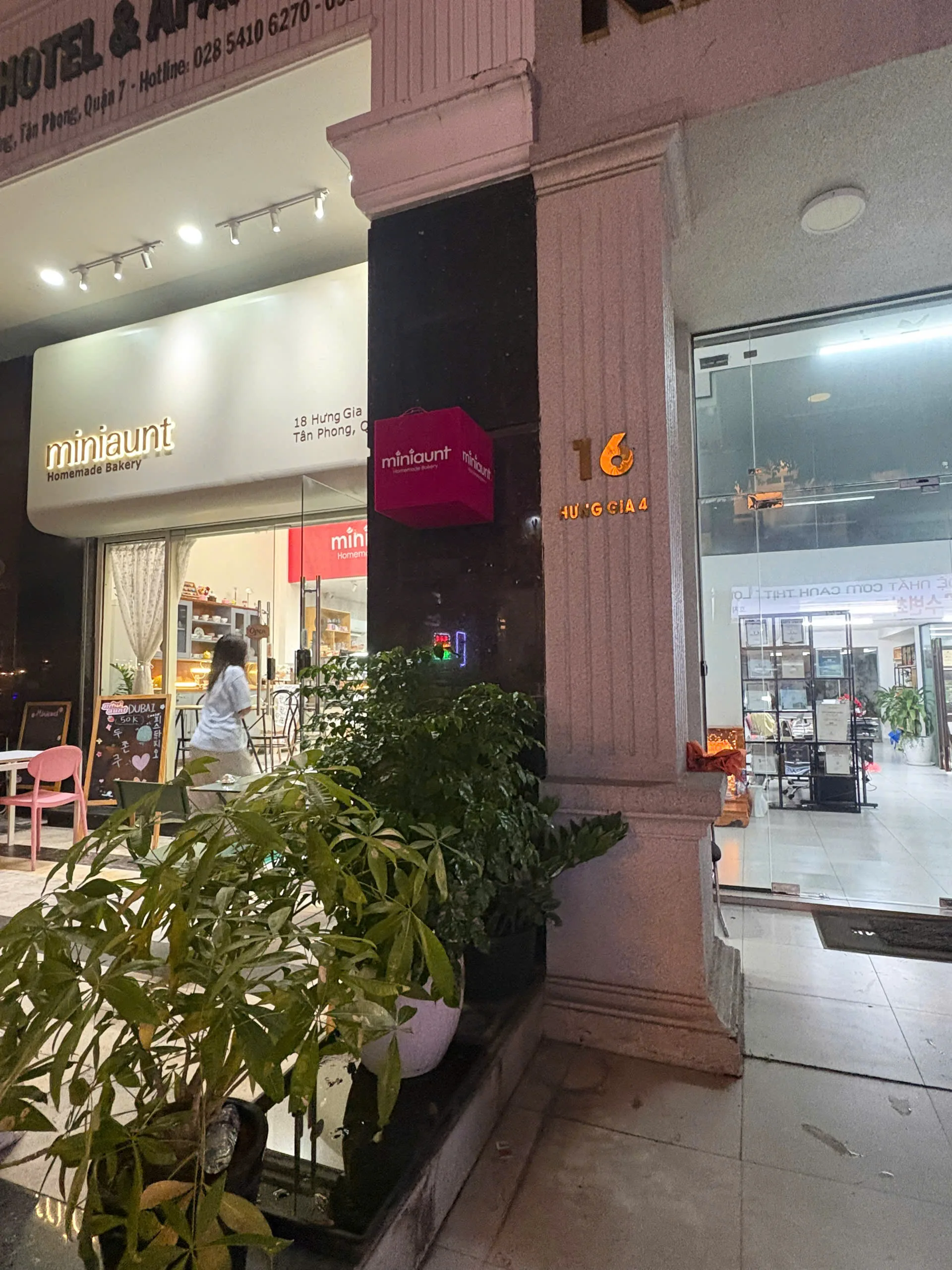
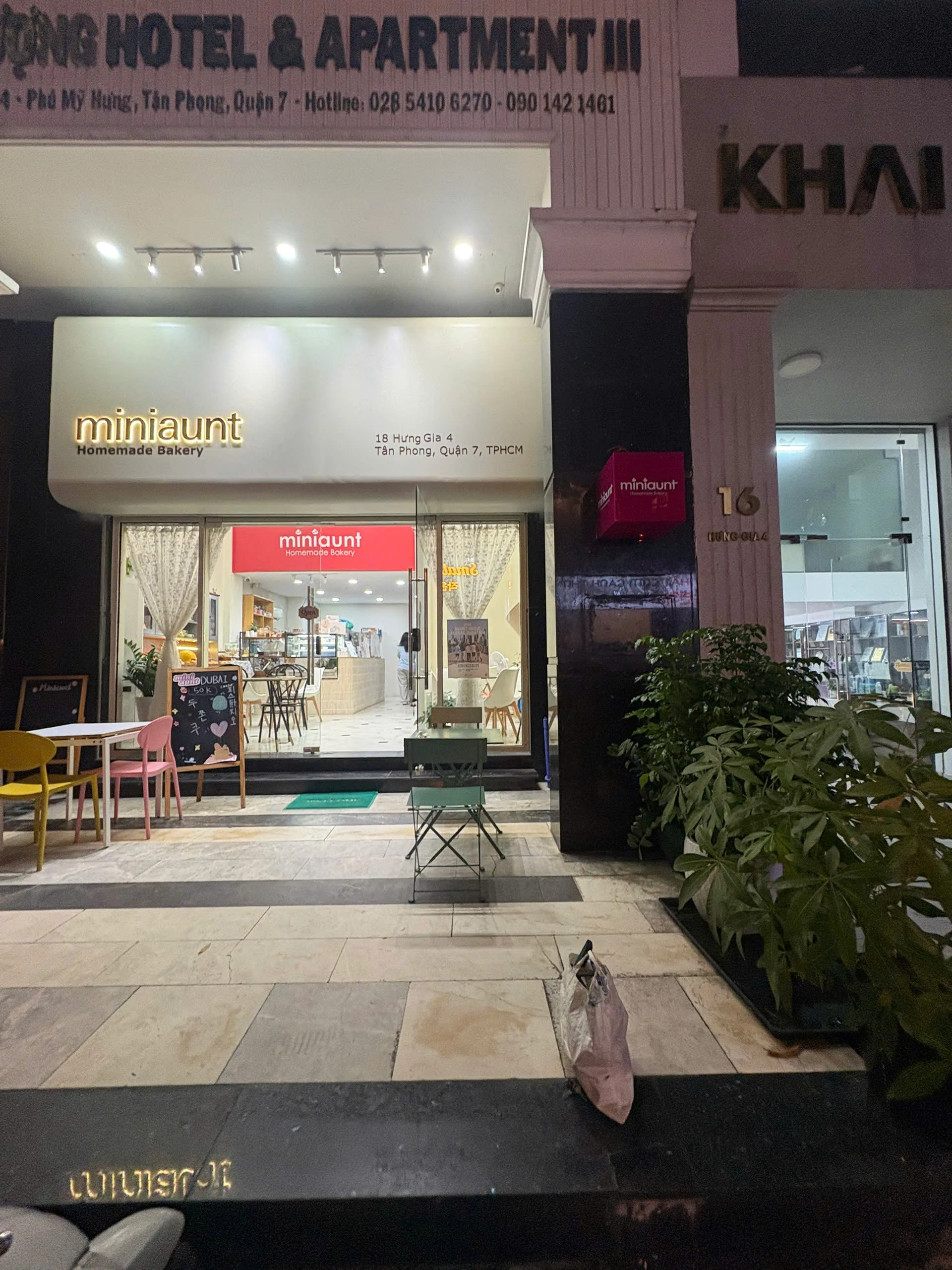
See a finished acrylic light box: lighting test photos at the workshop and photos after mounting as a projecting sign on the side of the frontage — block acrylic light box.
Xem thêm công trình hộp đèn menu hai mặt chân trụ, thực đơn song ngữ Hoa – Việt cho nhà hàng.
| Made at | In Quảng Cáo Q7 workshop – 49 Mai Van Vinh, Tan Hung Ward, Ho Chi Minh City |
|---|---|
| Origin | Vietnam |
| Status | Made to order |
| Warranty | 12 months on installation work and materials (frame, sign face, lighting) under normal use. |
Quote-on-request product. Prices quoted exclude 8% VAT; the invoice adds the tax as required by law.
Ordering
Three ways to order: choose the specifications and quantity on the website and click Place order; message us on Zalo or call 0866.511.099; or visit the workshop to see material samples at 49 Mai Van Vinh, Tan Hung Ward, Ho Chi Minh City. During working hours, In Quảng Cáo Q7 replies within about 30 minutes. Most products have listed prices by size, material and quantity – prices exclude 8% VAT.
→ Online ordering guide · Quick quote
Sending design files
PDF or AI preferred, CMYK color mode, 300dpi for small formats, 3mm bleed. Send via Zalo, email inquangcaoq7@gmail.com, the form on our website, or a Google Drive link for large files. We check your file for free before printing; if you have no file yet, In Quảng Cáo Q7 can help with the design.
→ Design file submission guide
Payment
Bank transfer, QR code or cash at the workshop. Orders are confirmed and scheduled for production after payment; after transferring, send a photo of the receipt with your phone number via Zalo. Transfer note: Your name – Phone number – Product.
→ Payment guide
Timing & delivery
Completion time is shown on each product, counted from receipt of a print-ready file and payment confirmation. Pick up at the workshop Monday – Saturday, 8:00–12:00 and 13:00–18:00; urgent orders within Ho Chi Minh City delivered within 2 hours; other provinces via bus courier or express delivery. On receipt, please check quantity, size, material and condition of the products.
Order tracking
Enter the phone number used when ordering to see your orders from the last 90 days and their status: Unpaid → Printing → Printed → Delivering → Invoiced → Completed. For orders placed via Zalo, send your name and phone number to get progress updates.
→ Order tracking
E-invoice (VAT)
In Quảng Cáo Q7 issues 8% VAT e-invoices. Provide the company name, tax code, address and email within 24 hours of ordering; the invoice is issued within 24 working hours and sent by email, and cannot be changed once issued.
→ E-invoice (VAT) details
Misprints – reprints
Products that differ from the order or the approved proof are reprinted free of charge – report within 24 hours with photos. Spelling mistakes in a file you approved are not covered by free reprints.
→ Frequently asked questions (FAQs)
Reviews
There are no reviews yet.