





































































Our commitments
Printed directly in our workshop, no middlemen
Digital and offset presses right in our workshop. You deal directly with the people who make your order, so every request is understood and handled immediately.
Fast production, many orders ready the same day
Business cards, documents, decals, standees… printed and delivered the same day. See production times for each product group.
One point of contact, all-in-one from file to finished product
Quotes, orders, Zalo messages, delivery booking and invoicing run automatically on one system. Design – printing – finishing – installation all happen in-house, so you don't have to go anywhere else.
Full VAT invoices, issued fast
E-invoices issued right after delivery, with urgent support for businesses that need documents early for payment.
Paper Bags
* Prices exclude 8% VAT. Total after tax: 2.808.000 ₫.
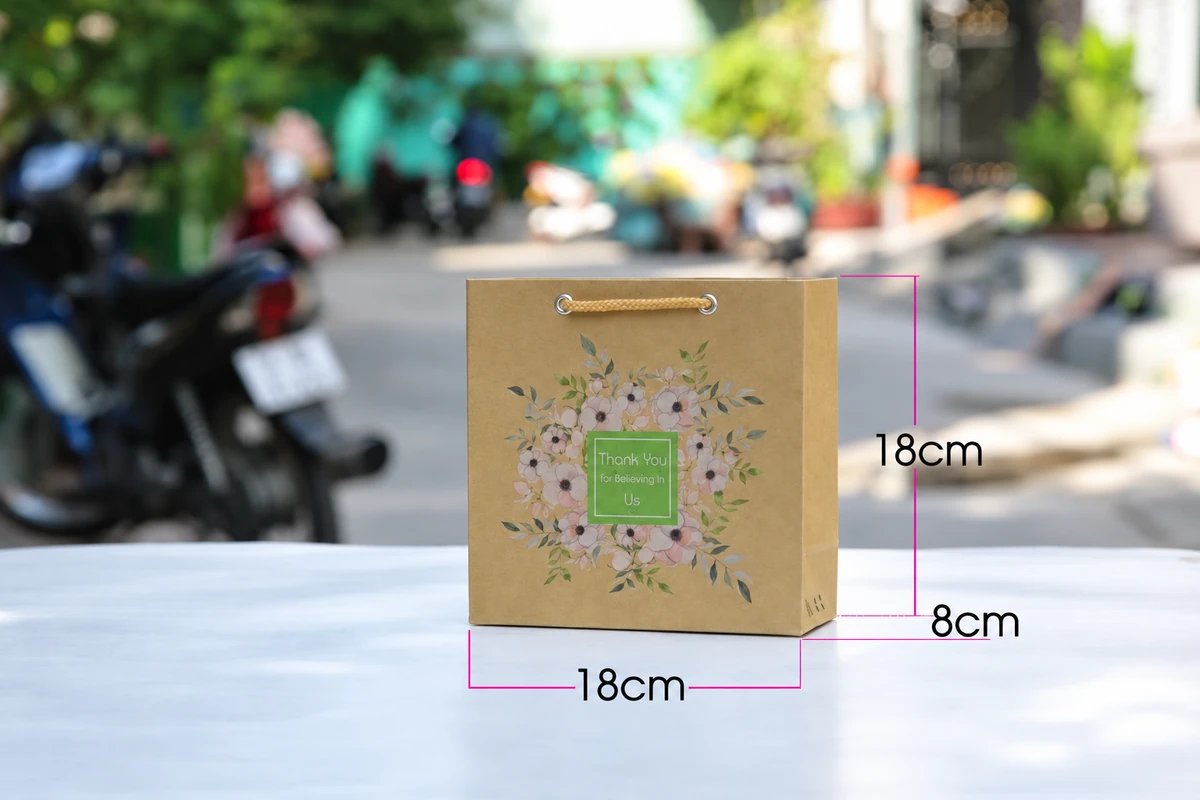
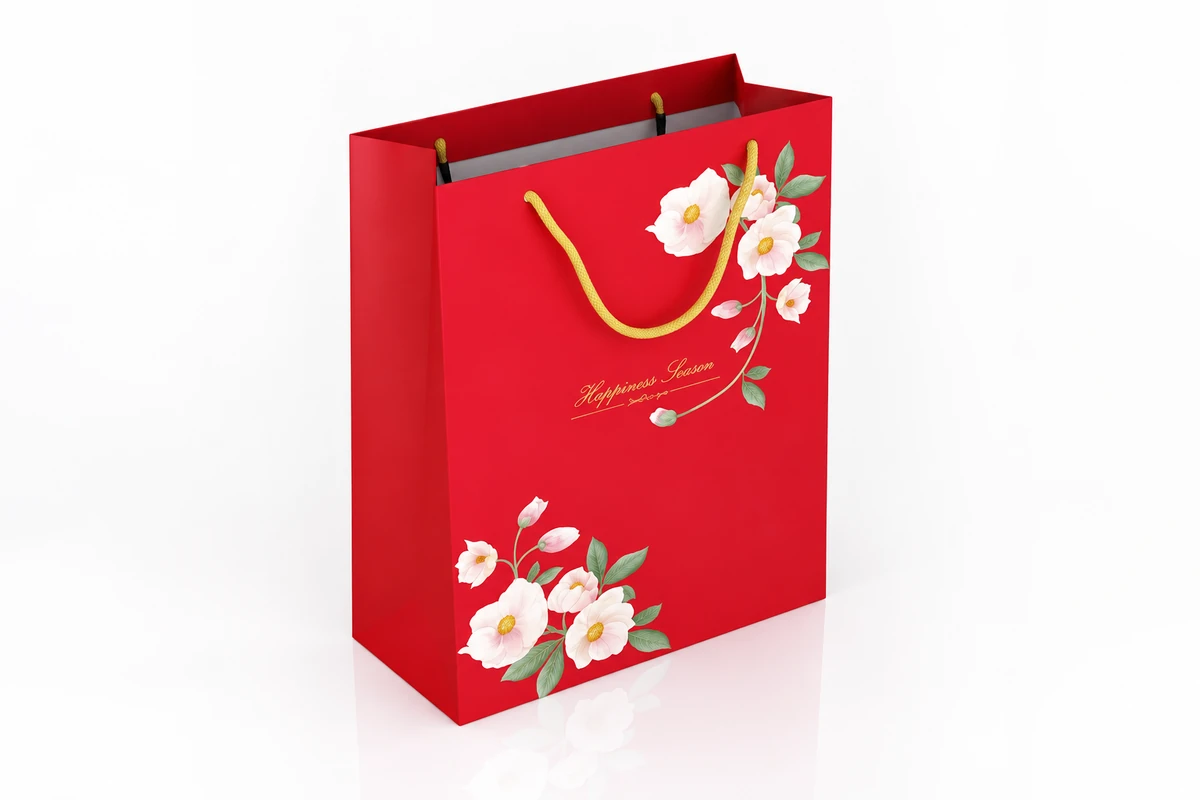
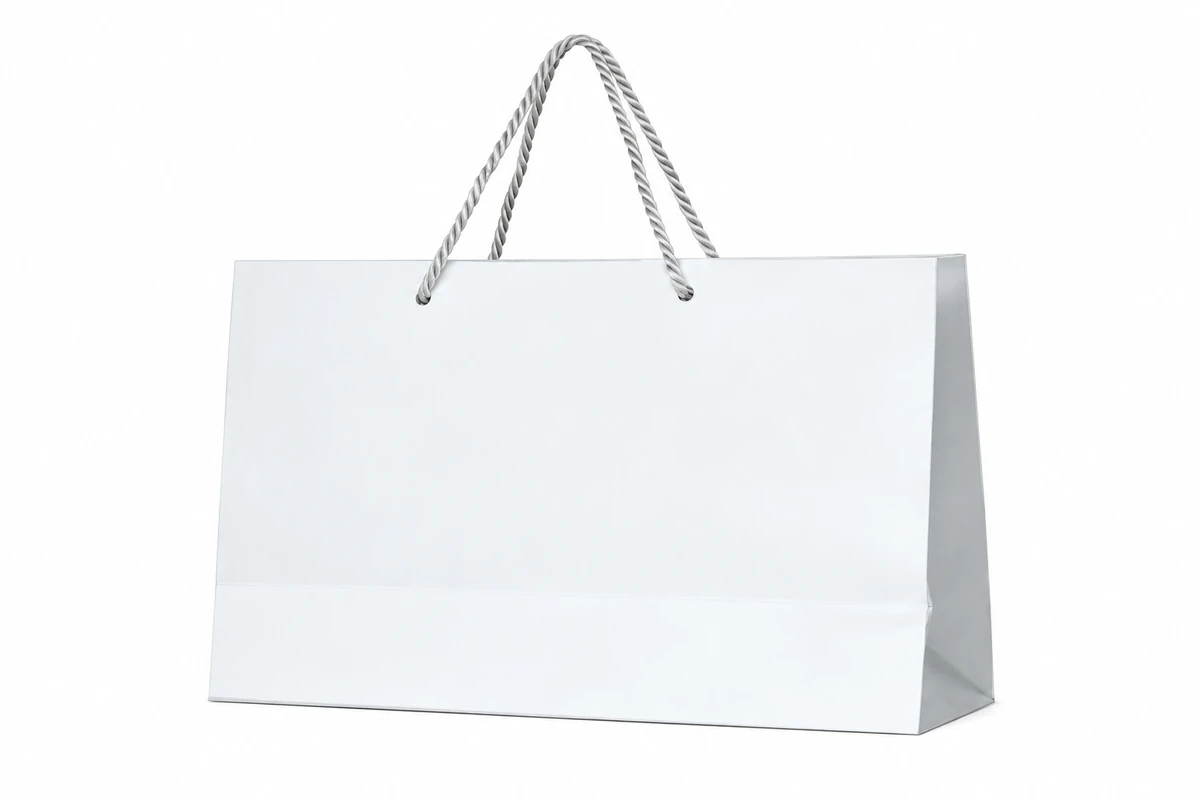
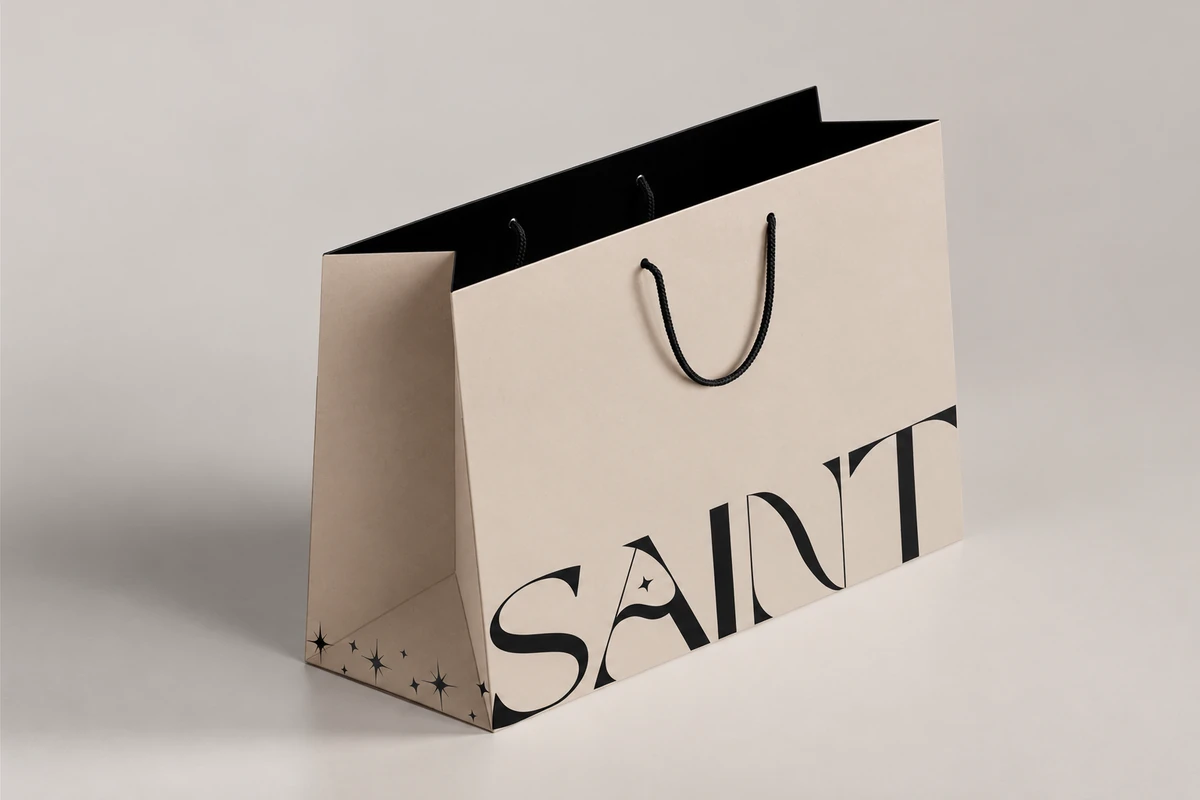
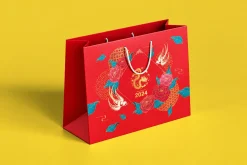
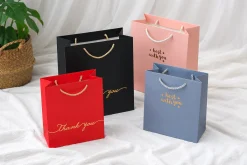
Paper shopping bags printed with your logo, C250gsm paper with gloss or matte lamination on 1 side, standard handles. 23 sizes available, orders from 200 bags, from 4.400đ/bag.
Paper Bag Printing With Logo — 23 Sizes, Orders From 200 Bags
A paper bag is what customers carry out of the store and take everywhere — a piece of packaging that works like a mobile billboard. In Quảng Cáo Q7 prints logo paper shopping bags in 23 ready-made sizes, standard C250 paper, gloss or matte lamination on one side, orders from 200 bags, from 4.400đ per bag.
What paper shopping bags are used for
A paper bag's first job is to carry — the goods must fit neatly, the handles must bear the weight, and the base mustn't burst when carried. The second job, often underestimated, is taking the brand far. A logo-printed bag goes with the customer through elevators, cafés, onto vehicles and home; every time someone sees it, the store gets mentioned at no extra cost.
Compared with plastic bags, paper bags carry more weight in perception: customers spending a few hundred thousand dong or more who receive a plastic bag feel the goods are devalued. That's why fashion shops, bakeries, cosmetics stores and pharmacies have all switched to paper bags, even when each bag costs more.
Paper bags are also the easiest item in a packaging set. Boxes need a mold for each product, while one bag size can hold many different items. Many stores need just two sizes — a small one for single items and a large one for multi-item orders — to run the whole year.
Paper bag specifications we run
This product page runs a fixed specification, preselected for most stores. Because it's fixed, prices can go into the table, so you see the cost as soon as you choose instead of waiting for a quote:
Four paper types to choose from
Paper bag printing on 250gsm Couche paper is the standard specification; prices in the table are based on this type. The coated surface is smooth, colors print vividly, and it's thick enough for medium bags.
C300 paper bag printing is one step thicker, used for large bags or heavy goods such as shoe boxes and gift boxes.
Ivory 250gsm paper bag printing and Ivory 300gsm paper bag printing have one coated side and one uncoated side, with a stiffer body than Couche of the same weight, so the bags stand in better shape.
Sizes and quantities
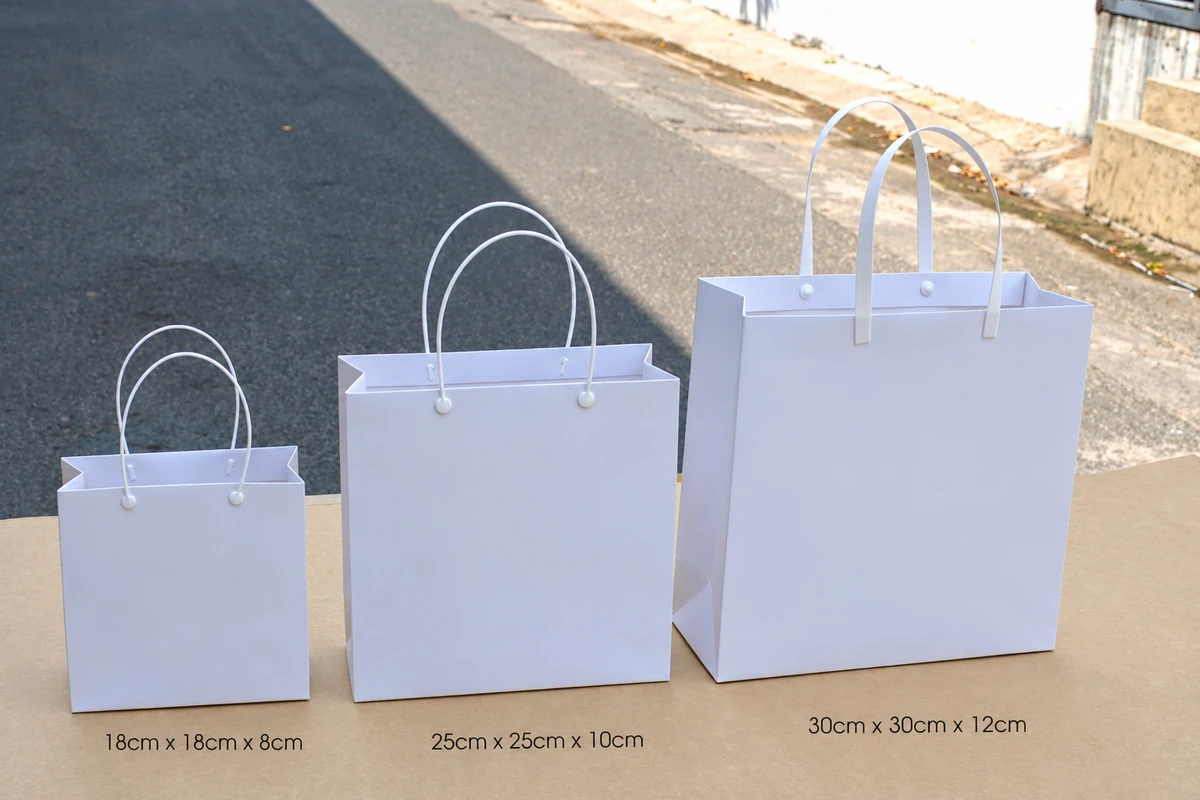
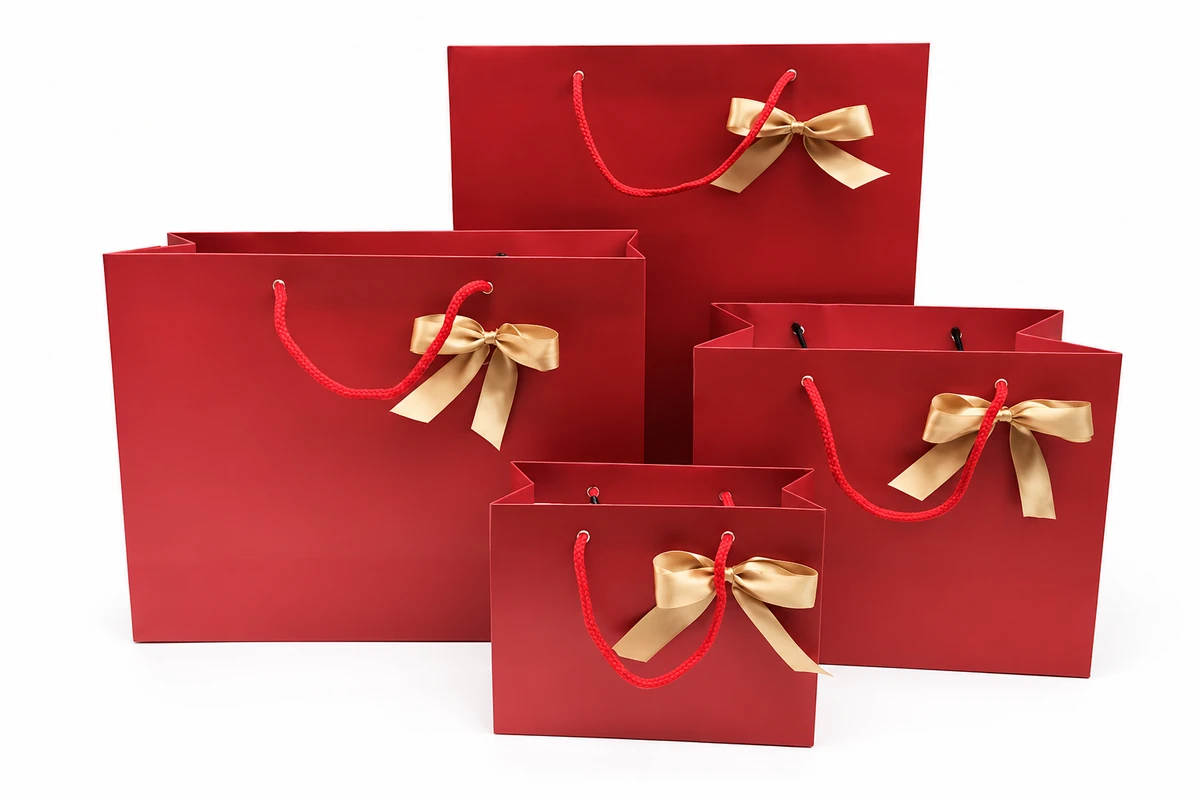
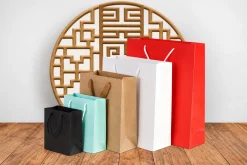
We have 23 sizes with ready-made molds, from small bags for cosmetics to large bags for jackets. Choosing the size closest to your goods is the most economical.
Beyond that list, custom-size paper bag printing is still possible but requires a new die-cutting mold, quoted separately for each design.
The minimum quantity is 200 paper bags per design. Below this level, mold, die-cutting and gluing costs spread over each bag are too high to be economical.
Separately quoted items
The price list on this page applies to standard-specification bags printed on one side with paper handles. The following items are outside the list; message us on Zalo for a quote: kraft paper bags with logo, fabric-handle paper bags, plastic-handle paper bags, double-sided paper bag printing, custom-shaped die-cut paper bags.
Two premium options often asked about are foil-stamped logo paper bags — letters or logos in metallic foil raised on the bag surface, and debossed logo paper bags — the logo pressed into the paper surface, without ink, for a refined look.
Lamination and moisture resistance
Laminated paper bag printing is a finishing step worth doing for most retail bags: the film keeps the paper surface from scratching when bags rub against each other.
Gloss-laminated paper bags give vivid colors and strong contrast, while also making paper bags water-resistant against light drizzle or wet hands — just wipe them dry; paper bags still aren't meant for carrying wet items.
Industries that use logo paper bags
Paper bags for clothing shops are the most ordered group, usually in two sizes: small for T-shirts, large for jackets and jeans.
Paper bags for cosmetics and paper bags for shoes need stiffer bags, often choosing Ivory. Gift paper bags lean toward appearance, often with foil stamping or debossing.
Bakery paper bags, milk tea paper bags and takeaway food paper bags should use thick paper and strong handles since the goods have weight. Spa paper bags are usually small and subtly colored, holding skincare products sold alongside.
Matching the paper type to the goods you'll carry
Logo paper bags for cakes and C250 paper bags for clothing are the two most ordered groups. C250 is the standard specification, enough for light to medium goods.
For goods needing bags that hold their shape, choose Ivory 250gsm paper bags for shops or Ivory 300gsm paper bags for gift boxes — stiffer than Couche of the same weight. For heavy goods, 300gsm Couche paper bags for heavy goods.
For finishing, the most ordered version is matte-laminated paper bags with standard cord handles: a matte bag surface that doesn't hold fingerprints, with standard cord handles included in the price list. Fabric and plastic handles are quoted separately.
When the available sizes don't fit the goods, customers order 200 custom-size paper bags — a new die-cutting mold is needed, charged once and reused for later batches.
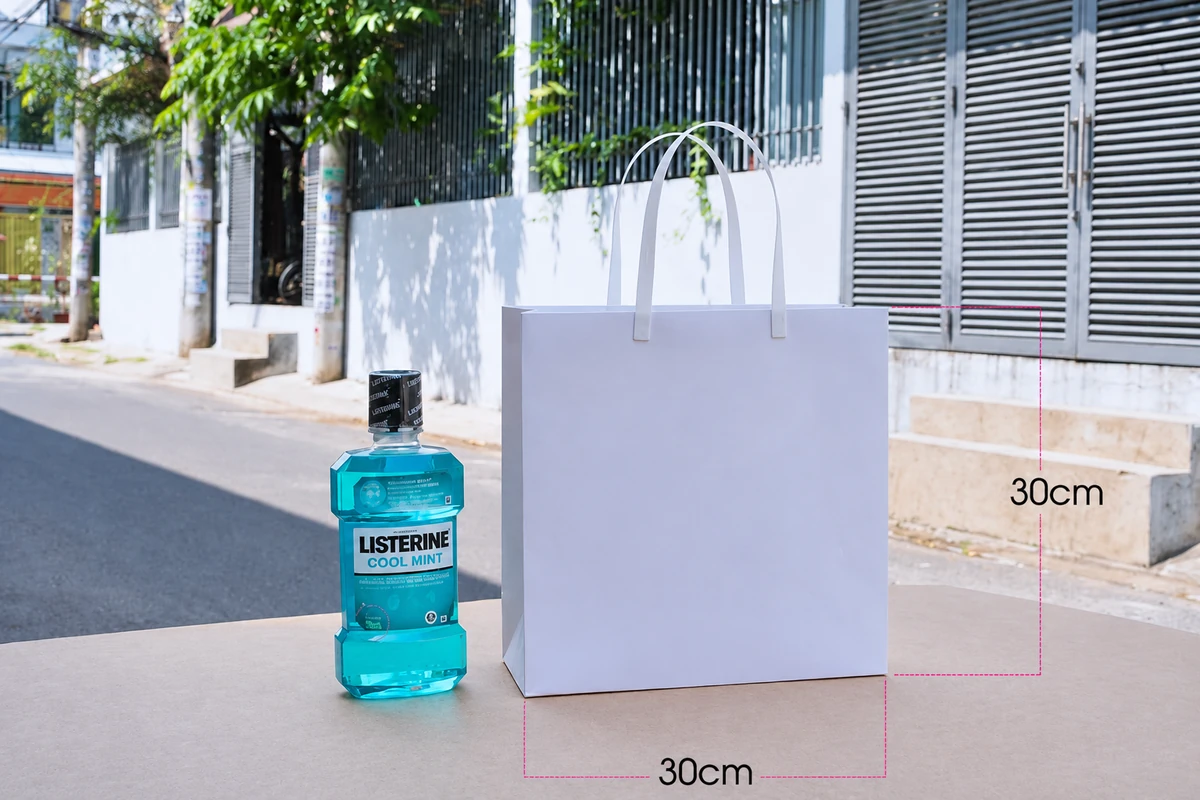
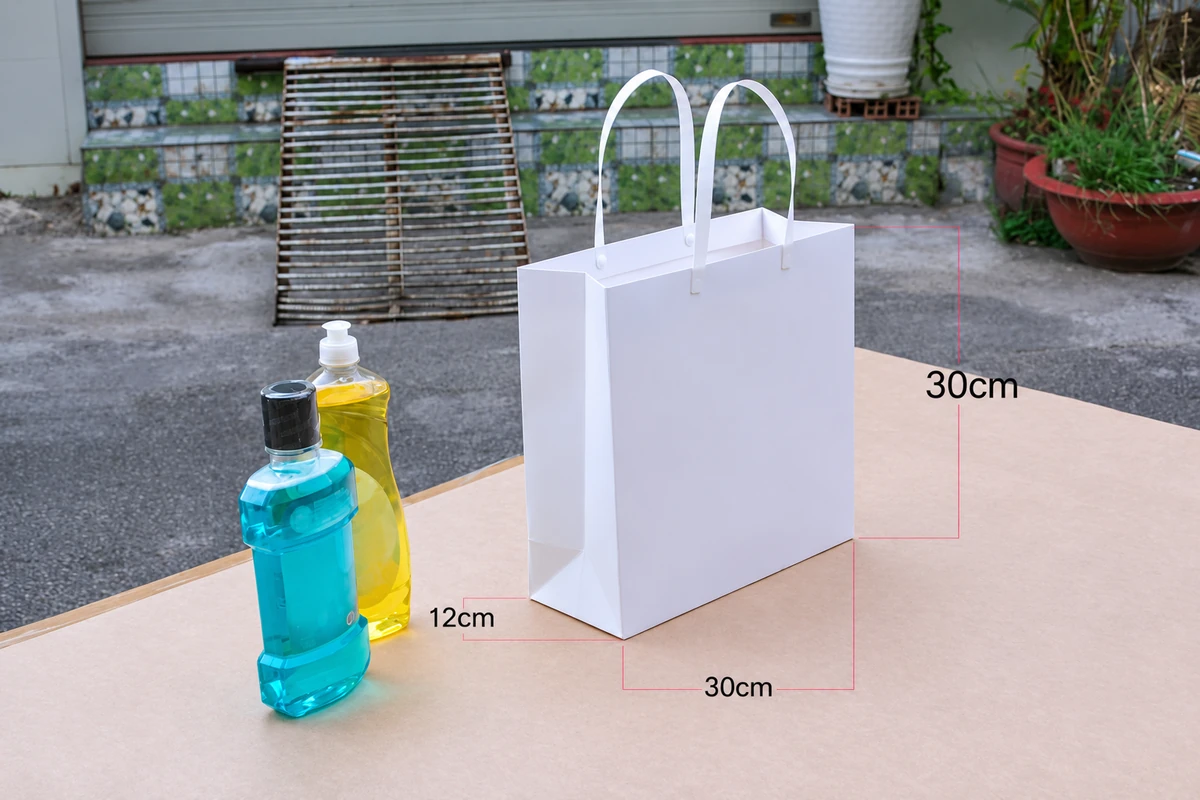
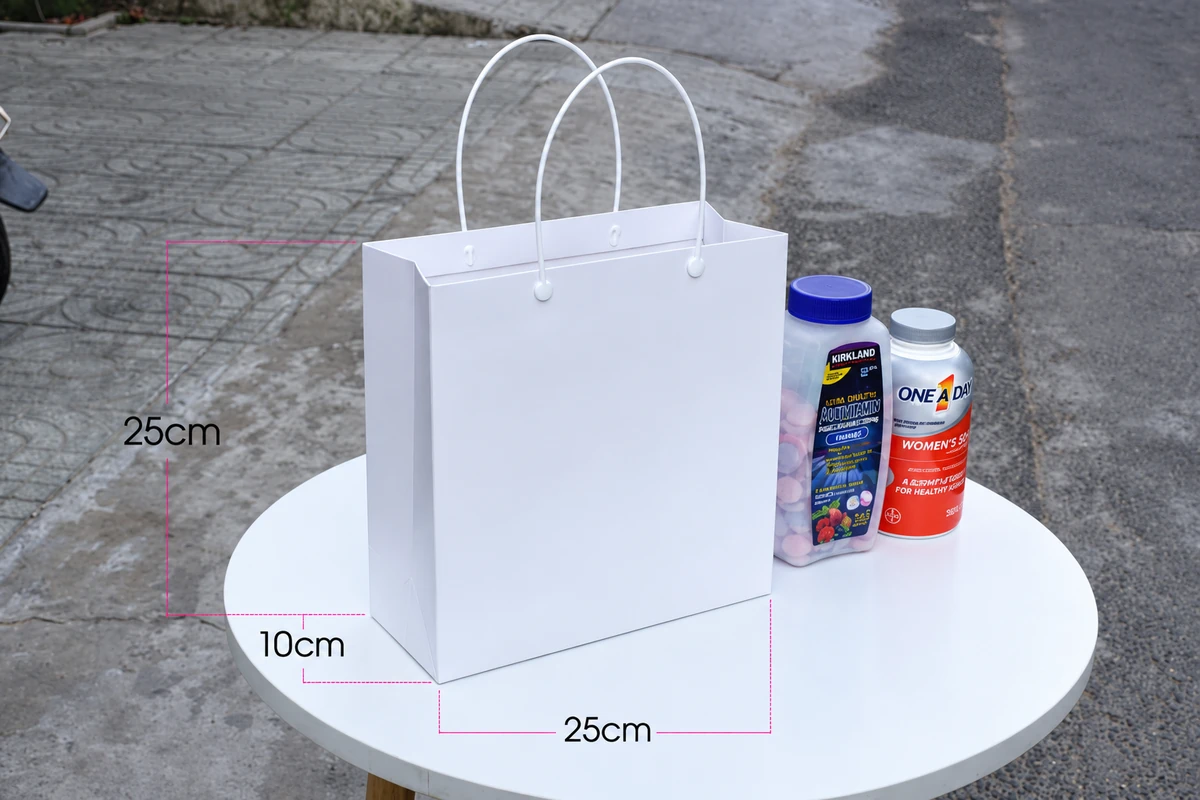
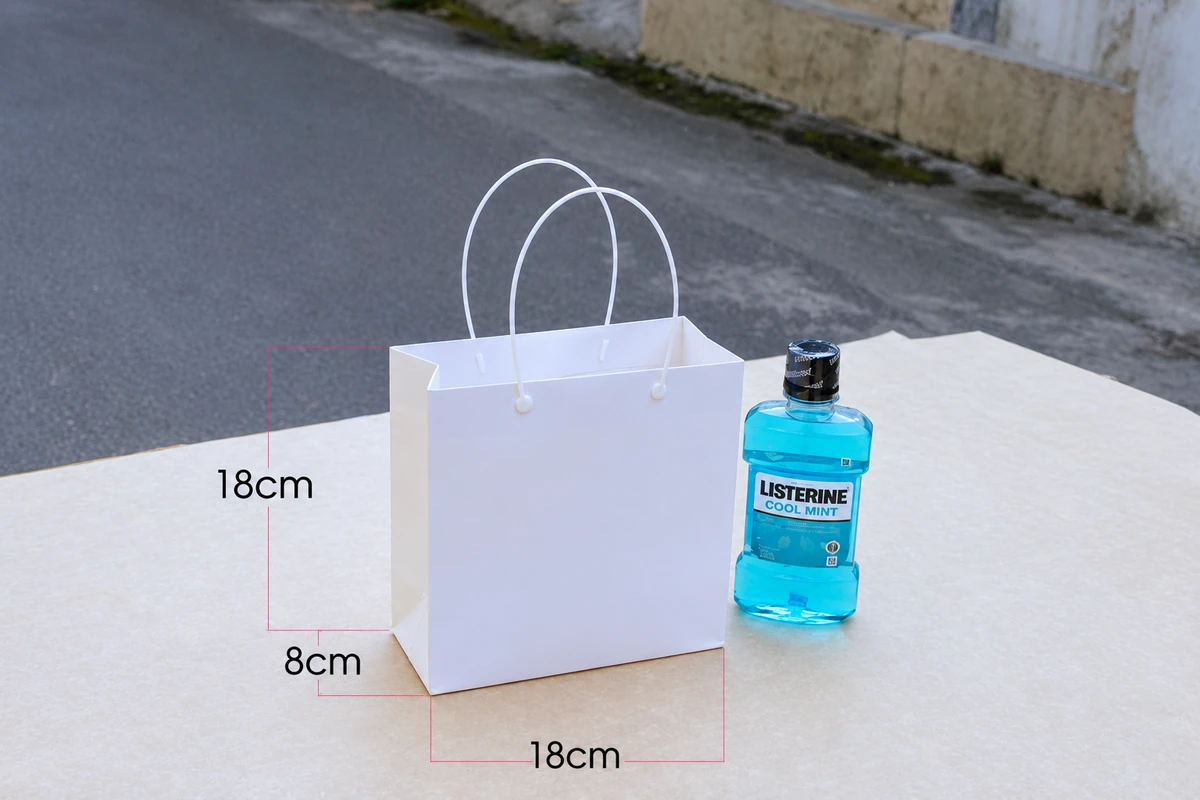
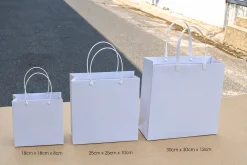
- Size: 23 ready-made sizes, listed as width × height × gusset, from 10 × 20 × 10 cm to 40 × 30 × 10 cm.
- Paper: C250 is standard; it can be switched to C300, I250 or I300 with a surcharge by size.
- Printing: single-sided color on the outside, gloss or matte lamination.
- Handles: standard cord handles, pre-fitted, ready to use on arrival.
- Quantity: 200, 300, 500, 1,000 or 2,000 bags per batch.
Anything outside the above specification — kraft bags, fabric handles, plastic handles, custom-shaped bags, double-sided printing, debossing or foil stamping — we can still make but must quote separately, since each involves a different process. Message us on Zalo with a reference sample for us to price.
Choosing the right paper bag size for your goods
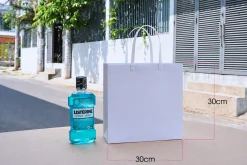
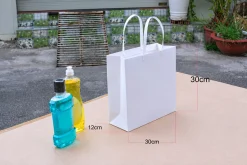
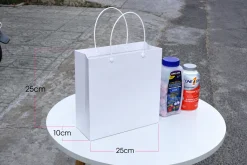
Paper bag sizes are always written in the order width × height × gusset. The gusset is the folded base that opens when the bag is full — this is the number that decides how much a bag holds, yet it's the most often overlooked. Two bags both 20 cm wide and 30 cm tall, with a 7 cm gusset versus a 15 cm gusset, have completely different volumes.
The quickest way to choose: take the largest item you usually sell, measure its three dimensions, then add 2–3 cm to each. For soft goods like clothes, choose a tall bag; for stiff, square goods like cake boxes or shoe boxes, choose a bag with a wide gusset so the box base sits flat.
The three smallest sizes in the table — 10 × 20 × 10, 12 × 22 × 8 and 13 × 24 × 6 cm — are for single cosmetics, accessories, jewelry, or one or two cakes. The middle group from 20 × 28 × 10 to 22 × 32 × 10 cm is the best-selling group, fitting folded clothes, children's shoe boxes and small gift bags. The large group from 27 × 47 × 15 cm up is for jackets, bedding, adult shoe boxes and multi-item orders.
A small tip for newly opened shops: instead of buying three or four sizes, choose two clearly different sizes. Too many sizes means ordering only small quantities of each, while paper bag prices drop sharply by batch — combining into two sizes is usually cheaper than splitting into four.
Four paper types: C250, C300, I250 and I300
The paper type decides the stiffness and feel of the bag. This page offers four levels, with C250 as the standard with no surcharge:
- C250 paper (250gsm Couche paper) — standard. A glossy surface with beautiful, sharp colors, stiff enough for light to medium goods. This is the type used for most orders.
- C300 paper (300gsm Couche paper) — thicker, so the bag holds its shape better and withstands heavy goods. Choose it when bags regularly carry over 3 kg or when you want them to feel sturdier.
- I250 paper (250gsm Ivory paper) — one glossy side, one uncoated off-white side. A subdued, low-sheen surface, suited to minimalist brands.
- I300 paper (300gsm Ivory paper) — as above but thicker, the stiffest of the four.
The surcharge for the three non-standard types is per bag and varies by size: small bags add about 150–500đ each, large bags about 750–1.000đ each. Choose right on the page and the price difference appears instantly, no mental math needed.
Brown kraft paper and textured fine art papers aren't among the four types above. Kraft bags give a rustic feel, suiting bakeries, cafés and handmade goods, but colors printed on a brown base turn darker and white ink barely shows — if you want kraft bags, message us on Zalo so we can confirm the paper source and quote separately.
Handles and finishing
The ready-run specification uses standard cord handles, pre-fitted at the bag opening. This is the most common type, strong enough for goods under 5 kg without raising the price. There are also canvas handles, twisted paper cord handles, plastic loop handles and die-cut handles directly on the bag body — all possible but quoted separately.
There are two choices for the outer surface finish. Glossy lamination gives vivid color, strong contrast, and good water and scratch resistance — suited to food, children's goods and colorful brands. Matte lamination gives a flat, non-reflective surface, soft to the touch, with deeper, more upscale colors — suited to fashion, cosmetics and premium gifts.
A practical note: matte-laminated bags show scratches and fingerprints more easily than gloss, especially on dark backgrounds. If your bags have black or dark blue backgrounds and are often stacked in storage, gloss will keep them looking new longer.
Paper bag printing price list by batch
The price shown on this page is the price for the whole batch, including paper, single-sided color printing, lamination, die-cutting, gluing and handle fitting. Choose the size, batch quantity and paper type; the price shown is for that whole batch. Prices exclude 8% VAT, with the tax shown clearly right below the price box.
Since the biggest cost of paper bags is in the die-cutting mold and machine setup, the unit price per bag drops very quickly by batch. Three examples representing three size groups:
- Small group (10 × 20 × 10 cm, C250 paper): 200 bags 2.600.000đ (13.000đ/bag) · 500 bags 3.400.000đ (6.800đ/bag) · 2,000 bags 8.800.000đ (4.400đ/bag).
- Popular group (20 × 30 × 10 cm, C250 paper): 200 bags 3.000.000đ (15.000đ/bag) · 500 bags 4.050.000đ (8.100đ/bag) · 2,000 bags 10.500.000đ (5.250đ/bag).
- Large group (30 × 40 × 10 cm, C250 paper): 200 bags 4.600.000đ (23.000đ/bag) · 500 bags 6.200.000đ (12.400đ/bag) · 2,000 bags 16.600.000đ (8.300đ/bag).
The three lines above show a common pattern: from 200 to 500 bags, the unit price per bag drops by about half; from 500 to 2,000 bags it drops by about another third. If your shop sells steadily and the bags don't carry seasonal content, ordering 1,000 or 2,000 bags almost always pays off.
Switching to C300, I250 or I300 paper adds a surcharge per bag; the surcharge follows the size group and is preset in the price list — just select it to see. Sizes outside the 23 available, kraft bags, special handles or double-sided printing must be quoted separately — message us on Zalo 0866.511.099 with the size and quantity, and we'll reply during business hours.

Labels & stickers

Price tags

Vouchers & Gift Cards

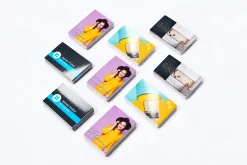
Business cards
Paper bag design and print file preparation
Paper bags are printed on a flat sheet before being die-cut and folded, so the design file must be built on the flat layout rather than on a picture of the assembled bag. We send the die-line file for exactly the size you choose; the designer's job is to place content in the right areas on that template.
- File PDF or AI, color mode CMYK, images at least 300dpi at actual size.
- Leave 3 mm bleed around the entire flat layout; keep important content away from the fold lines by at least 10 mm.
- Die-cut and fold lines go on a separate layer, not mixed with the artwork.
- Text must be converted to outlines, or send the fonts along.
- Avoid placing logos or text across the gusset folds — those areas get hidden and shifted when folded.
- Use full solid-color backgrounds on the whole bag with care: large color areas easily show streaks when printed and creases when folded.
If you don't have a file yet, we design paper bags from your existing logo and information. Usually you just need to send a vector logo, brand colors, the content to print (address, phone number, QR code, social media) and a few style reference images; we build a mockup on the real die-line and send it back for approval.
A note on content: paper bags last for years, so avoid printing things that change often such as prices, promotions or secondary phone numbers. Put the changeable parts on add-on stickers and labels — much cheaper than reprinting the whole batch of bags.
Paper bags by industry and season
Fashion uses tall bags with medium gussets, thick paper and matte lamination; printed content is usually minimal — just a logo in the middle of the bag. Cosmetics and pharmacies use small to medium sizes and light backgrounds, with contact details added. Bakeries and cafés favor stiff bags with wide bases so cake boxes sit flat, with gloss lamination for easy wiping.
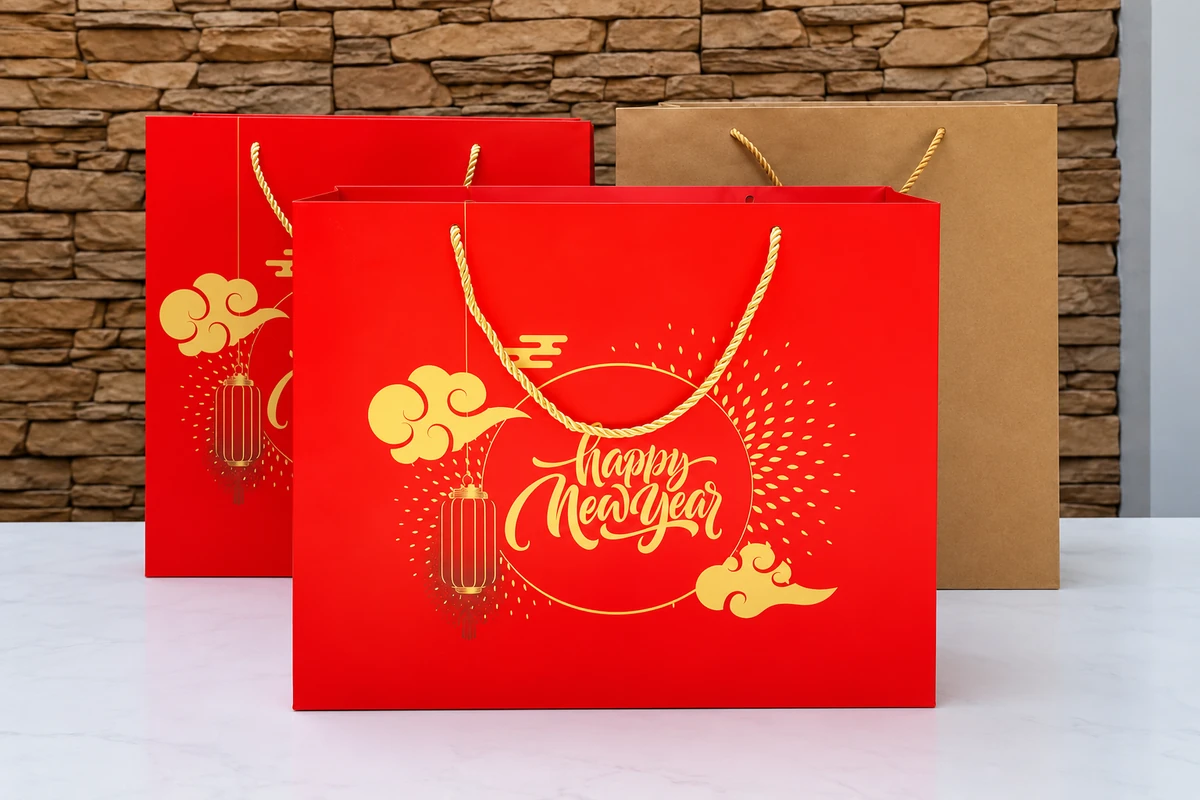
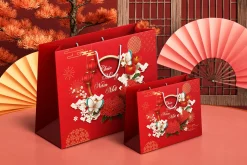
Gift shops and Tet holiday seasons go a different way: the bag is part of the gift, so colors and patterns get more investment, often with bows, ribbons or hang tags. This group orders seasonally, in moderate quantities but on tight timelines, so finalize designs about three to four weeks before the peak season.
For businesses making partner gifts, a coordinated packaging set usually includes paper bags, hang tags and seal stickers in matching tones. Printing the whole set in one run is both cheaper and ensures matching colors — printed in different runs on different days, colors may differ slightly.
Paper bag printing and delivery time
Paper bags involve many finishing steps: printing, lamination, die-cutting, folding and gluing, and handle fitting. With available sizes and files meeting specifications, we run them in 4–6 working days for batches of 200–500 bags, and 6–8 days for batches of 1,000–2,000 bags. Switching to non-standard paper or special handles adds a few days.
New sizes without an existing die-cutting mold need extra time to make the mold. So if you plan to print several batches in the same size, finalize the size from the first batch — later batches reusing the old mold will be faster and cheaper.
Delivery within Ho Chi Minh City by our workshop vehicle; provinces via bus courier. Paper bags are bulky, so they're stacked flat in bundles and fully wrapped so the edges don't dent; when receiving, check a few bags in the middle of the bundle, not just the top one.
Stacking and displaying at the counter
Goods arrive as flat sheets already die-cut and side-glued; the counter just needs to pop open the base to use them. This lets a box hold far more than delivering pre-opened bags, and takes up less space in storage.
- Open the base by gently pressing the two gusset edges, then folding the four base flaps along the existing creases; don't pull hard on the handles.
- Keep a stack of about twenty next to the cashier counter, opening them as sales go rather than all at once.
- Store in a dry place, raised off the floor on pallets or low shelves; damp at the bottom of the stack makes glued edges peel.
- Don't place heavy objects on the stack, since flattened creases make the sides warp when the bag is opened.
- For wet items or boxes just out of the fridge, add a thin plastic liner inside.
If the counter is cramped, many shops hang a horizontal bar under the countertop and rest the stack on it. Staff pull out one bag with one hand while the other keeps wrapping, faster than bending down to take one from a box under the counter.
For holidays or sale days, estimate usage in advance as the average number of daily orders times the number of campaign days, plus about fifteen percent for wastage. Running out mid-campaign leaves no time to reprint, while ordering too many leaves stock sitting all year.
Designs for special occasions should be kept separate from year-round designs. Regular designs are printed in large quantities for a lower price, holiday designs in small runs for each season — this split saves more than printing one shared design and trying to use it for every occasion.
Frequently asked questions about paper bag printing
Can I order fewer than 200 bags? The price list starts from 200 bags. Fewer is still possible but the unit price per bag is very high since machine setup and mold mounting still happen once, so we usually recommend taking 200 bags.
Does the price include handles? Yes. The price on the page is all-inclusive: paper, single-sided color printing, lamination, die-cutting, gluing and fitting standard cord handles. Fabric, plastic or twisted cord handles cost extra.
How much weight can a paper bag hold? C250 paper with standard cord handles works well for goods under about 5 kg. For heavier goods, switch to C300 or I300 and use stronger handles — tell us your heaviest item and we'll advise.
Can the two sides be printed differently? The specification on the page is single-sided printing on the outside. Double-sided or inside printing is possible but quoted separately.
What if my size isn't among the 23 sizes? We can make custom sizes, with an added die-cutting mold cost. Send the three measurements width × height × gusset and the expected quantity for a quote.
Do you issue VAT invoices? Yes. The price on the page excludes 8% VAT; the tax is shown right below the price box so you can see the total payable.
Order Paper Bag Printing at In Quảng Cáo Q7
Choose the size, batch quantity and paper type right on this page to see the price, or send your file via Zalo 0866.511.099 so we can check the file and confirm the delivery time.
Workshop address: 49 Mai Van Vinh, Tan Hung Ward, Ho Chi Minh City.
Consultation and orders: 8:00–12:00 and 13:00–20:00 Monday – Saturday, Sunday 14:00–19:00. Production and delivery: 8:00–12:00 and 13:00–18:00 Monday – Saturday, closed Sunday.
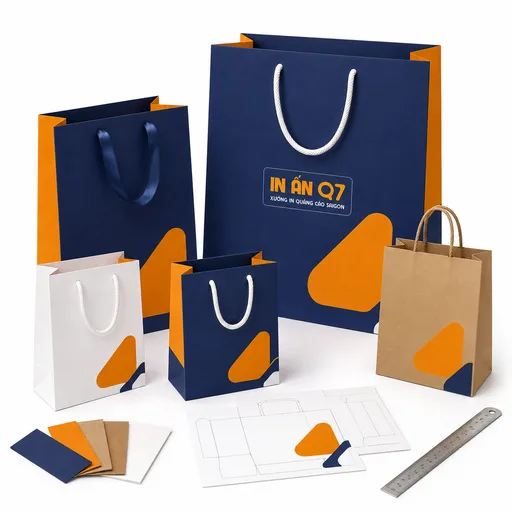
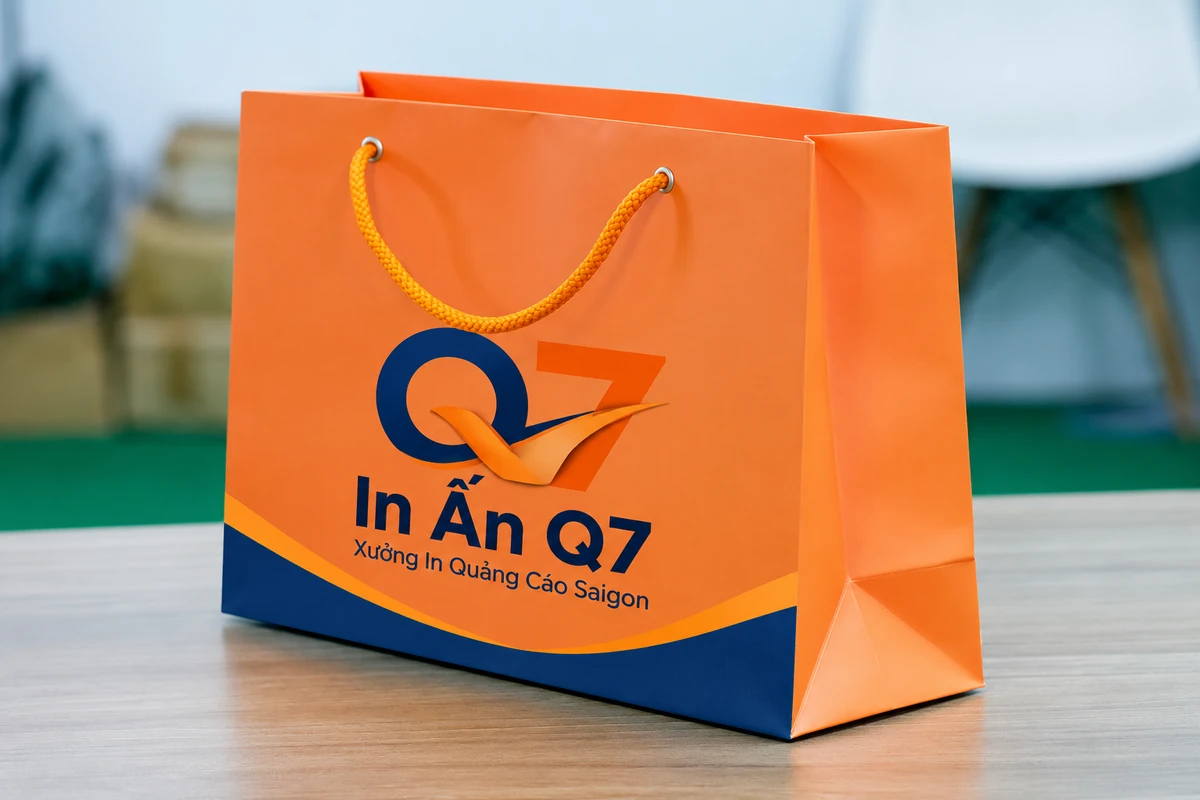
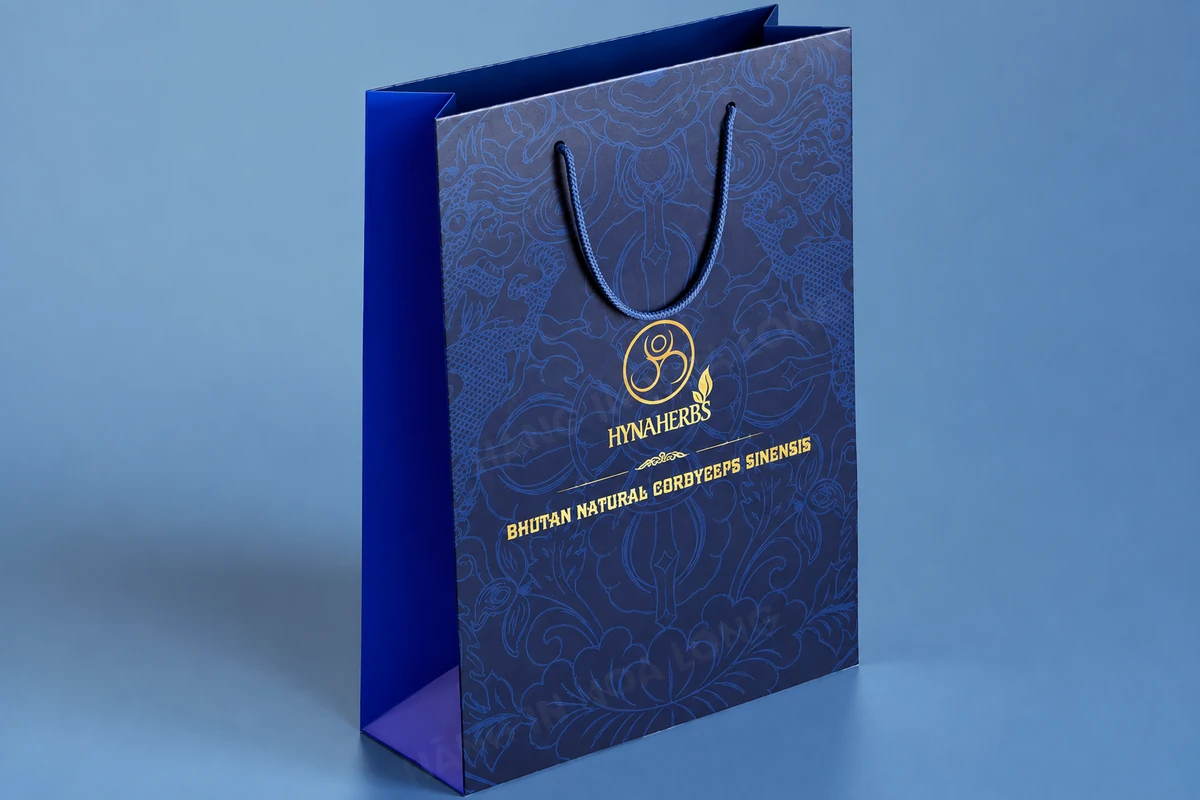
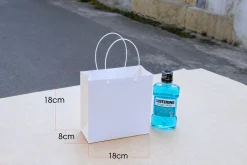
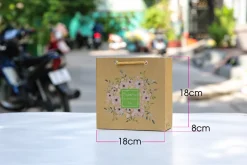
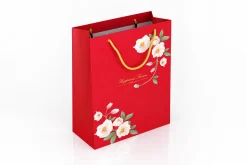
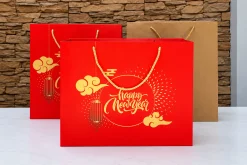
Some images on this page are illustrations.
| Made at | In Quảng Cáo Q7 workshop – 49 Mai Van Vinh, Tan Hung Ward, Ho Chi Minh City |
|---|---|
| Origin | Vietnam |
| Status | Made to order |
| Warranty | 24 hours from receipt: if you find a printing error or a difference from the approved file, let us know and we will reprint free of charge. |
| Price excl. VAT | 2.600.000 ₫ |
| Price incl. 8% VAT | 2.808.000 ₫ |
Ordering
Three ways to order: choose the specifications and quantity on the website and click Place order; message us on Zalo or call 0866.511.099; or visit the workshop to see material samples at 49 Mai Van Vinh, Tan Hung Ward, Ho Chi Minh City. During working hours, In Quảng Cáo Q7 replies within about 30 minutes. Most products have listed prices by size, material and quantity – prices exclude 8% VAT.
→ Online ordering guide · Quick quote
Sending design files
PDF or AI preferred, CMYK color mode, 300dpi for small formats, 3mm bleed. Send via Zalo, email inquangcaoq7@gmail.com, the form on our website, or a Google Drive link for large files. We check your file for free before printing; if you have no file yet, In Quảng Cáo Q7 can help with the design.
→ Design file submission guide
Payment
Bank transfer, QR code or cash at the workshop. Orders are confirmed and scheduled for production after payment; after transferring, send a photo of the receipt with your phone number via Zalo. Transfer note: Your name – Phone number – Product.
→ Payment guide
Timing & delivery
Completion time is shown on each product, counted from receipt of a print-ready file and payment confirmation. Pick up at the workshop Monday – Saturday, 8:00–12:00 and 13:00–18:00; urgent orders within Ho Chi Minh City delivered within 2 hours; other provinces via bus courier or express delivery. On receipt, please check quantity, size, material and condition of the products.
Order tracking
Enter the phone number used when ordering to see your orders from the last 90 days and their status: Unpaid → Printing → Printed → Delivering → Invoiced → Completed. For orders placed via Zalo, send your name and phone number to get progress updates.
→ Order tracking
E-invoice (VAT)
In Quảng Cáo Q7 issues 8% VAT e-invoices. Provide the company name, tax code, address and email within 24 hours of ordering; the invoice is issued within 24 working hours and sent by email, and cannot be changed once issued.
→ E-invoice (VAT) details
Misprints – reprints
Products that differ from the order or the approved proof are reprinted free of charge – report within 24 hours with photos. Spelling mistakes in a file you approved are not covered by free reprints.
→ Frequently asked questions (FAQs)
Reviews
There are no reviews yet.