




































































Paper Types, Folds and How to Choose When Printing Flyers
Sep
Leaflets are the cheapest form of advertising per person reached, but also the easiest to order wrong: the wrong paper and the leaflet crumples after a few hours in a pocket, forgetting to crease and the folds crack the ink, the wrong size and customers hold it without reading.
In this article In Quảng Cáo Q7 explains all the choices when printing leaflets — paper size, Couche weight, lamination, creasing and fold types — with real photos so you can picture it before ordering.
How do flyers, folded leaflets and brochures differ?
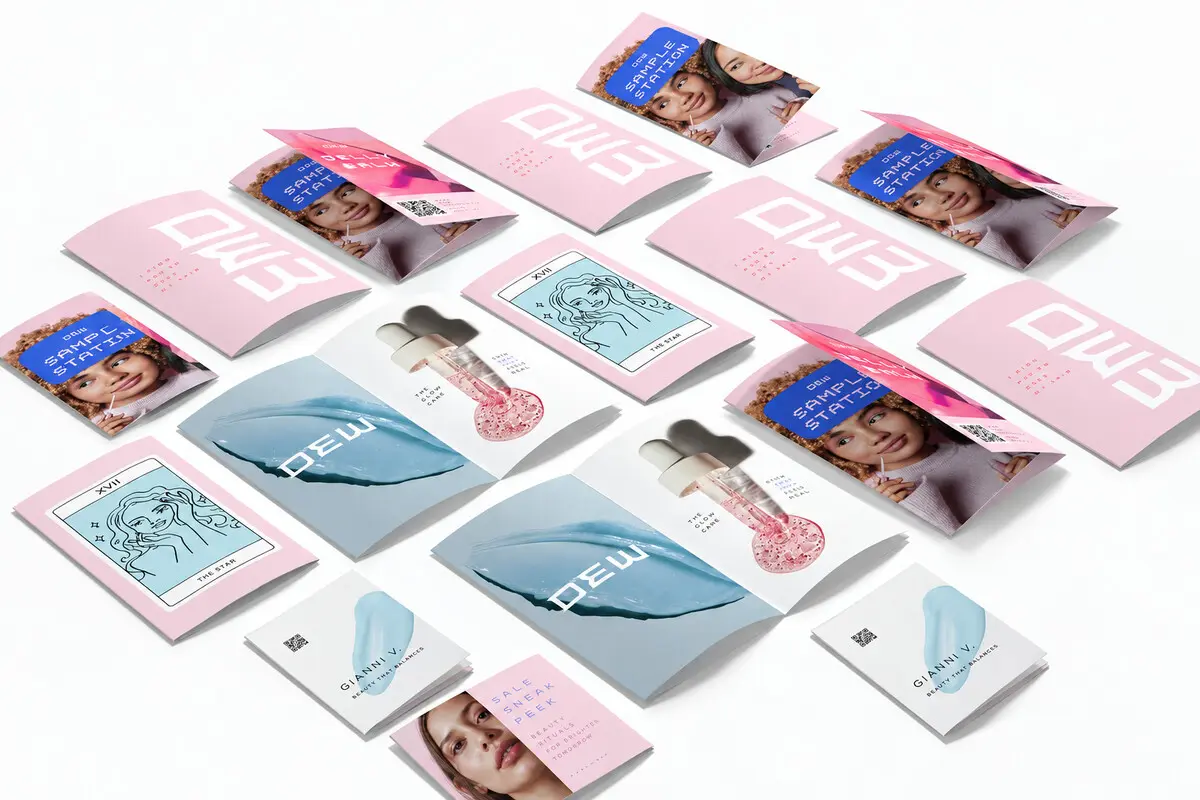
These three names are often used interchangeably, but in practice they differ only in whether they're folded:
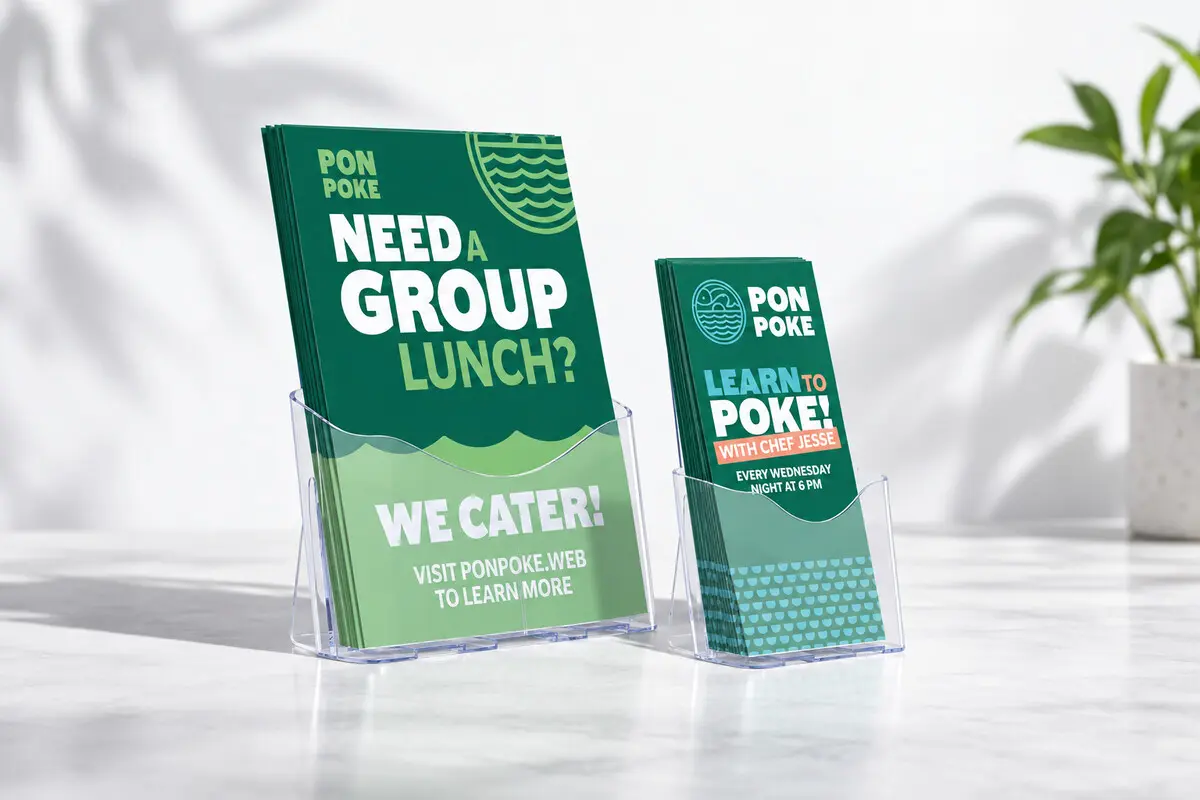
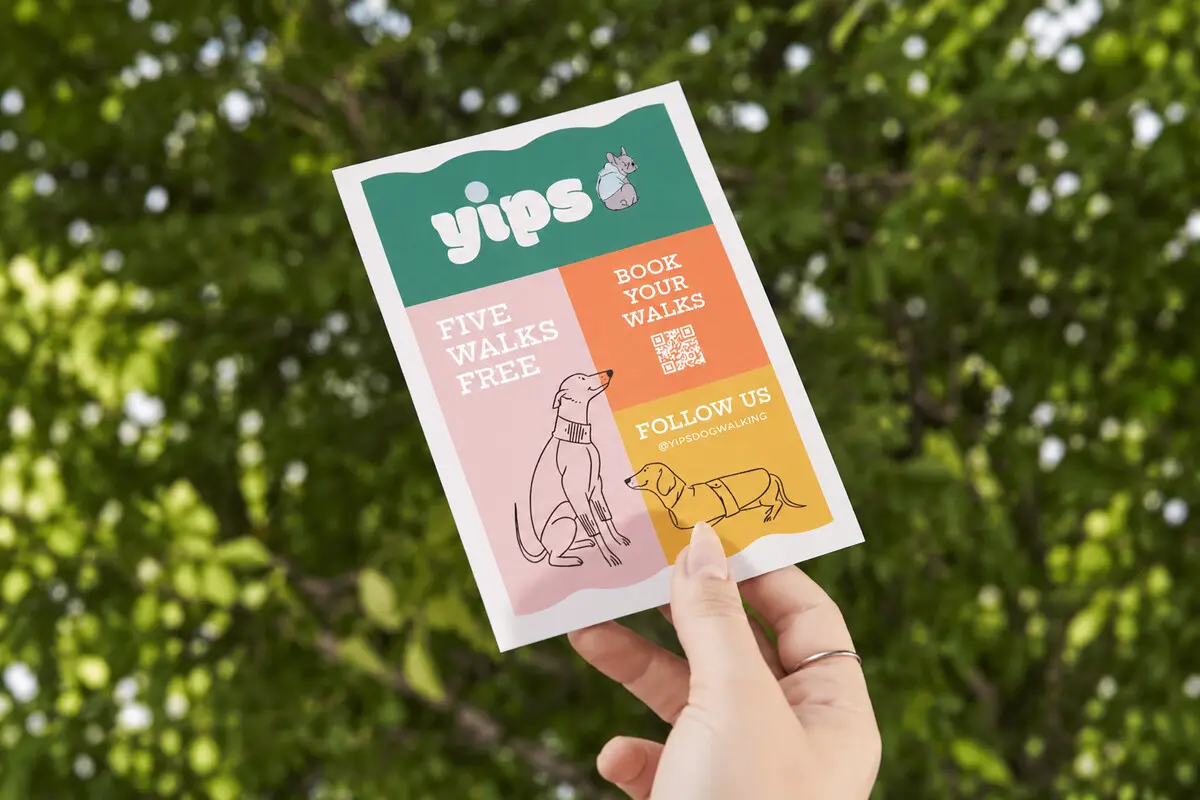
- Flyers (flyer/leaflet) – a single flat sheet, printed on one or both sides, not folded. Used for handing out, inserting in newspapers or leaving at counters. Short content: one promotion, one grand opening announcement.
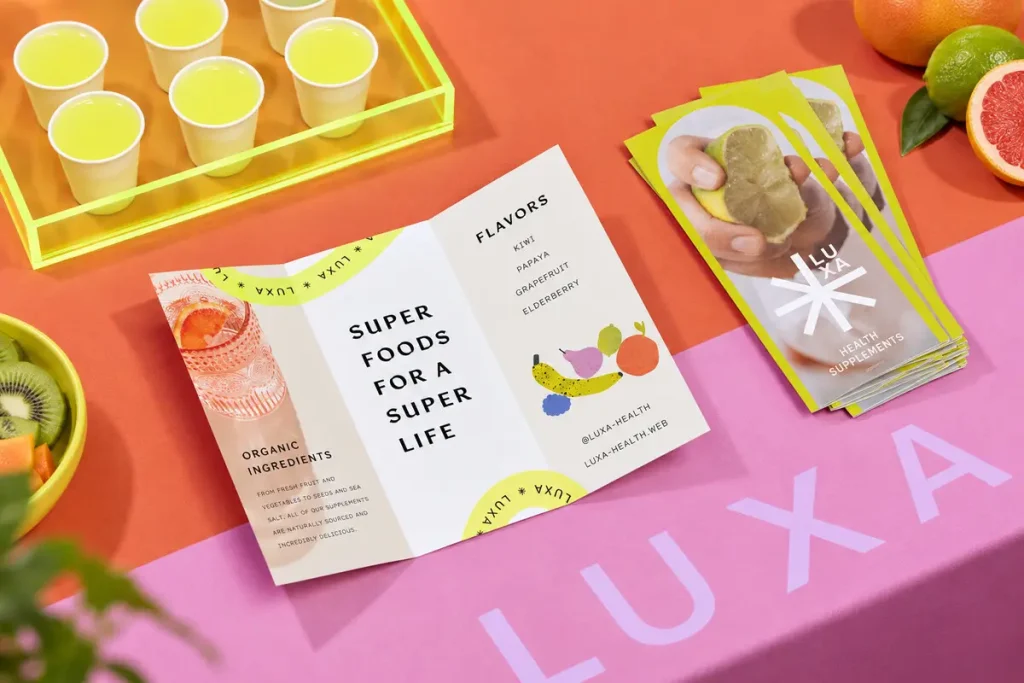
- Folded leaflets – still one sheet, but folded into 2, 3 or 4 panels. Holds more information while staying compact when folded.
- Brochure – a more premium name for multi-panel folded leaflets, often used for company introductions, product catalogues and service lists.
Over Leaflet product page; all three are in the same product. The only difference you need to choose is whether it's creased and folded.
Choosing the paper size: A5, A4 or A3?
| Size | Size | Commonly used for |
|---|---|---|
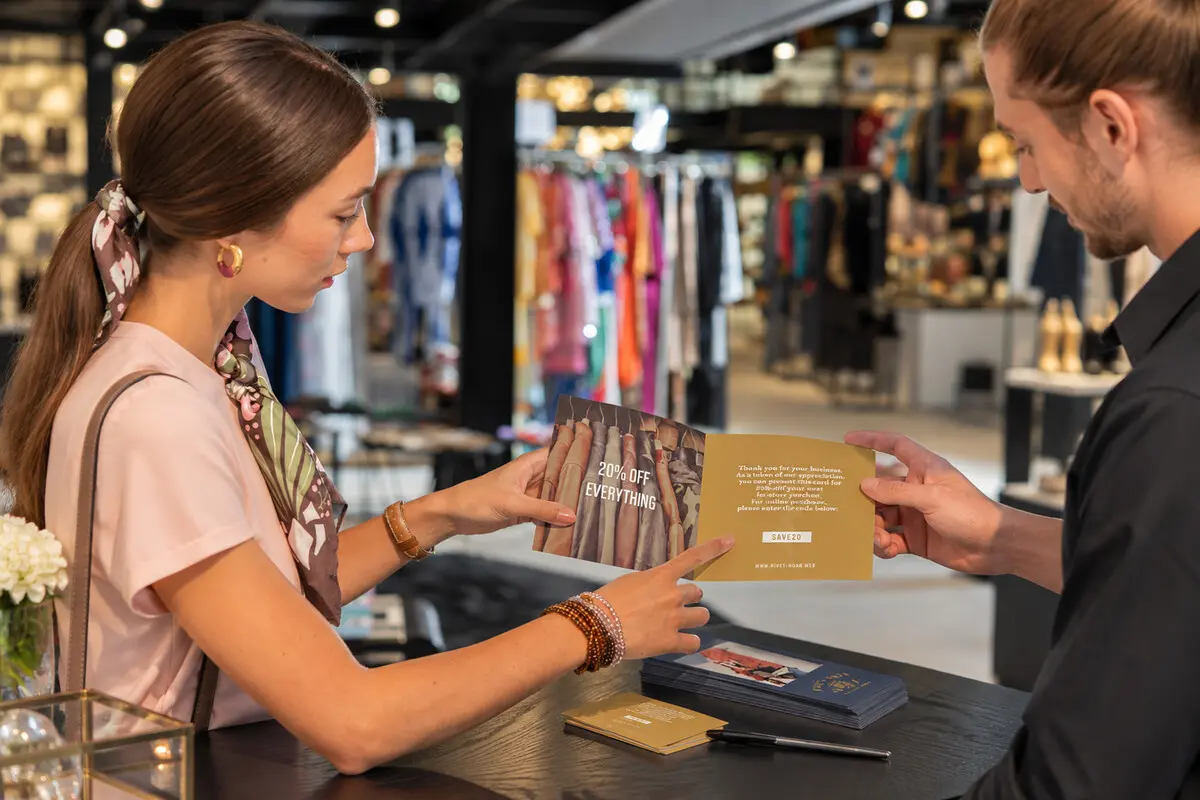
| A5 | 148 × 210 mm | Handing out on the street, inserting with receipts, leaving at cashier counters. The most ordered size because it's handy and low-cost. |
| A4 | 210 × 297 mm | Price lists, menus, service introductions with many items. Folded in half or in three as folded leaflets. |
| A3 | 297 × 420 mm | Large wall price lists, mini posters, multi-panel leaflets folding down to A4/A5. |
Quick tip: leaflets for customers to take home go A5; flyers for customers to read on the spot go A4 and up.
C100 to C300 couche paper – which weight to choose?
The number after “C” is the paper weight, in grams per square meter of paper. The higher the number, the thicker and stiffer the paper and the more substantial it feels — and the higher the price.
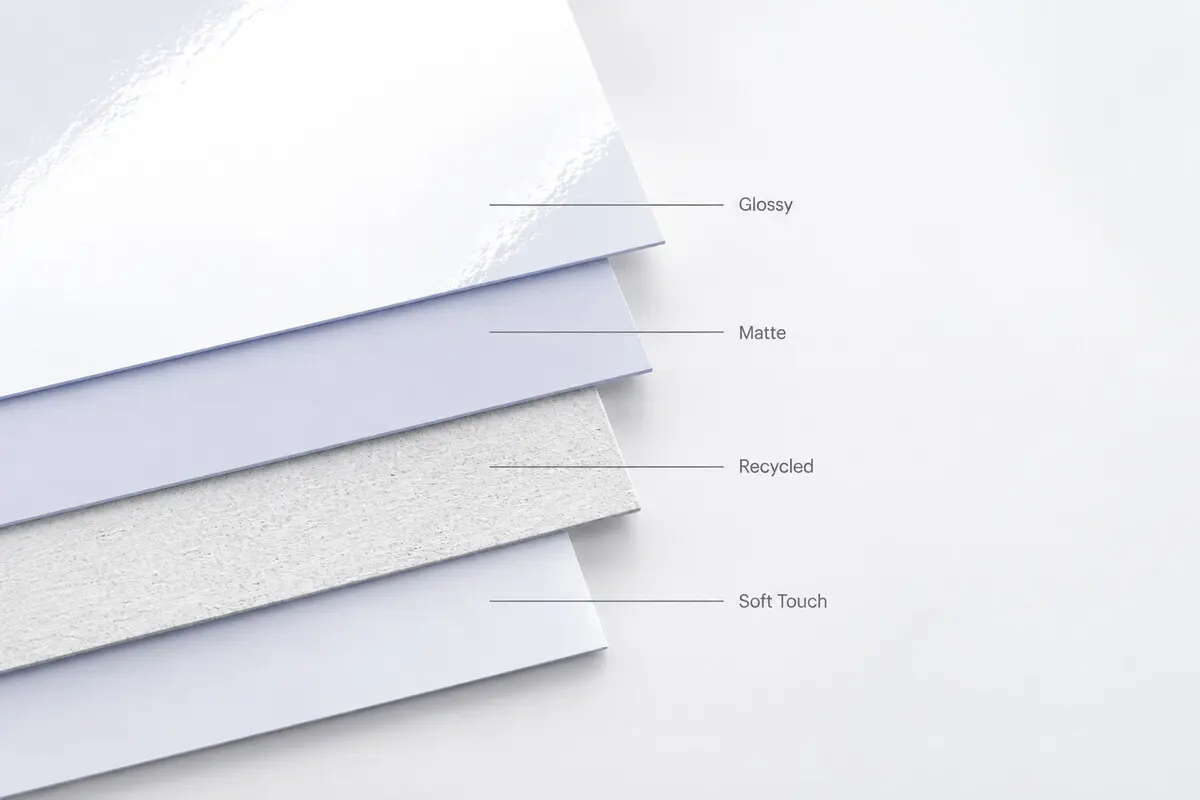
- C100 – C150: thin and light, similar to a magazine page. For flyers handed out in very large quantities, on the street or inserted in newspapers. Cheapest; even 10,000 – 20,000 sheets stay affordable.
- C200: the best balance. Thick enough not to crease when held, yet still folds nicely. Suited to folded leaflets, brochures and menus used for a few months.
- C250 – C300: thick and stiff, almost like card. Used for premium flyers, promotional cards, vouchers and table menus — things customers keep for a long time.
Not sure which to choose? For flyers handed out in bulk choose C150; for folded leaflets or menus choose C200 and up.
Should I laminate?
Lamination applies a very thin plastic film to the paper surface after printing. The film makes flyers waterproof, crease-resistant and fade-resistant, and much smoother to the touch than bare paper.
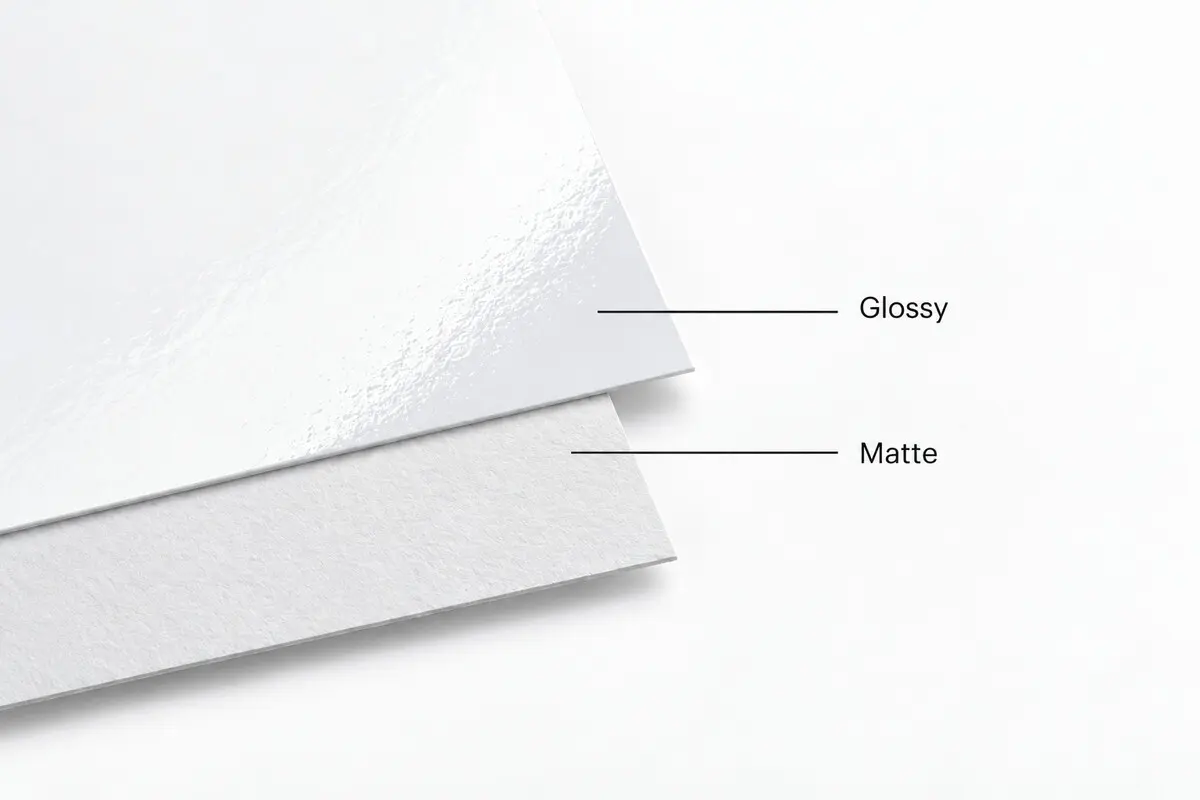
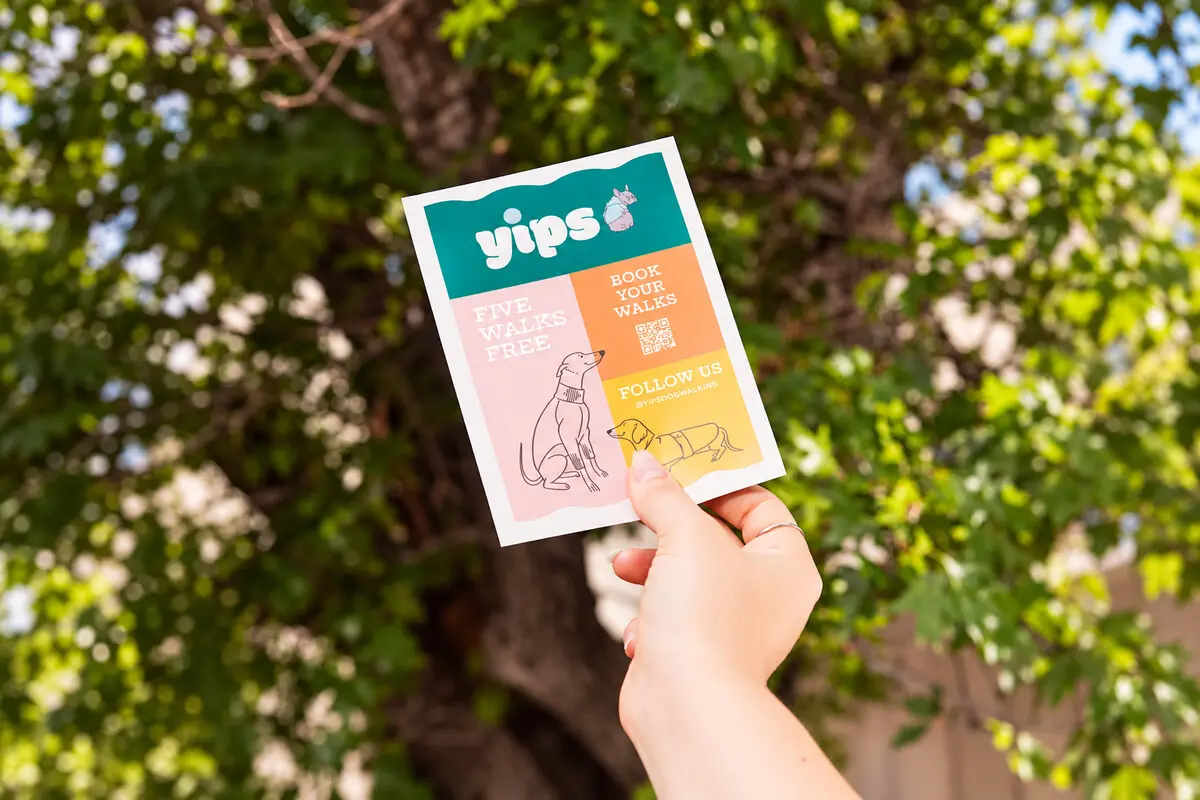
- No lamination – cheapest, can be written on with a ballpoint pen. Suited to quickly handed-out, single-use flyers, or flyers with boxes for customers to fill in.
- Laminated 1 side – laminates only the outer side. Protects the image side while the inside can still be written on.
- Laminated 2 sides – laminated on both sides, the most durable. Choose it for menus, leaflets kept on shelves for a long time and leaflets handed out outdoors.
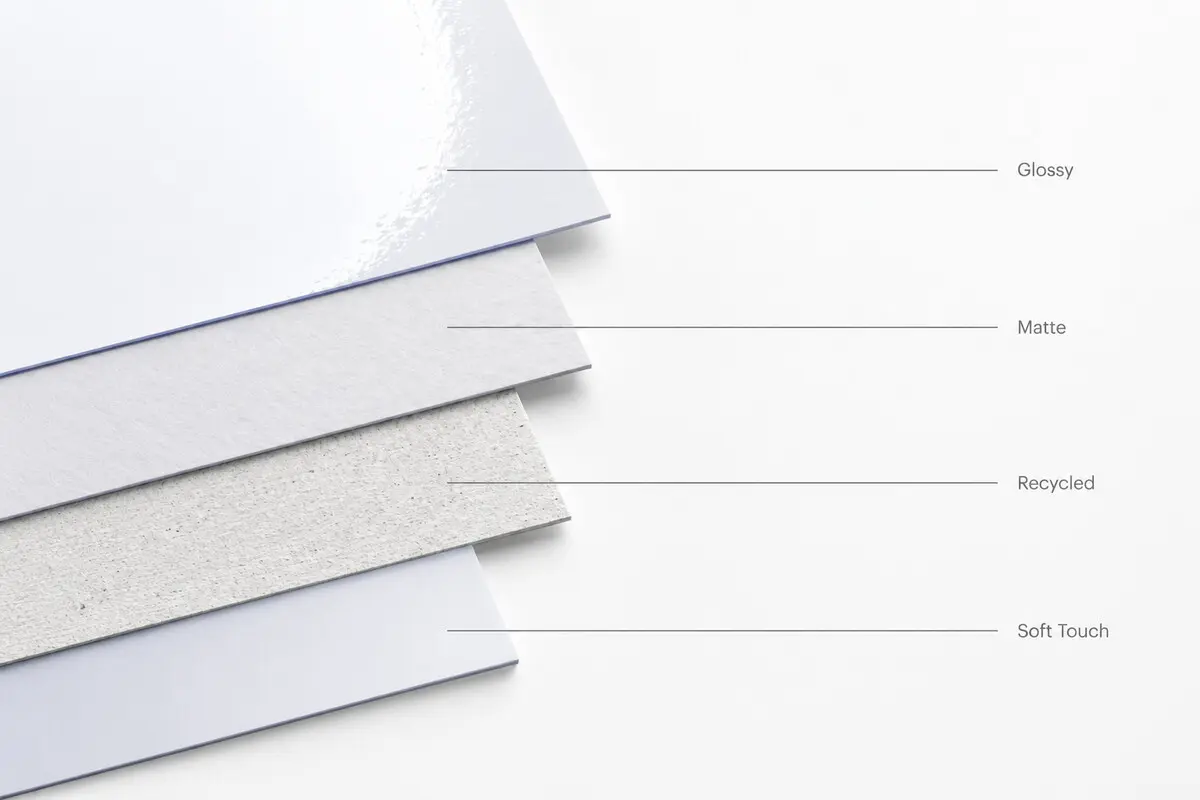
Lamination comes in matte and glossy: matte film gives a non-glossy, glare-free surface, easy-to-read text and a premium look; glossy film makes colors more vivid, so food or product photos look more appealing.
What is “creasing” and when is it needed?
Creased (also called scoring) uses a machine to press a groove into the paper where it will be folded. With a crease, the paper folds exactly on the line, edges stay straight and the ink doesn't crack along the fold.
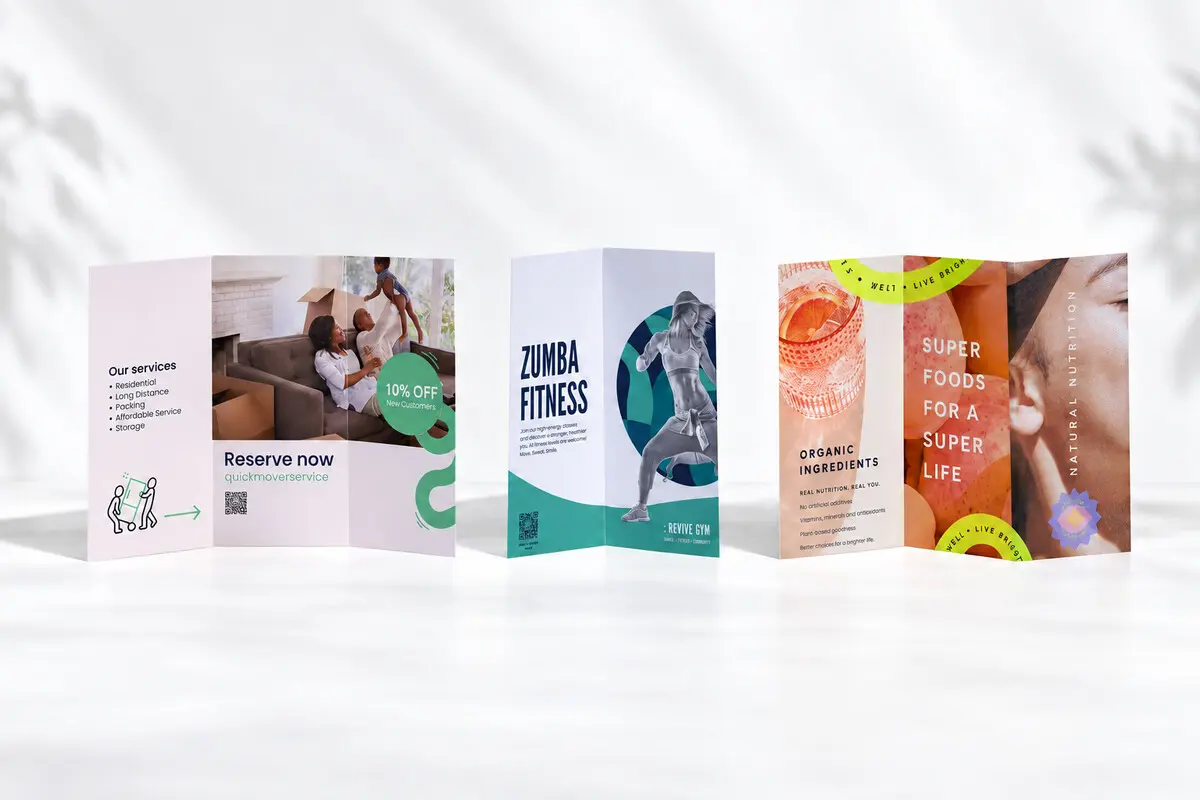
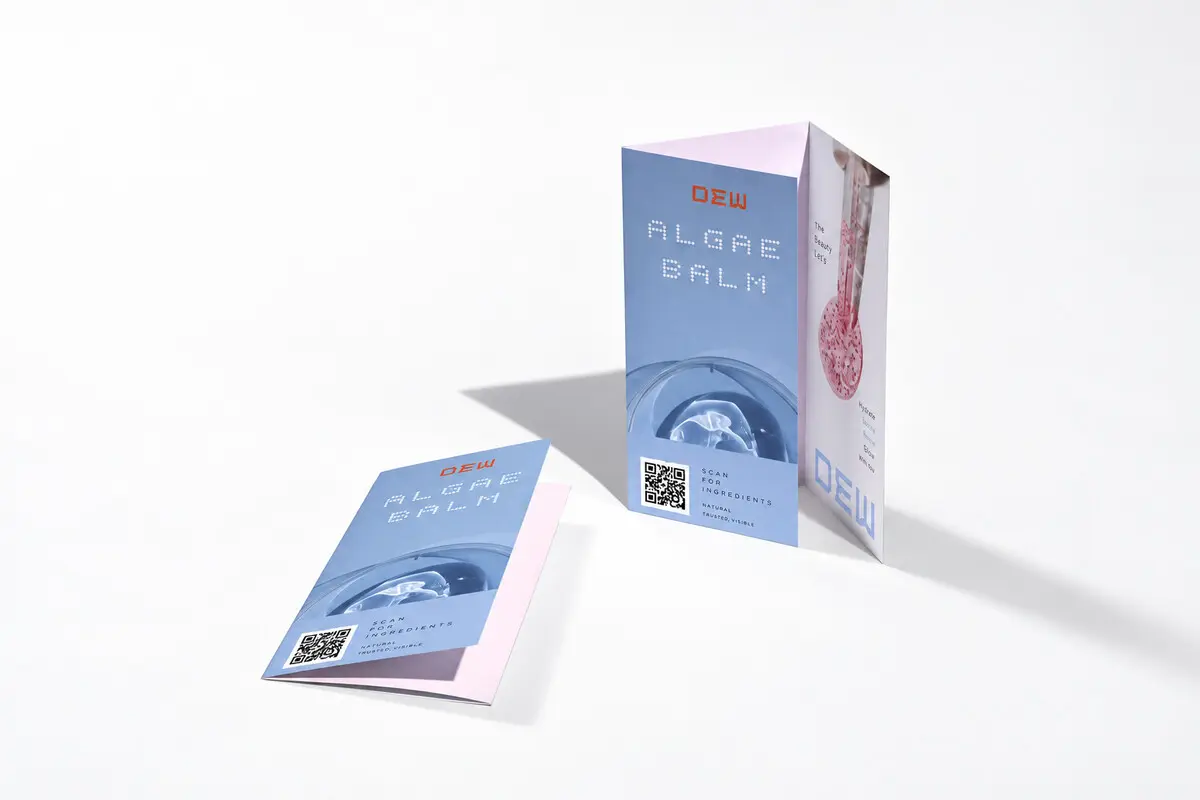
A simple rule: paper of C200 and up that needs folding must be creased. Thin C100 – C150 paper can be folded directly, but creasing still gives a nicer fold.
For flat leaflets without folds, choose “No creasing” when ordering.
Common fold types
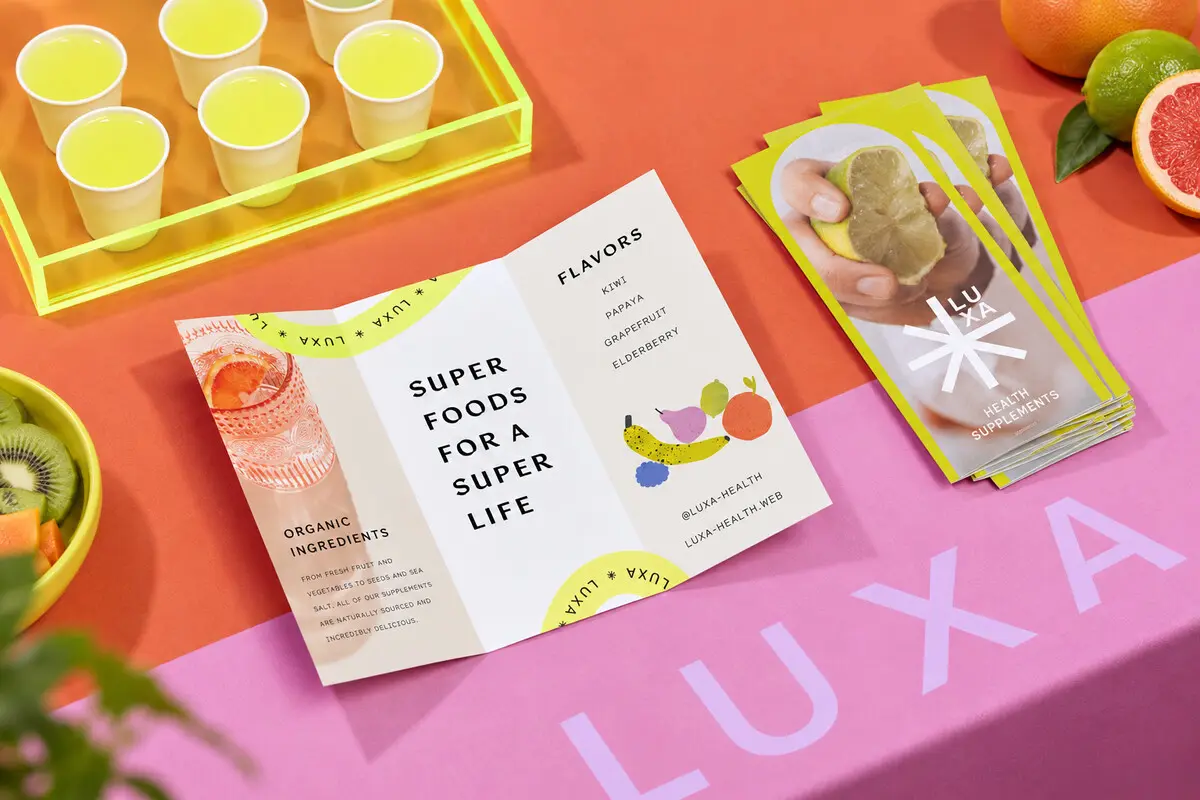
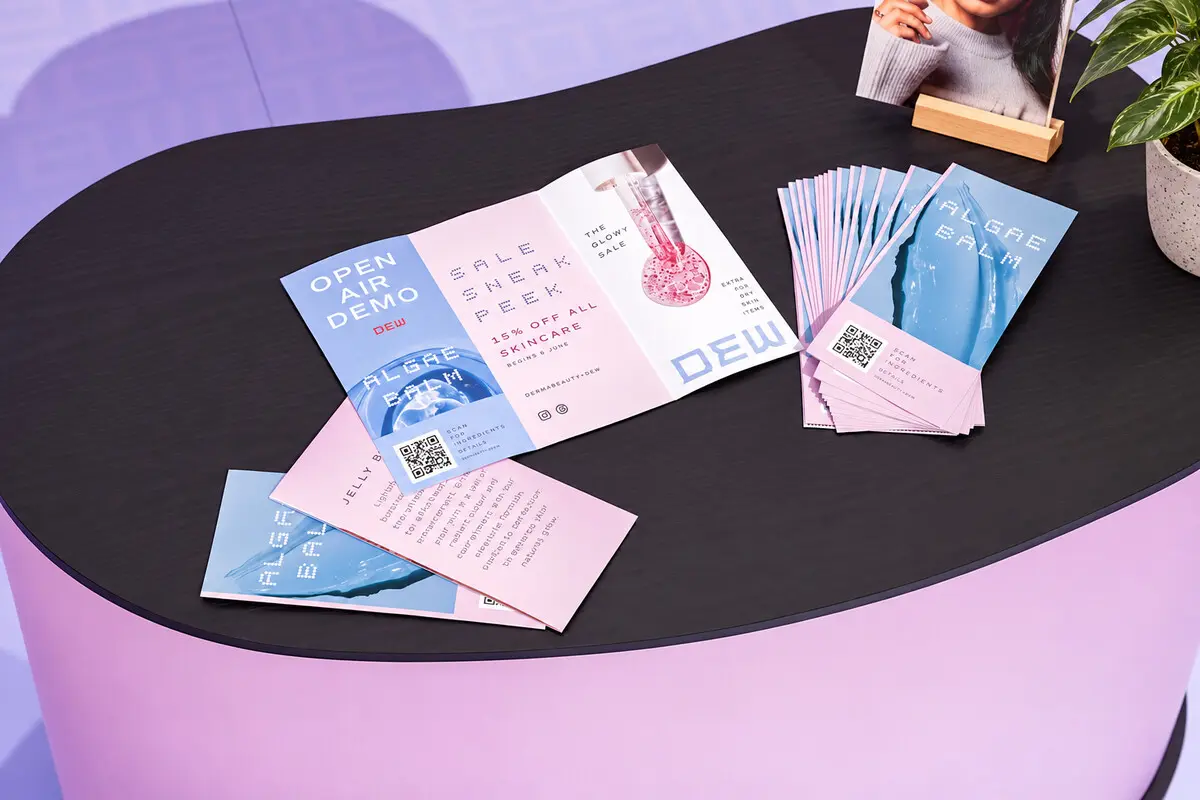
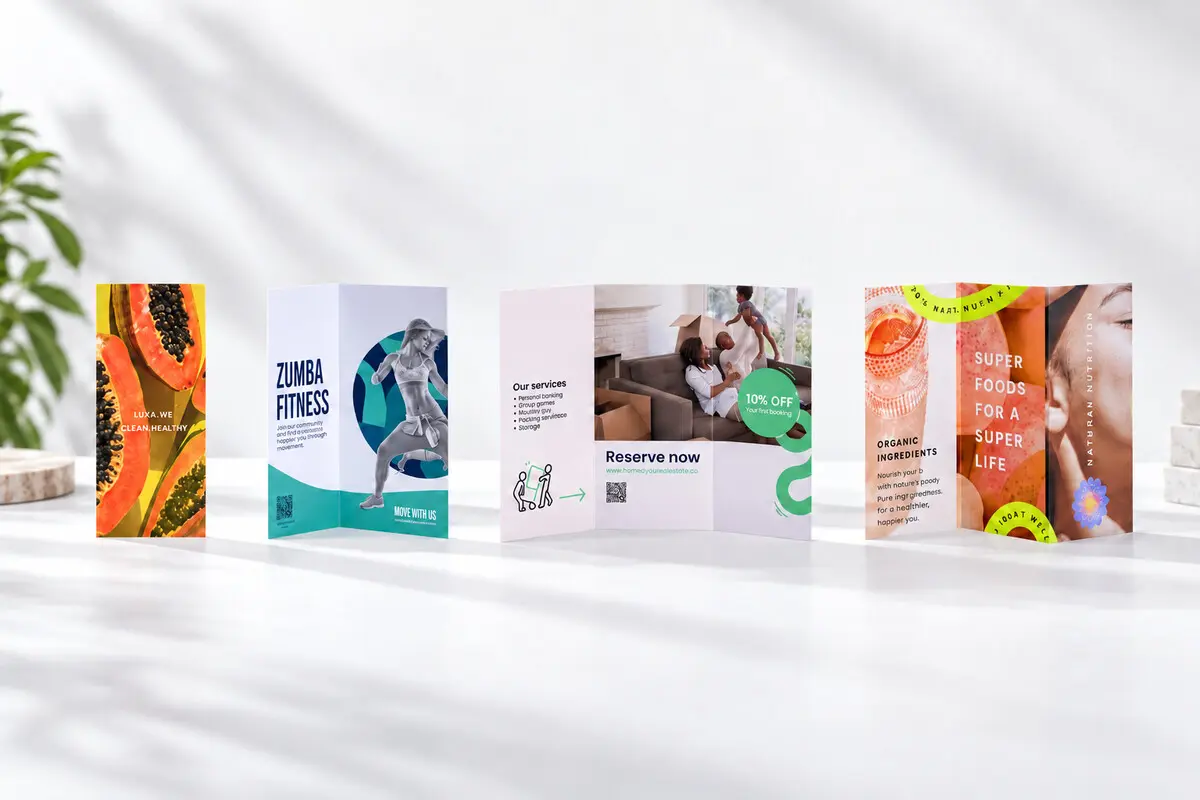
- Half fold – one fold in the middle, making 4 panels. Simple, suited to short menus and invitations.
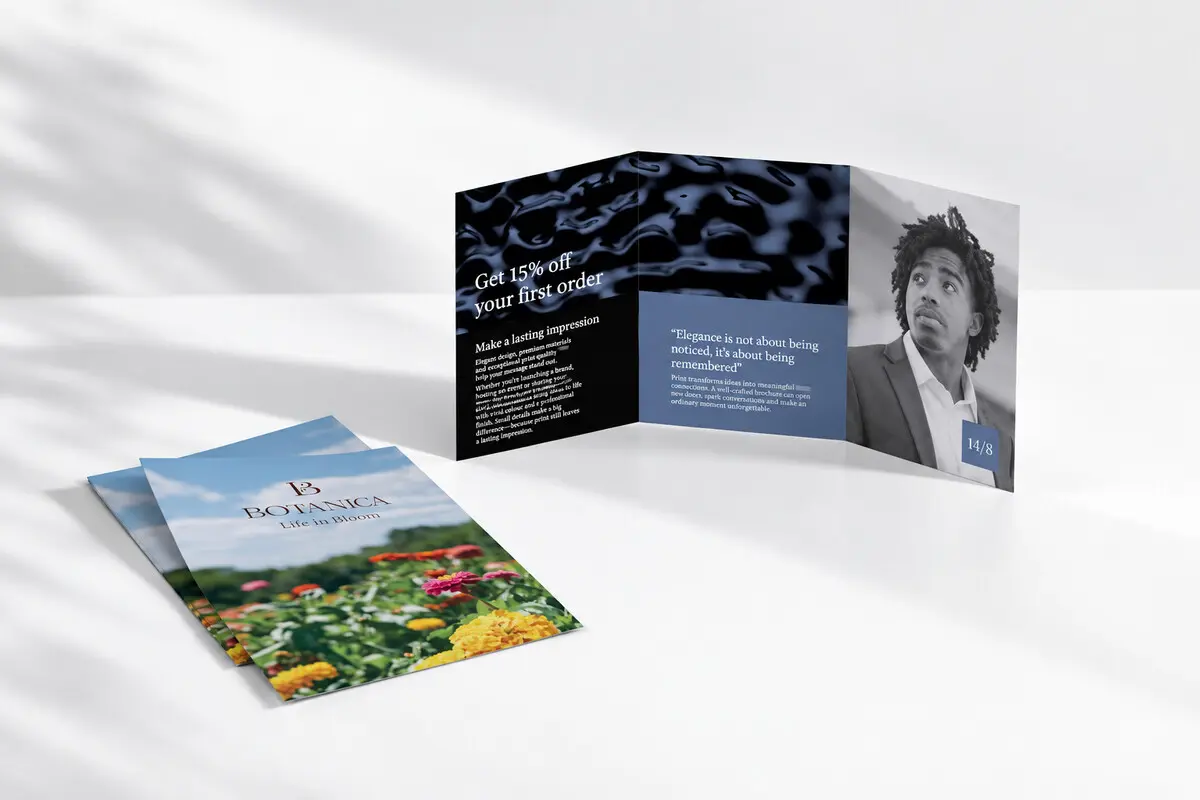
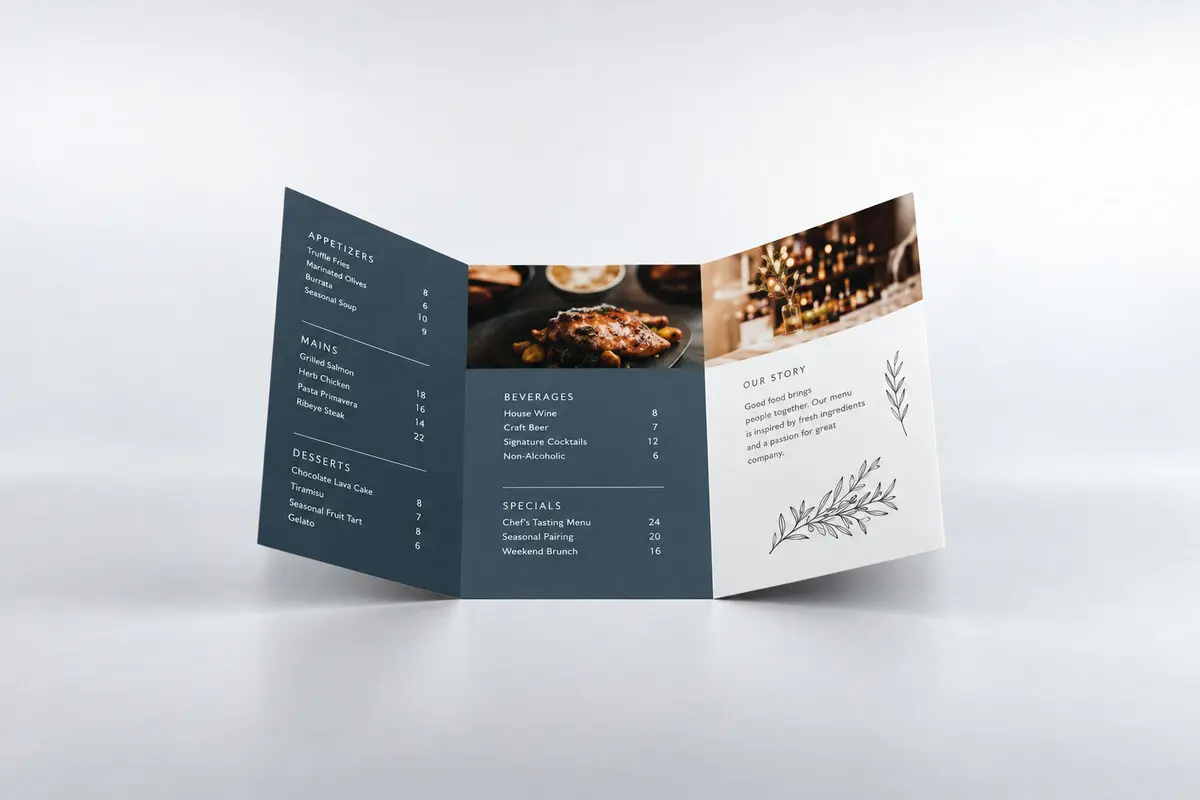
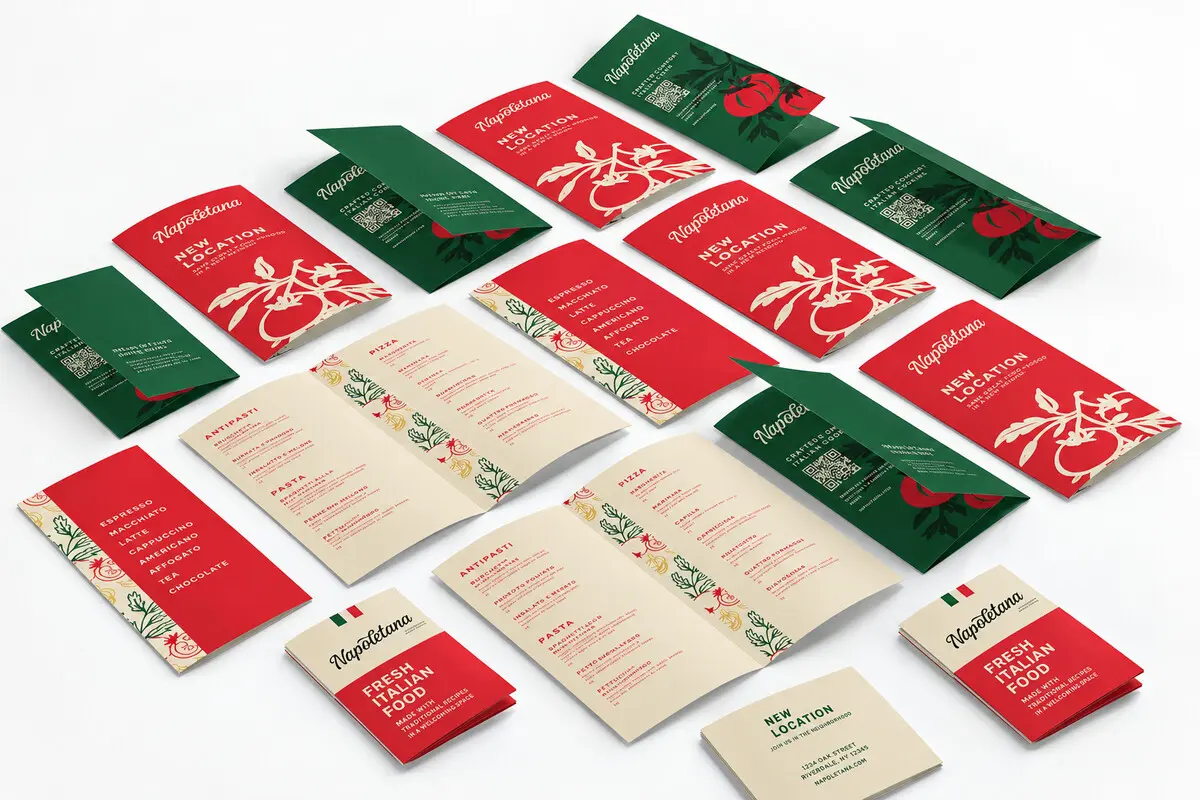
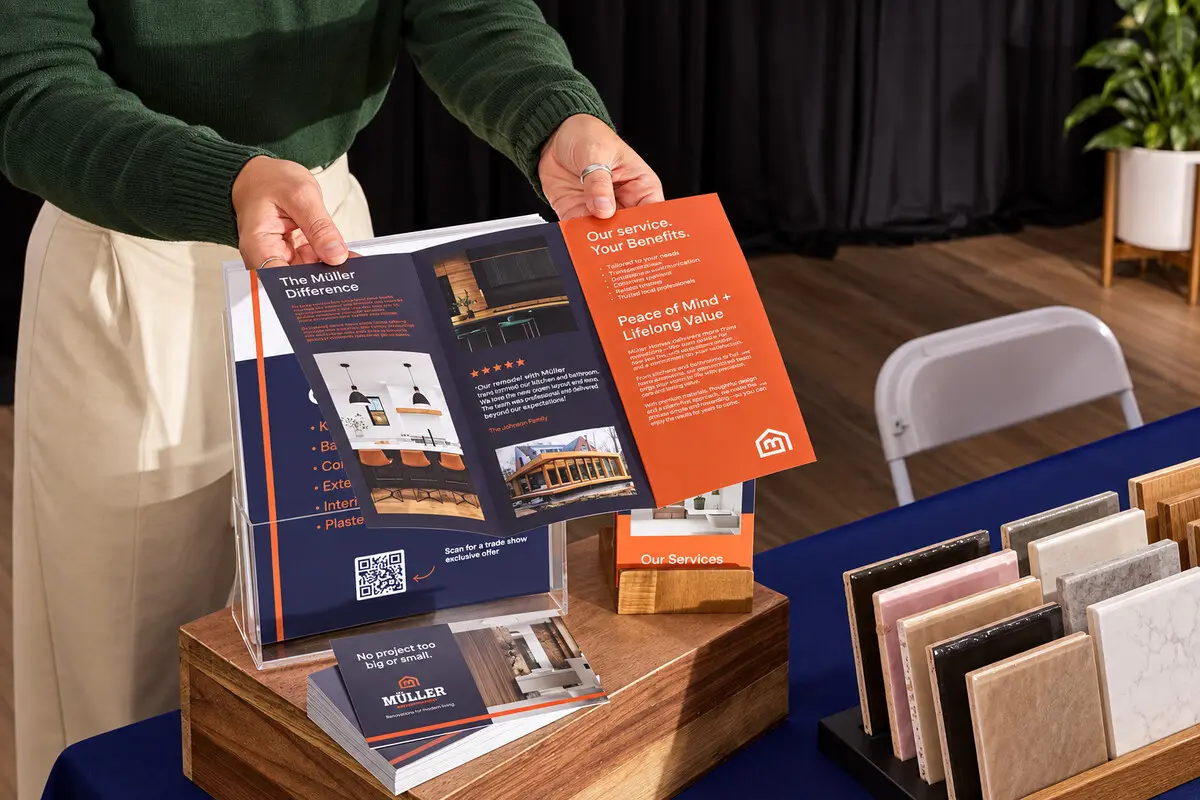
- Tri-fold (roll fold) – two folds, with both edges folding inward to make 6 panels. The most common style for company brochures and service lists.
- Z-fold – two folds in alternating directions, opening like an accordion. Suited to sequential content, such as process steps.
- Four-panel fold – three folds making 8 panels, used for long menus and compact catalogues.
Just write the fold style you want in the order notes, and we'll crease and fold according to the design file.
Related products

Leaflet / Brochure

Fast Printing

Notebook

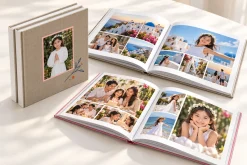
Photobook
What are flyers used for?
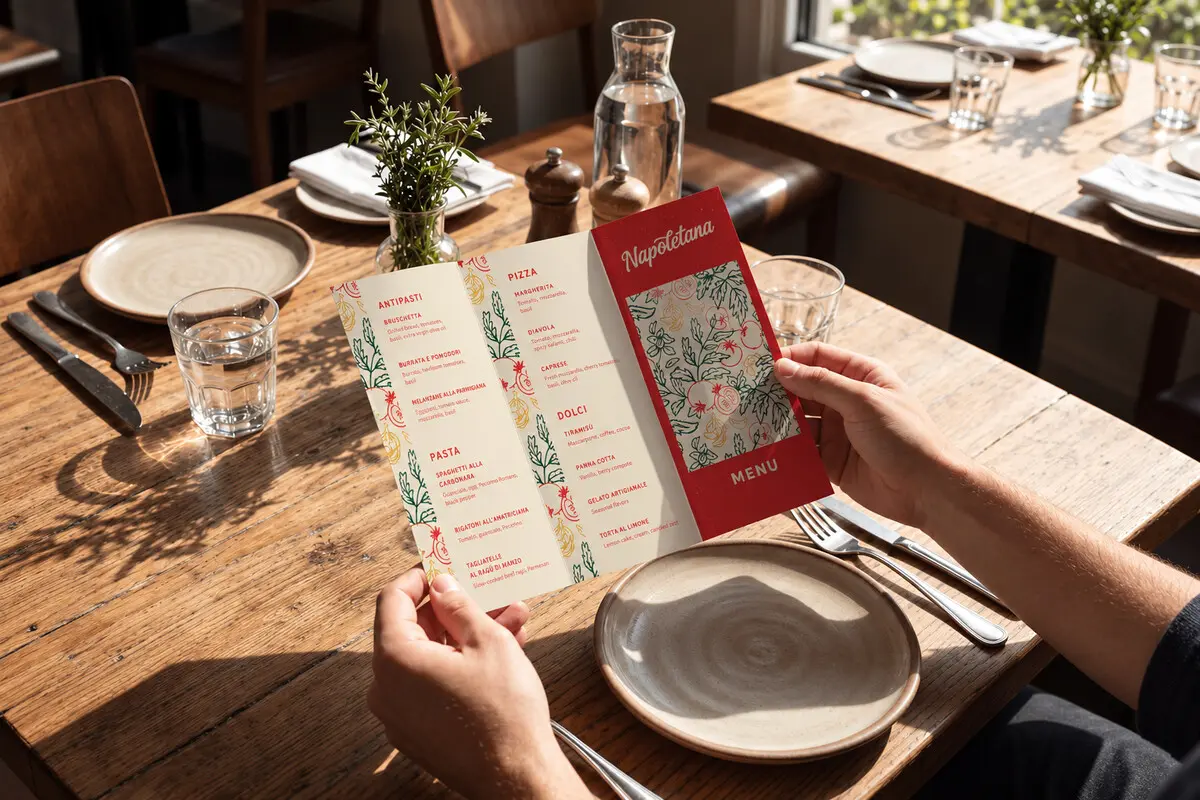
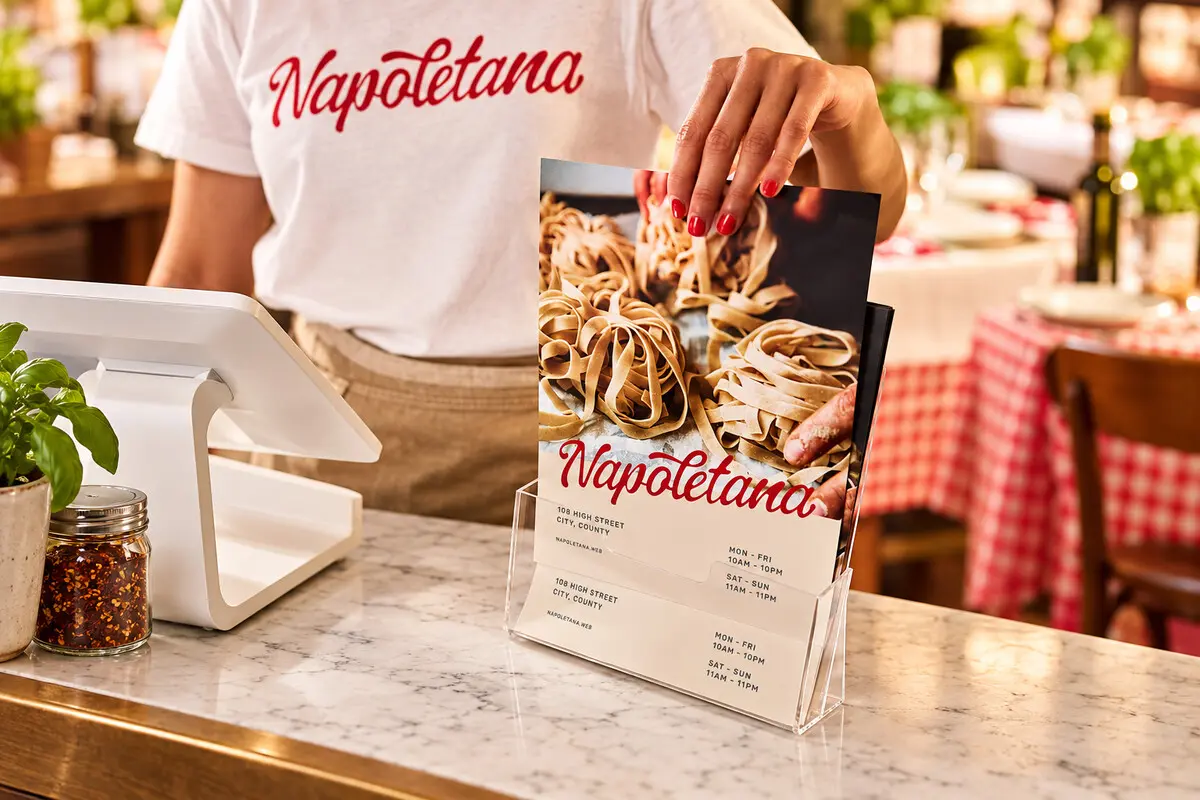
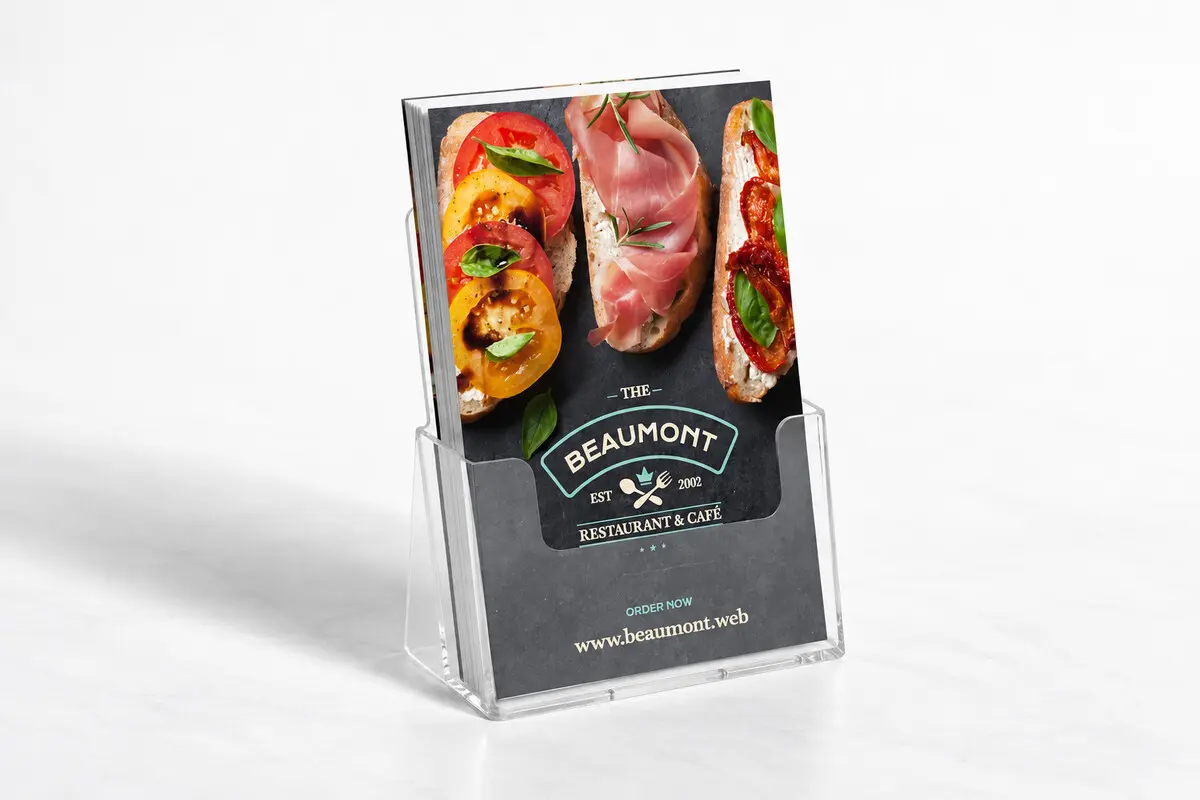
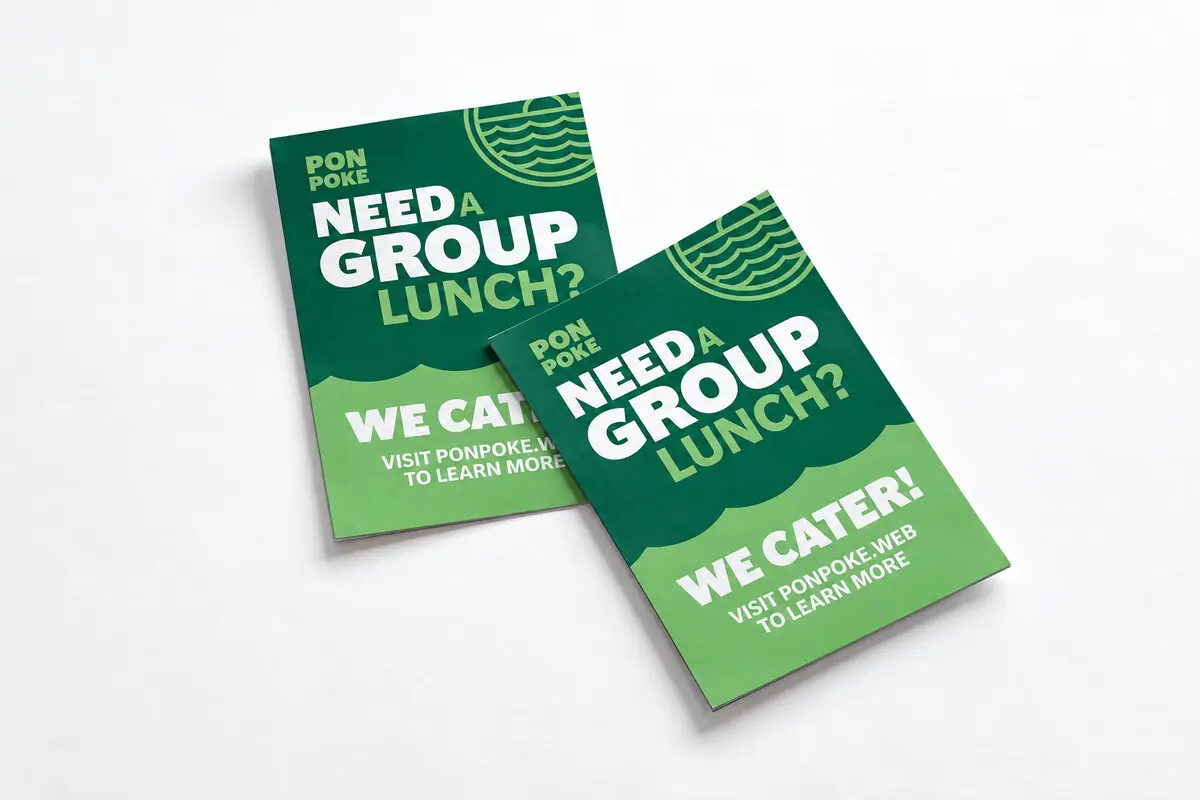
- Restaurants, eateries and cafés: takeaway menus, promotional leaflets, new dish introductions.
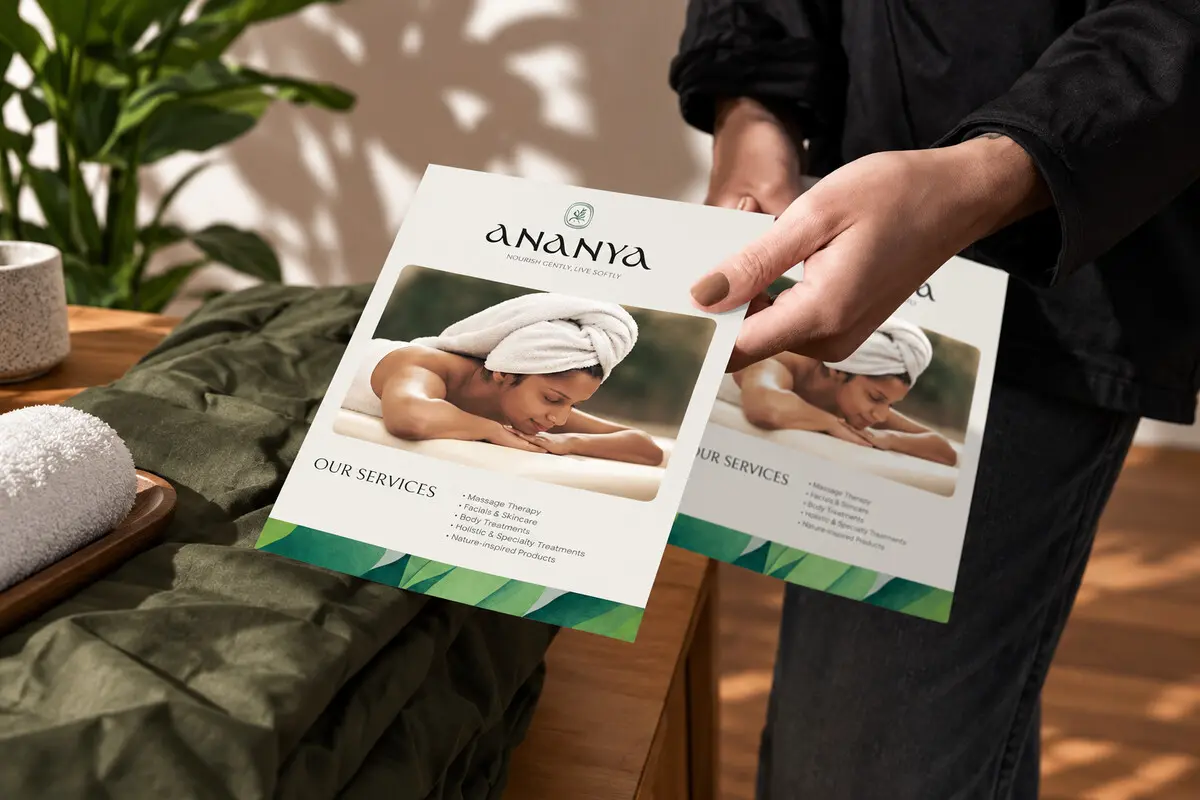
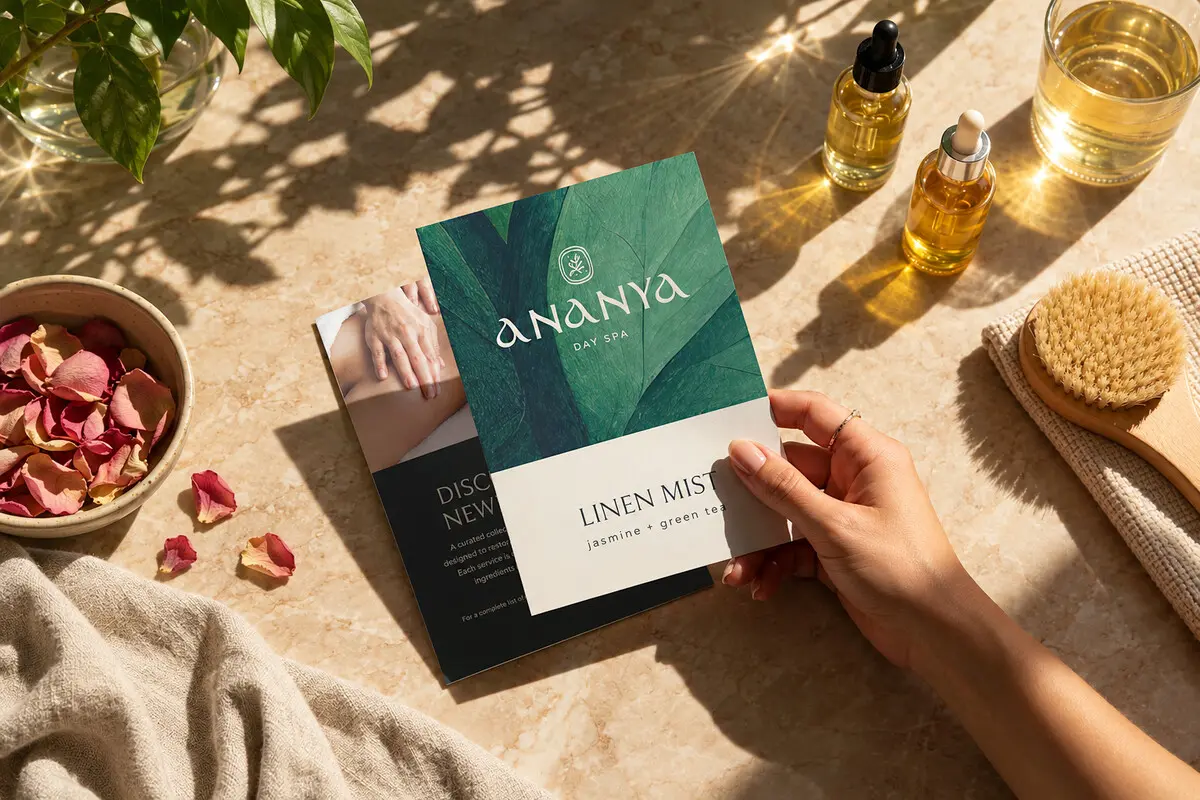
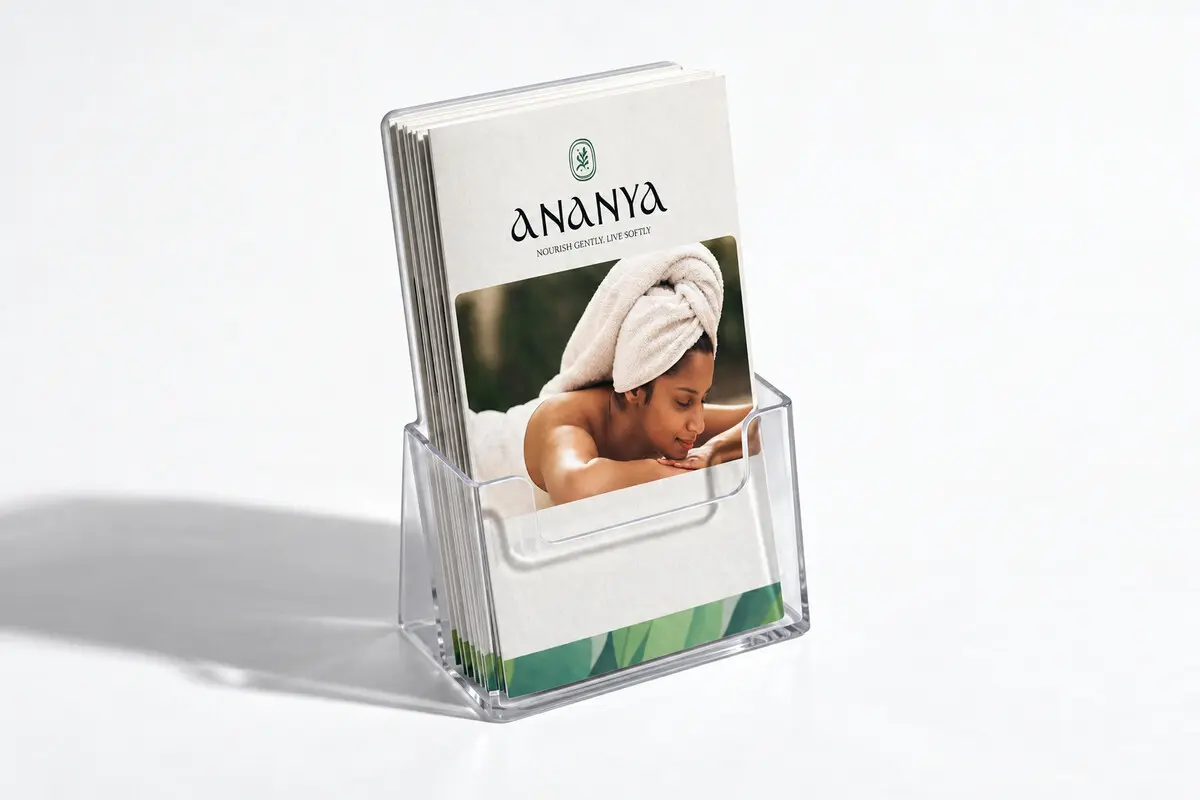
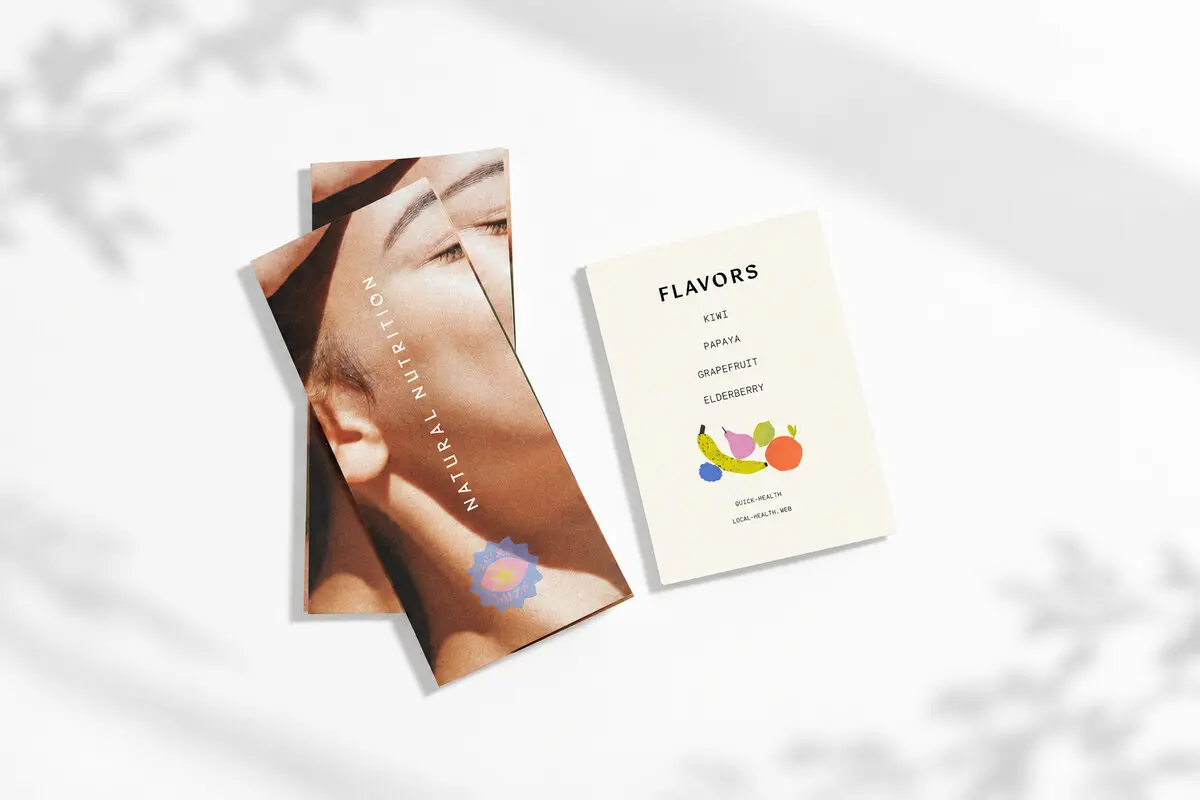
- Spas, beauty clinics and medical clinics: treatment price lists, service introductions for the reception desk.
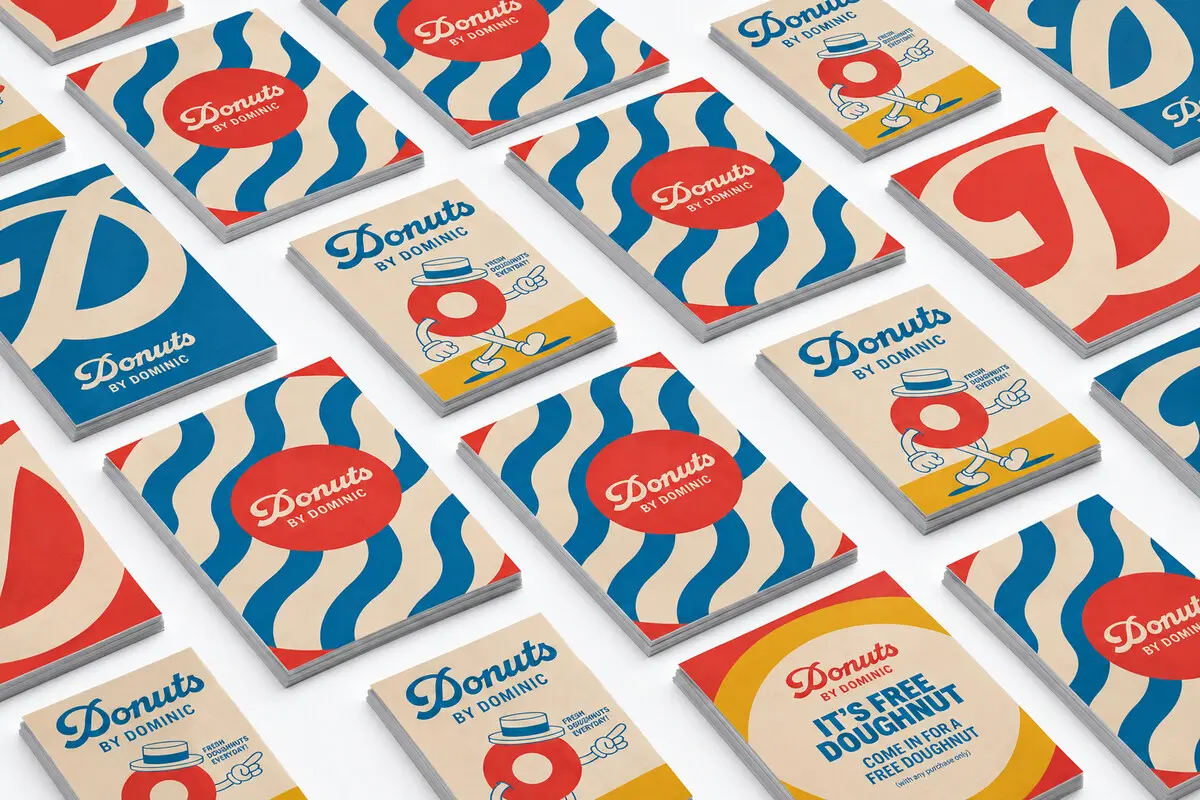
- Retail and fashion stores: flyers for sales, grand openings and loyalty programs.
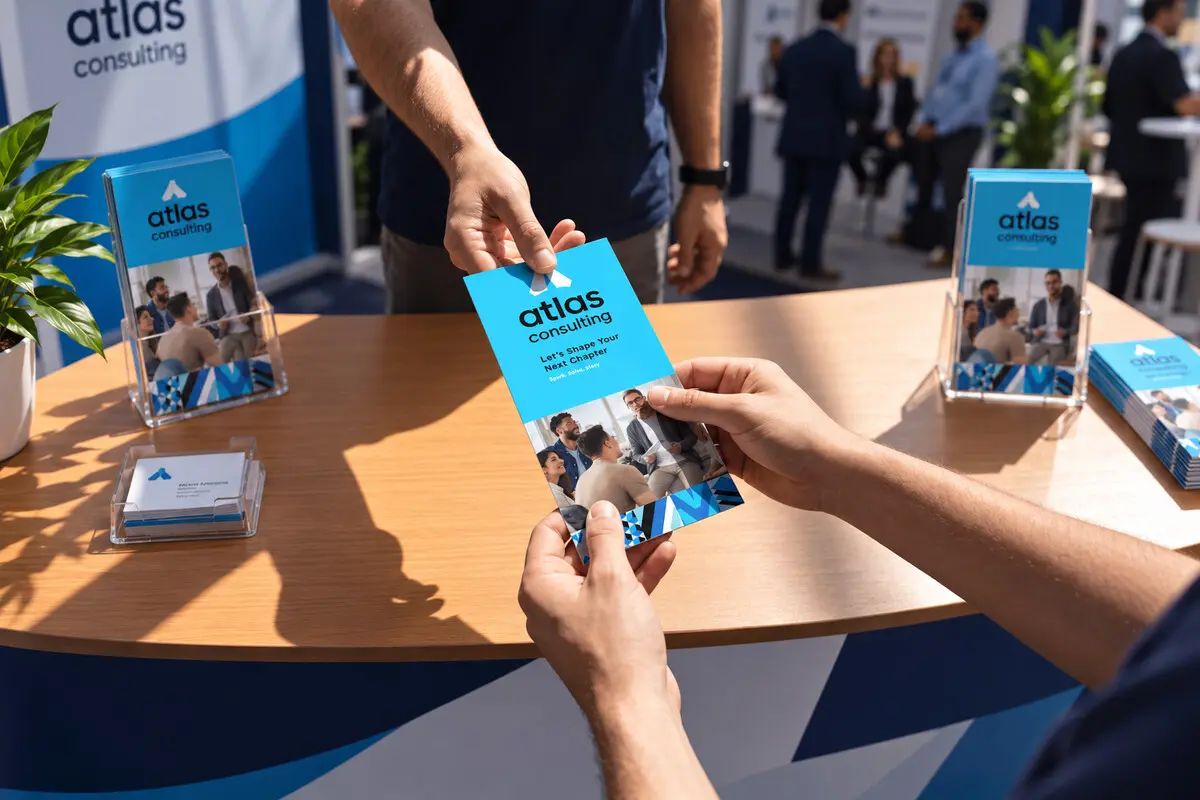
- Business: compact company profiles, product introductions handed out at trade fairs and exhibitions.
- Schools, centers and events: enrollment announcements, event programs, activity schedules.
Why is bulk printing so much cheaper?
Flyers here are printed offset, not digitally. Offset presses need plates made and colors calibrated before running — this cost is fixed, whether printing 500 or 5,000 sheets. So the more you print, the more the cost per sheet drops.
That's why this product is sold in batches: 500, 1,000, 2,000, 4,000, 6,000, 10,000 or 20,000 sheets. If you are torn between two levels, look at the price per sheet at each level — usually the higher level only adds a small amount for double the quantity.
Preparing flyer print files
- Format PDF or AI, color mode CMYK, resolution 300dpi.
- Leave 3mm bleed on each edge; text and logos at least 3mm from the cut edge so they aren't trimmed.
- Folded leaflet files: export pages in the correct order and mark the fold positions so we crease in the right place.
- Text converted to outlines; images embedded in the file, not linked externally.
- With full-bleed dark backgrounds, avoid thin frame borders close to the edge — a 1mm trimming shift shows immediately.
Details at Design file submission guide. We check your file for free before printing; if you have no file yet, In Quảng Cáo Q7 can help with the design.
Flyer printing FAQs
What is the minimum number of sheets?
The smallest batch is 500 sheets. If you need fewer, message us on Zalo for a digital printing quote.
Is single-sided cheaper than double-sided?
Yes, but not by much, since most of the cost is in the paper and plates. Most customers choose double-sided to use the full area.
How long does flyer printing take?
Delivered after 48 hours for standard orders. For more urgent orders, let us know in advance so we can schedule them.
Will the printed color match the screen?
Colors on screen only reach about 80% of the finished product, because screens emit light while paper reflects ink. If you need exact color, you can request a test print before running the whole batch.
What if the flyers are printed wrong?
If it differs from the order or the approved proof, In Quảng Cáo Q7 reprints it free of charge – report within 24 hours with photos. Spelling mistakes in a file you approved are not covered by free reprints.
Do you issue VAT invoices?
Yes, 8% VAT e-invoices. Provide the company name, tax code, address and email when ordering.

Need a quote or want to order leaflet printing?
See the price list by size, paper type and quantity, and order directly at Leaflet product page. Or message on Zalo / call 0866.511.099 — we will quote within 30 minutes during working hours. In Quảng Cáo Q7, 49 Mai Van Vinh, Tan Hung Ward, Ho Chi Minh City.
View directions to the workshop on Google Maps
Need printing or signage in Ho Chi Minh City?
In Quảng Cáo Q7 runs its own print workshop in Tân Hưng Ward (former District 7), Ho Chi Minh City, producing and installing signage, banners, window graphics, exhibition booths and event displays. Send us the size, material, quantity and a photo on WhatsApp and we will get back to you.

Phone: +84 866 511 099 · Also on WeChat
Workshop: 49 Mai Văn Vĩnh, Tân Hưng Ward, Ho Chi Minh City
Where to hand them out and how to measure effectiveness
Printing leaflets is only half the job. What decides the outcome is where they are handed out and how you know whether the round was effective.
| Distribution channel | Retention rate | Suitable for |
|---|---|---|
| With receipts at the counter | Highest | Customers who have already bought, likely to return |
| Put into takeaway bags | Height | Takeaway shops, online shops |
| Handed out in front of the shop | Medium | New customers around the area |
| Handed out at office buildings | Medium | Lunch services, laundry |
| Tucked into house doors | Low | Repair services, house moving |
| Left at partner counters | Low to medium | When cross-linked with other shops |
The cheapest way to measure is to print a small code in the corner for each distribution channel — for example A for the counter, B for takeaway bags, C for hand-outs. When customers bring it in to use the offer, staff tick a tally sheet by that code.
If the leaflet includes an offer, set a short validity of about three to six weeks. A long validity makes customers put it away and forget, while one too short means many people have no time to come back.
What a leaflet should include
The recipient decides whether to keep or throw it away in about two seconds. So the layout should follow a clear order of priority instead of spreading information evenly.
- One main line in the upper half: say clearly what you sell or how big the offer is, in the largest font on the sheet.
- One image large enough, a real photo of the product or the shop space.
- Three to five bullet points for secondary information, not written as long paragraphs.
- Price or price range: leaflets without prices are often thrown away immediately.
- Address and phone number at the bottom edge, with a QR code linking to the ordering page.
- Validity written as a specific date, not vaguely.
The back should be used for extended content rather than repeating the front. A condensed menu, a map with directions or a list of services are the most suitable.
If the budget is limited, printing single-sided and handing out more is usually more effective than printing double-sided and handing out fewer. The number of people reached matters more than the amount of information on each sheet.
Common mistakes when printing leaflets for the first time
| Mistake | Consequence | How to avoid it |
|---|---|---|
| No bleed | Thin white border along one edge | Add 3 mm extra on each side |
| Text close to the edge | The cutting blade cuts into the text | Leave a 5 mm safety margin |
| Sending RGB files | Print colours duller than the preview | Build in CMYK from the start |
| Images under 300 dpi | Blurry images, jagged text | Use images at the correct resolution at actual size |
| Cramming in too much text | The recipient throws it away immediately | One main line, at most five bullet points |
| Forgetting to state the offer deadline | Customers bring old leaflets to use | State the expiry date in numbers |
| Folding without creasing | The ink layer cracks along the fold | Crease paper of 200gsm and up |
| Ordering too few for actual needs | Running out midway, expensive reprints | Calculate by the number of campaign days |
The costliest mistake is wrong contact details, because the whole batch is wasted. Before approving, ask someone else to reread the phone number and address; the person who built the file often skims over their own mistakes.
Quantity, timing and how to order
The price per sheet drops very quickly with quantity because machine setup labour is almost the same. This is why ordering a thousand sheets is usually only slightly more expensive than ordering five hundred.
- Small quantities under 500 sheets are printed digitally and ready quickly the same day.
- From 1,000 sheets up, offset printing is used and the unit price per sheet drops noticeably.
- With lamination or crease-folding, add 1 day.
- Several different designs can be combined in one order, as long as they share the same size and paper.
- Former District 7, Nha Be, District 4 and District 8 get door-to-door delivery; other districts are delivered according to the day's vehicle schedule.
- To reprint an old design, just give us the order code; no new design setup is charged.
A common way to calculate the quantity: the expected number of people reached per day multiplied by the number of campaign days, plus about twenty percent for spoiled and trial hand-outs.
If you do not have a file yet, send the content, logo and a few product photos via Zalo. The design team will lay it out and send a preview; production starts only after approval.
Learn more Bristol Paper if you need a stiffer printed item, or Business category for other office printed items.