




































































Bristol Paper: smooth on both sides, stiff, sharp printing on both faces
Sep
A business card that feels solid in the hand, stiff, smooth on both sides and printed equally clearly — that is almost certainly Bristol paper. This is the paper chosen when the item is small but has to withstand handling, and when both sides have content that needs to print well.
What Bristol paper is
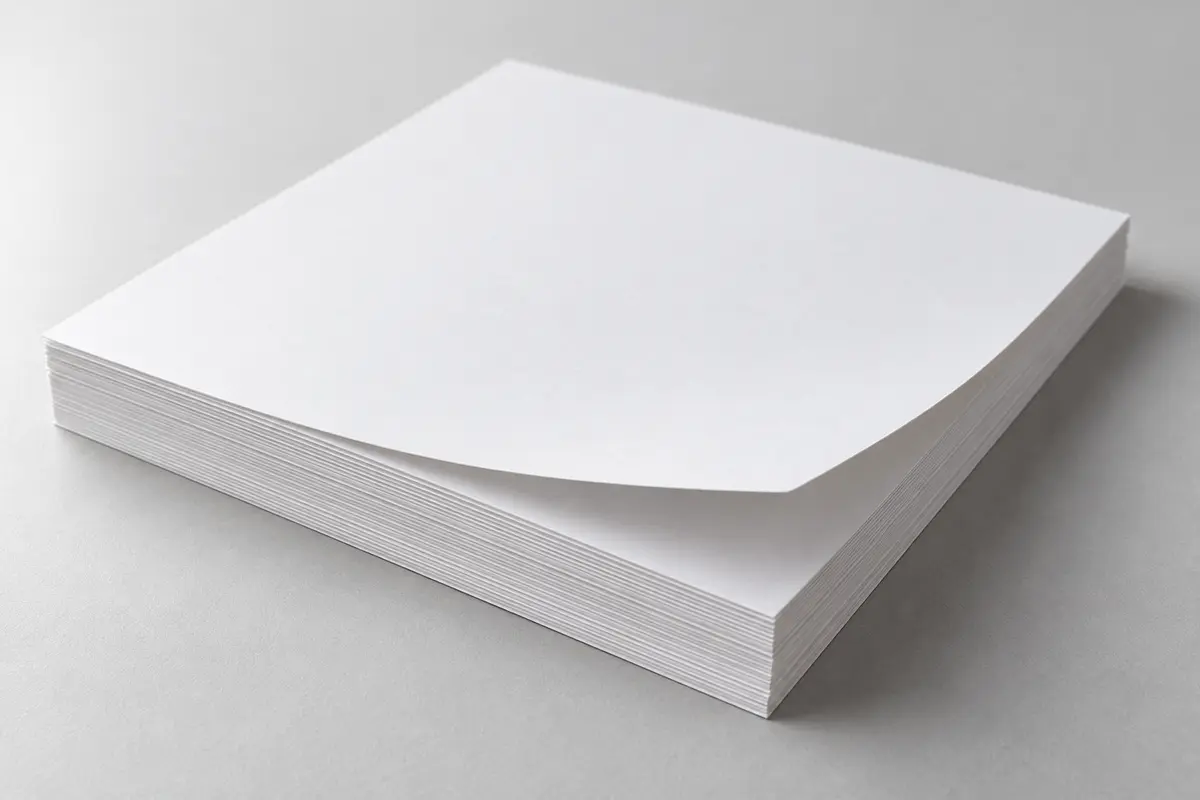
Bristol paper is pressed from several layers of pulp stacked on top of each other and then coated on both sides. This multi-layer construction is what gives it its characteristic stiffness: compared with Couche of the same weight, Bristol is much thicker and holds its shape better. And because it is coated on both sides, the front and back print equally well.
Pick up a sheet of 300gsm Bristol and flick it lightly and you will hear a crisp “snap” — the familiar sign of tightly pressed multi-layer paper. The thickness is also clearly visible at the edge.
How Bristol paper differs from Couche and Ivory
These three papers are all white and all coated, so they are easy to confuse. Tell them apart with two questions:
- How many sides are printed? — Ivory paper is coated on one side only, with an uncoated ivory-coloured back. Bristol and Couche paper are coated on both sides.
- How stiff does it need to be? — At the same weight, Bristol is the stiffest, followed by Ivory, with Couche the softest.
In practice: for items printed only on the outside that need stiffness for large boxes, Ivory is more economical. For items that need to print well on both sides — business cards, cards, boxes printed inside — Bristol is the right choice. For multi-page items that need to fold softly, like catalogues or leaflets, use Couche.
Weights and specifications we stock
The In Quảng Cáo Q7 workshop currently stocks 300gsm Bristol paper — the weight used most for business cards and all kinds of cards. Other weights are ordered per job; let us know in advance so we can source the paper.
Items commonly printed on Bristol paper
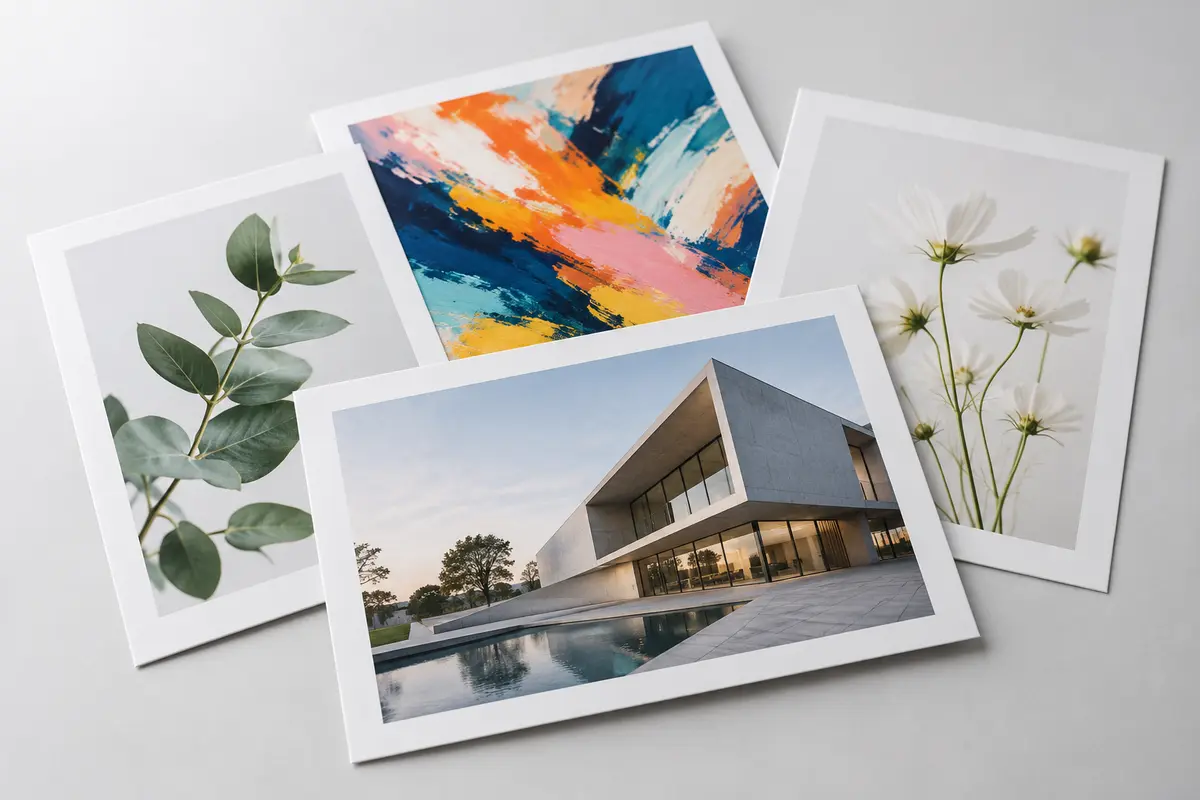
- Business cards double-sided, staff cards, loyalty cards for regular customers.
- Price tags, product hang tags, warranty cards.
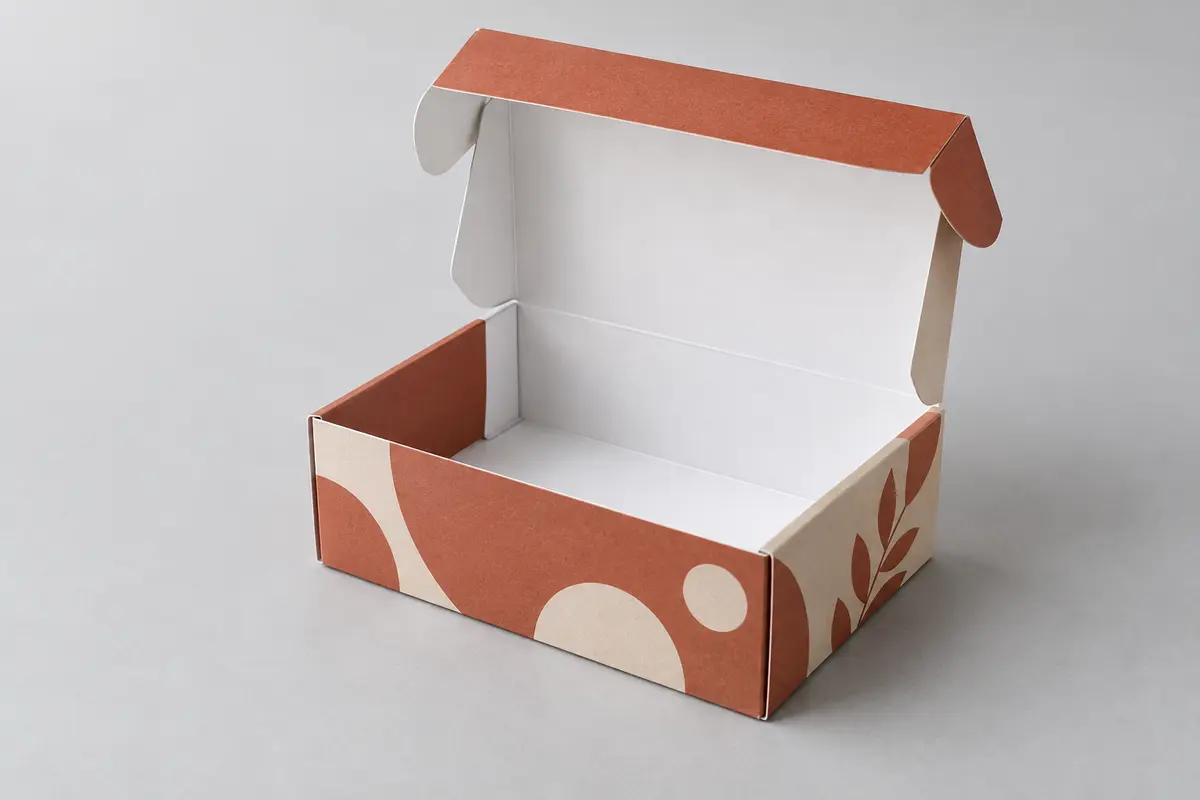
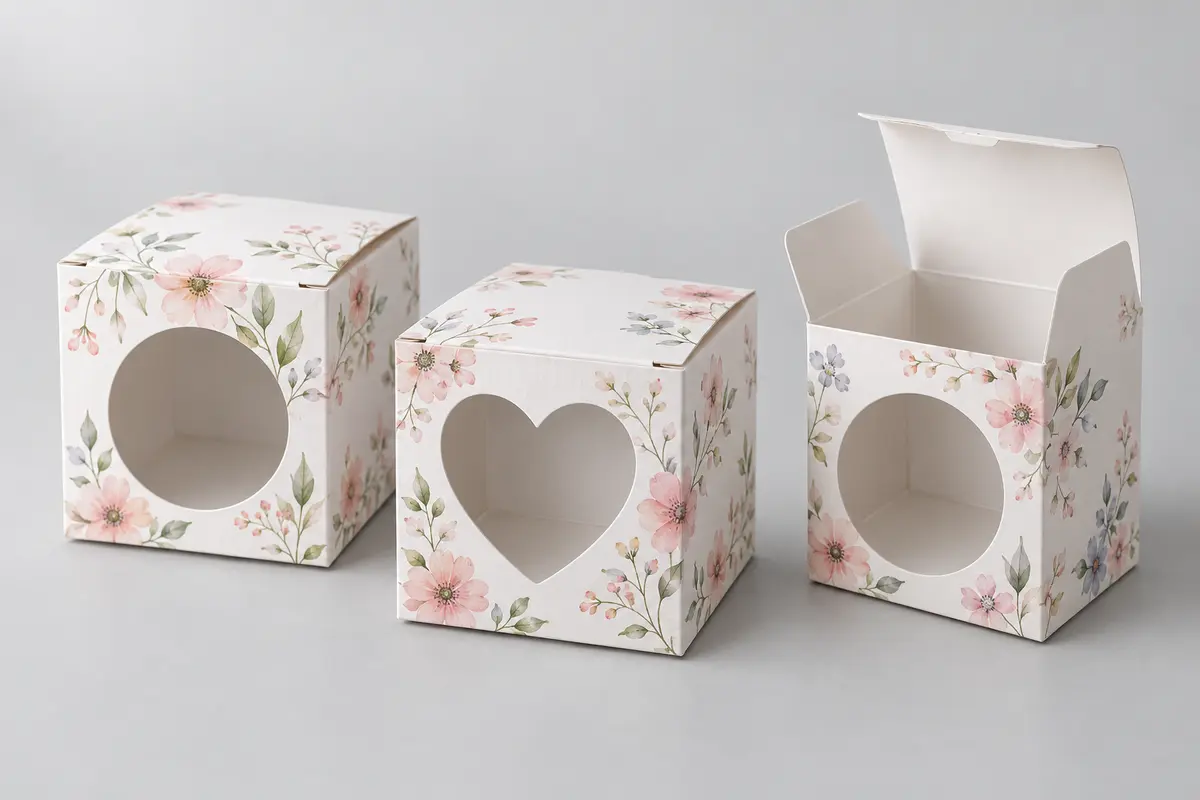
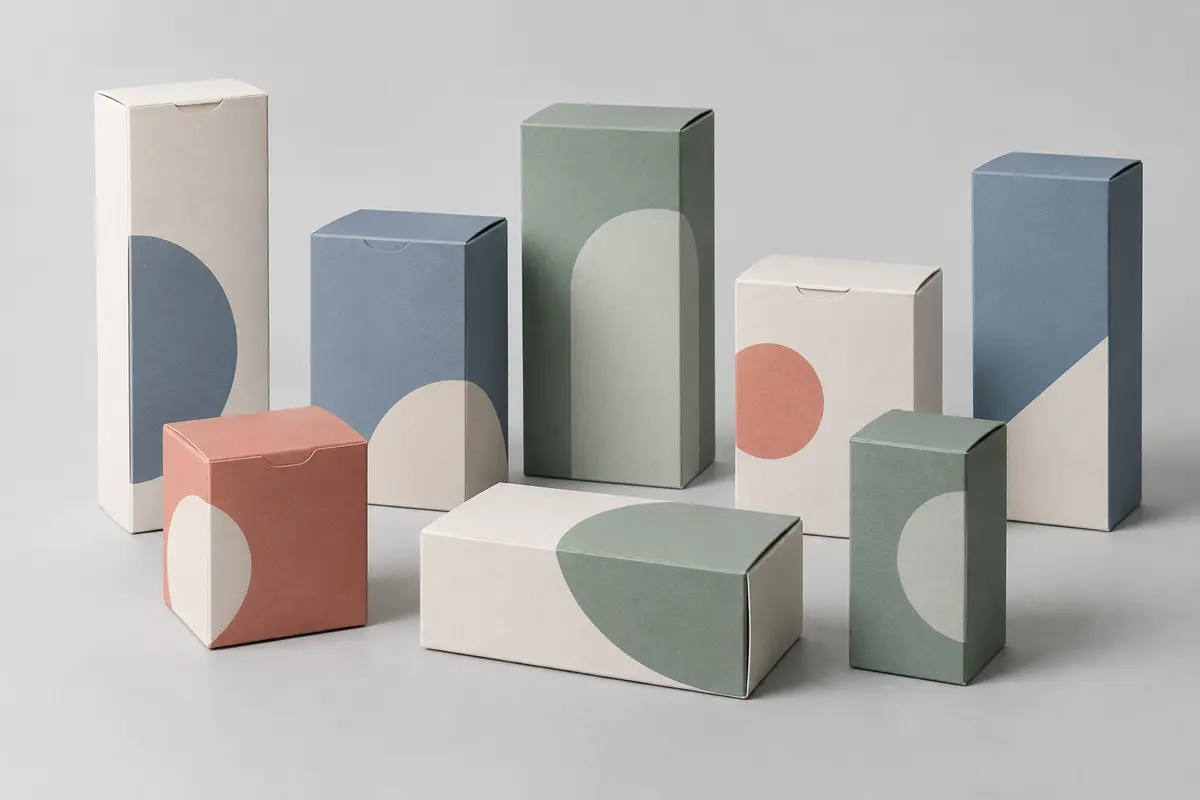
- Paper boxes that need printing both inside and outside, boxes with die-cut windows.
- Cover menu, document folders, notebook covers, promotional cards.
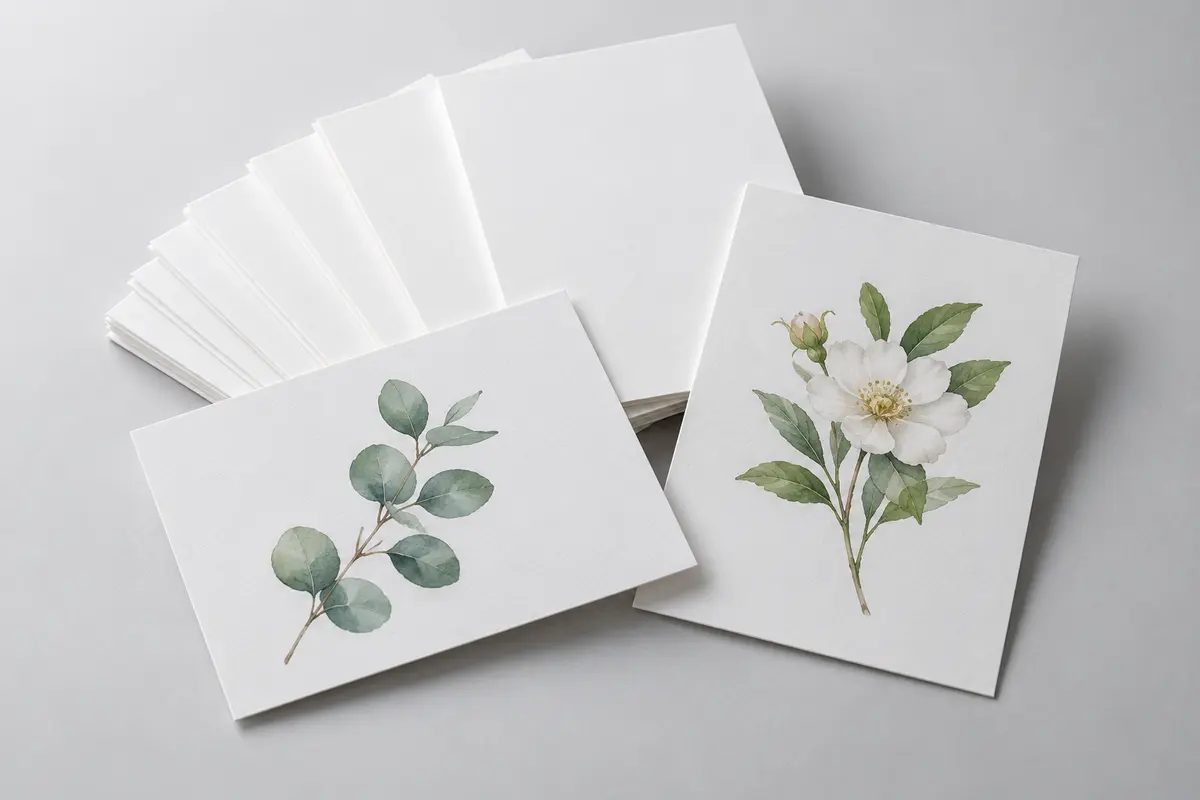
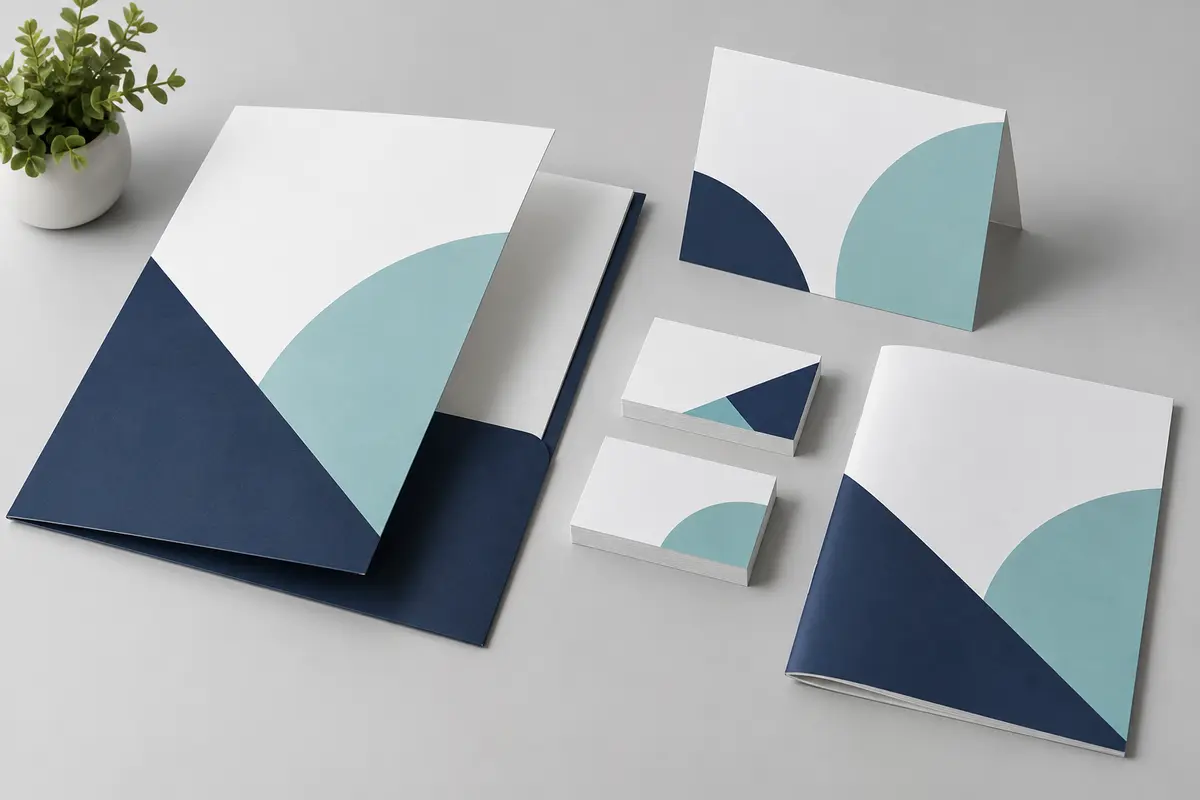
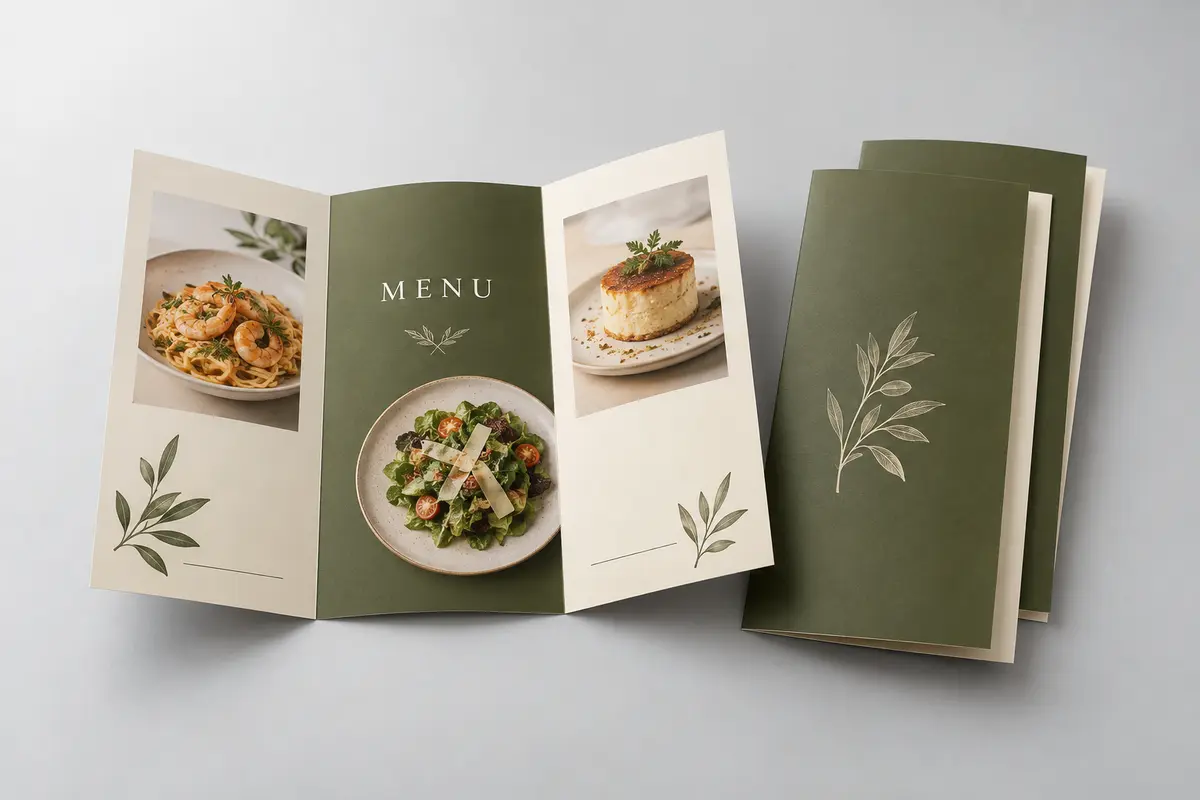
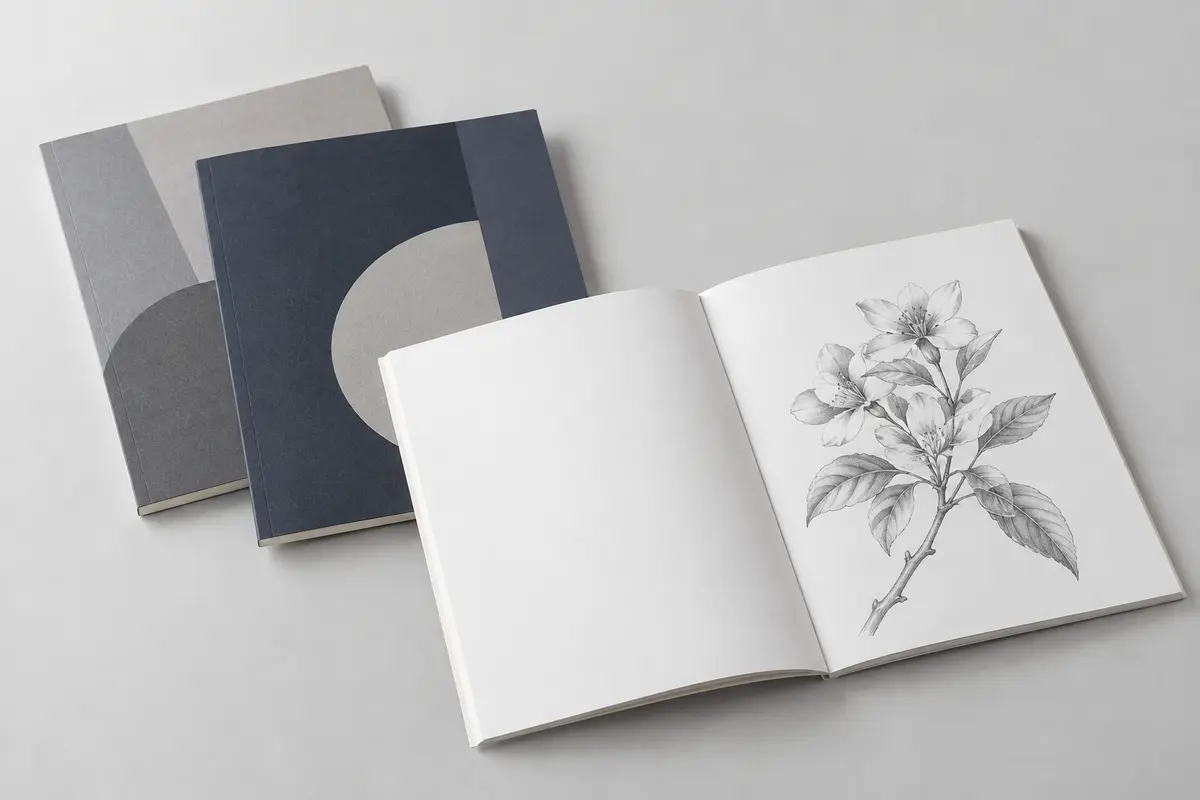
For boxes, Bristol has another advantage: it is stiff enough for die-cut windows without weakening the box walls. Die-cut windows on softer paper often warp right at the cut-out.
Finishing: which lamination to choose
Bristol 300gsm matte lamination gives a smooth feel, text reads without glare, suits business cards and cards used in office settings. Glossy lamination gives deeper colours and better dirt resistance, suits cards used outdoors or image-heavy items.
For long-lasting cards such as membership cards, laminate both sides — without lamination, after a few months the card edges fray and the paper layers start to separate. Bristol also takes foil stamping, embossing and corner rounding well.
Preparing files for printing on Bristol paper
Files should be in CMYK, 300dpi, with a 2–3mm bleed. Because Bristol is usually used for small double-sided items, there are two extra points to note: leave a safety margin of at least 3mm for text and logos so the cutting blade does not touch them, and if the item is folded, send a version marking the fold lines.
For double-sided items, remember to send both the front and back files, clearly named so we do not pair them in the wrong orientation.
Order Bristol paper printing at In Quảng Cáo Q7
Send your design file and quantity via Zalo or call 0866.511.099 for a quote and advice on suitable lamination. Our workshop is at 49 Mai Van Vinh, Tan Hung Ward, Ho Chi Minh City, where you can come and hold paper samples before deciding. Production & delivery: 8:00–12:00 & 13:00–18:00 Mon–Sat (closed Sunday) · Consultation & orders: 8:00–12:00 & 13:00–20:00 Mon–Sat; 14:00–19:00 Sunday.
How different weights feel in the hand
The weight figure on the price list is the weight per square metre. It sounds abstract, but you feel the difference as soon as you pick it up. The table below describes the real feel of each level so you can picture it before deciding.
| Weight | Feel in the hand | Suited to items |
|---|---|---|
| 180–200gsm | Soft, can be folded by hand, does not hold its shape yet | Double-sided leaflets, note slips |
| 230–250gsm | Medium stiff, can stand up but still bends when held by one corner | Hang tags, gift vouchers |
| 300gsm | Clearly stiff, a crisp sound when flicked, does not bend | Business cards, membership cards |
| 350gsm and up | Very stiff, almost like thin board | Box covers, long-lasting cards |
The 300gsm level is the balance point most customers choose: stiff enough not to crumple in a wallet, yet not so thick that it is hard to put in an envelope. Below this level items quickly curl at the corners; above it the cost rises without much difference in feel.
If you are not sure, the safe way is to come to the workshop and see real samples before deciding. Holding two samples side by side for three seconds is enough to tell them apart, much faster than reading specifications.
Related products

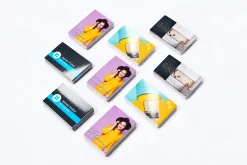
Business cards

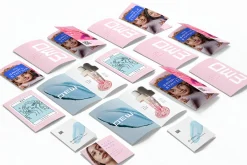
Leaflet / Brochure

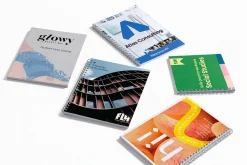
Catalogue – Company Profile

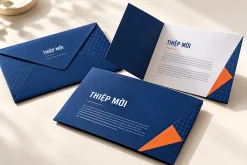
Invitations
Choosing the weight for each item
The same paper, but each item has different stiffness requirements, because the way it is held and the desired lifespan differ.
| Item | Common weights | Why |
|---|---|---|
| Business cards | 300gsm | Sits in a wallet for months, must stay flat |
| Membership cards | 300gsm laminated both sides | Taken in and out daily |
| Gift vouchers | 250–300gsm | Kept in a wallet for a few weeks |
| Product hang tags | 250gsm | Stiff enough for threading a string, no need to be thicker |
| Tri-fold leaflet | 200–230gsm | Must fold without cracking the coating |
| Small box covers | 350gsm | Bears load when formed into a box |
| Invitations | 300gsm | Feels formal in the hand |
For items with fold lines, the higher the weight, the more easily the coating cracks at the fold. Above 250gsm, if folding is needed, machine-crease first; do not fold by hand.
For items that need to both fold and be stiff, many places choose a compromise: use 230gsm and add matte lamination. The film makes up for the missing stiffness while the fold stays clean.
Common mistakes when ordering for the first time
The mistakes below are the ones we see most from first-time customers. Knowing them in advance avoids nearly all of them, since most lie in the file preparation, not in the printing.
| Mistake | Consequence | How to avoid it |
|---|---|---|
| No bleed | Thin white border along one edge after cutting | Add 2–3 mm extra on each side |
| Text too close to the edge | The cutting blade cuts into the text | Leave a safety margin of at least 3 mm |
| Sending RGB files | Printed colours look duller than on screen | Build in CMYK from the start |
| Images under 300dpi | Blurry images, jagged text | Use images at the correct resolution at actual size |
| Not converting fonts to outlines | Text shifts when opened on another computer | Convert to outlines before sending |
| Single-colour black areas | Black looks washed out and uneven | Use four-colour rich black |
| Forgetting to mark fold lines | Folded in the wrong place | Send a version marking the folds |
| Two sides in opposite orientations | When flipped sideways the back is upside down | State clearly whether it flips on the long edge or the short edge |
For double-sided items, state the flip direction as soon as you send the file. This is the costliest mistake because it is only discovered after the whole batch has been printed.
If you are not sure whether the file is right, send it to us to check first. This is free and takes only a few minutes, much cheaper than reprinting.
Storing paper and finished items
If the items are not used straight away, how they are stored decides their quality when they come out. The coating is quite durable but still dislikes damp and uneven pressure.
- Keep them flat in a box or sealed bag, not standing at an angle in the corner of a cupboard.
- Avoid damp places; moisture makes the edges absorb water and curl, especially in the South during the rainy season.
- Do not keep them near windows with direct sunlight; over time the paper surface yellows.
- Do not place heavy objects unevenly on a stack of items, or they will leave marks on the surface.
- Take them out in small bundles when using them; do not open the whole lot and leave it exposed to the air.
- Laminated items are less sensitive to damp, but should still be stored properly.
For cards used daily such as membership cards, order about ten percent extra from the start. Cards damaged midway can be replaced immediately, saving you from ordering a small batch at a high price.
Minimum quantity and how the cost is calculated
Prices are per batch rather than per piece, because machine setup and cutting labour are almost the same whether you print a little or a lot. That is why a small batch has a much higher unit price per piece.
- Machine setup labour: fixed for each run, independent of quantity.
- Material: charged by the number of large print sheets; one large sheet yields many finished pieces.
- Lamination: charged by area; laminating both sides costs nearly double one side.
- Trimming: straight cutting is cheapest; corner rounding and shape die-cutting cost extra.
- Special finishes: foil stamping, embossing and textured lamination are charged separately and need a die.
- Delivery: inner city by area, other provinces according to the bus company's price list.
Several different designs can still be combined in one order, as long as they use the same paper and finish. This is often used by companies printing business cards for many staff at once: printed together in one run and then split up.
If you are torn between two weights, the price difference is usually smaller than the difference in feel. For items representing your company, choosing the stiffer level is usually worth the money.
Lead time and how to order
The process takes four simple steps: send the file or content, we quote and build a proof if needed, you approve, and then it goes to print. The lead time counts from proof approval, not from first contact.
| Item | Typical time |
|---|---|
| Printing and straight cutting, no finishing | 1 working day |
| With lamination on one or both sides | 1 to 2 days |
| With corner rounding or shape die-cutting using an existing die | 2 days |
| Needs a custom cutting die | Add 1 to 2 days |
| Foil stamping, embossing | 2 to 3 days |
| Same-day rush orders | Tell us in advance so we can schedule it |
Former District 7, Nha Be, District 4 and District 8 get door-to-door delivery. Other districts of Ho Chi Minh City are delivered according to the day's vehicle schedule; other provinces via intercity bus or courier.
See also other papers in the same group: Ivory Paper coated on one side for paper boxes, Kraft Paper natural brown for bags and labels. All corporate printed items are in the category Business.
Matte or glossy lamination
This is the most asked question after the weight has been decided. The two types give completely different feels even with the same print file.
| Criterion | Matte lamination | Glossy lamination |
|---|---|---|
| Feel to the touch | Smooth, very slightly matte | Slick, slippery |
| Colors | Soft, about one tone darker | Deeper and more vivid |
| Reading text | No glare under lights | May glare when tilted |
| Fingerprints | Barely show | Clearly visible |
| Can it be written on | Ballpoint pens write on it | Ballpoint pens slip, ink does not take |
| Dirt resistance | Fair | Better |
| Suitable for | Offices, professional services | Food and beverage, entertainment, image-heavy |
If the item has areas for handwriting — dates, customer names, checkboxes — those areas must be left unlaminated, or choose matte lamination. Ballpoint pens do not take on a glossy surface.
A compromise many places use: matte laminate the whole piece, then add spot gloss on the logo. The logo stands out clearly against the smooth base, looking polished without much extra cost.
Frequently asked questions
- Can this paper print photos? Yes, the coated surface gives quite good colours; but for photo-led items, dedicated photo paper is still better.
- Does it smell? No, printed items left to air for a day lose the ink smell.
- Can it be used for food? Only for the outer packaging layer, not in direct contact with food.
- Are coloured versions available? White is the most common; other colours have to be printed as a background and are not in stock.
- Is single-sided printing cheaper? Yes, but the difference is small because most of the cost lies in machine setup labour.
- Is it recyclable? It recycles like ordinary paper if unlaminated; once laminated it is harder.
- How long before it yellows? Stored properly in a sealed box, it stays white for many years; left in the sun, it changes colour within a few months.
For any other questions, message us on Zalo with a photo of a sample item or a description of its purpose. We can advise on suitable paper and finishing within minutes.
Quick comparison with the other papers at our workshop
Once you know what the item needs, the table below helps you choose quickly between the papers our workshop runs regularly.
| Paper type | Coated sides | Stiffness | Best suited to |
|---|---|---|---|
| Bristol | Double-sided | Height | Business cards, cards, invitations |
| Couche | Double-sided | Medium | Leaflets, catalogues, posters |
| Ivory | Single-sided | Height | Paper boxes, packaging shells |
| Fort | Uncoated | Low | Documents, notebooks, invoices |
| Kraft | Uncoated | Medium | Paper bags, rustic labels |
| Fine art | Depends on type | Depends on type | Wedding invitations, premium printed items |
The easiest way to tell them apart is the number of coated sides. Items printed on both sides need paper coated on both sides; otherwise the back absorbs ink and the colours look noticeably duller than the front.
Conversely, paper boxes only need a good-looking outside while nobody looks at the inside, so choosing a one-side coated type saves money while the visible quality stays the same.
If you are still unsure, the quickest way is to describe the item you plan to make and where it will be used. Those two pieces of information are enough for us to settle the paper and weight for you right away, without you having to remember specifications.
Need printing or signage in Ho Chi Minh City?
In Quảng Cáo Q7 runs its own print workshop in Tân Hưng Ward (former District 7), Ho Chi Minh City, producing and installing signage, banners, window graphics, exhibition booths and event displays. Send us the size, material, quantity and a photo on WhatsApp and we will get back to you.

Phone: +84 866 511 099 · Also on WeChat
Workshop: 49 Mai Văn Vĩnh, Tân Hưng Ward, Ho Chi Minh City