




































































Hiflex Banner: the outdoor material for banners and signboards
Sep
What Hiflex Banner Is and Why Outdoor Advertising Uses It So Much
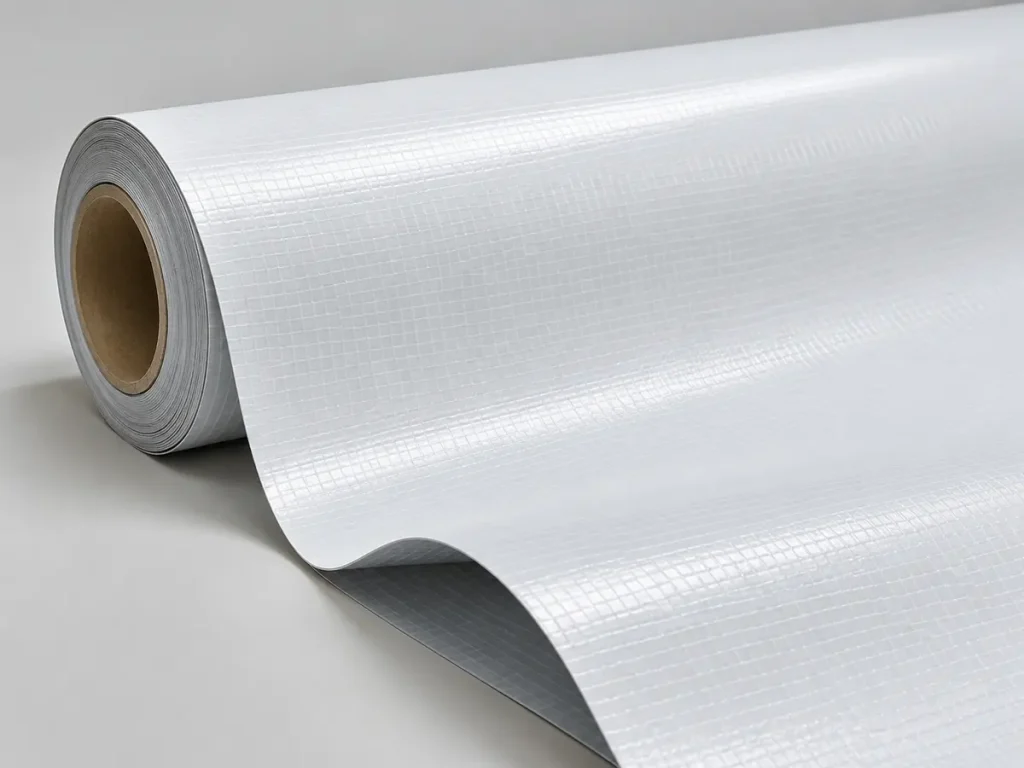
Hiflex Banner is a flexible PVC sheet with a woven mesh core inside; it stretches without tearing and withstands rain and sun for many months. That is why almost every banner, shopfront signboard, event backdrop or construction hoarding in Vietnam is made from this material: it is cheap, can be printed in very large sizes without joins, and is ready to use as soon as it is hung.
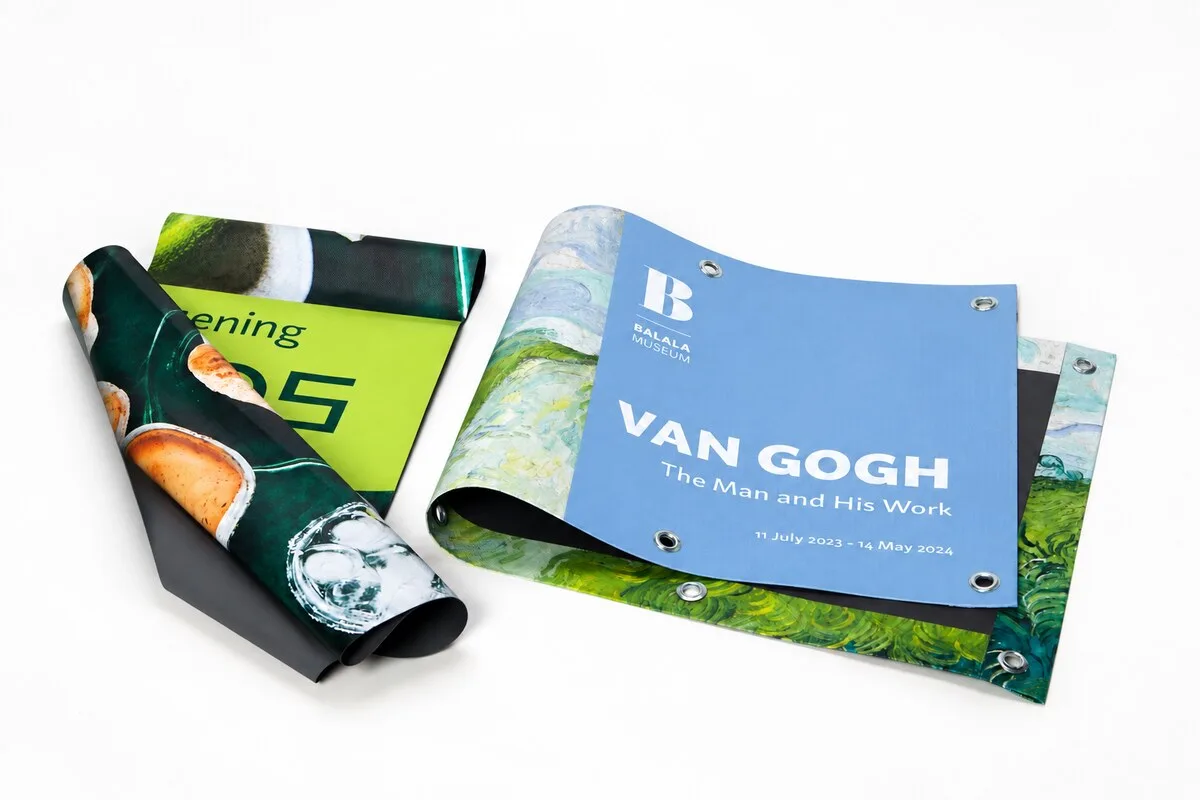
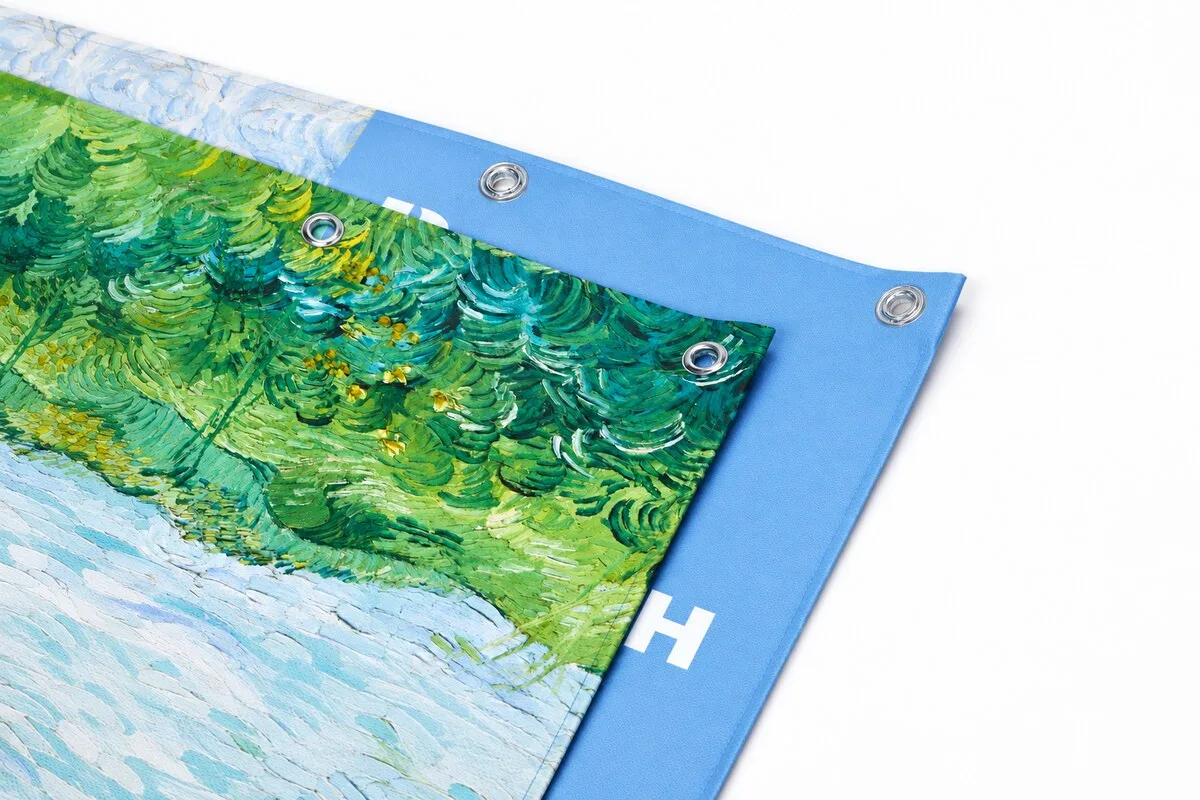
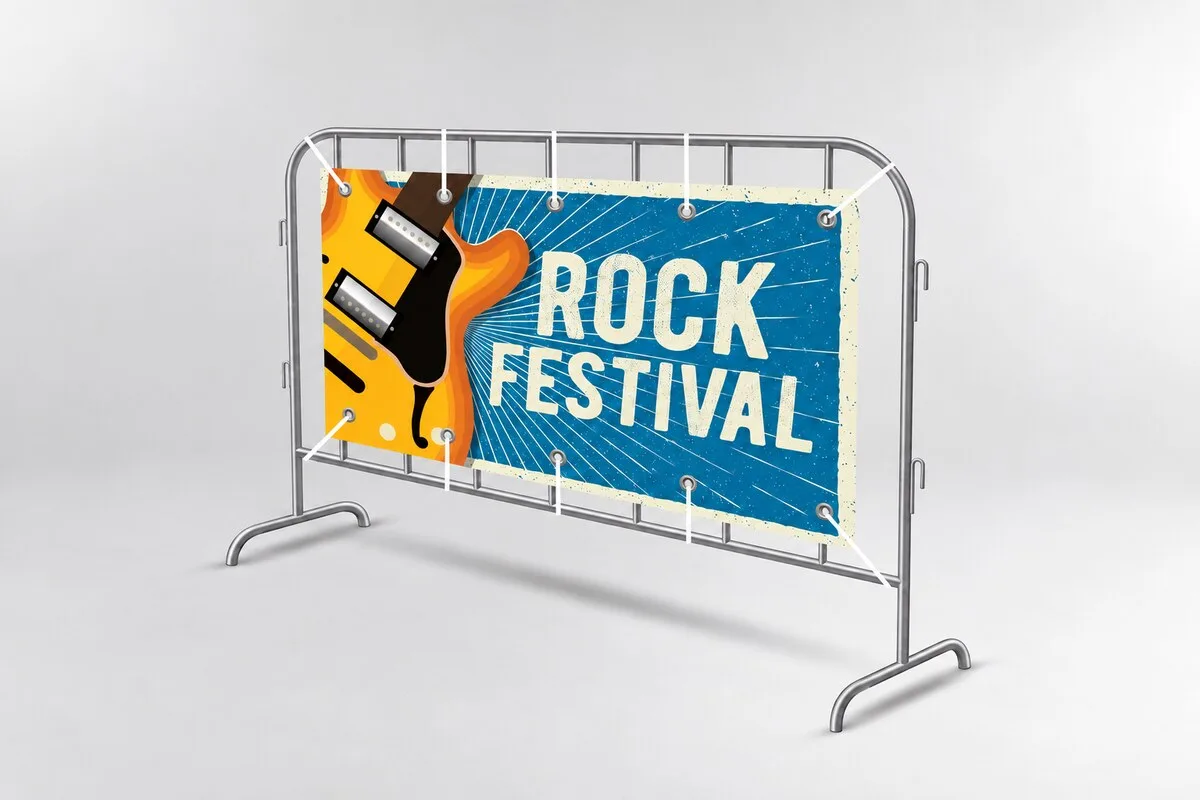
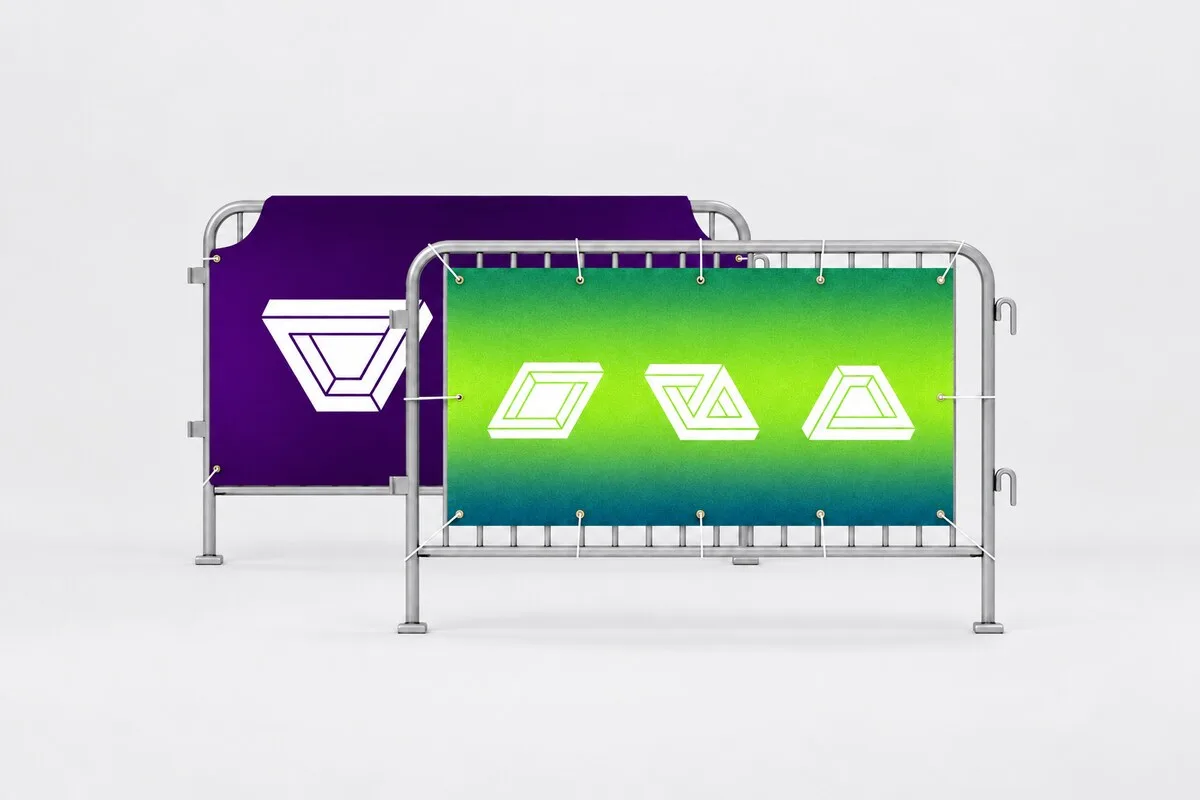
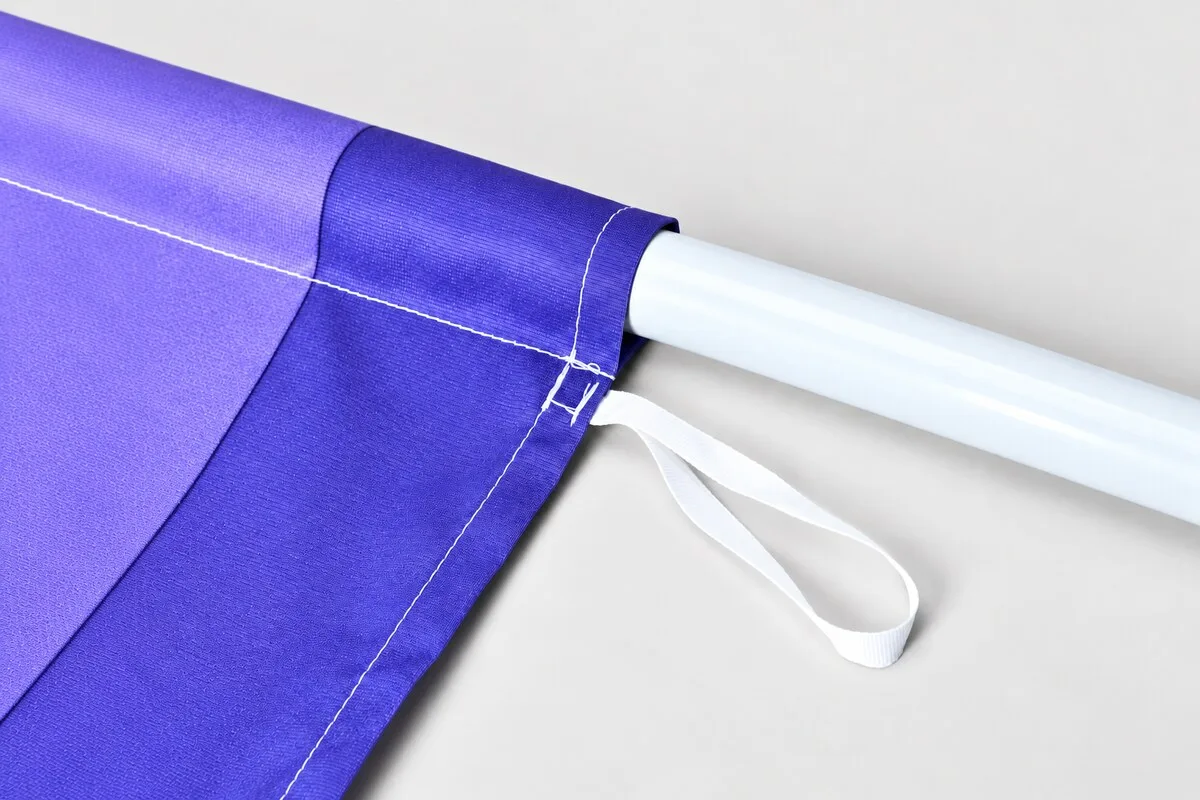
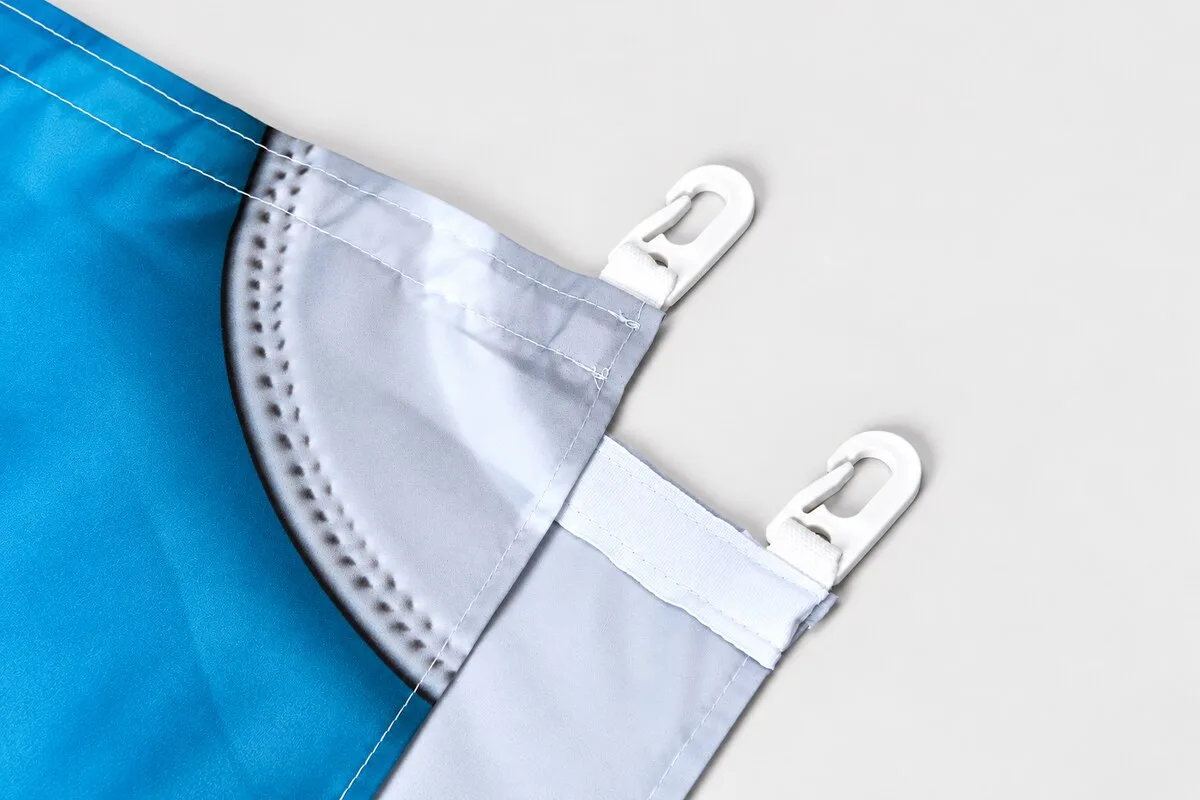
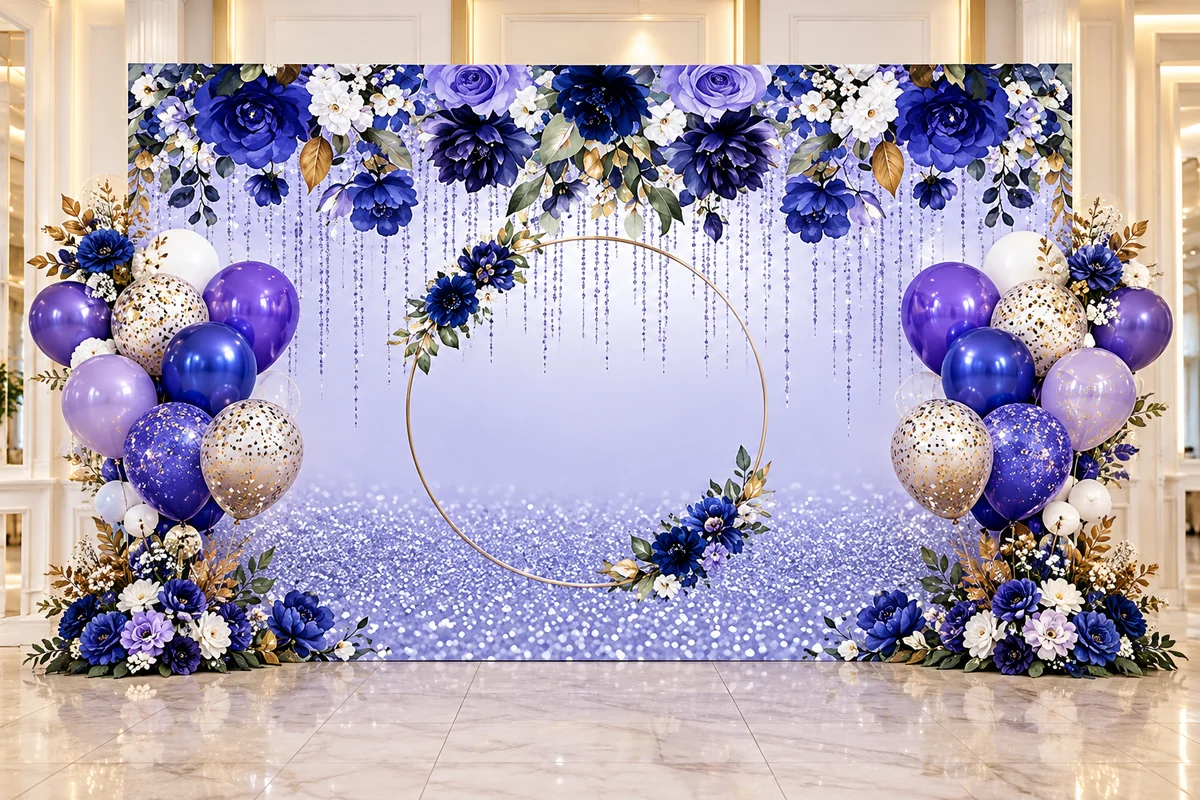
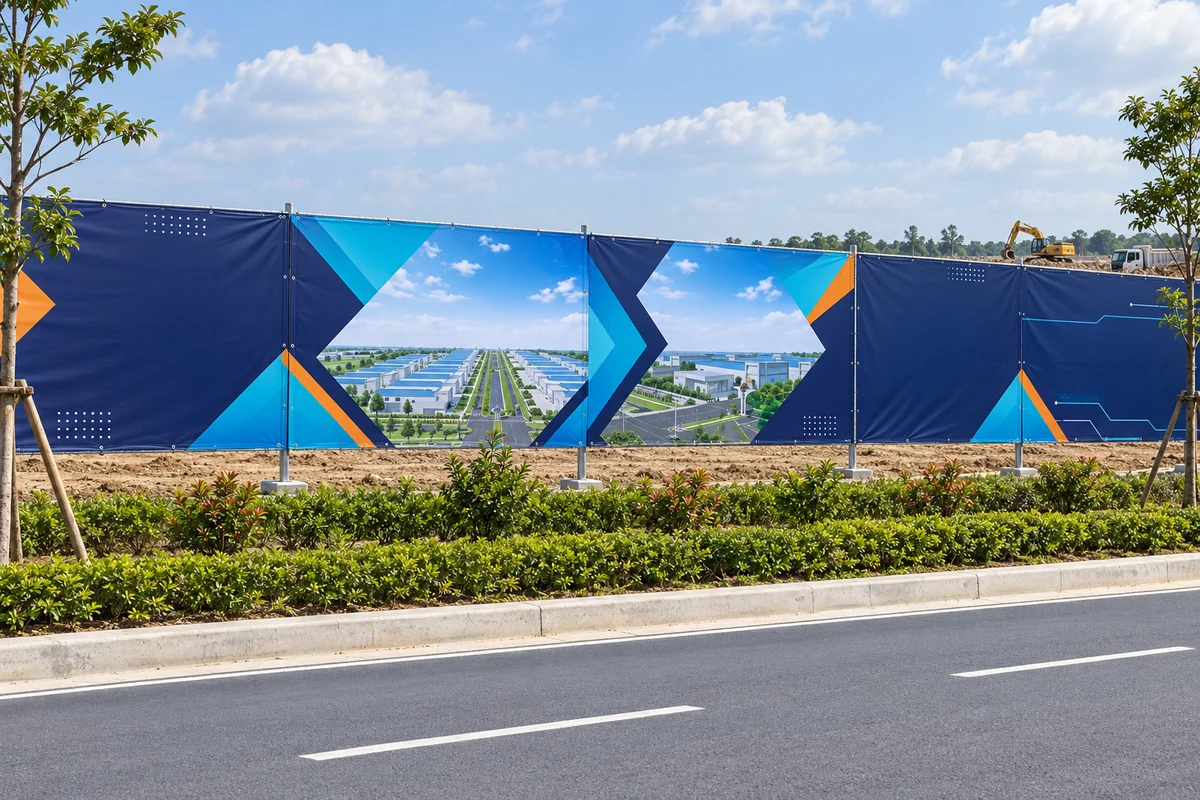
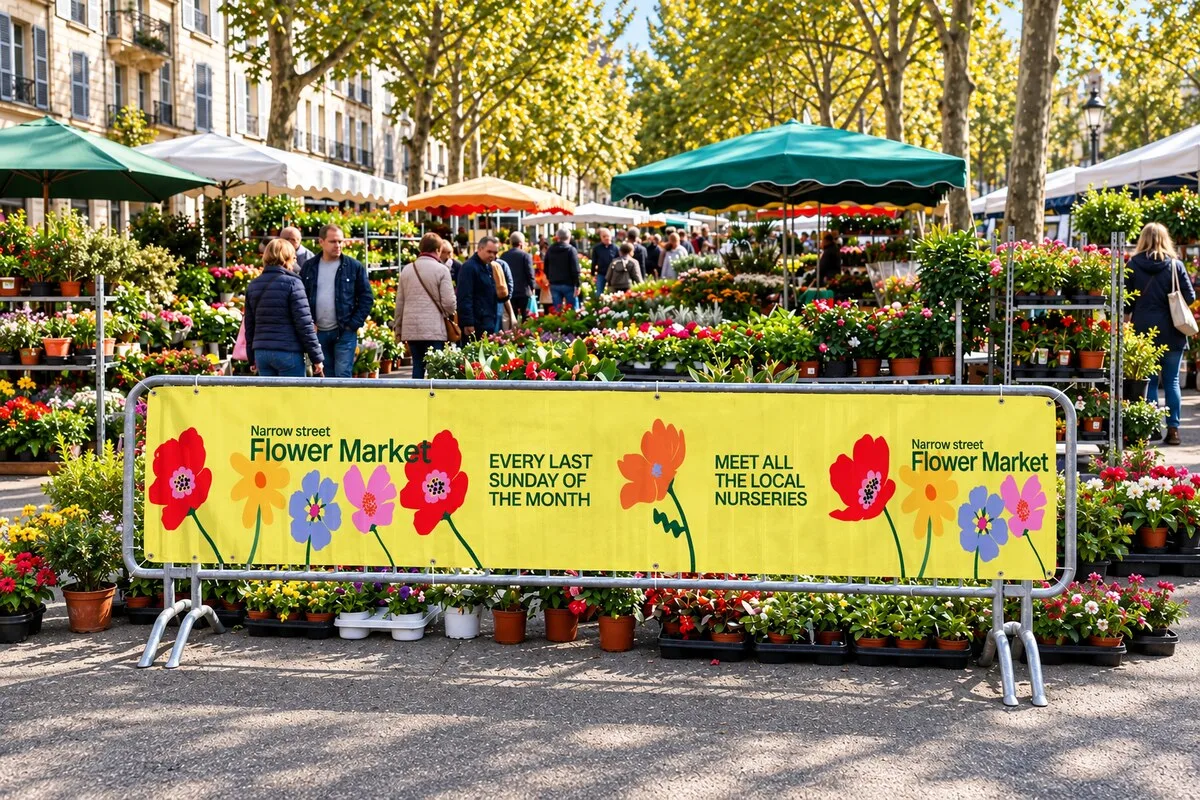
This article sums up what you need to know before ordering: the banner construction, the four types we stock, two printing technologies, three edge finishes, hanging methods and tips for preparing files. Some illustrative photos are used in this article.
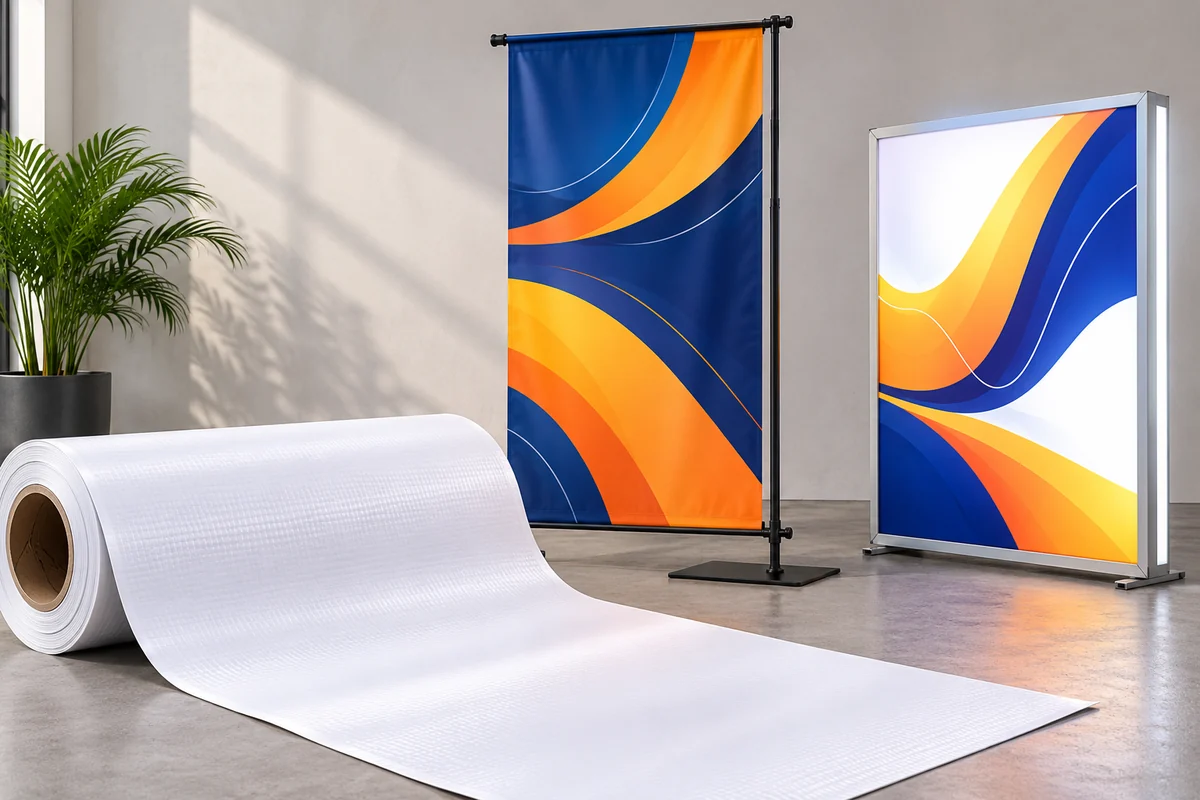
Banner construction: a woven mesh sandwiched between two plastic layers
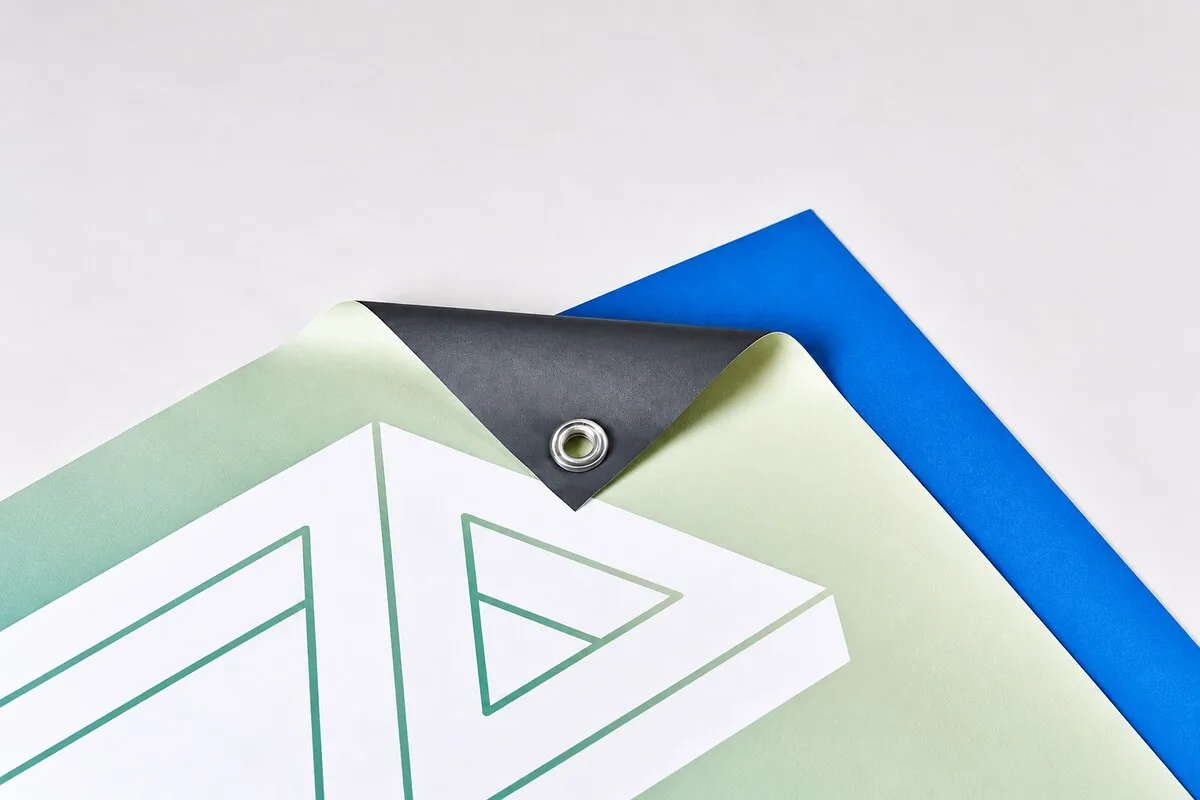
From the outside, Hiflex banner is just a soft plastic sheet, but inside it has three distinct parts:
- Woven mesh core — a square-woven fibre mesh in the middle of the banner that keeps it from tearing when stretched or hit by gusts.
- Two PVC coating layers — coated on both sides of the mesh, helping the surface hold the printing ink and stay waterproof.
- Back coating layer — depending on the type, a normal light grey, a light-blocking grey layer, or an opaque white layer that lets light through.
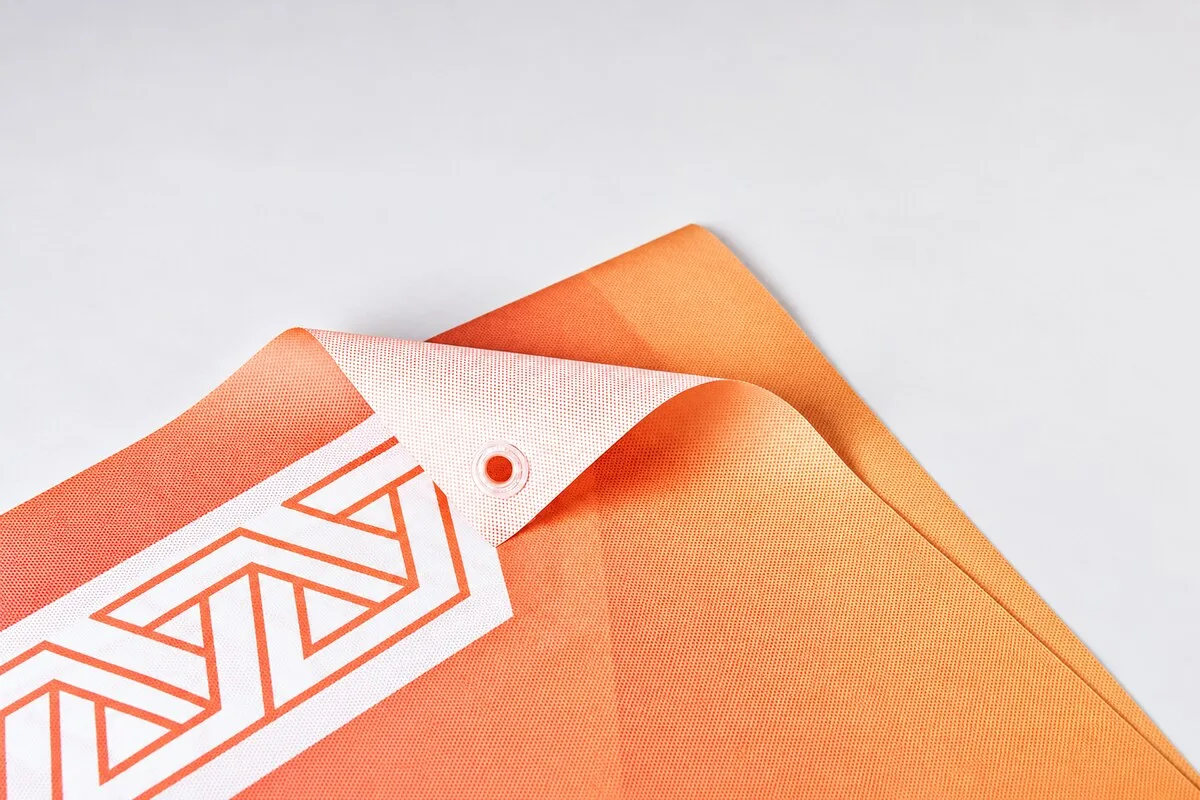
It is the back coating that distinguishes the banner types from each other, not the printed side. When holding two banners to compare, flip the edge over to look at the back and you will know immediately which type you have.
Banner width and weight – the two numbers always asked about when quoting
When asked for a Hiflex banner price, we usually ask back two specifications:
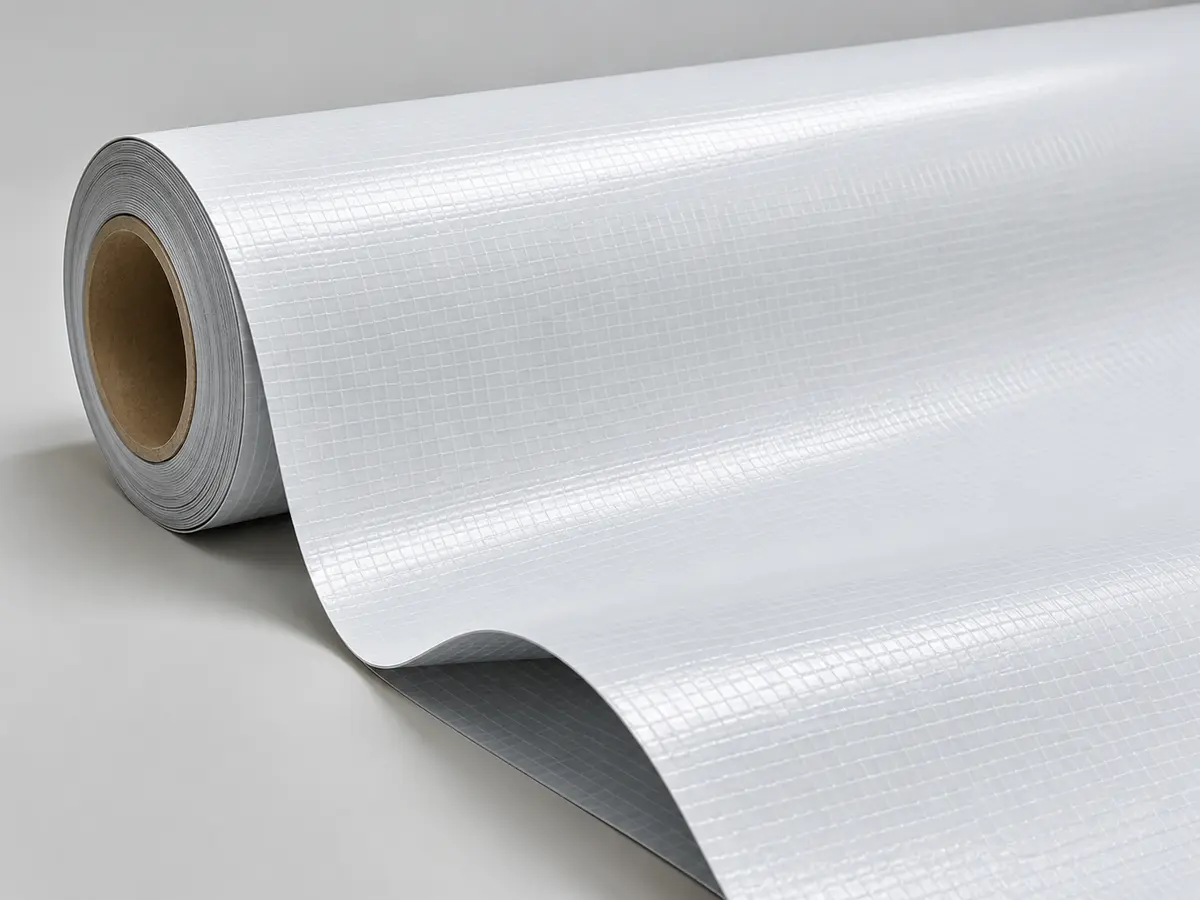
- Roll width (1.5m – 2.5m – 3.2m) is the maximum width of the roll. The name “3.2 banner” means a 3.2m width. Pieces wider than the roll must be joined, so knowing the size in advance lets you choose the best-fitting width with the least waste.
- Weight (280g – 300g – 340g/m²) is the weight per square metre. The heavier the banner, the thicker it is, the better it withstands wind and the longer it lasts, but the higher the price.
A piece tens of metres long can still be printed seamlessly, as long as the other dimension is within the roll width — this is the biggest advantage of this material over rigid sheet materials.
The four types of Hiflex banner we stock and how to choose
White banner 3.2Z 300g – the standard type
White on one side for printing, light grey on the back. This type makes up most orders: banners, shopfront banners, construction hoardings, outdoor event backdrops. Under the sun and rain of Ho Chi Minh City, this type of banner lasts about 1–2 years.
Backlit banner – exclusively for light boxes
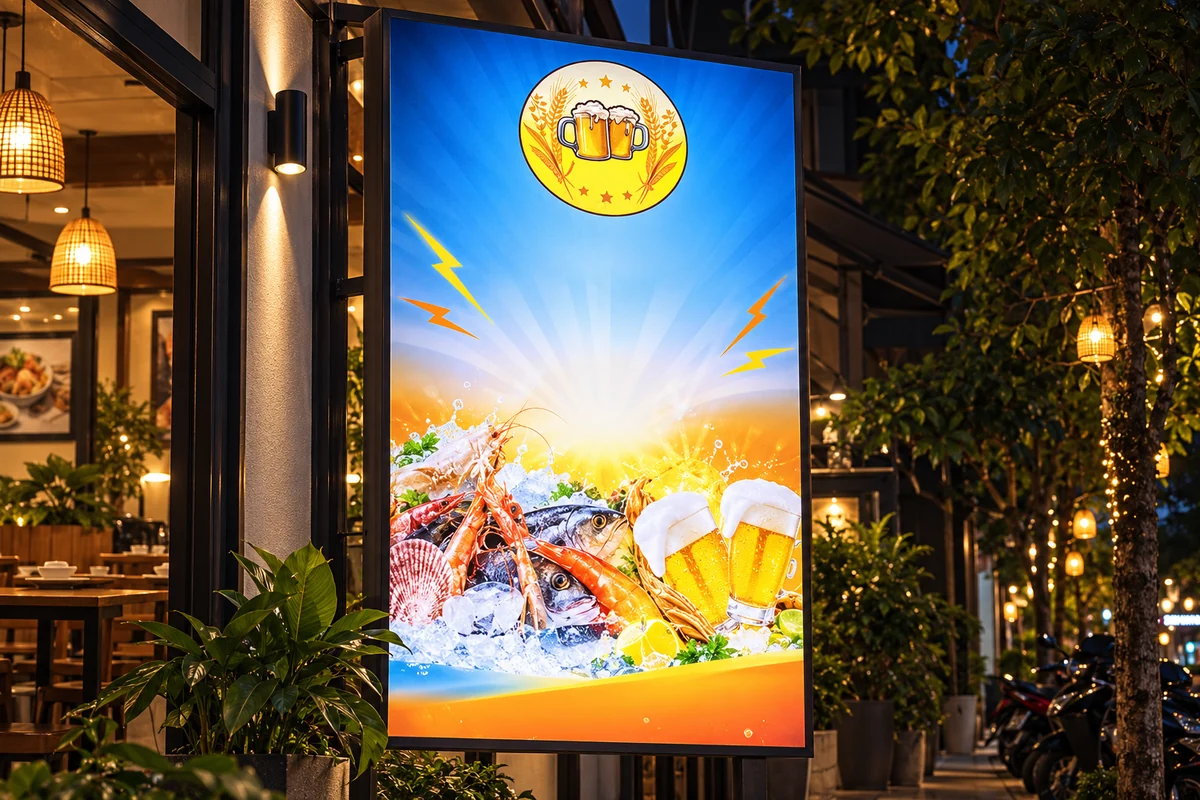
An opaque white banner that lets light through evenly without blotches. Only used with light from behind, i.e. as a light box face or a signboard with lights inside. Hung outdoors without lights, the image looks washed out and shows shadows of objects behind. On the same principle, we use backlit banner as the face for Backlit Banner Standee.
Grey-back double-layer banner – blocks light, no see-through shadows
Between the two plastic layers there is an extra grey light-blocking layer. As a result, standing in front you cannot see the shadows of people or objects behind, and backlighting from the sun does not make the image look “transparent”. Choose it for photo backdrops, stage backdrops and banners hung in open spaces — places with light on both sides.
Ribless banner – a smooth surface for close-up images
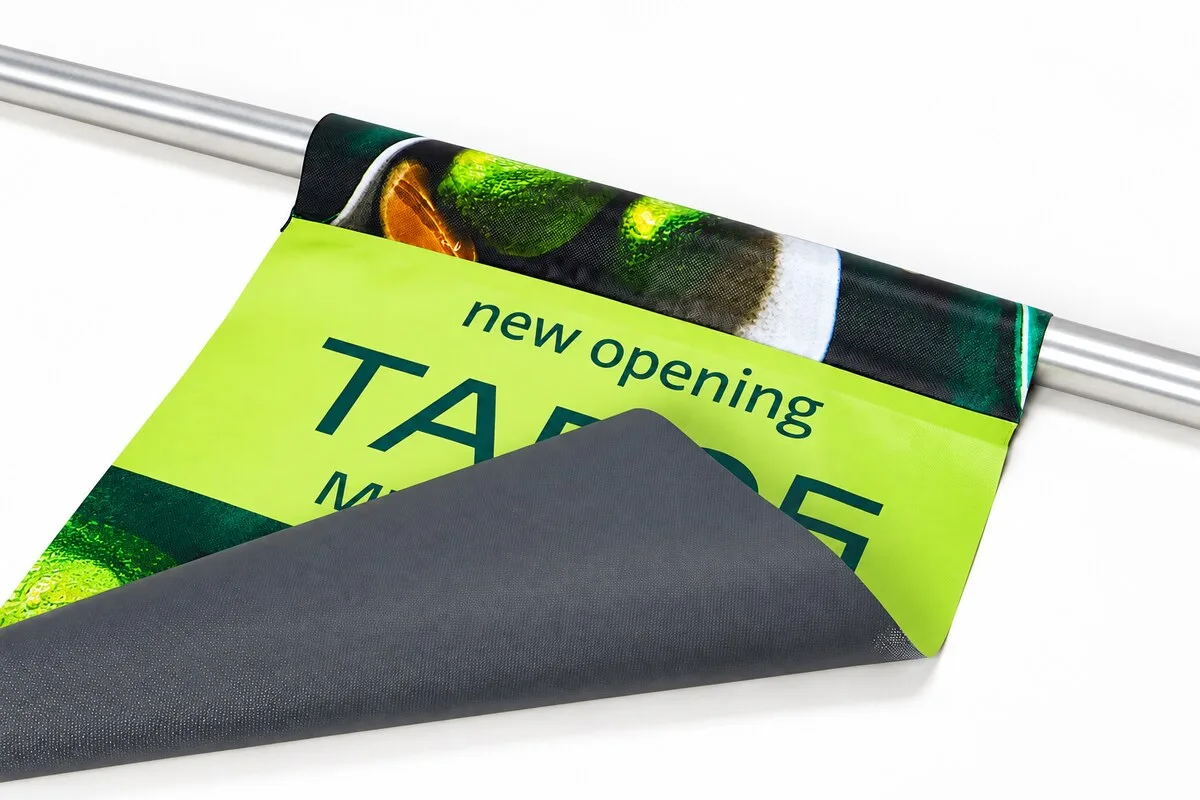
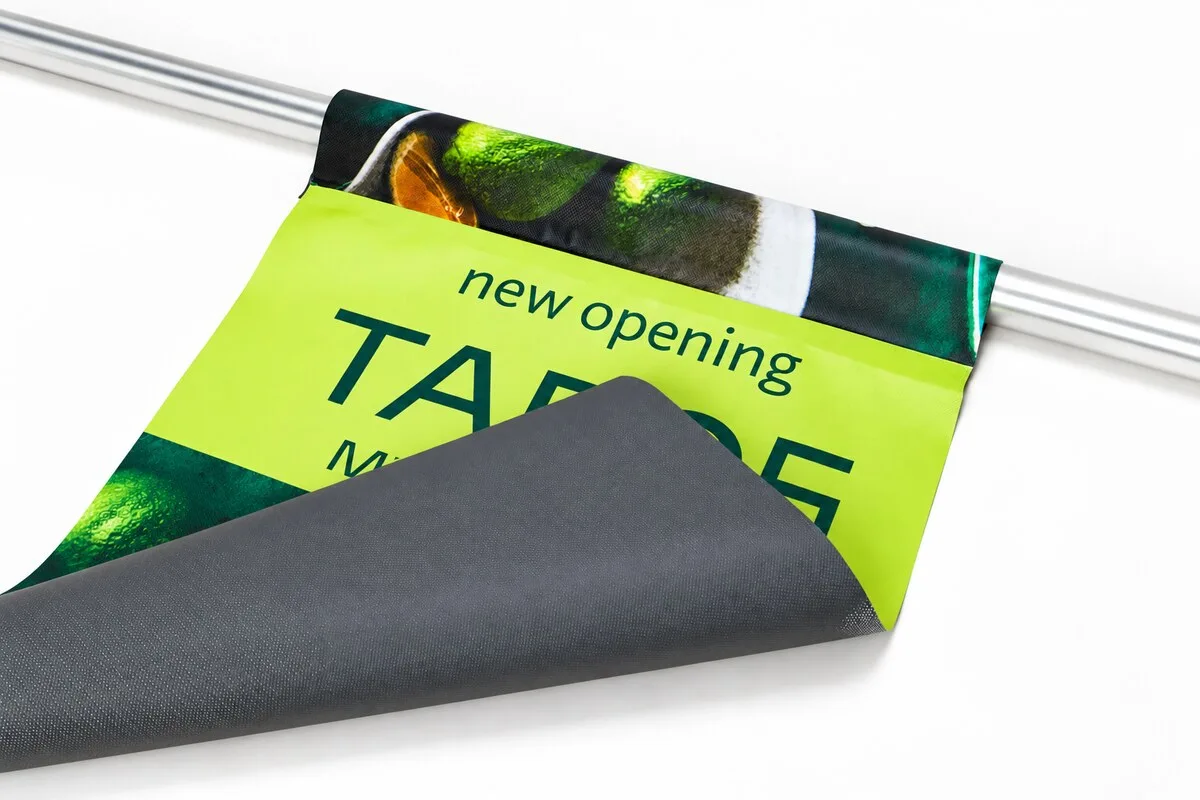
A smooth surface: up close you cannot see the woven mesh like on a regular banner. Prints look sharper and much smoother, ideal for portraits, food photos and product images viewed at close range. Often used for indoor backdrops, large showroom posters and reception counters.
| What you need | Suitable banner type |
|---|---|
| Banners, shopfront signs, construction covers | White 3.2Z 300g banner |
| Light box faces, signs with lights inside | Backlit banner |
| Photo backdrops, stage backdrops, hung in open spaces with light on both sides | Grey double-sided banner |
| Photo images, viewed up close | Smooth banner |
Solvent ink or UV printing
Large-format Hiflex banner prints run on a roll printer: the banner passes under the print head continuously, so the length is almost unlimited. We offer two technology options:
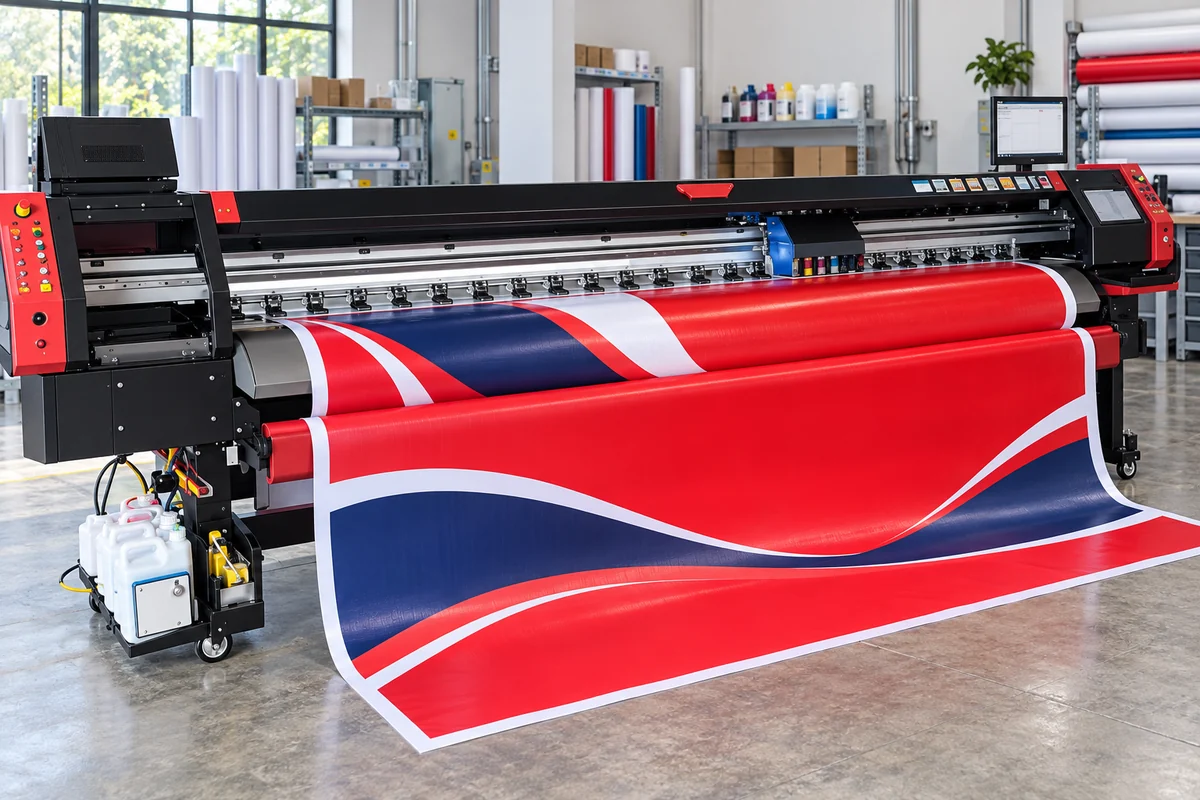
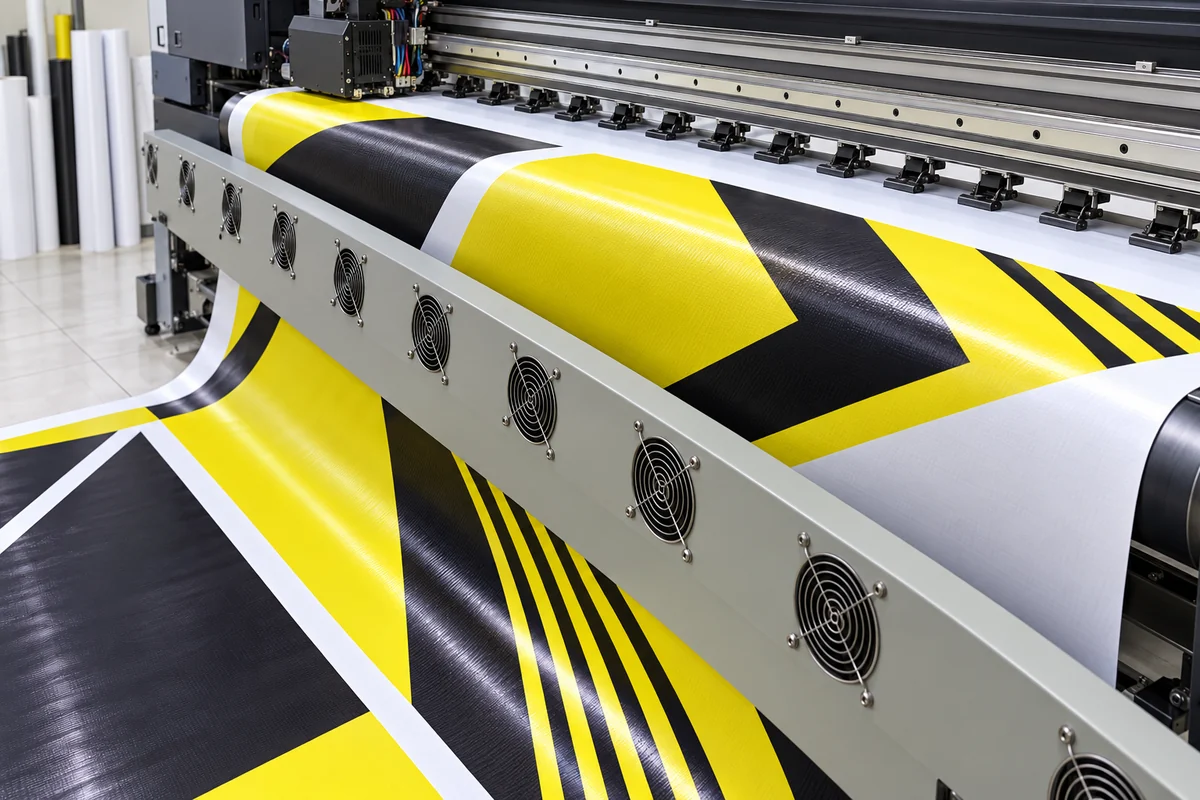
- Solvent ink printing — the standard technology for prints hung outdoors. The ink soaks into the plastic layer, so it withstands sun and rain well at an affordable cost, suitable for most banner and hoarding orders.
- UV printing — the ink dries instantly under UV lamps, for faster delivery and better colour fastness. Choose it when the banner hangs long-term, the image has many fine details or viewers look at it up close.
If you are not sure which to choose, use this benchmark: hung outdoors for under a year, solvent ink is enough; for long-term signboards or important images, print UV.
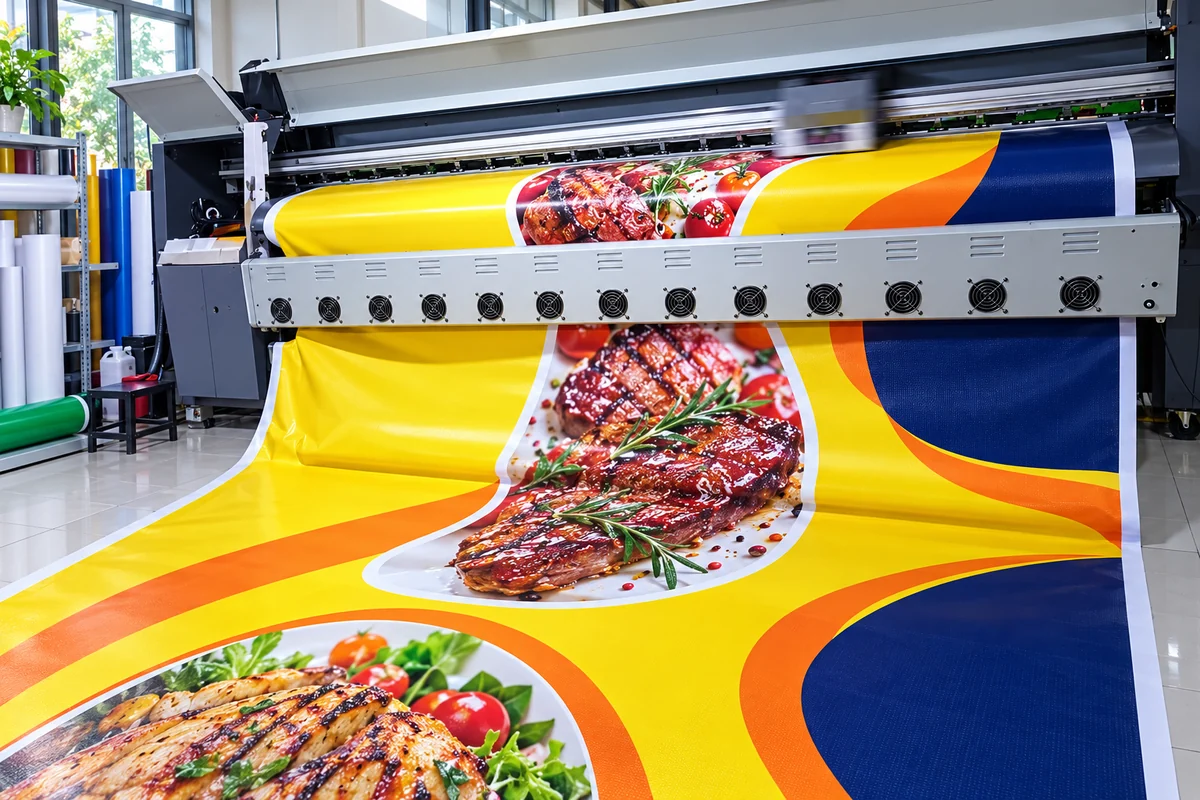
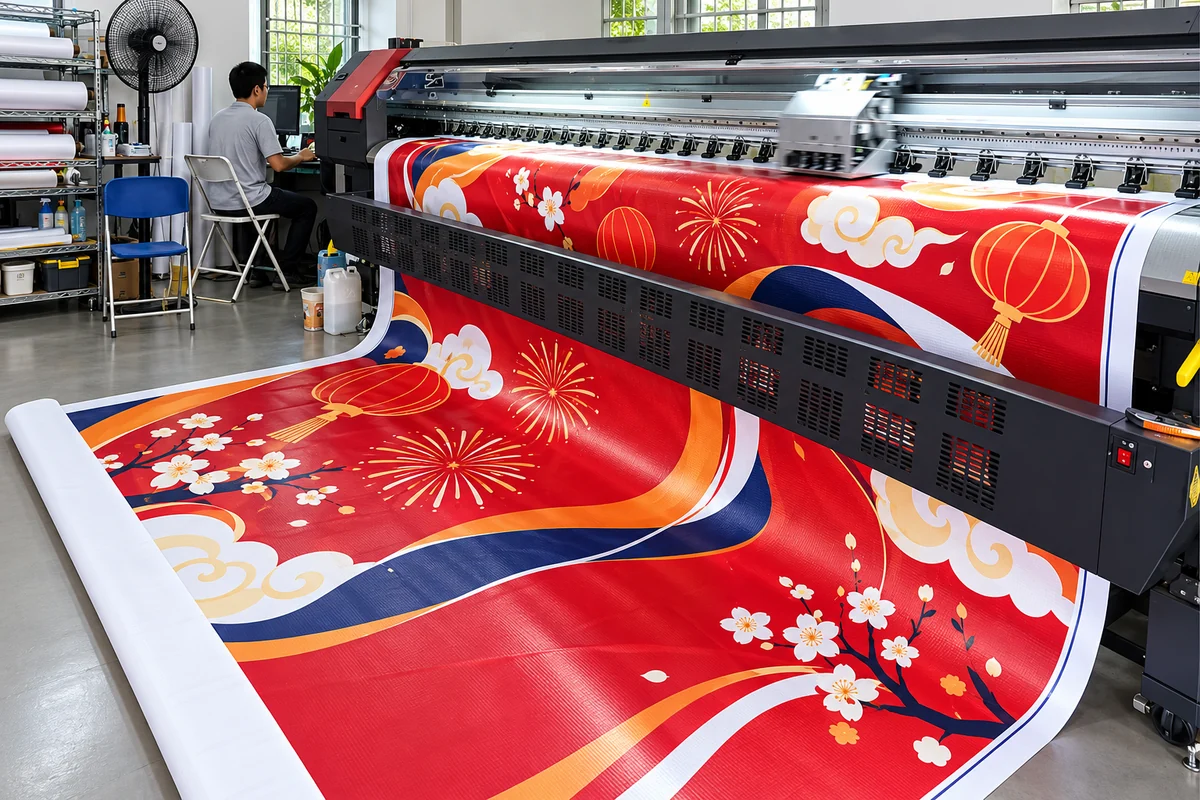
Whichever technology you choose, the colours still come out vivid and the image runs right to the edge — no white border at the edges as long as the file has enough bleed.
Three banner edge finishes
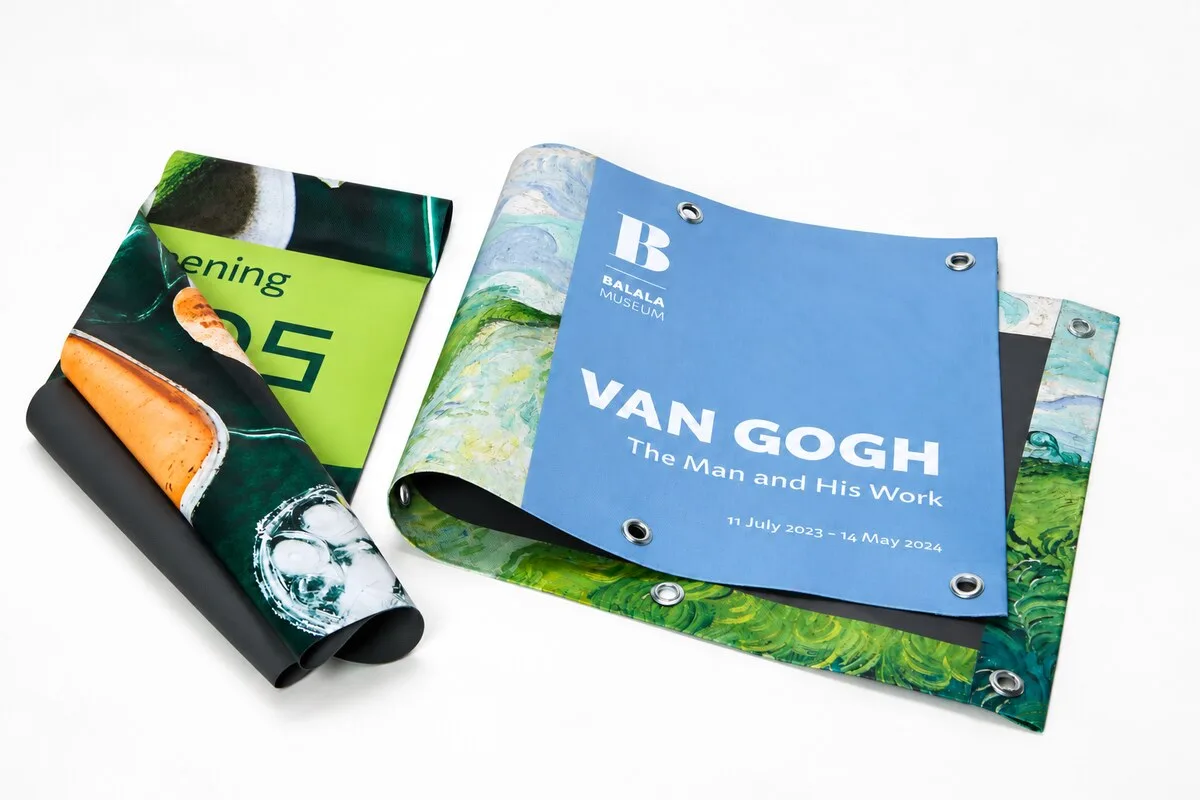
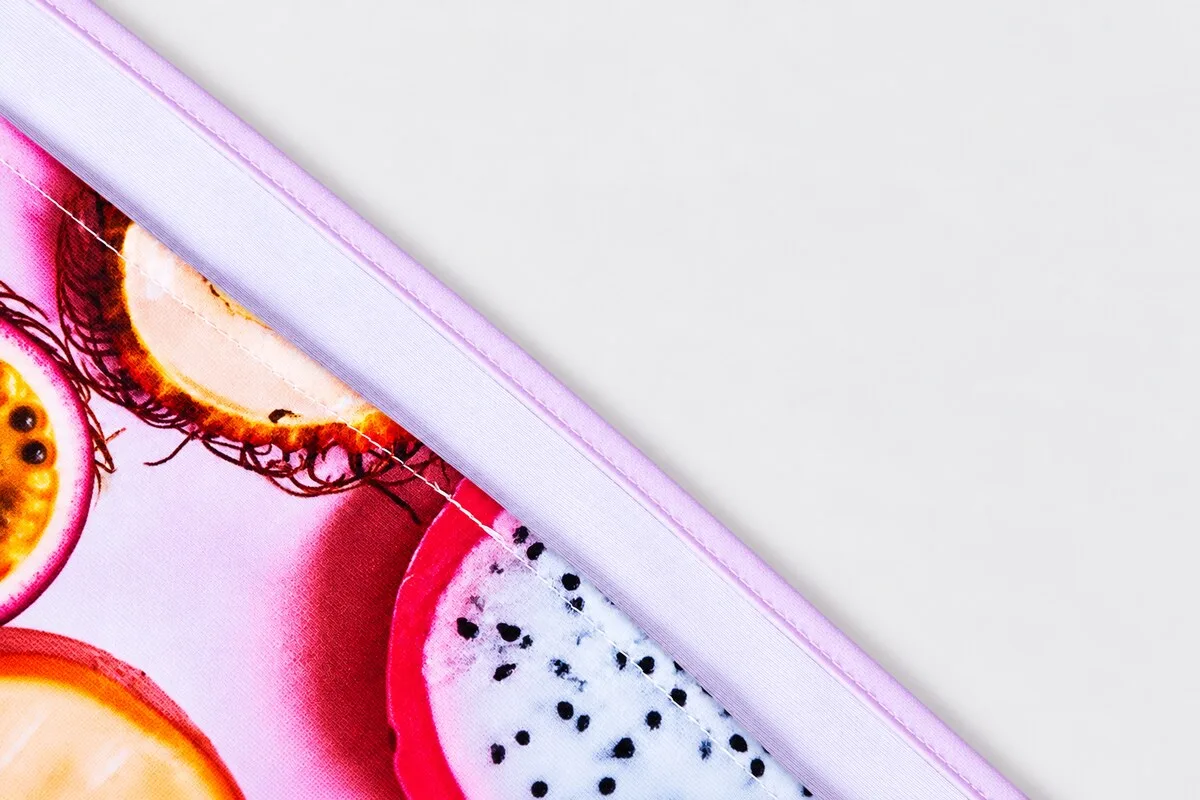
After printing, the Hiflex banner needs its edges finished before hanging, otherwise they fray and gradually tear in the wind. We offer three ready finishes:
- Plain margin — cut straight, leaving a white margin around the image for you to glue, fix with wooden battens yourself or hand over to installers. The cheapest, suitable if you already have your own installation team.
- Hemmed edges — the edge is folded back and heat-welded into a double-thickness hem, keeping the edge from fraying and making the banner edge stiffer and straighter when stretched.
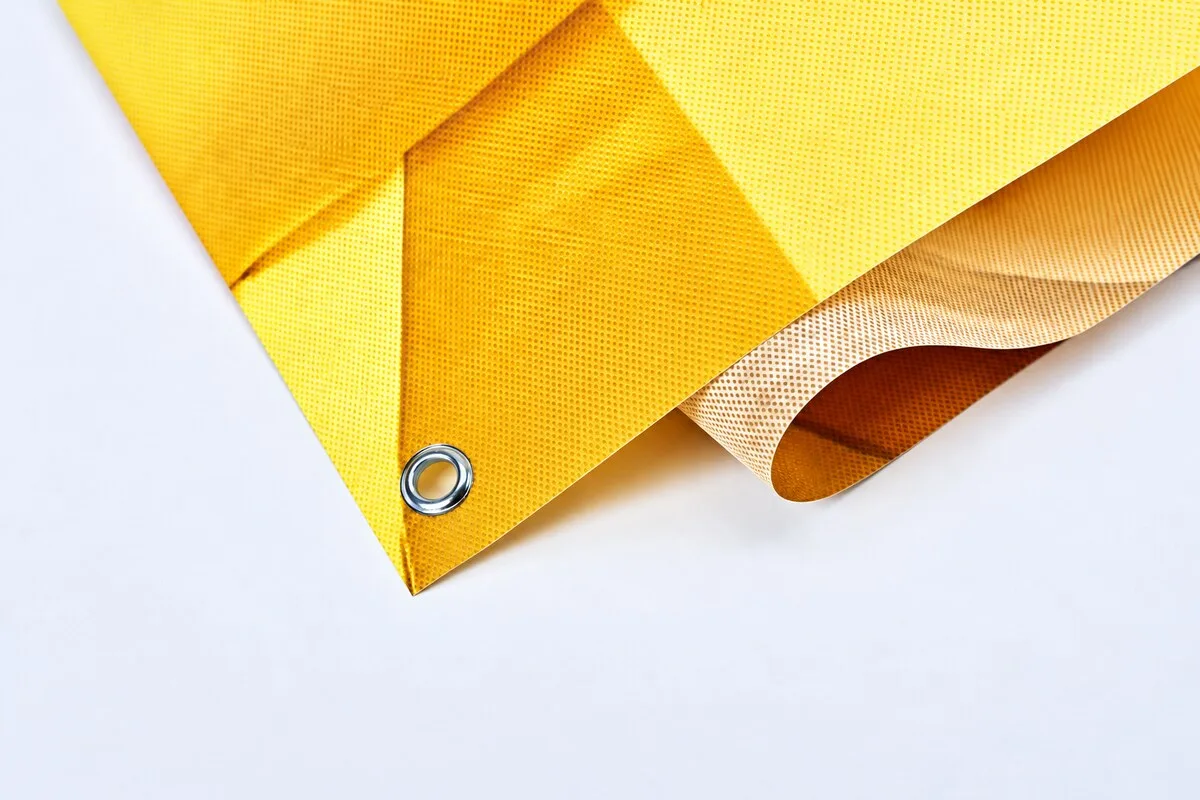
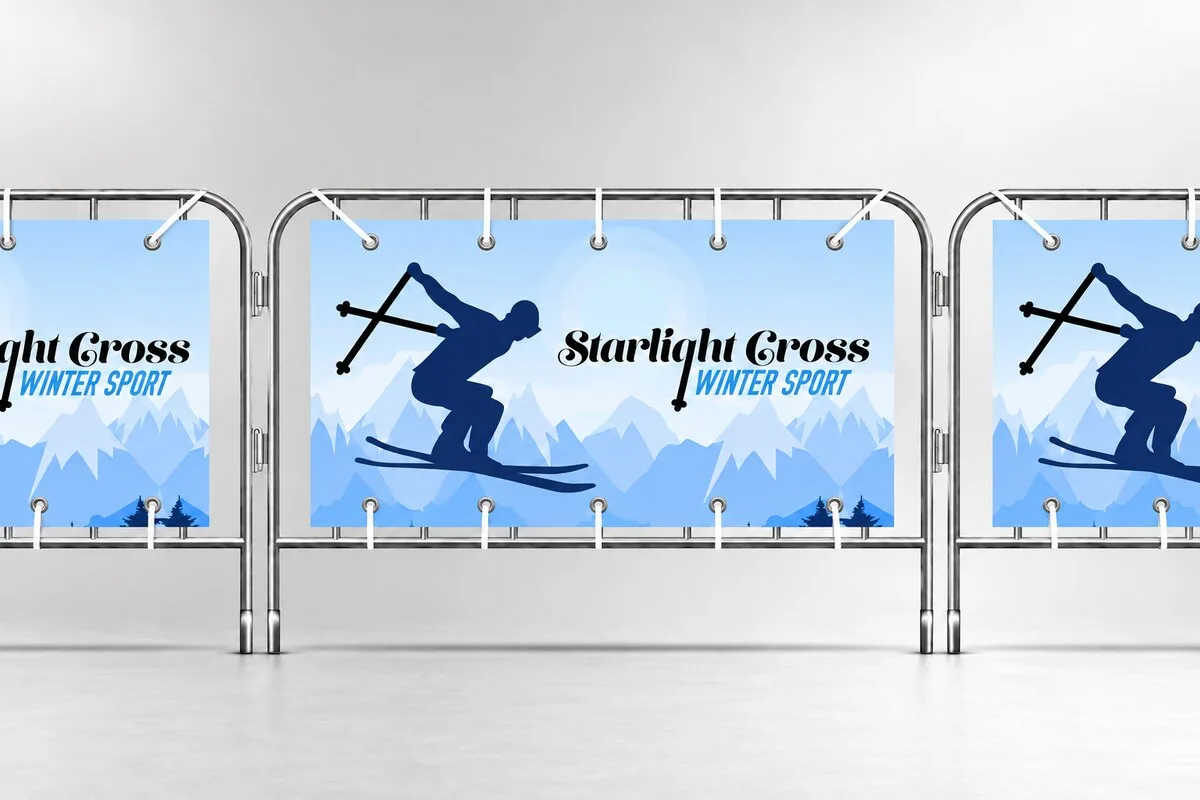
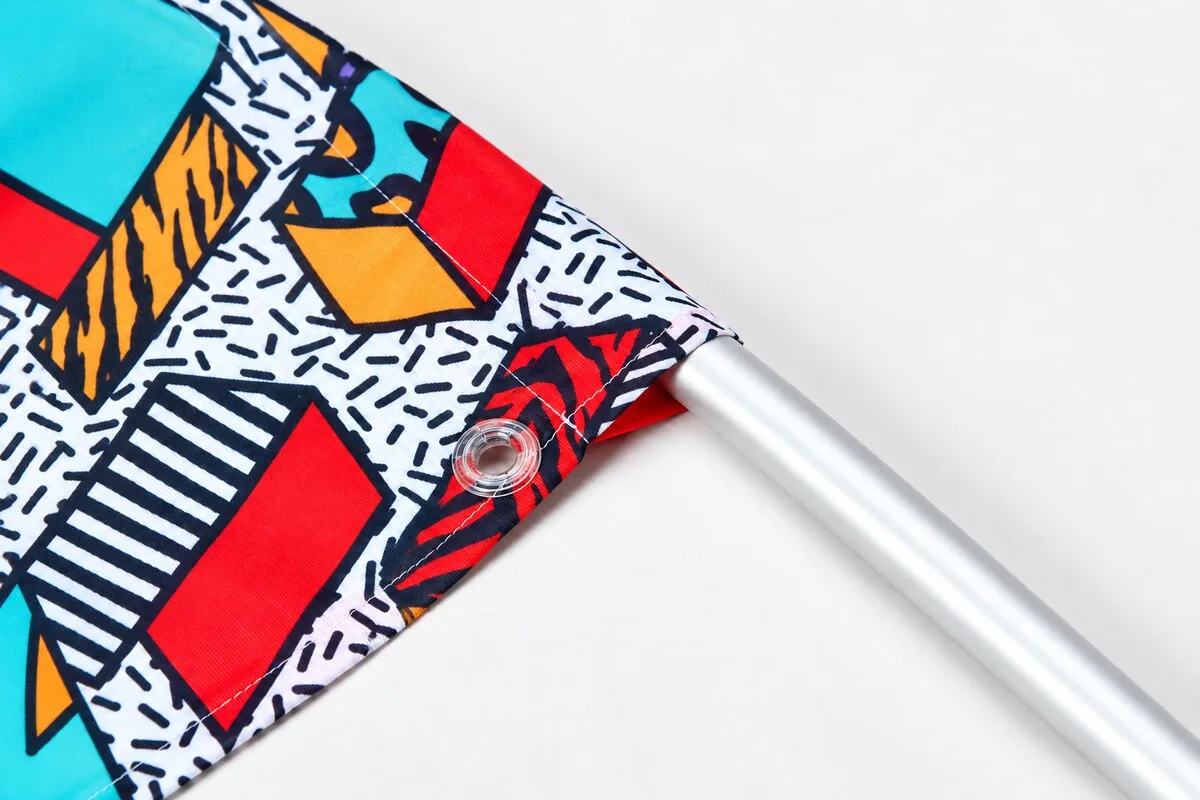
- Hemmed edges with eyelets — after hemming, we add metal eyelets evenly along the edge for threading cable ties, ropes or hooks. This is the most ordered style because it is ready to use once hung.
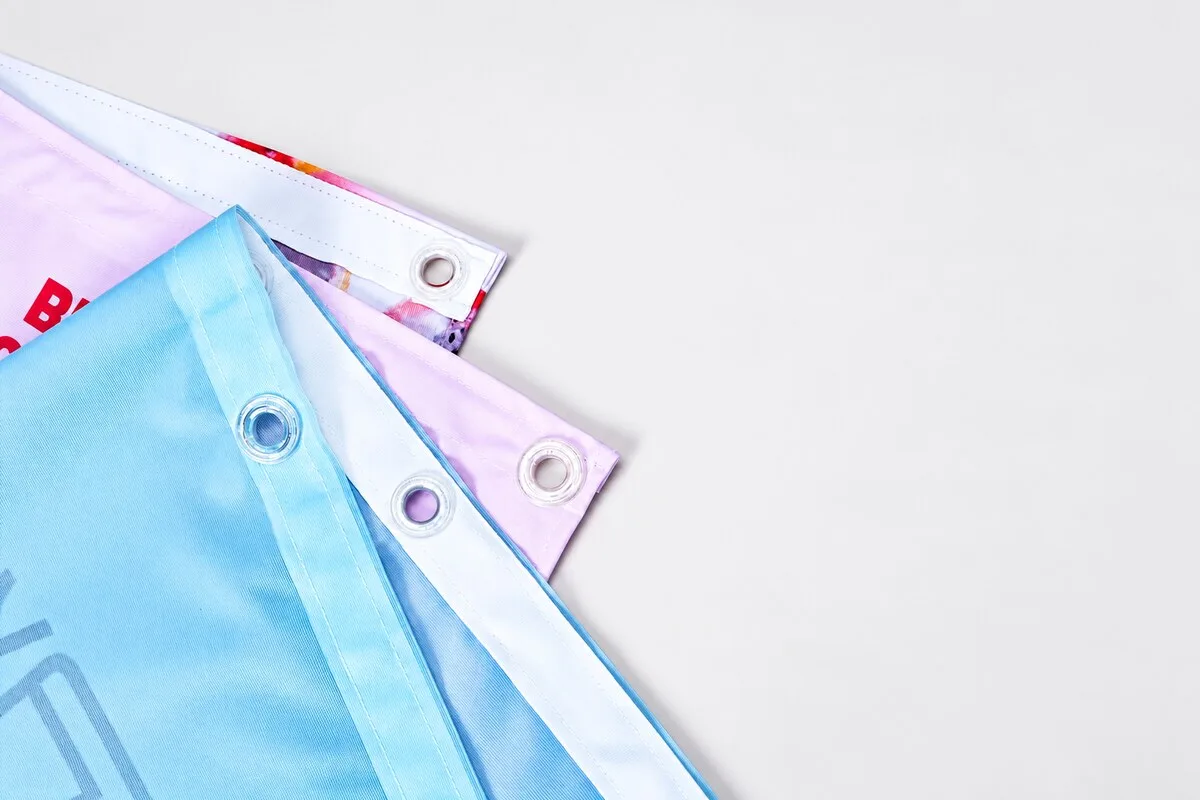
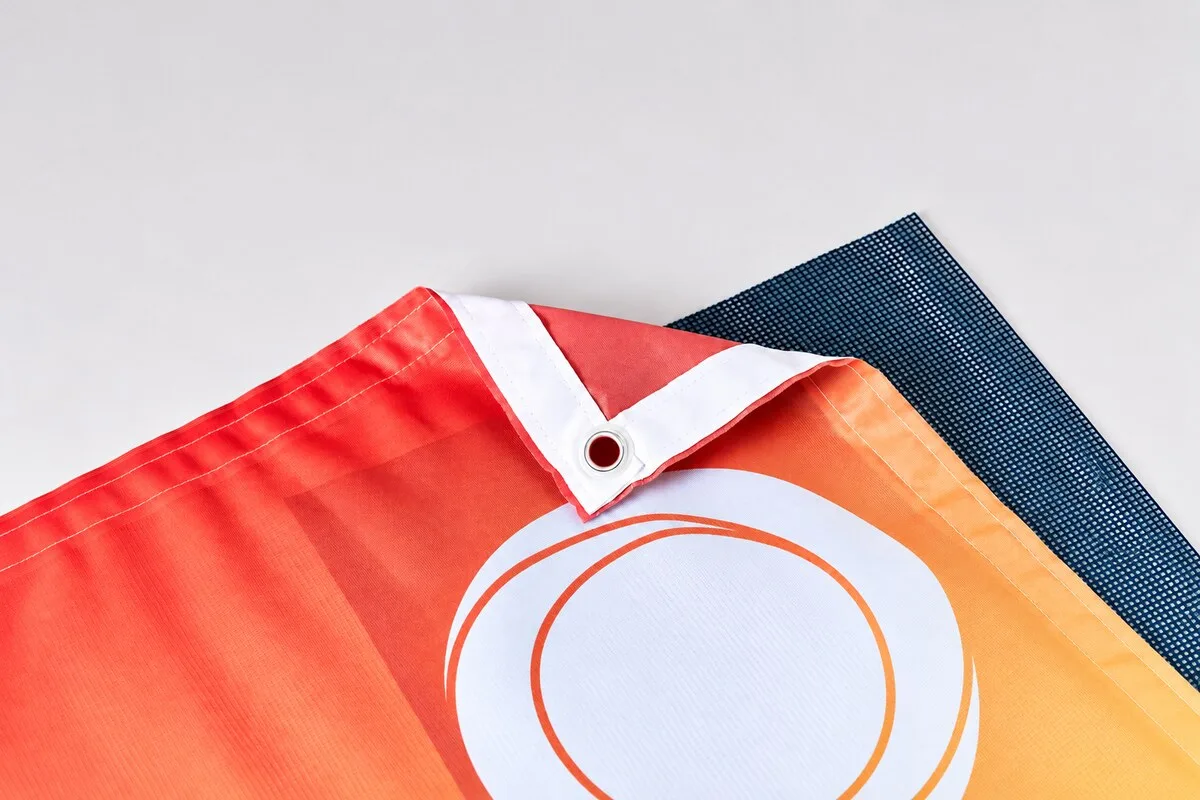
The corners of the banner take the strongest pull, so before fitting the eyelets we reinforce the four corners with an extra layer. This keeps the eyelets from popping out in strong winds.
Related products

Hiflex

Banner

Backdrop

Advertising signs
Common hanging methods
Knowing the hanging method in advance helps you choose the right finish when ordering:
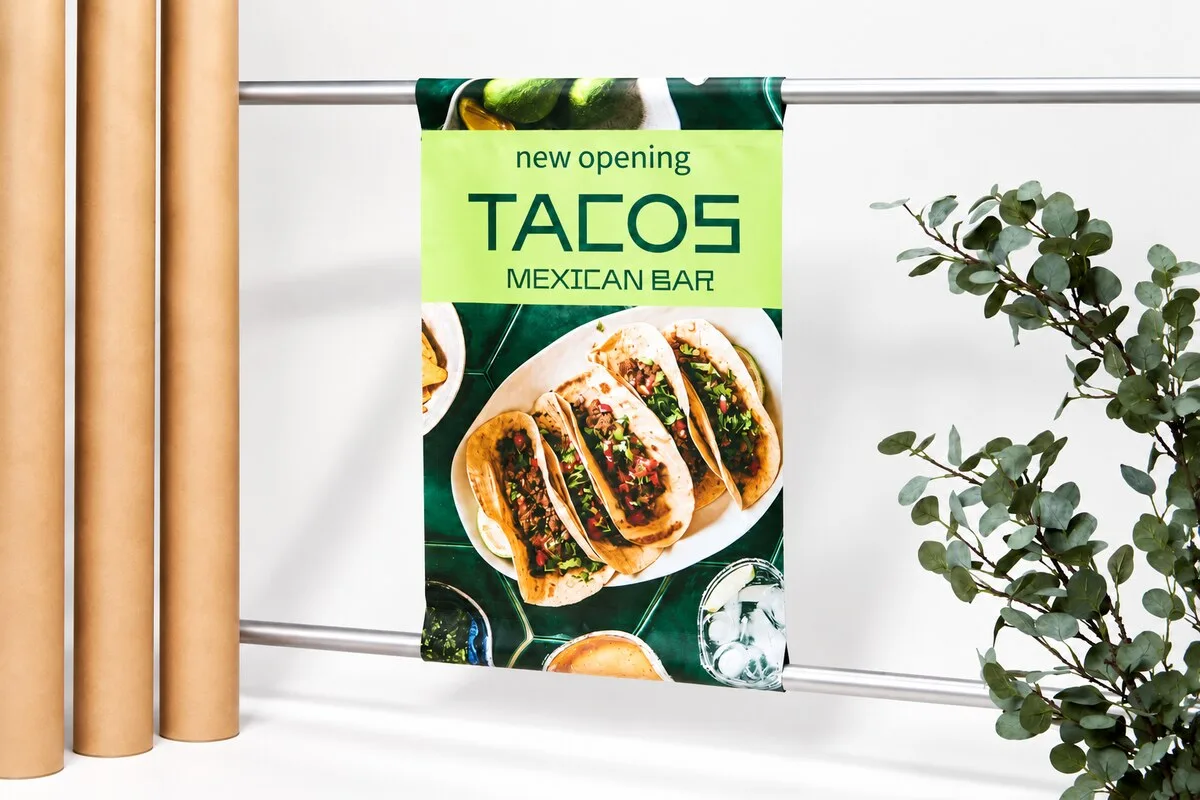
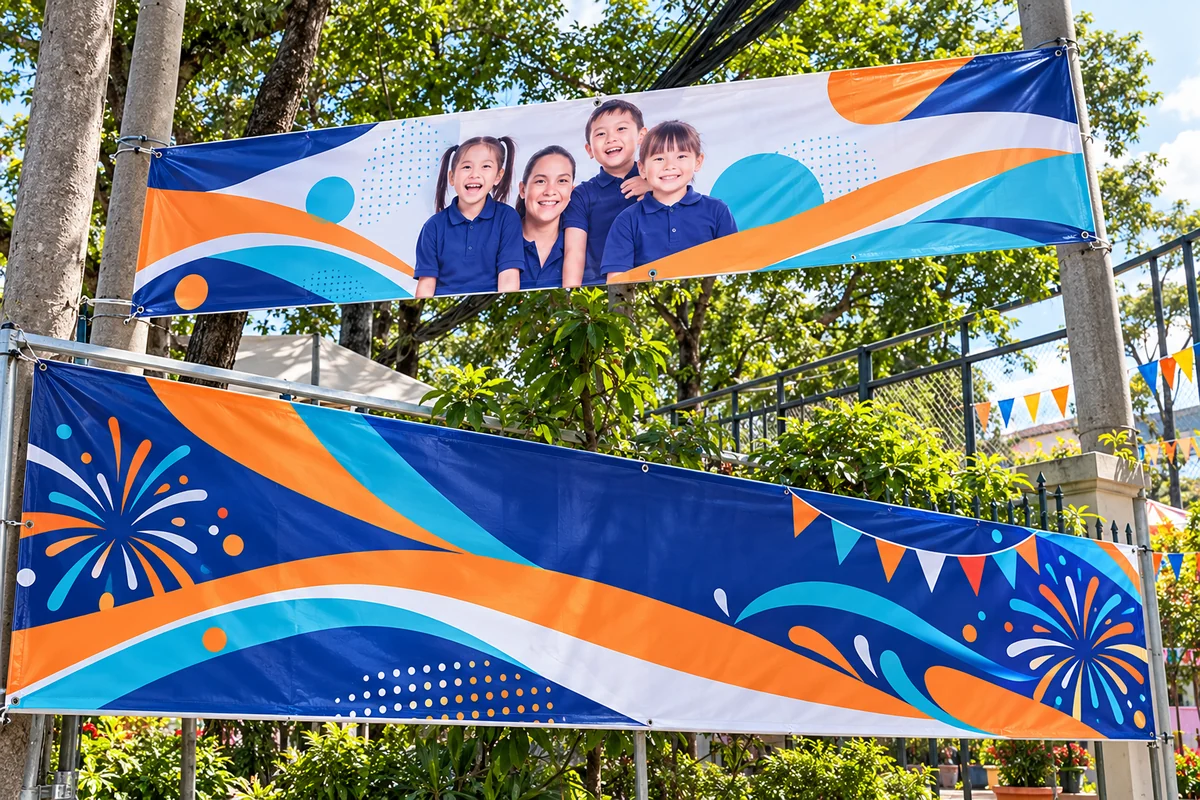
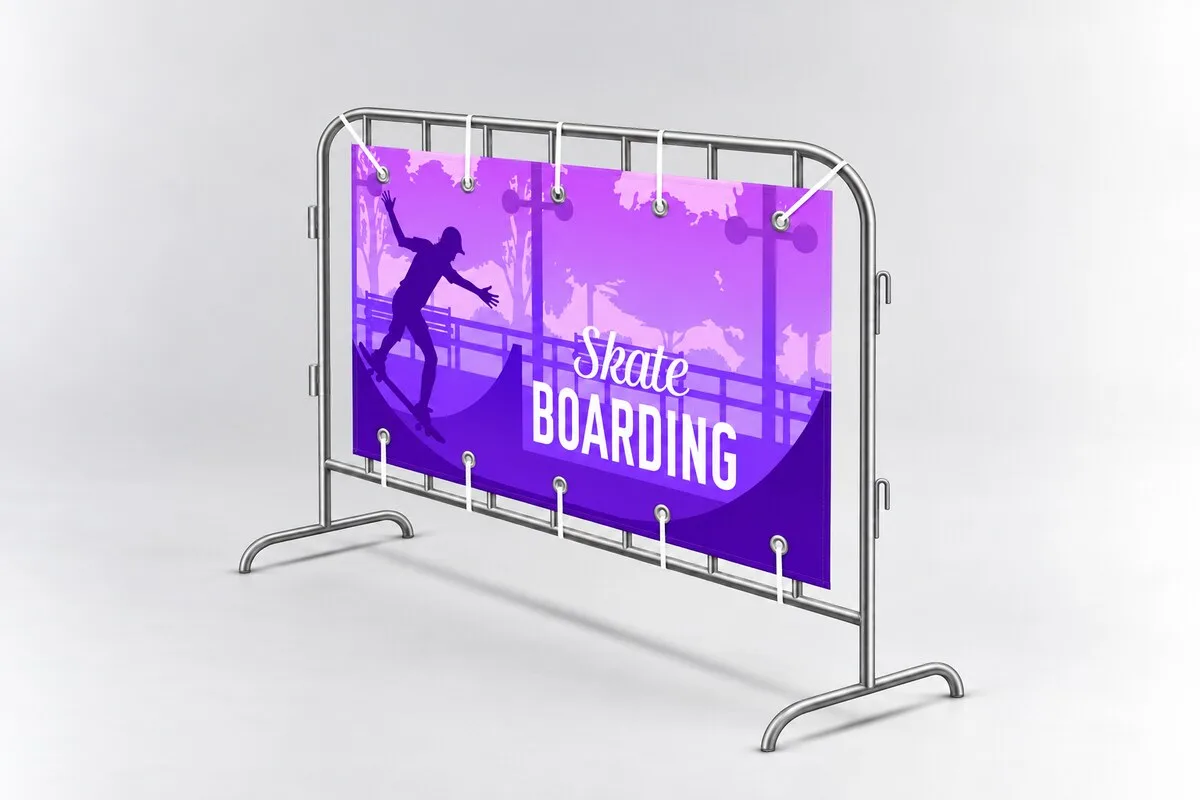
- Ties through eyelets — the most common method: stretched onto fence frames, railings, poles or steel frames with plastic cable ties or ropes threaded through the eyelets.
- Rod pockets — the top and bottom edges are sewn or welded into hollow pockets to slide in aluminium bars or pipes, keeping the banner straight and the edges from curling in the wind. Often used for vertical prints hung in front of shops.
- Hooks — hooks are pre-fitted along the top edge to quickly hook onto an existing frame, removable in a few minutes, handy for content that changes by campaign.
Applications of Hiflex banner in advertising
The same material, just with different sizes and finishes, makes very different items:
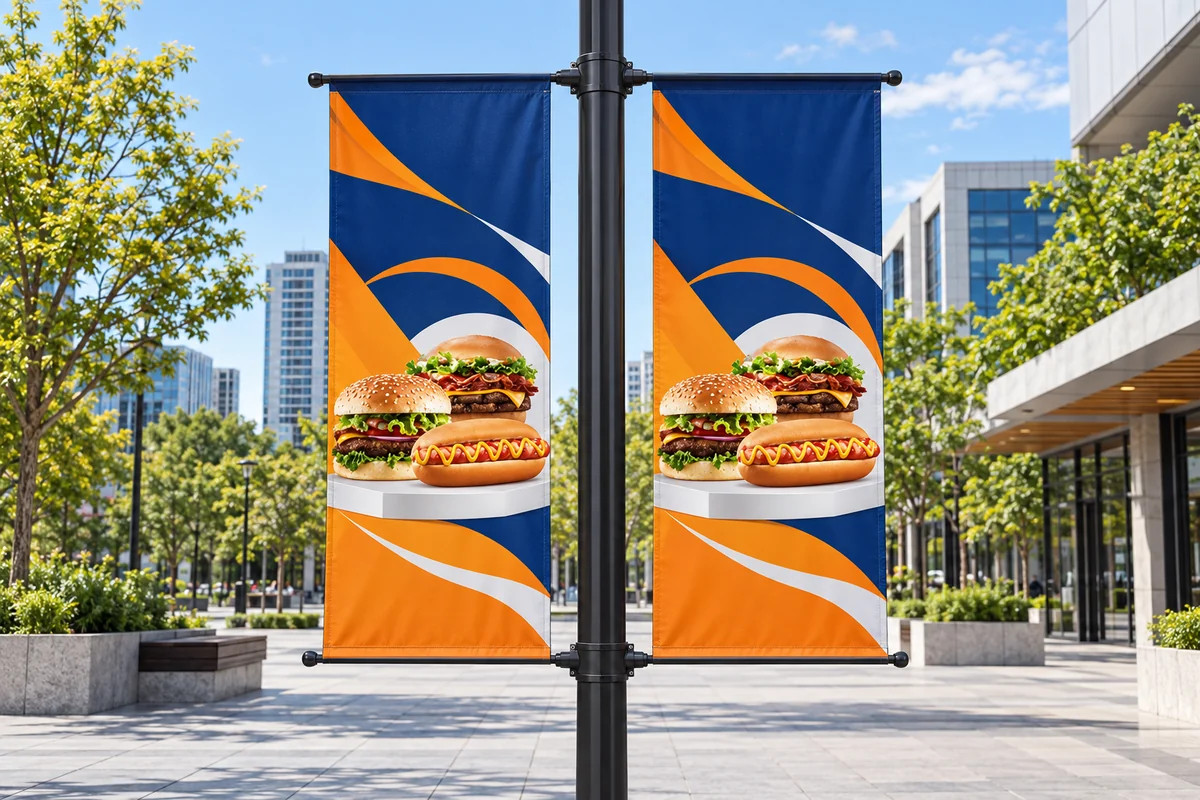
- Street banners, banner — hung across the street, on both sides of lamp posts along the street, or stretched across the shopfront during openings and promotions.
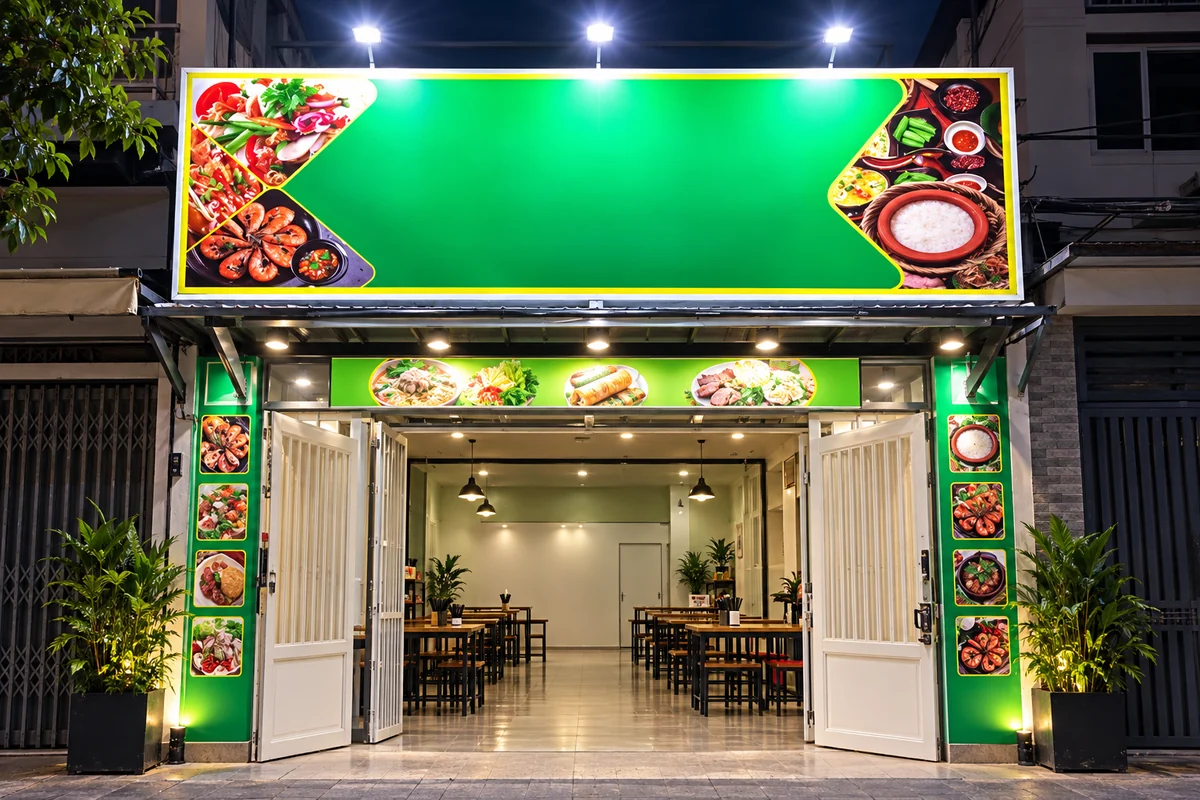
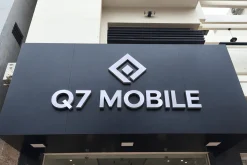
- Shopfront signs — the banner is stretched onto a steel frame as the sign face, at a much lower cost than an Alu or acrylic (Mica) face.
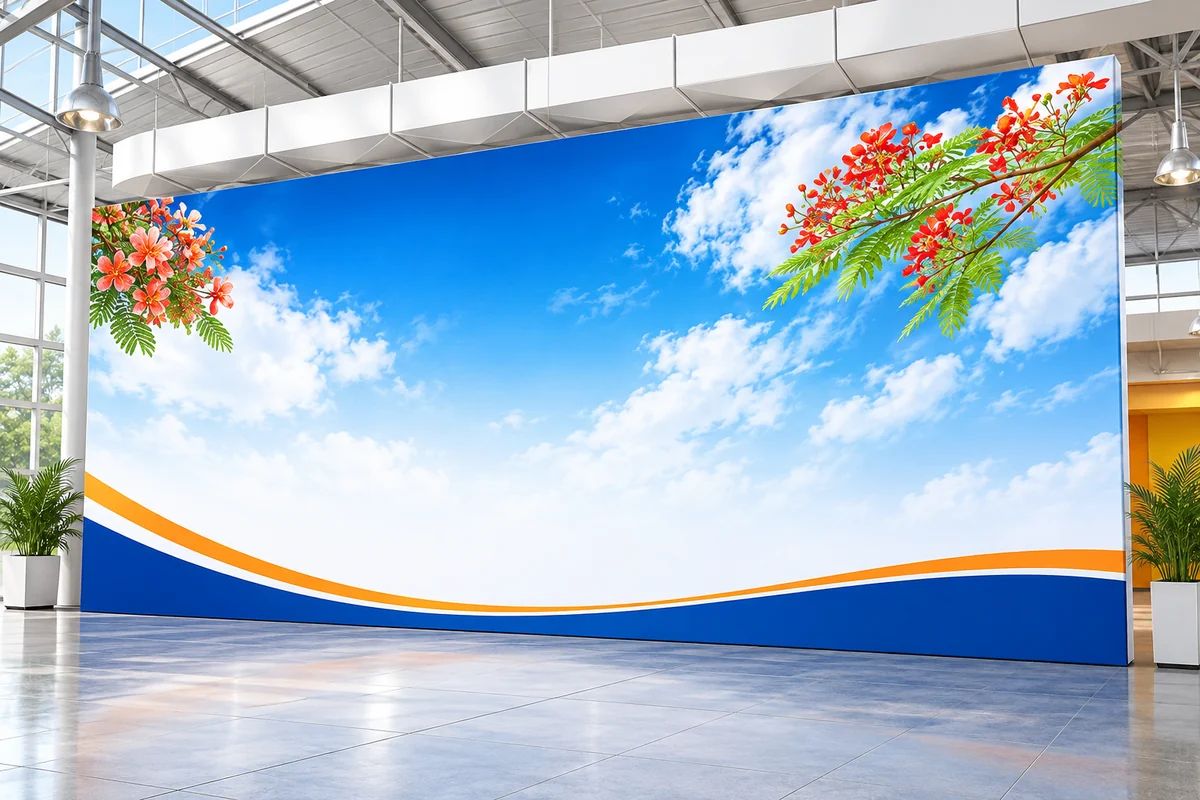
- Backdrop and event backdrops — large and seamless, quick to set up, easy to take down, rolled up and stored for next time.
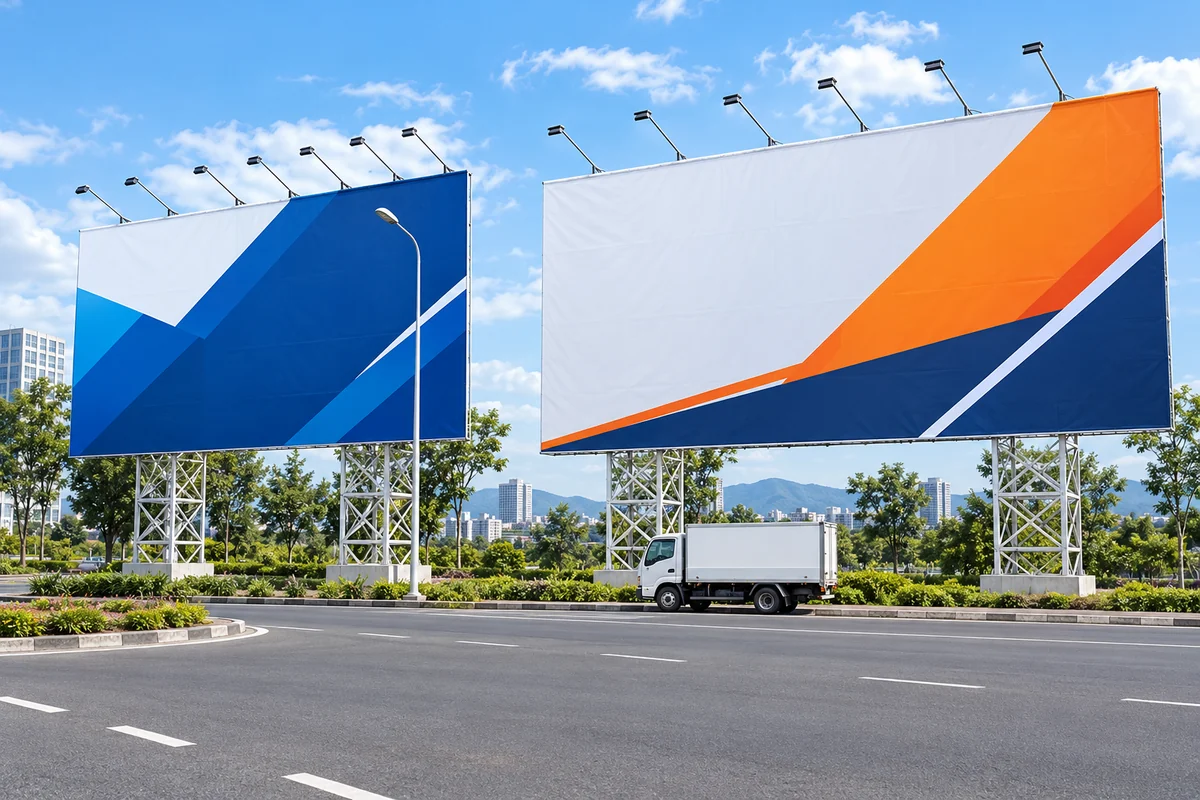
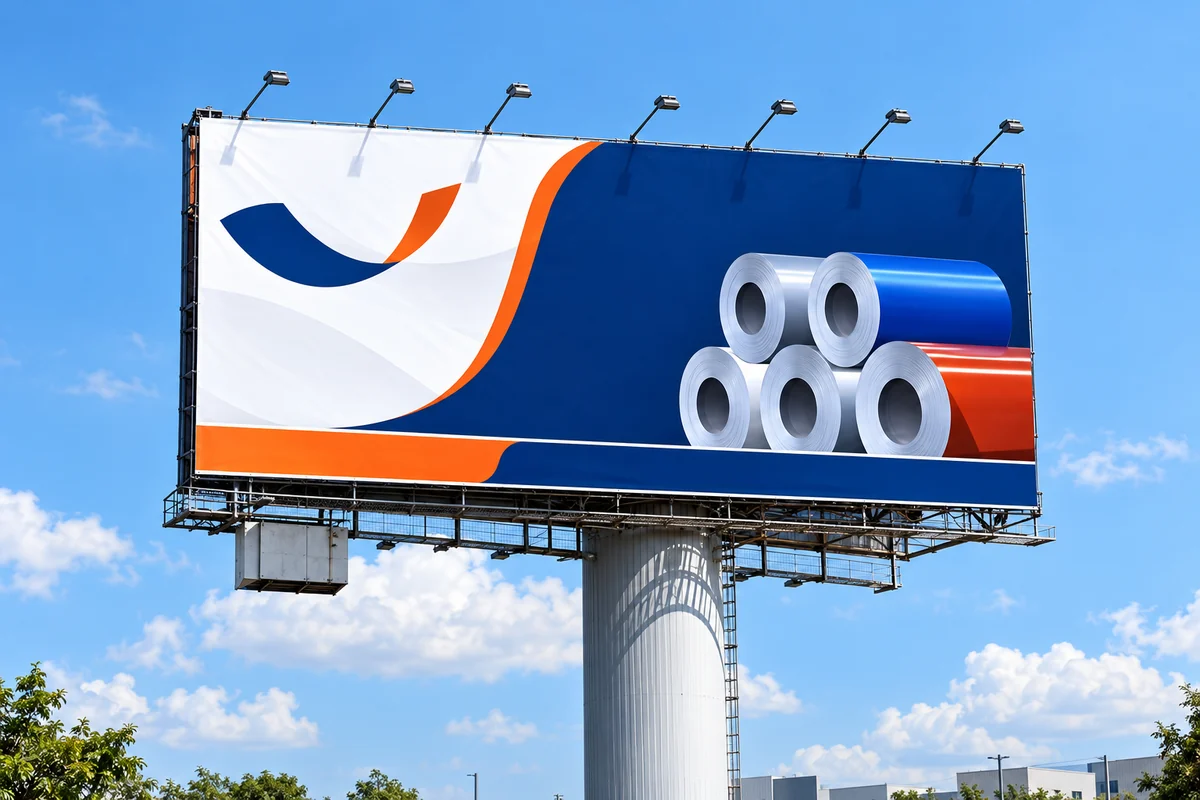
- Billboards, roadside signs — very large prints on steel posts or steel frames, seen by passers-by from tens of metres away.
- Light boxes and illuminated signboards — using backlit banner as the illuminated face.
- Construction fence covers — long continuous lengths around construction sites, serving both as screening and as an advertising surface.
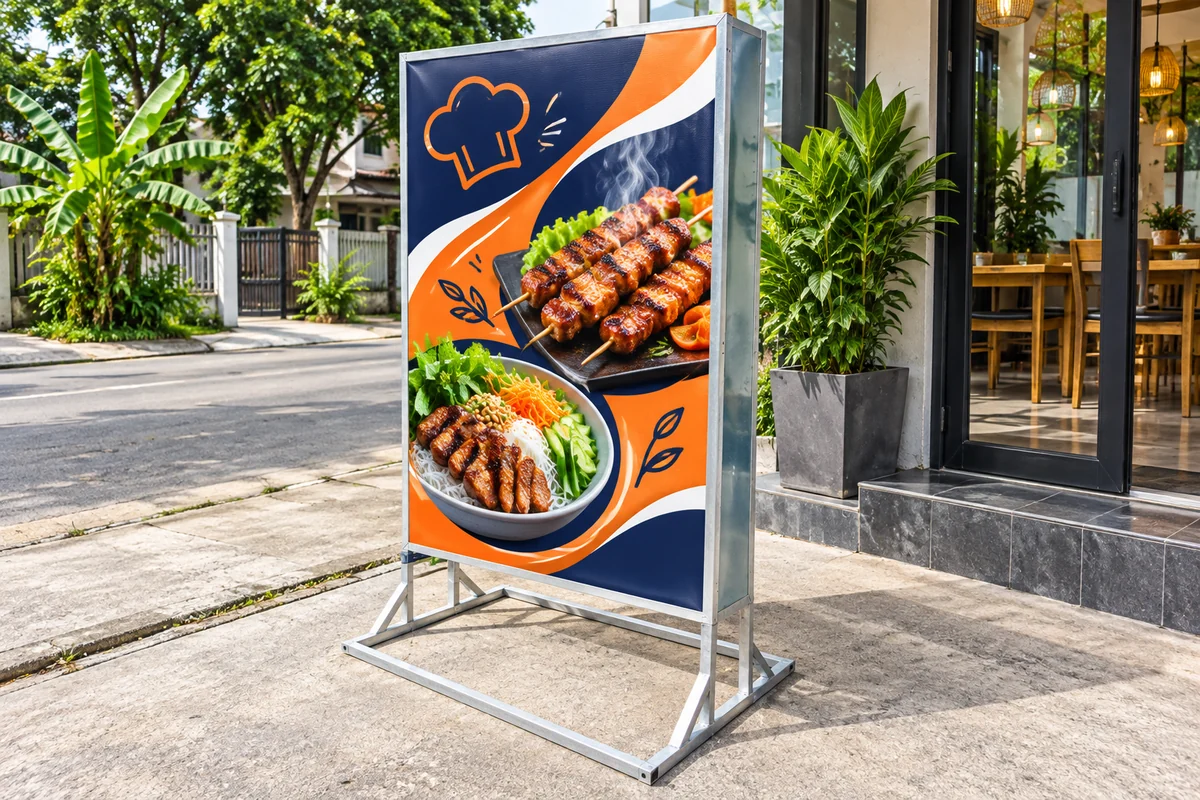
- Welcome arches, double-sided signs with stands — items placed in front of shops, with content changed by promotion.
Comparing Hiflex banner with PP, Backlit Film and Formex
Many orders are torn between several large-format materials. The difference lies in where they hang and how long they last:
| Material | Strengths | Best when |
|---|---|---|
| Hiflex Banner | Flexible, weather-resistant, very large sizes, low price | Hung outdoors, large sizes needed, needs to be rolled for storage |
| PP | Smooth surface, good colours, lightweight | Posters, standees, indoor printed materials |
| Backlit Film | Lets light through, very sharp images | Premium light boxes, airport signs, showrooms |
| Formex / Alu | Rigid board, can stand on its own | Direction signs, flat signboards, cut 3D letters |
In short: if you need something soft, rollable, large and for outdoor hanging, choose banner; if you need something flat, rigid and viewed up close, choose board. We also print on Large-Format PP if the print only hangs indoors.
Preparing large-format Hiflex banner print files
- Format — PDF or AI is the best standard; high-quality JPG files can still be printed.
- Color mode — CMYK, so the printed colours are close to the design colours.
- Resolution — prints of 1m and up only need 100–150dpi, not 300dpi as for paper printing, because viewers stand far away.
- Scale — if designed at the actual size, keep it at 100%; if the file is too large, work at a 1:10 scale and note it clearly.
- Safety margin — text and logos should be at least 5cm from the edge so they are not eaten by the folded hem or eyelets.
Area is calculated in square metres: width (cm) × height (cm) ÷ 10,000. A 300 × 80 cm piece is 2.4 m². Send the width × height and the intended hanging method, and we will prepare it correctly.
Hiflex banner lifespan and how to make the print last longer
- Hang it evenly taut, do not let the banner billow like a sail — gusts hitting slack areas are the most common cause of torn edges.
- Fit eyelets densely enough along the long sides; do not just fit the four corners on a large banner.
- Choose a heavier weight for windy locations such as high-rise shopfronts and open construction fences.
- When taking it down, roll it lengthwise instead of folding — creases left for a long time become white streaks on the printed image.
- Prints fading before they tear is normal for outdoor goods; for seasonal content choose solvent ink to save money, for long-term content print UV.
Frequently asked questions about Hiflex banner
How long does Hiflex banner last outdoors?
For 300g white banner with solvent ink, about 1–2 years under the sun and rain of Ho Chi Minh City. A heavier weight, UV printing and proper taut hanging extend it further.
What is the difference between double-layer banner and backlit banner?
They are complete opposites: double-layer banner has a grey layer that blocks light so no shadows show through from behind, while backlit banner deliberately lets light through to serve as a light box face.
What is the maximum print size?
The width is limited by the roll width (up to 3.2m), while the length is almost unlimited because the printer runs on rolls. Pieces wider than 3.2m are joined.
Are custom sizes possible?
Yes. Prints are priced by actual square metres, so we accept any size, including odd dimensions; the minimum chargeable area is 0.5 m² per piece.
What if I have no design file?
We offer a full design service from raw content: send your logo, images and the information to include, and we will lay it out and send it for approval before printing.
What the cost of a large-format print includes
A quote for a large-format print is not just the material cost. Knowing each item clearly helps you compare suppliers properly, instead of only looking at the unit price per square metre.
| Cost item | Charged by | Notes |
|---|---|---|
| Material and ink | Square metre | The main part of the quote |
| Edge finishing | Linear metre | Hemming, eyelets or sewn edges |
| Hanging eyelets | Number of eyelets | Eyelet spacing depends on size and hanging location |
| Steel frame or battens | Linear metre | Only when a separate frame needs to be built |
| Installation labour | Per session or per hanging point | Depends on height and location |
| Transport | Trip | Inner city by area, other provinces via intercity bus |
| Design | Per job | Free if you already have a finished file |
For small pieces under a few square metres, edge finishing and eyelets can sometimes cost more than the material itself. That is why ordering a single piece is usually much more expensive per square metre than ordering several at once.
Conversely, for large areas of tens of square metres, the material makes up most of the cost, while finishing labour stays almost the same. In that case, focus on comparing material quality rather than haggling over labour.
Calculating the area and quantity to order
Many people order by feel and end up with too much or too little. The calculation below works for most outdoor hanging situations.
- Measure on site first: measure the width and height of the hanging spot at three points and take the smallest number.
- Subtract the margin: with hemming and eyelets, about 2 cm is taken up on each side.
- Standard machine width: printing within the machine width means no joins; beyond it, joining is needed, so consider splitting it into several pieces.
- Number of hanging points: count all the positions, and do not forget the side and back faces if passers-by can see them.
- Spares: order one extra piece for each long-term design, so you can replace a torn one immediately without waiting for a reprint.
- Campaigns by period: calculate by the number of running days, and do not order dated designs for periods whose schedule is not yet confirmed.
If hanging on a rented shopfront or in a public place, ask the building management or local authorities about size and location rules first. Each area has its own regulations; finding a problem only after it is made costs both money and time.
Wind is an often overlooked factor. Large pieces hung in windy places should have wind holes cut or gaps left, otherwise the wind force will tear the edges right at the eyelets.
Order Hiflex banner printing at In Quảng Cáo Q7
We print banners directly in District 7 and offer a full package from design and printing to edge finishing and installation. Send the file with the width × height and intended hanging method so we can choose the right banner type and finish. See the specifications and prices on the page Hiflex Banner Printing, or contact 0866.511.099, or visit our workshop at 49 Mai Van Vinh, Tan Hung Ward, Ho Chi Minh City. Production & delivery: 8:00–12:00 & 13:00–18:00 Mon–Sat (closed Sun) · Consultation & orders: 8:00–12:00 & 13:00–20:00 Mon–Sat; 14:00–19:00 Sun.
View directions to the workshop on Google Maps
Need printing or signage in Ho Chi Minh City?
In Quảng Cáo Q7 runs its own print workshop in Tân Hưng Ward (former District 7), Ho Chi Minh City, producing and installing signage, banners, window graphics, exhibition booths and event displays. Send us the size, material, quantity and a photo on WhatsApp and we will get back to you.

Phone: +84 866 511 099 · Also on WeChat
Workshop: 49 Mai Văn Vĩnh, Tân Hưng Ward, Ho Chi Minh City