




































































Backlit Film: print film for light boxes that glows evenly when lit
Sep
What Backlit Film Is and Why Every Light Box Uses It
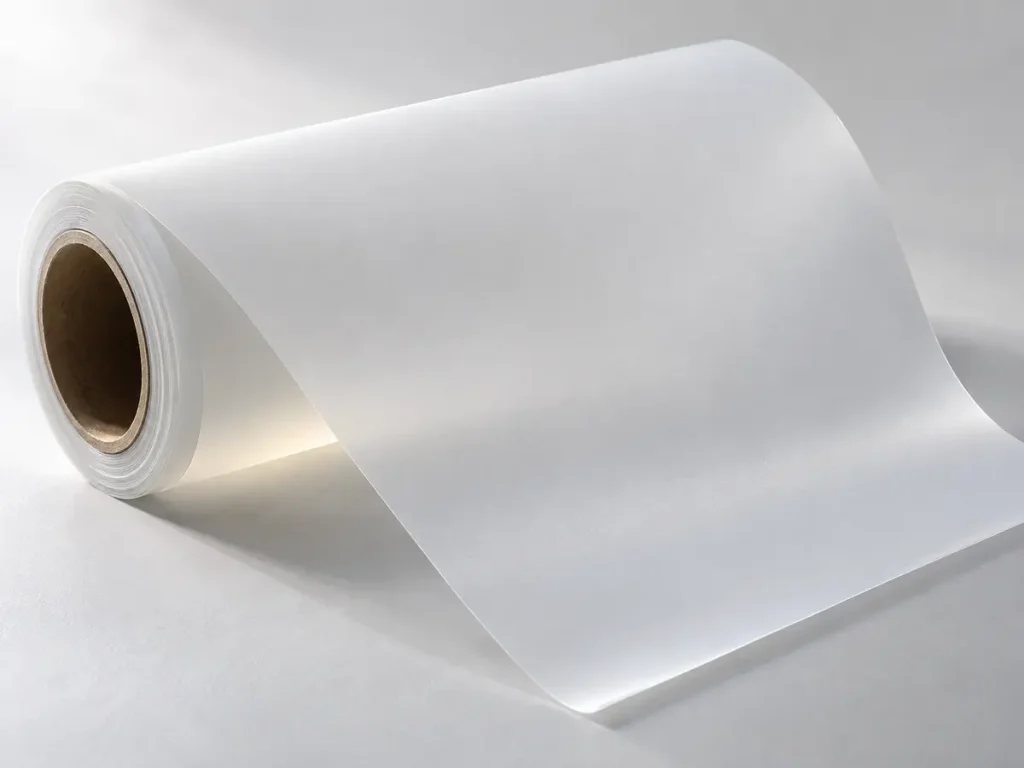
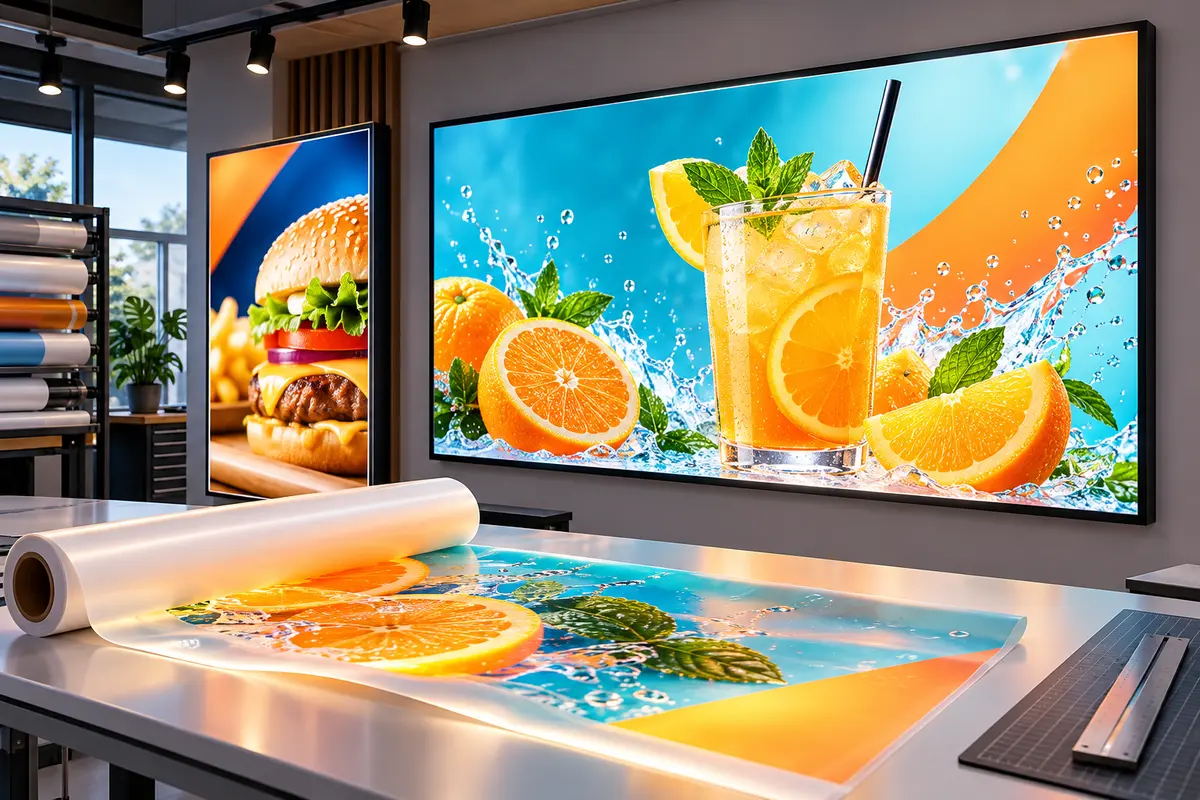
Backlit Film is a translucent plastic film used specifically for printed items lit from behind. The film base diffuses light evenly, so when the lights are on the box face glows evenly instead of showing each lamp inside. The ink on the film is also laid down thicker than normal, so the colours stay rich when light passes through.
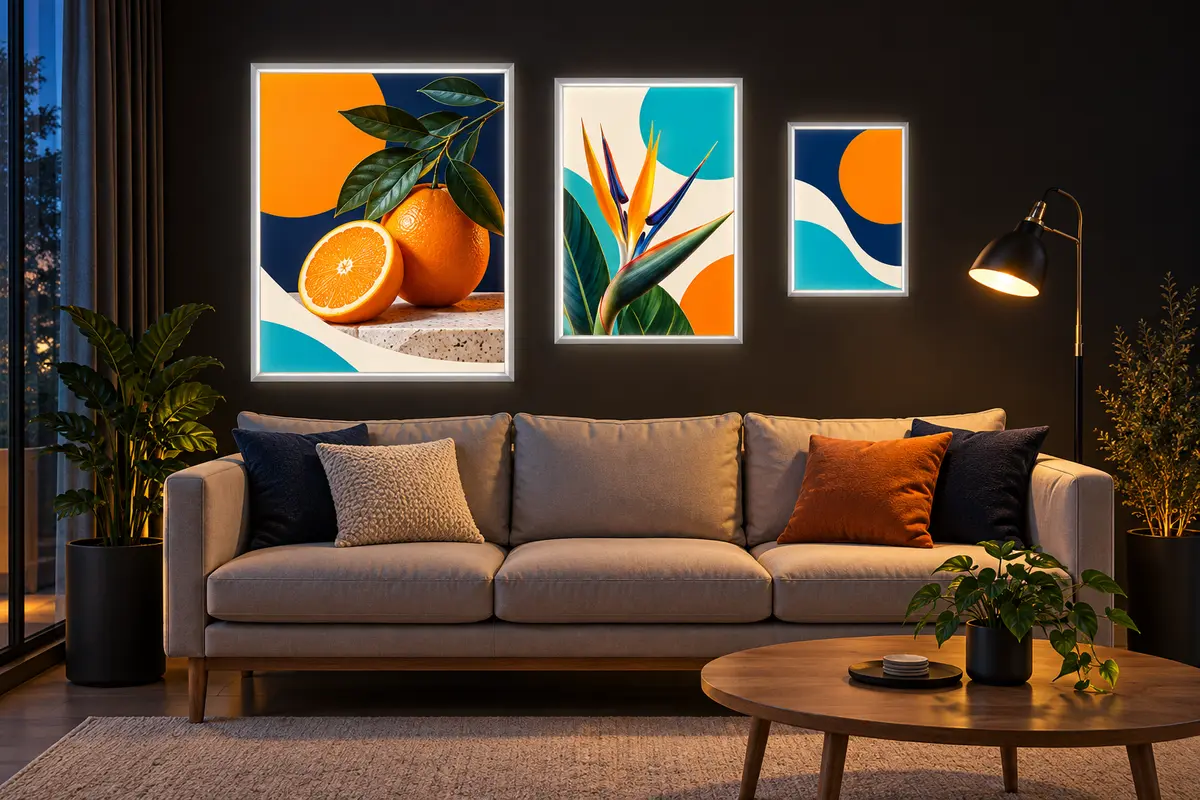
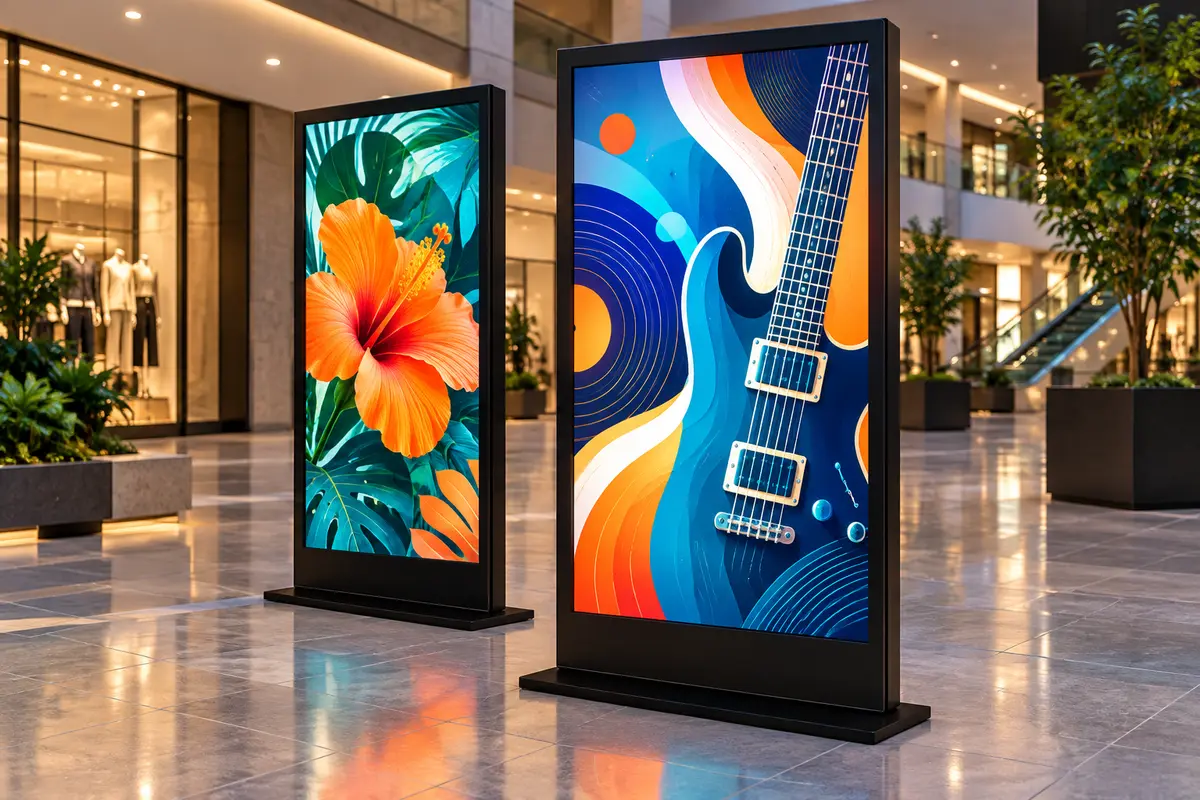
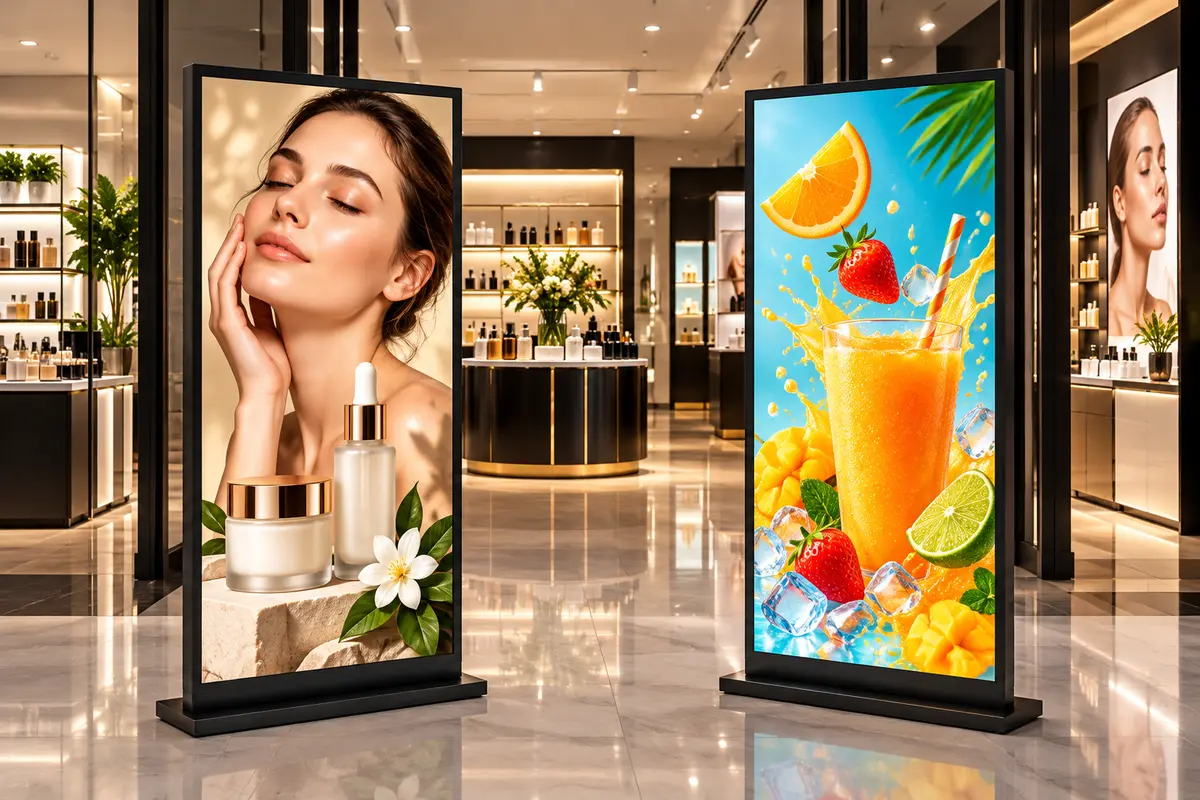
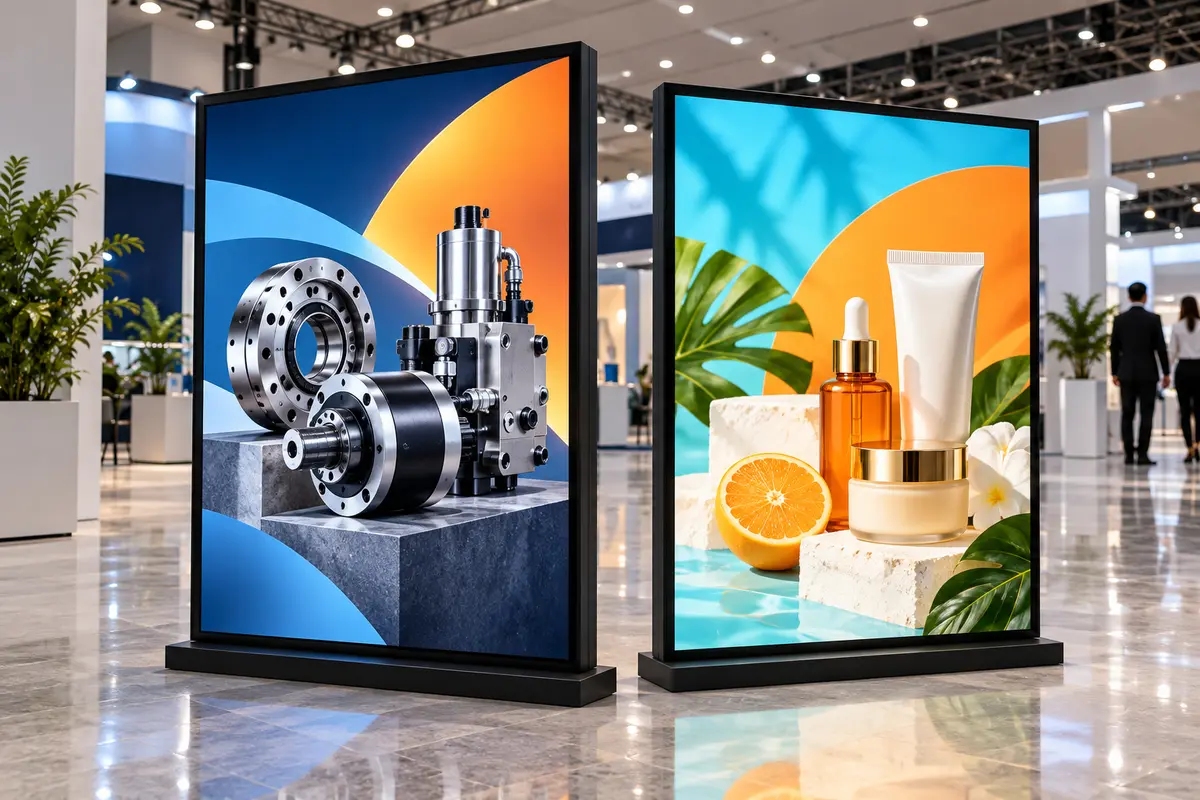
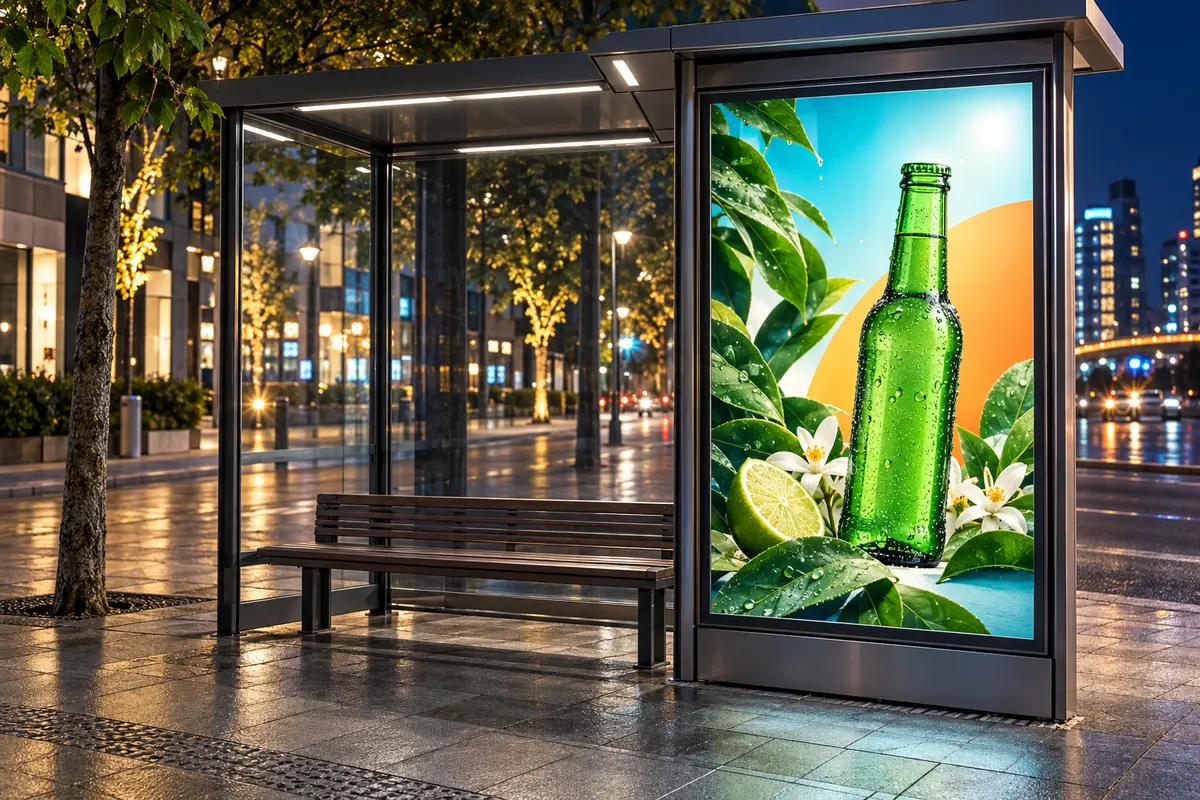
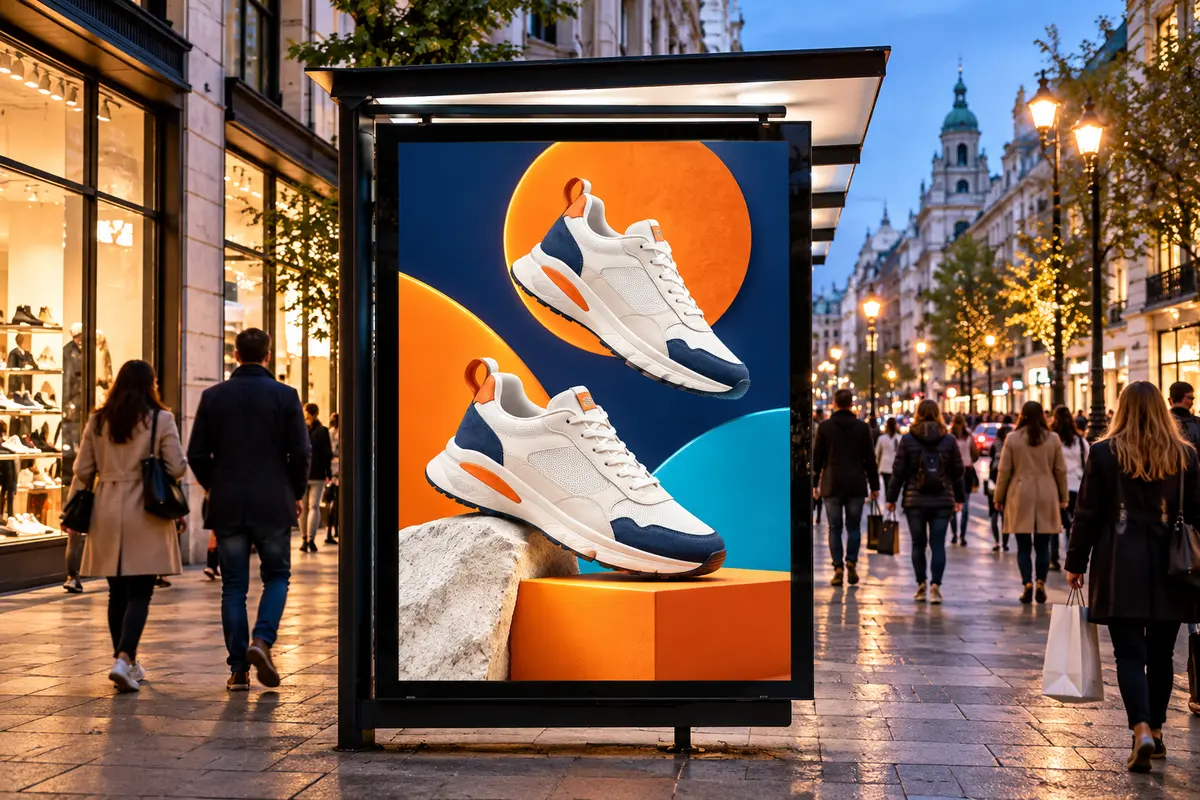
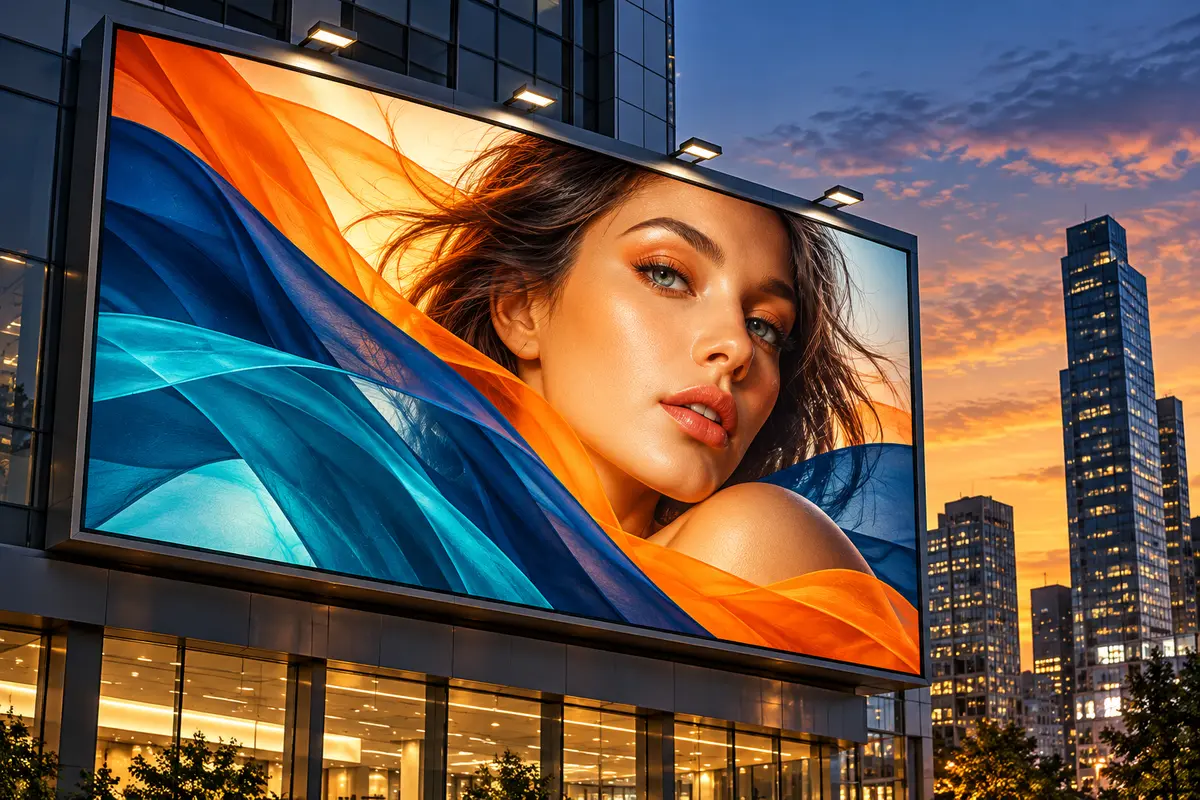
This article covers its construction, the four printing methods we offer, how a light box works, real applications and the special points when designing for a backlit face. Some illustrative photos are used in this article.
Backlit Film construction
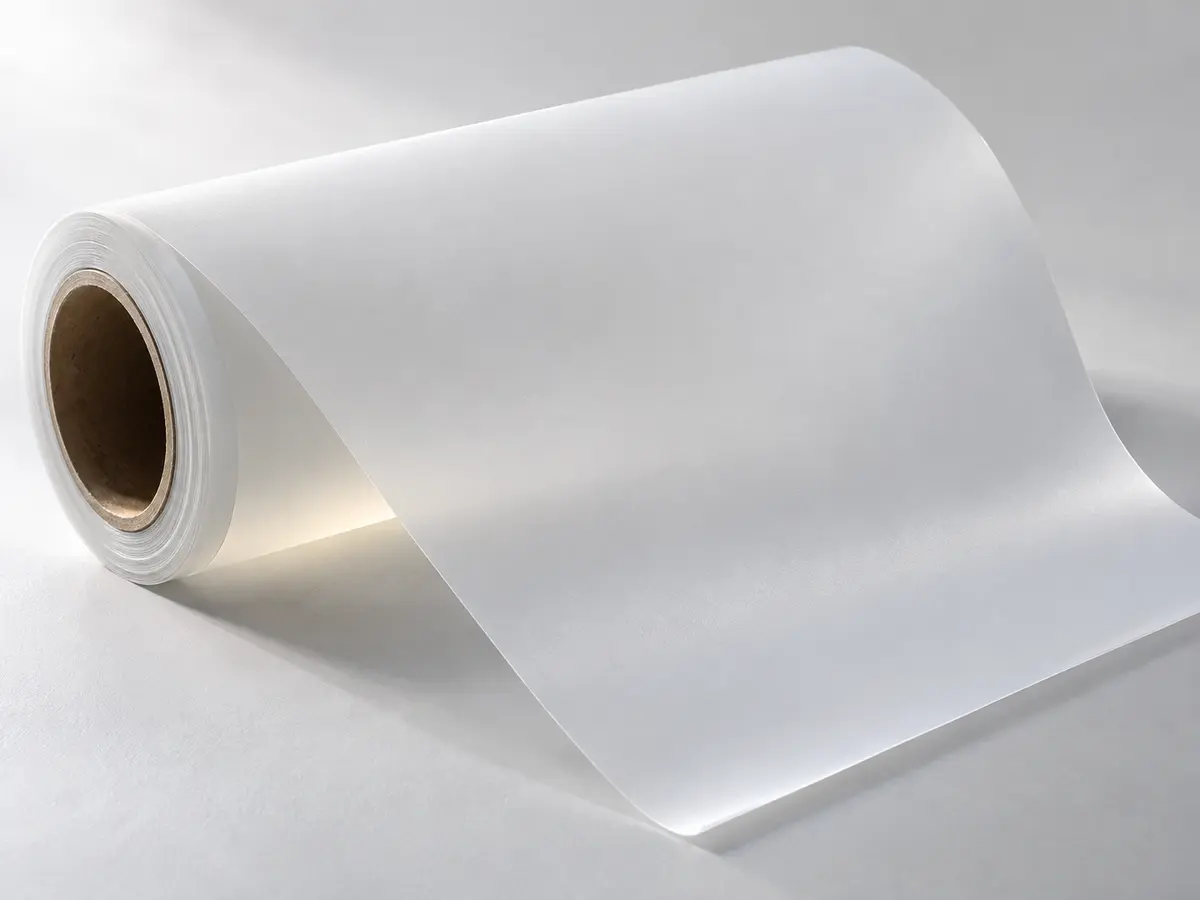
Unprinted film looks like an opaque white plastic sheet, slightly thicker than paper, flexible and rollable. Inside there are two parts worth noting:
- Light-diffusing base — opaque white, diffusing the light from the lamps behind evenly across the whole sheet. This is what makes the light box glow smoothly instead of in patches by lamp position.
- Ink-receptive coating — holds more ink than other materials, because Backlit Film prints have to be one and a half times richer in colour than normal to look right with light passing through.
One feature to remember: this print only looks good with lights. Hang Backlit Film without a light source behind it and the image looks dull and shows shadows of objects behind — in that case a different material should be used.
The four Backlit Film printing methods we offer
| Printing method | Features | Choose it when |
|---|---|---|
| UV-printed Backlit | Ink adheres firmly, dries instantly, best heat resistance from the lights | Premium light boxes, on continuously, hung long-term |
| Solvent ink with gloss lamination | Deep, vivid colors | Food, drink and product images that need to catch the eye |
| Solvent ink with matte lamination | Easy on the eyes, less glare up close | In-store menus, light boxes viewed up close |
| Backlit on white material | Opaque white base, economical cost | Simple light boxes where an evenly lit background is the main point |
If you are not sure, use this benchmark: for indoor light boxes on a few hours a day, solvent ink with lamination is enough; for light boxes on almost all day or placed in hot spots, print UV because the ink handles heat better.
What a light box consists of
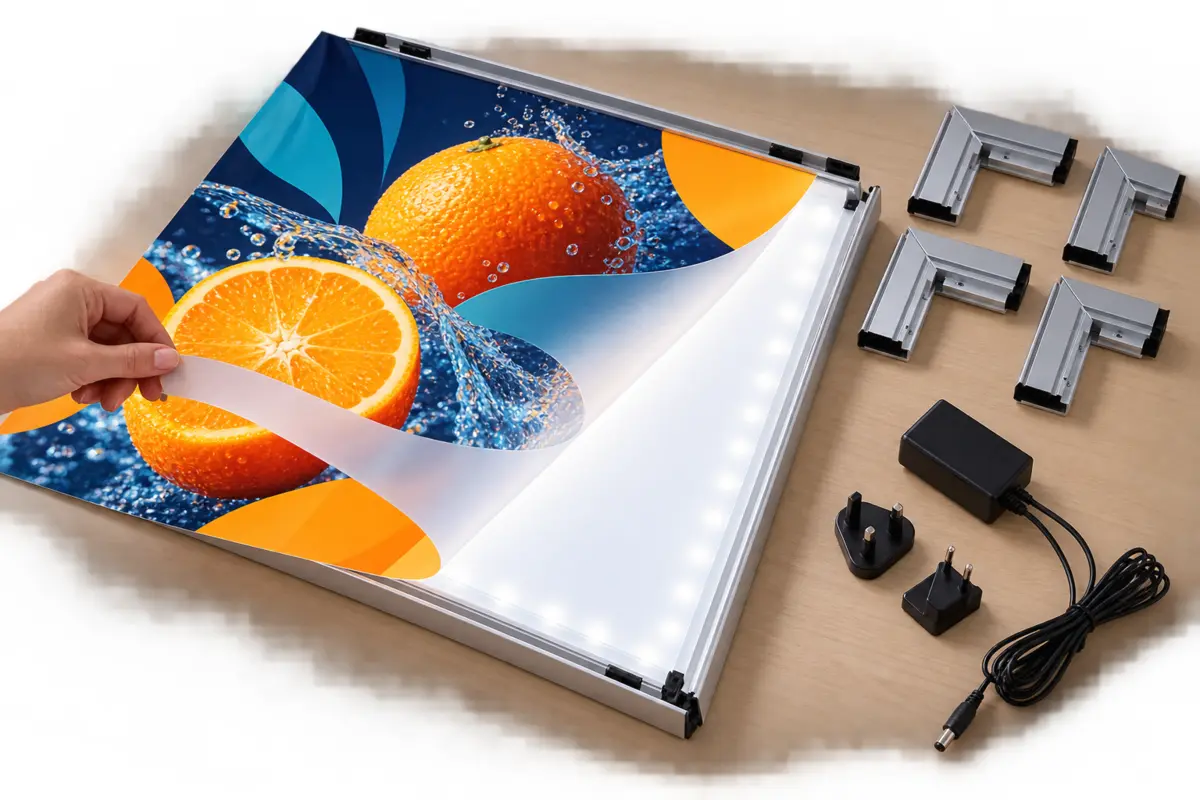
The Backlit Film sheet is only the display face; the rest of the light box consists of:
- Aluminium frame — keeps the film taut and flat, with snap covers or grooves to clamp the edges.
- LED array — shining from behind or in from the edges, deciding how evenly it glows.
- Diffuser panel — in deep boxes, placed between the lamps and the film for smoother light.
- Power supply — steps down the voltage for the LED array, usually hidden in the frame or mounted at the back.
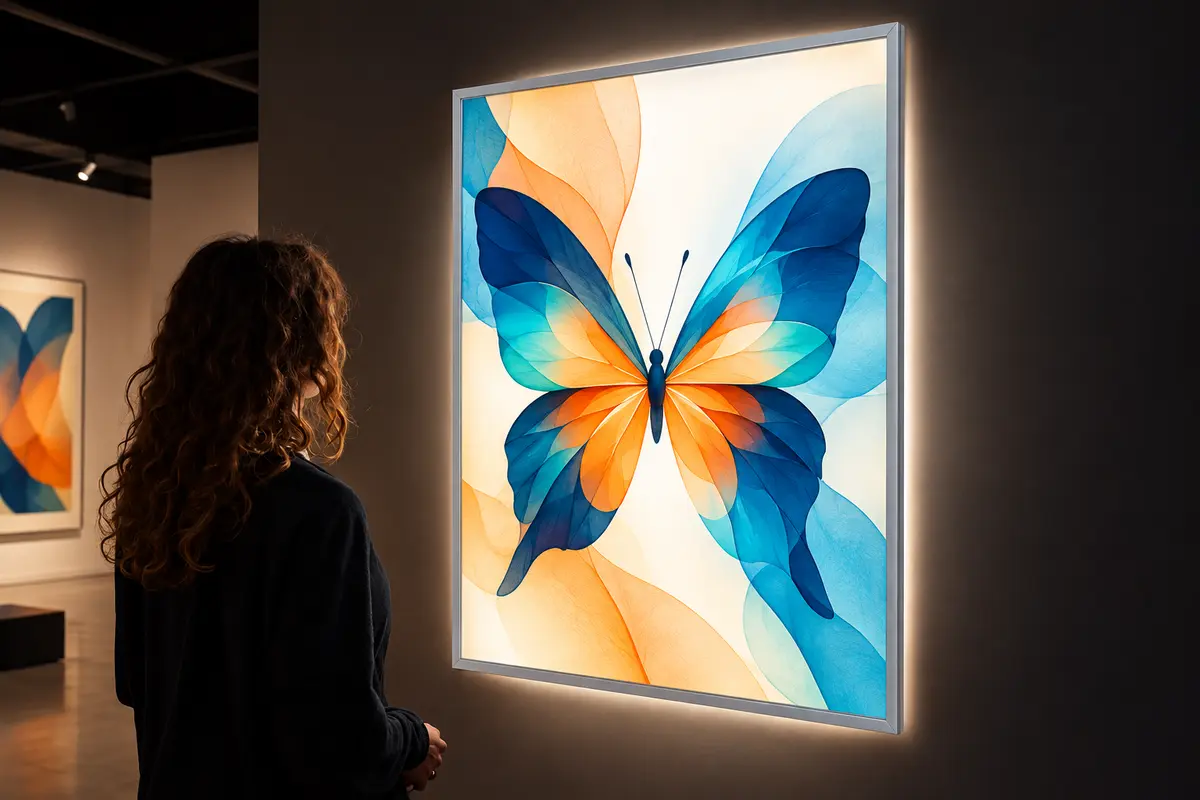
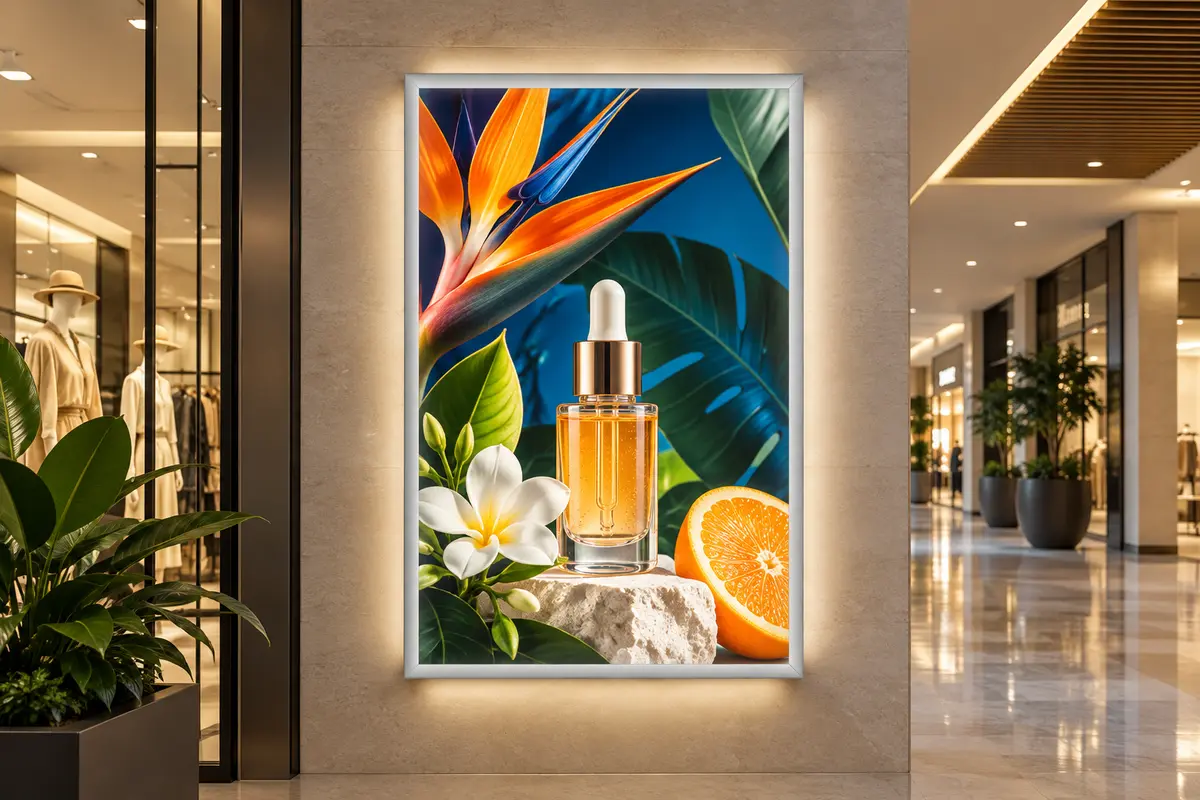
A thin aluminium frame with a narrow border gives a neat look; a deep frame gives more even light because the distance between the lamps and the film face is greater. To change the content, just remove the snap cover, pull out the old film and fit the new one — the frame can be reused for many years.
What Backlit Film is used for
- Shopfront light boxes — clearly visible day and night, the most ordered item.
- Illuminated menu boards — eateries, cafés, ordering areas.
- Light boxes in shopping malls — corridors, walkways, retail kiosks.
- Light posters at cinemas and event lobbies — large size, dark background, standout images.
- Floor-standing light boxes — with a base, easy to move, used for exhibitions and events.
- Decorative interior light panels — multi-frame wall sets.
- Outdoor advertising — bus shelters, double-sided street light boxes, large building facade boards.
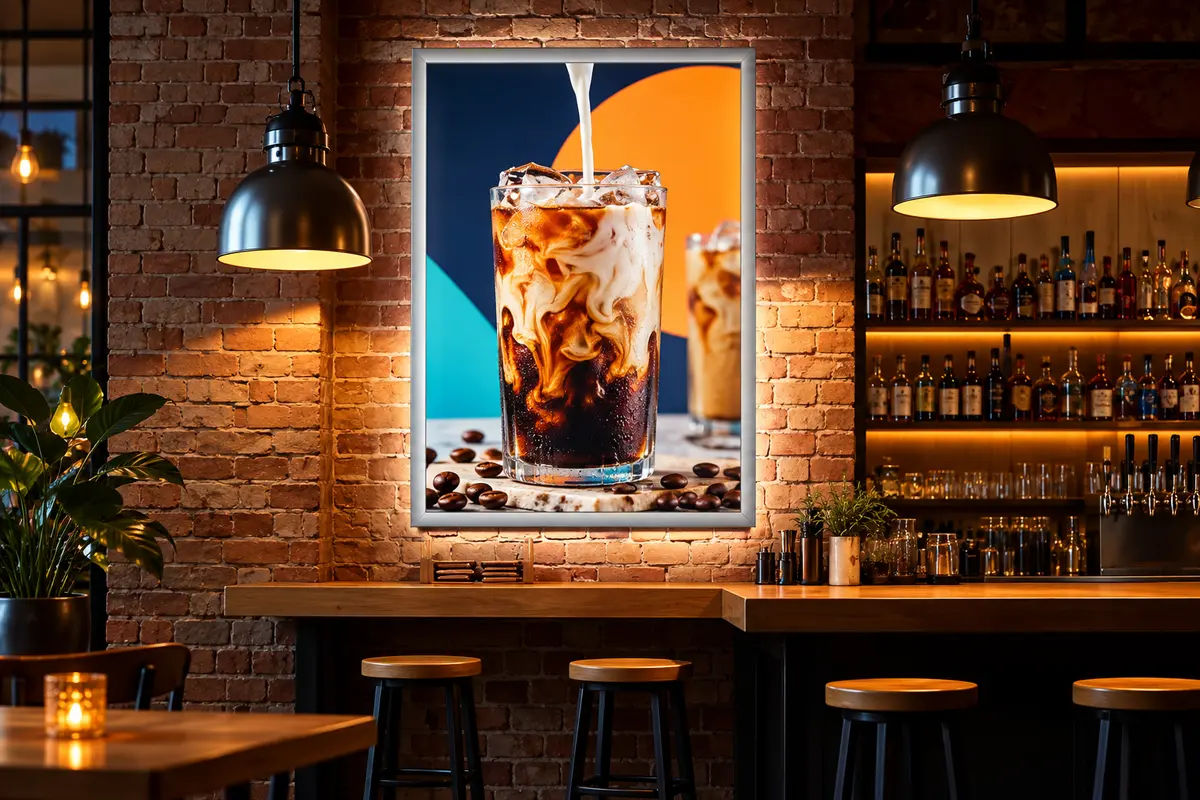
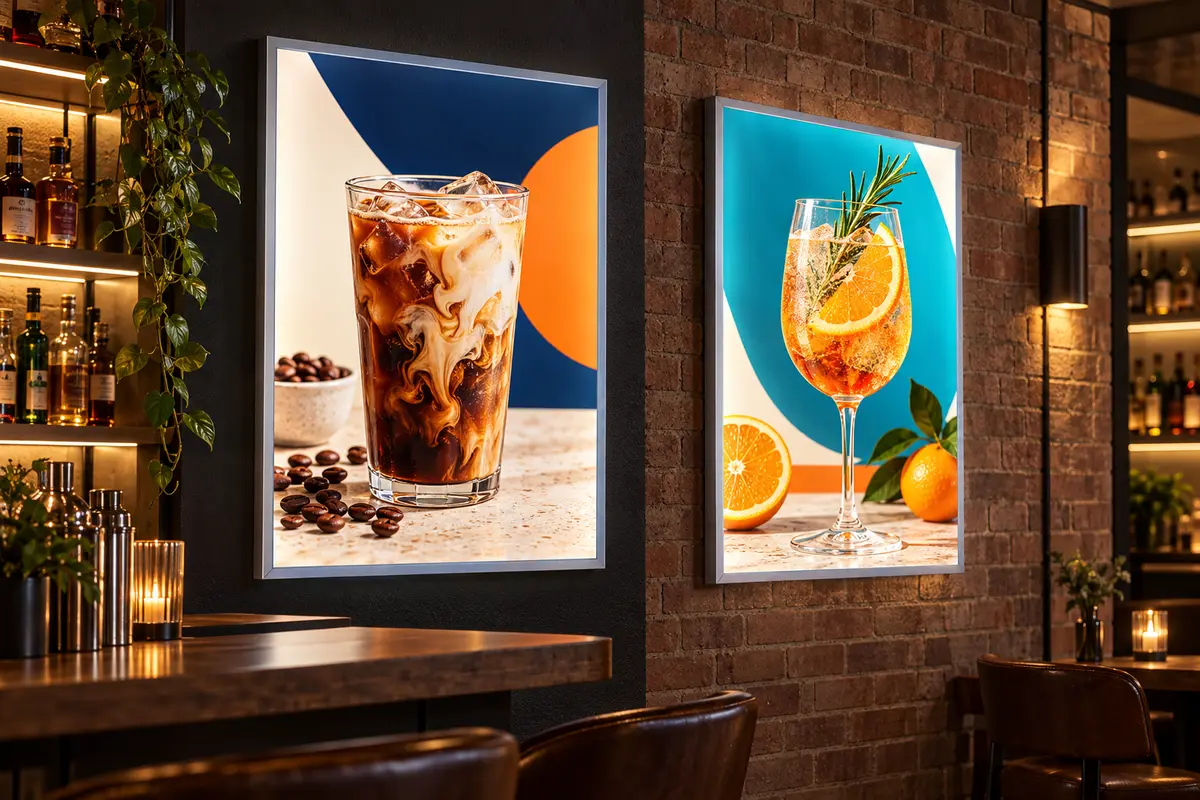
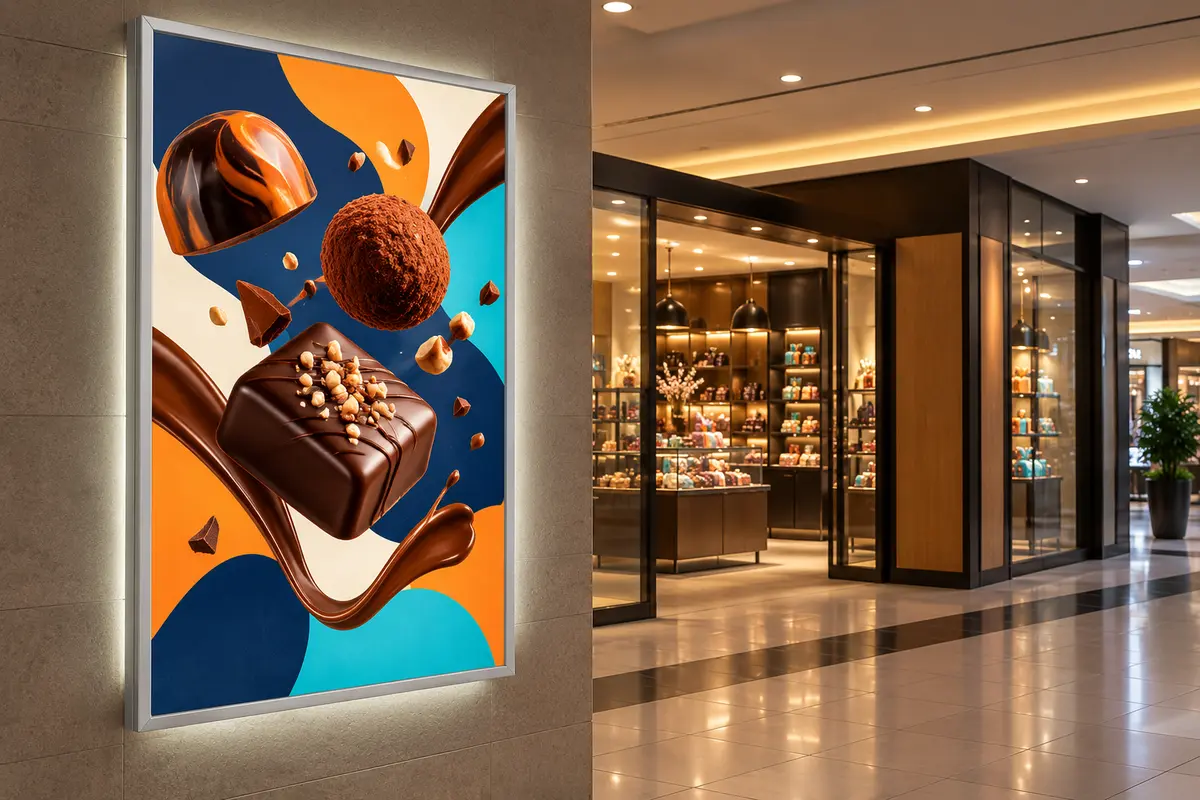
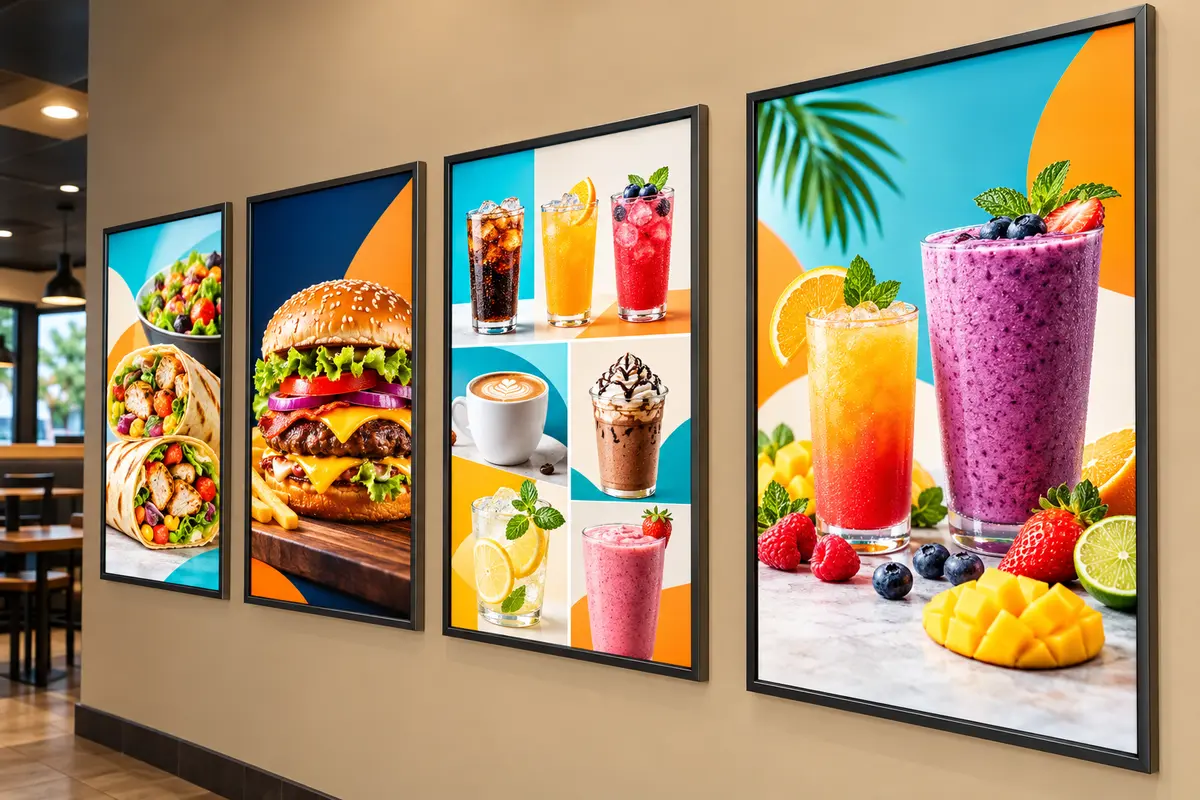
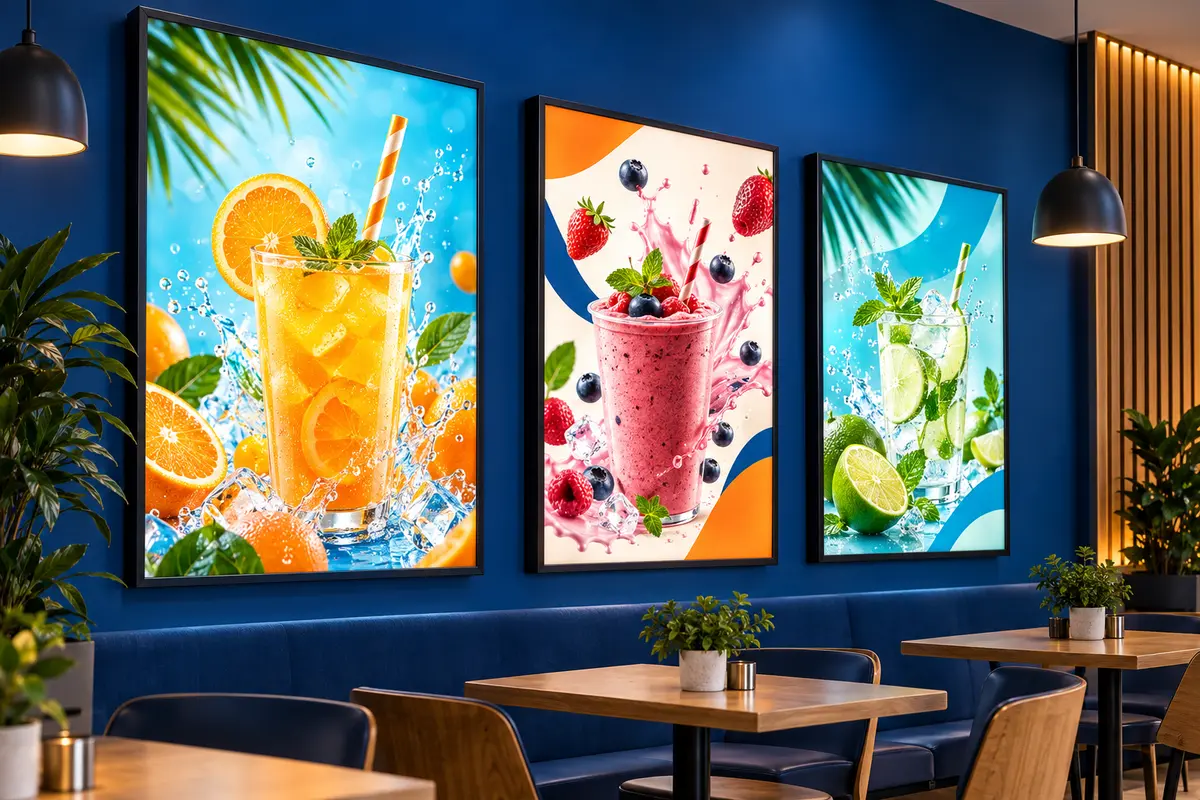
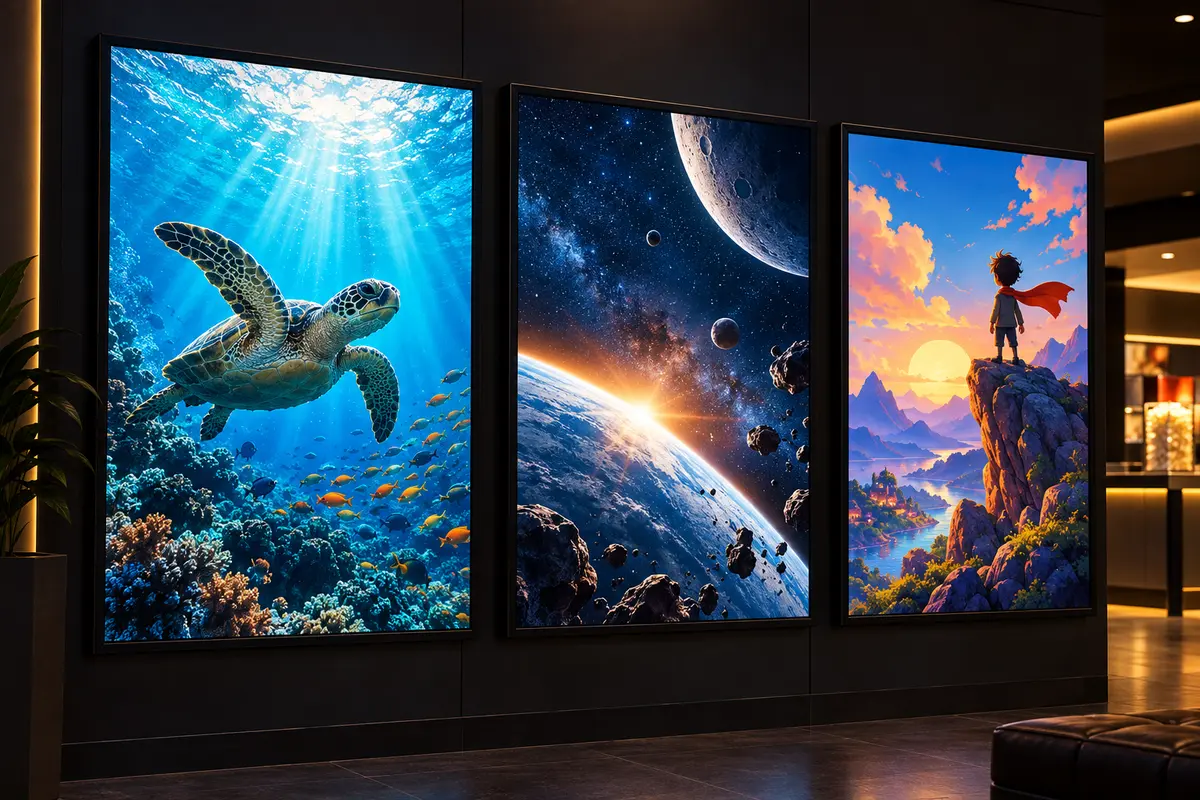
On the same principle, we use this material as the face for Double-Sided LED Standee and LED A-Frame Standee — two products with ready frames and lights, needing only a new print when content changes.
Related products

Backlit film

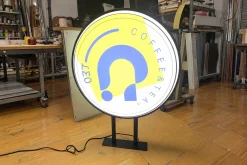
Light boxes

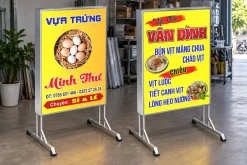
Standee

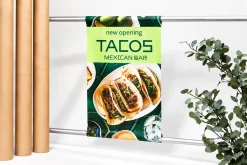
Hiflex
Suggestions by industry
- Eateries, cafés — wall-mounted light box menu sets in the ordering area, drink light boxes on the bar wall. Food photos should be printed on Backlit Film with gloss lamination for vivid colours.
- Retail and cosmetics stores — portrait light boxes at entrances, floor-standing light boxes for new products, prints changed with each campaign.
- Shopping malls — vertical corridor light boxes, light posters in lobbies; these often have their own size rules, so measure the visible area of the existing frame first.
- Cinemas and event lobbies — large posters on dark walls, with content changed constantly according to the screening schedule.
- Exhibitions and showrooms — free-standing light boxes with a base, quick to assemble, portable between events.
- Outdoor advertising — bus shelters, double-sided street light boxes, building facade boards; need waterproof frames and sun-resistant ink.
Designing for backlit faces
This is the biggest difference from normal printing, and also where things most often go wrong when customers design their own files:
- Increase color density — the image always looks brighter when lit than on screen. Colours that are too light almost turn white when the lights are on.
- White text on a dark background is the safest — it stands out clearly when lit, and stays readable when the light is off.
- Avoid thin bold text on light backgrounds — the light will “eat” the strokes, making them unreadable from a distance.
- Be careful with light gradients — light gradient areas can disappear completely with light behind them.
- Think about when the light is off — during the day or in a power cut, the film must still show the main content.
For important orders, print a small test piece and check it on a light first before running the whole set; the difference between screen colour and lit colour is big enough to be worth the extra step.
Measuring the size correctly
When ordering, give us two numbers:
- Visible size — the visible part of the box face, after subtracting the snap cover.
- Allowance for the clamp trim — the film edge hidden in the groove, usually a few centimeters per side depending on the frame type.
We will add the allowance to the file so the snap cover does not hide image details. If you only send one measurement without saying whether it is the visible area or the overall size, the sheet can easily end up too small or too large — this is the most common mistake when ordering Backlit Film for the first time.
If you do not have a frame yet and want us to make the complete light box face, see also Advertising Signs.
A quick way to measure an existing frame: open the snap cover on one side and measure from the bottom of the groove on one side to the bottom of the groove on the other — that is the overall size of the film sheet. The visible size is the measurement after closing the snap cover again. A photo of the frame corner sent with it also helps us identify the cover type and advise more accurately.
For orders with several light boxes of different sizes, list each box in the notes field in the form “box 1: visible 60 × 90, box 2: visible 40 × 60”, then add up the total area to enter the quantity once.
Single-sided, double-sided and ultra-slim light boxes
Using the same Backlit Film, different box types give different results:
- Single-sided light boxes — wall-mounted, visible only from the front. The most common for menus and indoor boards.
- Double-sided light boxes — placed perpendicular to the wall or hung in the middle of a walkway, visible to people walking in both directions. Needs two film sheets mounted back to back.
- Ultra-slim light box with aluminium border — lit from the edges inward, only a few centimeters thick, compact and modern; in return, light is less even than thicker boxes at very large sizes.
- Floor-standing light boxes — with a base, movable, used for events and exhibitions.
The larger the size, the deeper the box should be, because the distance between the lamps and the film face is what decides whether the light is even. Large slim boxes easily end up bright at the edges and dark in the middle.
Compared with backlit banner and other materials
| Material | Sharpness | Size | Commonly used for |
|---|---|---|---|
| Backlit Film | Very sharp, deep colors | By roll width | Indoor light boxes, menus, light posters, viewed up close |
| Backlit banner (Hiflex) | Moderate, with fiber texture | Very large, up to 3.2m | Large outdoor light boxes, shopfront signboards |
| PP | Sharp but does not let light through | Up to 1.8m | Posters, standees without lights |
| Mica (Acrylic) | Rigid board, with diffusing types available | By sheet | Flat light box faces, logos, lobby boards |
Rule of thumb: for small and medium light boxes viewed closely by people standing nearby, use Backlit Film; for very large outdoor light boxes viewed from a distance, backlit banner is much more economical.
Preparing Backlit Film print files
- Format — PDF or AI.
- Color mode — CMYK.
- Resolution — 150dpi at actual size for large light boxes, 300dpi for small light boxes viewed up close.
- Bleed — leave 3mm on each edge, plus the trim allowance for the frame type.
- Safe zone — sizes from 100cm up need 5cm around the edges.
- Text — convert to outlines before sending.
State in the notes that the print is for a light box, because Backlit Film files need different colour handling from normal print files — we will check the density again before it goes on the machine.
If you have no file, add the design service; we lay it out and send it for approval before printing.
Lifespan and care
- The film sits inside a closed frame, so it collects little dust; what deteriorates first is usually the print colour, not the material.
- Light boxes on for many hours continuously generate heat; UV ink handles heat better than solvent ink.
- Outdoor light boxes should have waterproof gaskets on the frame; water getting in will wrinkle the film and damage the lights.
- When changing the content, roll the old film lengthwise if you will reuse it, do not fold — creases show clearly as soon as the lights are on.
- Wipe the light box face with a damp cloth; avoid strong solvents as they dull the coating.
Frequently asked questions about Backlit Film
Can it be used without a light?
Not recommended. Without a light source behind, the image looks dull and shows shadows of objects behind. In that case PP or milky white decal is a better fit.
Can it be printed on both sides?
The film has only one ink-receptive side, so it's single-sided. Double-sided light boxes use two sheets fitted back to back in the same frame.
Matte or glossy lamination?
For close viewing such as in-store menus, choose matte to reduce glare; for food and product images that need to be vivid and seen from afar, choose glossy.
Can I order odd sizes?
Yes. Prints are priced by actual square meters, so any size is accepted, including decimals.
Can I replace the film in the frame myself?
Yes, with standard snap frames: remove the cover, pull out the old sheet, place the new one in the groove and close the cover again. For silicone-tensioned frames or large frames, leave it to a technician.
Why does the print look darker than normal before the lights are fitted?
That is intentional. The ink is laid down thicker so the colours look right when light passes through; looking at the film with the lights off, it appears darker than you are used to.
Common problems and how to fix them
Light box faults are rarely caused by the print film. Most problems come from the power supply, the LED strips or the installation. Knowing the situations below in advance lets you fix them quickly without dismantling the whole box.
| Symptom | Common cause | How to fix |
|---|---|---|
| Uneven glow, with dark streaks | An LED strip inside is misaligned or a section has failed | Open the side cover, check and replace the failed section |
| The whole box does not light up | Failed power supply or broken wire | Replace the power supply, check the connectors again |
| Flickering | Loose connectors or a power supply too weak for the total wattage | Retighten the connectors, switch to a power supply of the right wattage |
| Print face yellowing | Long exposure to direct sun | Replace the print face, consider adding a canopy |
| Print face curved or slightly bulging | Uneven tension or high heat inside the box | Re-tension, leave a gap for heat to escape |
| Condensation inside | Sealed box placed outdoors, temperature changes | Drill moisture drainage holes in the bottom of the box |
For the power supply, choose a wattage about twenty percent higher than the total wattage of the LED strips. Running close to the maximum makes the supply hot and shortens its life quickly.
The print face is the only consumable part of the box. When changing promotions or when the old face fades, just order a new sheet and fit it into the existing frame, with no need to rebuild the whole box.
How to measure the frame before ordering
Many places measure themselves and then order the print, but a one-centimetre error means the sheet will not fit the snap cover. The general rule: measure the visible inner size of the frame, then add the margin for clamping.
- Measure the width and height of the visible area at three positions and take the smallest number.
- Add 2 to 3 cm per side for the part tucked into the snap cover, unless the cover has its own specification.
- Clearly label which is the width and which is the height when sending to us, to avoid printing the wrong orientation.
- Take a photo of the frame with a tape measure for us to cross-check; it is faster than describing it in words.
- If an old frame is warped, measure it as it actually is, not from the numbers on the original drawing.
- Double-sided boxes need two sheets; the content can differ but the size must be the same.
If you are not sure, send photos and measurements via Zalo before ordering. We will know straight away what type of snap cover is in use and can advise on the margin to leave.
Order Backlit Film printing at In Quảng Cáo Q7
Send the file with the visible size of the light box and the snap cover allowance, and we will advise on the right printing method for the type of lights and installation location. Contact 0866.511.099 or drop by the workshop at 49 Mai Van Vinh, Tan Hung Ward, Ho Chi Minh City. Production & delivery: 8:00–12:00 & 13:00–18:00 Mon–Sat (closed Sun) · Consultation & orders: 8:00–12:00 & 13:00–20:00 Mon–Sat; 14:00–19:00 Sun.
View directions to the workshop on Google Maps
Need printing or signage in Ho Chi Minh City?
In Quảng Cáo Q7 runs its own print workshop in Tân Hưng Ward (former District 7), Ho Chi Minh City, producing and installing signage, banners, window graphics, exhibition booths and event displays. Send us the size, material, quantity and a photo on WhatsApp and we will get back to you.

Phone: +84 866 511 099 · Also on WeChat
Workshop: 49 Mai Văn Vĩnh, Tân Hưng Ward, Ho Chi Minh City