




































































Common Business Card Paper Types and Finishing Options
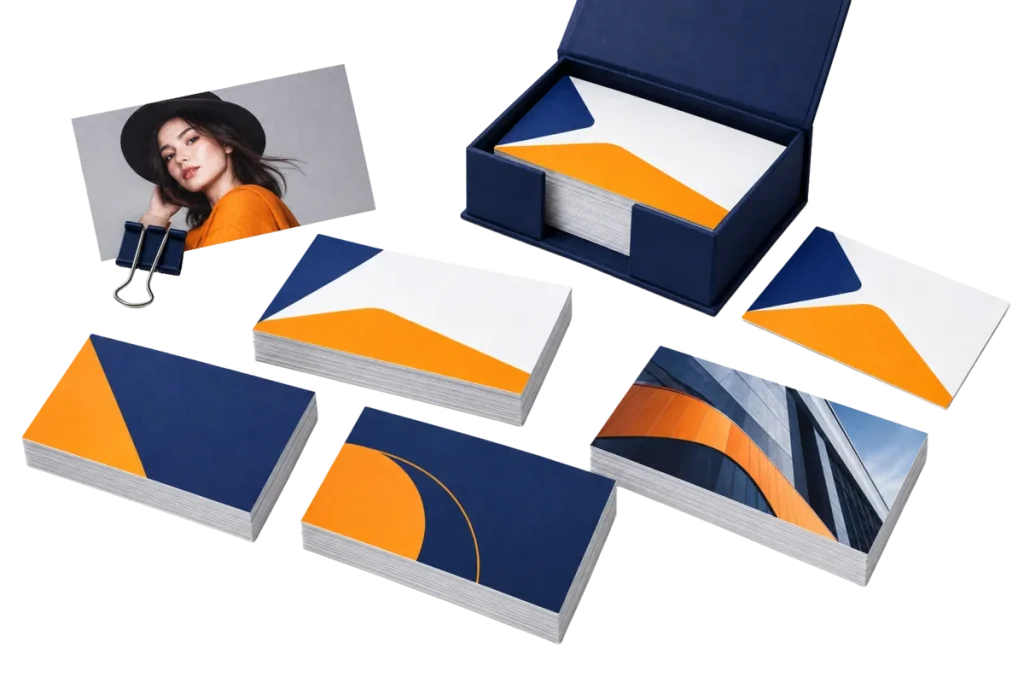
Sep
Both are called “business card printing”, but two boxes of business cards can be very different: different paper, different surface coating, different cut. That is why customers often ask our consultants questions like “how does matte lamination differ from gloss lamination”, “what is foil stamping”, “is fine art paper very expensive”.
In this article In Quảng Cáo Q7 sums up all the popular business card papers and finishes, explained with real photos so you can picture what you are choosing before ordering.
How is a business card made?
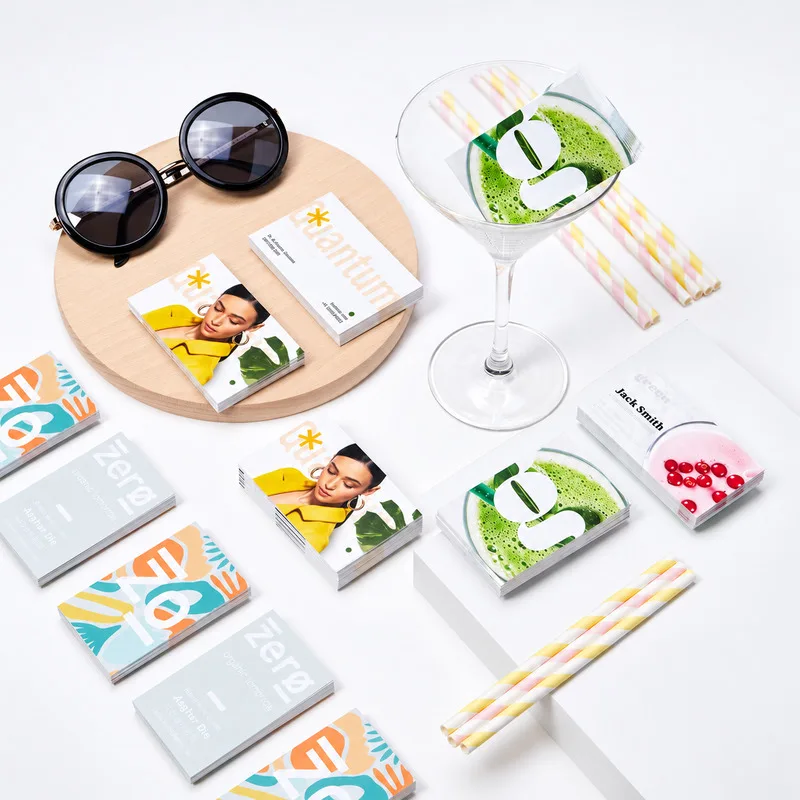
Understand these 4 steps and you'll understand almost all the terms when ordering:
- Choosing paper – decides thickness, stiffness and feel (C300, kraft paper, fine art paper, laminated thick paper).
- Offset printing – CMYK color printing on paper, consistent across hundreds of cards.
- Surface finishing – a layer applied to the paper to protect and create effects: matte lamination, glossy lamination, foil stamping, spot UV.
- Trimming – cutting to standard square edges, rounded corners or custom shapes.
The standard In Quảng Cáo Q7 business card = C300 paper + offset printing + matte lamination + square cut. The sections below are the other options at each step.
Matte or glossy lamination? – the most asked question
“Lamination” means applying a very thin plastic film to the paper after printing. This film makes business cards waterproof, scratch-resistant, fade-resistant and stiffer. There are two types:
Matte lamination – the standard at In Quảng Cáo Q7
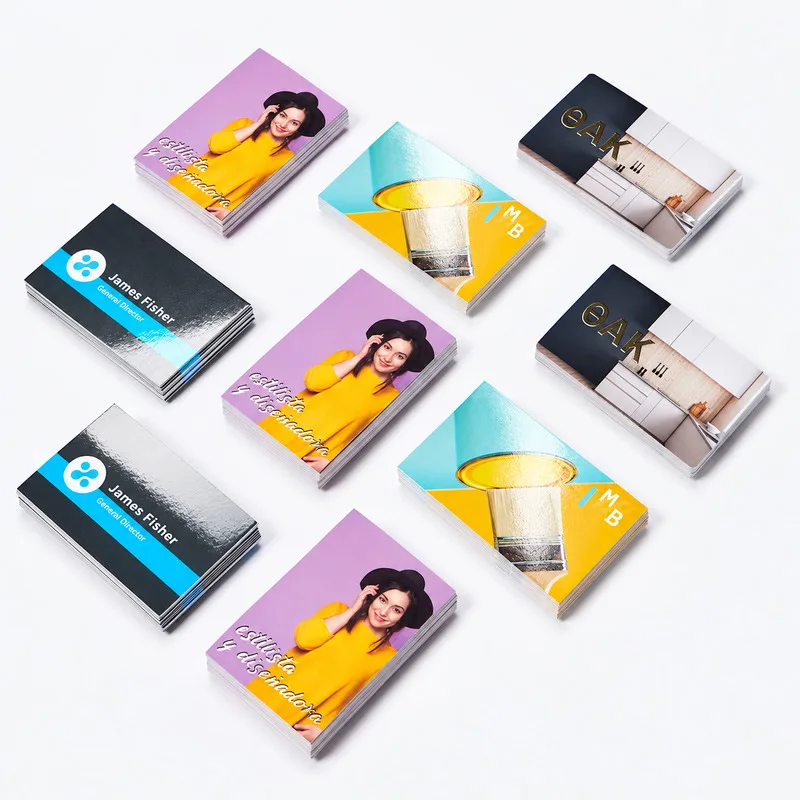
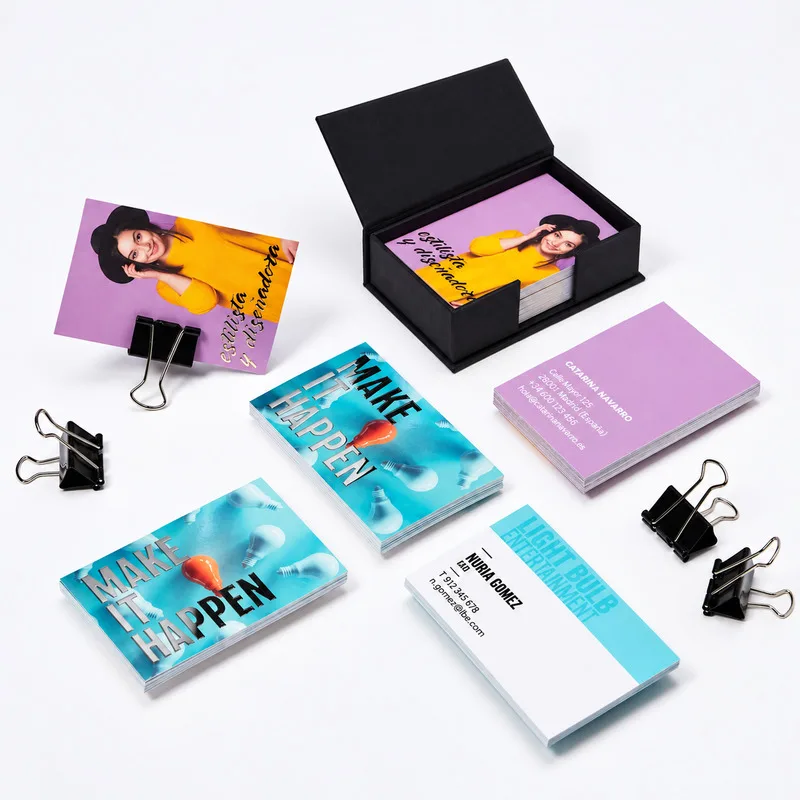
Surface soft, non-reflective, smooth to the touch like a premium cosmetics box. Viewed at an angle under lights it does not glare, small text stays readable, and it does not pick up fingerprints. Print colours after matte lamination will be slightly softer and more muted compared with the screen – very suitable for designs with lots of white space, thin text, pastel tones or minimalist, elegant styles. This is why In Quảng Cáo Q7 chose matte lamination as the standard: it suits most industries and looks “expensive” without needing any extra finishing.
Choose it for: cards for managers, consultants, architecture – interiors, law, finance, spas, fashion; white or light backgrounds; a refined feel.
Glossy lamination
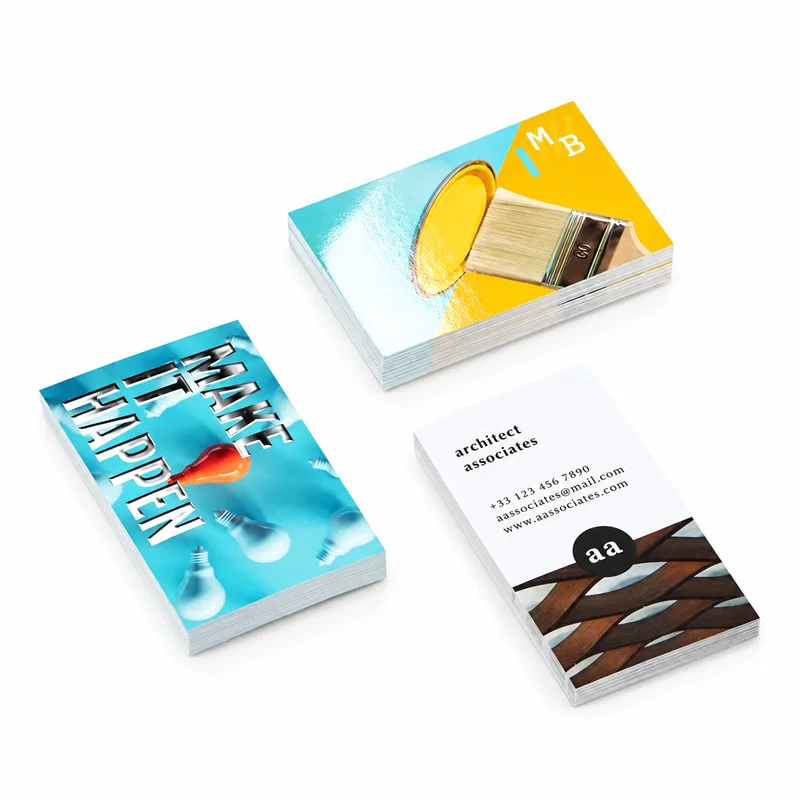
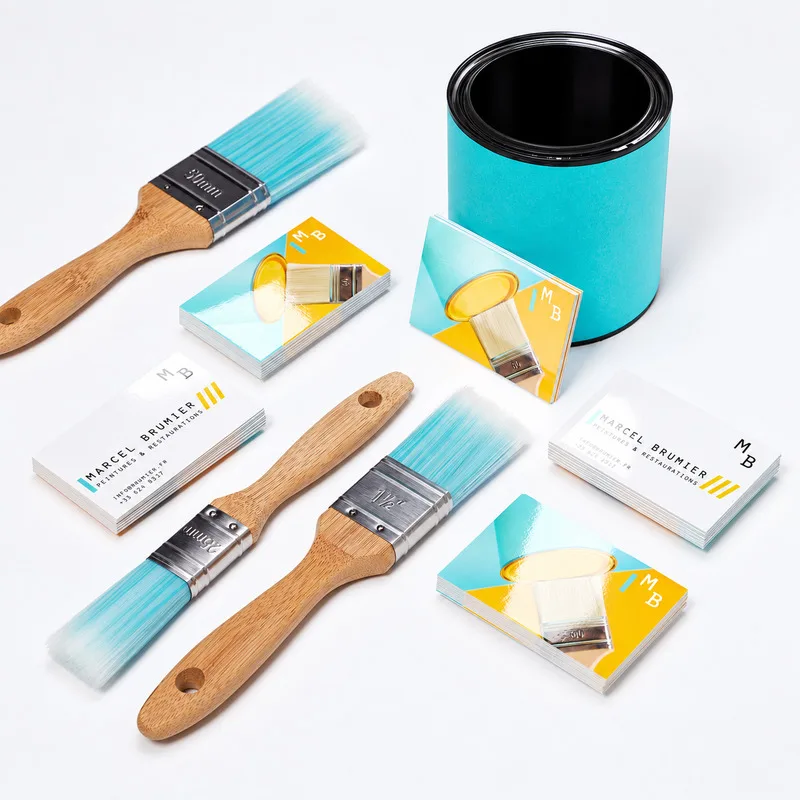
Surface glossy like a developed photo, reflects light and feels slick. Printed colors look brighter and deeper, photos look “crisp”, especially product, food and portrait photos. The downside is visible fingerprints and glare at an angle under lights.
Choose it for: designs with large images and vivid colors (F&B, cosmetics, events, entertainment, retail, paint – materials); when you want a card that stands out.
Quick way to remember
- Mostly text, few images, want premium → matte.
- Many images, vivid colors, want to stand out → glossy.
- Not sure? Visit the workshop to feel real samples, or choose matte – it's almost never wrong.
Cutting styles
Standard square cut
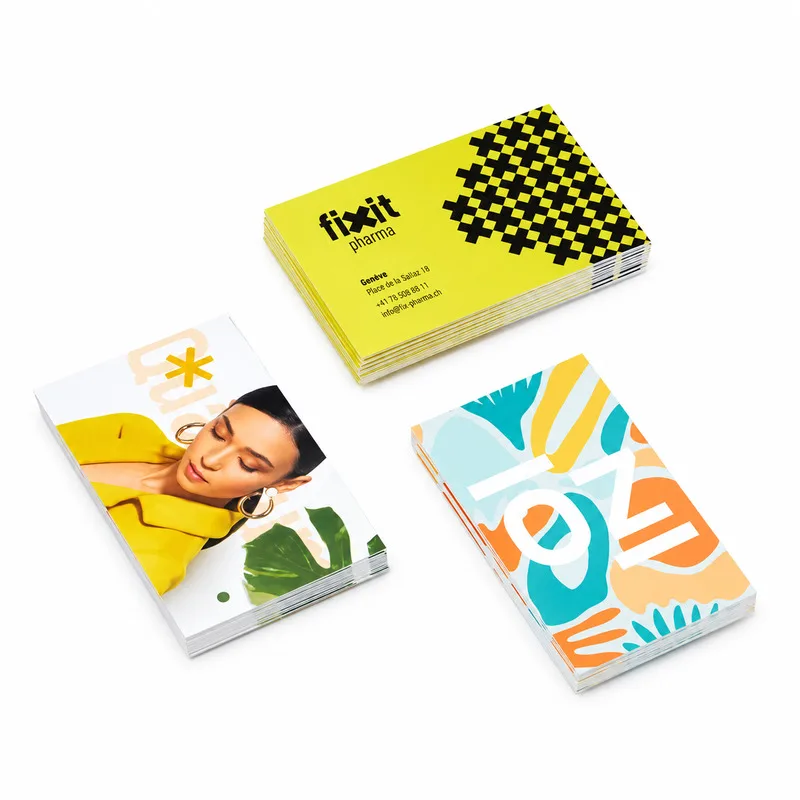
The common size is 90×55mm, four square corners, crisp edges. This is the default style, the fastest for large quantities and the best price.
Rounded corners (+10.000đ/box)
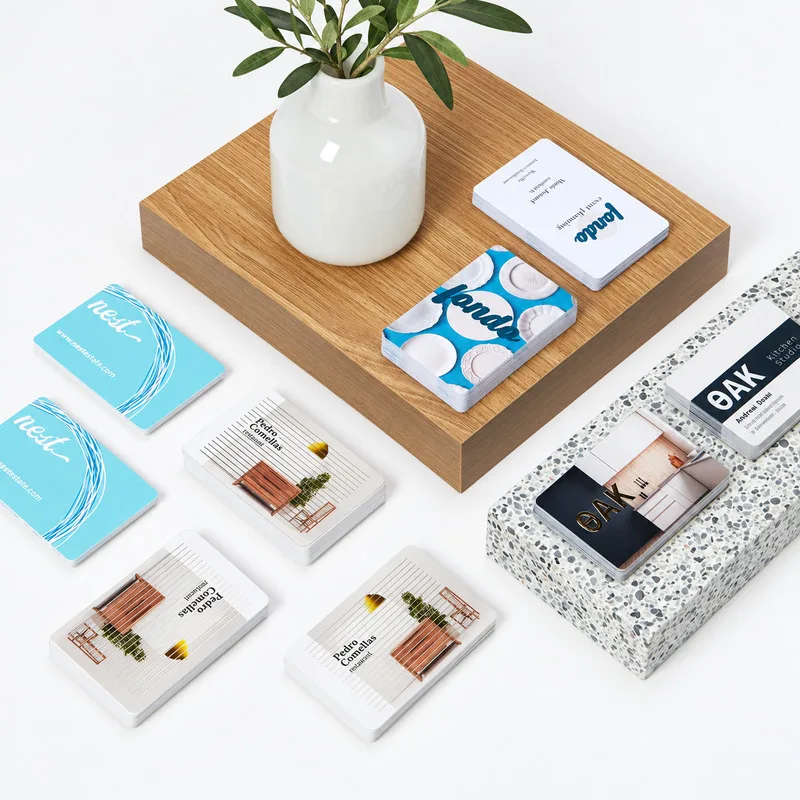
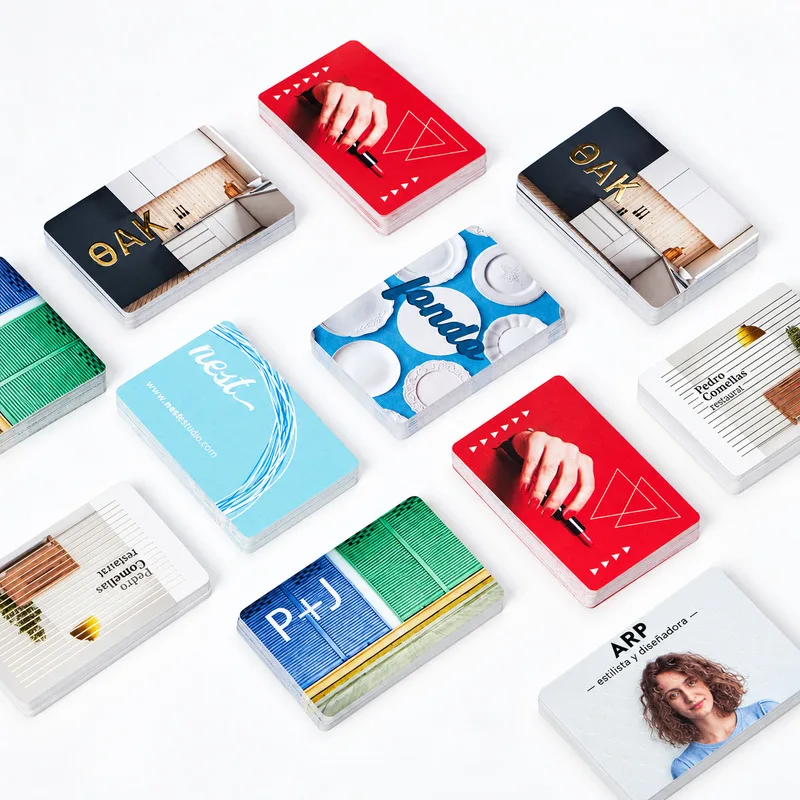
All four corners rounded like a bank card. The card looks softer and friendlier , especially suited to young brands, F&B, beauty and education. Practical benefit: rounded corners don't curl or break when kept in a wallet or trouser pocket for a long time. Choose “Rounded corners” in the options on the Business Card product page.
Die-cut shapes
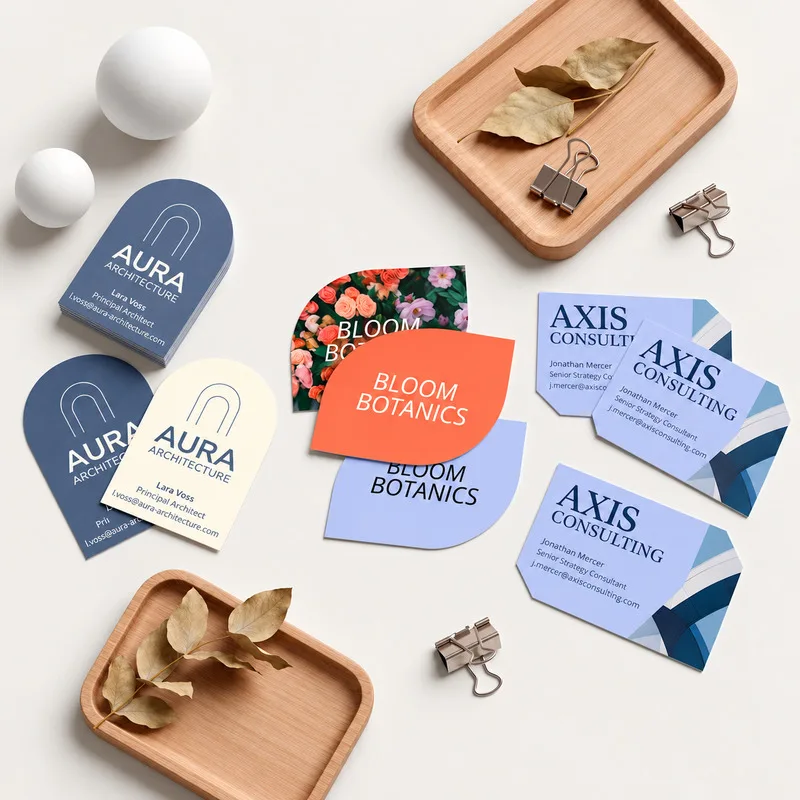
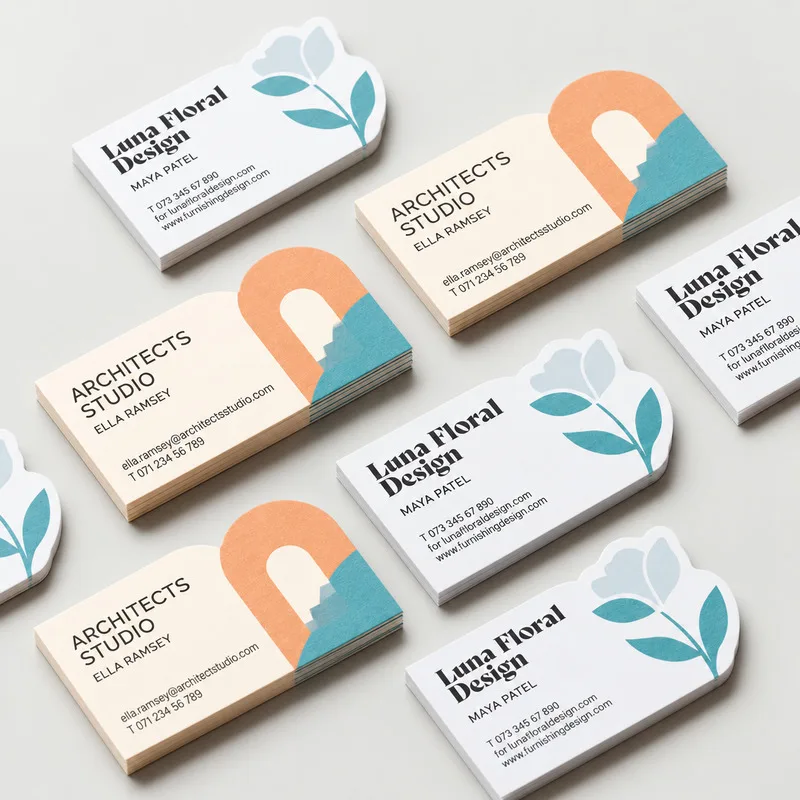
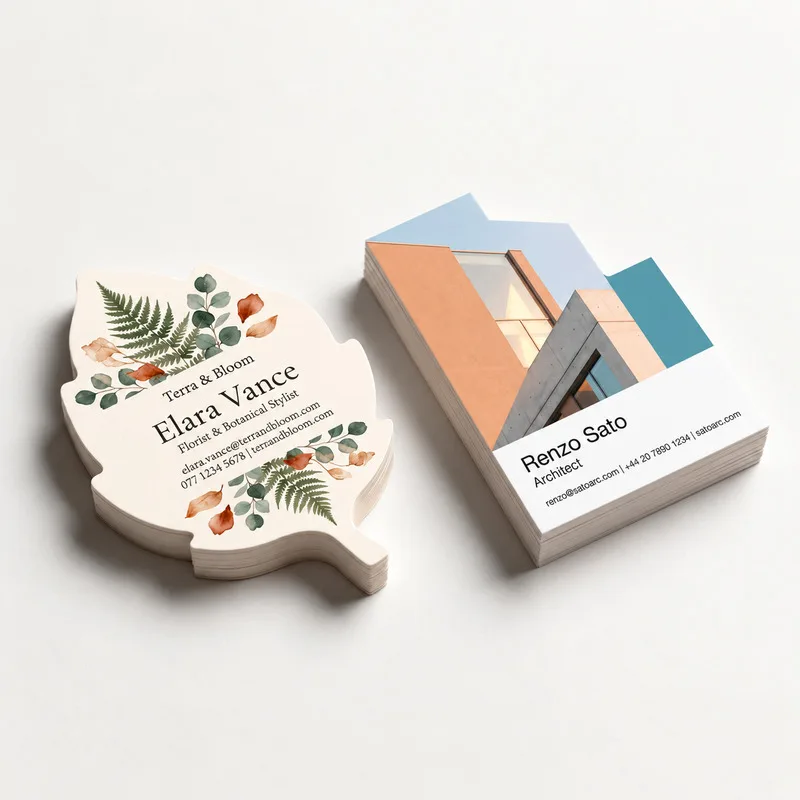
Business cards cut to a custom shape: a leaf for a florist, an arch for an architecture firm, a house for real estate, a bevelled corner for a consultancy… We make a cutting die from your design file and then cut in bulk. This is the type makes the strongest impression and almost nobody throws away. A file with a separate cut line (dieline) is needed; In Quảng Cáo Q7 can draw the dieline if you don't have one. Contact us for a quote by shape and quantity.
Premium business card finishes
Foil stamping
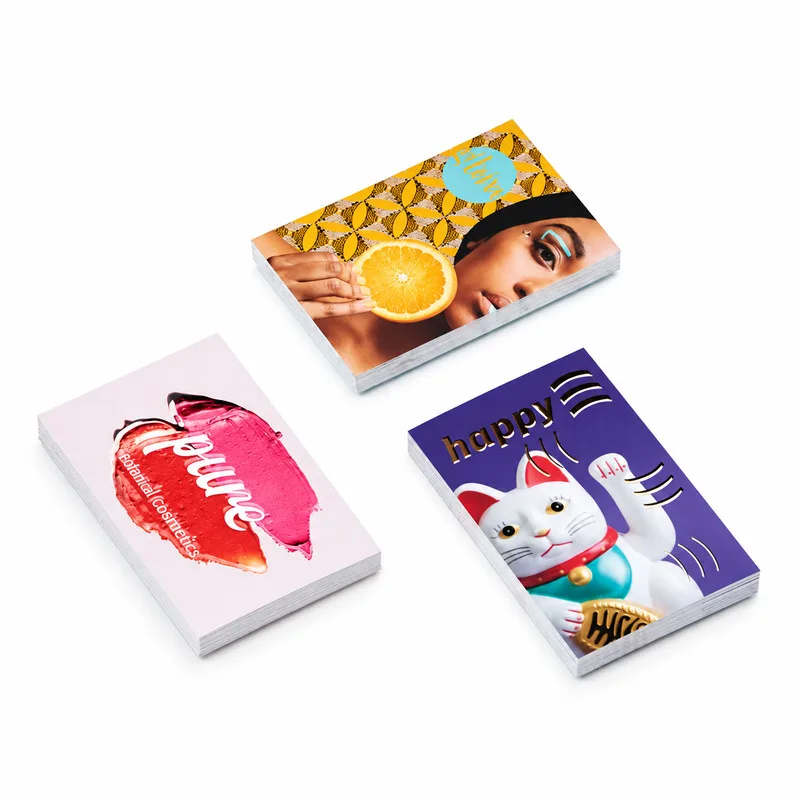
Heat is used to press a layer of thin gold, silver, copper or hologram metal onto the logo, name or border. Foil-stamped details sparkle and feel slightly raised, instantly recognisable as “premium”. Suits jewellery, high-end interiors, spas, hotels, law – finance, or business cards for the board of directors. Foil stamping looks best on dark backgrounds (black, navy, moss green) with matte lamination.
Spot UV (localized gloss coating)
The whole card is matte laminated, while the logo or a line of text is coated with a clear gloss layer, slightly raised. Viewed straight on it looks subtle; tilted under lights the UV-coated part shines, and you can clearly feel it with your fingers. It is a discreet way to “go premium”, very suited to minimalist one-colour designs. Spot UV and foil stamping can be combined on the same business card.
Double-sided – full-bleed images
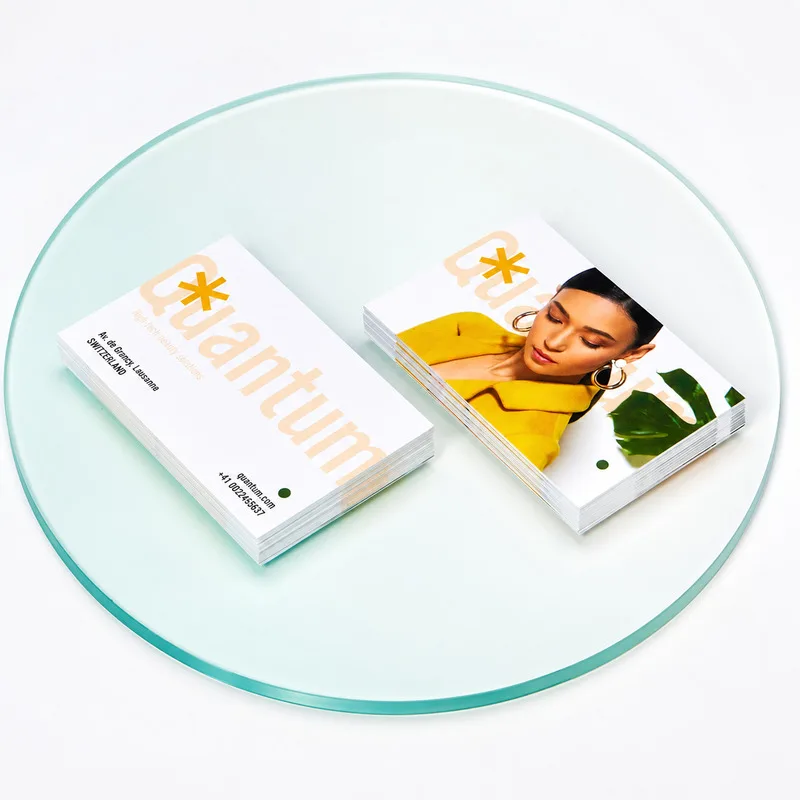
In Quảng Cáo Q7's offset business cards can be printed on both sides. The most effective layout: the front is an image (portrait, product, venue interior) or a logo on a color background; the back is information name, title, phone number, website. The image runs right to the paper edge (no white border), so the file needs a 3mm bleed.
Related products

Business cards

Price tags

Vouchers & Gift Cards

Letterhead
Business card papers
Laminated C300 paper – the standard
Couche 300gsm: three times as thick as office paper, stiff enough, with a smooth surface for accurate color. After lamination it's waterproof and fade-resistant. Chosen by over 90% of business card customers for its balance of quality, speed and price.
Kraft paper
Natural brown paper, unlaminated, slightly rough, with a rustic look. Colors on kraft are more muted and warm (white requires separate white ink). Suits cafés, bakeries, farm produce, handicrafts and “green” eco-friendly brands.
Fine art paper
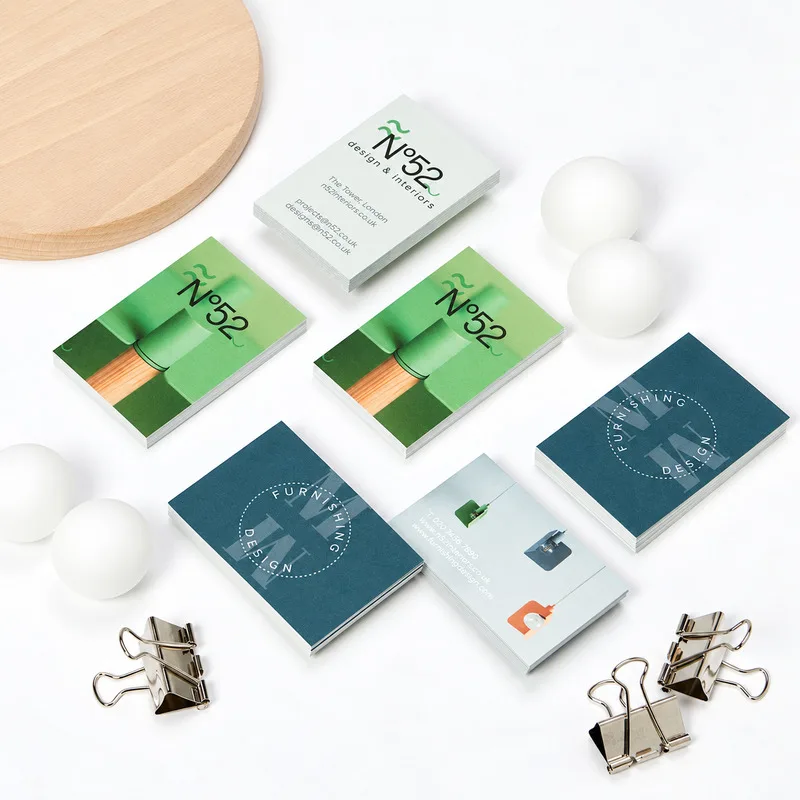
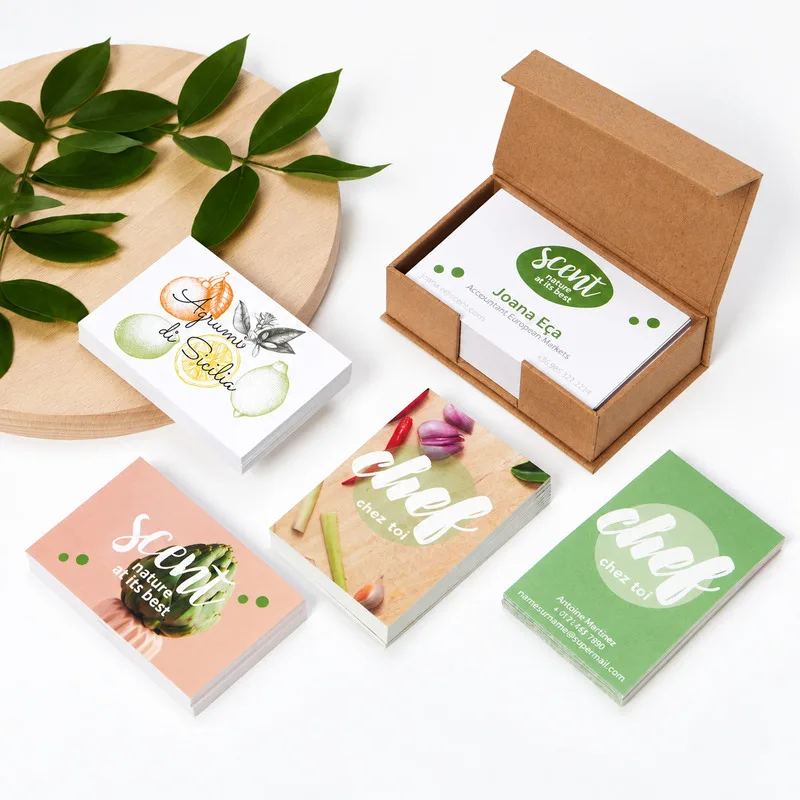
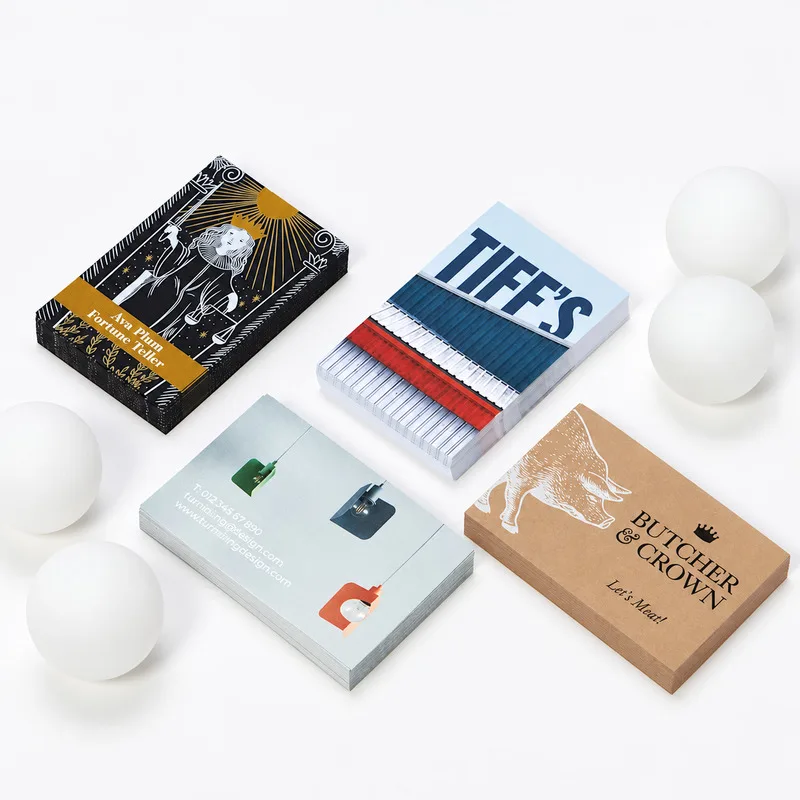
Ivory or lightly textured paper (stripes, linen, eggshell), unlaminated to keep the real paper feel. It has a subtle roughness, very “handmade” and premium. Suits design studios, florists, weddings, artisan fashion and artists.
Laminated thick paper (duplex / triplex)
Two or three layers of paper are laminated together into a 600–900gsm business card, and the edge can show a middle layer in a different colour. It feels heavy in the hand, cannot be bent, and creates a sense of “class” the moment it is handed over. Suits business cards for directors, premium brands, small quantities.
Business card boxes
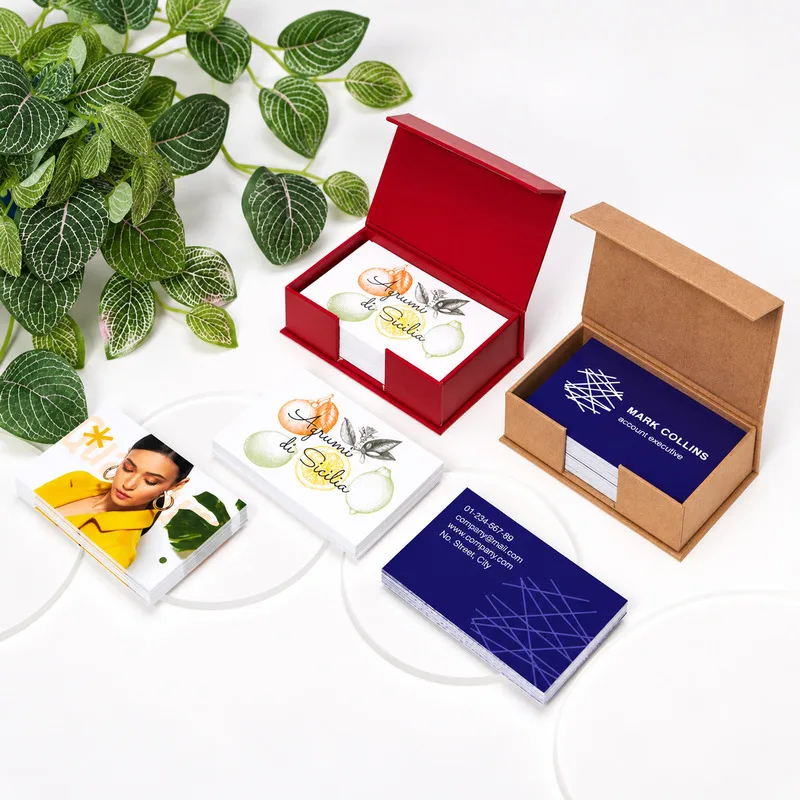
Standard business cards are delivered in a paper box of 100. As a gift for new staff, an identity set for leadership or partners, you can also order a hard box with magnetic lid wrapped in colored or kraft paper, with a foil-stamped logo on the lid. Contact us for box designs.
Choosing business cards by industry
| Industry / purpose | Suggestion |
|---|---|
| Businesses, offices, general commerce | Matte C300, square cut – large runs on the 72h option |
| Restaurants, cafés, retail, events | Glossy + full-bleed photos, rounded corners |
| Spas, cosmetics, fashion | Matte + spot UV or foil, rounded corners |
| Architecture, interiors, real estate | Matte, foil; or die-cut arch / house shape |
| Florists, weddings, design studios, artists | Fine art paper or die-cut shapes |
| Bakeries, farm produce, handicrafts, green brands | Kraft paper |
| Board of directors, VIP partners | Laminated thick paper + foil, with a magnetic hard box |
Quick comparison of finishing types
| Type | Look | Feel | Advantages | Note |
|---|---|---|---|---|
| Matte lamination | Soft, no glare | Smooth | Premium, easy to read, no fingerprints | Colors softer than on screen |
| Glossy lamination | Glossy, vivid | Slick | Images and colors stand out | Fingerprints, glare at an angle |
| Rounded corners | Rounded like a bank card | Soft | No curled corners, friendly | +10.000đ/box |
| Die-cut | Custom shape | — | The most memorable | Needs a dieline file, quoted separately |
| Foil stamping | Sparkling metallic | Slightly raised | Premium | Best on dark backgrounds |
| Spot UV | Localized gloss on a matte base | Raised, smooth | Refined, discreet | Very fine details are hard to coat |
| Kraft / fine art | Rustic, textured | Slightly rough | Handmade, friendly | Unlaminated, more muted colors |
24h fast print or 72h economy?
24h business cards: ready the next day, from 1 box – ideal when you've just started a new job, are about to meet clients or attend a trade fair without cards ready.
72h business cards: large offset runs, much cheaper per box from 5 boxes – ideal when printing for many staff at once or stocking up.
Lead time counts from when we receive the standard file and confirm payment. Premium finishes (shape cutting, foil stamping, UV, special paper) have their own lead times, which we state when confirming the order.
Preparing business card print files
- Format PDF or AI; Word and JPG files can still be sent, checked for free.
- Color mode CMYK, 300dpi, leave bleed 3mm, text and logos at least 3mm from the cut edge.
- Foil stamping / spot UV: put the parts to be stamped or coated on a separate layer, filled 100% black.
- Die-cut shapes: include the dieline on a separate layer.
Details at Design file submission guide. No file yet? In Quảng Cáo Q7 offers business card design from 80.000đ, with 3 free revisions.
Business card printing FAQs
What is the minimum business card order?
From 1 box (100 cards) with the 24h Fast Printing option.
Is there a price difference between matte and glossy lamination?
The price listed on the product page is for C300 business cards with matte lamination. If you need gloss lamination or other finishes, note it when ordering or message us on Zalo so we can confirm the price.
Will the printed color match the screen?
Colors on screen only reach about 80% of the finished product, because screens emit light while paper reflects ink. Glossy lamination gives colors closer to the screen than matte. If you need exact color, you can request a test print first.
What if the business cards are printed wrong?
If it differs from the order or the approved proof, In Quảng Cáo Q7 reprints it free of charge – report within 24 hours with photos. Spelling mistakes in a file you approved are not covered by free reprints.
Do you issue VAT invoices?
Yes, an 8% VAT e-invoice. Provide the company name, tax code, address and email when ordering. Prices on the website exclude VAT.
Need a quote or want to order printing?
See the specifications and price list for each option, and order directly at Business Card product page. Or message on Zalo / call 0866.511.099 — we will quote within 30 minutes during working hours. In Quảng Cáo Q7, 49 Mai Van Vinh, Tan Hung Ward, Ho Chi Minh City.
View directions to the workshop on Google Maps
Need printing or signage in Ho Chi Minh City?
In Quảng Cáo Q7 runs its own print workshop in Tân Hưng Ward (former District 7), Ho Chi Minh City, producing and installing signage, banners, window graphics, exhibition booths and event displays. Send us the size, material, quantity and a photo on WhatsApp and we will get back to you.

Phone: +84 866 511 099 · Also on WeChat
Workshop: 49 Mai Văn Vĩnh, Tân Hưng Ward, Ho Chi Minh City
Two-sided layout and minimum font size
The standard size is only 9×5.5cm, so everything has to be condensed. The front is for identity, the back for contact details — separating the two jobs clearly makes a business card much easier to read.
- Minimum font size: 7pt for secondary lines, 9pt for name and title, 11pt and up for the company name.
- Safe margin: leave 3 mm on each side; text and logos should not touch the cut edge.
- Bleed: if the background colour runs to the edge, build the file with an extra 2 mm on each side.
- Phone number: split the digits into groups so they are easy to read; do not write them as one continuous string.
- QR code: at least 15 mm per side, with a white border around the code.
- Back side: if it is left empty, print single-sided to save money; do not print a background colour just to fill it.
A common mistake is cramming the address, website, email, two phone numbers and three social networks onto the same side. Customers picking it up only need to find the name and one way to get in touch; the less of the rest, the better.
For industries that need to include a lot of information, a neater way is to print the back as a short list or use a QR code linking to a contact page. It saves space and can be updated when the information changes.
How many boxes to order and when to reprint
A standard box is 100 cards. The number of boxes should be calculated by the actual hand-out rate rather than by feel, because the information on business cards usually changes faster than people think.
| User group | Hand-out rate | Number of boxes to order |
|---|---|---|
| Office staff who rarely meet customers | A few cards a month | 1 box |
| Sales staff | 20 to 50 cards a month | 5 to 10 boxes |
| Managers, department heads | 10 to 20 cards a month | 3 to 5 boxes |
| Business owners who often attend events | 50 cards a month or more | 10 boxes or more |
| New staff | Rate not yet known | 1 to 2 boxes, order more later |
Reprint when you change your phone number, address, title or brand identity. Keeping old cards and correcting them by hand is the quickest way to lose the recipient's goodwill.
To reprint an old design, just give us the order code; we retrieve the saved file and print again without charging a new design setup. If only one person's name and number change, the design team can edit the old file very quickly.