




































































Canvas: art printing fabric with a textured, painting-like surface
Sep
What Canvas Fabric Is and Why Prints on It Look Like Paintings
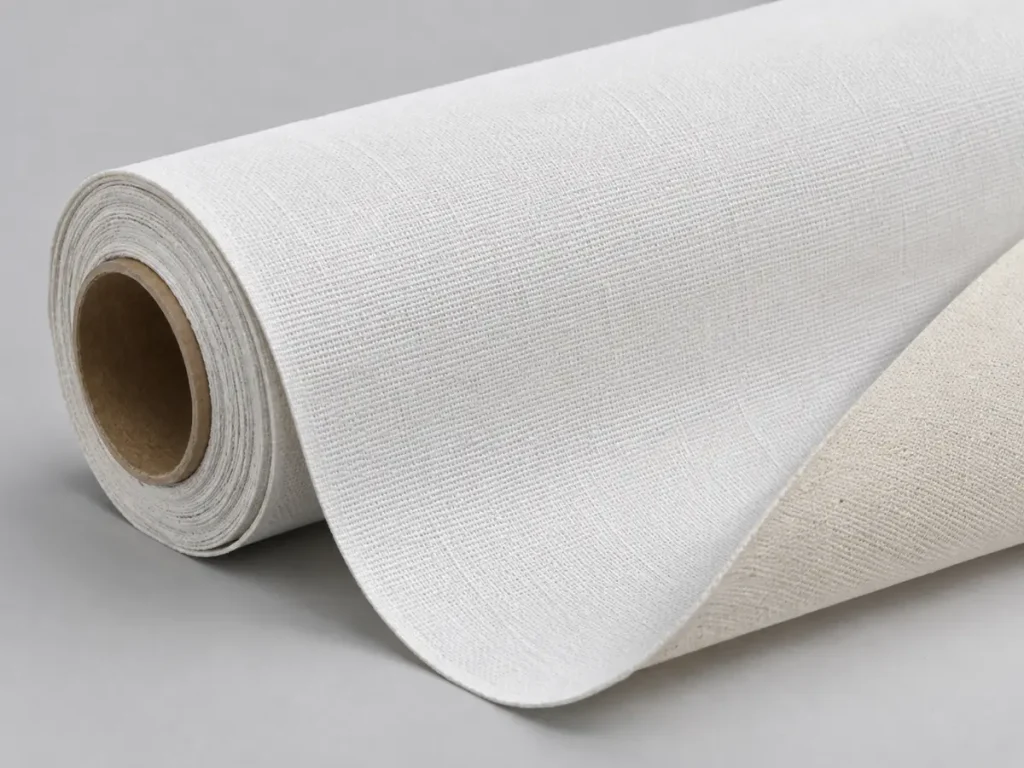
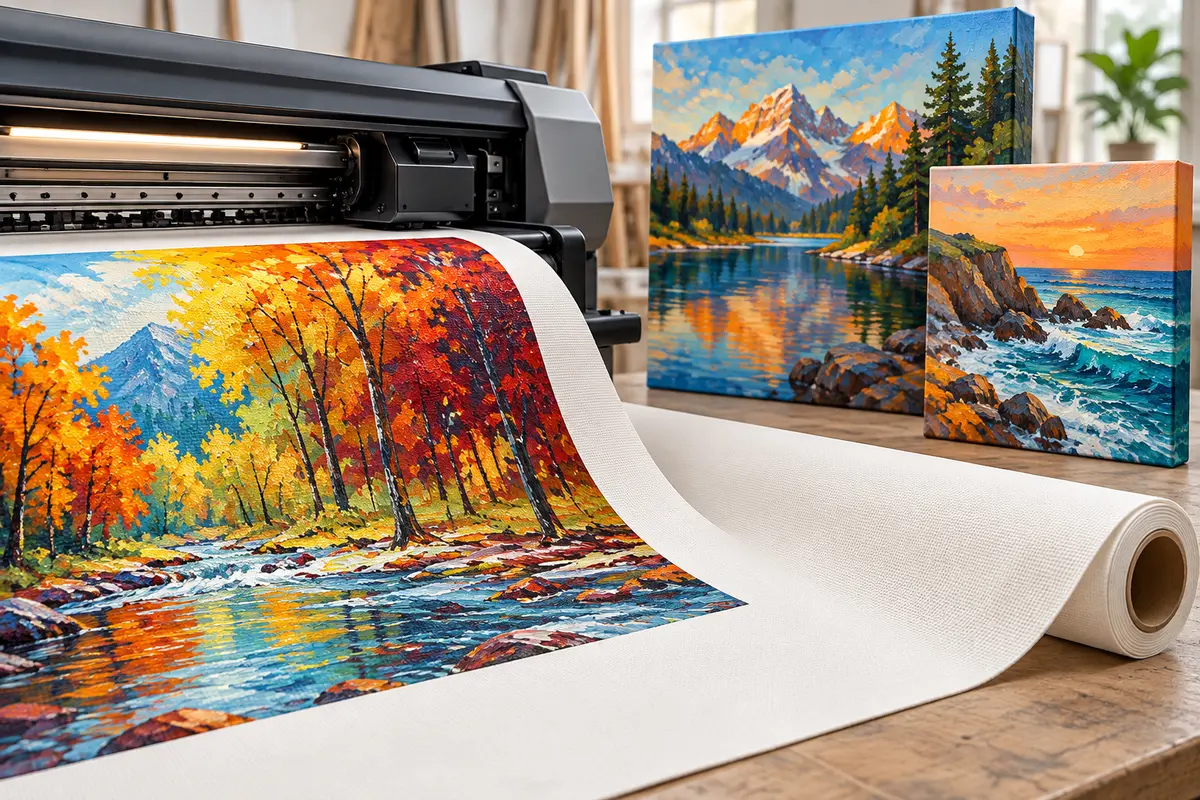
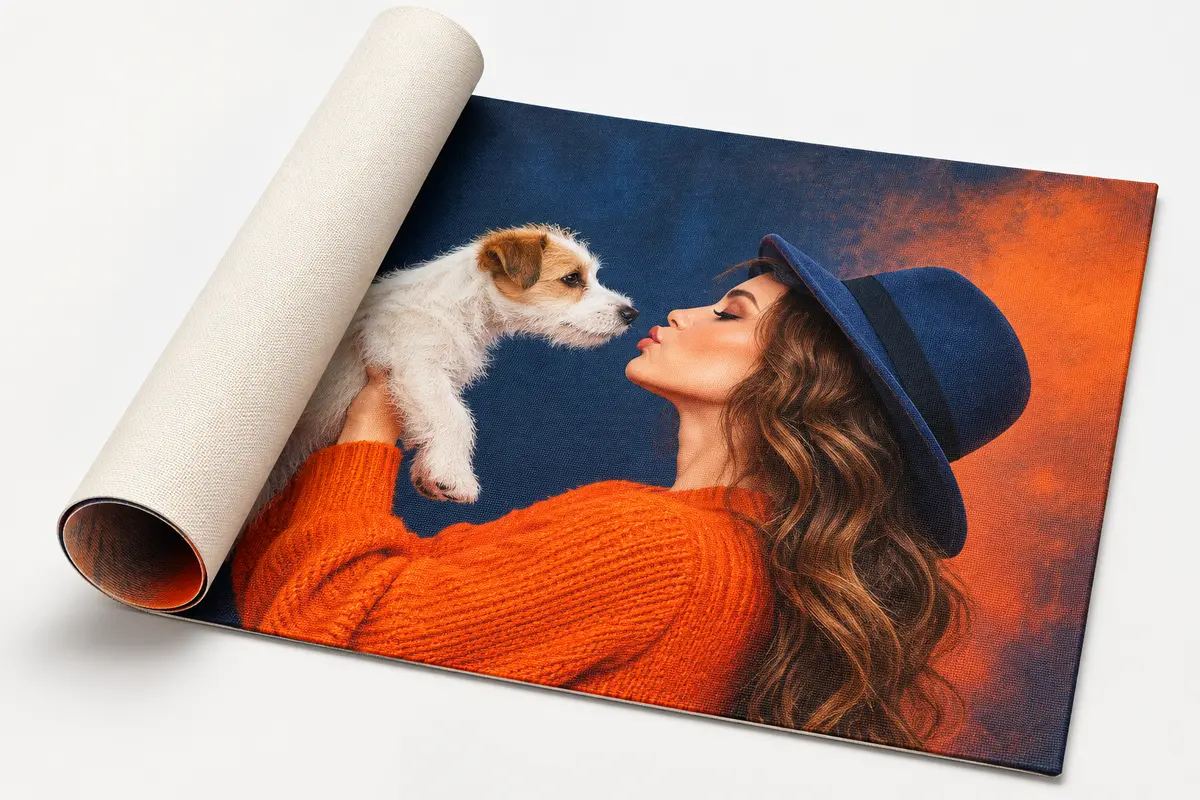
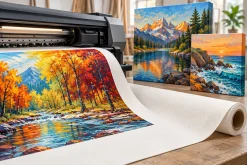
Canvas fabric is a canvas cloth coated with an ink-receptive layer, with a woven surface texture that looks very much like a painter's canvas. It is this texture that takes away the glossy “printed photo” look and makes the print look closer to a hand-painted picture — which is why this material is widely used for wall art, café pictures and large family photos.
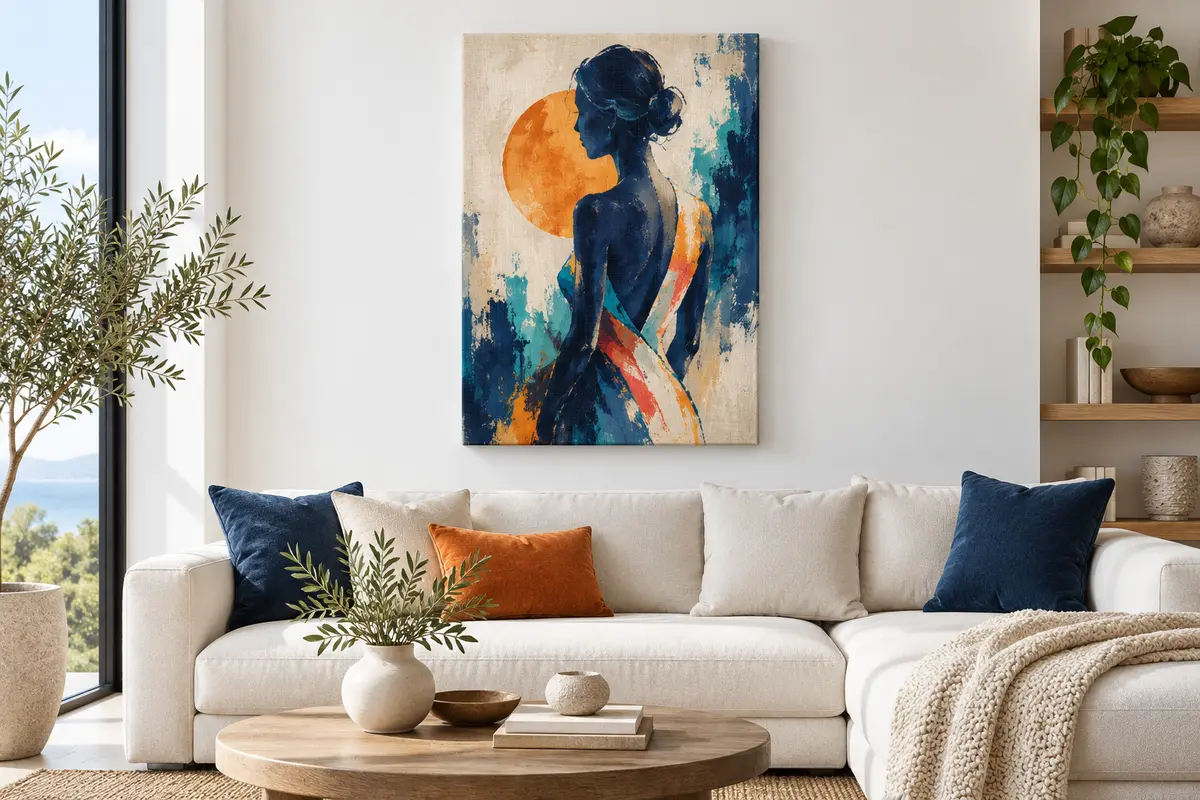
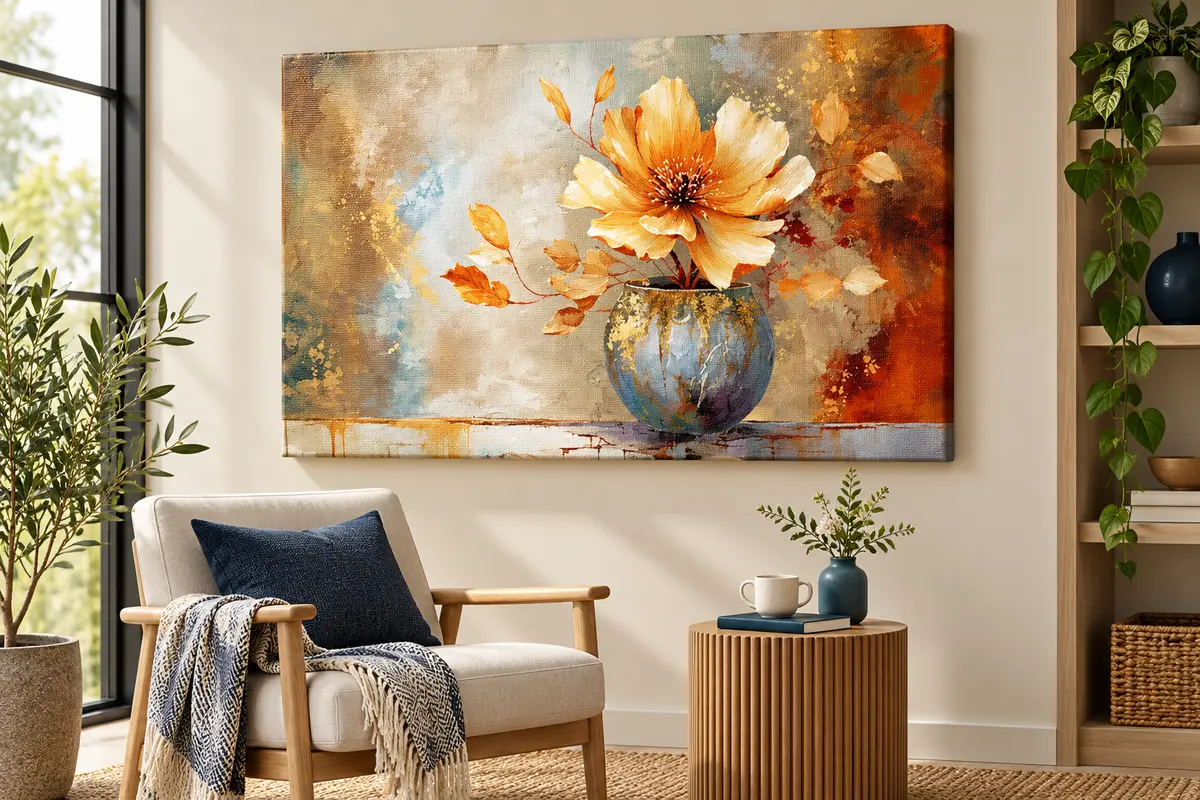
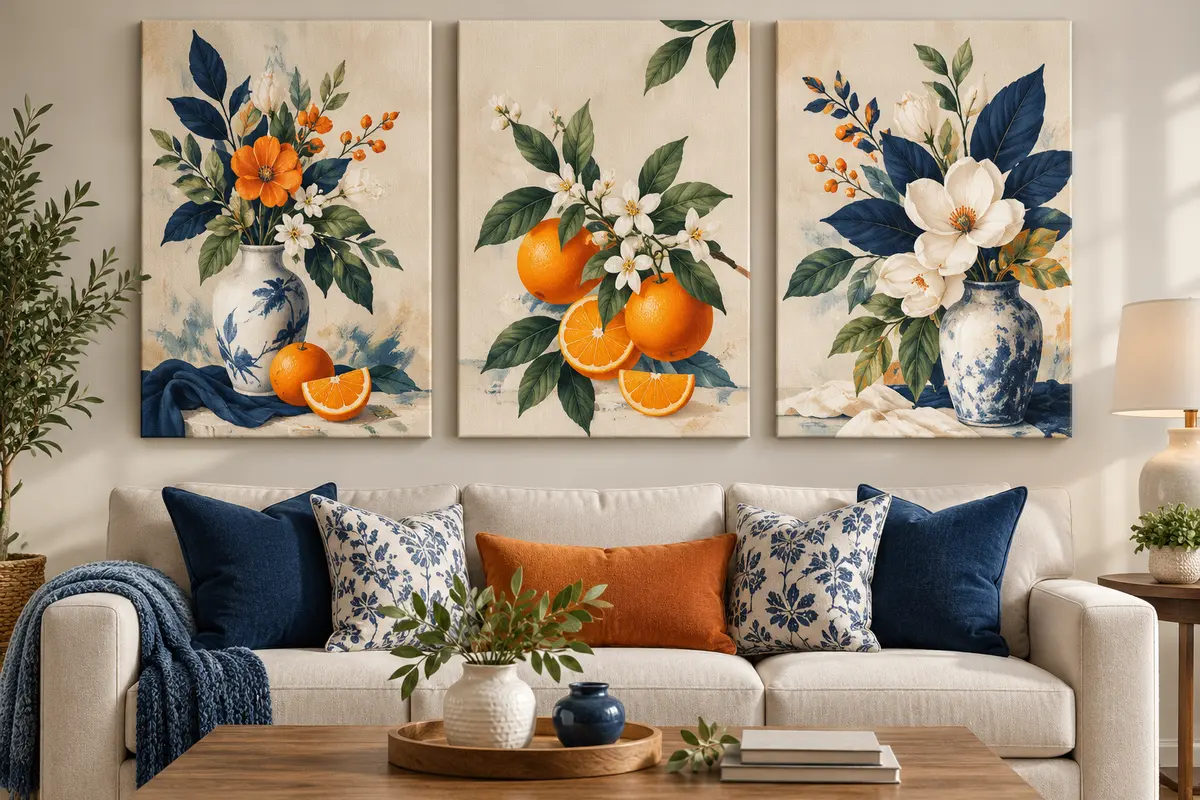
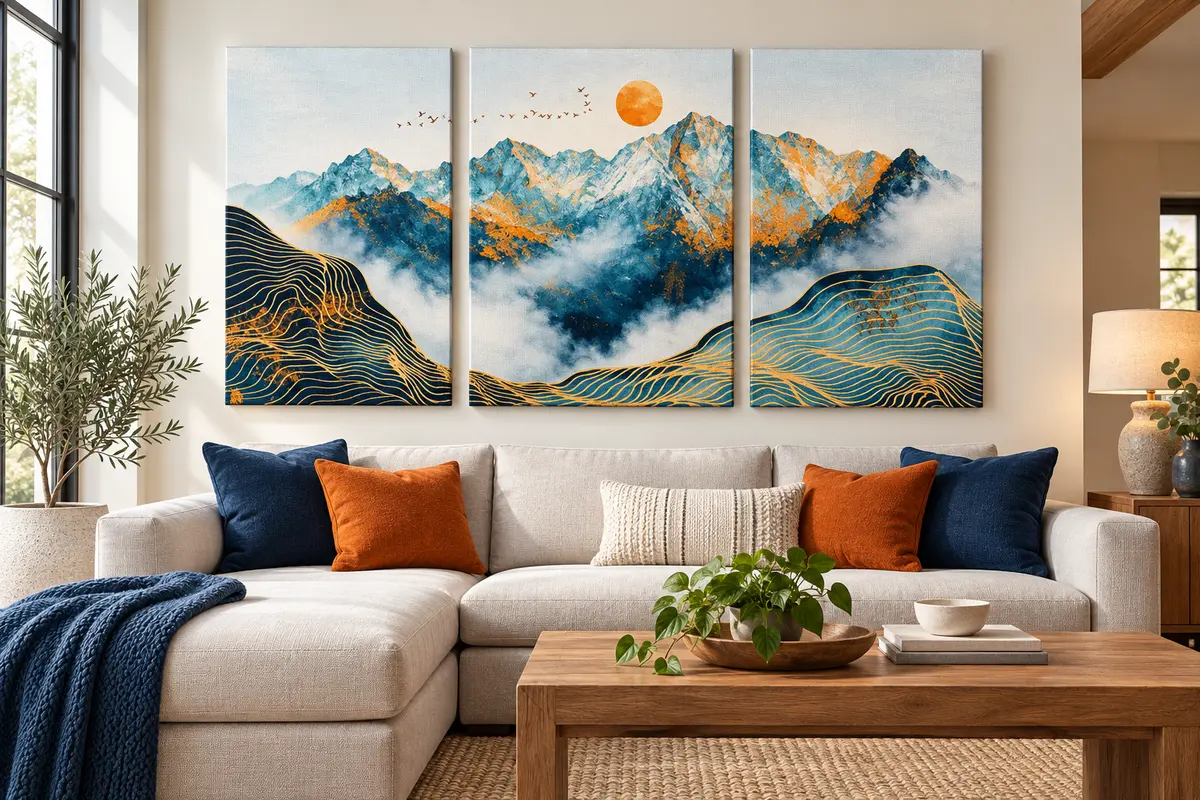
This article covers its construction, the widths we stock, two printing methods, how to stretch it on a wooden frame, tips for preparing photos and how to choose the picture size for each wall. Some illustrative photos are used in this article.
Canvas fabric construction and how it feels in the hand
Canvas fabric has two parts:
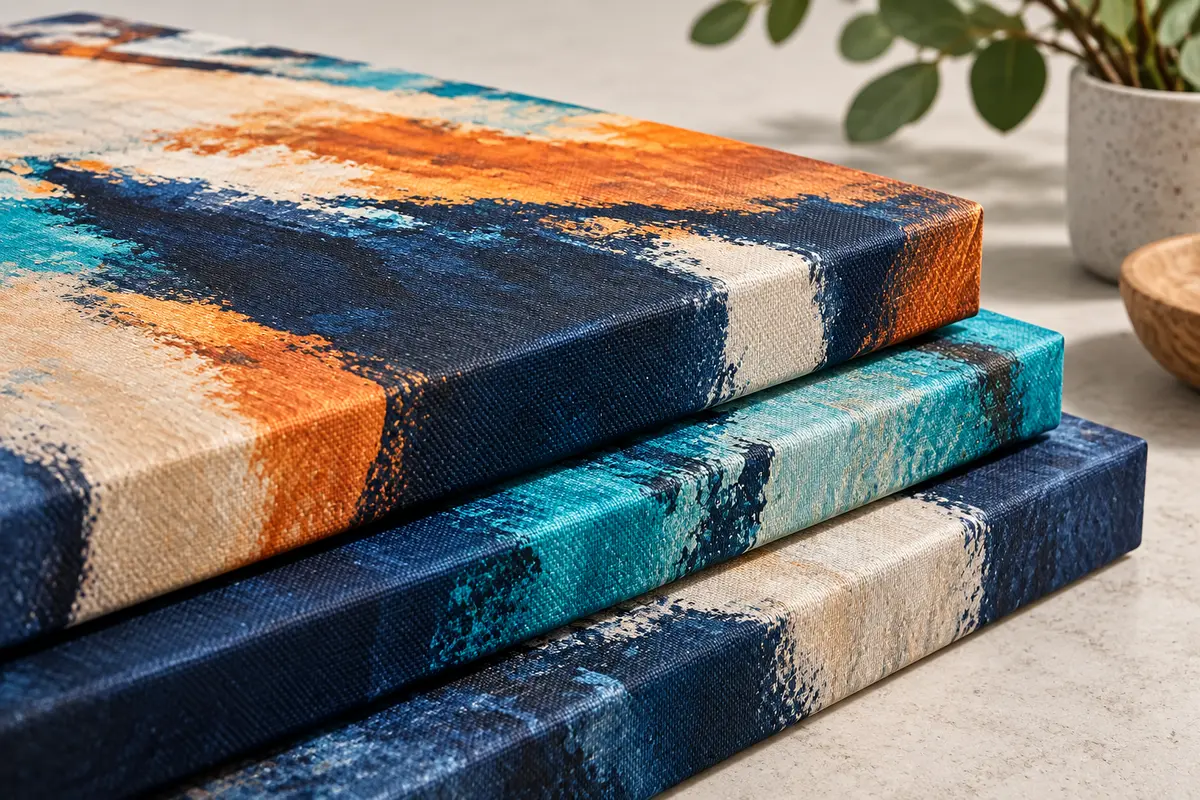
- Woven fabric base — threads woven crosswise and lengthwise create an even raised texture across the surface. This is what gives the print its “painting feel”.
- Ink-receptive coating — applied to the fabric surface so ink doesn't spread along the threads, keeping images sharp despite the textured base.
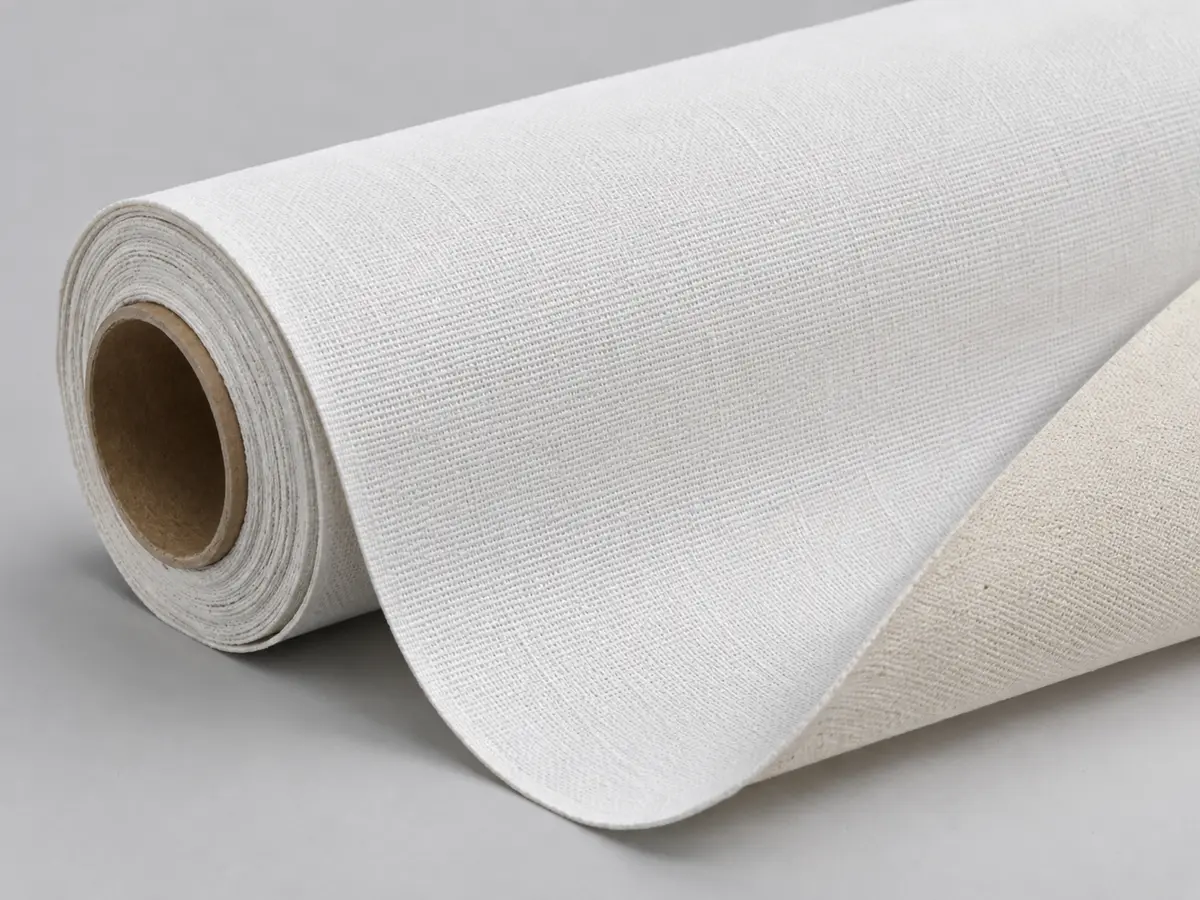
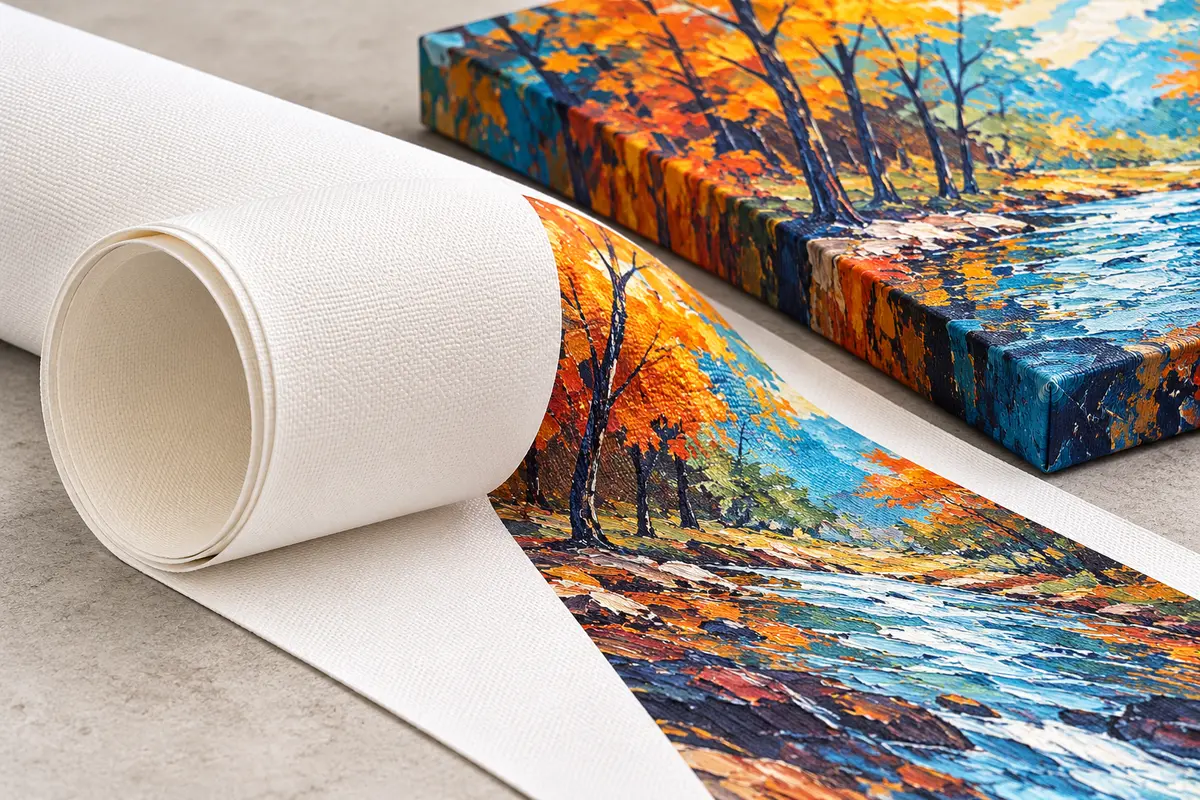
In the hand it feels soft, can be folded, and is much heavier than paper. The print can be delivered as a roll for you to frame yourself, or stretched by us on a wooden frame into a picture ready to hang.
Canvas fabric widths we stock
| Type | Size | Commonly used for |
|---|---|---|
| Canvas 91cm | 91cm | Small and medium art, multi-panel sets |
| Canvas 126cm | 126cm | The most used width for living room art |
| Canvas 150cm | 150cm | Large art, wide landscape pieces |
| Silk fabric 126cm | 126cm | Smooth, soft-draping surface — photo backdrops, hanging flags |
The width here is the width of the roll; the other dimension is almost unlimited. Pictures wider than the roll have to be joined, so knowing the size in advance lets you choose the best-fitting width with the least waste.
Silk fabric is in the same group but used for quite different purposes: it has no raised texture, drapes softly and does not reflect light, so it is better for photo backdrops and hanging flags than stretched pictures.
Two ways of printing on canvas fabric
- Solvent ink printing — smooth color transitions, suited to landscapes and portraits, where gradients make up most of the image.
- UV ink printing — the ink bonds more firmly and the surface stands up better to wiping. Choose it when the picture hangs where it is often touched or needs frequent cleaning.
Tell us where the picture will hang and we will choose for you. For pictures hung indoors and rarely touched, solvent ink is enough; for pictures in café corridors or crowded areas, UV is more durable.
Stretched on a wooden frame or left rolled
This is the choice that most affects how the file is designed:
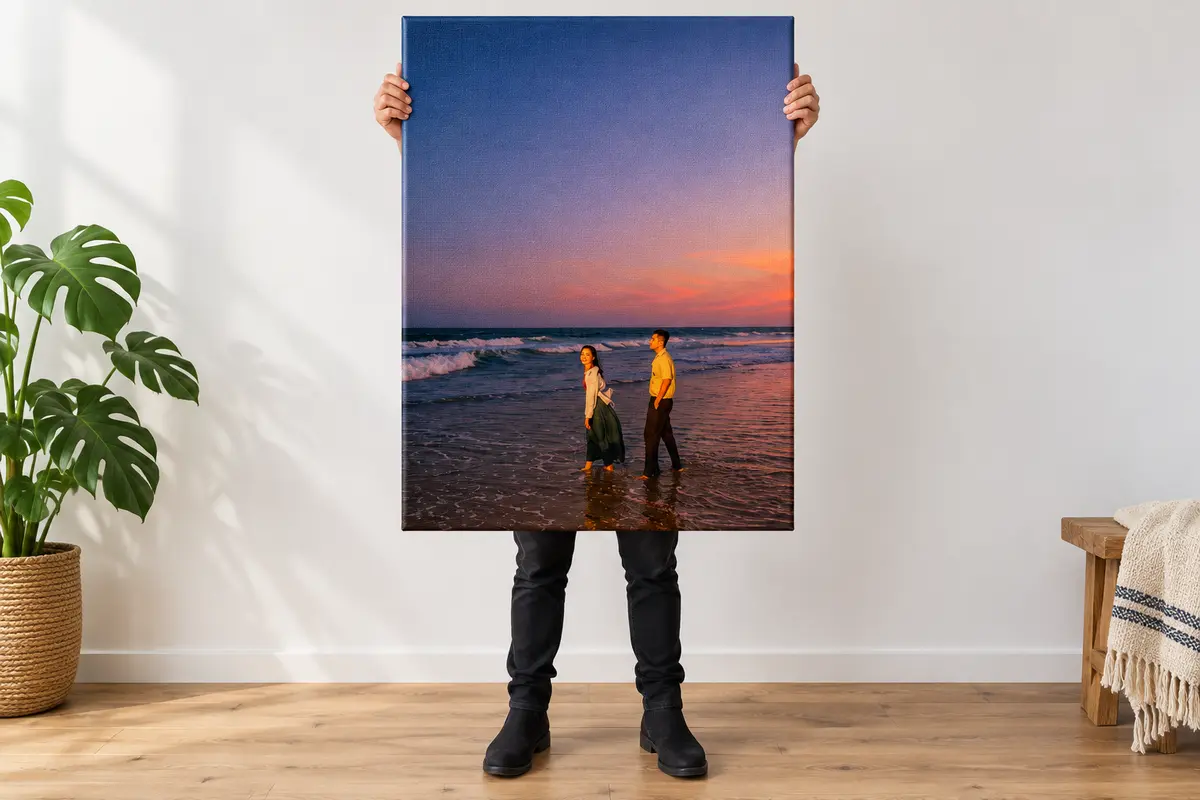
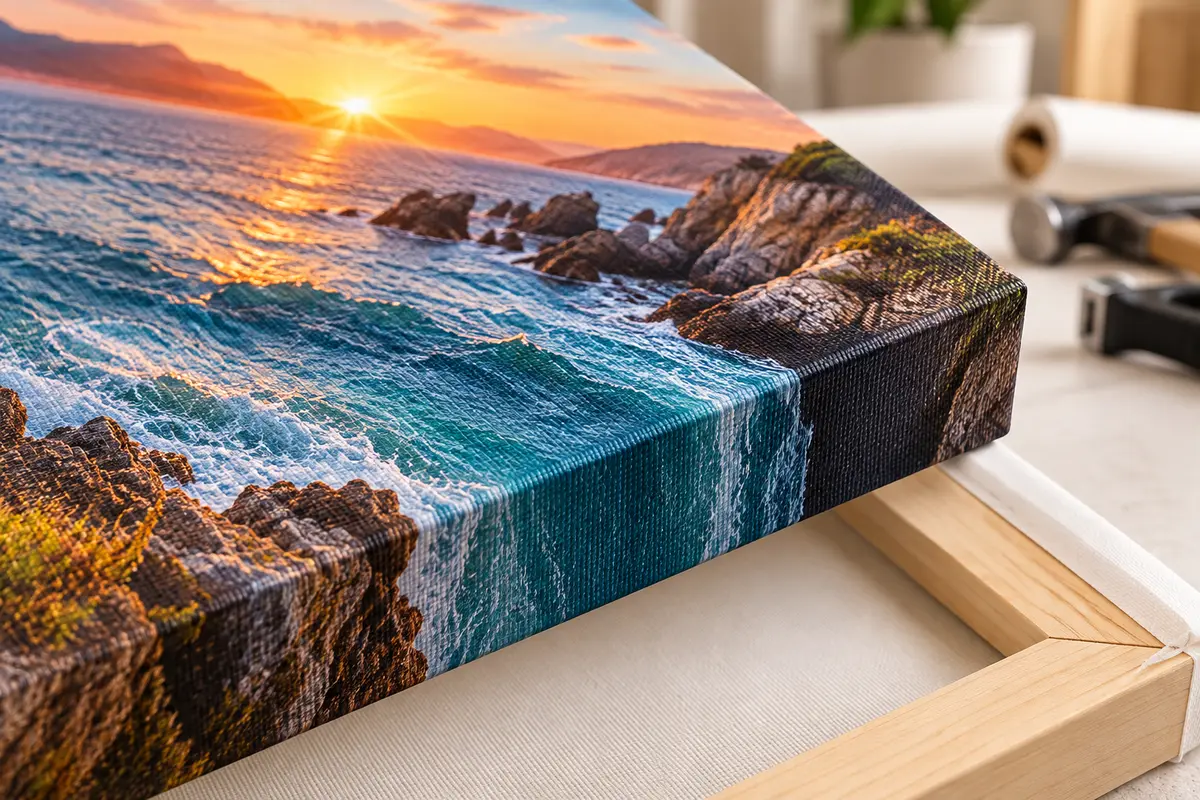
- Stretched on a wooden frame (gallery wrap) — the fabric is pulled tight and stapled onto a wooden frame, with the fabric wrapping around the edge becoming the picture border. Ready to hang, no glass needed, looks substantial and modern.
- Rolled — the flat print is delivered for you to frame as you like or mount on a board. Compact for long-distance shipping, and lower cost.
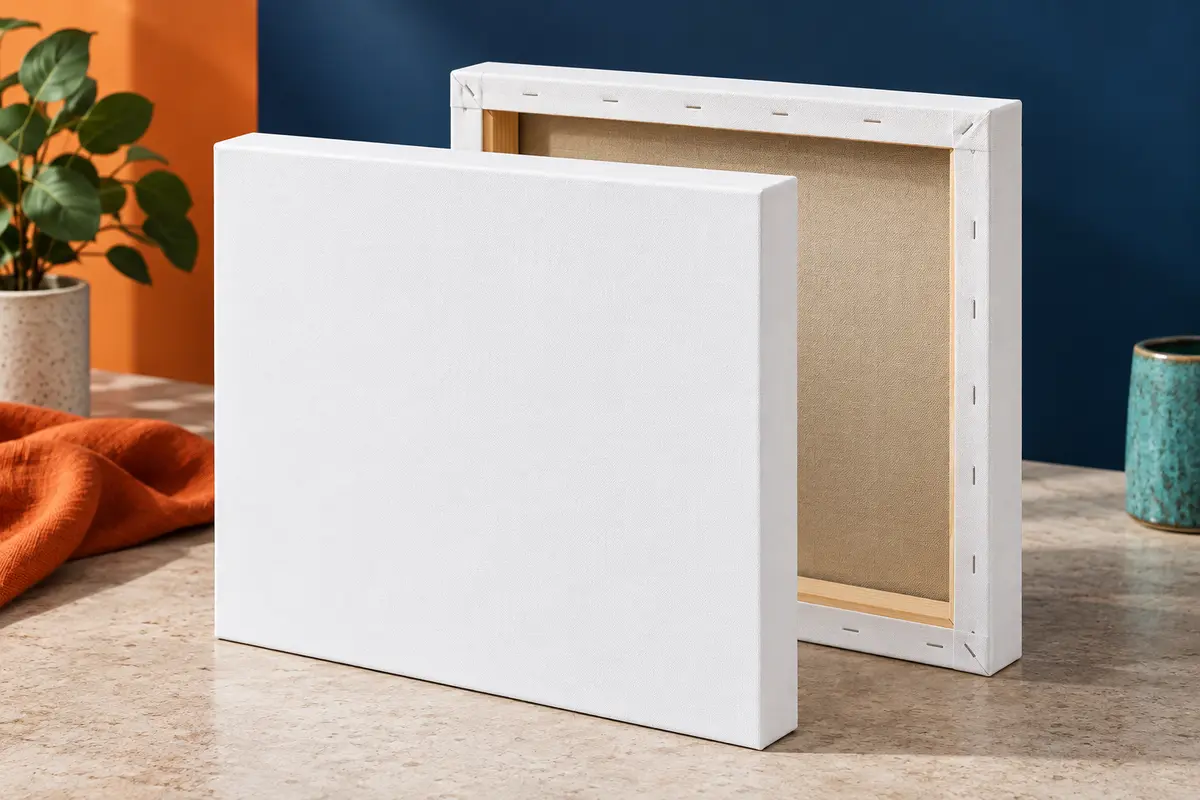
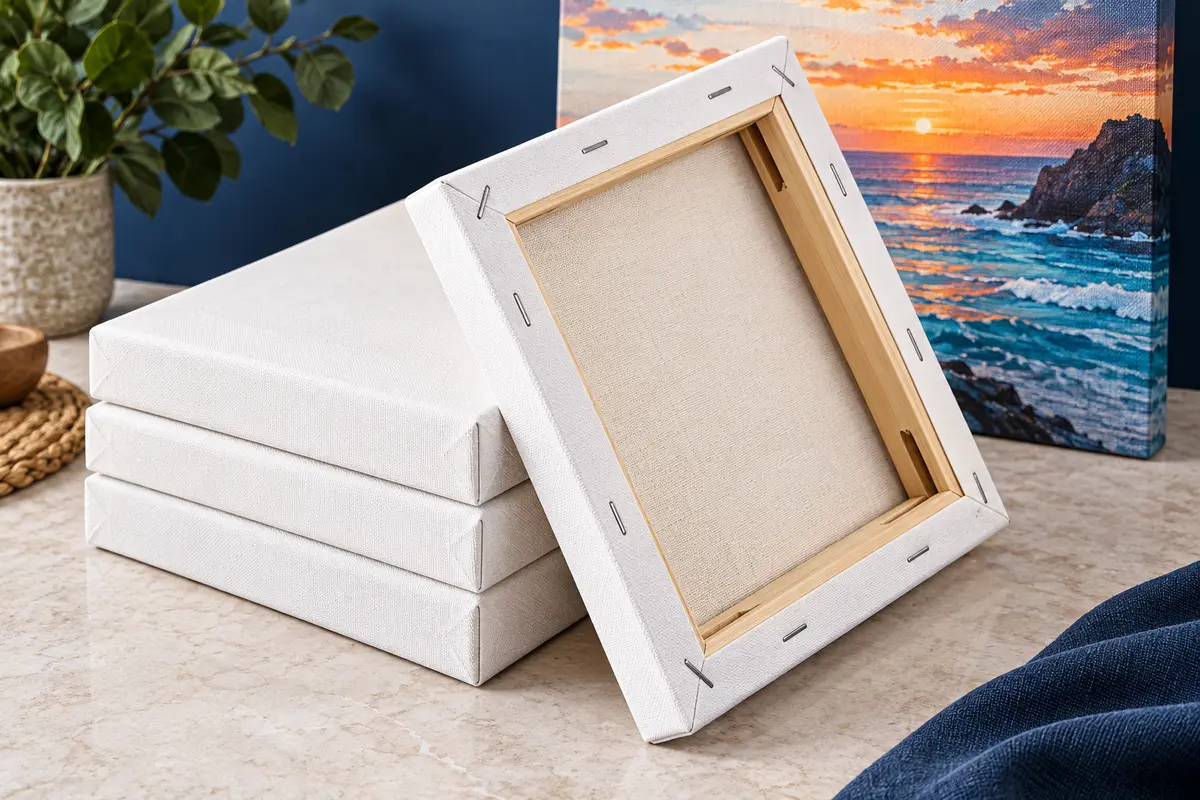
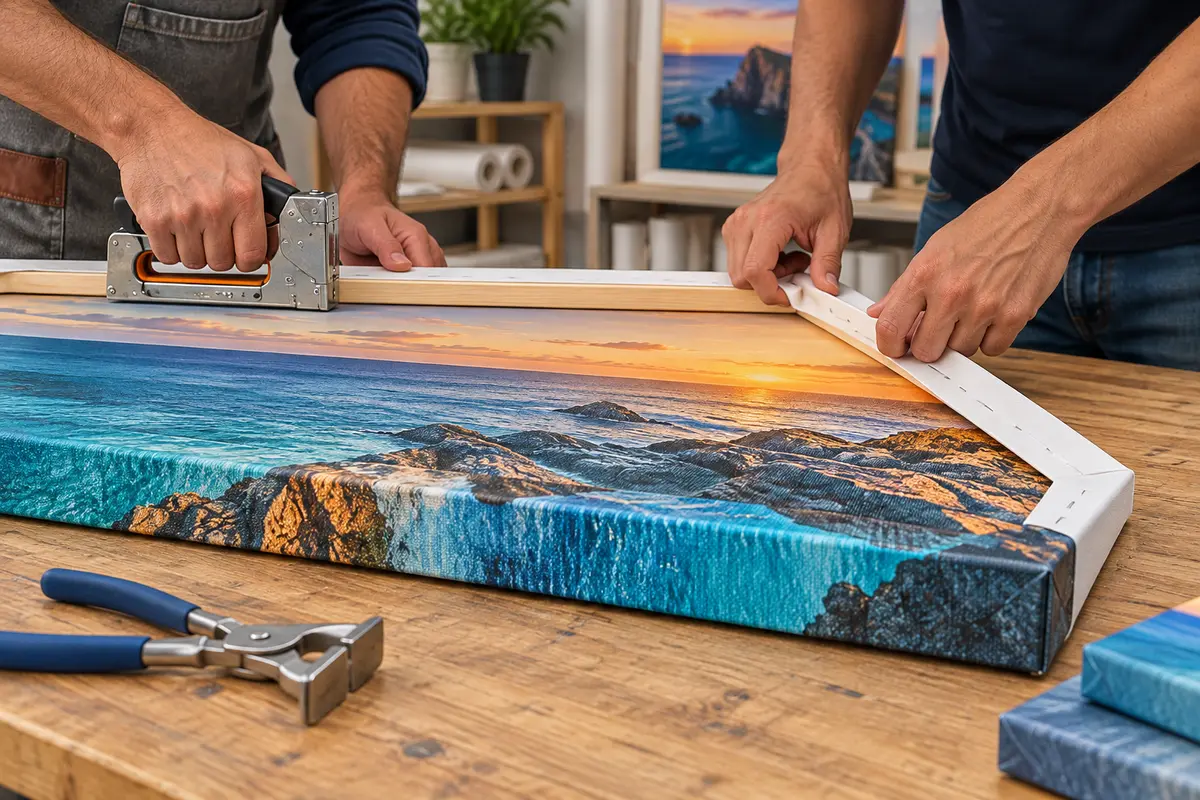
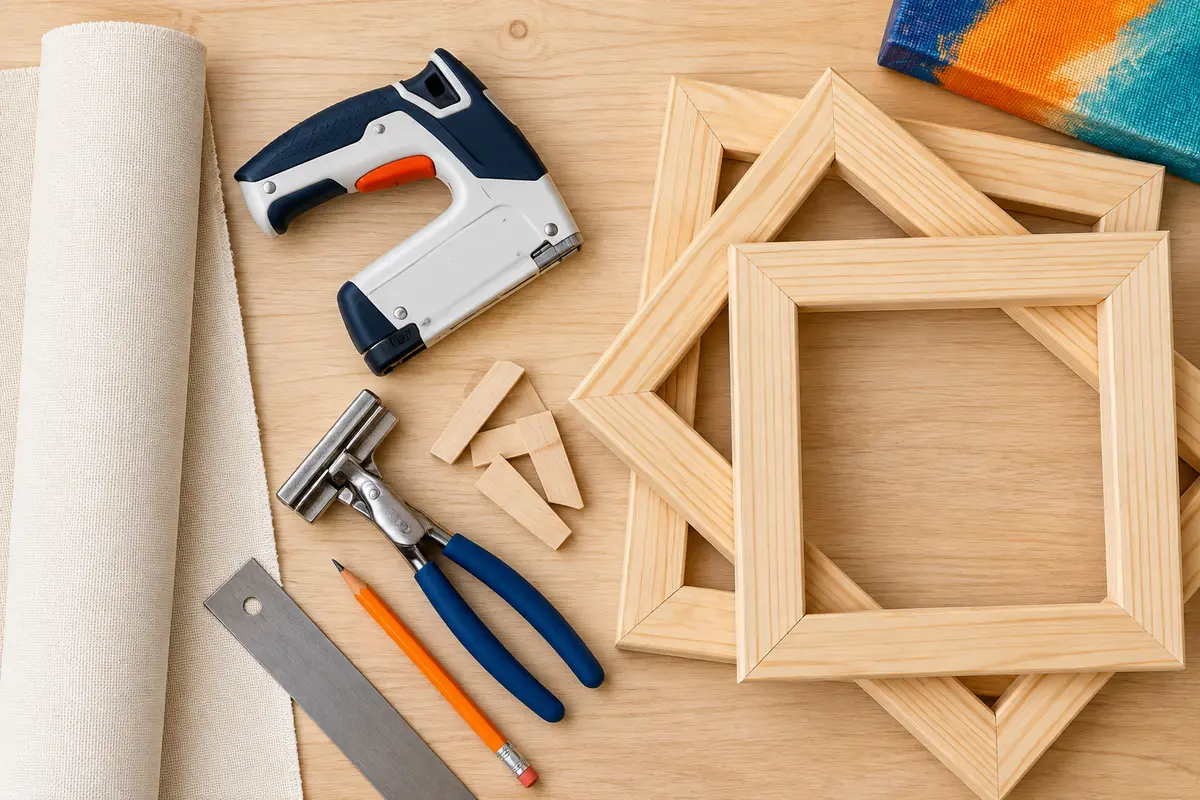
The most important point when stretching on a frame: the fabric wrapping around the edge of the frame takes up about 3–4cm on each side. So important details — faces, text, logos — must be at least 5cm from the edge, or the design should leave background around the edge to wrap around the frame.
Preparing photos for canvas prints
Wall art is viewed from one to two meters away, so the original photo must be large enough:
- A 60 × 90 cm piece needs a photo of at least about 3000 × 4500 pixels to print smoothly.
- Photos from modern phones still work if well exposed and without digital zoom.
- Images downloaded from the internet, screenshots or photos sent through messaging apps are usually compressed and will pixelate when enlarged.
- For old film photos that are scanned, scan at a high resolution from the start; do not re-photograph them with a phone.
- Design files should be in CMYK; for photos, send the original and we will handle the colour for you.
The fabric weave helps hide small photo flaws compared with glossy photo paper (glossy), but it cannot rescue a pixelated photo. If you are not sure whether the photo is sharp enough, send it to us first to check.
Where canvas prints are used
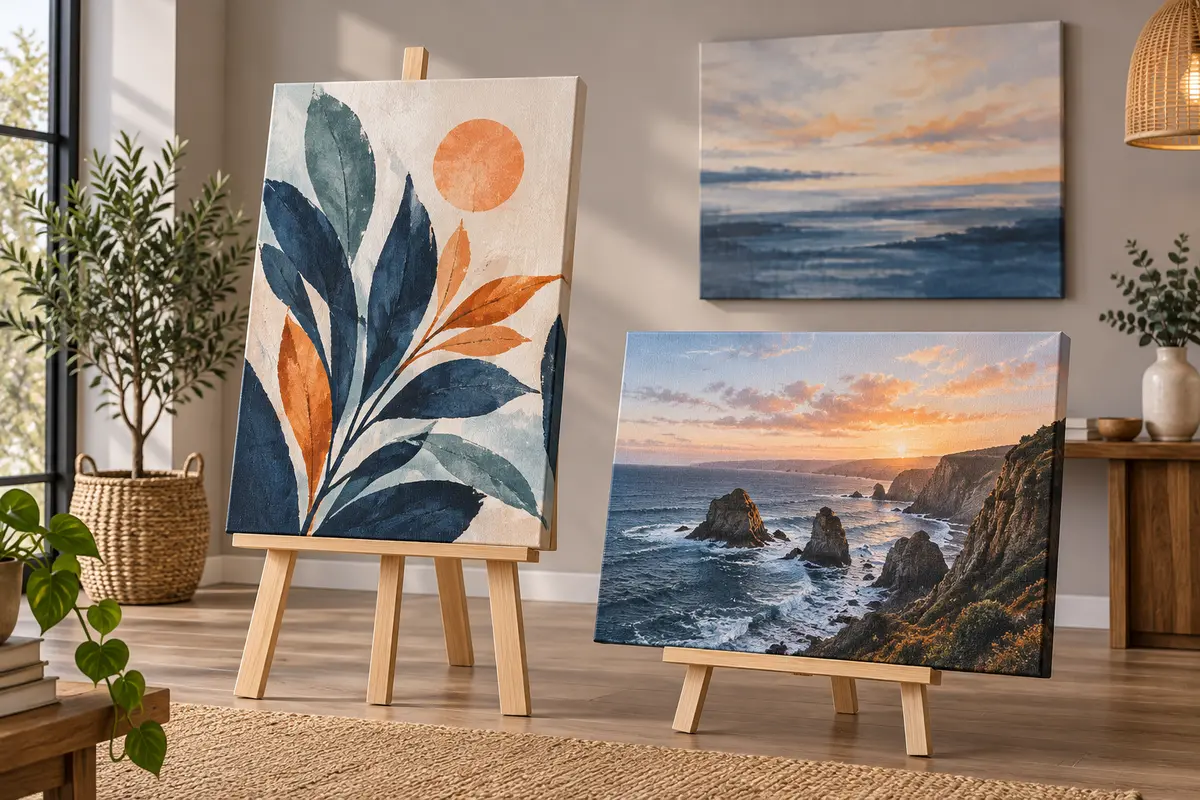
- Wall art for homes — living rooms, bedrooms, reading corners.
- Shop decoration art — eateries, cafés, hotels, spas.
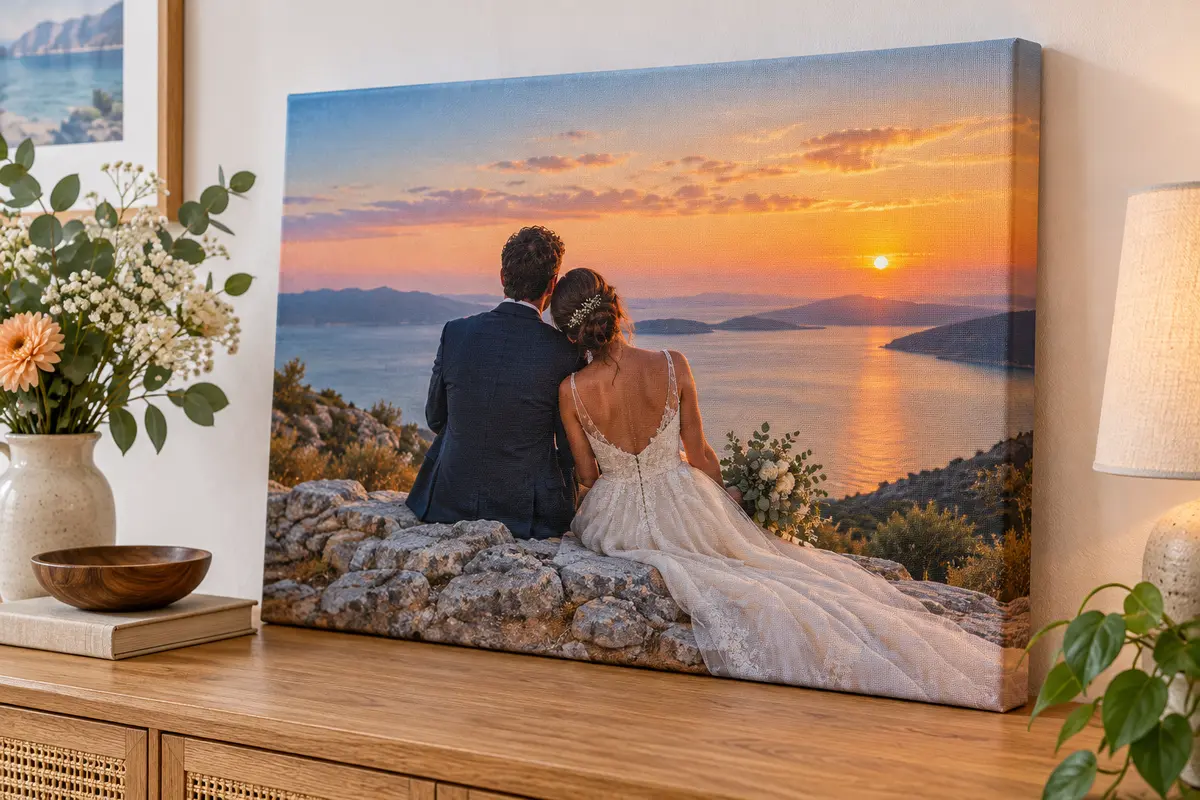
- Large family and wedding photos — instead of traditional glass-framed photos.
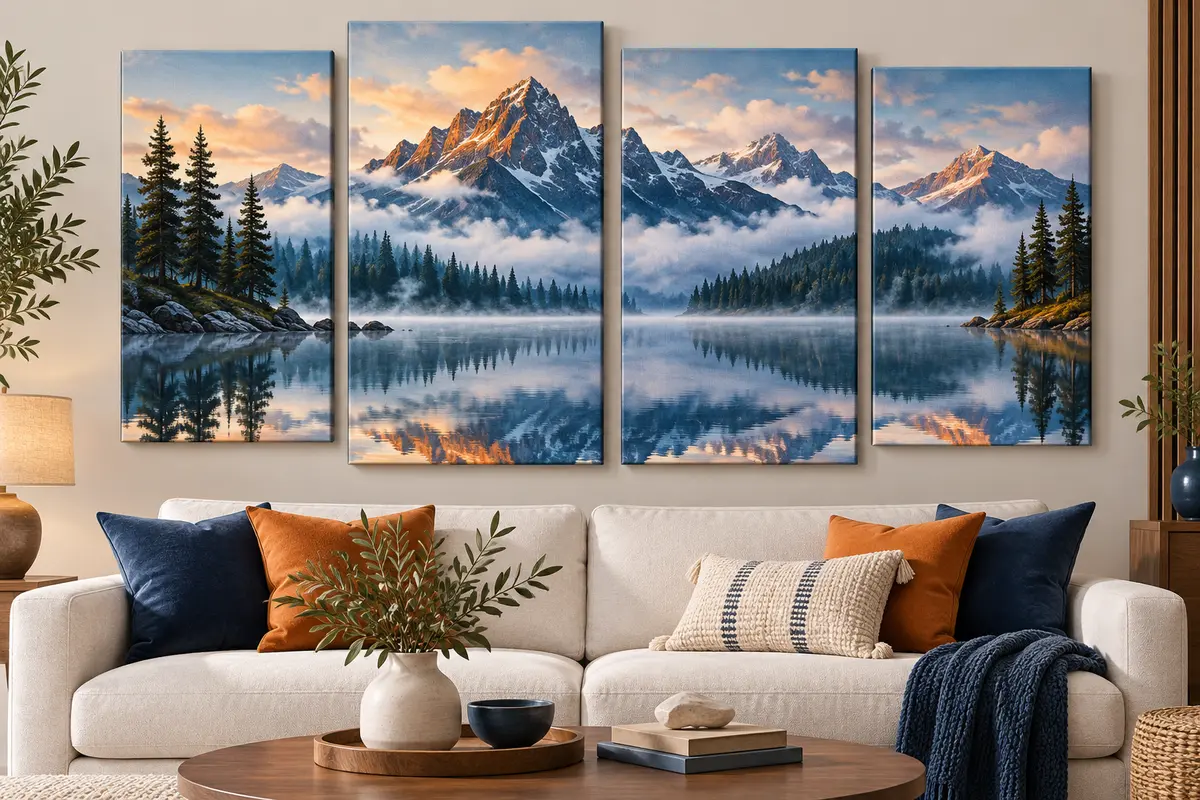
- Multi-panel sets — three or four panels forming one continuous image for wide walls.
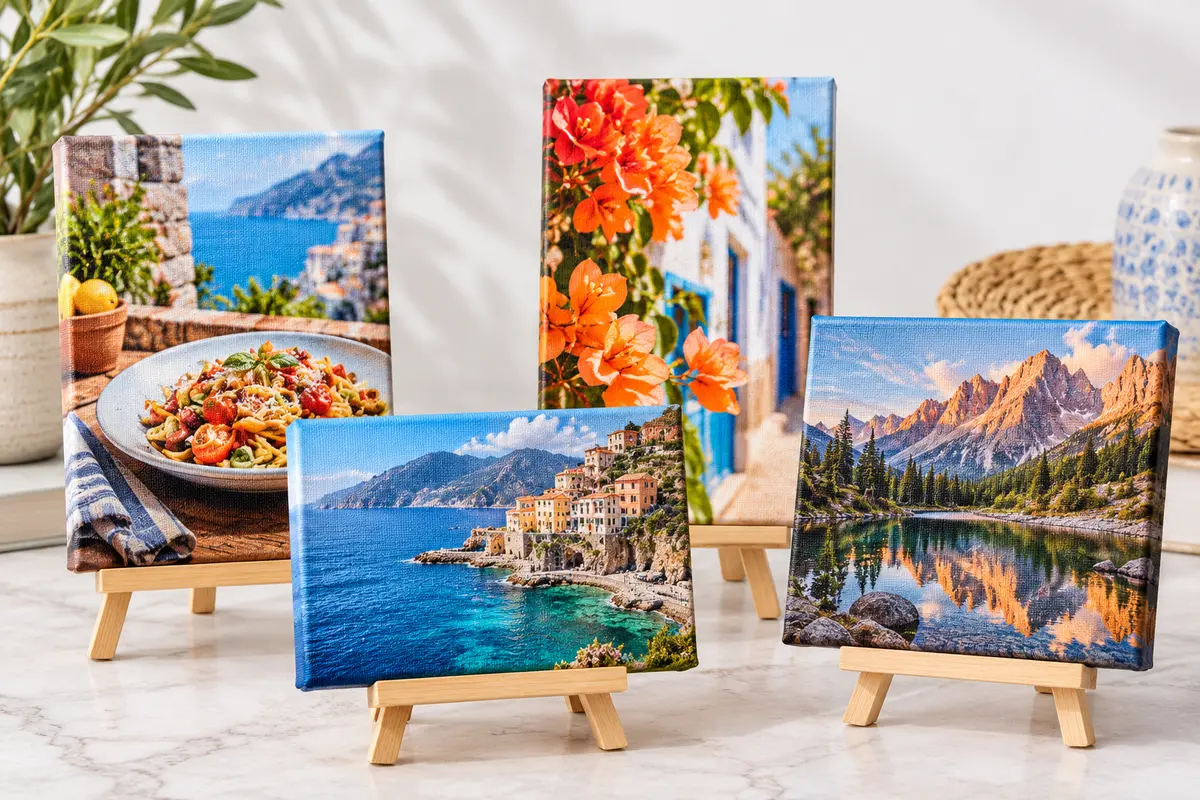
- Mini desk art — desks, reception counters, gifts.
- Photo backdrops and hanging flags — use Silk fabric instead of textured Canvas.
Related products

Canvas

Wall art

Poster

Restaurants & Shops
Suggestions by space
- Homes — one large picture above the sofa or a set of three above the bed. Family photos printed on canvas feel warmer than framed photos under glass, and there is no fear of breakage with small children around.
- Cafés and eateries — matching art sets along long walls, changed seasonally. Choose UV ink, since shop art often gets touched and wiped.
- Hotels and homestays — local landscape pictures hung in the rooms; order many at once so the colours are consistent between rooms.
- Spas, clinics — botanical prints and light-toned abstract pictures; the fabric surface does not reflect lights, so there is no glare when looking up from lying down.
- Offices, studios — project photo sets or brand images; mini desktop pictures as gifts for clients.
- Weddings — large stretched wedding photos, replacing traditional wood-mounted photos.
Choosing the picture size for the wall
A few common benchmarks for a quick choice:
| Placement | Popular size | Notes |
|---|---|---|
| Above a living room sofa | 120–160cm wide | About two thirds the length of the sofa |
| Above the bed | 100–140cm wide | One large piece or a set of three |
| Narrow walls, corridors | Portrait 40 × 60 or 50 × 70cm | Portrait art makes ceilings feel higher |
| Cafés, long walls | Sets of 3–4 panels | Continuous image or same theme |
| Desks, counters | Mini 20 × 30cm | With a stand, no wall drilling needed |
The centre of the picture should be at eye level, about 150cm from the floor. For sets of several panels, the gap between panels is usually 3–5cm for a tidy look.
A test before deciding: cut newspaper to the exact size of the planned picture, tape it temporarily on the wall, and step back to look at it for a few days. It takes ten minutes but avoids hanging the picture only to find it too small or too large for the wall.
Proportion matters as much as size: a tall wall calls for a portrait picture, a long wall calls for a landscape picture or a multi-panel set. Forcing a square picture onto a long wall leaves empty gaps on both sides.
Common ordering mistakes
- Sending photos that went through messaging apps — heavily compressed photos look grainy when printed large. Always send the original file.
- Forgetting the fabric that wraps around the frame — faces or text near the edge will be wrapped behind the frame and cannot be fixed after stretching.
- Choosing a size by feel — a small picture on a wide wall looks lost. Measure the wall first and use about two thirds of its width as a guide.
- Cropping to the wrong ratio — a 3:2 photo forced into a square frame loses both sides; tell us the desired ratio so the crop is intentional.
- Ordering a set without stating the hanging gap — for seamless sets, the gap between panels has to be accounted for when cutting the file.
- Hanging in direct sunlight — every print fades; choosing a wall without direct sun keeps the colours much longer.
Compared with photo paper and other picture materials
| Material | Surface | Needs glass | Suitable for |
|---|---|---|---|
| Canvas fabric | Woven texture, matte | No | Art pictures, family photos, café pictures |
| Photo paper | Glossy, flat | Recommended | High-detail photos, studio portraits |
| PP | Smooth, no texture | No | Posters, low-cost pictures changed by season |
| Formex | Rigid flat board | No | Decorative boards, shaped cut pictures |
Canvas does not need glass, so it is light, has no glare under lights and does not break on impact — three reasons it is often chosen for homes and shops. On the other hand, the textured surface means extremely fine details are not as sharp as on photo paper.
How to order and calculate the area
- Calculate area: width (cm) × height (cm) ÷ 10,000. A 60 × 90 cm piece is 0.54 m².
- Choose the printing technology — solvent ink or UV ink — in the options on the product page.
- Enter the m² in the quantity box; decimals such as 1.2 or 1.5 are accepted.
- Write the width × height and whether stretching is needed in the order notes.
- Send the original photo with your order; the larger the photo, the better.
Minimum chargeable area is 0.5 m² per piece. For multi-panel sets, add up the total area and enter it once, listing each panel in the notes as “panel 1: 40 × 60, panel 2: 40 × 60”.
Caring for canvas prints
- Dust with a dry cloth or soft brush; don't use a soaking wet cloth as water seeps into the weave.
- Avoid hanging in direct sunlight all day; colors will gradually fade like any print.
- Don't hang in bathrooms or constantly humid places — both fabric and wooden frames absorb moisture.
- For unframed rolled prints, roll them with the printed side out, keep them in a paper tube, and do not fold.
- Wooden frames may slacken over time; for large pictures, check the tension every few years and re-stretch if needed.
Frequently asked questions about canvas fabric
Do canvas prints need glass?
No. The fabric surface is coated, so it withstands dust and light wiping; that is also why the picture is lighter and has no glare like pictures under glass.
Do family photos look good printed on canvas fabric?
Yes, as long as the original photo is sharp enough. The fabric texture makes the photo look softer and more artistic; conversely, photos with many ultra-fine details will be sharper on photo paper.
How much of the image does stretching take?
About 3–4cm on each side wrapping around the frame edge. Leave background area around the edges when designing, or ask us to extend the file.
Can you make multi-panel sets?
Yes. We split one large image into several seamless panels, or print several images on the same theme. Tell us the number of panels and the intended hanging gap.
Can the picture be placed outdoors?
Not recommended. Fabric and wooden frames both absorb moisture, and sun and rain slacken the fabric and make the frame moldy. For outdoors, use Hiflex banner or alu.
Can I order a single piece?
Yes. The print is priced by actual square metres, with a minimum area of 0.5 m² per piece.
How room lighting affects it
Once the picture is hung, the brightness looks different from what you saw on the computer. The cause almost always lies in the room lighting and hanging position, not in the print.
| Type of room lighting | Effect on the picture | How to handle it |
|---|---|---|
| Warm yellow light | Skin and wood tones look good, blue tones look dull | Choose warm-toned photos, avoid photos with lots of blue |
| Neutral white light | Closest to the original colours | No further adjustment needed |
| Cool white light | Colours look harsh, portraits look less natural | Reduce the photo contrast before printing |
| Indirect sunlight through a window | Vivid colours by day, darker in the afternoon | Hang away from the direction of direct sun |
| Picture lights shining at an angle | Stands out, the surface texture is clearly visible | Place the light at a 30-degree angle, not shining perpendicular |
| Poorly lit rooms | Dark photos look even more stuffy | Choose bright photos, increase brightness before printing |
A simple tip: open the photo on your phone and hold it at the exact spot where you plan to hang it, at the time you usually sit there. If you like it there, you will like the print too, because the eye judges by the surroundings, not by absolute colour.
For photos taken with a phone, turn off colour-boosting filters before sending. Filters make the photo pop on a small screen, but when enlarged on the wall the colours look fake and the over-pushed areas become obvious.
Hanging methods and suitable spacing
Hanging correctly helps the picture keep its shape and not sag over time. Most of the work lies in preparing the wall, not in hammering the nail.
- Height: the centre of the picture at the eye level of a standing person, about 1.45 to 1.55 metres from the floor.
- Above the sofa: bottom edge 15 to 20 cm above the sofa back, not too close.
- Multi-panel sets: a gap of 5 to 8 cm between panels, evenly aligned along the row.
- Damp walls: leave a gap behind with small pads at the four corners for ventilation.
- Hooks: use hooks rated for twice the weight of the picture; large sizes should use two hanging points.
- Level: check with a spirit level; even a slight tilt is noticed immediately when looking at the whole wall.
Avoid hanging directly above heat sources such as a TV, heater or an air conditioner blowing straight at it. Heat and airflow make the surface expand and contract constantly, which over time slackens the picture and wrinkles the edges.
When cleaning, use a soft brush to dust in one direction. Do not spray liquid directly on the surface or scrub hard, because the ink sits right on the fabric texture without a thick protective layer like on photo paper.
Order canvas prints at In Quảng Cáo Q7
Send the original photo with the desired picture size and tell us whether you need it stretched or rolled; we will check the photo's sharpness and then give you a quote. Contact 0866.511.099 or drop by the workshop at 49 Mai Van Vinh, Tan Hung Ward, Ho Chi Minh City. Production & delivery: 8:00–12:00 & 13:00–18:00 Mon–Sat (closed Sun) · Consultation & orders: 8:00–12:00 & 13:00–20:00 Mon–Sat; 14:00–19:00 Sun.
View directions to the workshop on Google Maps
Need printing or signage in Ho Chi Minh City?
In Quảng Cáo Q7 runs its own print workshop in Tân Hưng Ward (former District 7), Ho Chi Minh City, producing and installing signage, banners, window graphics, exhibition booths and event displays. Send us the size, material, quantity and a photo on WhatsApp and we will get back to you.

Phone: +84 866 511 099 · Also on WeChat
Workshop: 49 Mai Văn Vĩnh, Tân Hưng Ward, Ho Chi Minh City