








































































Fort Paper: matte surface, easy to write on and printable on both sides
Sep
Fort paper (often written as Ford) is the most familiar paper that few people call by its right name. The A4 sheet in the office photocopier, the pages of a notebook, the handwritten bill at a restaurant — all of these are Fort paper. Yet when ordering printing, many people still hesitate between Fort and Couche without knowing how the two differ.
What Fort paper is
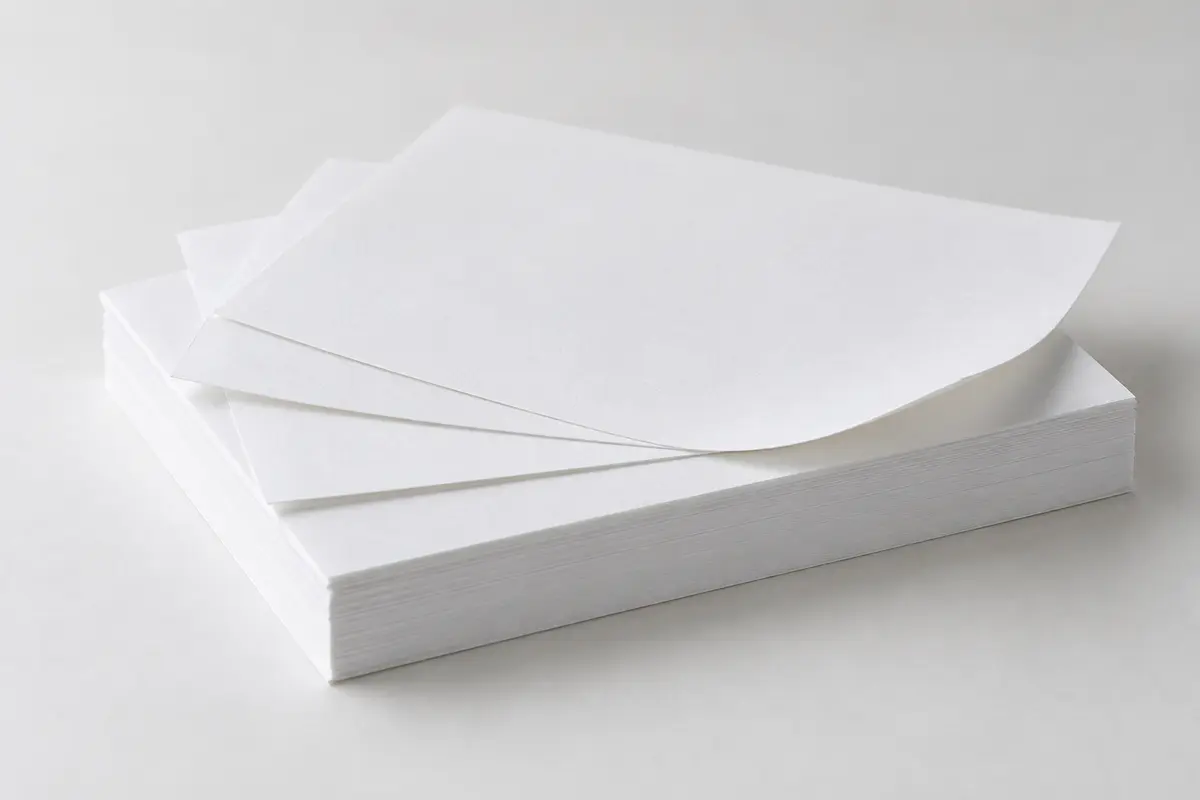
Fort paper (often written as Ford, technically called uncoated offset paper) has a naturally matte surface without the kaolin coating of Couche. The ink partly soaks into the paper fibres, so the colours are softer, not glossy and not reflective. Everyday A4 office photocopy paper is 70–80gsm Fort paper.
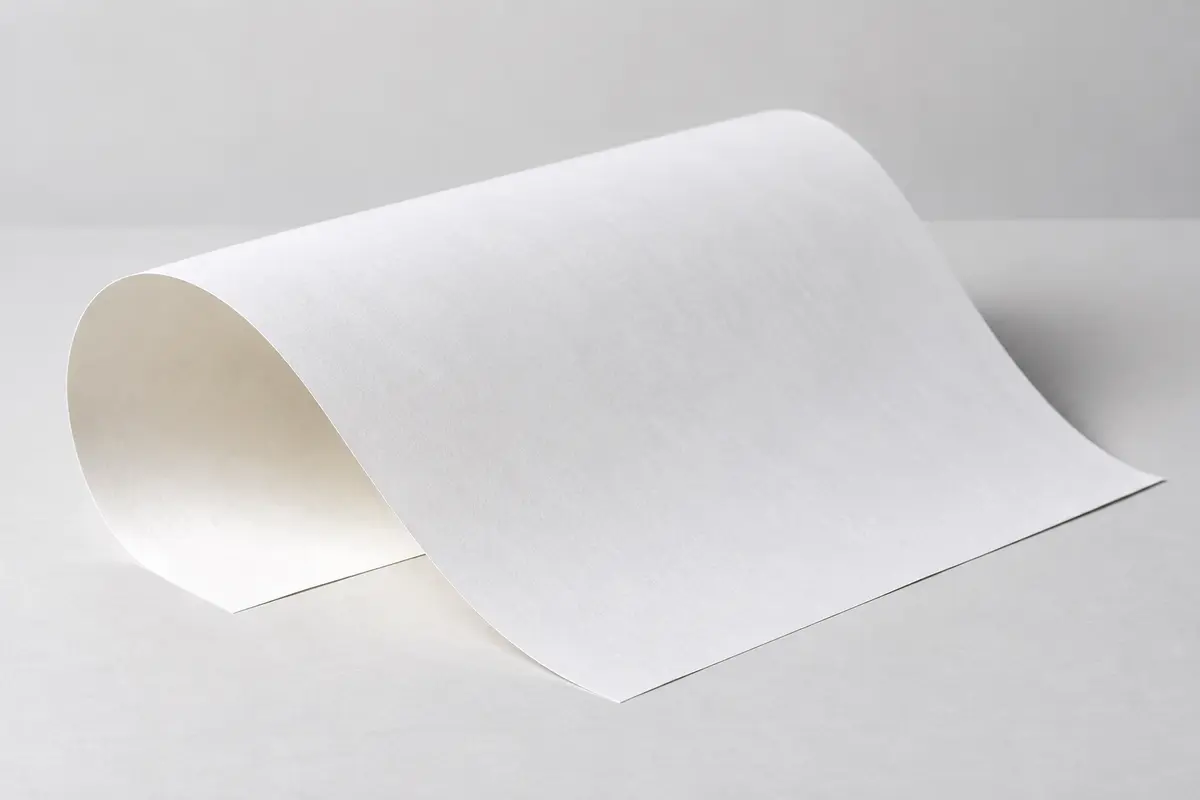
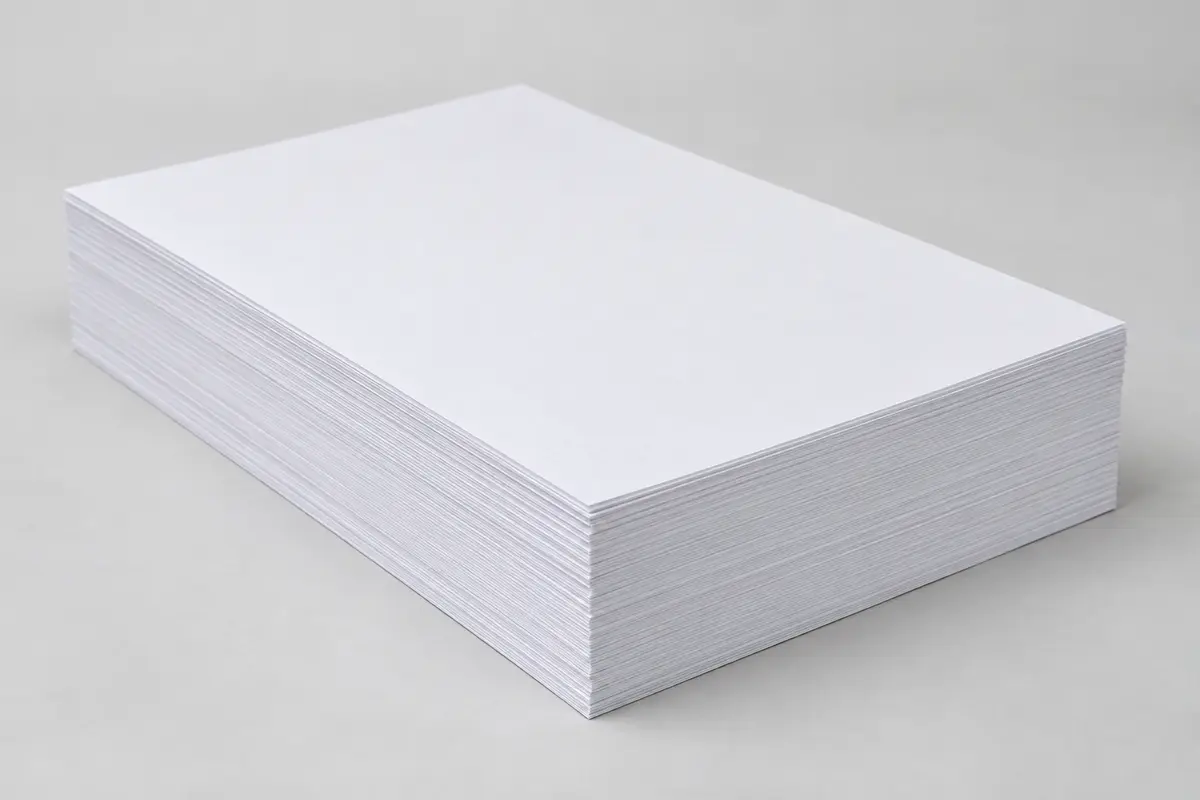
Two properties that come from being uncoated: it can be written on with any pen — ballpoint, fountain pen and pencil all take; and stamps take the ink immediately, without slipping or drying slowly. This is why every form that needs filling in by hand uses Fort paper.
White Fort and cream Fort
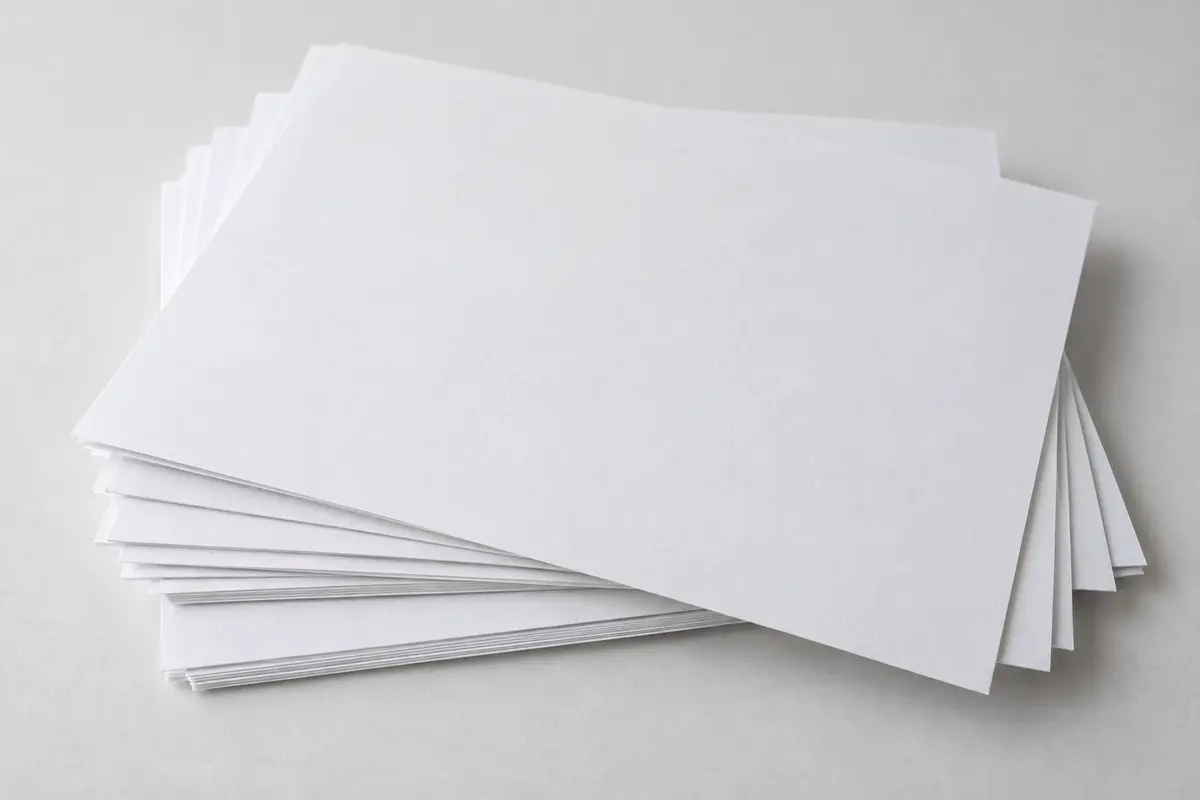
White Fort gives a bright, neutral tone with black text standing out clearly. This is the default choice for documents, forms and company letterheads — things that need to be clear and professional.
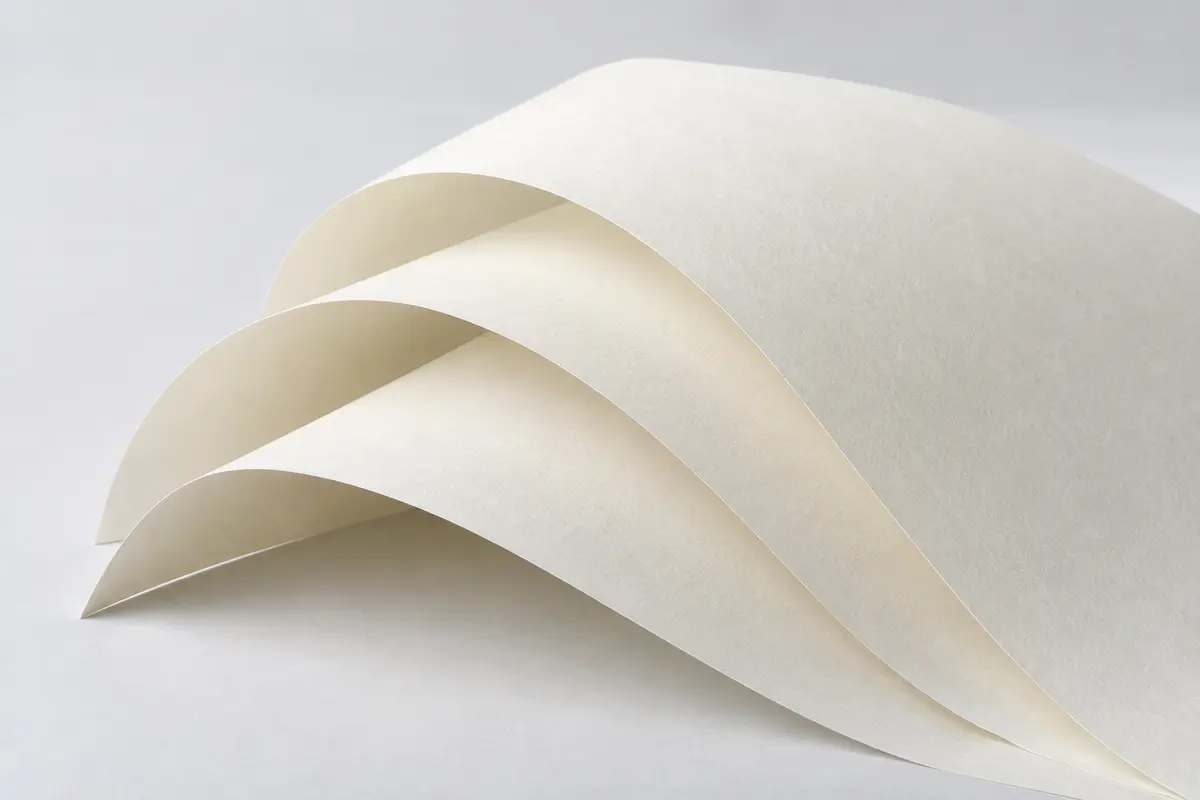
Cream Fort has a slight yellow tint that reduces contrast, so it is less tiring for long reading. Books, notebooks and cards often use cream Fort because it feels warm and classic. With the same design, printing on cream Fort looks more subdued and less harsh than on white Fort.
Weights we stock
- Fort 80gsm – the standard weight for documents, letterheads and everyday printed slips.
- Fort 100gsm – slightly thicker, with less ink show-through on the back when printed on both sides.
- Fort 120gsm – used for premium letterheads, notebook pages and warranty cards.
- Fort 180gsm – holds its shape, for thin document covers, lucky draw tickets and vouchers.
- Fort 230–300gsm – thick and stiff, used for business cards, cards and notebook covers.
A quick rule: the thicker the paper, the less the back shows through and the better it holds its shape, but also the harder it is to fold neatly. For double-sided items with dark backgrounds, start from 100gsm and up.
Letterheads and stationery sets
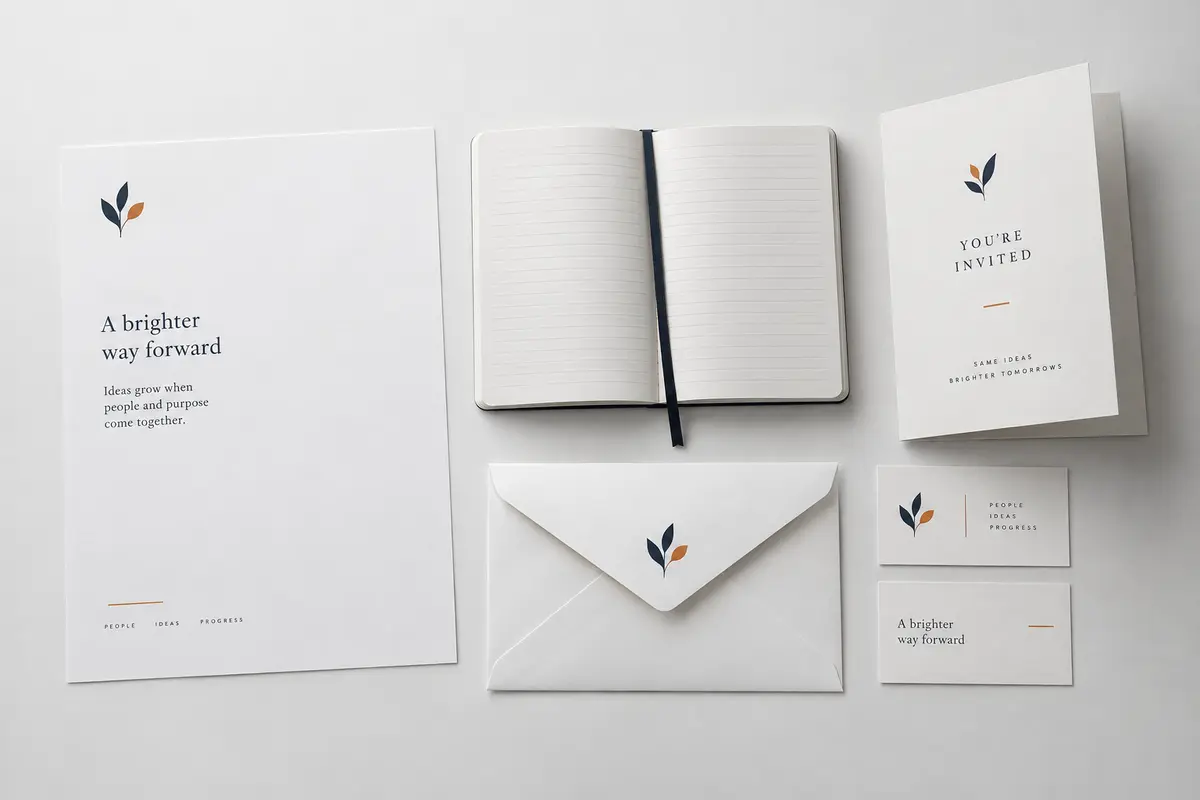
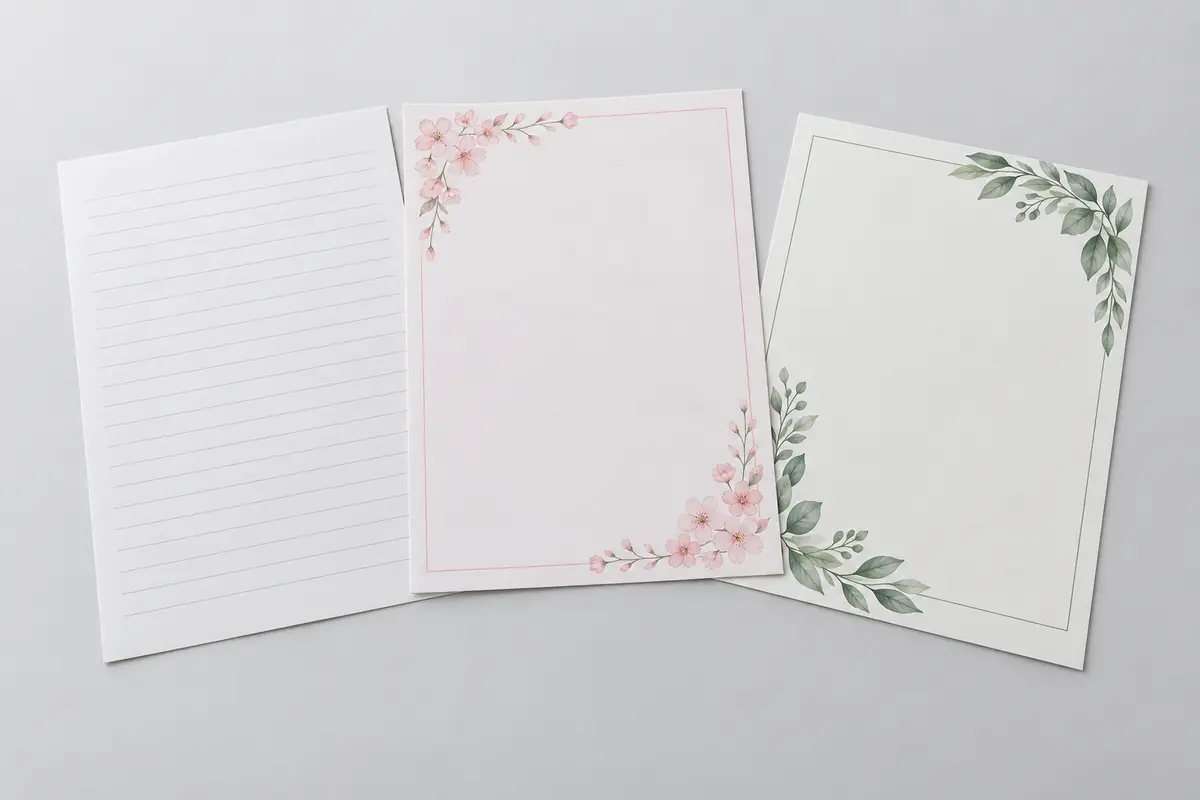
Letterheads are the classic application of Fort paper. The sheet is both printed with content and written on or stamped by staff — Couche cannot do both.
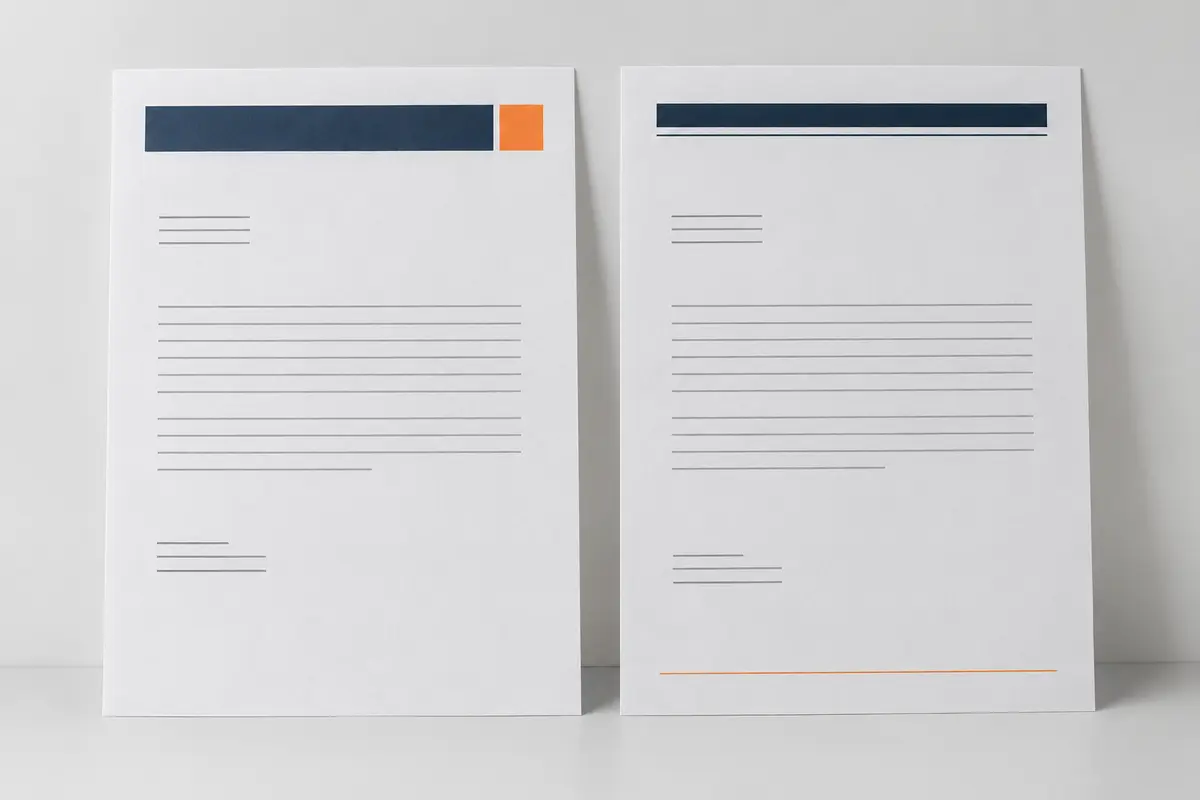
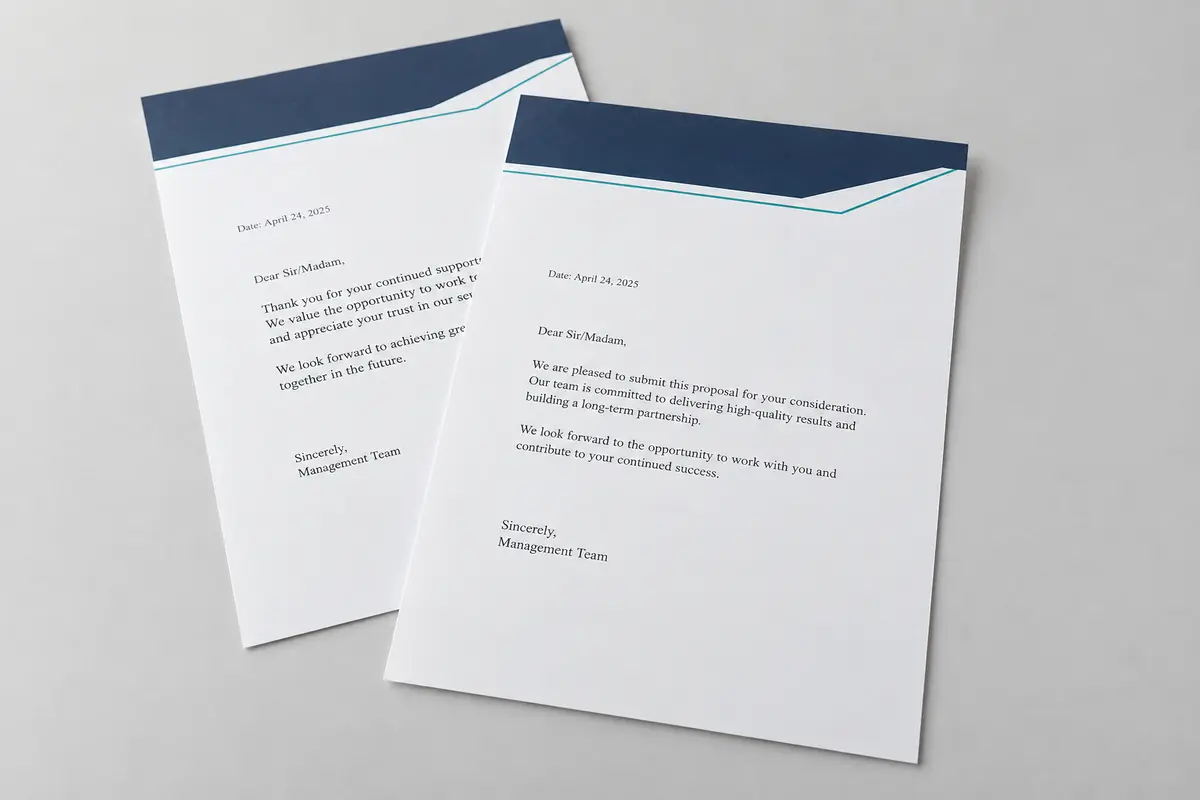
Letterhead designs should keep the header and footer neat, leaving space in the middle for the letter content. If the company prints for many departments, it can keep one common background template and only change the contact line.
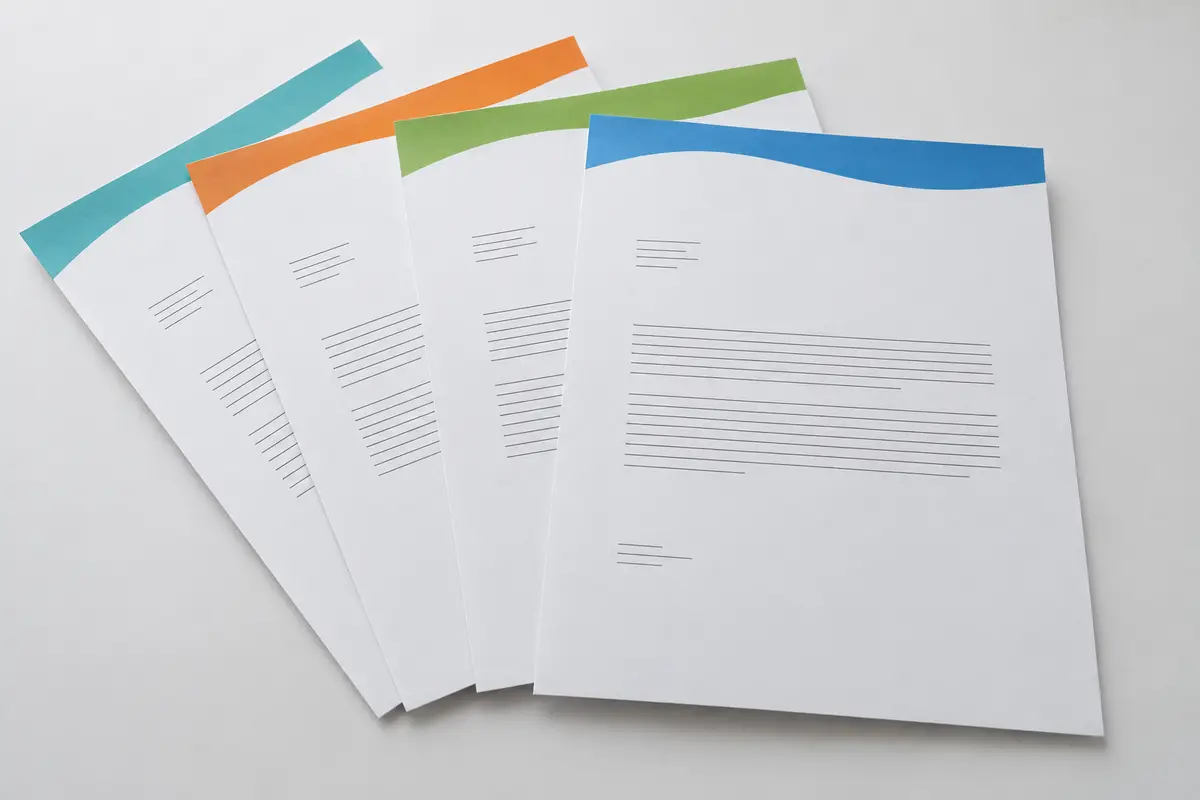
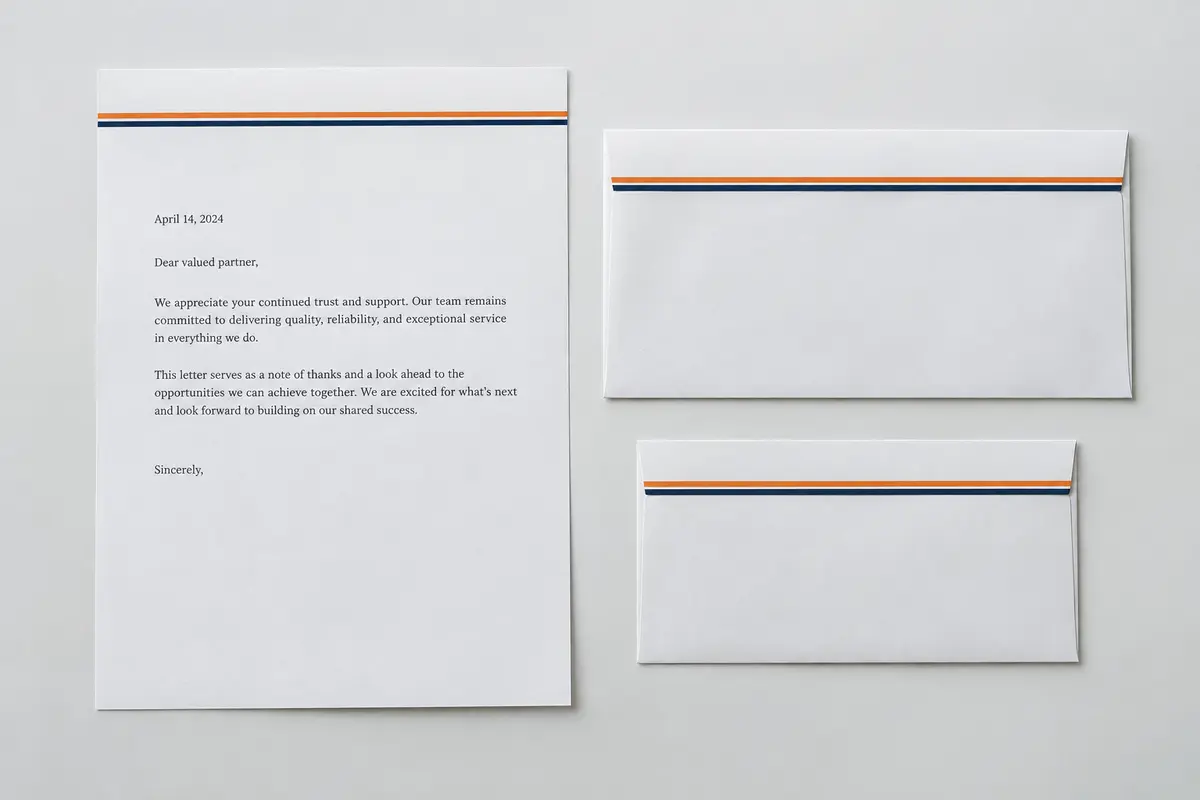
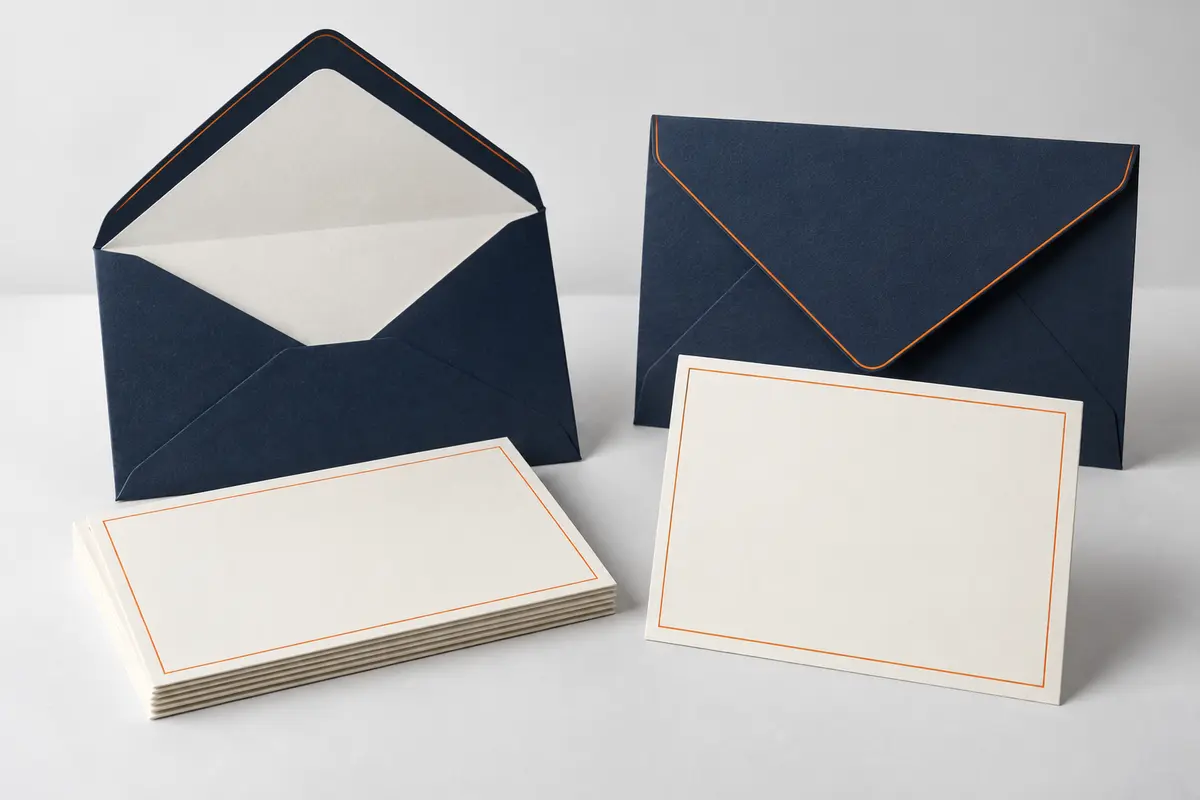
Accompanying envelopes are usually printed in the same run so the colours match the letterhead. Fort paper envelopes can also be written on by hand, handy when the recipient's name needs to be written directly.
Invitations, wedding cards and thank-you cards
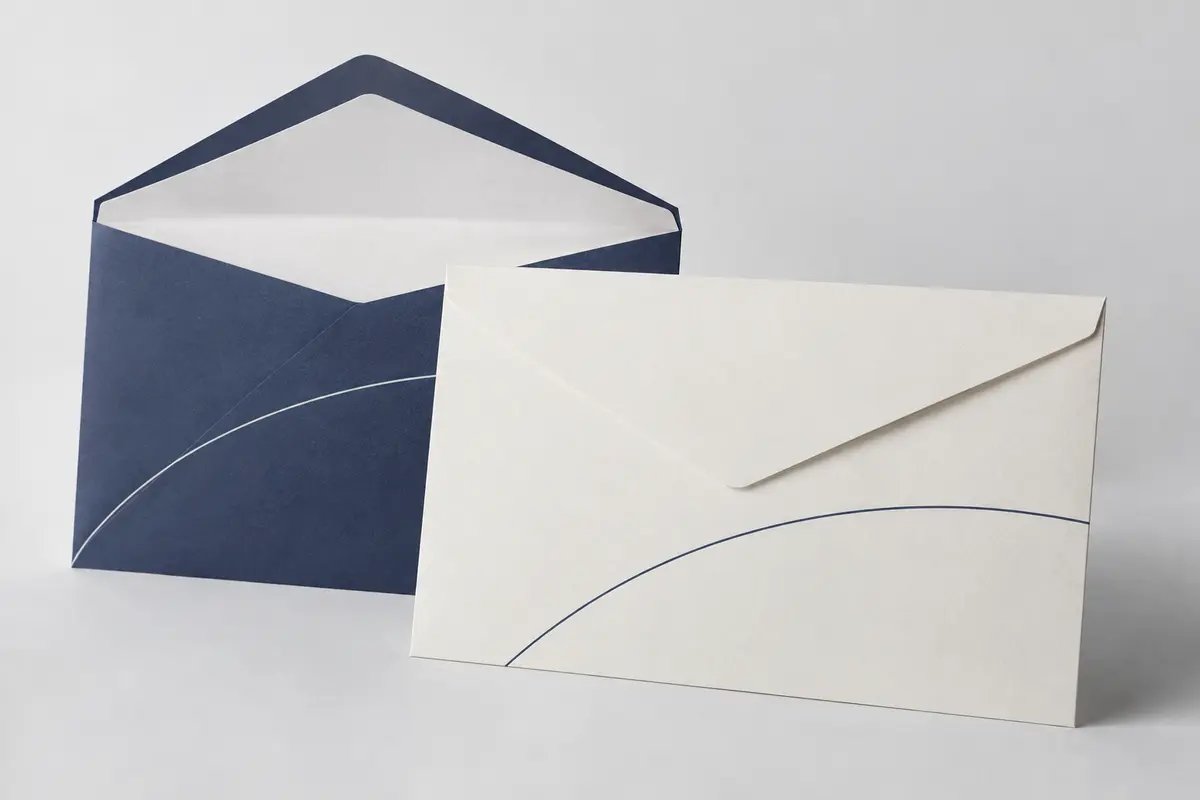
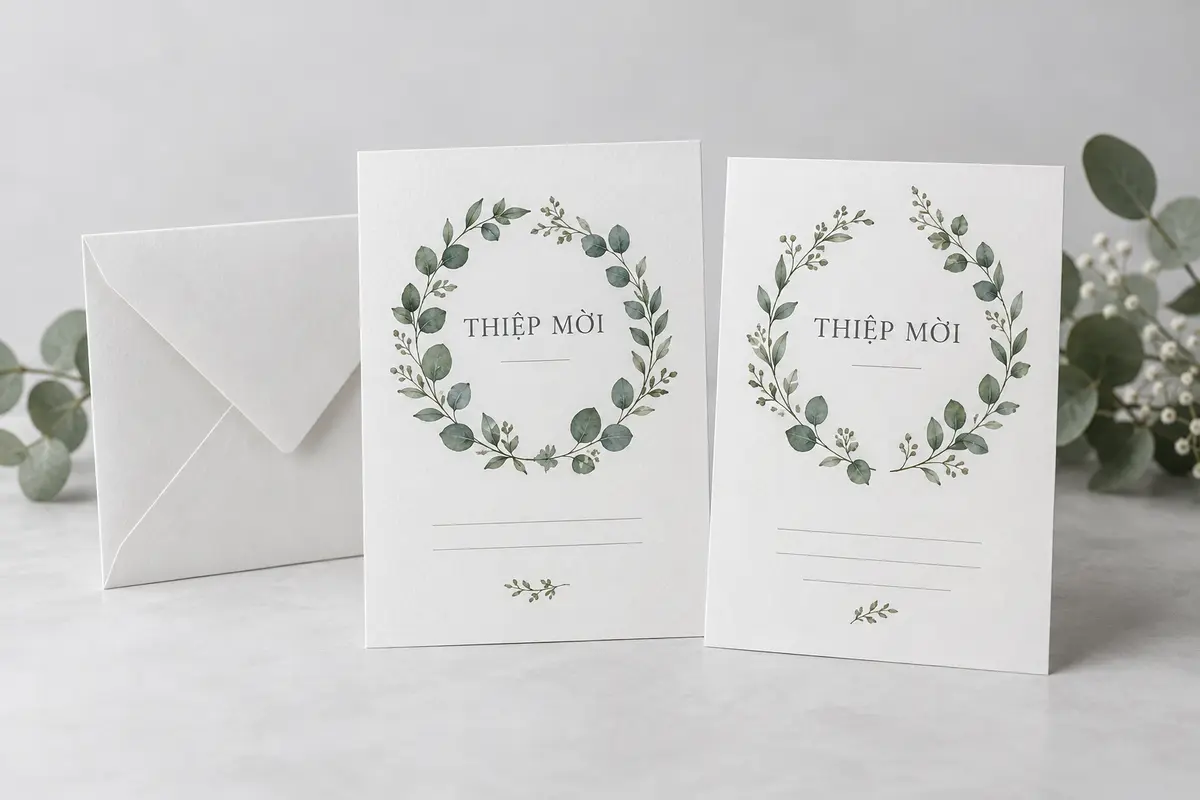
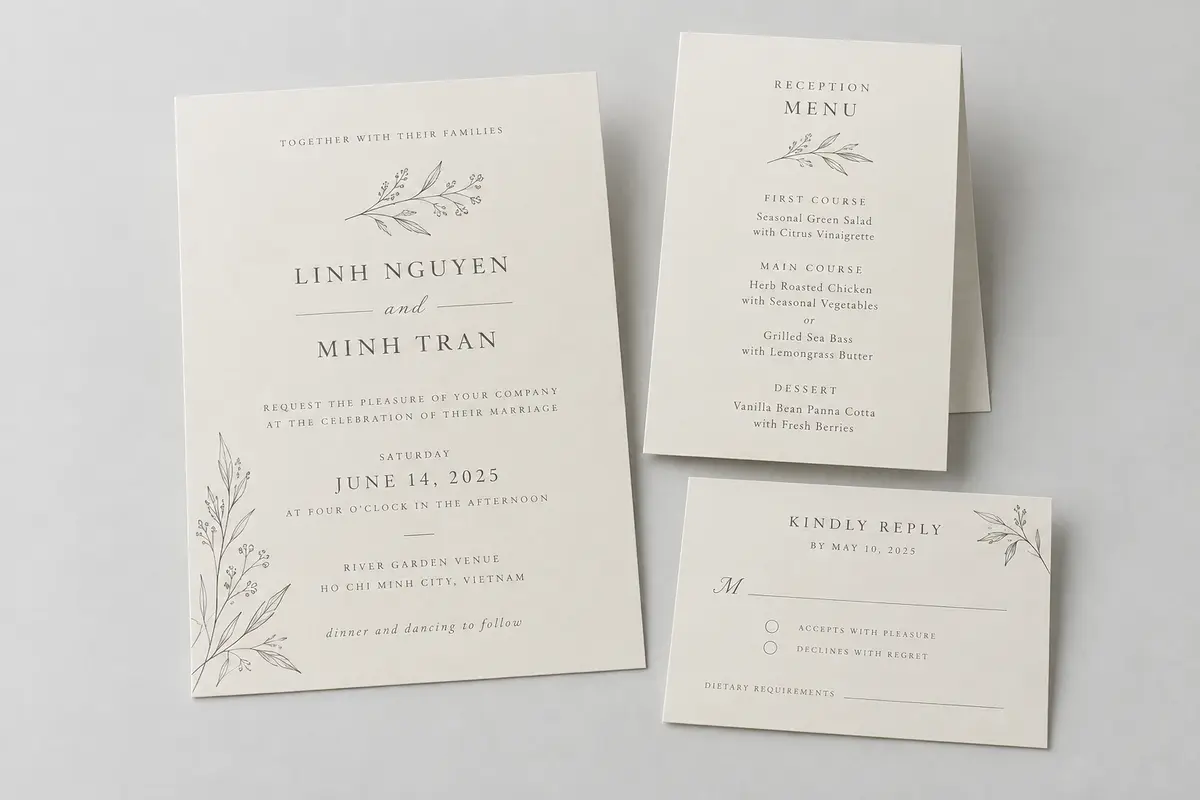
Cards are the group that uses cream Fort the most. The matte surface feels solid in the hand and is not glossy like Couche cards — suited to occasions that call for formality and warmth rather than brightness.
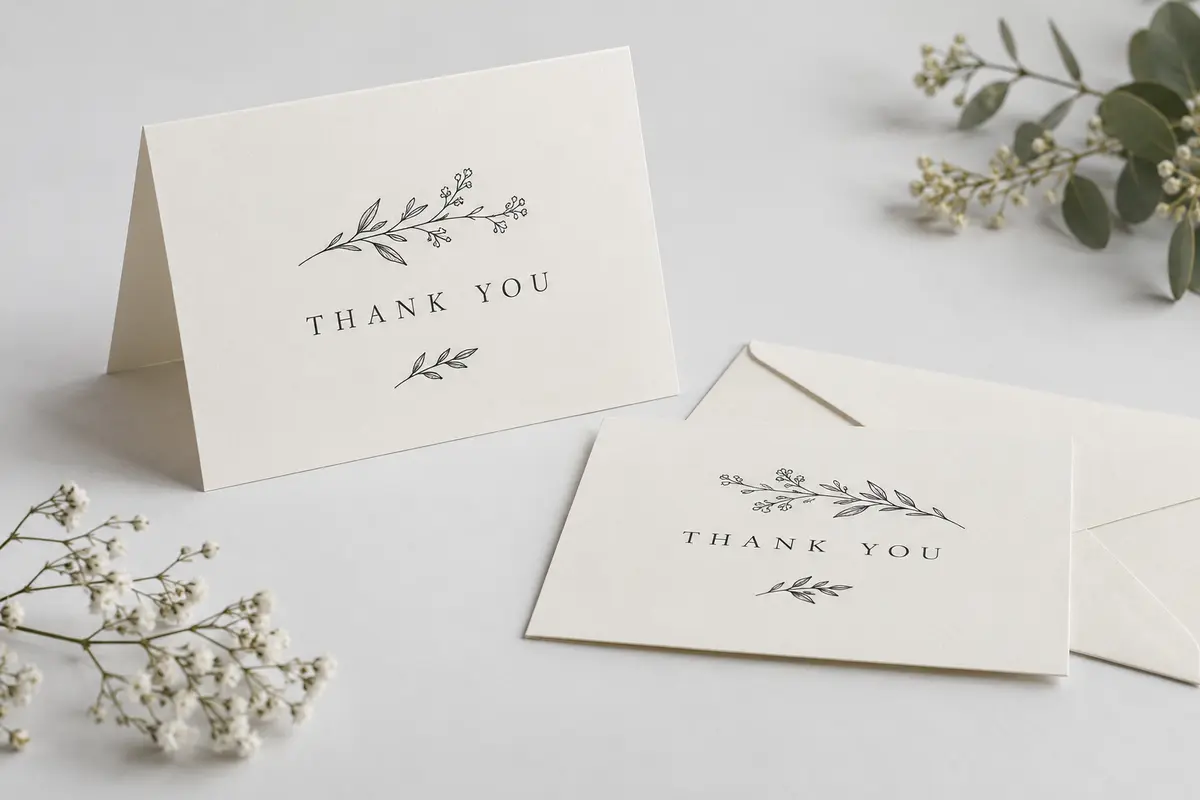
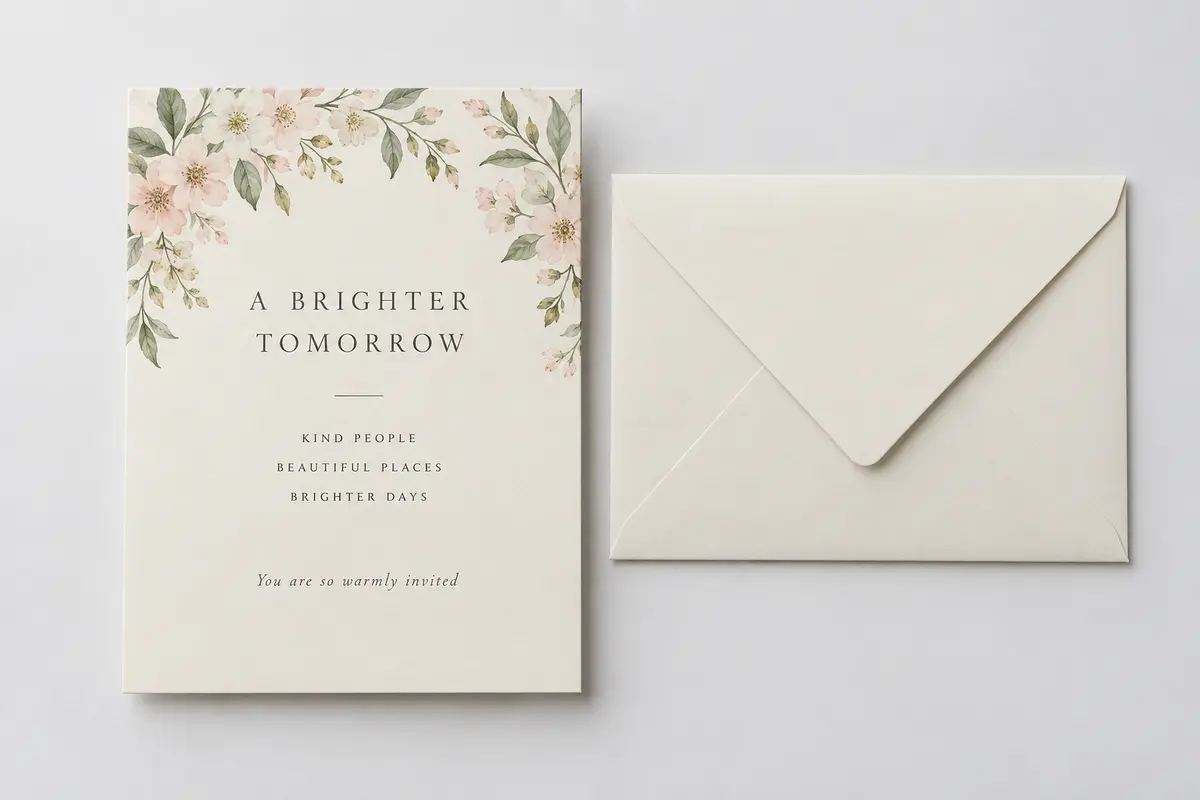
For wedding cards, 230–300gsm white Fort gives a card that holds its shape and on which guest names can be handwritten. Party menus printed on Fort are also easy to read under the warm yellow lights of a restaurant.
Fort paper business cards
Fort business cards are less common than laminated C300 business cards, but they are the choice of industries that want a raw, natural feel: architecture, crafts, cafés, studios. The matte surface makes print colours a little more subdued than the on-screen design — something worth knowing before approving the proof.
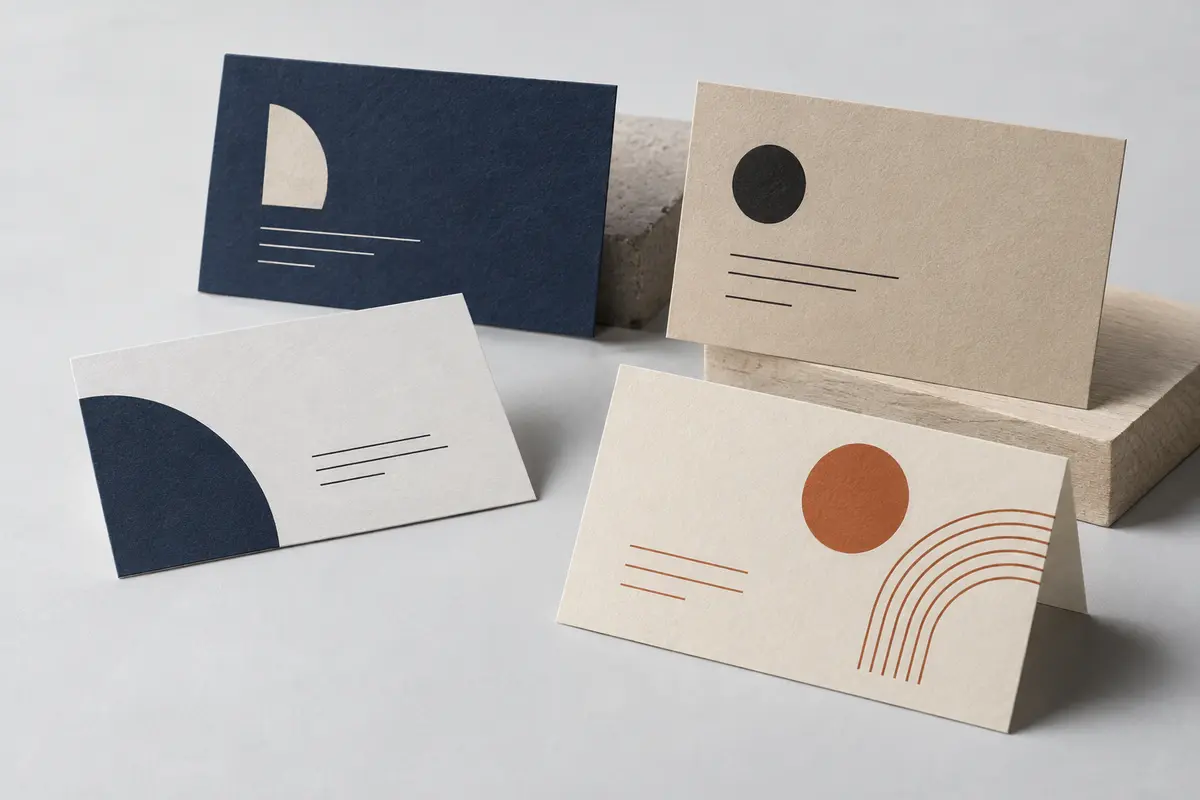
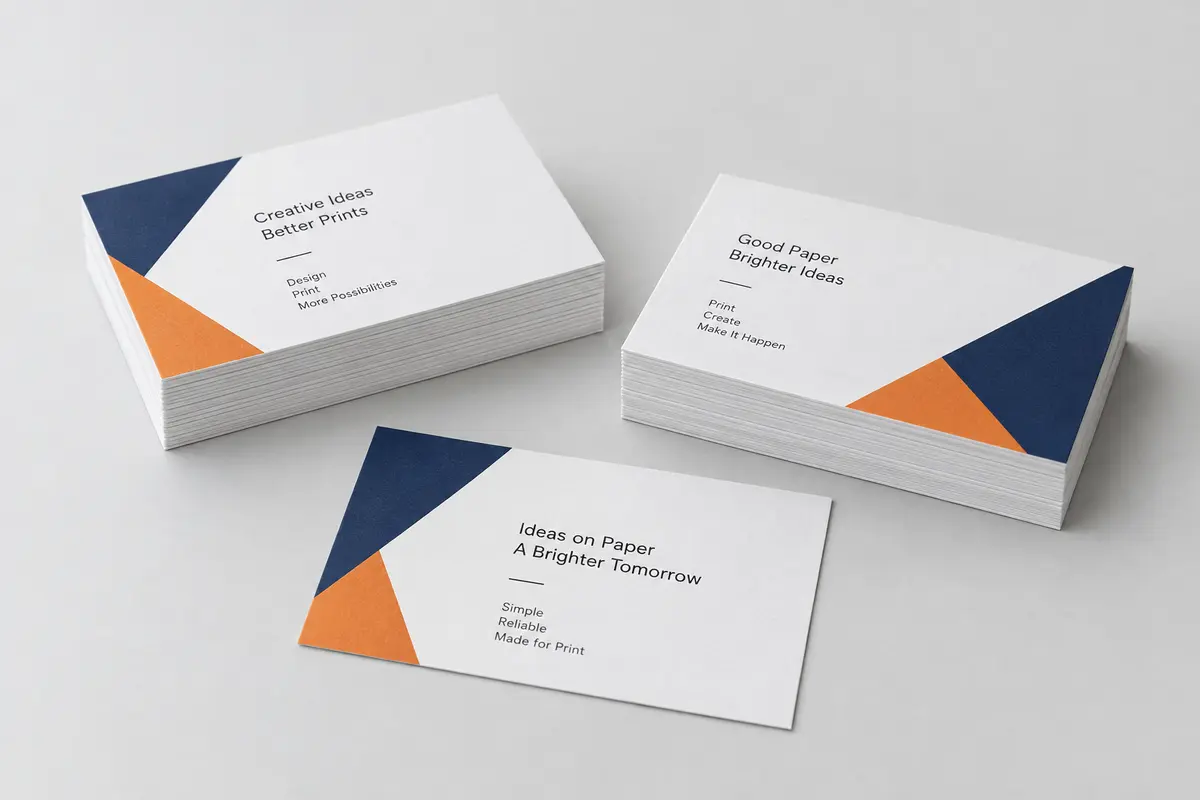
A special advantage: Fort business cards can be written on. In meetings with partners, the recipient can write directly on the card to remember the context of the meeting.
Books, documents and catalogues
Book pages are almost always Fort paper. The reason is simple: reading dozens of pages in a row on Couche causes glare and eye strain, while Fort does not reflect light.
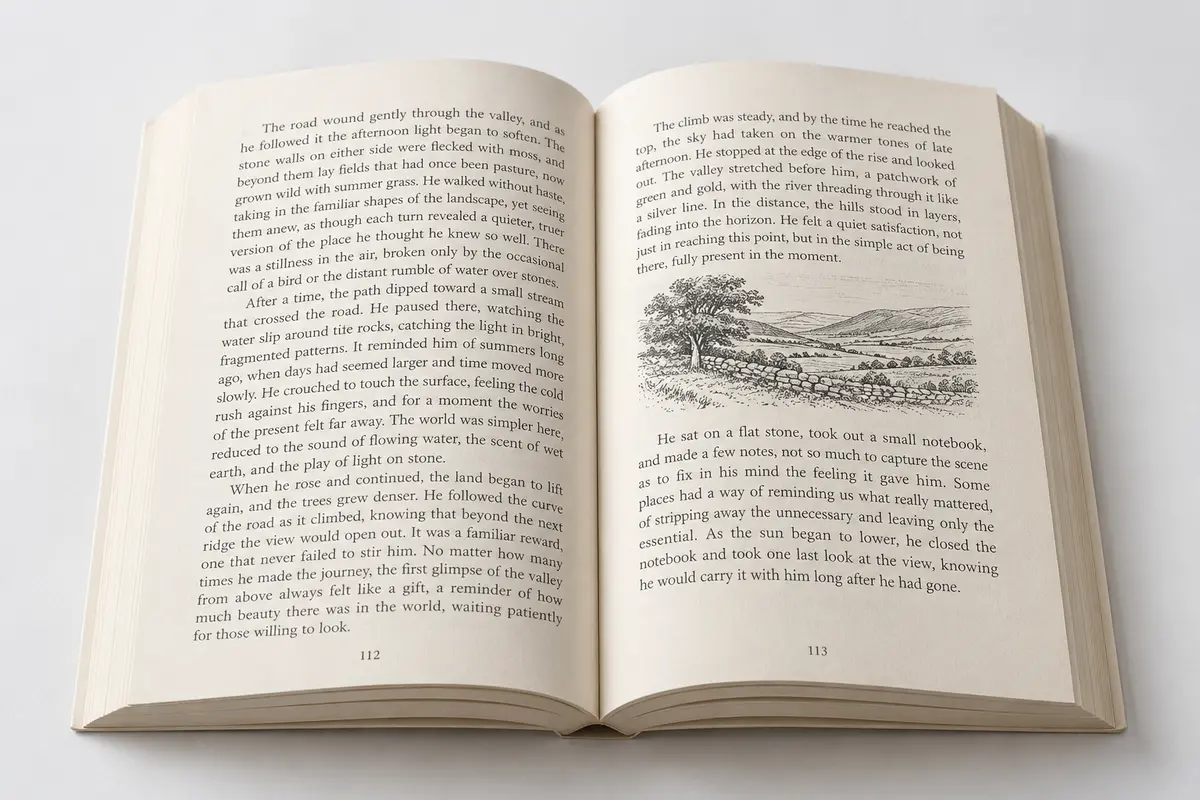
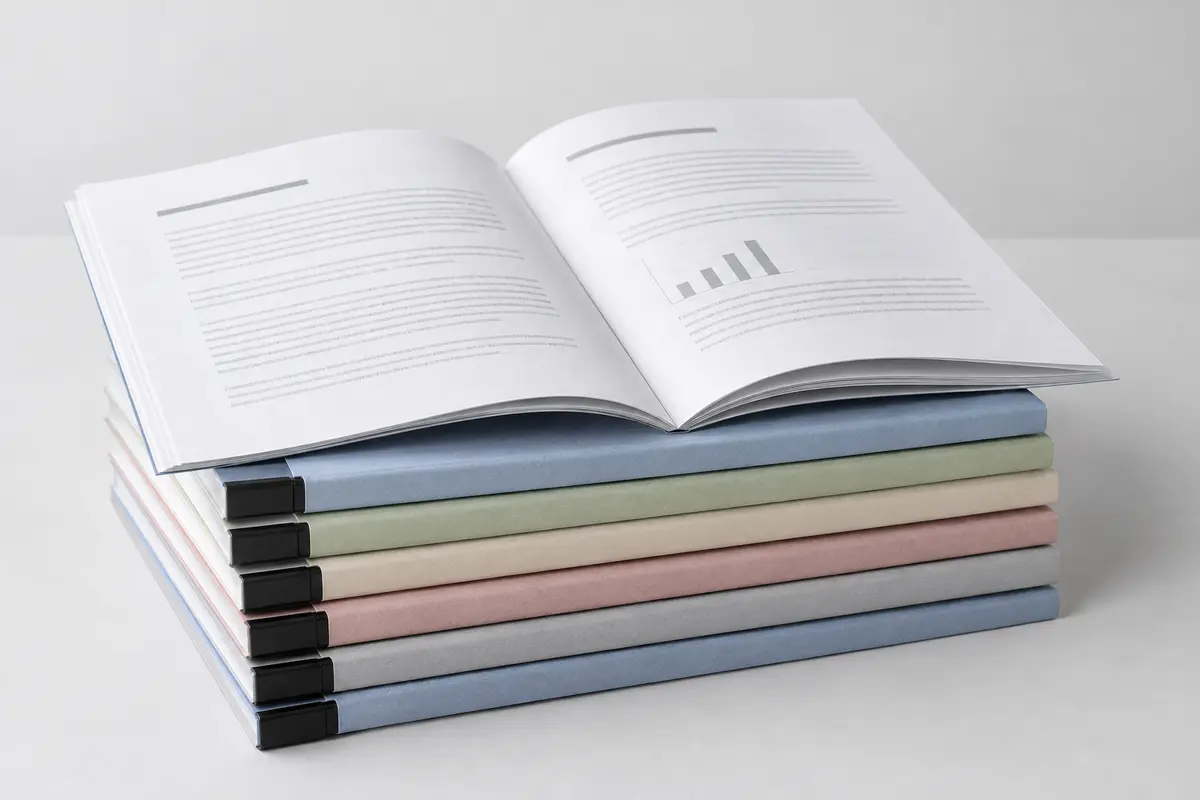
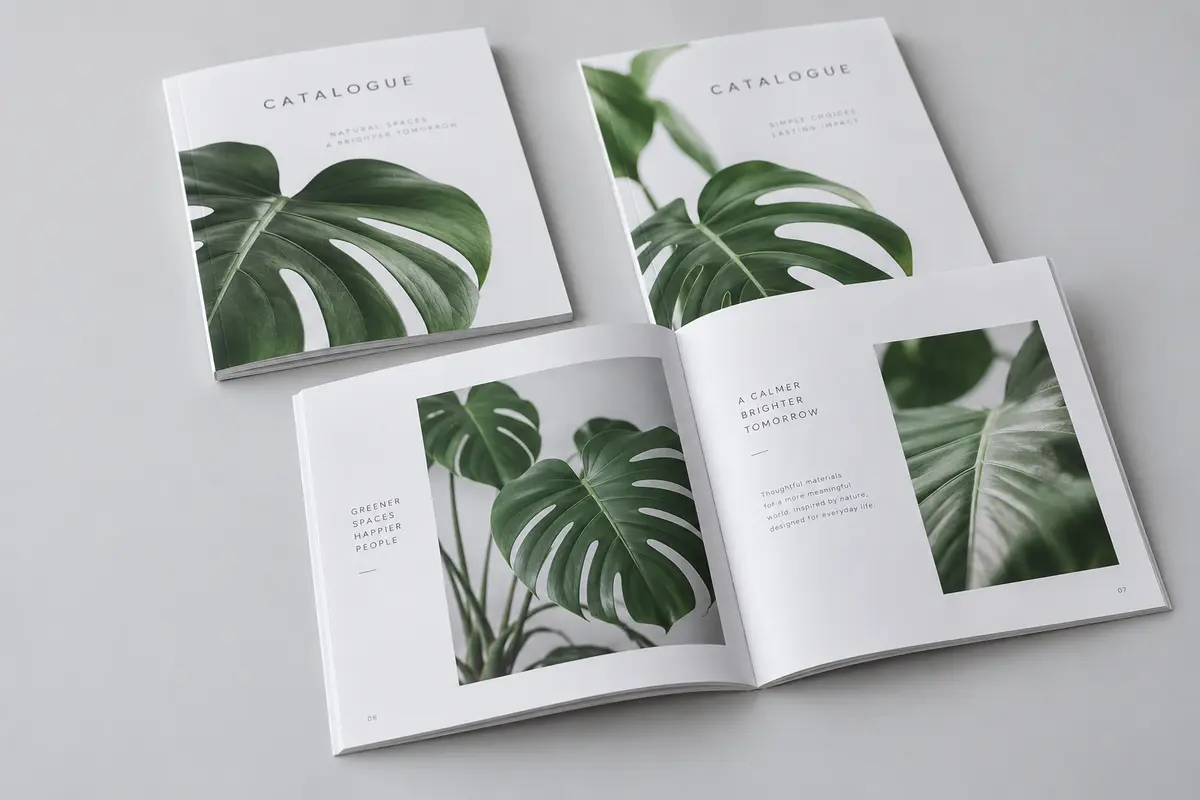
For catalogues, the common approach is Couche cover, Fort inner pages — the cover needs eye-catching images, the inner pages need to be comfortable to read. If the catalogue is focused on product images, use Couche throughout; if it has lots of text and specification tables, Fort inner pages are easier on the eye.
Other applications
Besides office and printed materials, Fort paper is also used for single-use items or things that need writing on: placemats printed with dishes, lucky money envelopes, writing paper, lucky draw tickets, survey forms.
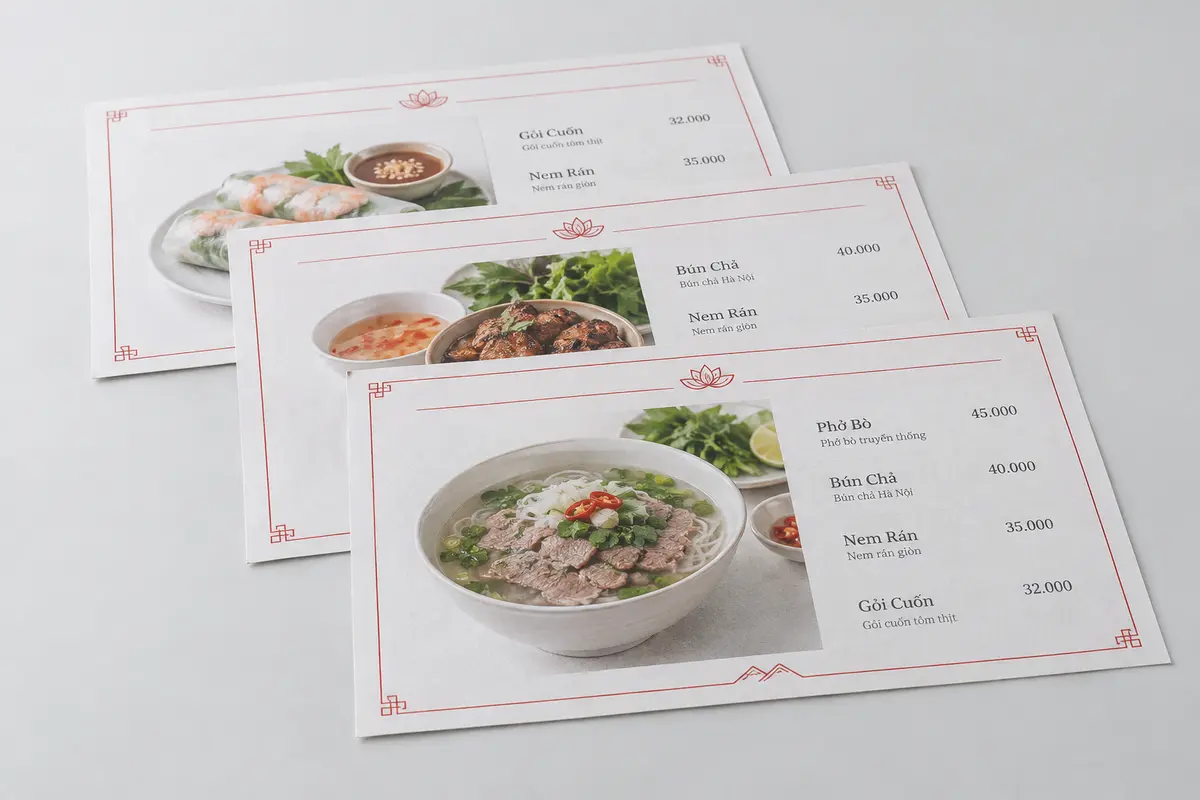
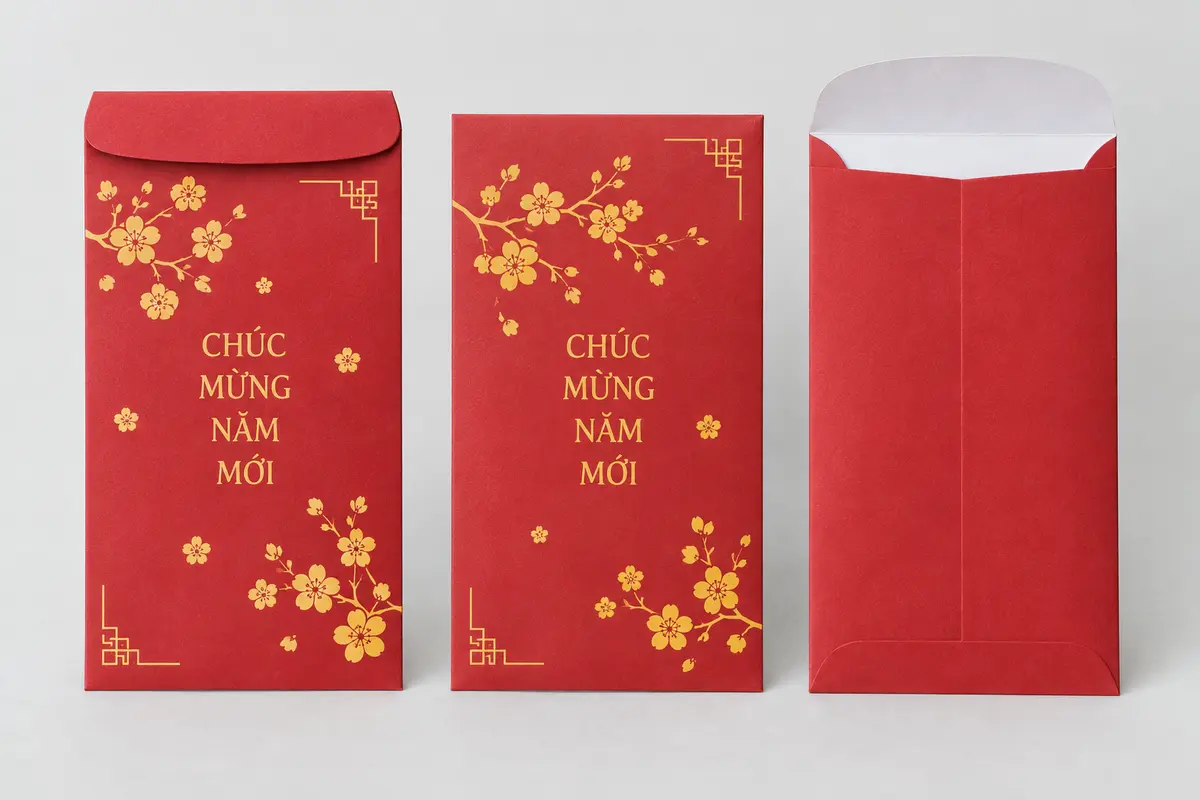
What this group has in common is large print runs at low cost. Fort paper is cheaper than Couche of the same weight and needs no lamination, saving one step.
Fort or Couche
An easy rule to remember: items to be looked at use Couche, items to be read and written on use Fort. Couche gives vivid images but glares under lights and does not take pen ink; Fort can be read for a long time without eye strain, and ballpoint pens and stamps both take ink well.
Fort cannot be laminated like Couche, so if the item needs waterproofing or outdoor use, change the material. When printing both sides on 80gsm Fort with dark backgrounds, the back image may show through slightly — in that case go up to 100gsm or more.
At our workshop, Fort paper is used most for items that are both read and annotated: leaflets, document folders and certificates. For this group, the matte surface of Fort paper keeps text sharp, without glare under lights, and customers can write or stamp directly on the item.
Preparing files and ordering
Design files should be in CMYK, 300dpi, with a 2–3mm bleed. Because the ink soaks into the paper fibres, print colours on Fort will be about one tone darker than on screen — for designs with light colours, increase the density a little when preparing the file.
To see real paper samples before deciding on the weight, visit the workshop in person — holding an 80gsm and a 120gsm sheet side by side shows the difference immediately.
Order Fort paper printing at In Quảng Cáo Q7
Message on Zalo / call 0866.511.099 or email inquangcaoq7@gmail.com with the item type, size, weight and quantity — we will quote within 30 minutes during working hours. Our workshop at 49 Mai Van Vinh, Tan Hung Ward, Ho Chi Minh City has Fort paper samples in all weights for you to hold and try (view on Google Maps). Production & delivery: 8:00–12:00 & 13:00–18:00 Mon–Sat (closed Sunday) · Consultation & orders: 8:00–12:00 & 13:00–20:00 Mon–Sat; 14:00–19:00 Sunday.
Need printing or signage in Ho Chi Minh City?
In Quảng Cáo Q7 runs its own print workshop in Tân Hưng Ward (former District 7), Ho Chi Minh City, producing and installing signage, banners, window graphics, exhibition booths and event displays. Send us the size, material, quantity and a photo on WhatsApp and we will get back to you.

Phone: +84 866 511 099 · Also on WeChat
Workshop: 49 Mai Văn Vĩnh, Tân Hưng Ward, Ho Chi Minh City
Four Fort paper weights and suitable items
The weight is the gsm figure, telling you the mass of paper per square metre. The table below shows the four levels in stock at our workshop with the suitable items for each.
| Weight | Perceived thickness | Suitable items |
|---|---|---|
| 80gsm | Thin, light, like office printing paper | Multi-page documents, drafts, forms |
| 120gsm | One step thicker, stiffer | Official signed copies, cover letters, divider pages |
| 180gsm | Fairly stiff | Light covers, slips, simple information cards |
| 250gsm | Stiff, holds its shape | Document folder covers, report covers, cards that need to be thick |
- Multi-page document sets should use 80gsm so the set is not too thick or heavy.
- Official signed copies should use 120gsm for a more solid feel.
- Only go up to 180 – 250gsm for the cover, not for the whole document set.
A common mistake is using one weight for the whole set. The set becomes both thick and heavy without being easier to read. The common approach is to clearly separate the cover and the inner pages, using the thin type for the inner pages and the thick type for the cover.
When to choose Fort paper instead of coated paper
The biggest difference lies in the surface. This type has no coating, so it is slightly rough, absorbs pen ink quickly and does not smudge. The table below helps you decide.
| Demand for | Recommended | Reason |
|---|---|---|
| Multi-page documents for reading | Uncoated type | Little reflection, less eye strain when reading |
| Forms to be filled in with a pen | Uncoated type | Pen ink dries quickly, does not smudge |
| Contracts and signed copies | Uncoated type | Convenient for signing and stamping |
| Catalogues with product photos | Couche Paper | More vivid colours and sharper details |
| Menus and counter price lists | Couche Paper | The coated surface is easy to wipe and handles touching better |
| Document folders that need to look premium | Couche paper or Fine Art Paper | Feels more premium |
| Certificates and cards | Fine Art Paper | The paper texture replaces print effects |
From the table above you can draw a simple rule. Items for reading and writing should use the uncoated type; items for viewing and display should use the coated type.
Double-sided printing on Fort paper
A practical advantage is that both sides can be printed with little text from the back showing through to the front, thanks to the uncoated surface and the opacity of the paper. The table below gives reference levels.
| Weight | Double-sided | Show-through level |
|---|---|---|
| 80gsm | Yes | Slight show-through if the page has large black areas |
| 120gsm | Yes | Almost no show-through |
| 180gsm | Yes | No show-through |
| 250gsm | Yes | No show-through |
- Text-only documents printed double-sided on 80gsm are good enough and the most economical.
- Pages with large photos or deep black backgrounds should be printed single-sided, or moved up to 120gsm.
- Double-sided printing halves the number of sheets compared with printing two sheets single-sided.
Colour printing on this paper is from 8.000đ per A4 – A3 sheet, and black-and-white printing is from 2.000đ per sheet. Prices decrease by quantity tier, so combining documents from several departments into one order is usually cheaper than ordering separately.
Preparing files for printing on Fort paper
Because the surface is uncoated, the ink soaks into the paper, so colours are softer than on coated types. The table below lists the points to note.
| Task | Specification | Reason |
|---|---|---|
| Color mode | CMYK | RGB colours on screen are always brighter than the print |
| Image resolution | 300dpi at the exact print size | Poor images will have rough edges |
| Text black | Single black K100 | Sharp text, no misregistration |
| Large background colour areas | Limit solid dark backgrounds | Ink soaks in a lot, colours easily drop |
| Bleed | 3mm on each side | No white border left after cutting |
| Safe zone | 3mm in from the edge | No text lost when cutting |
| Bound sets | Leave extra space at the spine | No text lost at the spine |
If the item has photos where colour matters, print a test sheet before running the whole batch, because the same file printed on two papers gives two different results. The sample should be printed on the exact paper and weight to be used.
Frequently asked questions about Fort paper
How many weights does Fort paper come in?
Our workshop has four levels: 80gsm for multi-page documents and forms, 120gsm for official signed copies, 180gsm for light covers and cards, and 250gsm for document folder covers. Print sizes are A4 and A3, single- or double-sided.
How much does printing on this paper cost?
Colour printing is from 8.000đ per A4 – A3 sheet, black-and-white printing is from 2.000đ per sheet. Prices decrease by quantity tier, so combining several jobs into one order saves more than ordering separately many times.
Can it be printed on both sides?
Yes, and this is a practical advantage of this paper. 80gsm double-sided is enough for text-only documents, with only slight show-through if the page has large black areas. From 120gsm up there is almost no show-through.
Which type should be chosen for forms filled in by hand?
Choose 80gsm or 120gsm, because the uncoated surface absorbs pen ink quickly without smudging. Couche paper has a coated surface, so pen ink dries slowly, which is inconvenient for forms.
Why are print colours softer than on Couche paper?
Because the surface has no coating, the ink soaks into the paper instead of sitting on the surface. The result is softer colours and slightly less sharp small details. Items that emphasise product photos should use Couche paper.
Finishing and storing printed items
This paper needs less protective coating than coated types, because the surface does not show fingerprints clearly. Still, some items should have extra finishing. The table below lists the options.
| Item | Recommended finish | Reason |
|---|---|---|
| Multi-page document sets | Binding or stapling | Keeps the pages together as a set |
| 250gsm document folder covers | Matte lamination | Prevents finger marks from frequent flipping |
| Loose cards and slips | Trimming | Trimmed to size, clean edges |
| Forms used at the counter for a long time | Plastic laminating | Can be wiped with a damp cloth |
| Long-term archived documents | Hard cover clip | Avoids folded edges in storage |
| Divider pages in a set | Use 180gsm, no finishing needed | Already stiff enough to distinguish |
- Binding comes in 6 styles, from 2.000đ per copy; saddle stitching suits sets under 40 pages.
- Lamination from 300đ per sheet, plastic lamination from 3.000đ per sheet.
- Trimming is charged per package, from 15.000đ and free for orders from 20 sheets.
For storage, uncoated paper absorbs moisture faster, so it ripples easily in damp places. Store documents in labelled boxes, raised off the floor and away from direct sunlight. Documents archived for many years should be clipped in hard covers so the edges do not curl.
Order printing at In Quảng Cáo Q7
Our workshop is at 49 Mai Van Vinh, Tan Hung Ward, Ho Chi Minh City, with real paper samples in all four weights for you to hold and compare before deciding. Printing and finishing are done in the same place.
- Send a CMYK PDF file via Zalo with the quantity, print size, number of printed sides and desired weight.
- Receive the quote and timeline, and approve a sample sheet if colour matters for the item.
- Confirm so we run the whole batch and then finish it as requested.
- Pick up at the workshop or choose ride-hailing delivery within the inner city.
- Send the company name, tax code, address and email if you need invoices.
If you are not sure which weight to choose, tell us how the item will be used and whether it needs to be annotated with a pen. We will suggest a suitable level along with the corresponding finishing step.