




































































Picture Frames: many styles, colors and frame codes to order
Sep
Custom Picture Frames: Styles, Colours and Frame Codes
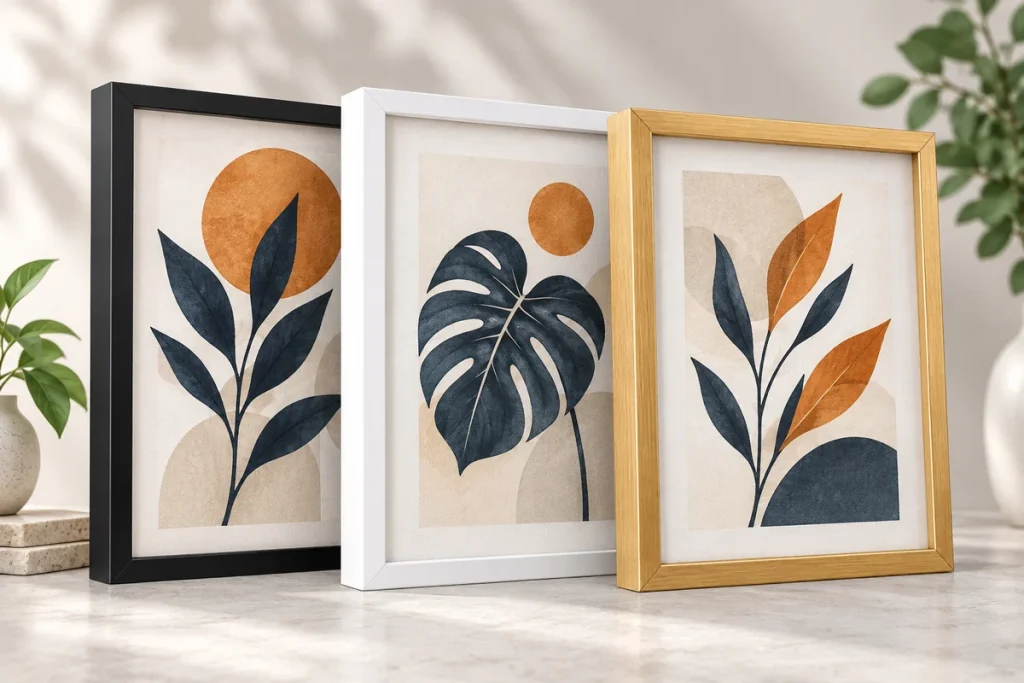
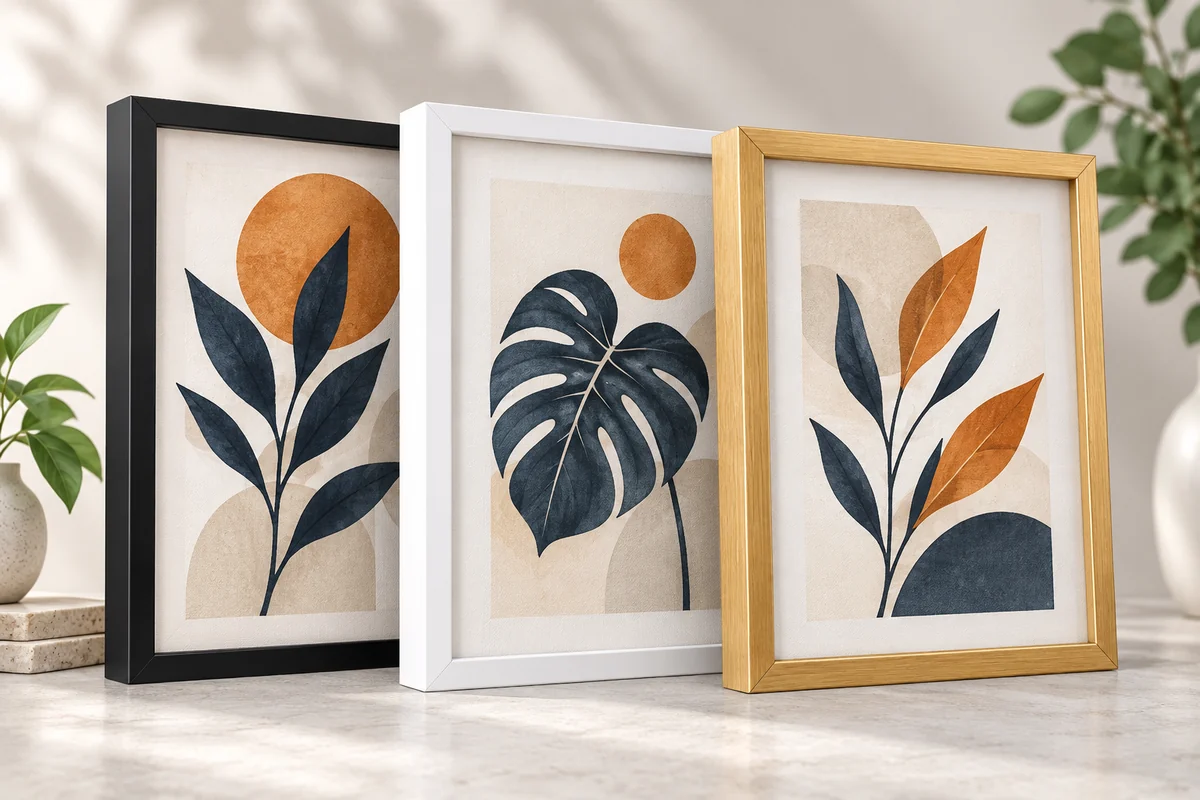
Picture frame decide whether a picture looks modern, cosy or formal once it is on the wall. With the same print, switching a slim moulding for a wide one, or black for wood grain, changes the feel of the whole wall. This article sums up the frame styles we have — frameless wrap, aluminium frames, wood grain, box frames, floating frames, classic — with a code table and profile specifications for 36 frame codes. Some illustrative photos are used in this article.
How to read the specifications of a frame code
Each frame code in this article lists two numbers measured on the moulding profile:
- Face width — the width of the moulding visible from the front, measured from the edge of the picture to the outer edge. The wider the face, the more the frame stands out against the picture.
- Thickness — the height of the frame side seen from the side, i.e. how far the frame projects from the wall. The taller the side, the more depth the picture has when viewed at an angle.
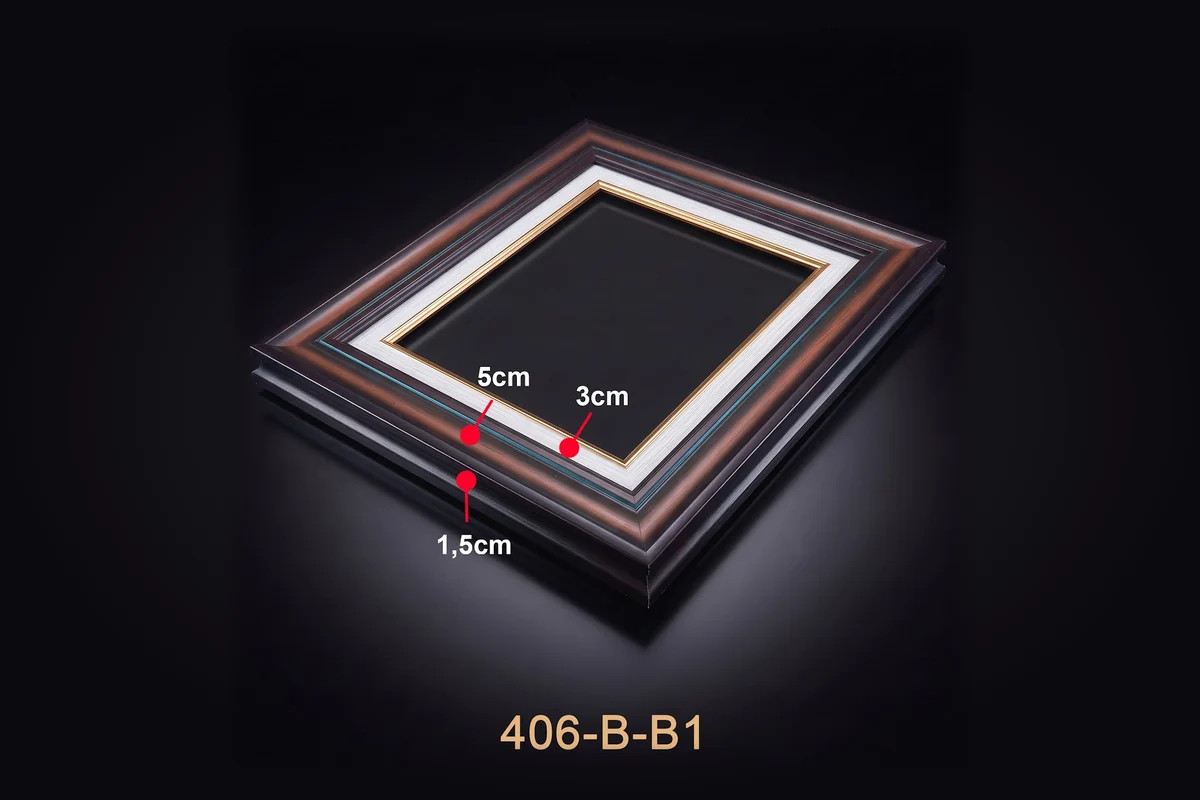
- Inner liner — some classic codes have an extra 3 cm white liner between the picture and the moulding, giving the picture breathing space.
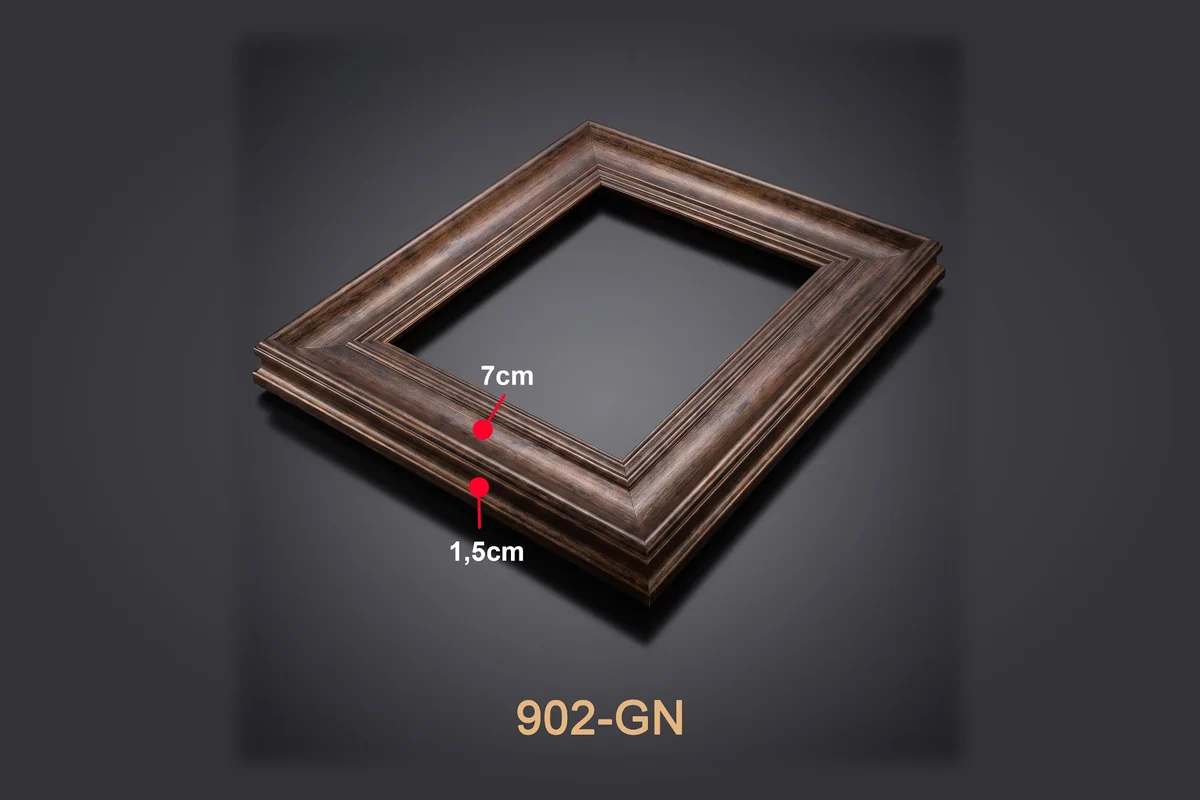
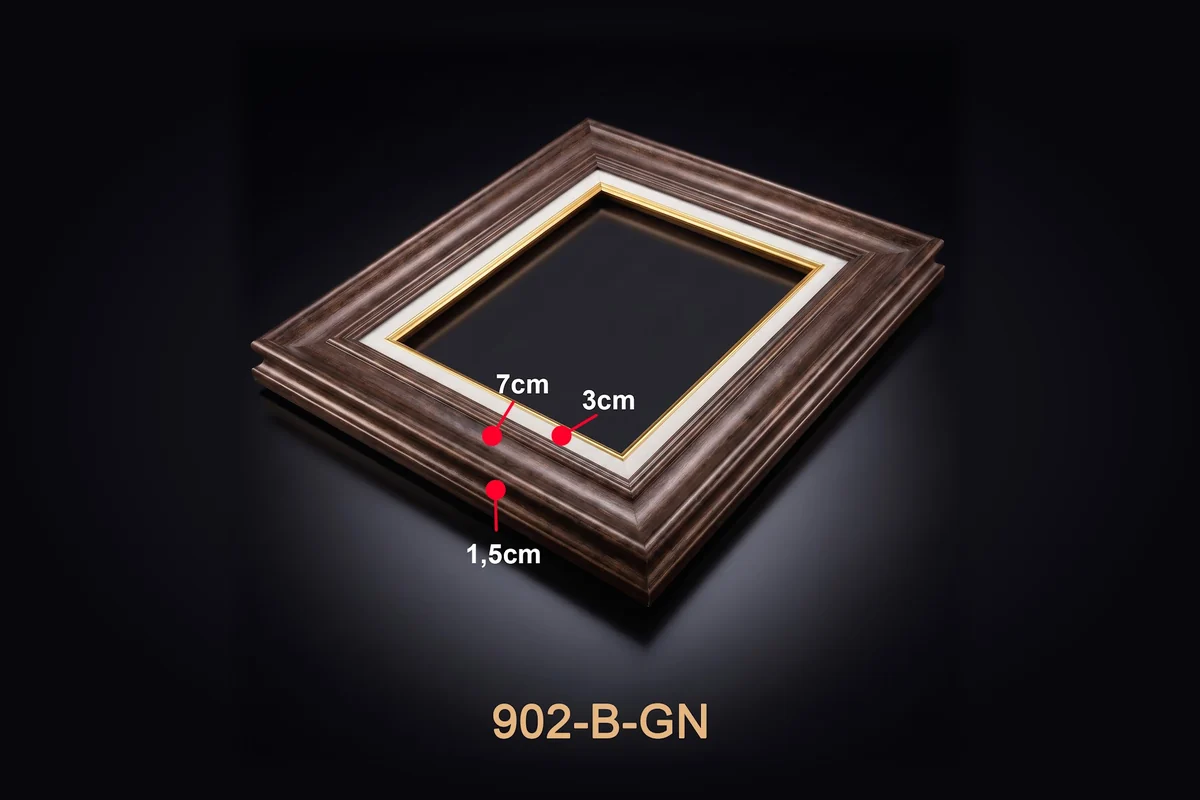
For example, code 105-BL has a 0.5 cm face and 3 cm depth: from the front you only see a very thin border, and the tall side only shows at an angle. In contrast, code 902-GN has a 7 cm face and 1.5 cm depth: a wide moulding sitting close to the wall.
Frameless wrap picture frames
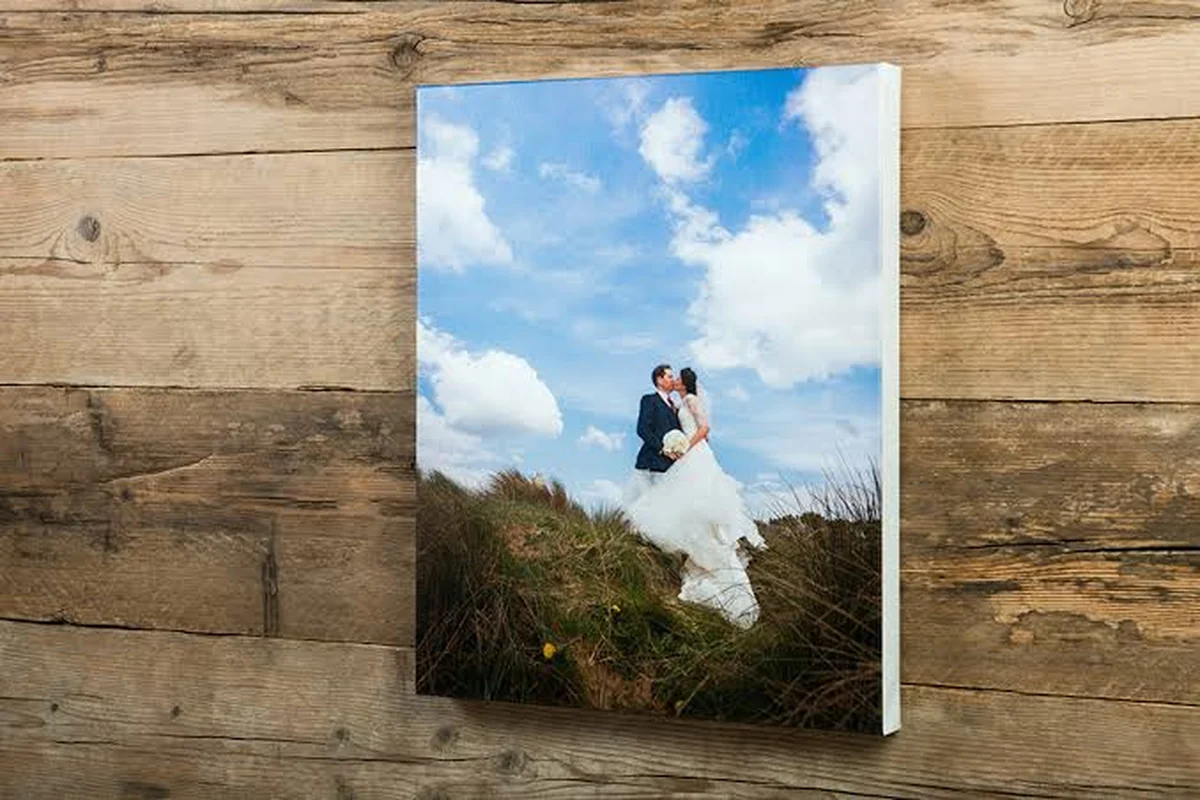
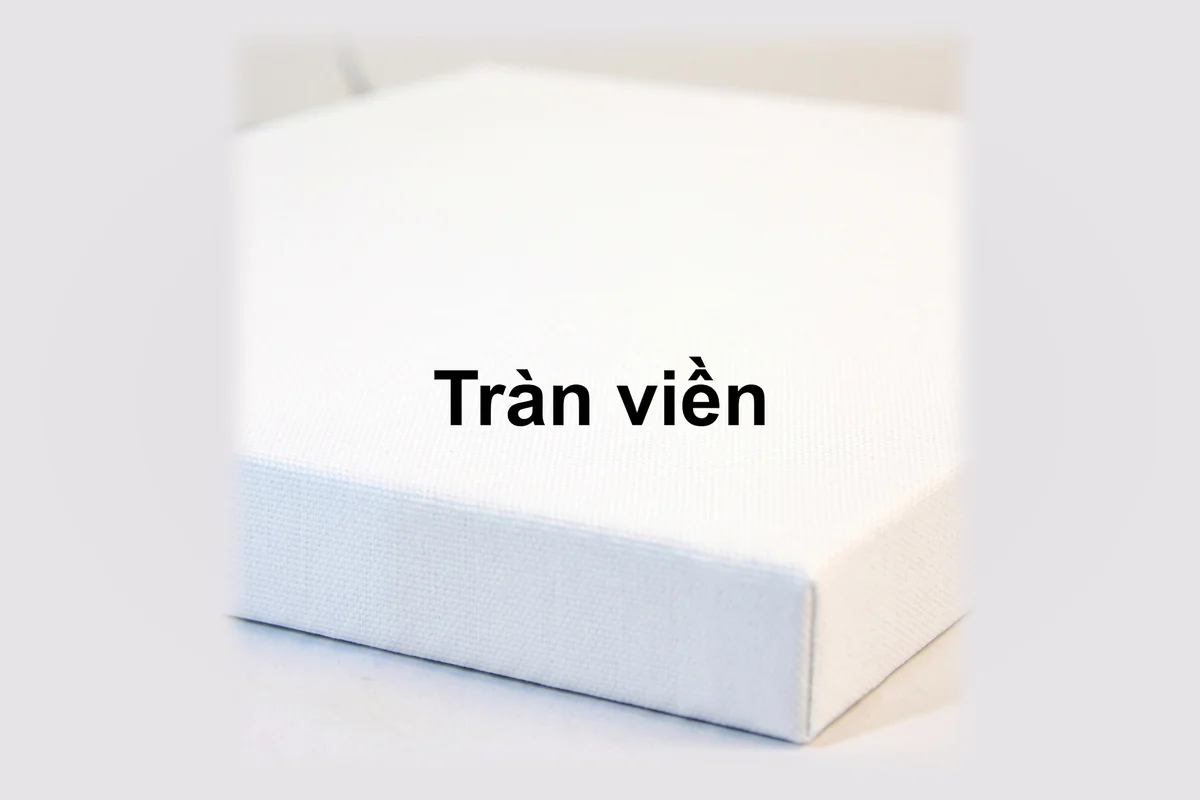
The picture is stretched or mounted on the frame, with the printed image wrapping around the edges, so no moulding is visible from the front. This style suits wedding photos, family photos and canvas — a textured fabric surface that looks like a painting. When ordering Canvas Prints, note that you want it stretched so the workshop makes the frame to the picture size.
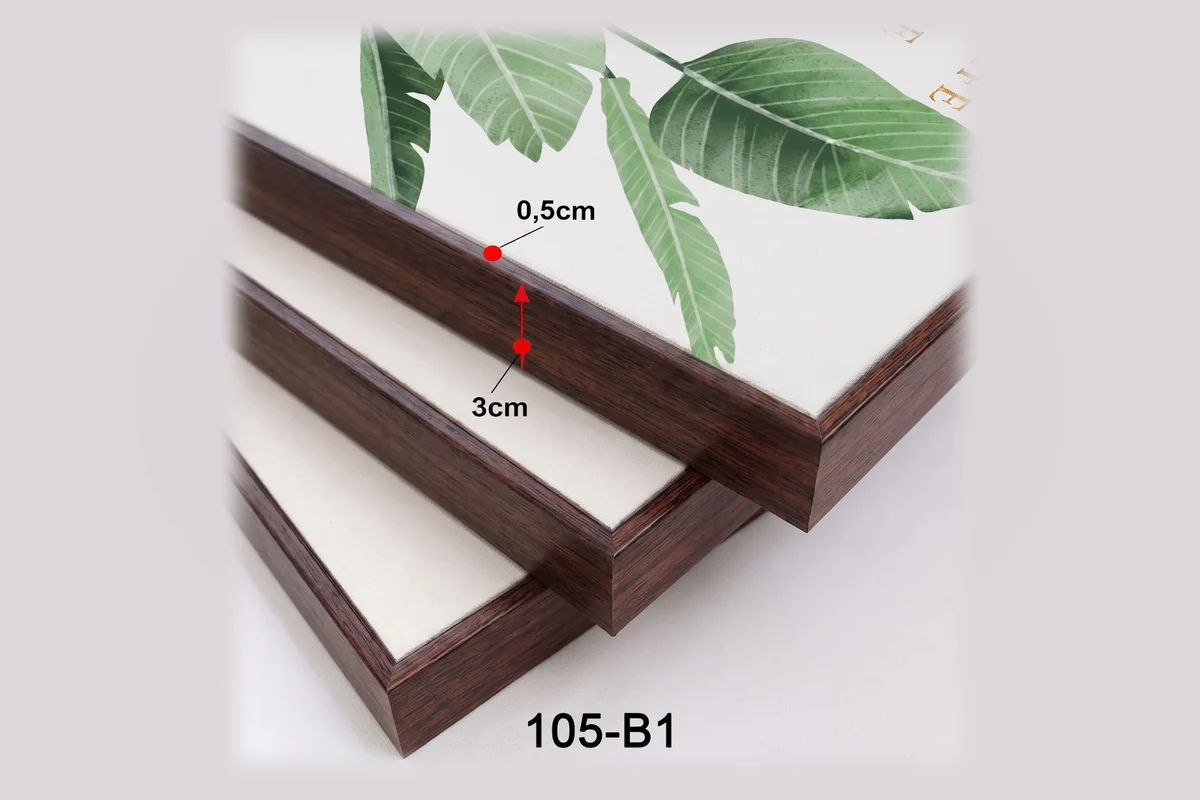
Series 105: 0.5 cm face, 3 cm deep
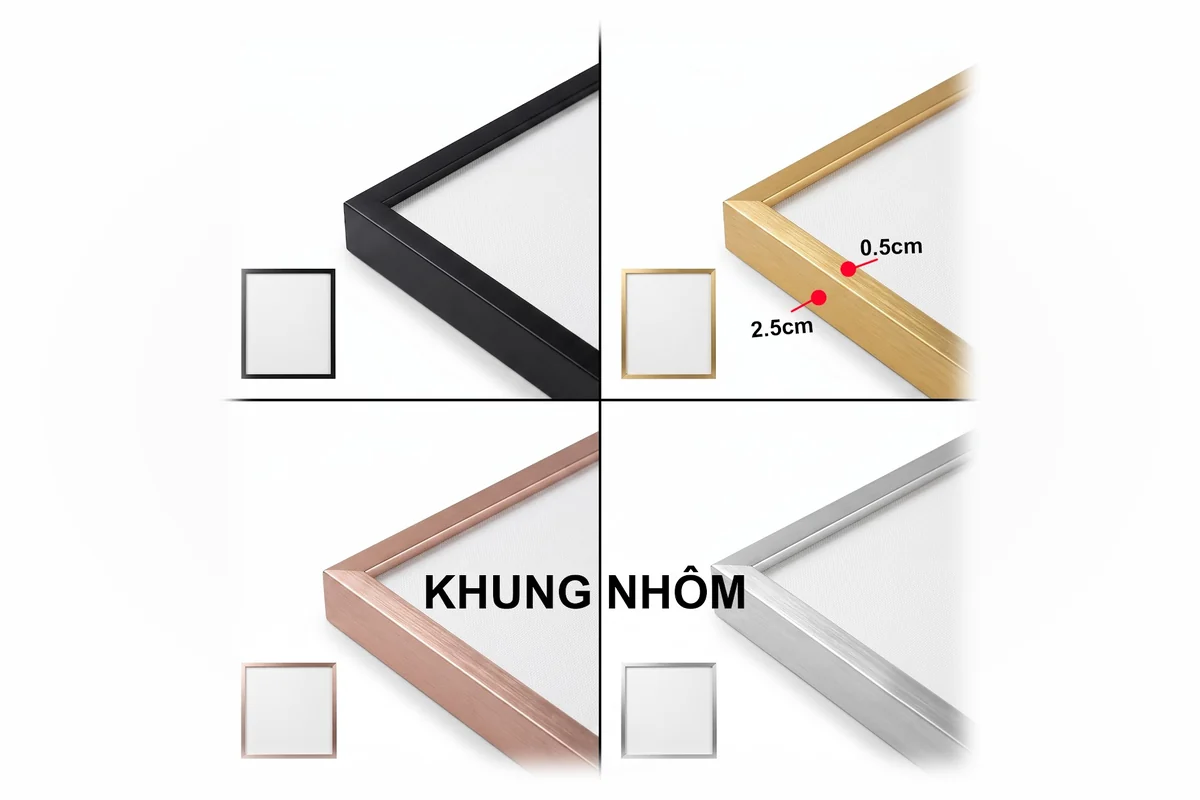
The slimmest moulding in the collection, in three aluminium colours (black, white, gold) and two wood grain colours (light, dark). The face is only 0.5 cm, so the frame almost disappears when viewed from the front, leaving all the attention on the picture — suits modern prints, posters and minimalist photos.
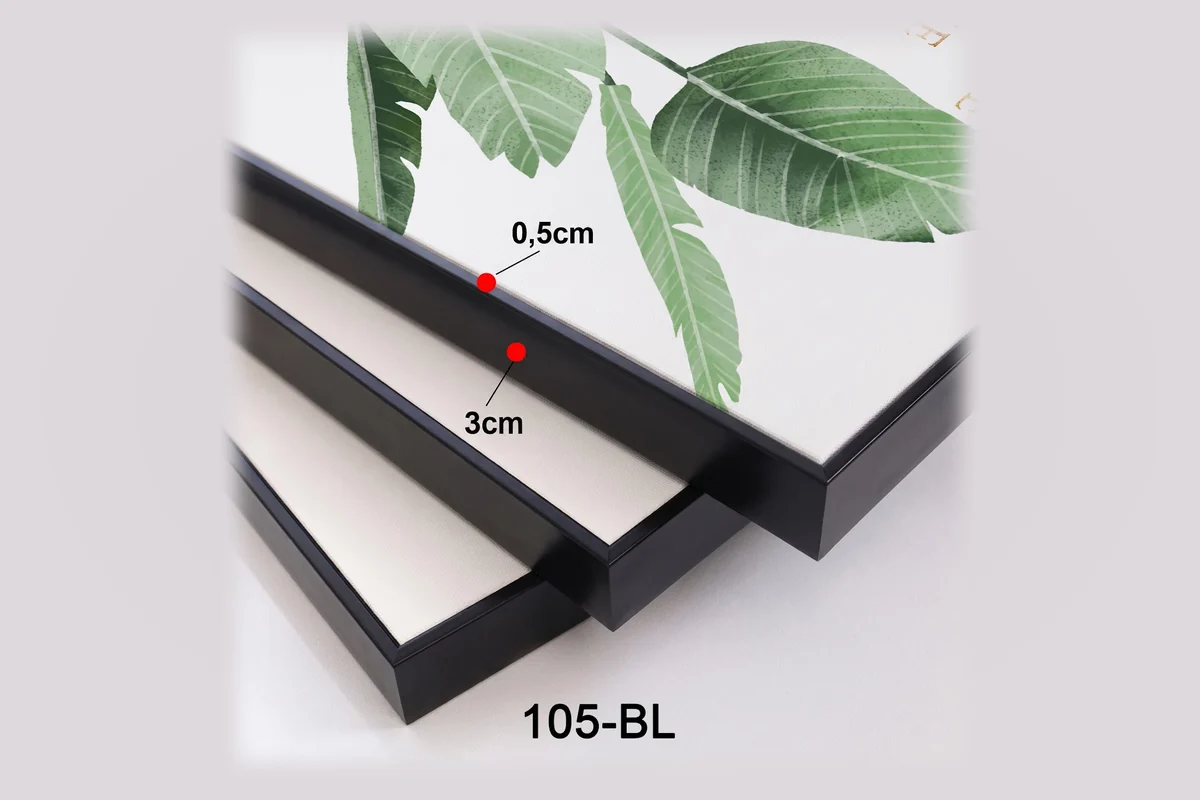
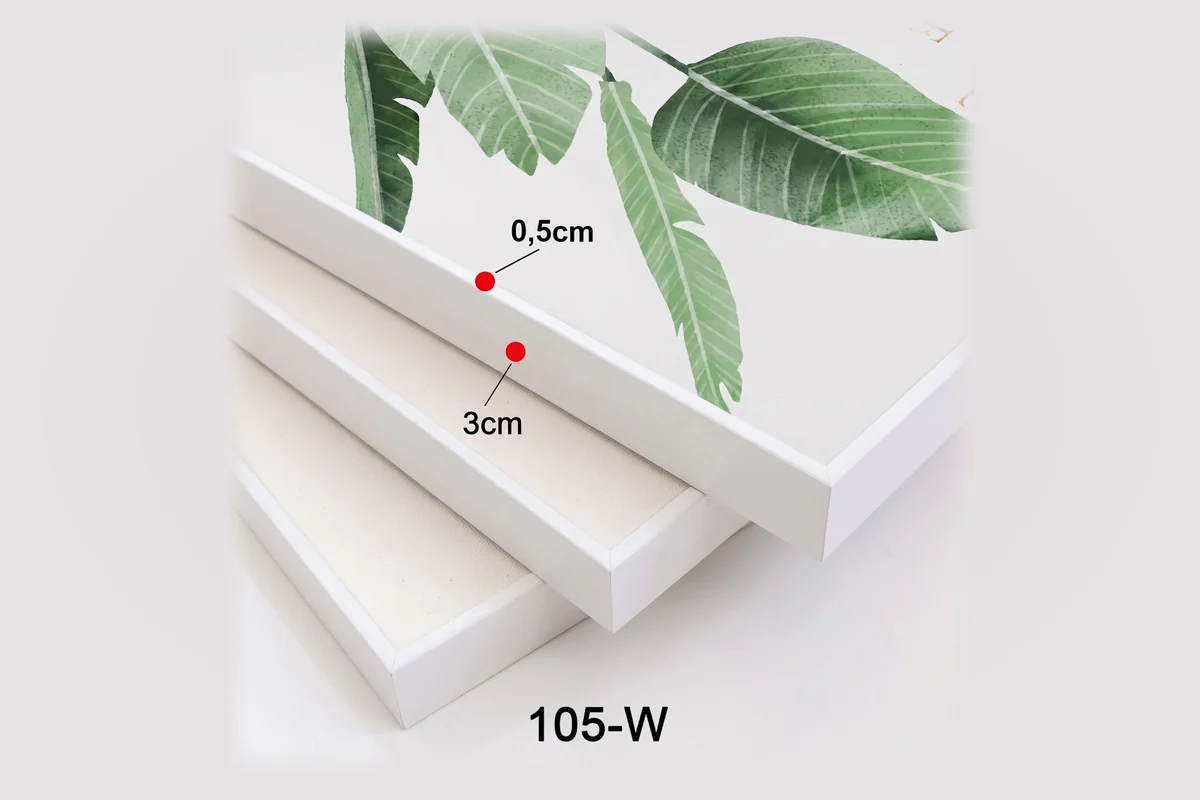
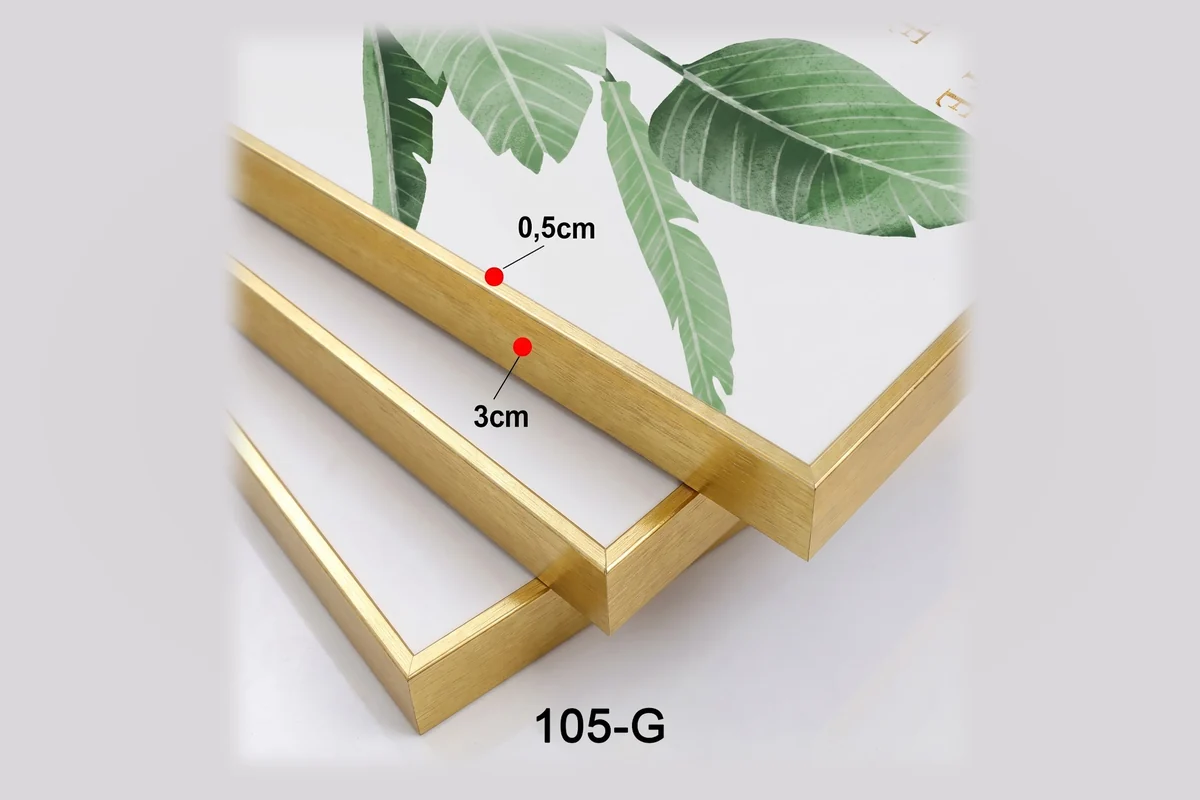
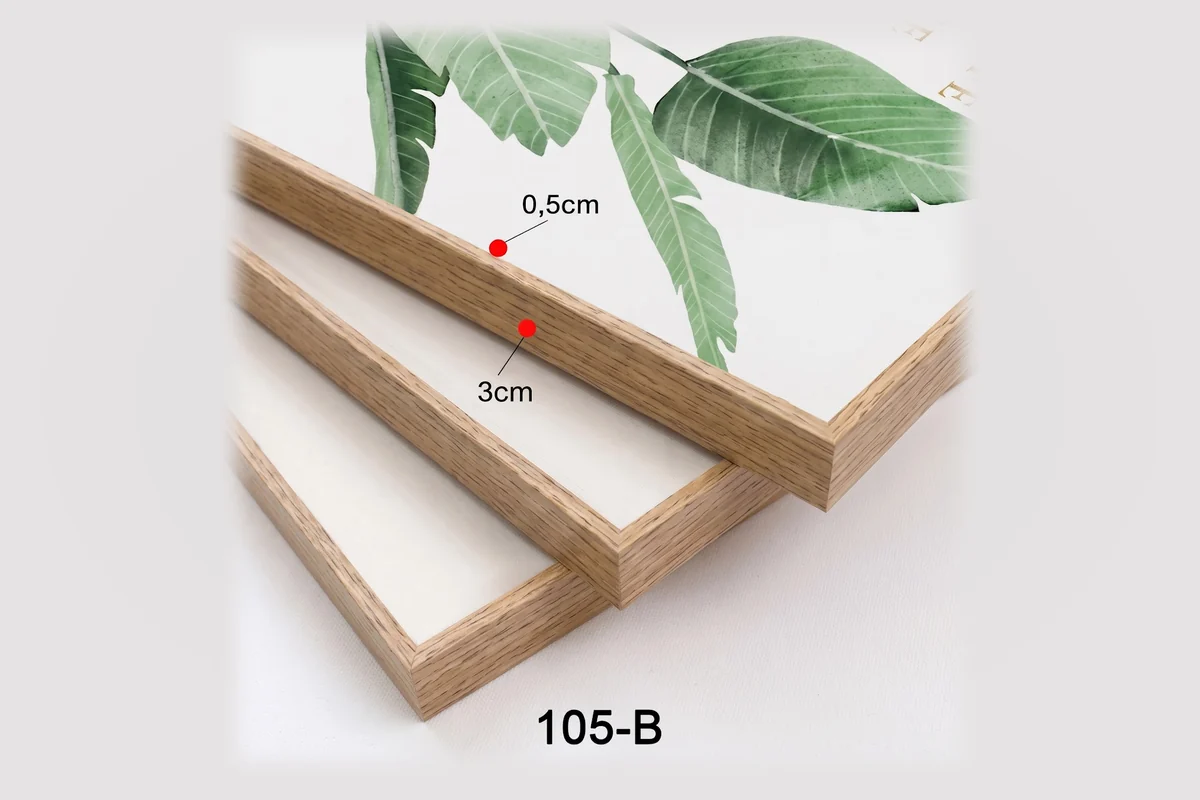
The aluminium frame colour range also includes pink and silver, in the same slim moulding.
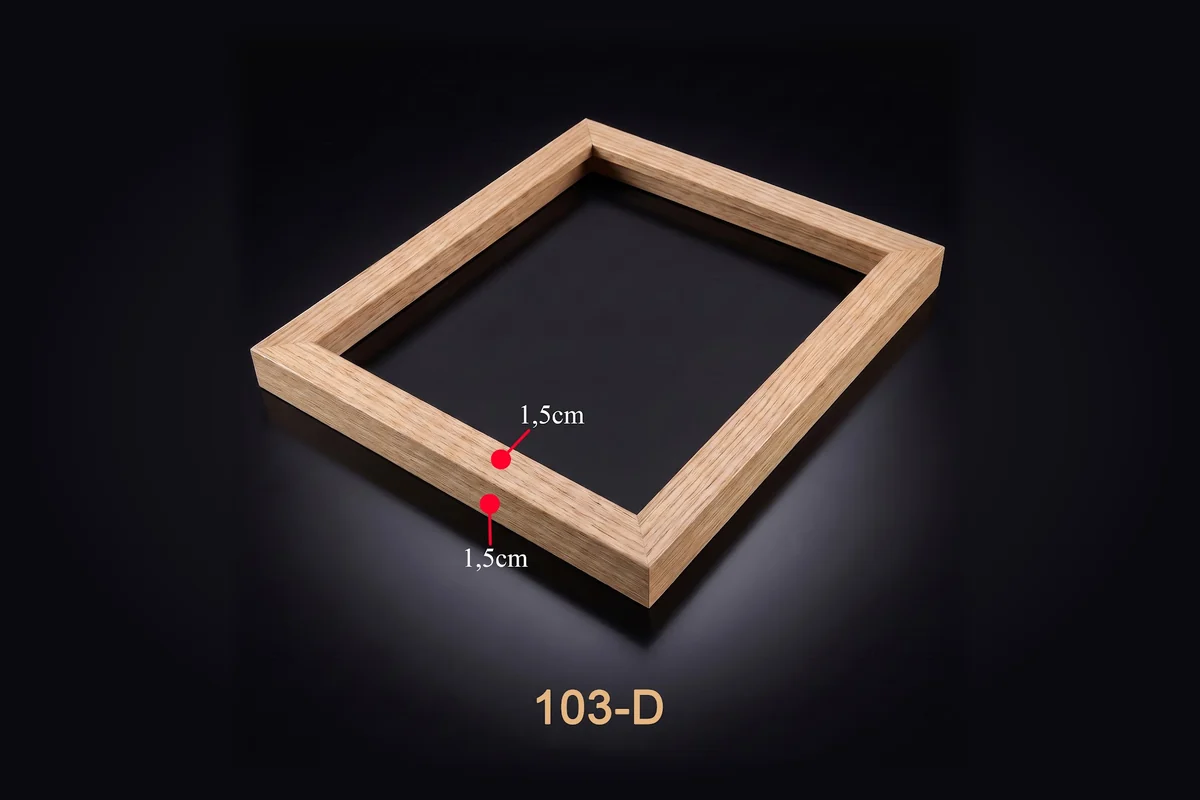
Series 103: slim square 1.5 cm frame
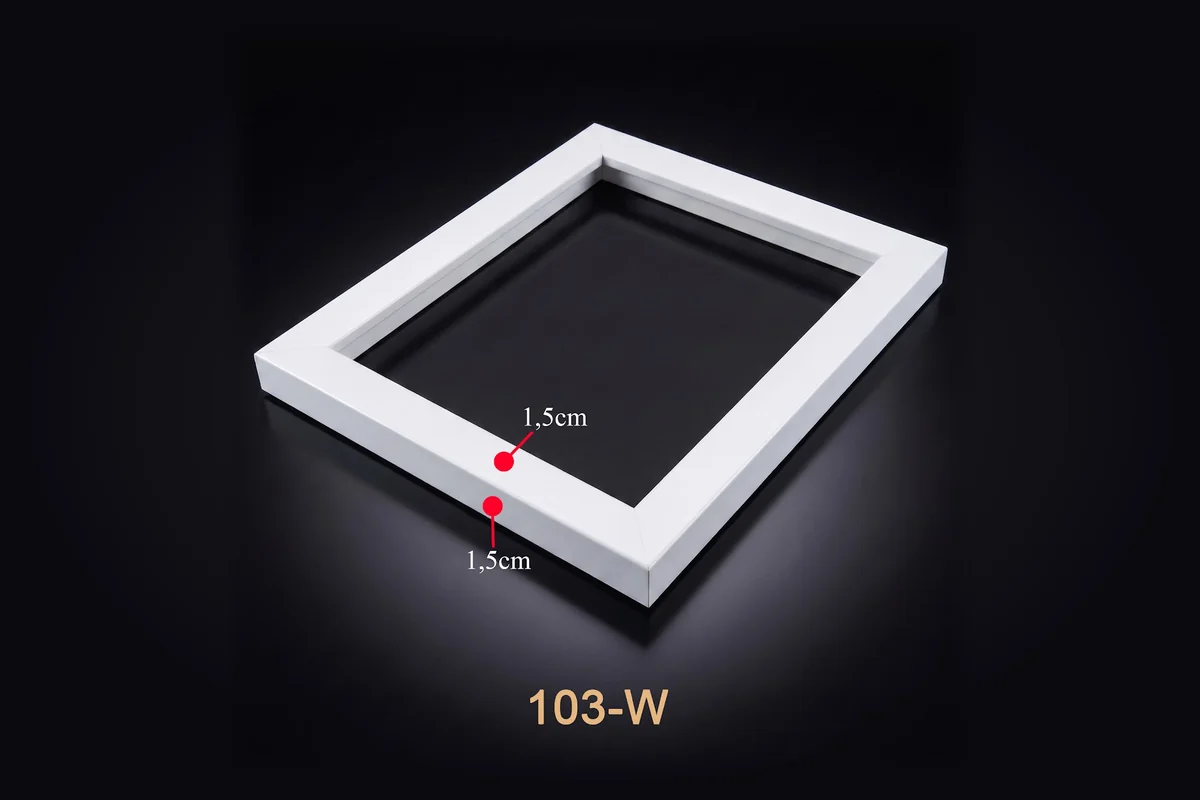
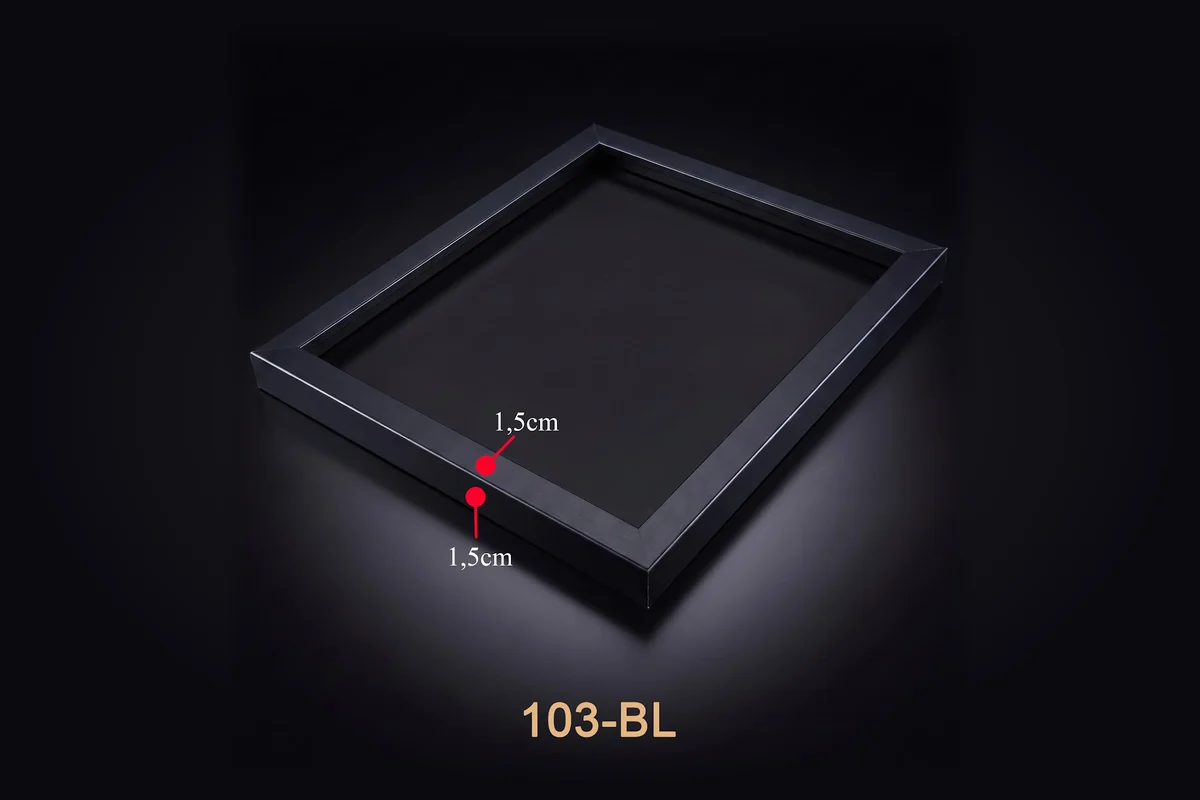
Face and depth are equal at 1.5 cm, giving a neat square profile. Three colours: white, black and natural wood, suitable for most small and medium pictures hung at home or in offices.
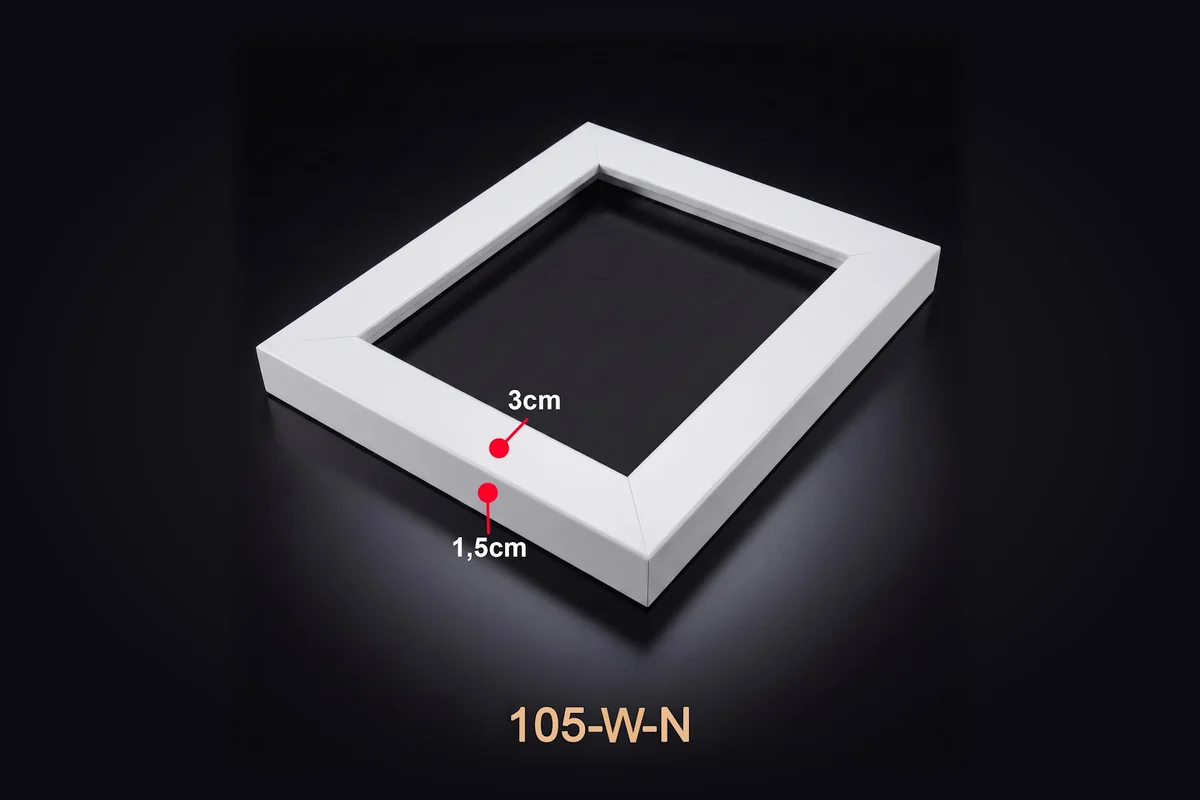
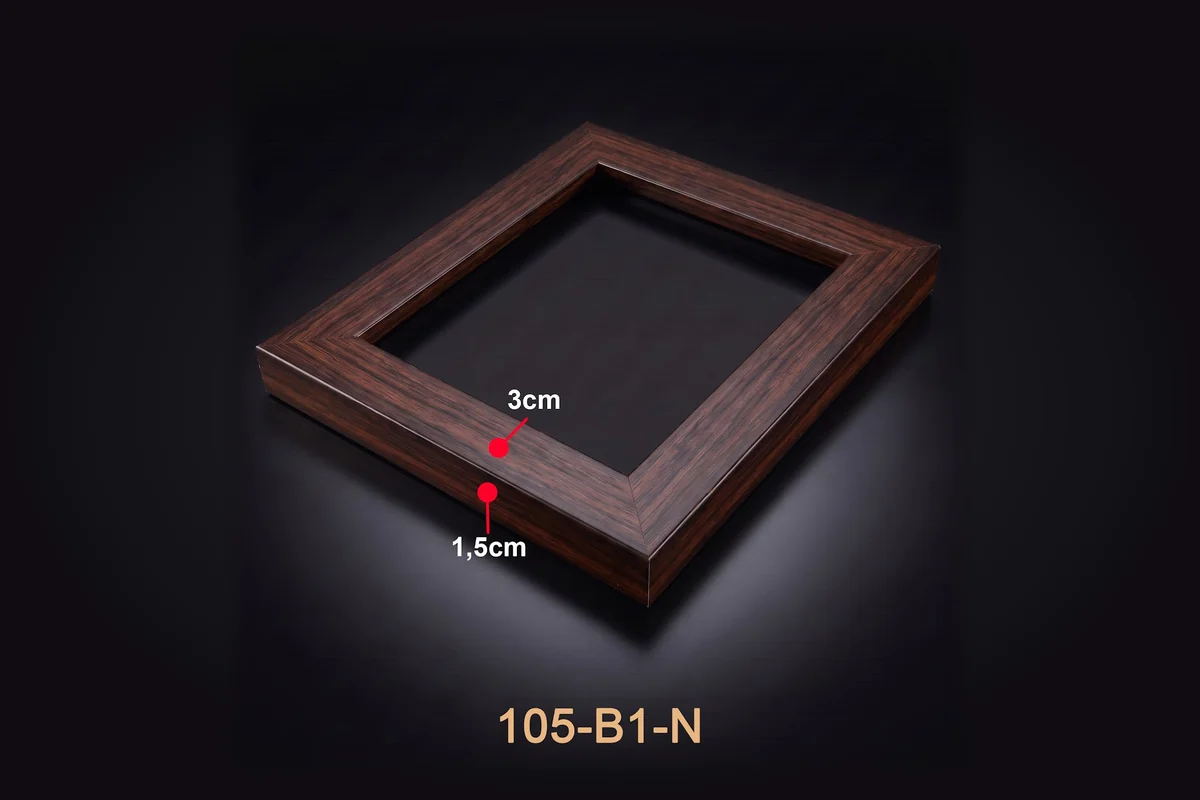
Series 105-N: 3 cm face
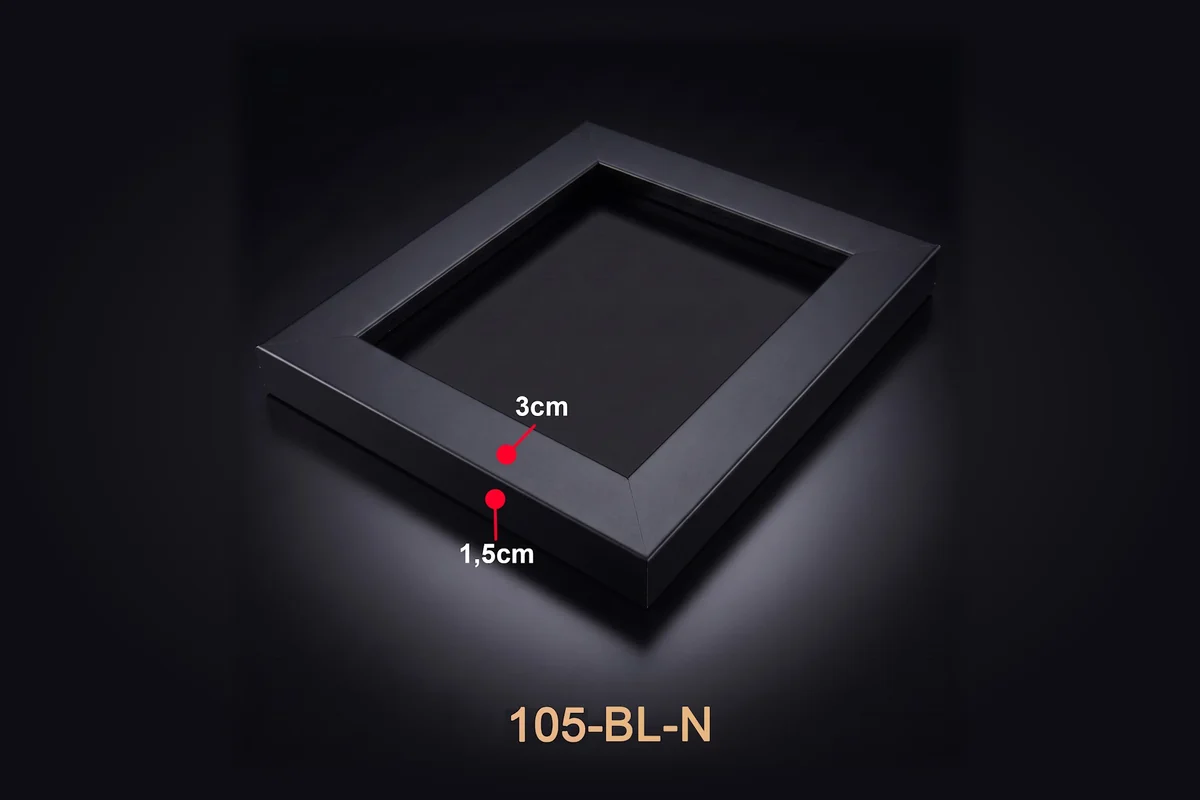
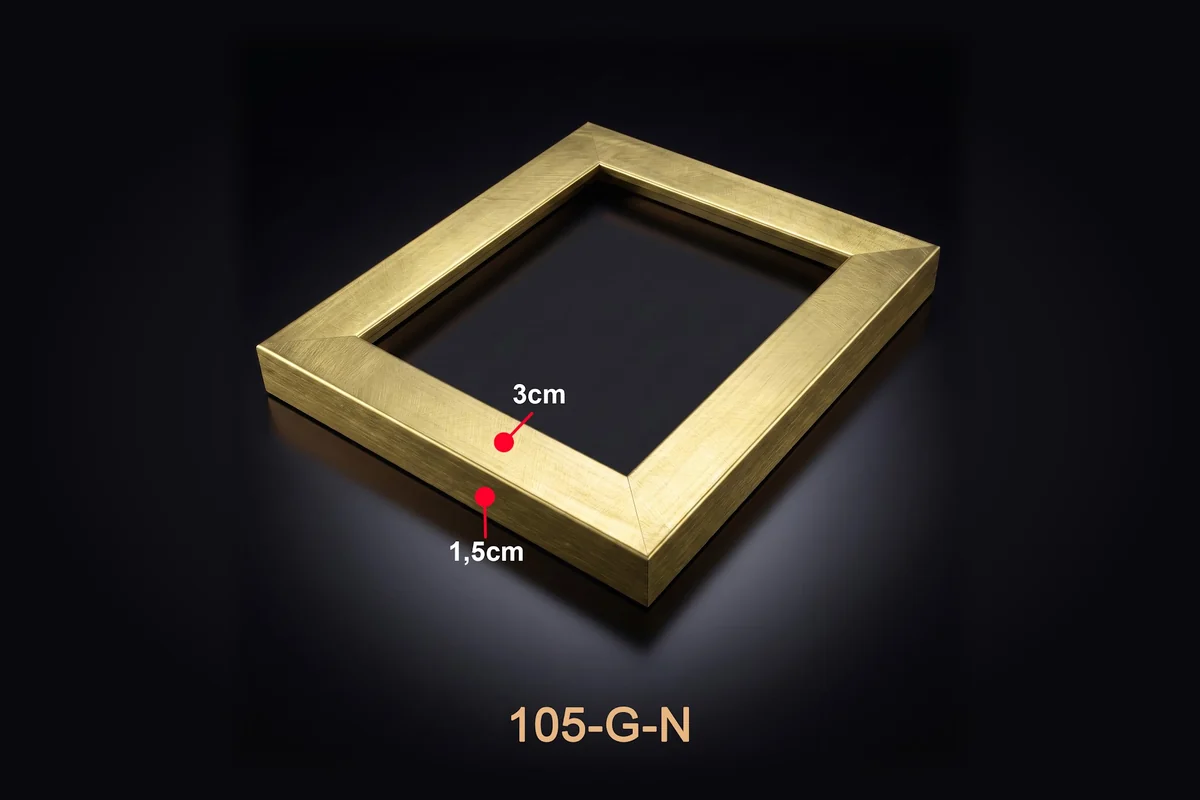
A flat moulding with a 3 cm wide face and 1.5 cm depth. The face is twice as wide as series 103, so the frame has a clear presence on the wall; suits medium and large pictures. Four colours: white, black, metallic gold and brown wood.
KH box frames
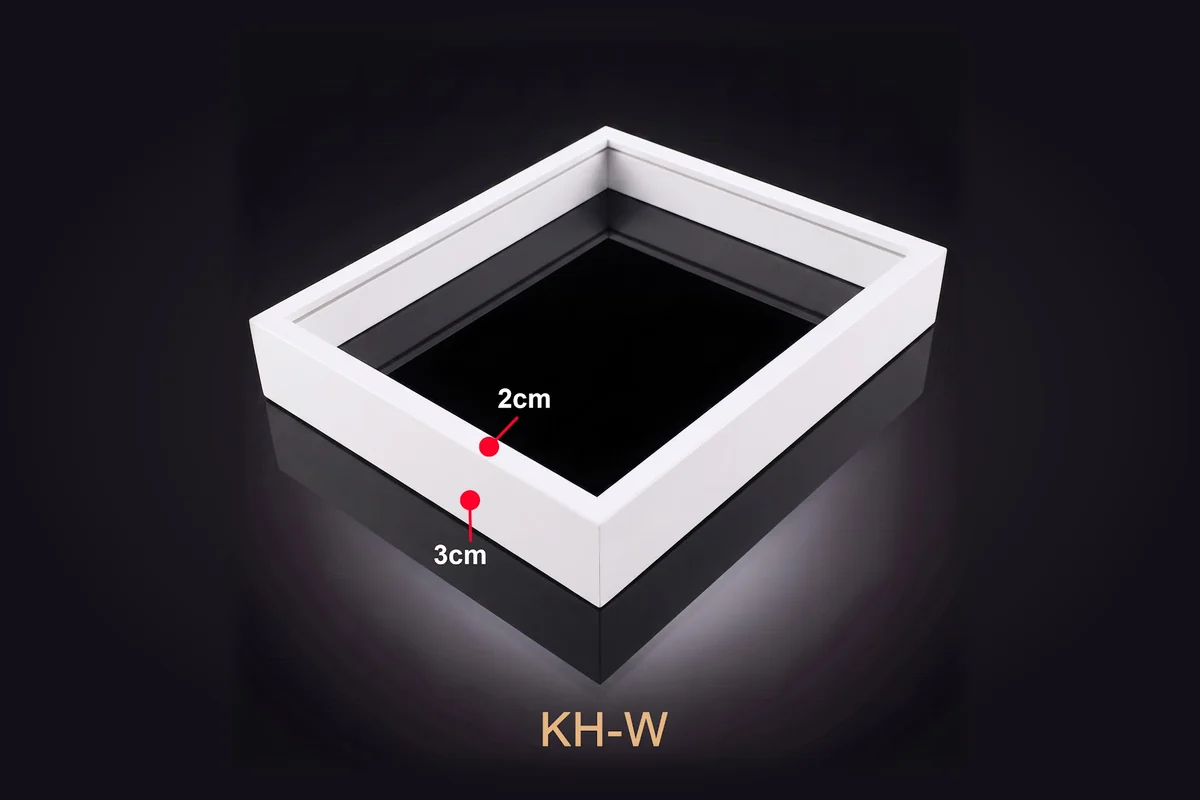
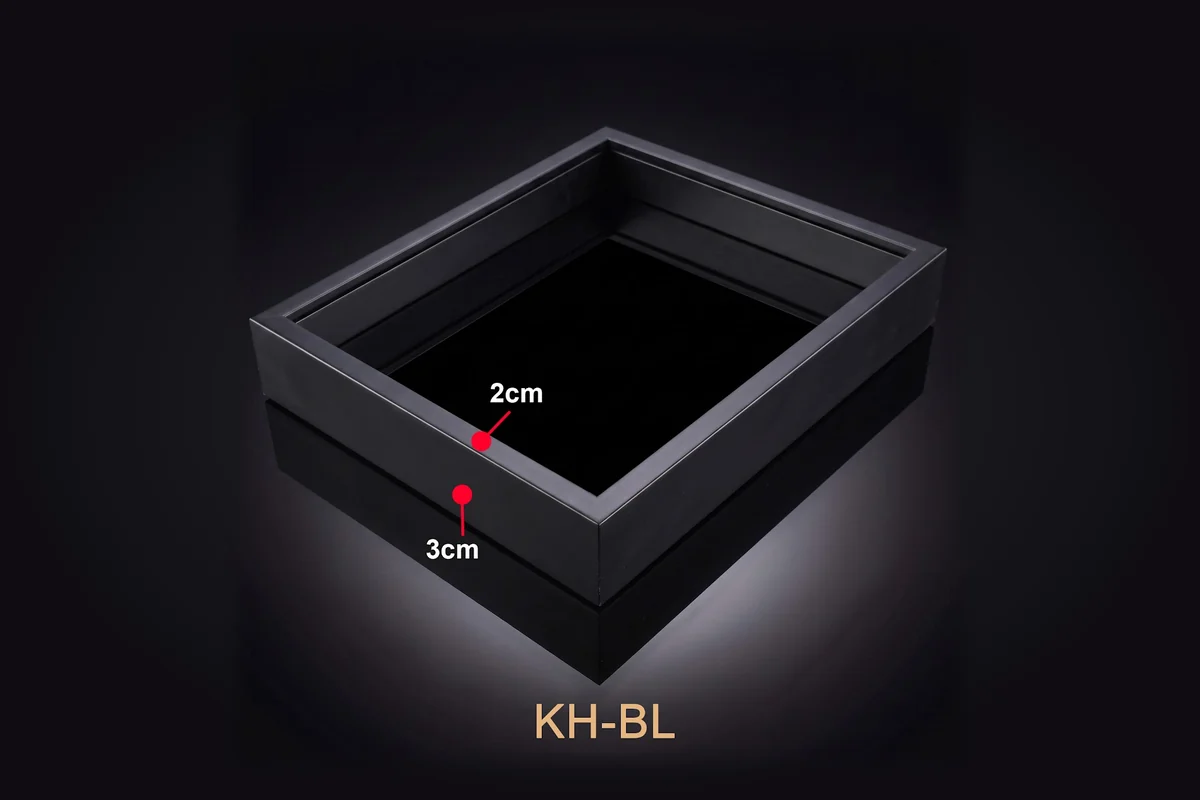
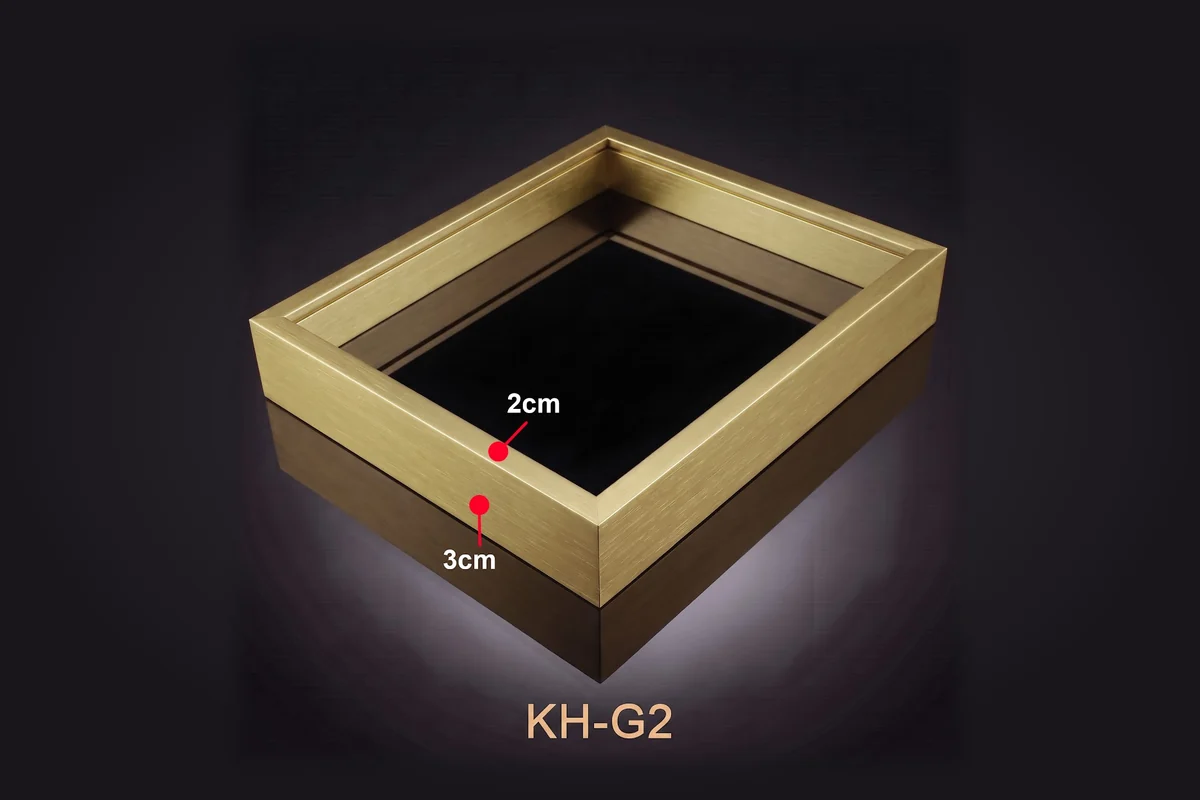
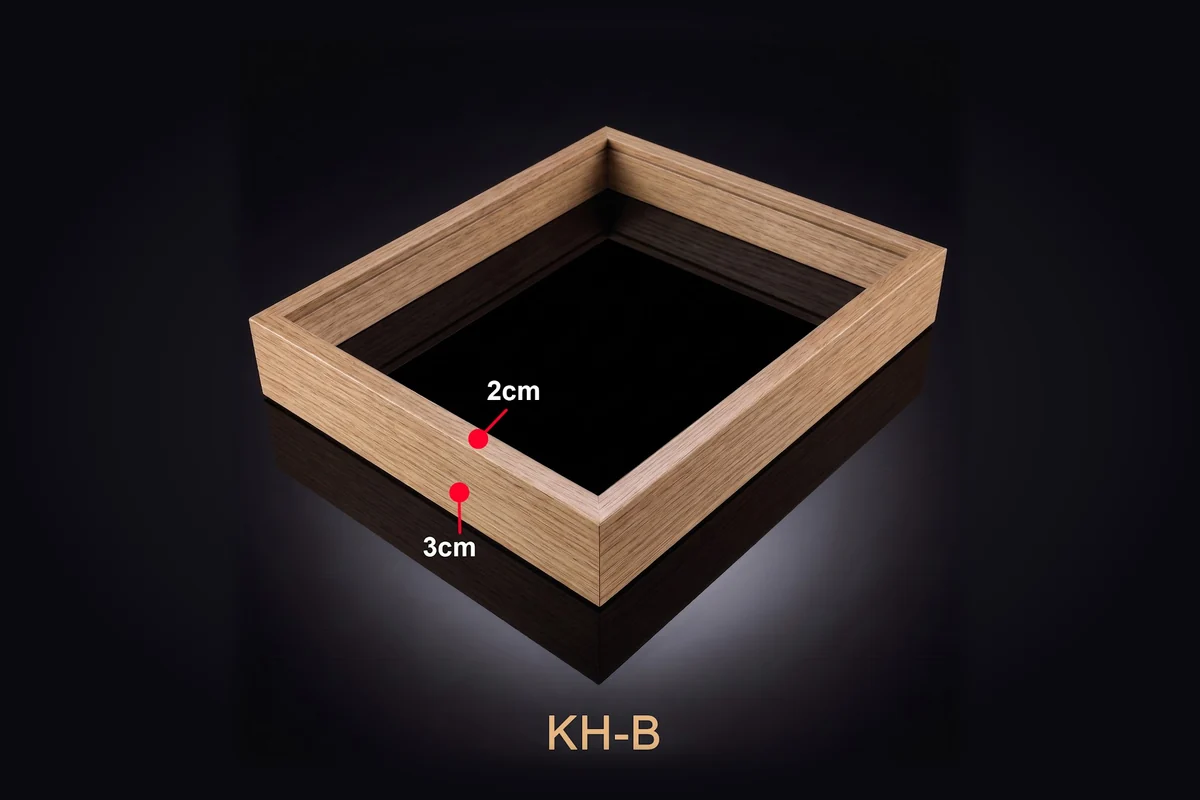
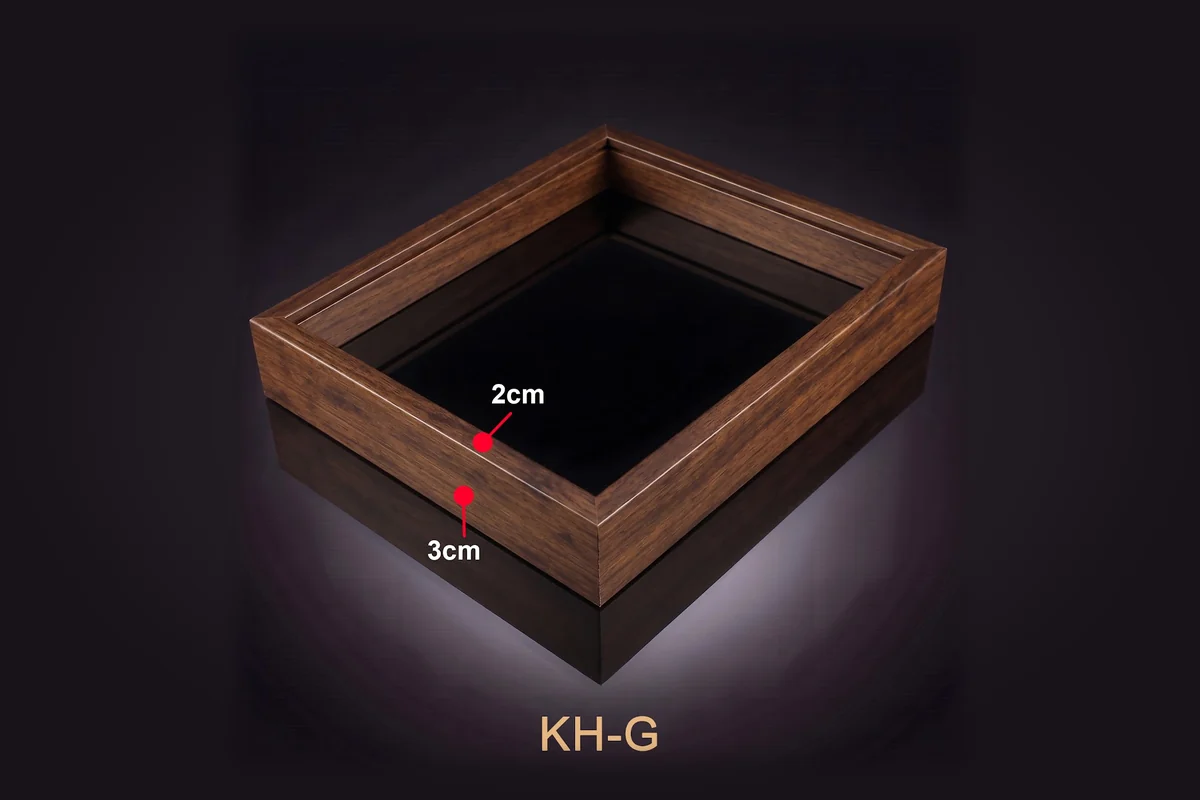
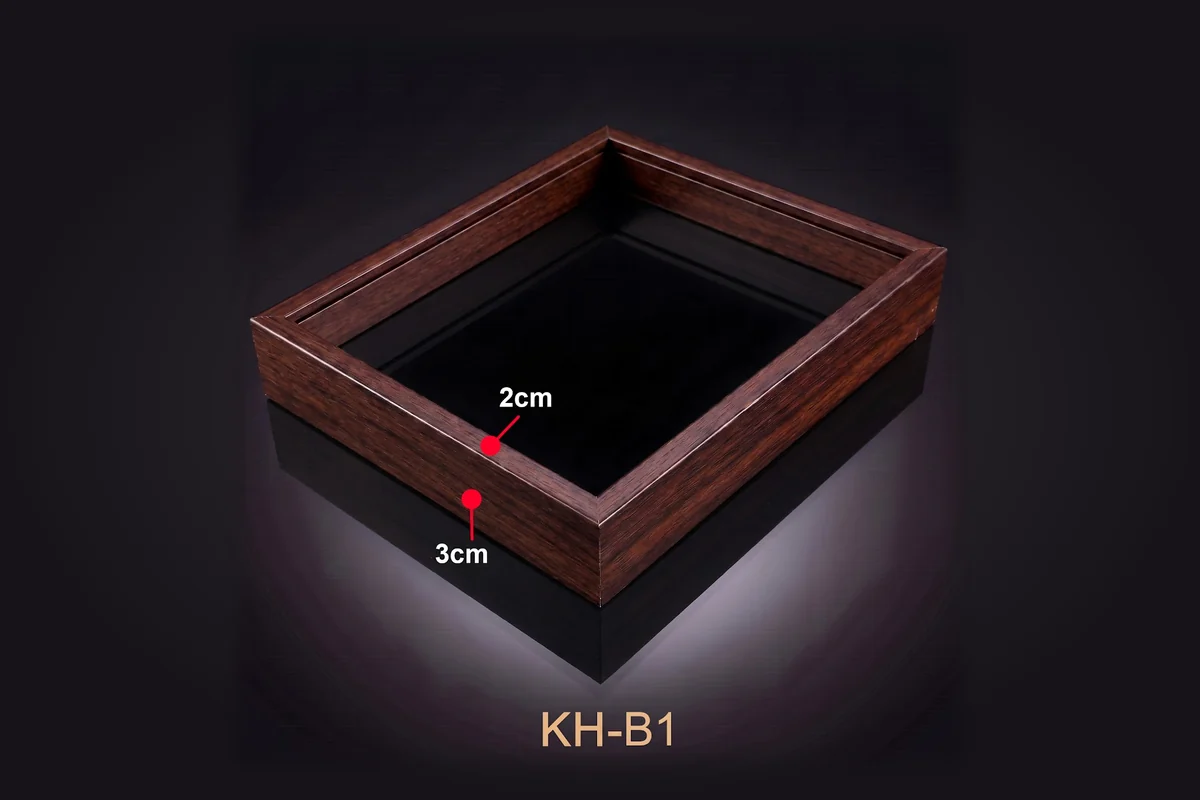
2 cm face, 3 cm deep side, with an inner recess as deep as a box. Six colours: white, black, grey gold, light wood, brown wood and red wood — the widest range of wood colours among the frame series.
V series floating frames
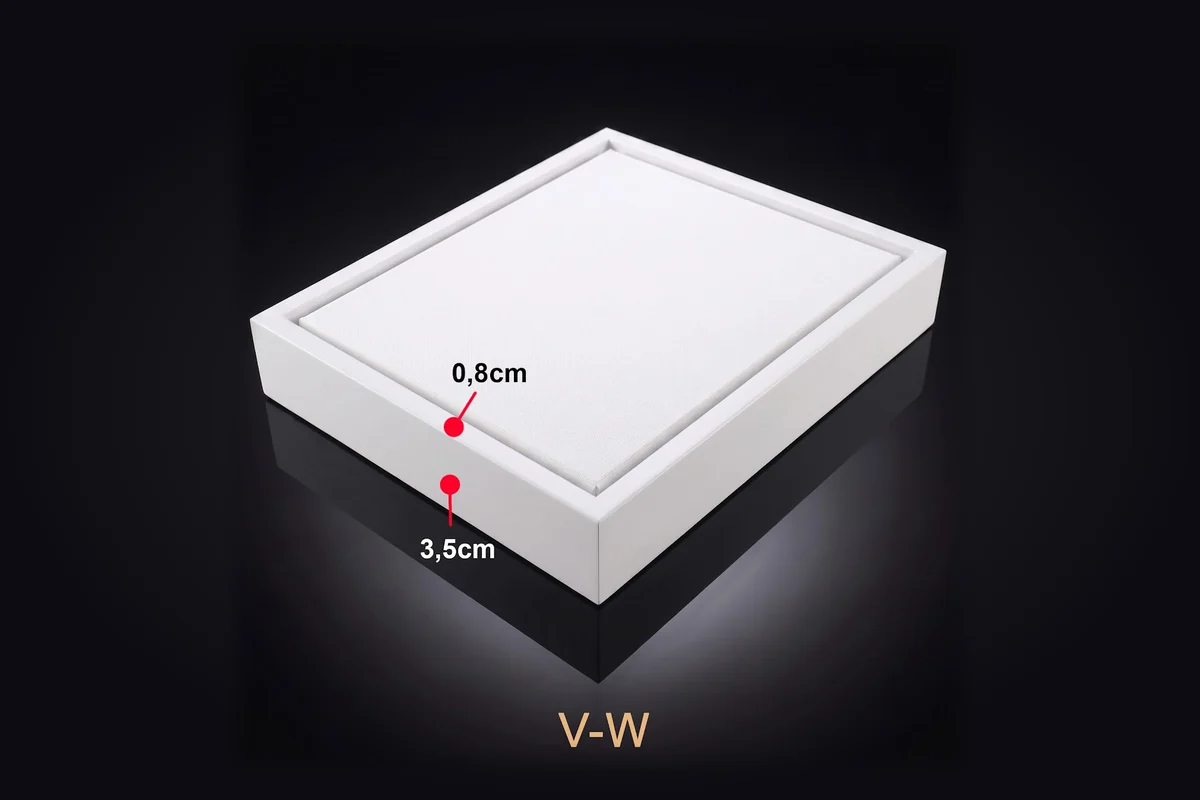
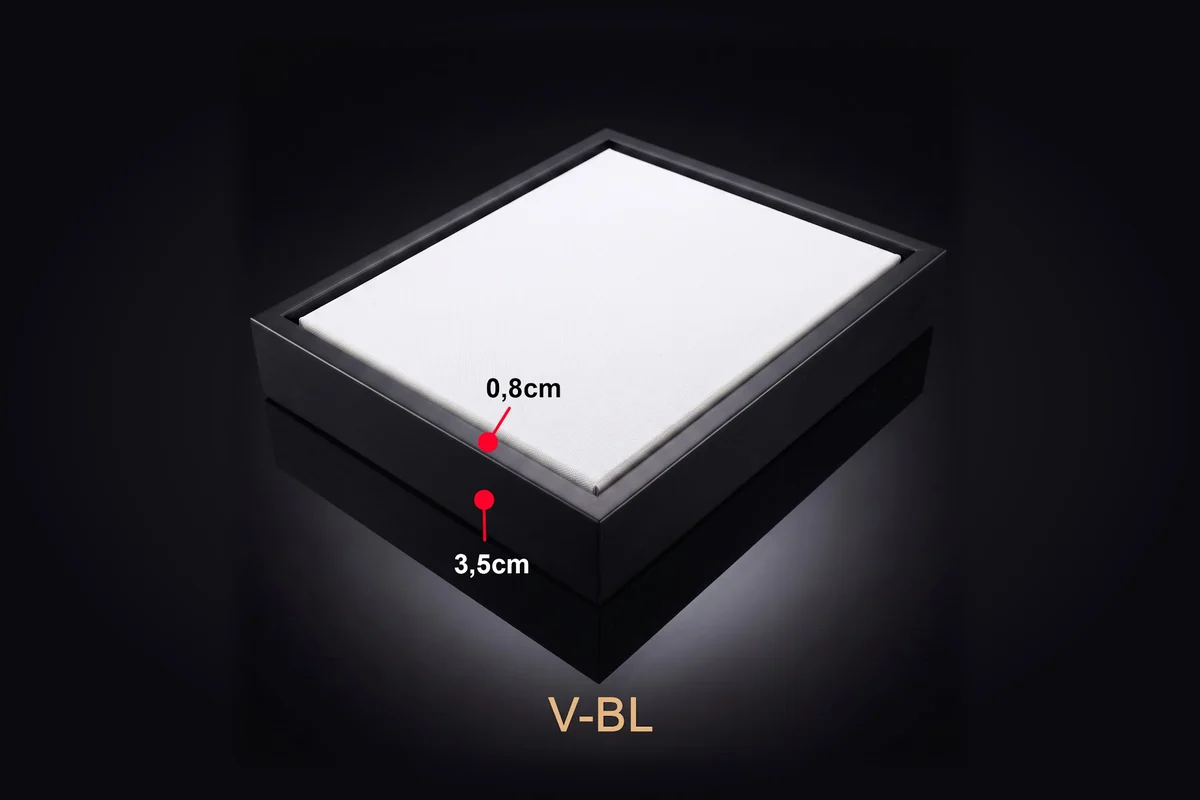
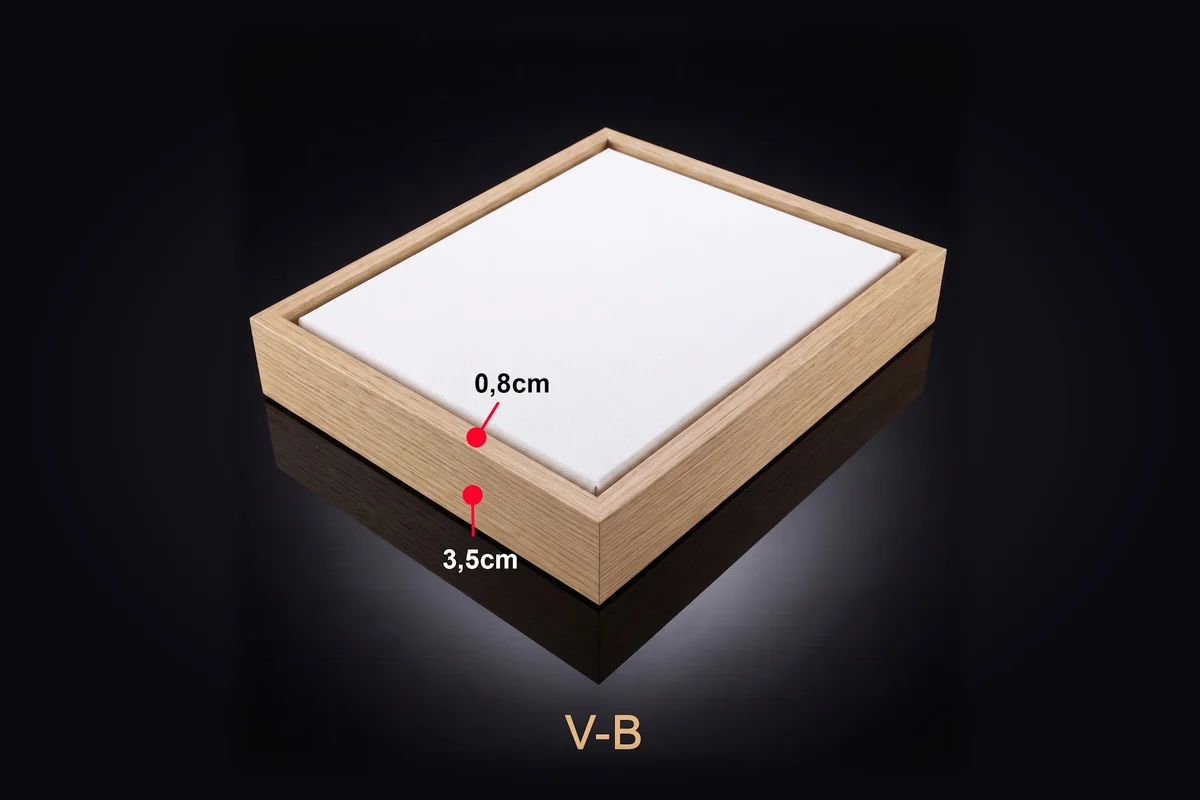
0.8 cm face, 3.5 cm deep side. The picture sits inside the frame recess with a small gap from the moulding, so it looks as if it is floating — the frame style commonly used for pre-stretched canvas. Three colours: white, black, wood grain.
Series 401: 5 cm deep and 5 cm wide
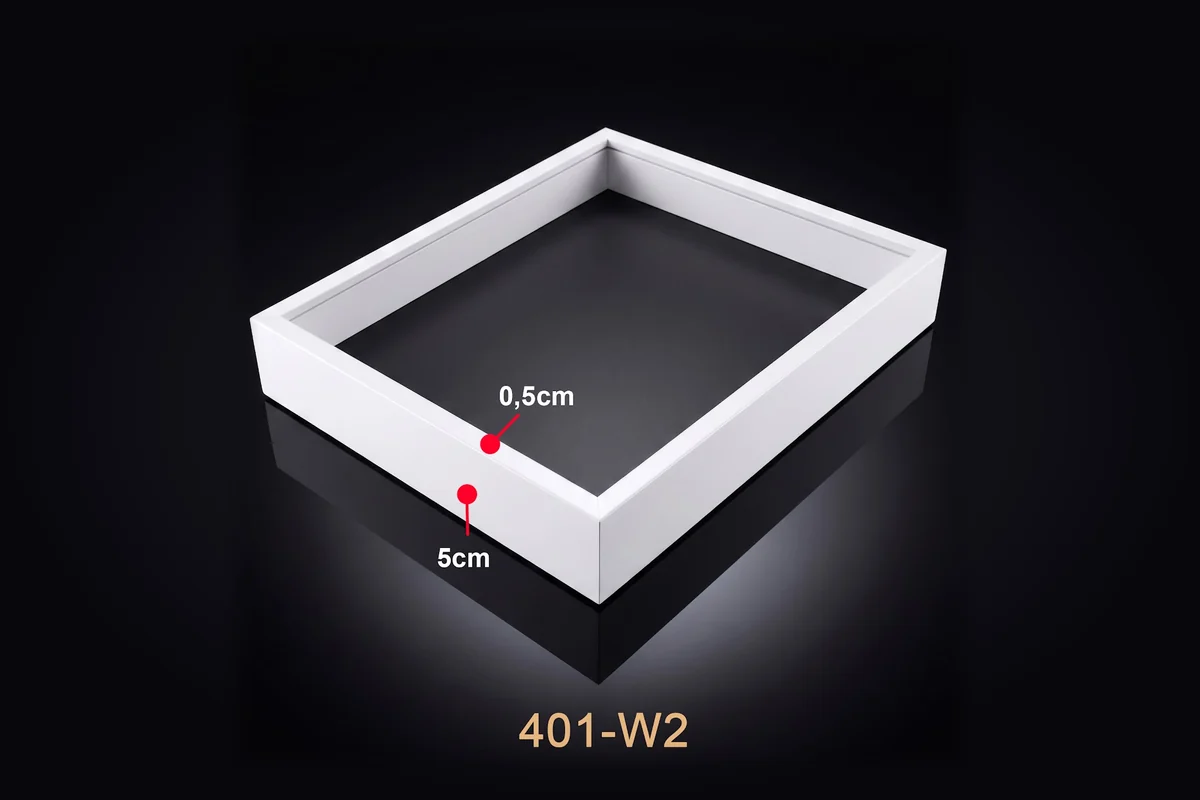
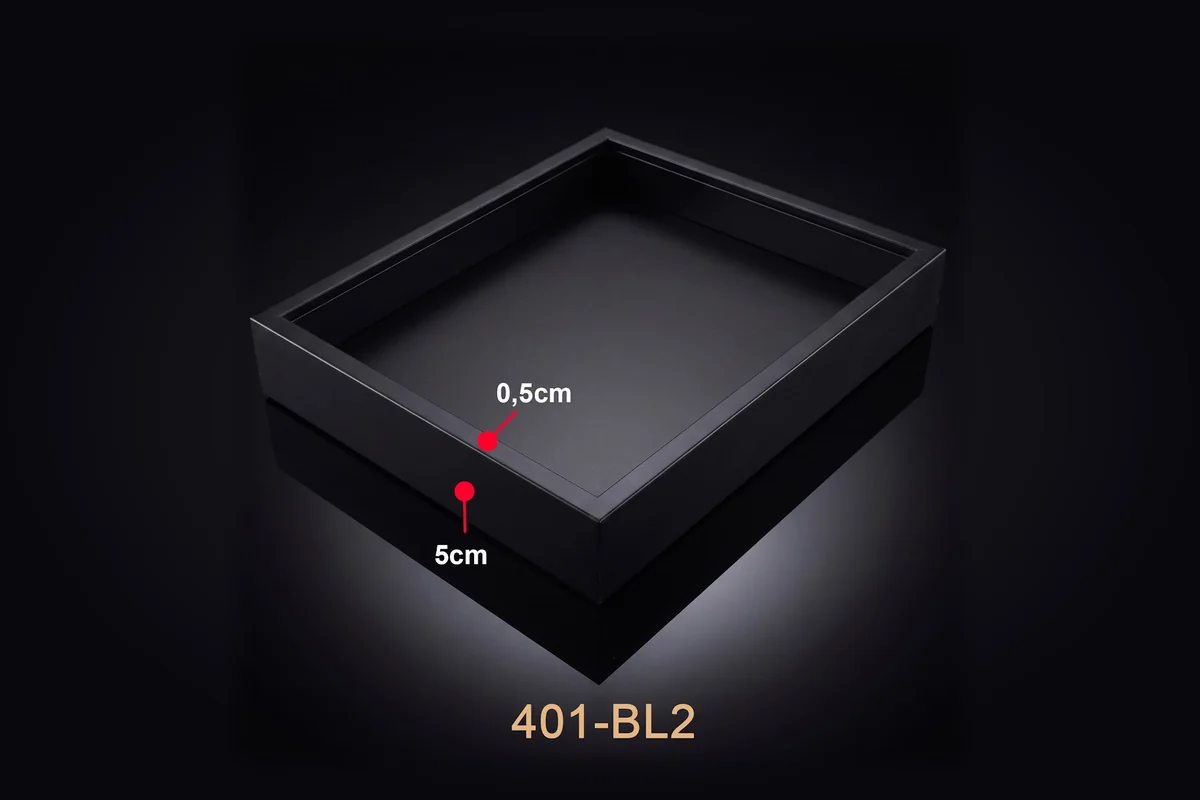
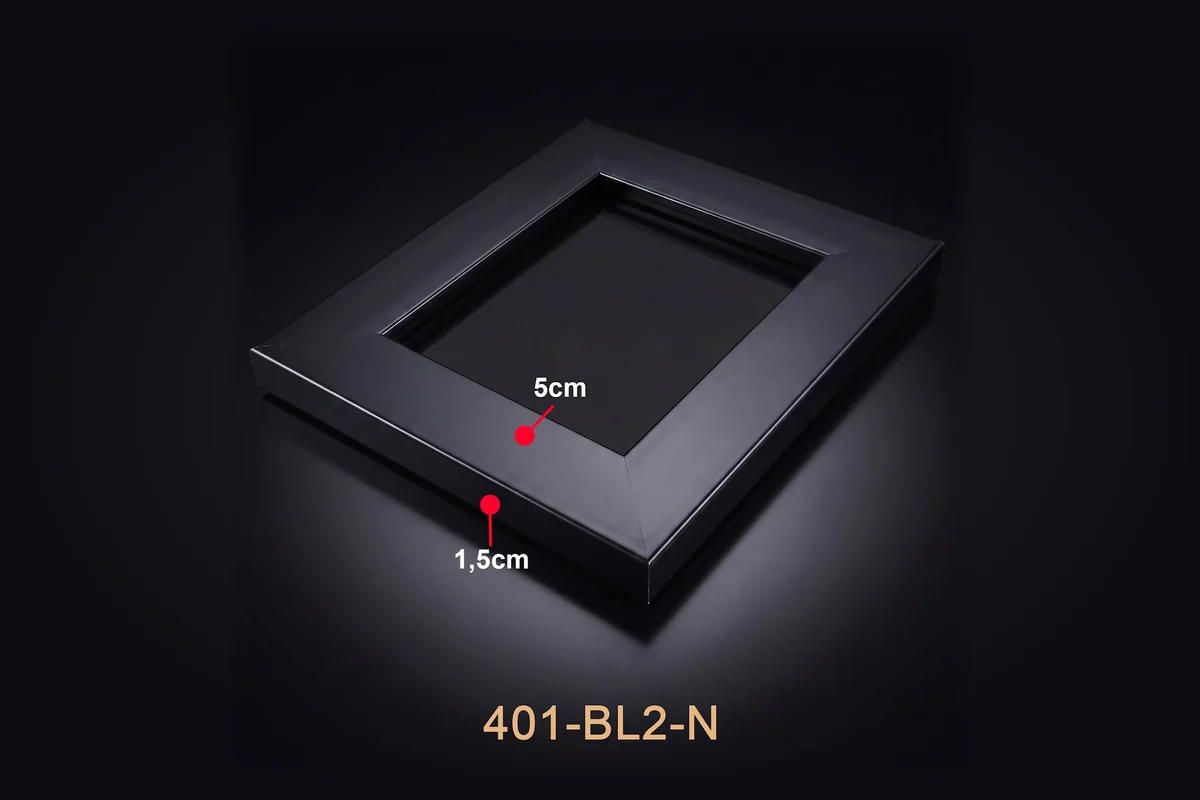
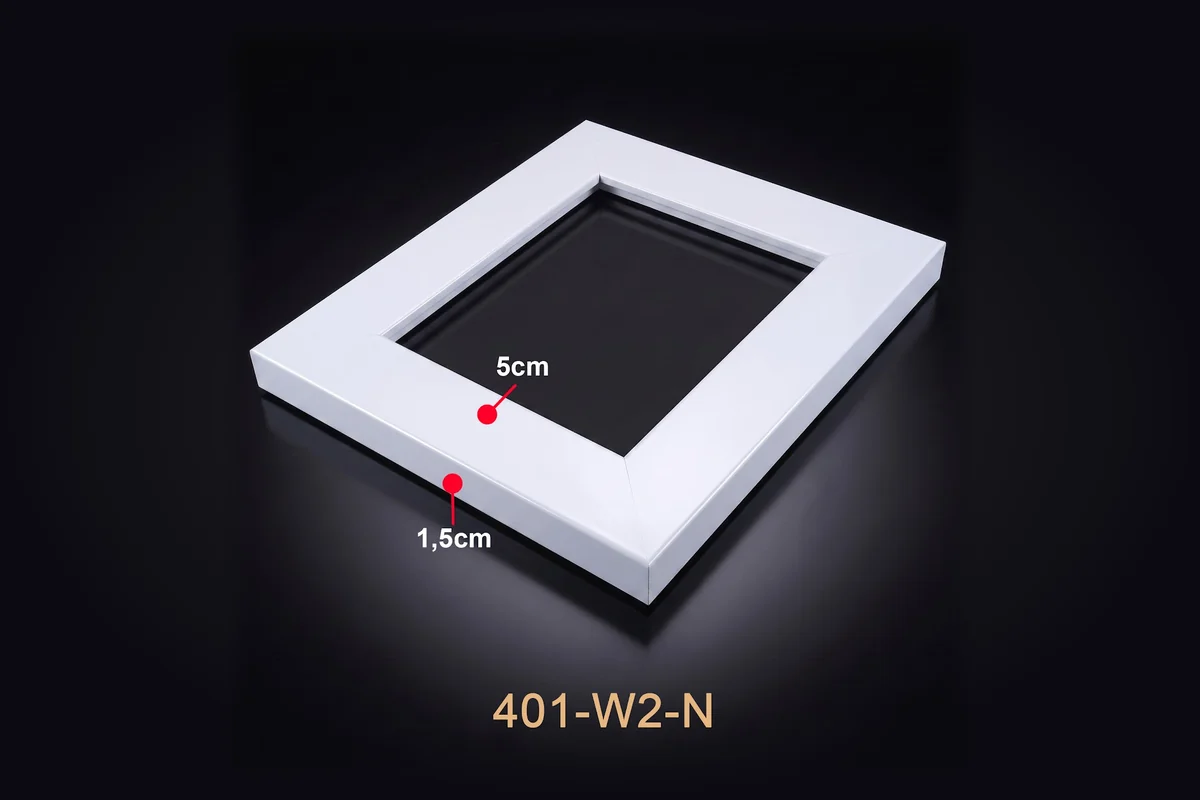
The same series with two ways of setting the moulding. Codes 401-W2 and 401-BL2 stand upright: 0.5 cm face, up to 5 cm deep — the deepest frame in the collection. Codes 401-W2-N and 401-BL2-N lie flat: 5 cm wide face, 1.5 cm deep — a big, flat moulding suited to large pictures that need a bold border.
Classic picture frames
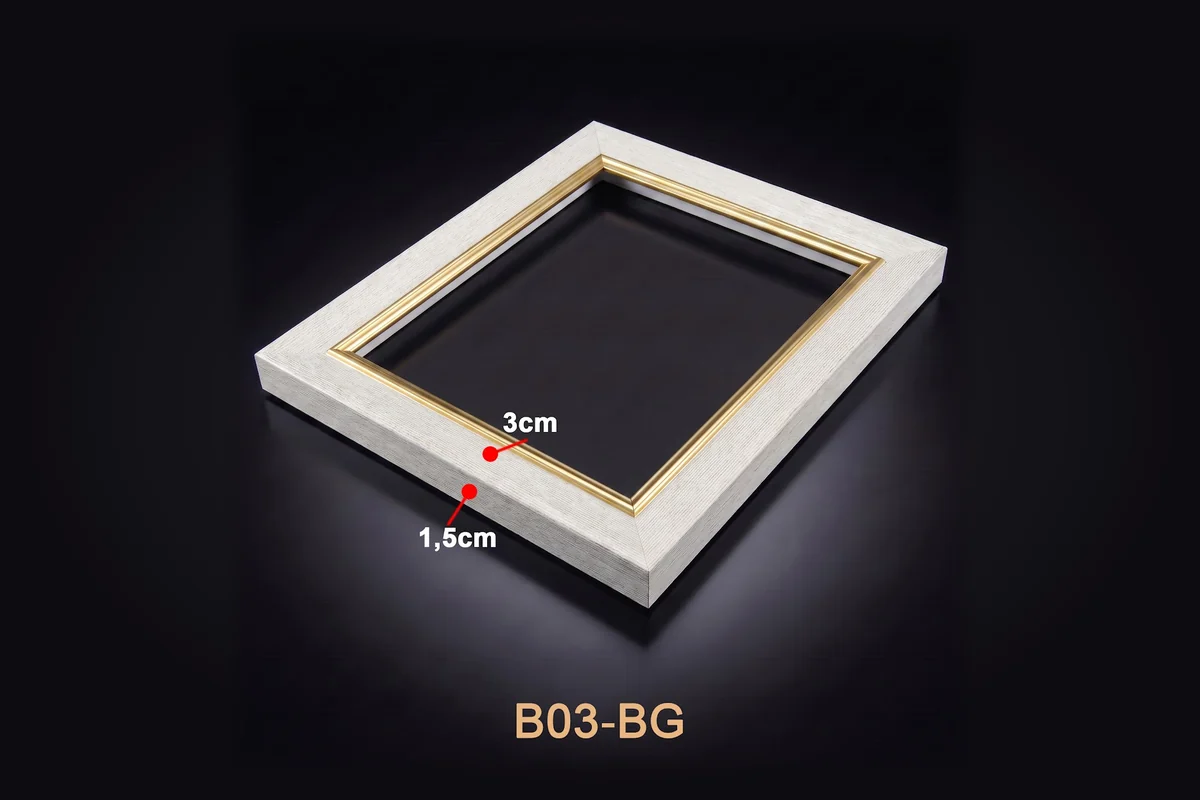
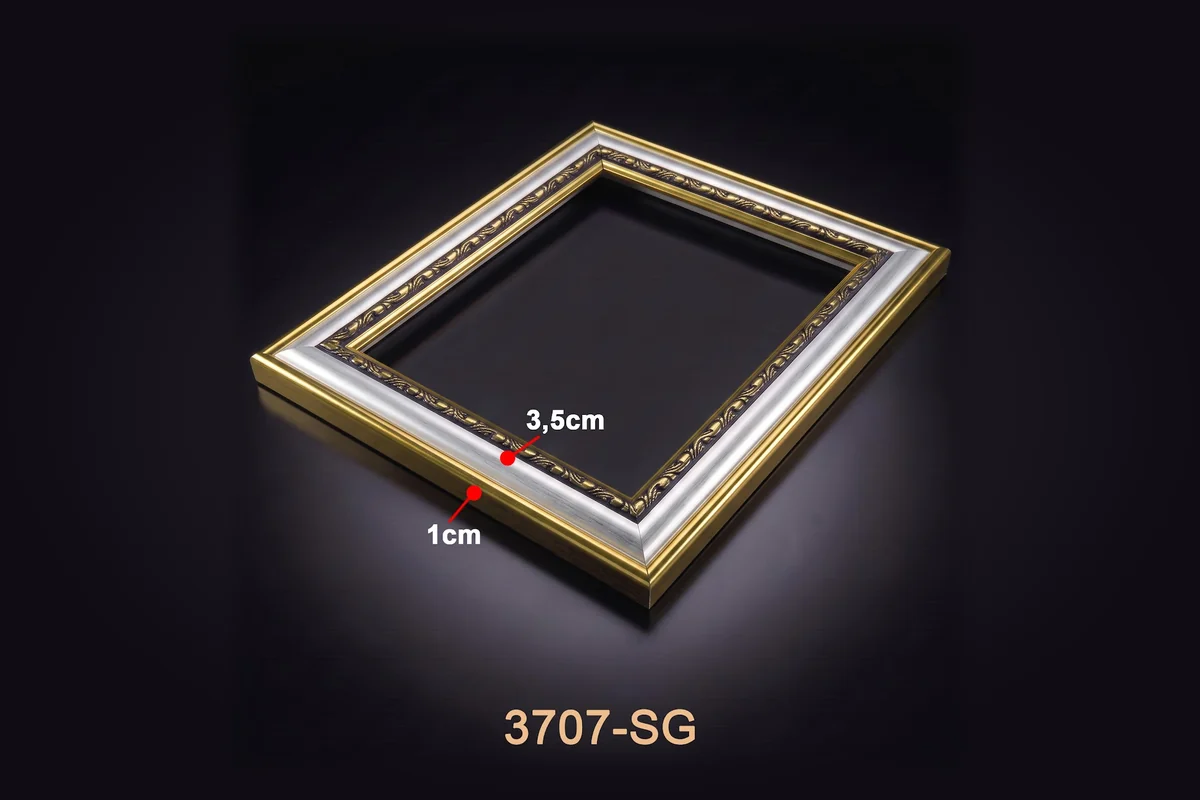
A group of ornamented mouldings finished in gold leaf, silver leaf or deep wood colours. Faces range from 3 cm to 7 cm, and some codes have an extra 3 cm white liner inside. Suits oil paintings, landscapes, altar pictures and neoclassical interiors.
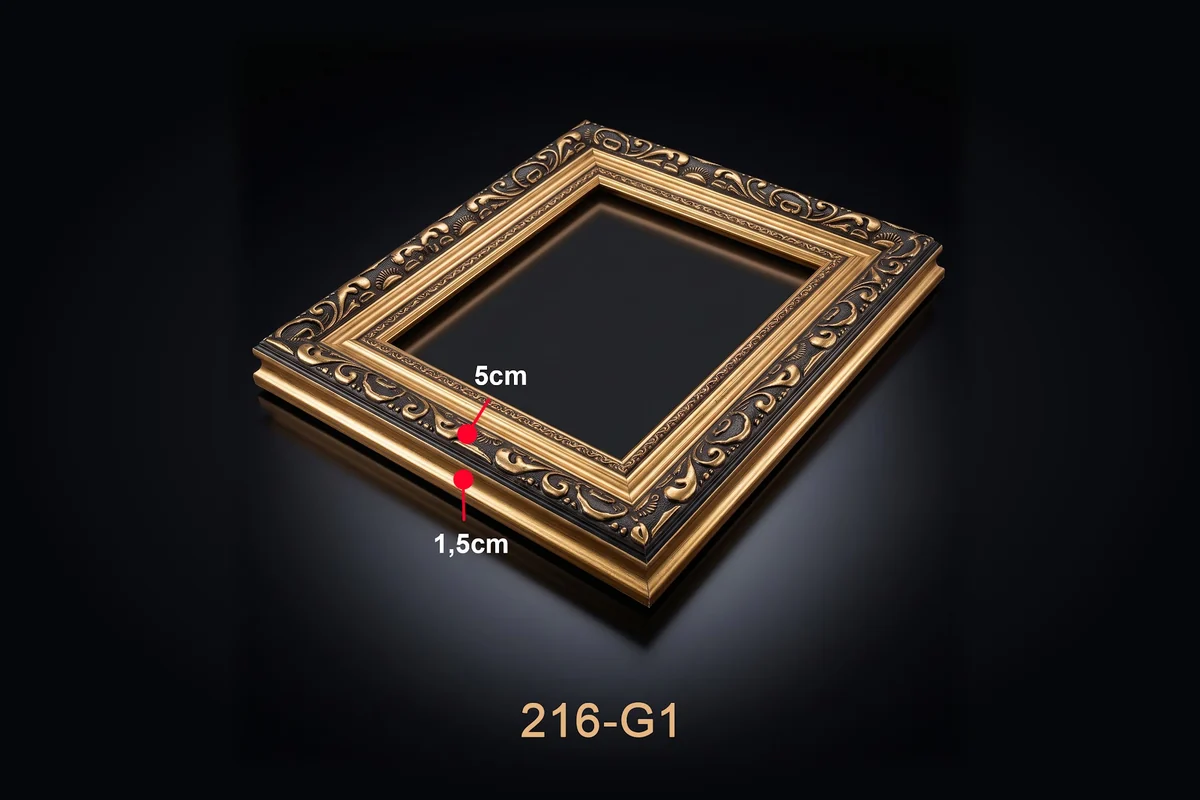
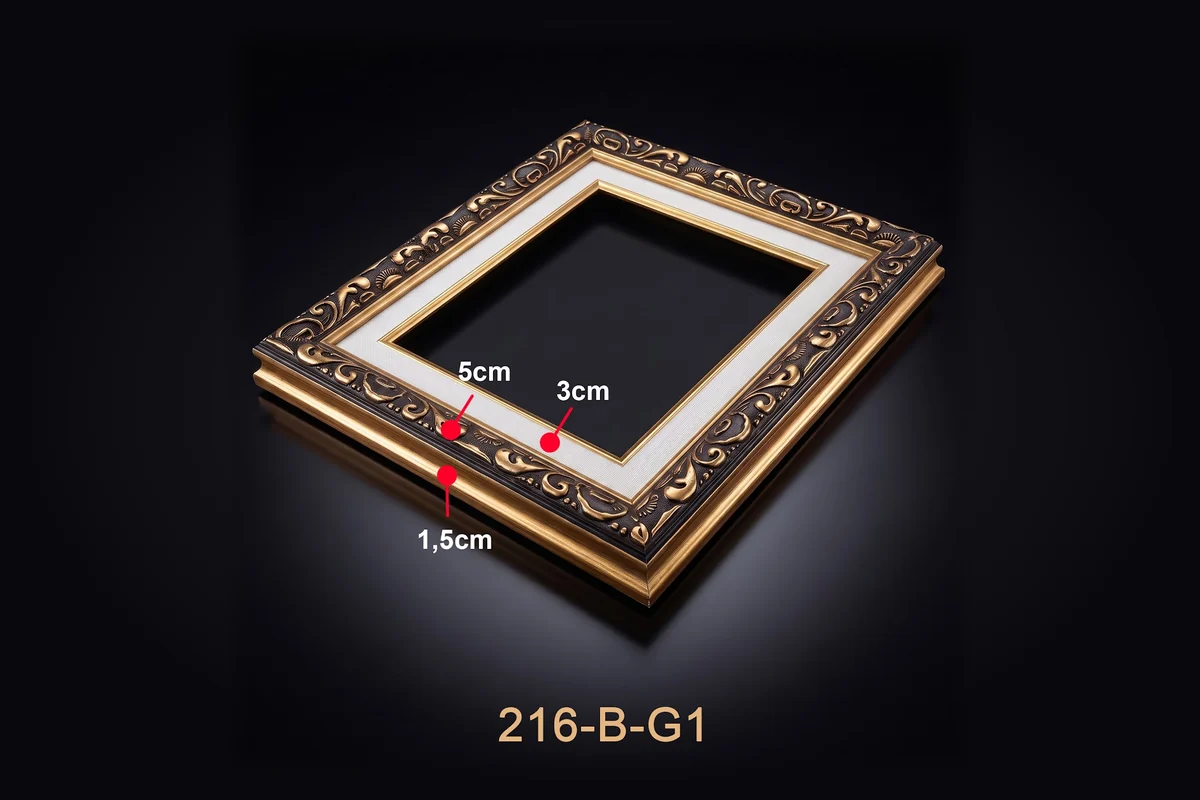
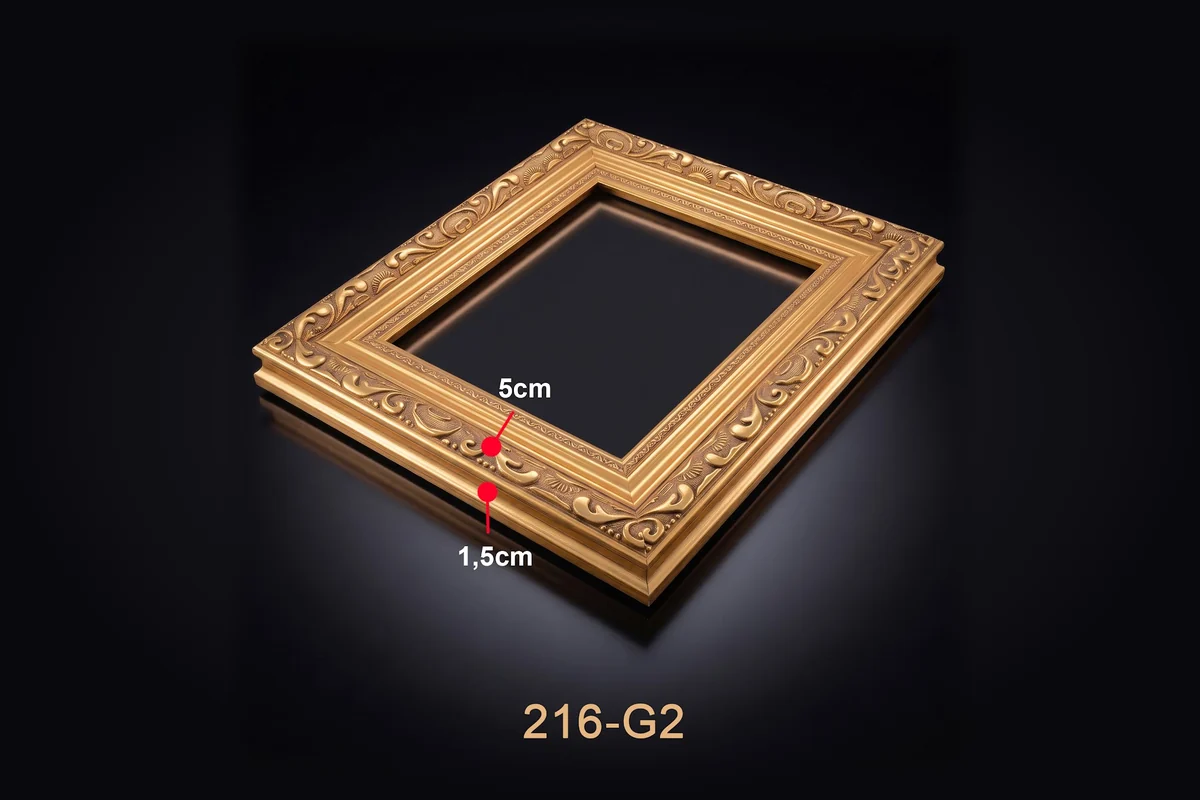
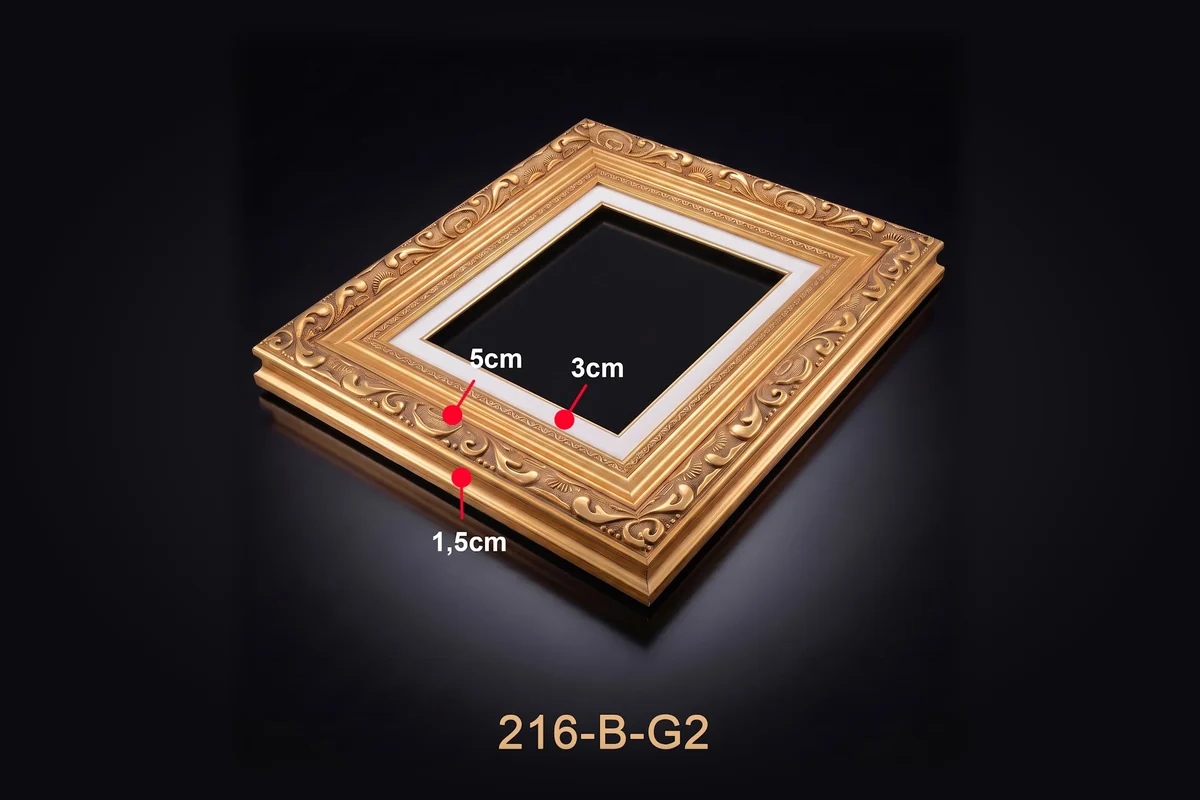
Series 216: gold ornaments, 5 cm face
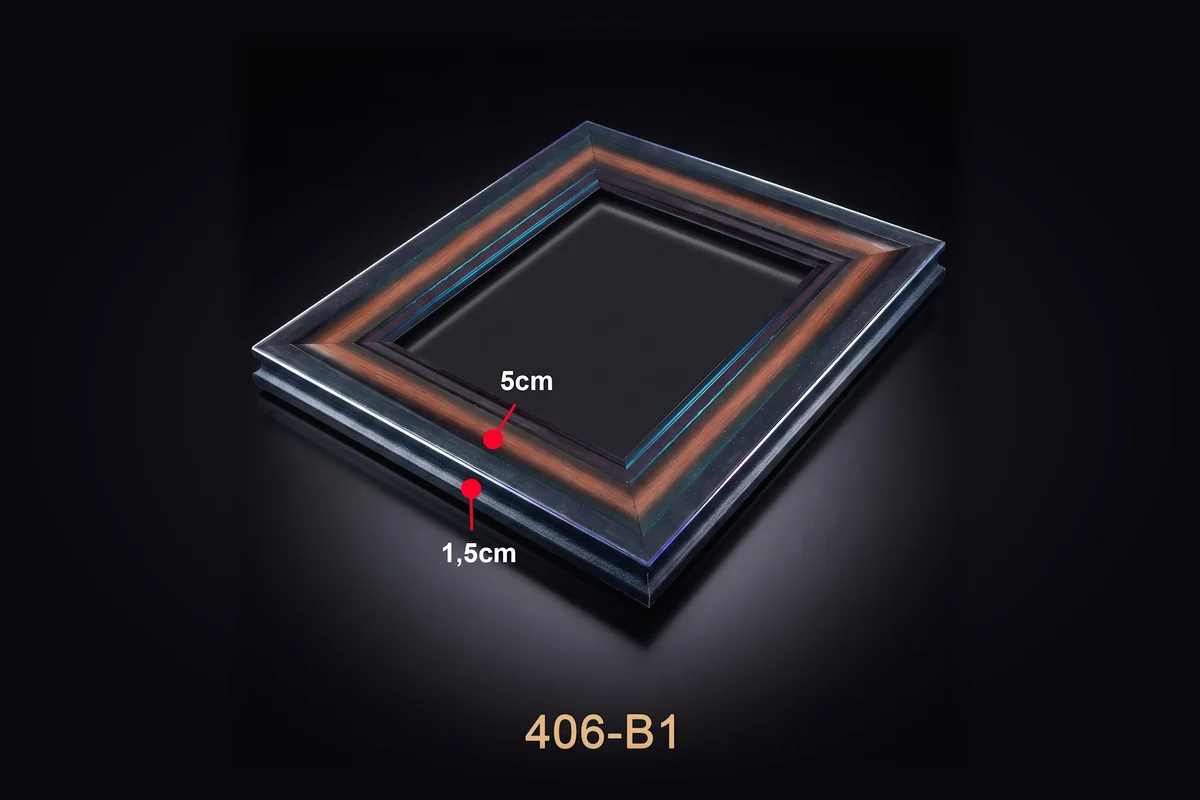
Series 406: black-brown, 5 cm face
Series 902 and S902: wide brown wood
Code 902-GN has a 7 cm face — the widest moulding in the collection, suited to very large pictures. Code 902-B-GN adds a 3 cm white liner.
Related products

Wall art

Restaurants & Shops

Canvas


Poster
Picture frame code table and profile specifications
A summary of the 36 codes in this article. Specifications are measured on the moulding profile, in cm; check actual colours against the samples at our workshop.
| Frame series | Code | Color | Face width (cm) | Depth (cm) |
|---|---|---|---|---|
| Series 105 | 105-BL | Black (aluminium) | 0,5 | 3 |
| 105-W | White (aluminium) | 0,5 | 3 | |
| 105-G | Gold (aluminium) | 0,5 | 3 | |
| 105-B | Light wood grain | 0,5 | 3 | |
| 105-B1 | Dark wood grain | 0,5 | 3 | |
| Series 103 | 103-W | White | 1,5 | 1,5 |
| 103-BL | Black | 1,5 | 1,5 | |
| 103-D | Natural wood | 1,5 | 1,5 | |
| Series 105-N | 105-W-N | White | 3 | 1,5 |
| 105-BL-N | Black | 3 | 1,5 | |
| 105-G-N | Metallic gold | 3 | 1,5 | |
| 105-B1-N | Brown wood | 3 | 1,5 | |
| KH box frame | KH-W | White | 2 | 3 |
| KH-BL | Black | 2 | 3 | |
| KH-G2 | Grey gold | 2 | 3 | |
| KH-B | Light wood | 2 | 3 | |
| KH-G | Brown wood | 2 | 3 | |
| KH-B1 | Red wood | 2 | 3 | |
| V floating frame | V-W | White | 0,8 | 3,5 |
| V-BL | Black | 0,8 | 3,5 | |
| V-B | Wood grain | 0,8 | 3,5 | |
| Series 401 | 401-W2 | White | 0,5 | 5 |
| 401-BL2 | Black | 0,5 | 5 | |
| Series 401-N | 401-W2-N | White | 5 | 1,5 |
| 401-BL2-N | Black | 5 | 1,5 | |
| B03 | B03-BG | White with gold border | 3 | 1,5 |
| 3707 | 3707-SG | Classic silver-gold border | 3,5 | 1 |
| Series 216 | 216-G1 | Classic gold-brown | 5 | 1,5 |
| 216-G2 | Classic bronze gold | 5 | 1,5 | |
| Series 216-B | 216-B-G1 | Classic white border | 5 + 3 liner | 1,5 |
| 216-B-G2 | Classic double border | 5 + 3 liner | 1,5 | |
| Series 406 | 406-B1 | Black-brown | 5 | 1,5 |
| Series 406-B | 406-B-B1 | Black-brown with white border | 5 + 3 liner | 1,5 |
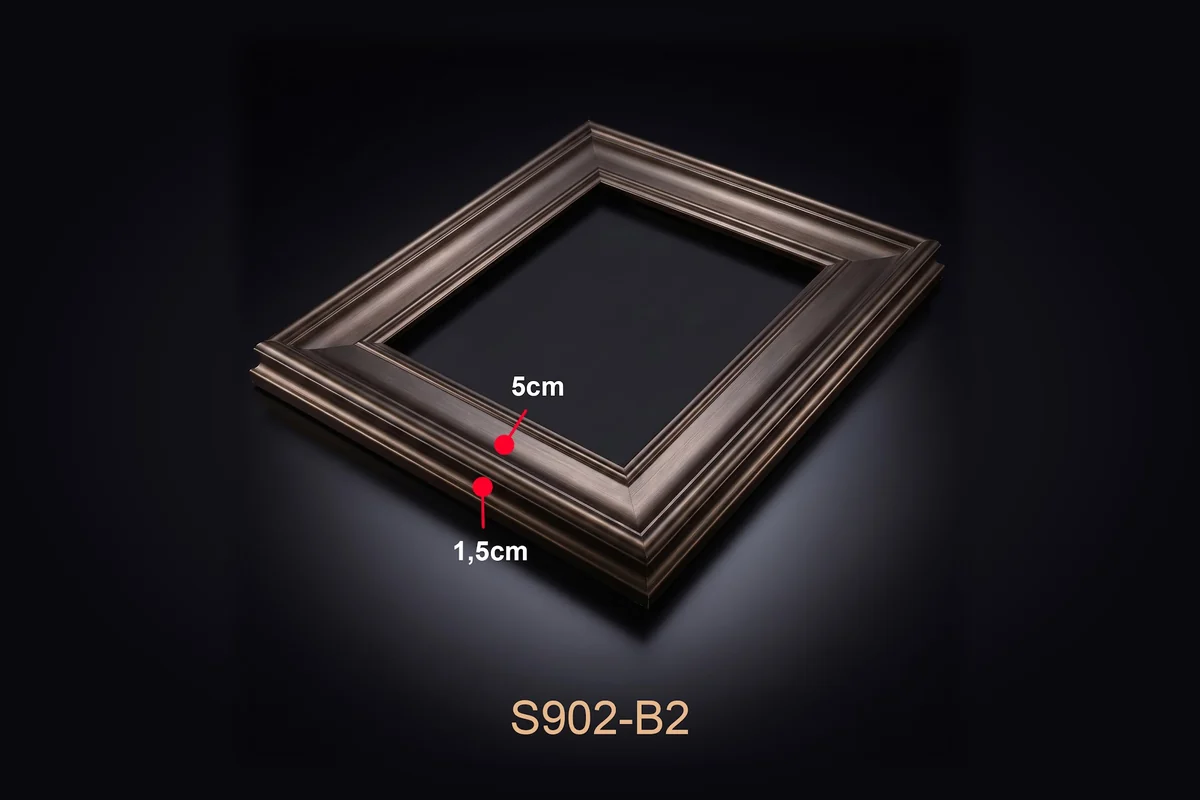
| S902 | S902-B2 | Classic brown | 5 | 1,5 |
| Series 902 | 902-GN | Brown wood | 7 | 1,5 |
| Series 902-B | 902-B-GN | Wood with white border | 7 + 3 liner | 1,5 |
Matching the frame with the picture and the space
- Modern prints, posters, minimalist photos — slim moulding from series 105 or 103, in black, white or aluminium.
- Wedding photos, family photos, canvas paintings — frameless wrap or V series floating frame.
- Large pictures that need a clear border — wide mouldings from series 105-N, 401-N or 902.
- Oil paintings, landscapes, classic interiors — series 216, 406, 902, 3707.
- Warm wooden spaces — the wood grain colours of series KH, 103-D, 105-B.
The print inside can be photo paper, fine art paper or canvas; the front can be covered with clear acrylic or left uncovered, depending on the type of picture.
Stretched canvas prints: order the picture and the frame at the same time
Canvas prints stretched on wooden frames are the option customers order most here: the picture is printed on canvas fabric and stretched over a wooden moulding, with a flat surface and neatly wrapped edges, ready to hang on arrival. The picture size and frame code are chosen in the same order, so there is no need to match sizes between two places.
Many customers look for stretched canvas prints to get a picture ready to hang without taking it to a separate framing shop. We print pictures on Canvas fabric and stretch them onto a wooden frame exactly to the picture size, with the frame code chosen from the table above — from slim frameless wraps to box frames and floating frames.
Because each frame code has a different profile and size, the frame part has no fixed listed price; choose a frame code and send the picture size, and we will quote a complete package including printing and stretching.
Frequently asked questions about picture frames
Can picture frames be made to a custom size?
Yes. The frame is cut and joined to the exact size of the picture, not limited to stock sizes. Send us the width × height and the frame code you have chosen.
What is the difference between face width and depth?
Face width is the part of the moulding visible from the front; depth is the height of the frame side seen from the side. Both numbers are in the code table above.
Frameless wrap or a frame with moulding?
Frameless wrap lets the image run over the edges with no moulding covering it, suited to photos and canvas. A frame with moulding gives a clear border, protects the edges of the picture better and comes in many colours and styles to match the interior.
Is the frame colour in the photos true to reality?
Colours on screen are for reference only, especially the metallic leaf and wood grain colours. It is best to visit the workshop and see the real moulding samples before deciding.
Can I order the picture printing and the frame at the same time?
Yes. We print the picture and make the frame in the same order; just send the picture file together with the frame code.
Order picture frames at In Quảng Cáo Q7
If you need a picture frame made to size or want to see the real moulding samples before choosing a code, contact 0866.511.099 or drop by the workshop at 49 Mai Van Vinh, Tan Hung Ward, Ho Chi Minh City. Production & delivery: 8:00–12:00 & 13:00–18:00 Mon–Sat (closed Sun) · Consultation & orders: 8:00–12:00 & 13:00–20:00 Mon–Sat; 14:00–19:00 Sun.
View directions to the workshop on Google Maps
Need printing or signage in Ho Chi Minh City?
In Quảng Cáo Q7 runs its own print workshop in Tân Hưng Ward (former District 7), Ho Chi Minh City, producing and installing signage, banners, window graphics, exhibition booths and event displays. Send us the size, material, quantity and a photo on WhatsApp and we will get back to you.

Phone: +84 866 511 099 · Also on WeChat
Workshop: 49 Mai Văn Vĩnh, Tân Hưng Ward, Ho Chi Minh City
Glass or acrylic (Mica) for picture frames
The front of a picture frame can be glass or acrylic (Mica), and this detail affects both weight and how it is transported. The table below puts the two materials side by side according to what customers actually experience in use.
| Criterion | Glass | Mica (Acrylic) |
|---|---|---|
| Clarity | Clearer, the truest picture colours | Clear, with a slight tint on thick sheets |
| Weight | Heavy; large sizes need strong nails and hanging brackets | About three times lighter at the same size |
| Safety | Shatters into sharp pieces when dropped | Does not shatter into pieces, only cracks or scratches |
| Surface scratches | Hard to scratch | Scratches easily if wiped dry |
| Large format | Over 80 cm, use 3 mm thick glass | Suitable for large sizes because it is light |
| Long-distance shipping | Risk of breakage when sent by intercity bus | Safer for shipping to other provinces |
For picture frames hung in homes, places with small children or frames that must be shipped to other provinces, acrylic (Mica) is the material our workshop uses more often. Picture frames for permanent display spaces usually use glass, because picture colours look truer under lighting.
How to hang a picture frame on the wall
The hanging method decides whether a picture frame stays straight after a few months or gradually tilts. The list below follows the order of work and applies to brick and concrete walls.
- Measure the picture centre at 145 to 155 cm above the floor; this is the eye level of a standing person.
- Mark the nail point above the picture centre by half the frame height minus 5 cm.
- Frames under 50 cm use one hook nail; frames over 50 cm use two nails spaced one third of the frame width apart.
- Frames over 10 kg use 6 mm plastic wall plugs and screws instead of nails; on plasterboard walls, fix into the studs.
- Stick four rubber pads on the back corners so the frame does not rub the wall or shift.
- When hanging a set of frames, keep an edge-to-edge gap of 5 to 8 cm between adjacent frames.
- Check with a spirit level after hanging; if the hanging wire is off to one side, the frame will gradually tilt.
Large picture frames over 100 cm should be hung on two load-bearing points instead of a single wire. Two points spread the weight evenly, so the frame sides do not twist and the backing does not bulge in the middle.
Cleaning and caring for picture frames
The frame surface and the glass need different cleaning methods. Wrong cleaning is a common cause of the coating on the frame sides peeling off in streaks.
- Wipe the glass with a damp microfiber cloth; spray glass cleaner onto the cloth, not directly onto the frame.
- Only wipe acrylic (Mica) with a damp cloth; wiping it dry creates fine scratches following the hand movement.
- Wipe coated frame sides with a dry cloth; do not use solvents or alcohol.
- Keep natural wood frames away from damp walls; moisture gradually opens the corner joints.
- Do not hang opposite a window in direct sunlight; the ink and paper will fade.
- Take the picture out of the frame when moving house; transporting the whole set easily cracks the corners.
- Check the hanging wire once a year; rusty cable at the crimp point is where it breaks first.
For picture frames in places where the air conditioning runs all the time, low humidity makes a paper backing shrink and the picture may ripple slightly. The fix is to use a Formex backing instead of a paper one, which we prepare on request when you order the frame.
Lead time for a picture frame set
The lead time for a picture frame set depends on whether the frame code is in stock or the moulding has to be ordered in. Corner cutting, joining and glass fitting are done at our workshop, so small frames are usually done the same day.
- Frame code in stock, size under 60 cm: done within the working day.
- Frame code in stock, size 60 to 120 cm: one to two days, waiting for the glass to be cut to size.
- Frame code that requires ordering moulding: three to five days from confirming the code.
- Sets of several frames with the same code: priced per batch, on average two days for every ten frames.
- Frame with a stretched canvas print: add one day for printing and waiting for the ink to dry.
Send us the picture size and the frame code you want via Zalo and the workshop will give you a specific timeline. If you have not chosen a code yet, bring the picture to our workshop at 49 Mai Van Vinh, Tan Hung Ward, Ho Chi Minh City to try a few moulding samples directly on the picture.