








































































Fine Art Paper: textured surface for premium print products
Sep
What Fine Art Paper Is and What Can Be Printed on It
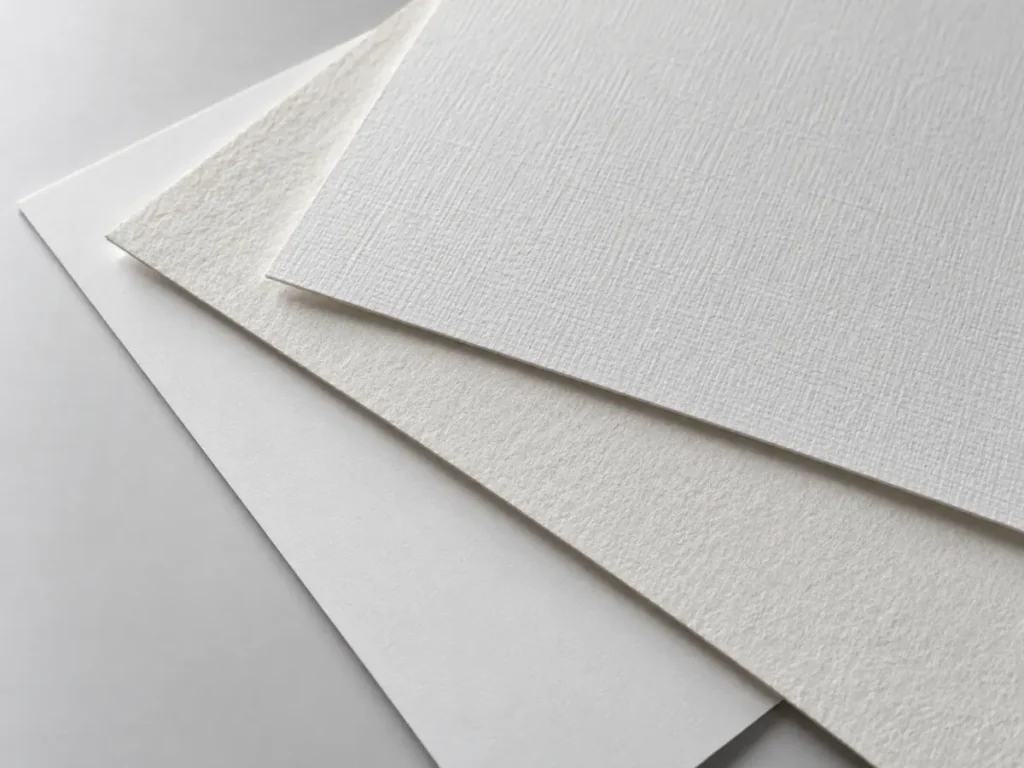
Fine art paper is a group of papers with special surfaces — embossed, linen, textured or shimmer — instead of flat and smooth like ordinary paper. Customers feel the different paper quality as soon as they pick it up, which makes it a familiar choice for items that need a formal feel. This article sums up its characteristics, colour range, applications and printing tips, with some illustrative photos.
How to recognise fine art paper
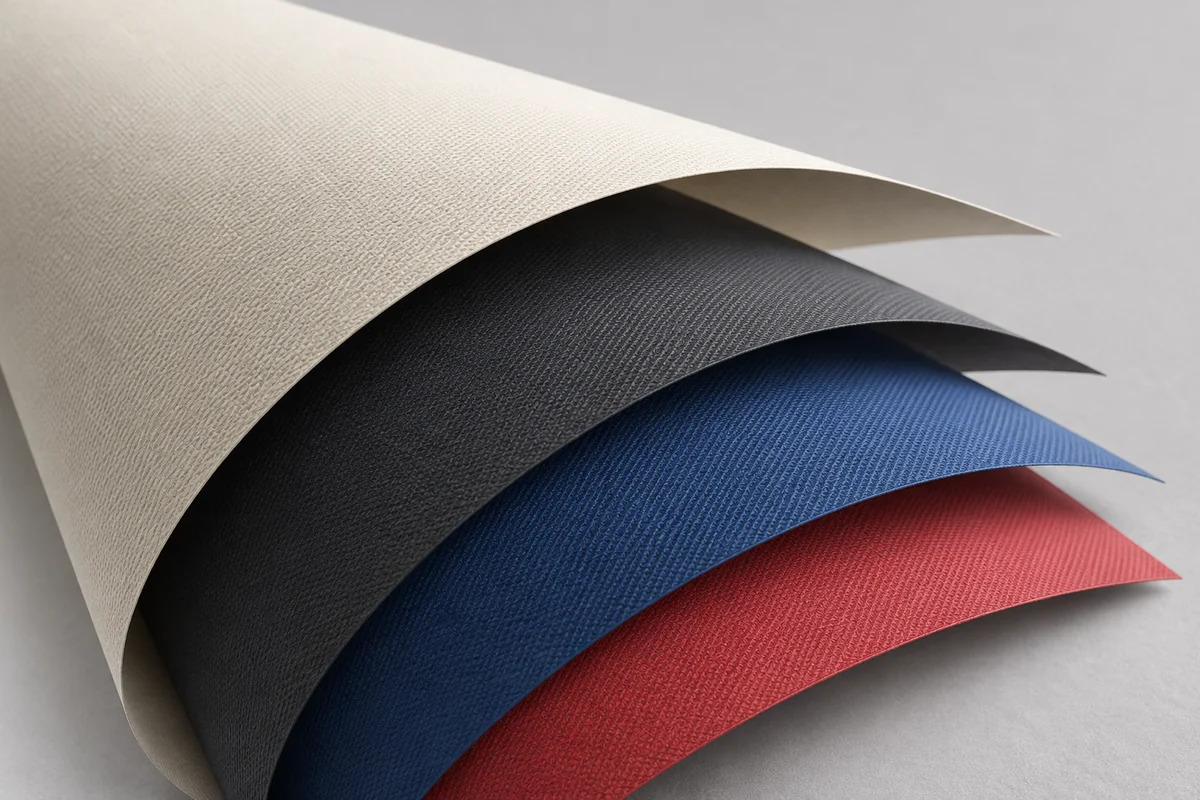
The biggest difference lies in the surface. Ordinary paper is calendered flat to take ink evenly; this paper keeps its fibre structure or is embossed during production, creating a roughness and depth visible to the eye.
- Textured surface — embossed, linen, textured, striped or with a shimmer coating.
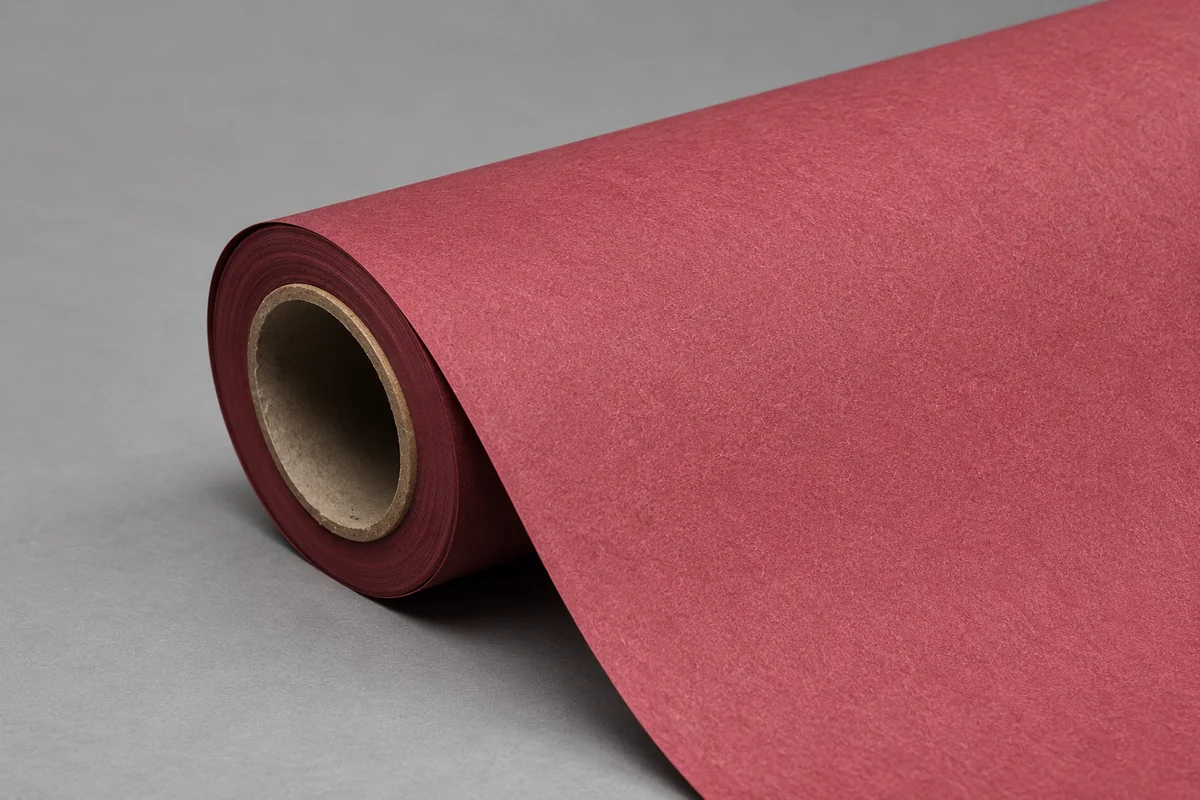
- Colour dyed into the pulp — the colour goes right through the sheet; when cut, the colour still shows at the edge, rather than being printed on top.
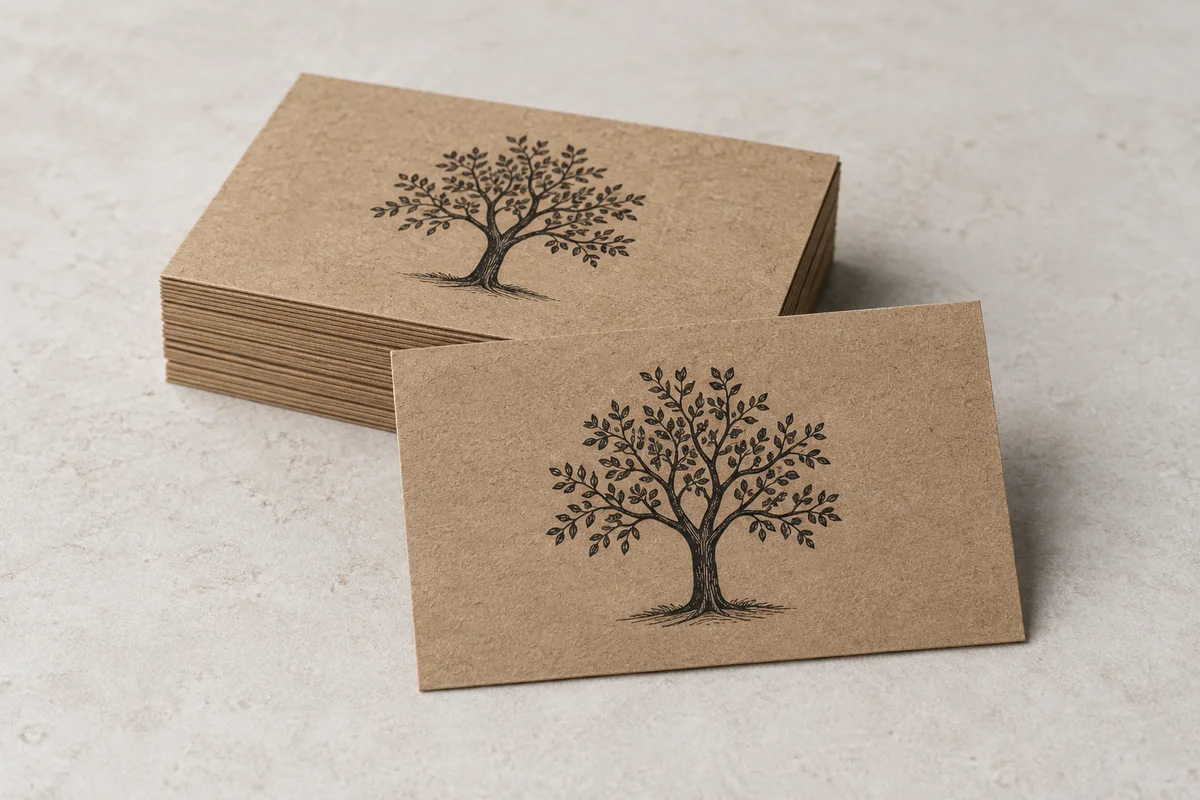
- Heavy weights — commonly from 100 gsm for card inserts up to 350 gsm for business cards and covers.
- Low reflectivity — the surface absorbs light, so items look softer and more subdued than on glossy Couche paper.
- Both sides are usually the same — the texture runs evenly on both sides, so both sides can be printed with consistent paper quality.
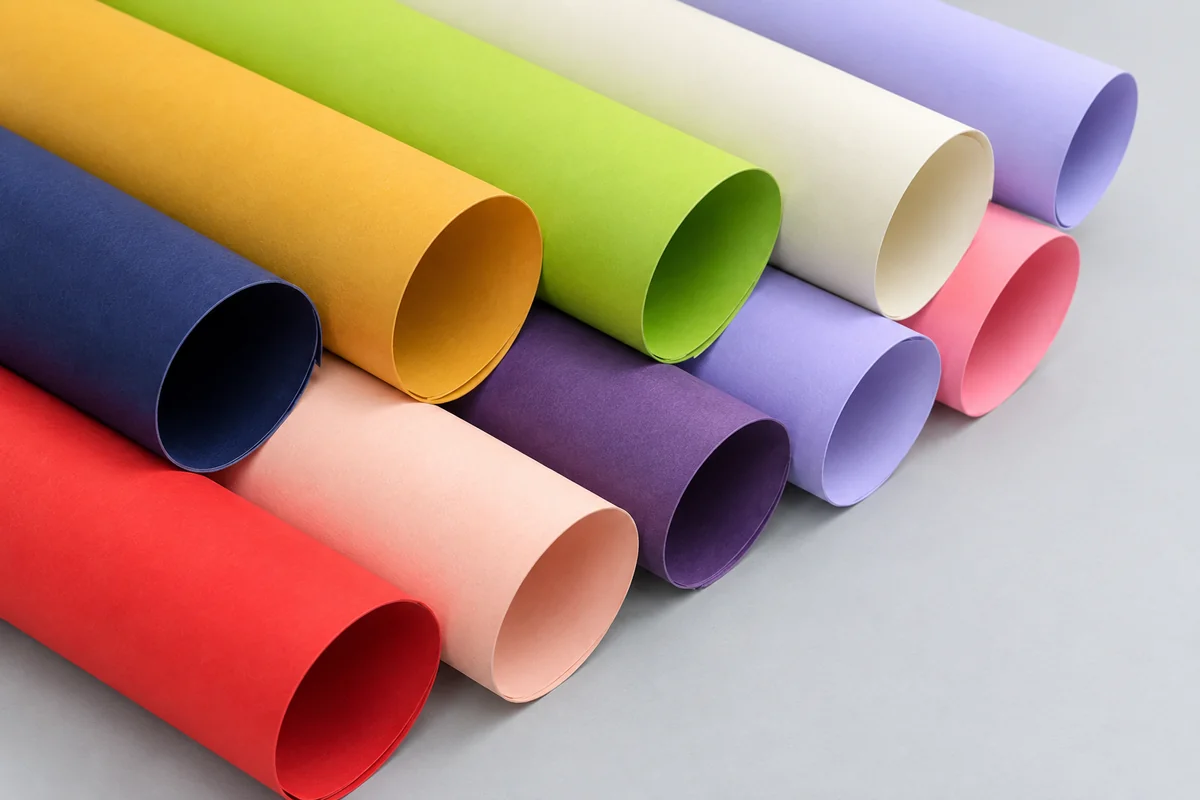
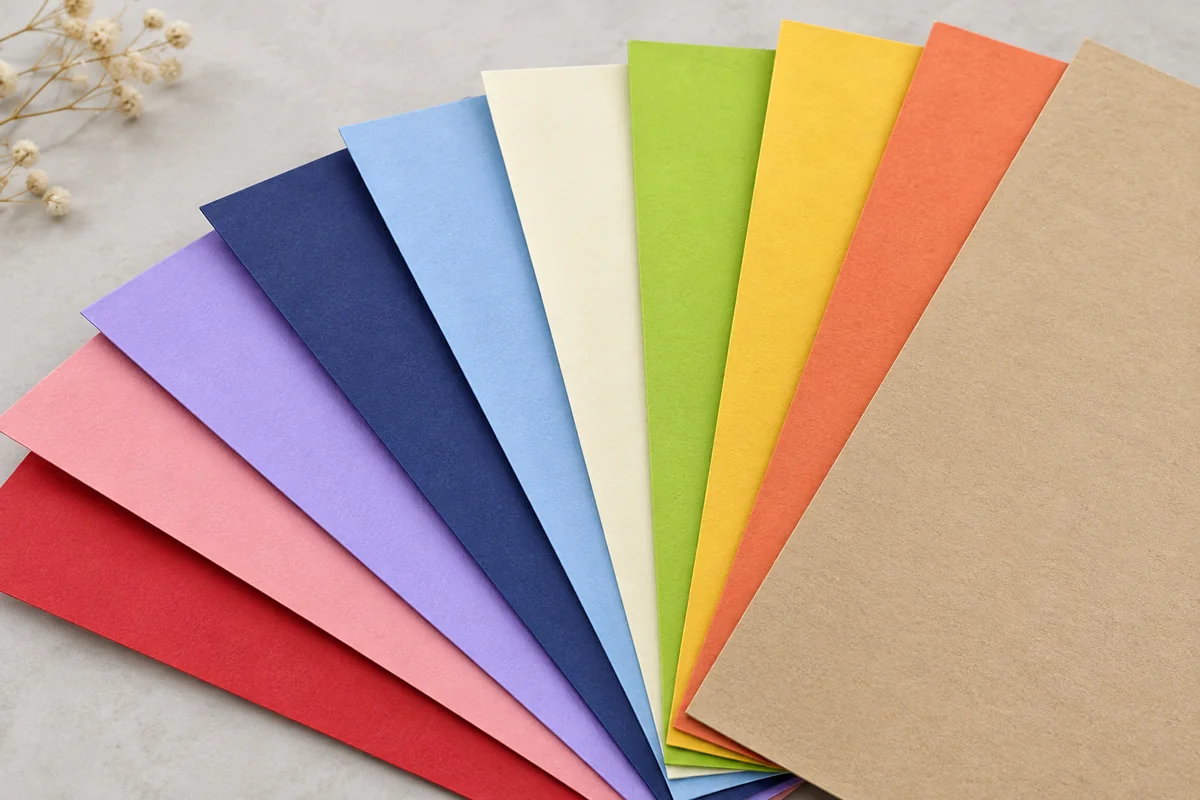
Because the colour is already in the paper, most designs on this paper group work the opposite way to normal printing: the paper colour is the background, and the ink only serves for text and logos. That is also why the paper colour range is as important as the design colour palette.
Fine art paper types we have in stock
Three lines we keep in stock, ready to print as soon as you order:
- N05 — off-white paper with a light texture, used a lot for invitations and certificates.
- Snow 350 — bright white, a substantial 350 gsm, suited to business cards and hard covers.
- Econo 350 — textured surface, 350 gsm, more affordable for large quantities.
Besides the three stocked types there are many other lines ordered per job. If you need a specific texture or colour, tell us a few days in advance so we can source the paper.
Applications: what to print on fine art paper
Business cards and office identity sets
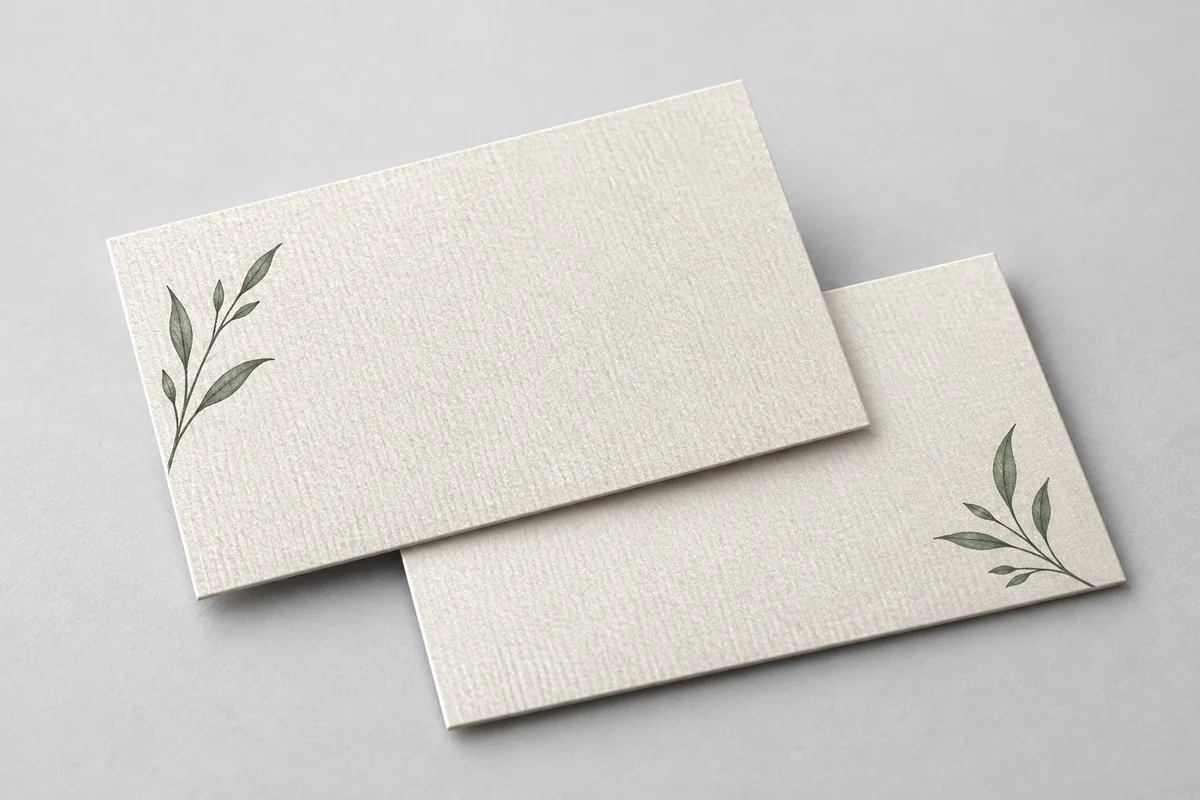
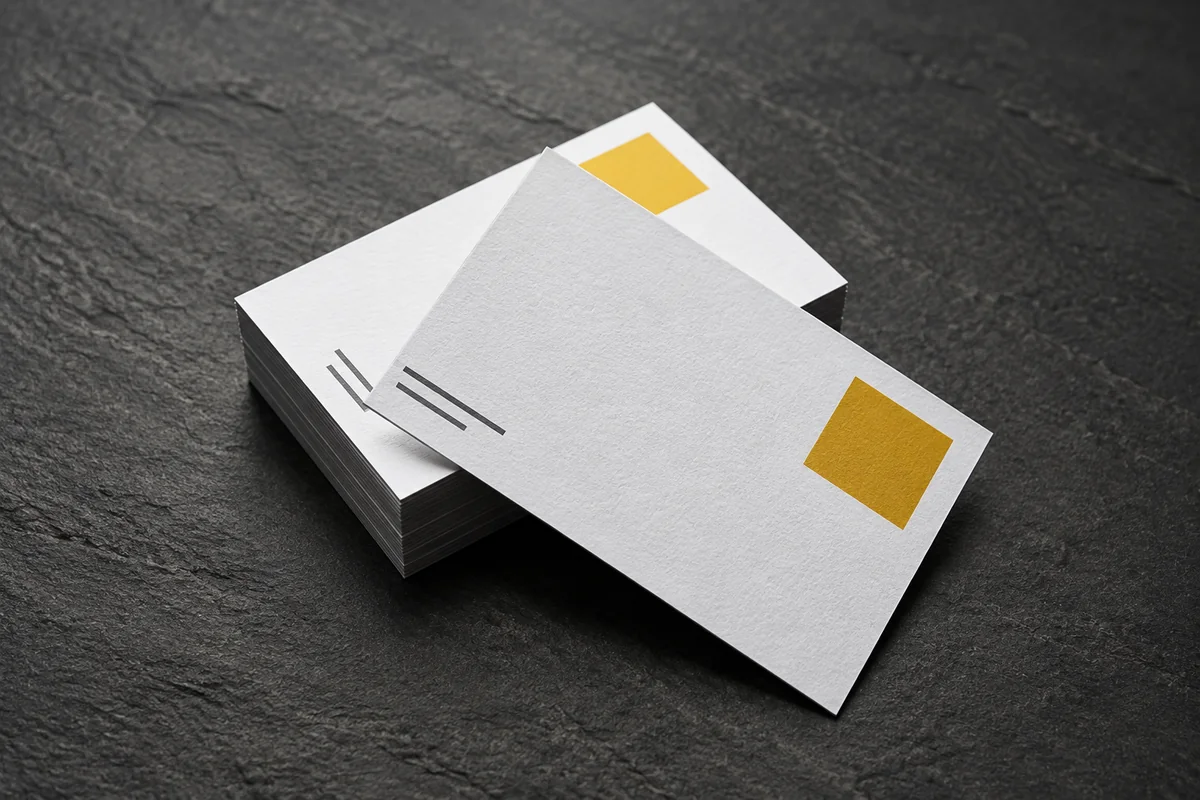
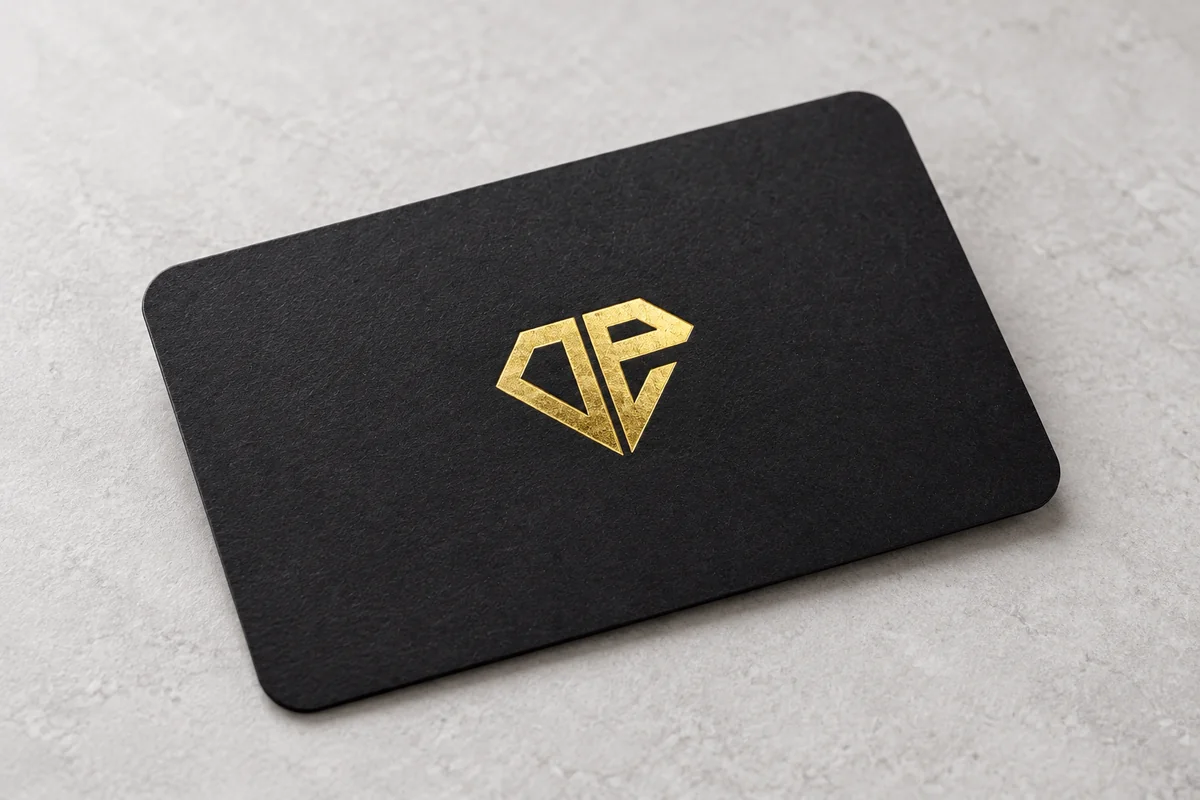
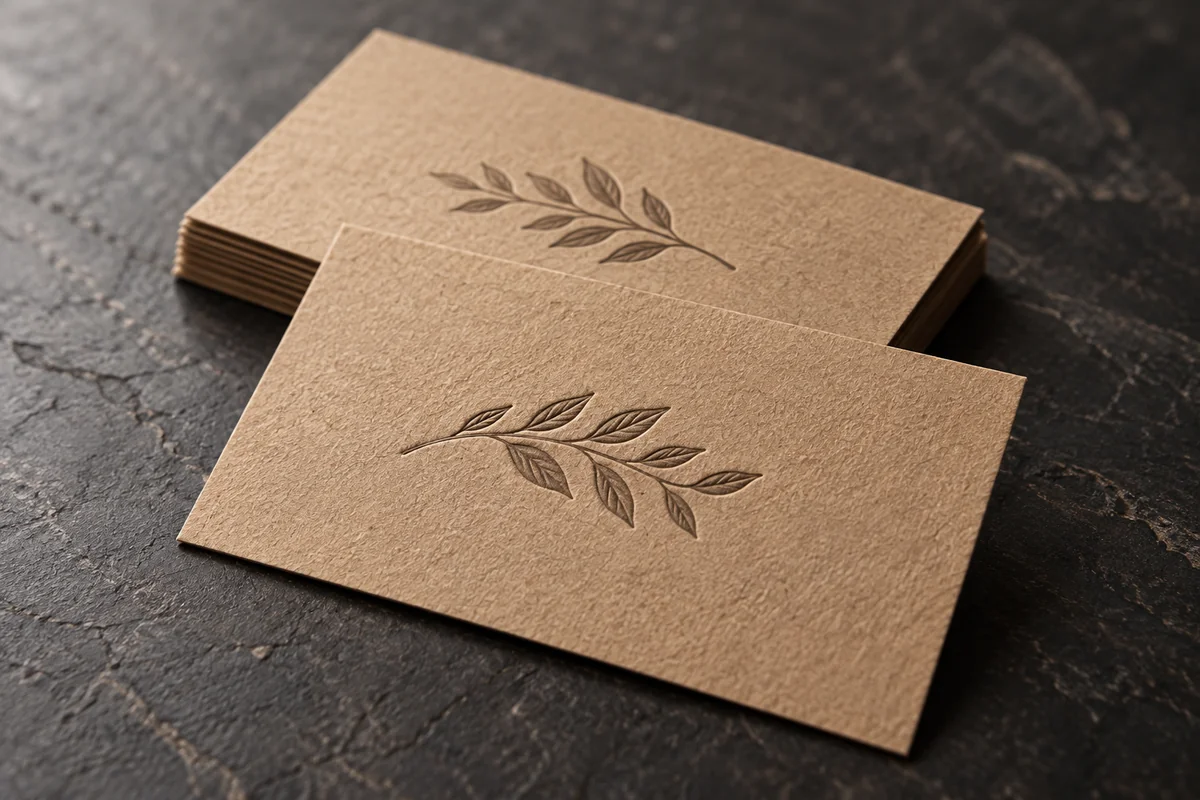
This is the most common application. A business cards printed on 350 gsm paper feels heavy in the hand, with coloured edges, and the recipient remembers it. The same set also includes letter head and folder.
For dark business cards, black paper combined with gold foil stamping or debossing is far more effective than ordinary colour printing.
Invitations, wedding cards and envelopes
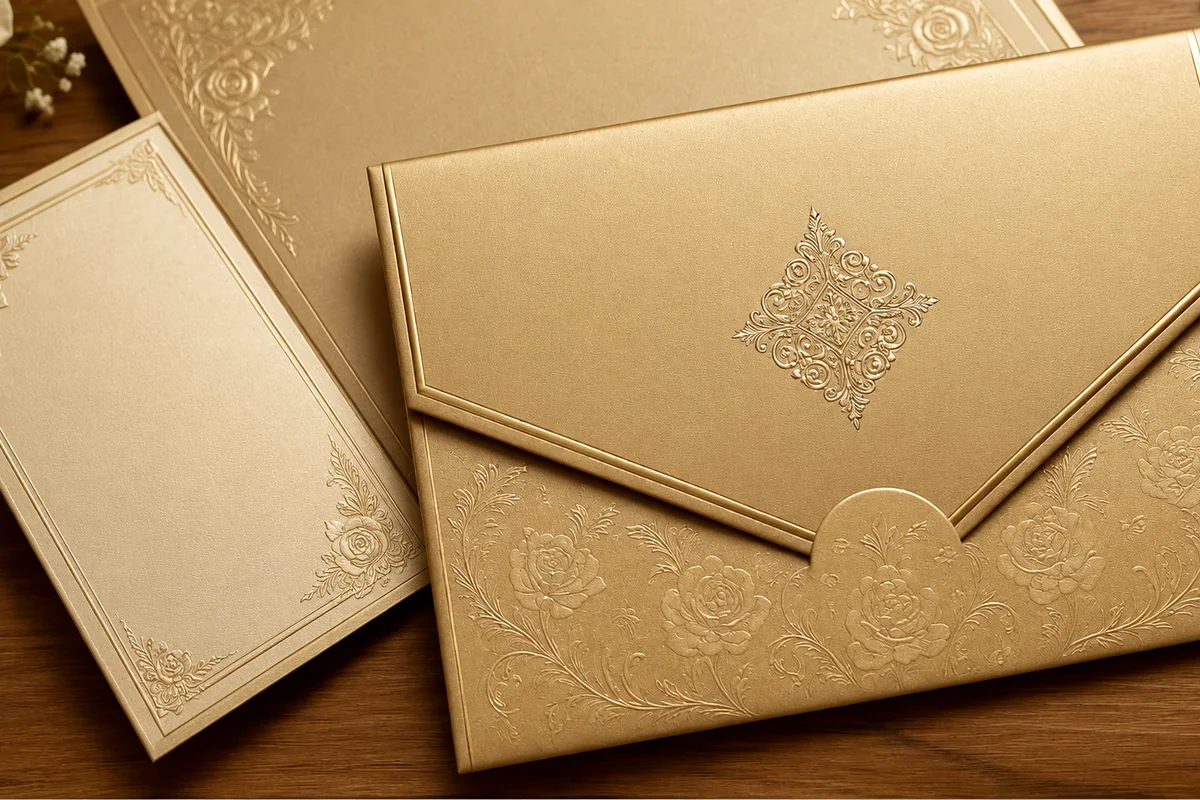
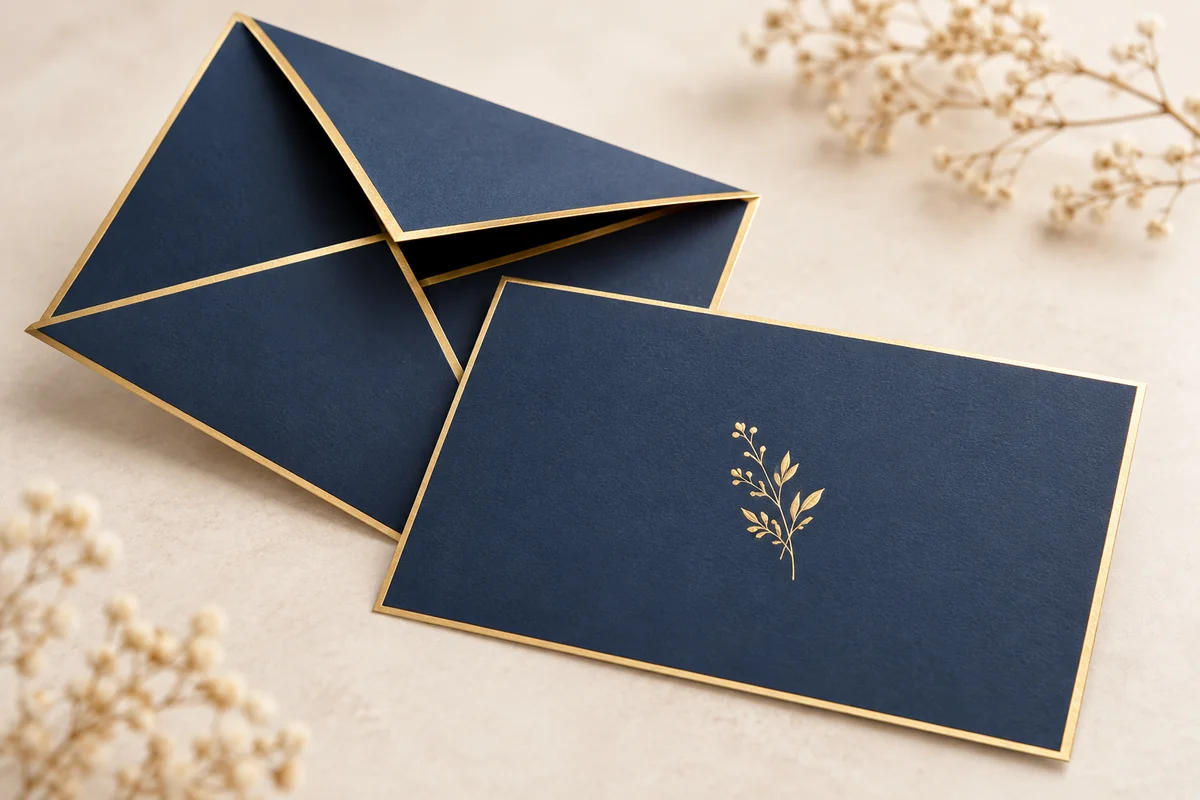
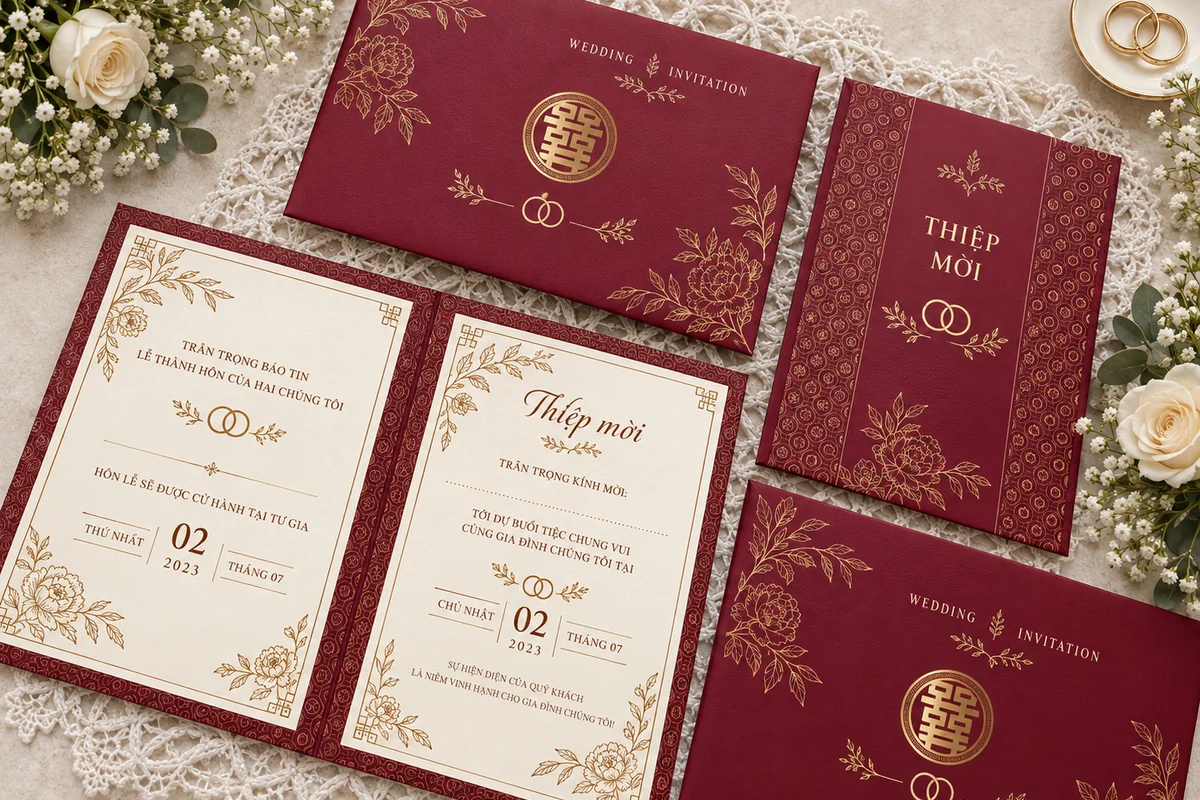
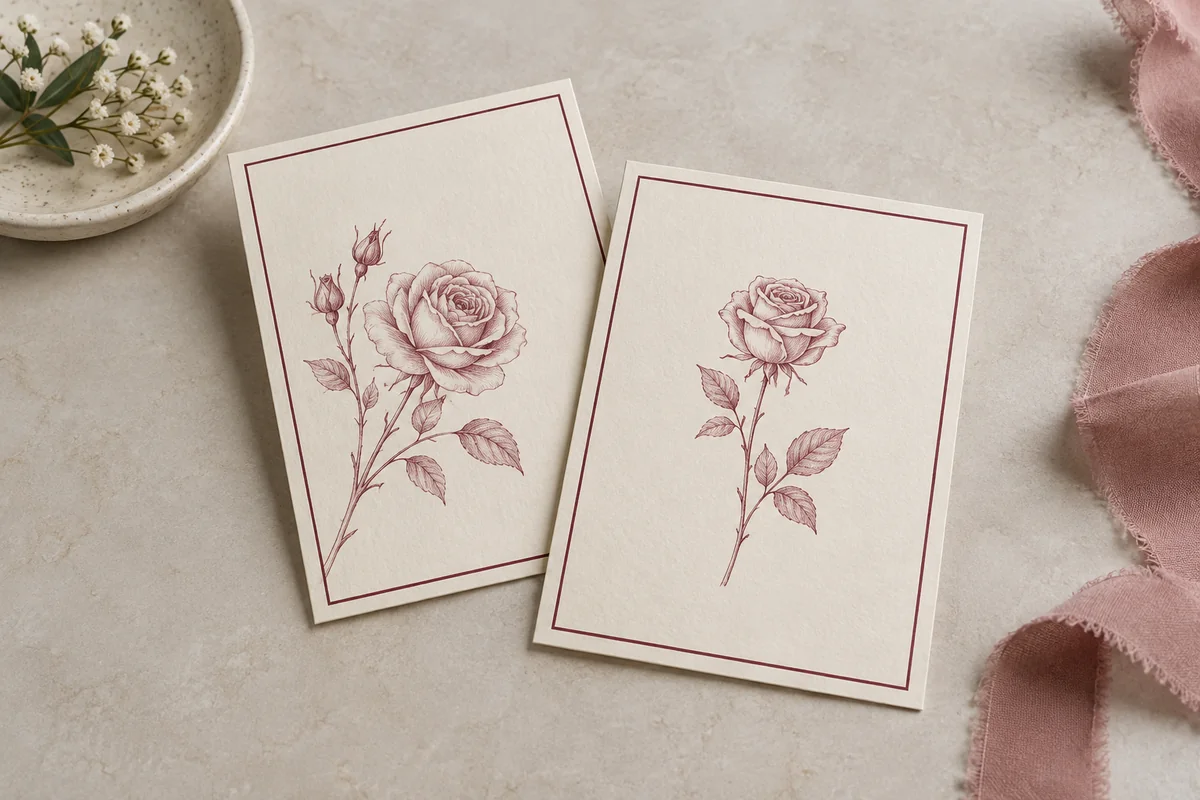
Invitations and envelopes are the group of items associated with this paper the longest. Card inserts usually use 150–180 gsm paper, while covers and envelopes use 250–300 gsm to hold their shape.
Thank-you cards, gift cards, vouchers
Small items included with orders or gift boxes. The small size means the paper cost is negligible, yet the paper quality is the first thing the customer touches. See also Voucher & Giftcard.
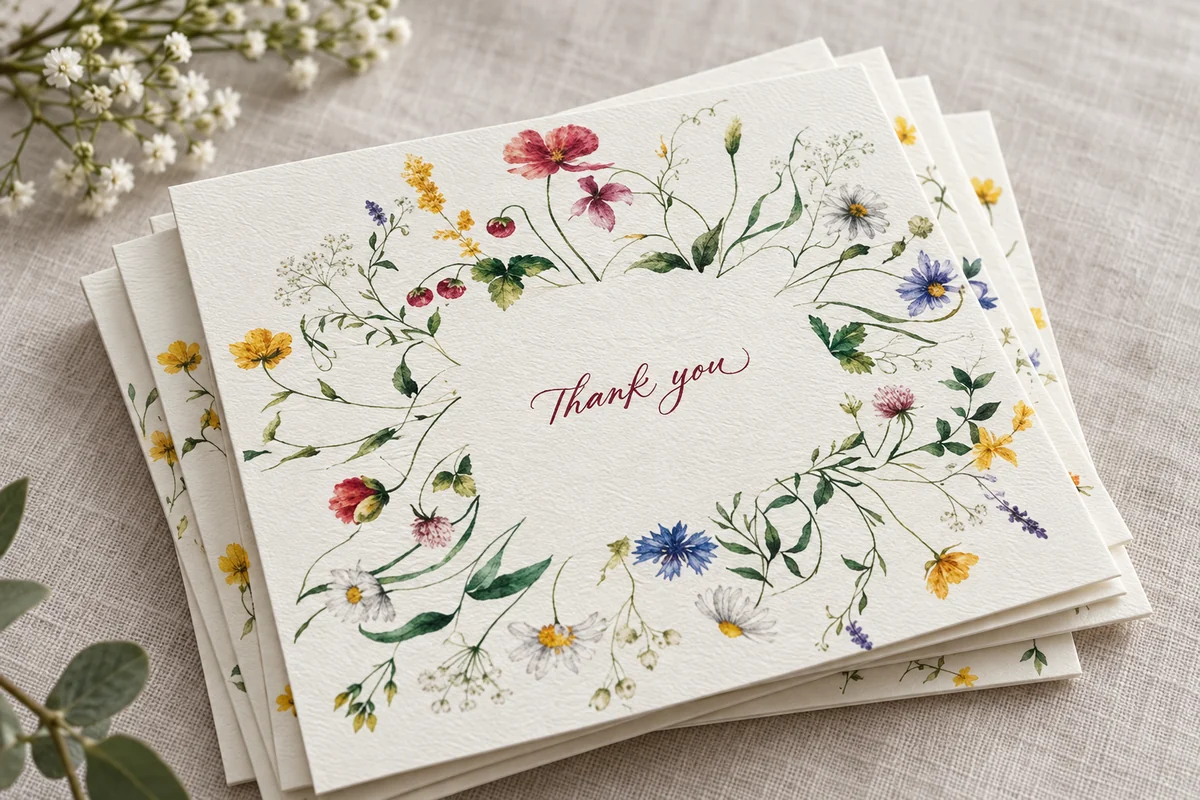
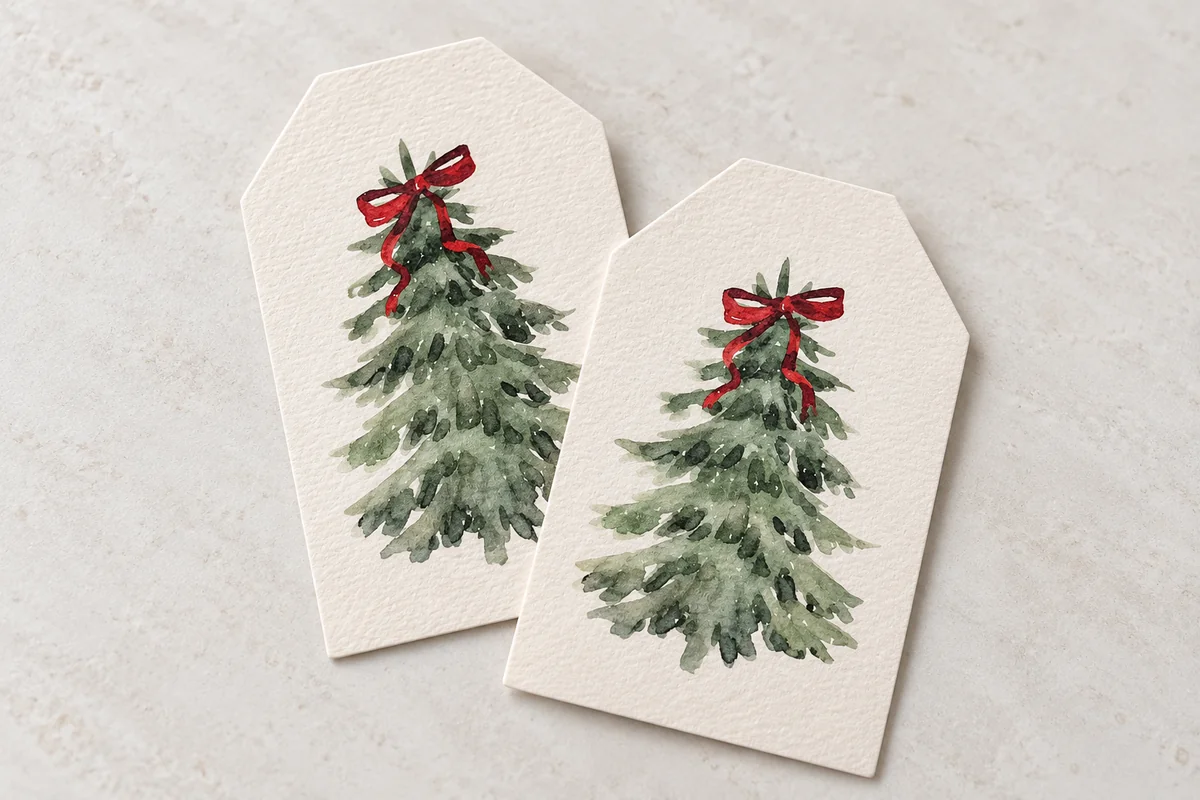
Certificates, awards, document folders
Certificate and catalogue – profile printed on lightly textured off-white paper give an official feel without needing complex finishing.
Finishing techniques suited to fine art paper
The textured surface makes ink look more subdued, so techniques that act on the paper itself usually give better results than full-coverage colour printing:
- Foil stamping — stamping gold, silver or rose gold metallic foil onto the paper. Stands out most on dark fine art paper.
- Debossing, embossing — shaping with a die, no ink used, following the thickness of the paper.
- Shimmer foiling — a thin shimmer layer bonded to small details such as logos and borders.
- Die-cutting and corner rounding — cutting to shape, rounding the corners of business cards and cards.
Conversely, gloss or matte lamination is usually best avoided because the film covers the texture — the very thing customers pay for this paper to have.
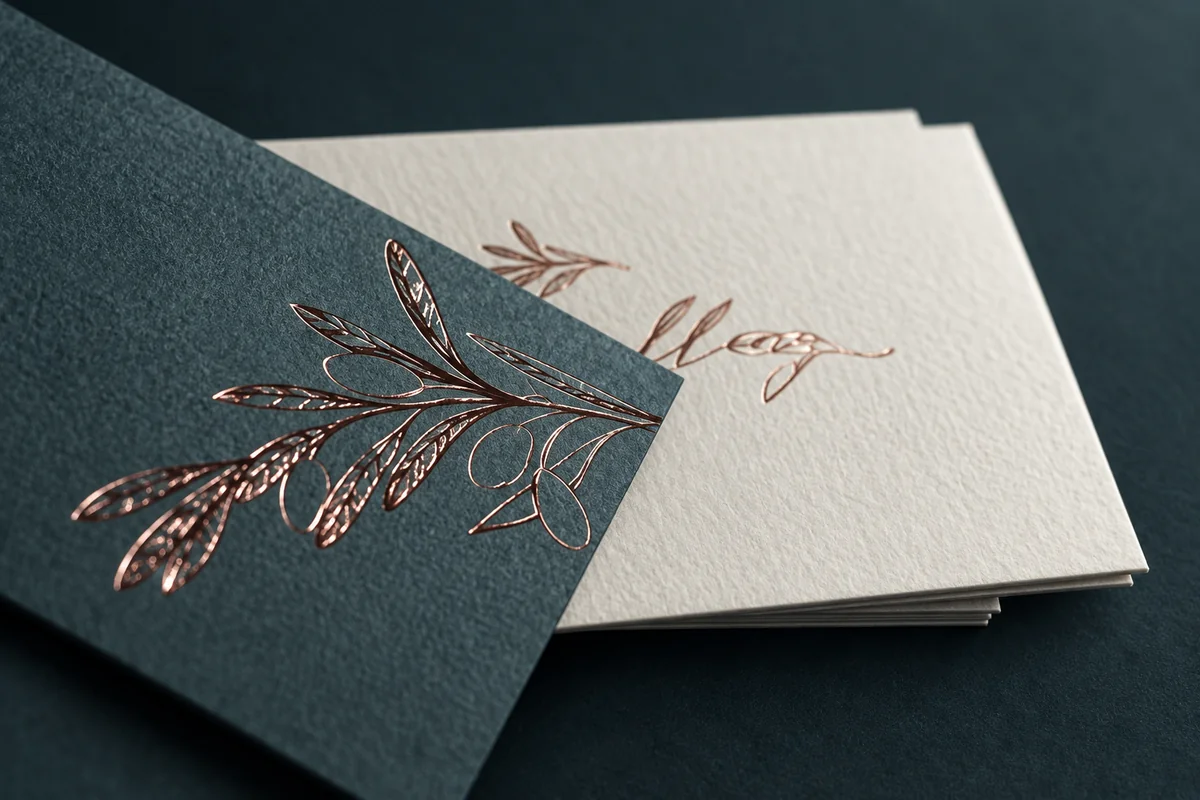
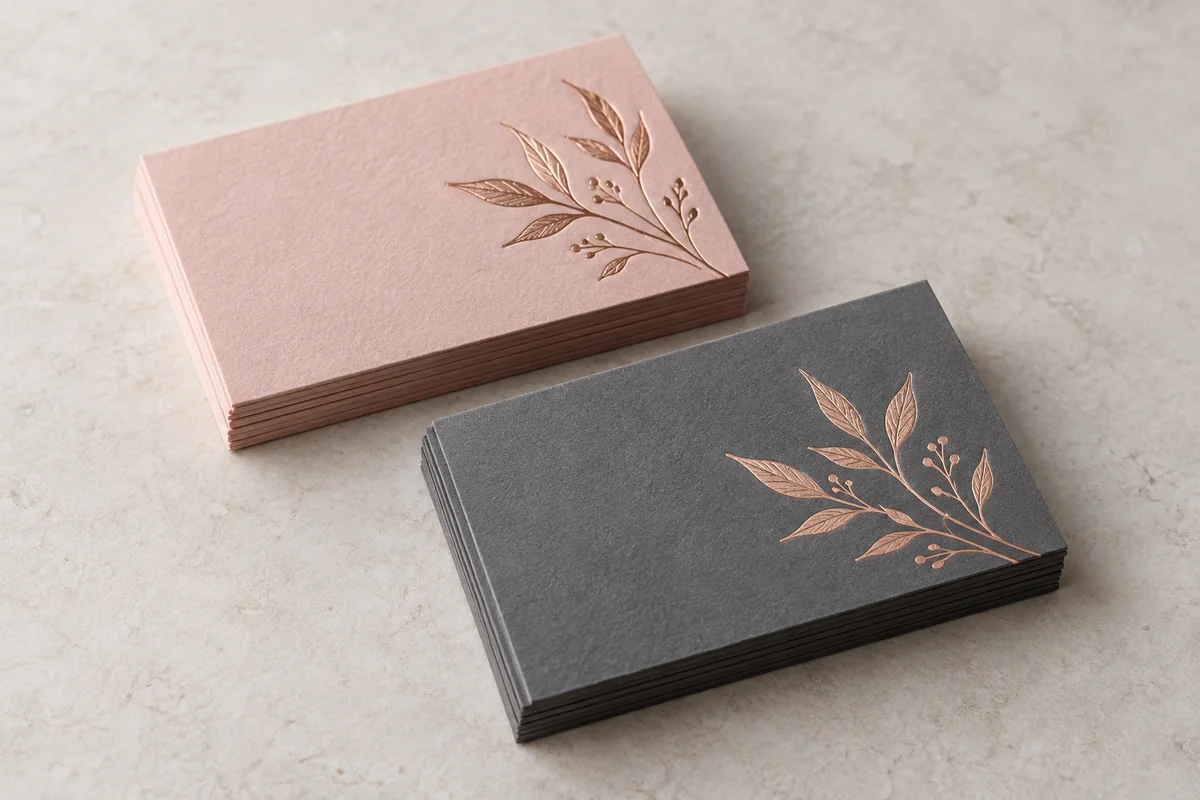
Common weights and sheet sizes
- 100–180 gsm — card inserts, letterheads, box liner paper.
- 200–250 gsm — envelopes, hang tags, vouchers.
- 300–350 gsm — business cards, wedding invitations, document folders, certificates.
Common sheet sizes are 79×109 cm and 65×86 cm. The finished size should be worked out backwards from the sheet size to minimise waste — for small orders, paper usually makes up most of the cost.
Compared with Couche, Bristol and kraft paper
These four paper groups are often weighed against each other for one item. The differences lie in the surface and what the item wants to express.
- Couche Paper — chalk-coated surface, flat and glossy, takes ink most accurately. Choose it when the item is image-led: catalogues, leaflets, posters.
- Bristol Paper — white, smooth, stiff, moderately priced. Choose it when you need stiffness and vivid print colours without a special paper texture.
- Kraft Paper — natural brown, raw, suited to a rustic and eco-friendly direction.
- Paper with texture and dyed-in colour — choose it when what needs to come across is the feel in the hand and formality, not image sharpness.
One set of printed items can use several types: catalogue inner pages on Couche for good images, and the cover on fine art paper for the part people hold. See the full materials catalogue we have available.
Tips for designing print files on fine art paper
- Print colours on textured paper look more subdued than on Couche — this is a property of the paper, not a printing fault.
- Prefer large colour areas and clear text; limit tiny details because very fine strokes are easily swallowed by the paper texture.
- Avoid smooth gradient images and wide gradient backgrounds; the textured surface makes the transitions look pitted.
- Leave a wider safety margin than usual because thick paper is hard to trim with absolute precision.
- Visit the workshop to see real paper samples before deciding — texture and colour on screen do not accurately reflect the paper in your hand.
Frequently asked questions about fine art paper
How much more expensive is fine art paper than ordinary paper?
It depends on the paper line. The difference lies in the paper cost, not the printing cost, so the fewer sheets in the order, the more noticeable the difference. We quote according to the exact paper type and quantity you need.
Can colour photos be printed on fine art paper?
Yes, but the photos will look subdued and lose detail in dark areas. If the item is image-led, Couche is more suitable; fine art paper is strong for text, logos and colour blocks.
Can I see paper samples before printing?
Yes. We keep samples of the available lines so you can feel the texture, compare colours and test the thickness in person at 49 Mai Van Vinh.
Do you accept small orders?
Yes. Business cards and cards printed on this paper are accepted from small quantities. For paper lines not in stock, let us know in advance so we can source enough paper.
Can fine art paper be printed on both sides?
Yes, both sides. Note that dyed paper makes the ink on the back take on the base colour, so double-sided designs on coloured paper usually use only one or two ink colours.
Order fine art paper printing at In Quảng Cáo Q7
If you need business cards, invitations, envelopes or certificates printed on fine art paper, send us the design file to check, or come and see the paper samples in person. Contact 0866.511.099 — our workshop is at 49 Mai Van Vinh, Tan Hung Ward, Ho Chi Minh City. Production & delivery: 8:00–12:00 & 13:00–18:00 Mon–Sat (closed Sun) · Consultation & orders: 8:00–12:00 & 13:00–20:00 Mon–Sat; 14:00–19:00 Sun.
View directions to the workshop on Google Maps
Need printing or signage in Ho Chi Minh City?
In Quảng Cáo Q7 runs its own print workshop in Tân Hưng Ward (former District 7), Ho Chi Minh City, producing and installing signage, banners, window graphics, exhibition booths and event displays. Send us the size, material, quantity and a photo on WhatsApp and we will get back to you.

Phone: +84 866 511 099 · Also on WeChat
Workshop: 49 Mai Văn Vĩnh, Tân Hưng Ward, Ho Chi Minh City
Corporate printed items that often use fine art paper
This textured paper group is chosen when the item needs to look formal without adding costly print effects. The table below lists common items with the recommended finishes.
| Item | Why choose a textured type | Recommended finishes |
|---|---|---|
| Certificates and diplomas | Looks formal, has keepsake value | Trimmed to the exact size |
| Internal awards | Used for presenting and hanging | Trimmed, laminated in plastic if hung for a long time |
| Customer thank-you letters | Feels more personal than ordinary paper | Trimmed, with an envelope |
| Company event invitations | The paper texture replaces print effects | Trimmed, folded in half if needed |
| Company profile covers | Stands out from the very first page | Perfect binding |
| Annual report cover pages | Formal, does not show fingerprints much | Matte lamination if durability is needed |
| Premium information cards | Thick and textured | Trimmed, laminated both sides |
Certificates and thank-you letters are usually ordered in small quantities and needed right away, for example adding a few more sheets after the list is finalised. Because we run digital printers with no plates needed, even a single-sheet order is accepted.
Limitations to know before printing
The textured surface is an advantage in feel but also brings a few technical printing limitations. The table below lists the points to know before deciding.
| Limited | Symptom | How to fix |
|---|---|---|
| Small details look noisy | Very small text is hard to read | Increase the font size compared with printing on flat paper |
| Solid dark background areas look uneven | The texture clearly shows on the background | Limit solid backgrounds, keep the layout airy |
| Detailed photos look less sharp | Product photos are not as clear as on coated paper | Image-heavy items should use Couche paper |
| Each texture takes ink differently | The same file gives two different results | Print a test on the exact type you will use |
| Higher price than ordinary paper | Higher cost per sheet | Use only for items that need to look formal |
| Absorbs moisture faster | Ripples easily if kept in a damp place | Store flat in a hard folder, in a dry place |
Because each texture gives a different result, seeing the real paper sample or printing a test sheet matters more than with flat papers. We have samples at the counter for you to hold and compare, which takes about 5 to 10 minutes.
Fine art paper printing prices and lead times
The table below shows the starting prices and reference lead times, decreasing by quantity tier.
| Item | Specification | Starting price |
|---|---|---|
| Photo Paper and Fine Art Paper Printing | 1 – 2 sided printing | from 12.000đ |
| Colour printing on Couche paper 150 – 300gsm | A4, A3, 1 – 2 sided printing | from 9.800đ |
| Colour printing on Fort paper 80 – 250gsm | A4, A3, 1 – 2 sided printing | from 8.000đ |
| Trimming | Per package | from 15.000đ, free from 20 sheets |
| Gloss or matte lamination | 1 – 2 sided lamination | from 300đ per sheet |
| Plastic laminating | A5, A4, A3 | from 3.000đ per sheet |
| Binding | A4 portrait or landscape, 6 styles | from 2.000đ per copy |
| Quantity | Printing time | With trimming |
|---|---|---|
| Under 10 sheets | 15 – 30 minutes | Add 10 – 20 minutes |
| 10 – 50 sheets | 30 – 50 minutes | Add 20 – 40 minutes |
| 50 – 200 sheets | 50 – 90 minutes | Add 40 – 60 minutes |
| Over 200 sheets | The workshop gives a specific time | The workshop gives a specific time |
Our workshop is at 49 Mai Van Vinh, Tan Hung Ward, Ho Chi Minh City. You can pick up at the workshop or choose ride-hailing delivery within the inner city, usually received 20 to 45 minutes after the goods leave the workshop.
What is the starting price for printing on fine art paper?
The starting level is from 12.000đ for single- or double-sided printing. Trimming is charged per package, from 15.000đ and free for orders from 20 sheets. Prices decrease by quantity tier.
Why is small text hard to read when printed on textured paper?
Because the surface has a texture, very small details are disturbed by it. Use a larger font size than when printing on flat paper, keep black text in single black, and limit solid dark background areas.
Can I see paper samples before printing?
Yes. We have real paper samples at the counter for you to hold and compare, which takes about 5 to 10 minutes. You can also print a test sheet on the type you have chosen, or test two types to compare before running the whole batch.
Should items with many product photos use this paper?
Not recommended. The paper texture makes photo details less sharp, so image-heavy catalogues and leaflets are better on Couche paper 150 – 300gsm. Textured papers are best kept for certificates, cards and covers.
How should printed items be stored?
Keep them flat in a hard folder, not rolled or folded. Avoid damp places because textured paper absorbs moisture faster and ripples easily. Avoid direct sunlight because the print colours will gradually fade.
Order printing at In Quảng Cáo Q7
Our workshop is at 49 Mai Van Vinh, Tan Hung Ward, Ho Chi Minh City, with real paper samples for you to hold and compare before choosing a texture. Printing and finishing are done in the same place, so orders do not have to be sent elsewhere to be finished.
- Look at paper samples or describe the feel you want, to choose the right texture.
- Send a CMYK PDF file with the quantity, print size, number of printed sides and trimming requirements.
- Approve a sample sheet printed on the exact paper to be used, then confirm the full run.
- Pick up at the workshop or choose ride-hailing delivery within the inner city.
- Send the company name, tax code, address and email if you need invoices.
If the item is a certificate or award with the recipient's name printed directly, merge the list of names into one PDF file in the correct order. Print a test sheet with the longest name on the list to check that it fits the frame.
Once you have settled on a paper, note down its name along with the final PDF file and one sample sheet. That way later orders keep the same feel as the previous batch, and you do not have to choose the texture again from scratch.