




































































Kraft Paper: natural brown, tough and eco-friendly
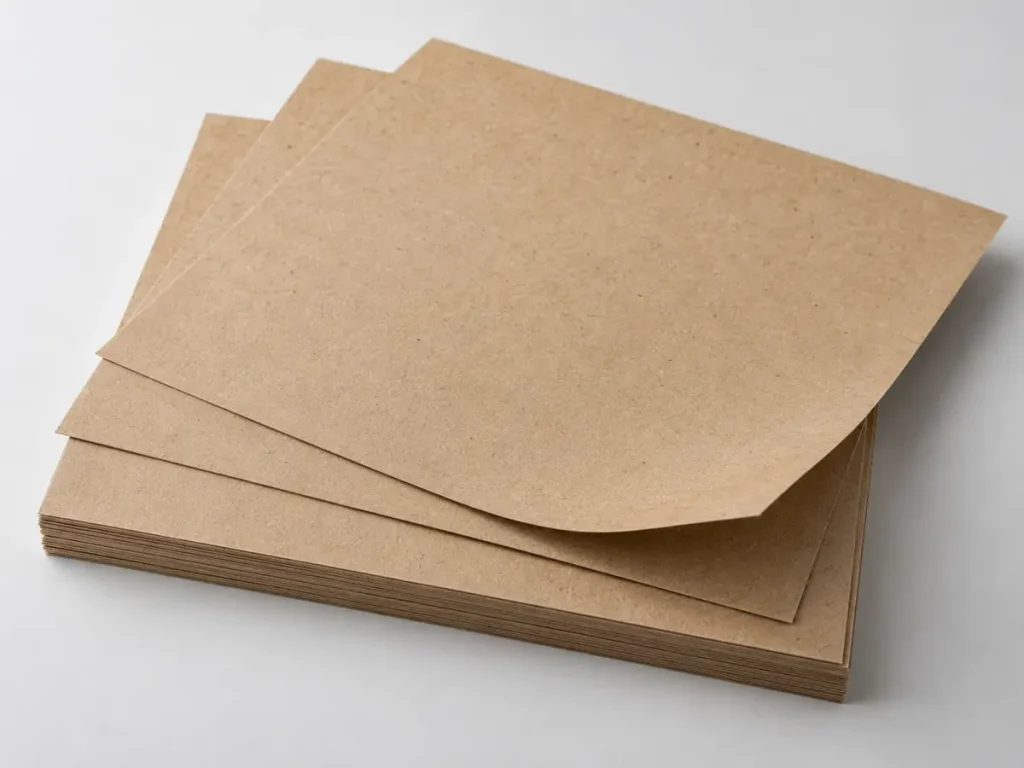
Sep
Bread bags at the bakery, takeaway food boxes, hang tags on clothes at fashion shops — all of them are kraft paper. This raw brown paper is chosen for two very different reasons: it is tougher than ordinary paper, and its look tells customers straight away that the brand goes the natural way.
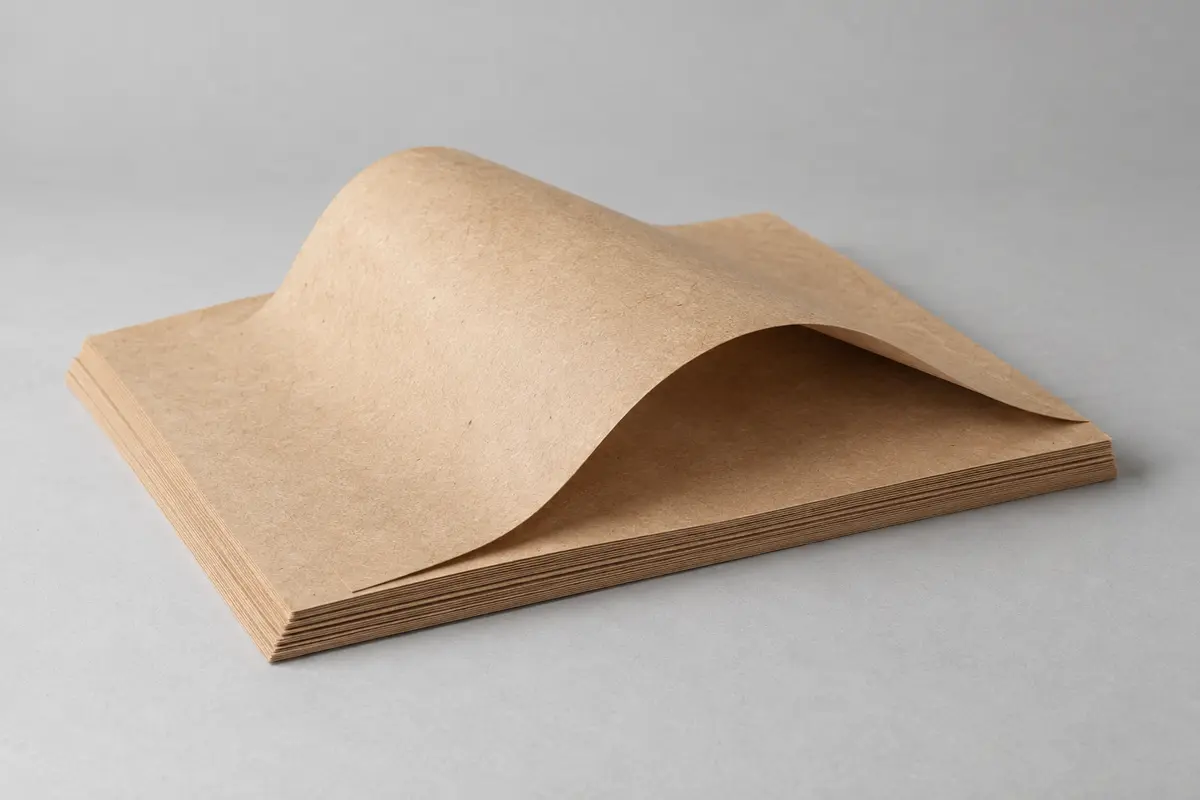
What kraft paper is
Kraft paper keeps the natural brown colour of the pulp, without bleaching. Because the bleaching step is skipped, the fibres are not weakened — they are long and intact, producing a very tough sheet that does not tear even after being pulled and folded many times. This is why kraft is used for carrier bags and packaging for heavy goods.
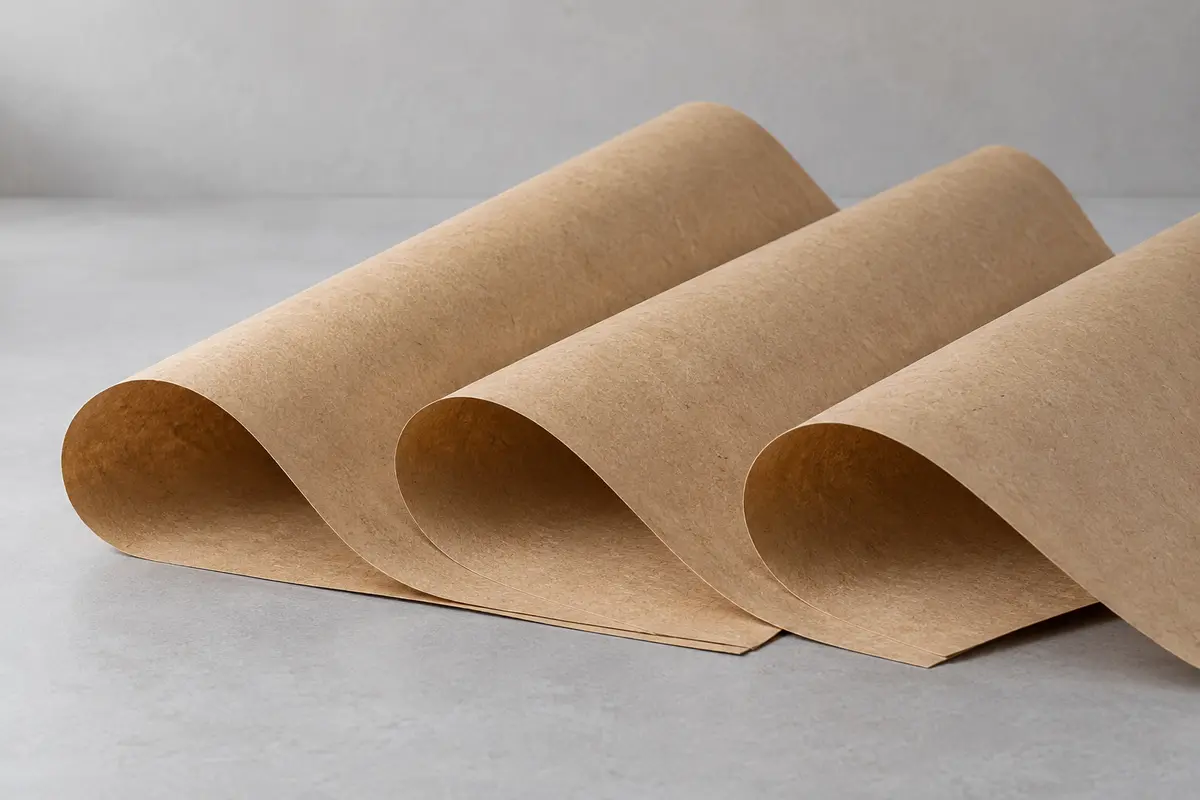
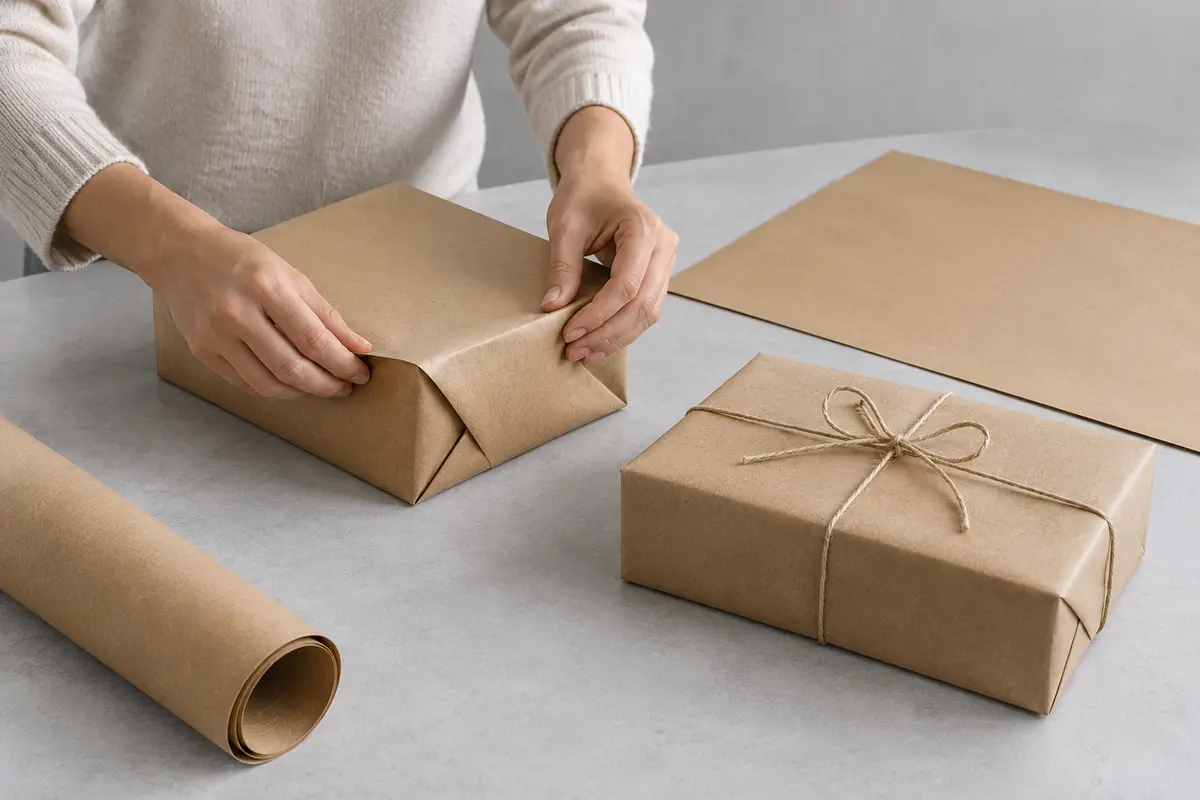
The brown colour is also not perfectly uniform between paper batches; sometimes a few darker fibres can be seen in the sheet. That is a natural property of unbleached paper, not a paper defect.
The most important thing when printing on kraft paper
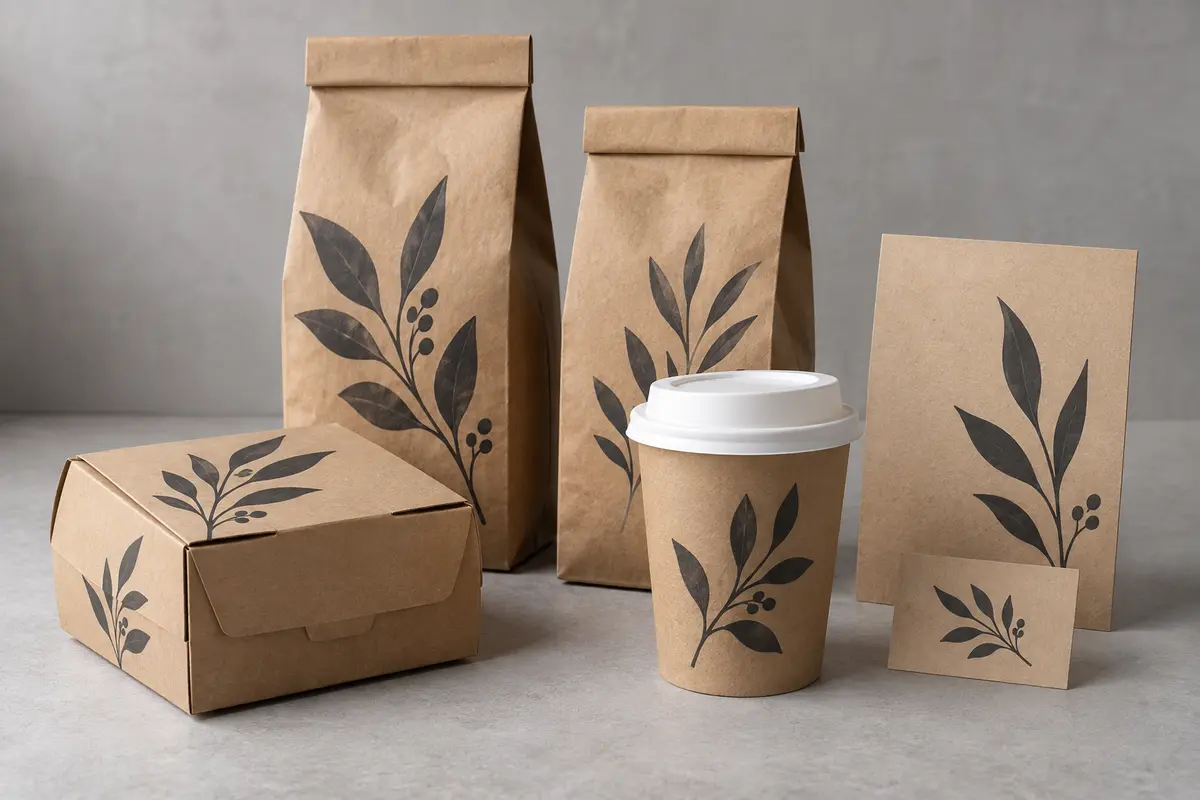
Because the paper base is brown, every printed colour gets a brown cast and looks darker. Light colours such as lemon yellow, pastel pink and mint green barely show. Designs on kraft look best with one dark colour — black, white, navy blue or burgundy — rather than multi-coloured gradient images.
White needs special attention: on white paper, white text is simply the unprinted area. On kraft there is no “white area” to leave unprinted, so to get white text or images you must print white ink — a special technique. Tell us in advance so we can choose the right printing method.
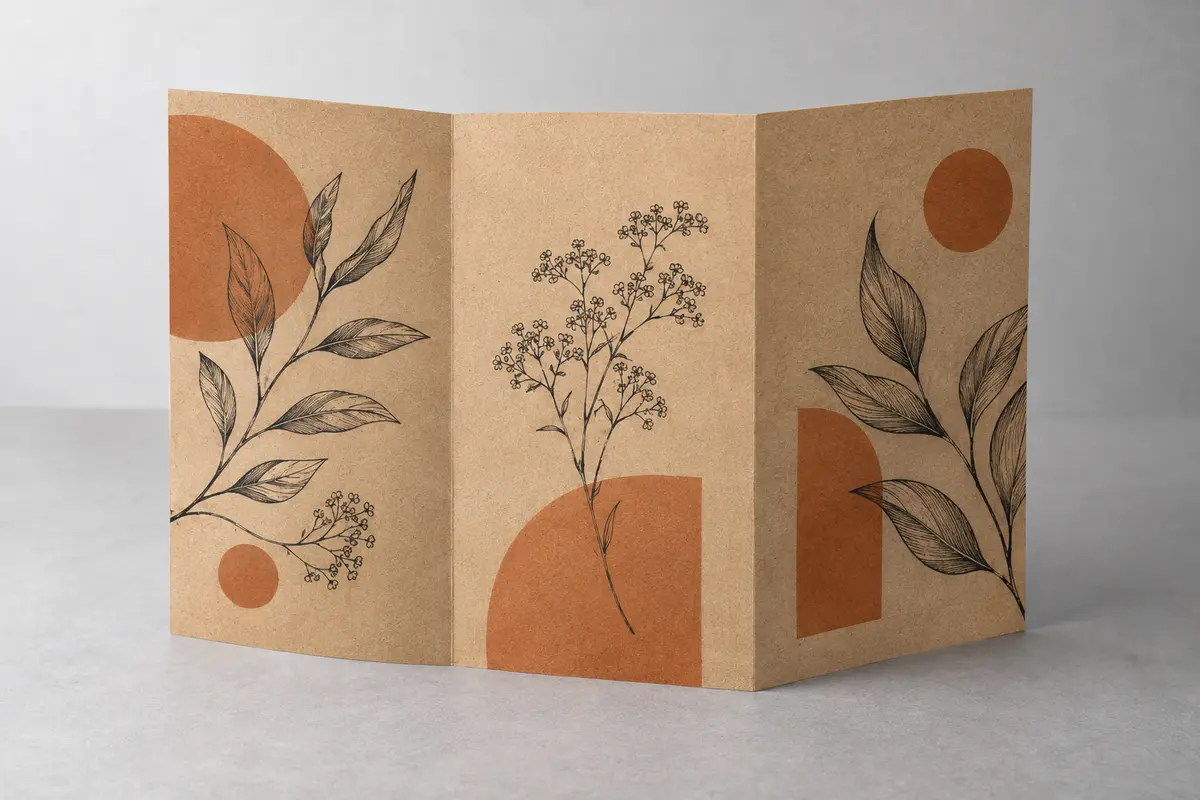
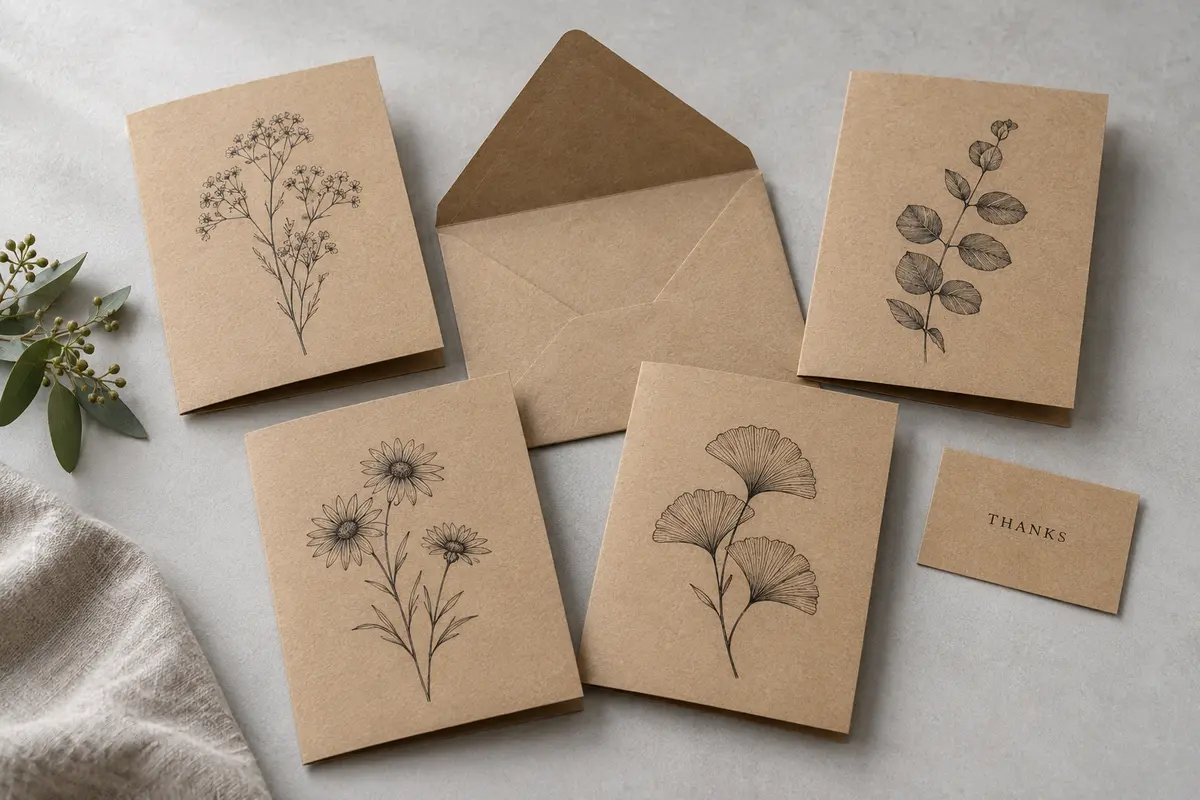
On the other hand, kraft is especially well suited to foil stamping and debossing. Metallic sheen on a raw brown base creates very strong contrast; this is a familiar approach for gift brands and natural cosmetics brands.
Weights and specifications we stock
The In Quảng Cáo Q7 workshop currently stocks 300gsm kraft paper — a weight stiff enough for hang tags, covers and medium-sized bags. Thinner kraft types used as liners or wrapping paper are ordered per job; let us know in advance so we can source the paper.
Items commonly printed on kraft paper
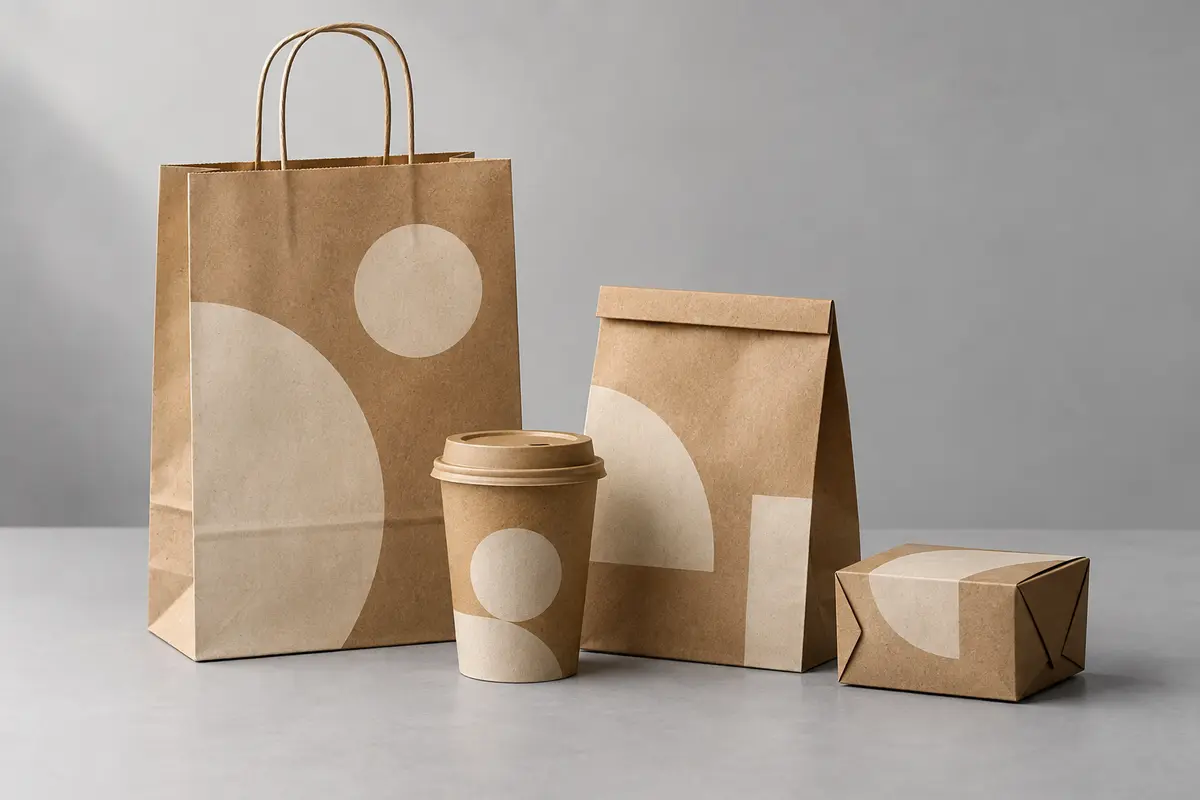
- Paper bags for carrying goods, gift bags, takeaway bags.
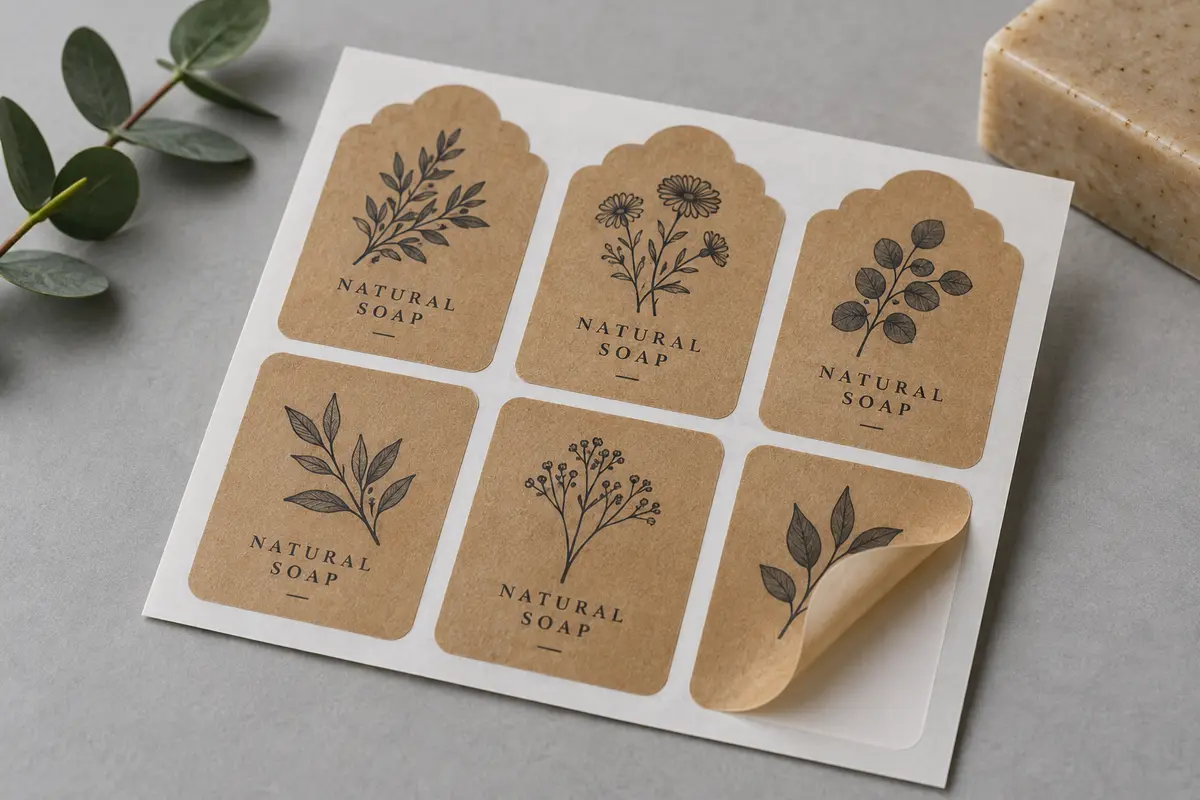
- Product hang tags, price tags for fashion shops and florists.
- Raw paper boxes for cafés, bakeries and restaurants.
- Business cards in a rustic style, thank-you cards included with orders.
- Labels & stickers for jars, bottles and handmade product packaging.
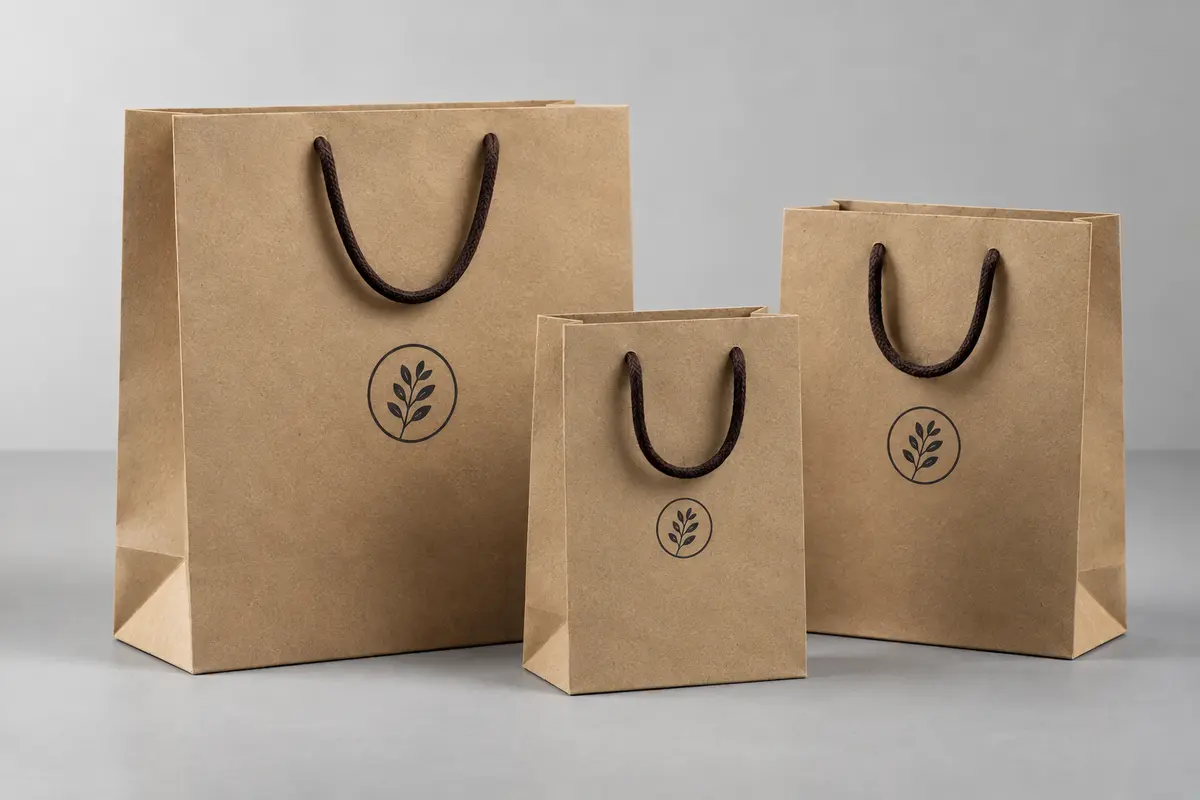
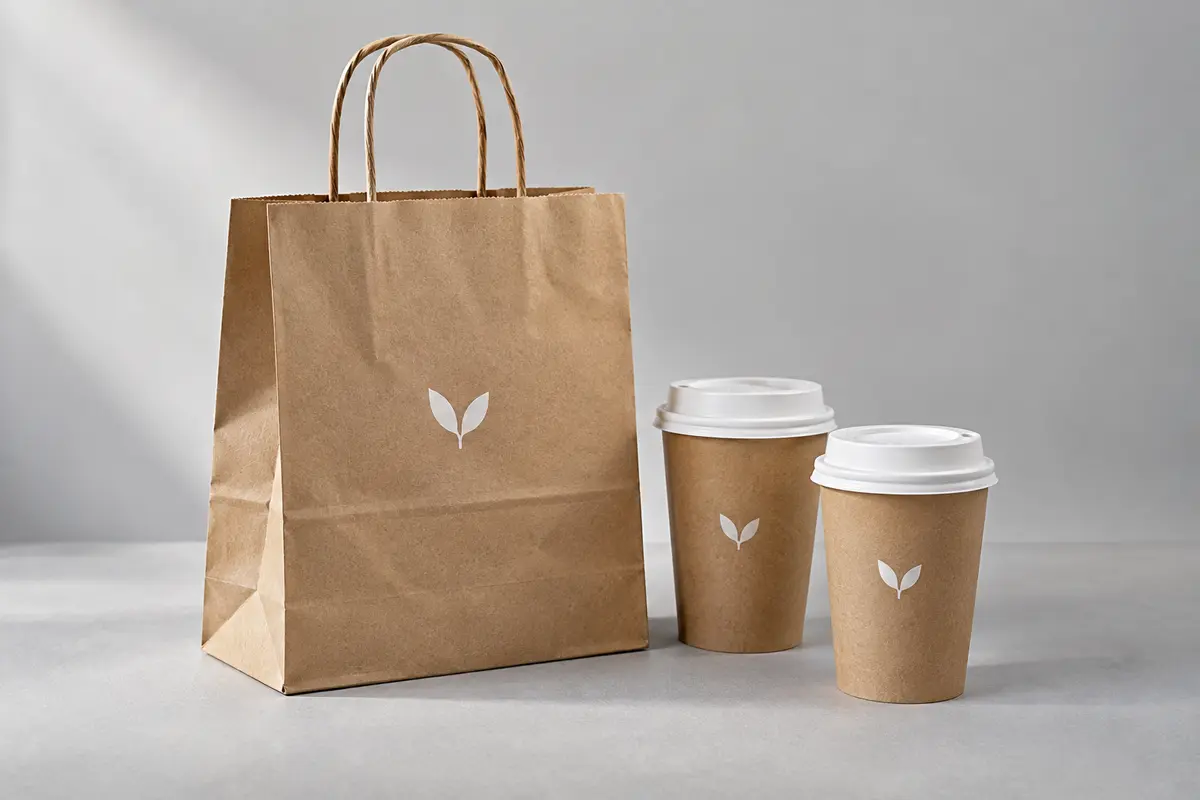
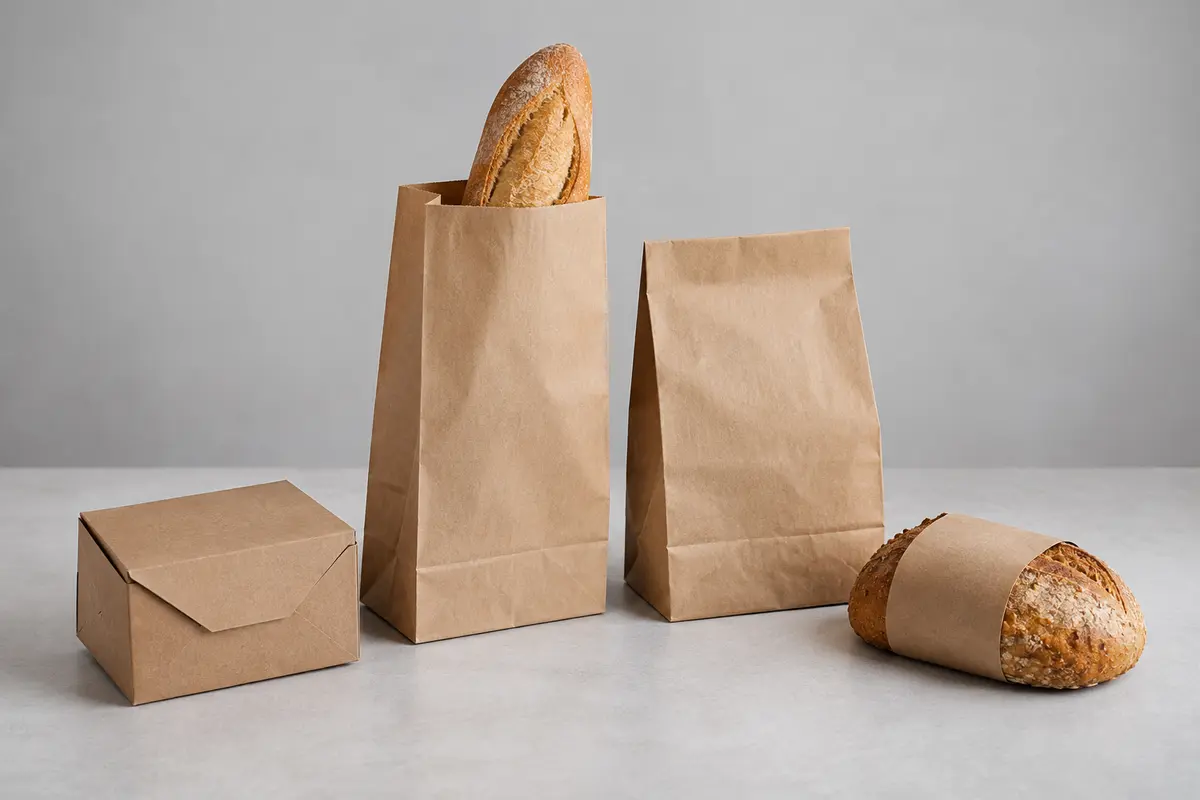
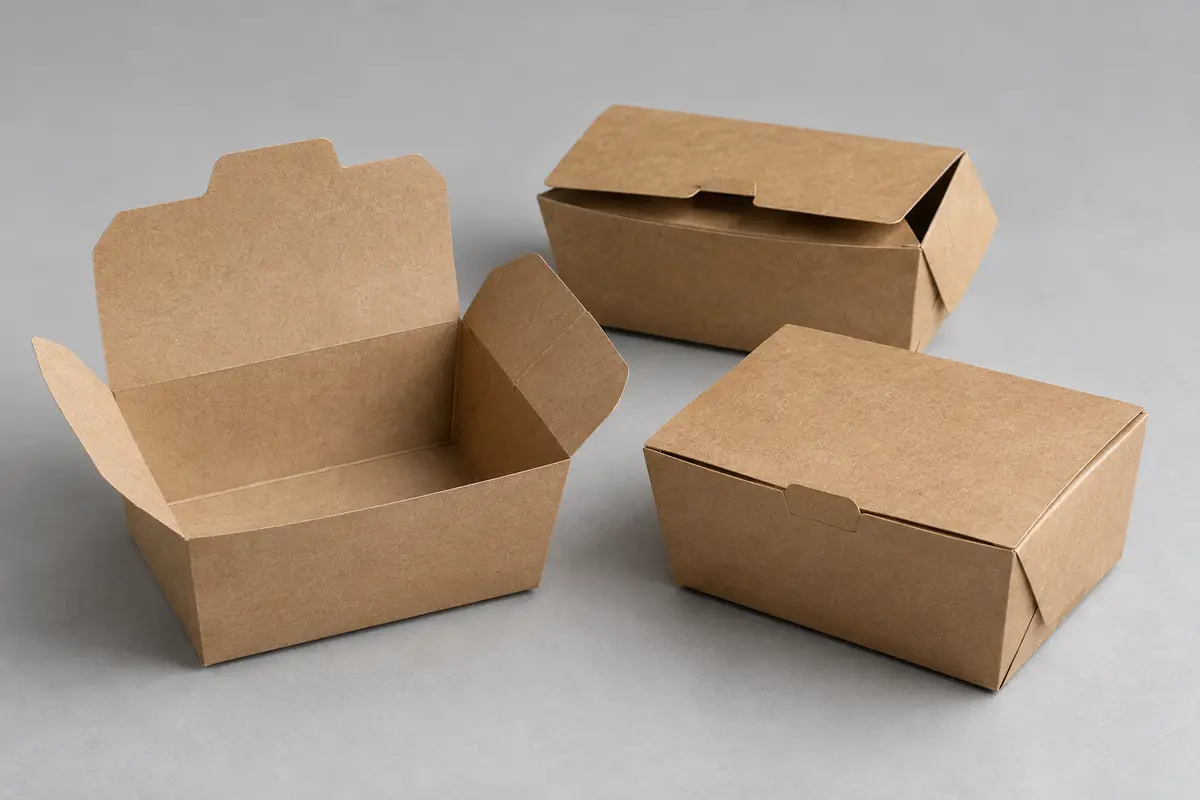
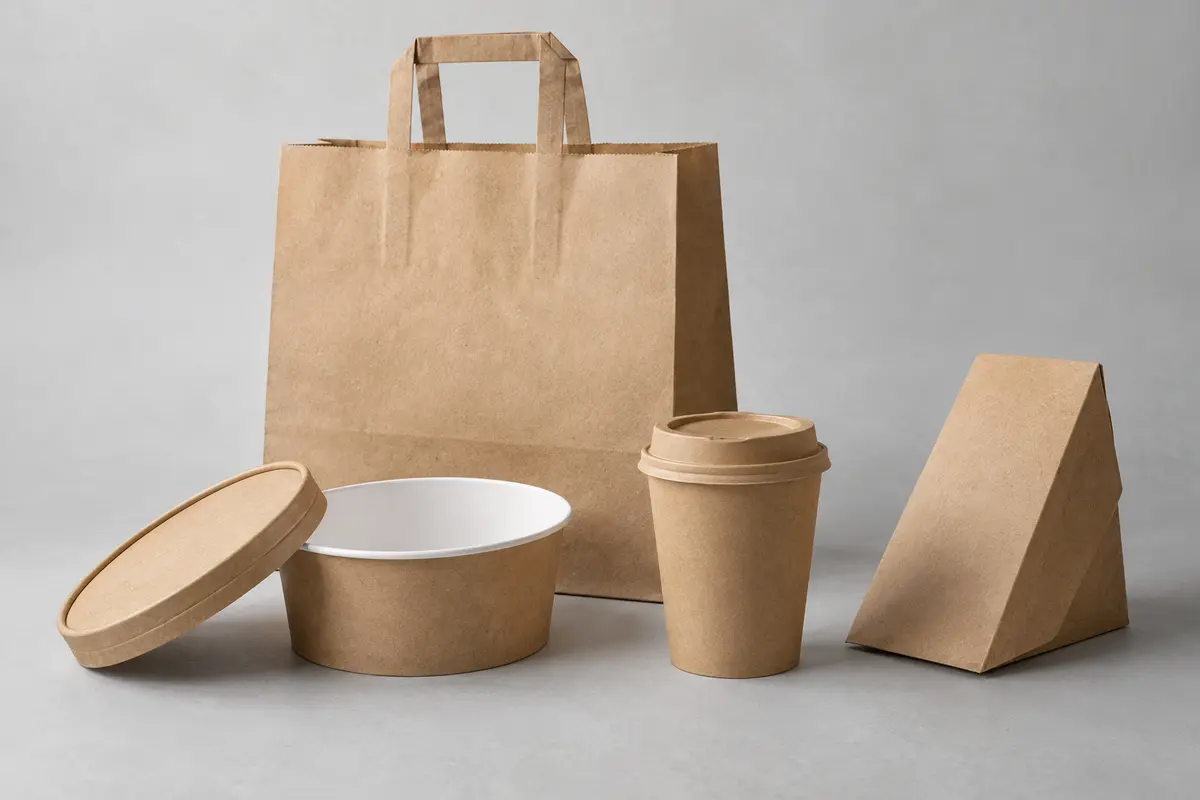
For cafés and bakeries, the most effective approach is to print the whole set consistently — bags, boxes, cups, cards — with the same single-colour logo. The cost is not high because it is only one colour, yet the brand is recognisable at a glance.
Is kraft paper environmentally friendly?
Kraft is often presented as an environmentally friendly choice, and there is a basis for this: skipping the bleaching step means fewer chemicals in production, and unlaminated kraft paper decomposes or recycles easily. However, if plastic lamination is applied to the surface, that advantage is lost — consider this when choosing finishes.
Preparing files for printing on kraft paper
Files are still set to CMYK, 300dpi, with a 3mm bleed as usual. The difference is that you should drop the white background from the design entirely — any area left empty will come out as the brown of the paper, so design with the idea that “the background is brown” from the start, instead of designing on white and then printing it.
If you cannot yet picture how the print will look on kraft, the fastest way is to visit the workshop and see real samples — one test print is clearer than any description.
Order kraft paper printing at In Quảng Cáo Q7
Send your design file and quantity via Zalo or call 0866.511.099 for advice on the right printing method for a kraft base and a quote. Our workshop is at 49 Mai Van Vinh, Tan Hung Ward, Ho Chi Minh City, where you can come and see paper samples and real print samples before deciding. Production & delivery: 8:00–12:00 & 13:00–18:00 Mon–Sat (closed Sunday) · Consultation & orders: 8:00–12:00 & 13:00–20:00 Mon–Sat; 14:00–19:00 Sunday.
How the brown base affects print colours
This is the biggest difference from white paper, and also a common source of disappointment if you do not know in advance. The ink sits on a brown base, so every colour is pulled slightly darker by the base.
| Colour in the file | When printed on a brown base | What to do |
|---|---|---|
| White | Does not show, unless printed with separate white ink | Use white ink printing or leave the base showing |
| Light yellow | Almost completely sinks into the base | Switch to orange or deep yellow |
| Light green | Turns greyish green | Increase the density or change the tone |
| Red, orange, dark brown | Comes out quite well, blends with the base | Keep as is |
| Black | Shows most clearly, high contrast | Prefer it for text |
| Multi-coloured photos | Everything takes on a brown cast | Switch to one or two colours |
So designs for this paper should go with one or two colours, usually black or one dark brand colour. It suits the raw look of the base and saves ink.
If a white area is absolutely required — for example a logo on a white background — an extra layer of white ink has to be printed underneath. This costs extra and must be mentioned before ordering.
Related products

Paper bags

Envelopes

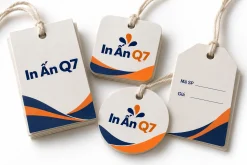
Price tags

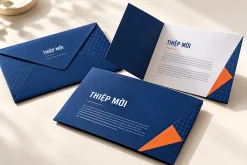
Invitations
Choosing the weight for each item
Toughness is its strength, but with the wrong weight the bag still tears or, conversely, it is wasteful. The simplest way to choose is by the weight of the item it will hold.
| Item | Recommended weight | Notes |
|---|---|---|
| Bread, pastries | 50–80gsm | Thin bag type, single use |
| Takeaway food | 100–150gsm | Should have a grease-proof liner |
| Clothes, light accessories | 150–180gsm | Twisted paper handles are enough |
| Shoes, moderately heavy items | 200–250gsm | Use fabric or nylon webbing handles |
| Product boxes | 250–350gsm | Needs creasing before folding |
| Hang tags, labels | 250–300gsm | Holes need a wide enough margin from the edge |
For bags holding heavy goods, the first part to tear is usually where the handle is attached, not the bag body. Gluing an extra reinforcement patch inside at the handle position is the cheapest way to increase the load capacity.
Bags for hot or oily food need a grease-proof liner, otherwise the oil will seep through to the outside as stains. This costs extra but is almost mandatory for takeaway shops.
Finishing: what to do and what not to do
The raw surface absorbs ink and has no coating, so some finishes familiar on white paper are not a good fit here.
- Lamination: completely loses the raw, natural feel — the very thing customers choose this paper for. Only laminate when waterproofing is really needed.
- Foil stamping: looks great, copper and gold stand out on the brown base; it is the most suitable finish.
- Debossing, embossing: suitable, giving a handcrafted feel with no extra ink needed.
- Die-cutting to shape: good, the tough fibres give clean cut edges with little fraying.
- Spot UV: rarely used because the gloss contrasts strongly with the raw base, looking somewhat out of tone.
- Hole punching, threading strings: very suitable, especially for hang tags and labels.
Many brands choose the simplest yet effective approach: print in one colour black, deboss the logo, and leave the surface as is. The cost is low but it still feels polished and consistent with a natural direction.
If you need waterproofing but still want to keep the raw look, you can apply a waterproof coating only on the inside. The outside stays as is, so customers still see and feel the real material.
Common mistakes and how to avoid them
| Mistake | Consequence | How to avoid it |
|---|---|---|
| Multi-colour designs as on white paper | Colours come out dull, not like the approved proof | Switch to one or two colours |
| Using white text without an underprint | The text disappears completely | Ask for white ink printing or change the text colour |
| Expecting an absolutely uniform base colour | Seeing the next batch differ from the previous one | Accept slight variation; this is a property of the material |
| Choosing a low weight for heavy goods | Tears at the handles | Increase the weight, reinforce the handle area |
| Folding boxes without creasing | The paper layer cracks at the folds | Machine-crease before folding |
| No grease-proof liner for food | Oil seeps through to the outside | Add a waterproof liner |
| Holes punched too close to the edge | Tears when the string is pulled | Place holes at least 7 mm from the edge |
As for the base colour varying between batches, this is a property of unbleached material, not a production fault. Orders that need absolutely matching colour should be printed in one run instead of being split into several batches.
If you print large quantities split into several batches during the year, tell us in advance so we keep the same paper lot. This reduces most of the colour difference between batches.
Which industries use it most
The raw look of this paper does not suit every brand. Below are the industries that order it most and how they use it.
| Industry | Commonly ordered items | Typical presentation |
|---|---|---|
| Bakeries | Bread bags, cake boxes, stickers | One colour, simple logo |
| Cafés | Takeaway bags, cup sleeves, lid stickers | Printed in black, sometimes with one accent colour |
| Natural-style fashion shops | Carrier bags, hang tags, shoe boxes | Debossed logo, printed in black |
| Organic cosmetics | Product boxes, ingredient labels | Foil stamping or one-colour printing |
| Handmade gifts | Gift boxes, accompanying cards, ties | Left raw, only the name printed |
| Agricultural produce, local specialities | Bags, traceability labels | Printed in black with a QR code |
What these groups have in common is brand positioning tied to nature, craftsmanship or environmental friendliness. Using raw material for a tech brand or a glossy luxury brand usually feels off-tone.
Conversely, if the brand already goes the natural way, use it consistently across the whole set: bags, boxes, labels and hang tags in the same material. Customers recognise it immediately, even before looking closely at the logo.
Quantity, timing and how to order
Prices are per batch because machine setup labour is almost the same whether you print a little or a lot. The more you order, the more the unit price per item drops.
- Bags and boxes need die-cutting, so the minimum order is higher than for flat printed items.
- The cutting die is a one-off cost; later batches that reuse the die are not charged again.
- Several designs can still be combined in one order, as long as they use the same paper and the same finish.
- To reprint an old design, just give us the order code; we will retrieve the saved file and print it again.
- Former District 7, Nha Be, District 4 and District 8 get door-to-door delivery; other districts are delivered according to the day's vehicle schedule.
- Shipping to other provinces via intercity bus or courier, with fees according to the bus company's price list.
If you do not have a file yet, send your logo and a description of the item it will hold via Zalo. The design team will lay it out at the exact size and send a preview; production starts only after approval.
See also other papers in the same group: Bristol Paper smooth on both sides for business cards and cards, Ivory Paper coated on one side for paper boxes. For finished paper bags, see Paper Bags.
How environmentally friendly is it
Many brands choose this material for environmental reasons, but how friendly it is depends on the finishing, not just on the sheet of paper itself.
- No bleaching means one chemical-using step is skipped; that is the clearest plus point.
- Left completely raw, it decomposes and recycles as easily as ordinary paper.
- Plastic lamination on the surface removes recyclability, because the film layer has to be separated first.
- Plastic handles and nylon strings also reduce the recycling value of the whole bag.
- Water-based inks are friendlier than oil-based inks; you can ask us when ordering.
- Printing fewer colours uses less ink, which is both cheaper and lower impact.
If environmental friendliness is the brand's main message, go all the way: leave it raw, print one colour, use twisted paper handles and drop lamination entirely. Attentive customers notice this consistency immediately.
Conversely, do not print an eco-friendly pledge on a bag that is plastic-laminated and fitted with nylon handles. That is a contradiction that environmentally conscious customers will spot first.
Storage and estimating usage
Goods usually arrive folded flat, and the shop opens them out when using them. How they are stored decides whether the items still look good when it is time to use them.
- Keep them in a dry place, raised off the floor on shelves or pallets; uncoated material absorbs moisture faster than ordinary paper.
- Do not put heavy objects on the stack; flattened folds make the bag sides warp when opened out.
- Avoid direct sunlight; the brown colour will fade gradually and unevenly.
- Take them out in small batches according to sales pace; do not open the whole lot and leave it exposed to the air.
- Bags with opened bottoms should be stored upright on a rack, not stacked lying down.
- Discard items that get wet, because water stains on the raw base cannot be wiped clean.
For takeaway shops, estimate usage as the average number of orders per day multiplied by the number of days between two orders, plus about fifteen percent. Running out mid-cycle leaves no time to reprint.
Need printing or signage in Ho Chi Minh City?
In Quảng Cáo Q7 runs its own print workshop in Tân Hưng Ward (former District 7), Ho Chi Minh City, producing and installing signage, banners, window graphics, exhibition booths and event displays. Send us the size, material, quantity and a photo on WhatsApp and we will get back to you.

Phone: +84 866 511 099 · Also on WeChat
Workshop: 49 Mai Văn Vĩnh, Tân Hưng Ward, Ho Chi Minh City