








































































Couche Paper: weights, surfaces and printing uses
Sep
Couche paper is the most widely used material in advertising printing: from leaflets, brochures and catalogues to menus, business cards and posters. This article sums up what you need to know before deciding on the material — what the Couche paper surface is like, which weights In Quảng Cáo Q7 stocks, which items each weight suits and how to prepare the design file.
What Couche paper is
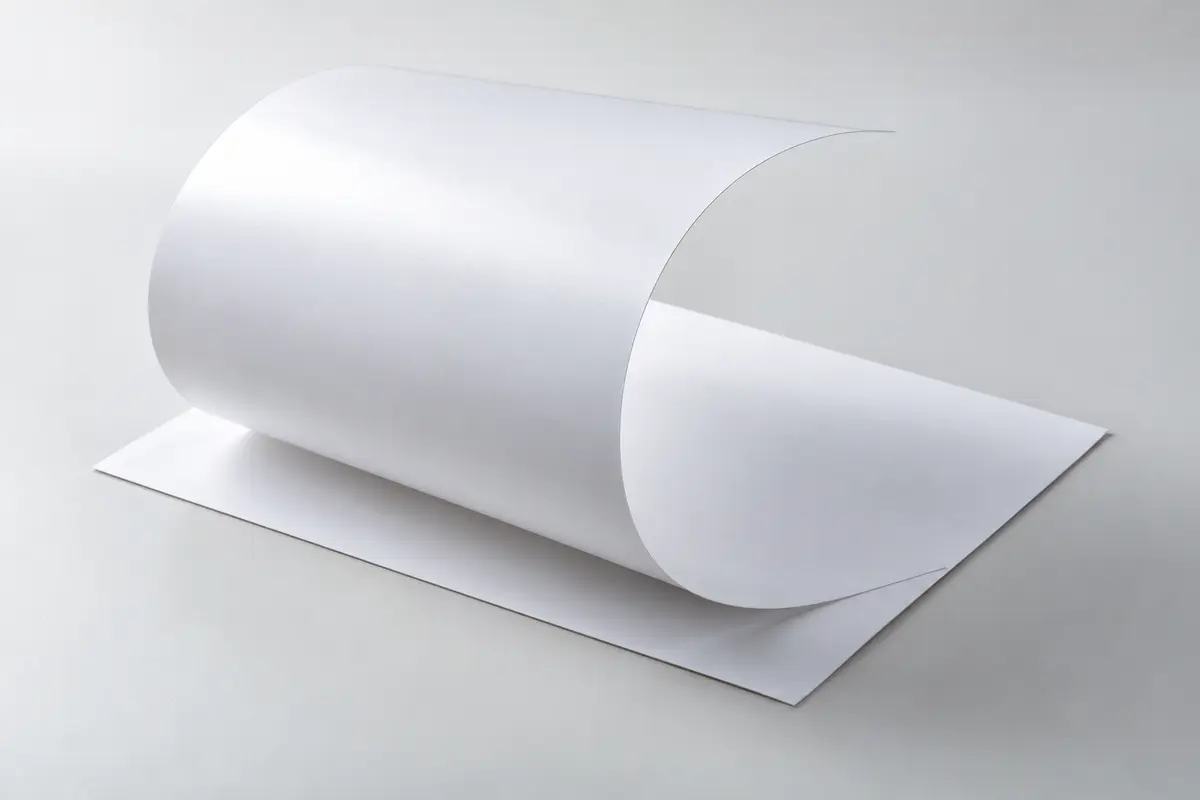
Couche paper is paper with a thin layer of kaolin coated on the surface. This coating fills the gaps between the paper fibres, making the surface much flatter and smoother than office printing paper. When printed, the ink sits on the surface instead of soaking deep into the fibres, so colours come out vivid, images show clear detail and small text stays sharp.
Pick up a sheet of Couche paper and you notice it straight away: the surface is slick with a slight sheen, quite unlike the rough feel of Ford paper. This is also why almost every advertising item that needs good images chooses this material.
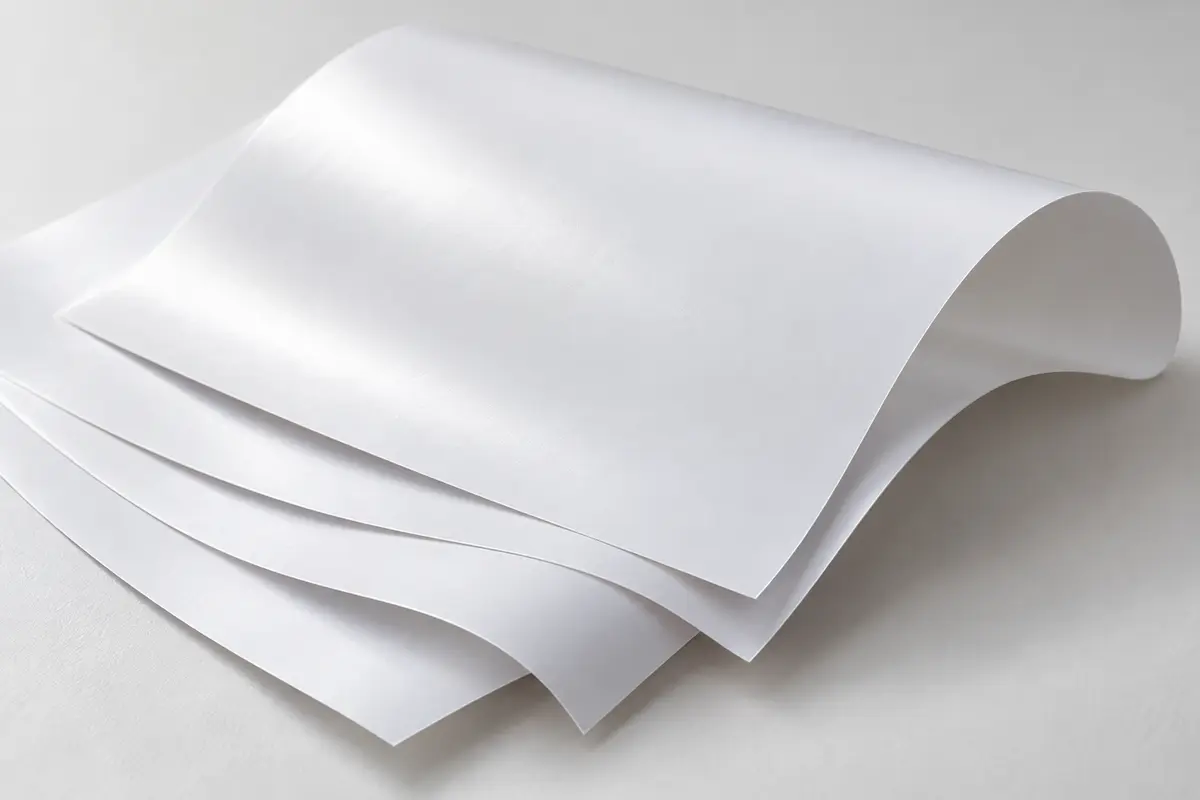
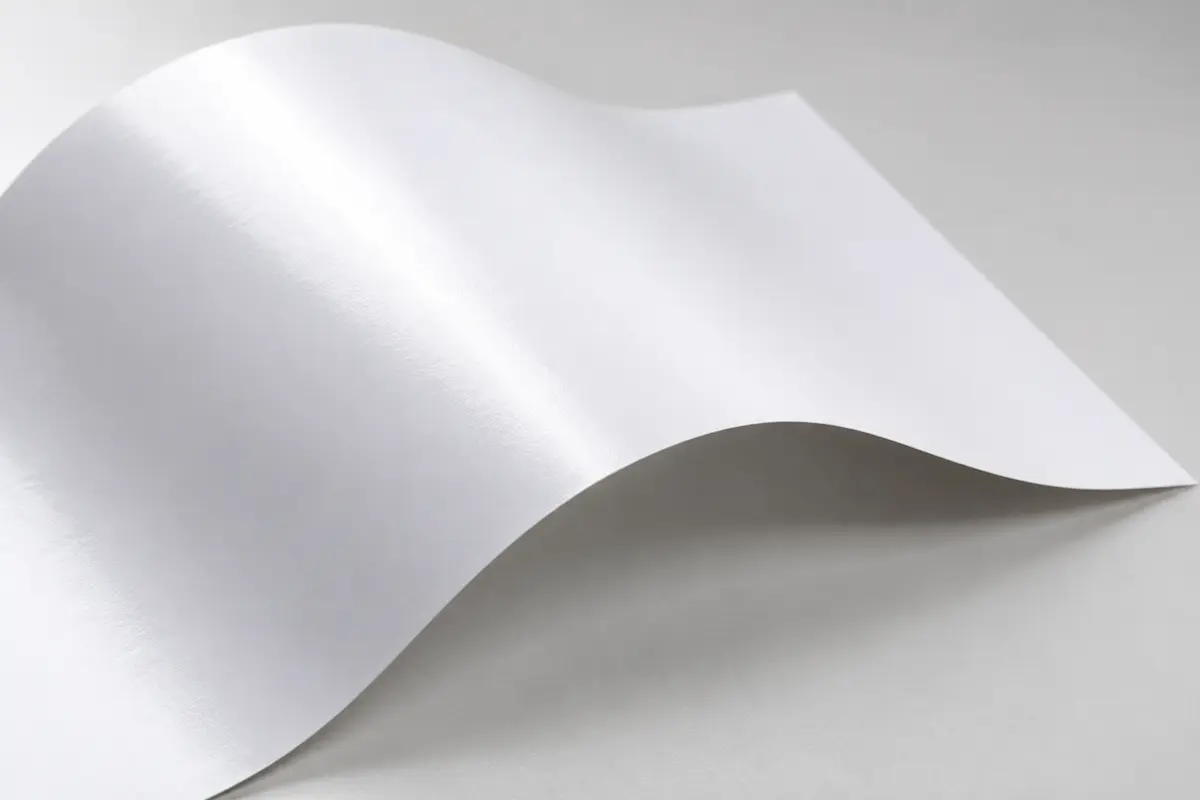
Couche paper surface: glossy, smooth and takes ink evenly
Couche paper comes in two surface types. Gloss Couche reflects light clearly, with vivid, deep print colours, suited to image-heavy items. Matt Couche (matte Couche) reflects less light and text is comfortable to read; often used for multi-page catalogues or items read for a long time.
Whichever type, what Couche paper has in common is that the ink bonds evenly, does not bleed and the colour is not absorbed away. The paper is also soft enough to fold, roll or bind without cracking the spine — at heavy weights it needs creasing before folding.
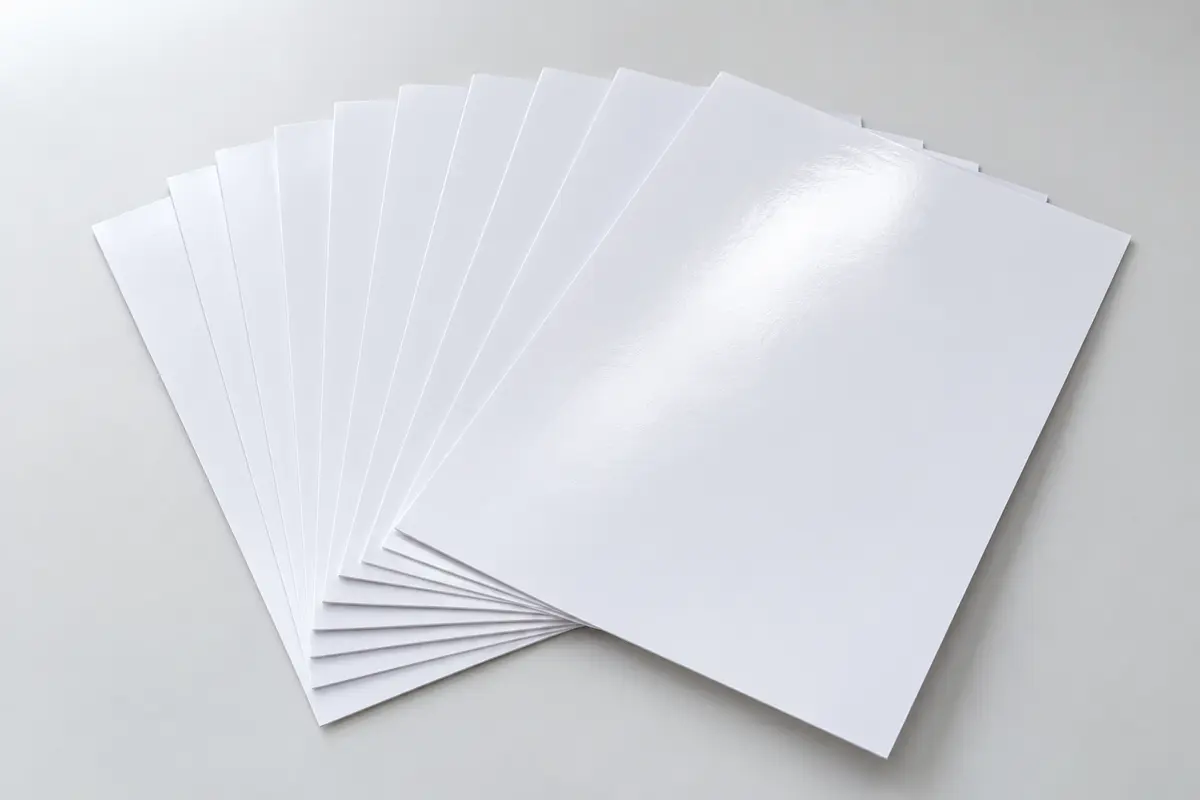
Couche paper weights we stock
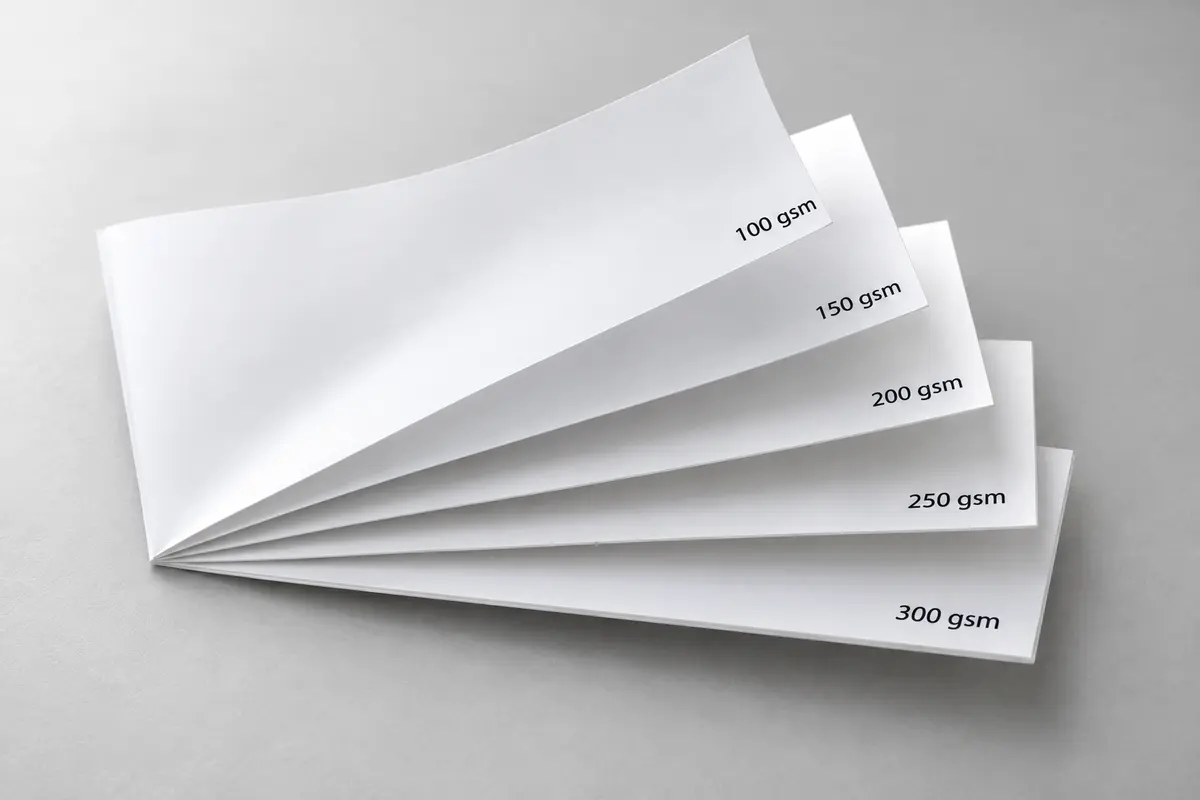
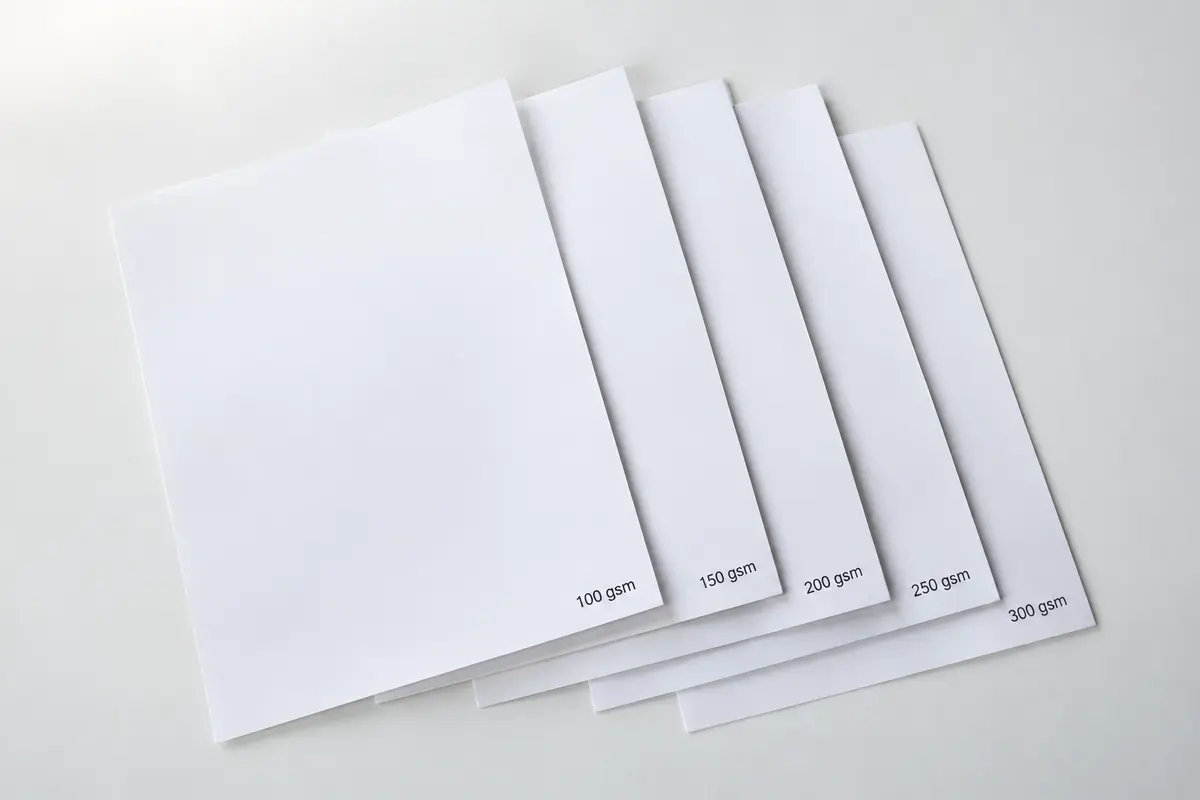
Weight is given in gsm — grams per square metre of paper. The larger the number, the thicker and stiffer the paper. The In Quảng Cáo Q7 workshop stocks five Couche paper weights, enough for most advertising items:
| Weight | Feel in the hand | Suitable items |
|---|---|---|
| Couche 100gsm | Thin, light, drapes softly | Large-volume leaflets, multi-page catalogue inner pages |
| Couche 150gsm | Comfortable in the hand, folds well | Leaflets, flyers, tri-fold brochures |
| Couche 200gsm | Holds its shape, does not bend | Hanging posters, single-sheet menus, brochure covers |
| Couche 250gsm | Sturdy | Catalogue covers, hang tags, promotional cards |
| Couche 300gsm | Thick, solid in the hand | Business cards, book covers, loyalty cards, price tags |
If you are not sure which weight to choose, visit the workshop to see and feel real paper samples — one gsm step makes a difference in how it feels in the hand.
What can be printed on Couche paper
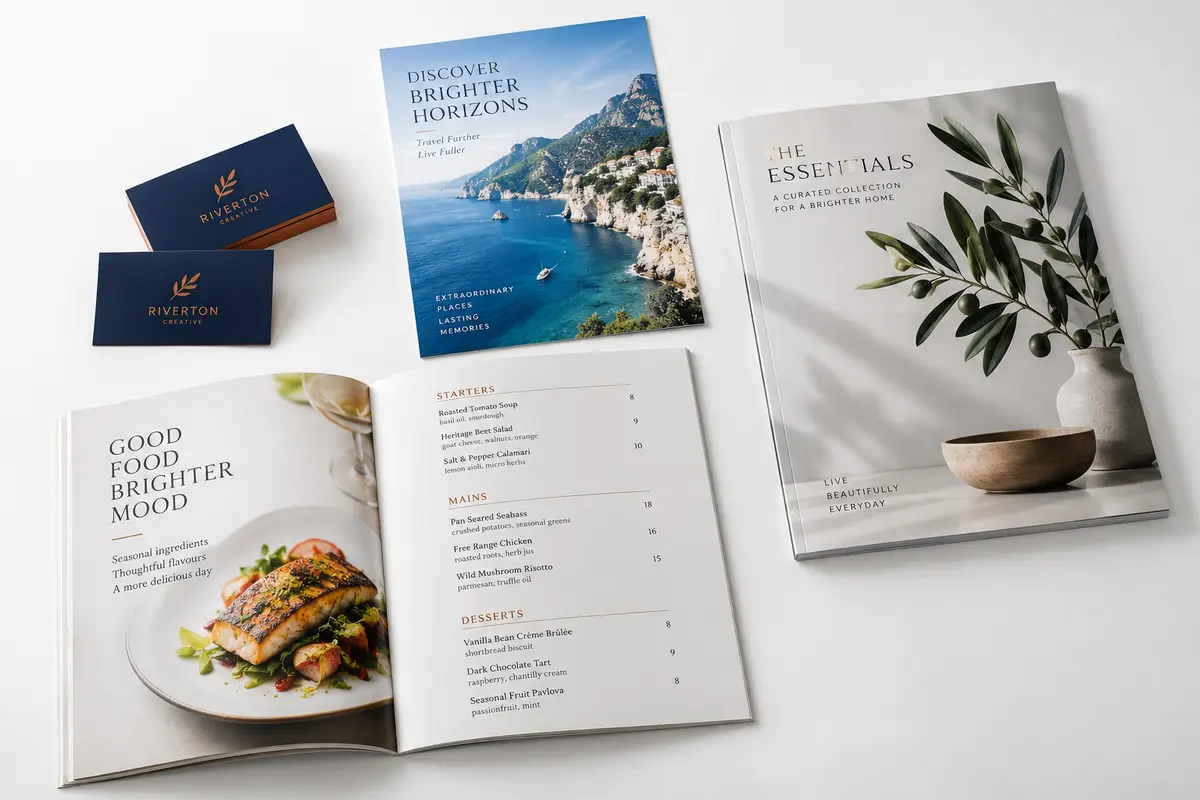
Leaflets, flyers and brochures
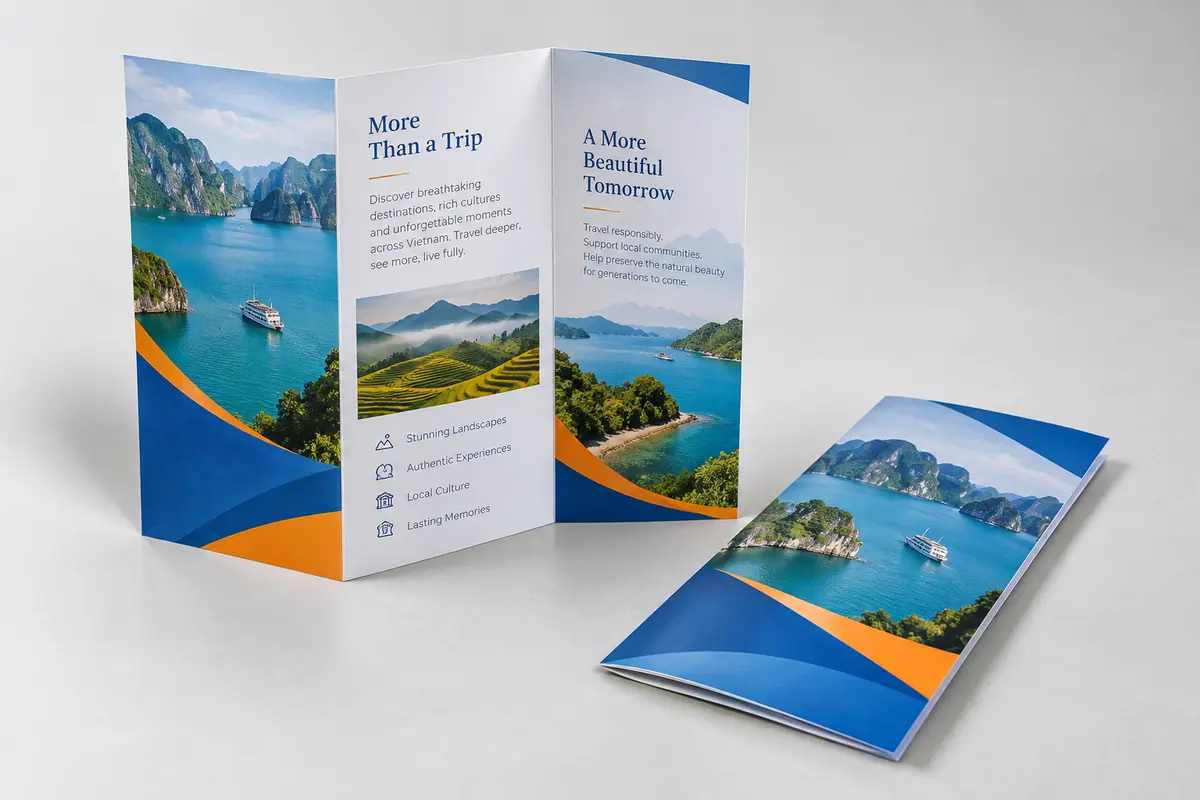
This is the group that uses Couche paper the most. Leaflets are usually printed on 150gsm Couche: thick enough not to crumple when handed out, yet light enough for large print runs. Tri-fold brochures also use this weight and stay flat after folding.
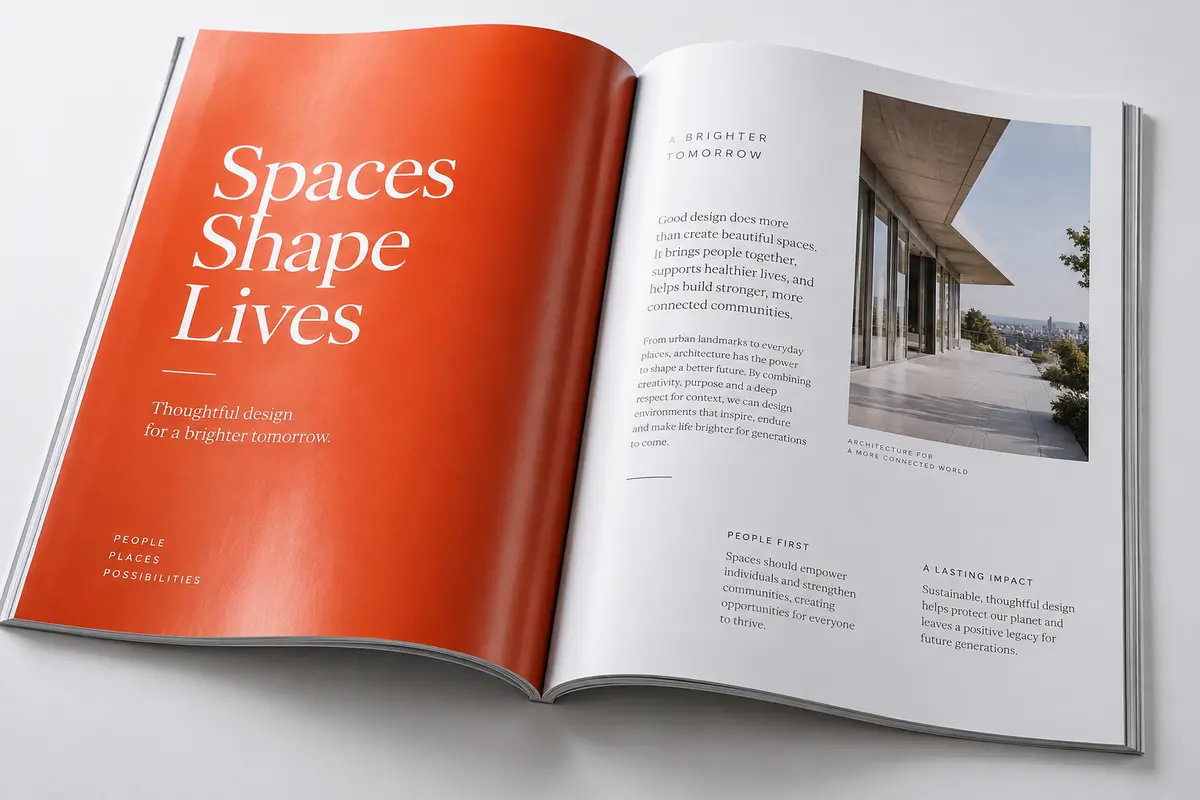
Catalogues, company profiles and magazines
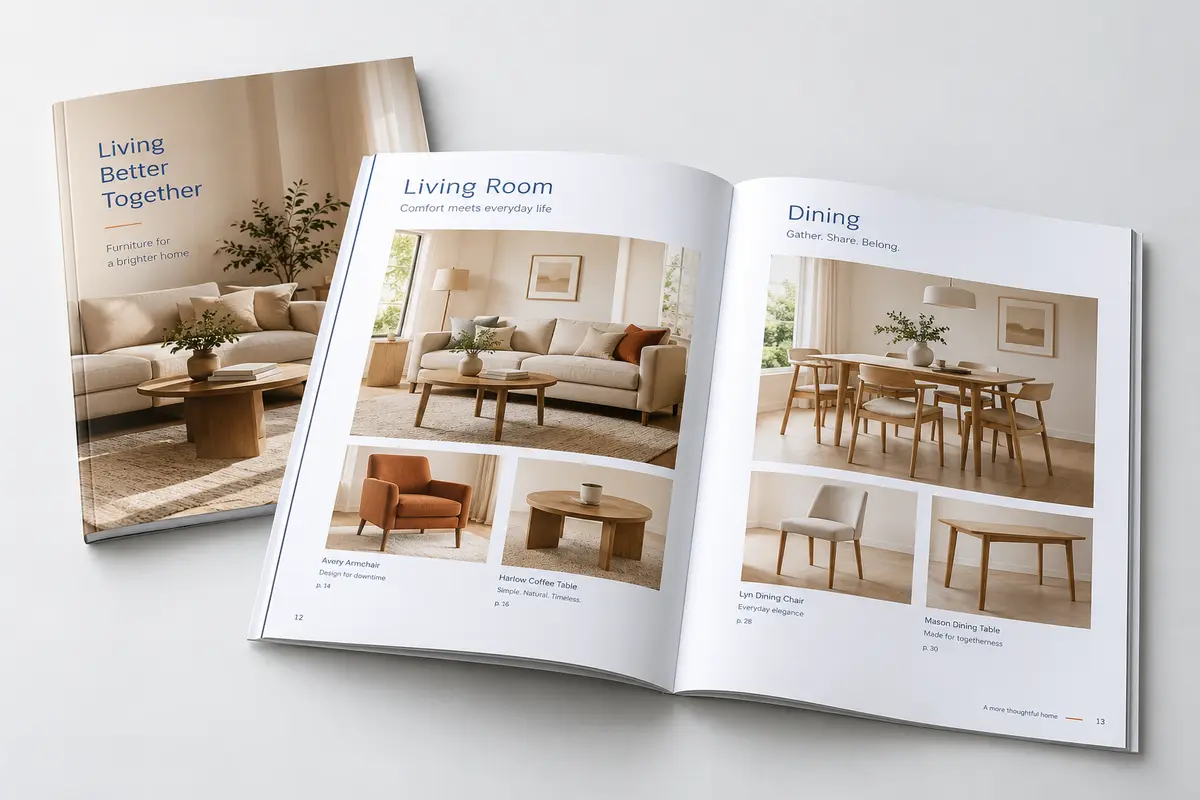
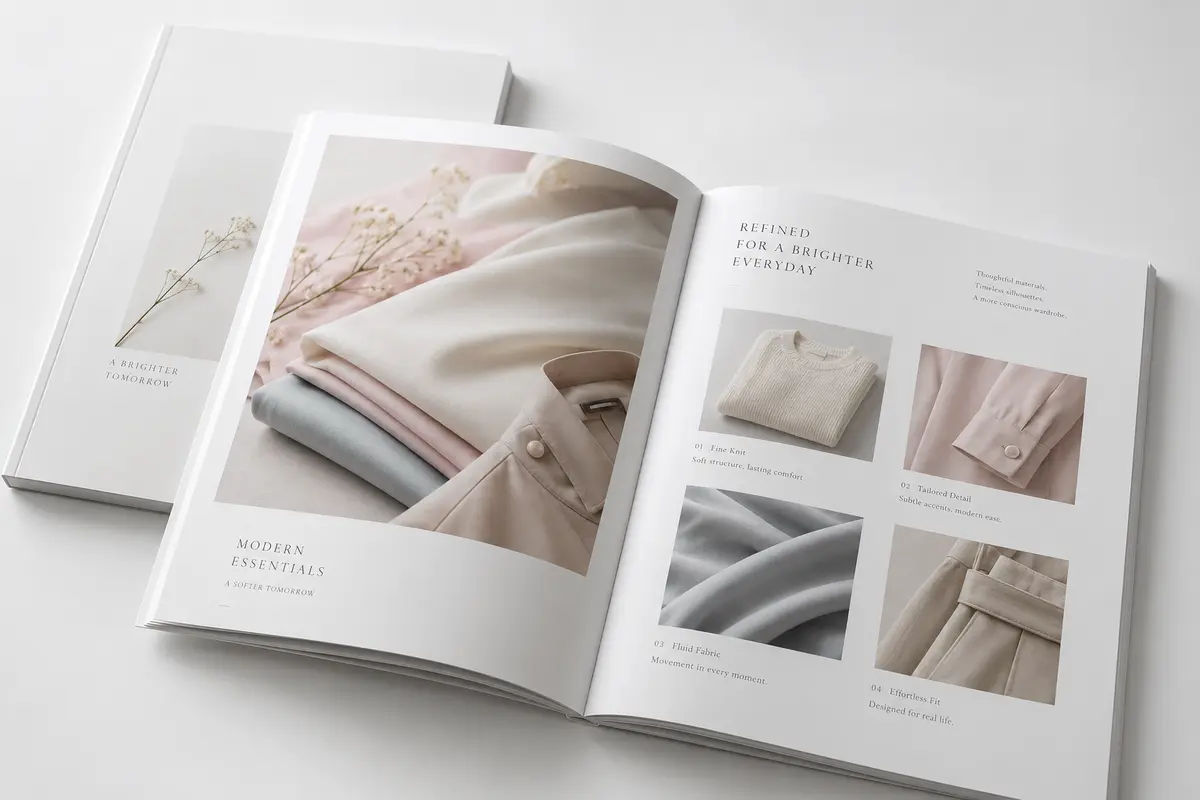
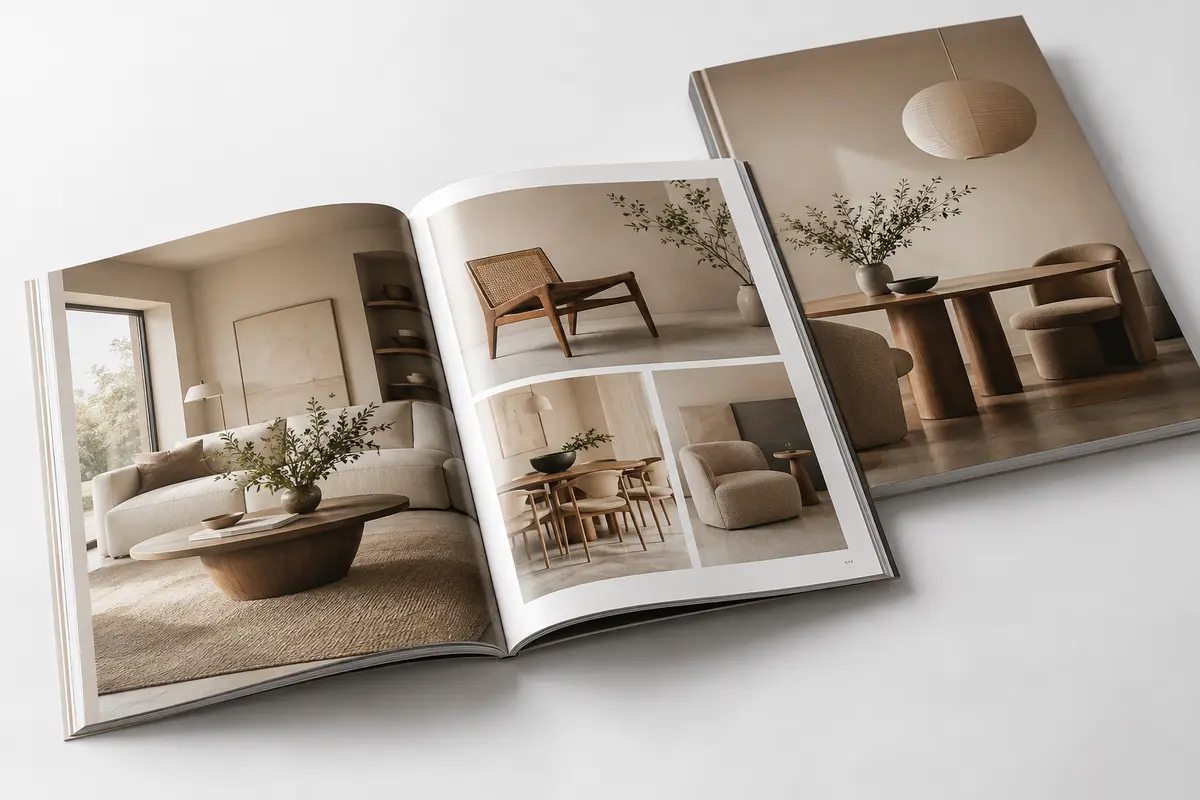
Multi-page catalogues usually have 100–150gsm Couche inner pages and a 250–300gsm Couche cover. This combination keeps the book light in the hand while the cover stays stiff and the corners do not curl after many page turns. Product images printed on Couche paper keep their contrast, and fabric and wood colours come out much truer than on uncoated paper.
Menus, business cards and cards
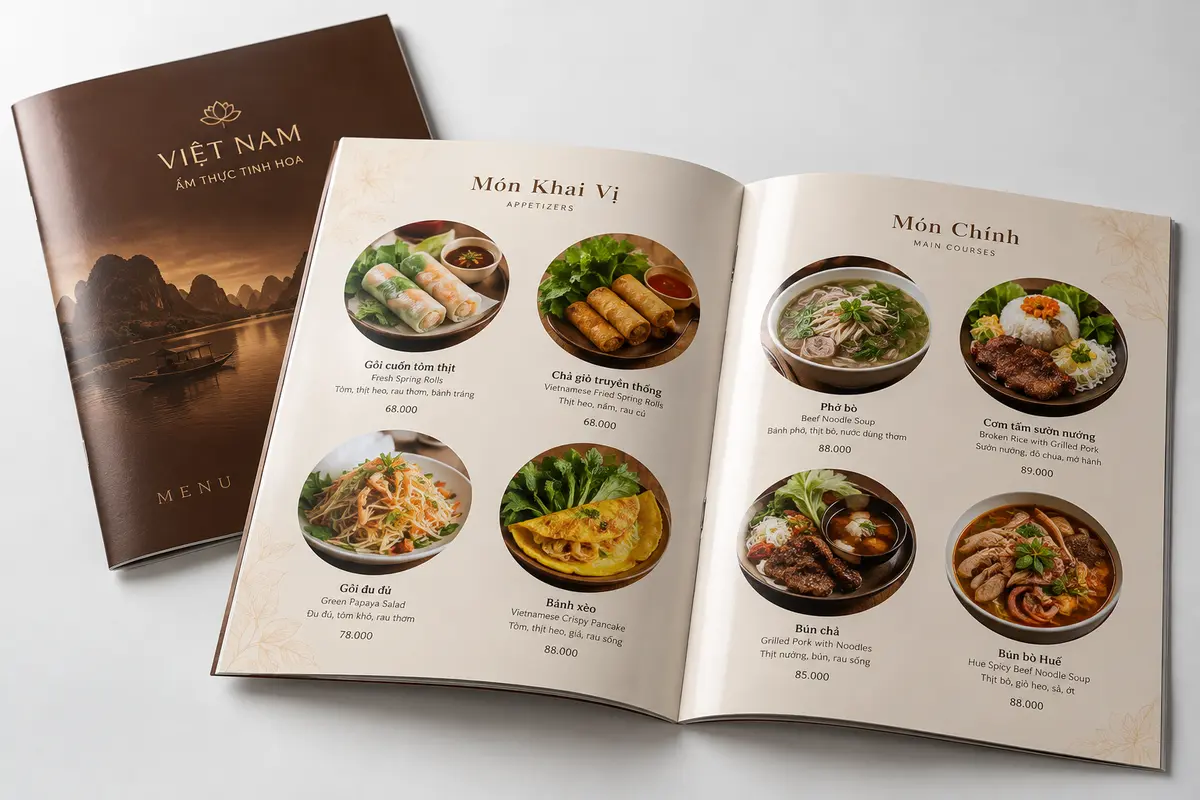
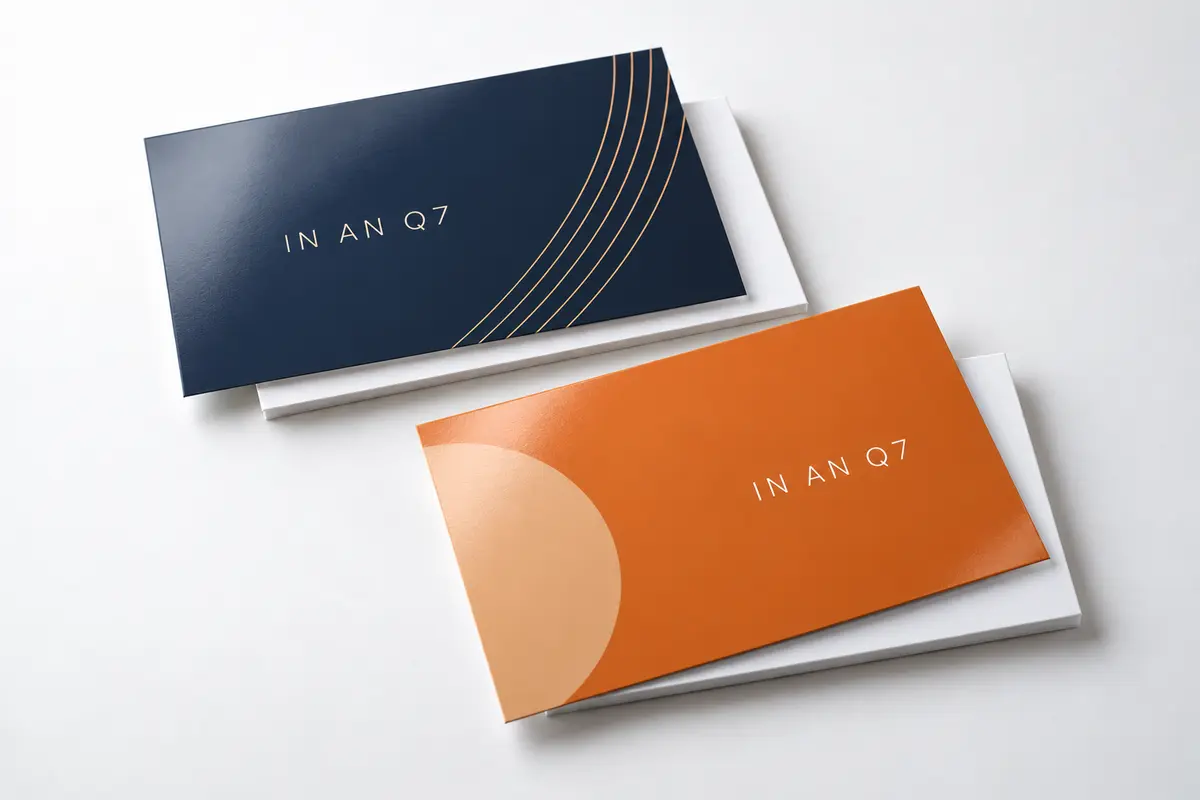
Restaurant menus printed on 250–300gsm Couche and then laminated last a long time and can be wiped without damage. Business cards almost always use 300gsm Couche — stiff enough not to bend in a wallet, with matte lamination for a smooth feel.
Printed items by industry
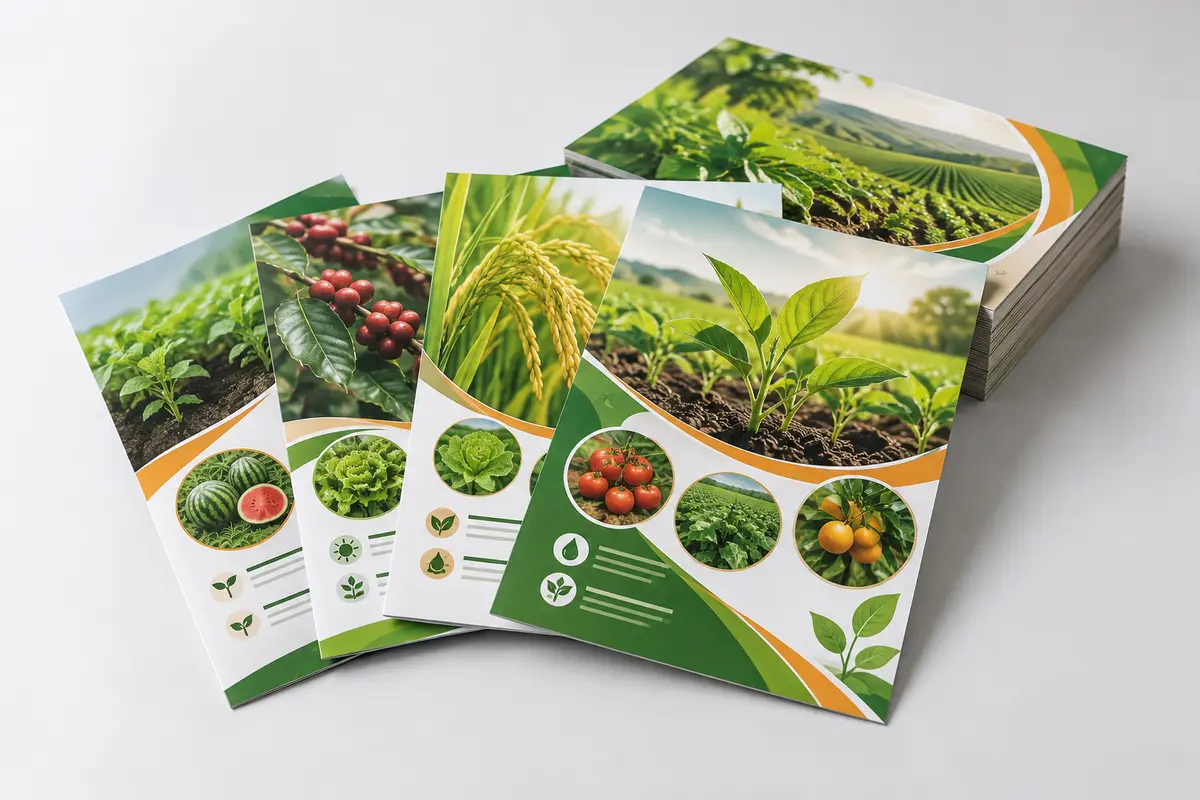
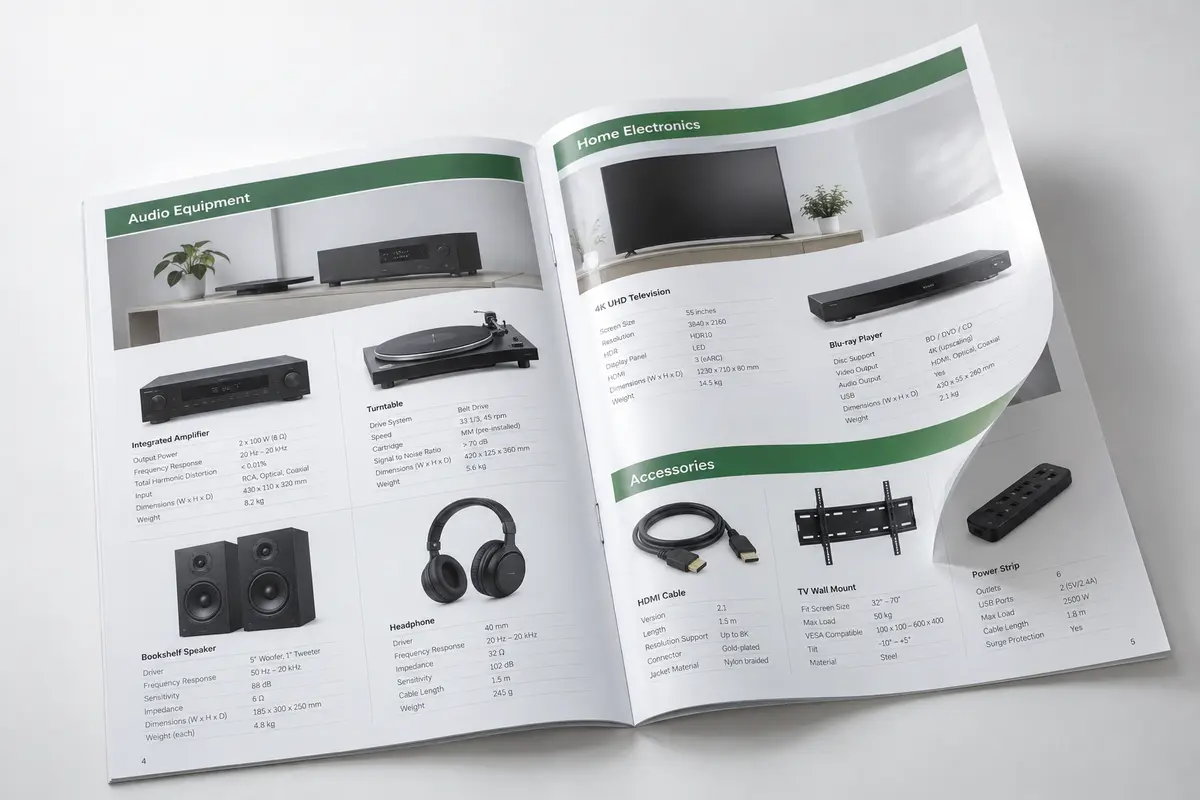
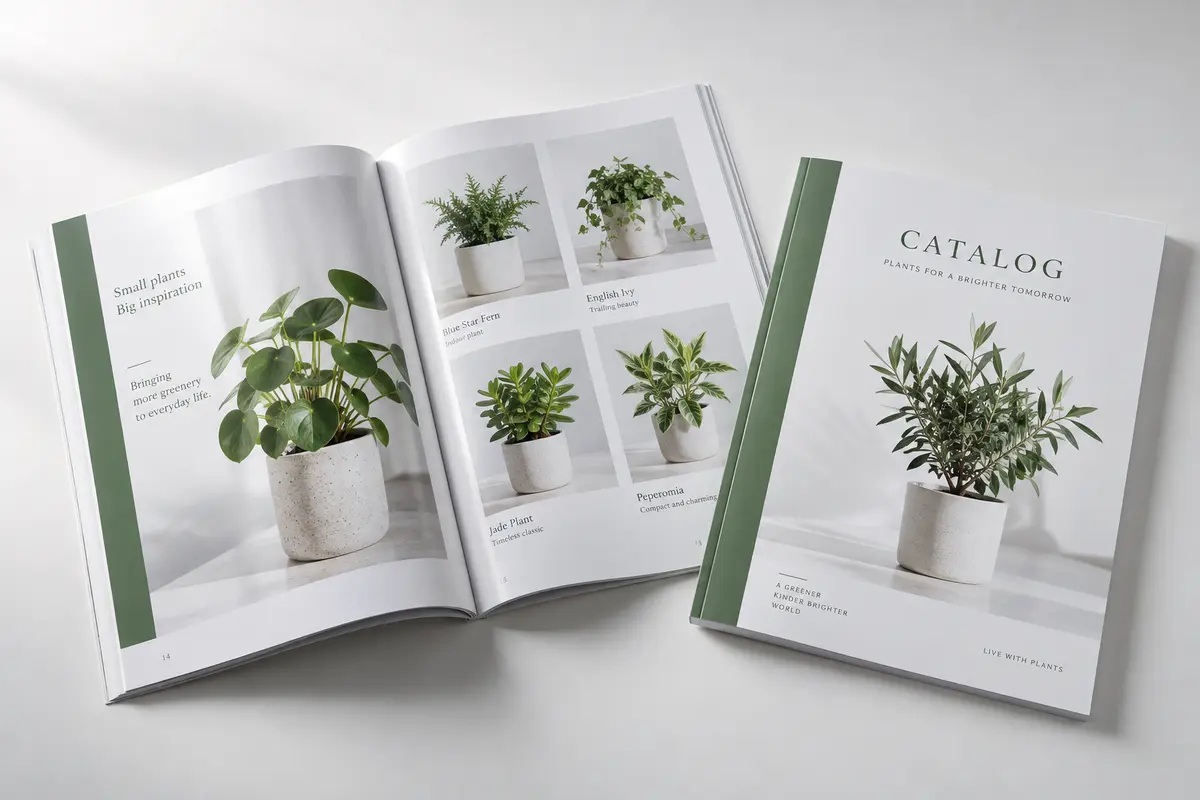
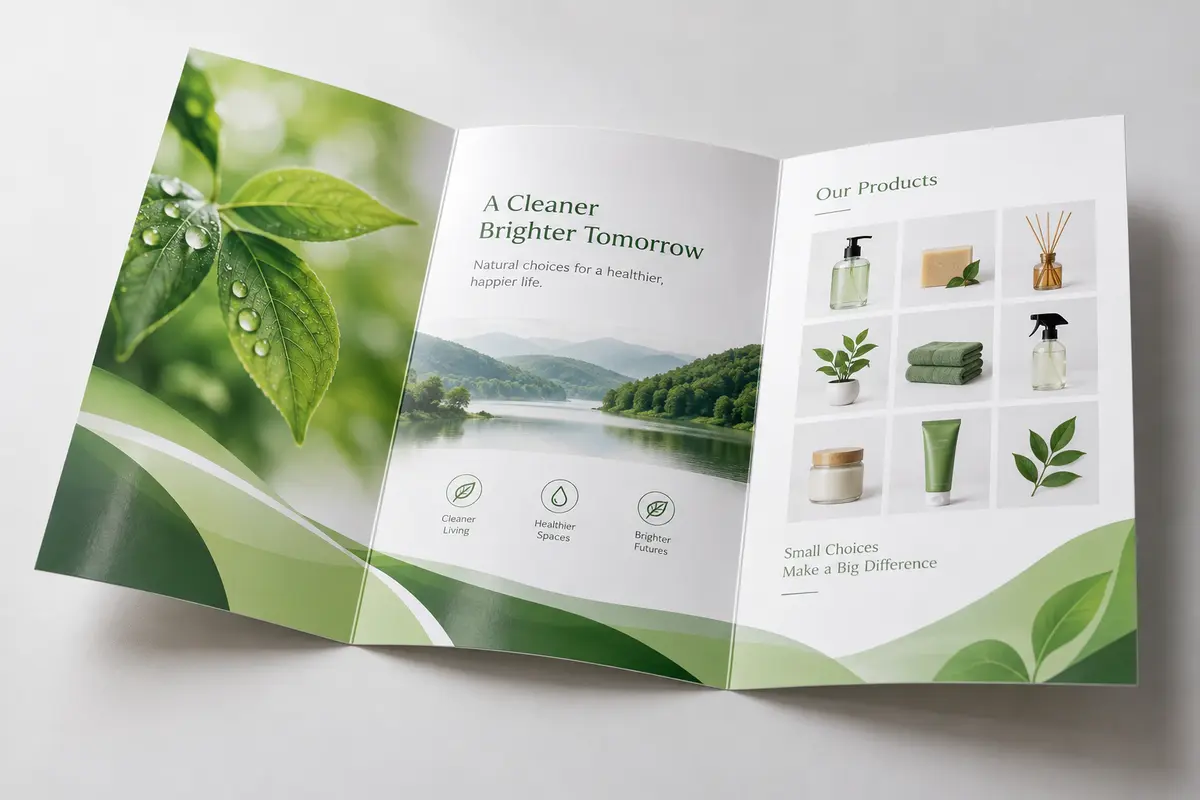
Each industry has its own type of printed item, but they all come back to Couche paper for the same reason: images are what sell. Plant shops need true leaf greens, furniture stores need clear wood grain, fashion shops need true fabric colours.
Finishes commonly paired with Couche paper
- Glossy lamination – deeper, more vivid colours and a dirt-resistant surface, often used for menus and catalogue covers.
- Matte lamination – reduces glare, smooth to the touch, suits business cards and company profiles.
- Creasing for folds – mandatory for paper from 250gsm up; without creasing the fold cracks.
- Corner rounding, binding, shape die-cutting – depending on the item; we do it on site so no time is lost sending it to an outside workshop.
To see how gloss and matte lamination differ, visit the workshop to see samples — it is hard to appreciate fully from photos.
Preparing files for printing on Couche paper
- Color mode CMYK, not RGB — RGB prints will shift in colour from the screen.
- Photos at least 300dpi at the exact finished size.
- Leave a 2–3mm bleed on each side for backgrounds that run to the edge.
- Convert text to outlines or send the fonts with the file.
- Place important details at least 5mm from the edge so the cutting blade does not touch them.
Send files via Zalo or email; we will check them and tell you right away if anything needs fixing before printing.
Order Couche paper printing at In Quảng Cáo Q7
We print directly at 49 Mai Van Vinh, Tan Hung Ward, Ho Chi Minh City, with Couche paper from 100gsm to 300gsm in stock, so regular orders can be done the same day. See prices and order at Colour Printing on Couche Paper, or call 0866.511.099 for advice on the right weight for your item.
If your item is text-led and needs to be written on, see also Ford paper; if you need stiffness for paper boxes, see Ivory paper or Bristol paper. All the materials our workshop uses are in the materials library.
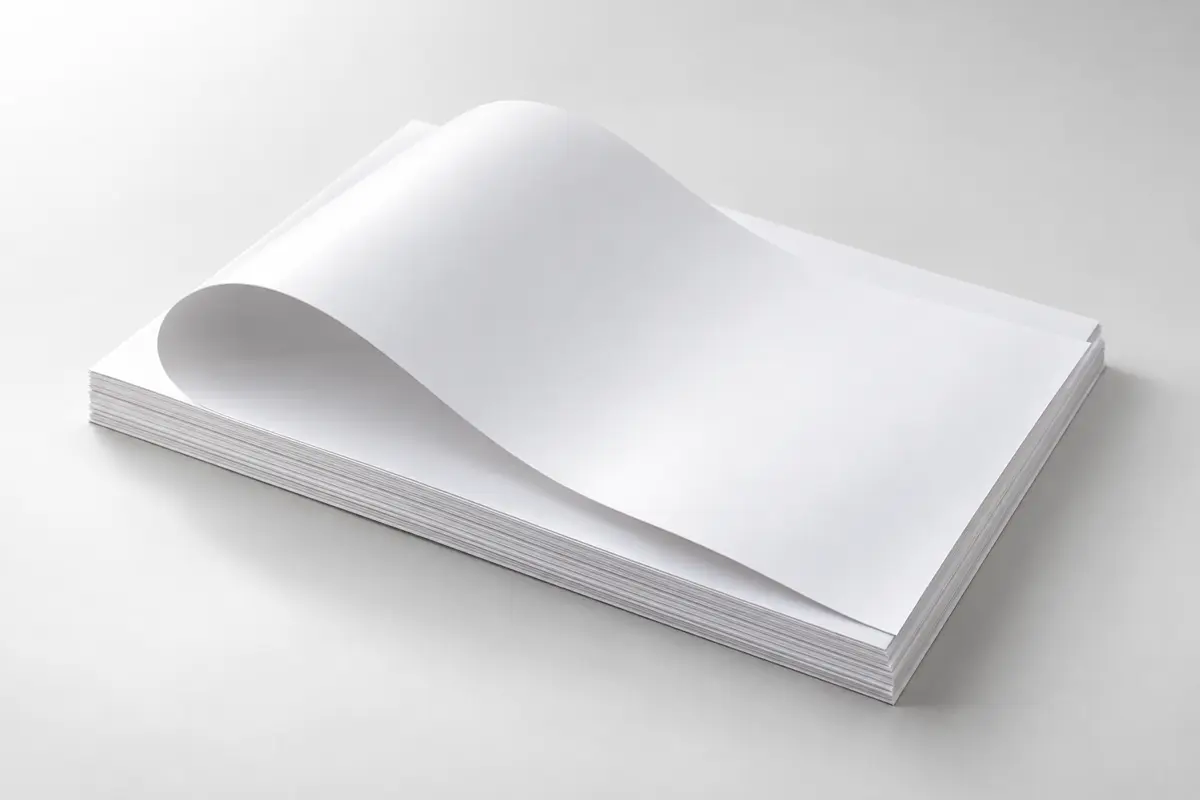
Telling apart the glossy and matte surfaces of Couche paper
At the same weight, Couche paper can have a glossy or a matte surface, and the two give clearly different impressions. The table below compares the two so you can choose by purpose.
| Criterion | Glossy surfaces | Matte surfaces |
|---|---|---|
| Colour vividness | More vivid and intense | Slightly softer |
| Reflectivity | Reflects a lot | Reflects little, easy to read under lights |
| Fingerprints | Picks up fingerprints easily | Picks up few fingerprints |
| Feel in the hand | Slick, cool to the touch | Softer to the touch |
| Suitable for | Product photos, posters, catalogue covers | Document folder covers, text-heavy pages, menus |
| Writing with a pen | Ink dries slowly | Ink dries slightly faster |
If the item has a lot of text and will be read carefully, a matte surface is better because it reflects less light. If the item emphasises product photos, a glossy surface makes the colours stand out more. For covers, many people choose glossy Couche and then matte laminate it to get both advantages.
Choosing the Couche paper weight for each item
The weight is the gsm figure, telling you the mass of paper per square metre. The table below shows the four Couche paper levels in stock at our workshop with the suitable items.
| Weight | Perceived thickness | Suitable items |
|---|---|---|
| 150gsm Couche paper | Thin, soft, foldable | Leaflets, folded brochures, catalogue inner pages |
| 200gsm Couche paper | Moderate, stiffer | Thick inner pages, desk information sheets, slips |
| 250gsm Couche paper | Stiff, holds its shape | Document folder covers, price lists, box labels, menus |
| 300gsm Couche paper | The stiffest of the four levels | Catalogue covers, hang tags, long-lasting menus |
- Items that need folding should not exceed 200gsm, because thick paper cracks easily at the fold.
- The cover and inner pages should be different weights: cover 250 – 300gsm and inner pages 150 – 200gsm.
- Cards and loose items should use 300gsm so the edges do not curl.
A common mistake is using one weight for a whole multi-page set. The set becomes both thick and heavy without looking better. The common approach is to clearly separate the cover and inner pages, each with its own Couche paper level.
What to note when printing on Couche paper
Because the paper surface is coated, the ink sits on the surface instead of soaking in deep. That gives vivid colours and sharp detail, but also leads to a few points to note when preparing files for Couche paper.
| Task | Specification | Reason |
|---|---|---|
| Color mode | CMYK | RGB colours on screen are always brighter than the print |
| Image resolution | 300dpi at the exact print size | The coating shows detail clearly, so poor images are exposed |
| Black for small text | Single black K100 | Sharp text, no misregistration |
| Large background colour areas | Check the total ink coverage | Ink sits on the surface, so it smudges easily and dries slowly |
| Bleed | 3mm on each side | No white border left after cutting |
| Safe zone | 3mm in from the edge | No text lost when cutting |
Print sizes at our workshop are A4 and A3, single- or double-sided. Colour printing on Couche paper 150 – 300gsm is from 9.800đ per sheet, decreasing by quantity tier. Colour advertising printing combining Fort Paper and Couche paper is from 8.000đ per sheet.
Comparison with other papers
Our workshop has several paper groups, and comparing them helps you know when to choose the coated type and when to choose another. The table below compares four groups by practical criteria.
| Criterion | Coated type | Fort Paper | Fine Art Paper | Photo Paper |
|---|---|---|---|---|
| Surface | Smooth coating | Uncoated, slightly rough | Textured or structured | Thick coating, very smooth |
| Colour vividness | Vivid | Soft | Depends on the paper texture | Deepest |
| Detail sharpness | Sharp | Less sharp | Disturbed by the texture | Sharpest |
| Writing with a pen | Ink spreads easily | Absorbs ink well | Depends on the texture type | Ink dries very slowly |
| Weights in stock | 150, 200, 250, 300gsm | 80, 120, 180, 250gsm | According to the samples at the workshop | According to the samples at the workshop |
| Starting colour printing price | from 9.800đ | from 8.000đ | from 12.000đ | from 12.000đ |
| Typical items | Catalogues, menus, covers | Documents, forms | Certificates, cards | Display photos |
From the table above you can draw a simple rule. Items for viewing should use the coated type, items for reading and writing should use Fort Paper, items for presenting and keeping should use Fine Art Paper, and display photos should use Photo Paper.
Common finishes
Because the coated surface easily picks up fingerprints and scratches in dark areas, items of this type often need an extra protective layer. The table below lists the finishing options available.
| Finishing | Effect | Starting price |
|---|---|---|
| Glossy lamination | Dark colours stand out, protects the printed surface | from 300đ per sheet |
| Matte lamination | Fewer fingerprints, fewer scratches, smooth to the touch | from 300đ per sheet |
| Plastic laminating | Thick and durable, can be wiped with a damp cloth | from 3.000đ per sheet |
| Binding | Keeps the pages together as a set | from 2.000đ per copy |
| Trimming | Cut to size, cut along lines | from 15.000đ, free from 20 sheets |
- Lamination is priced by quantity tiers of 1 – 3 sheets, 4 – 9 sheets, 11 – 19 sheets and over 20 sheets.
- Plastic lamination is priced by tiers of 1 – 4 sheets, 5 – 49 sheets and over 50 sheets.
- Binding comes in 6 styles; saddle stitching suits sets under 40 pages.
The rule is to choose by period of use. Items used for a few weeks only need lamination; items used daily and touched a lot, like menus or price lists, last longer with plastic lamination.
Caring for printed items
The coating on the surface helps the colours last, but also makes sheets scratch easily when rubbing against each other. The table below shows how to store them in each situation.
| Situation | How to store | Note |
|---|---|---|
| Large-quantity storage | Stack flat in a carton, with paper between the layers | Raise off the floor, avoid damp places |
| Kept at the counter | Stand in an acrylic (Mica) rack or a standing rack | Avoid direct sunlight |
| Taken along to meet customers | Put in a hard folder or flat sleeve | Do not roll, do not fold further |
| Sent by courier | Wrap in kraft paper, sandwich between boards on both sides | Mark as goods whose edges fold easily |
| Menus used daily | Wipe with a damp cloth then let it dry | Plastic lamination is better than lamination |
Paper kept in damp places ripples and the edges curl easily, so do not print too many extras and store them for long. A method many shops use is to order enough for one to two months and reorder when nearly out.
Frequently asked questions about Couche paper
How many weights does Couche paper come in?
Our workshop has four levels: 150gsm for leaflets and inner pages, 200gsm for thick inner pages and information sheets, 250gsm for document folder covers and price lists, and 300gsm for catalogue covers and hang tags. Print sizes are A4 and A3.
Should I choose a glossy or matte surface?
A glossy surface gives more vivid colours, suited to product photos and posters, but picks up fingerprints easily. A matte surface reflects less light so it is easier to read, suited to document folder covers and text-heavy pages. Covers can be printed glossy and then matte laminated.
How much does printing on this paper cost?
Colour printing on the coated type 150 – 300gsm is from 9.800đ per A4 – A3 sheet. Colour advertising printing combining Fort Paper and the coated type is from 8.000đ per sheet. Prices decrease by quantity tier.
Can I write on it?
Pen ink on the coated surface dries slowly and spreads easily, so it is not convenient for forms filled in by hand. If the item needs pen annotations, choose Fort Paper 80 – 120gsm instead of the coated type.
Which weight should be chosen for items that need folding?
Do not exceed 200gsm, because thick paper cracks easily at the fold. Bi-fold or tri-fold brochures usually use 150 – 200gsm. If you must use thicker paper, discuss it with us beforehand so we can treat the fold lines.
Order printing at In Quảng Cáo Q7
The In Quảng Cáo Q7 workshop is at 49 Mai Van Vinh, Tan Hung Ward, Ho Chi Minh City, with real paper samples in all four weights for you to hold and compare before deciding. Printing and finishing are done in the same place, so orders do not have to be sent elsewhere to be finished.
- Send a CMYK PDF file via Zalo with the quantity, print size, number of printed sides and desired weight.
- Receive the quote and timeline, and approve a sample sheet if the item has many photos.
- Confirm so we run the whole batch and then finish it as requested.
- Pick up at the workshop or choose ride-hailing delivery within the inner city.
- Send the company name, tax code, address and email if you need invoices.
If you are not sure which weight to choose, tell us where the item will be used and for how long. We will suggest a suitable level along with the corresponding finishing step, instead of leaving you to guess.
Need printing or signage in Ho Chi Minh City?
In Quảng Cáo Q7 runs its own print workshop in Tân Hưng Ward (former District 7), Ho Chi Minh City, producing and installing signage, banners, window graphics, exhibition booths and event displays. Send us the size, material, quantity and a photo on WhatsApp and we will get back to you.

Phone: +84 866 511 099 · Also on WeChat
Workshop: 49 Mai Văn Vĩnh, Tân Hưng Ward, Ho Chi Minh City