




































































Ivory Paper: one smooth side, one ivory side, made for paper boxes
Sep
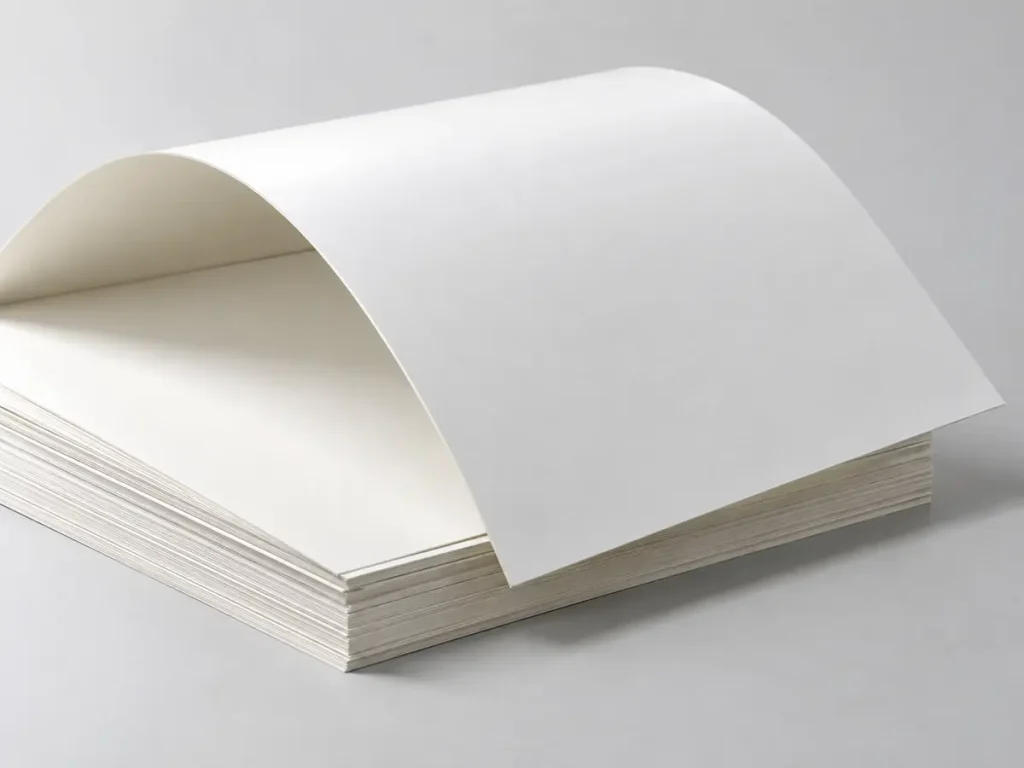
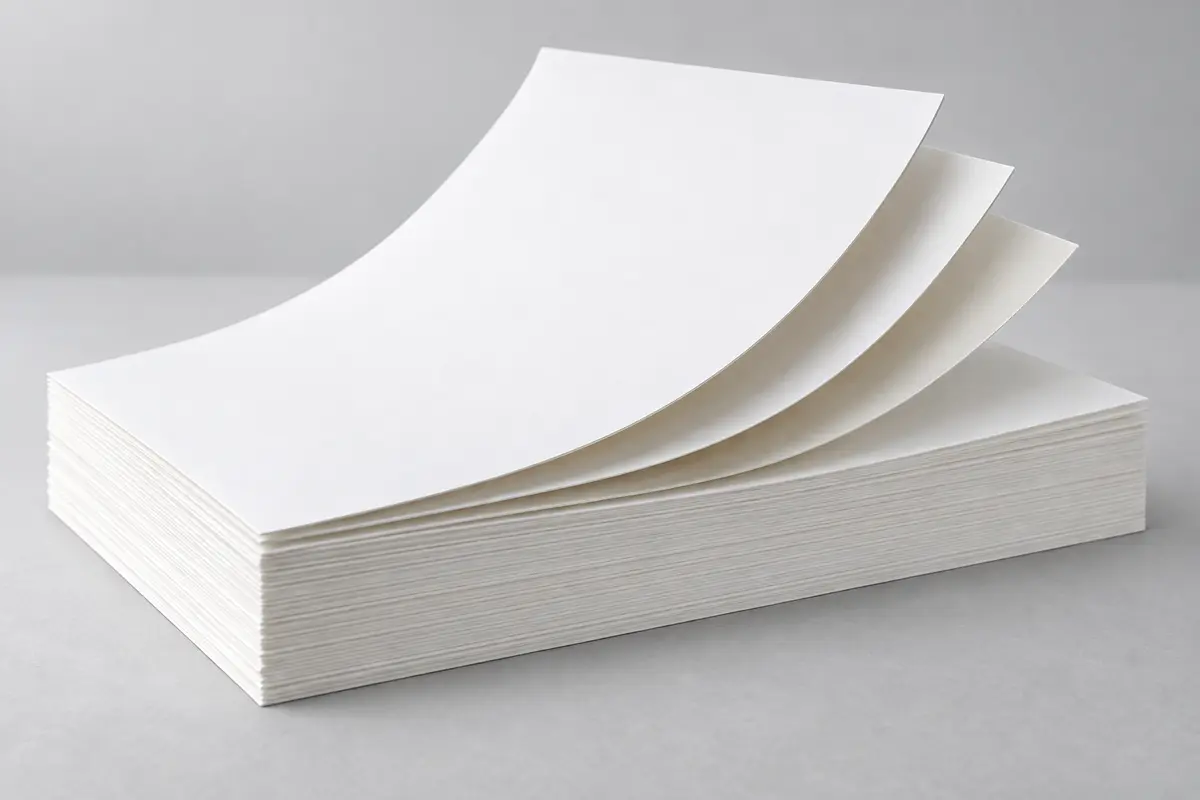
Pick up a cosmetics box or cake box and turn it inside out, and you will see a slightly rough ivory colour inside while the printed outside is smooth and glossy. That is Ivory paper — a paper made specifically for packaging, chosen not because it prints better but because it holds its shape when folded into a box.
What Ivory paper is
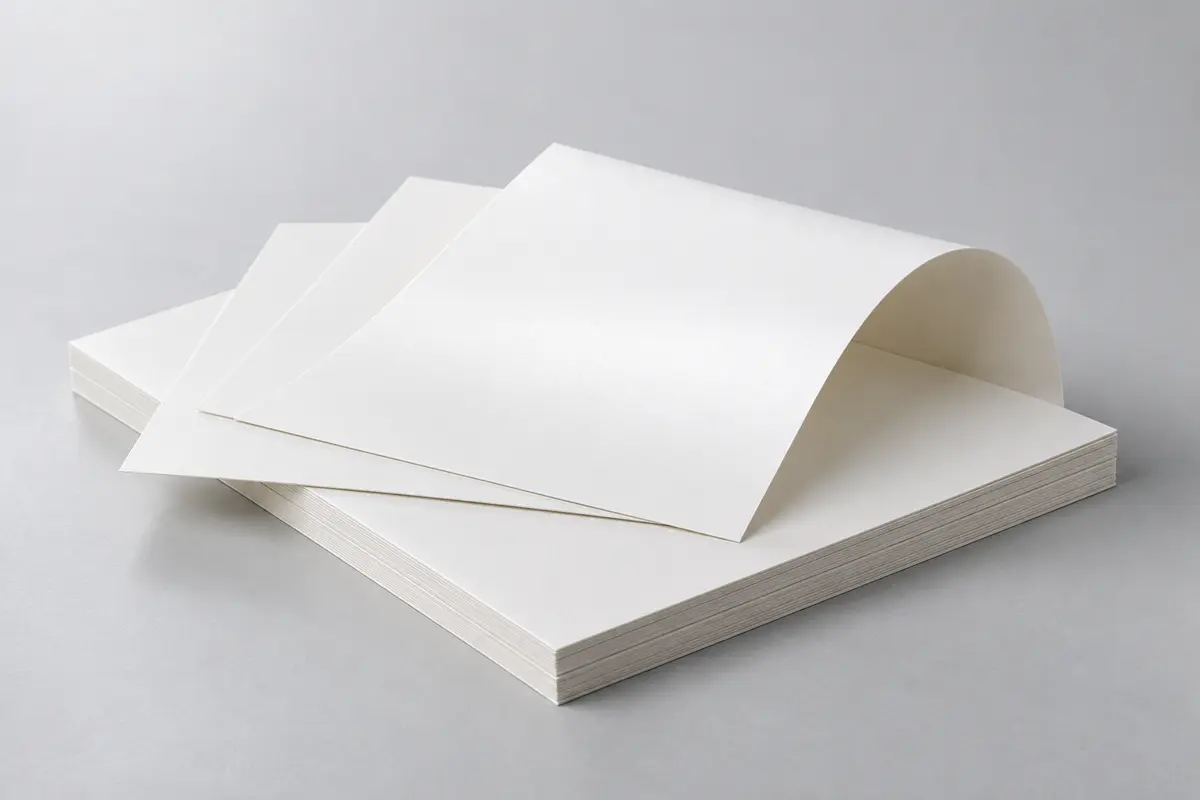
Ivory paper (technically called C1S paper — coated one side, i.e. coated on one side) has two completely different sides. The front is coated with a thin, smooth, white layer of kaolin that takes ink well, so it is used for printing. The back is left uncoated, a pale ivory colour, slightly rough to the touch like ordinary cover board.
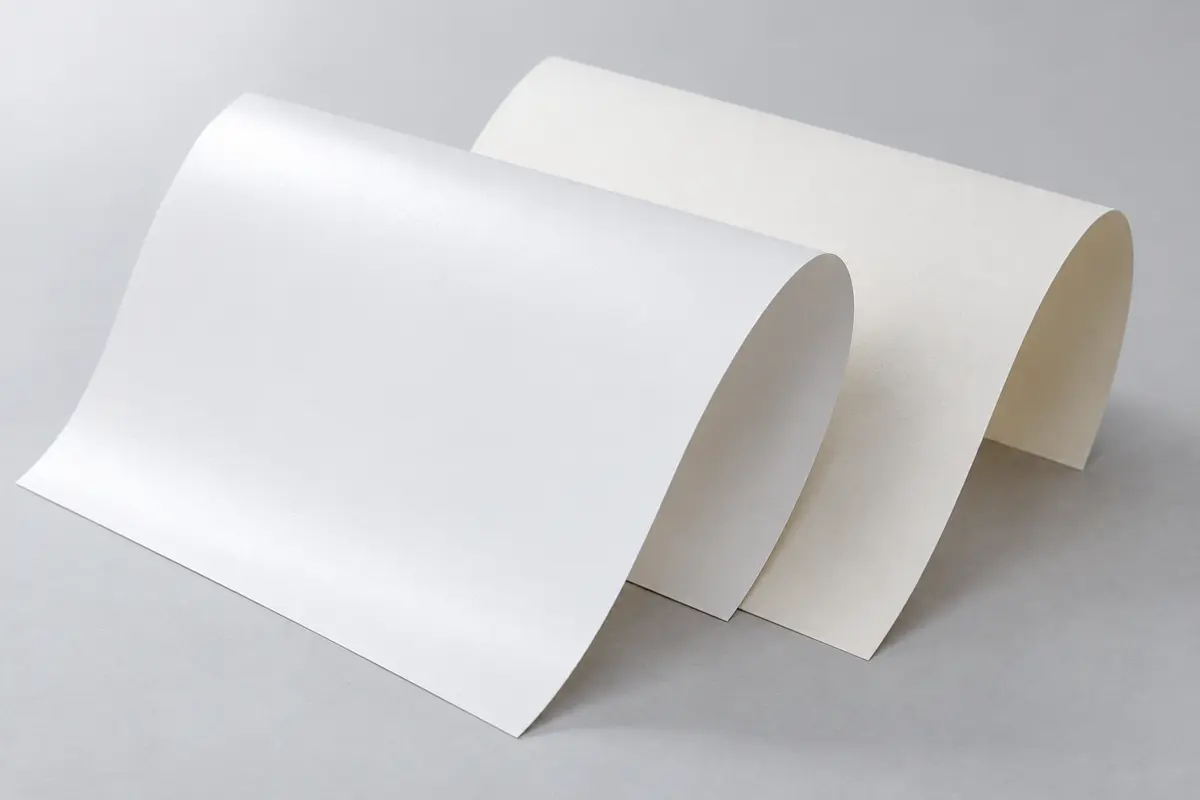
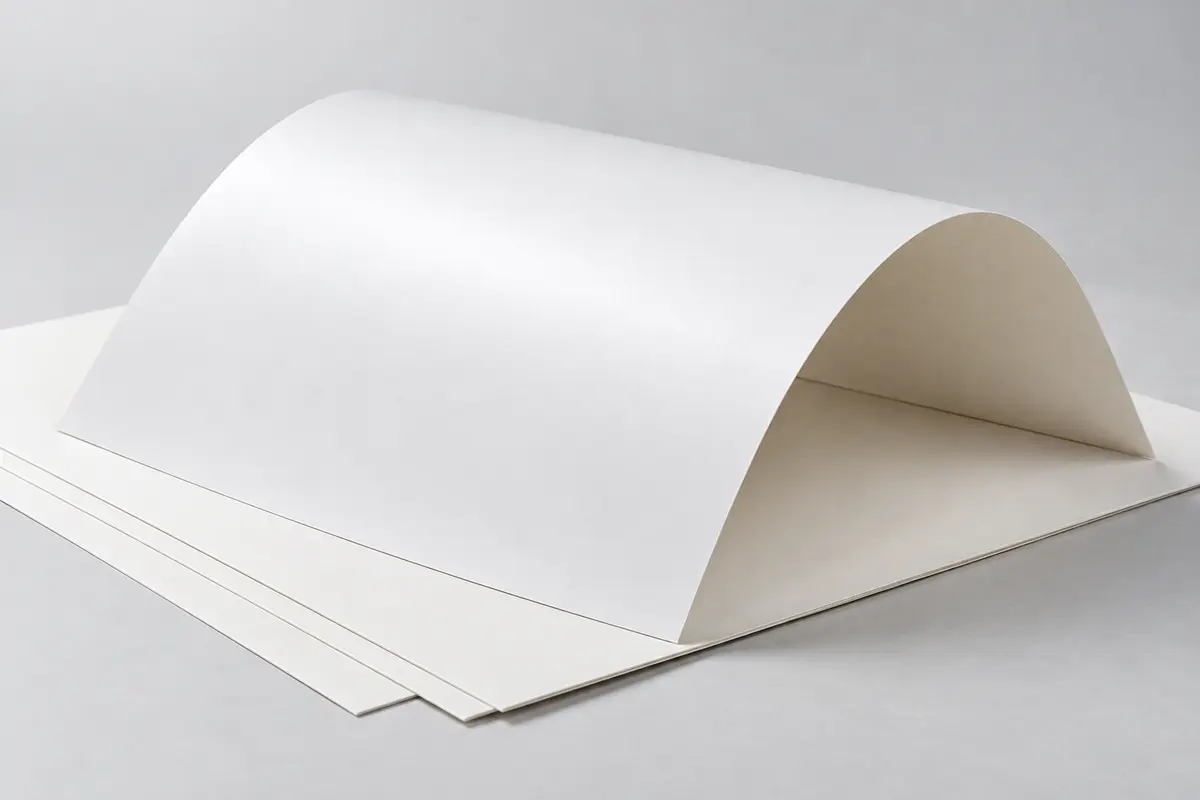
A quick way to tell when holding the sheet: tilt it under a light — the side that reflects light and feels smooth is the printing side; the other side is yellowish and does not reflect. Many people receiving Ivory paper for the first time think the supplier sent defective paper, but that is simply the nature of this paper.
Why Ivory paper is often chosen for boxes
The reason lies in stiffness and burst strength. At the same weight, Ivory paper is noticeably stiffer than Couche. The sheet stands upright without falling over, keeps sharp folds along crease lines, and boxes stacked on top of each other do not buckle at the sides.
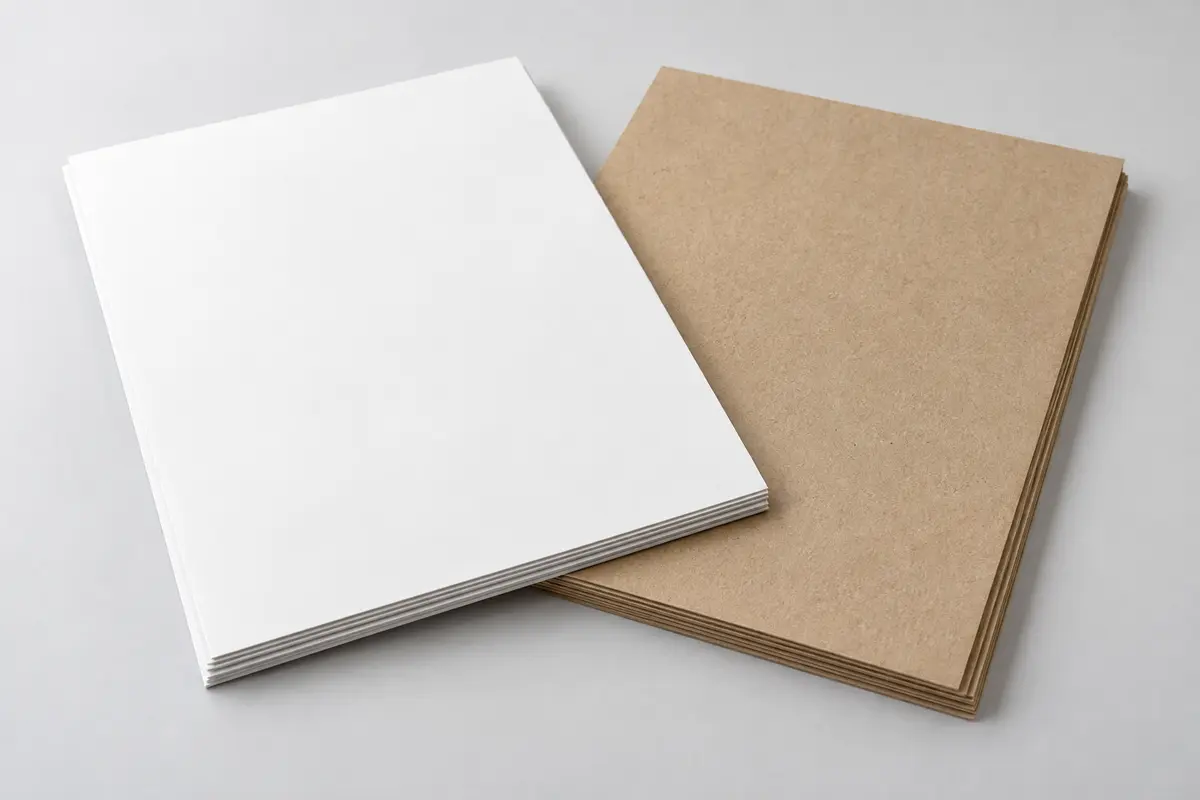
One more practical point: because only one side is coated, the inside of the box keeps the natural paper grain and is less glossy than boxes made of double-coated paper. For boxes holding cakes, tea or cosmetics, it feels more natural in the hand.
How Ivory paper differs from Couche and Bristol
These three types are often confused because they are all white and all printable. The difference lies in the number of coated sides and the stiffness:
- Couche — coated on both sides, evenly smooth on both, prints photos beautifully but is softer, better suited to leaflets, catalogues and posters than boxes.
- Ivory — coated on one side, stiff, made for boxes and packaging that need to hold their shape.
- Bristol — lightly coated on both sides, medium stiff, often used for business cards, cards and thin covers.
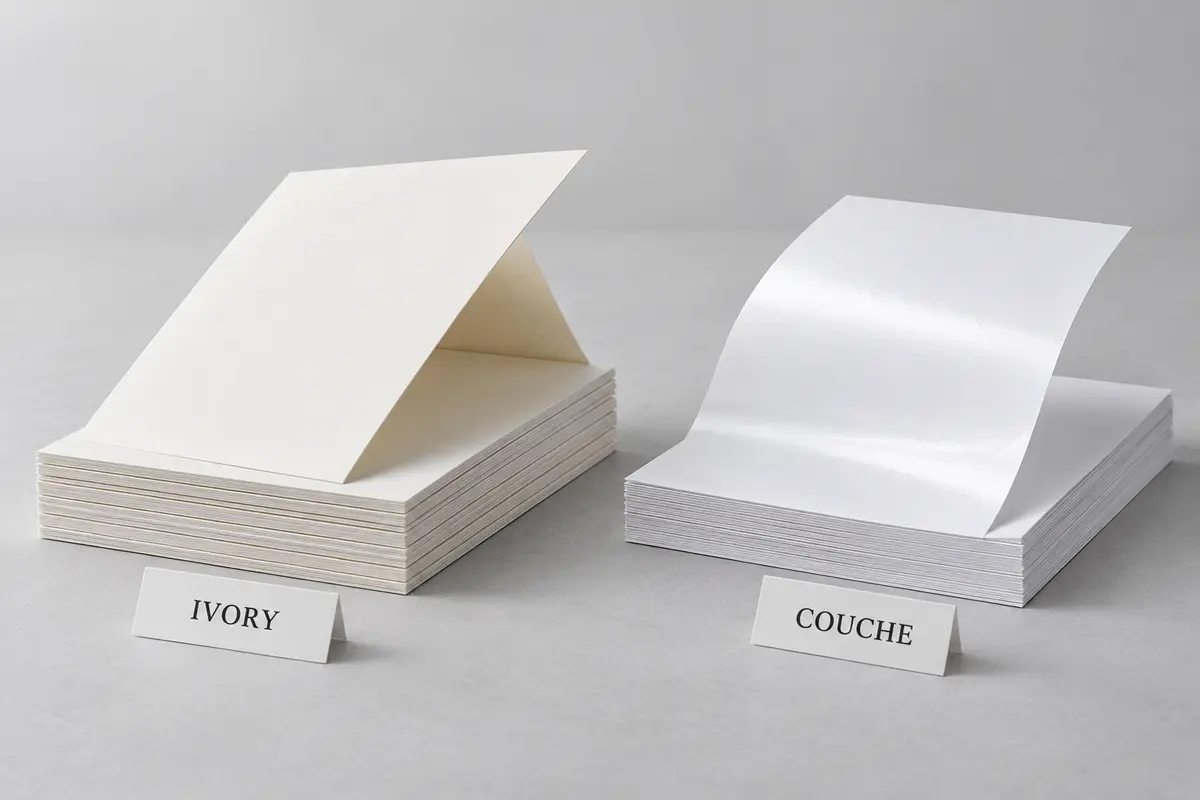
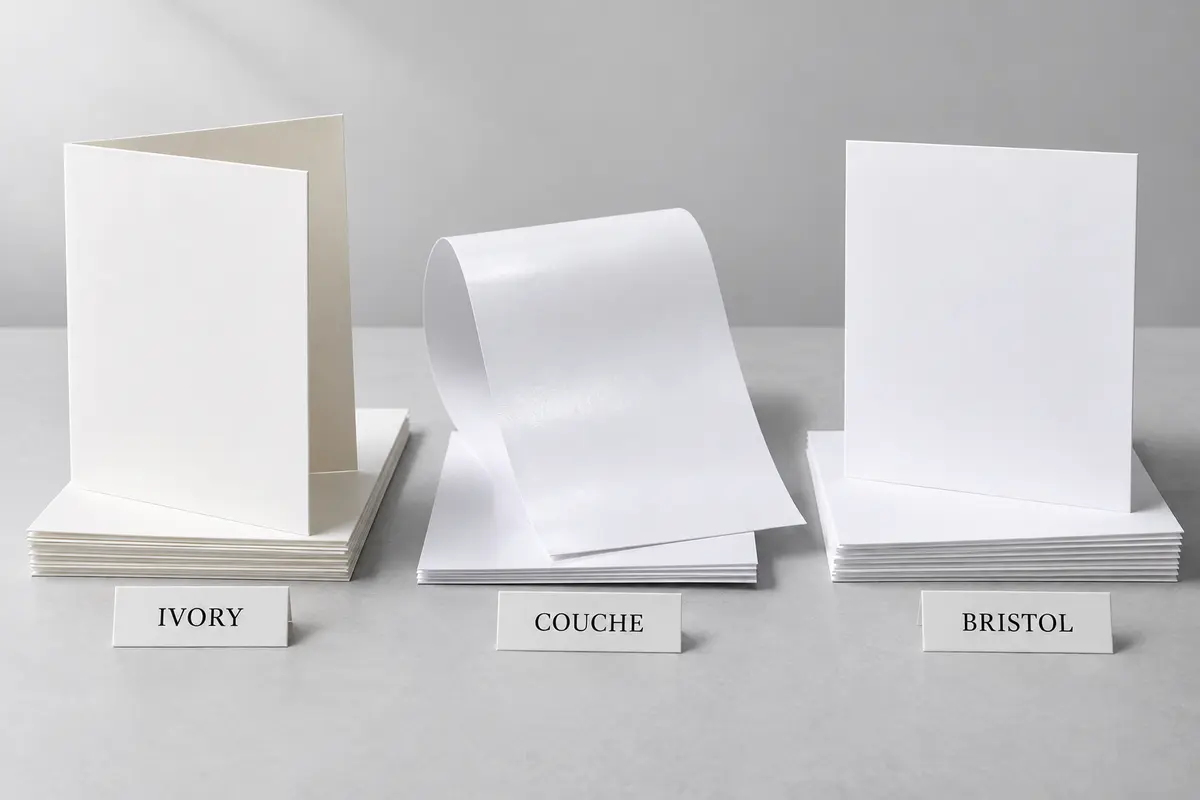
Choosing the wrong material usually shows when the box is folded, not when it is printed. A box made of Couche at the same weight as Ivory will be soft, with slightly bulging sides and corners that dent easily in transport.
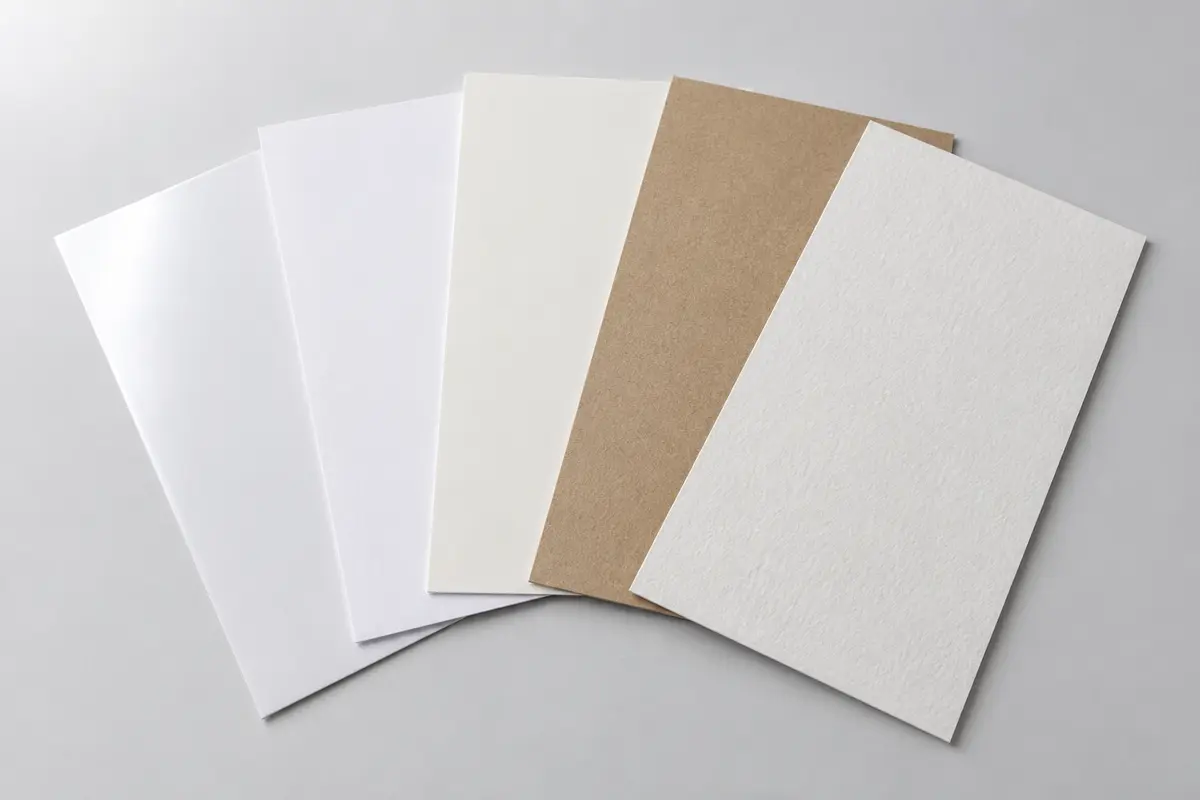
Ivory paper weights and specifications we stock
The In Quảng Cáo Q7 workshop currently stocks 250gsm Ivory paper — the most common weight for small and medium boxes, hang tags and notebook covers. Heavier weights such as 300gsm and 350gsm used for large boxes or boxes that need to bear loads are ordered per job; let us know in advance so we can source the paper.
The rule for choosing the weight is simple: the larger the box and the heavier the contents, the higher the weight must be. 250gsm is enough for small cosmetics boxes; shoe boxes and large gift boxes should go up to 300gsm or more. If you are not sure, describe the size and the item it will hold, and we will suggest a suitable weight.
Items commonly printed on Ivory paper
Almost anything that needs to fold into a solid shape and hold it can be made of Ivory paper:
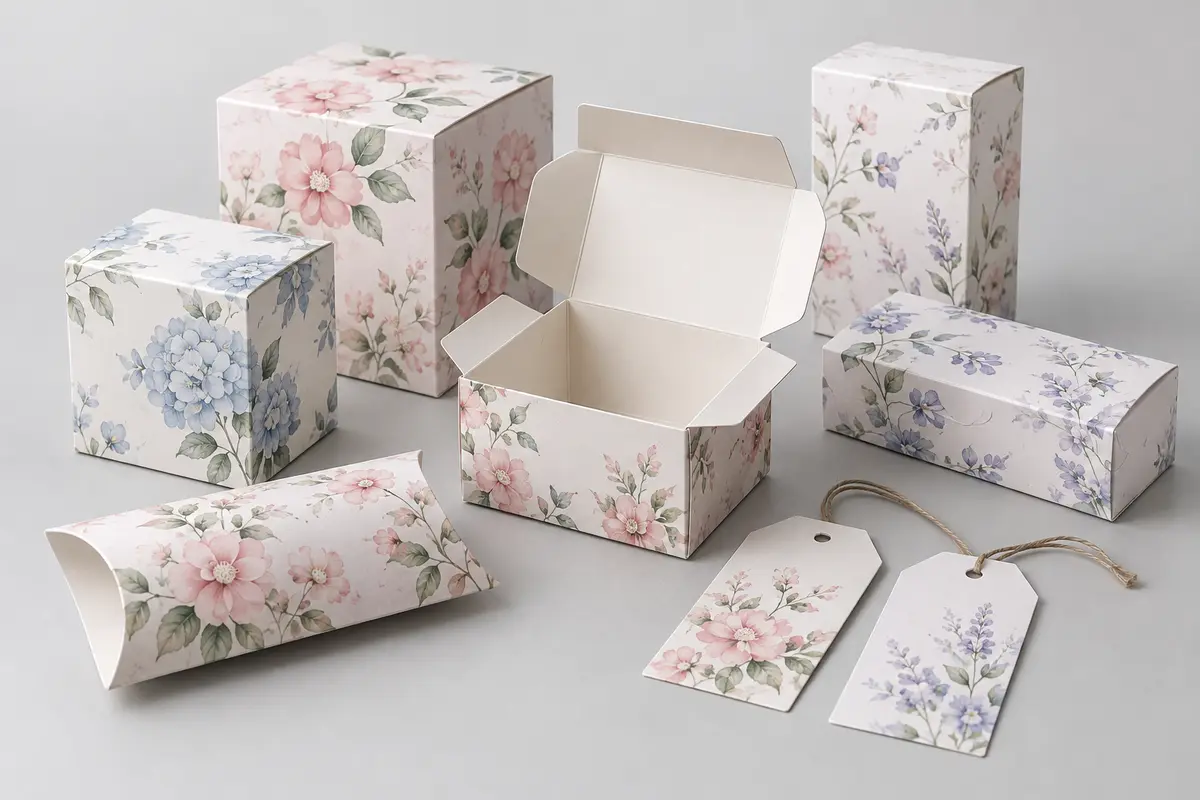
- Paper boxes for cosmetics, food and gifts — with the ivory side facing the inside of the box.
- Confectionery packaging, mooncake boxes, coffee boxes, tea boxes.
- Paper bags of the stiff type, with rope or paper handles.
- Product hang tags, loyalty cards, warranty cards.
- Notebook covers, document folders, folder that need to hold their shape.
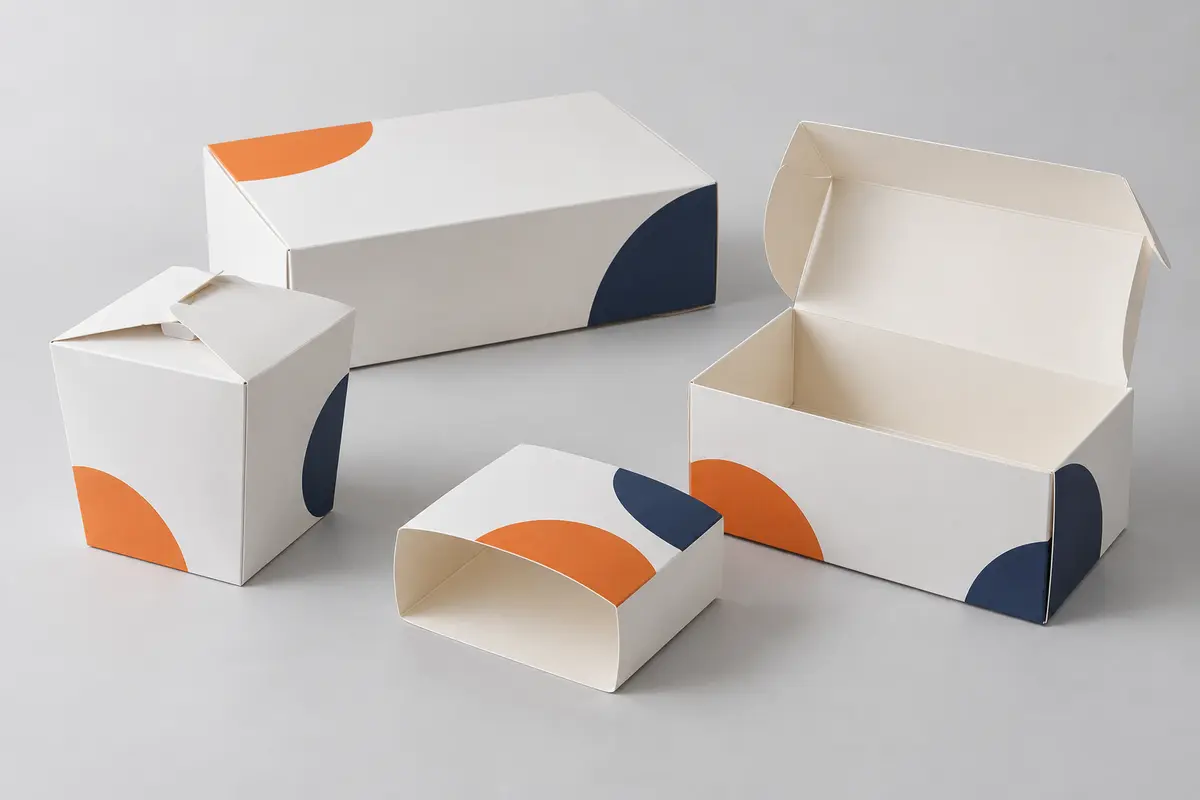
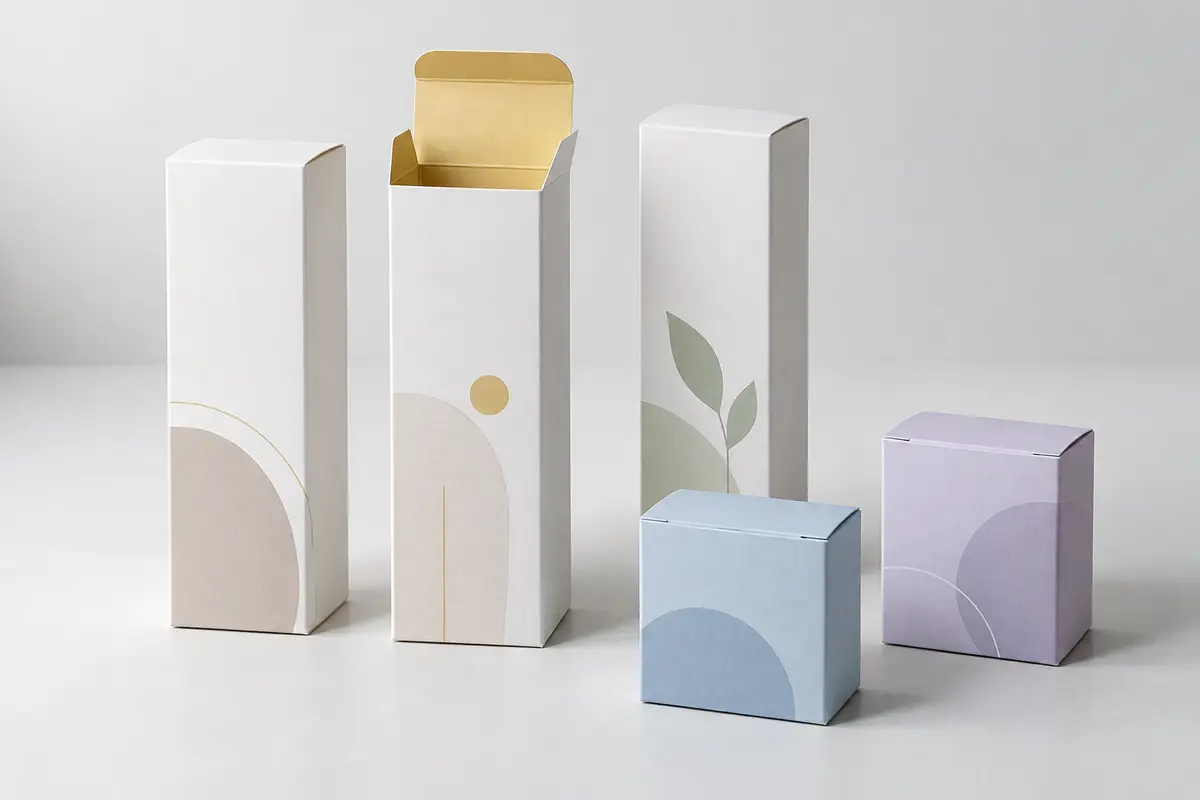
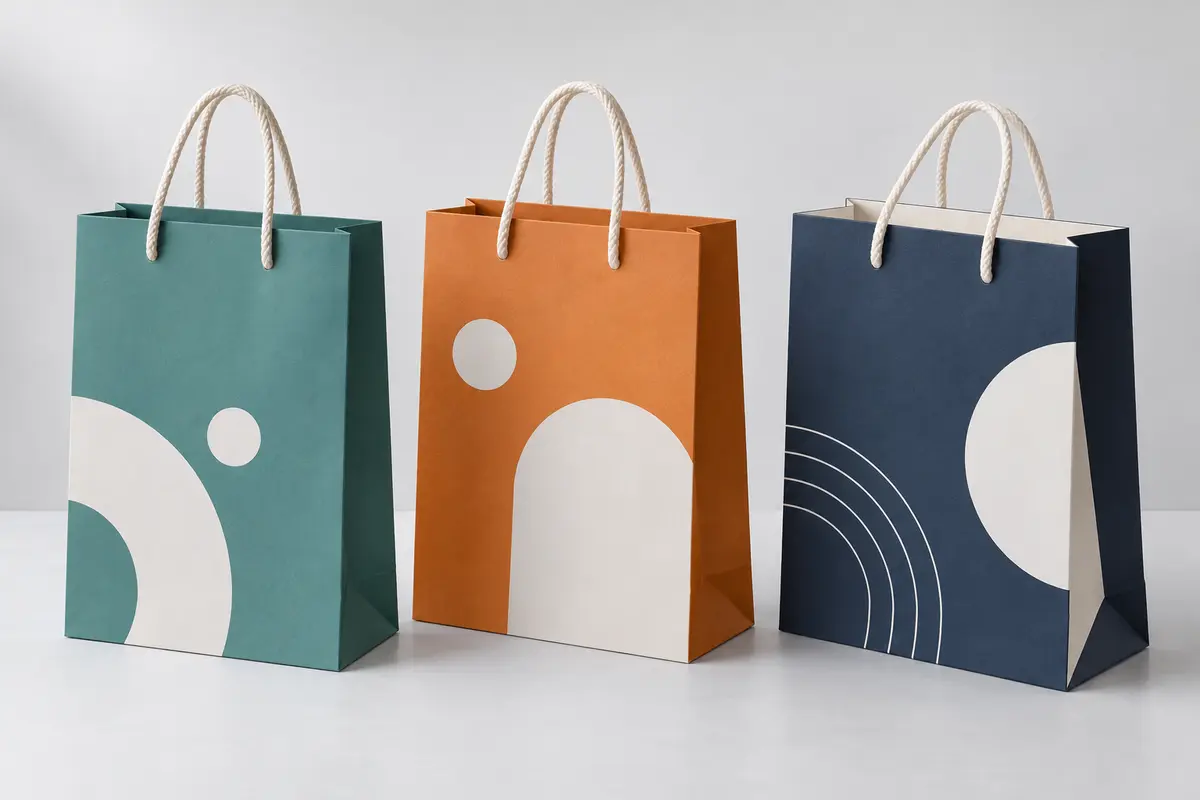
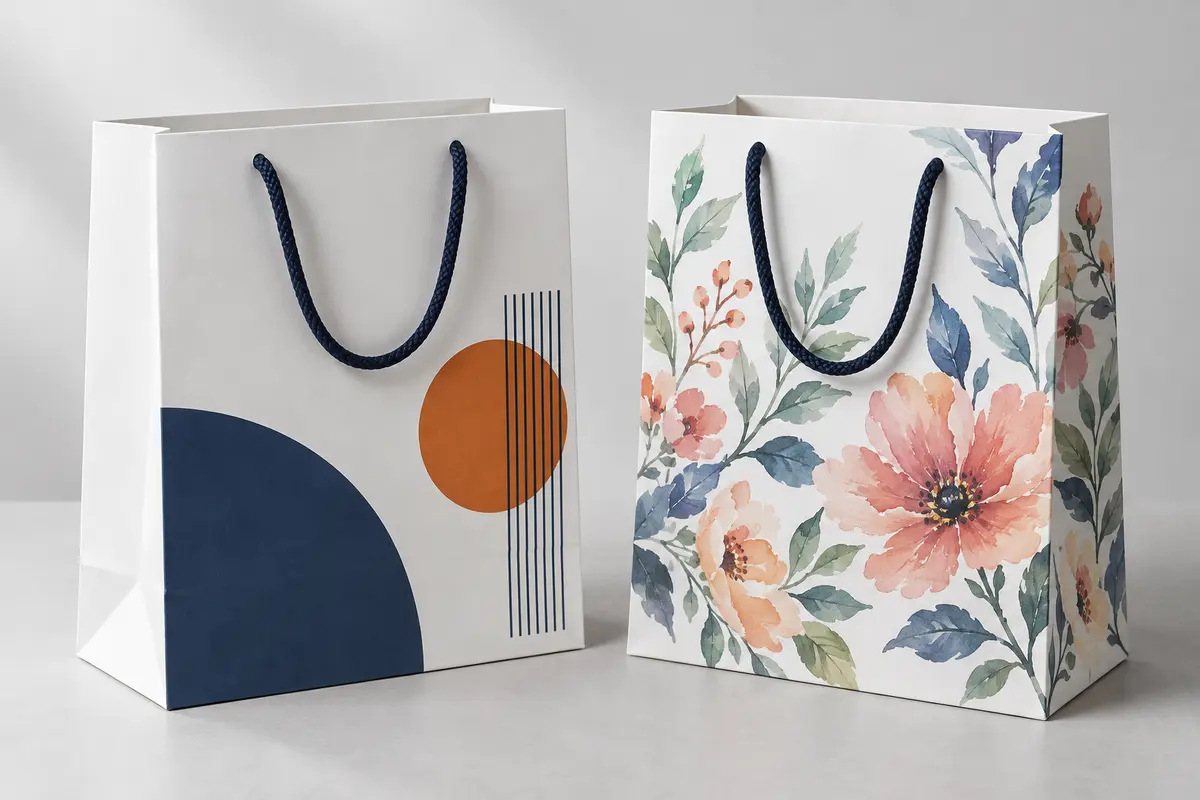
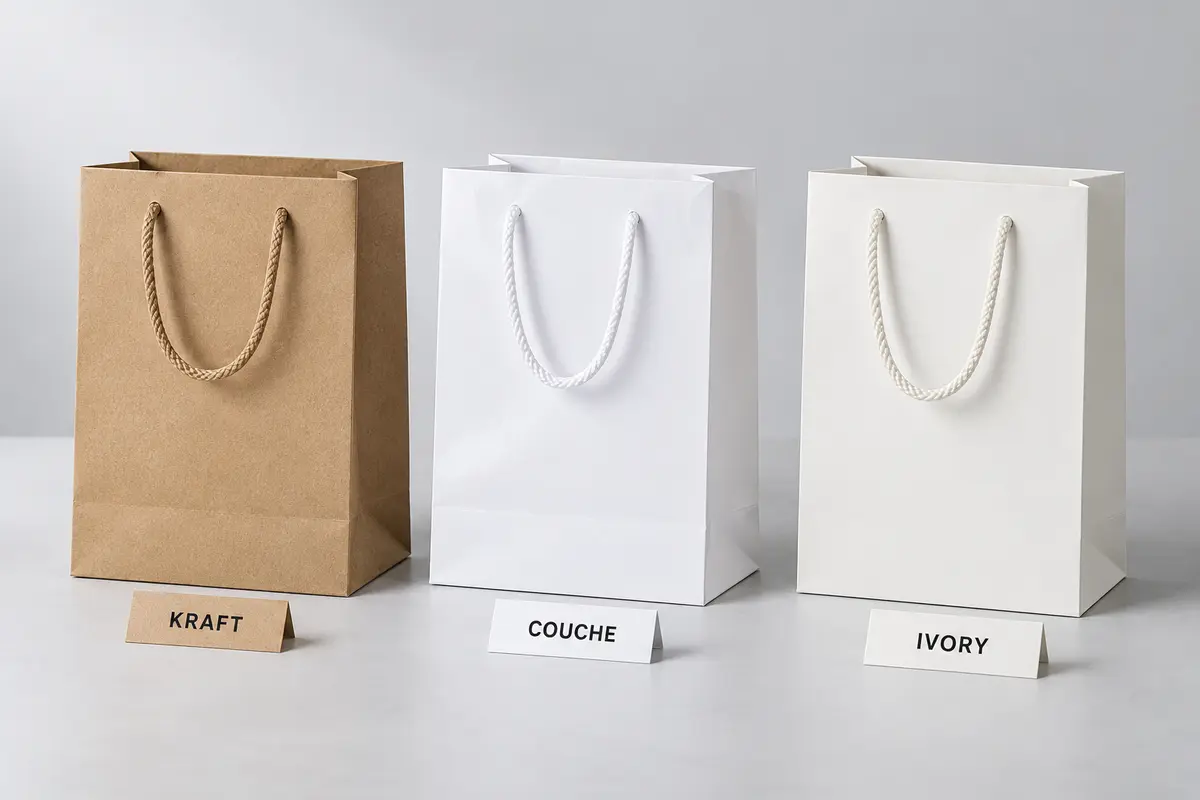
For paper bags, Ivory paper is a popular choice because the bag needs to bear the weight of the goods while the sides stay flat. The image below compares three common bag types so you can picture the difference in surface.
Post-print finishing on Ivory paper
Because packaging travels long distances and gets rubbed a lot, Ivory paper boxes are almost always lamination. Matte lamination gives a subdued, premium look with fewer fingerprints; gloss lamination makes the colours more vivid and eye-catching. Besides lamination, Ivory paper takes accent finishes well, such as foil stamping, embossing, spot UV.
For food boxes in direct contact with food, tell us in advance so we can advise on suitable lamination and treatment.
Preparing files for printing boxes on Ivory paper
Unlike flat printed items, paper boxes always need a die-line layout at the exact finished size, with cut lines and crease lines separated into two layers. If you do not have a die-line file yet, we will build one from the actual product dimensions — just send the length × width × height, or send an old box sample.
A few tips for preparing the file: use CMYK, 300dpi resolution, with a 3mm bleed. Most important is to clearly identify which side is the outside — Ivory paper can only be printed on one side, so if the box needs printing both inside and outside, you must switch to a double-coated material from the start.
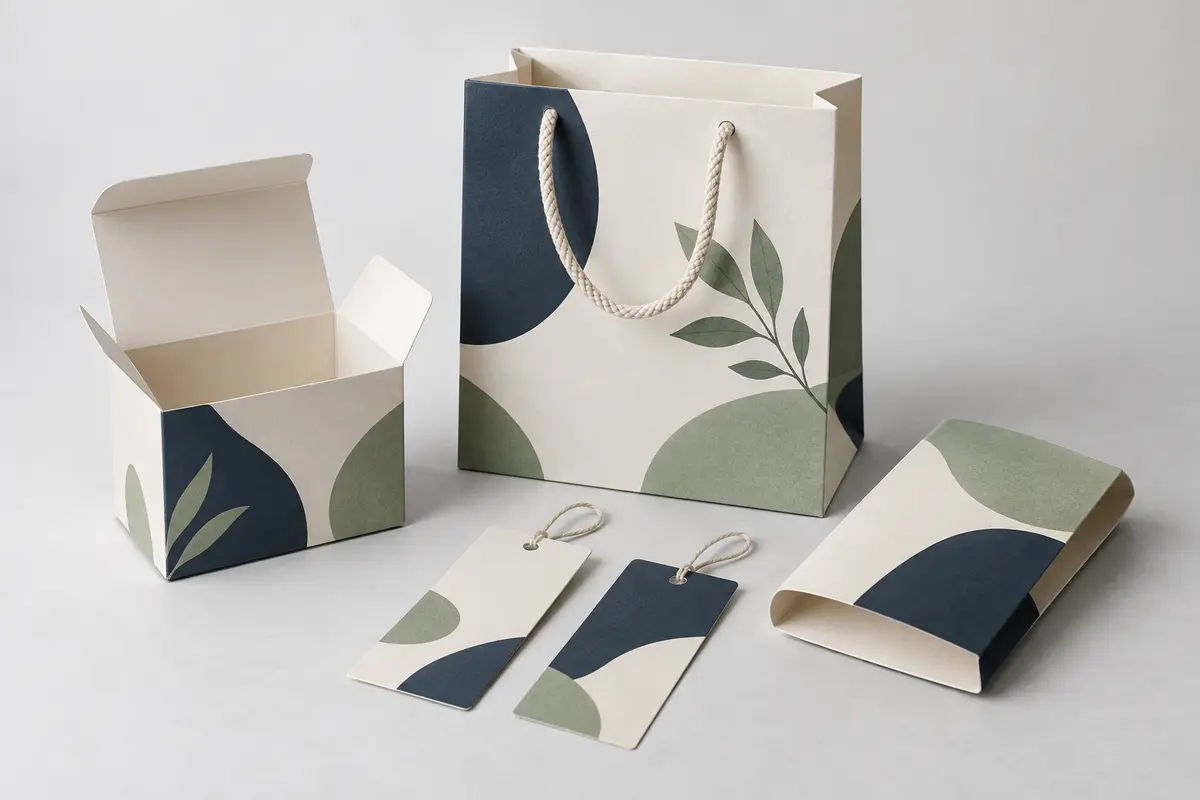
If you are still torn between materials, you can also refer to the article on Fort paper for comparison, or see samples of labels to stick onto boxes as an extra.
Order Ivory paper box printing at In Quảng Cáo Q7
Send the box dimensions and design file via Zalo or call 0866.511.099 for a quote and advice on weight. Our workshop is at 49 Mai Van Vinh, Tan Hung Ward, Ho Chi Minh City, where you can come and see real paper samples before deciding. Production & delivery: 8:00–12:00 & 13:00–18:00 Mon–Sat (closed Sunday) · Consultation & orders: 8:00–12:00 & 13:00–20:00 Mon–Sat; 14:00–19:00 Sunday.
Related products

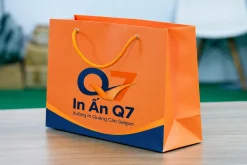
Paper bags

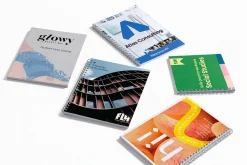
Catalogue – Company Profile

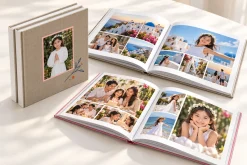
Photobook

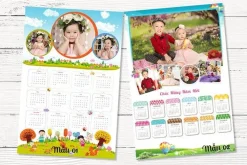
Calendars
Choosing the weight by box type
Whether a box holds its shape or dents depends almost entirely on the weight. Choose by the box size and the weight of the item inside, not by price.
| Box style | Recommended weight | Why |
|---|---|---|
| Small boxes for cosmetics and perfume | 250–300gsm | Small size, so no need to be too thick |
| Cake boxes, medium gift boxes | 300–350gsm | Must hold its shape when held in one hand |
| Boxes for goods heavier than 1kg | 350–400gsm | Bears load when stacked |
| Boxes with die-cut windows | 350gsm and up | The cut-out weakens the box walls |
| Thin packaging sleeves, liner type | 210–250gsm | Only needs to cover and carry printed information |
| Large tray-type boxes | 400gsm and up | Large areas sag easily in the middle |
Boxes with windows are the case where the paper is most often chosen too thin. Cutting out an area on the front removes load-bearing material, so it must be compensated with a weight one step higher than a closed box of the same size.
If boxes will be stacked in storage or during transport, test the load first: assemble a sample box and place the expected number on top of it. Testing once is far cheaper than making the whole batch and only then discovering dents.
Creasing and box die-cutting
Going from a flat sheet to a box takes two steps: creasing to form the fold lines and die-cutting to cut the unfolded shape. This is what decides whether the box folds up square or not.
- Creasing: the machine presses a recessed groove along the fold line, compressing the paper fibres so the fold does not crack the coating.
- Hand folding without creasing: the coating cracks into a white streak along the fold, very visible on dark backgrounds.
- Cutting die: made once to the unfolded shape; later reprints share the same die.
- Paper grain direction: folds should be perpendicular to the grain; folding with the grain cracks more easily.
- Side gluing: glue sticks better on the uncoated side than the coated side, so the layout must be oriented correctly.
- Window die-cutting: if a clear film is glued in, leave a gluing margin of at least 5 mm around the cut-out.
When sending files, include a die-line with the cut lines and crease lines clearly marked on two separate layers. Mixing the two kinds of lines is the most common mistake; the machine cannot tell which is a cut and which is a fold.
If you do not have a die-line yet, send the three dimensions of the box and a reference photo. The design team will build the die-line and send a preview, along with a real sample box if you want to hold it.
Common mistakes when ordering boxes for the first time
| Mistake | Consequence | How to avoid it |
|---|---|---|
| Measuring the box size by the item size | Tight box, corners dent when the item is pushed in | Add 2–3 mm in each dimension |
| Forgetting the thickness of the box walls | The lid does not close tightly | Include the paper thickness in the die-line |
| Mixing cut and crease lines on one layer | Wrong die-cutting, ruining the whole batch | Separate them into two layers with clear names |
| Printing information on the uncoated side | Dull colours, blurred text | Print only on the coated side |
| Hand folding without creasing | White streak cracks along the fold | Machine creasing |
| Choosing a low weight for a large box | Box walls sag and look cheap | Increase the weight by one step |
| No gluing margin left for the window | The clear film peels off after a few days | Leave a gluing margin of at least 5 mm |
| Forgetting the paper grain direction | Folds crack even after creasing | Tell us so we can align the grain when cutting the paper |
The costliest mistake is a wrong die-line, because it is only discovered after the whole batch has been die-cut and the die has already been made. So ask for a real sample box before running large quantities.
Sample boxes are charged separately but are far cheaper than remaking the die and reprinting. For orders of a few thousand boxes, it is almost a mandatory step.
Surface finishing for boxes
The coated side takes most finishes well. Which one to choose depends on the product category and how customers will hold the box.
| Finish type | Effect | Suitable for |
|---|---|---|
| Matte lamination | Smooth to the touch, premium, few fingerprints | Cosmetics, gifts |
| Glossy lamination | Deep colours, good dirt resistance | Food, consumer goods |
| Spot UV | Glossy raised logo on a matte base | Premium goods |
| Foil stamping | Gold, silver, copper details stand out | Gifts, cosmetics |
| Embossing, debossing | Creates relief you can feel | Brands wanting to highlight their logo |
| Textured lamination | Textured surface | Handmade goods, local specialities |
Food boxes should preferably be laminated because they are handled a lot and easily get greasy. Gift boxes opened once and then kept look more valuable with matte lamination plus foil stamping.
Lamination also makes the box walls slightly stiffer, so for large boxes it is both an aesthetic finish and an aid to holding shape. On the other hand, laminated boxes are harder to recycle than raw ones.
Quantity, cutting dies and cost
The cost of a packaging order includes more items than flat printed items. Understanding each item helps you work out the break-even point when deciding the order quantity.
- Cutting die: charged once for each unfolded shape, reused for all later print runs.
- Material: by the number of large paper sheets; how many boxes one sheet yields depends on the size.
- Printing: by the number of sheets and colours; offset printing is cheaper for large quantities.
- Lamination: by area; laminating only the outside is enough.
- Die-cutting and side gluing: by the number of boxes.
- Special finishes: foil stamping and embossing need their own dies, charged extra.
Because the cutting die is a fixed cost, the larger the order, the smaller the die cost per box. That is why an order of a few hundred boxes has a much higher unit price than an order of a few thousand.
If you are testing the market, the economical way is to make one standard die and print several small batches as needed. The die stays the same, so later batches only cost printing and finishing.
Lead time and how to order
| Step | Typical time |
|---|---|
| Building the die-line and approving the sample | 1 to 2 days |
| Making a new cutting die | 1 to 2 days |
| Printing and lamination | 1 to 2 days |
| Die-cutting and side gluing | 1 day |
| Making a sample box before running the batch | 1 to 2 days |
| Reprints using an existing die | 2 to 3 days |
Former District 7, Nha Be, District 4 and District 8 get door-to-door delivery. Other districts of Ho Chi Minh City are delivered according to the day's vehicle schedule; other provinces via intercity bus or courier.
Goods are delivered folded flat to save space, and the shop assembles them when needed. If you need assembled boxes delivered, tell us in advance, because extra storage space and higher shipping costs apply.
See also other papers in the same group: Bristol Paper coated on both sides for business cards and cards, Kraft Paper natural brown for bags and rustic labels. For the group of packaging items for shops, see Restaurants & Shops.
Specific requirements by product category
Each industry has its own packaging requirements, from labelling regulations to how customers will open the box. Below is how each product group usually does it.
| Category | Common box type | Mandatory information on the box |
|---|---|---|
| Cosmetics | Small upright box, matte laminated, foil stamped | Ingredients, expiry date, place of manufacture |
| Packaged food | Gloss laminated box with a window | Ingredients, nutrition, expiry date, barcode |
| Pastries, gifts | Separate lid or tuck-in lid box | Product name, short expiry date |
| Dietary supplements | Upright box with lots of printed information | Ingredients, dosage, warnings |
| Small household appliances | Box with a window to see the product | Technical specifications, instructions |
| Local specialities, agricultural produce | Raw box or one-colour printed box | Origin, traceability code |
Food and cosmetics have their own regulations on label content, so before building the file, check with your legal department or a consultant. We print exactly according to the approved file and do not check this mandatory content for you.
A small but often forgotten detail: reserve space for the barcode and QR code right from the layout stage. Adding them later usually means shifting the whole front face.
Storing unused packaging
If the goods are not used right away, store them properly so they do not have to be thrown away. Packaging ruined by poor storage is a waste few people account for.
- Keep them lying flat in folded form, raised off the floor, not leaning at an angle in the corner of the warehouse.
- Avoid damp places; absorbing moisture makes the box walls soft and lose their shape.
- Do not place heavy objects on the stack; flattened creases make the box warp when assembled.
- Avoid direct sunlight; the printed surface will fade unevenly.
- Take them in small bundles; do not open the whole lot at once.
- Assembled boxes should be stacked upright, not piled lying down too high.
For packaging printed with expiry dates or batch information, order just enough for the next production cycle. Ordering too much and then changing the information means throwing away the whole batch.
Need printing or signage in Ho Chi Minh City?
In Quảng Cáo Q7 runs its own print workshop in Tân Hưng Ward (former District 7), Ho Chi Minh City, producing and installing signage, banners, window graphics, exhibition booths and event displays. Send us the size, material, quantity and a photo on WhatsApp and we will get back to you.

Phone: +84 866 511 099 · Also on WeChat
Workshop: 49 Mai Văn Vĩnh, Tân Hưng Ward, Ho Chi Minh City