







































































Our commitments
Printed directly in our workshop, no middlemen
Digital and offset presses right in our workshop. You deal directly with the people who make your order, so every request is understood and handled immediately.
Fast production, many orders ready the same day
Business cards, documents, decals, standees… printed and delivered the same day. See production times for each product group.
One point of contact, all-in-one from file to finished product
Quotes, orders, Zalo messages, delivery booking and invoicing run automatically on one system. Design – printing – finishing – installation all happen in-house, so you don't have to go anywhere else.
Full VAT invoices, issued fast
E-invoices issued right after delivery, with urgent support for businesses that need documents early for payment.
Canvas Prints
From 150.000 ₫ / m²Price incl. 8% VAT: from 162.000 ₫ / m²
Canvas fabric printing by the square meter. Used for wall art and shop decoration.
To have your canvas framed, please contact:
Stretched Canvas Prints From Your Photos – Ready to Hang
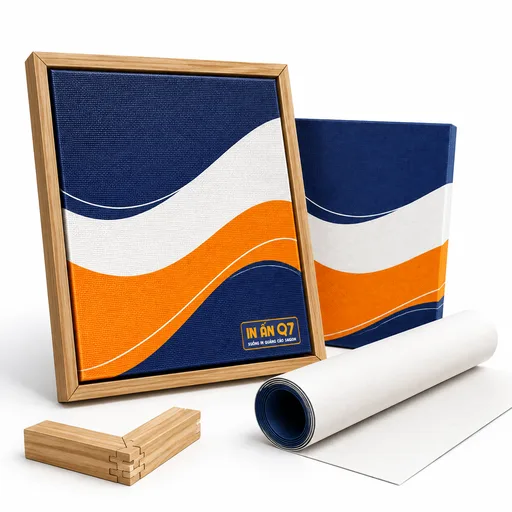
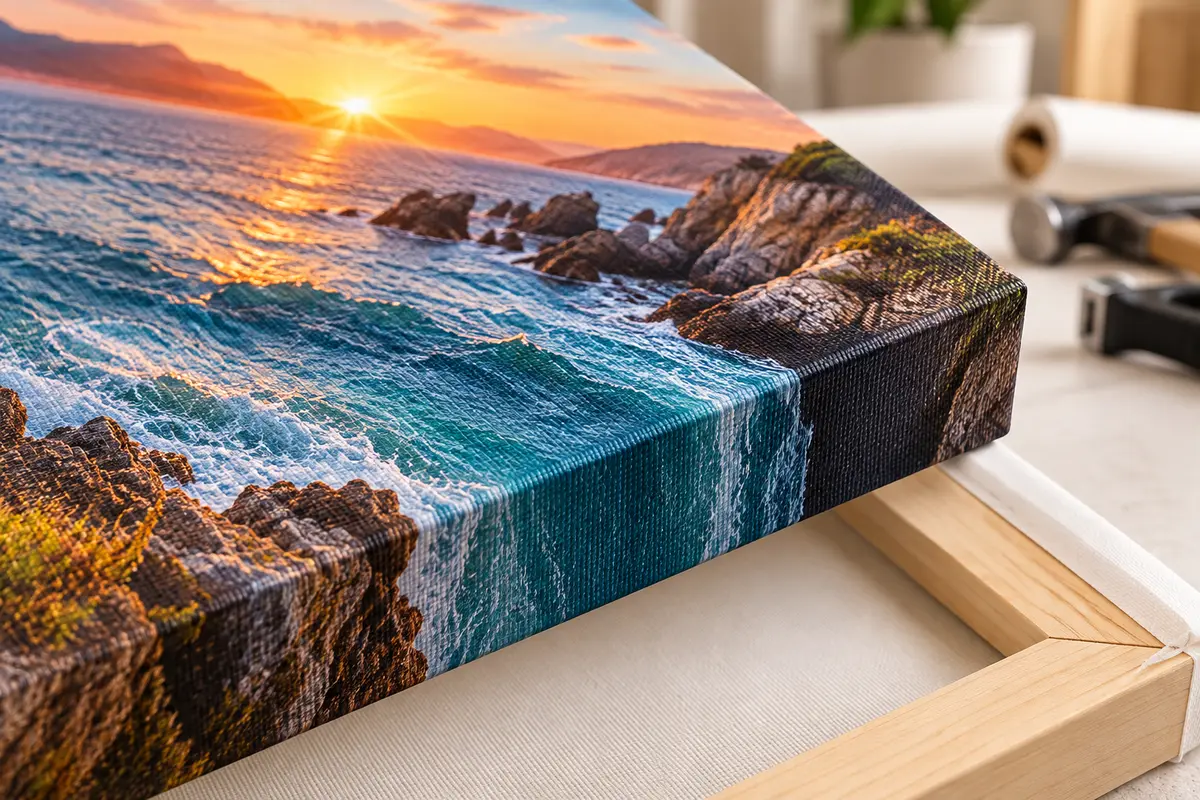
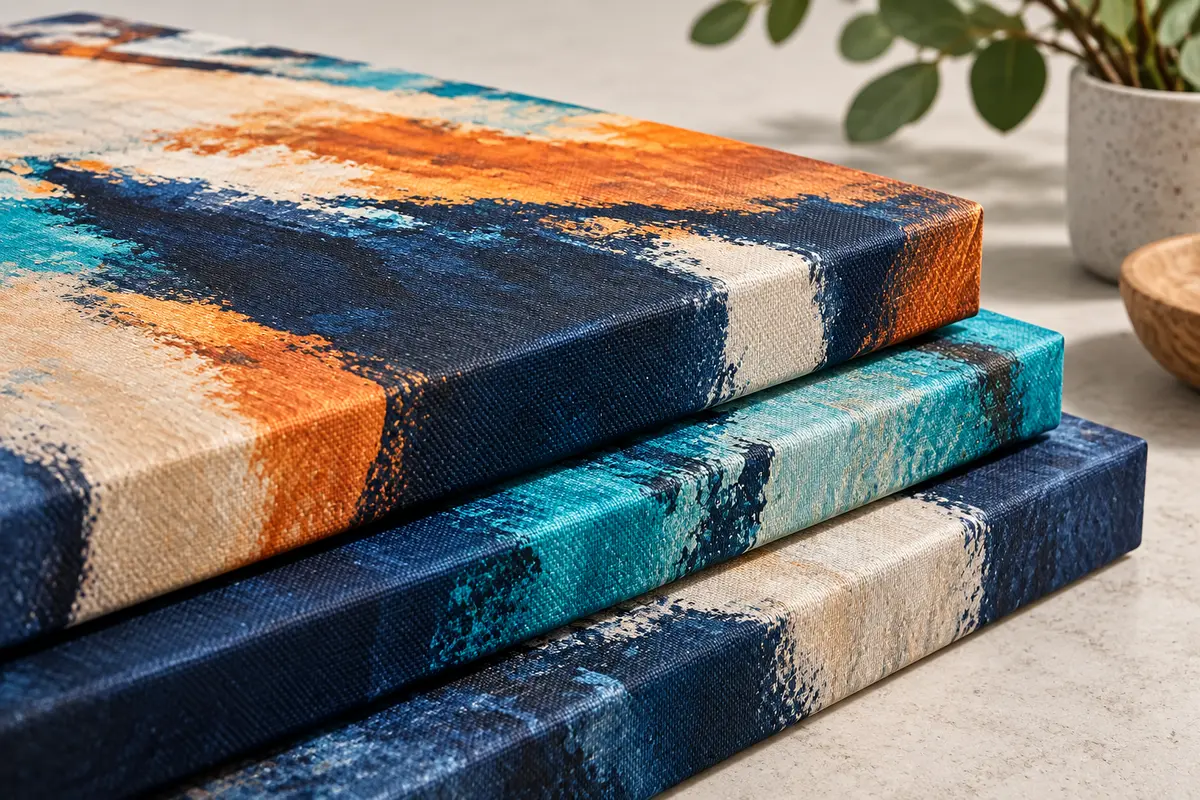
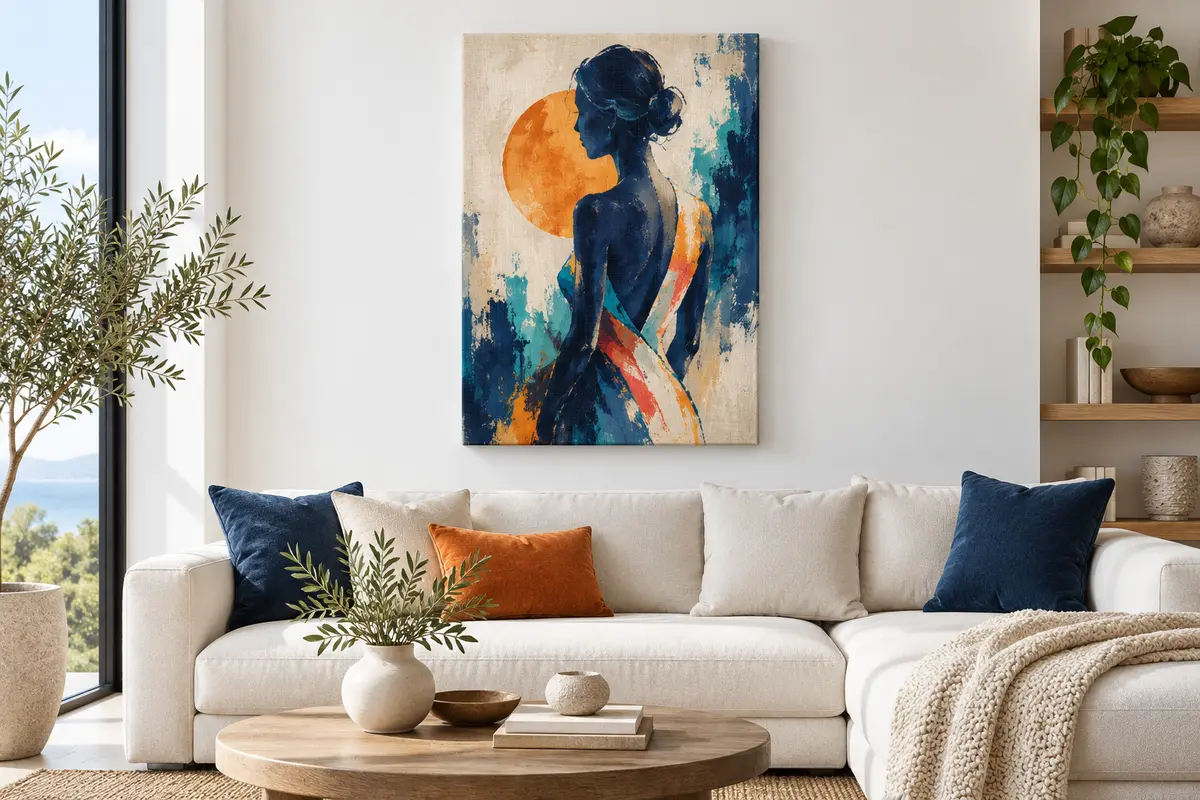
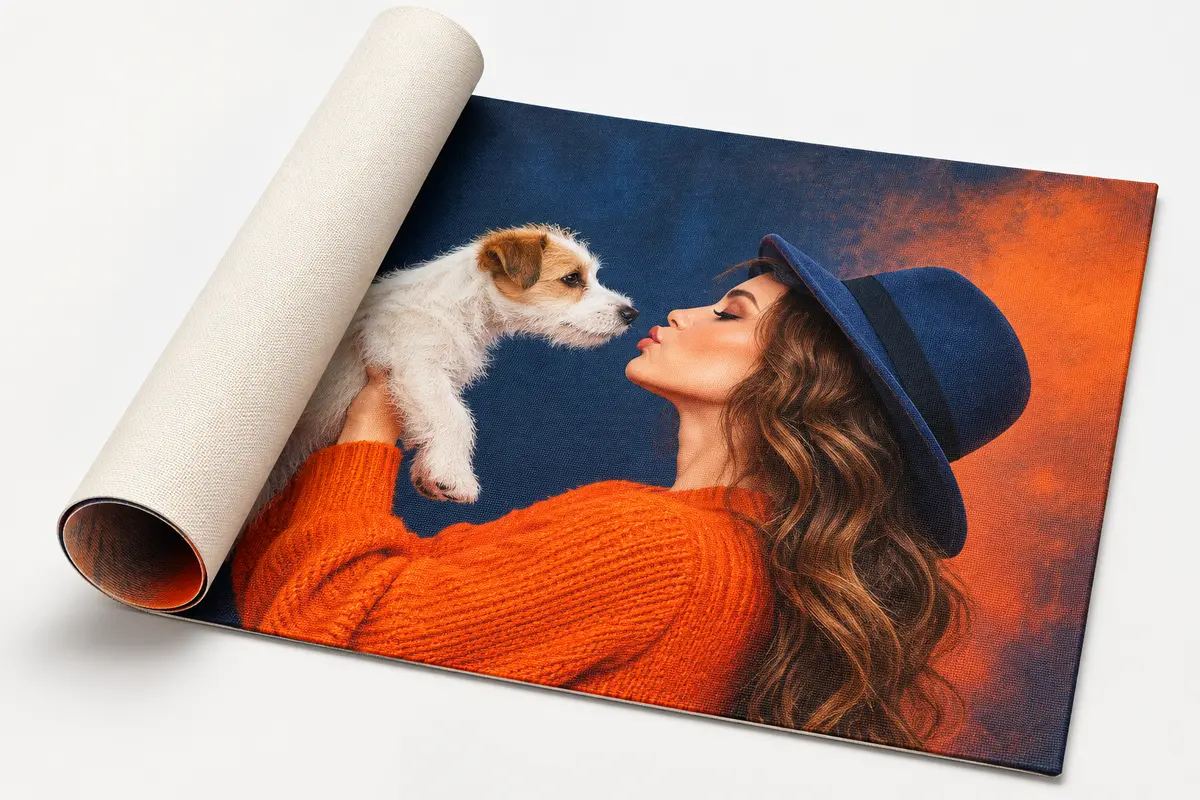
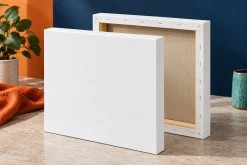
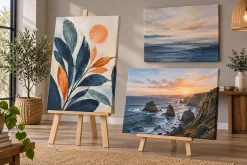
Canvas Prints is a picture printed on canvas fabric and then stretched on a wooden frame: no glass, not heavy, just hang it on the wall and you're done. The fabric surface has a woven texture, so the print looks like a hand-painted picture rather than a glossy photo print — which is why this style is popular for living rooms, cafés and large family photos.
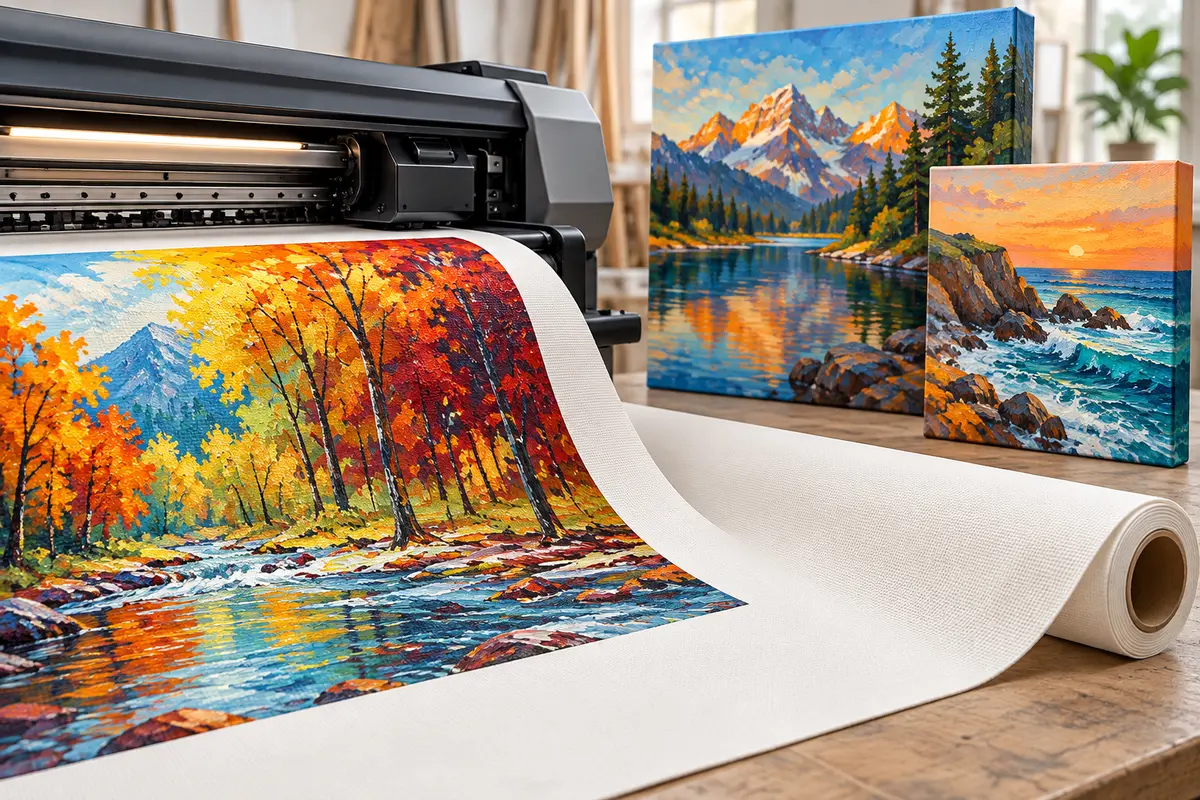
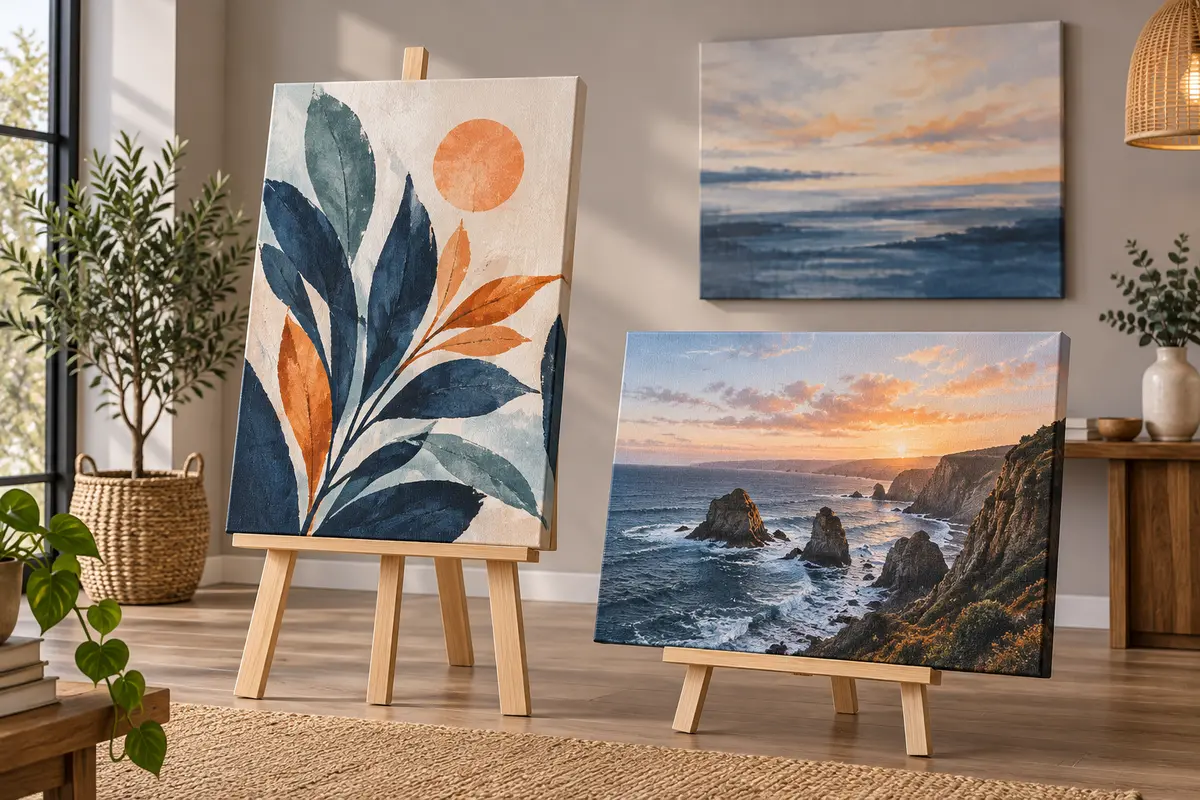
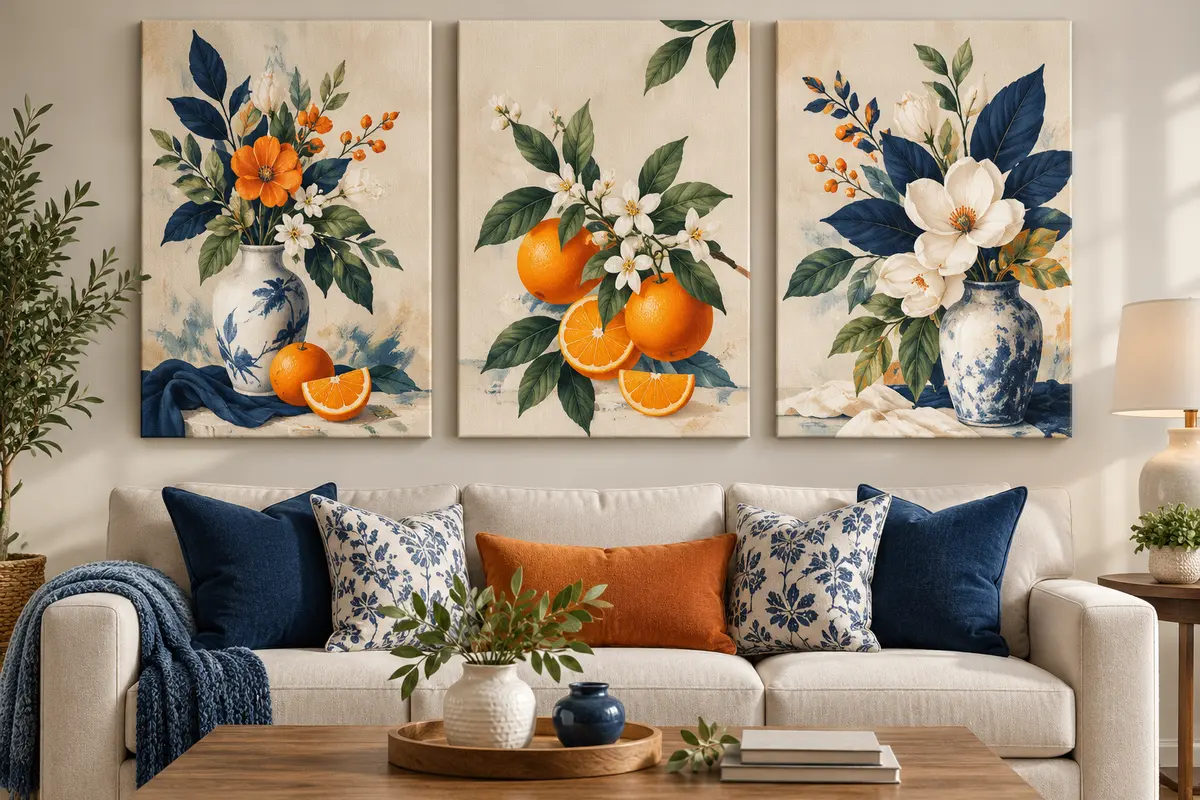
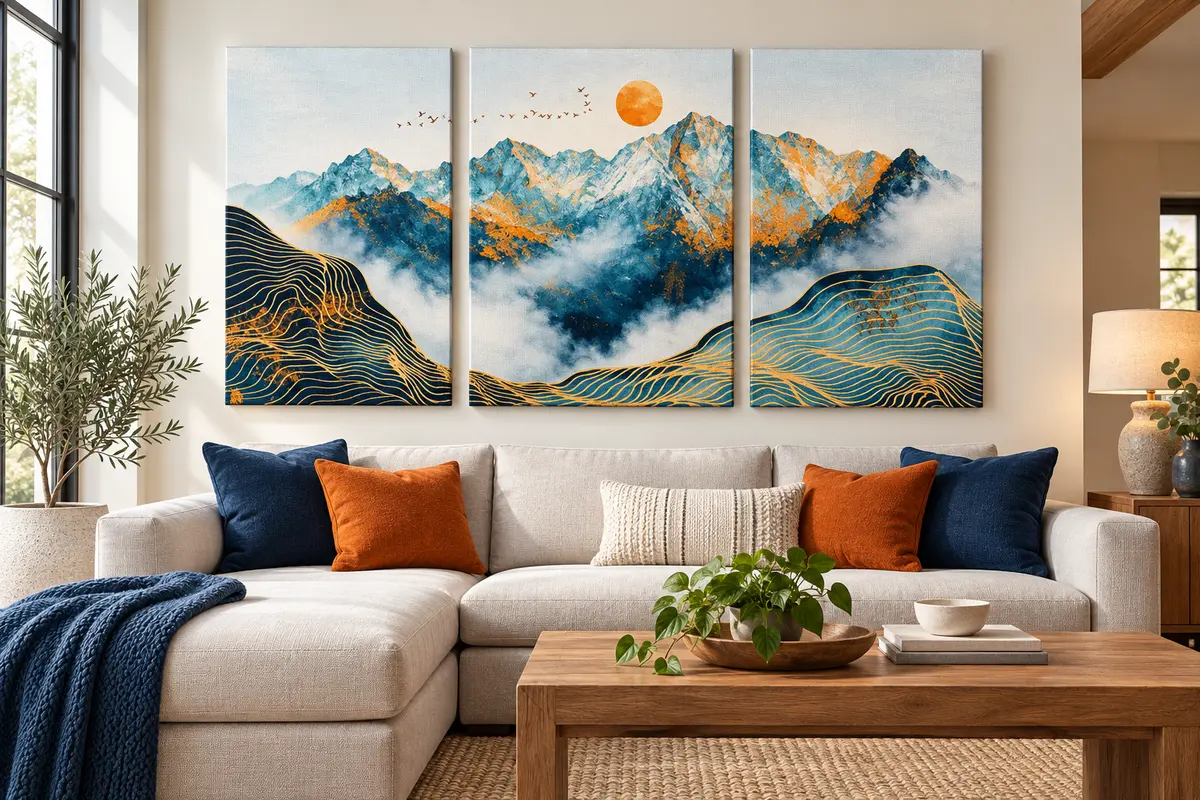
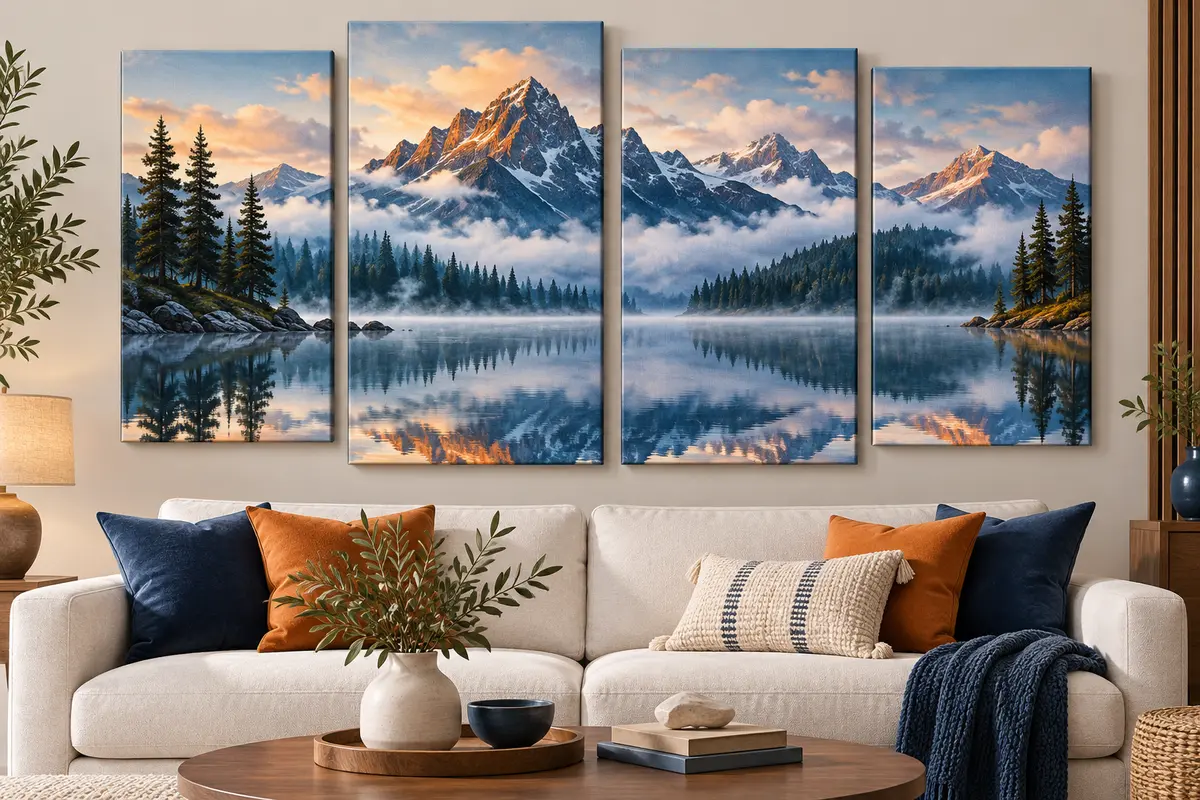
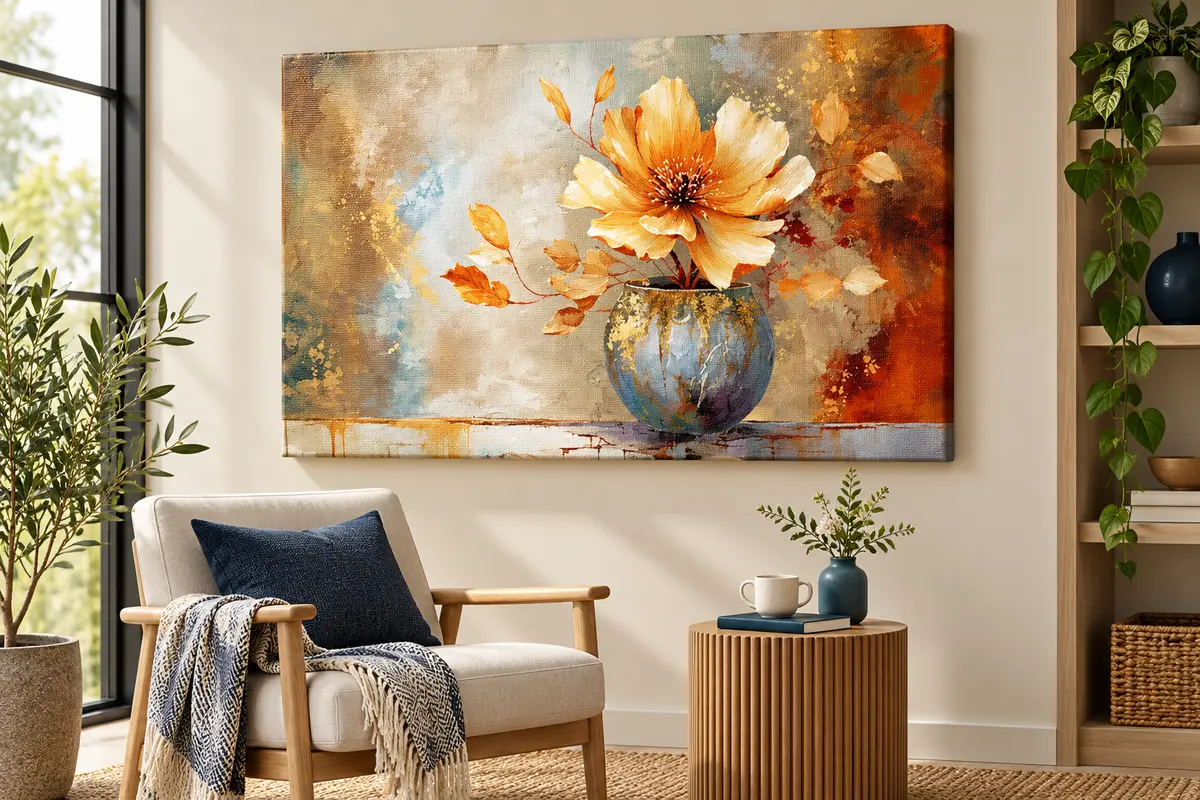
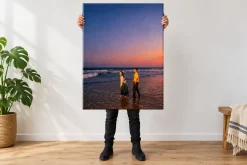
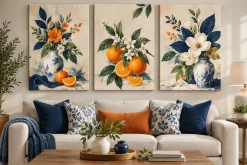
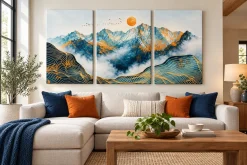
We print and stretch directly at our District 7 workshop, printing from your photos, whether a single piece or a multi-panel set. Some images in this article are illustrations.
What a canvas print is made of
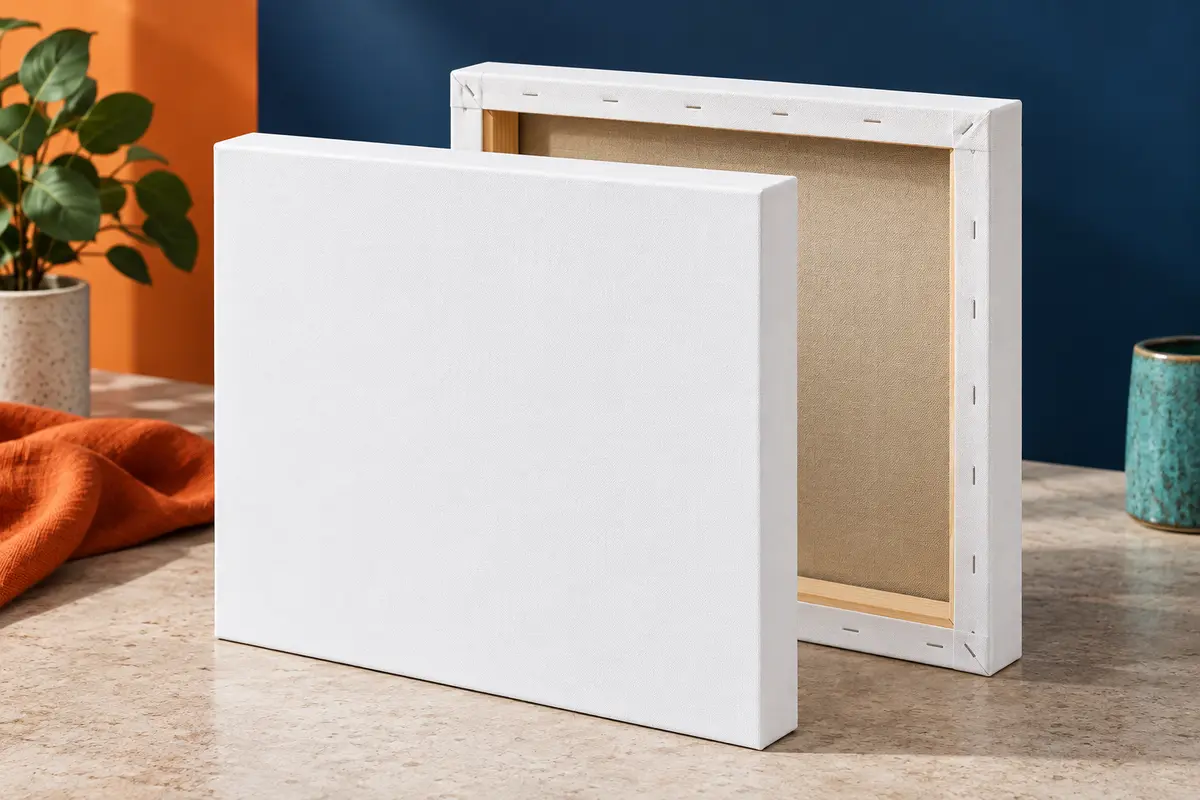
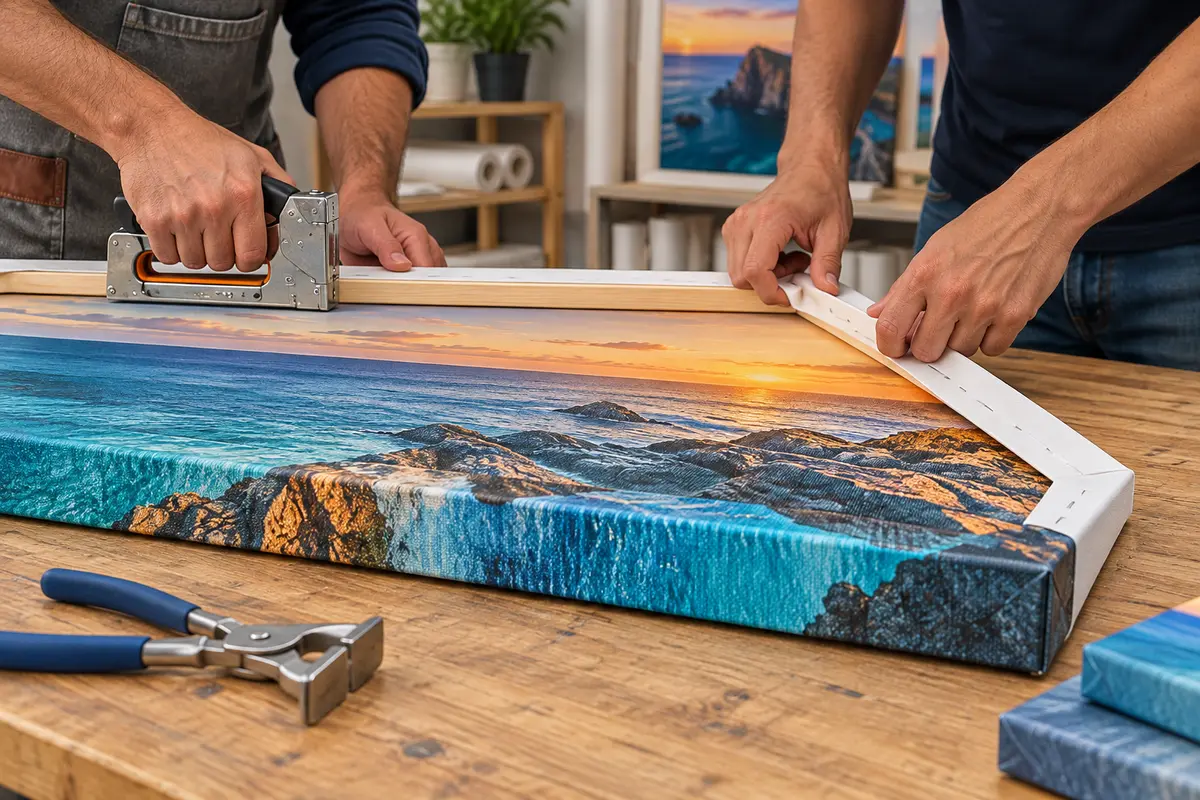
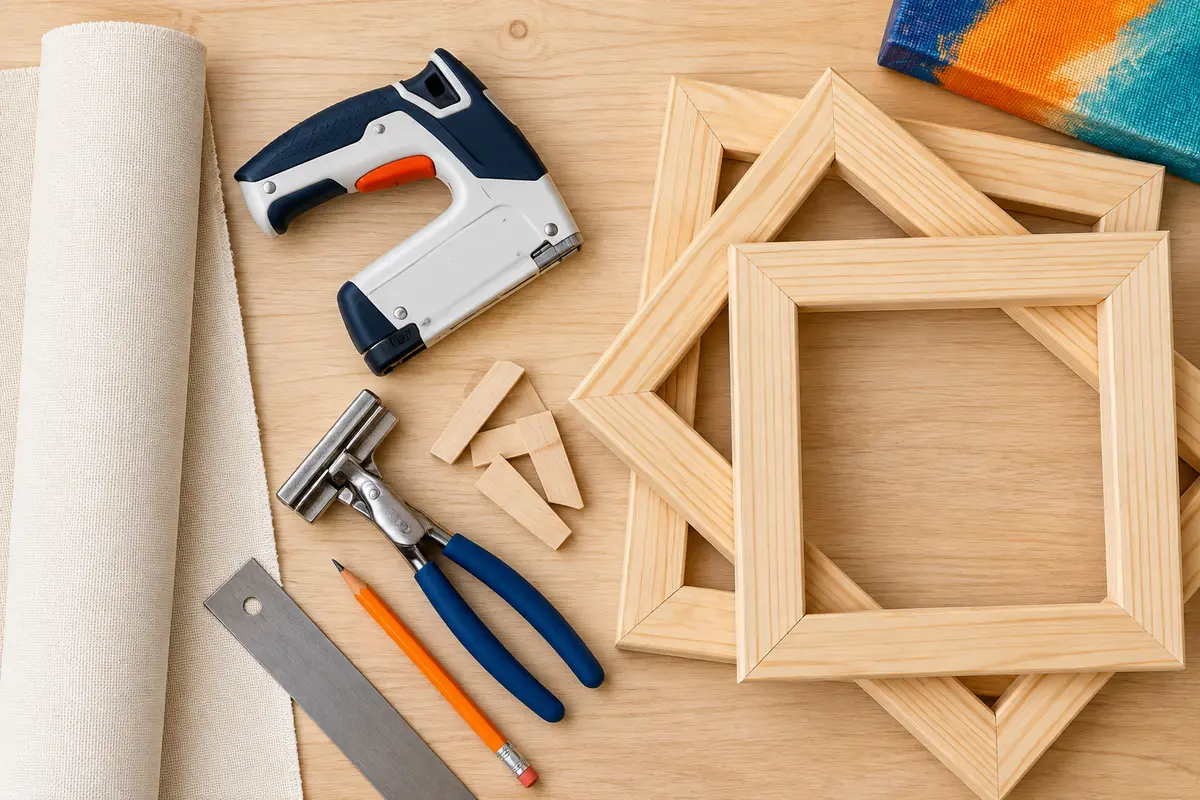
- The art face — canvas fabric with an ink-receptive coating, printed with solvent or UV ink.
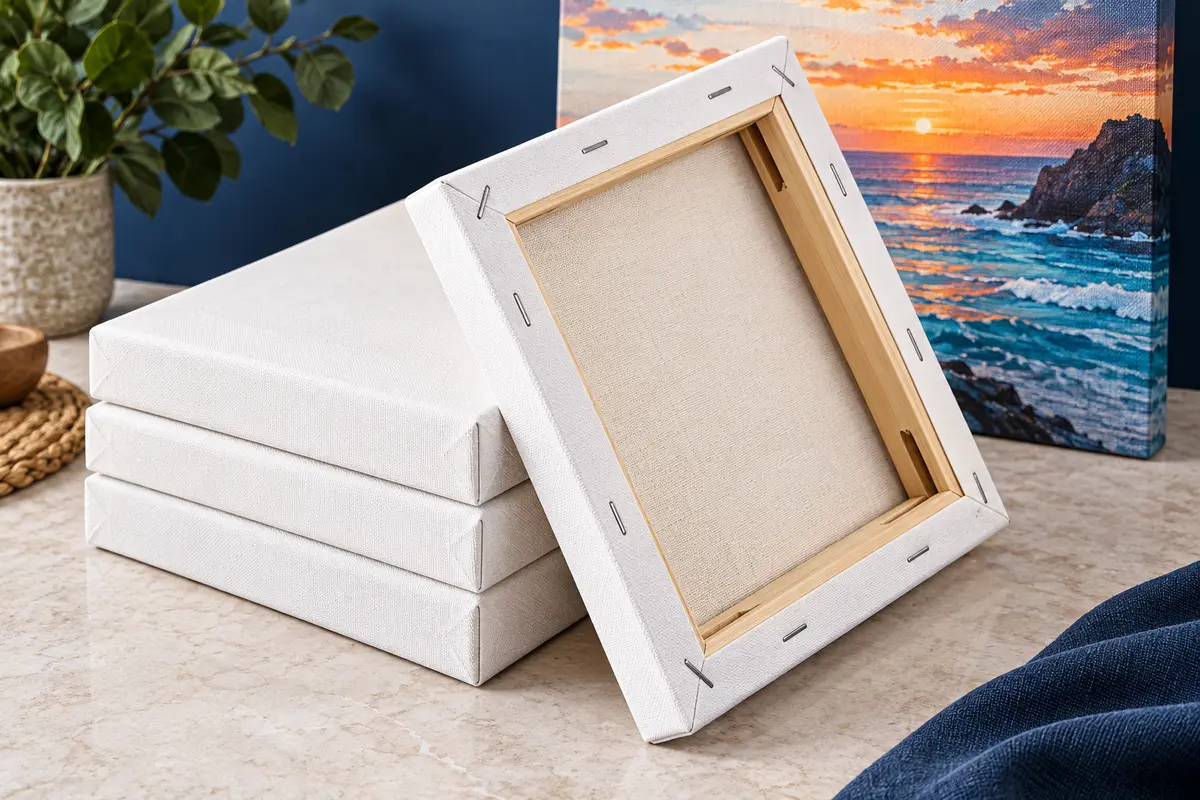
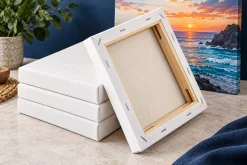
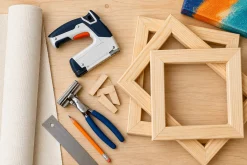
- Inner wooden frame — wooden bars joined into a frame, keeping the fabric taut and flat.
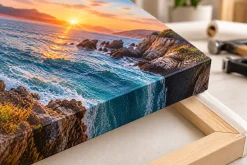
- Fabric wrapped around the sides — the image is printed out onto the sides, so it looks continuous from an angle with no white border.
- Stapled at the back — a row of staples along the back edges, hidden when hung on the wall.
With no glass, the picture is light, glare-free and won't shatter if knocked — three reasons many families with small children choose this style over glass-framed photos.
Choosing a canvas size for your wall
| Placement | Popular size | Notes |
|---|---|---|
| Above a living room sofa | 120–160cm wide | About two thirds the length of the sofa |
| Above the bed | 100–140cm wide | One large piece or a set of three |
| Narrow walls, corridors | Portrait 40 × 60 or 50 × 70cm | Portrait art makes ceilings feel higher |
| Cafés, long walls | Sets of 3–4 panels | Continuous image or same theme |
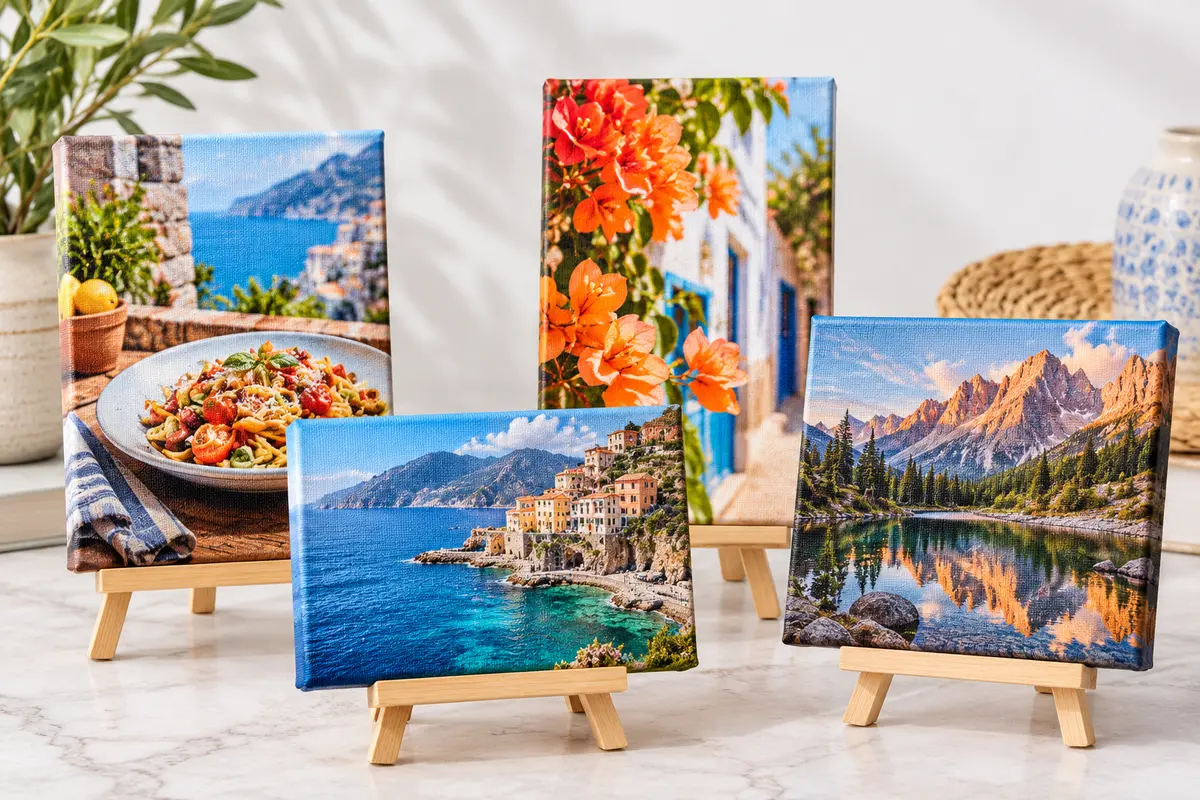
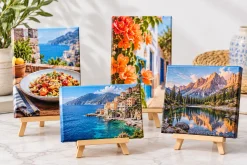
| Desks, reception counters | Mini 20 × 30cm | With a stand, no wall drilling needed |
The center of the art should be at eye level, about 150cm from the floor. Multi-panel sets usually leave 3–5cm between panels for a tidy look.
A test before deciding: cut newspaper to the intended size, tape it to the wall temporarily, and step back to look for a few days. It takes ten minutes but avoids discovering after hanging that the picture is too small for the wall.
One canvas or a multi-panel set
- One large piece — simple and strong, suited to square walls and photos with a clear subject.
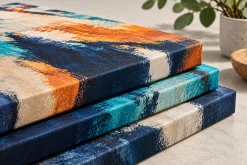
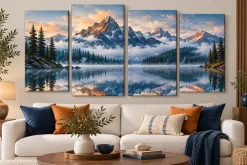
- Continuous-image set — one large image cut into three or four panels, hung evenly spaced. Suited to wide landscape photos and long walls.
- Same-theme set — several different images sharing a color tone and style. Easy to swap individual panels later.
- Staggered multi-size set — hung gallery-wall style with mixed sizes, suited to stairways and corridors.
For continuous-image sets, the gap between panels must be accounted for when cutting the file — tell us how far apart you plan to hang them so we leave the right space.
What canvas prints are usually ordered for
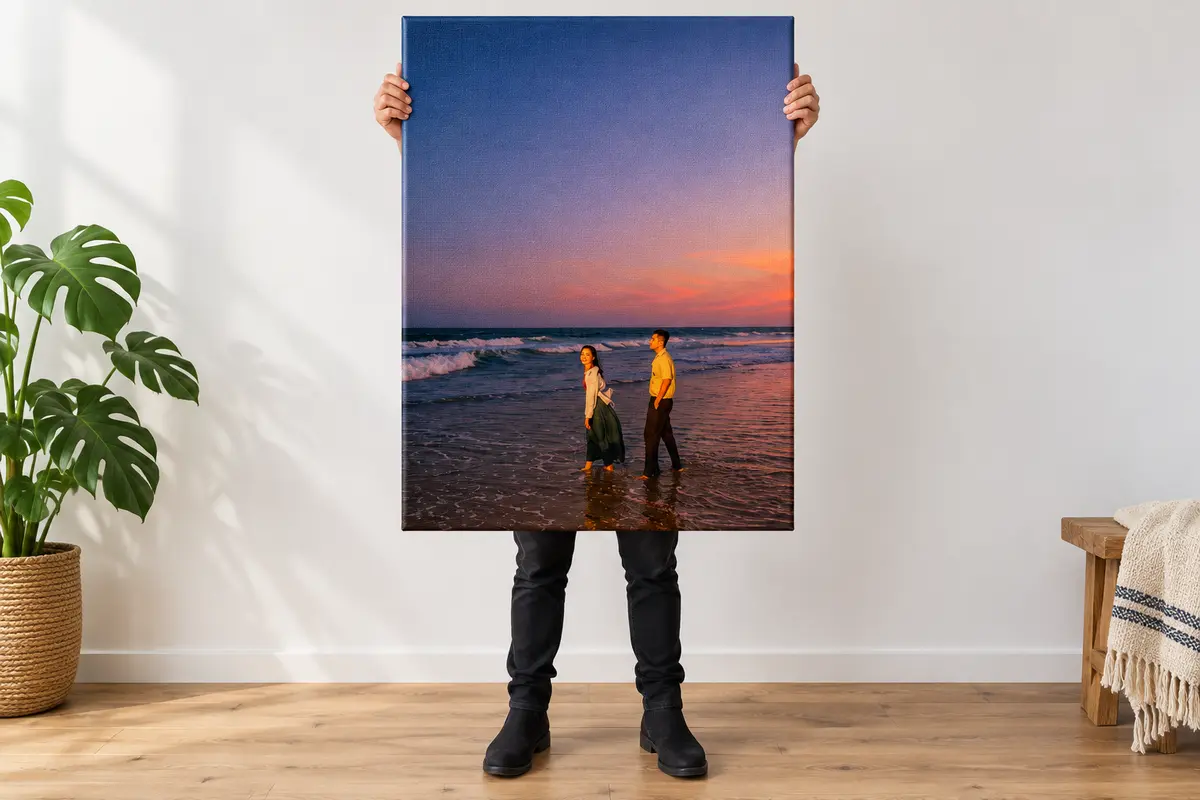
- Family and children's photos — instead of glass-framed photos, hung in living rooms or bedrooms.
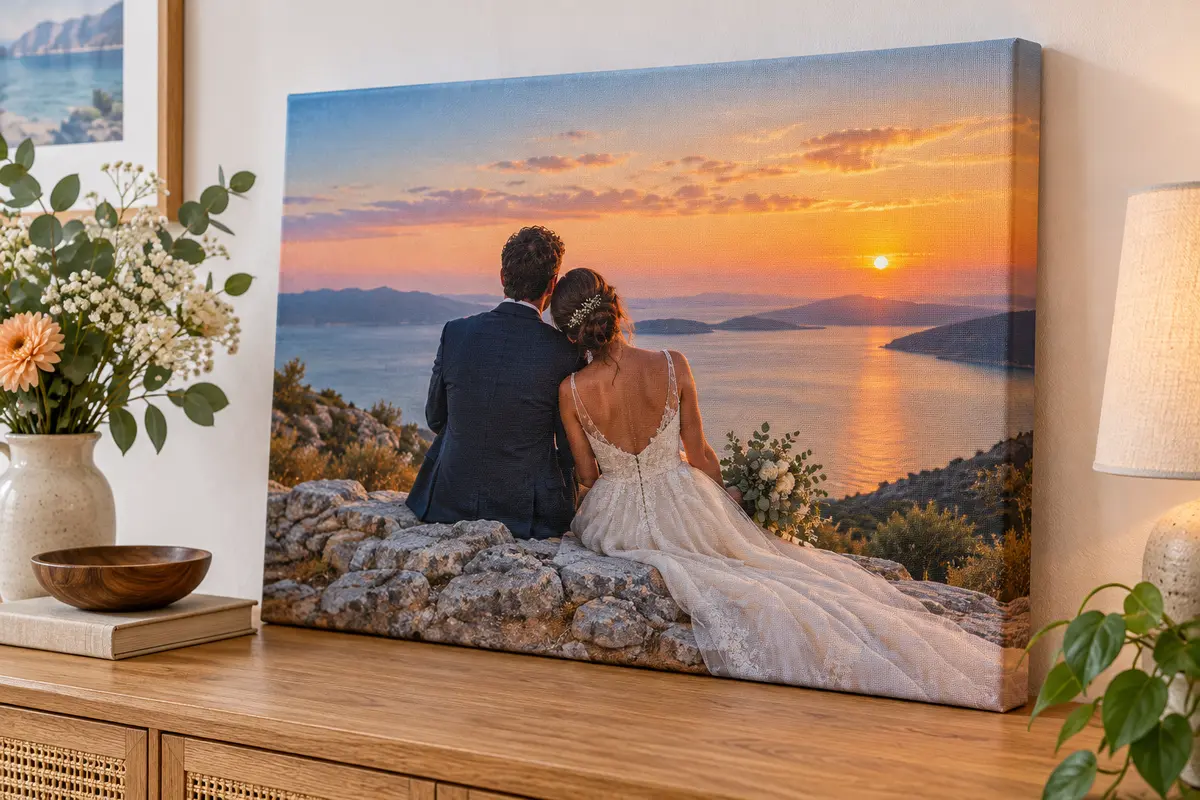
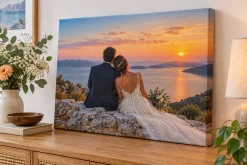
- Wedding photos — one large piece in the bedroom or a small set on a shelf.
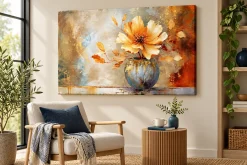
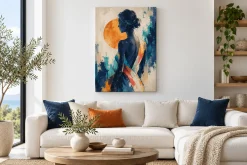
- Home decorative art — landscapes, botanicals and abstracts matching the interior tones.
- Art for shops and hotels — multi-panel sets in one style, changed seasonally.
- Gifts — mini desk art, keepsake photos printed as art.
- Brand art for offices — product images, project photos, slogans.
Theme suggestions by space
- Living rooms — a large landscape or abstract piece above the sofa; choose tones from the sofa or rug so it fits in.
- Bedrooms — wedding photos, family photos or light-toned botanical art; avoid overly detailed images that feel cluttered.
- Children's rooms — cartoon art, alphabet charts, photos of your child; canvas prints have no glass, so they're much safer than glass frames.
- Cafés and restaurants — multi-panel sets in one style along long walls, changed seasonally so regulars see something new.
- Offices and showrooms — project photos, product images, company mission statements.
- Stairways and corridors — staggered multi-size gallery-wall sets, hung following the stair slope.
What photos you send need to meet
Wall art is viewed from one to two meters away, so the original photo must be large enough:
- A 60 × 90 cm piece needs a photo of at least about 3000 × 4500 pixels to print smoothly.
- Photos from modern phones still work if well exposed and without digital zoom.
- Images downloaded from the internet, screenshots or photos sent through messaging apps are usually compressed and will pixelate when enlarged.
- Old film photos should be scanned at high resolution, not re-photographed with a phone.
- Not sure whether your photo is sharp enough? Send it first, and we'll check it and tell you the maximum size it can be printed at.
The fabric weave helps hide small photo flaws compared with glossy photo paper printing, but it can't rescue a pixelated photo.
Image area lost when stretching
This is important to know before finalizing the layout: the fabric wrapping around the frame sides loses about 3–4cm on each edge. Therefore:
- Faces, text and logos must be at least 5cm from the edge.
- For photos cropped tight to the subject, choose white or colored edges instead of image-wrapped sides.
- Photos with plenty of background around the subject are ideal for image-wrapped stretching.
We always send a layout preview, marking which parts will wrap to the back of the frame, before printing.
There are three edge styles to choose from: image-wrapped edges — the image continues onto all four sides, seamless from an angle, the nicest look but it uses more of the image; solid color edges — a color taken from the photo covers the sides, keeping the front composition intact; white edges — simple, suited to light-background art and minimalist styles.
If the photo is already cropped tight and you don't want to lose any more, solid color edges are the safest choice.
How a canvas print is made
- Send photos and size — the larger the original photo the better, with the width × height and hanging location.
- We check the photo — checking resolution and telling you the maximum size it can be printed at while staying smooth.
- Approve the layout — previewing the layout, edge style and the parts that will wrap behind the frame.
- Printing and drying — the print needs time to settle before being stretched.
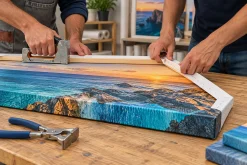
- Framing and stretching — stapling at the back, folding the corners, checking even tension on all four sides.
- Delivery or pickup at the workshop — wrapped in protective film with corner guards for transport.
Solvent ink or UV ink canvas prints
- Solvent ink — smooth color transitions, suited to landscapes and portraits, where gradients make up most of the image.
- UV ink — adheres more firmly and handles wiping better. Choose it when the art hangs where it's often touched, such as eateries and corridors.
For rolled prints to frame yourself, or large sizes priced per square meter, see the page Canvas. To learn more about the material, read the article canvas fabric.
Common ordering mistakes
- Sending photos that went through messaging apps — heavily compressed photos look grainy when printed large. Always send the original file.
- Photos cropped tight to faces — after stretching, part of the hair or chin is lost; photos should have spare background around the subject.
- Choosing a size by feel — a small picture on a wide wall looks lost; measure the wall first and use two thirds of its width as a guide.
- Forcing the wrong ratio — a 3:2 photo in a square frame loses both sides; tell us the desired ratio so cropping is intentional.
- Forgetting the gaps in multi-panel sets — for continuous-image sets, the hanging gap must be accounted for when cutting the file.
How to order on this page
- Calculate area: width (cm) × height (cm) ÷ 10,000. A 60 × 90 cm piece is 0.54 m².
- Choose the printing technology — solvent ink or UV ink — in the options above.
- Enter the m² in the quantity box; decimals such as 1.2 or 1.5 are accepted.
- Write the width × height, number of panels and whether stretching is needed in the order notes.
- Send the original photo with the order.
Minimum chargeable area is 0.5 m² per piece. For multi-panel sets, add up the total area and enter it once, listing each panel in the notes as “panel 1: 40 × 60, panel 2: 40 × 60”.
How to hang canvas prints
- Wooden frames are light, so a hook nail or a small wall plug screw is enough; for plasterboard walls, use specialist hooks.
- Pieces over 100cm should use two evenly spaced hanging points so the picture doesn't tilt over time.
- For multi-panel sets, measure and mark positions with masking tape first, hang the middle panel, then align the sides.
- Avoid hanging right above heat sources such as stoves or heaters, and avoid walls in direct sun all day.
Caring for canvas prints
- Dust with a dry cloth or soft brush; don't use a soaking wet cloth as water seeps into the weave.
- Don't hang in bathrooms or constantly humid places — both fabric and wooden frames absorb moisture.
- Wooden frames can slacken over time; check large pieces' tension every few years and restretch if needed.
- When storing or moving house, protect the corners and keep them upright, without stacking heavy objects on the face.
Custom canvas printing: size, photo and frame
We print custom canvas art from your photos or ready design files, at exactly the size you need to hang rather than fixed preset sizes. Phone photos can still be printed if the resolution is sufficient at actual size; we check files first and let you know if the desired size exceeds the photo's quality.
Canvas can be left rolled for you to handle, or stretched on a wooden frame to the art's size. Framing is charged at 800.000đ/m² on top of printing, the same for every frame code — see the frame samples and codes in the article Picture Frames and message us the code you want.
Frame prices and minimums
Framing is an add-on, priced by the art's area like the printing: 800.000đ/m², excluding VAT. This rate applies to every frame code in the article Picture Frames, so choose a code by style rather than by price.
- Printing cost — per the tiered price in the calculator above, multiplied by the art's area.
- Frame cost — 800.000đ multiplied by the art's area.
- Minimum without framing — areas under 0.5 m² are still charged at 0.5 m².
- Minimum with framing — reduced to 0.2 m²: pieces smaller than 0.2 m² are charged at 0.2 m².
For example, a 60 × 80 cm piece is 0.48 m²: printing at the up-to-0.5 m² tier plus framing at 0.48 × 800.000đ = 384.000đ. A small 30 × 30 cm piece is only 0.09 m²; if framed, both parts are charged at 0.2 m².
We don't make frames on their own without a print — frames come with canvas print orders. If you want a frame for an existing picture, message us on Zalo so we can look and quote separately.
We make several frame lines, each with its own code noting the frame face width (the molding width seen from the front) and depth (how far the frame stands off the wall). Below are a few samples representing each line:
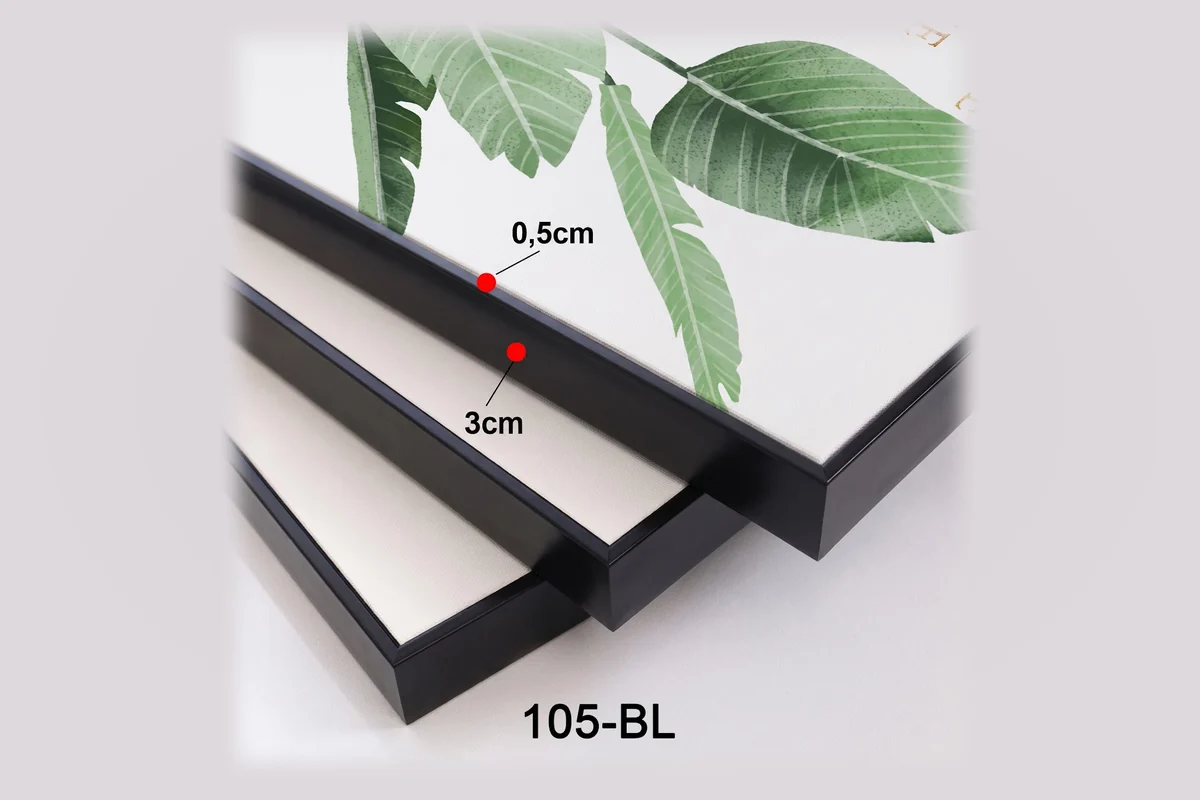
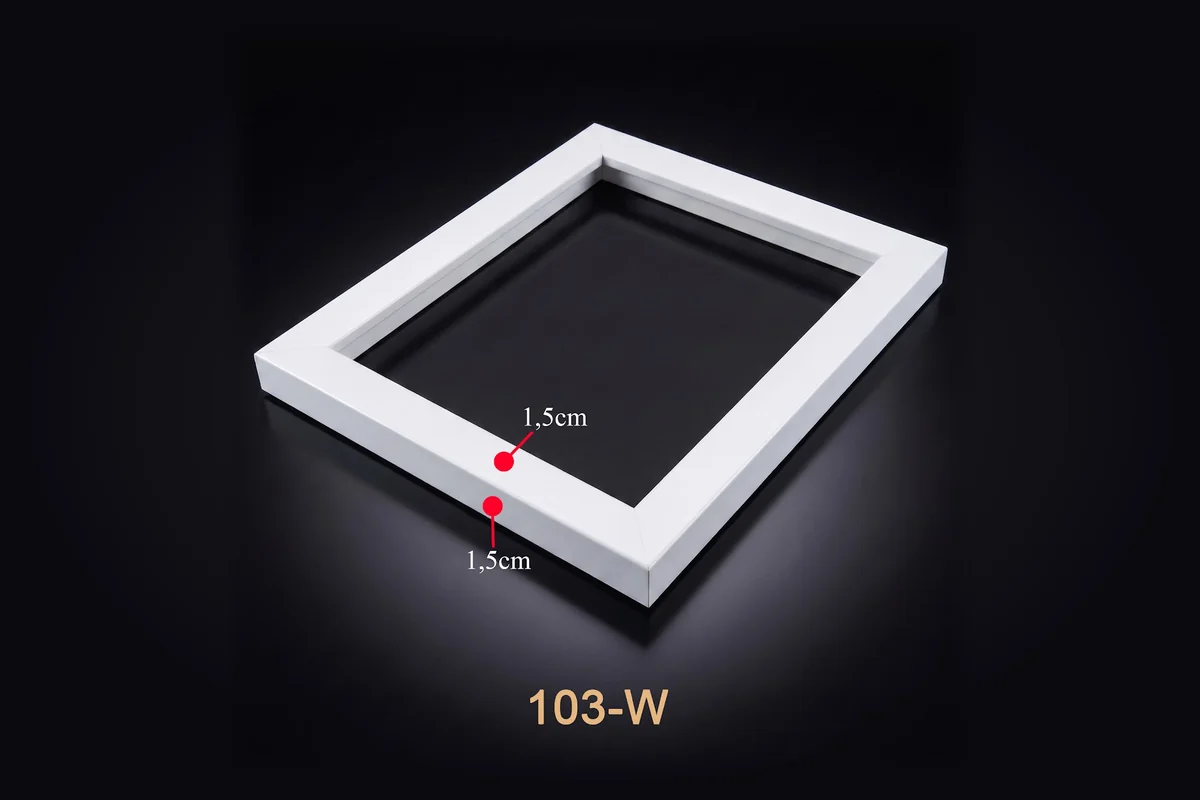
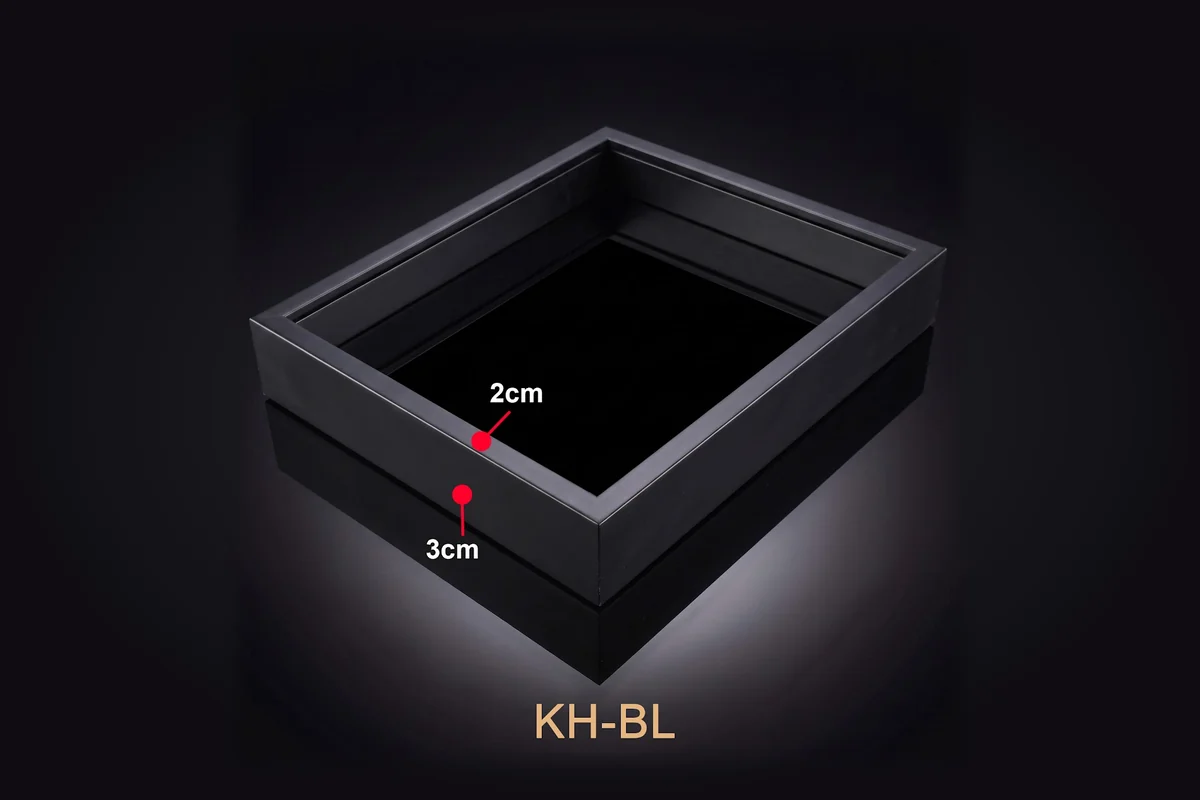
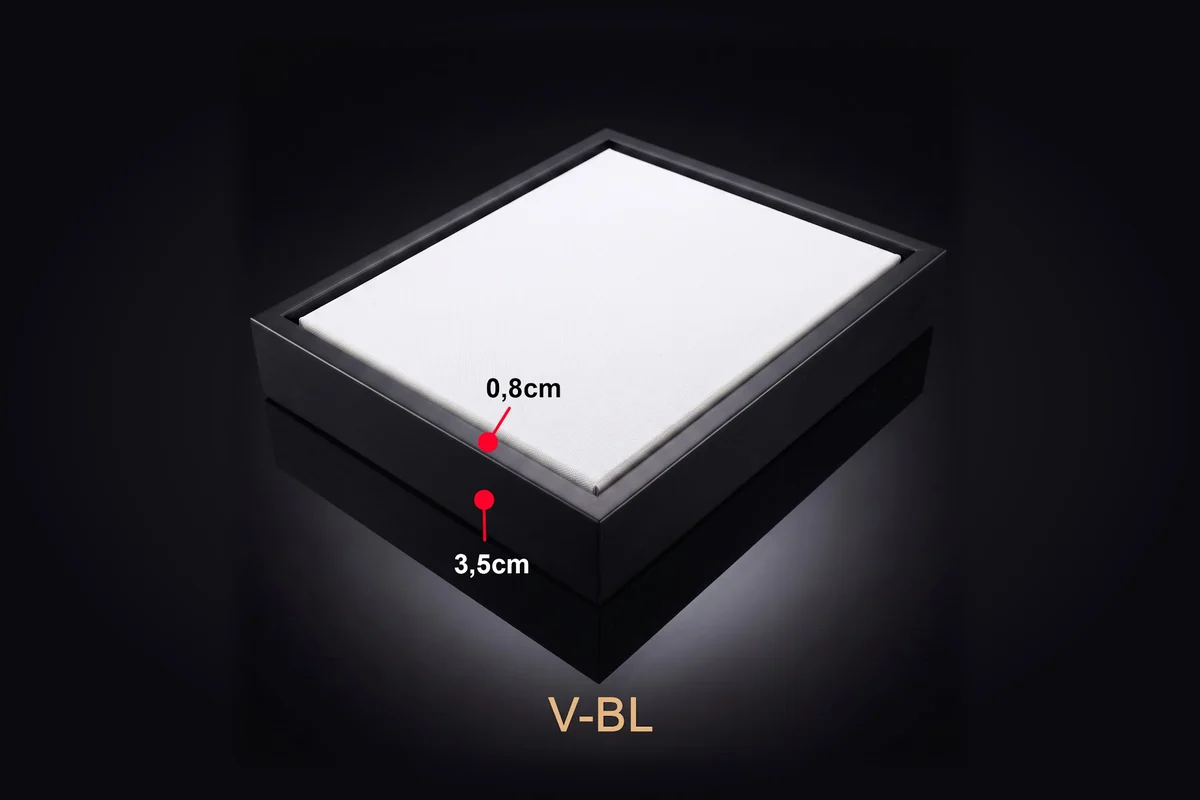
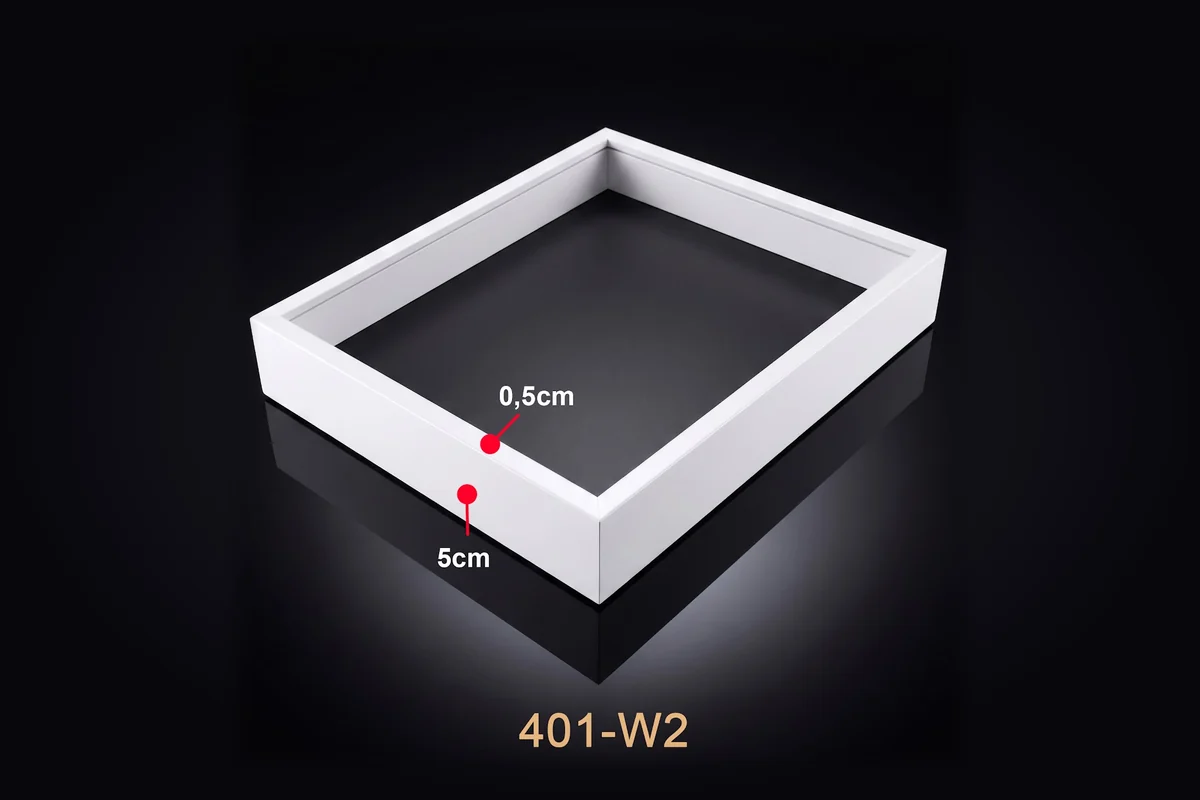
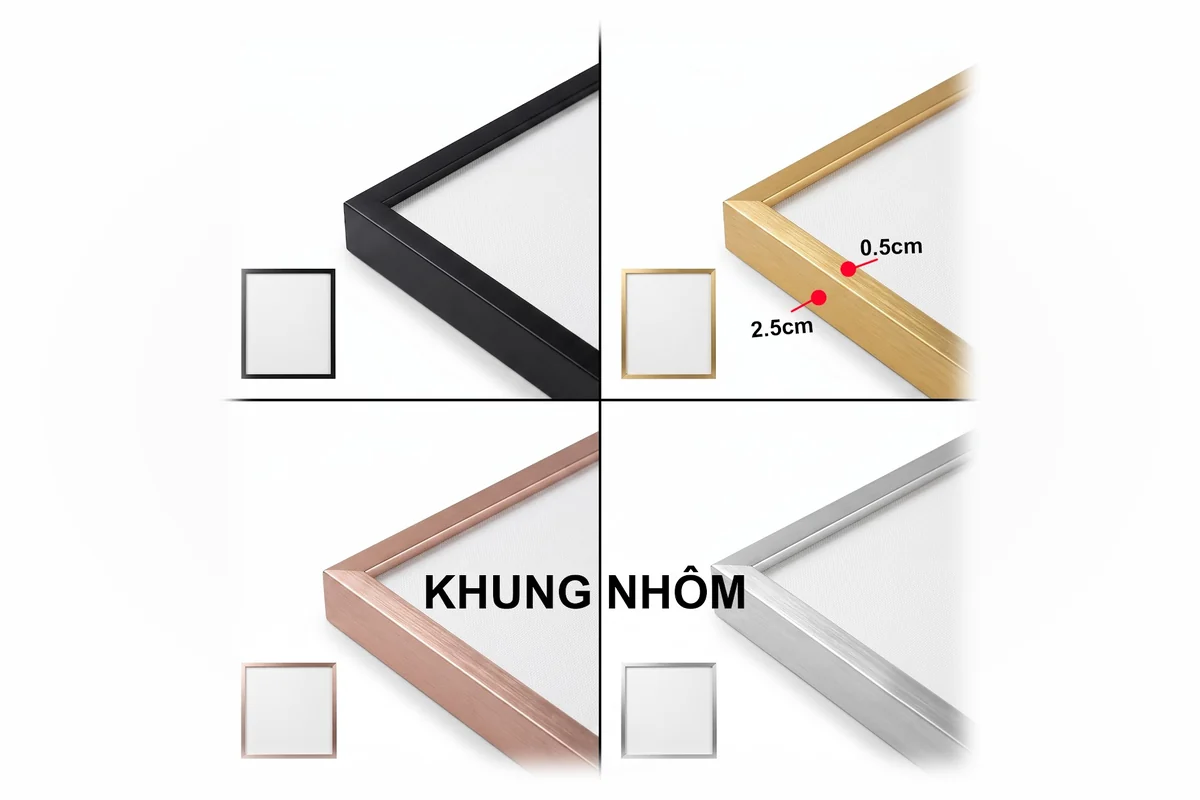
See all frame samples before choosing: the article Picture Frames in the Materials catalogue covers every frame line, code table and the profile specifications of each code. Look through it and message us the frame code you want when ordering — the frame price is still 800.000đ/m² for every code.
Rolled canvas and stretched canvas
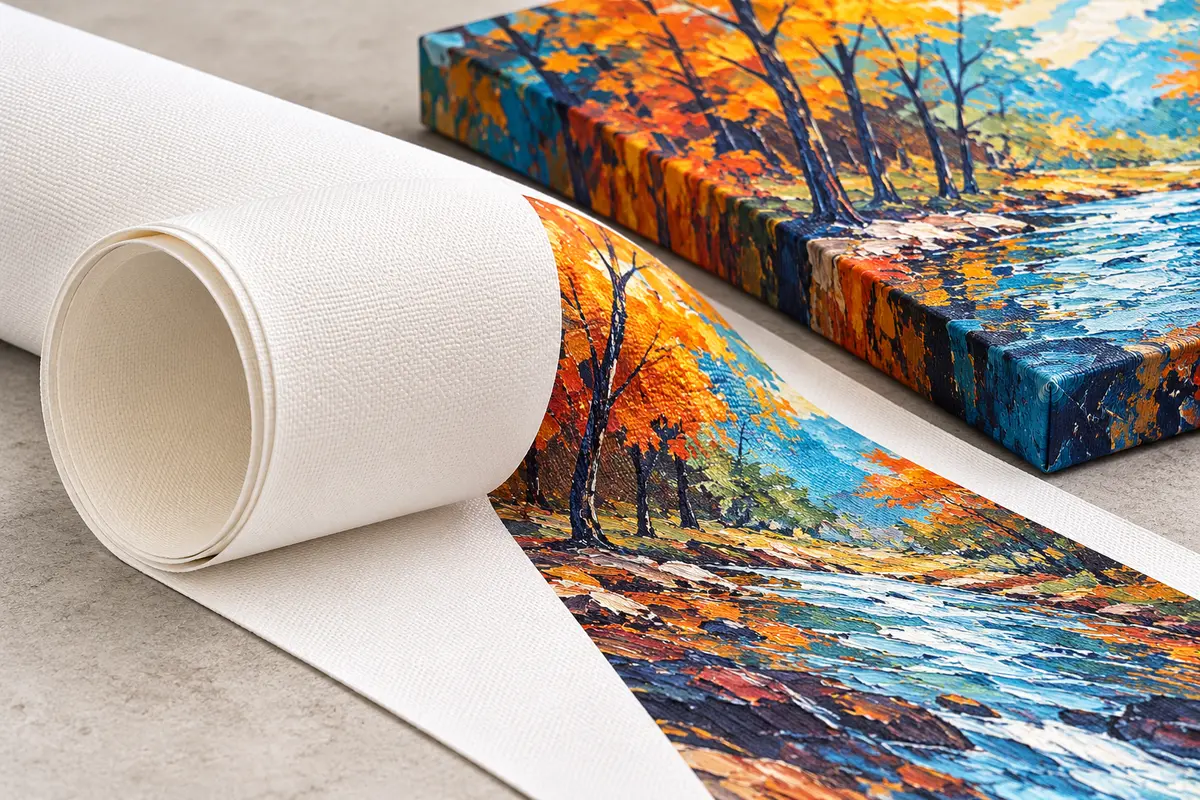
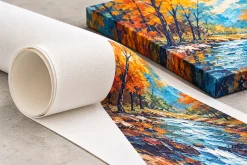
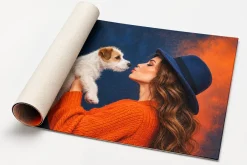
Canvas prints are delivered in two ways. The first is rolled canvas printing by the meter: we print and roll it up, and you stretch it yourself or take it to a framer. This is compact for shipping to other provinces, since rolls are light and corners can't get dented as with stretched pieces.
The second is receiving pieces already stretched on wooden frames, ready to hang. The price calculator above charges per square meter for both, with framing charged separately since it depends on the frame code and size. Frame codes and how to pair frames are in the Picture Frames article.
Frequently asked questions
Do canvas prints need glass?
No. The fabric surface is coated, so it resists dust and gentle wiping; this keeps the art lighter and free of the glare of glass-framed pictures.
Do family photos look good printed on canvas?
Yes, as long as the original photo is sharp enough. The fabric texture makes photos look softer and more artistic; conversely, photos with ultra-fine detail print sharper on photo paper.
Can you make multi-panel sets?
Yes. We cut one large image into several continuous panels, or print several images on the same theme. Tell us the number of panels and the intended hanging gap.
Can they hang outdoors or on a balcony?
Not recommended. Fabric and wooden frames both absorb moisture, and sun and rain slacken the fabric and make the frame moldy. For outdoors, use Hiflex banner or alu.
Can I order a single piece?
Yes. Priced by actual square meters, with a minimum of 0.5 m² per piece.
How soon will I receive the art?
Stretched pieces need time for framing and tensioning, so they're usually not same-day; we give a specific date when quoting. Rolled prints are much faster.
Canvas printing and delivery areas
Canvas prints are printed and stretched directly at our workshop at 49 Mai Van Vinh, Tan Hung Ward, Ho Chi Minh City. Stretched pieces are much bulkier than rolled ones, so how you receive the goods affects which to choose.
- Around the workshop — District 7, Phu My Hung, District 4, District 8, Nha Be, Binh Chanh. Pick up your stretched canvas and just hang it at home.
- Central area — District 1, District 3, Binh Thanh, Phu Nhuan, Tan Binh. Delivered to your home at the arranged time, with corner protection and wrapping film.
- Rest of the city — Thu Duc, Go Vap, Tan Phu, District 10, District 11, District 12, Binh Tan, Hoc Mon, Cu Chi. Large pieces delivered by daily route.
- Other provinces — choose rolled canvas rather than stretched canvas. Fabric rolled in a tube ships long distances safely and much more cheaply, and you stretch it locally.
For multi-panel sets on one wall, we number the back of each panel according to the agreed layout. Hang them by number and the layout comes out right, without guessing which panel goes where.
Order canvas prints at In Quảng Cáo Q7
Send the original photo with the desired size and number of panels; we'll check the photo's sharpness and send a layout for approval before printing and stretching. Contact 0866.511.099 or drop by the workshop at 49 Mai Van Vinh, Tan Hung Ward, Ho Chi Minh City. Production & delivery: 8:00–12:00 & 13:00–18:00 Mon–Sat (closed Sun) · Consultation & orders: 8:00–12:00 & 13:00–20:00 Mon–Sat; 14:00–19:00 Sun.
| Material | Canvas fabric |
|---|---|
| Printing technology | Canvas, Solvent Ink, Canvas, UV Ink |
| Made at | In Quảng Cáo Q7 workshop – 49 Mai Van Vinh, Tan Hung Ward, Ho Chi Minh City |
| Origin | Vietnam |
| Status | Made to order |
| Warranty | 24 hours from receipt: if you find a printing error or a difference from the approved file, let us know and we will reprint free of charge. |
| Price excl. VAT | 89.000 ₫ – 139.000 ₫ |
| Price incl. 8% VAT | 96.120 ₫ – 150.120 ₫ |
Ordering
Three ways to order: choose the specifications and quantity on the website and click Place order; message us on Zalo or call 0866.511.099; or visit the workshop to see material samples at 49 Mai Van Vinh, Tan Hung Ward, Ho Chi Minh City. During working hours, In Quảng Cáo Q7 replies within about 30 minutes. Most products have listed prices by size, material and quantity – prices exclude 8% VAT.
→ Online ordering guide · Quick quote
Sending design files
PDF or AI preferred, CMYK color mode, 300dpi for small formats, 3mm bleed. Send via Zalo, email inquangcaoq7@gmail.com, the form on our website, or a Google Drive link for large files. We check your file for free before printing; if you have no file yet, In Quảng Cáo Q7 can help with the design.
→ Design file submission guide
Payment
Bank transfer, QR code or cash at the workshop. Orders are confirmed and scheduled for production after payment; after transferring, send a photo of the receipt with your phone number via Zalo. Transfer note: Your name – Phone number – Product.
→ Payment guide
Timing & delivery
Completion time is shown on each product, counted from receipt of a print-ready file and payment confirmation. Pick up at the workshop Monday – Saturday, 8:00–12:00 and 13:00–18:00; urgent orders within Ho Chi Minh City delivered within 2 hours; other provinces via bus courier or express delivery. On receipt, please check quantity, size, material and condition of the products.
Order tracking
Enter the phone number used when ordering to see your orders from the last 90 days and their status: Unpaid → Printing → Printed → Delivering → Invoiced → Completed. For orders placed via Zalo, send your name and phone number to get progress updates.
→ Order tracking
E-invoice (VAT)
In Quảng Cáo Q7 issues 8% VAT e-invoices. Provide the company name, tax code, address and email within 24 hours of ordering; the invoice is issued within 24 working hours and sent by email, and cannot be changed once issued.
→ E-invoice (VAT) details
Misprints – reprints
Products that differ from the order or the approved proof are reprinted free of charge – report within 24 hours with photos. Spelling mistakes in a file you approved are not covered by free reprints.
→ Frequently asked questions (FAQs)
Be the first to review “Canvas Prints”
Related products

Canvas
Reviews
There are no reviews yet.